

A systematic review of the use of the Consolidated Framework for Implementation Research
Open accessThe DOI matches its Crossref record; 44 of the 45 references it cites were found in a registry or an index.
Abstract
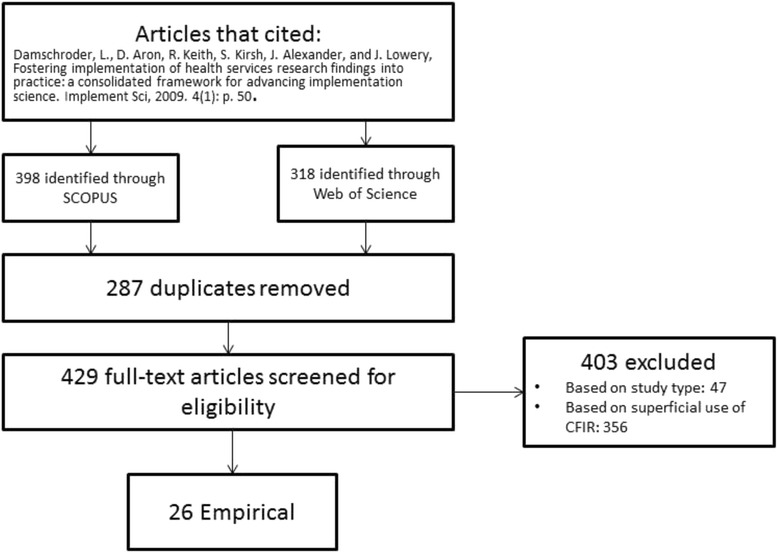
BACKGROUND: In 2009, Damschroder et al. developed the Consolidated Framework for Implementation Research (CFIR), which provides a comprehensive listing of constructs thought to influence implementation. This systematic review assesses the extent to which the CFIR's use in implementation research fulfills goals set forth by Damschroder et al. in terms of breadth of use, depth of application, and contribution to implementation research. METHODS: We searched Scopus and Web of Science for publications that cited the original CFIR publication by Damschroder et al. (Implement Sci 4:50, 2009) and downloaded each unique result for review. After applying exclusion criteria, the final articles were empirical studies published in peer-review journals that used the CFIR in a meaningful way (i.e., used the CFIR to guide data collection, measurement, coding, analysis, and/or reporting). A framework analysis approach was used to guide abstraction and synthesis of the included articles. RESULTS: Twenty-six of 429 unique articles (6 %) met inclusion criteria. We found great breadth in CFIR application; the CFIR was applied across a wide variety of study objectives, settings, and units of analysis. There was also variation in the method of included studies (mixed methods (n = 13); qualitative (n = 10); quantitative (n = 3)). Depth of CFIR application revealed some areas for improvement. Few studies (n = 3) reported justification for selection of CFIR constructs used; the majority of studies (n = 14) used the CFIR to guide data analysis only; and few studies investigated any outcomes (n = 11). Finally, reflections on the contribution of the CFIR to implementation research were scarce. CONCLUSIONS: Our results indicate that the CFIR has been used across a wide range of studies, though more in-depth use of the CFIR may help advance implementation science. To harness its potential, researchers should consider how to most meaningfully use the CFIR. Specific recommendations for applying the CFIR include explicitly justifying selection of CFIR constructs; integrating the CFIR throughout the research process (in study design, data collection, and analysis); and appropriately using the CFIR given the phase of implementation of the research (e.g., if the research is post-implementation, using the CFIR to link determinants of implementation to outcomes).
Overview
The claims and statistics of this paper haven’t been checked yet.
Free: it reads the open-access text and checks the first 5 claims that cite a source we can check. Create a free account to check every claim.
Integrity signals
Registry
Cites
Statistics
Figures
Verification
Claims the paper makes
The claims and statistics of this paper haven’t been checked yet.
Free: it reads the open-access text and checks the first 5 claims that cite a source we can check. Create a free account to check every claim.
Claims other papers make about this one
Each is checked against this paper’s own text: does it say what the citing paper says it does?
The cited source says what the claim attributes to it.
In the citing paper
“Kirk et al.’s 2015 review of 26 articles with meaningful use of the CFIR found that most users employed mixed (n = 13) or qualitative (n = 10) methods and used the CFIR in the post-implementation phase (n = 15) [13].”
From The updated consolidated framework for implementation research based on user feedback (2022) · cites this paper as [13]
The cited source says what the claim attributes to it.
In the citing paper
“Determinant frameworks can thus be used to inform choice of implementation strategies that may best address contextual determinants [14], generate hypotheses to prospectively guide predictions of implementation outcomes, or retrospectively explain implementation outcomes by assessing differences in determinants across implementation settings [11, 13, 15].”
From The updated consolidated framework for implementation research based on user feedback (2022) · cites this paper as [13]
The cited source says what the claim attributes to it.
In the citing paper
“The majority of CFIR users employ qualitative methods to assess constructs [13].”
From The updated consolidated framework for implementation research based on user feedback (2022) · cites this paper as [13]
The cited source says what the claim attributes to it.
In the citing paper
“In their systematic review of CFIR application, Kirk et al highlight gaps in depth of use of the framework, variation in selection of CFIR constructs, and a lack of justification of constructs used, limiting comparison of findings across time and contexts.14”
The cited source says what the claim attributes to it.
In the citing paper
“One indicator of this is a finding by Kirk et al: Among 26 research studies that meaningfully used CFIR, only two of the 26 included patients among their unit of analysis.14”
4 more claims about this paper
Create a free account to see every claim other papers make about this one.
Self-check
Percentages, sums and reported differences re-computed from the paper’s own numbers.
The self-check needs the paper’s full text.
Citations
Cites
Damschroder, L. J., Aron, D. C., Keith, R. E., Kirsh, S. R., Alexander, J. A., & Lowery, J. C. (2009) · Implementation Science · doi:10.1186/1748-5908-4-50 · Cited by 14,496 · cited 10×
“At the macro level, the CFIR provides a standardized structure for building on findings across studies [3].”
BackgroundMethodInfluentialSelf-citationGale, N. K., Heath, G., Cameron, E., Rashid, S., & Redwood, S. (2013) · BMC Medical Research Methodology · doi:10.1186/1471-2288-13-117 · Cited by 10,865 · cited 1×
“Objective 3: determine the contribution of the CFIR to implementation research General co posed by D • Cohere • Whethe • Whethe Microsoft Excel where content was arrayed in a matrix format consisting of rows (articles), columns (codes), and cells (summarized data) [8].”
BackgroundQualitative research practice: a guide for social science students and researchers
(2003) · Choice Reviews Online · doi:10.5860/choice.41-1319 · Cited by 10,543
Proctor, E., Silmere, H., Raghavan, R., Hovmand, P., Aarons, G., Bunger, A., Griffey, R., & Hensley, M. (2011) · Administration and Policy in Mental Health and Mental Health Services Research · doi:10.1007/s10488-010-0319-7 · Cited by 8,721 · cited 2×
“[25]), (2) provide clearer linkage of CFIR constructs with outcomes, and (3) provide clearer specification of which CFIR constructs were used to investigate outcomes.”
BackgroundComparison of PubMed, Scopus, Web of Science, and Google Scholar: strengths and weaknesses
Falagas, M. E., Pitsouni, E. I., Malietzis, G. A., & Pappas, G. (2008) · The FASEB Journal · doi:10.1096/fj.07-9492lsf · Cited by 5,039 · cited 1×
“, Google Scholar) [6].”
The Challenge of Innovation Implementation
Klein, K. J., & Sorra, J. S. (1996) · The Academy of Management Review · doi:10.2307/259164 · Cited by 2,113 · cited 1×
“Investigation of outcomes is critical for the field of implementation science overall because optimal implementation outcomes are a necessary condition for innovation effectiveness [25, 26].”
BackgroundFrench, S. D., Green, S. E., O’Connor, D. A., McKenzie, J. E., Francis, J. J., Michie, S., Buchbinder, R., Schattner, P., Spike, N., & Grimshaw, J. M. (2012) · Implementation Science · doi:10.1186/1748-5908-7-38 · Cited by 1,338 · cited 1×
“Better integration of the CFIR (or other theoretical framework) into empirical studies would help to address gaps in use of theory and advance implementation science [4, 31, 32].”
Kitson, A. L., Rycroft-Malone, J., Harvey, G., McCormack, B., Seers, K., & Titchen, A. (2008) · Implementation Science · doi:10.1186/1748-5908-3-1 · Cited by 1,314 · cited 1×
“earlier by developers of the PARIHS framework [27].”
MethodMeho, L. I., & Yang, K. (2007) · Journal of the American Society for Information Science and Technology · doi:10.1002/asi.20677 · Cited by 974
Damschroder, L. J., & Lowery, J. C. (2013) · Implementation Science · doi:10.1186/1748-5908-8-51 · Cited by 734
Self-citation
Cited by
The updated consolidated framework for implementation research based on user feedback
Damschroder, L. J., Reardon, C. M., Widerquist, M. A. O., & Lowery, J. (2022) · Implementation Science · doi:10.1186/s13012-022-01245-0 · Cited by 4,452
“’s 2015 review of 26 articles with meaningful use of the CFIR found that most users employed mixed (n = 13) or qualitative (n = 10) methods and used the CFIR in the post-implementation phase (n = 15) [13].”
BackgroundMethodSelf-citationSystematic review of the Exploration, Preparation, Implementation, Sustainment (EPIS) framework
Moullin, J. C., Dickson, K. S., Stadnick, N. A., Rabin, B., & Aarons, G. A. (2019) · Implementation Science · doi:10.1186/s13012-018-0842-6 · Cited by 1,223
Gale, R. C., Wu, J., Erhardt, T., Bounthavong, M., Reardon, C. M., Damschroder, L. J., & Midboe, A. M. (2019) · Implementation Science · doi:10.1186/s13012-019-0853-y · Cited by 846
“Damschroder LJ, Aron DC, Keith RE, Kirsh SR, Alexander JA, Lowery JC. Fostering implementation of health services research findings into practice: a consolidated framework for advancing implementation science.”
MethodInfluentialSelf-citationDamschroder, L. J., Reardon, C. M., Opra Widerquist, M. A., & Lowery, J. (2022) · Implementation Science · doi:10.1186/s13012-021-01181-5 · Cited by 784
“The Consolidated Framework for Implementation Research (CFIR) is one of the most widely used frameworks within and outside implementation science [8, 10].”
BackgroundMethodSelf-citationMay, C. R., Cummings, A., Girling, M., Bracher, M., Mair, F. S., May, C. M., Murray, E., Myall, M., Rapley, T., & Finch, T. (2018) · Implementation Science · doi:10.1186/s13012-018-0758-1 · Cited by 683
“’s review of reports of the Consolidated Framework for Implementation Research [18], we”
BackgroundTen recommendations for using implementation frameworks in research and practice
Moullin, J. C., Dickson, K. S., Stadnick, N. A., Albers, B., Nilsen, P., Broder-Fingert, S., Mukasa, B., & Aarons, G. A. (2020) · Implementation Science Communications · doi:10.1186/s43058-020-00023-7 · Cited by 488
Birken, S. A., Powell, B. J., Shea, C. M., Haines, E. R., Alexis Kirk, M., Leeman, J., Rohweder, C., Damschroder, L., & Presseau, J. (2017) · Implementation Science · doi:10.1186/s13012-017-0656-y · Cited by 471
“[9] reviewed studies citing the Consolidated Framework for Implementation Research and found that few applied the framework in a meaningful way (i.”
MethodSelf-citationLi, S.-A., Jeffs, L., Barwick, M., & Stevens, B. (2018) · Systematic Reviews · doi:10.1186/s13643-018-0734-5 · Cited by 433
“Justifying which CFIR constructs to investigate can help ensure the consistency of implementation studies and allows researchers to compare these studies over time and across different settings [15, 61, 62].”
BackgroundClarity out of chaos: Use of theory in implementation research
Damschroder, L. J. (2020) · Psychiatry Research · doi:10.1016/j.psychres.2019.06.036 · Cited by 422
“Since the time of their publication, other researchers adapted and refined the model for use in health care (Damschroder et al., 2011; Helfrich et al., 2010, 2007; Kirk et al., 2016).”
BackgroundSelf-citationMeans, A. R., Kemp, C. G., Gwayi-Chore, M.-C., Gimbel, S., Soi, C., Sherr, K., Wagenaar, B. H., Wasserheit, J. N., & Weiner, B. J. (2020) · Implementation Science · doi:10.1186/s13012-020-0977-0 · Cited by 418
“study design, monitoring implementation processes, data analysis, and outcome interpretation [3].”
BackgroundResultInfluentialAction, actor, context, target, time (AACTT): a framework for specifying behaviour
Presseau, J., McCleary, N., Lorencatto, F., Patey, A. M., Grimshaw, J. M., & Francis, J. J. (2019) · Implementation Science · doi:10.1186/s13012-019-0951-x · Cited by 411
“A systematic review of the use of the Consolidated Framework for Implementation Research.”
MethodInfluentialBirken, S. A., Powell, B. J., Presseau, J., Kirk, M. A., Lorencatto, F., Gould, N. J., Shea, C. M., Weiner, B. J., Francis, J. J., Yu, Y., et al. (2017) · Implementation Science · doi:10.1186/s13012-016-0534-z · Cited by 385
“The CFIR has been applied to a diverse array of studies that have investigated mental health workers’ views of a health self-management program, identified determinants of successful implementation of evidence-based practices in public health agencies, designed a tailored intervention strategy to improve hospital serv…”
Self-citationTranslating research findings to clinical nursing practice
Curtis, K., Fry, M., Shaban, R. Z., & Considine, J. (2017) · Journal of Clinical Nursing · doi:10.1111/jocn.13586 · Cited by 318
Stover, A. M., Haverman, L., van Oers, H. A., Greenhalgh, J., Potter, C. M., On behalf of the ISOQOL PROMs/PREMs in Clinical Practice Implementation Science Work Group, Ahmed, S., Greenhalgh, J., Gibbons, E., Haverman, L., et al. (2021) · Quality of Life Research · doi:10.1007/s11136-020-02564-9 · Cited by 308
Cassar, S., Salmon, J., Timperio, A., Naylor, P.-J., van Nassau, F., Contardo Ayala, A. M., & Koorts, H. (2019) · International Journal of Behavioral Nutrition and Physical Activity · doi:10.1186/s12966-019-0876-4 · Cited by 304
Getting a clinical innovation into practice: An introduction to implementation strategies
Kirchner, J. E., Smith, J. L., Powell, B. J., Waltz, T. J., & Proctor, E. K. (2020) · Psychiatry Research · doi:10.1016/j.psychres.2019.06.042 · Cited by 258
Cowie, J., Nicoll, A., Dimova, E. D., Campbell, P., & Duncan, E. A. (2020) · BMC Health Services Research · doi:10.1186/s12913-020-05434-9 · Cited by 231
Lynch, E. A., Mudge, A., Knowles, S., Kitson, A. L., Hunter, S. C., & Harvey, G. (2018) · BMC Health Services Research · doi:10.1186/s12913-018-3671-z · Cited by 220
“To explore how theoretical approaches have been applied in the literature to date, we searched for and identified review papers for 6 of our 10 theoretical approaches: KTA [20], the Reach, Effectiveness, Adoption, Implementation, and Maintenance Framework (RE-AIM) [21], CFIR [22], NPT [23], PARIHS [24] and TDF [25].”
BackgroundMethodInfluentialSafaeinili, N., Brown‐Johnson, C., Shaw, J. G., Mahoney, M., & Winget, M. (2020) · Learning Health Systems · doi:10.1002/lrh2.10201 · Cited by 219
“One indicator of this is a finding by Kirk et al: Among 26 research studies that meaningfully used CFIR, only two of the 26 included patients among their unit of analysis.(14) Our major adaptation of promoting the “patient needs and resources” construct to its own sixth domain in the framework recognizes the fact that…”
BackgroundMethodSalazar de Pablo, G., Studerus, E., Vaquerizo-Serrano, J., Irving, J., Catalan, A., Oliver, D., Baldwin, H., Danese, A., Fazel, S., Steyerberg, E. W., et al. (2021) · Schizophrenia Bulletin · doi:10.1093/schbul/sbaa120 · Cited by 219
T-CaST: an implementation theory comparison and selection tool
Birken, S. A., Rohweder, C. L., Powell, B. J., Shea, C. M., Scott, J., Leeman, J., Grewe, M. E., Alexis Kirk, M., Damschroder, L., Aldridge, W. A., et al. (2018) · Implementation Science · doi:10.1186/s13012-018-0836-4 · Cited by 194
“Transparent reporting of the criteria used to select TMF may limit the often superficial use of TMF [34].”
MethodSelf-citationBergström, A., Ehrenberg, A., Eldh, A. C., Graham, I. D., Gustafsson, K., Harvey, G., Hunter, S. C., Kitson, A. A., Rycroft‐Malone, J., & Wallin, L. (2020) · Implementation Science · doi:10.1186/s13012-020-01003-0 · Cited by 192
“%) of articles citing the framework were judged to use the framework in a meaningful way (i.e., used the CFIR to guide data collection, measurement, coding, analysis, and/or reporting) [12].”
MethodInfluentialSantos, O. P. D., Melly, P., Hilfiker, R., Giacomino, K., Perruchoud, É., Verloo, H., & Pereira, F. (2022) · Healthcare · doi:10.3390/healthcare10112204 · Cited by 183
“Thirdly, it can be used post implementation to ensure sustainability—including continuous adaptation based on feedback and active involvement from the specialty, regular communication, and the identification of mentors and/or opinion leaders [7,17]—and avoid a drop in buy-in as was observed in the study by Koota et al.”
MethodNg, W., Slater, H., Starcevich, C., Wright, A., Mitchell, T., & Beales, D. J. (2021) · Pain · doi:10.1097/j.pain.0000000000002217 · Cited by 179
Stone, A. B., Yuan, C. T., Rosen, M. A., Grant, M. C., Benishek, L. E., Hanahan, E., Lubomski, L. H., Ko, C. Y., & Wick, E. C. (2018) · JAMA Surgery · doi:10.1001/jamasurg.2017.5565 · Cited by 179
Reardon, C. M., Damschroder, L. J., Ashcraft, L. E., Kerins, C., Bachrach, R. L., Nevedal, A. L., Domlyn, A. M., Dodge, J., Chinman, M., & Rogal, S. (2025) · Implementation Science · doi:10.1186/s13012-025-01450-7 · Cited by 172
“Many researchers use open data collection techniques and apply CFIR during data analysis and/or interpretation phases of the project, however, this may increase the risk of missing important determinants [22].”
Self-citationConnolly, S. L., Stolzmann, K. L., Heyworth, L., Weaver, K. R., Bauer, M. S., & Miller, C. J. (2021) · Telemedicine and e-Health · doi:10.1089/tmj.2020.0233 · Cited by 171
Esponda, G. M., Hartman, S., Qureshi, O., Sadler, E., Cohen, A., & Kakuma, R. (2020) · The Lancet Psychiatry · doi:10.1016/s2215-0366(19)30125-7 · Cited by 165
Assessing citation networks for dissemination and implementation research frameworks
Skolarus, T. A., Lehmann, T., Tabak, R. G., Harris, J., Lecy, J., & Sales, A. E. (2017) · Implementation Science · doi:10.1186/s13012-017-0628-2 · Cited by 163
“Similarly, another recent systematic review examined use of the CFIR among empirical studies in the peer-reviewed literature [34].”
BackgroundCollaborative, T. A. P. P., Manzi, A., Hirschhorn, L. R., Sherr, K., Chirwa, C., Baynes, C. D., & Awoonor‐Williams, J. K. (2017) · BMC Health Services Research · doi:10.1186/s12913-017-2656-7 · Cited by 162
“tices in implementation science, where understanding internal and external context to then adapt the intervention and implementation pathway is associated with success and increased sustainability [46, 47].”
BackgroundShelton, R. C., Lee, M., Brotzman, L., Wolfenden, L., Nathan, N., & Wainberg, M. L. (2020) · International Journal of Behavioral Medicine · doi:10.1007/s12529-020-09848-x · Cited by 163
“, RE-AIM [67], CFIR [65, 73]) and there is great potential for existing frameworks to inform understanding of multi-level contextual factors and mechanisms of change across global contexts, there is much work to be done to understand the applicability and transferability of implementation frameworks globally [74].”
BackgroundInfluentialGlenwright, B. G., Simmich, J., Cottrell, M. A., O’Leary, S. P., Sullivan, C. M., Pole, J. D., & Russell, T. G. (2023) · Journal of Patient-Reported Outcomes · doi:10.1186/s41687-023-00554-2 · Cited by 165
Defining and assessing context in healthcare implementation studies: a systematic review
Rogers, L., De Brún, A., & McAuliffe, E. (2020) · BMC Health Services Research · doi:10.1186/s12913-020-05212-7 · Cited by 158
“’s [29] approach was adopted to examine the depth of application of each context assessment by determining 1) how the method was used in the included studies (data collection, descriptive data analysis, or both); 2) whether the measure was used to investigate the association between context and implementation success;…”
MethodSperber, N. R., Carpenter, J. S., Cavallari, L. H., J. Damschroder, L., Cooper-DeHoff, R. M., Denny, J. C., Ginsburg, G. S., Guan, Y., Horowitz, C. R., Levy, K. D., et al. (2017) · BMC Medical Genomics · doi:10.1186/s12920-017-0273-2 · Cited by 136
“suggest based on results from their systematic review of CFIR in empirical research, it will be important for future work on implementation of any program, including those related to genomic medicine, to articulate a rationale for selecting CFIR constructs and design studies to assess relationship between implementati…”
Self-citationHudson, K. G., Lawton, R., & Hugh‐Jones, S. (2020) · BMC Health Services Research · doi:10.1186/s12913-020-4942-z · Cited by 156
“Using the CFIR allowed for results to be generalizable and therefore applicable to other school settings using other school mental health programs, something which has been advocated as a key reason to involve implementation theories and frameworks in implementation research [30].”
MethodTaking account of context in systematic reviews and guidelines considering a complexity perspective
Booth, A., Moore, G., Flemming, K., Garside, R., Rollins, N., Tunçalp, Ö., & Noyes, J. (2019) · BMJ Global Health · doi:10.1136/bmjgh-2018-000840 · Cited by 116
“Complex framework that may include too many factors to be practical for data extraction relecting that it has been designed for primary studies.(91) CICI framework(22) Based on concept analysis therefore offers broad coverage of context issues.”
BackgroundLeppänen, A., Ekblad, S., & Tomson, T. (2019) · PLoS ONE · doi:10.1371/journal.pone.0212641 · Cited by 143
Kemp, C. G., Jarrett, B. A., Kwon, C.-S., Song, L., Jetté, N., Sapag, J. C., Bass, J., Murray, L., Rao, D., & Baral, S. (2019) · BMC Medicine · doi:10.1186/s12916-018-1237-x · Cited by 138
Weir, N., Newham, R., Dunlop, E., & Bennie, M. (2019) · Implementation Science · doi:10.1186/s13012-019-0867-5 · Cited by 136
Wood, E., Ohlsen, S., & Ricketts, T. (2017) · Journal of Affective Disorders · doi:10.1016/j.jad.2017.02.028 · Cited by 108
“The use of the CFIR enabled the findings to be placed in the context of the wider implementation research literature (Kirk et al., 2016).”
MethodNorris, J. M., White, D., Nowell, L. S., Mrklas, K., & Stelfox, H. T. (2017) · Implementation Science · doi:10.1186/s13012-017-0625-5 · Cited by 121
Shen, A. K., Browne, S., Srivastava, T., Kornides, M. L., & Tan, A. S. L. (2023) · Vaccine · doi:10.1016/j.vaccine.2023.02.045 · Cited by 113
Allen, J. D., Towne, S. D., Maxwell, A. E., DiMartino, L., Leyva, B., Bowen, D. J., Linnan, L., & Weiner, B. J. (2017) · BMC Health Services Research · doi:10.1186/s12913-017-2459-x · Cited by 91
“Another limitation of our review is that relatively little is known about how characteristics of the CFIR “inner organizational setting” relate to outcomes of adoption and implementation [21].”
BackgroundMethodInfluentialCommunity-based organizations’ perspectives on improving health and social service integration
Agonafer, E. P., Carson, S. L., Núñez, V., Poole, K. J., Hong, C. S., Morales, M., Jara, J., Hakopian, S., Kenison, T. C., Bhalla, I. P., et al. (2021) · BMC Public Health · doi:10.1186/s12889-021-10449-w · Cited by 107
Morgan, D., Kosteniuk, J., O’Connell, M. E., Kirk, A., Stewart, N. J., Seitz, D., Bayly, M., Froehlich Chow, A., Elliot, V., Daku, J., et al. (2019) · BMC Health Services Research · doi:10.1186/s12913-019-4548-5 · Cited by 95
Wallace, B., van Roode, T., Pagan, F., Phillips, P., Wagner, H., Calder, S., Aasen, J., Pauly, B., & Hore, D. (2020) · Harm Reduction Journal · doi:10.1186/s12954-020-00373-4 · Cited by 94
“[39] found only 2 studies that focused on pre-implementation, naming it a missed opportunity.”
BackgroundAl-Omary, H., Soltani, A., Stewart, D. C., & Nazar, Z. J. (2024) · BMC Medical Education · doi:10.1186/s12909-024-06016-7 · Cited by 109
“One such framework that has gained prominence is the Consolidated Framework for Implementation Research (CFIR) [33], utilized in multiple implementation studies [34–39].”
MethodYue, J., Liu, J., Williams, S., Zhang, B., Zhao, Y., Zhang, Q., Zhang, L., Liu, X., Wall, S. N., Wetzel, G., et al. (2020) · BMC Public Health · doi:10.1186/s12889-020-09337-6 · Cited by 103
Briggs, M. S., Rethman, K., Crookes, J., Cheek, F. M., Pottkotter, K. A., McGrath, S., DeWitt, J., Harmon-Matthews, L. E., & Quatman‐Yates, C. C. (2020) · Archives of Physical Medicine and Rehabilitation · doi:10.1016/j.apmr.2020.04.007 · Cited by 106
Warner, G., Lawson, B. J., Sampalli, T., Burge, F., Gibson, R., & Wood, S. (2018) · BMC Health Services Research · doi:10.1186/s12913-018-3163-1 · Cited by 98
“Our study supports prior recommendations for using CFIR [19, 35], and more broadly implementation science frameworks [36, 37], to facilitate implementation of complex interventions.”
MethodHunter, S. C., Kim, B., Mudge, A., Hall, L., Young, A., McRae, P., & Kitson, A. A. (2020) · BMC Health Services Research · doi:10.1186/s12913-020-05354-8 · Cited by 92
Liang, S., Kegler, M. C., Cotter, M., Phillips, E., Beasley, D., Hermstad, A., Morton, R., Martinez, J., & Riehman, K. (2015) · Implementation Science · doi:10.1186/s13012-016-0477-4 · Cited by 79
VanDevanter, N., Kumar, P. C., Nguyen, N. T., Nguyen, L., Nguyen, T., Stillman, F. A., Weiner, B. J., & Shelley, D. (2017) · Implementation Science · doi:10.1186/s13012-017-0558-z · Cited by 90
“Based on a recent systematic review of the use of CFIR, most studies have applied the framework to assess barriers and facilitators to innovation implementation in the postimplementation phase [19].”
BackgroundMethodKormelinck, C. M. G., Janus, S. I. M., Smalbrugge, M., Gerritsen, D. L., & Zuidema, S. U. (2020) · International Psychogeriatrics · doi:10.1017/s1041610220000034 · Cited by 92
“This difference might be explained by the fact that Kirk et al. (2016) only included studies that used the CFIR, while in our review, the included studies used different theories or frameworks to evaluate implementation.”
Implementation frameworks in child, youth and family services – Results from a scoping review
Albers, B., Mildon, R. L., Lyon, A. R., & Shlonsky, A. (2017) · Children and Youth Services Review · doi:10.1016/j.childyouth.2017.07.003 · Cited by 89
“This review aligns with recent publications aiming to increase the indepth understanding of implementation frameworks and their use (Helfrich et al., 2010; Kirk et al., 2016; Nilsen, 2015).”
MethodD’Lima, D., Soukup, T., & Hull, L. (2022) · Frontiers in Public Health · doi:10.3389/fpubh.2021.755738 · Cited by 88
A scoping review of frameworks in empirical studies and a review of dissemination frameworks
Baumann, A. A., Hooley, C., Kryzer, E., Morshed, A. B., Gutner, C. A., Malone, S. M., Walsh‐Bailey, C., Pilar, M. R., Sandler, B., Tabak, R. G., et al. (2022) · Implementation Science · doi:10.1186/s13012-022-01225-4 · Cited by 88
Ware, P., Ross, H. J., Cafazzo, J. A., Laporte, A., Gordon, K., & Seto, E. (2018) · JMIR mHealth and uHealth · doi:10.2196/10768 · Cited by 85
Orlando, L. A., Sperber, N. R., Voils, C., Nichols, M., Myers, R. A., Wu, R. R., Rakhra-Burris, T., Levy, K. D., Levy, M., Pollin, T. I., et al. (2018) · Genetics in Medicine · doi:10.1038/gim.2017.144 · Cited by 78
Self-citationGrant, A. K., Kontak, J. C. H., Jeffers, E., Lawson, B. J., MacKenzie, A., Burge, F., Boulos, L., Lackie, K., Marshall, E. G., Mireault, A., et al. (2024) · BMC Family Practice · doi:10.1186/s12875-023-02240-0 · Cited by 86
Balas, M. C., Weinhouse, G. L., Denehy, L., Chanques, G., Rochwerg, B., Misak, C. J., Skrobik, Y., Devlin, J. W., & Fraser, G. L. (2018) · Critical Care Medicine · doi:10.1097/ccm.0000000000003307 · Cited by 72
Soi, C., Gimbel, S., Chilundo, B., Muchanga, V., Matsinhe, L., & Sherr, K. (2018) · Implementation Science · doi:10.1186/s13012-018-0846-2 · Cited by 81
“Due to its generic nature, wide applicability, the provision of a support platform by its developers, and continued revision and updates, the CFIR has been proven appealing to IS researchers and its utilization has significantly expanded since it was first published in 2009 [17].”
BackgroundRogers, H. L., Hernando, S. P., Núñez-Fernández, S., Sánchez, Á., Martos, C., Moreno, M., & Grandes, G. (2021) · Journal of Health Organization and Management · doi:10.1108/jhom-12-2020-0512 · Cited by 82
“A systematic review has shown that the CFIR has been used across a wide range of studies (Kirk et al., 2016) with numerous advantages.”
BackgroundGupta, A., Alston, L. V., Needham, C., Robinson, E., Marshall, J. M., Boelsen‐Robinson, T., Blake, M. R., Huggins, C. E., & Peeters, A. (2022) · Nutrients · doi:10.3390/nu14020294 · Cited by 81
“There are numerous implementation frameworks and models that can support implementation, sustainability and scale-up of interventions, such as The Consolidated Framework for Implementation Research-CFIR [12]; Reach, Effectiveness, Adoption, Implementation, Maintenance-RE-AIM [13]; and the Theoretical Domains Framework…”
BackgroundValue-based healthcare translated: a complementary view of implementation
Colldén, C., & Hellström, A. (2018) · BMC Health Services Research · doi:10.1186/s12913-018-3488-9 · Cited by 80
“The Consolidated Framework of Implementation Research (CFIR) [10] is synthesized from a number of such models, and has been used for a large variety of innovations and settings [11].”
BackgroundMethodDanner, M., Geiger, F., Wehkamp, K., Rueffer, J. U., Kuch, C., Sundmacher, L., Skjelbakken, T., Rummer, A., Novelli, A., Debrouwere, M., et al. (2020) · BMJ Open · doi:10.1136/bmjopen-2020-037575 · Cited by 78
Fakha, A., Groenvynck, L., de Boer, B., van Achterberg, T., Hamers, J. P. H., & Verbeek, H. (2021) · Implementation Science · doi:10.1186/s13012-021-01087-2 · Cited by 77
“and facilitators) that influence the implementation of innovations [28].”
BackgroundMcKee, G., Codd, M., Dempsey, O., Gallagher, P., & Comiskey, C. M. (2017) · BMC Nursing · doi:10.1186/s12912-017-0214-6 · Cited by 76
“This framework has already been utilised widely in research in general and in health sciences research [36].”
BackgroundAllen, M., Wilhelm, A. K., Ortega, L. E., Pergament, S. L., Bates, N., & Cunningham, B. A. (2021) · Ethnicity & Disease · doi:10.18865/ed.31.s1.375 · Cited by 75
Kanno, N. D. P., Peduzzi, M., Germani, A. C. C. G., de Soárez, P. C., & da Silva, A. T. C. (2023) · Cadernos de Saúde Pública · doi:10.1590/0102-311xpt213322 · Cited by 82
The complexity of implementation factors in professional pharmacy services
García‐Cárdenas, V., Pérez-Escamilla, B., Fernández-Llimós, F., & Benrimoj, S. I. (2017) · Research in Social and Administrative Pharmacy · doi:10.1016/j.sapharm.2017.05.016 · Cited by 76
Harrison, M. I., & Shortell, S. M. (2020) · Learning Health Systems · doi:10.1002/lrh2.10226 · Cited by 74
“The Consolidated Framework for Implementation Research (CFIR) is one of the most widely cited frameworks in Implementation Science.(40,45) It synthesizes findings from empirical studies and from 19 earlier conceptualizations and frameworks on knowledge transfer, implementation of evidence-based practice, dissemination…”
Implementing mHealth Interventions in a Resource-Constrained Setting: Case Study From Uganda
Meyer, A. J., Armstrong-Hough, M., Babirye, D., Mark, D., Turimumahoro, P., Ayakaka, I., Haberer, J. E., Katamba, A., & Davis, J. L. (2020) · JMIR mHealth and uHealth · doi:10.2196/19552 · Cited by 62
Wilson, P. M., & Kislov, R. (2022) · Cambridge University Press eBooks · doi:10.1017/9781009237055 · Cited by 60
Facilitators and barriers to implementation of suicide prevention interventions: Scoping review
Kasal, A., Táborská, R., Juríková, L., Grabenhofer-Eggerth, A., Pichler, M., Gruber, B., Tomášková, H., & Niederkrotenthaler, T. (2023) · Cambridge Prisms Global Mental Health · doi:10.1017/gmh.2023.9 · Cited by 75
“It is widely used across different contexts (Kirk et al., 2015), including mental health care (Higgins et al.”
Vest, B. M., Wray, L. O., Brady, L., Thase, M. E., Beehler, G. P., Chapman, S. R., Hull, L. E., & Oslin, D. W. (2020) · BMC Psychiatry · doi:10.1186/s12888-020-02919-z · Cited by 72
“Implementation science activities were based on the Consolidated Framework for Implementation Research (CFIR) [17, 19].”
MethodImplementation of health technology: Directions for research and practice
van Gemert-Pijnen, J. (2022) · Frontiers in Digital Health · doi:10.3389/fdgth.2022.1030194 · Cited by 72
“For example, frameworks like, RE-AIM Framework (18), Consolidated Framework for Implementation Research (19) were introduced to implement clinical and medical based interventions using evidence from research fi ndings.”
MethodPetrik, A. F., Green, B. B., Schneider, J. L., Miech, E. J., Coury, J., Retecki, S., & Coronado, G. D. (2020) · Journal of General Internal Medicine · doi:10.1007/s11606-020-06186-2 · Cited by 71
Ezezika, O. C., Ragunathan, A., El-Bakri, Y., & Barrett, K. (2021) · PLoS ONE · doi:10.1371/journal.pone.0249638 · Cited by 71
Nosyk, B., Slaunwhite, A., Urbanoski, K. A., Hongdilokkul, N., Palis, H., Lock, K., Min, J. E., Zhao, B., Card, K. G., Barker, B., et al. (2021) · BMJ Open · doi:10.1136/bmjopen-2020-048353 · Cited by 66
“The study is grounded in the Consolidated Framework for Implementation Research (CFIR)(62, 63), extended to include a concurrent evaluation of outcomes (64).”
Sedani, A. E., Davis, O. C., Clifton, S. C., Campbell, J. E., & Chou, A. F. (2022) · JNCI Journal of the National Cancer Institute · doi:10.1093/jnci/djac154 · Cited by 67
“Applying the CFIR constructs across these domains enabled the systematic and comprehensive aggregation of findings across studies using standardized terminology (19).”
Unpacking action research and implementation science: Implications for nursing
Casey, M., O’Leary, D., & Coghlan, D. (2017) · Journal of Advanced Nursing · doi:10.1111/jan.13494 · Cited by 66
“In a review of the literature on the use of the CFIR, Kirk et al. (2016) highlighted its use in several contexts, but suggested that justification for its use should be provided by the researchers.”
BackgroundThe Coming of Age of Implementation Science and Research in Critical Care Medicine
Barr, J., Paulson, S. S., Kamdar, B. B., Ervin, J. N., Lane-Fall, M. B., Liu, V. X., & Kleinpell, R. M. (2021) · Critical Care Medicine · doi:10.1097/ccm.0000000000005131 · Cited by 67
Rivas, C., Vigurs, C., Cameron, J., & Yeo, L. (2019) · Cochrane Database of Systematic Reviews · doi:10.1002/14651858.cd013135.pub2 · Cited by 65
What shapes research and research capacity building in rural health services? Context matters
Shee, A. W., Quilliam, C., Corboy, D., Glenister, K., McKinstry, C., Beauchamp, A., Alston, L. V., Maybery, D. J., Aras, D., & Namara, K. M. (2022) · Australian Journal of Rural Health · doi:10.1111/ajr.12852 · Cited by 65
Smit, D. J. M., Proper, K. I., Engels, J. A., Campmans, J. M. D., & van Oostrom, S. H. (2022) · International Archives of Occupational and Environmental Health · doi:10.1007/s00420-022-01930-z · Cited by 67
Stevenson, L. D., Ball, S. L., Haverhals, L. M., Aron, D. C., & Lowery, J. C. (2016) · Journal of Telemedicine and Telecare · doi:10.1177/1357633x16677676 · Cited by 65
“The CFIR provides a comprehensive taxonomy of constructs from multiple disciplinary domains that are likely to influence implementation of complex programmes, thereby offering a checklist of potential areas for attention during the implementation process, a systematic method for analysis, and a set of common construct…”
MethodImplementing Exercise in Healthcare Settings: The Potential of Implementation Science
Czosnek, L., Rankin, N. M., Zopf, E. M., Richards, J. A., Rosenbaum, S., & Cormie, P. (2019) · Sports Medicine · doi:10.1007/s40279-019-01228-0 · Cited by 65
Development of a qualitative data analysis codebook informed by the i-PARIHS framework
Ritchie, M. J., Drummond, K. L., Smith, B. N., Sullivan, J. L., & Landes, S. J. (2022) · Implementation Science Communications · doi:10.1186/s43058-022-00344-9 · Cited by 67
“Just as the CFIR has been widely utilized both within and outside of VA [55], we believe that the codebook we developed is also widely applicable.”
MethodMuddu, M., Tusubira, A. K., Nakirya, B., Nalwoga, R., Semitala, F. C., Akiteng, A. R., Schwartz, J. I., & Ssinabulya, I. (2020) · Implementation Science Communications · doi:10.1186/s43058-020-00033-5 · Cited by 63
Łobczowska, K., Banik, A., Brukało, K., Forberger, S., Kubiak, T., Romaniuk, P., Scheidmeir, M., Scheller, D. A., Steinacker, J. M., Wendt, J., et al. (2022) · Implementation Science · doi:10.1186/s13012-021-01176-2 · Cited by 65
Escoffery, C., Riehman, K. S., Watson, L. A., Priess, A. S., Fisher‐Borne, M., Halpin, S. N., Rhiness, C., Wiggins, E., & Kegler, M. C. (2019) · Preventing Chronic Disease · doi:10.5888/pcd16.180406 · Cited by 62
“Future implementation study can use theory to inform a deeper understanding of factors that affect implementation (35,36).”
Holmlund, L., Hellman, T., Engblom, M., Kwak, L., Sandman, L., Törnkvist, L., & Brämberg, E. B. (2020) · Disability and Rehabilitation · doi:10.1080/09638288.2020.1855263 · Cited by 62
“accounts of selected CFIR constructs is recommended [30,39,41], combining an inductive and a theoretical approach in implemen-”
MethodHategeka, C., Adu, P., Desloge, A., Marten, R., Shao, R., Tian, M., Wei, T., & Kruk, M. E. (2022) · PLoS Medicine · doi:10.1371/journal.pmed.1004055 · Cited by 61
Murthi, S., Martini, N. D., Falconer, N., & Scahill, S. L. (2024) · Journal of Medical Systems · doi:10.1007/s10916-024-02097-5 · Cited by 62
Decision-Making in Audiology: Balancing Evidence-Based Practice and Patient-Centered Care
Boisvert, I., Clemesha, J., Lundmark, E., Crome, E., Barr, C., & McMahon, C. M. (2017) · Trends in Hearing · doi:10.1177/2331216517706397 · Cited by 62
“Further, frameworks such as the Consolidated Framework for Implementation Research can be used to guide teams of clinicians and researchers toward the most effective implementation strategies (Kirk et al., 2016).”
Kegler, M. C., Liang, S., Weiner, B. J., Tu, S. P., Friedman, D. B., Glenn, B. A., Herrmann, A. K., Risendal, B., & Fernández, M. E. (2018) · Health Services Research · doi:10.1111/1475-6773.13035 · Cited by 59
Implementing Precision Medicine: The Ethical Challenges
Korngiebel, D. M., Thummel, K. E., & Burke, W. (2017) · Trends in Pharmacological Sciences · doi:10.1016/j.tips.2016.11.007 · Cited by 58
Robinson, C. H., & Damschroder, L. J. (2023) · Implementation Science Communications · doi:10.1186/s43058-022-00380-5 · Cited by 53
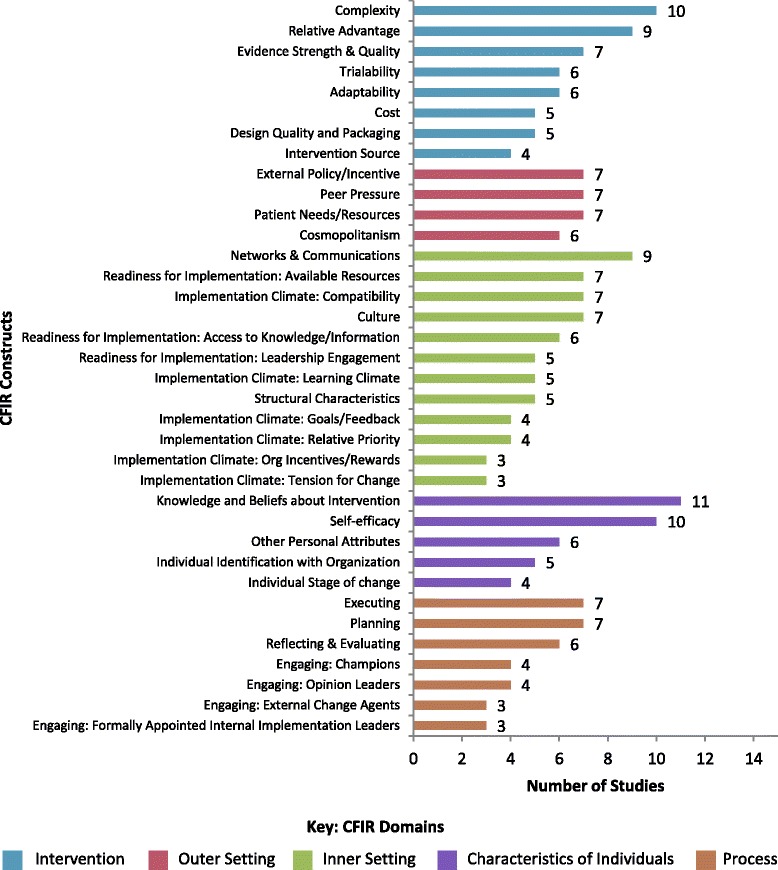
“These constructs are among the most frequently reported as key determinants of implementation outcomes using the CFIR [2, 29].”
MethodSelf-citationCancer related fatigue: implementing guidelines for optimal management
Pearson, E. J. M., Morris, M. E., & McKinstry, C. (2017) · BMC Health Services Research · doi:10.1186/s12913-017-2415-9 · Cited by 58
“Although not psychometrically validated, the CFIR has been used in several implementation studies [37].”
Method
Metadata
- Authors
- Kirk, M. A., Kelley, C., Yankey, N., Birken, S. A., Abadie, B., & Damschroder, L.
- Affiliations
- University of North Carolina at Chapel Hill (US)
- VA Ann Arbor Healthcare System (US)
- Eastern Michigan University (US)
- Corresponding author
- Kirk, M. Alexis
- Venue
- Implementation Science
- Published
- 2015-12
- Volume
- 11
- Issue
- 1
- Pages
- 72-72
- ISSN
- 1748-5908 (ISSN-L)
- PMC
- PMC4869309
- OpenAlex
- W2398003476
- Semantic Scholar
- c8757b9931f0128e029ff09f1d76564f0b0c686b
- Cited by
- 1,496
- References
- 45
- Citations by year
- 2026: 160 · 2025: 173 · 2024: 236 · 2023: 209 · 2022: 213 · 2021: 182 · 2020: 151 · 2019: 87 · 2018: 40 · 2017: 38 · 2016: 4 · 2015: 2
- FWCI
- 5.03
- Type
- journal article
- Language
- en
- Open access
- gold
- doi.org
- Licence
- cc-by
- Locations
- Implementation Science (publishedVersion, cc-by)
- PubMed Central (publishedVersion, cc-by)
- PubMed (publishedVersion)
- Carolina Digital Repository (University of North Carolina at Chapel Hill) (submittedVersion)
- Funders
- RTI International (NA)
- Topics
- Health Sciences › Health Professions › General Health Professions › Health Policy Implementation Science
- Health Sciences › Health Professions › General Health Professions › Health Sciences Research and Education
- Health Sciences › Medicine › Public Health, Environmental and Occupational Health › Clinical practice guidelines implementation
- Keywords
- Consolidated Framework for Implementation Research, implementation research, implementation factors, implementation outcomes
- MeSH terms
- Goals, Health Plan Implementation, Health Services Research, Humans
About these checks
Registry, retraction, Cites and statistics results are computed, not judged, with one exception: a printed reference that no index lists is read once by a model before it counts as a citation error. Claims are extracted by a model and kept only when their quote appears verbatim in the text; each cited source is then checked, with a model’s help, for whether it says what the claim relies on. Those verdicts can be wrong — read the claim’s quote and the cited source before relying on one.
Statistics and arithmetic are recomputed, not judged.
Confidence bands are shown only for fields calibrated on our annotated test set. None is calibrated yet, so no band is shown.
What counts as a claim ›How we measure confidence ›How we check this ›
Are you an author, or do you see a problem with this page? Request a review
Data sources
Bibliographic data: Semantic Scholar, OpenAlex, Crossref.
Contains information from the Semantic Scholar Academic Graph Datasets, made available under the ODC Attribution License (ODC-BY 1.0).
Semantic Scholar’s data is described in: Kinney, R., et al. (2023). The Semantic Scholar Open Data Platform. arXiv:2301.10140.
