

The DOI matches its Crossref record; 140 of the 140 references it cites were found in a registry or an index; 3 of the 102 sources its claims cite were checked for support.
Prevention and early intervention in youth mental health: is it time for a multidisciplinary and trans-diagnostic model for care?
Open accessAbstract
Background: Similar to other health care sectors, mental health has moved towards the secondary prevention, with the effort to detect and treat mental disorders as early as possible. However, converging evidence sheds new light on the potential of primary preventive and promotion strategies for mental health of young people. We aimed to reappraise such evidence. Methods: We reviewed the current state of knowledge on delivering promotion and preventive interventions addressing youth mental health. Results: Half of all mental disorders start by 14 years and are usually preceded by non-specific psychosocial disturbances potentially evolving in any major mental disorder and accounting for 45% of the global burden of disease across the 0–25 age span. While some action has been taken to promote the implementation of services dedicated to young people, mental health needs during this critical period are still largely unmet. This urges redesigning preventive strategies in a youth-focused multidisciplinary and trans-diagnostic framework which might early modify possible psychopathological trajectories. Conclusions: Evidence suggests that it would be unrealistic to consider promotion and prevention in mental health responsibility of mental health professionals alone. Integrated and multidisciplinary services are needed to increase the range of possible interventions and limit the risk of poor long-term outcome, with also potential benefits in terms of healthcare system costs. However, mental health professionals have the scientific, ethical, and moral responsibility to indicate the direction to all social, political, and other health care bodies involved in the process of meeting mental health needs during youth years.
Overview
AI snapshot
Written from the paper’s full text.
TL;DR
This narrative review argues that youth mental health care should move beyond secondary prevention toward primary prevention and early intervention, using a trans-diagnostic clinical staging model and integrated multidisciplinary services for ages 0–25. It synthesizes evidence on risk factors, prevention stages, and service models to support a youth-focused framework.
Key findings
- Half of all mental disorders start by age 14, and mental health problems account for 45% of the global burden of disease across the 0–25 age span; up to 1 in 5 people experience clinically relevant mental health problems before age 25, with 50% already symptomatic by age 14.
- Childhood adversities are shared risk factors across disorders; a WHO survey of 51,945 adults in 21 countries estimated that eradicating childhood adversities would reduce any lifetime mental disorder by 29.8%, adolescence-onset disorders by 32.3%, and childhood-onset disorders by 38.2%.
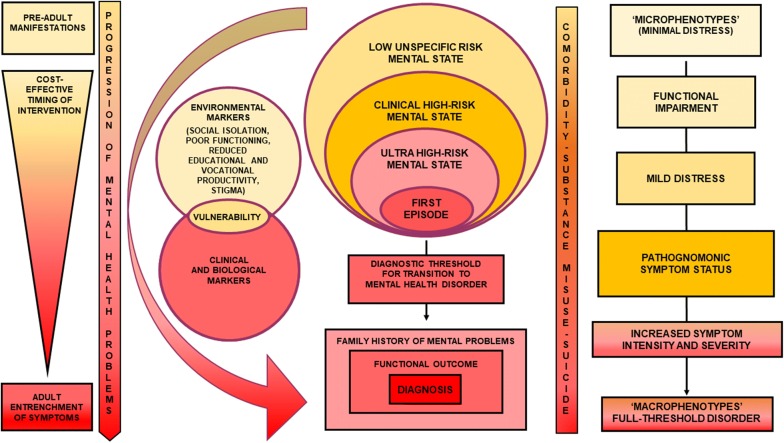
- The paper proposes a trans-diagnostic clinical high-risk mental state (CHARMS) paradigm to intercept a wider range of lower-risk cases beyond ultra-high risk for psychosis, including sub-threshold bipolar and borderline personality symptoms and mild-moderate depression.
- Integrated youth services such as Headspace expanded from 10 to more than 110 centers, reaching about 100,000 young people per year, and models like MCPAP, MHSPY, Jigsaw, and Youth space show positive access, satisfaction, and functional outcomes, though long-term efficacy evidence remains limited.
Methods
- Narrative review with a literature search in MEDLINE, Web of Science, and Scopus using terms describing risk factors, clinical staging, and multidisciplinary prevention and early interventions in youth mental health, with special attention to research from the past 25 years; some additional evidence was included if considered appropriate by all authors.
- Studies were eligible if they assessed preventing strategies in youth in a trans-diagnostic and multidisciplinary approach; exclusions were studies not applying a clinical staging model for youth mental health in a trans-diagnostic framework, not investigating youth mental health service provision in a multidisciplinary framework, or primarily assessing older populations.
- Main analysis was a narrative synthesis across the at-risk mental state concept, early-life psychosocial risk factors, prevention stages (promotion, universal/selective/indicated, secondary, tertiary), and integrated service models.
Limitations
- The paper does not state a limitations section. Evident from the text: as a narrative review, it lacks systematic review elements such as PRISMA reporting, full search strings, and formal quality appraisal, so selection and synthesis may be non-exhaustive.
- The paper itself notes evidence gaps: lack of studies assessing longer-term efficacy of collaborative care, especially in preventing poor outcome, treatment disengagement, and relapse; and absence of validated interventions to prevent multiple relapses.
- It also states that vertical and horizontal integration of the enhanced primary care model with more specialized and intensive services is not covered in this reappraisal.
Model-written summary. Check it against the paper before relying on it.
Integrity signals
Registry
Cites
Statistics
Figures
Verification
Claims the paper makes
81 Not checked yet · 10 Own interpretation · 3 Supported · 1 No basis given
Every source the paper cites for this claim was checked and supports it.
In the paper
“significant delays in receiving care are also attributable to the reduced ability of services to rapidly deliver specialist mental healthcare for youth in need after a first primary care consultation [21]”
§ Prevention and early intervention in youth mental health: is it time for a multidisciplinary and trans-diagnostic model for care? > The need for implementing prevention and early intervention in youth mental health
What the sources say
- Supportedcites [21] Fusar-Poli P. Integrated mental health services for the developmental period (0 to 25 Years): a critical review of the evidence. Front Psychiatry. 2019;10:355. source
The 'Barriers to Primary Care' section says that young people referred onward after a primary-care consultation frequently face significant delays in receiving specialist care. It also identifies a shortage of specialist youth-service providers as a major barrier for primary-care practitioners. (LLM, conf=0.90)
plaindirect- Asserted: passes — The authors put it forward as true.
- Checkable: passes — It can be checked against evidence.
- Load-bearing: passes — The paper’s conclusions depend on it.
- Based: passes — The paper gives a reason why it holds.
- Supported
Every source the paper cites for this claim was checked and supports it.
In the paper
“and an even higher reduction when considering exclusively adolescence- (32.3%) and childhood-onset (38.2%) cases [28]”
§ Prevention and early intervention in youth mental health: is it time for a multidisciplinary and trans-diagnostic model for care? > Youth mental health: which targets for which interventions?
What the sources say
- Supportedcites [28] Kessler RC, McLaughlin KA, Green JG, Gruber MJ, Sampson NA, Zaslavsky AM, et al. Childhood adversities and adult psychopathology in the WHO World Mental Health Surveys. Br J Psychiatry. 2010;197(5):378–85. source
Table 4 (indexed under “Implications and future research”; page unavailable) reports population-attributable risk proportions for all disorders of 32.3% for adolescence-onset cases and 38.2% for childhood-onset cases, compared with 29.8% overall. The paper presents these as estimated reductions if childhood adversities were eradicated, not as observed reductions. (LLM, conf=0.93)
plaindirect- Asserted: passes — The authors put it forward as true.
- Checkable: passes — It can be checked against evidence.
- Load-bearing: passes — The paper’s conclusions depend on it.
- Based: passes — The paper gives a reason why it holds.
- Supported
In the paper
“Half of all mental disorders start by 14 years”
- Also stated in: § The need for implementing prevention and early intervention in youth mental health · plain
“50% of whom being already symptomatic by the age of 14 [14]”
§ Prevention and early intervention in youth mental health: is it time for a multidisciplinary and trans-diagnostic model for care? > Abstract > Results
What the sources say
- Not checked yetcites [14] Kessler RC, Berglund P, Demler O, Jin R, Merikangas KR, Walters EE. Lifetime prevalence and age-of-onset distributions of DSM-IV disorders in the National Comorbidity Survey Replication. Arch Gen Psychiatry. 2005;62(6):593–602. source
plain- Asserted: passes — The authors put it forward as true.
- Checkable: passes — It can be checked against evidence.
- Load-bearing: passes — The paper’s conclusions depend on it.
- Based: passes — The paper gives a reason why it holds.
- Also stated in: § The need for implementing prevention and early intervention in youth mental health · plain
In the paper
“stressful life events produce the most ‘toxic’ effect on children’s stress system, raising the risk of subsequent development of stress-related mental difficulties, when experienced in the absence of a stable and supporting environment [34]”
§ Prevention and early intervention in youth mental health: is it time for a multidisciplinary and trans-diagnostic model for care? > Youth mental health: which targets for which interventions?
What the sources say
- Not checked yetcites [34] Shonkoff JP. Building a new biodevelopmental framework to guide the future of early childhood policy. Child Dev. 2010;81(1):357–67. source
plaindirect- Asserted: passes — The authors put it forward as true.
- Checkable: passes — It can be checked against evidence.
- Load-bearing: unclear — It is unclear whether the paper’s conclusions depend on it.
- Based: passes — The paper gives a reason why it holds.
In the paper
“The relation between attachment difficulties and youth psychological problems is most likely bidirectional”
§ Prevention and early intervention in youth mental health: is it time for a multidisciplinary and trans-diagnostic model for care? > Youth mental health: which targets for which interventions?
What the sources say
- Not checked yetcites [38] Kobak R, Zajac K, Herres J, Krauthamer Ewing ES. Attachment based treatments for adolescents: the secure cycle as a framework for assessment, treatment and evaluation. Attach Hum Dev. 2015;17(2):220–39. source
hedgedcorrelational- Asserted: passes — The authors put it forward as true.
- Checkable: passes — It can be checked against evidence.
- Load-bearing: unclear — It is unclear whether the paper’s conclusions depend on it.
- Based: passes — The paper gives a reason why it holds.
In the paper
“50% of whom being already symptomatic by the age of 14 [14]”
§ Prevention and early intervention in youth mental health: is it time for a multidisciplinary and trans-diagnostic model for care? > The need for implementing prevention and early intervention in youth mental health
What the sources say
- Not checked yetcites [14] Kessler RC, Berglund P, Demler O, Jin R, Merikangas KR, Walters EE. Lifetime prevalence and age-of-onset distributions of DSM-IV disorders in the National Comorbidity Survey Replication. Arch Gen Psychiatry. 2005;62(6):593–602. source
plain- Asserted: passes — The authors put it forward as true.
- Checkable: passes — It can be checked against evidence.
- Load-bearing: passes — The paper’s conclusions depend on it.
- Based: passes — The paper gives a reason why it holds.
None of the sources cited for this claim have been checked yet.
In the paper
“Meta-analytic work strongly supports the effectiveness of youth prevention programs addressing child abuse [44], negative consequences of parents’ divorce on children [45], substance abuse [46], and school-related problematic behaviors [47] in reducing rates of psychosocial difficulties later in life [48].”
§ Prevention and early intervention in youth mental health: is it time for a multidisciplinary and trans-diagnostic model for care? > Mental health prevention and early intervention in youth: where is the evidence? > Promotion of youth mental health
What the sources say
- Not checked yetcites [44] Davis MK, Gidycz CA. Child sexual abuse prevention programs: a meta-analysis. J Clin Child Psychol. 2000;29(2):257–65. source
- Not checked yetcites [45] Lee CM, Bax KA. Children’s reactions to parental separation and divorce. Paediatr Child Health. 2000;5(4):217–8. source
- Not checked yetcites [46] Tobler NS. Meta-analysis of adolescent drug prevention programs: results of the 1993 meta-analysis. NIDA Res Monogr. 1997;170:5–68.
boosteddirect- Asserted: passes — The authors put it forward as true.
- Checkable: passes — It can be checked against evidence.
- Load-bearing: passes — The paper’s conclusions depend on it.
- Based: passes — The paper gives a reason why it holds.
In the paper
“cross-prediction between anxiety and depression from adolescence to adulthood”
§ Prevention and early intervention in youth mental health: is it time for a multidisciplinary and trans-diagnostic model for care? > Youth mental health: which targets for which interventions?
What the sources say
- Not checked yetcites [40] Lancefield KS, Raudino A, Downs JM, Laurens KR. Trajectories of childhood internalizing and externalizing psychopathology and psychotic-like experiences in adolescence: a prospective population-based cohort study. Dev Psychopathol. 2016;28(2):527–36. source
plaindirect- Asserted: passes — The authors put it forward as true.
- Checkable: passes — It can be checked against evidence.
- Load-bearing: passes — The paper’s conclusions depend on it.
- Based: passes — The paper gives a reason why it holds.
In the paper
“stigma represents a major barrier in this regards [19]”
§ Prevention and early intervention in youth mental health: is it time for a multidisciplinary and trans-diagnostic model for care? > The need for implementing prevention and early intervention in youth mental health
What the sources say
- Not checked yetcites [19] Gronholm PC, Thornicroft G, Laurens KR, Evans-Lacko S. Mental health-related stigma and pathways to care for people at risk of psychotic disorders or experiencing first-episode psychosis: a systematic review. Psychol Med. 2017;47(11):1867–79. source
plaindirect- Asserted: passes — The authors put it forward as true.
- Checkable: passes — It can be checked against evidence.
- Load-bearing: passes — The paper’s conclusions depend on it.
- Based: passes — The paper gives a reason why it holds.
In the paper
“most mental health services, as traditionally developed, have proven to be ineffective to provide healthcare during this critical period [16]”
§ Prevention and early intervention in youth mental health: is it time for a multidisciplinary and trans-diagnostic model for care? > The need for implementing prevention and early intervention in youth mental health
What the sources say
- Not checked yetcites [16] Andrews G, Sanderson K, Corry J, Lapsley HM. Using epidemiological data to model efficiency in reducing the burden of depression*. J Ment Health Policy Econ. 2000;3(4):175–86. source
plain- Asserted: passes — The authors put it forward as true.
- Checkable: passes — It can be checked against evidence.
- Load-bearing: passes — The paper’s conclusions depend on it.
- Based: passes — The paper gives a reason why it holds.
- It may state two separate claims as one. 15
- Probably not a substantial claim. 7
- The quote only partly states this claim. 1
Every source the paper cites for this claim was checked and supports it.
In the paper
“increasingly clear evidence that pathways to mental disorders are pluripotent and trans-diagnostic [22]”
§ Prevention and early intervention in youth mental health: is it time for a multidisciplinary and trans-diagnostic model for care? > Mental health prevention and early intervention in youth: where is the evidence? > Primary prevention in youth mental health
What the sources say
- Supportedcites [22] McGorry PD, Mei C. Ultra-high-risk paradigm: lessons learnt and new directions. Evid Based Ment Health. 2018;21(4):131–3. source
The section “Moving towards a transdiagnostic at-risk mental state” explicitly says that a broader focus aligns with the proposition that pathways to mental disorders are pluripotent and transdiagnostic. The Abstract likewise describes pluripotent trajectories across a range of mental disorders. (LLM, conf=0.92)
boosted- Asserted: passes — The authors put it forward as true.
- Checkable: passes — It can be checked against evidence.
- Load-bearing: passes — The paper’s conclusions depend on it.
- Based: passes — The paper gives a reason why it holds.
It may state two separate claims as one.
- Supported
In the paper
“with problematic substance use including alcohol and illicit drugs being the main risk factor for incident DALY (9%) [15]”
§ Prevention and early intervention in youth mental health: is it time for a multidisciplinary and trans-diagnostic model for care? > The need for implementing prevention and early intervention in youth mental health
What the sources say
- Not checked yetcites [15] Gore FM, Bloem PJ, Patton GC, Ferguson J, Joseph V, Coffey C, et al. Global burden of disease in young people aged 10–24 years: a systematic analysis. Lancet. 2011;377(9783):2093–102. source
plaindirect- Asserted: passes — The authors put it forward as true.
- Checkable: passes — It can be checked against evidence.
- Load-bearing: fails — The paper’s conclusions may not depend on it.
- Based: passes — The paper gives a reason why it holds.
Probably not a substantial claim. The paper’s conclusions may not depend on it.
In the paper
“Among people younger than 25 years old, mental health problems, especially anxiety and mood disorders, are the main cause of disability-adjusted life-years (DALYs)”
§ Prevention and early intervention in youth mental health: is it time for a multidisciplinary and trans-diagnostic model for care? > The need for implementing prevention and early intervention in youth mental health
What the sources say
- Not checked yetcites [15] Gore FM, Bloem PJ, Patton GC, Ferguson J, Joseph V, Coffey C, et al. Global burden of disease in young people aged 10–24 years: a systematic analysis. Lancet. 2011;377(9783):2093–102. source
plaindirect- Asserted: passes — The authors put it forward as true.
- Checkable: passes — It can be checked against evidence.
- Load-bearing: fails — The paper’s conclusions may not depend on it.
- Based: passes — The paper gives a reason why it holds.
Probably not a substantial claim. The paper’s conclusions may not depend on it.
In the paper
“accounting for 45% of the global burden of disease across the 0–25 age span”
- Also stated in: § Results · plain
“accounting for 45% of the global burden of disease”
§ Prevention and early intervention in youth mental health: is it time for a multidisciplinary and trans-diagnostic model for care? > Abstract > Results
What the sources say
- Not checked yetcites [15] Gore FM, Bloem PJ, Patton GC, Ferguson J, Joseph V, Coffey C, et al. Global burden of disease in young people aged 10–24 years: a systematic analysis. Lancet. 2011;377(9783):2093–102. source
plain- Asserted: passes — The authors put it forward as true.
- Checkable: passes — It can be checked against evidence.
- Load-bearing: fails — The paper’s conclusions may not depend on it.
- Based: passes — The paper gives a reason why it holds.
Probably not a substantial claim. The paper’s conclusions may not depend on it.
- Also stated in: § Results · plain
In the paper
“internalizing and externalizing psychopathology predicting psychosis-like experiences and vice versa [40]”
§ Prevention and early intervention in youth mental health: is it time for a multidisciplinary and trans-diagnostic model for care? > Youth mental health: which targets for which interventions?
What the sources say
- Not checked yetcites [40] Lancefield KS, Raudino A, Downs JM, Laurens KR. Trajectories of childhood internalizing and externalizing psychopathology and psychotic-like experiences in adolescence: a prospective population-based cohort study. Dev Psychopathol. 2016;28(2):527–36. source
plaindirect- Asserted: passes — The authors put it forward as true.
- Checkable: passes — It can be checked against evidence.
- Load-bearing: passes — The paper’s conclusions depend on it.
- Based: passes — The paper gives a reason why it holds.
It may state two separate claims as one.
In the paper
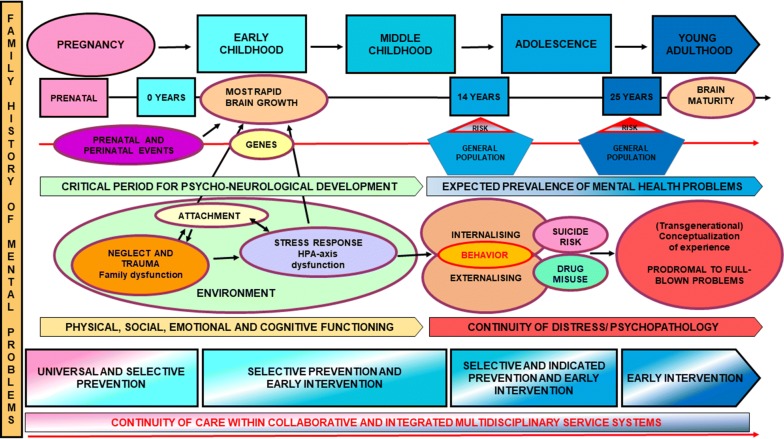
“Research evidence indicates that a number of factors influence the person’s mental health from before birth until early adulthood, after which mental health can still be significantly modulated but to a lesser extent [29]”
§ Prevention and early intervention in youth mental health: is it time for a multidisciplinary and trans-diagnostic model for care? > Youth mental health: which targets for which interventions?
What the sources say
- Not checked yetcites [29] Mustard JF. Brain development, child development—adult health and well-being and paediatrics. Paediatr Child Health. 1999;4(8):519–20. source
hedgeddirect- Asserted: passes — The authors put it forward as true.
- Checkable: passes — It can be checked against evidence.
- Load-bearing: passes — The paper’s conclusions depend on it.
- Based: passes — The paper gives a reason why it holds.
It may state two separate claims as one.
A conclusion the paper draws from its own results — it cites no other source for it, so there is none to check. The quote shows it is in the paper.
In the paper
“interventions addressing multiple co-occurring problems are more likely to impact positively on youth mental health, potentially interrupting the continuity between childhood internalizing and externalizing psychopathology that may also co-occur with psychosis-like experiences on one hand, and psychiatric disorders in adulthood on the other.”
§ Prevention and early intervention in youth mental health: is it time for a multidisciplinary and trans-diagnostic model for care? > Youth mental health: which targets for which interventions?
hedgedconditional- Asserted: passes — The authors put it forward as true.
- Checkable: passes — It can be checked against evidence.
- Load-bearing: passes — The paper’s conclusions depend on it.
- Based: passes — The paper gives a reason why it holds.
It may state two separate claims as one.
None of the sources cited for this claim have been checked yet.
In the paper
“In its absence, neurodevelopment may be undermined, making that person more vulnerable to further environmental insults and subsequent development of both internalizing [36] and externalizing [37] behavioral problems, including anxiety, depression, substance misuse, maladaptive eating patterns, sexual risk behavior, and suicidality.”
§ Prevention and early intervention in youth mental health: is it time for a multidisciplinary and trans-diagnostic model for care? > Youth mental health: which targets for which interventions?
What the sources say
- Not checked yetcites [36] Groh AM, Roisman GI, van Ijzendoorn MH, Bakermans-Kranenburg MJ, Fearon RP. The significance of insecure and disorganized attachment for children’s internalizing symptoms: a meta-analytic study. Child Dev. 2012;83(2):591–610. source
- Not checked yetcites [37] Fearon RP, Bakermans-Kranenburg MJ, van Ijzendoorn MH, Lapsley AM, Roisman GI. The significance of insecure attachment and disorganization in the development of children’s externalizing behavior: a meta-analytic study. Child Dev. 2010;81(2):435–56. source
hedgedconditional- Asserted: passes — The authors put it forward as true.
- Checkable: passes — It can be checked against evidence.
- Load-bearing: unclear — It is unclear whether the paper’s conclusions depend on it.
- Based: passes — The paper gives a reason why it holds.
It may state two separate claims as one.
None of the sources cited for this claim have been checked yet.
In the paper
“lifetime omega-3 fatty acid [56–58], vitamin [57–59], sulforaphane [60], and prebiotic [61] supplementation to support good mental health by reducing neuroinflammation, oxidative stress, and microbiota dysbiosis”
§ Prevention and early intervention in youth mental health: is it time for a multidisciplinary and trans-diagnostic model for care? > Mental health prevention and early intervention in youth: where is the evidence? > Primary prevention in youth mental health
What the sources say
- Not checked yetcites [56] Pusceddu MM, Kelly P, Stanton C, Cryan JF, Dinan TG. N-3 Polyunsaturated Fatty Acids through the Lifespan: Implication for Psychopathology. Int J Neuropsychopharmacol. 2016;19(12):pyw078. source
- Not checked yetcites [57] Dawson SL, Bowe SJ, Crowe TC. A combination of omega-3 fatty acids, folic acid and B-group vitamins is superior at lowering homocysteine than omega-3 alone: a meta-analysis. Nutr Res. 2016;36(6):499–508. source
- Not checked yetcites [58] Kurtys E, Eisel ULM, Verkuyl JM, Broersen LM, Dierckx RAJO, de Vries EFJ. The combination of vitamins and omega-3 fatty acids has an enhanced anti-inflammatory effect on microglia. Neurochem Int. 2016;99:206–14. source
- Not checked yetcites [59] Eryilmaz H, Dowling KF, Huntington FC, Rodriguez-Thompson A, Soare TW, Beard LM, et al. Association of prenatal exposure to population-wide folic acid fortification with altered cerebral cortex maturation in youths. JAMA Psychiatry. 2018;75(9):918–28. source
- Not checked yetcites [60] Do KQ, Cuenod M, Hensch TK. Targeting oxidative stress and aberrant critical period plasticity in the developmental trajectory to schizophrenia. Schizophr Bull. 2015;41(4):835–46. source
plaindirect- Asserted: passes — The authors put it forward as true.
- Checkable: passes — It can be checked against evidence.
- Load-bearing: unclear — It is unclear whether the paper’s conclusions depend on it.
- Based: passes — The paper gives a reason why it holds.
It may state two separate claims as one. The quote only partly states this claim.
None of the sources cited for this claim have been checked yet.
In the paper
“some health and social domains such as education, housing, nutrition, and healthcare, have pervasive influence on low income settings, while lack of supportive environments and community networks may have more detrimental effects in urban areas with high population density or ethnic minorities [50, 51]”
§ Prevention and early intervention in youth mental health: is it time for a multidisciplinary and trans-diagnostic model for care? > Mental health prevention and early intervention in youth: where is the evidence? > Promotion of youth mental health
What the sources say
- Not checked yetcites [50] Castillo EG, Ijadi-Maghsoodi R, Shadravan S, Moore E, Mensah MO, Docherty M, et al. Community interventions to promote mental health and social equity. Curr Psychiatry Rep. 2019;21(5):35. source
- Not checked yetcites [51] Jané-Llopis E, Barry M, Hosman C, Patel V. Mental health promotion works: a review. Promot Educ. 2005; 12(Suppl 2):9–25, 61, 7.
hedgedconditional- Asserted: passes — The authors put it forward as true.
- Checkable: passes — It can be checked against evidence.
- Load-bearing: unclear — It is unclear whether the paper’s conclusions depend on it.
- Based: passes — The paper gives a reason why it holds.
It may state two separate claims as one.
In the paper
“Results suggested that indicated interventions have positive effects not only in reducing the presenting problem but also in improving other areas of psychosocial adjustment [94].”
§ Prevention and early intervention in youth mental health: is it time for a multidisciplinary and trans-diagnostic model for care? > Mental health prevention and early intervention in youth: where is the evidence? > Primary prevention in youth mental health
What the sources say
- Not checked yetcites [94] Conley CS, Shapiro JB, Kirsch AC, Durlak JA. A meta-analysis of indicated mental health prevention programs for at-risk higher education students. J Couns Psychol. 2017;64(2):121–40. source
hedgeddirect- Asserted: passes — The authors put it forward as true.
- Checkable: passes — It can be checked against evidence.
- Load-bearing: unclear — It is unclear whether the paper’s conclusions depend on it.
- Based: passes — The paper gives a reason why it holds.
It may state two separate claims as one.
In the paper
“Research evidence suggests that the development of services for indicated prevention has met the objectives of strengthening service engagement, reducing the duration of untreated illness, and liaising with secondary prevention interventions [42].”
§ Prevention and early intervention in youth mental health: is it time for a multidisciplinary and trans-diagnostic model for care? > Mental health prevention and early intervention in youth: where is the evidence? > Primary prevention in youth mental health
What the sources say
- Not checked yetcites [42] WHO. Prevention of mental disorders. Effective interventions and policy options. Geneva: World Health Organisation; 2004.
hedgeddirect- Asserted: passes — The authors put it forward as true.
- Checkable: passes — It can be checked against evidence.
- Load-bearing: unclear — It is unclear whether the paper’s conclusions depend on it.
- Based: passes — The paper gives a reason why it holds.
It may state two separate claims as one.
A conclusion the paper draws from its own results — it cites no other source for it, so there is none to check. The quote shows it is in the paper.
In the paper
“Most likely, promotion programs require tailoring to the specific socio-cultural setting.”
§ Prevention and early intervention in youth mental health: is it time for a multidisciplinary and trans-diagnostic model for care? > Mental health prevention and early intervention in youth: where is the evidence? > Promotion of youth mental health
hedged- Asserted: passes — The authors put it forward as true.
- Checkable: fails — It may be too vague to check against evidence.
- Load-bearing: fails — The paper’s conclusions may not depend on it.
- Based: passes — The paper gives a reason why it holds.
Probably not a substantial claim. It may be too vague to check against evidence. The paper’s conclusions may not depend on it.
In the paper
“Studies have shown that most primary care practices have enrolled in the program, increasing young individuals’ access to psychiatric services and overall satisfaction [130].”
§ Prevention and early intervention in youth mental health: is it time for a multidisciplinary and trans-diagnostic model for care? > Towards the development of integrated and multidisciplinary services for the young population
What the sources say
- Not checked yetcites [130] Straus JH, Sarvet B. Behavioral health care for children: the massachusetts child psychiatry access project. Health Aff (Millwood). 2014;33(12):2153–61. source
plaindirect- Asserted: passes — The authors put it forward as true.
- Checkable: passes — It can be checked against evidence.
- Load-bearing: unclear — It is unclear whether the paper’s conclusions depend on it.
- Based: passes — The paper gives a reason why it holds.
It may state two separate claims as one.
A conclusion the paper draws from its own results — it cites no other source for it, so there is none to check. The quote shows it is in the paper.
In the paper
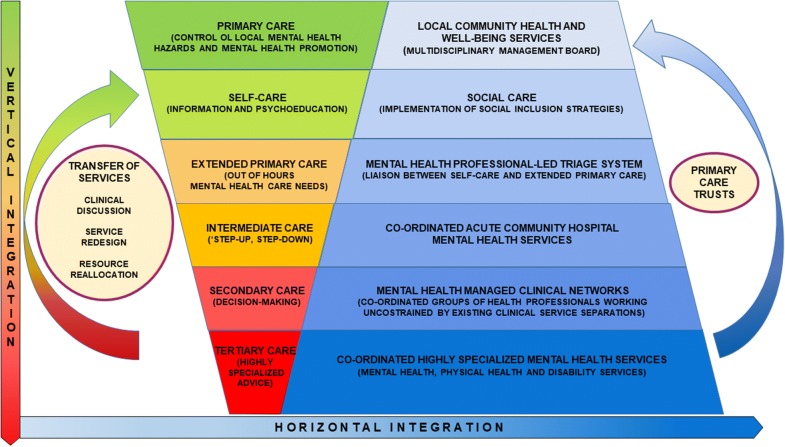
“Research evidence summarized in this review suggests that health researchers and professionals as well as health service institutions and governments have to join forces to deliver integrated and multidisciplinary actions in mental health, especially in the early steps of the prevention chain.”
§ Prevention and early intervention in youth mental health: is it time for a multidisciplinary and trans-diagnostic model for care? > Conclusions and future directions
hedged- Asserted: passes — The authors put it forward as true.
- Checkable: fails — It may be too vague to check against evidence.
- Load-bearing: passes — The paper’s conclusions depend on it.
- Based: passes — The paper gives a reason why it holds.
Probably not a substantial claim. It may be too vague to check against evidence.
- Rests on an assumption: Promotion and prevention in mental health are not necessarily the responsibility of mental health professionals alone.
- Rests on an assumption: The mental health care sector has among its prerogatives the provision of effective interventions from early stages of illness to long-lasting conditions.
In the paper
“In Ireland, services called ‘Headstrong’ and ‘Jigsaw’ have developed, proving to be effective in facilitating access to community care to people aged 12–25 with emerging mental health difficulties [134].”
§ Prevention and early intervention in youth mental health: is it time for a multidisciplinary and trans-diagnostic model for care? > Towards the development of integrated and multidisciplinary services for the young population
What the sources say
- Not checked yetcites [134] O’Keeffe L, O’Reilly A, O’Brien G, Buckley R, Illback R. Description and outcome evaluation of Jigsaw: an emergent Irish mental health early intervention programme for young people. Ir J Psychol Med. 2015;32(1):71–7. source
boosteddirect- Asserted: passes — The authors put it forward as true.
- Checkable: passes — It can be checked against evidence.
- Load-bearing: unclear — It is unclear whether the paper’s conclusions depend on it.
- Based: passes — The paper gives a reason why it holds.
It may state two separate claims as one.
In the paper
“Depending on the presenting concern, the proportion of each delivered service can vary as well as the main service provider (general practitioner, psychologist, allied mental health etc.) and funding source [137].”
§ Prevention and early intervention in youth mental health: is it time for a multidisciplinary and trans-diagnostic model for care? > Towards the development of integrated and multidisciplinary services for the young population
What the sources say
- Not checked yetcites [137] Rickwood DJ, Telford NR, Mazzer KR, Parker AG, Tanti CJ, McGorry PD. The services provided to young people through the headspace centres across Australia. Med J Aust. 2015;202(10):533–6. source
plaincorrelational- Asserted: passes — The authors put it forward as true.
- Checkable: passes — It can be checked against evidence.
- Load-bearing: unclear — It is unclear whether the paper’s conclusions depend on it.
- Based: passes — The paper gives a reason why it holds.
It may state two separate claims as one.
In the paper
“Studies have shown benefits of MHSPY interventions in terms of higher psychosocial functioning and family satisfaction as well as lower burden on services and risk to self and others [131].”
§ Prevention and early intervention in youth mental health: is it time for a multidisciplinary and trans-diagnostic model for care? > Towards the development of integrated and multidisciplinary services for the young population
What the sources say
- Not checked yetcites [131] Grimes KE, Mullin B. MHSPY: a children’s health initiative for maintaining at-risk youth in the community. J Behav Health Serv Res. 2006;33(2):196–212. source
plaindirect- Asserted: passes — The authors put it forward as true.
- Checkable: passes — It can be checked against evidence.
- Load-bearing: passes — The paper’s conclusions depend on it.
- Based: passes — The paper gives a reason why it holds.
It may state two separate claims as one.
In the paper
“In a decade, thanks to the creation of ‘communities of youth services’ (CYSs), Headspace has seen growing the number of its centers from 10 to more than 110, granting access to services to about 100,000 young people per year, including vulnerable, marginalized, and at-risk groups [8].”
§ Prevention and early intervention in youth mental health: is it time for a multidisciplinary and trans-diagnostic model for care? > Towards the development of integrated and multidisciplinary services for the young population
What the sources say
- Not checked yetcites [8] McGorry PD, Mei C. Early intervention in youth mental health: progress and future directions. Evid Based Ment Health. 2018;21(4):182–4. source
plaindirectn = 100,000- Asserted: passes — The authors put it forward as true.
- Checkable: passes — It can be checked against evidence.
- Load-bearing: unclear — It is unclear whether the paper’s conclusions depend on it.
- Based: passes — The paper gives a reason why it holds.
It may state two separate claims as one.
In the paper
“elements indicating best practice have been identified, including being highly accessible (affordable, convenient, timely, non-stigmatizing, flexible, inclusive, and awareness raising), acceptable (youth-friendly, confidential, respectful, engaging, responsive, competent, and collaborative), appropriate (early intervention focused, comprehensive, developmentally-appropriate, suitable to early st”
§ Prevention and early intervention in youth mental health: is it time for a multidisciplinary and trans-diagnostic model for care? > Towards the development of integrated and multidisciplinary services for the young population
What the sources say
- Not checked yetcites [138] Hetrick SE, Bailey AP, Smith KE, Malla A, Mathias S, Singh SP, et al. Integrated (one-stop shop) youth health care: best available evidence and future directions. Med J Aust. 2017;207(10):S5–18.
plain- Asserted: passes — The authors put it forward as true.
- Checkable: passes — It can be checked against evidence.
- Load-bearing: passes — The paper’s conclusions depend on it.
- Based: passes — The paper gives a reason why it holds.
Probably not a substantial claim.
A conclusion the paper draws from its own results — it cites no other source for it, so there is none to check. The quote shows it is in the paper.
In the paper
“The continuity of youth mental health needs from an early age seems to go beyond the boundaries of what falls within the mental health professionals’ competences and duties, putting at stake the epistemological status of psychiatry.”
§ Prevention and early intervention in youth mental health: is it time for a multidisciplinary and trans-diagnostic model for care? > Conclusions and future directions
hedged- Asserted: passes — The authors put it forward as true.
- Checkable: fails — It may be too vague to check against evidence.
- Load-bearing: passes — The paper’s conclusions depend on it.
- Based: passes — The paper gives a reason why it holds.
Probably not a substantial claim. It may be too vague to check against evidence. It may state two separate claims as one.
The paper relies on this without support.
Promotion and prevention in mental health are not necessarily the responsibility of mental health professionals alone.
“Promotion and prevention in mental health are not necessarily responsibility of mental health professionals alone.”
The paper relies on this without support.
The mental health care sector has among its prerogatives the provision of effective interventions from early stages of illness to long-lasting conditions.
“The mental health care sector has among its prerogatives the provision of effective interventions from early stages of illness to long-lasting conditions.”
Claims other papers make about this one
Each is checked against this paper’s own text: does it say what the citing paper says it does?
The source backs part of the claim, not all of it — or backs it for a different population, condition or comparison.
In the citing paper
“the marked benefits of early detection of STBs, ranging from acute suicide prevention to identification of at-risk children for early intervention, when such interventions are potentially most effective18”
From Asking Preadolescents About Suicide Is Not Associated With Increased Suicidal Thoughts (2026) · cites this paper as [18]
Experimental — accuracy not yet measured
Citations
Cites
Kessler, R. C., Berglund, P., Demler, O., Jin, R., Merikangas, K. R., & Walters, E. E. (2005) · Archives of General Psychiatry · doi:10.1001/archpsyc.62.6.593 · Cited by 20,391
Closing the gap in a generation: health equity through action on the social determinants of health
Marmot, M. G., Friel, S., Bell, R., Houweling, T. A. J., & Taylor, S. A. J. (2008) · The Lancet · doi:10.1016/s0140-6736(08)61690-6 · Cited by 8,473
Early childhood development coming of age: science through the life course
Black, M. M., Walker, S. P., Fernald, L. C. H., Andersen, C. T., DiGirolamo, A. M., Lu, C., McCoy, D. C., Fink, G., Shawar, Y. R., Shiffman, J., et al. (2017) · The Lancet · doi:10.1016/s0140-6736(16)31389-7 · Cited by 3,014
Exercise: a behavioral intervention to enhance brain health and plasticity
Cotman, C. (2002) · Trends in Neurosciences · doi:10.1016/s0166-2236(02)02143-4 · Cited by 2,739
Childhood adversities and adult psychopathology in the WHO World Mental Health Surveys
Kessler, R. C., McLaughlin, K. A., Green, J. G., Gruber, M. J., Sampson, N. A., Zaslavsky, A. M., Aguilar-Gaxiola, S., Alhamzawi, A. O., Alonso, J., Angermeyer, M., et al. (2010) · British Journal of Psychiatry · doi:10.1192/bjp.bp.110.080499 · Cited by 2,640
Changes in grey matter induced by training
Draganski, B., Gaser, C., Busch, V., Schuierer, G., Bogdahn, U., & May, A. (2004) · Nature · doi:10.1038/427311a · Cited by 2,373
Global burden of disease in young people aged 10–24 years: a systematic analysis
Gore, F. M., Bloem, P. J., Patton, G. C., Ferguson, J., Joseph, V., Coffey, C., Sawyer, S. M., & Mathers, C. D. (2011) · The Lancet · doi:10.1016/s0140-6736(11)60512-6 · Cited by 2,301
Greenberg, M. T., Weissberg, R. P., O'Brien, M. U., Zins, J. E., Fredericks, L., Resnik, H., & Elias, M. J. (2003) · American Psychologist · doi:10.1037/0003-066x.58.6-7.466 · Cited by 2,147
Attachment and reflective function: Their role in self-organization
FONAGY, P., & TARGET, M. (1997) · Development and Psychopathology · doi:10.1017/s0954579497001399 · Cited by 1,708
Attachment and development: A prospective, longitudinal study from birth to adulthood
Sroufe, L. A. (2005) · Attachment & Human Development · doi:10.1080/14616730500365928 · Cited by 1,685
Research works printed but not linked: 2
- WHO. Mental health action plan 2013–2020. Geneva: World Health Organization; 2013.
- Birchwood M. Youth space and youth mental health. Eur Psychiatry. 2018;48:S7.
Cited by
Sorted by citations
Items 301–400 of 726
Greenberg, L. R., McNamara, K., & Wilkins, S. (2021) · Family Court Review · doi:10.1111/fcre.12602 · Cited by 3
Yong, A., Zhao, Y., Xu, H., Liu, Q., & Huang, C. (2023) · Acta Neurologica Belgica · doi:10.1007/s13760-023-02247-5 · Cited by 3
de Vries, Y. A., Bos, E. H., Roest, A. M., & de Jonge, P. (2024) · Springer eBooks · doi:10.1007/978-3-030-51366-5_89 · Cited by 3
Preventive Mental Health Care: A Complex Systems Framework for Ambient Smart EnvironmentsPreprint
White, B. P., & Hipólito, I. (2023) · PsyArXiv (OSF Preprints) · doi:10.31234/osf.io/etsu4 · Cited by 3
Peck, A., Hutchinson, M., & Provost, S. (2023) · Frontiers in Child and Adolescent Psychiatry · doi:10.3389/frcha.2023.1074861 · Cited by 3
Wambua, G. N., Stein, A. L., Seedat, S., Sijbrandij, M., Baisley, K. J., Shahmanesh, M., Seeley, J., & Ngwenya, N. B. (2024) · BMJ Open · doi:10.1136/bmjopen-2024-088992 · Cited by 2
de Camargo, É. M., Chen, S., López‐Bueno, R., Mesas, A. E., Bizzozero‐Peroni, B., Martín‐Calvo, N., Jiménez‐López, E., & López‐Gil, J. F. (2024) · BMJ Open Sport & Exercise Medicine · doi:10.1136/bmjsem-2024-002069 · Cited by 2
The ABCD and HBCD Studies: Longitudinal Studies to Inform Prevention Science
Dowling, G. J., Hoffman, E. A., Cole, K. M., Wargo, E. M., & Volkow, N. D. (2024) · FOCUS The Journal of Lifelong Learning in Psychiatry · doi:10.1176/appi.focus.20240016 · Cited by 2
Young, H., Melia, Y., & Chance-Lawton, L. (2024) · Adoption & Fostering · doi:10.1177/03085759241292624 · Cited by 2
McClure, J. M., Mara, C. A., Stark, L. J., Anderson, J. B., Young, M. A., Aggarwal, A., Harris, E. N., & Modi, A. C. (2025) · The Journal of Behavioral Health Services & Research · doi:10.1007/s11414-024-09928-w · Cited by 2
Sodi, T., Rantho, K. M., Matlakala, F. K., Wadende, P. A., Ikhile, D., Dada, S. O., Frost, D., Henry, P. A., Ishaku, U. G., Brown, M. O., et al. (2025) · Cambridge Prisms Global Mental Health · doi:10.1017/gmh.2024.153 · Cited by 5
Comparing primary caregiver and teacher ratings of mental health in preschool children
Tian, J., Wang, L., & Rozelle, S. (2025) · International Journal of Behavioral Development · doi:10.1177/01650254241310177 · Cited by 3
Lan, W., Anderson, J., Štochl, J., Jones, P. B., Ford, T. J., & Burn, A. (2025) · BMJ Mental Health · doi:10.1136/bmjment-2024-301381 · Cited by 2
Ben‐David, S., Biddell, M., Lougheed, J. P., Vien, C., Ortiz, R., Kealy, D., Turner, S., Gawliuk, M., Mathias, S., & Barbic, S. P. (2025) · Community Mental Health Journal · doi:10.1007/s10597-025-01456-x · Cited by 2
Adu, J., Wong, J. P., Boakye, P. N., Gyamfi, S., Etowa, E. B., & Owusu, M. F. (2025) · JMIR Research Protocols · doi:10.2196/66851 · Cited by 3
Tariq, A., Gray, E., Gregory, A. M., & Chan, S. W. Y. (2025) · Mental Health Science · doi:10.1002/mhs2.70010 · Cited by 4
Gossip, K., John, J., Comben, C., Page, I. S., Erskine, H. E., Scott, J. G., & Diminic, S. (2025) · International Journal of Mental Health Nursing · doi:10.1111/inm.70034 · Cited by 2
Xiao, Z., Qiu, B., Guo, X., Zhong, T., & Wu, S. (2025) · Journal of Psychosocial Nursing and Mental Health Services · doi:10.3928/02793695-20250415-01 · Cited by 2
RETRACTED: Family Members’ Perspectives on Mental Illness Stigma: A Community Study
Adu, J., Oudshoorn, A., Anderson, K. K., Marshall, C. A., Stuart, H. L., & Owusu, M. F. (2025) · Canadian Journal of Nursing Research · doi:10.1177/08445621251343167 · Cited by 3
RetractedPacker, R., & Pierce, A. (2025) · Pastoral Care in Education · doi:10.1080/02643944.2025.2530002 · Cited by 2
Hinton, J. B., Sefcik, R., Burdyny, M. R., Raina, R., & Riley, P. M. (2025) · Journal of Pediatric Orthopaedics · doi:10.1097/bpo.0000000000003045 · Cited by 2
Lee, M. H. M. H., Yap, K. H., & Ho, M. R. (2025) · Cambridge Prisms Global Mental Health · doi:10.1017/gmh.2025.10042 · Cited by 2
Manifestation and Measurement of Atypical Depression: A Scoping Review
Zahra, S. M., Whelan, T. A., Henry, D., Pizarro‐Campagna, E., Anderson, J., & Yang, Y. (2025) · Clinical Psychology & Psychotherapy · doi:10.1002/cpp.70123 · Cited by 2
Bibb, J., Dimopoulos-Bick, T. L., McMahon, K., Tjung, C., Orcher, P., & Palmer, V. J. (2025) · Mental Health & Prevention · doi:10.1016/j.mhp.2025.200457 · Cited by 2
Early intervention for eating disorders: a call to action for inclusion of minoritized groups
Egbert, A. H., & Schram, S. J. (2025) · Eating Disorders · doi:10.1080/10640266.2025.2564947 · Cited by 3
Adebisi, Y. A., Alshahrani, N. Z., & Ogunkola, I. O. (2025) · Journal of Preventive Medicine and Public Health · doi:10.3961/jpmph.25.476 · Cited by 2
Chimukuche, R. S., Zuma, T., Wambua, G. N., Manyaapelo, T., Edwards, A., Chimbindi, N., Orievulu, K. S., Gumede, D. M., Myburgh, N., Cloete, A., et al. (2025) · BMC Public Health · doi:10.1186/s12889-025-24306-7 · Cited by 2
Nelson, K. L., Chambless, K., Panicker, D., Holtz, K., Hacker, M. E., & Banks, M. (2025) · Journal of Prevention and Health Promotion · doi:10.1177/26320770251384660 · Cited by 2
Fatahillah, A. F., Yauwrentius, N. A., Faiza, P. R., Hasani, M. F., & Maulina, A. (2025) · Procedia Computer Science · doi:10.1016/j.procs.2025.09.069 · Cited by 2
Faizan, M. A., Jithendra, G. V., Challuri, P., Vineela, S., Nandhikonda, S. R., Deekshita, K. D., & Macharapu, R. (2025) · Indian Journal of Psychological Medicine · doi:10.1177/02537176251387608 · Cited by 2
21st century innovations in pediatrics
Ravi, U., Chamarthi, V. S., Parsi, S., Ponnam, H. C., & Kashyap, R. (2025) · Frontiers in Pediatrics · doi:10.3389/fped.2025.1700475 · Cited by 2
Varker, T., Metcalf, O., Mok, Y. F., Lamb, K. E., Fredrickson, J., Arjmand, H., Howlett, P., Gibson, K., Pham, L., Everett, K., et al. (2025) · npj Digital Medicine · doi:10.1038/s41746-025-02092-1 · Cited by 2
Gender Differences in Psychological Strengths Among Rural Adolescents
Preston, A. J., Bullard, J. S., Smith, R., & Peppler, A. (2025) · Journal of Child and Adolescent Psychiatric Nursing · doi:10.1111/jcap.70048 · Cited by 3
Moghimi, E., Kim, S., Allen, S., Djaigbe, D., Bogdan, A., Farr, S., & Canning, C. (2026) · Mental Health & Prevention · doi:10.1016/j.mhp.2026.200478 · Cited by 2
Stapley, E., March, A., Mansfield, R., Ashworth, E., Burrell, K., Thompson, A., Ravaccia, G. G., Deighton, J., & Hayes, D. (2026) · Contemporary School Psychology · doi:10.1007/s40688-025-00574-3 · Cited by 2
Empowering young adults in disadvantaged communities to promote mental health among their peers
Hadebe, N. N., & Visser, M. J. (2026) · South African Journal of Psychology · doi:10.1177/00812463261418800 · Cited by 2
Sahu, N. K., Gupta, S., & Lone, H. R. (2026) · IEEE Transactions on Affective Computing · doi:10.1109/taffc.2026.3666241 · Cited by 5
Framework for Approaching Healthy Mental and Emotional Development in Pediatrics: Clinical Report
Berger‐Jenkins, E., Poon, J. K., Davis, K. H., Starin, A. C., Segal, R. S., Lavin, A., Nasir, A. A., Davis, B. E., Gidwani, P. P., Johnson, T. J., et al. (2026) · PEDIATRICS · doi:10.1542/peds.2026-076620 · Cited by 4
Zafra-Palomino, L., López, L. J. G., & Jiménez-Vázquez, D. (2026) · Children and Youth Services Review · doi:10.1016/j.childyouth.2026.109037 · Cited by 2
Determining Linguistic Markers in Cognitive Distortions from COVID-19 Pandemic-Related Reddit Texts
Aureus, J. P., Estuar, M. R. J. E., Mapua, D. C., Abao, R. P., & Cataluna, A. A. M. (2021) · International Conference in Information and Computing Research (iCORE) · doi:10.1109/icore54267.2021.00029 · Cited by 2
Ganie, A. U. R., Ammapattian, T., Jangam, K. V., & Kommu, J. V. S. (2023) · Journal of Psychosocial Rehabilitation and Mental Health · doi:10.1007/s40737-023-00332-9 · Cited by 2
Алексеевич, Г. С., Levchuk, L. A., Simutkin, G. G., Ivanova, S. А., & Bokhan, N. A. (2023) · S S Korsakov Journal of Neurology and Psychiatry · doi:10.17116/jnevro202312303182 · Cited by 2
Mental Well-being Among Adolescents: A Cross-Sectional Survey
Rodrigues, L., Safeekh, A., & Veigas, J. (2023) · Journal of Health and Allied Sciences NU · doi:10.1055/s-0043-1771384 · Cited by 3
Kim, J., & Scott, R. (2024) · Healthcare · doi:10.3390/healthcare12020279 · Cited by 2
Kerna, N. A., Pruitt, K. D., Carsrud, N. D. V., Ngwu, D. C., Holets, H. M., Flores, J. V., & Anderson, J. (2024) · European Journal of Contemporary Education and E-Learning · doi:10.59324/ejceel.2024.2(1).17 · Cited by 2
Mahr, F., Petrovic-Dovat, L., Waschbusch, D. A., Mahr, S., Jabran, A., Ali, S., & Nadeem, T. (2024) · Evidence-Based Practice in Child and Adolescent Mental Health · doi:10.1080/23794925.2024.2324765 · Cited by 2
Haug, I. M., Neumer, S., Handegård, B. H., Lisøy, C., Rasmussen, L. P., Bania, E. V., Adolfsen, F., & Patras, J. (2024) · Administration and Policy in Mental Health and Mental Health Services Research · doi:10.1007/s10488-024-01389-9 · Cited by 2
Slaten, C. D., Morris, C. A. W., Williams, M. S., Lee, J., Haberski, J., & Hovey, S. (2024) · Professional School Counseling · doi:10.1177/2156759x241247165 · Cited by 4
Graves, J. M., Abshire, D. A., Mackelprang, J. L., Klein, T., González, C., Parrott, K., Eti, D. U., Ferris, J. G., Chacon, C. M., & Beck, A. D. (2024) · The Journal of Rural Health · doi:10.1111/jrh.12866 · Cited by 2
Bevelaqua, A., & Muss, C. (2024) · Open Journal of Preventive Medicine · doi:10.4236/ojpm.2024.146010 · Cited by 2
Waid, J., Kutzler, C., & Tomfohrde, O. (2024) · Youth · doi:10.3390/youth4030086 · Cited by 2
Fernández, M. E., Johnstone, S. J., Varcoe, S. C., & Howard, S. J. (2024) · Research in Developmental Disabilities · doi:10.1016/j.ridd.2024.104840 · Cited by 2
Spiritual leadership training for improved wellbeing students of Islamic Boarding School
Faidah, M., Rahmawati, D., Nuryono, W., Sifaq, A., & Muntazeri, S. N. (2024) · E3S Web of Conferences · doi:10.1051/e3sconf/202456804021 · Cited by 2
Camacho-Rubio, J., Ulloa, A., Parellada, M., Pina-Camacho, L., Díaz-Caneja, C., Sevilla-Cermeño, L., Arrieta, M., Cerón, B., Vidal, J., & Arango, C. (2024) · International Review of Psychiatry · doi:10.1080/09540261.2024.2409187 · Cited by 5
Casline, E. P., Woodard, G. S., Lane, E., Pollowitz, S., Douglas, S. R., Ehrenreich, J. T., Ginsburg, G. S., & Jensen‐Doss, A. (2024) · Administration and Policy in Mental Health and Mental Health Services Research · doi:10.1007/s10488-024-01417-8 · Cited by 2
A Qualitative Study on Mental Health Services in Primary Care in Türkiye
Güden, E., Borlu, A., Akpınar, Y. Y., Çorum Provincial Health Directorate, Ç., Eker, Ö. O., Özsoy, S., & Baykan, Z. (2024) · ALPHA PSYCHIATRY · doi:10.5152/alphapsychiatry.2024.241605 · Cited by 2
Interoception and its application to paediatric occupational therapy: A scoping review
Clark, E., Brown, T., & Yu, M. (2024) · Australian Occupational Therapy Journal · doi:10.1111/1440-1630.12997 · Cited by 2
Kaoser, R., Thakore, P., Peterson, S., Wiedmeyer, M.-L., Sierra-Heredia, C., Goldenberg, S. M., Machado, S., Hagos, S., Tayyar, E., Bozorgi, Y., et al. (2024) · International Journal for Equity in Health · doi:10.1186/s12939-024-02352-8 · Cited by 4
Carl, T., Tully, L. A., McLean, R. K., Dadds, M. R., Hawes, D. J., Mihalopoulos, C., Chatterton, M. L., Oberklaid, F., Waters, A. M., Shanley, D. C., et al. (2024) · Contemporary Clinical Trials · doi:10.1016/j.cct.2024.107801 · Cited by 2
Navigating mental health risks among Australian military Veterans: Insights for general practice
Prevett, A., & Lâm, J. (2025) · Journal of Military Veteran and Family Health · doi:10.3138/jmvfh-2024-0013 · Cited by 2
Drysdale, R. E., Mvelase, S., Kane, J. C., Gruver, R. S., Desmond, C., & Davidson, L. L. (2025) · Journal of Adolescent Health · doi:10.1016/j.jadohealth.2024.11.240 · Cited by 2
Exploring Suicide Factors in Online Discourse: Sentiment and Thematic Analysis of Reddit
Dan, E., Zhu, J., & Jin, R. (2025) · ACM Transactions on the Web · doi:10.1145/3716546 · Cited by 4
Freibott, C. E., Jayasinghe, T., Reagan, E. G., Perez, D. C., Berrigan, A., Kline, E. R., Brown, H. E., & Yule, A. M. (2025) · Journal of Dual Diagnosis · doi:10.1080/15504263.2025.2474950 · Cited by 2
Examining the stability of SAEBRS scores, classifications, and latent profiles
Renshaw, T. L., Ormiston, H. E., Zakszeski, B. N., & Chan, M. M. (2025) · Journal of School Psychology · doi:10.1016/j.jsp.2025.101438 · Cited by 2
Gallant, A. J., Lyne, J., O’Connor, K., Sheaf, G., Anand-Vembar, S., O’Keeffe, D., Wilson, C., Kartalova‐O’Doherty, Y., Doyle, L., Cannon, M. D., et al. (2025) · HRB Open Research · doi:10.12688/hrbopenres.14032.2 · Cited by 2
Aswathy, V. K., & Kumar, S. (2025) · IGI Global eBooks · doi:10.4018/979-8-3693-9755-8.ch013 · Cited by 2
Starr, R. A., & Farr, J. (2025) · International Journal of Adolescence and Youth · doi:10.1080/02673843.2025.2517086 · Cited by 2
Working on mental health stigma in education: a multicentre community-based clinical trial
Ayuso, L., Pejó, L. A., & Simarro, J. V. C. (2025) · Frontiers in Public Health · doi:10.3389/fpubh.2025.1515444 · Cited by 2
Elansary, M., Barch, D. M., Tillman, R., D’Andrea, C. B., Vogel, A. C., Donohue, M. R., Hennefield, L., Gilbert, K., & Luby, J. L. (2025) · Journal of the American Academy of Child & Adolescent Psychiatry · doi:10.1016/j.jaac.2025.06.011 · Cited by 2
Sasaki, Y., Usami, M., Hakoshima, Y., Inazaki, K., Mizumoto, Y., Ito, M., Mikami, K., Tsujii, N., Okada, T., & Takahashi, H. (2025) · Child Psychiatry & Human Development · doi:10.1007/s10578-025-01888-2 · Cited by 2
Merellano-Navarro, E., Pasten-Hernández, P., Aristegui-Mondaca, J., Morán-Toloza, A., Nuñez-Galaz, M., Giakoni-Ramírez, F., Bastías, D. M. D., & Godoy-Cumillaf, A. E. R. (2025) · Healthcare · doi:10.3390/healthcare13162028 · Cited by 2
Ten priorities that are shaping the future of mental health prevention
Colizzi, M. (2025) · Discover Mental Health · doi:10.1007/s44192-025-00290-7 · Cited by 5
Self-citationFactors associated with the mental health status of isolated COVID-19 patients in Korea
Jung, J. H., Bae, E. Y., & Ko, J. Y. (2022) · Infection Disease & Health · doi:10.1016/j.idh.2022.04.003 · Cited by 2
Segura‐Garcìa, C., Aloi, M., Carbone, E. A., Staltari, F. A., Rania, M., Papaianni, M. C., Vaquero‐Solís, M., Tapia‐Serrano, M. Á., Miguel, P. A. S., & Liuzza, M. T. (2023) · International Journal of Environmental Research and Public Health · doi:10.3390/ijerph20043626 · Cited by 2
Deep Learning Architectures for Facial Emotion Analysis
Chandra, B., Kindy, G. O., Gunawan, K. S., Satria, G. P., Edbert, I. S., & Suhartono, D. (2023) · International Conference on Sustainable Information Engineering and Technology (SIET) · doi:10.1145/3626641.3627492 · Cited by 2
The Benefits of Early Dental Disease Detection in Improving the Quality of Life
AlGhamdi, A. M., Almubarak, M. M. M., Ghanem, E. J. A., Alshayib, L. Y., Alghamdi, O. A., Huwayz, F. B., Hakami, R. Y., Aljehani, W. A., Kaki, A. S., Bukhsh, A. T., et al. (2023) · Journal of Survey in Fisheries Sciences · doi:10.53555/sfs.v10i5.2301 · Cited by 2
Katapally, T. R., Elsahli, N., Ibrahim, S. T., & Bhawra, J. (2024) · SSRN Electronic Journal · doi:10.2139/ssrn.4819875 · Cited by 2
Ali, D. F., Ahmad, A. R., & Omar, M. B. (2022) · International Journal of Academic Research in Progressive Education and Development · doi:10.6007/ijarped/v11-i3/15002 · Cited by 4
The P3 ERP in Relation to General Versus Specific Psychopathology in Early Childhood
Hosch, A., Harris, J. L., Swanson, B. J., & Petersen, I. T. (2023) · Research on Child and Adolescent Psychopathology · doi:10.1007/s10802-023-01061-0 · Cited by 3
Pediatric Psychiatric Emergencies
Grover, P., & Kumar, M. (2023) · Emergency Medicine Clinics of North America · doi:10.1016/j.emc.2023.06.017 · Cited by 1
Shu, Y., Ao, N., Wen, X., Cui, Z., Qu, D., & Chen, R. (2024) · European Psychiatry · doi:10.1192/j.eurpsy.2024.18 · Cited by 1
Frings, D., Reavey, P., Chew, J., Leahy, M., Allabyrne, C., & Herţeliu, C. (2024) · BMJ Open · doi:10.1136/bmjopen-2023-083479 · Cited by 1
An Enhanced Modular-Based Neural Network Framework for Effective Medical Diagnosis
Fraser, E. A. (2024) · Multimedia Research · doi:10.46253/j.mr.v7i2.a1 · Cited by 2
Effectiveness of Special Juvenile Crime Prevention Programmes
Veselov, M., Мердов, С. П., Kolomoiets, O., Олександрівна, В. Н., & Horbach-Kudria, I. (2024) · Pakistan Journal of Criminology · doi:10.62271/pjc.16.3.991.1006 · Cited by 4
Brooke‐Sumner, C., Machisa, M., Sikweyiya, Y. M., & Mahlangu, P. (2024) · BMJ Open · doi:10.1136/bmjopen-2023-080629 · Cited by 1
Qurishi, A. A., Rudagi, B. M., Mustafa, A., Beshir, S. E. M., Bakri, M. M., Hassan, A. A. H. A. A., & Hezam, A. A. (2024) · Journal of Pharmacy And Bioallied Sciences · doi:10.4103/jpbs.jpbs_453_24 · Cited by 1
A “Next Generation” of Pediatric Mental Health Systems
Wissow, L. S., & Richardson, L. P. (2024) · Pediatric Clinics of North America · doi:10.1016/j.pcl.2024.07.020 · Cited by 1
A Machine Learning Approach for Behavioral Recognition of Stress Levels in Mice
Song, H., Qiu, S. S., Zhao, B., Liu, X., Tseng, Y.-T., & Wang, L. (2024) · Neuroscience Bulletin · doi:10.1007/s12264-024-01291-2 · Cited by 1
Wisky, I. A., Defit, S., & Nurcahyo, G. W. (2024) · International Conference on Future Technologies for Smart Society (ICFTSS) · doi:10.1109/icftss61109.2024.10691340 · Cited by 1
Social Determinants of Health/Mental Health Inequalities Among Youth in Kosovo
Kelmendi, K., & Arënliu, A. (2024) · Springer eBooks · doi:10.1007/978-3-030-68127-2_500-1 · Cited by 1
Young, M. A., Nyquist, A., Herbst, R. B., Chandler, E. L., Britto, M. T., & McClure, J. (2024) · Journal of Prevention and Health Promotion · doi:10.1177/26320770241251795 · Cited by 1
Igoe, A., Keller, S., Stallings, M., Goddard, A., Graafeiland, B. V., Roney, L. N., & Peck, J. L. (2024) · Journal of Pediatric Health Care · doi:10.1016/j.pedhc.2024.10.008 · Cited by 1
Osicka, D. A., Hao, J., Tiles-Sar, N., Ali, M. W., Bruggeman, R., van der Meer, L., & Alizadeh, B. Z. (2024) · International Journal of Social Psychiatry · doi:10.1177/00207640241298894 · Cited by 1
Segal, H., Benis, A., Saar, S., Shachar‐Lavie, I., & Fennig, S. (2024) · JMIR Formative Research · doi:10.2196/63777 · Cited by 1
Mandarano, P. (2025) · European Child & Adolescent Psychiatry · doi:10.1007/s00787-024-02630-4 · Cited by 1
Jones, J. D., Davis, M., Reagan, S., Hatkevich, C. E., Leonard, J. E., Schwartz, K. T. G., Figueroa, J., & Young, J. F. (2025) · Academic Pediatrics · doi:10.1016/j.acap.2025.102833 · Cited by 2
Lin, S., Li, J., Yan, X., & Lin, S. H. (2025) · The Journals of Gerontology Series B · doi:10.1093/geronb/gbaf078 · Cited by 1
Morán, G., Seymour, H., Walsh, N., O’Leary, N., & Gallagher, A. (2025) · Advances in Communication and Swallowing · doi:10.1177/27725383251339604 · Cited by 1
Campeau, G., Yale‐Soulière, G., Goulet, J., Berniqué, K., Turgeon, L., & Ryan, N. C. (2025) · Psychology in the Schools · doi:10.1002/pits.70001 · Cited by 1
Cronin, F. M., Passos, V. L., Stanistreet, D., & Layte, R. (2025) · European Child & Adolescent Psychiatry · doi:10.1007/s00787-025-02814-6 · Cited by 1
Metadata
- Authors
- Colizzi, M., Lasalvia, A., & Ruggeri, M.
- Affiliations
- University of Verona (IT)
- Corresponding author
- Colizzi, Marco
- Venue
- International Journal of Mental Health Systems
- Published
- 2020-03-24
- Volume
- 14
- Issue
- 1
- Pages
- 23-23
- ISSN
- 1752-4458 (ISSN-L)
- PMC
- PMC7092613
- OpenAlex
- W3013568653
- Semantic Scholar
- 3bc453fe077f87269b72f8b873fceffbdf36ae4f
- Cited by
- 727
- References
- 140
- Citations by year
- 2026: 153 · 2025: 185 · 2024: 188 · 2023: 101 · 2022: 70 · 2021: 22 · 2020: 8
- FWCI
- 8.10
- Type
- journal article
- Language
- en
- Open access
- gold
- doi.org
- Locations
- International Journal of Mental Health Systems (publishedVersion, cc-by)
- PubMed Central (publishedVersion, cc-by)
- PubMed (publishedVersion)
- Institutional Research Information System (Università degli Studi di Trento) (submittedVersion, cc-by)
- Institutional Research Information System (University of Udine) (submittedVersion)
- DOAJ (DOAJ: Directory of Open Access Journals) (submittedVersion, cc-by-sa)
- Topics
- Health Sciences › Medicine › Psychiatry and Mental health › Mental Health Treatment and Access
- Social Sciences › Psychology › Clinical Psychology › Child and Adolescent Psychosocial and Emotional Development
- Health Sciences › Medicine › Public Health, Environmental and Occupational Health › School Health and Nursing Education
- Keywords
- youth mental health, mental health prevention, early intervention, primary prevention, mental health promotion, multidisciplinary care, psychosocial problems, unmet mental health needs, integrated mental health services
About these checks
Registry, retraction, Cites and statistics results are computed, not judged, with one exception: a printed reference that no index lists is read once by a model before it counts as a citation error. Claims are extracted by a model and kept only when their quote appears verbatim in the text; each cited source is then checked, with a model’s help, for whether it says what the claim relies on. Those verdicts can be wrong — read the claim’s quote and the cited source before relying on one.
A language model drew the claims from the paper on 2026-10-09, under version 3 of the claim definition (model deepseek-v4.1-flash, prompt extract-v3).
A second model labelled each claim on 2026-10-09 (model jev-1.13-20260917, definition revision gold-guideline-v0.2).
Cited sources are checked with a language model’s help (gpt-6-sol).
Statistics and arithmetic are recomputed, not judged.
Confidence bands are shown only for fields calibrated on our annotated test set. None is calibrated yet, so no band is shown.
What counts as a claim ›How we measure confidence ›How we check this ›
Are you an author, or do you see a problem with this page? Request a review
