

Cancer-associated fibroblasts: an emerging target of anti-cancer immunotherapy
Open accessThe DOI matches its Crossref record; 139 of the 141 references it cites were found in a registry or an index.
Abstract
Among all the stromal cells that present in the tumor microenvironment, cancer-associated fibroblasts (CAFs) are one of the most abundant and critical components of the tumor mesenchyme, which not only provide physical support for tumor cells but also play a key role in promoting and retarding tumorigenesis in a context-dependent manner. CAFs have also been involved in the modulation of many components of the immune system, and recent studies have revealed their roles in immune evasion and poor responses to cancer immunotherapy. In this review, we describe our current understanding of the tumorigenic significance, origin, and heterogeneity of CAFs, as well as the roles of different CAFs subtypes in distinct immune cell types. More importantly, we highlight potential therapeutic strategies that target CAFs to unleash the immune system against the tumor.
Overview
The claims and statistics of this paper haven’t been checked yet.
Free: it reads the open-access text and checks the first 5 claims that cite a source we can check. Create a free account to check every claim.
Integrity signals
Registry
Cites
Statistics
Figures
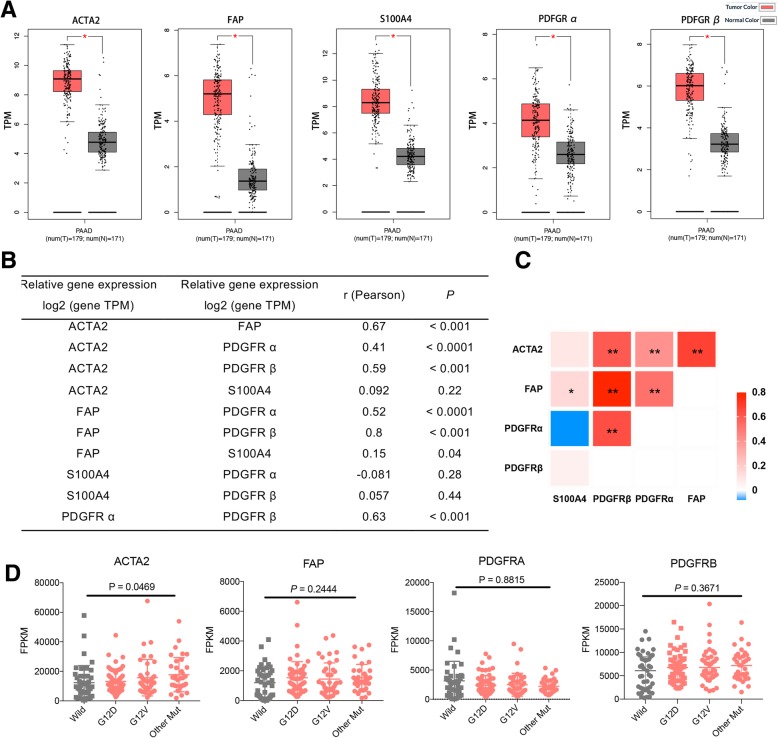
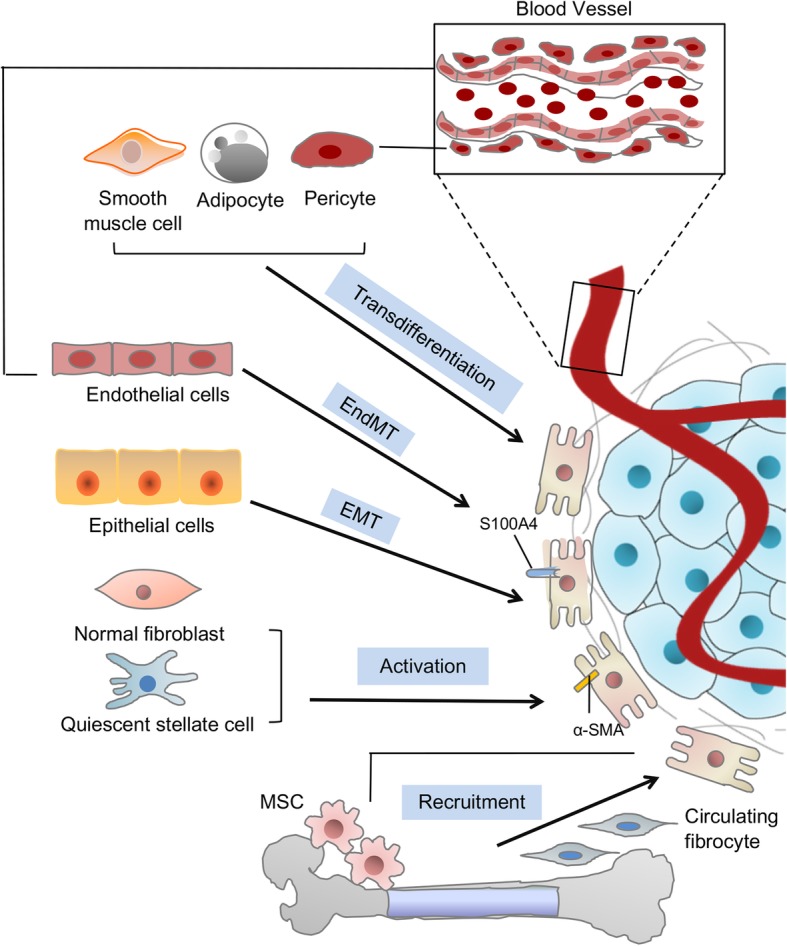
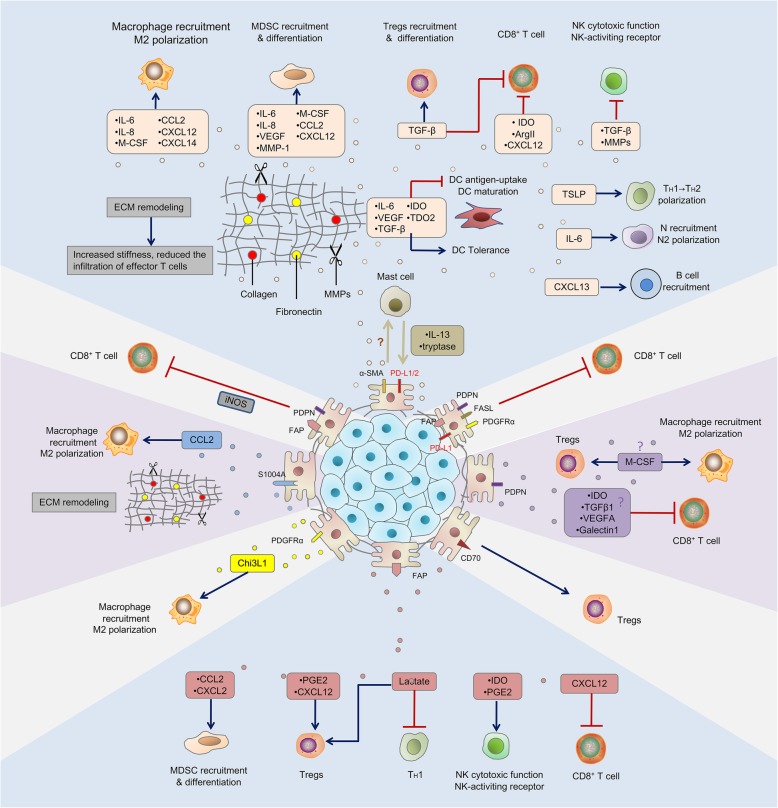
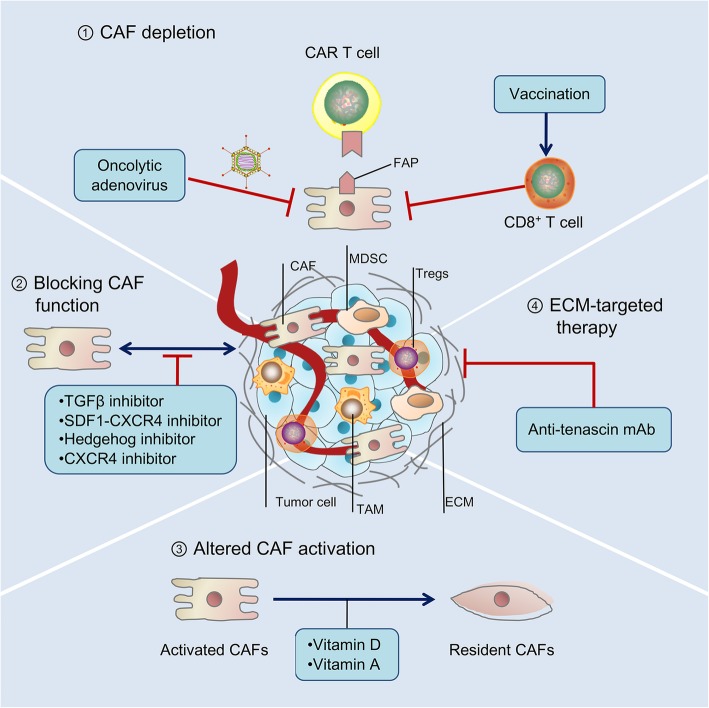
Verification
Claims the paper makes
The claims and statistics of this paper haven’t been checked yet.
Free: it reads the open-access text and checks the first 5 claims that cite a source we can check. Create a free account to check every claim.
Claims other papers make about this one
Each is checked against this paper’s own text: does it say what the citing paper says it does?
The source backs part of the claim, not all of it — or backs it for a different population, condition or comparison.
In the citing paper
“CAFs produce ECM proteins, which prompts immunosuppression of tumor cells by recruiting immunosuppressive cells [64, 65] such as monocytes and inducing immunosuppressive PD-1+ TAMs, as recently shown in breast cancer cells in vitro [66].”
From Tumor microenvironment complexity and therapeutic implications at a glance (2020) · cites this paper as [65]
Experimental — accuracy not yet measuredThe source backs part of the claim, not all of it — or backs it for a different population, condition or comparison.
In the citing paper
“However, recent studies indicated that CAFs consist of several types of stromal cells that differ in their origin, functions, number, and phenotype [21, 22, 23, 24].”
From Tumor microenvironment signaling and therapeutics in cancer progression (2023) · cites this paper as [22]
Experimental — accuracy not yet measuredThe cited source says what the claim attributes to it.
In the citing paper
“Apart from PD-1 signaling, other immune checkpoints, abnormal angiogenesis, immunosuppressive immune cells or cytokines, cancer-associated adipocytes, and hyperactive cancer-associated fibroblasts also modulate cancer-immune set point and promote immune tolerance [15–20].”
From Combination strategies with PD-1/PD-L1 blockade: current advances and future directions (2022) · cites this paper as [18]
Self-check
Percentages, sums and reported differences re-computed from the paper’s own numbers.
The self-check needs the paper’s full text.
Citations
Cites
Microenvironmental regulation of tumor progression and metastasis
Quail, D. F., & Joyce, J. A. (2013) · Nature Medicine · doi:10.1038/nm.3394 · Cited by 7,994
TGFβ attenuates tumour response to PD-L1 blockade by contributing to exclusion of T cells
Mariathasan, S., Turley, S. J., Nickles, D., Castiglioni, A., Yuen, K., Wang, Y., Kadel III, E. E., Koeppen, H., Astarita, J. L., Cubas, R., et al. (2018) · Nature · doi:10.1038/nature25501 · Cited by 5,400 · cited 2×
“I-m81C6 (antitenascin mAb) Radioimmunotherapy No Reverses tumor immunosuppression Recurrent malignant glioma Phase II [135]”
BackgroundChen, W., Jin, W., Hardegen, N., Lei, K.-J., Li, L., Marinos, N., McGrady, G., & Wahl, S. M. (2003) · The Journal of Experimental Medicine · doi:10.1084/jem.20030152 · Cited by 4,699 · cited 1×
“CD90 T cell exhaustion Immuno-suppression, tumor cell migration [83, 84]”
BackgroundThe biology and function of fibroblasts in cancer
Kalluri, R. (2016) · Nature Reviews Cancer · doi:10.1038/nrc.2016.73 · Cited by 4,366
Orimo, A., Gupta, P. B., Sgroi, D. C., Arenzana-Seisdedos, F., Delaunay, T., Naeem, R., Carey, V. J., Richardson, A. L., & Weinberg, R. A. (2005) · Cell · doi:10.1016/j.cell.2005.02.034 · Cited by 3,759
Olive, K. P., Jacobetz, M. A., Davidson, C. J., Gopinathan, A., McIntyre, D., Honess, D., Madhu, B., Goldgraben, M. A., Caldwell, M. E., Allard, D., et al. (2009) · Science · doi:10.1126/science.1171362 · Cited by 3,170
Targeting the IL-6/JAK/STAT3 signalling axis in cancer
Johnson, D. E., O'Keefe, R. A., & Grandis, J. R. (2018) · Nature Reviews Clinical Oncology · doi:10.1038/nrclinonc.2018.8 · Cited by 3,110
Özdemir, B. C., Pentcheva-Hoang, T., Carstens, J. L., Zheng, X., Wu, C.-C., Simpson, T. R., Laklai, H., Sugimoto, H., Kahlert, C., Novitskiy, S. V., et al. (2014) · Cancer Cell · doi:10.1016/j.ccr.2014.04.005 · Cited by 2,681
Distinct populations of inflammatory fibroblasts and myofibroblasts in pancreatic cancer
Öhlund, D., Handly-Santana, A., Biffi, G., Elyada, E., Almeida, A. S., Ponz-Sarvise, M., Corbo, V., Oni, T. E., Hearn, S. A., Lee, E. J., et al. (2017) · Journal of Experimental Medicine · doi:10.1084/jem.20162024 · Cited by 2,590
T cell exclusion, immune privilege, and the tumor microenvironment
Joyce, J. A., & Fearon, D. T. (2015) · Science · doi:10.1126/science.aaa6204 · Cited by 2,473
Transforming Growth Factor-β Signaling in Immunity and Cancer
Batlle, E., & Massagué, J. (2019) · Immunity · doi:10.1016/j.immuni.2019.03.024 · Cited by 2,366
Chemokines in the cancer microenvironment and their relevance in cancer immunotherapy
Nagarsheth, N., Wicha, M. S., & Zou, W. (2017) · Nature Reviews Immunology · doi:10.1038/nri.2017.49 · Cited by 2,206
EMT and Dissemination Precede Pancreatic Tumor Formation
Rhim, A. D., Mirek, E. T., Aiello, N. M., Maitra, A., Bailey, J. M., McAllister, F., Reichert, M., Beatty, G. L., Rustgi, A. K., Vonderheide, R. H., et al. (2012) · Cell · doi:10.1016/j.cell.2011.11.025 · Cited by 2,136
Feig, C., Jones, J. O., Kraman, M., Wells, R. J. B., Deonarine, A., Chan, D. S., Connell, C. M., Roberts, E. W., Zhao, Q., Caballero, O. L., et al. (2013) · Proceedings of the National Academy of Sciences · doi:10.1073/pnas.1320318110 · Cited by 2,100
Stromal Elements Act to Restrain, Rather Than Support, Pancreatic Ductal Adenocarcinoma
Rhim, A. D., Oberstein, P. E., Thomas, D. H., Mirek, E. T., Palermo, C. F., Sastra, S. A., Dekleva, E. N., Saunders, T., Becerra, C. P., Tattersall, I. W., et al. (2014) · Cancer Cell · doi:10.1016/j.ccr.2014.04.021 · Cited by 2,085
Gabrilovich, D. I., Chen, H. L., Girgis, K. R., Cunningham, H. T., Meny, G. M., Nadaf, S., Kavanaugh, D., & Carbone, D. P. (1996) · Nature Medicine · doi:10.1038/nm1096-1096 · Cited by 1,977
Turning foes to friends: targeting cancer-associated fibroblasts
Chen, X., & Song, E. (2019) · Nature Reviews Drug Discovery · doi:10.1038/s41573-018-0004-1 · Cited by 1,879
Fischer, K. R., Durrans, A., Lee, S., Sheng, J., Li, F., Wong, S. T. C., Choi, H., El Rayes, T., Ryu, S., Troeger, J., et al. (2015) · Nature · doi:10.1038/nature15748 · Cited by 1,791
Fibroblast Heterogeneity and Immunosuppressive Environment in Human Breast Cancer
Costa, A., Kieffer, Y., Scholer-Dahirel, A., Pelon, F., Bourachot, B., Cardon, M., Sirven, P., Magagna, I., Fuhrmann, L., Bernard, C., et al. (2018) · Cancer Cell · doi:10.1016/j.ccell.2018.01.011 · Cited by 1,705
Phenotype molding of stromal cells in the lung tumor microenvironment
Lambrechts, D., Wauters, E., Boeckx, B., Aibar, S., Nittner, D., Burton, O., Bassez, A., Decaluwé, H., Pircher, A., Van den Eynde, K., et al. (2018) · Nature Medicine · doi:10.1038/s41591-018-0096-5 · Cited by 1,648
Meisel, R., Zibert, A., Laryea, M., Göbel, U., Däubener, W., & Dilloo, D. (2004) · Blood · doi:10.1182/blood-2003-11-3909 · Cited by 1,646
Evidence that fibroblasts derive from epithelium during tissue fibrosis
Iwano, M., Plieth, D., Danoff, T. M., Xue, C., Okada, H., & Neilson, E. G. (2002) · Journal of Clinical Investigation · doi:10.1172/jci0215518 · Cited by 1,590 · cited 1×
“Generally, epithelial and endothelial cells undergo epithelial-to-mesenchymal transition (EMT) and endothelial-to-mesenchymal transition (EndMT), respectively, with an expression of S100A4 (fibroblast specific protein-1, also called FSP-1) and adopt a fibroblastic phenotype [29, 30].”
BackgroundErez, N., Truitt, M., Olson, P., & Hanahan, D. (2010) · Cancer Cell · doi:10.1016/j.ccr.2009.12.041 · Cited by 1,515
Modulation of macrophage phenotype by cell shape
McWhorter, F. Y., Wang, T., Nguyen, P., Chung, T., & Liu, W. F. (2013) · Proceedings of the National Academy of Sciences · doi:10.1073/pnas.1308887110 · Cited by 1,482
Calvo, F., Ege, N., Grande-Garcia, A., Hooper, S., Jenkins, R. P., Chaudhry, S. I., Harrington, K., Williamson, P., Moeendarbary, E., Charras, G., et al. (2013) · Nature Cell Biology · doi:10.1038/ncb2756 · Cited by 1,478
TGF-β directly targets cytotoxic T cell functions during tumor evasion of immune surveillance
Thomas, D. A., & Massagué, J. (2005) · Cancer Cell · doi:10.1016/j.ccr.2005.10.012 · Cited by 1,355 · cited 3×
“As described above, αSMA+ CAFs are an important cellular source of TGF-β, which inhibits CD8+ T cell cytotoxic function by reducing the expression of perforin, granzymes A/B, FASL (FAS ligand), and IFN-γ[14, 76].”
BackgroundSu, S., Chen, J., Yao, H., Liu, J., Yu, S., Lao, L., Wang, M., Luo, M., Xing, Y., Chen, F., et al. (2018) · Cell · doi:10.1016/j.cell.2018.01.009 · Cited by 1,230
Sherman, M. H., Yu, R. T., Engle, D. D., Ding, N., Atkins, A. R., Tiriac, H., Collisson, E. A., Connor, F., Van Dyke, T., Kozlov, S., et al. (2014) · Cell · doi:10.1016/j.cell.2014.08.007 · Cited by 1,158
The lung microenvironment: an important regulator of tumour growth and metastasis
Altorki, N. K., Markowitz, G. J., Gao, D., Port, J. L., Saxena, A., Stiles, B., McGraw, T., & Mittal, V. (2019) · Nature Reviews Cancer · doi:10.1038/s41568-018-0081-9 · Cited by 1,150
Immunological hallmarks of stromal cells in the tumour microenvironment
Turley, S. J., Cremasco, V., & Astarita, J. L. (2015) · Nature Reviews Immunology · doi:10.1038/nri3902 · Cited by 1,140
Suppression of Antitumor Immunity by Stromal Cells Expressing Fibroblast Activation Protein–α
Kraman, M., Bambrough, P. J., Arnold, J. N., Roberts, E. W., Magiera, L., Jones, J. O., Gopinathan, A., Tuveson, D. A., & Fearon, D. T. (2010) · Science · doi:10.1126/science.1195300 · Cited by 1,134 · cited 4×
“FAP-specific CAR T cell FAP deletion Anti-tumor CAR T cell Enhances anti-tumor immunity Lung cancer Preclinical [116]”
BackgroundResultInfluentialLi, H., Courtois, E. T., Sengupta, D., Tan, Y., Chen, K. H., Goh, J. J. L., Kong, S. L., Chua, C., Hon, L. K., Tan, W. S., et al. (2017) · Nature Genetics · doi:10.1038/ng.3818 · Cited by 1,080
Acerbi, I., Cassereau, L., Dean, I., Shi, Q., Au, A., Park, C., Chen, Y. Y., Liphardt, J., Hwang, E. S., & Weaver, V. M. (2015) · Integrative Biology · doi:10.1039/c5ib00040h · Cited by 1,059
Discovery of Endothelial to Mesenchymal Transition as a Source for Carcinoma-Associated Fibroblasts
Zeisberg, E. M., Potenta, S., Xie, L., Zeisberg, M., & Kalluri, R. (2007) · Cancer Research · doi:10.1158/0008-5472.can-07-3127 · Cited by 1,011
Zalcman, G., Mazieres, J., Margery, J., Greillier, L., Audigier-Valette, C., Moro-Sibilot, D., Molinier, O., Corre, R., Monnet, I., Gounant, V., et al. (2016) · The Lancet · doi:10.1016/s0140-6736(15)01238-6 · Cited by 968
The polarization of immune cells in the tumour environment by TGFβ
Flavell, R. A., Sanjabi, S., Wrzesinski, S. H., & Licona-Limón, P. (2010) · Nature Reviews Immunology · doi:10.1038/nri2808 · Cited by 940 · cited 1×
“TGF-β can also restrict the secretion of interferon- γ (IFN-γ) by NK cells, which is crucial for stimulating effector CD4 TH1 cell-mediated antitumor reactions [68, 70].”
BackgroundFibroblast heterogeneity in the cancer wound
Öhlund, D., Elyada, E., & Tuveson, D. (2014) · Journal of Experimental Medicine · doi:10.1084/jem.20140692 · Cited by 926
The impact of the extracellular matrix on inflammation
Sorokin, L. (2010) · Nature Reviews Immunology · doi:10.1038/nri2852 · Cited by 912
IL-6 switches the differentiation of monocytes from dendritic cells to macrophages
Chomarat, P., Banchereau, J., Davoust, J., & Karolina Palucka, A. (2000) · Nature Immunology · doi:10.1038/82763 · Cited by 906
Turning 'sweet' on immunity: galectin–glycan interactions in immune tolerance and inflammation
Rabinovich, G. A., & Toscano, M. A. (2009) · Nature Reviews Immunology · doi:10.1038/nri2536 · Cited by 904
Kojima, Y., Acar, A., Eaton, E. N., Mellody, K. T., Scheel, C., Ben-Porath, I., Onder, T. T., Wang, Z. C., Richardson, A. L., Weinberg, R. A., et al. (2010) · Proceedings of the National Academy of Sciences · doi:10.1073/pnas.1013805107 · Cited by 848 · cited 2×
“Fundamentally, many other CAF-derived factors, such as matrix metallopeptidase 2 (MMP2), CXCL12, TGF-β, and IL-6, can promote the proliferation and invasion of cancer cells in various tumors [16].”
BackgroundBartoschek, M., Oskolkov, N., Bocci, M., Lövrot, J., Larsson, C., Sommarin, M., Madsen, C. D., Lindgren, D., Pekar, G., Karlsson, G., et al. (2018) · Nature Communications · doi:10.1038/s41467-018-07582-3 · Cited by 826
Yang, X., Lin, Y., Shi, Y., Li, B., Liu, W., Yin, W., Dang, Y., Chu, Y., Fan, J., & He, R. (2016) · Cancer Research · doi:10.1158/0008-5472.can-15-2973 · Cited by 748
Labernadie, A., Kato, T., Brugués, A., Serra-Picamal, X., Derzsi, S., Arwert, E., Weston, A., González-Tarragó, V., Elosegui-Artola, A., Albertazzi, L., et al. (2017) · Nature Cell Biology · doi:10.1038/ncb3478 · Cited by 747
Carcinoma-associated fibroblasts: orchestrating the composition of malignancy
Gascard, P., & Tlsty, T. D. (2016) · Genes & Development · doi:10.1101/gad.279737.116 · Cited by 732
Stromal myofibroblasts are drivers of invasive cancer growth
De Wever, O., Demetter, P., Mareel, M., & Bracke, M. (2008) · International Journal of Cancer · doi:10.1002/ijc.23925 · Cited by 722
Hepatic stellate cells in liver development, regeneration, and cancer
Yin, C., Evason, K. J., Asahina, K., & Stainier, D. Y. R. (2013) · Journal of Clinical Investigation · doi:10.1172/jci66369 · Cited by 719
Identification of fibroblast heterogeneity in the tumor microenvironment
Sugimoto, H., Mundel, T. M., Kieran, M. W., & Kalluri, R. (2006) · Cancer Biology & Therapy · doi:10.4161/cbt.5.12.3354 · Cited by 699
De Monte, L., Reni, M., Tassi, E., Clavenna, D., Papa, I., Recalde, H., Braga, M., Di Carlo, V., Doglioni, C., & Protti, M. P. (2011) · Journal of Experimental Medicine · doi:10.1084/jem.20101876 · Cited by 695
The pancreatic stellate cell: a star on the rise in pancreatic diseases
Omary, M. B., Lugea, A., Lowe, A. W., & Pandol, S. J. (2007) · Journal of Clinical Investigation · doi:10.1172/jci30082 · Cited by 692
Chakravarthy, A., Khan, L., Bensler, N. P., Bose, P., & De Carvalho, D. D. (2018) · Nature Communications · doi:10.1038/s41467-018-06654-8 · Cited by 656
Wang, L.-C. S., Lo, A., Scholler, J., Sun, J., Majumdar, R. S., Kapoor, V., Antzis, M., Cotner, C. E., Johnson, L. A., Durham, A. C., et al. (2014) · Cancer Immunology Research · doi:10.1158/2326-6066.cir-13-0027 · Cited by 653
Kumar, V., Donthireddy, L., Marvel, D., Condamine, T., Wang, F., Lavilla-Alonso, S., Hashimoto, A., Vonteddu, P., Behera, R., Goins, M. A., et al. (2017) · Cancer Cell · doi:10.1016/j.ccell.2017.10.005 · Cited by 653
Tan, W., Zhang, W., Strasner, A., Grivennikov, S., Cheng, J. Q., Hoffman, R. M., & Karin, M. (2011) · Nature · doi:10.1038/nature09707 · Cited by 647
Loeffler, M. (2006) · Journal of Clinical Investigation · doi:10.1172/jci26532 · Cited by 633 · cited 3×
“Oncolytic adenovirus FAP deletion No Enhances anti-tumor immunity CRC Preclinical [118, 119]”
BackgroundCancer-associated fibroblasts in gastrointestinal cancer
Kobayashi, H., Enomoto, A., Woods, S. L., Burt, A. D., Takahashi, M., & Worthley, D. L. (2019) · Nature Reviews Gastroenterology & Hepatology · doi:10.1038/s41575-019-0115-0 · Cited by 589
Ene–Obong, A., Clear, A. J., Watt, J., Wang, J., Fatah, R., Riches, J. C., Marshall, J. F., Chin–Aleong, J., Chelala, C., Gribben, J. G., et al. (2013) · Gastroenterology · doi:10.1053/j.gastro.2013.07.025 · Cited by 579
Lakins, M. A., Ghorani, E., Munir, H., Martins, C. P., & Shields, J. D. (2018) · Nature Communications · doi:10.1038/s41467-018-03347-0 · Cited by 578
The role of endothelial-to-mesenchymal transition in cancer progression
Potenta, S., Zeisberg, E., & Kalluri, R. (2008) · British Journal of Cancer · doi:10.1038/sj.bjc.6604662 · Cited by 554
A history of exploring cancer in context
Maman, S., & Witz, I. P. (2018) · Nature Reviews Cancer · doi:10.1038/s41568-018-0006-7 · Cited by 502
Tumor-Promoting Desmoplasia Is Disrupted by Depleting FAP-Expressing Stromal Cells
Lo, A., Wang, L.-C. S., Scholler, J., Monslow, J., Avery, D., Newick, K., O'Brien, S., Evans, R. A., Bajor, D. J., Clendenin, C., et al. (2015) · Cancer Research · doi:10.1158/0008-5472.can-14-3041 · Cited by 498
Fibroblast heterogeneity: implications for human disease
Lynch, M. D., & Watt, F. M. (2018) · Journal of Clinical Investigation · doi:10.1172/jci93555 · Cited by 480
(1996) · Nature Medicine · doi:10.1038/nm1196-1267 · Cited by 429
Cancer-Associated Fibroblasts as Another Polarized Cell Type of the Tumor Microenvironment
Augsten, M. (2014) · Frontiers in Oncology · doi:10.3389/fonc.2014.00062 · Cited by 427
Recruitment of mesenchymal stem cells into prostate tumours promotes metastasis
Jung, Y., Kim, J. K., Shiozawa, Y., Wang, J., Mishra, A., Joseph, J., Berry, J. E., McGee, S., Lee, E., Sun, H., et al. (2013) · Nature Communications · doi:10.1038/ncomms2766 · Cited by 423
Froeling, F. E. M., Feig, C., Chelala, C., Dobson, R., Mein, C. E., Tuveson, D. A., Clevers, H., Hart, I. R., & Kocher, H. M. (2011) · Gastroenterology · doi:10.1053/j.gastro.2011.06.047 · Cited by 418
Dulauroy, S., Di Carlo, S. E., Langa, F., Eberl, G., & Peduto, L. (2012) · Nature Medicine · doi:10.1038/nm.2848 · Cited by 418
Roberts, E. W., Deonarine, A., Jones, J. O., Denton, A. E., Feig, C., Lyons, S. K., Espeli, M., Kraman, M., McKenna, B., Wells, R. J. B., et al. (2013) · Journal of Experimental Medicine · doi:10.1084/jem.20122344 · Cited by 414 · cited 1×
“As such, a contrasting result came from another study, in which adoptive transfer of FAP-reactive CAR-T cells not only had limited anti-tumor effects, but also had induced significant lethal toxicity and cachexia [116, 124].”
ResultLöhr, M. J., Schmidt, C., Ringel, J., Kluth, M., Müller, P., Nizze, H., & Jesnowski, R. (2001) · PubMed · Cited by 413
Mace, T. A., Ameen, Z., Collins, A., Wojcik, S., Mair, M., Young, G. S., Fuchs, J. R., Eubank, T. D., Frankel, W. L., Bekaii-Saab, T., et al. (2013) · Cancer Research · doi:10.1158/0008-5472.can-12-4601 · Cited by 410 · cited 2×
“(GFAP), CAFs secret macrophage colony-stimulating factor 1 (M-CSF), IL-6, and CC-chemokine ligand 2 (CCL2) to promote monocyte recruitment encourage macrophage differentiation and M2 polarization [55].”
BackgroundCheng, Y., Li, H., Deng, Y., Tai, Y., Zeng, K., Zhang, Y., Liu, W., Zhang, Q., & Yang, Y. (2018) · Cell Death & Disease · doi:10.1038/s41419-018-0458-4 · Cited by 399 · cited 1×
“Moreover, α-SMA CAF-derived IL-6 can recruit neutrophils, activate signal transducer and activator of Janus kinase-programmed cell death ligand 1 (STAT3-PDL1) signaling cascade in neutrophils, therefore, contributing to immunosuppression in hepatocellular carcinoma [63].”
BackgroundAlteration of the Antitumor Immune Response by Cancer-Associated Fibroblasts
Ziani, L., Chouaib, S., & Thiery, J. (2018) · Frontiers in Immunology · doi:10.3389/fimmu.2018.00414 · Cited by 381
Albrengues, J., Bertero, T., Grasset, E., Bonan, S., Maiel, M., Bourget, I., Philippe, C., Herraiz Serrano, C., Benamar, S., Croce, O., et al. (2015) · Nature Communications · doi:10.1038/ncomms10204 · Cited by 367
Antitumor Effects of Chimeric Receptor Engineered Human T Cells Directed to Tumor Stroma
Kakarla, S., Chow, K. K., Mata, M., Shaffer, D. R., Song, X.-T., Wu, M.-F., Liu, H., Wang, L. L., Rowley, D. R., Pfizenmaier, K., et al. (2013) · Molecular Therapy · doi:10.1038/mt.2013.110 · Cited by 346
Zhang, R., Qi, F., Zhao, F., Li, G., Shao, S., Zhang, X., Yuan, L., & Feng, Y. (2019) · Cell Death & Disease · doi:10.1038/s41419-019-1435-2 · Cited by 343
Are Mast Cells MASTers in Cancer?
Varricchi, G., Galdiero, M. R., Loffredo, S., Marone, G., Iannone, R., Marone, G., & Granata, F. (2017) · Frontiers in Immunology · doi:10.3389/fimmu.2017.00424 · Cited by 323 · cited 1×
“For example, mast cellderived IL-13 and adenosine might, respectively, promote M2 macrophage polarization and block the access of CD8 T cells [65, 66].”
BackgroundKhalili, J. S., Liu, S., Rodríguez-Cruz, T. G., Whittington, M., Wardell, S., Liu, C., Zhang, M., Cooper, Z. A., Frederick, D. T., Li, Y., et al. (2012) · Clinical Cancer Research · doi:10.1158/1078-0432.ccr-12-1632 · Cited by 301
miR200-regulated CXCL12β promotes fibroblast heterogeneity and immunosuppression in ovarian cancers
Givel, A.-M., Kieffer, Y., Scholer-Dahirel, A., Sirven, P., Cardon, M., Pelon, F., Magagna, I., Gentric, G., Costa, A., Bonneau, C., et al. (2018) · Nature Communications · doi:10.1038/s41467-018-03348-z · Cited by 295 · cited 17×
“However, the effect of ECM composition on Tregs, DCs, and neutrophils remains poorly understood.”
BackgroundInfluentialImmunosuppressive Activities of Adenosine in Cancer
Allard, B., Beavis, P. A., Darcy, P. K., & Stagg, J. (2016) · Current Opinion in Pharmacology · doi:10.1016/j.coph.2016.04.001 · Cited by 292
Cohen, N., Shani, O., Raz, Y., Sharon, Y., Hoffman, D., Abramovitz, L., & Erez, N. (2017) · Oncogene · doi:10.1038/onc.2017.65 · Cited by 292 · cited 1×
“For instance, Chitinase-3-like-1 (Chi3L1), a secreted glycoprotein involved in chronic inflammatory and fibrotic disorders, has been linked to PDGFRα CAF-induced macrophage migration and their polarization into M2 phenotype [109].”
BackgroundHerrera, M., Herrera, A., Domínguez, G., Silva, J., García, V., García, J. M., Gómez, I., Soldevilla, B., Muñoz, C., Provencio, M., et al. (2013) · Cancer Science · doi:10.1111/cas.12096 · Cited by 289
Kitamura, H., Ohno, Y., Toyoshima, Y., Ohtake, J., Homma, S., Kawamura, H., Takahashi, N., & Taketomi, A. (2017) · Cancer Science · doi:10.1111/cas.13332 · Cited by 278
Regulation of the anti-tumour immune response by cancer-associated fibroblasts
Harper, J., & Sainson, R. C. A. (2014) · Seminars in Cancer Biology · doi:10.1016/j.semcancer.2013.12.005 · Cited by 268
Nazareth, M. R., Broderick, L., Simpson-Abelson, M. R., Kelleher, R. J., Yokota, S. J., & Bankert, R. B. (2007) · The Journal of Immunology · doi:10.4049/jimmunol.178.9.5552 · Cited by 259
Takahashi, H., Sakakura, K., Kudo, T., Toyoda, M., Kaira, K., Oyama, T., & Chikamatsu, K. (2017) · Oncotarget · doi:10.18632/oncotarget.14374 · Cited by 259
Fibroblasts in the Tumor Microenvironment: Shield or Spear?
Alkasalias, T., Moyano-Galceran, L., Arsenian-Henriksson, M., & Lehti, K. (2018) · International Journal of Molecular Sciences · doi:10.3390/ijms19051532 · Cited by 247
Özdemir, B. C., Pentcheva-Hoang, T., Carstens, J. L., Zheng, X., Wu, C.-C., Simpson, T. R., Laklai, H., Sugimoto, H., Kahlert, C., Novitskiy, S. V., et al. (2015) · Cancer Cell · doi:10.1016/j.ccell.2015.11.002 · Cited by 245 · cited 4×
“However, targeting α-SMA might increase the immunosuppressive CD3Foxp3 Tregs infiltrate in the TME, which ultimately led to aggressive tumor development [126].”
BackgroundInfluentialDikov, M. M., Ohm, J. E., Ray, N., Tchekneva, E. E., Burlison, J., Moghanaki, D., Nadaf, S., & Carbone, D. P. (2005) · The Journal of Immunology · doi:10.4049/jimmunol.174.1.215 · Cited by 244
Autocrine Transforming Growth Factor-β1 Promotes In Vivo Th17 Cell Differentiation
Gutcher, I., Donkor, M. K., Ma, Q., Rudensky, A. Y., Flavell, R. A., & Li, M. O. (2011) · Immunity · doi:10.1016/j.immuni.2011.03.005 · Cited by 243
Comito, G., Iscaro, A., Bacci, M., Morandi, A., Ippolito, L., Parri, M., Montagnani, I., Raspollini, M. R., Serni, S., Simeoni, L., et al. (2019) · Oncogene · doi:10.1038/s41388-019-0688-7 · Cited by 241
Jotzu, C., Alt, E., Welte, G., Li, J., Hennessy, B. T., Devarajan, E., Krishnappa, S., Pinilla, S., Droll, L., & Song, Y.-H. (2011) · Cellular Oncology · doi:10.1007/s13402-011-0012-1 · Cited by 236
Fibroblast Subtypes Regulate Responsiveness of Luminal Breast Cancer to Estrogen
Brechbuhl, H. M., Finlay-Schultz, J., Yamamoto, T. M., Gillen, A. E., Cittelly, D. M., Tan, A.-C., Sams, S. B., Pillai, M. M., Elias, A. D., Robinson, W. A., et al. (2017) · Clinical Cancer Research · doi:10.1158/1078-0432.ccr-15-2851 · Cited by 228
Weber, C. E., Kothari, A. N., Wai, P. Y., Li, N. Y., Driver, J., Zapf, M. A. C., Franzen, C. A., Gupta, G. N., Osipo, C., Zlobin, A., et al. (2015) · Oncogene · doi:10.1038/onc.2014.410 · Cited by 226
Ahmadzadeh, M., & Rosenberg, S. A. (2005) · The Journal of Immunology · doi:10.4049/jimmunol.174.9.5215 · Cited by 225
Kitamura, H., Kamon, H., Sawa, S.-I., Park, S.-J., Katunuma, N., Ishihara, K., Murakami, M., & Hirano, T. (2005) · Immunity · doi:10.1016/j.immuni.2005.09.010 · Cited by 223
TGF-β–inducible microRNA-183 silences tumor-associated natural killer cells
Donatelli, S. S., Zhou, J.-M., Gilvary, D. L., Eksioglu, E. A., Chen, X., Cress, W. D., Haura, E. B., Schabath, M. B., Coppola, D., Wei, S., et al. (2014) · Proceedings of the National Academy of Sciences · doi:10.1073/pnas.1319269111 · Cited by 221
Cremasco, V., Astarita, J. L., Grauel, A. L., Keerthivasan, S., MacIsaac, K., Woodruff, M. C., Wu, M., Spel, L., Santoro, S., Amoozgar, Z., et al. (2018) · Cancer Immunology Research · doi:10.1158/2326-6066.cir-18-0098 · Cited by 207
Reardon, D. A., Akabani, G., Coleman, R. E., Friedman, A. H., Friedman, H. S., Herndon, J. E., McLendon, R. E., Pegram, C. N., Provenzale, J. M., Quinn, J. A., et al. (2006) · Journal of Clinical Oncology · doi:10.1200/jco.2005.03.4082 · Cited by 197
Cancer‐associated fibroblasts promote PD‐L1 expression in mice cancer cells via secreting CXCL5
Li, Z., Zhou, J., Zhang, J., Li, S., Wang, H., & Du, J. (2019) · International Journal of Cancer · doi:10.1002/ijc.32278 · Cited by 192 · cited 1×
“Mechanistically, CX-chemokine ligand 5 (CXCL5) derived by α-SMA CAFs enhances the expression of PD-L1 in tumor cells by activating PI3K/ AKT signaling pathway [90].”
BackgroundFujii, N., Shomori, K., Shiomi, T., Nakabayashi, M., Takeda, C., Ryoke, K., & Ito, H. (2012) · Journal of Oral Pathology & Medicine · doi:10.1111/j.1600-0714.2012.01127.x · Cited by 191
Zhu, Q., Zhang, X., Zhang, L., Li, W., Wu, H., Yuan, X., Mao, F., Wang, M., Zhu, W., Qian, H., et al. (2014) · Cell Death & Disease · doi:10.1038/cddis.2014.263 · Cited by 189
Dynamic Mast Cell–Stromal Cell Interactions Promote Growth of Pancreatic Cancer
Ma, Y., Hwang, R. F., Logsdon, C. D., & Ullrich, S. E. (2013) · Cancer Research · doi:10.1158/0008-5472.can-12-4479 · Cited by 186
Ferrer-Mayorga, G., Gómez-López, G., Barbáchano, A., Fernández-Barral, A., Peña, C., Pisano, D. G., Cantero, R., Rojo, F., Muñoz, A., & Larriba, M. J. (2017) · Gut · doi:10.1136/gutjnl-2015-310977 · Cited by 186
Deng, Y., Cheng, J., Fu, B., Liu, W., Chen, G., Zhang, Q., & Yang, Y. (2017) · Oncogene · doi:10.1038/onc.2016.273 · Cited by 186
Hyaluronan Deficiency in Tumor Stroma Impairs Macrophage Trafficking and Tumor Neovascularization
Kobayashi, N., Miyoshi, S., Mikami, T., Koyama, H., Kitazawa, M., Takeoka, M., Sano, K., Amano, J., Isogai, Z., Niida, S., et al. (2010) · Cancer Research · doi:10.1158/0008-5472.can-09-4687 · Cited by 185
PD-1 Ligand Expression by Human Colonic Myofibroblasts/Fibroblasts Regulates CD4+ T-Cell Activity
Pinchuk, I. V., Saada, J. I., Beswick, E. J., Boya, G., Qiu, S. M., Mifflin, R. C., Raju, G. S., Reyes, V. E., & Powell, D. W. (2008) · Gastroenterology · doi:10.1053/j.gastro.2008.07.016 · Cited by 184
Fibroblast-specific inhibition of TGF-β1 signaling attenuates lung and tumor fibrosis
Wei, Y., Kim, T. J., Peng, D. H., Duan, D., Gibbons, D. L., Yamauchi, M., Jackson, J. R., Le Saux, C. J., Calhoun, C., Peters, J., et al. (2017) · Journal of Clinical Investigation · doi:10.1172/jci94624 · Cited by 184 · cited 1×
“Therapeutic co-administration of TGF-β-blocking and anti-PD-L1 antibodies inhibit TGF-β signaling in CAFs, facilitated T cell penetration into the tumor nest, and, therefore, provoke effective anti-tumor immunity and tumor regression [135, 136].”
BackgroundLi, P., Shan, J.-X., Chen, X.-H., Zhang, D., Su, L.-P., Huang, X.-Y., Yu, B.-Q., Zhi, Q.-M., Li, C.-L., Wang, Y.-Q., et al. (2015) · Cell Research · doi:10.1038/cr.2015.51 · Cited by 173
Freedman, J. D., Duffy, M. R., Lei-Rossmann, J., Muntzer, A., Scott, E. M., Hagel, J., Campo, L., Bryant, R. J., Verrill, C., Lambert, A., et al. (2018) · Cancer Research · doi:10.1158/0008-5472.can-18-1750 · Cited by 170
Immunosuppressive activity of cancer-associated fibroblasts in head and neck squamous cell carcinoma
Takahashi, H., Sakakura, K., Kawabata‐Iwakawa, R., Rokudai, S., Toyoda, M., Nishiyama, M., & Chikamatsu, K. (2015) · Cancer Immunology Immunotherapy · doi:10.1007/s00262-015-1742-0 · Cited by 166
Arnold, J. N., Magiera, L., Kraman, M., & Fearon, D. T. (2014) · Cancer Immunology Research · doi:10.1158/2326-6066.cir-13-0150 · Cited by 166 · cited 1×
“FAP is also found in a subset of CD45 immune cells [42].”
BackgroundAugsten, M., Sjöberg, E., Frings, O., Vorrink, S. U., Frijhoff, J., Olsson, E., Borg, Å., & Östman, A. (2014) · Cancer Research · doi:10.1158/0008-5472.can-13-2740 · Cited by 164
Higashino, N., Koma, Y.-I., Hosono, M., Takase, N., Okamoto, M., Kodaira, H., Nishio, M., Shigeoka, M., Kakeji, Y., & Yokozaki, H. (2019) · Laboratory Investigation · doi:10.1038/s41374-018-0185-6 · Cited by 158 · cited 10×
“Reciprocally, TAMs with a M2 phenotype further activate CAFs and thereby promote tumor progression [58, 59].”
BackgroundInfluentialde Sostoa, J., Fajardo, C. A., Moreno, R., Ramos, M. D., Farrera-Sal, M., & Alemany, R. (2019) · Journal for ImmunoTherapy of Cancer · doi:10.1186/s40425-019-0505-4 · Cited by 156
Ino, Y., Yamazaki-Itoh, R., Oguro, S., Shimada, K., Kosuge, T., Zavada, J., Kanai, Y., & Hiraoka, N. (2013) · PLoS ONE · doi:10.1371/journal.pone.0055146 · Cited by 153
Duperret, E. K., Trautz, A., Ammons, D., Perales-Puchalt, A., Wise, M. C., Yan, J., Reed, C., & Weiner, D. B. (2018) · Clinical Cancer Research · doi:10.1158/1078-0432.ccr-17-2033 · Cited by 152
Wikström, P., Marusic, J., Stattin, P., & Bergh, A. (2009) · The Prostate · doi:10.1002/pros.20927 · Cited by 142
CD34+ fibrocytes in invasive ductal carcinoma, ductal carcinoma in situ, and benign breast lesions
Barth, P. J., Ebrahimsade, S., Ramaswamy, A., & Moll, R. (2001) · Archiv für Pathologische Anatomie und Physiologie und für Klinische Medicin · doi:10.1007/s004280100530 · Cited by 136 · cited 1×
“Moreover, fibrocytes, a circulating mesenchymal cell population derived from monocyte precursors, may contribute to the pool of CAFs in TME, as occurs, for example in breast cancer [31].”
BackgroundVicent, S., Sayles, L. C., Vaka, D., Khatri, P., Gevaert, O., Chen, R., Zheng, Y., Gillespie, A. K., Clarke, N., Xu, Y., et al. (2012) · Cancer Research · doi:10.1158/0008-5472.can-12-1097 · Cited by 129 · cited 1×
“CAFs can be recruited and activated from normal resident tissue fibroblasts [16, 17].”
BackgroundMurakami, M., Ernsting, M. J., Undzys, E., Holwell, N., Foltz, W. D., & Li, S.-D. (2013) · Cancer Research · doi:10.1158/0008-5472.can-13-0062 · Cited by 129 · cited 1×
“In a mouse model of breast cancer, docetaxel conjugate nanoparticles that target α-SMA stromal suppressed metastases [125].”
BackgroundAberrant DNA methylation in non-small cell lung cancer-associated fibroblasts
Vizoso, M., Puig, M., Carmona, F. J., Maqueda, M., Velásquez, A., Gómez, A., Labernadie, A., Lugo, R., Gabasa, M., Rigat-Brugarolas, L. G., et al. (2015) · Carcinogenesis · doi:10.1093/carcin/bgv146 · Cited by 127
Ueshima, E., Fujimori, M., Kodama, H., Felsen, D., Chen, J., Durack, J. C., Solomon, S. B., Coleman, J. A., & Srimathveeravalli, G. (2019) · American Journal of Physiology-Renal Physiology · doi:10.1152/ajprenal.00260.2018 · Cited by 125
Li, T., Yi, S., Liu, W., Jia, C., Wang, G., Hua, X., Tai, Y., Zhang, Q., & Chen, G. (2013) · Medical Oncology · doi:10.1007/s12032-013-0663-z · Cited by 121
Akt–Girdin Signaling in Cancer-Associated Fibroblasts Contributes to Tumor Progression
Yamamura, Y., Asai, N., Enomoto, A., Kato, T., Mii, S., Kondo, Y., Ushida, K., Niimi, K., Tsunoda, N., Nagino, M., et al. (2015) · Cancer Research · doi:10.1158/0008-5472.can-14-1317 · Cited by 120
Zhang, J., Chen, L., Xiao, M., Wang, C., & Qin, Z. (2011) · American Journal Of Pathology · doi:10.1016/j.ajpath.2010.11.017 · Cited by 116
Wang, C., Yin, R., Dai, J., Gu, Y., Cui, S., Ma, H., Zhang, Z., Huang, J., Qin, N., Jiang, T., et al. (2018) · Nature Communications · doi:10.1038/s41467-018-04492-2 · Cited by 116
Self-citationKinoshita, T., Ishii, G., Hiraoka, N., Hirayama, S., Yamauchi, C., Aokage, K., Hishida, T., Yoshida, J., Nagai, K., & Ochiai, A. (2013) · Cancer Science · doi:10.1111/cas.12099 · Cited by 108
Ishihara, S., Inman, D. R., Li, W.-J., Ponik, S. M., & Keely, P. J. (2017) · Cancer Research · doi:10.1158/0008-5472.can-17-0569 · Cited by 96
Ohshio, Y., Teramoto, K., Hanaoka, J., Tezuka, N., Itoh, Y., Asai, T., Daigo, Y., & Ogasawara, K. (2015) · Cancer Science · doi:10.1111/cas.12584 · Cited by 92
Aoyagi, Y., Oda, T., Kinoshita, T., Nakahashi, C., Hasebe, T., Ohkohchi, N., & Ochiai, A. (2004) · British Journal of Cancer · doi:10.1038/sj.bjc.6602141 · Cited by 90
Zhang, J., Chen, L., Liu, X., Kammertoens, T., Blankenstein, T. J. F., & Qin, Z. (2013) · Cancer Research · doi:10.1158/0008-5472.can-12-3022 · Cited by 87 · cited 2×
“Interestingly, S100A4-expressing CAFs may also increase immune surveillance ability through collagen production and encapsulation of carcinogens [41].”
BackgroundBreast Carcinoma–Associated Fibroblasts Rarely Contain p53 Mutations or Chromosomal Aberrations
Hosein, A. N., Wu, M., Arcand, S. L., Lavallée, S., Hébert, J., Tonin, P. N., & Basik, M. (2010) · Cancer Research · doi:10.1158/0008-5472.can-10-0673 · Cited by 83
Valach, J., Fík, Z., Strnad, H., Chovanec, M., Plzák, J., Čada, Z., Szabo, P., Šáchová, J., Hroudová, M., Urbanová, M., et al. (2012) · International Journal of Cancer · doi:10.1002/ijc.27550 · Cited by 79
Gunderson, A. J., Yamazaki, T., McCarty, K., Phillips, M., Alice, A., Bambina, S., Zebertavage, L., Friedman, D., Cottam, B., Newell, P., et al. (2019) · PLOS ONE · doi:10.1371/journal.pone.0211117 · Cited by 70
Jacobs, J., Deschoolmeester, V., Zwaenepoel, K., Flieswasser, T., Deben, C., Van den Bossche, J., Hermans, C., Rolfo, C., Peeters, M., De Wever, O., et al. (2018) · OncoImmunology · doi:10.1080/2162402x.2018.1440167 · Cited by 69 · cited 1×
“on CAFs is proved to be an independent adverse prognostic marker for colorectal cancer [113].”
BackgroundCancer and Microenvironment Plasticity: Double-Edged Swords in Metastasis
Zhuang, X., Zhang, H., & Hu, G. (2019) · Trends in Pharmacological Sciences · doi:10.1016/j.tips.2019.04.005 · Cited by 68 · cited 1×
“Within the TME infrastructure, the secreted products of a variety of immune and non-immune cell types, such as cytokines and chemokines, and the different components such as metabolites, hypoxia, angiogenesis, ECM remodeling, interstitial pressure, and pH changes drive a chronic inflammatory, pro-angiogenic, and immun…”
BackgroundSakai, T., Aokage, K., Neri, S., Nakamura, H., Nomura, S., Tane, K., Miyoshi, T., Sugano, M., Kojima, M., Fujii, S., et al. (2018) · Lung Cancer · doi:10.1016/j.lungcan.2018.10.021 · Cited by 57
Qian, L., Tang, Z., Yin, S., Mo, F., Yang, X., Hou, X., Liu, A., & Lu, X. (2018) · Journal of Biomedical Nanotechnology · doi:10.1166/jbn.2018.2616 · Cited by 43
Mast cell/MDSC a liaison immunosuppressive for tumor microenvironment
Danelli, L., Frossi, B., & Pucillo, C. E. M. (2015) · OncoImmunology · doi:10.1080/2162402x.2014.1001232 · Cited by 26
Research works printed but not linked: 1
- Ene-Obong A Clear AJ Watt J Wang J Fatah R Riches JC Marshall JF Chin-Aleong J Chelala C Gribben JG Activated pancreatic stellate cells sequester CD8+ T cells to reduce their infiltration of the juxtatumoral compartment of pancreatic ductal adenocarcinoma Gastroenterology 2013 145 1121 1132 10.1053/j.gastro.2013.07.025 23891972 PMC3896919 · DOI · Paper page
Cited by
Mao, X., Xu, J., Wang, W., Liang, C., Hua, J., Liu, J., Zhang, B., Meng, Q., Yu, X., & Shi, S. (2021) · Molecular Cancer · doi:10.1186/s12943-021-01428-1 · Cited by 2,290
Tumor microenvironment complexity and therapeutic implications at a glance
Baghban, R., Roshangar, L., Jahanban-Esfahlan, R., Seidi, K., Ebrahimi-Kalan, A., Jaymand, M., Kolahian, S., Javaheri, T., & Zare, P. (2020) · Cell Communication and Signaling · doi:10.1186/s12964-020-0530-4 · Cited by 1,784
“CAFs produce ECM proteins, which prompts immunosuppression of tumor cells by recruiting immunosuppressive cells [64, 65] such as monocytes and inducing immunosuppressive PD-1+ TAMs, as recently shown in breast cancer cells in vitro [66] .”
BackgroundCombination strategies with PD-1/PD-L1 blockade: current advances and future directions
Yi, M., Zheng, X., Niu, M., Zhu, S., Ge, H., & Wu, K. (2022) · Molecular Cancer · doi:10.1186/s12943-021-01489-2 · Cited by 1,445
Conserved pan-cancer microenvironment subtypes predict response to immunotherapy
Bagaev, A., Kotlov, N., Nomie, K., Svekolkin, V., Gafurov, A., Isaeva, O., Osokin, N., Kozlov, I., Frenkel, F., Gancharova, O., et al. (2021) · Cancer Cell · doi:10.1016/j.ccell.2021.04.014 · Cited by 1,302
Signaling pathways in cancer-associated fibroblasts and targeted therapy for cancer
Wu, F., Yang, J., Liu, J., Wang, Y., Mu, J., Zeng, Q., Deng, S., & Zhou, H. (2021) · Signal Transduction and Targeted Therapy · doi:10.1038/s41392-021-00641-0 · Cited by 773
“Generally, CAFs are derived from the activated local tissueresident fibroblasts, fibrocytes recruited from bone marrow, mesenchymal stem cells (MSCs) and stellate cells, or are the products of the mesenchymal transition of epithelial and endothelial cells, and the transdifferentiation of pericytes, smooth muscle cells…”
Background
Metadata
- Authors
- Liu, T., Han, C., Wang, S., Fang, P., Ma, Z., Xu, L., & Yin, R.
- Affiliations
- Jiangsu Cancer Hospital (CN)
- China Pharmaceutical University (CN)
- Corresponding author
- Xu, Lin
- Yin, Rong
- Venue
- Journal of Hematology & Oncology
- Published
- 2019-08-28
- Volume
- 12
- Issue
- 1
- Pages
- 86-86
- ISSN
- 1756-8722 (ISSN-L)
- PMC
- PMC6714445
- OpenAlex
- W2970289072
- Cited by
- 860
- References
- 141
- Citations by year
- 2026: 46 · 2025: 109 · 2024: 141 · 2023: 172 · 2022: 158 · 2021: 139 · 2020: 88 · 2019: 7
- FWCI
- 9.36
- Type
- journal article
- Language
- en
- Open access
- gold
- doi.org
- Licence
- cc-by
- creativecommons.org/licenses/by/4.0/ (tdm)
- creativecommons.org/licenses/by/4.0/ (vor)
- Locations
- Journal of Hematology & Oncology (publishedVersion, cc-by)
- Europe PMC (PubMed Central) (publishedVersion, cc-by)
- PubMed Central (publishedVersion, cc-by)
- PubMed (publishedVersion)
- DOAJ (DOAJ: Directory of Open Access Journals) (submittedVersion, cc-by-sa)
- Funders
- Young Scientists Fund (81802277)
- China Postdoctoral Science Foundation (2018M642198)
- Jiangsu Provincial Medical Talent (ZDRCA2016033)
- National Natural Science Foundation of China (81872378)
- Topics
- Health Sciences › Medicine › Oncology › Cancer Cells and Metastasis
- Health Sciences › Medicine › Oncology › Cancer Immunotherapy and Biomarkers
- Life Sciences › Immunology and Microbiology › Immunology › Immune cells in cancer
- Keywords
- cancer-associated fibroblasts, tumor microenvironment, cancer immunotherapy, immune evasion, CAF heterogeneity, CAF origin, CAF subtypes, immune cell modulation, carcinogenesis
- MeSH terms
- Cancer-Associated Fibroblasts, Humans, Immunotherapy
About these checks
Registry, retraction, Cites and statistics results are computed, not judged, with one exception: a printed reference that no index lists is read once by a model before it counts as a citation error. Claims are extracted by a model and kept only when their quote appears verbatim in the text; each cited source is then checked, with a model’s help, for whether it says what the claim relies on. Those verdicts can be wrong — read the claim’s quote and the cited source before relying on one.
Statistics and arithmetic are recomputed, not judged.
Confidence bands are shown only for fields calibrated on our annotated test set. None is calibrated yet, so no band is shown.
What counts as a claim ›How we measure confidence ›How we check this ›
Are you an author, or do you see a problem with this page? Request a review
Data sources
Bibliographic data: Semantic Scholar, OpenAlex, Crossref.
Contains information from the Semantic Scholar Academic Graph Datasets, made available under the ODC Attribution License (ODC-BY 1.0).
Semantic Scholar’s data is described in: Kinney, R., et al. (2023). The Semantic Scholar Open Data Platform. arXiv:2301.10140.
