

The DOI matches its Crossref record; 102 of the 102 references it cites were found in a registry or an index.
Role of gut microbiota in the development of insulin resistance and the mechanism underlying polycystic ovary syndrome: a review
Open accessAbstract
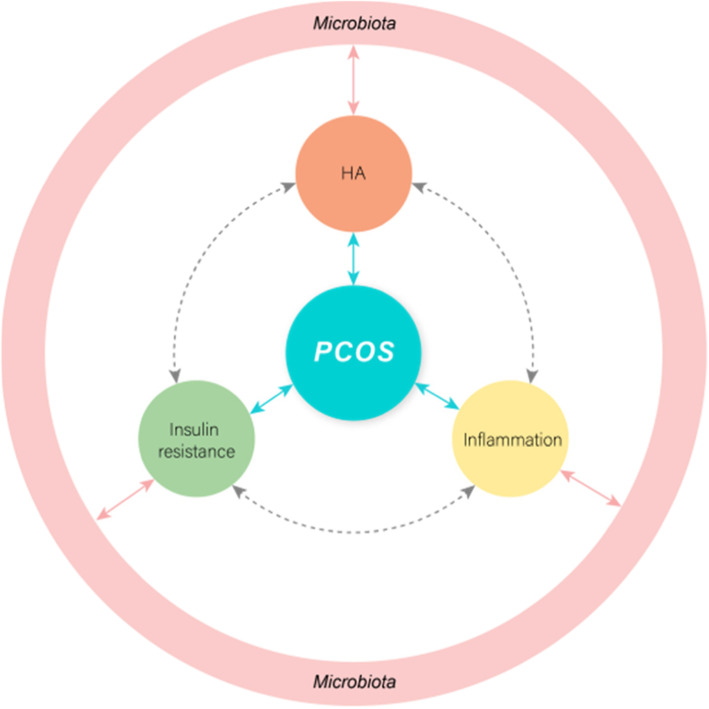
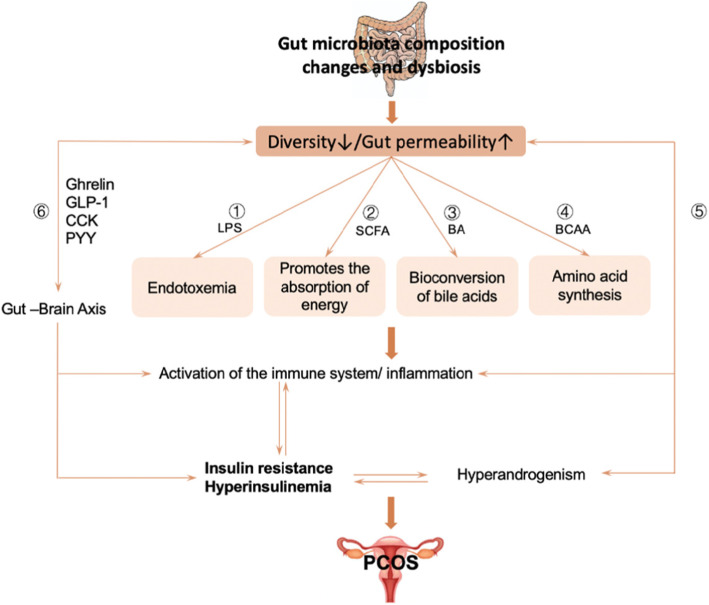
Polycystic ovary syndrome (PCOS) is a complex endocrine and metabolic disorder. Typically, it is characterized by hirsutism, hyperandrogenism, ovulatory dysfunction, menstrual disorders and infertility. To date, its pathogenesis remains unclear. However, insulin resistance (IR) is considered as the primary pathological basis for its reproductive dysfunction. On the other hand, a condition in which insulin is over-secreted is called hyperinsulinemia. IR/Hyperinsulinemia is associated with chronic inflammation, hormonal changes, follicular dysplasia, endometrial receptivity changes, and abortion or infertility. Additionally, it increases incidence of complications during pregnancy and has been associated with anxiety, depression, and other psychological disorders. Gut microbiota, the “second genome” acquired by the human body, can promote metabolism, immune response through interaction with the external environment. Gut microbiota dysbiosis can cause IR, which is closely linked to the occurrence of PCOS. This article reviewed recent findings on the roles of gut microbiota in the development of insulin resistance and the mechanism underlying polycystic ovary syndrome.
Overview
The claims and statistics of this paper haven’t been checked yet.
Run the check — free, no account needed. It reads the open-access text and checks the sources it cites.
Integrity signals
Registry
Cites
Statistics
Figures
Verification
Claims the paper makes
The claims and statistics of this paper haven’t been checked yet.
Run the check — free, no account needed. It reads the open-access text and checks the sources it cites.
Claims other papers make about this one
Each is checked against this paper’s own text: does it say what the citing paper says it does?
The source backs part of the claim, not all of it — or backs it for a different population, condition or comparison.
In the citing paper
“Lifestyle-induced changes in the gastrointestinal tract microbiome are another significant factor in the etiology of PCOS [52,53].”
From Polycystic Ovary Syndrome: An Evolutionary Adaptation to Lifestyle and the Environment (2022) · cites this paper as [53]
Experimental — accuracy not yet measuredThe source backs part of the claim, not all of it — or backs it for a different population, condition or comparison.
In the citing paper
“As discussed in the dysbiosis section, diet-related changes in the gastrointestinal microbiome have also been shown to cause IR in women with PCOS [53,55].”
From Polycystic Ovary Syndrome: An Evolutionary Adaptation to Lifestyle and the Environment (2022) · cites this paper as [53]
Experimental — accuracy not yet measuredThe source backs part of the claim, not all of it — or backs it for a different population, condition or comparison.
In the citing paper
“Insulin resistance can be caused by a wide variety of mechanisms that have the ability to disrupt any part of this metabolic signaling system [53,161]. These include autoantibodies, receptor agonists and antagonists, hormones, inflammatory cytokines, oxidative stress, nutrient sensors and metabolic intermediates [160,161,162,163].”
From Polycystic Ovary Syndrome: An Evolutionary Adaptation to Lifestyle and the Environment (2022) · cites this paper as [53]
Experimental — accuracy not yet measured
Self-check
Percentages, sums and reported differences re-computed from the paper’s own numbers.
The self-check needs the paper’s full text.
Citations
Cites
1 retracted
Ahmadi, S., Jamilian, M., Karamali, M., Ebrahimi, M. T., Jafari, P., Taghizadeh, M., Memarzadeh, M. R., & Asemi, Z. (2017) · Human Fertility · doi:10.1080/14647273.2017.1283446 · Cited by 96
Retracted(2004) · Fertility and Sterility · doi:10.1016/j.fertnstert.2003.10.004 · Cited by 9,050
Metabolic Endotoxemia Initiates Obesity and Insulin Resistance
Cani, P. D., Amar, J., Iglesias, M. A., Poggi, M., Knauf, C., Bastelica, D., Neyrinck, A. M., Fava, F., Tuohy, K. M., Chabo, C., et al. (2007) · Diabetes · doi:10.2337/db06-1491 · Cited by 6,638
The gut microbiota as an environmental factor that regulates fat storage
Bäckhed, F., Ding, H., Wang, T., Hooper, L. V., Koh, G. Y., Nagy, A., Semenkovich, C. F., & Gordon, J. I. (2004) · Proceedings of the National Academy of Sciences · doi:10.1073/pnas.0407076101 · Cited by 6,245
The Rotterdam ESHRE/ASRM-sponsored PCOS consensus workshop group (2004) · Human Reproduction · doi:10.1093/humrep/deh098 · Cited by 6,138
Inflammation, stress, and diabetes
Wellen, K. E., & Hotamisligil, G. S. (2005) · Journal of Clinical Investigation · doi:10.1172/jci25102 · Cited by 4,143
Introduction to the human gut microbiota
Thursby, E., & Juge, N. (2017) · Biochemical Journal · doi:10.1042/bcj20160510 · Cited by 3,600
Metabolite profiles and the risk of developing diabetes
Wang, T. J., Larson, M. G., Vasan, R. S., Cheng, S., Rhee, E. P., McCabe, E., Lewis, G. D., Fox, C. S., Jacques, P. F., Fernandez, C., et al. (2011) · Nature Medicine · doi:10.1038/nm.2307 · Cited by 3,143
Gut metagenome in European women with normal, impaired and diabetic glucose control
Karlsson, F. H., Tremaroli, V., Nookaew, I., Bergström, G., Behre, C. J., Fagerberg, B., Nielsen, J., & Bäckhed, F. (2013) · Nature · doi:10.1038/nature12198 · Cited by 3,115
Vrieze, A., Van Nood, E., Holleman, F., Salojärvi, J., Kootte, R. S., Bartelsman, J. F. W. M., Dallinga–Thie, G. M., Ackermans, M. T., Serlie, M. J., Oozeer, R., et al. (2012) · Gastroenterology · doi:10.1053/j.gastro.2012.06.031 · Cited by 2,913
Review article: the role of butyrate on colonic function
HAMER, H. M., JONKERS, D., VENEMA, K., VANHOUTVIN, S., TROOST, F. J., & BRUMMER, R. ‐. (2008) · Alimentary Pharmacology & Therapeutics · doi:10.1111/j.1365-2036.2007.03562.x · Cited by 2,721
Influence of diet on the gut microbiome and implications for human health
Singh, R. K., Chang, H.-W., Yan, D., Lee, K. M., Ucmak, D., Wong, K., Abrouk, M., Farahnik, B., Nakamura, M., Zhu, T. H., et al. (2017) · Journal of Translational Medicine · doi:10.1186/s12967-017-1175-y · Cited by 2,599
Short-chain fatty acids in control of body weight and insulin sensitivity
Canfora, E. E., Jocken, J. W., & Blaak, E. E. (2015) · Nature Reviews Endocrinology · doi:10.1038/nrendo.2015.128 · Cited by 2,298
Butyrate improves insulin sensitivity and increases energy expenditure in mice
Gao, Z., Yin, J., Zhang, J., Ward, R. E., Martin, R. J., Lefevre, M., Cefalu, W. T., & Ye, J. (2009) · Diabetes · doi:10.2337/db08-1637 · Cited by 2,204
Human gut microbes impact host serum metabolome and insulin sensitivity
Pedersen, H. K., Gudmundsdottir, V., Nielsen, H. B., Hyotylainen, T., Nielsen, T., Jensen, B. A. H., Forslund, K., Hildebrand, F., Prifti, E., Falony, G., et al. (2016) · Nature · doi:10.1038/nature18646 · Cited by 2,116
Profound Peripheral Insulin Resistance, Independent of Obesity, in Polycystic Ovary Syndrome
Dunaif, A., Segal, K. R., Futterweit, W., & Dobrjansky, A. (1989) · Diabetes · doi:10.2337/diab.38.9.1165 · Cited by 1,967
Diamanti-Kandarakis, E., & Dunaif, A. (2012) · Endocrine Reviews · doi:10.1210/er.2011-1034 · Cited by 1,947
Legro, R. S., Arslanian, S. A., Ehrmann, D. A., Hoeger, K. M., Murad, M. H., Pasquali, R., & Welt, C. K. (2013) · The Journal of Clinical Endocrinology & Metabolism · doi:10.1210/jc.2013-2350 · Cited by 1,919
Teede, H. J., Misso, M. L., Costello, M. F., Dokras, A., Laven, J., Moran, L., Piltonen, T., Norman, R. J., & the International PCOS Network (2018) · Clinical Endocrinology · doi:10.1111/cen.13795 · Cited by 1,823
Rosenfield, R. L., & Ehrmann, D. A. (2016) · Endocrine Reviews · doi:10.1210/er.2015-1104 · Cited by 1,603
Teede, H. J., Misso, M. L., Costello, M. F., Dokras, A., Laven, J., Moran, L., Piltonen, T., Norman, R. J., International PCOS Network, Andersen, M., et al. (2018) · Human Reproduction · doi:10.1093/humrep/dey256 · Cited by 1,593
Causal relationships among the gut microbiome, short-chain fatty acids and metabolic diseases
Sanna, S., van Zuydam, N. R., Mahajan, A., Kurilshikov, A., Vich Vila, A., Võsa, U., Mujagic, Z., Masclee, A. A. M., Jonkers, D. M. A. E., Oosting, M., et al. (2019) · Nature Genetics · doi:10.1038/s41588-019-0350-x · Cited by 1,539
Exercise and associated dietary extremes impact on gut microbial diversity
Clarke, S. F., Murphy, E. F., O'Sullivan, O., Lucey, A. J., Humphreys, M., Hogan, A., Hayes, P., O'Reilly, M., Jeffery, I. B., Wood-Martin, R., et al. (2014) · Gut · doi:10.1136/gutjnl-2013-306541 · Cited by 1,439
Dumesic, D. A., Oberfield, S. E., Stener-Victorin, E., Marshall, J. C., Laven, J. S., & Legro, R. S. (2015) · Endocrine Reviews · doi:10.1210/er.2015-1018 · Cited by 1,020
Gut microbiota and intestinal FXR mediate the clinical benefits of metformin
Sun, L., Xie, C., Wang, G., Wu, Y., Wu, Q., Wang, X., Liu, J., Deng, Y., Xia, J., Chen, B., et al. (2018) · Nature Medicine · doi:10.1038/s41591-018-0222-4 · Cited by 1,011
Activation of the nuclear receptor FXR improves hyperglycemia and hyperlipidemia in diabetic mice
Zhang, Y., Lee, F. Y., Barrera, G., Lee, H., Vales, C., Gonzalez, F. J., Willson, T. M., & Edwards, P. A. (2006) · Proceedings of the National Academy of Sciences · doi:10.1073/pnas.0506982103 · Cited by 974
The role of microbial amino acid metabolism in host metabolism
Neis, E., Dejong, C., & Rensen, S. (2015) · Nutrients · doi:10.3390/nu7042930 · Cited by 920
Gut microbiota–bile acid–interleukin-22 axis orchestrates polycystic ovary syndrome
Qi, X., Yun, C., Sun, L., Xia, J., Wu, Q., Wang, Y., Wang, L., Zhang, Y., Liang, X., Wang, L., et al. (2019) · Nature Medicine · doi:10.1038/s41591-019-0509-0 · Cited by 881
Gut microbiome, obesity, and metabolic dysfunction
Tilg, H., & Kaser, A. (2011) · Journal of Clinical Investigation · doi:10.1172/jci58109 · Cited by 860
Linking Gut Microbiota and Inflammation to Obesity and Insulin Resistance
Saad, M. J. A., Santos, A., & Prada, P. O. (2016) · Physiology · doi:10.1152/physiol.00041.2015 · Cited by 836
Microbially Produced Imidazole Propionate Impairs Insulin Signaling through mTORC1
Koh, A., Molinaro, A., Ståhlman, M., Khan, M. T., Schmidt, C., Mannerås-Holm, L., Wu, H., Carreras, A., Jeong, H., Olofsson, L. E., et al. (2018) · Cell · doi:10.1016/j.cell.2018.09.055 · Cited by 824
Sex differences and hormonal effects on gut microbiota composition in mice
Org, E., Mehrabian, M., Parks, B. W., Shipkova, P., Liu, X., Drake, T. A., & Lusis, A. J. (2016) · Gut Microbes · doi:10.1080/19490976.2016.1203502 · Cited by 796
Stepto, N. K., Cassar, S., Joham, A. E., Hutchison, S. K., Harrison, C. L., Goldstein, R. F., & Teede, H. J. (2013) · Human Reproduction · doi:10.1093/humrep/des463 · Cited by 747
Insights into the role of the microbiome in obesity and type 2 diabetes
Hartstra, A. V., Bouter, K. E. C., Bäckhed, F., & Nieuwdorp, M. (2015) · Diabetes Care · doi:10.2337/dc14-0769 · Cited by 641
Goodman, N. F., Cobin, R. H., Futterweit, W., Glueck, J. S., Legro, R. S., & Carmina, E. (2015) · Endocrine Practice · doi:10.4158/ep15748.dsc · Cited by 623
Polycystic ovary syndrome (PCOS), an inflammatory, systemic, lifestyle endocrinopathy
Patel, S. (2018) · The Journal of Steroid Biochemistry and Molecular Biology · doi:10.1016/j.jsbmb.2018.04.008 · Cited by 605
Amino Acid and Insulin Signaling via the mTOR/p70 S6 Kinase Pathway
Tremblay, F., & Marette, A. (2001) · Journal of Biological Chemistry · doi:10.1074/jbc.m106703200 · Cited by 547
Polycystic Ovarian Syndrome: Correlation Between Hyperandrogenism, Insulin Resistance and Obesity.
Zeng, X., Xie, Y.-J., Liu, Y.-T., Long, S.-L., & Mo, Z.-C. (2020) · Clinica Chimica Acta · doi:10.1016/j.cca.2019.11.003 · Cited by 525
Karaki, S.-I., Mitsui, R., Hayashi, H., Kato, I., Sugiya, H., Iwanaga, T., Furness, J. B., & Kuwahara, A. (2006) · Cell and Tissue Research · doi:10.1007/s00441-005-0140-x · Cited by 473
Polycystic ovarian syndrome (PCOS): Long-term metabolic consequences
Anagnostis, P. G., Tarlatzis, B. C., & Kauffman, R. P. (2017) · Metabolism · doi:10.1016/j.metabol.2017.09.016 · Cited by 445
Lindheim, L., Bashir, M., Münzker, J., Trummer, C., Zachhuber, V., Leber, B., Horvath, A., Pieber, T. R., Gorkiewicz, G., Stadlbauer, V., et al. (2017) · PLOS ONE · doi:10.1371/journal.pone.0168390 · Cited by 416 · cited 3×
“Several studies have reported a decrease in α diversity and a change in β diversity in patients with PCOS [18, 20].”
Gut microbial diversity in women with polycystic ovary syndrome correlates with hyperandrogenism
Torres, P. J., Siakowska, M., Banaszewska, B., Pawelczyk, L., Duleba, A. J., Kelley, S. T., & Thackray, V. G. (2018) · The Journal of Clinical Endocrinology & Metabolism · doi:10.1210/jc.2017-02153 · Cited by 399
Effect of Metformin on Metabolic Improvement and Gut Microbiota
Lee, H., & Ko, G. (2014) · Applied and Environmental Microbiology · doi:10.1128/aem.01357-14 · Cited by 395
Dysbiosis of Gut Microbiota Associated with Clinical Parameters in Polycystic Ovary Syndrome
Liu, R., Zhang, C., Shi, Y., Zhang, F., Li, L., Wang, X., Ling, Y., Fu, H., Dong, W., Shen, J., et al. (2017) · Frontiers in Microbiology · doi:10.3389/fmicb.2017.00324 · Cited by 386
Goodman, N. F., Cobin, R. H., Futterweit, W., Glueck, J. S., Legro, R. S., & Carmina, E. (2015) · Endocrine Practice · doi:10.4158/ep15748.dscpt2 · Cited by 366
Tremellen, K., & Pearce, K. (2012) · Medical Hypotheses · doi:10.1016/j.mehy.2012.04.016 · Cited by 359
Andreasen, A. S., Larsen, N., Pedersen-Skovsgaard, T., Berg, R. M. G., Møller, K., Svendsen, K. D., Jakobsen, M., & Pedersen, B. K. (2010) · British Journal Of Nutrition · doi:10.1017/s0007114510002874 · Cited by 357
Association between polycystic ovary syndrome and gut microbiota
Guo, Y., Qi, Y., Yang, X., Zhao, L., Wen, S., Liu, Y., & Tang, L. (2016) · PLOS ONE · doi:10.1371/journal.pone.0153196 · Cited by 350
The effect of heritability and host genetics on the gut microbiota and metabolic syndrome
Lim, M. Y., You, H. J., Yoon, H. S., Kwon, B., Lee, J. Y., Lee, S., Song, Y., Lee, K., Sung, J., & Ko, G. (2016) · Gut · doi:10.1136/gutjnl-2015-311326 · Cited by 349
Cardiometabolic Aspects of the Polycystic Ovary Syndrome
Randeva, H. S., Tan, B. K., Weickert, M. O., Lois, K. B., Nestler, J. E., Sattar, N. A., & Lehnert, H. (2012) · Endocrine Reviews · doi:10.1210/er.2012-1003 · Cited by 336
The role of peptide YY in appetite regulation and obesity
Karra, E., Chandarana, K., & Batterham, R. L. (2009) · The Journal of Physiology · doi:10.1113/jphysiol.2008.164269 · Cited by 336
Endometrium in PCOS: Implantation and predisposition to endocrine CA
Giudice, L. C. (2006) · Best Practice & Research Clinical Endocrinology & Metabolism · doi:10.1016/j.beem.2006.03.005 · Cited by 328
Hyperandrogenemia and insulin resistance: The chief culprit of polycystic ovary syndrome
Wang, J., Wu, D., Guo, H., & Li, M. (2019) · Life Sciences · doi:10.1016/j.lfs.2019.116940 · Cited by 322
Gut microbiota and the polycystic ovary syndrome: influence of sex, sex hormones, and obesity
Insenser, M., Murri, M., del Campo, R., Martínez-García, M. Á., Fernández-Durán, E., & Escobar-Morreale, H. F. (2018) · The Journal of Clinical Endocrinology & Metabolism · doi:10.1210/jc.2017-02799 · Cited by 312
Willis, D., Watson, H., Mason, H. D., Galea, R., Brincat, M., & Franks, S. (1998) · The Journal of Clinical Endocrinology & Metabolism · doi:10.1210/jcem.83.11.5232 · Cited by 312
Hersoug, L., Møller, P., & Loft, S. H. (2015) · Obesity Reviews · doi:10.1111/obr.12370 · Cited by 301
Zhang, J., Sun, Z., Jiang, S., Bai, X., Ma, C., Peng, Q., Chen, K., Chang, H., Fang, T., & Zhang, H. (2019) · mSystems · doi:10.1128/msystems.00017-19 · Cited by 296
Jiao, N., Baker, S. S., Nugent, C. A., Tsompana, M., Cai, L., Wang, Y., Buck, M. J., Genco, R. J., Baker, R. D., Zhu, R., et al. (2018) · Physiological Genomics · doi:10.1152/physiolgenomics.00114.2017 · Cited by 290
Polycystic ovary syndrome current status and future perspective
Naz, R. K. (2014) · Frontiers in Bioscience-Elite · doi:10.2741/e695 · Cited by 273
Insulin and the polycystic ovary syndrome
Μacut, D., Bjekić-Macut, J., Rahelić, D., & Doknić, M. (2017) · Diabetes Research and Clinical Practice · doi:10.1016/j.diabres.2017.06.011 · Cited by 273
Barber, T. M., Wass, J. A. H., McCarthy, M. I., & Franks, S. (2007) · Clinical Endocrinology · doi:10.1111/j.1365-2265.2007.02764.x · Cited by 254
Zhao, Y., Fu, L., Li, R., Wang, L., Yan, Y., Liu, N.-N., Zhang, C., Wang, Y., Liu, P., Tu, B.-B., et al. (2012) · BMC Medicine · doi:10.1186/1741-7015-10-153 · Cited by 232
Gut microbiome production of short-chain fatty acids and obesity in children
Murugesan, S., Nirmalkar, K., Hoyo‐Vadillo, C., Garcı́a-Espitia, M., Ramírez-Sánchez, D., & Garcı́a-Mena, J. (2017) · European Journal of Clinical Microbiology & Infectious Diseases · doi:10.1007/s10096-017-3143-0 · Cited by 227
The gut microbiome is altered in a letrozole-induced mouse model of polycystic ovary syndrome
Kelley, S. T., Skarra, D. V., Rivera, A. J., & Thackray, V. G. (2016) · PLOS ONE · doi:10.1371/journal.pone.0146509 · Cited by 205
Sex, microbes, and polycystic ovary syndrome
Thackray, V. G. (2019) · Trends in Endocrinology & Metabolism · doi:10.1016/j.tem.2018.11.001 · Cited by 203
The Diagnosis of Polycystic Ovary Syndrome in Adolescents
Rosenfield, R. L. (2015) · PEDIATRICS · doi:10.1542/peds.2015-1430 · Cited by 201
Zeng, B., Lai, Z., Sun, L., Zhang, Z., Yang, J., Li, Z., Lin, J., & Zhang, Z. (2018) · Research in Microbiology · doi:10.1016/j.resmic.2018.09.002 · Cited by 196
Causality of small and large intestinal microbiota in weight regulation and insulin resistance
Scheithauer, T. P. M., Dallinga-Thie, G. M., de Vos, W. M., Nieuwdorp, M., & van Raalte, D. H. (2016) · Molecular Metabolism · doi:10.1016/j.molmet.2016.06.002 · Cited by 188
Barrea, L., Marzullo, P., Muscogiuri, G., Di Somma, C., Scacchi, M., Orio, F., Aimaretti, G., Colao, A., & Savastano, S. (2018) · Nutrition Research Reviews · doi:10.1017/s0954422418000136 · Cited by 171
A New Approach to Polycystic Ovary Syndrome: The Gut Microbiota
Depboylu, G. Y., & Akdevelıoğlu, Y. (2019) · Journal of the American College of Nutrition · doi:10.1080/07315724.2019.1657515 · Cited by 164
Prenatal androgen exposure causes hypertension and gut microbiota dysbiosis
Sherman, S. B., Sarsour, N. Y., Salehi, M., Schroering, A. G., Mell, B., Joe, B., & Hill, J. W. (2018) · Gut Microbes · doi:10.1080/19490976.2018.1441664 · Cited by 160
Sun, L., Hu, W., Liu, Q., Hao, Q., Sun, B. H., Zhang, Q., Mao, S., Qiao, J., & Yan, X. (2012) · Journal of Proteome Research · doi:10.1021/pr3000317 · Cited by 155
Characteristic gut microbiota and predicted metabolic functions in women with PCOS
Zhou, L., Ni, Z., Cheng, W., Yu, J., Sun, S., Zhai, D., Yu, C., & Cai, Z. (2020) · Endocrine Connections · doi:10.1530/ec-19-0522 · Cited by 141
Barber, T. M., Dimitriadis, G. K., Andreou, A., & Franks, S. (2016) · Clinical Medicine · doi:10.7861/clinmedicine.16-3-262 · Cited by 118
Barber, T. M., Dimitriadis, G. K., Andreou, A., & Franks, S. (2015) · Clinical Medicine · doi:10.7861/clinmedicine.15-6-s72 · Cited by 116
Zhang, F., Ma, T., Cui, P., Tamadon, A., He, S., Huo, C., Yierfulati, G., Xu, X., Hu, W., Li, X., et al. (2019) · Frontiers in Microbiology · doi:10.3389/fmicb.2019.00175 · Cited by 108
Serum AMH levels and insulin resistance in women with PCOS
Şahmay, S., Mathyk, B. A., Sofiyeva, N., Atakul, N., Azemi, A., & Erel, C. T. (2018) · European Journal of Obstetrics & Gynecology and Reproductive Biology · doi:10.1016/j.ejogrb.2018.03.007 · Cited by 93
Incretin levels in polycystic ovary syndrome
Vrbikova, J., Hill, M., Bendlova, B., Grimmichova, T., Dvorakova, K., Vondra, K., & Pacini, G. (2008) · European Journal of Endocrinology · doi:10.1530/eje-08-0097 · Cited by 81
Mioni, R., Chiarelli, S. M., Xamin, N., Zuliani, L., Granzotto, M., Mozzanega, B., Maffei, P., Martini, C., Blandamura, S., Sicolo, N., et al. (2004) · The Journal of Clinical Endocrinology & Metabolism · doi:10.1210/jc.2003-032028 · Cited by 80
Chang, E. M., Han, J. E., Seok, H. H., Lee, D. R., Yoon, T. K., & Lee, W. S. (2012) · Clinical Endocrinology · doi:10.1111/cen.12099 · Cited by 71
Zhang, C., Zhao, Y., Li, R., Yu, Y., Yan, L., Li, L., Liu, N., Liu, P., & Qiao, J. (2014) · BMC Pregnancy and Childbirth · doi:10.1186/1471-2393-14-11 · Cited by 70
Microbial Regulation of Glucose Metabolism and Insulin Resistance
Crommen, S., & Simon, M. (2017) · Genes · doi:10.3390/genes9010010 · Cited by 69
Tehrani, F. R., Montazeri, S. A., Hosseinpanah, F., Cheraghi, L., Erfani, H., Tohidi, M., & Azizi, F. (2015) · PLoS ONE · doi:10.1371/journal.pone.0137609 · Cited by 67
Torres, P. J., Skarra, D. V., Ho, B., Sau, L., Anvar, A. R., Kelley, S. T., & Thackray, V. G. (2019) · BMC Microbiology · doi:10.1186/s12866-019-1425-7 · Cited by 65
Hallajzadeh, J., Khoramdad, M., Karamzad, N., Almasi‐Hashiani, A., Janati, A., Ayubi, E., Pakzad, R., Sullman, M. J. M., & Safiri, S. (2018) · Journal of Cardiovascular and Thoracic Research · doi:10.15171/jcvtr.2018.10 · Cited by 59
Qin, L., Huang, C., Yan, X., Wang, Y., Li, Z., & Wei, X. (2019) · Endocrine Journal · doi:10.1507/endocrj.ej19-0004 · Cited by 57
Opposite Regulation of Ghrelin and Glucagon-like Peptide-1 by Metabolite G-Protein-Coupled Receptors
Engelstoft, M. S., & Schwartz, T. W. (2016) · Trends in Endocrinology and Metabolism · doi:10.1016/j.tem.2016.07.001 · Cited by 53
Inositol Treatment and ART Outcomes in Women with PCOS
Garg, D., & Tal, R. (2016) · International Journal of Endocrinology · doi:10.1155/2016/1979654 · Cited by 47
The microbial epigenome in metabolic syndrome
Remely, M., & Haslberger, A. G. (2016) · Molecular Aspects of Medicine · doi:10.1016/j.mam.2016.09.003 · Cited by 42
Saito, K., Matsuzaki, T., Iwasa, T., Miyado, M., Saito, H., Hasegawa, T., Homma, K., Inoue, E., Miyashiro, Y., Kubota, T., et al. (2016) · The Journal of Steroid Biochemistry and Molecular Biology · doi:10.1016/j.jsbmb.2016.02.010 · Cited by 40
Altered Steroid Metabolism and Insulin Signaling in PCOS Endometria: Impact in Tissue Function
Oróstica, L., Rosas, C., Plaza-Parrochia, F., Astorga, I., Gabler, F., García, V., Romero, C., & Vega, M. (2016) · Current Pharmaceutical Design · doi:10.2174/1381612822666160810111528 · Cited by 40
Gut-Brain Axis and Metabolism in Polycystic Ovary Syndrome
Saydam, B. Ö., & Yıldız, B. O. (2016) · Current Pharmaceutical Design · doi:10.2174/1381612822666160715143933 · Cited by 37
Local Cortisol Elevation Contributes to Endometrial Insulin Resistance in Polycystic Ovary Syndrome
Qi, J., Wang, W., Zhu, Q., He, Y., Lu, Y., Wang, Y., Li, X., Chen, Z., & Sun, Y. W. (2018) · The Journal of Clinical Endocrinology & Metabolism · doi:10.1210/jc.2017-02459 · Cited by 37
Gourgari, E., Lodish, M. B., Shamburek, R. D., Keil, M. F., WESLEY, R. A., Walter, M. F., Sampson, M. L., Bernstein, S. B., Khurana, D., Lyssikatos, C., et al. (2015) · The Journal of Clinical Endocrinology & Metabolism · doi:10.1210/jc.2015-2566 · Cited by 35
Gastrointestinal hormone secretion in women with polycystic ovary syndrome: an observational study
Lin, T., Li, S., Xu, H., Zhou, H., Feng, R., Liu, W., Sun, Y., & Ma, J. (2015) · Human Reproduction · doi:10.1093/humrep/dev231 · Cited by 34
Houjeghani, S., Gargari, B. P., & Farzadi, L. (2012) · Europe PMC (PubMed Central) · Cited by 28
Serum visfatin levels in non-obese women with polycystic ovary syndrome and matched controls
Kim, J., Choi, Y. M., Hong, M. A., Kim, M.-J., Chae, S. J., Kim, S. M., Hwang, K. R., Yoon, S. H., Ku, S., Suh, C. S., et al. (2018) · Obstetrics & Gynecology Science · doi:10.5468/ogs.2018.61.2.253 · Cited by 26
Ormazabal, P., Romero, C., Quest, A. F. G., & Vega, M. (2013) · Hormone and Metabolic Research · doi:10.1055/s-0033-1345176 · Cited by 25
Microbiota and Metabolic Syndrome
Altuntaş, Y. (2017) · Turk Kardiyoloji Dernegi Arsivi-Archives of the Turkish Society of Cardiology · doi:10.5543/tkda.2016.72461 · Cited by 23
Haptoglobin levels, but not Hp1-Hp2 polymorphism, are associated with polycystic ovary syndrome
Carvalho, L. M. L., Ferreira, C. N., de Oliveira, D. K. D., Rodrigues, K. F., Duarte, R. C. F., Teixeira, M. F. A., Xavier, L. B., Cândido, A. L., dos Reis, F. M., Silva, I. D. F. O., et al. (2017) · Journal of Assisted Reproduction and Genetics · doi:10.1007/s10815-017-1030-3 · Cited by 19
Ma, C., Peng, Q., Jiang, S., Chen, K., Fang, Y., & Zhang, J. (2018) · Chinese Science Bulletin (Chinese Version) · doi:10.1360/n972018-00587 · Cited by 16
Divergences in insulin resistance between the different phenotypes of the polycystic ovary syndrome
Barber, T. M., & Franks, S. (2013) · Expert Review of Endocrinology & Metabolism · doi:10.1586/17446651.2013.827373 · Cited by 15
Research works printed but not linked: 2
- Vrieze A, Van Nood E, Holleman F, Salojärvi J, Kootte RS, Bartelsman JFWM, et al. Transfer of Intestinal Microbiota From Lean Donors Increases Insulin Sensitivity in Individuals With Metabolic Syndrome. Gastroenterology. 2012;143(4):913–6.e7. · DOI · Paper page
- Chen Fangyuan, LAI Zhiwen, XU Zusen. Analysis of the gut microbial composition in polycystic ovary syndrome with acne. Zigong Maternal and Child Health Hospital. 2019;35(14):2246–51.
Cited by
Sorted by citations
The crucial role and mechanism of insulin resistance in metabolic disease
Zhao, X., An, X., Yang, C., Sun, W., Ji, H., & Lian, F. (2023) · Frontiers in Endocrinology · doi:10.3389/fendo.2023.1149239 · Cited by 675
Polycystic Ovary Syndrome: A Comprehensive Review of Pathogenesis, Management, and Drug Repurposing
Sadeghi, H. M., Adeli, I., Calina, D., Docea, A. O., Mousavi, T., Daniali, M., Nikfar, S., Tsatsakis, A., & Abdollahi, M. (2022) · International Journal of Molecular Sciences · doi:10.3390/ijms23020583 · Cited by 445
Zhao, H., Zhang, J., Cheng, X., Nie, X., & He, B. (2023) · Journal of Ovarian Research · doi:10.1186/s13048-022-01091-0 · Cited by 408
Metabolic Syndrome and PCOS: Pathogenesis and the Role of Metabolites
Chen, W., & Pang, Y. (2021) · Metabolites · doi:10.3390/metabo11120869 · Cited by 228
Interactive relationships between intestinal flora and bile acids
Guo, X., Okpara, E. S., Hu, W., Yan, C., Wang, Y., Liang, Q., Chiang, J. Y. L., & Han, S. (2022) · International Journal of Molecular Sciences · doi:10.3390/ijms23158343 · Cited by 206
Metadata
- Authors
- He, F.-F., & Li, Y.-M.
- Affiliations
- Central South University (CN)
- Corresponding author
- Li, Yu-mei
- ORCID
- Li, Yu-mei
- Venue
- Journal of Ovarian Research
- Published
- 2020-06-17
- Volume
- 13
- Issue
- 1
- Pages
- 73-73
- ISSN
- 1757-2215 (ISSN-L)
- PMC
- PMC7301991
- OpenAlex
- W3036640353
- Cited by
- 289
- References
- 102
- Citations by year
- 2026: 41 · 2025: 50 · 2024: 62 · 2023: 57 · 2022: 48 · 2021: 28 · 2020: 2
- FWCI
- 4.99
- Type
- journal article
- Language
- en
- Open access
- gold
- doi.org
- Locations
- Journal of Ovarian Research (publishedVersion, cc-by)
- PubMed Central (publishedVersion, cc-by)
- PubMed (publishedVersion)
- DOAJ (DOAJ: Directory of Open Access Journals) (submittedVersion, cc-by-sa)
- Topics
- Health Sciences › Medicine › Reproductive Medicine › Ovarian function and disorders
- Life Sciences › Biochemistry, Genetics and Molecular Biology › Molecular Biology › Gut microbiota and health
- Health Sciences › Medicine › Endocrinology, Diabetes and Metabolism › Diet, Metabolism, and Disease
- Keywords
- gut microbiota, polycystic ovary syndrome, insulin resistance, hyperinsulinemia, dysbiosis, chronic inflammation, reproductive disorders, infertility, hyperandrogenism, pregnancy complications, anxiety and depression
- MeSH terms
- Gastrointestinal Microbiome, Animals, Female, Humans, Insulin Resistance, Polycystic Ovary Syndrome, Mice
About these checks
Registry, retraction, Cites and statistics results are computed, not judged, with one exception: a printed reference that no index lists is read once by a model before it counts as a citation error. Claims are extracted by a model and kept only when their quote appears verbatim in the text; each cited source is then checked, with a model’s help, for whether it says what the claim relies on. Those verdicts can be wrong — read the claim’s quote and the cited source before relying on one.
Statistics and arithmetic are recomputed, not judged.
Confidence bands are shown only for fields calibrated on our annotated test set. None is calibrated yet, so no band is shown.
What counts as a claim ›How we measure confidence ›How we check this ›
Are you an author, or do you see a problem with this page? Request a review
