

Mortality in sepsis and septic shock in Europe, North America and Australia between 2009 and 2019 – results from a systematic review and meta-analysis
Open accessThe DOI matches its Crossref record; 30 of the 32 references it cites were found in a registry or an index.
Abstract
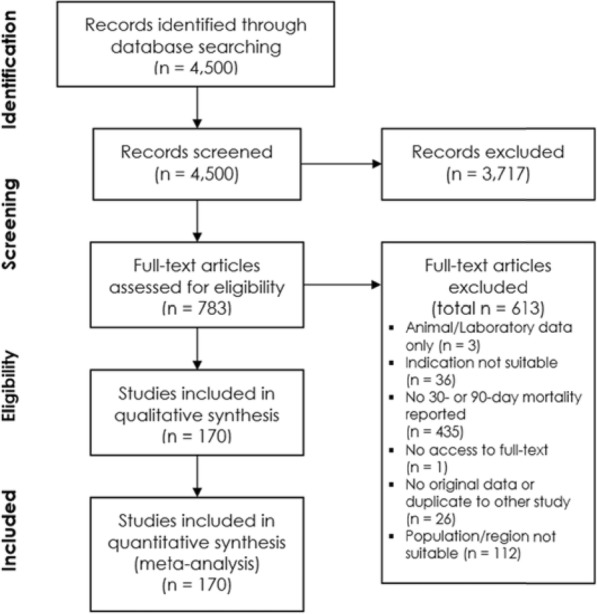
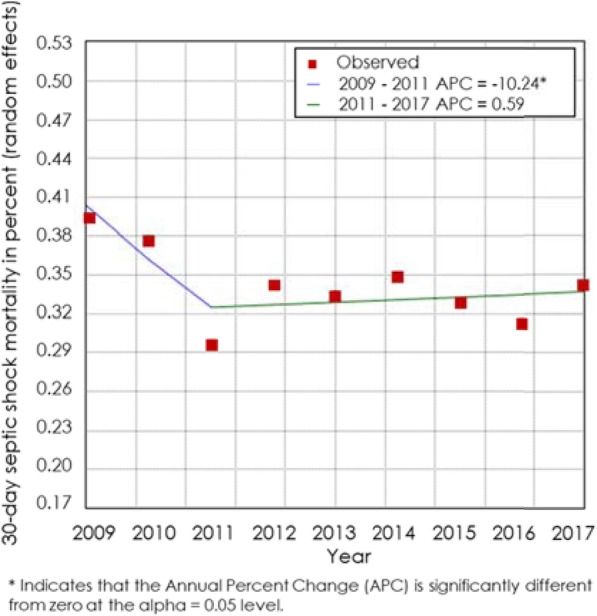
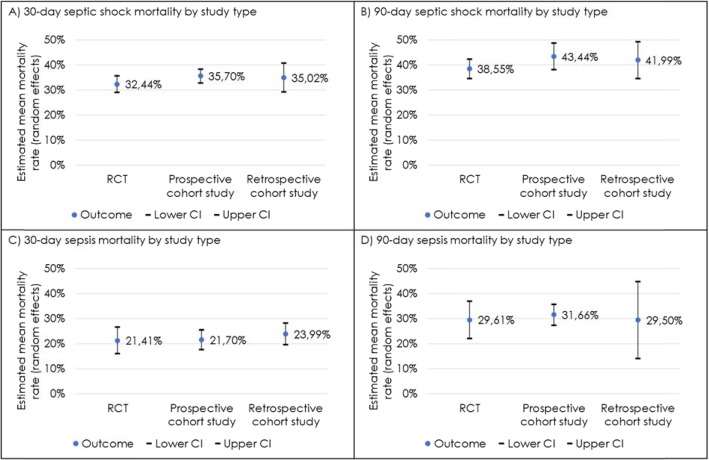
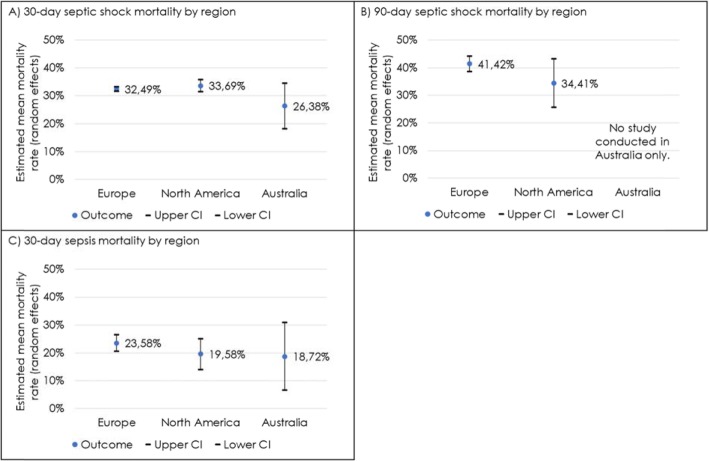
Background: Sepsis and septic shock remain drivers for mortality in critically ill patients. The heterogeneity of the syndrome hinders the generation of reproducible numbers on mortality risks. Consequently, mortality rates range from 15 to 56%. We aimed to update and extend the existing knowledge from meta-analyses and estimate 30- and 90-day mortality rates for sepsis and septic shock separately, stratify rates by region and study type and assess mortality rates across different sequential organ failure assessment (SOFA) scores. Methods: We performed a systematic review of articles published in PubMed or in the Cochrane Database, between 2009 and 2019 in English language including interventional and observational studies. A meta-analysis of pooled 28/30- and 90-day mortality rated separately for sepsis and septic shock was done using a random-effects model. Time trends were assessed via Joinpoint methodology and for the assessment of mortality rate over different SOFA scores, and linear regression was applied. Results: Four thousand five hundred records were identified. After title/abstract screening, 783 articles were assessed in full text for eligibility. Of those, 170 studies were included. Average 30-day septic shock mortality was 34.7% (95% CI 32.6–36.9%), and 90-day septic shock mortality was 38.5% (95% CI 35.4–41.5%). Average 30-day sepsis mortality was 24.4% (95% CI 21.5–27.2%), and 90-day sepsis mortality was 32.2% (95% CI 27.0–37.5%). Estimated mortality rates from RCTs were below prospective and retrospective cohort studies. Rates varied between regions, with 30-day septic shock mortality being 33.7% (95% CI 31.5–35.9) in North America, 32.5% (95% CI 31.7–33.3) in Europe and 26.4% (95% CI 18.1–34.6) in Australia. A statistically significant decrease of 30-day septic shock mortality rate was found between 2009 and 2011, but not after 2011. Per 1-point increase of the average SOFA score, average mortality increased by 1.8–3.3%. Conclusion: Trends of lower sepsis and continuous septic shock mortality rates over time and regional disparities indicate a remaining unmet need for improving sepsis management. Further research is needed to investigate how trends in the burden of disease influence mortality rates in sepsis and septic shock at 30- and 90-day mortality over time.
Overview
The claims and statistics of this paper haven’t been checked yet.
Free: it reads the open-access text and checks the first 5 claims that cite a source we can check. Create a free account to check every claim.
Integrity signals
Registry
Cites
Statistics
Figures
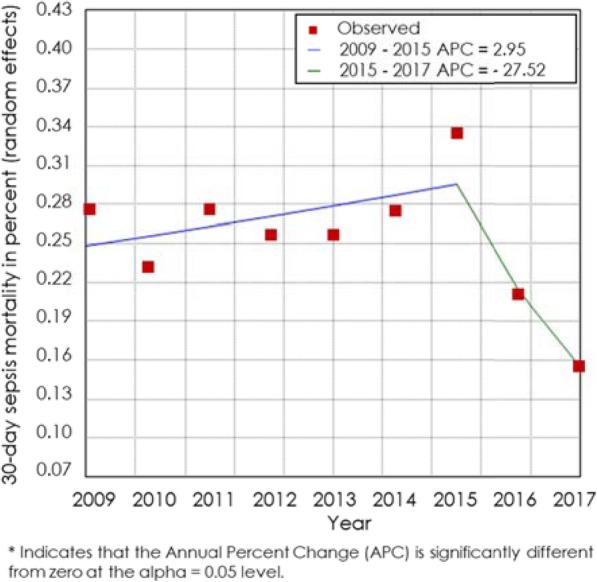
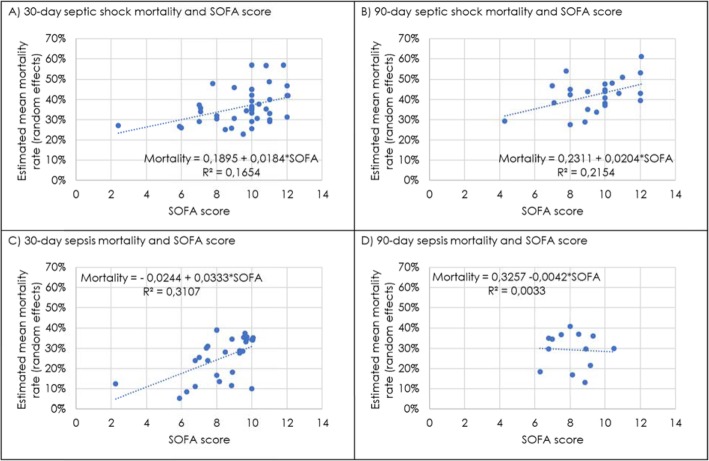
Verification
Claims the paper makes
The claims and statistics of this paper haven’t been checked yet.
Free: it reads the open-access text and checks the first 5 claims that cite a source we can check. Create a free account to check every claim.
Self-check
Percentages, sums and reported differences re-computed from the paper’s own numbers.
The self-check needs the paper’s full text.
Citations
Cites
Preferred Reporting Items for Systematic Reviews and Meta-Analyses: the PRISMA statement
Moher, D., Liberati, A., Tetzlaff, J., Altman, D. G., & for the PRISMA Group (2009) · BMJ · doi:10.1136/bmj.b2535 · Cited by 83,823
Preferred reporting items for systematic reviews and meta-analyses: the PRISMA Statement.
(2009) · PubMed Central · Cited by 44,859
RoB 2: a revised tool for assessing risk of bias in randomised trials
Sterne, J. A. C., Savović, J., Page, M. J., Elbers, R. G., Blencowe, N. S., Boutron, I., Cates, C. J., Cheng, H.-Y., Corbett, M. S., Eldridge, S. M., et al. (2019) · BMJ · doi:10.1136/bmj.l4898 · Cited by 34,787 · cited 1×
“RoB 2’ for randomized trials [18] and with ‘ROBINS-I’ used for observational studies [19], for sepsis and septic shock, 30 and 90 days mortality each.”
MethodThe third international consensus definitions for sepsis and septic shock (Sepsis-3).
Singer, M., Deutschman, C. S., Seymour, C. W., Shankar-Hari, M., Annane, D., Bauer, M., Bellomo, R., Bernard, G. R., Chiche, J.-D., Coopersmith, C. M., et al. (2016) · JAMA · doi:10.1001/jama.2016.0287 · Cited by 28,250
Self-citationROBINS-I: a tool for assessing risk of bias in non-randomised studies of interventions
Sterne, J. A., Hernán, M. A., Reeves, B. C., Savović, J., Berkman, N. D., Viswanathan, M., Henry, D., Altman, D. G., Ansari, M. T., Boutron, I., et al. (2016) · BMJ · doi:10.1136/bmj.i4919 · Cited by 20,329 · cited 1×
“RoB 2’ for randomized trials [18] and with ‘ROBINS-I’ used for observational studies [19], for sepsis and septic shock, 30 and 90 days mortality each.”
MethodBone, R. C., Balk, R. A., Cerra, F. B., Dellinger, R. P., Fein, A. M., Knaus, W. A., Schein, R. M. H., & Sibbald, W. J. (1992) · Chest · doi:10.1378/chest.101.6.1644 · Cited by 13,198
Surviving Sepsis Campaign: International Guidelines for Management of Severe Sepsis and Septic Shock
Dellinger, R. P., Levy, M. M., Rhodes, A., Annane, D., Gerlach, H., Opal, S. M., Sevransky, J. E., Sprung, C. L., Douglas, I. S., Jaeschke, R., et al. (2013) · Critical Care Medicine · doi:10.1097/ccm.0b013e31827e83af · Cited by 9,694
Self-citationThe Surviving Sepsis Campaign Guidelines Committee including The Pediatric Subgroup*, Dellinger, R. P., Levy, M. M., Rhodes, A., Annane, D., Gerlach, H., Opal, S. M., Sevransky, J. E., Sprung, C. L., Douglas, I. S., et al. (2013) · Intensive Care Medicine · doi:10.1007/s00134-012-2769-8 · Cited by 7,290
Self-citationPermutation tests for joinpoint regression with applications to cancer rates
Kim, H.-J., Fay, M. P., Feuer, E. J., & Midthune, D. N. (2000) · Statistics in Medicine · doi:10.1002/(sici)1097-0258(20000215)19:3<335::aid-sim336>3.0.co;2-z · Cited by 6,318
Severe Sepsis and Septic Shock
Angus, D. C., & van der Poll, T. (2013) · New England Journal of Medicine · doi:10.1056/nejmra1208623 · Cited by 3,961
Cited by
The pathophysiology of sepsis and precision-medicine-based immunotherapy
Giamarellos-Bourboulis, E. J., Aschenbrenner, A. C., Bauer, M., Bock, C., Calandra, T., Gat-Viks, I., Kyriazopoulou, E., Lupse, M., Monneret, G., Pickkers, P., et al. (2024) · Nature Immunology · doi:10.1038/s41590-023-01660-5 · Cited by 374
“9).”
Self-citationChicco, D., Sichenze, A., & Jurman, G. (2025) · BioData Mining · doi:10.1186/s13040-025-00465-6 · Cited by 289
Frequency and mortality of sepsis and septic shock in China: a systematic review and meta-analysis
Liu, Y., Yao, Y., Yu, M., Gao, Y., Qi, A., Jiang, T., Chen, Z.-S., Shou, S., & Chai, Y. (2022) · BMC Infectious Diseases · doi:10.1186/s12879-022-07543-8 · Cited by 131
Zhu, S., Yu, Y., Qu, M., Qiu, Z., Zhang, H., Miao, C., & Guo, K. (2023) · Cell Death Discovery · doi:10.1038/s41420-023-01614-8 · Cited by 123
“The mortality of 30-day septic shock was 34.7%, and that of 90-day septic shock reached 38.5% [5].”
BackgroundInfluentialRugg, C., Klose, R., Hornung, R., Innerhofer, N., Bachler, M., Schmid, S. W., Fries, D. R., & Ströhle, M. (2020) · Biomedicines · doi:10.3390/biomedicines8120539 · Cited by 116
Wang, Y., Shi, Y., Shao, Y., Lu, X., Zhang, H., & Miao, C. (2024) · Cell Death and Disease · doi:10.1038/s41419-024-06849-6 · Cited by 116
“To date, sepsis and septic shock have remained leading causes of death in critically ill patients, and the mortality rate of 30-day septic shock is as high as 34.7% [2].”
BackgroundInfluentialLi, A., Ling, L., Qin, H., Arabi, Y. M., Myatra, S. N., Egi, M., Kim, J. H., Nor, M. B. M., Son, D. N., Fang, W., et al. (2022) · American Journal of Respiratory and Critical Care Medicine · doi:10.1164/rccm.202112-2743oc · Cited by 105
Shen, Y., Lifante, J., Gutiérrez, I. Z., de la Fuente‐Fernández, M., Granado, M., Fernández, N., Rubio‐Retama, J., Jaque, D., Marin, R., Ximendes, E. C., et al. (2022) · Advanced Materials · doi:10.1002/adma.202107764 · Cited by 100
Son, D. N., Co, D. X., Nguyen, T. A., Nguyen, M. H., Pham, D. T., Nguyễn, N., Huynh, D. Q., Hoang, Q. T. A., Bui, C. V., Vu, T. D., et al. (2023) · BMJ Open · doi:10.1136/bmjopen-2022-064870 · Cited by 92
Bosch, N. A., Teja, B. J., Law, A. C., Pang, B., Jafarzadeh, S. R., & Walkey, A. J. (2023) · JAMA Internal Medicine · doi:10.1001/jamainternmed.2023.0258 · Cited by 91
Rehberg, S. W., Frank, S., Černý, V., Cihlář, R., Borgstedt, R., Biancofiore, G., Guarracino, F., Schober, A., Trimmel, H., Pernerstorfer, T., et al. (2024) · Intensive Care Medicine · doi:10.1007/s00134-024-07587-1 · Cited by 82
“While the representativeness of the control group of the STRESS-L study was brought into question [49], the mortality rates for landiolol reported in our and the STRESS-L study are in line with published data for general patients with septic shock [50, 51].”
ResultEndo, A., Yamakawa, K., Tagami, T., Umemura, Y., Wada, T., Yamamoto, R., Nagasawa, H., Takayama, W., Yagi, M., Takahashi, K., et al. (2025) · Intensive Care Medicine · doi:10.1007/s00134-025-07910-4 · Cited by 71
“Septic shock is a subset of sepsis with a high mortality rate of approximately 38.5% even in developed countries [1]; it is characterised by sustained hypotension despite adequate fluid infusion [2] and requires immediate stabilisation of patient haemodynamics.”
InfluentialTemporal Trends in Mortality of Critically Ill Patients with Sepsis in the United Kingdom, 1988–2019
Prescott, H. C., Harrison, D. A., Rowan, K., Shankar‐Hari, M., & Wunsch, H. (2024) · American Journal of Respiratory and Critical Care Medicine · doi:10.1164/rccm.202309-1636oc · Cited by 68
Hypoglycemia and mortality in sepsis patients: A systematic review and meta-analysis
Wang, J., Zhu, C., Yu, J., Tan, R., & Yang, P. (2021) · Heart & Lung · doi:10.1016/j.hrtlng.2021.07.017 · Cited by 67
Tekin, B., Kılıç, J., Taşkın, G., Solmaz, İ., Tezel, O., & Başgöz, B. B. (2024) · The Journal of Infection in Developing Countries · doi:10.3855/jidc.18526 · Cited by 67
“…in some studies, mortality rates can vary between 10% and 70%, considering several differences of the cohorts such as the mean age of the enrollees [24], severity of sepsis [25], duration of follow-up period [26], frequency of comorbid conditions [27], and the country that study was conducted [28].”
BackgroundInfluentialWilliams, J. C., Ford, M. L., & Coopersmith, C. M. (2023) · Clinical Science · doi:10.1042/cs20220713 · Cited by 63
The Burden of Sepsis and Septic Shock in the Intensive Care Unit
Via, L. L., Maniaci, A., Lentini, M., Cuttone, G., Ronsivalle, S., Tutino, S., Rubulotta, F. M., Nunnari, G., & Marıno, A. (2025) · Journal of Clinical Medicine · doi:10.3390/jcm14196691 · Cited by 62
“%) at 90 days [12].”
InfluentialHong, Y., Chen, L., Sun, J., Xing, L., Yang, Y. L., Jin, X., Cai, H., Dong, L., Zhou, L., & Zhang, Z. (2022) · iScience · doi:10.1016/j.isci.2022.105301 · Cited by 59
“Septic shock is the most severe form of sepsis, with an estimated mortality rate of 30–50% (Bauer et al., 2020; Ma et al., 2021; Yu et al., 2021).”
Clotting Dysfunction in Sepsis: A Role for ROS and Potential for Therapeutic Intervention
Pires, M. E. L., Frade-Guanaes, J. O., & Quinlan, G. J. (2021) · Antioxidants · doi:10.3390/antiox11010088 · Cited by 57
Xu, J., Cai, H., & Zheng, X. (2023) · BMC Infectious Diseases · doi:10.1186/s12879-023-08147-6 · Cited by 57
“Septic shock, characterized by severe hemodynamic failure, has a high mortality rate of over 40% [2].”
BackgroundGarcia-Rojas, E. Y. L., Villanueva, C., & Bond, R. A. (2021) · Frontiers in Cardiovascular Medicine · doi:10.3389/fcvm.2021.709509 · Cited by 56
“This mortality rate has been almost the same in the last 10 years (89).”
Backgroundde Grahl, C., Hartwig, T., Weidhase, L., Laudi, S., Petros, S., Gries, A., & Bernhard, M. (2021) · Die Anaesthesiologie · doi:10.1007/s00101-021-00962-3 · Cited by 53
She, H., Tan, L., Wang, Y., Du, Y., Zhou, Y., Zhang, J., Du, Y., Guo, N., Wu, Z., Li, Q., et al. (2023) · Frontiers in Immunology · doi:10.3389/fimmu.2023.1181697 · Cited by 52
“Sepsis can advance to fatal organ failure which is caused by uncontrolled immune response to infection and associated with high morbidity and mortality (1, 2), despite evolving concepts and developments in multi-disciplinary approaches (3).”
BackgroundMaackiain protects against sepsis via activating AMPK/Nrf2/HO-1 pathway
Bai, X., Zhu, Y., Jie, J., Li, D., Song, L., & Luo, J. (2022) · International Immunopharmacology · doi:10.1016/j.intimp.2022.108710 · Cited by 54
“Nevertheless, the average 30-day mortality rate of sepsis remains high with 24.4%, and a 90-day mortality rate up to 32.2% [5], and patients with septic shock have been reported to carry a worse prognosis [5].”
InfluentialCorica, B., Romiti, G. F., Basili, S., & Proietti, M. (2022) · Journal of Personalized Medicine · doi:10.3390/jpm12040547 · Cited by 51
“Although mortality rates have decreased over the last decades, sepsis still imposes high morbidity and remains a major cause of death [2].”
BackgroundPieroni, M., Olier, I., Ortega‐Martorell, S., Johnston, B. W., & Welters, I. D. (2022) · Frontiers in Medicine · doi:10.3389/fmed.2022.915224 · Cited by 51
“Mortality of sepsis ranges from 15% in patients with sepsis without shock to 56% in patients with sepsis with shock (5).”
BackgroundBircak-Kuchtova, B., Chung, H., Wickel, J., Ehler, J., & Geis, C. (2023) · Critical Care · doi:10.1186/s13054-023-04497-4 · Cited by 50
Implications of endotoxins in wound healing: a narrative review
Rippon, M. G., Westgate, S. J., & Rogers, A. A. (2022) · Journal of Wound Care · doi:10.12968/jowc.2022.31.5.380 · Cited by 52
Ruiz-Sanmartín, A., Ribas, V. J., Suñol, D., Chiscano‐Camón, L., Palmada, C., Bajaña, I., Larrosa, N., González‐López, J. J., Canela, N., Ferrer, R., et al. (2022) · PLoS ONE · doi:10.1371/journal.pone.0278708 · Cited by 48
Fu, X.-Z., & Wang, Y. (2023) · Molecular Medicine · doi:10.1186/s10020-023-00690-x · Cited by 47
“A recent European study of sepsis mortality showed regional differences, suggesting an unmet need for improved sepsis care (Bauer et al. 2020).”
BackgroundHolmbom, M., Andersson, M., Grabe, M. J., Peeker, R., Saudi, A., Styrke, J., & Aljabery, F. A.-S. (2022) · Scandinavian Journal of Urology · doi:10.1080/21681805.2022.2123039 · Cited by 46
“It is crucial to differentiate between sepsis and septic shock because of the high mortality rate in the latter [3 – 5].”
Min, J., Lu, J., Zhong, L., Yuan, M., & Xu, Y. (2022) · BMC Anesthesiology · doi:10.1186/s12871-022-01947-4 · Cited by 46
Țocu, G., Mihailov, R., Șerban, C., Ștefănescu, B. I., Tutunaru, D., & Firescu, D. (2023) · Journal of Multidisciplinary Healthcare · doi:10.2147/jmdh.s422359 · Cited by 45
“6 million deaths.(3) The incidence of sepsis varies between 20% and 80%, and of septic shock between 10% and 30%, while the mortality in sepsis goes up to 50%, and in the septic shock up to 63%.”
BackgroundLin, T.-H., Chung, H.-Y., Jian, M.-J., Chang, C.-K., Lin, H.-H., Yen, C.-T., Tang, S.-H., Pan, P.-C., Perng, C.-L., Chang, F.-Y., et al. (2025) · Journal of Medical Internet Research · doi:10.2196/56155 · Cited by 29
“The mortality rate for sepsis is alarmingly high at 32.2%, and it rises significantly to 38.5% for those who develop septic shock, as reported in a meta-analysis [4].”
InfluentialHemoadsorption in the Management of Septic Shock: A Systematic Review and Meta-Analysis
Steindl, D., Schroeder, T., Krannich, A., & Nee, J. (2025) · Journal of Clinical Medicine · doi:10.3390/jcm14072285 · Cited by 45
“[1 ].”
Advances in the Study of Immunosuppressive Mechanisms in Sepsis
Fu, X.-Z., Liu, Z., & Wang, Y. (2023) · Journal of Inflammation Research · doi:10.2147/jir.s426007 · Cited by 44
Shi, R., Braïk, R., Monnet, X., Gu, W., Ospina-Tascón, G. A., Permpikul, C., Djebbour, M., Soumare, A., Agaleridis, V., & Lai, C. (2025) · Critical Care · doi:10.1186/s13054-025-05400-z · Cited by 44
“Septic shock is the most common critical condition in intensive care units, consistently associated with high mortality rates [1].”
Quraish Shihab and Buya Hamka: The Concept of Multicultural Education from a Qur'anic Perspective
Putri, L. R., Vera, A., & Visconte, A. (2023) · International Journal of Educational Narratives · doi:10.55849/ijen.v1i1.236 · Cited by 43
Zheng, P.-Q., Wang, X., Guo, T., Gao, W. Q., Huang, Q., Yang, J., Gao, H., & Liu, Q. (2023) · Immunity Inflammation and Disease · doi:10.1002/iid3.1014 · Cited by 44
“5% in Europe, North America and Australia, respectively.(3) In China, sepsis affected approximately one‐fifth of intensive care beds were occupied by septic patients with a 90‐ day mortality rate of 35.”
BackgroundZhu, H., Bai, J., Li, N., Li, X., Liu, D., Buckeridge, D. L., & Li, Y. (2025) · npj Digital Medicine · doi:10.1038/s41746-025-01661-8 · Cited by 26
“…ii e i e i e i e i ee ii ee i e i eee i e i e i e i e i e i e ghghghghghgghghghgghghghghghghghghghghhghghghghghghghghghghghghggghggg FoFoFoFoFoFoFoFoFoFoFooFoFoFoFoFoooFoForrr rrrrrrrrrrrrrrrrr (((((((((((((((((((((xxxxxxxxxxxxxxxxxxxxxnnnnnnnnnnnnnnnnnnnnn (((((((((((((((((((((********************”
Shi, Y., Yang, C., Chen, L., Cheng, M., & Xie, W. (2022) · Heliyon · doi:10.1016/j.heliyon.2022.e11498 · Cited by 42
Pandolfi, F., Brun‐Buisson, C., Guillemot, D., & Watier, L. (2022) · Critical Care · doi:10.1186/s13054-022-04212-9 · Cited by 42
Rahmel, T., Effinger, D., Bracht, T., Griep, L., Koos, B., Sitek, B., Hübner, M., Hirschberger, S., Basten, J., Timmesfeld, N., et al. (2024) · Science Translational Medicine · doi:10.1126/scitranslmed.adn9285 · Cited by 42
“Despite the availability of highly elaborated intensive care concepts such as hemodynamic monitoring and prompt initiation of antibiotic therapy, mortality rates have remained unacceptably high over the past decade, ranging between 30 and 50% ( 4 – 7 ).”
BackgroundStašek, J., Keller, F., Kočí, V., Klučka, J., Klabusayová, E., Wiewiorka, O., Strašilová, Z., Beňovská, M., Škardová, M., & Maláska, J. (2023) · Antibiotics · doi:10.3390/antibiotics12030568 · Cited by 42
Legg, A., Carmichael, S., Chai, M. G., Roberts, J. A., & Cotta, M. O. (2023) · Antibiotics · doi:10.3390/antibiotics12050870 · Cited by 42
“A systemic review of articles from 2009 and 2019 in North America, Europe and Australia showed a 30-day mortality of 34.7% for patients with septic shock and 24.4% mortality from sepsis [30].”
BackgroundInfluentialShe, H., Du, Y., Du, Y., Tan, L., Shunxin, Y., Luo, X., Li, Q., Xiang, X., Lu, H., Hu, Y., et al. (2023) · BMC Anesthesiology · doi:10.1186/s12871-023-02317-4 · Cited by 41
“Sepsis is a significant public health concern characterized by a dysregulated host response to infection, resulting in life-threatening organ dysfunction [1].”
BackgroundBolanaki, M., Winning, J., Slagman, A. C., Lehmann, T., Kiehntopf, M., Stacke, A., Neumann, C., Reinhart, K., Möckel, M., & Bauer, M. W. (2024) · Critical Care Medicine · doi:10.1097/ccm.0000000000006216 · Cited by 41
Self-citationDiagnostic and prognostic value of the AST/ALT ratio in patients with sepsis and septic shock
Schupp, T., Weidner, K., Rusnak, J., Jawhar, S., Forner, J., Dulatahu, F., Brück, L. M., Hoffmann, U., Bertsch, T., Weiß, C., et al. (2022) · Scandinavian Journal of Gastroenterology · doi:10.1080/00365521.2022.2131331 · Cited by 41
Liu, H., Zhang, L., Xu, F., Li, S., Wang, Z., Han, D., Zhang, F., Lyu, J., & Yin, H. (2021) · Journal of International Medical Research · doi:10.1177/03000605211044892 · Cited by 41
“Sepsis has a very high morbidity and mortality rate, and more than 30 million people worldwide are estimated to be affected by sepsis each year, which may relate to 6 million deaths annually.(2) Early sepsis prognostic assessment is as critical as early sepsis diagnosis, as it may lead to greater vigilance among medic…”
Backgroundvan der Zee, E. N., Termorshuizen, F., Benoît, D., de Keizer, N. F., Bakker, J., Kompanje, E. J. O., Rietdijk, W. J. R., & Epker, J. L. (2021) · Journal of Intensive Care Medicine · doi:10.1177/08850666211054369 · Cited by 40
“Interestingly, a recent study reporting mortality trends of septic shock patients showed a decrease in mortality between 2009 and 2011 after which it stabilized.(30) In our study population, a considerable part (particularly in those with a hematological malignancy) was admitted with sepsis or infection to the ICU.”
BackgroundPandey, S., Siddiqui, M. A., Azim, A., Trigun, S. K., & Sinha, N. (2020) · Molecular Omics · doi:10.1039/d0mo00177e · Cited by 39
Rong, R., Gu, Z., Lai, H., Nelson, T. L., Keller, T., Walker, C., Jin, K. W., Chen, C., Návar, A. M., Velasco, F. T., et al. (2025) · JAMIA Open · doi:10.1093/jamiaopen/ooaf026 · Cited by 39
Bauer, M. W., Groesdonk, H. V., Preissing, F., Dickmann, P., Vogelmann, T., & Gerlach, H. (2021) · Der Anaesthesist · doi:10.1007/s00101-021-00917-8 · Cited by 38
Self-citationChalkias, A. F., Laou, E., Mermiri, M., Michou, A., Ntalarizou, N., Koutsona, S., Chasiotis, G., Garoufalis, G., Agorogiannis, V., Kyriakaki, A., et al. (2022) · European Journal of Trauma and Emergency Surgery · doi:10.1007/s00068-022-01991-2 · Cited by 38
Sato, R., Duggal, A., Sacha, G. L., Rudoni, M. A., Yataco, A. C., Khanna, A. K., & Dugar, S. P. (2022) · CHEST Journal · doi:10.1016/j.chest.2022.07.018 · Cited by 38
Administration of methylene blue in septic shock: pros and cons
Ortiz, J. A., & Vincent, J. (2024) · Critical Care · doi:10.1186/s13054-024-04839-w · Cited by 37
Jouffroy, R., Parfait, P. A., Gilbert, B., Tourtier, J.-P., Bloch-Laine, E., Ecollan, P., Boularan, J., Bounes, V., Vivien, B., & Guèye, P. (2022) · The American Journal of Emergency Medicine · doi:10.1016/j.ajem.2022.08.003 · Cited by 36
The unrestricted global effort to complete the COOL trial
Kirkpatrick, A. W., Coccolini, F., Tolonen, M., Minor, S., Catena, F., Gois, E., Doig, C. J., Hill, M. D., Ansaloni, L., Chiarugi, M., et al. (2023) · World Journal of Emergency Surgery · doi:10.1186/s13017-023-00500-z · Cited by 36
Infection, inflammation and hepatic encephalopathy from a clinical perspective
Ntuli, Y., & Shawcross, D. L. (2024) · Metabolic Brain Disease · doi:10.1007/s11011-024-01402-y · Cited by 35
“…after fluid resuscitation), more recent definitions have abandoned the traditional description of infection with SIRS to employ a definition that acknowledges the multi-organ involvement of the inflammatory response and the significant mortality associated with this (Bauer et al. 2020).”
BackgroundWang, S., Liu, X., Yuan, S., Bian, Y., Wu, H., & Ye, Q. (2025) · npj Digital Medicine · doi:10.1038/s41746-025-01643-w · Cited by 30
“5 .”
Zhao, Y., Wu, D., He, M., Zhang, F., Zhang, T., Liu, T., Li, J., Li, L., & Xu, Y. X. (2021) · Frontiers in Pharmacology · doi:10.3389/fphar.2021.726198 · Cited by 35
“It is a common cause of death in intensive care units (Bauer et al., 2020).”
BackgroundNeilson, H. K., Fortier, J. H., Finestone, P., Ogilby, C. M., Liu, R., Bridges, E. J., & Garber, G. E. (2023) · Critical Care Explorations · doi:10.1097/cce.0000000000000841 · Cited by 36
Namgung, M., Ahn, C., Park, Y., Kwak, I., Lee, J., & Won, M. (2023) · Clinical and Experimental Emergency Medicine · doi:10.15441/ceem.23.005 · Cited by 35
Plasminogen System in the Pathophysiology of Sepsis: Upcoming Biomarkers
Napolitano, F., Giudice, V., Selleri, C., & Montuori, N. (2023) · International Journal of Molecular Sciences · doi:10.3390/ijms241512376 · Cited by 35
“In fact, mortality rates range from 15% in patients with sepsis without shock to 56% in patients with sepsis and with shock and depend on several factors, such as age, female gender, and comorbidities [2].”
BackgroundGuan, X., Zhong, L., Zhang, J., Lu, J., Yuan, M., Ye, L., & Min, J. (2024) · Heliyon · doi:10.1016/j.heliyon.2024.e27560 · Cited by 35
“Despite advancements in sepsis management guidelines and improvements in hemodynamic monitoring technologies within intensive care units (ICUs), sepsis still continues to exhibit substantial rates of morbidity and mortality [3,4].”
BackgroundAiming for precision: personalized medicine through sepsis subtyping
Kolodyazhna, A., Wiersinga, W. J., & van der Poll, T. (2025) · Burns & Trauma · doi:10.1093/burnst/tkae073 · Cited by 34
Son, D. N., Luong, C. Q., Pham, D. T., Nguyen, M. H., Nguyễn, N., Huynh, D. Q., Hoang, Q. T. A., Co, D. X., Le, T. M., Bui, H. N., et al. (2021) · Scientific Reports · doi:10.1038/s41598-021-98165-8 · Cited by 37
Yang, W., Wang, Y., Huang, Y., Wang, T., Li, C., Zhang, P., Liu, W., Yin, Y., Li, R., & Tao, K. (2023) · Inflammopharmacology · doi:10.1007/s10787-023-01278-x · Cited by 34
“Sepsis is a life-threatening organ dysfunction syndrome caused by dysregulated immune response to infection, with a mortality rate of 15–20% (Cecconi et al. 2018; Bauer et al. 2020; Brink et al. 2019).”
Hospital Acquired Sepsis, Disease Prevalence, and Recent Advances in Sepsis Mitigation
Garvey, M. (2024) · Pathogens · doi:10.3390/pathogens13060461 · Cited by 35
“…in the absence of hypovolemia as per sepsis 3 [5,19,34] Average 30-day septic shock mortality of 34.7% and 90-day septic shock mortality of 38.5% [38] Ca. 45% [19] Multi-organ dysfunction syndrome MODS is the presence of altered organ function in an acutely ill patient such that homeostasis…”
BackgroundInfluentialGao, M., Zhu, X., Gao, X., Yang, H. M., Li, H., Du, Y., Gao, J., Chen, Z. K., Dong, H., Wang, B., et al. (2024) · Chemico-Biological Interactions · doi:10.1016/j.cbi.2024.111085 · Cited by 33
Exosomes as novel biomarkers in sepsis and sepsis related organ failure
Yuan, Y., Xiao, Y., Zhao, J., Zhang, L., Li, M., Luo, L., Jia, Y., Wang, K., Chen, Y., Wang, P., et al. (2024) · Journal of Translational Medicine · doi:10.1186/s12967-024-05817-0 · Cited by 33
“Studies have shown that compared with the qSOFA score, the modified early warning score (MEWS), national early warning score (NEWS), and SIRS scoring system are more accurate in the early diagnosis of sepsis and have great specificity [31].”
Methods for Phenotyping Adult Patients in Sepsis and Septic Shock: A Scoping Review
Li, H. J., Markal, A., Balch, J. A., Loftus, T. J., Efron, P. A., Ozrazgat‐Baslanti, T., & Bihorac, A. (2022) · Critical Care Explorations · doi:10.1097/cce.0000000000000672 · Cited by 33
“The 30- and 90-day mortalities associated with sepsis, even with such treatments, remain as high as 24% and 32%, respectively, in Western nations (30).”
BackgroundRutin Inhibits Cardiac Apoptosis and Prevents Sepsis-Induced Cardiomyopathy
Meng, X.-L., Yu, M., Liu, Y., Gao, Y., Chen, X.-S., Shou, S., & Chai, Y. (2022) · Frontiers in Physiology · doi:10.3389/fphys.2022.834077 · Cited by 33
Gholamzadeh, M., Abtahi, H., & Safdari, R. (2023) · Informatics in Medicine Unlocked · doi:10.1016/j.imu.2023.101236 · Cited by 33
Tibi, S., Zeynalvand, G., & Mohsin, H. (2023) · Journal of Clinical Medicine · doi:10.3390/jcm12144566 · Cited by 33
“7%, with no significant trends in mortality identified in these years [5].”
BackgroundVaron, B., Palacios-Baena, Z. R., de Kraker, M. E. A., Rodríguez‐Baño, J., Leibovici, L., Paul, M., Bonten, M. J. M., Carmeli, Y., Carrara, E., Chambers, H. F. “., et al. (2024) · Clinical Microbiology and Infection · doi:10.1016/j.cmi.2023.12.030 · Cited by 32
Early antibiotics administration reduces mortality in sepsis patients in tertiary care hospital
Isaranuwatchai, S., Buppanharun, J., Thongbun, T., Thavornwattana, K., Harnphadungkit, M., & Siripongboonsitti, T. (2025) · BMC Infectious Diseases · doi:10.1186/s12879-025-10532-2 · Cited by 32
“Septic shock patients have even higher mortality rate, reaching 50% in some studies [4].”
Li, T., Kosgei, B. K., Soko, G. F., Meena, S. S., Cao, Q., Hou, X., Cheng, T., Wen, W., Liu, Q., Zhang, L., et al. (2024) · Biosensors and Bioelectronics · doi:10.1016/j.bios.2024.116618 · Cited by 31
Mortality-associated plasma proteome dynamics in a prospective multicentre sepsis cohort
Palmowski, L., Weber, M., Bayer, M., Mi, Y., Schork, K., Eisenacher, M., Nowak, H., Rahmel, T., Bergmann, L., Witowski, A., et al. (2024) · EBioMedicine · doi:10.1016/j.ebiom.2024.105508 · Cited by 31
de Hond, T. A. P., Oosterheert, J. J., van Hemert-Glaubitz, S., Musson, R. E. A., & Kaasjager, K. A. H. (2022) · Pathogens · doi:10.3390/pathogens11050559 · Cited by 30
“Despite efforts over the past decades to improve outcomes, sepsis still has high morbidity and mortality [2,3].”
BackgroundPD-L1 Blockade Improves Survival in Sepsis by Reversing Monocyte Dysfunction and Immune Disorder
Li, Y., Gao, Q., Li, Q., & Guo, S. (2023) · Inflammation · doi:10.1007/s10753-023-01897-0 · Cited by 29
“Sepsis influences nearly 30 million people all over the world per year, with a mortality rate of more than 30% [2].”
BackgroundVibrio vulnificus—A Review with a Special Focus on Sepsis
Candelli, M., Fernandez, M. S., Triunfo, C., Piccioni, A., Ojetti, V., Franceschi, F., & Pignataro, G. (2025) · Microorganisms · doi:10.3390/microorganisms13010128 · Cited by 29
Lai, P.-C., Lai, C., Lai, E. C., & Huang, Y. (2023) · Critical Care Medicine · doi:10.1097/ccm.0000000000006161 · Cited by 29
“espite the implementation of aggressive treatment approaches, septic shock continues to exhibit high mortality rates exceeding 30% in numerous studies (1).”
BackgroundSingle-cell landscape of immunological responses in elderly patients with sepsis
He, W., Chen, Y., Wang, K., Duan, Z., Wang, S., & Xie, L. (2024) · Immunity & Ageing · doi:10.1186/s12979-024-00446-z · Cited by 29
“Although an increasing number of studies aimed at looking for therapeutic approaches to reduce sepsis-related mortality, sepsis still accounts for approximately 20% of deaths each year [3].”
BackgroundInfluentialToldi, J., Németh, D. I., Hegyi, P., Molnár, Z., Solymár, M., Farkas, N., Alizadeh, H., Rumbus, Z., Pákai, E., & Garami, A. (2021) · Scientific Reports · doi:10.1038/s41598-021-87613-0 · Cited by 29
“With ARDS 8 (NR) 64 (12) APACHE II = 19 (4) NR”
BackgroundInfluentialSepsis-induced cardiac dysfunction: mitochondria and energy metabolism
Yu, X., Gao, J., & Zhang, C. (2025) · Intensive Care Medicine Experimental · doi:10.1186/s40635-025-00728-w · Cited by 28
“Research indicates that over 30 million people worldwide suffer from sepsis annually, with an average mortality rate of 24.39% within 30 days, and a 30-day mortality rate of 34.7% among septic shock patients, making sepsis become a significant global healthcare issue[2, 3].”
InfluentialZhang, J., Xu, W., Xing, X.-H., Chen, L., Zhao, Q., & Wang, Y. (2022) · Hereditas · doi:10.1186/s41065-022-00240-1 · Cited by 28
Suzaki, A., & Hayakawa, S. (2023) · Microorganisms · doi:10.3390/microorganisms11040824 · Cited by 28
Pandolfi, F., Brun‐Buisson, C., Guillemot, D., & Watier, L. (2023) · Critical Care · doi:10.1186/s13054-023-04726-w · Cited by 28
Adverse outcomes and an immunosuppressed endotype in septic patients with reduced IFN-γ ELISpot
Barrios, E. L., Mazer, M. B., McGonagill, P. W., Bergmann, C. B., Goodman, M. D., Gould, R. W., Rao, M., Polcz, V. E., Davis, R. J., Toro, D. D., et al. (2023) · JCI Insight · doi:10.1172/jci.insight.175785 · Cited by 28
Grätz, C., Schuster, M., Brandes, F., Meidert, A. S., Kirchner, B., Reithmair, M., Schelling, G., & Pfaffl, M. W. (2024) · Molecular Aspects of Medicine · doi:10.1016/j.mam.2024.101269 · Cited by 28
“…survival rate of sepsis patients, since the average mortality rate is concerningly high: The 30-day mortality between 2009 and 2019 was around 24% in Germany and 20% in North America, as systematic review and meta-analysis by Bauer et al. from 2020 reports (Ramar et al., 2013; Bauer et al., 2020).”
Leite, G. G. F., de Brabander, J., Michels, E. H. A., Butler, J. M., Cremer, O. L., Scicluna, B. P., Sweeney, T. E., Reyes, M., Salomão, R., Sengers, H. P., et al. (2024) · Critical Care · doi:10.1186/s13054-024-04868-5 · Cited by 27
Düsing, C., Cimiano, P., Rehberg, S., Scherer, C., Kaup, O., Köster, C., Hellmich, S., Herrmann, D., Meier, K. L., Claßen, S., et al. (2024) · Artificial Intelligence in Medicine · doi:10.1016/j.artmed.2024.102982 · Cited by 26
Fukushima, S., Hagiya, H., Fujita, K., Kamiyama, S., Yamada, H., Kishida, M., & Otsuka, F. (2022) · Infection · doi:10.1007/s15010-022-01799-7 · Cited by 26
“Without appropriate treatment, BSIs have a high mortality rate [6, 7]; thus, clinicians should focus on early diagnosis and appropriate treatment.”
BackgroundDiagnostic accuracy of procalcitonin for bacteremia in the emergency department: a systematic review
Julián-Jiménez, A., García, D. E., Merinos-Sánchez, G., de Guadiana‐Romualdo, L. G., & del Castillo, J. M. G. (2023) · Revista Española de Quimioterapia · doi:10.37201/req/099.2023 · Cited by 26
Brozat, J. F., Harbalioğlu, N., Hohlstein, P., Jhaisha, S. A., Pollmanns, M. R., Adams, J. K., Wirtz, T. H., Hamesch, K., Yagmur, E., Weiskirchen, R., et al. (2024) · International Journal of Molecular Sciences · doi:10.3390/ijms25115819 · Cited by 26
“Sepsis and septic shock continue to be the leading causes of death among critically ill patients [1,2].”
BackgroundGou, E., Yang, Q., Chen, J., Kong, T., Tang, Z., Wen, Q., Huang, W., Yang, G., Li, W., Wen, D., et al. (2024) · Heliyon · doi:10.1016/j.heliyon.2024.e34697 · Cited by 26
Definition and Epidemiology of Sepsis
Arina, P., Hofmaenner, D. A., & Singer, M. (2024) · Seminars in Respiratory and Critical Care Medicine · doi:10.1055/s-0044-1787990 · Cited by 25
“40”
Oami, T., Imaeda, T., Nakada, T., Abe, T., Takahashi, N., Yamao, Y., Nakagawa, S., Ogura, H., Shime, N., Umemura, Y., et al. (2023) · Journal of Intensive Care · doi:10.1186/s40560-023-00650-x · Cited by 25
Kunkel, J. B., Josiassen, J., Helgestad, O. K. L., Schmidt, H., Holmvang, L., Jensen, L. O., Thoegersen, M., Fosbøl, E. L., Ravn, H. B., Møller, J. E., et al. (2023) · European Heart Journal Acute Cardiovascular Care · doi:10.1093/ehjacc/zuad018 · Cited by 25
Metadata
- Authors
- Bauer, M., Gerlach, H., Vogelmann, T., Preissing, F., Stiefel, J., & Adam, D.
- Affiliations
- Jena University Hospital (DE)
- Vivantes Klinikum (DE)
- CytoSorbents (Germany) (DE)
- Corresponding author
- Bauer, Michael
- Venue
- Critical Care
- Published
- 2020-05-19
- Volume
- 24
- Issue
- 1
- Pages
- 239-239
- ISSN
- 1364-8535 (ISSN-L)
- PMC
- PMC7236499
- OpenAlex
- W3027548201
- Semantic Scholar
- 17551feef1e5ba684094ee873ccb0dabe3675738
- Cited by
- 867
- References
- 32
- Citations by year
- 2026: 137 · 2025: 223 · 2024: 217 · 2023: 162 · 2022: 91 · 2021: 33 · 2020: 4
- FWCI
- 10.67
- Type
- journal article
- Language
- en
- Open access
- gold
- doi.org
- Licence
- cc-by
- creativecommons.org/licenses/by/4.0 (tdm)
- creativecommons.org/licenses/by/4.0 (vor)
- Locations
- Critical Care (publishedVersion, cc-by)
- PubMed Central (publishedVersion, cc-by)
- PubMed (publishedVersion)
- DOAJ (DOAJ: Directory of Open Access Journals) (submittedVersion, cc-by-sa)
- Funders
- CytoSorbents Europe
- Topics
- Health Sciences › Medicine › Critical Care and Intensive Care Medicine › Sepsis Diagnosis and Treatment
- Health Sciences › Medicine › Surgery › Abdominal Surgery and Complications
- Health Sciences › Medicine › Nephrology › Acute Kidney Injury Research
- Keywords
- sepsis, septic shock, mortality rates, 30-day mortality, 90-day mortality, SOFA score, regional variation, mortality trends, critically ill patients
- MeSH terms
- Australia, Europe, Humans, Mortality, North America, Shock, Septic, Sepsis
About these checks
Registry, retraction, Cites and statistics results are computed, not judged, with one exception: a printed reference that no index lists is read once by a model before it counts as a citation error. Claims are extracted by a model and kept only when their quote appears verbatim in the text; each cited source is then checked, with a model’s help, for whether it says what the claim relies on. Those verdicts can be wrong — read the claim’s quote and the cited source before relying on one.
Statistics and arithmetic are recomputed, not judged.
Confidence bands are shown only for fields calibrated on our annotated test set. None is calibrated yet, so no band is shown.
What counts as a claim ›How we measure confidence ›How we check this ›
Are you an author, or do you see a problem with this page? Request a review
Data sources
Bibliographic data: Semantic Scholar, OpenAlex, Crossref.
Contains information from the Semantic Scholar Academic Graph Datasets, made available under the ODC Attribution License (ODC-BY 1.0).
Semantic Scholar’s data is described in: Kinney, R., et al. (2023). The Semantic Scholar Open Data Platform. arXiv:2301.10140.
