

Mortality in sepsis and septic shock in Europe, North America and Australia between 2009 and 2019 – results from a systematic review and meta-analysis
Open accessThe DOI matches its Crossref record; 30 of the 32 references it cites were found in a registry or an index.
Abstract
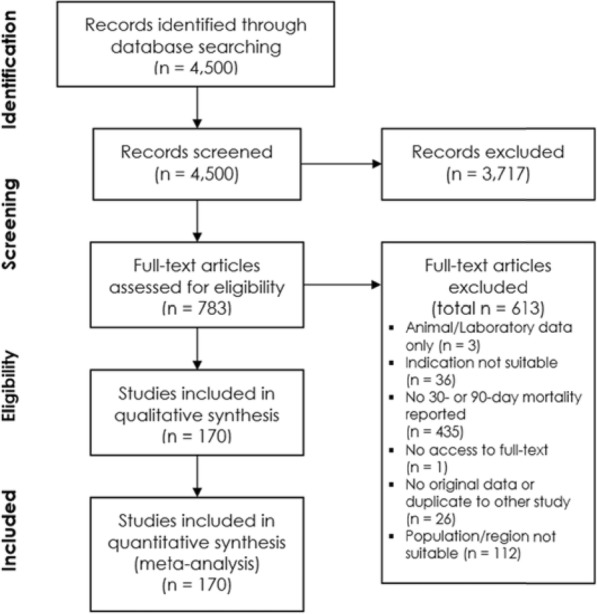
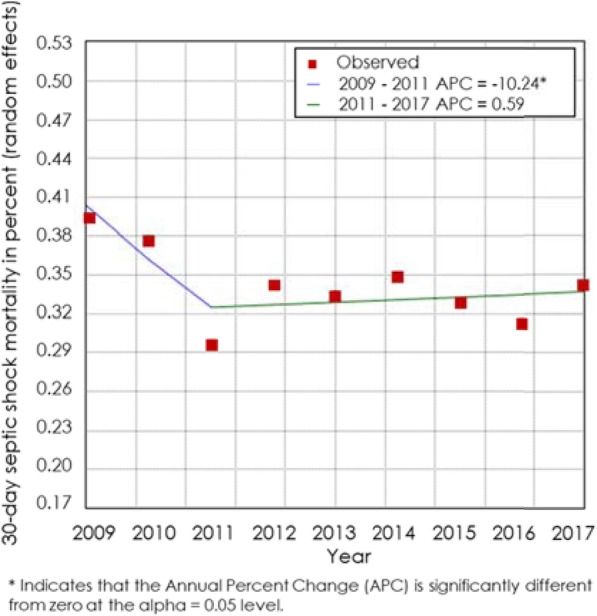
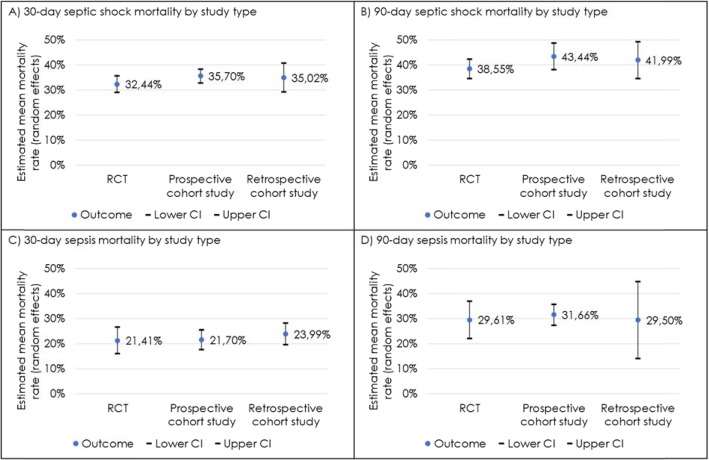
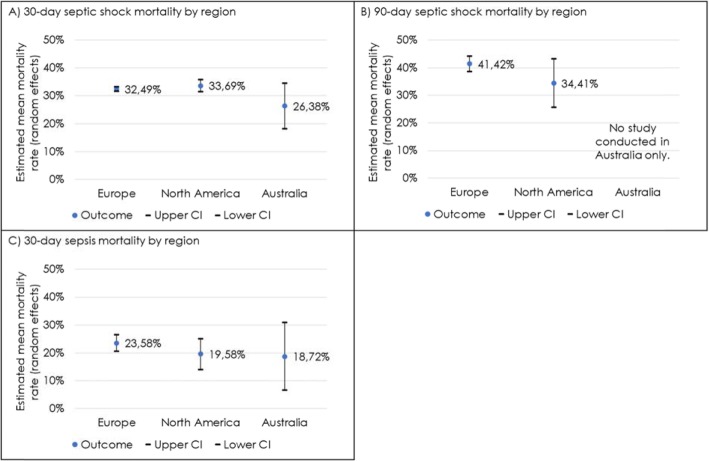
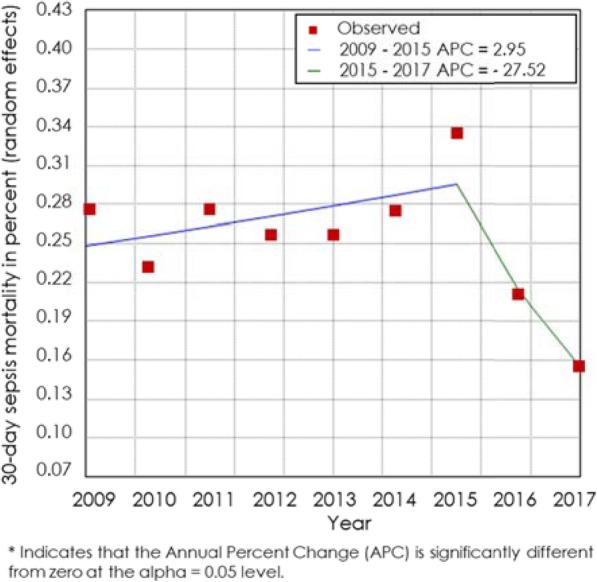
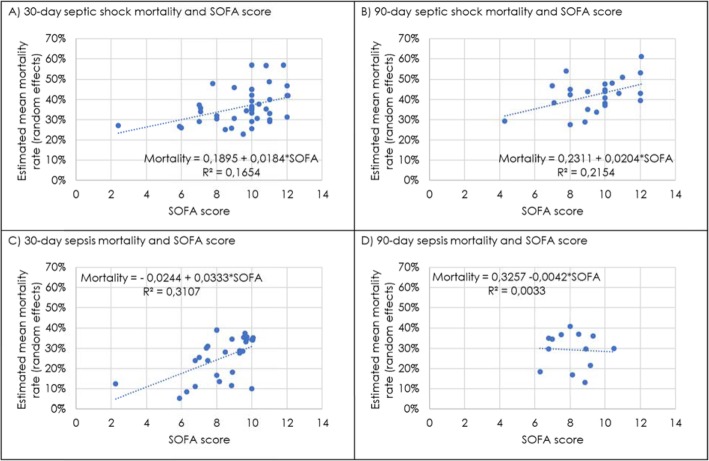
Background: Sepsis and septic shock remain drivers for mortality in critically ill patients. The heterogeneity of the syndrome hinders the generation of reproducible numbers on mortality risks. Consequently, mortality rates range from 15 to 56%. We aimed to update and extend the existing knowledge from meta-analyses and estimate 30- and 90-day mortality rates for sepsis and septic shock separately, stratify rates by region and study type and assess mortality rates across different sequential organ failure assessment (SOFA) scores. Methods: We performed a systematic review of articles published in PubMed or in the Cochrane Database, between 2009 and 2019 in English language including interventional and observational studies. A meta-analysis of pooled 28/30- and 90-day mortality rated separately for sepsis and septic shock was done using a random-effects model. Time trends were assessed via Joinpoint methodology and for the assessment of mortality rate over different SOFA scores, and linear regression was applied. Results: Four thousand five hundred records were identified. After title/abstract screening, 783 articles were assessed in full text for eligibility. Of those, 170 studies were included. Average 30-day septic shock mortality was 34.7% (95% CI 32.6–36.9%), and 90-day septic shock mortality was 38.5% (95% CI 35.4–41.5%). Average 30-day sepsis mortality was 24.4% (95% CI 21.5–27.2%), and 90-day sepsis mortality was 32.2% (95% CI 27.0–37.5%). Estimated mortality rates from RCTs were below prospective and retrospective cohort studies. Rates varied between regions, with 30-day septic shock mortality being 33.7% (95% CI 31.5–35.9) in North America, 32.5% (95% CI 31.7–33.3) in Europe and 26.4% (95% CI 18.1–34.6) in Australia. A statistically significant decrease of 30-day septic shock mortality rate was found between 2009 and 2011, but not after 2011. Per 1-point increase of the average SOFA score, average mortality increased by 1.8–3.3%. Conclusion: Trends of lower sepsis and continuous septic shock mortality rates over time and regional disparities indicate a remaining unmet need for improving sepsis management. Further research is needed to investigate how trends in the burden of disease influence mortality rates in sepsis and septic shock at 30- and 90-day mortality over time.
Overview
The claims and statistics of this paper haven’t been checked yet.
Free: it reads the open-access text and checks the first 5 claims that cite a source we can check. Create a free account to check every claim.
Integrity signals
Registry
Cites
Statistics
Figures
Verification
Claims the paper makes
The claims and statistics of this paper haven’t been checked yet.
Free: it reads the open-access text and checks the first 5 claims that cite a source we can check. Create a free account to check every claim.
Self-check
Percentages, sums and reported differences re-computed from the paper’s own numbers.
The self-check needs the paper’s full text.
Citations
Cites
Preferred Reporting Items for Systematic Reviews and Meta-Analyses: the PRISMA statement
Moher, D., Liberati, A., Tetzlaff, J., Altman, D. G., & for the PRISMA Group (2009) · BMJ · doi:10.1136/bmj.b2535 · Cited by 83,823
Preferred reporting items for systematic reviews and meta-analyses: the PRISMA Statement.
(2009) · PubMed Central · Cited by 44,859
RoB 2: a revised tool for assessing risk of bias in randomised trials
Sterne, J. A. C., Savović, J., Page, M. J., Elbers, R. G., Blencowe, N. S., Boutron, I., Cates, C. J., Cheng, H.-Y., Corbett, M. S., Eldridge, S. M., et al. (2019) · BMJ · doi:10.1136/bmj.l4898 · Cited by 34,787 · cited 1×
“RoB 2’ for randomized trials [18] and with ‘ROBINS-I’ used for observational studies [19], for sepsis and septic shock, 30 and 90 days mortality each.”
MethodThe third international consensus definitions for sepsis and septic shock (Sepsis-3).
Singer, M., Deutschman, C. S., Seymour, C. W., Shankar-Hari, M., Annane, D., Bauer, M., Bellomo, R., Bernard, G. R., Chiche, J.-D., Coopersmith, C. M., et al. (2016) · JAMA · doi:10.1001/jama.2016.0287 · Cited by 28,250
Self-citationROBINS-I: a tool for assessing risk of bias in non-randomised studies of interventions
Sterne, J. A., Hernán, M. A., Reeves, B. C., Savović, J., Berkman, N. D., Viswanathan, M., Henry, D., Altman, D. G., Ansari, M. T., Boutron, I., et al. (2016) · BMJ · doi:10.1136/bmj.i4919 · Cited by 20,329 · cited 1×
“RoB 2’ for randomized trials [18] and with ‘ROBINS-I’ used for observational studies [19], for sepsis and septic shock, 30 and 90 days mortality each.”
MethodBone, R. C., Balk, R. A., Cerra, F. B., Dellinger, R. P., Fein, A. M., Knaus, W. A., Schein, R. M. H., & Sibbald, W. J. (1992) · Chest · doi:10.1378/chest.101.6.1644 · Cited by 13,198
Surviving Sepsis Campaign: International Guidelines for Management of Severe Sepsis and Septic Shock
Dellinger, R. P., Levy, M. M., Rhodes, A., Annane, D., Gerlach, H., Opal, S. M., Sevransky, J. E., Sprung, C. L., Douglas, I. S., Jaeschke, R., et al. (2013) · Critical Care Medicine · doi:10.1097/ccm.0b013e31827e83af · Cited by 9,694
Self-citationThe Surviving Sepsis Campaign Guidelines Committee including The Pediatric Subgroup*, Dellinger, R. P., Levy, M. M., Rhodes, A., Annane, D., Gerlach, H., Opal, S. M., Sevransky, J. E., Sprung, C. L., Douglas, I. S., et al. (2013) · Intensive Care Medicine · doi:10.1007/s00134-012-2769-8 · Cited by 7,290
Self-citationPermutation tests for joinpoint regression with applications to cancer rates
Kim, H.-J., Fay, M. P., Feuer, E. J., & Midthune, D. N. (2000) · Statistics in Medicine · doi:10.1002/(sici)1097-0258(20000215)19:3<335::aid-sim336>3.0.co;2-z · Cited by 6,318
Severe Sepsis and Septic Shock
Angus, D. C., & van der Poll, T. (2013) · New England Journal of Medicine · doi:10.1056/nejmra1208623 · Cited by 3,961
Cited by
Items 901–985 of 985
Reducing Blood Culture Contamination Rates in the ED
Buttar, S. (2026) · AJN American Journal of Nursing · doi:10.1097/ajn.0000000000000320
Optimization-enhanced Gaussian mixture modeling for data-driven subphenotyping of septic shock
Zhang, L., Wang, A., Xue, Z., Liao, H., Jiang, H., Zheng, Q., Müller, H., & Cao, Y. (2026) · Computer Methods in Biomechanics & Biomedical Engineering · doi:10.1080/10255842.2026.2674178
Pasquau, J., Candel, F. J., del Pozo, J. L., Estella, Á., Hidalgo-Tenorio, C., Ramos, J. R., González-del-Catillo, J., Chueca, N., López‐Medrano, F., Merino, E., et al. (2026) · Revista Española de Quimioterapia · doi:10.37201/req/174.2026
Closing the Detection Gap: Early Recognition of Hospital Onset Sepsis with NEWS2
Bernardo, A. (2026) · Digital USD (University of San Diego) · doi:10.22371/07.2026.036
Andrographolide in Sepsis: Mechanistic Basis, New Drug States, and Advanced Delivery Systems
Qi, Z., Hu, D., Xing, J., & Zhao, Q. (2026) · International Journal of General Medicine · doi:10.2147/ijgm.s604122
Pellejero-Sagastizábal, G., Esteban, P., Letona-Giménez, S., Andrés-Tovar, A., Sierra, J. L., Senan‐Salinas, A., Gálvez, E. M., Pardo, J., Morte-Romea, E., Arias, M. A., et al. (2026) · Frontiers in Immunology · doi:10.3389/fimmu.2026.1763092
McKinlay, A., Barrington, G., Prior, S. J., & Tran, V. (2026) · Healthcare · doi:10.3390/healthcare14111509
Chalik, I., Semedi, B. P., Airlangga, P. S., Maulydia, M., & Kriswidyatomo, P. (2026) · International Journal of Drug Delivery Technology · doi:10.25258/ijddt.16.41s.122
Using qSOFA to screen sepsis in patients with head and neck infections
Nguyen, X. T., Nguyen, T. U. O. N. G., & Tran, X. S. (2026) · Bulletin of the National Research Centre/Bulletin of the National Research Center · doi:10.1186/s42269-026-01436-5
“According to a meta-analysis conducted in Europe, the US, and Australia, the mortality rate is 34.7% in patients with septic shock and 24.4% in patients with sepsis (Bauer et al. 2020).”
InfluentialLi, L., Yang, Q., Zhang, H., Qi, Y., Xie, Y., Ding, Z., & Chen, B. (2026) · International Immunopharmacology · doi:10.1016/j.intimp.2026.116978
Septic Shock Associated With Cystostomy: A Fatal Case Due to Delayed Infection Recognition
Ren, Q., Zheng, J., Jianeng, X., & Chen, H. (2026) · American Journal of Case Reports · doi:10.12659/ajcr.952428
“Septic shock is showing an increasing global trend in incidence, although mortality rates have declined in regions such as Europe and North America [2,3].”
Wang, L., Pei, F., Gu, B., Ramesh, N. T., Long, H., Guan, X., Wu, J. I. A. H. U. I., & Bhavani, S. V. (2026) · Critical Care Medicine · doi:10.1097/ccm.0000000000007227
Vascular stiffness and sepsis mortality: A promising signal in search of clinical relevance
Allen, D. M. (2026) · Annals of the Academy of Medicine Singapore · doi:10.47102/annals-acadmedsg.2026333
Risk factors for sepsis mortality: A national Swedish cohort study (1998–2018)
Jansåker, F., Li, X., Forsberg, P.-O., Sundquist, K., & Stenberg, H. (2026) · Clinics · doi:10.1016/j.clinsp.2026.101022
“4 Identifying risk factors for sepsis mortality is important to help clinicians identify patients who are at increased risk.”
Hao, Y., Yan, M., Bai, R., Li, C., Qu, C., Yu, Z., Yu, W., Liu, N., Gao, T., & Xu, Y. (2026) · Journal of Clinical Medicine · doi:10.3390/jcm15124820
Dinh, H. T. T., Pham, K. X., & Nguyen, A. N. (2026) · Journal of Pharmacy & Pharmacognosy Research · doi:10.56499/jppres_14.3.2799
Wah, W., Poole, A. P., Campbell, L. T., Cohen, J., Cooper, D. J., Deane, A. M., Delaney, A. P., Eastwood, G. M., Finfer, S. R., French, C., et al. (2026) · The Lancet Regional Health - Western Pacific · doi:10.1016/j.lanwpc.2026.101912
“14,15 Indeed, there are limited data describing long-term mortality among hospital survivors following ICU admissions with sepsis or septic shock, nor how this compares to the general ICU population.”
Decoy receptor 3 as a diagnostic marker for sepsis: a meta-analysis
Zhang, X.-K., Gao, R.-Y., Han, Y.-Z., Hou, S.-Y., Li, W., & Huang, L. H. (2026) · Intensive Care Medicine Experimental · doi:10.1186/s40635-026-00943-z
“Epidemiological studies show that in 2017, there were about 48.9 million people suffered from sepsis globally, and 11 million deaths from sepsis-related cases, which accounted for 19.7% of the total number of deaths globally [6].”
InfluentialPrognostic Role of Presepsin, Proadrenomedullin, and Interleukin-6 in Sepsis
Karagöz, S. A., Akdeniz, Y. S., Konukoğlu, D., KIYAK, S. K., Biberoğlu, S., İpekci, A., Çakmak, F., Ozturk, A., Ikızcelı, İ., & Özkan, S. (2026) · Journal of Emergency Nursing · doi:10.1016/j.jen.2026.06.001
Yuan, G., Qiao, Q., Li, Y., Xu, J., 蔡丽敏, Jie, H., & Yan, Z. (2026) · Life Sciences · doi:10.1016/j.lfs.2026.124560
Chibuike, U. K., Chukwuemeka, E. G., Emedo, O. C., Nwokoli, C. P., Nwodo, C. L., Nweke, O. J., Precious, E., & Nwafor, S. A. (2026) · International Journal of Research and Innovation in Social Science · doi:10.47772/ijriss.2026.100600917
Dai, Y., Zhu, Y., Hu, C., Chen, H., Peng, Z., & Li, Y. (2026) · Journal of Translational Critical Care Medicine · doi:10.14218/jtccm.2026.00004
Zhou, Y., Fang, C., Gan, D., Yao, J., & He, Y. (2026) · Journal of Intensive Care Medicine · doi:10.1177/08850666261467377
One-year survival of patients admitted for sepsis to intensive care units in Colombia
Guezguan, J. A., Velasco, L. F. R., & Rodriguez, H. O. (2023) · Intellectum (Universidad de La Sabana) · doi:10.82992/intellectum/handle.10818.4370
Serum Phosphate Level in Patients with Septic Shock
Farooq, A., BAJWA, B., Naqvi, S. W. H., Mehmood, A., Dar, A. S., Ali, A., Zaman, A., & Iqbal, M. J. (2026) · Pakistan Armed Forces Medical Journal · doi:10.51253/pafmj.v76isuppl-7.11465
Der Einfluss des rs6198-Polymorphismus im Glucocorticoidrezeptor-Gen auf das Überleben bei Sepsis
Sombetzki, C. (2026) · Dokumentenrepositorium der RUB (Ruhr University Bochum) · doi:10.13154/294-14568
Ziyi, Z., Wang, H. Y., Huo, Y., Lu, B., Zhang, Y., & Liu, L. (2026) · Journal of Inflammation Research · doi:10.2147/jir.s612518
Tao, C., Chen, Y., Zhou, Z., & Xu, Y. (2026) · European journal of medical research · doi:10.1186/s40001-026-04881-0
“Existing literature indicates that the mortality rate associated with sepsis and septic shock can reach 30% [2].”
Shengmai Injection as adjunctive therapy in sepsis and septic shock: a retrospective cohort study
Li, Y., Chen, X., Li, Q., Wu, L., Yu, L., Peng, W., Luo, Y., Huang, P., Ye, Y., Chen, B., et al. (2026) · Frontiers in Cellular and Infection Microbiology · doi:10.3389/fcimb.2026.1870034
“As the most severe clinical form of sepsis, septic shock is characterized by severe disturbances in circulatory, cellular, and metabolic homeostasis, with a mortality rate as high as about 38.5% even in developed countries (Bauer et al., 2020).”
InfluentialLetourneau, A. M., Grewal, A. (. K., & Widder, S. L. (2026) · CHEST Critical Care · doi:10.1016/j.chstcc.2026.100302
Hansen, C. S. (2026) · Dansk Tidsskrift for Akutmedicin · doi:10.7146/akut.v9i1.169797
Suh, J. M., Weinberg, L., Tran, K., Raykateeraroj, N., Pilcher, D. V., & Lee, D. K. (2026) · BMJ Open · doi:10.1136/bmjopen-2025-114774
Wang, H., Zhao, Z., Chen, T., & Yang, H.-H. (2026) · Scientific Reports · doi:10.1038/s41598-026-63839-8
The clinical course and personal experience of sepsis
McCall, C. (2024) · Otago University Research Archive (University of Otago)
Lee, J. K., Vaughan, L. E., Cureton, K. D., & KASHANI, K. B. (2026) · Journal of Critical Care · doi:10.1016/j.jcrc.2026.155713
Kang, S., Kim, J. H., Ahn, C., Oh, Y. T., & Hwang, S. (2026) · Medicina · doi:10.3390/medicina62081604
“Despite advances in critical care, mortality from septic shock remains high, commonly exceeding 30% across diverse healthcare systems [1,2].”
Zhu, X., Lu, Q., Liu, X., & Zeng, X. (2026) · Journal of Intensive Care Medicine · doi:10.1177/08850666261473228
内毒素血症豚モデルにおけるフザプラジブの呼吸循環機能改善効果および炎症抑制効果
Sugita, C. (2025) · Institutional Repositories DataBase (IRDB)
Cai, B., Xiao, Q., Xia, Y., Yu, X., Xian, X., Liu, L., Dai, Y., & He, B. (2026) · Frontiers in Nutrition · doi:10.3389/fnut.2026.1905726
“However, the mortality of septic shock reaches up to nearly 40% (4).”
Saseedharan, S., & Pabalkar, S. (2026) · Journal of Intensive Care Medicine · doi:10.1177/08850666261477711
Kluge, G. (2025) · Qucosa (Saxon State and University Library Dresden)
Meyer, L., Schmid, A., & Braun, S. (2022) · Journal of Artificial Intelligence for Healthcare Systems · doi:10.68159/c765515721
Yang, L., Lin, Y., Zhang, X., 董桂娟, Shang, N., Yin, W., Wang, J., He, X., & Mei, X. (2026) · Frontiers in Cellular and Infection Microbiology · doi:10.3389/fcimb.2026.1838120
Dong, Y., Huang, R., Liu, K., & Fu, J. (2026) · Clinical Therapeutics · doi:10.1016/j.clinthera.2026.08.011
Tan, H. K., Froese, L., Wilhelms, D., Fagerström, J., & Chew, M. S. (2026) · Scientific Reports · doi:10.1038/s41598-026-63350-0
“Moreover, international studies have demonstrated geographic variation, with septic shock mortality ranging from 26.4% in Australia to over 40% in Europe, underscoring the need for improved, generalisable clinical tools 3 .”
Influential孙, 旭., & 魏, 晓. (2026) · 临床医学前沿论坛 · doi:10.32629/ffcr.v4i4.21478
Beyond One-Size-Fits-All: Precision Phenotyping
Díaz, M. A. T. (2026) · IntechOpen eBooks · doi:10.5772/intechopen.1015478
Zha, Y., Cui, L., Nie, Z., Huang, R., Zhang, C., Zhou, L., Fang, M., Peng, X., Zhang, J., Wang, H., et al. (2026) · Frontiers in Medicine · doi:10.3389/fmed.2026.1910023
“Many influencing factors such as time from onset to consultation, level of awareness of the disease, economic level and criticality of the disease may have contributed to the low mortality rate in developed countries, which was much higher in our study (25, 26).”
Wang, L., Su, Y., & Yao, Y. (2026) · Research Square · doi:10.21203/rs.3.rs-10824270/v1
Aguilar, P. Á., Vargas, J. S., Sandí-Ovares, N., Sánchez, C. R., Rodríguez, J. Q., Robles-Segura, A., Ramirez-Alfaro, C. M., Pujol-Valverde, P., Montero-Chacón, L. B., Madriz-Morales, A., et al. (2026) · Acta Médica Costarricense · doi:10.51481/amc.v68i1.1450
Reddi, B. A. J. (2026) · Springer eBooks · doi:10.1007/978-3-032-31459-8_2
Septic shock in the era of precision medicine: rethinking fluids, vasopressors, and immunomodulation
Du, J., Feng, H., Dong, S., Yang, C., Al-Danakh, A., & Zhou, S. (2026) · Frontiers in Medicine · doi:10.3389/fmed.2026.1909143
“Mortality remains high across healthcare systems, with substantial variation related to illness severity, infection source, comorbidity burden, access to intensive care, and timeliness of source control (3, 4).”
Allen, V., Gibson, M., Adas, M. A., Chavali, R., Gracia, L. D., Hussain, H., Muzafar, I., Muzafar, S., Suresh, N., Yoon, Y., et al. (2026) · Journal of Infection · doi:10.1016/j.jinf.2026.106864
Characterisation of cardiovascular function in intensive care unit survivors of sepsis
Garrity, K. M. (2026) · Enlighten: Theses (The University of Glasgow) · doi:10.5525/gla.thesis.86246
Unraveling the mitochondrial–lysosomal crosstalk: a new frontier in sepsis-induced acute lung injury
Deng, Y., Tu, G., Ma, J., Zhang, Z., Shen, Y., Liu, Y., Wu, J., Deng, Z., 钟守维, Zou, K., et al. (2026) · Critical Care Sepsis and Severe Infection · doi:10.1186/s44541-026-00011-9
“Despite advances in supportive care, sepsis continues to be associated with substantial morbidity and mortality, underscoring the need to better understand the mechanisms of organ injury [3–5].”
Hamadtalla, A. A. M., Mohammed, I. M. H., Abbas, M., Elmi, Y., Elhbishi, A. I. E., Elgailani, N. E. A., & Mohamed, O. (2026) · Cureus · doi:10.7759/cureus.116968
“Within this population, septic shock carries the highest risk, with pooled short-term mortality in Europe, North America, and Australia between 2009 and 2019 of approximately 39% [6].”
Li, X., Pan, H., Li, R., & Wang, Y. (2026) · Scientific Reports · doi:10.1038/s41598-026-71342-3
Toppin, P. J., Correia, M. D. T., Chang, Y., Adhikari, L., McLaverty, B. P., & Natarajan, A. (2026) · Intensive Care Medicine Experimental · doi:10.1186/s40635-026-00972-8
inlao, P. (2023) · MEDICAL JOURNAL OF SISAKET SURIN BURIRAM HOSPITALS
การพยาบาลผู้ป่วยฉุกเฉินที่มีภาวะช็อกจากการติดเชื้อในกระแสเลือด
Sriwilai, W. (2024) · JOURNAL OF THE POLICE NURSES AND HEALTH SCIENCE
ปัจจัยพยากรณ์โอกาสการรอดชีวิตภายใน 28 วันภายหลังการรักษาในผู้ป่วยที่มีภาวะช็อกจากการติดเชื้อ
Chalongkulsak, T., Tangsuwanaruk, T., Tianwibool, P., Wittayachamnankul, B., & Changratanakorn, C. (2024) · Journal of Medicine and Health Sciences
Punyavirocha, S. (2026) · Journal of Preventive Medicine Association of Thailand
Punyavirocha, S. (2025) · Journal of Preventive Medicine Association of Thailand
Noor, E. S., Maulydia, M., & Kusuma, E. (2025) · Journal of Neonatal Surgery
L, K. L. K., & Parimala, P. (2025) · Journal of Neonatal Surgery
Ngân, L. T., NGA, N. T., Hòa, H. P., & Tâm, T. T. T. (2026) · Tạp chí Y Dược Đại học Y Khoa Vinh
Microfluidic biochip for optical detection of sepsis biomarkers from whole blood samples
Heredia, J. (2024) · Illinois Digital Environment for Access to Learning and Scholarship (University of Illinois at Urbana-Champaign)
Viola, A. R., Salvatore, V., Spezzano, A., Caprino, M., Floresta, M., Momoli, G., Romiti, A., Scurria, G., & Giostra, F. (2026) · Emergency Care Journal · doi:10.4081/ecj.2026.15526
Li, G., Wu, G., Yin, H., McGraw, K. A., Hou, J., & Zhao, Z. (2026) · Frontiers in Microbiology · doi:10.3389/fmicb.2026.1916658
“The identification of Enterobacteriaceae and Staphylococcaceae as predominant pathogens in polymicrobial BSI mirrors epidemiological trends reported in large cohort studies (Bauer et al., 2020).”
Yamamoto, R., Endo, A., Matsuda, W., Wada, T., Miyamoto, K., Ohbe, H., Fujii, T., Yamakawa, K., Sato, Y., & Kushimoto, S. (2026) · BMJ Open · doi:10.1136/bmjopen-2026-123087
“The scientific backgrounds, rationale and hypothesis of this domain are summarised in online supplemental material 1.”
Diagnostic Errors in Sepsis: A Systematic Review of the Literature
Kwok, C. S., Lee, S., Afzal, A., Bennett, S., Halvorsen, J., & Hammell, C. (2026) · Journal of Clinical Medicine · doi:10.3390/jcm15208152
“It is important, as the average mortality reported by a review of 170 studies was 24.4% at 30 days [6].”
InfluentialEffects of a sepsis care incentive policy on emergency treatment outcomes: a nationwide cohort study
Lin, W., Wu, H.-C., Kung, P., Shen, M.-J., & Tsai, W. (2026) · Scientific Reports · doi:10.1038/s41598-026-75711-w
Treml, R. E., Grillo, I. T. C., Lima, V. S., Caldonazo, T., Passos, F. S., Lins, P. R. G., Zivkovic, A. R., Topolski, F., Filho, A. B., Ehler, J., et al. (2026) · Journal of Critical Care · doi:10.1016/j.jcrc.2026.155778
Lee, Y., Kim, H.-J., Park, J., & Yu, M.-Y. (2026) · Journal of Korean Critical Care Nursing · doi:10.34250/jkccn.2026.19.3.70
“따라서 다수의 선행연구들은 28일 또 는 30일 사망률을 주요 단기 예후 지표로 활용하고 있 다[9,10].”
InfluentialStan, A. E., Pătrășcanu, E., Jalloul, W., Ristescu, I., Blaj, M., Breaban, M. E., Olariu, M.-E., Corduneanu, A.-F., Iftene, A., & Ștefănescu, C. (2026) · Applied Biosciences · doi:10.3390/applbiosci5040102
Endo, A., Yamakawa, K., Tagami, T., Yamamoto, R., Umemura, Y., Takayama, W., Hoshi, H., Hayashi, Y., Komori, A., Yanagisawa, T., et al. (2026) · BMJ Open · doi:10.1136/bmjopen-2026-126112
Sary, D. N., Ilyas, K. K., Lubis, A. C., Lubis, H. A. P., & Raynaldo, A. H. (2025) · Journal of Society Medicine · doi:10.71197/jsocmed.v5i10.306
Finding “I” after ICU: Self-identity disruption and adaptation in critical illness recovery
Erchov, A., Howard, A. F., Lynch, K., Thorne, S. E., LeBlanc, A., Hoiss, S., Crowe, S., Arora, R., McDermid, R. C., Ahmad, O., et al. (2026) · SSM - Qualitative Research in Health · doi:10.1016/j.ssmqr.2026.100897
(2026) · Frontiers research topics · doi:10.3389/978-2-8325-8974-8
Sun, B., Chen, H.-Y., Zheng, L.-W., Yang, S.-Q., Chen, Z.-H., & Yao, Y.-M. (2026) · Autophagy · doi:10.1080/15548627.2026.2758017
Bispo, E. J. S., Baptista, L. D. M., da Cunha, C. B. C., & Monteiro, V. S. (2026) · Journal of Critical Care · doi:10.1016/j.jcrc.2026.155829
Chen, L., Jin, S., Yang, M., Gui, C., Yuan, Y., Dong, G., Zeng, W., Zeng, J., Hu, G., Qiao, L., et al. (2022) · doi:10.3389/fimmu.2022.882774.s001
An, A. Y., Baghela, A., Zhang, P., Falsafi, R., Lee, A. H., Trahtemberg, U., Baker, A. J., dos Santos, C. C., & Hancock, R. E. W. (2023) · doi:10.3389/fimmu.2023.1254873.s001
Boeckling, F., Stähli, B. E., Rudolph, T., Lutz, M., Schatz, A.-S., Vogelmann, T., Stueve, M., West, N. E. J., Boone, E., Erbay, A., et al. (2024) · doi:10.3389/fcvm.2024.1337941.s002
Self-citationDiao, Y., Zhao, Y., Li, X., Li, B., Huo, R., & Han, X. (2023) · doi:10.3389/fimmu.2023.1286203.s001
Metadata
- Authors
- Bauer, M., Gerlach, H., Vogelmann, T., Preissing, F., Stiefel, J., & Adam, D.
- Affiliations
- Jena University Hospital (DE)
- Vivantes Klinikum (DE)
- CytoSorbents (Germany) (DE)
- Corresponding author
- Bauer, Michael
- Venue
- Critical Care
- Published
- 2020-05-19
- Volume
- 24
- Issue
- 1
- Pages
- 239-239
- ISSN
- 1364-8535 (ISSN-L)
- PMC
- PMC7236499
- OpenAlex
- W3027548201
- Semantic Scholar
- 17551feef1e5ba684094ee873ccb0dabe3675738
- Cited by
- 867
- References
- 32
- Citations by year
- 2026: 137 · 2025: 223 · 2024: 217 · 2023: 162 · 2022: 91 · 2021: 33 · 2020: 4
- FWCI
- 10.67
- Type
- journal article
- Language
- en
- Open access
- gold
- doi.org
- Licence
- cc-by
- creativecommons.org/licenses/by/4.0 (tdm)
- creativecommons.org/licenses/by/4.0 (vor)
- Locations
- Critical Care (publishedVersion, cc-by)
- PubMed Central (publishedVersion, cc-by)
- PubMed (publishedVersion)
- DOAJ (DOAJ: Directory of Open Access Journals) (submittedVersion, cc-by-sa)
- Funders
- CytoSorbents Europe
- Topics
- Health Sciences › Medicine › Critical Care and Intensive Care Medicine › Sepsis Diagnosis and Treatment
- Health Sciences › Medicine › Surgery › Abdominal Surgery and Complications
- Health Sciences › Medicine › Nephrology › Acute Kidney Injury Research
- Keywords
- sepsis, septic shock, mortality rates, 30-day mortality, 90-day mortality, SOFA score, regional variation, mortality trends, critically ill patients
- MeSH terms
- Australia, Europe, Humans, Mortality, North America, Shock, Septic, Sepsis
About these checks
Registry, retraction, Cites and statistics results are computed, not judged, with one exception: a printed reference that no index lists is read once by a model before it counts as a citation error. Claims are extracted by a model and kept only when their quote appears verbatim in the text; each cited source is then checked, with a model’s help, for whether it says what the claim relies on. Those verdicts can be wrong — read the claim’s quote and the cited source before relying on one.
Statistics and arithmetic are recomputed, not judged.
Confidence bands are shown only for fields calibrated on our annotated test set. None is calibrated yet, so no band is shown.
What counts as a claim ›How we measure confidence ›How we check this ›
Are you an author, or do you see a problem with this page? Request a review
Data sources
Bibliographic data: Semantic Scholar, OpenAlex, Crossref.
Contains information from the Semantic Scholar Academic Graph Datasets, made available under the ODC Attribution License (ODC-BY 1.0).
Semantic Scholar’s data is described in: Kinney, R., et al. (2023). The Semantic Scholar Open Data Platform. arXiv:2301.10140.
