

Mortality in sepsis and septic shock in Europe, North America and Australia between 2009 and 2019 – results from a systematic review and meta-analysis
Open accessThe DOI matches its Crossref record; 30 of the 32 references it cites were found in a registry or an index.
Abstract
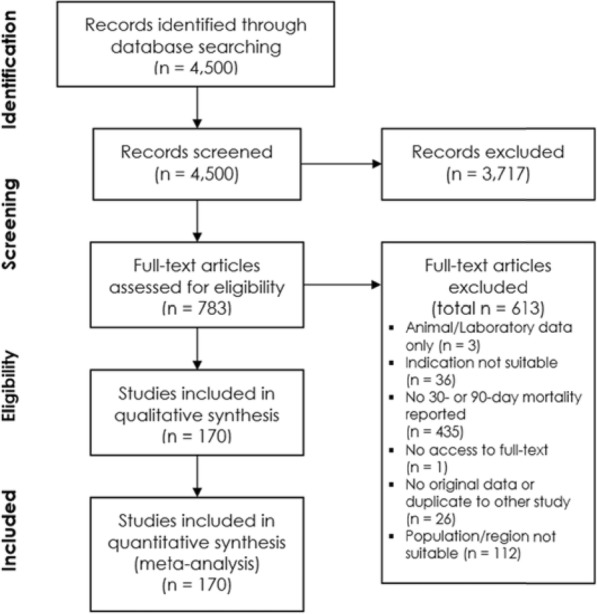
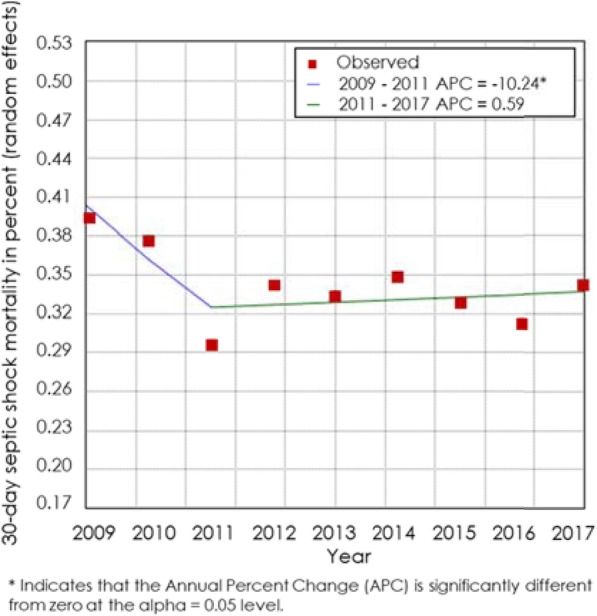
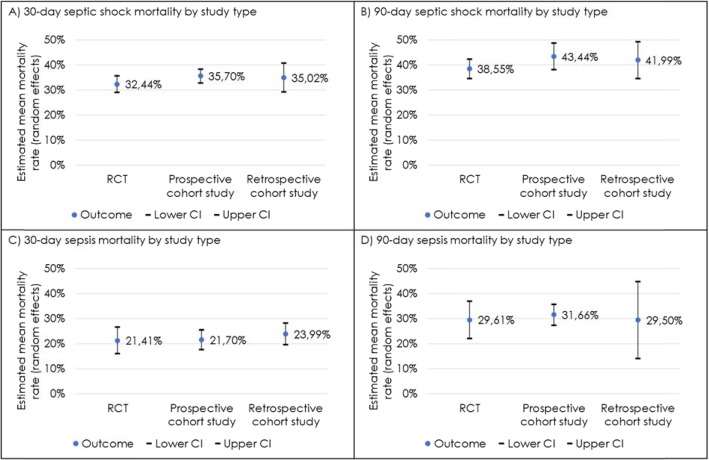
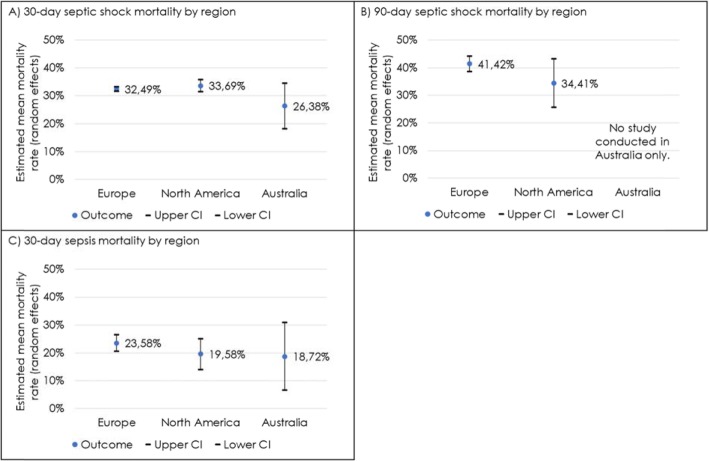
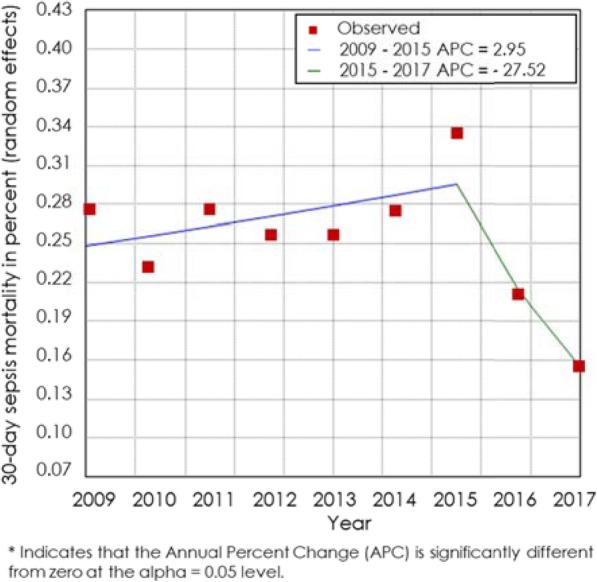
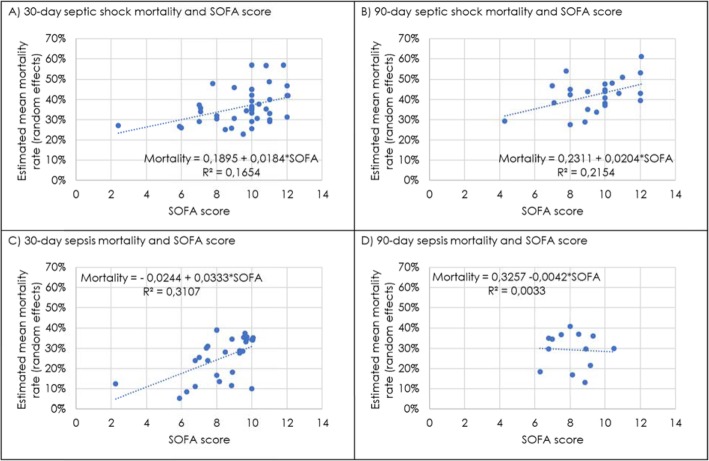
Background: Sepsis and septic shock remain drivers for mortality in critically ill patients. The heterogeneity of the syndrome hinders the generation of reproducible numbers on mortality risks. Consequently, mortality rates range from 15 to 56%. We aimed to update and extend the existing knowledge from meta-analyses and estimate 30- and 90-day mortality rates for sepsis and septic shock separately, stratify rates by region and study type and assess mortality rates across different sequential organ failure assessment (SOFA) scores. Methods: We performed a systematic review of articles published in PubMed or in the Cochrane Database, between 2009 and 2019 in English language including interventional and observational studies. A meta-analysis of pooled 28/30- and 90-day mortality rated separately for sepsis and septic shock was done using a random-effects model. Time trends were assessed via Joinpoint methodology and for the assessment of mortality rate over different SOFA scores, and linear regression was applied. Results: Four thousand five hundred records were identified. After title/abstract screening, 783 articles were assessed in full text for eligibility. Of those, 170 studies were included. Average 30-day septic shock mortality was 34.7% (95% CI 32.6–36.9%), and 90-day septic shock mortality was 38.5% (95% CI 35.4–41.5%). Average 30-day sepsis mortality was 24.4% (95% CI 21.5–27.2%), and 90-day sepsis mortality was 32.2% (95% CI 27.0–37.5%). Estimated mortality rates from RCTs were below prospective and retrospective cohort studies. Rates varied between regions, with 30-day septic shock mortality being 33.7% (95% CI 31.5–35.9) in North America, 32.5% (95% CI 31.7–33.3) in Europe and 26.4% (95% CI 18.1–34.6) in Australia. A statistically significant decrease of 30-day septic shock mortality rate was found between 2009 and 2011, but not after 2011. Per 1-point increase of the average SOFA score, average mortality increased by 1.8–3.3%. Conclusion: Trends of lower sepsis and continuous septic shock mortality rates over time and regional disparities indicate a remaining unmet need for improving sepsis management. Further research is needed to investigate how trends in the burden of disease influence mortality rates in sepsis and septic shock at 30- and 90-day mortality over time.
Overview
The claims and statistics of this paper haven’t been checked yet.
Free: it reads the open-access text and checks the first 5 claims that cite a source we can check. Create a free account to check every claim.
Integrity signals
Registry
Cites
Statistics
Figures
Verification
Claims the paper makes
The claims and statistics of this paper haven’t been checked yet.
Free: it reads the open-access text and checks the first 5 claims that cite a source we can check. Create a free account to check every claim.
Self-check
Percentages, sums and reported differences re-computed from the paper’s own numbers.
The self-check needs the paper’s full text.
Citations
Cites
Preferred Reporting Items for Systematic Reviews and Meta-Analyses: the PRISMA statement
Moher, D., Liberati, A., Tetzlaff, J., Altman, D. G., & for the PRISMA Group (2009) · BMJ · doi:10.1136/bmj.b2535 · Cited by 83,823
Preferred reporting items for systematic reviews and meta-analyses: the PRISMA Statement.
(2009) · PubMed Central · Cited by 44,859
RoB 2: a revised tool for assessing risk of bias in randomised trials
Sterne, J. A. C., Savović, J., Page, M. J., Elbers, R. G., Blencowe, N. S., Boutron, I., Cates, C. J., Cheng, H.-Y., Corbett, M. S., Eldridge, S. M., et al. (2019) · BMJ · doi:10.1136/bmj.l4898 · Cited by 34,787 · cited 1×
“RoB 2’ for randomized trials [18] and with ‘ROBINS-I’ used for observational studies [19], for sepsis and septic shock, 30 and 90 days mortality each.”
MethodThe third international consensus definitions for sepsis and septic shock (Sepsis-3).
Singer, M., Deutschman, C. S., Seymour, C. W., Shankar-Hari, M., Annane, D., Bauer, M., Bellomo, R., Bernard, G. R., Chiche, J.-D., Coopersmith, C. M., et al. (2016) · JAMA · doi:10.1001/jama.2016.0287 · Cited by 28,250
Self-citationROBINS-I: a tool for assessing risk of bias in non-randomised studies of interventions
Sterne, J. A., Hernán, M. A., Reeves, B. C., Savović, J., Berkman, N. D., Viswanathan, M., Henry, D., Altman, D. G., Ansari, M. T., Boutron, I., et al. (2016) · BMJ · doi:10.1136/bmj.i4919 · Cited by 20,329 · cited 1×
“RoB 2’ for randomized trials [18] and with ‘ROBINS-I’ used for observational studies [19], for sepsis and septic shock, 30 and 90 days mortality each.”
MethodBone, R. C., Balk, R. A., Cerra, F. B., Dellinger, R. P., Fein, A. M., Knaus, W. A., Schein, R. M. H., & Sibbald, W. J. (1992) · Chest · doi:10.1378/chest.101.6.1644 · Cited by 13,198
Surviving Sepsis Campaign: International Guidelines for Management of Severe Sepsis and Septic Shock
Dellinger, R. P., Levy, M. M., Rhodes, A., Annane, D., Gerlach, H., Opal, S. M., Sevransky, J. E., Sprung, C. L., Douglas, I. S., Jaeschke, R., et al. (2013) · Critical Care Medicine · doi:10.1097/ccm.0b013e31827e83af · Cited by 9,694
Self-citationThe Surviving Sepsis Campaign Guidelines Committee including The Pediatric Subgroup*, Dellinger, R. P., Levy, M. M., Rhodes, A., Annane, D., Gerlach, H., Opal, S. M., Sevransky, J. E., Sprung, C. L., Douglas, I. S., et al. (2013) · Intensive Care Medicine · doi:10.1007/s00134-012-2769-8 · Cited by 7,290
Self-citationPermutation tests for joinpoint regression with applications to cancer rates
Kim, H.-J., Fay, M. P., Feuer, E. J., & Midthune, D. N. (2000) · Statistics in Medicine · doi:10.1002/(sici)1097-0258(20000215)19:3<335::aid-sim336>3.0.co;2-z · Cited by 6,318
Severe Sepsis and Septic Shock
Angus, D. C., & van der Poll, T. (2013) · New England Journal of Medicine · doi:10.1056/nejmra1208623 · Cited by 3,961
Cited by
Items 301–400 of 985
Huang, G., Li, X., Zhang, C., Li, H., Jian, M., Huang, C., Zhang, Y., Xian, L., Zeng, H., Xia, Y., et al. (2024) · Emergency Medicine International · doi:10.1155/2024/4293700 · Cited by 8
“Over the past few decades, the mortality rate of sepsis has seen a gradual decrease due to the timely administration of antibiotics, fuid resuscitation, and multiple organ support therapies [3].”
BackgroundGiubelan, L.-I., Neacsu, A., Rotaru-Zăvăleanu, A. D., & Osiac, E. (2024) · Healthcare · doi:10.3390/healthcare12171713 · Cited by 8
“In recent years, the incidence of sepsis appears to be decreasing; however, the mortality rate remains high, with 24% occurring after 30 days and 32% after 90 days [6].”
BackgroundGentiopicroside Ameliorates Sepsis‐Induced Acute Lung Injury via Inhibiting Inflammatory Response
Hu, M., Du, H., Xu, Y., & Wang, Y. (2024) · Canadian Respiratory Journal · doi:10.1155/2024/1068326 · Cited by 8
Morafraile, J. C., González, E. D. R., Serrano-Martín, L., Díaz, R. R., Torres-Fernández, M., Heredero-Gálvez, E., López-Forero, W. E., Morell-Jurado, L., Berlanga, R. C., Mas, M. D., et al. (2024) · Revista Española de Quimioterapia · doi:10.37201/req/078.2024 · Cited by 8
Zhang, L., Tan, R., Pan, T., & Qu, H. (2024) · Frontiers in Endocrinology · doi:10.3389/fendo.2024.1417846 · Cited by 8
Clinical phenotyping of septic shock with latent profile analysis: A retrospective multicenter study
Liu, G., Wu, R., He, J., Xu, Y., Han, L., Yu, Y., Zhu, H., Guo, Y., Fu, H., Chen, T., et al. (2024) · Journal of Critical Care · doi:10.1016/j.jcrc.2024.154932 · Cited by 8
Determining potential immunomodulatory drug efficacy in sepsis using ELISpot
Walton, A. H., Mazer, M. B., Remy, K. E., Osborne, D. F., Davitt, E., Griffith, T. S., Gould, R. W., Badovinac, V. P., Brakenridge, S. C., Drewry, A. M., et al. (2025) · Scientific Reports · doi:10.1038/s41598-025-92016-6 · Cited by 8
Ventoulis, I., Verras, C., Matsiras, D., Bistola, V., Bezati, S., Parissis, J., & Polyzogopoulou, E. (2025) · Medicina · doi:10.3390/medicina61061059 · Cited by 8
“Since sepsis remains a major life-threatening condition and a leading cause of in-hospital mortality worldwide [65,66], its prompt diagnosis and management at an early stage upon ED or ICU admission is of critical importance [67,68].”
Niu, D., Bai, H., & Zong, Y. (2025) · Scientific Reports · doi:10.1038/s41598-025-05090-1 · Cited by 8
Rosales, J., Ireland, M., Gonzalez-Gallo, K., Wisler, J., & Jalilvand, A. (2022) · Journal of Surgical Research · doi:10.1016/j.jss.2022.10.096 · Cited by 8
Improving Predictive Process Monitoring Through Reachability Graph-Based Masking of Neural Networks
Theis, J., & Darabi, H. (2022) · IEEE Transactions on Computational Social Systems · doi:10.1109/tcss.2022.3220262 · Cited by 8
“As mortality rates of sepsis patients can range from 15% to 56% [50], physicians and nurses are required to perform immediate and correct actions upon the hospital admission to mitigate the life-threatening risks for their patients [51].”
BackgroundA prediction model for assessing hypoglycemia risk in critically ill patients with sepsis
Gao, H., & Zhao, Y. (2023) · Heart & Lung · doi:10.1016/j.hrtlng.2023.05.010 · Cited by 8
Zheng, F., Wang, L., Pang, Y., Chen, Z., Lu, Y., Yang, Y., & Wu, J. (2023) · Biomedical Signal Processing and Control · doi:10.1016/j.bspc.2023.105146 · Cited by 8
Holler, J. G., Jensen, J. S., Engsig, F. N., Bestle, M. H., Lindegaard, B., Rasmussen, J. J., Bundgaard, H., Nielsen, F. E., Iversen, K. K., Larsen, J. J., et al. (2023) · Clinical Epidemiology · doi:10.2147/clep.s413403 · Cited by 8
Single‐Cell Transcriptomics Reveals the Ameliorative Effect of Oridonin on Septic Liver Injury
Liu, J., Zhang, Q., Wong, Y. K., Luo, P., Chen, J., Xie, L., Chen, J., He, X., Shi, F., Gong, P., et al. (2024) · Advanced Biology · doi:10.1002/adbi.202300542 · Cited by 8
Yuan, X., Wu, Y., Lin, J., Weng, Q., Wu, L., Yang, S., Li, X., Tan, M., Lin, Z., Lian, X., et al. (2022) · The FASEB Journal · doi:10.1096/fj.202100760rrr · Cited by 8
Julián-Jiménez, A., Díaz, R. R., del Castillo, J. M. G., García‐Lamberechts, E. J., Sanz, I. H., Bustos, C. N., Candel, F. J., de Santos, P. Á., & Avilés, R. A. (2023) · Revista Española de Quimioterapia · doi:10.37201/req/008.2023 · Cited by 8
“En este contexto, la sepsis representa uno de los mayores problemas de salud pública en todo el mundo, por su incidencia y mortalidad a 30 días (24,4% para la sepsis y 34,7% para el shock séptico) [2,3].”
BackgroundTuerxun, K., Eklund, D., Wallgren, U. M., Dannenberg, K., Repsilber, D., Kruse, R. L., Särndahl, E., & Kurland, L. (2023) · Scientific Reports · doi:10.1038/s41598-023-42081-6 · Cited by 8
“This observation indicates that being able to initially stratify the septic patients with a priori knowledge about certain clinical and molecular parameters, could further inform and improve the prediction models for early diagnosis.”
BackgroundAwuti, R., Bai, J., Cheng, Y., Yang, W., Cheng, Z., Zhou, H., Su, G., Wang, K., Wang, Y., Liu, T., et al. (2025) · Metabolomics · doi:10.1007/s11306-025-02255-x · Cited by 7
“Despite significant advance - ments in healthcare that have led to improved clinical outcomes and a steady decline in mortality rates (Bauer et al., 2020), severe sepsis continues to be the leading cause of death in Pediatric Intensive Care Units (PICU) (Barber et al., 2023; Weiss & Fitzgerald,…”
Mușat, F., Păduraru, D. N., Bolocan, A., Palcău, A. C., Bunea, A.-A., Daniel, I., & Andronic, O. (2025) · Medicina · doi:10.3390/medicina61050864 · Cited by 7
“…the epidemiological data summarized so far should be interpreted with caution due to several limitations such as lack of robust country-level data, imprecision of administrative coding and diagnosis reporting, and high heterogeneity among methods and reporting among different studies [2,4,6].”
Gilavan, M. T., Shahriari, S., & Selvaganapathy, P. R. (2025) · Biomicrofluidics · doi:10.1063/5.0248096 · Cited by 7
Morin, A., Urbina, T., Bernier, J., Raia, L., Bonny, V., Missri, L., Baudel, J.-L., Boëlle, P., Maury, É., Joffre, J., et al. (2026) · Critical Care · doi:10.1186/s13054-026-05852-x · Cited by 7
Xu, Y., Chen, M., Xu, K., Chu, J., & Guo, J. (2026) · Frontiers in Medicine · doi:10.3389/fmed.2025.1707548 · Cited by 7
Ko, R., Kang, D., Kim, W. Y., Hyun, D., Lee, Y. J., Cho, W. H., Park, S., CHO, J., Suh, G. Y., & the Korean Sepsis Alliance (KSA) investigators (2026) · Critical Care · doi:10.1186/s13054-026-05859-4 · Cited by 7
“Although there have been improvements in management, the mortality rate associated with septic shock remains alarmingly high, ranging from 30% to 50% [2].”
Role of LncRNAs in the Pathogenesis of Sepsis and their Clinical Significance
Yang, Y., Zhang, J., Xu, R., Wang, W., & Lin, W. (2023) · Current Molecular Medicine · doi:10.2174/1566524023666230710121347 · Cited by 7
Persistence is key: unresolved immune dysfunction is lethal in both COVID-19 and non-COVID-19 sepsis
An, A. Y., Baghela, A. S., Zhang, P. G. Y., Falsafi, R., Lee, A. H., Trahtemberg, U., BAKER, A. J., dos Santos, C. C., & Hancock, R. E. W. (2023) · Frontiers in Immunology · doi:10.3389/fimmu.2023.1254873 · Cited by 7
“D-Dimer (ng/mL) 2373 ± 2296 (3) 2688 ± 1761 (6) 0.”
BackgroundInfluentialAli, S., Misra, L., Sahoo, M. R., Vikram, V. S., Mahapatra, A., Rout, B., & Mishra, S. S. (2024) · Langenbeck s Archives of Surgery · doi:10.1007/s00423-024-03243-w · Cited by 7
“But, in patients with features of septicaemia or septic shock, the role of antibiotics is vital [1].”
Immune profile of patients‑a new approach in management of sepsis and septic shock?
Bacârea, A., Coman, O., Bacârea, V., Văsieșiu, A.-M., Săplăcan, I., Fodor, R. Ș., & Grigorescu, B. L. (2024) · Experimental and Therapeutic Medicine · doi:10.3892/etm.2024.12489 · Cited by 7
“The mortality rate in the present study group was much higher, compared with the values reported in other studies (30,31).”
ResultLiu, D., Pan, T., Li, X., Zhu, D., Li, Y., He, H., Wu, F. P., Jiang, L., Chen, Y., Wang, X., et al. (2024) · Journal of Intensive Medicine · doi:10.1016/j.jointm.2024.01.007 · Cited by 7
Das, U. N. (2024) · Medicina · doi:10.3390/medicina60060934 · Cited by 7
“Sepsis occurs because of complex interactions among invading organisms, tissue damage, and alterations in pro-and anti-inflammatory mechanisms at various stages of the disease that result in excessive inflammation, immunosuppression, and potentially long-term immune disorders [1,2].”
BackgroundNeutrophil-to-lymphocyte Ratio as a Marker for Diagnosis and Prognostication of Sepsis
Bhadade, R. R., Naik, I., Harde, M., & de Souza, R. (2024) · Journal of the Association of Physicians of India · doi:10.59556/japi.72.0552 · Cited by 7
Neu, C., Beckers, C., Frank, N., Thomas, K., Bartneck, M., Simon, T.-P., Mossanen, J. C., Peters, K., Singendonk, T., Märtin, L., et al. (2024) · Scientific Reports · doi:10.1038/s41598-024-65778-8 · Cited by 7
“A systematic review and meta-analysis showed that the 30-day mortality in sepsis was 24.4% 35 .”
BackgroundInfluentialEnhancing acute inflammatory and sepsis treatment: superiority of membrane receptor blockade
Mun, S., Cho, E., Kim, H. K., Gil, W. J., & Yang, C. (2024) · Frontiers in Immunology · doi:10.3389/fimmu.2024.1424768 · Cited by 7
Impact of Hyperuricemia on Clinical Outcomes in Sepsis Patients: A Retrospective Cohort Study
Alshehri, A. M., Alrashed, M. A., Shawaqfeh, M. S., Almutairi, F., Alanazi, A., Alfaifi, M. A., Albekairy, N. A., Alshaya, A. I., Yami, M. S. A., Almohammed, O. A., et al. (2024) · Journal of Clinical Medicine · doi:10.3390/jcm13216548 · Cited by 7
“Septic shock is a severe subset of sepsis that has a higher mortality rate compared to sepsis, ranging between 30 and 50% around the globe [5].”
BackgroundWang, L., Dai, X., Yu, L., Li, H., Zhang, X., Yu, Q. B., Lv, X., Wang, Y., Zhang, S., Hao, G., et al. (2024) · International Immunopharmacology · doi:10.1016/j.intimp.2024.113924 · Cited by 7
Kou, Y., Tian, Y., Ha, Y., Wang, S., Sun, X., Lv, S., Luo, B., Yang, Y., & Qin, L. (2025) · Journal of Inflammation Research · doi:10.2147/jir.s505813 · Cited by 7
Presepsin is a biomarker that can predict mortality in sepsis patients
Uzun, N., Keskin, A., Acı, R., Bilgin, M., & Akgun, S. (2025) · Revista da Associação Médica Brasileira · doi:10.1590/1806-9282.20241262 · Cited by 7
Zhu, Z., & Liu, L. (2025) · Journal of Intensive Care Medicine · doi:10.1177/08850666251334342 · Cited by 7
Chanthawatthanarak, S., Boonasa, K., Apiratwarakul, K., Cheung, L. W., Tiamkao, S., & Ienghong, K. (2025) · Scientific Reports · doi:10.1038/s41598-025-05077-y · Cited by 7
Rey, S. I., Кулабухов, В. В., Popov, A. Y., Никитина, О. В., Анатольевич, Б. Г., Kim, T. G., Викторович, М. С., Магомедов, М. А., Игнатенко, О. В., Кротенко, Н. П., et al. (2023) · Annals of critical care · doi:10.21320/1818-474x-2023-4-60-71 · Cited by 7
Wang, W., & He, Z. (2023) · Frontiers in Immunology · doi:10.3389/fimmu.2023.1203687 · Cited by 7
Doua, J., Rodríguez‐Baño, J., Froget, R., Puranam, P., Go, O. T., Geurtsen, J., van Rooij, S., Vilken, T., Minoru, I., Izumi, Y., et al. (2024) · Infection · doi:10.1007/s15010-023-02163-z · Cited by 7
“These outcomes are at odds with the high sepsis-related mortality reported in the literature [27–29].”
BackgroundResultInfluentialPhenanthrenes from Juncus articulatus with Antibacterial and Biofilm Formation Inhibitory Activity
Barta, A., Salusso, A., Kúsz, N., Berkecz, R., Schlauer, J., Purger, D., Hohmann, J., Carpinella, M. C., & Vasas, A. (2024) · Journal of Natural Products · doi:10.1021/acs.jnatprod.4c00577 · Cited by 7
ANXA3 as a novel biomarker for sepsis diagnosis: Evidence from integrative WGCNA analysis
Zhang, J., Xing, X.-H., Lu, R.-Y., Liu, M., Xu, W., Zhang, H.-C., Zhao, Q., & Wang, Y. (2024) · Heliyon · doi:10.1016/j.heliyon.2024.e38608 · Cited by 7
“Another meta-analysis of 170 studies covering 371,937 patients reported a mean 30-day mortality rate of 24.4 % (95 % CI 21.5 – 27.2 % ) and a mean 90-day mortality rate of 32.2 % (95 % CI 27.0 – 37.5 % ) for sepsis [4].”
BackgroundInfluentialMielnicki, W., Dyla, A., Zając, M., Rokicka-Demitraszek, N., & Smereka, J. (2024) · Journal of Clinical Medicine · doi:10.3390/jcm13247527 · Cited by 7
“Due to its heterogenicity, it is difficult to generate reproducible data on mortality in sepsis and septic shock, with ranges between 15% and 56% being reported in the literature [2,5,6].”
Wu, W., Wang, C., Zhang, Y., Xie, Y., & Li, X. (2025) · BMC Infectious Diseases · doi:10.1186/s12879-025-10482-9 · Cited by 7
Lee, S. Y., Ahn, J. H., Kang, B. J., Jeon, K., Lee, S., Lee, D. H., Lee, Y. J., Kim, J. S., Park, J., Moon, J. Y., et al. (2021) · PLoS ONE · doi:10.1371/journal.pone.0258221 · Cited by 7
Association between Vitamin C Deficiency and Mortality in Patients with Septic Shock
Park, J. E., Shin, T. G., Jeong, D., Lee, G. T., Ryoo, S. M., Kim, W. Y., Jo, Y. H., Suh, G. J., & Hwang, S. Y. (2022) · Biomedicines · doi:10.3390/biomedicines10092090 · Cited by 7
Sepsis : Actual numbers and uncertainties
Léone, M., Lakbar, I., & Vincent, J. (2023) · Revue d Épidémiologie et de Santé Publique · doi:10.1016/j.respe.2023.102176 · Cited by 7
Correia, P. A., Launay, M., Balluet, R., Gergelé, L., Gauthier, V., Morel, J., Beuret, P., Mariat, C., Thiéry, G., & Périnel, S. (2023) · Journal of Antimicrobial Chemotherapy · doi:10.1093/jac/dkad339 · Cited by 7
Result reporting and early discontinuation of sepsis trials registered on ClinicalTrials.gov
Hu, H., Wang, X., & Huang, P. (2023) · Journal of Evidence-Based Medicine · doi:10.1111/jebm.12543 · Cited by 6
Evaluation of Clinical Course and Outcomes of Severe Sepsis and Septic Shock in Elderly Patients
Alabay, S., Kilic, A. U., Cevahir, F., & Alp, E. (2024) · Journal of Clinical Practice and Research · doi:10.14744/cpr.2024.57966 · Cited by 6
“20,21 In this study, the 28-day mortality for elderly patients with sepsis and septic shock was found to be about 23%.”
BackgroundOne-year survival of patients admitted for sepsis to intensive care units in Colombia
Oliveros, H., Tuta-Quintero, E., Rincón, M. P., Guesguan, A., & Reyes, L. F. (2024) · BMC Infectious Diseases · doi:10.1186/s12879-024-09584-7 · Cited by 6
Killu, K., Patino, C. M., Kysh, L., Castriotta, R. J., Oropello, J. M., Huerta, L. E., Engracia, D., Merchant, K., Wee, C. P., & Cortessis, V. K. (2024) · Journal of Ultrasound · doi:10.1007/s40477-024-00958-w · Cited by 6
“Mortality from septic shock remains high, ranging between 34 and 50% [1–5], and decisions of how to assess and manage hemodynamic compromise and fluid status of septic shock patients can help improve those outcomes.”
Han, Y., Tian, Y., Zhao, B.-C., & Liu, K. (2024) · BMC Anesthesiology · doi:10.1186/s12871-024-02851-9 · Cited by 6
del Río, J. J. G., López‐Izquierdo, R., Cárdenas, G. D., Estella, Á., García, D. E., & Julián-Jiménez, A. (2025) · Emergencias · doi:10.55633/s3me/007.2025 · Cited by 6
Insights into sepsis-induced apoptosis: Interplay between programmed cell death and interleukin-7
Văsieșiu, A.-M., Coman, O., Fodor, R. Ș., Bacârea, A., & Grigorescu, B. L. (2025) · The Journal of Critical Care Medicine · doi:10.2478/jccm-2025-0003 · Cited by 6
“Sepsis has a profound impact and demands the development of innovative approaches to address it [15].”
Salahuddin, M., Khalid, R., Hanif, S., Naeem, F., Aijaz, R., & Ali, A. S. (2025) · Acute and Critical Care · doi:10.4266/acc.004008 · Cited by 6
“[14].”
Yang, W. J., Choi, Y. J., Chung, K. S., Choi, J. S., Jung, B. M., & Cho, J. H. (2025) · Acute and Critical Care · doi:10.4266/acc.004728 · Cited by 6
“However, since the latter half of the 2010s, some studies have reported a rebound in mortality rates [29,30].”
Diagnostic utility of IL-18 plasma levels in distinguishing abdominal from non-abdominal sepsis
Herminghaus, A., Totskyi, M., Vollmer, C., Dimski, T., Brandenburger, T., Kuebart, A., Rinderknecht, H., Bergmann, C. B., Vernikouskaya, I., Bülow, J. M., et al. (2025) · Frontiers in Immunology · doi:10.3389/fimmu.2025.1591262 · Cited by 6
Ertanıdır, E. D., Duman, İ., Eryavuz, D., Ünlü, A., Ertanıdır, M., & Duman, A. (2025) · Life · doi:10.3390/life15060928 · Cited by 6
Zou, Z., Wu, M., Peng, Y., & Luo, S. (2025) · International Immunopharmacology · doi:10.1016/j.intimp.2025.115016 · Cited by 6
Metabolomic stratification of shock: pathophysiological insights for personalized critical care
Sangla, F., Bendjelid, K., Aletti, F. M., Ribas, V., Herpain, A., Pinto, B. B., & Legouis, D. (2025) · Annals of Intensive Care · doi:10.1186/s13613-025-01532-1 · Cited by 6
Kang, Y., Zhang, Z., & Cui, J. (2025) · International Journal of Infectious Diseases · doi:10.1016/j.ijid.2025.108198 · Cited by 6
Sepsis mortality prediction using machine learning and deep learning - a systematic review
AbuHaweeleh, M. N., Chowdhury, A. T., Newaz, M., Saha, P., Islam, K. R., Kumar, J., Chowdhury, M. E. H., & Pedersen, S. (2025) · BMC Medical Informatics and Decision Making · doi:10.1186/s12911-025-03286-z · Cited by 6
Duval, L., Villié, A., Zheng, F., Terraz, G., Blein, S., Duperchy, E., Everett, M. J., Frieling, J. T. M., Llitjos, J., & Bodinier, M. (2025) · BMC Medical Informatics and Decision Making · doi:10.1186/s12911-025-03274-3 · Cited by 6
“Despite improvements in critical care, sepsis continues to pose a substantial clinical and economic burden, with an estimated 189 hospital-treated cases per 100,000 person-years and a 90-day mortality rate of 32.2% in high-income countries [2].”
InfluentialKyriazopoulou, E., Karakike, E., & Myrianthefs, P. M. (2026) · Journal of Personalized Medicine · doi:10.3390/jpm16010028 · Cited by 6
The impact of ketamine on ICU mortality in patients with sepsis: A retrospective cohort study
Liu, Y., Yue, J., Wang, G., Jiang, Y., & Shu, A. (2026) · Journal of Critical Care · doi:10.1016/j.jcrc.2025.155422 · Cited by 6
Endothelial cell responses in sepsis are attenuated by targeting truncated procalcitonin
Brabenec, L., Hellenthal, K. E. M., Kintrup, S., Cyran, L., Burkard, P., Nottebaum, A. F., Schughart, K., Wagner, S., Arnold, R. R., Rauschenberger, V., et al. (2026) · Nature Communications · doi:10.1038/s41467-025-68199-x · Cited by 6
“Following binding to the calcitonin receptor-like receptor (CRLR) in complex with the receptor activity modifying protein 1 (RAMP1), procalcitonin resulted in phosphorylation of endothelial adherens junction proteins thus inducing loss of barrier function that perpetuated the above mentioned…”
Bench-to-Bedside Insights into the Challenges of Immunosuppression in Sepsis
Huang, S., Huang, S., Huang, X., Feng, X., Wang, R., Liu, D., Sun, J., Zhang, H., Du, J., Lin, L., et al. (2026) · Pathogens · doi:10.3390/pathogens15020159 · Cited by 7
“Moreover, despite variations across regions and study types, overall mortality remains high, underscoring the substantial room for improvement in sepsis management [113].”
DPEP2 suppresses hyperinflammation via metabolic reprogramming of macrophages in sepsis
Luo, W., Xu, W., Yin, Q., Song, J., Jie, W., Guan, Y., Huang, J., Yu, J., Zou, K., Jin, D., et al. (2026) · Nature Communications · doi:10.1038/s41467-026-70466-4 · Cited by 7
“We performed RNA-seq on PBMCs from fi ve patients with sepsis and fi ve controls (original dataset, RNA-seq1) (Supplementary Tables 3, 4) andanalyzedpubliclyavailablebulkRNA-seqdatafromwholebloodof sepsis survivors and non-survivors (GSE54514, RNA-seq2).”
InfluentialPhysician documentation matters. Using natural language processing to predict mortality in sepsis
Cooley-Rieders, K., & Zheng, K. W. (2021) · Intelligence-Based Medicine · doi:10.1016/j.ibmed.2021.100028 · Cited by 6
Sappaile, B. I., Abeng, A. T., & Nuridayanti, N. (2023) · International Journal of Educational Narratives · doi:10.55849/ijen.v1i3.350 · Cited by 6
Uromodulin in sepsis and severe pneumonia: a two-sample Mendelian randomization study
Eriksson, M., Lipcsey, M., Ilboudo, Y., Yoshiji, S., Richards, J. B., & Hultström, M. (2024) · Physiological Genomics · doi:10.1152/physiolgenomics.00145.2023 · Cited by 6
Physical Activity and the incidence of sepsis: A 10-year observational study among 4 million adults
Lee, K. H., Lee, E. H., Lee, K., Park, Y., Song, Y. G., Han, K. D., & Han, S. H. (2024) · Journal of Microbiology Immunology and Infection · doi:10.1016/j.jmii.2024.04.009 · Cited by 6
Zhang, L., Yu, Y. S., Wu, T., Pan, T., Qu, H., Wu, J., & Tan, R. (2024) · Frontiers in Cardiovascular Medicine · doi:10.3389/fcvm.2024.1438798 · Cited by 6
Roberts, J. A., Heffernan, A. J., Chai, M. G., Harris, P. N. A., Legg, A., Farkas, A., Laupland, K. B., Dhanani, J., Fourie, C., Murray, L., et al. (2024) · CMI Communications · doi:10.1016/j.cmicom.2024.105051 · Cited by 6
Gao, Y., Chen, Y., & Gao, L. (2024) · British Journal of Hospital Medicine · doi:10.12968/hmed.2024.0473 · Cited by 6
Beyond first-day biomarkers: The critical role of peak cardiac troponin I in sepsis prognosis
Zhao, D., Li, H., Lin, Y., Liu, L., Xu, L., Zhang, D., Fu, Y., Hong, J., & Miao, C. (2025) · Heart & Lung · doi:10.1016/j.hrtlng.2025.01.013 · Cited by 6
Cani, E., Dwivedi, D. J., Carlin, S., Sharma, N., Chen, A., & Liaw, P. C. (2025) · Journal of Thrombosis and Haemostasis · doi:10.1016/j.jtha.2025.03.025 · Cited by 6
Dong, T., Ouyang, W., Yu, X., Zhao, T., Shao, L.-J.-Z., Quan, C., Wang, S. H., Ma, J., & Li, Y. (2025) · International Journal of Immunopathology and Pharmacology · doi:10.1177/03946320251338661 · Cited by 6
El-Sayed, Z., El-Owaidy, R. H., Khamis, M. A., & Rezk, A. R. (2021) · Science Progress · doi:10.1177/00368504211044042 · Cited by 6
“5%.(22) The developing world, on the other hand, carries the greatest burden of sepsis-related mortality with rates ranging between 43% and 87%.”
BackgroundCarbapenem-resistant Gram-negative pathogens associated with septic shock: a review of 120 cases
Önal, U., Akyol, D., Vahabi, M. M., Başkol, D., Memetali, S. C., Şanlıdağ, G., Kenanoğlu, B., Uyan-Önal, A., Quliyeva, G., Avşar, C. B., et al. (2022) · Journal of Chemotherapy · doi:10.1080/1120009x.2022.2064703 · Cited by 6
“Septic shock definition was considered to be sepsis with hypotension requiring vasopressors to maintain a mean arterial blood pressure above 65mm Hg despite adequate fluid resuscitation [5].”
BackgroundMethodTangpanithandee, S., Thongprayoon, C., Krisanapan, P., Mao, M. A., Kaewput, W., Pattharanitima, P., Boonpheng, B., & Cheungpasitporn, W. (2023) · Diseases · doi:10.3390/diseases11010018 · Cited by 6
“Also, nearly half of the patients in cluster 3 developed sepsis as a complication during admission, with sepsis being a well-known risk factor for in-hospital mortality ranging from 24 to 39% [48].”
BackgroundBuckenmayer, A., Siebler, N., & Haas, C. S. (2023) · Journal of Nephrology · doi:10.1007/s40620-023-01774-x · Cited by 6
“Nevertheless, mortality rate in septic patients in the present cohort seems to be rather low when compared to previously published data of a large meta-analysis, revealing an average mortality rate of 32.5% in septic patients in Europe [28].”
ResultInfluentialWidyasari, K., Lee, S. J., Cho, O., Hong, S.-I., Ryu, B.-H., & Kim, S. (2023) · Diagnostics · doi:10.3390/diagnostics13213335 · Cited by 6
“It causes significant morbidity and mortality in hospitals [2] and is a significant health and financial burden in many countries.”
BackgroundWinkler, M. S., Bahls, M., Böger, R. H., Ittermann, T., Dörr, M., Friedrich, N., & Schwedhelm, E. (2023) · Biomolecules · doi:10.3390/biom13111612 · Cited by 6
“However, no such marker exists for the most common causes of death, which are still infectious diseases triggering septic responses [7].”
BackgroundElik, D. B., Kaya, Ş., Alkan, S., Demırdal, T., Şener, A., Kaya, S., Tunçcan, Ö. G., Kayaaslan, B., Güner, R., Eser, F., et al. (2024) · Scientific Reports · doi:10.1038/s41598-024-55886-w · Cited by 6
Norepinephrine dose and the grain of salt: a task force is needed
Léone, M., on behalf of the Right N. E. Dose Group, Goyer, I., Lévy, B., Dünser, M. W., Asfar, P., & Jentzer, J. C. (2023) · Intensive Care Medicine · doi:10.1007/s00134-023-07087-8 · Cited by 6
“Differences in calculating the SOFA score and hence grading shock severity make the findings of meta-analyses adjusting for the SOFA questionable if the dose of norepinephrine differed depending on locations [7].”
MethodFarrow, L., Diffley, T., Gordon, M. W., Khan, A., Capek, E., Anand, A., Paton, M., & Myint, P. K. (2023) · Injury · doi:10.1016/j.injury.2023.111065 · Cited by 5
“This is comparable to some of the most widely recognised high-risk conditions, such as a ruptured aortic aneurysm [20], sepsis [21], and stroke [22].”
ResultSeelye, S. M., Cano, J., Hogan, C. K., Prescott, H. C., & Sussman, J. B. (2024) · Journal of General Internal Medicine · doi:10.1007/s11606-024-09104-y · Cited by 5
Xue, T., Wang, Q., Ma, J., & Li, D. (2025) · Scientific Reports · doi:10.1038/s41598-025-96956-x · Cited by 5
Frontal QRS-T angle as an early predictor of mortality in Sepsis
Çaprak, R., Oğuzlar, F. Ç., Armağan, H. H., & Cesur, E. (2025) · The American Journal of Emergency Medicine · doi:10.1016/j.ajem.2025.07.014 · Cited by 5
Diagnostic biomarkers for Sepsis and septic shock: A NMR based serum metabolomics study
Pandey, S., Azim, A., & Sinha, N. (2025) · Biophysical Chemistry · doi:10.1016/j.bpc.2025.107491 · Cited by 5
Marıno, A., Rullo, E. V., Russotto, Y., Visicaro, M., Micali, C., Coco, M., Campanella, A., Pellicanò, G. F., Iacobello, C., & Nunnari, G. (2025) · Biomedical Reports · doi:10.3892/br.2025.2034 · Cited by 5
“Septic shock was observed in 54.5% of patients and was significantly associated with mortality (P=0.001), consis‑ tent with global data estimating sepsis‑related mortality at 30‑40% (18).”
InfluentialJung, C., Oetzmann, N., Gillmann, H.-J., & Stueber, T. (2025) · Infection · doi:10.1007/s15010-025-02607-8 · Cited by 5
“The paucity of therapeutic progress may be ascribed to the complex pathophysiology of the host response and the significant heterogeneity of the cohort of patients with sepsis [ 2, 3].”
Cardiometabolic shock: understanding the final turns of the downward spiral
Mathew, T., Kim, J. K., & Gibson, M. (2025) · Frontiers in Cardiovascular Medicine · doi:10.3389/fcvm.2025.1653306 · Cited by 5
Zhu, Y., Wang, Z., Li, S., Xiao, X., Liu, Y., He, J., Huang, F., & Wang, J. (2025) · Journal of Inflammation Research · doi:10.2147/jir.s536139 · Cited by 5
Zhang, X., Wang, T., Chen, Z., Zhang, S., Wu, Z., Yuan, J., Qin, Y., & Cui, Y. (2025) · BMC Medical Informatics and Decision Making · doi:10.1186/s12911-025-03240-z · Cited by 5
“A 1-point increase in mean SOFA scores corresponds to an absolute mortality rate elevation of 1.8–3.3% points [23].”
InfluentialDamarsoy, T., Gözdaş, H. T., Yıldız, İ., & Demırhan, A. (2025) · Indian Journal of Critical Care Medicine · doi:10.5005/jp-journals-10071-25097 · Cited by 5
Metadata
- Authors
- Bauer, M., Gerlach, H., Vogelmann, T., Preissing, F., Stiefel, J., & Adam, D.
- Affiliations
- Jena University Hospital (DE)
- Vivantes Klinikum (DE)
- CytoSorbents (Germany) (DE)
- Corresponding author
- Bauer, Michael
- Venue
- Critical Care
- Published
- 2020-05-19
- Volume
- 24
- Issue
- 1
- Pages
- 239-239
- ISSN
- 1364-8535 (ISSN-L)
- PMC
- PMC7236499
- OpenAlex
- W3027548201
- Semantic Scholar
- 17551feef1e5ba684094ee873ccb0dabe3675738
- Cited by
- 867
- References
- 32
- Citations by year
- 2026: 137 · 2025: 223 · 2024: 217 · 2023: 162 · 2022: 91 · 2021: 33 · 2020: 4
- FWCI
- 10.67
- Type
- journal article
- Language
- en
- Open access
- gold
- doi.org
- Licence
- cc-by
- creativecommons.org/licenses/by/4.0 (tdm)
- creativecommons.org/licenses/by/4.0 (vor)
- Locations
- Critical Care (publishedVersion, cc-by)
- PubMed Central (publishedVersion, cc-by)
- PubMed (publishedVersion)
- DOAJ (DOAJ: Directory of Open Access Journals) (submittedVersion, cc-by-sa)
- Funders
- CytoSorbents Europe
- Topics
- Health Sciences › Medicine › Critical Care and Intensive Care Medicine › Sepsis Diagnosis and Treatment
- Health Sciences › Medicine › Surgery › Abdominal Surgery and Complications
- Health Sciences › Medicine › Nephrology › Acute Kidney Injury Research
- Keywords
- sepsis, septic shock, mortality rates, 30-day mortality, 90-day mortality, SOFA score, regional variation, mortality trends, critically ill patients
- MeSH terms
- Australia, Europe, Humans, Mortality, North America, Shock, Septic, Sepsis
About these checks
Registry, retraction, Cites and statistics results are computed, not judged, with one exception: a printed reference that no index lists is read once by a model before it counts as a citation error. Claims are extracted by a model and kept only when their quote appears verbatim in the text; each cited source is then checked, with a model’s help, for whether it says what the claim relies on. Those verdicts can be wrong — read the claim’s quote and the cited source before relying on one.
Statistics and arithmetic are recomputed, not judged.
Confidence bands are shown only for fields calibrated on our annotated test set. None is calibrated yet, so no band is shown.
What counts as a claim ›How we measure confidence ›How we check this ›
Are you an author, or do you see a problem with this page? Request a review
Data sources
Bibliographic data: Semantic Scholar, OpenAlex, Crossref.
Contains information from the Semantic Scholar Academic Graph Datasets, made available under the ODC Attribution License (ODC-BY 1.0).
Semantic Scholar’s data is described in: Kinney, R., et al. (2023). The Semantic Scholar Open Data Platform. arXiv:2301.10140.
