

Mortality in sepsis and septic shock in Europe, North America and Australia between 2009 and 2019 – results from a systematic review and meta-analysis
Open accessThe DOI matches its Crossref record; 30 of the 32 references it cites were found in a registry or an index.
Abstract
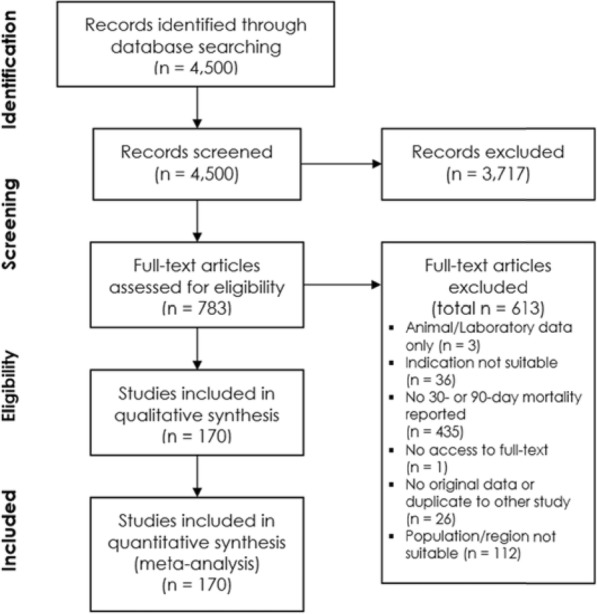
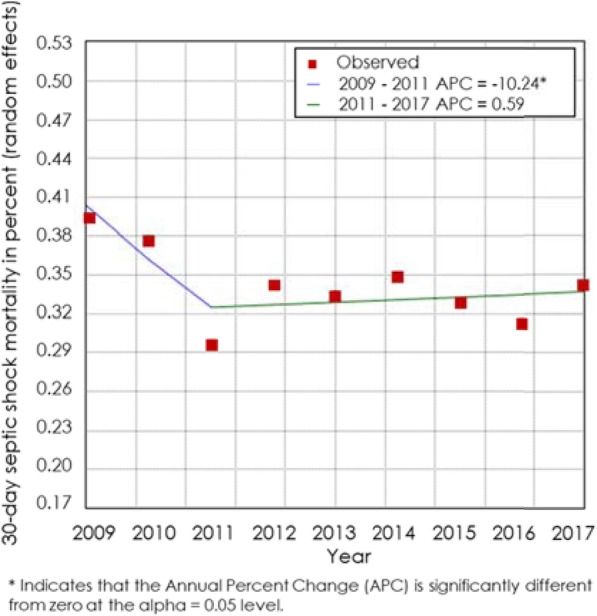
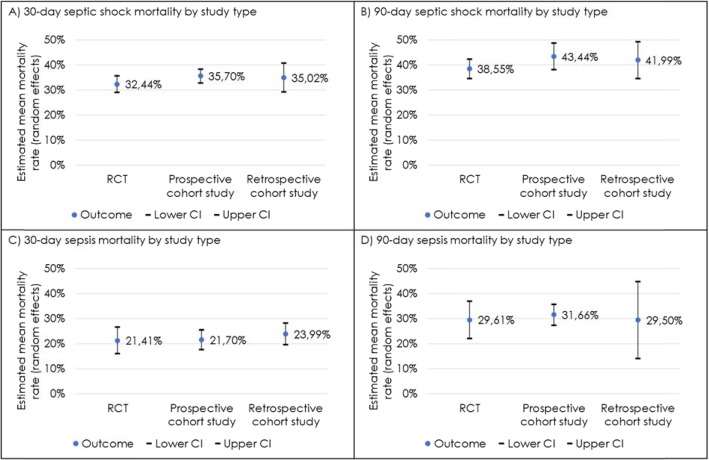
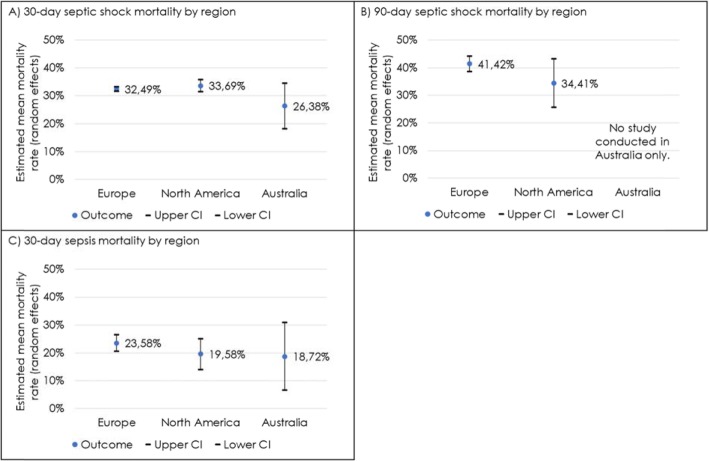
Background: Sepsis and septic shock remain drivers for mortality in critically ill patients. The heterogeneity of the syndrome hinders the generation of reproducible numbers on mortality risks. Consequently, mortality rates range from 15 to 56%. We aimed to update and extend the existing knowledge from meta-analyses and estimate 30- and 90-day mortality rates for sepsis and septic shock separately, stratify rates by region and study type and assess mortality rates across different sequential organ failure assessment (SOFA) scores. Methods: We performed a systematic review of articles published in PubMed or in the Cochrane Database, between 2009 and 2019 in English language including interventional and observational studies. A meta-analysis of pooled 28/30- and 90-day mortality rated separately for sepsis and septic shock was done using a random-effects model. Time trends were assessed via Joinpoint methodology and for the assessment of mortality rate over different SOFA scores, and linear regression was applied. Results: Four thousand five hundred records were identified. After title/abstract screening, 783 articles were assessed in full text for eligibility. Of those, 170 studies were included. Average 30-day septic shock mortality was 34.7% (95% CI 32.6–36.9%), and 90-day septic shock mortality was 38.5% (95% CI 35.4–41.5%). Average 30-day sepsis mortality was 24.4% (95% CI 21.5–27.2%), and 90-day sepsis mortality was 32.2% (95% CI 27.0–37.5%). Estimated mortality rates from RCTs were below prospective and retrospective cohort studies. Rates varied between regions, with 30-day septic shock mortality being 33.7% (95% CI 31.5–35.9) in North America, 32.5% (95% CI 31.7–33.3) in Europe and 26.4% (95% CI 18.1–34.6) in Australia. A statistically significant decrease of 30-day septic shock mortality rate was found between 2009 and 2011, but not after 2011. Per 1-point increase of the average SOFA score, average mortality increased by 1.8–3.3%. Conclusion: Trends of lower sepsis and continuous septic shock mortality rates over time and regional disparities indicate a remaining unmet need for improving sepsis management. Further research is needed to investigate how trends in the burden of disease influence mortality rates in sepsis and septic shock at 30- and 90-day mortality over time.
Overview
The claims and statistics of this paper haven’t been checked yet.
Free: it reads the open-access text and checks the first 5 claims that cite a source we can check. Create a free account to check every claim.
Integrity signals
Registry
Cites
Statistics
Figures
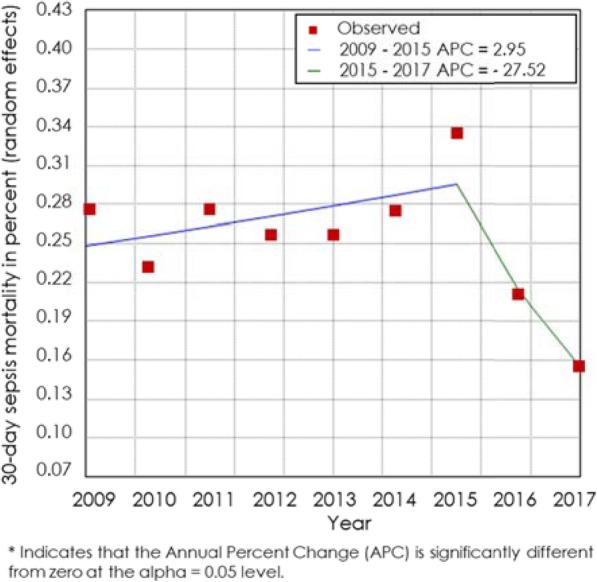
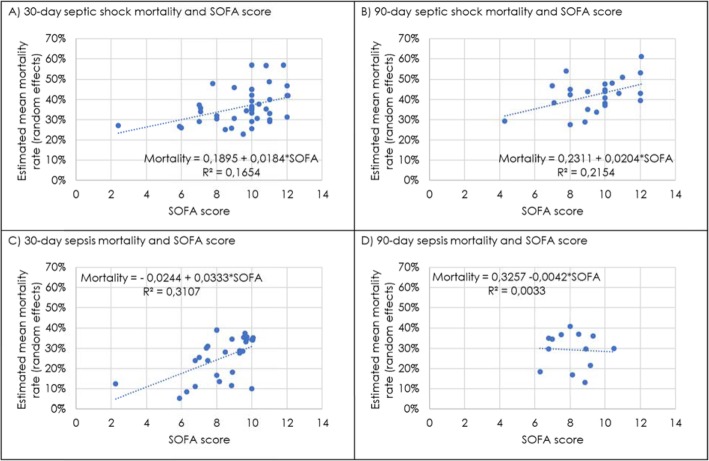
Verification
Claims the paper makes
The claims and statistics of this paper haven’t been checked yet.
Free: it reads the open-access text and checks the first 5 claims that cite a source we can check. Create a free account to check every claim.
Self-check
Percentages, sums and reported differences re-computed from the paper’s own numbers.
The self-check needs the paper’s full text.
Citations
Cites
Preferred Reporting Items for Systematic Reviews and Meta-Analyses: the PRISMA statement
Moher, D., Liberati, A., Tetzlaff, J., Altman, D. G., & for the PRISMA Group (2009) · BMJ · doi:10.1136/bmj.b2535 · Cited by 83,823
Preferred reporting items for systematic reviews and meta-analyses: the PRISMA Statement.
(2009) · PubMed Central · Cited by 44,859
RoB 2: a revised tool for assessing risk of bias in randomised trials
Sterne, J. A. C., Savović, J., Page, M. J., Elbers, R. G., Blencowe, N. S., Boutron, I., Cates, C. J., Cheng, H.-Y., Corbett, M. S., Eldridge, S. M., et al. (2019) · BMJ · doi:10.1136/bmj.l4898 · Cited by 34,787 · cited 1×
“RoB 2’ for randomized trials [18] and with ‘ROBINS-I’ used for observational studies [19], for sepsis and septic shock, 30 and 90 days mortality each.”
MethodThe third international consensus definitions for sepsis and septic shock (Sepsis-3).
Singer, M., Deutschman, C. S., Seymour, C. W., Shankar-Hari, M., Annane, D., Bauer, M., Bellomo, R., Bernard, G. R., Chiche, J.-D., Coopersmith, C. M., et al. (2016) · JAMA · doi:10.1001/jama.2016.0287 · Cited by 28,250
Self-citationROBINS-I: a tool for assessing risk of bias in non-randomised studies of interventions
Sterne, J. A., Hernán, M. A., Reeves, B. C., Savović, J., Berkman, N. D., Viswanathan, M., Henry, D., Altman, D. G., Ansari, M. T., Boutron, I., et al. (2016) · BMJ · doi:10.1136/bmj.i4919 · Cited by 20,329 · cited 1×
“RoB 2’ for randomized trials [18] and with ‘ROBINS-I’ used for observational studies [19], for sepsis and septic shock, 30 and 90 days mortality each.”
MethodBone, R. C., Balk, R. A., Cerra, F. B., Dellinger, R. P., Fein, A. M., Knaus, W. A., Schein, R. M. H., & Sibbald, W. J. (1992) · Chest · doi:10.1378/chest.101.6.1644 · Cited by 13,198
Surviving Sepsis Campaign: International Guidelines for Management of Severe Sepsis and Septic Shock
Dellinger, R. P., Levy, M. M., Rhodes, A., Annane, D., Gerlach, H., Opal, S. M., Sevransky, J. E., Sprung, C. L., Douglas, I. S., Jaeschke, R., et al. (2013) · Critical Care Medicine · doi:10.1097/ccm.0b013e31827e83af · Cited by 9,694
Self-citationThe Surviving Sepsis Campaign Guidelines Committee including The Pediatric Subgroup*, Dellinger, R. P., Levy, M. M., Rhodes, A., Annane, D., Gerlach, H., Opal, S. M., Sevransky, J. E., Sprung, C. L., Douglas, I. S., et al. (2013) · Intensive Care Medicine · doi:10.1007/s00134-012-2769-8 · Cited by 7,290
Self-citationPermutation tests for joinpoint regression with applications to cancer rates
Kim, H.-J., Fay, M. P., Feuer, E. J., & Midthune, D. N. (2000) · Statistics in Medicine · doi:10.1002/(sici)1097-0258(20000215)19:3<335::aid-sim336>3.0.co;2-z · Cited by 6,318
Severe Sepsis and Septic Shock
Angus, D. C., & van der Poll, T. (2013) · New England Journal of Medicine · doi:10.1056/nejmra1208623 · Cited by 3,961
Cited by
Items 801–900 of 985
Min, J., Lu, J., Zhong, L., Yuan, M., & Xu, Y. (2023) · Figshare · doi:10.6084/m9.figshare.22610230
Heurich, P. (2023) · Dokumentenrepositorium der RUB (Ruhr University Bochum) · doi:10.13154/294-10194
Knop, J.-L. (2023) · Online Publication Service of Würzburg University (Würzburg University) · doi:10.25972/opus-34468
Johansson, P. I., Henriksen, H., Karvelsson, S. T., Rolfsson, Ó., Schønemann‐Lund, M., Bestle, M. H., & McGarrity, S. (2024) · Figshare · doi:10.6084/m9.figshare.26670072
He, W., Yao, C., Wang, K., Duan, Z., Wang, S., & Xie, L. (2024) · Figshare · doi:10.6084/m9.figshare.26085104
Leite, G. G. F., de Brabander, J., Michels, E. H. A., Butler, J. M., Cremer, O. L., Scicluna, B. P., Sweeney, T. E., Reyes, M., Salomão, R., Sengers, H. P., et al. (2024) · Figshare · doi:10.6084/m9.figshare.25440962
Oami, T., Imaeda, T., Nakada, T., Abe, T., Takahashi, N., Yamao, Y., Nakagawa, S., Ogura, H., Shime, N., Umemura, Y., et al. (2023) · Figshare · doi:10.6084/m9.figshare.22602124
Li, X., Long, Y., Wu, G., Li, R., Zhou, M., He, A., & Jiang, Z. (2024) · Figshare · doi:10.6084/m9.figshare.26649783
Oami, T., Imaeda, T., Nakada, T., Abe, T., Takahashi, N., Yamao, Y., Nakagawa, S., Ogura, H., Shime, N., Umemura, Y., et al. (2023) · Figshare · doi:10.6084/m9.figshare.22602115
Jiang, S., Xu, J. X., Ke, C., & Huang, P. (2024) · Figshare · doi:10.6084/m9.figshare.26732584
Kassam, N., Ngunga, M., Varwani, M., Msunza, M., & Jeilan, M. (2024) · Figshare · doi:10.6084/m9.figshare.25538589
Oami, T., Imaeda, T., Nakada, T., Abe, T., Takahashi, N., Yamao, Y., Nakagawa, S., Ogura, H., Shime, N., Umemura, Y., et al. (2023) · Figshare · doi:10.6084/m9.figshare.22602121
Min, J., Lu, J., Zhong, L., Yuan, M., & Xu, Y. (2023) · Figshare · doi:10.6084/m9.figshare.22610233
Lin, C.-K., Tsai, Y.-H., Kao, K.-C., Lin, C.-M., Zhou, S.-K., Ho, M.-C., Huang, S.-Y., Fang, Y.-H., Chang, C.-C., Lee, W.-C., et al. (2024) · Figshare · doi:10.6084/m9.figshare.26584026
Vaidie, J., Péju, E., Jandeaux, L.-M., Lesouhaitier, M., Lacherade, J.-C., Guillon, A., Wittebole, X., Asfar, P., Evrard, B., Daix, T., et al. (2023) · Figshare · doi:10.6084/m9.figshare.24078423
Johansson, P. I., Henriksen, H., Karvelsson, S. T., Rolfsson, Ó., Schønemann‐Lund, M., Bestle, M. H., & McGarrity, S. (2024) · Figshare · doi:10.6084/m9.figshare.26670060
Pandolfi, F., Brun‐Buisson, C., Guillemot, D., & Watier, L. (2024) · Figshare · doi:10.6084/m9.figshare.26638446
Tégl, V., Horák, J., Nalos, L., Horáková, M., Štengl, M., Matějovič, M., & Beneš, J. (2024) · Figshare · doi:10.6084/m9.figshare.26708678
Diagnostische Massenspektrometrie
Paal, M. (2025) · doi:10.5282/edoc.35398
Cao, Y.-Y., Zhang, Y., Gerile, W., Guo, Y., Wu, L.-N., Wu, L.-L., Song, K., Lu, W.-H., & Yu, J.-B. (2023) · Figshare · doi:10.6084/m9.figshare.22601435
Chen, H., Yang, F., Duan, Y., Yang, L., & Li, J. (2024) · Figshare · doi:10.6084/m9.figshare.25996869
Endo, A., Yamakawa, K., Tagami, T., Umemura, Y., Takahashi, K., Nagasawa, H., Araki, Y., Kojima, M., Sera, T., Yagi, M., et al. (2022) · Figshare · doi:10.6084/m9.figshare.21206608
Johansson, P. I., Henriksen, H., Karvelsson, S. T., Rolfsson, Ó., Schønemann‐Lund, M., Bestle, M. H., & McGarrity, S. (2024) · Figshare · doi:10.6084/m9.figshare.26670069
Johansson, P. I., Henriksen, H., Karvelsson, S. T., Rolfsson, Ó., Schønemann‐Lund, M., Bestle, M. H., & McGarrity, S. (2024) · Figshare · doi:10.6084/m9.figshare.26670066
Li, X., Long, Y., Wu, G., Li, R., Zhou, M., He, A., & Jiang, Z. (2024) · Figshare · doi:10.6084/m9.figshare.24751628
Oliveros, H., Tuta-Quintero, E., Piñeros, M., Guesguan, A., & Reyes, L. F. (2024) · Figshare · doi:10.6084/m9.figshare.26231254
She, H., Du, Y., Du, Y., Tan, L., Shunxin, Y., Luo, X., Li, Q., Xinming, X., Lu, H., Hu, Y., et al. (2024) · Figshare · doi:10.6084/m9.figshare.24540871
Maharaj, R. (2024) · London School of Economics and Political Science Theses Online (London School of Economics and Political Science) · doi:10.21953/lse.00004473
Machine Learning Modelling of Critical Care Patients in the Intensive Care Units
Pieroni, M. (2023) · Liverpool John Moores University · doi:10.24377/ljmu.t.00019587
Prengel, B. (2023) · Gutenberg Open Science · doi:10.25358/openscience-9029
Kassam, N., Ngunga, M., Varwani, M., Msunza, M., & Jeilan, M. (2024) · Figshare · doi:10.6084/m9.figshare.25538499
Liu, Y., Yao, Y., Yu, M.-M., Gao, Y.-L., Qi, A.-L., Jiang, T.-Y., Chen, Z.-S., 寿松涛, & 柴艳芬 (2022) · Figshare · doi:10.6084/m9.figshare.20115746
Oami, T., Imaeda, T., Nakada, T., Abe, T., Takahashi, N., Yamao, Y., Nakagawa, S., Ogura, H., Shime, N., Umemura, Y., et al. (2023) · Figshare · doi:10.6084/m9.figshare.22602118
Johansson, P. I., Henriksen, H., Karvelsson, S. T., Rolfsson, Ó., Schønemann‐Lund, M., Bestle, M. H., & McGarrity, S. (2024) · Figshare · doi:10.6084/m9.figshare.26670063
He, W., Yao, C., Wang, K., Duan, Z., Wang, S., & Xie, L. (2024) · Figshare · doi:10.6084/m9.figshare.26085187
Developing an improved laboratory diagnostic test for early detection of sepsis in dogs
Brookes, L. (2021) · Murdoch University Research Portal
Improvement of microbiological diagnostics in sepsis
Yu, D. (2024) · Open Archive (Karolinska Institutet)
Sokolović, D. (2023) · National Repository of Dissertations in Serbia
Monocyte responses : implications for sepsis immunology
Tuerxun, K. (2024) · DiVA - Örebro University (Örebro universitet)
Rayas, V. S. J., & Jiménez Rayas, V. S. (2023) · Repositorio Institucional de Acceso Abierto de la Universidad Autónoma de San Luis Potosí (Universidad Autónoma de San Luis Potosí)
Barroso, J. M. L. A. (2023) · Portuguese National Funding Agency for Science, Research and Technology (RCAAP Project by FCT)
Zapata Canivilo, J. M. (2024) · MacSphere (McMaster University) · doi:10.71548/22501
Philipp, A., Mehilli, J., & München, T. U. (2022) · mediaTUM (Technical University of Munich)
Hancke, L. (2025) · Refubium (Universitätsbibliothek der Freien Universität Berlin) · doi:10.17169/refubium-48546
Bonnet, R. (2025) · Archive ouverte UNIGE (University of Geneva) · doi:10.13097/archive-ouverte/unige:189365
Ehn, F., & Ironberg, A. (2023) · Jonkoping University Library (Jönköping University)
Sepsis-Biomarker: Hämatologische Scores im Überblick
Zsuzsanna, W. (2025) · Trillium Diagnostik · doi:10.47184/td.2025.04.05
Wu, S., Liu, J., Yan, L., Zhong, X., Shi, C., He, L., & Wang, B. (2025) · BMC Infectious Diseases · doi:10.1186/s12879-025-12345-9
“Droplet digital PCR (ddPCR), a cutting-edge technology, offers advantages including high sensitivity, rapidity, multi-target detection, and absolute quantification [5, 6].”
Demir, O., Yöndem, Ö. Z., & Yüksel, B. E. (2025) · Türk yoğun bakım derneği dergisi/Türk yoğun bakım dergisi · doi:10.63729/tjic.2025.674
“These studies underscore the prognostic role of the SOFA score in sepsis (14).”
Future Directions in Sepsis Research: From Translational Science to Clinical Trials
Mıdık, E. Ö. D., & Bölükçü, S. (2025) · doi:10.59537/saupress.2504
Precision Medicine in Sepsis: From Biomarkers to Bedside
MEŞE, E. A., YÜCE, Z. T., Eren, E. E., Tufan, Z. K., Eser, F., Oktay, Z., Beder, D., Yaman, M., Altındiş, M., Baddal, B., et al. (2025) · doi:10.59537/saupress.2486
Phạm, V. Đ., Nguyễn, T. P. T., Nguyễn, D. K., & Trần, X. C. (2025) · Tạp chí Y Dược Huế · doi:10.34071/jmp.2025.5.20
Azoz, N. M. A., Hamid, M. A. S., Elhaq, M. K. M. A., & Abdel-Aziz, E. M. (2026) · Journal of The Egyptian Society of Nephrology and Transplantation · doi:10.4103/jesnt.jesnt_20_25
Recent Advances in Research on Prognostic Prediction of Patients with Septic Shock
卢, 雨. (2026) · Advances in Clinical Medicine · doi:10.12677/acm.2026.161136
Besnier, E., Kalfon, P., Satre-Buisson, L., Labat, F., Guichon, C., Morel, J., & Vardon, F. (2026) · Le Praticien en Anesthésie Réanimation · doi:10.1016/j.pratan.2025.12.007
Winata, H. S., Chan, A., Diana, V. E. D., Diana, V. E., & Faradila, S. (2025) · Asian Journal of Pharmaceutical Research and Development · doi:10.22270/ajprd.v13i1.1490
“Rat mortality was observed from day 1 to day 28, and rats that died during the time of administration of the test preparation were immediately autopsied [20] .”
Nazumulkani, A., Abbas, S. A., Pandurangan, P., & Chandrasekaran, V. (2026) · Apollo Medicine · doi:10.1177/09760016251412952
Human Cytomegalovirus Serostatus Defines Cytokine-Based Predictive Signatures in Sepsis
Krause, F., Dyck, B., Kappler, K., Unterberg, M., Nowak, H., Rahmel, T., Bergmann, L., Palmowski, L., Westhus, B., Wolf, A., et al. (2026) · Pathogens · doi:10.3390/pathogens15020129
“Despite major advances in critical care, sepsis remains one of the most challenging diseases worldwide, with mortality rates of up to 35% [2].”
Correlational Analysis of Vitamin B12 as an Inflammatory Marker in Patients with Sepsis
Shoaib, M. S., Sabir, S., Siddique, M. E. W., Siddique, M. E. W., & Salam, H. (2026) · Pakistan Armed Forces Medical Journal · doi:10.51253/pafmj.v76isuppl-1.13297
Jandrić, M., Momčićević, D., Dragić, S., Zlojutro, B., Kovačević, T., Barić, G., Tomić, B., Davogic, S., Malić, J., & Kovačević, P. (2026) · Cureus · doi:10.7759/cureus.103319
Lactate Cut-offs for 28-day Mortality in Septic ShockPreprint
Wanka, S.-T., Hermann, A., Lenz, M., Hengstenberg, C., Schellongowski, P., Staudinger, T., & Zilberszac, R. (2026) · medRxiv · doi:10.64898/2026.02.08.26345840
Kovačević, P., Spiric, N., Vučićević, K. M., Dragić, S., Momčićević, D., Zlojutro, B., Jandrić, M., Kovačević, T., & Mallat, J. (2026) · Journal of Intensive Medicine · doi:10.1016/j.jointm.2025.12.010
Extreme acidosis in hospitalised patients: A 10-year single-centre, retrospective analysis
Guo, Z. Y., Walker, H. G., Brown, A. J., Purewal, P., Reid, D., & Santamaria, J. D. (2026) · Critical Care and Resuscitation · doi:10.1016/j.ccrj.2025.100160
“14,15 Moreover, in other settings, admission diagnosis has been highlighted as important.”
Custodio, C. E. C. (2024) · Universidad Peruana Cayetano Heredia Institutional Repository
Protocolized and Individualized Management of Sepsis in Emergency Department
Variakojytė, M. (2024) · Lithuanian University of Health Sciences
Yang, N., Zhen, S., Zhang, T., Fan, Y., Lin, Q., Mi, Y., Zheng, Y., Qiu, L., Zhang, F., Jiang, E., et al. (2026) · Frontiers in Cellular and Infection Microbiology · doi:10.3389/fcimb.2026.1762404
“Septic shock, identi fi ed as the strongest predictor of death in our study, re fl ects profound systemic infection and immune dysfunction in this population and underscores the need for early hemodynamic stabilization and intensive care (Bauer et al., 2020; Lupia et al., 2022).”
Evolving sepsis care and the weekend effect: cause for optimism?
Iyer, N. K. (2026) · Baylor University Medical Center Proceedings · doi:10.1080/08998280.2026.2633863
Optimizing Few-Shot NL2SQL for Sepsis Data Analysis in Medical Databases
Li, Z., Liu, X., Liu, X., Hu, Y., Ren, P., & Xing, C. (2026) · Lecture notes in computer science · doi:10.1007/978-981-95-6426-2_3
Makrofág migrációt gátló faktor mint diagnosztikus és prediktív biomarker szepszisben
Toldi, J. (2024) · Pesci Egyetemi Archivum (University of Pécs)
Microvascular monitoring in the ICU using high-resolution near-infrared spectroscopy
Mirsajadi, A. (2025) · Mspace (University of Manitoba)
Septic source matters: how infection site and microbial etiology affect sepsis prognosis
Guarino, M., Maroncelli, G., Luppi, F., Donati, C., Bandini, C., Costanzini, A., Maritati, M., Contini, C., GIORGIO, R. D., & Spampinato, M. D. (2026) · Emergency Care Journal · doi:10.4081/ecj.2026.14647
“6 In high-income countries, mortality has gradually declined due to improved critical care protocols and early sepsis detection programs, 7,8 but in low-and middle-income countries, sepsis remains a leading cause of in-hospital mortality.”
Ferrer, R., Kirschning, T., Unglaube, M., Guenther, U., Kreutz, J., Thielmann, M., Baumann, A., Kribben, A., Henzler, D., Germano, N., et al. (2026) · Annals of Intensive Care · doi:10.1016/j.aicoj.2026.100052
Lactylated chitinase-3-like protein 1 promotes the development of sepsis
Wei, S., Wang, X., Yan, H., Wang, X., & Yang, B. (2026) · Central European Journal of Immunology · doi:10.5114/ceji/204065
“If not detected and treated early, it is likely to progress to septic shock, leading to adverse outcomes, such as mortality [3, 4].”
A twenty-year retrospective analysis on sepsis and septic shock incidence and mortality
Guarino, M., Perna, B., Guerzoni, F., Rapino, A., Ceccuzzi, G., Maroncelli, G., Costanzini, A., Maritati, M., Contini, C., Spampinato, M. D., et al. (2026) · Oriental Pharmacy and Experimental Medicine · doi:10.1007/s13596-026-00895-5
Ding, X., Ai, K., Wu, S., Wang, H., Zhang, H., & Li, Y. (2026) · Transplantation and Cellular Therapy · doi:10.1016/j.jtct.2026.03.031
Propriétés immunes de la cellule endothéliale au cours du sepsis
Pons, S. (2021) · theses.fr (ABES) · doi:10.70675/3999fc10z25d2z4513z87dazc18894ab82dd
Li, C., Gui, X., Zhu, H., Wang, J., Xie, Y. U. Q. I. A. O., Wang, L., Tian, Y., & Li, S. (2026) · Hereditas · doi:10.1186/s41065-026-00670-1
“The 28-day mortality rate is approximately 20% [5].”
Review of Sepsis Cases Diagnosed at Emergency Department of Kaunas Clinics in 2017-2020
Daulius, G. (2022) · Lithuanian University of Health Sciences
Peng, X., Li, X., Bai, J., Wang, X., & Yang, G. (2026) · Shock · doi:10.1097/shk.0000000000002836
Bourcier, C. H. (2024) · theses.fr (ABES) · doi:10.70675/a26242d2z3853z44aez9ddfz144d2e238482
Aydoğan, M. S., & Sarıçiçek, V. (2026) · Shock · doi:10.1097/shk.0000000000002813
Hagimont, E. (2024) · theses.fr (ABES) · doi:10.70675/01900058z34f3z479fzb3d5z4df1c810d682
Guo, P., Song, J., Guo, J., Chen, S., He, J., Sun, H. L., & Qiao, Y. (2026) · Frontiers in Microbiology · doi:10.3389/fmicb.2026.1783211
Xiang, L., Sun, J., Yang, L., Luo, Y., Wang, Y., Chen, K., & Meng, X. (2026) · Biology Direct · doi:10.1186/s13062-026-00769-5
“If effective interventions are not implemented timely, the mortality rates can rapidly exceed above 30–40% [1–3].”
Grumiro, L., Semprini, S., Gamberini, E., Terzitta, M., Gecele, C., Biondi, F., Gambetti, G., Farolfi, P., Petroni, M. E., Stella, A. B., et al. (2026) · Research Square · doi:10.21203/rs.3.rs-9251510/v1
Effect of Body Weight on Hemodynamic Response to Vasopressin in Patients With Septic Shock
Jorgensen, E. O., Custodio, M. M., He, R., & Urias, G. A. (2026) · Annals of Pharmacotherapy · doi:10.1177/10600280261436423
Jiang, Y., Ding, H., & Li, X. (2026) · BMC Infectious Diseases · doi:10.1186/s12879-026-13339-x
“A meta-analysis of 170 studies reported that the 30-day mortality rate for sepsis patients was 24.4% and the 90-day mortality was 32.2%; for septic shock, the 30-day mortality was 34.7% and the 90-day mortality was 38.5% [5].”
InfluentialHung, K., Chang, L.-C., Wu, J.-Y., Lai, Y.-C., Ho, C.-N., Lin, C.-M., & Chen, I. (2026) · Frontiers in Nutrition · doi:10.3389/fnut.2026.1758059
“Despite ongoing advances in early recognition, timely antimicrobial therapy, and modern supportive care strategies, sepsis continues to carry a substantial mortality burden, with reported 90-day mortality rates among affected patients remaining as high as approximately 26.7–32.2% (3– 5).”
InfluentialLin, Z., Li, N., Liu, H., Xu, H., Zhu, Y. Y., Luo, N., & Yang, S. (2026) · BMC Infectious Diseases · doi:10.1186/s12879-026-13160-6
“Studies report that mortality rates remain high, with an average 30-day septic shock mortality of 34.7%, 90-day septic shock mortality of 38.5%, and 90-day sepsis mortality of 32.2% [2].”
InfluentialJuárez, I. V. L., Morales, B. E. H., López, R. G., Morales, J. N., Herrera, J. L. E., Noguez, M. M., Núñez, F. K. G., Munguía, J. A. C., Cruz, J. L., Chazarí, M. M. Á. H., et al. (2026) · Journal of Anesthesia & Critical Care Open Access · doi:10.15406/jaccoa.2026.18.00644
Yepes, D., Moreno‐Bedoya, S., Lohle-Rueda, S., Moreno-Restrepo, J. R., Palacio-Muñoz, M., Gómez-Correa, N., Ramírez, A. S., Agudelo, M. C. S., & Villegas-Arbeláez, E. (2026) · Frontiers in Nephrology · doi:10.3389/fneph.2026.1810007
“Sepsis and septic shock remain leading causes of intensive care unit mortality worldwide, and acute kidney injury is a frequent complication that increases the risk of prolonged organ support and death (1 – 4).”
New Developments in Anesthesia
Niehaus, B., Theobald, V., Martin, E., Weigand, M. W., & Motsch, J. (2026) · Springer eBooks · doi:10.1007/978-3-031-52619-0_5
Role of CSF Presepsin in Critically Ill Patients with Cerebral Damage
Hudák, V., Tomajkova, E., Capková, J., Večurkovská, I., Pallas, T., Firment, J., Grega, R., Adawi, R. A., & Mareková, M. (2026) · Bratislavské lekárske listy/Bratislava medical journal · doi:10.1007/s44411-026-00630-1
“According to a meta-analysis by Bauer and colleagues, the average 30-day mortality in septic shock is approximately 34.7%, and the 90-day mortality is approximately 38.5% [5].”
Influential
Metadata
- Authors
- Bauer, M., Gerlach, H., Vogelmann, T., Preissing, F., Stiefel, J., & Adam, D.
- Affiliations
- Jena University Hospital (DE)
- Vivantes Klinikum (DE)
- CytoSorbents (Germany) (DE)
- Corresponding author
- Bauer, Michael
- Venue
- Critical Care
- Published
- 2020-05-19
- Volume
- 24
- Issue
- 1
- Pages
- 239-239
- ISSN
- 1364-8535 (ISSN-L)
- PMC
- PMC7236499
- OpenAlex
- W3027548201
- Semantic Scholar
- 17551feef1e5ba684094ee873ccb0dabe3675738
- Cited by
- 867
- References
- 32
- Citations by year
- 2026: 137 · 2025: 223 · 2024: 217 · 2023: 162 · 2022: 91 · 2021: 33 · 2020: 4
- FWCI
- 10.67
- Type
- journal article
- Language
- en
- Open access
- gold
- doi.org
- Licence
- cc-by
- creativecommons.org/licenses/by/4.0 (tdm)
- creativecommons.org/licenses/by/4.0 (vor)
- Locations
- Critical Care (publishedVersion, cc-by)
- PubMed Central (publishedVersion, cc-by)
- PubMed (publishedVersion)
- DOAJ (DOAJ: Directory of Open Access Journals) (submittedVersion, cc-by-sa)
- Funders
- CytoSorbents Europe
- Topics
- Health Sciences › Medicine › Critical Care and Intensive Care Medicine › Sepsis Diagnosis and Treatment
- Health Sciences › Medicine › Surgery › Abdominal Surgery and Complications
- Health Sciences › Medicine › Nephrology › Acute Kidney Injury Research
- Keywords
- sepsis, septic shock, mortality rates, 30-day mortality, 90-day mortality, SOFA score, regional variation, mortality trends, critically ill patients
- MeSH terms
- Australia, Europe, Humans, Mortality, North America, Shock, Septic, Sepsis
About these checks
Registry, retraction, Cites and statistics results are computed, not judged, with one exception: a printed reference that no index lists is read once by a model before it counts as a citation error. Claims are extracted by a model and kept only when their quote appears verbatim in the text; each cited source is then checked, with a model’s help, for whether it says what the claim relies on. Those verdicts can be wrong — read the claim’s quote and the cited source before relying on one.
Statistics and arithmetic are recomputed, not judged.
Confidence bands are shown only for fields calibrated on our annotated test set. None is calibrated yet, so no band is shown.
What counts as a claim ›How we measure confidence ›How we check this ›
Are you an author, or do you see a problem with this page? Request a review
Data sources
Bibliographic data: Semantic Scholar, OpenAlex, Crossref.
Contains information from the Semantic Scholar Academic Graph Datasets, made available under the ODC Attribution License (ODC-BY 1.0).
Semantic Scholar’s data is described in: Kinney, R., et al. (2023). The Semantic Scholar Open Data Platform. arXiv:2301.10140.
