

Mortality in sepsis and septic shock in Europe, North America and Australia between 2009 and 2019 – results from a systematic review and meta-analysis
Open accessThe DOI matches its Crossref record; 30 of the 32 references it cites were found in a registry or an index.
Abstract
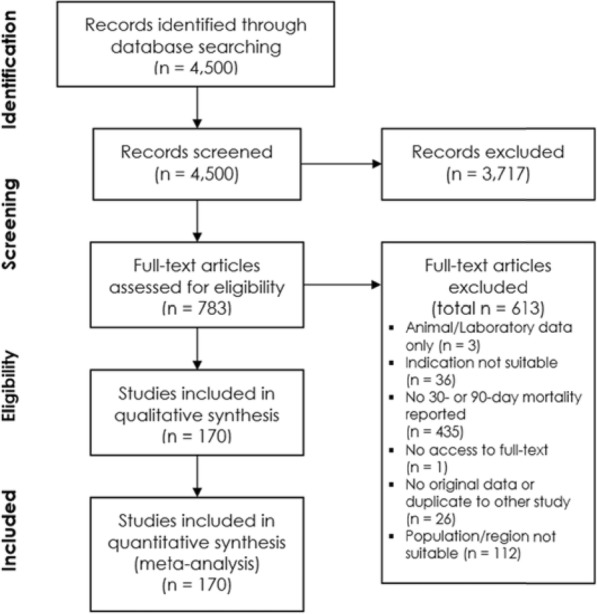
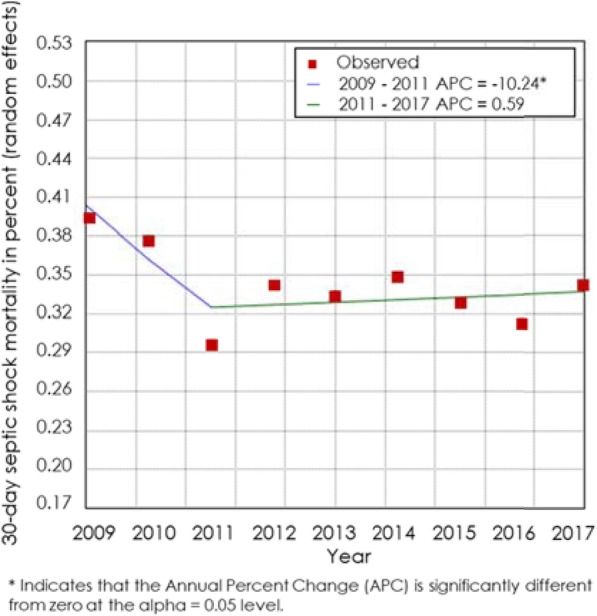
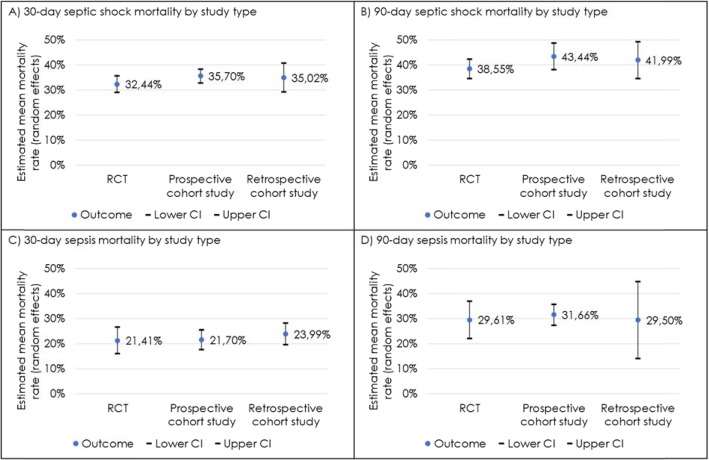
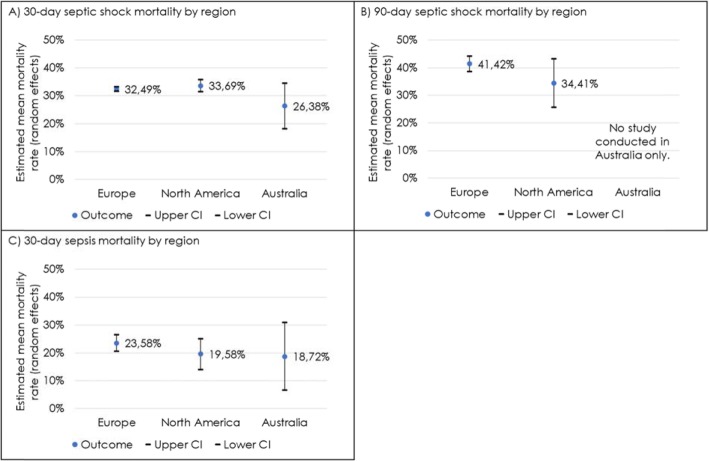
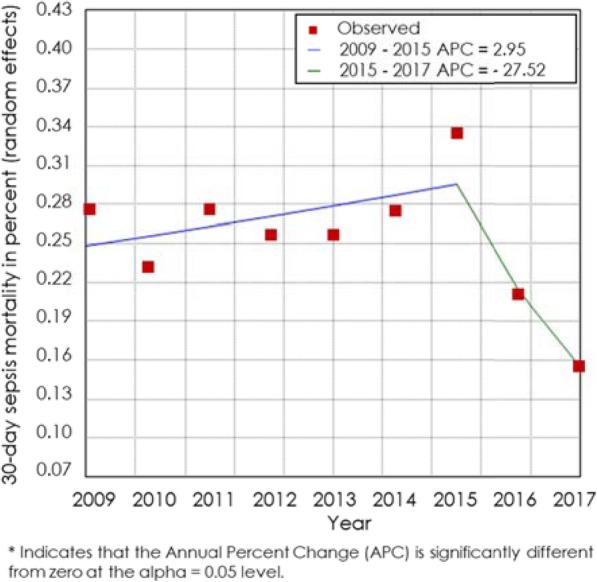
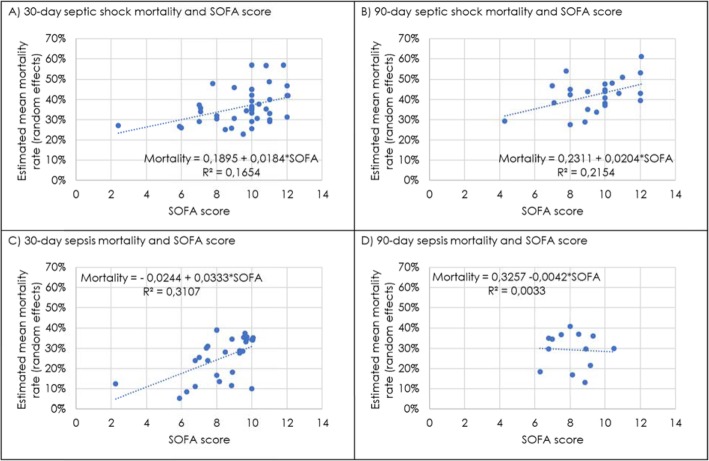
Background: Sepsis and septic shock remain drivers for mortality in critically ill patients. The heterogeneity of the syndrome hinders the generation of reproducible numbers on mortality risks. Consequently, mortality rates range from 15 to 56%. We aimed to update and extend the existing knowledge from meta-analyses and estimate 30- and 90-day mortality rates for sepsis and septic shock separately, stratify rates by region and study type and assess mortality rates across different sequential organ failure assessment (SOFA) scores. Methods: We performed a systematic review of articles published in PubMed or in the Cochrane Database, between 2009 and 2019 in English language including interventional and observational studies. A meta-analysis of pooled 28/30- and 90-day mortality rated separately for sepsis and septic shock was done using a random-effects model. Time trends were assessed via Joinpoint methodology and for the assessment of mortality rate over different SOFA scores, and linear regression was applied. Results: Four thousand five hundred records were identified. After title/abstract screening, 783 articles were assessed in full text for eligibility. Of those, 170 studies were included. Average 30-day septic shock mortality was 34.7% (95% CI 32.6–36.9%), and 90-day septic shock mortality was 38.5% (95% CI 35.4–41.5%). Average 30-day sepsis mortality was 24.4% (95% CI 21.5–27.2%), and 90-day sepsis mortality was 32.2% (95% CI 27.0–37.5%). Estimated mortality rates from RCTs were below prospective and retrospective cohort studies. Rates varied between regions, with 30-day septic shock mortality being 33.7% (95% CI 31.5–35.9) in North America, 32.5% (95% CI 31.7–33.3) in Europe and 26.4% (95% CI 18.1–34.6) in Australia. A statistically significant decrease of 30-day septic shock mortality rate was found between 2009 and 2011, but not after 2011. Per 1-point increase of the average SOFA score, average mortality increased by 1.8–3.3%. Conclusion: Trends of lower sepsis and continuous septic shock mortality rates over time and regional disparities indicate a remaining unmet need for improving sepsis management. Further research is needed to investigate how trends in the burden of disease influence mortality rates in sepsis and septic shock at 30- and 90-day mortality over time.
Overview
The claims and statistics of this paper haven’t been checked yet.
Free: it reads the open-access text and checks the first 5 claims that cite a source we can check. Create a free account to check every claim.
Integrity signals
Registry
Cites
Statistics
Figures
Verification
Claims the paper makes
The claims and statistics of this paper haven’t been checked yet.
Free: it reads the open-access text and checks the first 5 claims that cite a source we can check. Create a free account to check every claim.
Self-check
Percentages, sums and reported differences re-computed from the paper’s own numbers.
The self-check needs the paper’s full text.
Citations
Cites
Preferred Reporting Items for Systematic Reviews and Meta-Analyses: the PRISMA statement
Moher, D., Liberati, A., Tetzlaff, J., Altman, D. G., & for the PRISMA Group (2009) · BMJ · doi:10.1136/bmj.b2535 · Cited by 83,823
Preferred reporting items for systematic reviews and meta-analyses: the PRISMA Statement.
(2009) · PubMed Central · Cited by 44,859
RoB 2: a revised tool for assessing risk of bias in randomised trials
Sterne, J. A. C., Savović, J., Page, M. J., Elbers, R. G., Blencowe, N. S., Boutron, I., Cates, C. J., Cheng, H.-Y., Corbett, M. S., Eldridge, S. M., et al. (2019) · BMJ · doi:10.1136/bmj.l4898 · Cited by 34,787 · cited 1×
“RoB 2’ for randomized trials [18] and with ‘ROBINS-I’ used for observational studies [19], for sepsis and septic shock, 30 and 90 days mortality each.”
MethodThe third international consensus definitions for sepsis and septic shock (Sepsis-3).
Singer, M., Deutschman, C. S., Seymour, C. W., Shankar-Hari, M., Annane, D., Bauer, M., Bellomo, R., Bernard, G. R., Chiche, J.-D., Coopersmith, C. M., et al. (2016) · JAMA · doi:10.1001/jama.2016.0287 · Cited by 28,250
Self-citationROBINS-I: a tool for assessing risk of bias in non-randomised studies of interventions
Sterne, J. A., Hernán, M. A., Reeves, B. C., Savović, J., Berkman, N. D., Viswanathan, M., Henry, D., Altman, D. G., Ansari, M. T., Boutron, I., et al. (2016) · BMJ · doi:10.1136/bmj.i4919 · Cited by 20,329 · cited 1×
“RoB 2’ for randomized trials [18] and with ‘ROBINS-I’ used for observational studies [19], for sepsis and septic shock, 30 and 90 days mortality each.”
MethodBone, R. C., Balk, R. A., Cerra, F. B., Dellinger, R. P., Fein, A. M., Knaus, W. A., Schein, R. M. H., & Sibbald, W. J. (1992) · Chest · doi:10.1378/chest.101.6.1644 · Cited by 13,198
Surviving Sepsis Campaign: International Guidelines for Management of Severe Sepsis and Septic Shock
Dellinger, R. P., Levy, M. M., Rhodes, A., Annane, D., Gerlach, H., Opal, S. M., Sevransky, J. E., Sprung, C. L., Douglas, I. S., Jaeschke, R., et al. (2013) · Critical Care Medicine · doi:10.1097/ccm.0b013e31827e83af · Cited by 9,694
Self-citationThe Surviving Sepsis Campaign Guidelines Committee including The Pediatric Subgroup*, Dellinger, R. P., Levy, M. M., Rhodes, A., Annane, D., Gerlach, H., Opal, S. M., Sevransky, J. E., Sprung, C. L., Douglas, I. S., et al. (2013) · Intensive Care Medicine · doi:10.1007/s00134-012-2769-8 · Cited by 7,290
Self-citationPermutation tests for joinpoint regression with applications to cancer rates
Kim, H.-J., Fay, M. P., Feuer, E. J., & Midthune, D. N. (2000) · Statistics in Medicine · doi:10.1002/(sici)1097-0258(20000215)19:3<335::aid-sim336>3.0.co;2-z · Cited by 6,318
Severe Sepsis and Septic Shock
Angus, D. C., & van der Poll, T. (2013) · New England Journal of Medicine · doi:10.1056/nejmra1208623 · Cited by 3,961
Cited by
Items 601–700 of 985
Is Sepsis an Essential Fatty Acids Deficiency State?
Das, U. N. (2025) · Indian Journal of Critical Care Medicine · doi:10.5005/jp-journals-10071-25064 · Cited by 1
Marshall, K. A., & Chen, D. J. (2025) · Diagnostic Microbiology and Infectious Disease · doi:10.1016/j.diagmicrobio.2025.117154 · Cited by 1
Yang, L., Liu, M., Hu, B., Yong, K., Zhou, J., & Chen, Y. (2025) · Journal of Inflammation Research · doi:10.2147/jir.s542608 · Cited by 1
“23,24 The pathogenesis of sepsis is complex and remains poorly understood.”
Ngan, N. D., Ngan, D. T. Q., Thang, L. Q., Thang, N. V., & Hai, P. D. (2025) · Clinical Nutrition ESPEN · doi:10.1016/j.clnesp.2025.10.030 · Cited by 1
Chen, X., Liang, G., Zheng, Z., & Cao, Y. (2025) · BMC Infectious Diseases · doi:10.1186/s12879-025-11963-7 · Cited by 1
Duran, H. T., & Kılınç, O. Ö. (2025) · Medicine · doi:10.1097/md.0000000000045645 · Cited by 1
“[2] Sepsis-related malnutrition causes many clinical problems, including prolonged hospital stay, invasive and noninvasive mechanical ventilation, greater vasoactive drug use, increased nosocomial infections, and high mortality rate.”
Melgar-Perez, V., Serrano-Fernandez, V., Carmona‐Torres, J. M., Bouzas-Mosquera, C., Rabanales-Sotos, J., & Laredo‐Aguilera, J. A. (2025) · Medicine · doi:10.1097/md.0000000000043804 · Cited by 1
“[15,17] Among OP, septic processes are the leading cause of admission to Intensive Care Units (ICU).”
Li, G., Lin, Y., Ren, D., Chen, Y., Wen, S., Liang, X., Zhang, L., Mei, J., Feng, Y., Gui, S., et al. (2025) · BMC Infectious Diseases · doi:10.1186/s12879-025-12330-2 · Cited by 1
“It is a major reason for hospital admissions and readmissions to intensive care units, with an estimated 30 million people affected annually, resulting in around 6 million fatalities [3].”
Jagesar, A. R., Smalbil, L., Galea, E., Struja, T., Dam, T. A., Hilders, P., Otten, M., Biesheuvel, L. A., Girbes, A. R. J., Thoral, P., et al. (2025) · Journal of Intensive Medicine · doi:10.1016/j.jointm.2025.07.002 · Cited by 1
Ismailov, E. L., Espenbetov, Y. B., Аскарбеков, Ж. С., Aryn, K. N., Sharipov, M. K., Serdaliev, A. O., Ермагамбетов, К. К., Mirzakhanov, P. T., Tungishbaev, A. U., Auezbekov, A. A., et al. (2025) · General Reanimatology · doi:10.15360/1813-9779-2025-6-2578 · Cited by 1
Harnessing native corticosteroid-binding globulin to treat life-threatening septic shock
Ramsay, S. D., Kilgariff, D. E., Young, B. J., Darveniza, L. C., Doig, R. O., Hollis, C. A., Hurtado, P. R., Plummer, M. P., Robins, E. G., Lee, J. H., et al. (2026) · Endocrinology · doi:10.1210/endocr/bqag002 · Cited by 1
Machine Learning-Based Clusters of Vital Signs and Lactate Levels Predict Vasopressor Use in Sepsis
Jeong, D., Choi, M., Maeng, S. J., Yoon, H., Park, J. E., Lee, G. T., Hwang, S. Y., Shin, T. G., Chung, S. P., Lim, T. H., et al. (2026) · Clinical and Experimental Emergency Medicine · doi:10.15441/ceem.25.247 · Cited by 1
“Despite advances in critical care, sepsis continues to pose a substantial clinical challenge, with reported mortality rates reaching 24% [2,3].”
Association between serum bicarbonate and 28-day mortality in septic shock patients: A cohort study
Niu, D., Li, B., & Bai, H. (2026) · Medicine · doi:10.1097/md.0000000000047219 · Cited by 1
“[2,3] Epidemiological data consistently underscore the high mortality burden; a recent meta-analysis across high-income settings reported mean 30-day and 90-day The authors have no funding and conflicts of interest to disclose.”
Yang, K., Hu, Y., Ma, C., Wang, J., Wang, Y., Han, X., Lv, J., Zhang, X., & Yunliang, C. (2026) · Scientific Reports · doi:10.1038/s41598-026-38559-8 · Cited by 1
“Comparative mortality analyses have demonstrated that both 30-day and 90-day fatality rates are considerably higher among septic shock patients than those with sepsis alone 6 .”
Derakhshan, M., Ghomshei, M., & Ansarian, H. R. (2026) · Clinical and Experimental Nephrology · doi:10.1007/s10157-026-02824-x · Cited by 1
Liu, Y., Luan, Y., Wang, L., Zhu, Y., Zheng, G., Zhang, J., Liu, Z., Yao, Y., & Wu, M. (2026) · Frontiers in Nutrition · doi:10.3389/fnut.2026.1716973 · Cited by 1
Soh, L., Ling, R. R., Chua, W. L., Aw, J. J., Robertson, N., Saripalli, K. R., Sharp, D., Zhao, S. J., Jones, D., & Subramaniam, A. (2026) · Critical Care and Resuscitation · doi:10.1016/j.ccrj.2026.100172 · Cited by 1
Free Thyroxine as a Predictor of Mortality in Critically Ill Septic Patients—A Retrospective Study
Negruț, M. F., Pastor, V., Bolcaș, R., Antal, O., Szabó, R., & Petrișor, C. (2026) · Diagnostics · doi:10.3390/diagnostics16050680 · Cited by 1
“This upward trend is associated with rising costs in treatment and increased burden on the global healthcare system [5,6].”
InfluentialHwang, H. E., You, J., Kim, M. S., Kim, D. Y., Choi, J.-K., & Lee, H. (2026) · Journal of Korean Biological Nursing Science · doi:10.7586/jkbns.25.073 · Cited by 1
Kény, Y. G. S., Salifou, K., Lobah, Y. G., Renaud, K. K. G., Kévin, A. J., Famoussa, K., Landry, G. K. K., Mauriane, D. P., Valentin, T. S., Lauret, K., et al. (2026) · Open Journal of Internal Medicine · doi:10.4236/ojim.2026.161008 · Cited by 1
Maier-Stocker, C., Hupf, J., Zinsser-Krys, J., Zimmermann, M., & Hanses, F. (2026) · BMC Infectious Diseases · doi:10.1186/s12879-026-12951-1 · Cited by 1
“Considering an average 30-day mortality rate of 32.5% among septic patients in Europe, the outcome data from this study align with the findings of the systematic review by Bauer M et al. [28].”
InfluentialWu, Y., Wang, L., Deng, Z., Chen, Y., Xu, J., Feng, M., Yao, Y., & Kang, H. (2026) · Journal of Nanobiotechnology · doi:10.1186/s12951-026-04270-z · Cited by 1
Huang, Z.-Y., Wu, Y.-Y., Wang, G., Li, X.-D., Zhou, W.-B., & Li, J. (2026) · Urolithiasis · doi:10.1007/s00240-026-01961-y · Cited by 1
Cumambrin B Alleviates Sepsis-Associated Acute Lung Injury by Activating the Nrf2/HO-1 Pathway
Que, Y., Ruan, D., Xu, M., Nie, Y., Huang, G., Zhao, H., & Yang, Y. (2026) · Biomedicines · doi:10.3390/biomedicines14030729 · Cited by 1
“Globally, the incidence of sepsis is high, with over 30 million reported cases each year and an overall mortality rate of 20–30% [1,4].”
Muhoza, B.-G., liu, S., Niyonkuru, E., & Sun, T. (2026) · Journal of Inflammation Research · doi:10.2147/jir.s571504 · Cited by 1
Mawson, P., Morton, M., Walmsley, Z., Wafer, R., Hancock, H. C., Mossop, H., Al-Ashmori, S., Emerson, L. M., Smith, J. B., Colquhoun, G., et al. (2026) · BMJ Open · doi:10.1136/bmjopen-2026-117142 · Cited by 1
“The sample size is based on assessing non-inferiority for 28-day all-cause mortality, assuming a mortality rate of 24%, 31 with 90% power, a one-sided type 1 error rate of 2.5% and a non-inferiority margin of 6%.”
InfluentialBastow, C. R., Mei, C., Wen, S. W., Wilson, J. L., Nguyen, H., Suthya, A. R., Bourne, J. H., Lankadeva, Y. R., & Wong, C. H. Y. (2026) · Intensive Care Medicine Experimental · doi:10.1186/s40635-026-00886-5 · Cited by 1
“For this reason, multiple iterations of the Surviving Sepsis Campaign have described guidelines to augment the identification and early treat-ment of sepsis patients, reducing sepsis mortality rates to 15–25% within high-income countries [3, 11, 13, 29].”
Nguyen, V. M., Dieu, A. N. T., Nguyễn, H. B., Tran, X. T., Bui, T. T. N., Thong, T. H., Francke, J. A., & Phan, T. (2026) · Saudi Journal of Anaesthesia · doi:10.4103/sja.sja_627_25 · Cited by 1
“…minimum required number of patients With a confidence level of 95%, Z (1‑ α /2) =1.96 P = 0.4 is the proportion of patients with sepsis and septic shock admitted to the intensive care unit [5] d = 0.1 is the allowable margin of error Substituting the values into the formula provided an n of 92 1].”
InfluentialYang, L., Li, Y., Zhou, Z., Zhang, W., Yang, X., Wu, W., & Zhou, H. (2026) · Frontiers in Medicine · doi:10.3389/fmed.2026.1759907 · Cited by 1
Sepsis in the Emergency Department: Different Faces, Same Fate? A Sex-Based Prognostic Analysis
Pepe, F., Pinelli, M. A., Giuliante, S., Sabatino, F., Sari, L., Visintainer, S., Fuciarelli, L., & Innocenti, F. (2026) · International Journal of Molecular Sciences · doi:10.3390/ijms27093753 · Cited by 1
“Sepsis is one of the most common diagnoses in the Emergency Department (ED), and has recently been declared a time-dependent disease by the World Health Organization, as the early identification and treatment may significantly improve the outcome [1].”
Li, Y., Ding, H., & Li, X. (2026) · BMC Infectious Diseases · doi:10.1186/s12879-026-13418-z · Cited by 1
“Across Europe, North America, and Australia, 30-day mortality in septic shock is 34.7% (95%CI:32.6–36.9) [5].”
InfluentialPetrić, V., Vlatkovic, V., Pete, M., Lendak, D. F., Sević, S., & Kovačević, N. (2026) · Medicina · doi:10.3390/medicina62050860 · Cited by 1
“…of cardiovascular dysfunction is associated with a significantly increased mortality rate [11,18], as confirmed by the results of our study (47.9% of the study participants), but the high incidence of mortality observed in our study is inconsistent with the findings from a recent study [7,19].”
InfluentialÅhman, A. K., Englöf, V., Knagge, K., Reibenspies, L. E., Avolio, M., SILVA, P. G. G. E. S. S. P. D., Cambieri, P., Costa, C., Coutinho, A., Dotta, M., et al. (2026) · Frontiers in Cellular and Infection Microbiology · doi:10.3389/fcimb.2026.1823965 · Cited by 2
Rao, Q., Pan, B., Peng, Z., Yu, Q., Yu, Y., & Wang, H. (2026) · Drug Delivery and Translational Research · doi:10.1007/s13346-026-02107-8 · Cited by 1
Universitatea de Medicina, F., Coman, O., Grigorescu, B.-L., Huţanu, A., Fodor, S. R., Petrișor, M., & Azamfirei, L. (2026) · The Journal of Critical Care Medicine · doi:10.62838/jccm-2026-0009 · Cited by 1
“Sepsis remains closely tied to systemic weaknesses such as limited access to quality care, under-resourced health systems, poor infection control, delayed recognition, and inadequate clinical response [4, 23].”
Salarian, S., Hatam, M., Meymand, M. M., Soleymani, S. M., & Esmaily, H. (2026) · BMC Infectious Diseases · doi:10.1186/s12879-026-13068-1 · Cited by 1
“…increased risk of in-hospital death in adjusted analyses (≈ 5-fold), underscoring the need for early recognition, guideline-based resuscitation and organ support, timely source control, and rapid access to effective antimicrobials and diagnostics when Providencia infection is suspected [26].”
Prognostic determinants of mortality and clinical outcomes in sepsis: a retrospective cohort study
Yang, C., Huang, J., Zhou, J., & Lin, W. (2026) · BMC Infectious Diseases · doi:10.1186/s12879-026-13356-w · Cited by 1
“However, most existing evidence is derived from developed countries, and data from developing regions remain scarce, limiting the generalizability of these findings [4, 19–22].”
Plasma antioxidant capacity as a predictor of mortality in critically ill patients
Cobo-Zubia, R., Prieto-Utrera, R. D., Álvarez-Bardón, M., Moreno-Portales, P., Polo-Sánchez, L., Gorgojo-Galindo, Ó., Matesanz-Isabel, J., Rebollo-Mato, I., Martín-Toribio, A., Doncel, M. S. T., et al. (2026) · Critical Care · doi:10.1186/s13054-026-06119-1 · Cited by 1
“In a systematic review and meta-analysis conducted by Bauer et al. [2], it is reported that sepsis affects approximately one in three patients admitted to the intensive care unit (ICU), impacting more than 30 million individuals worldwide each year and accounting for around 6 million deaths [2].”
Pirouz, K., Shapovalov, V. S., Tran, Q. K., Gorup, S., Hussain, A., & Pourmand, A. (2026) · World Journal of Emergency Medicine · doi:10.5847/wjem.j.1920-8642.2026.064 · Cited by 1
The Implementation Gap in Early Septic Shock Resuscitation: A Three-Barrier Framework
Kadir, S., Murphy, T. W., & Shiber, J. (2026) · Journal of Clinical Medicine · doi:10.3390/jcm15124572 · Cited by 1
“Sepsis and septic shock remain among the leading causes of death worldwide, and case fatality in septic shock has fallen only modestly over the past decade despite sustained research investment [1,2].”
On-Chip Raman Spectroscopy for Rapid Antimicrobial Susceptibility Testing from Blood Cultures
Grohs, R., Hornung, F., Enghardt, M.-L., Silge, A., Glaser, U., Hübner, U., Deinhardt-Emmer, S., Ryabchykov, O., Weber, K., Bocklitz, T. W., et al. (2026) · Analytical Chemistry · doi:10.1021/acs.analchem.6c01690 · Cited by 1
Xiong, Y., Zhang, D., Dong, H., Ye, M., Dai, J., Li, L., Liu, X., Guo, K., Liu, Y., Fang, Y., et al. (2026) · Critical Care Medicine · doi:10.1097/ccm.0000000000007269 · Cited by 1
Katembo, J. L., Ananas, S. J., Namwiza, A. G., Kahehero, I. M., Boajaj, F., Parsonson, F., Kambale, K. K., Kahatwa, S., Kamabu, E. M., Kigayi, J. P. M., et al. (2026) · Kivu Medical Journal · doi:10.64263/kmj.v4i1.83 · Cited by 1
Kocaoğlu, S., Alatlı, T., Sığırlı, D., & Gümüş, S. (2026) · Life · doi:10.3390/life16081327 · Cited by 1
Sircana, M. C., Caturano, A., Tettamanti, M., Ratti, S., Ronchetti, C., Nobili, A., Innocenti, F., Mannucci, P. M., Manetti, R., REPOSI Investigators, et al. (2026) · Internal and Emergency Medicine · doi:10.1007/s11739-026-04501-z · Cited by 1
Praxenthaler, J., Kirchner, C., Schwier, E., Altmann, S., Wittmer, A., Henzler, D., & Köhler, T. (2022) · Frontiers in Medicine · doi:10.3389/fmed.2022.985977 · Cited by 1
“(2): Arteriole of about 20 μm diameter.”
BackgroundInfluentialNi, J., Ding, Y., Miao, L., & Zhu, B. (2022) · Journal of Clinical Medicine · doi:10.3390/jcm12010268 · Cited by 1
“In recent years, with the improvement of anti-infective therapy and organ function support technology, the short-term survival rate from sepsis has been improved, but the long-term prognosis is still affected by physical, cognition, and mental impairment after ICU stay [2].”
BackgroundKim, S., & McGee, B. T. (2023) · Journal of Racial and Ethnic Health Disparities · doi:10.1007/s40615-022-01501-5 · Cited by 1
Antimicrobial Use in Medical (Including Chemotherapy) Patients
Allerton, F. (2023) · CABI eBooks · doi:10.1079/9781789244977.0020 · Cited by 1
Marendy, D., Gábor, L., George, S., Parker, A. J., & Doyle, E. (2023) · Australian Veterinary Journal · doi:10.1111/avj.13264 · Cited by 1
Prolonged Stay in the Intensive Care Unit: A Retrospective Analysis of Six Years
Baran, O., Şahin, A., Gültekin, A., & Arar, C. (2023) · Namık Kemal Tıp Dergisi · doi:10.4274/nkmj.galenos.2023.87004 · Cited by 1
Effects of Dexmetatomidine and Midazolam on Immunity in Sepsis-induced Rats
ÖZKAN, F., Yüksek, A., Demirel, A., & Kantekin, Ç. Ü. (2023) · Bakirkoy Tip Dergisi / Medical Journal of Bakirkoy · doi:10.4274/bmj.galenos.2023.2022.4-20 · Cited by 1
Kuebart, A., Gross, K., Maicher, C., Sonnenschein, M., Raupach, A., Schulz, J., Truse, R., Hof, S., Marcus, C., Vollmer, C., et al. (2023) · International Journal of Molecular Sciences · doi:10.3390/ijms25010262 · Cited by 1
Tégl, V., Horák, J., Nalos, L., Horakova, M., Štengl, M., Matějovič, M., & Beneš, J. (2024) · Intensive Care Medicine Experimental · doi:10.1186/s40635-024-00622-x · Cited by 1
“Despite decades of attempts, the mortality rate of septic shock patients is as high as 40% [1].”
BackgroundSun, Y., Lu, Y., Xing, R., Zhang, Y., & Zhang, L. (2024) · Frontiers in Medicine · doi:10.3389/fmed.2024.1328719 · Cited by 1
Model Parameter Identification as an Index of Fluid Responsiveness
Davey, N. A. C., Murphy, L., Chase, J. G., & Zhou, C. (2024) · IFAC-PapersOnLine · doi:10.1016/j.ifacol.2024.11.102 · Cited by 1
Stewart, S. D., Cawley, J. R., Moore, R., Pivoda, A., & Khanna, C. (2024) · American Journal of Veterinary Research · doi:10.2460/ajvr.24.06.0180 · Cited by 1
Saito, A., Sato, S., Kobayashi, T., Sun, G., Hashimoto, K., Hakozaki, Y., & Matsui, T. (2025) · Critical Care · doi:10.1186/s13054-024-05084-x · Cited by 1
Sốc nhiễm khuẩn tại Bệnh viện Hoàn Mỹ Cửu Long: Kết quả điều trị và một số yếu tố tiên lượng
Luân, N. T., & Trang, N. V. T. (2025) · Tạp chí Nghiên cứu Y học · doi:10.52852/tcncyh.v186i1.2981 · Cited by 1
Kusuma, H. C., Rejeki, N. M. D. P. S., & Sitorus, P. Y. (2025) · Indonesian Journal of Medicine · doi:10.26911/theijmed.2025.10.2.824 · Cited by 1
Đánh giá sự thay đổi nồng độ CRP trong tiên lượng nguy cơ tử vong ở người bệnh nhiễm khuẩn huyết
Đạt, V. Q., & Tâm, T. T. T. (2025) · Tạp chí Nghiên cứu Y học · doi:10.52852/tcncyh.v189i4.3204 · Cited by 1
Extended Hematological Parameters and Short-Term Mortality in Sepsis Patients: A Retrospective Study
Czempik, P. F., & Wiórek, A. (2025) · Journal of Clinical Medicine · doi:10.3390/jcm14093243 · Cited by 1
“Despite enormous progress being made in the management of sepsis, it is associated with high mortality, with the mortality rate in a septic shock reaching more than 50%, especially in elderly patients [4,5].”
González, E. D. R., Morafraile, J. C., Serrano-Martín, L., Julián-Jiménez, A., Torres-Fernández, M., Chaves-Prieto, E., Morell-Jurado, L., López-Forero, W. E., Calafell-Mas, M. F., Cordero, Á. T.-B., et al. (2025) · Revista Española de Quimioterapia · doi:10.37201/req/031.2025 · Cited by 1
Coston, T. D., Wright, S. W., Hantrakun, V., Rudd, K. E., Chamnan, P., Wongsuvan, G., West, T. E., & Limmathurotsakul, D. (2025) · Critical Care Medicine · doi:10.1097/ccm.0000000000006932 · Cited by 1
Sepsisletalität in Deutschland – Gute vergleichbare Daten sind aktuell nicht verfügbar
Gründling, M., Kuhn, S., & Scheer, C. (2021) · Der Anaesthesist · doi:10.1007/s00101-021-00987-8 · Cited by 1
“Diese Aussage steht im Kontrast zu den „Conflicts of interest“ der zuvor publizierten Metaanalyse [2], diedieBasis fürdieseAnalyse darstellte.”
BackgroundInfluentialReinhart, K. (2021) · Der Anaesthesist · doi:10.1007/s00101-021-00988-7 · Cited by 1
Zhang, J., Shen, K., Xie, J., Liu, S., Bai, X., Wang, J., Zhao, M., Li, J., Li, S., Li, J., et al. (2021) · Research Square · doi:10.21203/rs.3.rs-618570/v2 · Cited by 1
Soluble VE-cadherin disrupts endothelial barrier function via VE-PTP/RhoA signallingPreprint
Knop, J., Burkard, N., Danesh, M., Dandekar, T., Srivastava, M., Hiermaier, M., Waschke, J., Flemming, S., & Schlegel, N. (2022) · bioRxiv (Cold Spring Harbor Laboratory) · doi:10.1101/2022.10.17.512494 · Cited by 1
The Search for Optimal Oxygen Saturation Targets in Sepsis Patients: a retrospective studyPreprint
Wang, K., Hao, Q., Hu, Z., Wang, J., Juan, Z., & wang, Y. (2022) · Research Square · doi:10.21203/rs.3.rs-2190892/v1 · Cited by 1
Hu, H., He, D., Qiu, M., Tan, W., Liu, L., Liu, S., Guo, Y., Lyu, J., & Yin, H. (2023) · Research Square · doi:10.21203/rs.3.rs-3396891/v1 · Cited by 1
Assessing vascular tone and vascular responsiveness to norepinephrine: How simple tools can help?
Hamzaoui, O., Goury, A., & Teboul, J. (2025) · Journal of Intensive Medicine · doi:10.1016/j.jointm.2025.09.001 · Cited by 1
“[ 1 ] Vascular dysfunction is a key mechanism underlying hemodynamic failure in this context.”
van Wijk, R. J., Schoonhoven, A. D., Vree, L. D., Horst, S. T., Gaidhane, C., Alcaraz, J. M. L., Strodthoff, N., ter Maaten, J. C., Bouma, H. R., & Li, J. (2026) · medRxiv · doi:10.64898/2026.03.26.26349371 · Cited by 1
Sepsis auf deutschen Intensivstationen – Weltweit Schlusslicht? … Nicht so schnell
Bauer, M. W., Groesdonk, H. V., Preissing, F., Dickmann, P., Vogelmann, T., & Gerlach, H. (2021) · Der Anaesthesist · doi:10.1007/s00101-021-00986-9
“Die Affiliationen aller Autoren weisen adäquat die Zugehörigkeit zu akademischen oder kommerziellen Institutionen aus; die Arbeit ist adäquat als Auskopplung der Subgruppe der deutschen Daten aus einer früheren Metaanalyse der Autoren (Bauer [20]), die mit finanzieller Unterstützung von CytoSorbents erstellt wurde, au…”
BackgroundSelf-citationZhou, L., Gu, M., Zhou, M., Mao, Y., & Jiang, L. (2021) · Research Square · doi:10.21203/rs.3.rs-1040005/v1
Zhang, B., Li, G., Wang, Y., & Li, Y. (2022) · Research Square · doi:10.21203/rs.3.rs-1254146/v1
“SIRS score Within 24 hours of admission,[IQR] 3(3,4) 3(2,4) 0.”
BackgroundYıldız, Ö., & Tabakoğlu, E. (2022) · Celal Bayar Üniversitesi Sağlık Bilimleri Enstitüsü Dergisi · doi:10.34087/cbusbed.1010810
Neue Daten zu Mortalität bei Sepsis und septischem Schock?
(2020) · Journal Club AINS · doi:10.1055/a-1252-9544
Neue Daten zu Mortalität bei Sepsis und septischem Schock?
(2021) · AINS - Anästhesiologie · Intensivmedizin · Notfallmedizin · Schmerztherapie · doi:10.1055/a-1339-8930
Neue Daten zu Mortalität bei Sepsis und septischem Schock?
(2021) · Intensivmedizin up2date · doi:10.1055/a-1284-2961
Abu-Odeh, A., Alnatour, D., & Fino, L. (2022) · IntechOpen eBooks · doi:10.5772/intechopen.105061
Volatile sedation in sepsis: a promising therapeutic approach or a venture doomed to fail?
Schläpfer, M., & Beck‐Schimmer, B. (2022) · BJA Open · doi:10.1016/j.bjao.2022.100021
Zhang, B., Yin, S., Guo, C., Gao, Z., Li, T., Lee, W., Shen, J., & Yang, X. (2022) · Journal of Immunological Methods · doi:10.1016/j.jim.2022.113343
Wolf, Z. (2022) · Trillium Diagnostik · doi:10.47184/td.2022.04.09
Langzeitfolgen nach Intensivtherapie
Langgartner, J. (2022) · Springer Reference Medizin · doi:10.1007/978-3-642-54675-4_18-2
Soluble VE-cadherin disrupts endothelial barrier function via VE-PTP/RhoA signallingPreprint
Knop, J., Burkard, N., Danesh, M., Dandekar, T., Srivast, M., Hiermaier, M., Waschke, J., Flemming, S., & Schlegel, N. (2022) · Research Square · doi:10.21203/rs.3.rs-2332263/v1
Diagnostic value of hepcidin in patients with sepsis and septic shock
Bildik, B., Kalafat, U. M., Dörter, M., Can, D., Cander, B., Neijmann, S. T., & Doğan, S. (2023) · The Annals of Clinical and Analytical Medicine · doi:10.4328/acam.21307
Sepsis presentation and pathophysiology
Jalilvand, A., Collins, C., Srinivas, S., & Wisler, J. (2023) · Elsevier eBooks · doi:10.1016/b978-0-323-85730-7.00044-8
Sepsis-related outcomes of patients with Philadelphia-negative myeloproliferative neoplasms
Gonzalez-Mosquera, L. F., Moscoso, B., Tobar, P., Cardenas-Maldonado, D. D. D., Podrumar, A. I., Mesa, R. A., & Cuenca, J. A. (2023) · Cancer Investigation · doi:10.1080/07357907.2023.2187225
The rationale of PCSK9 inhibitors in sepsis: a viewpoint
Navarese, E. P. (2023) · Medical Research Journal · doi:10.5603/mrj.a2023.0013
Updates in management of abdominal sepsis
Fontes, D. A. B. M., Roosveni, D. S. L., Igor, D. S. O., & Ferreira, S. B. (2023) · Open Journal of Biological Sciences · doi:10.17352/ojbs.000033
Early recognition of sepsis at the emergency department
de Hond, T. A. P. (2023) · Utrecht University Repository (Utrecht University) · doi:10.33540/1828
Caracterização sóciodemográfica e clínico-epidemiológica de pacientes sépticos
Alves, M. G. N. M. V. P. M. T. M. C. V. L. Q. S. E. H. B. A. A. B. V. O. S. P. I. S. B. O. M. B. L. D. C. A. M. G. (2023) · International Journal of Development Research · doi:10.37118/ijdr.26928.06.2023
Mortalidad de la sepsis en la unidad de cuidados intensivos
Acosta, J. A. H., Vera, J. G. C., Muñoz, D. A. G., Moreira, L. S. R., Gioconda, P., Arreaga, L. A. Z., Nazareno, I. L. L., Uyaguari, K. V. B., & Espinoza, Y. L. V. (2023) · doi:10.36015/cambios.v22.n1.2023.865
Does Critical Care Really Make A Difference?*
Higgins, T. L. (2023) · Critical Care Medicine · doi:10.1097/ccm.0000000000005903
The Association of Fragmented QRS with Outcomes in Elderly Medical ICU Patients
İnci, K., Omar, T., Dilek, M., Kına, S., Çelik, Z. B., & İliş, D. (2023) · Journal of Critical and Intensive Care · doi:10.37678/dcybd.2023.3411
Kalimuthu, M., Chandiraseharan, V. K., Sunny, A., Jeyaseelan, L., Babu, M., Turaka, V. P., George, T., Mishra, A. K., Gowri, M., & Sudarsanam, T. D. (2023) · CHRISMED Journal of Health and Research · doi:10.4103/cjhr.cjhr_106_22
Should midodrine be used as an intravenous vasopressor-sparing agent in septic shock?
Gupta, S., Sen, A., & Verma, A. (2023) · Cleveland Clinic Journal of Medicine · doi:10.3949/ccjm.90a.23040
Gregorius, J., & Brenner, T. (2023) · Intensivmedizin up2date · doi:10.1055/a-2114-8333
Metadata
- Authors
- Bauer, M., Gerlach, H., Vogelmann, T., Preissing, F., Stiefel, J., & Adam, D.
- Affiliations
- Jena University Hospital (DE)
- Vivantes Klinikum (DE)
- CytoSorbents (Germany) (DE)
- Corresponding author
- Bauer, Michael
- Venue
- Critical Care
- Published
- 2020-05-19
- Volume
- 24
- Issue
- 1
- Pages
- 239-239
- ISSN
- 1364-8535 (ISSN-L)
- PMC
- PMC7236499
- OpenAlex
- W3027548201
- Semantic Scholar
- 17551feef1e5ba684094ee873ccb0dabe3675738
- Cited by
- 867
- References
- 32
- Citations by year
- 2026: 137 · 2025: 223 · 2024: 217 · 2023: 162 · 2022: 91 · 2021: 33 · 2020: 4
- FWCI
- 10.67
- Type
- journal article
- Language
- en
- Open access
- gold
- doi.org
- Licence
- cc-by
- creativecommons.org/licenses/by/4.0 (tdm)
- creativecommons.org/licenses/by/4.0 (vor)
- Locations
- Critical Care (publishedVersion, cc-by)
- PubMed Central (publishedVersion, cc-by)
- PubMed (publishedVersion)
- DOAJ (DOAJ: Directory of Open Access Journals) (submittedVersion, cc-by-sa)
- Funders
- CytoSorbents Europe
- Topics
- Health Sciences › Medicine › Critical Care and Intensive Care Medicine › Sepsis Diagnosis and Treatment
- Health Sciences › Medicine › Surgery › Abdominal Surgery and Complications
- Health Sciences › Medicine › Nephrology › Acute Kidney Injury Research
- Keywords
- sepsis, septic shock, mortality rates, 30-day mortality, 90-day mortality, SOFA score, regional variation, mortality trends, critically ill patients
- MeSH terms
- Australia, Europe, Humans, Mortality, North America, Shock, Septic, Sepsis
About these checks
Registry, retraction, Cites and statistics results are computed, not judged, with one exception: a printed reference that no index lists is read once by a model before it counts as a citation error. Claims are extracted by a model and kept only when their quote appears verbatim in the text; each cited source is then checked, with a model’s help, for whether it says what the claim relies on. Those verdicts can be wrong — read the claim’s quote and the cited source before relying on one.
Statistics and arithmetic are recomputed, not judged.
Confidence bands are shown only for fields calibrated on our annotated test set. None is calibrated yet, so no band is shown.
What counts as a claim ›How we measure confidence ›How we check this ›
Are you an author, or do you see a problem with this page? Request a review
Data sources
Bibliographic data: Semantic Scholar, OpenAlex, Crossref.
Contains information from the Semantic Scholar Academic Graph Datasets, made available under the ODC Attribution License (ODC-BY 1.0).
Semantic Scholar’s data is described in: Kinney, R., et al. (2023). The Semantic Scholar Open Data Platform. arXiv:2301.10140.
