

Mortality in sepsis and septic shock in Europe, North America and Australia between 2009 and 2019 – results from a systematic review and meta-analysis
Open accessThe DOI matches its Crossref record; 30 of the 32 references it cites were found in a registry or an index.
Abstract
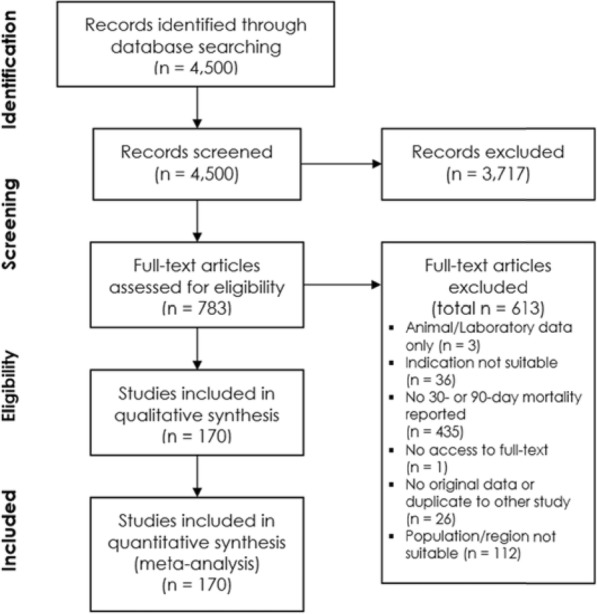
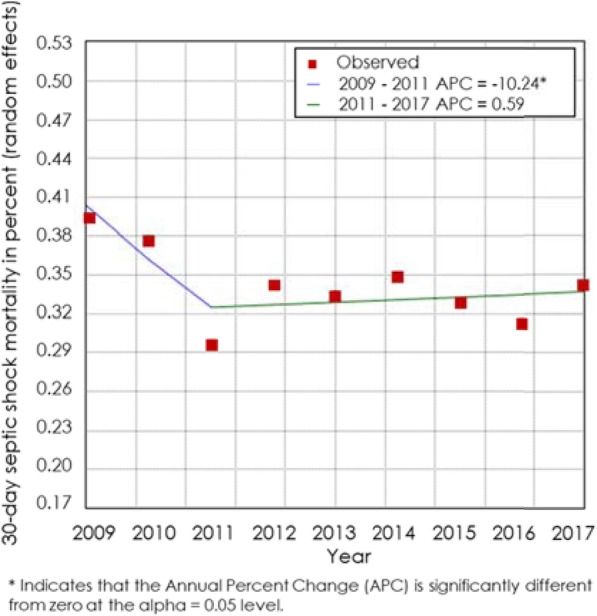
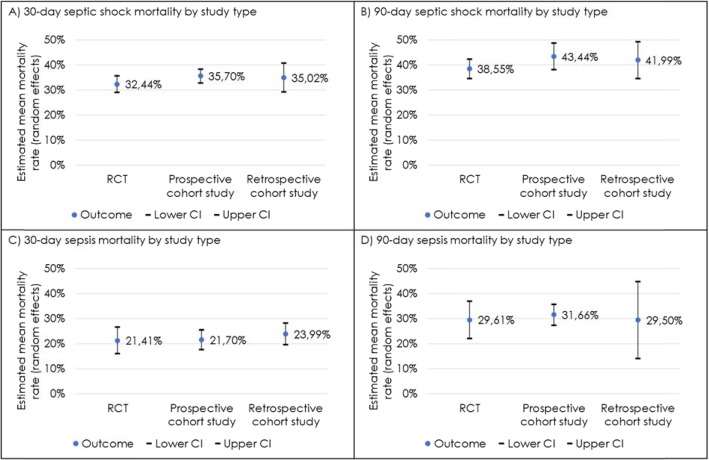
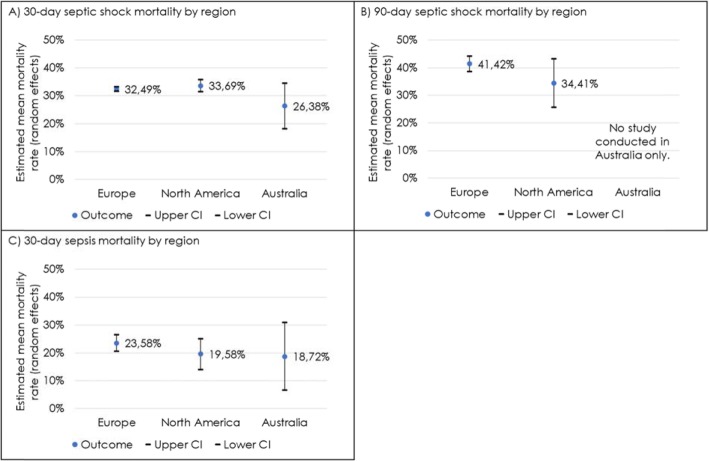
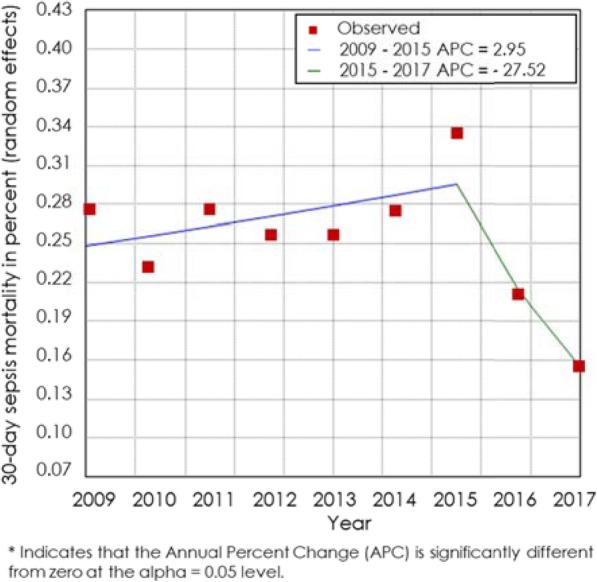
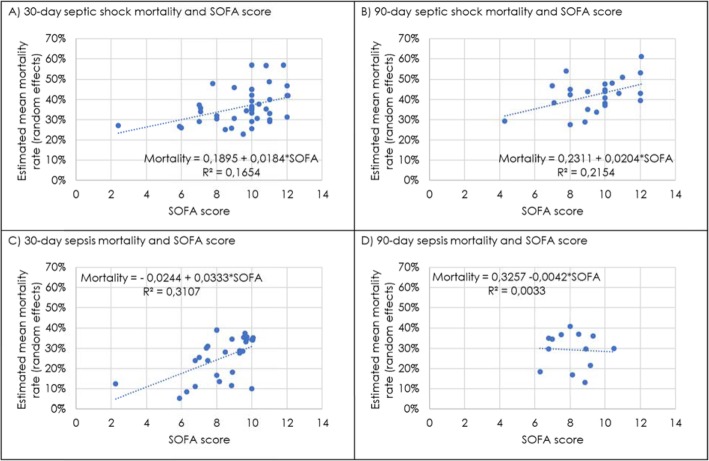
Background: Sepsis and septic shock remain drivers for mortality in critically ill patients. The heterogeneity of the syndrome hinders the generation of reproducible numbers on mortality risks. Consequently, mortality rates range from 15 to 56%. We aimed to update and extend the existing knowledge from meta-analyses and estimate 30- and 90-day mortality rates for sepsis and septic shock separately, stratify rates by region and study type and assess mortality rates across different sequential organ failure assessment (SOFA) scores. Methods: We performed a systematic review of articles published in PubMed or in the Cochrane Database, between 2009 and 2019 in English language including interventional and observational studies. A meta-analysis of pooled 28/30- and 90-day mortality rated separately for sepsis and septic shock was done using a random-effects model. Time trends were assessed via Joinpoint methodology and for the assessment of mortality rate over different SOFA scores, and linear regression was applied. Results: Four thousand five hundred records were identified. After title/abstract screening, 783 articles were assessed in full text for eligibility. Of those, 170 studies were included. Average 30-day septic shock mortality was 34.7% (95% CI 32.6–36.9%), and 90-day septic shock mortality was 38.5% (95% CI 35.4–41.5%). Average 30-day sepsis mortality was 24.4% (95% CI 21.5–27.2%), and 90-day sepsis mortality was 32.2% (95% CI 27.0–37.5%). Estimated mortality rates from RCTs were below prospective and retrospective cohort studies. Rates varied between regions, with 30-day septic shock mortality being 33.7% (95% CI 31.5–35.9) in North America, 32.5% (95% CI 31.7–33.3) in Europe and 26.4% (95% CI 18.1–34.6) in Australia. A statistically significant decrease of 30-day septic shock mortality rate was found between 2009 and 2011, but not after 2011. Per 1-point increase of the average SOFA score, average mortality increased by 1.8–3.3%. Conclusion: Trends of lower sepsis and continuous septic shock mortality rates over time and regional disparities indicate a remaining unmet need for improving sepsis management. Further research is needed to investigate how trends in the burden of disease influence mortality rates in sepsis and septic shock at 30- and 90-day mortality over time.
Overview
The claims and statistics of this paper haven’t been checked yet.
Free: it reads the open-access text and checks the first 5 claims that cite a source we can check. Create a free account to check every claim.
Integrity signals
Registry
Cites
Statistics
Figures
Verification
Claims the paper makes
The claims and statistics of this paper haven’t been checked yet.
Free: it reads the open-access text and checks the first 5 claims that cite a source we can check. Create a free account to check every claim.
Self-check
Percentages, sums and reported differences re-computed from the paper’s own numbers.
The self-check needs the paper’s full text.
Citations
Cites
Preferred Reporting Items for Systematic Reviews and Meta-Analyses: the PRISMA statement
Moher, D., Liberati, A., Tetzlaff, J., Altman, D. G., & for the PRISMA Group (2009) · BMJ · doi:10.1136/bmj.b2535 · Cited by 83,823
Preferred reporting items for systematic reviews and meta-analyses: the PRISMA Statement.
(2009) · PubMed Central · Cited by 44,859
RoB 2: a revised tool for assessing risk of bias in randomised trials
Sterne, J. A. C., Savović, J., Page, M. J., Elbers, R. G., Blencowe, N. S., Boutron, I., Cates, C. J., Cheng, H.-Y., Corbett, M. S., Eldridge, S. M., et al. (2019) · BMJ · doi:10.1136/bmj.l4898 · Cited by 34,787 · cited 1×
“RoB 2’ for randomized trials [18] and with ‘ROBINS-I’ used for observational studies [19], for sepsis and septic shock, 30 and 90 days mortality each.”
MethodThe third international consensus definitions for sepsis and septic shock (Sepsis-3).
Singer, M., Deutschman, C. S., Seymour, C. W., Shankar-Hari, M., Annane, D., Bauer, M., Bellomo, R., Bernard, G. R., Chiche, J.-D., Coopersmith, C. M., et al. (2016) · JAMA · doi:10.1001/jama.2016.0287 · Cited by 28,250
Self-citationROBINS-I: a tool for assessing risk of bias in non-randomised studies of interventions
Sterne, J. A., Hernán, M. A., Reeves, B. C., Savović, J., Berkman, N. D., Viswanathan, M., Henry, D., Altman, D. G., Ansari, M. T., Boutron, I., et al. (2016) · BMJ · doi:10.1136/bmj.i4919 · Cited by 20,329 · cited 1×
“RoB 2’ for randomized trials [18] and with ‘ROBINS-I’ used for observational studies [19], for sepsis and septic shock, 30 and 90 days mortality each.”
MethodBone, R. C., Balk, R. A., Cerra, F. B., Dellinger, R. P., Fein, A. M., Knaus, W. A., Schein, R. M. H., & Sibbald, W. J. (1992) · Chest · doi:10.1378/chest.101.6.1644 · Cited by 13,198
Surviving Sepsis Campaign: International Guidelines for Management of Severe Sepsis and Septic Shock
Dellinger, R. P., Levy, M. M., Rhodes, A., Annane, D., Gerlach, H., Opal, S. M., Sevransky, J. E., Sprung, C. L., Douglas, I. S., Jaeschke, R., et al. (2013) · Critical Care Medicine · doi:10.1097/ccm.0b013e31827e83af · Cited by 9,694
Self-citationThe Surviving Sepsis Campaign Guidelines Committee including The Pediatric Subgroup*, Dellinger, R. P., Levy, M. M., Rhodes, A., Annane, D., Gerlach, H., Opal, S. M., Sevransky, J. E., Sprung, C. L., Douglas, I. S., et al. (2013) · Intensive Care Medicine · doi:10.1007/s00134-012-2769-8 · Cited by 7,290
Self-citationPermutation tests for joinpoint regression with applications to cancer rates
Kim, H.-J., Fay, M. P., Feuer, E. J., & Midthune, D. N. (2000) · Statistics in Medicine · doi:10.1002/(sici)1097-0258(20000215)19:3<335::aid-sim336>3.0.co;2-z · Cited by 6,318
Severe Sepsis and Septic Shock
Angus, D. C., & van der Poll, T. (2013) · New England Journal of Medicine · doi:10.1056/nejmra1208623 · Cited by 3,961
Cited by
Items 101–200 of 985
Catecholamines in sepsis: pharmacological insights and clinical applications—a narrative review
Belfiore, J., Taddei, R., & Biancofiore, G. (2025) · Journal of Anesthesia Analgesia and Critical Care · doi:10.1186/s44158-025-00241-2 · Cited by 24
“The outcome is a diminished ability to clear infectious foci and increased susceptibility to opportunistic pathogens, inevitably leading to higher mortality rates [56].”
Targeting the immuno-inflammatory-microbial network: a key strategy for sepsis treatment
Xu, Y., Wang, J., Yuan, R. R., Qin, Z., Long, K., & Gao, P. (2025) · Frontiers in Immunology · doi:10.3389/fimmu.2025.1575516 · Cited by 24
“0 consensus de fi nition (2, 3), sepsis is de fi ned as life-threatening organ dysfunction caused by a dysregulated host response to infection (4), typically quanti fi ed by an increase in the Sequential Organ Failure Assessment (SOFA) score of ≥ 2 points (5).”
Anesthetic management of patients with sepsis/septic shock
Carsetti, A., Vitali, E., Pesaresi, L., Antolini, R., Casarotta, E., Damiani, E., Adrario, E., & Donati, A. (2023) · Frontiers in Medicine · doi:10.3389/fmed.2023.1150124 · Cited by 24
Breidung, D., Megas, I.-F., Freytag, D. L., Bernhagen, J., & Grieb, G. (2023) · Biomedicines · doi:10.3390/biomedicines12010002 · Cited by 24
“Despite advances in supportive care, sepsis remains a major cause of morbidity and mortality [5–7].”
BackgroundPasquau-Liaño, J., Sadyrbaeva-Dolgova, S., Sequera-Arquellada, S., García-Vallecillos, C., & Hidalgo-Tenorio, C. (2022) · Revista Española de Quimioterapia · doi:10.37201/req/s03.22.2022 · Cited by 23
Wu, Z., Wang, Y., Lu, S., Yin, L., & Dai, L. (2023) · Pulmonary Pharmacology & Therapeutics · doi:10.1016/j.pupt.2023.102244 · Cited by 23
Cell-free DNA in sepsis: from molecular insights to clinical management
Li, L., Huang, H., He, Y., Pang, J., Xiao, S.-C., Xia, Z., & Zheng, Y. (2025) · Military Medical Research · doi:10.1186/s40779-025-00668-2 · Cited by 26
“Globally, an estimated 48.9 million sepsis cases and 11 million related deaths occur annually [11], with mortality rates reaching 30–45% among affected patients [11, 13, 14].”
InfluentialValeriani, E., Falletta, A., Pastori, D., Porfidia, A., Mastroianni, C. M., Bari, S. D., Motta, E., Pignatelli, P., & Oliva, A. (2024) · European Journal of Clinical Investigation · doi:10.1111/eci.14225 · Cited by 22
Luka, S., Golea, A. C., Tat, R. M., Lupan-Mureșan, E.-M., Voicescu, G. T., Vesa, Ș. C., & Ionescu, D. C. (2024) · Journal of Clinical Medicine · doi:10.3390/jcm13195678 · Cited by 22
“Given the 42% mortality rate and the median ages of survivors (71.5 years) and non-survivors (74.5 years), age appears to be a significant factor in mortality risk [25–27].”
BackgroundInfluentialLi, M., Zhuang, Q., Zhao, S., Huang, L., Hu, C., Zhang, B., & Hou, Q. (2022) · Renal Failure · doi:10.1080/0886022x.2022.2142139 · Cited by 21
Cao, Y., Zhang, Y., Gerile, W., Guo, Y., Wu, L., Wu, L., Song, K., Lü, W., & Yu, J. (2022) · Molecular Medicine · doi:10.1186/s10020-022-00597-z · Cited by 22
“Of note, this syndrome is a challenge for public health for its increasing morbidity and approximately 30% mortality (Vincent et al. 2019; Bauer et al. 2020).”
BackgroundZiarko, T. P., Walter, N., Schindler, M., Alt, V., Rupp, M., & Lang, S. (2023) · Journal of Clinical Medicine · doi:10.3390/jcm12144805 · Cited by 21
“It is estimated that the global mortality rate for in-hospital-treated sepsis is approximately 25% for sepsis and 35% for severe sepsis at 30 days [24,25].”
BackgroundJohansson, P. I., Henriksen, H., Karvelsson, S. T., Rolfsson, Ó., Schønemann‐Lund, M., Bestle, M. H., & McGarrity, S. (2024) · European journal of medical research · doi:10.1186/s40001-023-01612-7 · Cited by 21
Li, G., Yang, Z., Yang, C., Xie, Y., Gong, S., Lv, S., Xiao, B., Wang, J., Weng, Q., Wang, J., et al. (2024) · International Immunopharmacology · doi:10.1016/j.intimp.2024.111938 · Cited by 21
Kim, S., Ryoo, S. M., Shin, T. G., Jo, Y.-H., Kim, K., Lim, T. H., Chung, S. P., Choi, S., Suh, G. J., & Kim, W. Y. (2024) · Life · doi:10.3390/life14101257 · Cited by 21
“Furthermore, a recent meta-analysis that investigated the mortality of sepsis and septic shock observed a positive correlation between the mortality rate and the SOFA score [28].”
BackgroundJakowenko, N. D., Murata, J., Kopp, B. J., & Erstad, B. L. (2022) · Journal of Intensive Care Medicine · doi:10.1177/08850666221081836 · Cited by 21
Oami, T., Imaeda, T., Nakada, T., Abe, T., Takahashi, N., Yamao, Y., Nakagawa, S., Ogura, H., Shime, N., Umemura, Y., et al. (2022) · Journal of Intensive Care · doi:10.1186/s40560-022-00624-5 · Cited by 22
Pathogen characteristics are key determinants of distinct host response phenotypes of sepsis
Chanderraj, R., Bartek, B., Stringer, K. A., Tiba, M. H., Sjoding, M. W., He, Y., Nuppnau, M., Bongers, K. S., Adame, M. D., Lou, S. S., et al. (2026) · Journal of Clinical Investigation · doi:10.1172/jci197346 · Cited by 22
“Despite decades of research and numerous randomized clinical trials (3), mortality rates remain consistently above 20% (2, 4, 5).”
Piccioni, A., Franza, L., Rosa, F., Candelli, M., Covino, M., Ferrara, M., Volonnino, G., Bertozzi, G., Zamponi, M. V., Maiese, A., et al. (2023) · Infectious Medicine · doi:10.1016/j.imj.2023.04.006 · Cited by 20
“Despite tech-204 nical and cultural advances in understanding pathophysiology and ongoing research on the most appropriate treat-ment, sepsis still carries a high mortality, reaching over 20% [26] .”
Brusco, N. K., Sykes, K., Cheng, A. C., Radia-George, C., Travis, D. G., Sullivan, N., Dinh, T., Foster, S., & Thursky, K. (2023) · PLOS Global Public Health · doi:10.1371/journal.pgph.0000687 · Cited by 20
“The primary outcome was in-hospital all-cause mortality, due to high rates associated with sepsis hospitalisations [2].”
BackgroundKnop, J., Burkard, N., Danesh, M., Kintrup, S., Dandekar, T., Srivastava, M., Springer, R., Hiermaier, M., Wagner, N., Waschke, J., et al. (2023) · iScience · doi:10.1016/j.isci.2023.108049 · Cited by 20
“INTRODUCTION Organ failure in sepsis and in systemic inflammation have been recognized as the critical factors leading to high mortality rates in patients.(1) This is reflected by the definition of sepsis as a life-threatening organ dysfunction caused by a dysregulated host response to infection.”
BackgroundChao, H.-Y., Wu, C., Ningthoujam, A. S., Shedd, A., Wolfshohl, J. A., Chou, E. H.-C., Huang, Y., & Chen, K. (2022) · Biomedicines · doi:10.3390/biomedicines10040802 · Cited by 20
“The sepsis fatality rate was approximately 30% in the early 2000s [6] with a decreasing trend in mortality between 2009 and 2011, but not after 2011 [7].”
BackgroundOxygen therapy for sepsis and prevention of complications
Minasyan, H. A. (2022) · Acute and Critical Care · doi:10.4266/acc.2021.01200 · Cited by 20
“Moreover, sepsis and septic complications following infection continue to grow worldwide [3,4].”
BackgroundInfluentialChen, L., Jin, S., Yang, M., Gui, C., Yuan, Y., Dong, G., Zeng, W., Zeng, J., Guo-xin, H., Qiao, L., et al. (2022) · Frontiers in Immunology · doi:10.3389/fimmu.2022.882774 · Cited by 21
Wang, C., Xu, H., Gao, R., Leng, F., Huo, F., Li, Y., Liu, S., Xu, M., & Bai, J. (2022) · BMC Immunology · doi:10.1186/s12865-022-00528-x · Cited by 20
Kim, M., Chang, J. Y., Lee, D. W., Kim, Y. R., Son, D. J., Yun, J., Jung, Y. S., Lee, D. H., Han, S., & Hong, J. T. (2023) · Molecular Immunology · doi:10.1016/j.molimm.2023.02.012 · Cited by 20
Banerjee, R., Komarow, L., Li, Y., Mau, D., Dodd, A., Geres, H. S., Greenwood‐Quaintance, K. E., Adler, A., Baliga, S., Chowers, M., et al. (2026) · JAMA · doi:10.1001/jama.2026.5487 · Cited by 19
Zhou, K. L., He, Y. R., Liu, Y. J., Liu, Y. M., Xuan, L. Z., Gu, Z. Y., He, H. Y., & Ju, M. (2023) · Advanced Biology · doi:10.1002/adbi.202300220 · Cited by 19
Darden, N., Sharma, S., Wu, X., Mancini, B., Karamchandani, K., & Bonavia, A. S. (2023) · BMC Anesthesiology · doi:10.1186/s12871-023-02274-y · Cited by 19
Li, X., Long, Y., Wu, G., Li, R., Zhou, M., He, A., & Jiang, Z. (2023) · Annals of Intensive Care · doi:10.1186/s13613-023-01222-w · Cited by 19
“And the control event rate was set as 30% according to previous review [1].”
Taha, A. M., Najah, Q., Omar, M. M., Abouelmagd, K., Ali, M. A., Hasan, M. T., Allam, S. A., Hamam, Y. A., Arian, R., & Abd‐ElGawad, M. (2024) · Medicine · doi:10.1097/md.0000000000038525 · Cited by 19
“[10] Bauer et al [11] reported that Average 30-day sepsis mortality was 24.4%, and 90-day sepsis mortality was 32.2%.”
BackgroundInfluentialNovel cortisol trajectory sub-phenotypes in sepsis
Leng, F., Gu, Z., Pan, S., Lin, S., Wang, X., Zhong, M., & Song, J. (2024) · Critical Care · doi:10.1186/s13054-024-05071-2 · Cited by 19
“The HR for the cortisol trajectory sub-phenotype in the present study was significantly higher than the HR of the APACHE II score, which is known to predict the prognosis of critically ill patients and patients with sepsis [38, 39].”
ResultBushra, Ahmed, S. I., Begum, S., Maaria, Habeeb, S., Jameel, T., & Khan, A. A. (2024) · Mitochondrion · doi:10.1016/j.mito.2024.101967 · Cited by 19
Vandervelden, S., Cortens, B., Fieuws, S., Eegdeman, W., Malinverni, S., Vanhove, P., Monsieurs, K. G., Breuls, J., Hubloue, I., Stifkens, F., et al. (2025) · Critical Care · doi:10.1186/s13054-025-05383-x · Cited by 19
“[3] This has led to the investigation of targeted agents that limit the inflammatory cascade, such as vitamin C.”
Yu, J., Zheng, R., Yang, P., & Wang, D. (2022) · Journal of Intensive Care · doi:10.1186/s40560-022-00621-8 · Cited by 19
Wu, S., Chen, Q., Pan, J., & Zhou, A. (2022) · Vox Sanguinis · doi:10.1111/vox.13335 · Cited by 19
Lakbar, I., Léone, M., Pauly, V., Orléans, V., Srougbo, K. J., Diao, S., Llorca, P., Solmi, M., Correll, C. U., Fernandes, S., et al. (2023) · PLoS Medicine · doi:10.1371/journal.pmed.1004202 · Cited by 19
“Nonetheless, our findings at 30 and 90 days were similar to those reported in other studies [62].”
ResultLawandi, A., Oshiro, M., Warner, S., Diao, G., Strich, J. R., Babiker, A. Y. M., Rhee, C., Klompas, M., Danner, R. L., & Kadri, S. S. (2023) · Critical Care Medicine · doi:10.1097/ccm.0000000000005968 · Cited by 19
Restriction of Intravenous Fluid in ICU Patients with Septic Shock. Reply.
Meyhoff, T. S., Sivapalan, P., & Perner, A. (2022) · PubMed · doi:10.1056/nejmc2210366 · Cited by 18
Pischetola, A., Hughes, T., Geraghty, R. M., Boulmani, M., & Somani, B. K. (2026) · Therapeutic Advances in Urology · doi:10.1177/17562872251412050 · Cited by 18
Wicaksono, A., Adisasmita, A. C., & Harijanto, E. (2022) · Jurnal Epidemiologi Kesehatan Indonesia · doi:10.7454/epidkes.v6i1.6031 · Cited by 18
Meropenem PK/PD Variability and Renal Function: “We Go Together”
Angelini, J., Giuliano, S., Flammini, S., Pagotto, A., Re, F. L., Tascini, C., & Baraldo, M. (2023) · Pharmaceutics · doi:10.3390/pharmaceutics15092238 · Cited by 18
Diao, Y., Zhao, Y., Li, X., Li, B., Huo, R., & Han, X. (2023) · Frontiers in Immunology · doi:10.3389/fimmu.2023.1286203 · Cited by 18
Kassam, N., Ngunga, M., Varwani, M. H., Msunza, M., & Jeilan, M. (2024) · BMC Cardiovascular Disorders · doi:10.1186/s12872-024-03832-z · Cited by 18
“The demographic, clinical profile, risk, and sex distribution of our cohort are similar to studies conducted in Northern America, Asia, and Europe [11, 12, 46].”
ResultWu, C., Chen, Y., Zhou, P., & Hu, Z. (2023) · Annals of Translational Medicine · doi:10.21037/atm-22-6016 · Cited by 18
“Though the understanding and management of sepsis have been improving during the past years, the reported mortality remains as high as 20–40% (2,4,6,7).”
BackgroundLin, C., Tsai, Y., Kao, K., Lin, C., Zhou, S.-K., Ho, M.-C., Huang, S., Fang, Y., Chang, C., Lee, W., et al. (2023) · European journal of medical research · doi:10.1186/s40001-023-01119-1 · Cited by 18
Liu, F., & Liu, Z. (2023) · European journal of medical research · doi:10.1186/s40001-023-01405-y · Cited by 18
“Despite advancements in sepsis research in recent years, it remains a significant cause of death among hospitalized patients, imposing a tremendous economic burden on patients’ families [2].”
BackgroundCoudereau, R., Bodinier, M., Lukaszewicz, A., Py, B. F., Argaud, L., Cour, M., Bidar, F., Cerrato, E., Garnier, L., Gossez, M., et al. (2023) · Journal of Leukocyte Biology · doi:10.1093/jleuko/qiad161 · Cited by 17
The impact of telehealth in sepsis care: A systematic review
Tu, K. J., Wymore, C. C., Tchangalova, N., Fuller, B. M., & Mohr, N. M. (2023) · Journal of Telemedicine and Telecare · doi:10.1177/1357633x231170038 · Cited by 16
Neutrophil CD64–a prognostic marker of sepsis in intensive care unit: a prospective cohort study
Pham, H. M., Nguyen, D. L. M., Duong, M. C., Phan, X. T., Tran, L. T., Trang, D. H. T., & Pham, T. T. N. (2023) · Frontiers in Medicine · doi:10.3389/fmed.2023.1251221 · Cited by 16
“nCD64 T48 2,129 [1,226; 3,503] 2,778 [1,770; 4,983] 2,284 [1,362; 4,279] 1.”
Zhang, F., Xue, M., Zhou, P., Tian, Y., Liu, J.-X., Dong, X., Yuan, D., Lin, Z., Zhang, L., Lin, J.-H., et al. (2023) · Annals of Medicine · doi:10.1080/07853890.2023.2264318 · Cited by 16
“…which results in refractory circulatory collapse and deranged cellular metabolism. the mortality of septic shock remains high at nearly 35% to 40% [5]. in recent years, a series of treatments for sepsis has been proposed to improve its clinical outcomes, including early fluid resuscitation,…”
BackgroundWang, M., Liao, J., Wan, L., Jiang, L., Peng, K., Su, X., Li, H., Wang, H., & Wang, Y. (2024) · Biomedicine & Pharmacotherapy · doi:10.1016/j.biopha.2024.116633 · Cited by 16
Kumar, H. G., Kanakaraju, K., Manikandan, V., PATEL, V. G., & Pranay, C. (2024) · Cureus · doi:10.7759/cureus.59424 · Cited by 16
Infectious Foci, Comorbidities and Its Influence on the Outcomes of Septic Critically Ill Patients
Oliveira, A. M., de Oliveira, A. S., Vidal, R., & Gonçalves-Pereira, J. (2024) · Microorganisms · doi:10.3390/microorganisms12081705 · Cited by 16
“The impact of septic shock on mortality is well known, although the heterogeneity of the syndrome leads to very different mortality rates, ranging from 15 to 56% with an average 30-day mortality of 34.7% [35].”
BackgroundInfluentialDecreased monocytic HLA-DR in patients with sepsis: Prediction of diagnosis, severity and prognosis
Cui, J., Cai, W., Zhang, L., Wu, Y., Huang, Y. Y., & Zhao, W. (2024) · Clinical Biochemistry · doi:10.1016/j.clinbiochem.2024.110851 · Cited by 16
Septic shock in the prehospital setting: a scoping review
Pinto-Villalba, R. S., Balseca-Arellano, D., & León-Rojas, J. E. (2024) · Scandinavian Journal of Trauma Resuscitation and Emergency Medicine · doi:10.1186/s13049-024-01282-2 · Cited by 16
“SS affects hospitals worldwide, with 34–68% mortality in affluent and poor nations [8–10].”
Nutritional Strategies for the Treatment and Prevention of Sepsis Outside the Intensive Care Unit
Gabrielli, M., Zaccaria, R., Impagnatiello, M., Verme, L. Z. D., & Gasbarrini, A. (2024) · Nutrients · doi:10.3390/nu16233985 · Cited by 16
Dynamic risk stratification and treatment optimization in sepsis: the role of NLPR
Chen, Q., Zhang, M., Xia, Y., Deng, Y., Yang, Y., Dai, L., & Niu, H. (2025) · Frontiers in Pharmacology · doi:10.3389/fphar.2025.1572677 · Cited by 16
The Effect of Early Warning Systems for Sepsis on Mortality: A Systematic Review and Meta-analysis
Alshaeba, S. E., Marhoffer, E. A., Holleck, J. L., Theisen-Toupal, J. C., Grimshaw, A. A., & Gunderson, C. G. (2025) · Journal of General Internal Medicine · doi:10.1007/s11606-025-09569-5 · Cited by 16
“The mortality rate for pediatric sepsis for example is less than 5% 25 , compared to an average rate of 24% in adults 26 .”
Abu-Humaidan, A. H. A., Ahmad, F. M., Al-Binni, M. A., Hani, A. B., & Abeeleh, M. A. A. (2021) · Critical Care Research and Practice · doi:10.1155/2021/2741271 · Cited by 20
“Mortality rates associated with sepsis vary by region as well but are consistently high, especially in the elderly [4].”
BackgroundReátegui, C., & Grubbs, D. (2022) · International Journal of Surgery Case Reports · doi:10.1016/j.ijscr.2022.107528 · Cited by 16
Nandhini, N., Malviya, D., Parashar, S., Pandey, C., Nath, S. S., & Tripathi, M. K. (2022) · International Journal of Critical Illness and Injury Science · doi:10.4103/ijciis.ijciis_107_21 · Cited by 16
“7%, respectively.[1] A recent study from Japan reported that between 2010 and 2017, there was a significant increase in the number of sepsis patients (0.”
BackgroundResultInfluentialUse of infection biomarkers in the emergency department
Özger, H. S., & Şenol, E. (2022) · Turkish Journal of Emergency Medicine · doi:10.4103/2452-2473.357347 · Cited by 16
“The sepsis diagnostic approach is important because of the high incidence estimated to be 640–1600 per 100,000 population in Turkey, the high mortality rate ranging from 20% to 45%, and the relationship between early treatment and mortality.[9,10] The most difficult part of the diagnostic approach to sepsis is to prov…”
BackgroundThe impact of sepsis on hepatic drug metabolism in critically ill patients: a narrative review
Ewoldt, T. M. J., Abdulla, A., Hunfeld, N., Li, L., Smeets, T. J. L., Gommers, D. A. M. P. J., Koch, B. C. P., & Endeman, H. (2022) · Expert Opinion on Drug Metabolism & Toxicology · doi:10.1080/17425255.2022.2106215 · Cited by 15
“the case of sepsis to 35% in the case of septic shock [3,4].”
BackgroundBonavia, A. S., Samuelsen, A. M., Liang, M., Hanson, J., McKeone, D. J., Chroneos, Z. C., & Halstead, E. S. (2023) · Intensive Care Medicine Experimental · doi:10.1186/s40635-023-00556-w · Cited by 15
“While the 25% mortality rate observed in our cohort is comparable to that reported in prior studies [35], the progressive decrease in cohort size resulting from patient deaths limits the conclusions that can be drawn from cytokine concentrations measured at days 7 and 14 of illness.”
ResultChoi, Y., & Lee, J. H. (2024) · Scientific Reports · doi:10.1038/s41598-024-61888-5 · Cited by 15
Xu, F., Xu, J., Ma, J., Xu, W., Gu, S., Geng, L., & Wang, J. (2024) · Frontiers in Nutrition · doi:10.3389/fnut.2024.1370472 · Cited by 16
Zhang, D., Wang, C.-Y., Li, Q., Zhu, Y. C., Zou, H., Li, G., & Zhan, L. (2024) · Biomedicines · doi:10.3390/biomedicines12071415 · Cited by 15
“Despite advancements in sepsis treatment strategies, leading to a decrease in mortality rates, but it is still at an extremely high level [3–5].”
BackgroundAssociation of Omega-3 Status With Long-Term Risk of Hospitalization for Sepsis
Narayan, D., Vlasschaert, C., Day, A. G., Norman, P. A., Rauh, M. J., & Maslove, D. M. (2025) · Critical Care Medicine · doi:10.1097/ccm.0000000000006593 · Cited by 15
Melchers, M., de Smet, V., Rooijakkers, C., Huising, J., Vermeulen, W., Köktaş, B. N. N., van de Vusse, K. J., Sabzewar, K. M., Mishra, S. B., Bethlehem, C., et al. (2025) · Annals of Intensive Care · doi:10.1186/s13613-025-01472-w · Cited by 15
Feng, S., Zou, R., Wang, Y., Huang, Y., Zhou, Q., Huang, Q., & Xu, H. (2025) · BMC Infectious Diseases · doi:10.1186/s12879-025-11151-7 · Cited by 15
“However, the impact of these interventions on patient outcomes remains limited [5].”
Poole, A. P., Chaba, A., Bellomo, R., Bailey, M., Deane, A. M., Delaney, A. P., Eastwood, G. M., Haines, K. J., Hammond, N. E., Hensman, T., et al. (2025) · Intensive Care Medicine · doi:10.1007/s00134-025-08162-y · Cited by 18
“A recent meta-analysis of observational and interventional sepsis studies between 2009 and 2019 found that septic shock 30-day mortality was 34.7%, with an initial decrease in mortality between 2009 and 2011, followed by a plateau [2].”
InfluentialA Randomized Trial of Mycobacterium w in Severe Presumed Gram-Negative Sepsis
Sehgal, I. S., Basumatary, N. M., Dhooria, S., Prasad, K. T., Muthu, V., Aggarwal, A. N., Pal, A., Desai, M., Chaudhry, D., Supe, P. D., et al. (2021) · CHEST Journal · doi:10.1016/j.chest.2021.03.062 · Cited by 15
Poole, J., & Ray, D. W. (2022) · Journal of Biological Rhythms · doi:10.1177/07487304221092727 · Cited by 15
Thiamine supplementation may be associated with improved prognosis in patients with sepsis
Zhang, L., Zhang, F., Li, S., Xu, F., Zheng, X., Huang, T., Lyu, J., & Yin, H. (2022) · British Journal Of Nutrition · doi:10.1017/s0007114522003373 · Cited by 15
“Despite the lack of global epidemiological data on sepsis(2), current studies estimate that it affects more than 30 million people annually and may cause 6 million deaths(3), making it a major worldwide public health problem(4).”
BackgroundModels to predict bacteremia in the emergency department: a systematic review
Julián-Jiménez, A., García, D. E., de Guadiana‐Romualdo, L. G., Merinos-Sánchez, G., & Candel, F. J. (2023) · Emergencias · doi:10.55633/s3me/06.2023 · Cited by 15
Detection of sepsis during emergency department triage using machine learningPreprint
Ivanov, O., Molander, K., Dunne, R., Liu, S., Brecher, D., Masek, K., Lewis, E., Wolf, L. A., Travers, D. A., Delaney, D., et al. (2022) · arXiv (Cornell University) · doi:10.48550/arxiv.2204.07657 · Cited by 15
Huang, P., Chen, Y., Zhang, H., Chen, B., Zhao, S., Feng, Y., Lei, S., & Wu, Q. (2022) · Frontiers in Pharmacology · doi:10.3389/fphar.2022.850221 · Cited by 14
Liu, K., Yu, J., Xia, Y., Zhang, L.-T., Li, S., & Yan, J. (2022) · Chinese Journal of Traumatology · doi:10.1016/j.cjtee.2022.05.002 · Cited by 14
Postoperative sepsis and septic shock after hip fracture surgery
Gonzalez, C. A., O’Mara, A. E., Cruz, J. K., Roth, D., Rysselberghe, N. L. V., & Gardner, M. J. (2023) · Injury · doi:10.1016/j.injury.2023.05.064 · Cited by 14
Bacteremia in Patients with Sepsis in the ICU: Does It Make a Difference?
Nejtek, T., Müller, M., Moravec, M., Průcha, M., & Zazula, R. (2023) · Microorganisms · doi:10.3390/microorganisms11092357 · Cited by 14
Schindler, M., Walter, N., Reinhard, J., Pagano, S., Szymski, D., Alt, V., Rupp, M., & Lang, S. (2024) · Frontiers in Surgery · doi:10.3389/fsurg.2024.1357318 · Cited by 14
Chen, H., Yang, F., Duan, Y., Yang, L., & Li, J. (2024) · BMC Medical Informatics and Decision Making · doi:10.1186/s12911-024-02547-7 · Cited by 14
“A meta-analysis found that average mortality also significantly increased in 30-day sepsis mortality in study populations with higher “sofa” score [30].”
BackgroundKomorowski, M., Salciccioli, J. D., Shalhoub, J., Gordon, A. C., & Marshall, D. C. (2024) · BMJ Open · doi:10.1136/bmjopen-2023-074822 · Cited by 14
Early high-dose vasopressors in refractory septic shock: A cohort study
Thompson, H. A., Brinkman, H. M., KASHANI, K. B., Mara, K. C., Wittwer, E. D., & Wieruszewski, P. M. (2024) · Journal of Critical Care · doi:10.1016/j.jcrc.2024.155004 · Cited by 14
Choi, E. S., Nam, H., Chung, C. R., Yang, J. H., Suh, G. Y., Park, S., Lee, S. Y., Hyun, D., Park, M. H., Lim, C., et al. (2025) · Journal of the American Heart Association · doi:10.1161/jaha.124.038651 · Cited by 15
Kashatnikova, D. A., Khadzhieva, M. B., Kolobkov, D. S., Belopolskaya, O. B., Валерьевна, С. Т., Gracheva, A. S., Kalinina, E. V., Larin, S. S., Kuzovlev, A. N., & Salnikova, L. E. (2022) · International Journal of Molecular Sciences · doi:10.3390/ijms23179896 · Cited by 15
“Mortality rates from sepsis range from 15% to 56% [12].”
BackgroundSon, D. N., Luong, C. Q., Nguyen, M. H., Pham, D. T., Nguyễn, N., Huynh, D. Q., Hoang, Q. T. A., Co, D. X., Vu, T. D., Bui, H. N., et al. (2022) · PLoS ONE · doi:10.1371/journal.pone.0275739 · Cited by 14
Sun, Y., Oami, T., Liang, Z., Miniet, A. A., Burd, E. M., Ford, M. L., & Coopersmith, C. M. (2021) · Shock · doi:10.1097/shk.0000000000001759 · Cited by 14
“Unfortunately, despite increased understanding of the syndrome, 30-day mortality from septic shock has stayed stable worldwide since 2011 (3).”
BackgroundGastrointestinal function and nutritional interventions in septic shock
Bachmann, K. F., Cotoia, A., & Reintam Blaser, A. (2025) · Current Opinion in Critical Care · doi:10.1097/mcc.0000000000001302 · Cited by 13
Pham, H. M., Nguyen, D. L. M., Duong, M. C., Tran, L. T., & Pham, T. T. N. (2023) · Diagnostics · doi:10.3390/diagnostics13081427 · Cited by 14
Emerging roles of microRNAs in septic cardiomyopathy
Wu, M., Li, G., Wang, W., & Ren, H. (2023) · Frontiers in Pharmacology · doi:10.3389/fphar.2023.1181372 · Cited by 13
Peng, Q., Liu, X., Ai, M., Huang, L., Li, L., Liu, W., Zhao, C., Hu, C., & Zhang, L. (2024) · Journal of Intensive Medicine · doi:10.1016/j.jointm.2023.12.003 · Cited by 13
Jin, S., Zhang, H., Lin, Q., Yang, J., Zeng, R., Xu, Z., & Sun, W. (2024) · Frontiers in Immunology · doi:10.3389/fimmu.2024.1398719 · Cited by 13
Wu, J., Liu, M., Liu, T., Huang, P., Restinia, M., Hsu, W., Tsai, Y., Chuang, M., Hung, K., & Lai, C. (2024) · Infection · doi:10.1007/s15010-024-02381-z · Cited by 13
Coman, O., Grigorescu, B. L., Huţanu, A., Bacârea, A., Văsieșiu, A.-M., Fodor, R. Ș., Petrișor, M., & Azamfirei, L. (2024) · International Journal of Molecular Sciences · doi:10.3390/ijms252312612 · Cited by 13
“Additionally, antimicrobial resistance complicates sepsis management in all settings, especially among high-risk populations, such as neonates and intensive care unit patients [4,16].”
Goulas, K., Müller, M., & Exadaktylos, A. K. (2025) · International Journal of Molecular Sciences · doi:10.3390/ijms26188859 · Cited by 13
“While these measures are essential, they do not directly modulate the pathological host response and, despite best efforts, mortality remains high [24].”
Kim, J. H., Ahn, C., & Namgung, M. (2022) · Journal of Personalized Medicine · doi:10.3390/jpm12010103 · Cited by 13
“Although the mortality risk of patients with septic shock may increase based on disease severity [23], despite the availability of various severity assessment tools such as the Sequential Organ Failure Assessment (SOFA) and the Acute Physiology and Chronic Health Evaluation II (APACHE II), other assessment scores were…”
MethodKim, S. Y., Hong, D. Y., Lee, K. R., Paik, J. H., & Jung, H. M. (2022) · Medicine · doi:10.1097/md.0000000000029919 · Cited by 13
“[1] The rate of overall in-hospital mortality associated with sepsis in Korea decreased from 30.9% in 2007, but it was still 22.6% in 2016.”
BackgroundInfluentialRosenstrom, E., Meshkinfam, S., Ivy, J. S., Goodarzi, S. H., Capan, M., Huddleston, J. M., & Brufau, S. R. (2022) · Decision Analysis · doi:10.1287/deca.2022.0455 · Cited by 13
Metadata
- Authors
- Bauer, M., Gerlach, H., Vogelmann, T., Preissing, F., Stiefel, J., & Adam, D.
- Affiliations
- Jena University Hospital (DE)
- Vivantes Klinikum (DE)
- CytoSorbents (Germany) (DE)
- Corresponding author
- Bauer, Michael
- Venue
- Critical Care
- Published
- 2020-05-19
- Volume
- 24
- Issue
- 1
- Pages
- 239-239
- ISSN
- 1364-8535 (ISSN-L)
- PMC
- PMC7236499
- OpenAlex
- W3027548201
- Semantic Scholar
- 17551feef1e5ba684094ee873ccb0dabe3675738
- Cited by
- 867
- References
- 32
- Citations by year
- 2026: 137 · 2025: 223 · 2024: 217 · 2023: 162 · 2022: 91 · 2021: 33 · 2020: 4
- FWCI
- 10.67
- Type
- journal article
- Language
- en
- Open access
- gold
- doi.org
- Licence
- cc-by
- creativecommons.org/licenses/by/4.0 (tdm)
- creativecommons.org/licenses/by/4.0 (vor)
- Locations
- Critical Care (publishedVersion, cc-by)
- PubMed Central (publishedVersion, cc-by)
- PubMed (publishedVersion)
- DOAJ (DOAJ: Directory of Open Access Journals) (submittedVersion, cc-by-sa)
- Funders
- CytoSorbents Europe
- Topics
- Health Sciences › Medicine › Critical Care and Intensive Care Medicine › Sepsis Diagnosis and Treatment
- Health Sciences › Medicine › Surgery › Abdominal Surgery and Complications
- Health Sciences › Medicine › Nephrology › Acute Kidney Injury Research
- Keywords
- sepsis, septic shock, mortality rates, 30-day mortality, 90-day mortality, SOFA score, regional variation, mortality trends, critically ill patients
- MeSH terms
- Australia, Europe, Humans, Mortality, North America, Shock, Septic, Sepsis
About these checks
Registry, retraction, Cites and statistics results are computed, not judged, with one exception: a printed reference that no index lists is read once by a model before it counts as a citation error. Claims are extracted by a model and kept only when their quote appears verbatim in the text; each cited source is then checked, with a model’s help, for whether it says what the claim relies on. Those verdicts can be wrong — read the claim’s quote and the cited source before relying on one.
Statistics and arithmetic are recomputed, not judged.
Confidence bands are shown only for fields calibrated on our annotated test set. None is calibrated yet, so no band is shown.
What counts as a claim ›How we measure confidence ›How we check this ›
Are you an author, or do you see a problem with this page? Request a review
Data sources
Bibliographic data: Semantic Scholar, OpenAlex, Crossref.
Contains information from the Semantic Scholar Academic Graph Datasets, made available under the ODC Attribution License (ODC-BY 1.0).
Semantic Scholar’s data is described in: Kinney, R., et al. (2023). The Semantic Scholar Open Data Platform. arXiv:2301.10140.
