

Mortality in sepsis and septic shock in Europe, North America and Australia between 2009 and 2019 – results from a systematic review and meta-analysis
Open accessThe DOI matches its Crossref record; 30 of the 32 references it cites were found in a registry or an index.
Abstract
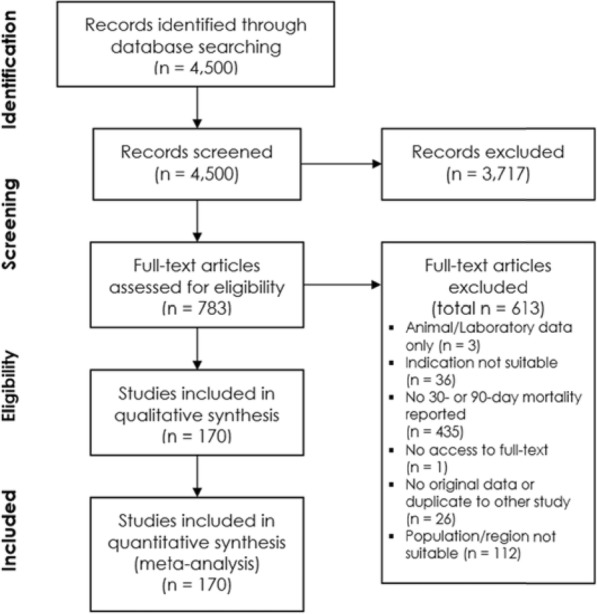
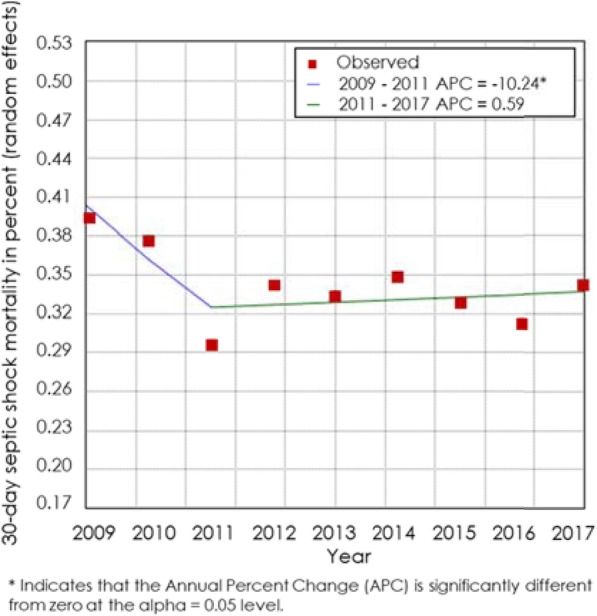
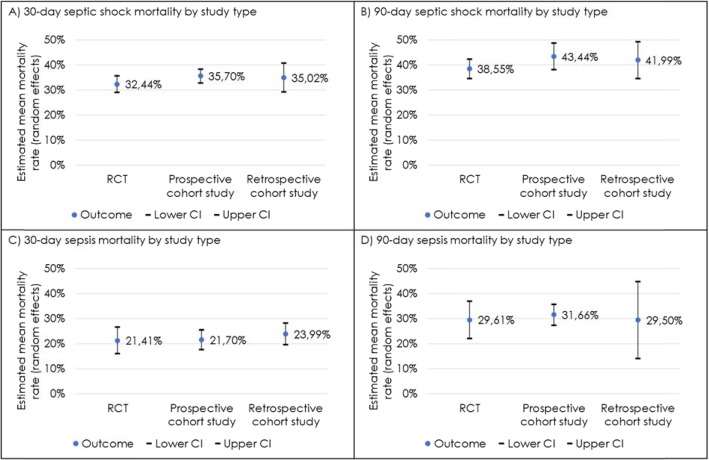
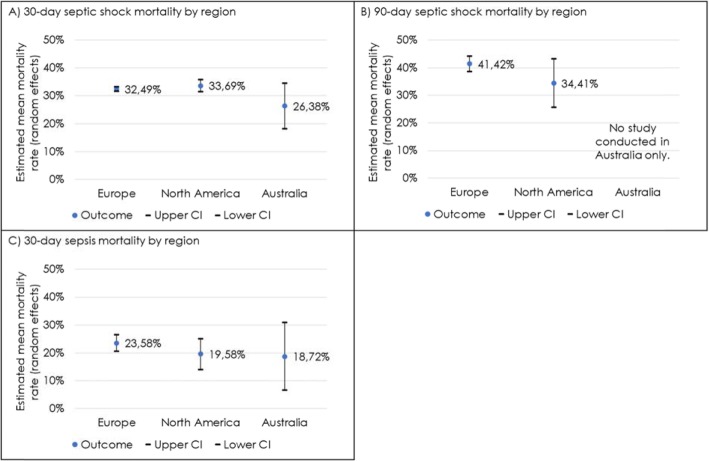
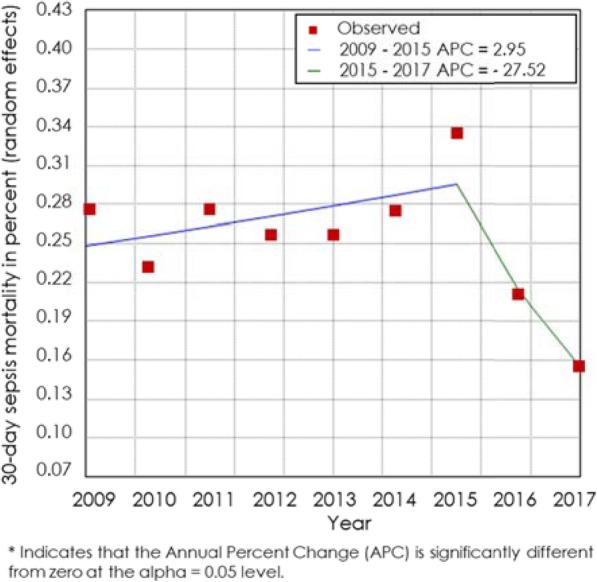
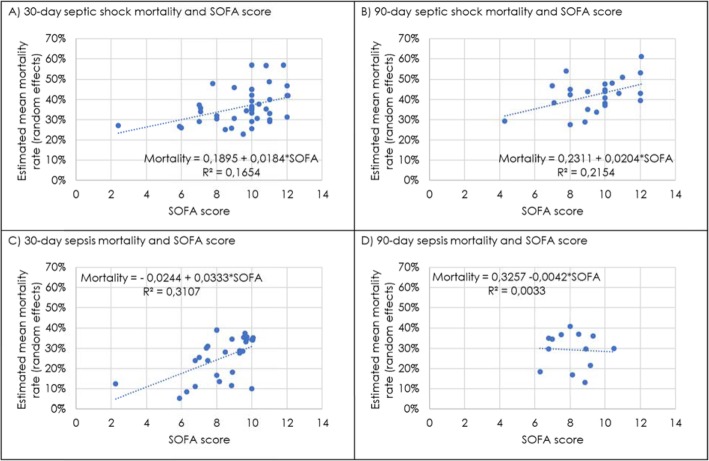
Background: Sepsis and septic shock remain drivers for mortality in critically ill patients. The heterogeneity of the syndrome hinders the generation of reproducible numbers on mortality risks. Consequently, mortality rates range from 15 to 56%. We aimed to update and extend the existing knowledge from meta-analyses and estimate 30- and 90-day mortality rates for sepsis and septic shock separately, stratify rates by region and study type and assess mortality rates across different sequential organ failure assessment (SOFA) scores. Methods: We performed a systematic review of articles published in PubMed or in the Cochrane Database, between 2009 and 2019 in English language including interventional and observational studies. A meta-analysis of pooled 28/30- and 90-day mortality rated separately for sepsis and septic shock was done using a random-effects model. Time trends were assessed via Joinpoint methodology and for the assessment of mortality rate over different SOFA scores, and linear regression was applied. Results: Four thousand five hundred records were identified. After title/abstract screening, 783 articles were assessed in full text for eligibility. Of those, 170 studies were included. Average 30-day septic shock mortality was 34.7% (95% CI 32.6–36.9%), and 90-day septic shock mortality was 38.5% (95% CI 35.4–41.5%). Average 30-day sepsis mortality was 24.4% (95% CI 21.5–27.2%), and 90-day sepsis mortality was 32.2% (95% CI 27.0–37.5%). Estimated mortality rates from RCTs were below prospective and retrospective cohort studies. Rates varied between regions, with 30-day septic shock mortality being 33.7% (95% CI 31.5–35.9) in North America, 32.5% (95% CI 31.7–33.3) in Europe and 26.4% (95% CI 18.1–34.6) in Australia. A statistically significant decrease of 30-day septic shock mortality rate was found between 2009 and 2011, but not after 2011. Per 1-point increase of the average SOFA score, average mortality increased by 1.8–3.3%. Conclusion: Trends of lower sepsis and continuous septic shock mortality rates over time and regional disparities indicate a remaining unmet need for improving sepsis management. Further research is needed to investigate how trends in the burden of disease influence mortality rates in sepsis and septic shock at 30- and 90-day mortality over time.
Overview
The claims and statistics of this paper haven’t been checked yet.
Free: it reads the open-access text and checks the first 5 claims that cite a source we can check. Create a free account to check every claim.
Integrity signals
Registry
Cites
Statistics
Figures
Verification
Claims the paper makes
The claims and statistics of this paper haven’t been checked yet.
Free: it reads the open-access text and checks the first 5 claims that cite a source we can check. Create a free account to check every claim.
Self-check
Percentages, sums and reported differences re-computed from the paper’s own numbers.
The self-check needs the paper’s full text.
Citations
Cites
Preferred Reporting Items for Systematic Reviews and Meta-Analyses: the PRISMA statement
Moher, D., Liberati, A., Tetzlaff, J., Altman, D. G., & for the PRISMA Group (2009) · BMJ · doi:10.1136/bmj.b2535 · Cited by 83,823
Preferred reporting items for systematic reviews and meta-analyses: the PRISMA Statement.
(2009) · PubMed Central · Cited by 44,859
RoB 2: a revised tool for assessing risk of bias in randomised trials
Sterne, J. A. C., Savović, J., Page, M. J., Elbers, R. G., Blencowe, N. S., Boutron, I., Cates, C. J., Cheng, H.-Y., Corbett, M. S., Eldridge, S. M., et al. (2019) · BMJ · doi:10.1136/bmj.l4898 · Cited by 34,787 · cited 1×
“RoB 2’ for randomized trials [18] and with ‘ROBINS-I’ used for observational studies [19], for sepsis and septic shock, 30 and 90 days mortality each.”
MethodThe third international consensus definitions for sepsis and septic shock (Sepsis-3).
Singer, M., Deutschman, C. S., Seymour, C. W., Shankar-Hari, M., Annane, D., Bauer, M., Bellomo, R., Bernard, G. R., Chiche, J.-D., Coopersmith, C. M., et al. (2016) · JAMA · doi:10.1001/jama.2016.0287 · Cited by 28,250
Self-citationROBINS-I: a tool for assessing risk of bias in non-randomised studies of interventions
Sterne, J. A., Hernán, M. A., Reeves, B. C., Savović, J., Berkman, N. D., Viswanathan, M., Henry, D., Altman, D. G., Ansari, M. T., Boutron, I., et al. (2016) · BMJ · doi:10.1136/bmj.i4919 · Cited by 20,329 · cited 1×
“RoB 2’ for randomized trials [18] and with ‘ROBINS-I’ used for observational studies [19], for sepsis and septic shock, 30 and 90 days mortality each.”
MethodBone, R. C., Balk, R. A., Cerra, F. B., Dellinger, R. P., Fein, A. M., Knaus, W. A., Schein, R. M. H., & Sibbald, W. J. (1992) · Chest · doi:10.1378/chest.101.6.1644 · Cited by 13,198
Surviving Sepsis Campaign: International Guidelines for Management of Severe Sepsis and Septic Shock
Dellinger, R. P., Levy, M. M., Rhodes, A., Annane, D., Gerlach, H., Opal, S. M., Sevransky, J. E., Sprung, C. L., Douglas, I. S., Jaeschke, R., et al. (2013) · Critical Care Medicine · doi:10.1097/ccm.0b013e31827e83af · Cited by 9,694
Self-citationThe Surviving Sepsis Campaign Guidelines Committee including The Pediatric Subgroup*, Dellinger, R. P., Levy, M. M., Rhodes, A., Annane, D., Gerlach, H., Opal, S. M., Sevransky, J. E., Sprung, C. L., Douglas, I. S., et al. (2013) · Intensive Care Medicine · doi:10.1007/s00134-012-2769-8 · Cited by 7,290
Self-citationPermutation tests for joinpoint regression with applications to cancer rates
Kim, H.-J., Fay, M. P., Feuer, E. J., & Midthune, D. N. (2000) · Statistics in Medicine · doi:10.1002/(sici)1097-0258(20000215)19:3<335::aid-sim336>3.0.co;2-z · Cited by 6,318
Severe Sepsis and Septic Shock
Angus, D. C., & van der Poll, T. (2013) · New England Journal of Medicine · doi:10.1056/nejmra1208623 · Cited by 3,961
Cited by
Items 701–800 of 985
Gregorius, J., & Brenner, T. (2023) · Allgemein- und Viszeralchirurgie up2date · doi:10.1055/a-2181-1018
Biomaterials for treating sepsis-induced thromboinflammation
Lutz, H., & Brown, A. C. (2023) · Frontiers in Biomaterials Science · doi:10.3389/fbiom.2023.1305379
Clinical Predictors of Cardiac Arrest among COVID 19 Patients with Heart Failure
Marwaha, B., Mahata, I., Kumar, N., Singh, G., & Amritphale, A. (2023) · Current Trends in Internal Medicine · doi:10.29011/2638-003x.100112
Outcome of sepsis and prediction of mortality risk
(2024) · Frontiers research topics · doi:10.3389/978-2-8325-4241-5
Jiang, L., & Mao, Y.-Z. (2024) · Indian Journal of Pharmaceutical Sciences · doi:10.36468/pharmaceutical-sciences.1285
Phúc, N. Đ., & Ly, T. T. L. (2024) · Tạp chí Y học Cộng đồng · doi:10.52163/yhc.v65i2.922
张, 雪. (2024) · Advances in Clinical Medicine · doi:10.12677/acm.2024.141279
Valor pronóstico de la linfopenia en la mortalidad a los 2 años en el shock séptico
Rico-Feijoó, J. (2024) · UVaDOC UVaDOC University of Valladolid Documentary Repository (University of Valladolid) · doi:10.35376/10324/66870
Chen, Y., Wei, S., Dong, H., Ji, W., Zhang, D., Xu, Y., Zhou, H., Mei, X., & Guo, S. (2024) · Research Square · doi:10.21203/rs.3.rs-4011079/v1
Analytical Evaluation of a Presepsin Assay for Specimen Stability
Shim, J.-R., Kim, K., Goh, R., Ahn, K.-S., & Kim, J.-M. (2024) · Laboratory Medicine Online · doi:10.47429/lmo.2024.14.2.111
Skin Involvement: A Harbinger of Worse Prognosis in Patients With Sepsis
Pulido-Pérez, A., Bergón‐Sendín, M., Suárez-Fernández, R. M., Sánchez‐Carrillo, C., Rosell‐Díaz, Á. M., Nieto‐Benito, L. M., Barchino‐Ortiz, L., Muñoz, P., & Emilio, B. (2024) · Infectious Diseases in Clinical Practice · doi:10.1097/ipc.0000000000001351
Jiang, D., Bian, T., Shen, Y., Yuan, X., Yang, Y., Shen, Y., & Huang, Z. (2024) · Research Square · doi:10.21203/rs.3.rs-4191235/v1
Sepsis teams in the emergency department
Kan, C., & Cummings, J. L. (2023) · iDEA - Drexel University Institutional Repository · doi:10.17918/00001981
Interpretable Vital Sign Forecasting with Model Agnostic Attention MapsPreprint
Liu, Y., Chen, D., Bhatti, A., Shen, B., Gupta, D., Parmar, S., & Lee, S. (2024) · arXiv (Cornell University) · doi:10.48550/arxiv.2405.01714
“A meta-analysis conducted on articles published in PubMed and the Cochrane Database revealed that the average 30-day mortality rate for sepsis was 24.4%, and the average 90-day mortality rate was 32.2% between 2009 and 2019 [1].”
MethodInfluentialCan we rescue the Quick Sepsis-related Organ Failure Assessment?
Castro, P. Á. D. S., Avilés, R. A., Arranz-Díez, B., García, V. M., Hurtado, J. E. G., & Rodríguez, S. M. (2024) · Revista Española de Urgencias y Emergencias · doi:10.55633/s3me/reue.a083.2024
Metabolism of immune cells in septic shock in children
Buzinschi, S. (2024) · Romanian Journal of Pediatrics · doi:10.37897/rjp.2024.2.1
“A meta-analysis of 170 studies on sepsis mortal - ity in the period 2009-2019 showed: average mortality at 30 days was 34.7%, at 90 days was 38.5% in the USA, Europe and Australia [19].”
BackgroundInfluentialAnticoagulant therapy for sepsis-associated DIC
Ushio, N., & Yamakawa, K. (2024) · Japanese Journal of Thrombosis and Hemostasis · doi:10.2491/jjsth.35.378
Prediction of Prognosis in Patients with Sepsis Based on Platelet-Related Genes
Jiang, J., Zhang, J., Wang, T., Yu, D., & Ren, X. H. (2024) · Hormone and Metabolic Research · doi:10.1055/a-2331-1362
Evaluation of Factors Associated with Adult Sepsis Prognosis
Acar, C., Bozgül, Ş. M. K., & Bozkurt, D. (2024) · Namık Kemal Tıp Dergisi · doi:10.4274/nkmj.galenos.2024.59454
Langzeitfolgen nach Intensivtherapie
Langgartner, J. (2024) · Springer Reference Medizin · doi:10.1007/978-3-662-68699-7_18
Siek, J., & Sysiak-Sławecka, J. (2024) · Journal of Pre-Clinical and Clinical Research · doi:10.26444/jpccr/190745
“According to the latest data, sepsis is a life-threatening organ dysfunction caused by impaired regulation of the body’s response to infection [1].”
BackgroundInfluentialshang, X., Sun, Z., Wang, H. H., Liu, Y., Yang, F., & Zhu, Y. (2024) · Research Square · doi:10.21203/rs.3.rs-4935468/v1
AI based novel insights into cardiac function utilizing high frame rate echocardiographic scans
Maiorov, I., & Landesberg, A. (2024) · IEEE International Conference on Microwaves, Communications, Antennas and Electronic Systems (COMCAS) · doi:10.1109/comcas58210.2024.10666182
Angiopoietin II in Critically Ill Septic Patients: A Post Hoc Analysis of the DRAK Study
Bucher, V., Graf, H., Zander, J., Liebchen, U., Hackner, D., Gräfe, C., Bender, M., Zöller, M., & Scharf, C. (2024) · Biomedicines · doi:10.3390/biomedicines12112436
“Sepsis and septic shock are life-threatening diseases associated with a high mortality of up to 56% [1].”
Muntean, A., Ambros, A., Cojocari, S., Maximciuc, Ș., & Cumpătă, S. (2024) · Revista română de medicină de laborator · doi:10.2478/rrlm-2024-0031
Wilkinson-Stokes, M. (2024) · Wiley eBooks · doi:10.1002/9781394322237.ch5
Coudereau, R. (2023) · theses.fr (ABES) · doi:10.70675/d8dd405fz1435z4d72z9191z26e62d4202f9
Helder, L. S. (2024) · Radboud University Press eBooks · doi:10.54195/9789465150123
Survival analysis in bloodstream infection patientsPreprint
Qiangsheng, F., Ha, X., & Yuejuan, S. (2024) · Research Square · doi:10.21203/rs.3.rs-5389828/v1
Nutritional support for sepsis: is there a single concept?
Пасечник, И. Н., Shchuchko, A. A., Kurochkin, M. S., & Новикова, Т. В. (2024) · Russian Journal of Anesthesiology and Reanimatology · doi:10.17116/anaesthesiology202406170
The Role of mHLA-DR in Sepsis Immunosuppression
杨, 金. (2024) · Advances in Clinical Medicine · doi:10.12677/acm.2024.14123221
Liu, X., Li, C., Hong, C., Chen, Y., Nan, C., Liang, S., & Chen, H. (2025) · Cytotechnology · doi:10.1007/s10616-025-00704-y
“Every year, millions of people worldwide are affected by sepsis, leading to substantial healthcare costs and high mortality rates (Bauer et al. 2020; Fleischmann et al. 2021).”
Fermín, J. L., Hernández, J. M. O., López, C. I. A., Román, J. S. C., & Aldama, J. C. G. (2024) · Medicina Crítica · doi:10.35366/119232
Aliaga-Tabraj, L., Bolaños-Vargas, W., & Oyanguren-Miranda, M. (2025) · Revista medica Rebagliati. · doi:10.70106/rmr.v24i4.49
Farrar, K., Haapala, J. L., Dalrymple, K. A., O'Keefe, L. R., Anderson, C. R., Morris, R. L., & Zwank, M. D. (2025) · Emergency Medicine International · doi:10.1155/emmi/8911242
“Mortality rates of 24%–32% have been described and mortality increases by 7.6% for every hour of antibiotic administration is delayed [1, 2].”
InfluentialInvestigation of 22q11.2 Deletion Syndrome in the first Moroccan Pediatric Patients series
Gaadi, A., Bousfiha, A. A., Trhanint, S., Bouguenouch, L., & Lehlimi, M. (2025) · La Tunisie Médicale · doi:10.62438/tunismed.v103i2.5080
Effect of Serum Phosphate Trajectory on the Prognosis of Patients with Sepsis
郑, 淑. (2025) · Advances in Clinical Medicine · doi:10.12677/acm.2025.153846
Evaluation of protocol fidelity for prehospital antibiotic administration
O'Connor, L. C., Hall, M., Broach, J. P., & Reznek, M. A. (2025) · Academic Emergency Medicine · doi:10.1111/acem.70015
Nikravangolsefid, N., Ninan, J., Suppadungsuk, S., Singh, W., & KASHANI, K. B. (2025) · Journal of Clinical Medicine · doi:10.3390/jcm14093027
“Septic shock is associated with an average 30-day mortality rate of 35% [1,2].”
Temporal changes of the microcirculatory-mitochondrial functions in experimental rodent sepsis
Fejes, R. (2025) · SZTE Repository of Dissertations (University of Szeged) · doi:10.14232/phd.12377
Викторович, М. С., Николаевич, П. Д., Магомедов, М. А., Shifman, E. M., Tyurin, I. N., Grishina, L. A., Владимировна, К. И., Bykov, A. O., Marukhov, A. V., Чубченко, Н. В., et al. (2025) · Annals of critical care · doi:10.21320/1818-474x-2025-2-58-73
Pulse pressure monitoring: A crucial bedside tool for nursing practice
Binda, F. (2025) · Intensive and Critical Care Nursing · doi:10.1016/j.iccn.2025.104079
Sepsis Among Hospitalized Patients: Events in the 30 Days Preceding the Diagnosis
Marco, C. A., Snoad, T. B. L., Kim, H., Erturk, Q., Keenan, K., Wang, G., & Hu, E. (2025) · Cureus · doi:10.7759/cureus.84983
Maki, D. G. (2025) · Annals of Internal Medicine · doi:10.7326/annals-25-01773-jc
Galvão, C. E. F. B., Aguiar, T. G., & Galato, D. (2025) · Revista Eletrônica Acervo Saúde · doi:10.25248/reas.e20568.2025
Liu, Y., Gao, S., Li, Z., Yin, L., Ge, S., Zhao, Y., Wang, H., Wan, B., & Shao, Q. (2025) · Journal of Inflammation · doi:10.1186/s12950-025-00447-9
“Although the treatments have greatly reduced the mortality rate of sepsis in recent years, the mortality rate of sepsis has remained stable at 10–20% over the past 10 years [1, 6].”
Presepsin como biomarcador en sepsis y shock séptico
Merlano, E. P., Barrera, A. E. P., Quiroz, R. N., & Gutiérrez, A. F. (2025) · Salud Uninorte · doi:10.14482/sun.41.02.951.357
Cedeño, J. A., García-Olivares, P., Castañeda, G. F., Ramirez, C. T. V., Rodríguez-Pérez, A., & Muñoz, J. (2025) · Research Square · doi:10.21203/rs.3.rs-6809611/v1
Wang, J., Shang, Y., Zhang, L., Wang, Y., & Ge, H. (2025) · Research Square · doi:10.21203/rs.3.rs-9644209/v1
Bauer, P. R. (2025) · Oxford University Press eBooks · doi:10.1093/med/9780197628638.003.0060
Ehlers, S. F., Tranchellini, F., Farag, Y., Hahn, T., Jutzeler, C. R., & Meegahapola, L. (2025) · medRxiv · doi:10.1101/2025.06.26.25330281
Pham, H. N. B., Nguyen, N. T. Y., Tran, N. Q., Nguyễn, A. T., Pham, C. T. L., Dang, N. T. T., Pham, H. T. T., Vo, T. D., Tran, M. T. P., & Bui, Q. T. H. (2025) · Pharmacology Research & Perspectives · doi:10.1002/prp2.70145
“A systematic review and meta-analysis by Bauer et al. [22] in Europe, North America, and Australia reported that the mortality rate due to septic shock within 30 days was 34.73% and within 90 days was 38.47%.”
Influentialda Ponte, A. G., Regattieri, N. A. T., Mateus, S. R. M., & Neto, O. S. (2025) · Research Square · doi:10.21203/rs.3.rs-7032785/v1
Evaluation of Stress Dose Hydrocortisone Tapers in Septic Shock
Gilchrist, H. E., Roginski, M. A., & Esteves, A. M. (2025) · Hospital Pharmacy · doi:10.1177/00185787251355438
Role of artificial intelligence as adjuvant therapy for sepsis fluid resuscitation
Ni, K.-G., Ling, B., & Xiu, G.-H. (2025) · New medicine. · doi:10.61958/nmrv5643
Michel, S., Renckhoff, K., Espeter, F., Richter, D., Weigand, M. A., Schürholz, T., Brenner, T., & Dubler, S. (2025) · Die Anaesthesiologie · doi:10.1007/s00101-025-01562-1 · Cited by 1
Transcapillary PO2 Gradients in Contracting Muscle of Rat Model of Sepsis
Fukuzaki, N., Hotta, K., Izawa, K., Hitosugi, N., Sakamoto, M., Kataoka, R., Arai, S., Kamiya, K., & Matsunaga, A. (2025) · Journal of Vascular Research · doi:10.1159/000547568
Pilania, J., Panda, P. K., Das, A., Chauhan, U., & Kant, R. (2025) · World Journal of Critical Care Medicine · doi:10.5492/wjccm.v14.i3.101864
Xue, C., Xu, X., He, S., Yu, Z., Lei, X., Hou, H., You, Z., Li, Q., Pu, Y., Xu, T., et al. (2025) · medRxiv · doi:10.1101/2025.08.10.25333392
Outcomes of methylene blue treatment in septic shock
Sang, J., Alapati, A., & NUGENT, K. M. (2025) · The Southwest Journal of Medicine · doi:10.12746/swjm.v13i56.1529
Blood cultures processing after death: Best practice, cost-effective, or HAI reduction measure
Heather, D., Mathea, S., Cardiff, A. H., Smith, K. J., & Mohamed, Y. (2025) · American Journal of Infection Control · doi:10.1016/j.ajic.2025.08.014
Lalla, L. T., Lange, A. L., Schweingruber, N., Hardel, T. T., Schröder, M., Kluge, S., & Grensemann, J. (2025) · Frontiers in Medicine · doi:10.3389/fmed.2025.1603926
Ramoji, A., Baumbach, P., Ryabchykov, O., Pistiki, A. C., Rueger, J., Pinzon, D. V., Silge, A., Deinhardt‐Emmer, S., Schie, I. W., Weber, K., et al. (2025) · Biotechnology Journal · doi:10.1002/biot.70105
Wang, X., Xu, Y., Xiao, W., Dou, P., Yunxia, H., Muhan, C., Luo, L., & Qing-hua, H. (2026) · JMIR Medical Informatics · doi:10.2196/82230
“Overall, sepsis mortality rates range from 20% to 30%, increasing to over 50% in cases of septic shock [11,12].”
Köhler, T., Schwier, E., Duppre, E., Hollmann, J., Kirchner, C., Winde, G., & Henzler, D. (2025) · The International Journal of Artificial Organs · doi:10.1177/03913988251360555
Beltramino, S., Bruno, A. M., Coñequir, M. F., & Arufe, D. (2025) · Research Square · doi:10.21203/rs.3.rs-7614964/v1
MỘT SỐ YẾU TỐ LIÊN QUAN ĐẾN TỬ VONG 30 NGÀY Ở BỆNH NHÂN SỐC NHIỄM KHUẨN
Nguyễn, T. D., Nguyễn, T. L., & Nguyễn, Đ. S. (2025) · Tạp chí Y học Việt Nam · doi:10.51298/vmj.v554i3.15796
George, S. M., D’Souza, I., Alex, A., & Kunjumoidu, N. (2025) · SN Comprehensive Clinical Medicine · doi:10.1007/s42399-025-02107-8
Mortality Following 30-Day Readmission With Sepsis: An Analysis of U.S. Readmission DataPreprint
Daley, A. E. (2025) · Research Square · doi:10.21203/rs.3.rs-7319883/v1
Huang, S., Li, J., Li, Y., Guo, Y. J., Zhou, Q., Wu, X., Wang, Y., & Chen, X. (2025) · Geriatric Nursing · doi:10.1016/j.gerinurse.2025.103665
Early Vasopressin in Septic Shock—Promise, Paradox, and the Pursuit of Precision
Prakash, J., Saran, K., & Choudhuri, B. (2025) · Indian Journal of Critical Care Medicine · doi:10.5005/jp-journals-10071-25077
Rodionova, Y. O., Fedosenko, S. V., Ivanova, A. I., Аржаник, М. Б., Semenova, O. L., Старовойтова, Е. А., Nesterovich, S. V., Efimova, D. A., & Kalyuzhin, V. V. (2025) · Bulletin of Siberian Medicine · doi:10.20538/1682-0363-2025-3-107-115
Kim, U., Lee, S., Han, K. S., Kim, S. J., Lee, S. W., Park, D. W., & Song, J. (2025) · Diagnostics · doi:10.3390/diagnostics15202634
Zhang, X.-C., Li, B., Lei, X.-Q., Shan, N.-B., Wei, J., Lu, Z., & Sun, Y. (2025) · Frontiers in Medicine · doi:10.3389/fmed.2025.1684527
Wang, J., Lin, S., Jiang, W., Li, X., Shi, K., Chen, Y., Yu, J., & Zheng, R. (2025) · BMJ Open · doi:10.1136/bmjopen-2024-098718
Anwar, A., Chowdhury, M. E. H., Al-Ansari, A., Alqahtani, A., & Yalcin, H. C. (2025) · Research Square · doi:10.21203/rs.3.rs-7455197/v1
Phosphodiesterase 3 inhibition mitigates sepsis progression in a rodent sepsis model
Oliveira, J. G., Alves, G. F., Anton, E. L., Souza-Silva, E., da Silva‐Santos, J. E., Zimath, P. L., Delfrate, G., Falchetti, M., Machado, N., Vojtek, M., et al. (2025) · Life Sciences · doi:10.1016/j.lfs.2025.124053
He, M., Chen, Y., Huang, S., Wang, Y., Lin, G., & Huang, C. (2025) · Open Life Sciences · doi:10.1515/biol-2025-1186
“This is particularly true among elderly patients, where immunosenescence and underlying diseases further exacerbate poor prognosis [3,4].”
Reilly, L. L., Peleg, N. A., Stratton, M., Kowalski, M. O., Jagadeesh, J., Martins, M. T., Chiu, S. H., Mackwell, C., Giaquinto, J., Pagulayan, J., et al. (2025) · Journal of Hospital Administration · doi:10.63564/jha.v14n2p24
“[3] These rates are for adults and include Australia and New Zealand, Europe and the USA.”
Rabasa, J. T. A., Ribes, I., Ronda, E., & Algado-Sellés, N. (2025) · Revista Clínica Española · doi:10.1016/j.rce.2025.502369
Assessment of tissue perfusion using the Radial Artery Resistance Index in critically ill patients
da Ponte, A. G., Neto, O. S., Mateus, S. R. M., & Regattieri, N. A. T. (2025) · Caderno Pedagógico · doi:10.54033/cadpedv22n13-053
Djuma, J. R., Malonga, C., Mulungulungu, D., Kilonda, M. H., & Preiser, J. (2025) · Open Journal of Emergency Medicine · doi:10.4236/ojem.2025.134024
Parsimonious Logistic Regression Models for 90-Day Mortality Prediction in the Intensive Care Unit
Olayinka, S. A. (2025) · Cureus · doi:10.7759/cureus.97940
Pan, Y., Xu, Y., Shui, T., Hong, J., Lu, X., & Chen, H. (2025) · Frontiers in Pharmacology · doi:10.3389/fphar.2025.1707784
The Use of Artificial Intelligence for the Early Detection of Sepsis in the Emergency Department
Ghanam, N., & Paxton, J. H. (2025) · Current Emergency and Hospital Medicine Reports · doi:10.1007/s40138-025-00330-0
Kamel, E. S., Rahman, Y., Mahoney, J. C., Anderson, E. J., & Nejadnik, M. R. (2025) · ACS Applied Electronic Materials · doi:10.1021/acsaelm.5c01783
Peacock, T. E., Johnson, K., Cheedipudi, A. R., Mohammed, A. D., Ball, R. A. W., Cox, J. H., Pender, S. K., Jolly, A., Velázquez, K. T., Potts, J. D., et al. (2025) · Frontiers in Immunology · doi:10.3389/fimmu.2025.1682451
Clinical experience with PMX cartridge in sepsis and septic shock management
Lassola, S., Rosa, S. D., & Ronco, C. (2025) · Elsevier eBooks · doi:10.1016/b978-0-443-33074-2.00015-9
Beltramino, S., Manchado, A., Coñequir, M. F., & Arufe, D. (2025) · Research Square · doi:10.21203/rs.3.rs-8245171/v1
Liu, Z., Yang, J., & Zhang, X. (2025) · The Journal of Infection in Developing Countries · doi:10.3855/jidc.21265
Cytokine Response in Sepsis: Diagnostic, Prognostic, and Therapeutic Implications
Balakishiyev, A., Kuruca, S. E., & Ertugrul, L. (2025) · Experimed · doi:10.26650/experimed.1678274
Prediction model for quality of life in sepsis survivors one year after discharge
Yao, Y., Li, W., Hong, D., Chen, Z., Peng, K., & Zhao, G. (2025) · World Journal of Emergency Medicine · doi:10.5847/wjem.j.1920-8642.2026.015
Socol, D., Bassett, C., Hruschka, B., Frankort, J., Elfeky, M., Heller, K., Kahles, F., Kurt, B., Uhl, C., Doukas, P., et al. (2025) · Journal of Clinical Medicine · doi:10.3390/jcm14248843
“Sepsis accounts for up to 30% of all ICU admissions [27] and is associated with a significant increase in mortality and morbidity [28].”
Assoziationseigenschaften von Sphingosin-1-phosphat (S1P) und Serumalbumin (SA) in Sepsispatienten
Büttner, J. (2024) · Common Library Network (Der Gemeinsame Bibliotheksverbund) · doi:10.22032/dbt.64135
Min, J., Lu, J., Zhong, L., Yuan, M., & Xu, Y. (2023) · Figshare · doi:10.6084/m9.figshare.22610236
Johansson, P. I., Henriksen, H., Karvelsson, S. T., Rolfsson, Ó., Schønemann‐Lund, M., Bestle, M. H., & McGarrity, S. (2024) · Figshare · doi:10.6084/m9.figshare.26670057
Li, X., Long, Y., Wu, G., Li, R., Zhou, M., He, A., & Jiang, Z. (2023) · Figshare · doi:10.6084/m9.figshare.24751220
Zhang, J.-X., Xu, W.-H., Xing, X.-H., Chen, L.-L., Zhao, Q.-J., & Wang, Y. (2022) · Figshare · doi:10.6084/m9.figshare.20141112
Oami, T., Imaeda, T., Nakada, T., Abe, T., Takahashi, N., Yamao, Y., Nakagawa, S., Ogura, H., Shime, N., Umemura, Y., et al. (2022) · Figshare · doi:10.6084/m9.figshare.20317842
She, H., Du, Y., Du, Y., Tan, L., Shunxin, Y., Luo, X., Li, Q., Xinming, X., Lu, H., Hu, Y., et al. (2023) · Figshare · doi:10.6084/m9.figshare.24540737
Metadata
- Authors
- Bauer, M., Gerlach, H., Vogelmann, T., Preissing, F., Stiefel, J., & Adam, D.
- Affiliations
- Jena University Hospital (DE)
- Vivantes Klinikum (DE)
- CytoSorbents (Germany) (DE)
- Corresponding author
- Bauer, Michael
- Venue
- Critical Care
- Published
- 2020-05-19
- Volume
- 24
- Issue
- 1
- Pages
- 239-239
- ISSN
- 1364-8535 (ISSN-L)
- PMC
- PMC7236499
- OpenAlex
- W3027548201
- Semantic Scholar
- 17551feef1e5ba684094ee873ccb0dabe3675738
- Cited by
- 867
- References
- 32
- Citations by year
- 2026: 137 · 2025: 223 · 2024: 217 · 2023: 162 · 2022: 91 · 2021: 33 · 2020: 4
- FWCI
- 10.67
- Type
- journal article
- Language
- en
- Open access
- gold
- doi.org
- Licence
- cc-by
- creativecommons.org/licenses/by/4.0 (tdm)
- creativecommons.org/licenses/by/4.0 (vor)
- Locations
- Critical Care (publishedVersion, cc-by)
- PubMed Central (publishedVersion, cc-by)
- PubMed (publishedVersion)
- DOAJ (DOAJ: Directory of Open Access Journals) (submittedVersion, cc-by-sa)
- Funders
- CytoSorbents Europe
- Topics
- Health Sciences › Medicine › Critical Care and Intensive Care Medicine › Sepsis Diagnosis and Treatment
- Health Sciences › Medicine › Surgery › Abdominal Surgery and Complications
- Health Sciences › Medicine › Nephrology › Acute Kidney Injury Research
- Keywords
- sepsis, septic shock, mortality rates, 30-day mortality, 90-day mortality, SOFA score, regional variation, mortality trends, critically ill patients
- MeSH terms
- Australia, Europe, Humans, Mortality, North America, Shock, Septic, Sepsis
About these checks
Registry, retraction, Cites and statistics results are computed, not judged, with one exception: a printed reference that no index lists is read once by a model before it counts as a citation error. Claims are extracted by a model and kept only when their quote appears verbatim in the text; each cited source is then checked, with a model’s help, for whether it says what the claim relies on. Those verdicts can be wrong — read the claim’s quote and the cited source before relying on one.
Statistics and arithmetic are recomputed, not judged.
Confidence bands are shown only for fields calibrated on our annotated test set. None is calibrated yet, so no band is shown.
What counts as a claim ›How we measure confidence ›How we check this ›
Are you an author, or do you see a problem with this page? Request a review
Data sources
Bibliographic data: Semantic Scholar, OpenAlex, Crossref.
Contains information from the Semantic Scholar Academic Graph Datasets, made available under the ODC Attribution License (ODC-BY 1.0).
Semantic Scholar’s data is described in: Kinney, R., et al. (2023). The Semantic Scholar Open Data Platform. arXiv:2301.10140.
