

Mortality in sepsis and septic shock in Europe, North America and Australia between 2009 and 2019 – results from a systematic review and meta-analysis
Open accessThe DOI matches its Crossref record; 30 of the 32 references it cites were found in a registry or an index.
Abstract
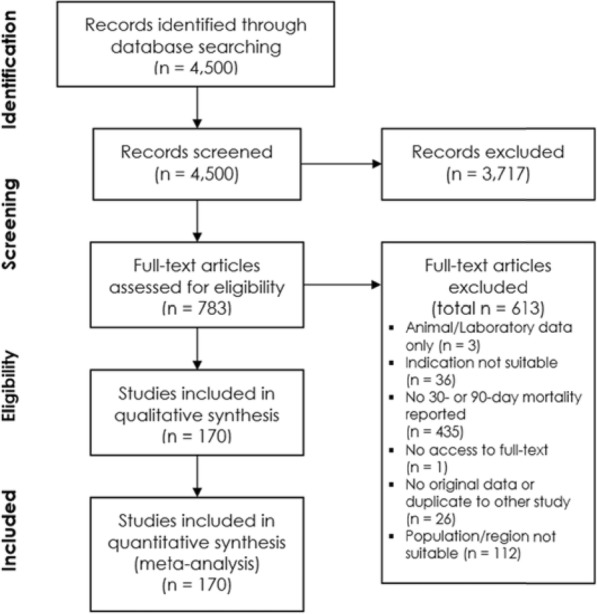
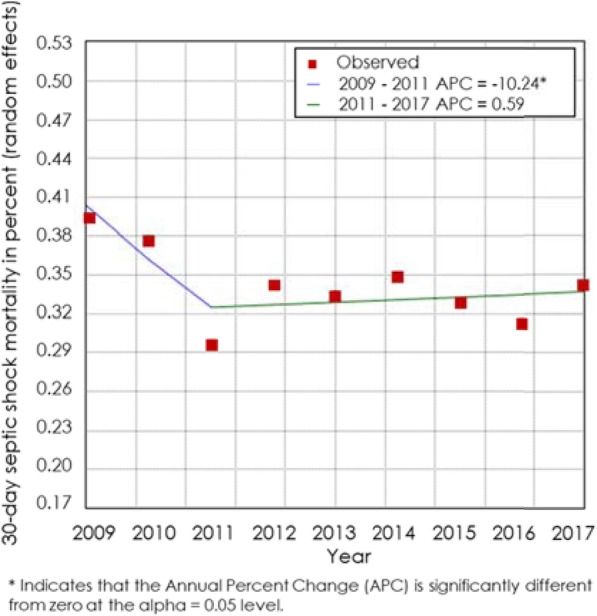
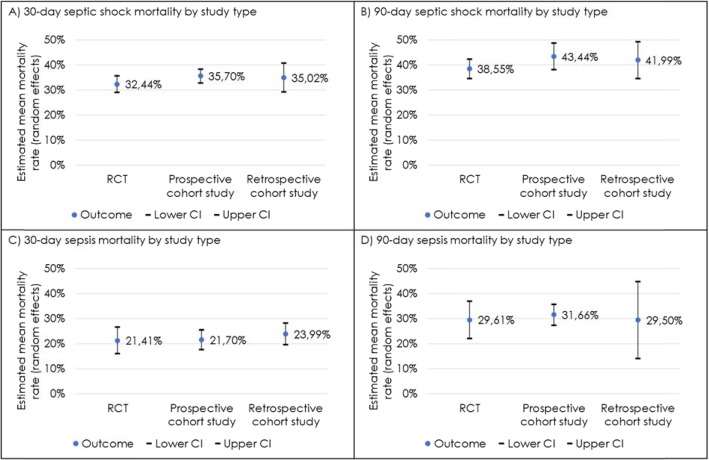
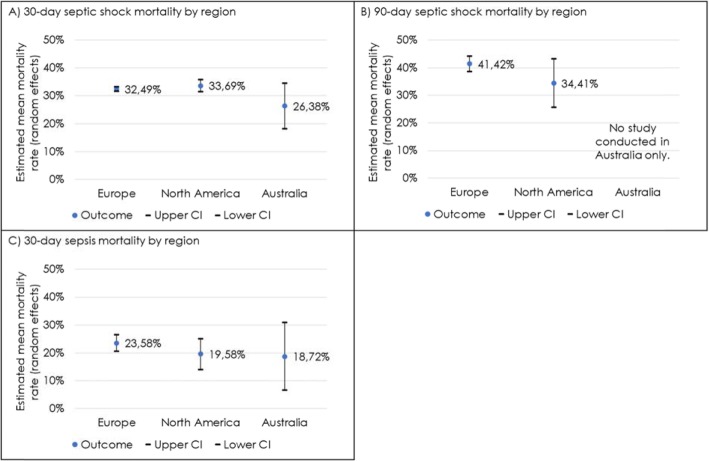
Background: Sepsis and septic shock remain drivers for mortality in critically ill patients. The heterogeneity of the syndrome hinders the generation of reproducible numbers on mortality risks. Consequently, mortality rates range from 15 to 56%. We aimed to update and extend the existing knowledge from meta-analyses and estimate 30- and 90-day mortality rates for sepsis and septic shock separately, stratify rates by region and study type and assess mortality rates across different sequential organ failure assessment (SOFA) scores. Methods: We performed a systematic review of articles published in PubMed or in the Cochrane Database, between 2009 and 2019 in English language including interventional and observational studies. A meta-analysis of pooled 28/30- and 90-day mortality rated separately for sepsis and septic shock was done using a random-effects model. Time trends were assessed via Joinpoint methodology and for the assessment of mortality rate over different SOFA scores, and linear regression was applied. Results: Four thousand five hundred records were identified. After title/abstract screening, 783 articles were assessed in full text for eligibility. Of those, 170 studies were included. Average 30-day septic shock mortality was 34.7% (95% CI 32.6–36.9%), and 90-day septic shock mortality was 38.5% (95% CI 35.4–41.5%). Average 30-day sepsis mortality was 24.4% (95% CI 21.5–27.2%), and 90-day sepsis mortality was 32.2% (95% CI 27.0–37.5%). Estimated mortality rates from RCTs were below prospective and retrospective cohort studies. Rates varied between regions, with 30-day septic shock mortality being 33.7% (95% CI 31.5–35.9) in North America, 32.5% (95% CI 31.7–33.3) in Europe and 26.4% (95% CI 18.1–34.6) in Australia. A statistically significant decrease of 30-day septic shock mortality rate was found between 2009 and 2011, but not after 2011. Per 1-point increase of the average SOFA score, average mortality increased by 1.8–3.3%. Conclusion: Trends of lower sepsis and continuous septic shock mortality rates over time and regional disparities indicate a remaining unmet need for improving sepsis management. Further research is needed to investigate how trends in the burden of disease influence mortality rates in sepsis and septic shock at 30- and 90-day mortality over time.
Overview
The claims and statistics of this paper haven’t been checked yet.
Free: it reads the open-access text and checks the first 5 claims that cite a source we can check. Create a free account to check every claim.
Integrity signals
Registry
Cites
Statistics
Figures
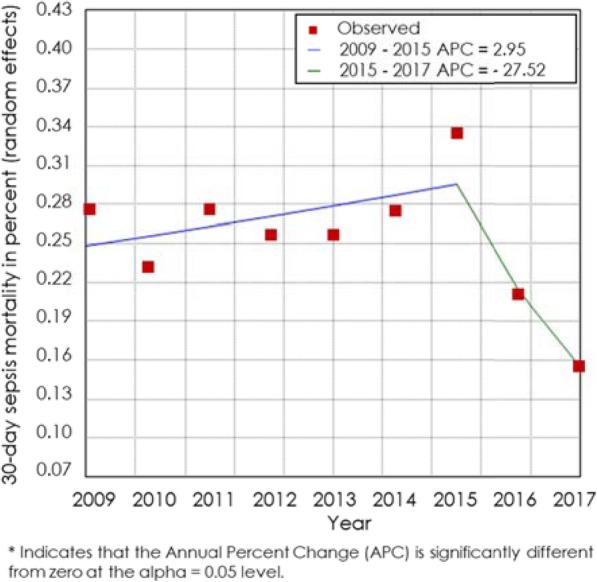
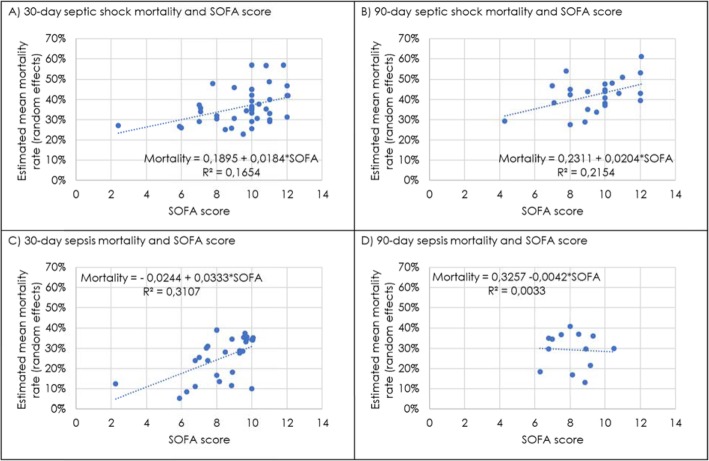
Verification
Claims the paper makes
The claims and statistics of this paper haven’t been checked yet.
Free: it reads the open-access text and checks the first 5 claims that cite a source we can check. Create a free account to check every claim.
Self-check
Percentages, sums and reported differences re-computed from the paper’s own numbers.
The self-check needs the paper’s full text.
Citations
Cites
Preferred Reporting Items for Systematic Reviews and Meta-Analyses: the PRISMA statement
Moher, D., Liberati, A., Tetzlaff, J., Altman, D. G., & for the PRISMA Group (2009) · BMJ · doi:10.1136/bmj.b2535 · Cited by 83,823
Preferred reporting items for systematic reviews and meta-analyses: the PRISMA Statement.
(2009) · PubMed Central · Cited by 44,859
RoB 2: a revised tool for assessing risk of bias in randomised trials
Sterne, J. A. C., Savović, J., Page, M. J., Elbers, R. G., Blencowe, N. S., Boutron, I., Cates, C. J., Cheng, H.-Y., Corbett, M. S., Eldridge, S. M., et al. (2019) · BMJ · doi:10.1136/bmj.l4898 · Cited by 34,787 · cited 1×
“RoB 2’ for randomized trials [18] and with ‘ROBINS-I’ used for observational studies [19], for sepsis and septic shock, 30 and 90 days mortality each.”
MethodThe third international consensus definitions for sepsis and septic shock (Sepsis-3).
Singer, M., Deutschman, C. S., Seymour, C. W., Shankar-Hari, M., Annane, D., Bauer, M., Bellomo, R., Bernard, G. R., Chiche, J.-D., Coopersmith, C. M., et al. (2016) · JAMA · doi:10.1001/jama.2016.0287 · Cited by 28,250
Self-citationROBINS-I: a tool for assessing risk of bias in non-randomised studies of interventions
Sterne, J. A., Hernán, M. A., Reeves, B. C., Savović, J., Berkman, N. D., Viswanathan, M., Henry, D., Altman, D. G., Ansari, M. T., Boutron, I., et al. (2016) · BMJ · doi:10.1136/bmj.i4919 · Cited by 20,329 · cited 1×
“RoB 2’ for randomized trials [18] and with ‘ROBINS-I’ used for observational studies [19], for sepsis and septic shock, 30 and 90 days mortality each.”
MethodBone, R. C., Balk, R. A., Cerra, F. B., Dellinger, R. P., Fein, A. M., Knaus, W. A., Schein, R. M. H., & Sibbald, W. J. (1992) · Chest · doi:10.1378/chest.101.6.1644 · Cited by 13,198
Surviving Sepsis Campaign: International Guidelines for Management of Severe Sepsis and Septic Shock
Dellinger, R. P., Levy, M. M., Rhodes, A., Annane, D., Gerlach, H., Opal, S. M., Sevransky, J. E., Sprung, C. L., Douglas, I. S., Jaeschke, R., et al. (2013) · Critical Care Medicine · doi:10.1097/ccm.0b013e31827e83af · Cited by 9,694
Self-citationThe Surviving Sepsis Campaign Guidelines Committee including The Pediatric Subgroup*, Dellinger, R. P., Levy, M. M., Rhodes, A., Annane, D., Gerlach, H., Opal, S. M., Sevransky, J. E., Sprung, C. L., Douglas, I. S., et al. (2013) · Intensive Care Medicine · doi:10.1007/s00134-012-2769-8 · Cited by 7,290
Self-citationPermutation tests for joinpoint regression with applications to cancer rates
Kim, H.-J., Fay, M. P., Feuer, E. J., & Midthune, D. N. (2000) · Statistics in Medicine · doi:10.1002/(sici)1097-0258(20000215)19:3<335::aid-sim336>3.0.co;2-z · Cited by 6,318
Severe Sepsis and Septic Shock
Angus, D. C., & van der Poll, T. (2013) · New England Journal of Medicine · doi:10.1056/nejmra1208623 · Cited by 3,961
Cited by
Items 401–500 of 985
Dong, C., Zhu, J., Ni, H., Chen, Y., Chen, B., Zhang, M., Cui, K., Zhang, S., Jiang, Y., & Xu, Y. (2025) · Drug Design Development and Therapy · doi:10.2147/dddt.s561592 · Cited by 5
Ono, Y., Saito, M., Yoshihara, I., Kondo, Y., Sakamoto, K., Sugiyama, J., Nakanishi, N., Inoue, S., & Kotani, J. (2026) · Scientific Reports · doi:10.1038/s41598-026-35815-9 · Cited by 5
“To replicate the mortality rate of patients with septic shock in modern ICUs 18,19 , we administered mice with CS at 1.0 mg/g BW.”
InfluentialWhat Is Sepsis, Who Gets It, How, and Why? The Keys to Unlocking Precision Medicine in Sepsis
Gay, E. A., Meyer, N. J., & Sinha, P. (2026) · Critical Care Medicine · doi:10.1097/ccm.0000000000007043 · Cited by 6
Moonen, H. P. F. X., Slingerland-Boot, R., de Jong, J. C. B. C., Wiech, A. M. T. Y., Nieuwenhuizen, A. G., Grefte, S., & van Zanten, A. R. H. (2026) · Scientific Reports · doi:10.1038/s41598-026-39202-2 · Cited by 5
Kassam, N., Adebayo, P. B., Matei, I., Aghan, E., Somji, S., Kadelya, S., Abha, Y., Swai, F., Mabusi, M., Hameed, K., et al. (2023) · Patient Related Outcome Measures · doi:10.2147/prom.s441293 · Cited by 5
Wu, Y., Li, P., Huang, Z.-Y., Liu, J., Yang, B.-W., Zhou, W.-B., Duan, F., Wang, G., & Li, J. (2024) · Therapeutic Advances in Infectious Disease · doi:10.1177/20499361241248058 · Cited by 5
Lee, Y. S., Han, S., Lee, Y. E., Cho, J., Choi, Y. K., Yoon, S.-Y., Oh, D. K., Lee, S. Y., Park, M. H., Lim, C., et al. (2024) · Scientific Reports · doi:10.1038/s41598-024-64463-0 · Cited by 5
Predicting survival in sepsis: The prognostic value of NLR and BAR ratios
He, X., Lou, T., Zhang, N., Zhu, B., Zeng, D., & Chen, H. (2025) · Technology and Health Care · doi:10.3233/thc-241415 · Cited by 5
“Sepsis is a common infectious disease in emergency departments, often causing multiple organ dysfunction and even death, posing a serious threat to human health [1].”
Jaramillo, G. D., Guerrero, L. E., Zuñiga, N. F., & Cuesta, R. M. M. (2024) · Journal of Clinical Medicine · doi:10.3390/jcm13247787 · Cited by 5
“…shock documented in this study was 39.6% of the total sample, which is comparable to findings in other studies such as the meta-analysis by Bauer et al., who showed a septic shock mortality rate of 34.7% [20], and the study by Fleischmann et al., where a mortality rate of 26% was reported [21].”
InfluentialZeba, S., Šurbatović, M., Udovičić, I., Stanojević, I., Vojvodić, D., Rondović, G., Mladenović, K., Abazovic, T., Hasanovic, A., Ilić, A., et al. (2025) · Journal of Inflammation Research · doi:10.2147/jir.s488972 · Cited by 5
Protocols for circulating neutrophil depletion in neonatal C57Bl/6 mice
Mukherjee, D., Satyavolu, S., Cioffi, S., Thomas, A., Li, Y., & Nayak, L. V. (2025) · Journal of Leukocyte Biology · doi:10.1093/jleuko/qiaf005 · Cited by 5
CAUSAL ASSOCIATION BETWEEN MEDICATION USE AND SEPSIS: A TWO-SAMPLE MENDELIAN RANDOMIZATION STUDY
Sun, M., Chen, Y., Jin, Z., Yang, B., & Zhu, M. (2025) · Shock · doi:10.1097/shk.0000000000002582 · Cited by 5
Weekend admission and mortality among patients with sepsis: A nationwide cohort study in South Korea
Oh, T. K., & Song, I. (2021) · Acta Anaesthesiologica Scandinavica · doi:10.1111/aas.13786 · Cited by 5
Albayrak, A., Özger, H. S., Başgut, B., Aygencel, G., & Karahalıl, B. (2023) · Journal of Chemotherapy · doi:10.1080/1120009x.2023.2196916 · Cited by 5
Ambriz-Alarcón, M. A., Espinosa, D. I. A., Meugniot-García, H., Sánchez-Navarro, J. P., Rubio-Mora, B. R., Ramírez-Ochoa, S., Cervantes‐Guevara, G., Robledo-Valdez, M. A., González‐Ojeda, A., Fuentes‐Orozco, C., et al. (2024) · Journal of Cardiovascular Development and Disease · doi:10.3390/jcdd11010028 · Cited by 5
“…review with meta-analysis found that the average mortality from septic shock at 30 days and 90 days was 34.7% and 38.5%, respectively; for sepsis, the average mortality at 30 days and 90 days was 24.4% and 32.2%, respectively (with variability between the geographic regions evaluated) [6].”
BackgroundInfluentialJulián-Jiménez, A., de Guadiana‐Romualdo, L. G., Merinos-Sánchez, G., & García, D. E. (2024) · Revista Clínica Española · doi:10.1016/j.rce.2024.04.010 · Cited by 5
Affinity-based 3D-printed microfluidic chip for clinical sepsis detection with CD69, CD64, and CD25
Griffin, K., Miller, L., Yang, Y., Sharp, E., Young, L., Garcia, L., Griswold, J., & Pappas, D. (2024) · Journal of Pharmaceutical and Biomedical Analysis · doi:10.1016/j.jpba.2024.116500 · Cited by 5
Anti-sepsis effects of Dahuang Mudan decoction and its disassembled prescriptions
Lu, R.-Y., Ling, Z.-Y., Chen, L.-L., Xu, W., Xing, X.-H., Song, Z.-C., Chen, L., & Wang, Y. (2024) · Journal of Ethnopharmacology · doi:10.1016/j.jep.2024.119248 · Cited by 5
Zeng, Q., Peng, E.-L., Zhou, Y., Lin, Q.-W., Zhong, L.-C., He, L., Zhang, N.-Q., & Song, J. (2025) · Chinese Journal of Traumatology · doi:10.1016/j.cjtee.2024.08.012 · Cited by 5
Shimada, A., Murata, M., Aoyagi, S., Asano, H., Obara, A., & Hasegawa‐Ishii, S. (2022) · Toxicology Reports · doi:10.1016/j.toxrep.2022.06.015 · Cited by 5
Praxenthaler, J., Schwier, E., Altmann, S., Kirchner, C., Bialas, J., Henzler, D., & Köhler, T. (2022) · Biomedicines · doi:10.3390/biomedicines10102340 · Cited by 5
“Despite multiple diagnostic and therapeutic efforts in the last years, the 90-day-mortality in septic shock remains almost unchanged at a high rate of close to 40% in Europe [3].”
BackgroundInfluentialMartins, C. D. S., & Maasdorp, S. D. (2023) · African Journal of Thoracic and Critical Care Medicine · doi:10.7196/ajtccm.2023.v29i1.263 · Cited by 5
“6%),[14] and delays in administering appropriate antibiotic therapy in patients with septic shock.”
BackgroundIdentifying most lethal cliques in disease comorbidity graphs
Mohebbi, P. V., Lu, Y., Miao, Z., Balasundaram, B., Kalgotra, P., & Sharda, R. (2025) · IISE Transactions on Healthcare Systems Engineering · doi:10.1080/24725579.2025.2473716 · Cited by 4
Sombetzki, C., Palmowski, L., Ziehe, D., Nowak, H., Rahmel, T., Ehrentraut, S., Thon, P., Orlowski, J., Bergmann, L., Adamzik, M., et al. (2025) · Scientific Reports · doi:10.1038/s41598-025-07398-4 · Cited by 4
“This group is inherently vulnerable and characterized by high mortality rates 24 .”
Jaramillo, G. D., Hernández, J. W. M., & Zapata, W. G. D. (2025) · Journal of Clinical Medicine · doi:10.3390/jcm14176025 · Cited by 4
“This finding is comparable to the 34.7% septic shock mortality rate reported by Bauer et al. [28] and the 26% rate in the study by Fleischmann et al. [29].”
InfluentialJiang, Z., Zhang, S., Yuan, Y., Wang, J., & Hu, Z. (2025) · Cardiovascular Diagnosis and Therapy · doi:10.21037/cdt-2025-265 · Cited by 4
“Of the 6,306 patients in the ICU that met theSepsis-3 criteria (25), 2,472 were excluded in our retrospective study.”
Zhao, L., & Zhang, R. (2025) · Journal of Intensive Care Medicine · doi:10.1177/08850666251366228 · Cited by 4
TIM-3, a potential target for sepsis therapy
Huang, S., Huang, X., Feng, X., Wang, R., Liao, F., Liu, D., Sun, J., Zhang, H., Yu, A., & Zeng, L. (2025) · Chinese Journal of Traumatology · doi:10.1016/j.cjtee.2025.08.001 · Cited by 4
Pan, F., Yu, F., Zhang, H., Chen, P., & Weng, W. (2025) · European Journal of Clinical Microbiology & Infectious Diseases · doi:10.1007/s10096-025-05289-0 · Cited by 4
“Studies report that sepsis affects an estimated 48.9 mil - lion people and is associated with 11.0 million sepsis-related deaths, accounting for 19.7% of all deaths [ 2, 3].”
InfluentialA study of the correlation between serum bile acid profile and prognosis in patients with sepsis
Xu, Y., Zhang, J., Lu, Y., Zhang, W., Shi, H., Liang, Q., Wang, Y., & Sun, L. (2025) · The American Journal of the Medical Sciences · doi:10.1016/j.amjms.2025.10.022 · Cited by 4
Graziani, M., Gasperini, L., Gasperini, C., Maraziti, G., PASCALE, G. D., & Becattini, C. (2025) · Internal and Emergency Medicine · doi:10.1007/s11739-025-04179-9 · Cited by 5
“Sepsis accounts for 2–6% of all hospital admissions and is associated with in-hospital mortality of up to 15% [1].”
Wang, H., Liu, X., & Zhang, H. (2025) · Frontiers in Pharmacology · doi:10.3389/fphar.2025.1669636 · Cited by 4
Yue, S., Du, X., Li, X., & Zhou, L. (2026) · Frontiers in Cellular and Infection Microbiology · doi:10.3389/fcimb.2026.1690126 · Cited by 4
“Despite the continuous advancement of modern medicine, there are still many patients who die of sepsis each year (Fleischmann et al., 2016; Bauer et al., 2020).”
ter Voert, M. A., Lu, J., Hincapié, C., van der Aart, T. J., Horst, S. T., Ünal, M., Visser, M., van Wijk, R. J., ter Maaten, J. C., Whitfield, N. N., et al. (2026) · Internal and Emergency Medicine · doi:10.1007/s11739-026-04457-0 · Cited by 4
González-Vázquez, S. A., Gómez-Ramírez, E. E., González-López, L., Gámez-Nava, J. I., Peraza-Zaldívar, J. A., Santiago-Garcia, A. P., Ramírez-Villafaña, M., González-Ponce, F., Gomez-Camarena, J. J., Saldaña-Cruz, A. M., et al. (2024) · Medicina · doi:10.3390/medicina60030464 · Cited by 4
“The frequency of mortality in sepsis varies from 3 to 47% and depends on a large number of factors; however, the average mortality rate found in studies on sepsis is approximately 24% at 30 days after diagnosis [12].”
BackgroundElderly Patients’ Outcomes following Emergency Laparotomy—Early Surgical Consultations Are Crucial
Gefen, R., Salem, S. A., Kedar, A., Gottesman, J. Z., Marom, G. A., Pikarsky, A. J., & Bala, M. (2024) · Surgeries · doi:10.3390/surgeries5020013 · Cited by 4
“According to the current literature, the 30-day mortality after EL is between 10 and 18% [6]; however, in patients presenting with septic shock, it reaches 34.7% [7].”
BackgroundInfluentialSathaporn, N., & Khwannimit, B. (2024) · Indian Journal of Critical Care Medicine · doi:10.5005/jp-journals-10071-24673 · Cited by 4
Ye, K., Lin, X., Chen, T.-Z., Wang, L.-H., & Liu, S.-X. (2024) · Journal of Inflammation Research · doi:10.2147/jir.s454777 · Cited by 4
Zhou, L., Wang, J., Gu, M., Zhou, L., Shen, S., & Huang, C. (2024) · Adipocyte · doi:10.1080/21623945.2024.2379867 · Cited by 4
“Its global incidence, ranging from to 70–240 cases per 100,000 population, is steadily rising at 1.5% worldwide [2,3].”
BackgroundMethodInfluentialPereira, A. L. P., Rodrigues, B. O., & Kock, K. D. S. (2024) · Revista Prevenção de Infecção e Saúde · doi:10.26694/repis.v10i1.5349 · Cited by 4
“20 The disparity in mortality caused by sepsis between rich and poor countries occurs mainly due to lack of access to adequate healthcare and limited financial resources in less developed nations.”
BackgroundPediatric septic shock estimation using deep learning and electronic medical records
Lee, J. W., Lee, B., & Park, J. D. (2024) · Acute and Critical Care · doi:10.4266/acc.2024.00031 · Cited by 4
Chung, K., Chen, Y., Chen, Y.-J., Chien, J., Kuo, H., Huang, Y., Ruan, S., Lin, Y., Chen, Y., Keng, L., et al. (2025) · Shock · doi:10.1097/shk.0000000000002550 · Cited by 4
“Although a trend of reduced sepsis-related mortality is observed in a decade (4), the mortality of septic patients with high disease severity remains unchanged (5,6).”
Farzanegan, B., Shafigh, N., Hasheminik, M., Alipour, H., Behzadfar, A., Safaee, N., Shafigh, E., & Dizaji, M. K. (2025) · BMC Infectious Diseases · doi:10.1186/s12879-025-11831-4 · Cited by 4
“For this reasons, and considering the extensive complications, the high mortality rate of this disorder, and the need to use cheap and available supportive treatments [18, 19], the present study was conducted to investigate the combined effect of these two factors on sepsis and severe sepsis.”
Sepsis-Related Outcomes of Patients with Philadelphia-Negative Myeloproliferative Neoplasms
Gonzalez-Mosquera, L. F., Moscoso, B., Tobar, P., Cardenas-Maldonado, D. D. D., Podrumar, A. I., Mesa, R. A., & Cuenca, J. A. (2023) · Cancer Investigation · doi:10.1080/07357907.2023.2187059 · Cited by 4
He, D., Hu, H., Hong, L., Zhang, L., Lu, X., Gu, W., Lyu, J., & Yin, H. (2023) · BMC Infectious Diseases · doi:10.1186/s12879-023-08142-x · Cited by 4
“Introduction Septic shock is a severe consequence of infection that typically has an extremely high mortality rate of 35–40% [1, 2].”
BackgroundManajemen Komprehensif Sepsis Akibat Infeksi Saluran Kemih pada Kehamilan
Habiburrahman, M., & Putra, A. B. (2023) · Cermin Dunia Kedokteran · doi:10.55175/cdk.v50i6.919 · Cited by 4
Efe, S., Hancı, P., & İnal, V. (2024) · TURKISH JOURNAL OF MEDICAL SCIENCES · doi:10.55730/1300-0144.5773 · Cited by 4
“Despite advances in diagnosis and management, sepsis and septic shock remain significant global health concerns with high incidence and mortality rates [1, 2].”
BackgroundTehrani, S. S., Hosseini, H. M., & Mirhosseini, S. A. (2024) · International Journal of Peptide Research and Therapeutics · doi:10.1007/s10989-024-10591-0 · Cited by 4
“Despite intensive research, the prevalence of sepsis has not considerably decreased, with about 48.9 million cases per year, including an estimated 11 million fatalities globally (Bauer et al. 2020; Rudd et al. 2020).”
InfluentialTendência temporal de mortalidade por sepse em idoso no Brasil no período de 2010-2020
de Carvalho, N. V., Jomaa, H. A., & Nazário, N. O. (2024) · VITTALLE - Revista de Ciências da Saúde · doi:10.14295/vittalle.v36i1.15253 · Cited by 4
Liu, M., Duan, Y.-J., Zhang, Y., Yang, J., Wei, B., & Wang, J. (2024) · Journal of Inflammation Research · doi:10.2147/jir.s447142 · Cited by 4
“2 In this study, the median SOFA score of the patients in the death group was significantly higher than that of the patients in the survival group.”
Choi, D. H., Choi, S. W., Kim, K. H., Choi, Y., & Kim, Y. (2024) · The American Journal of Emergency Medicine · doi:10.1016/j.ajem.2024.03.006 · Cited by 4
Early source control of infection in patients seen in the emergency department: a systematic review
Julián-Jiménez, A., Lorenzo-Álvarez, R., Bueno, V. G., Trujillo, M. S., & García, D. E. (2024) · Revista Española de Quimioterapia · doi:10.37201/req/027.2024 · Cited by 4
“…inmunodeprimidos, ancianos, con bacterie-mia significativa confirmada desde el SUH y aquellos con un foco o colección infecciosa susceptible de ser drenado (absce-sos, fluidos o focos localizados), desbridado (tejido necrótico) o eliminado (dispositivos potencialmente infectados) [1,2,4-7].”
BackgroundKawai, Y., Nakayama, A., & Fukushima, H. (2024) · Journal of Microbiological Methods · doi:10.1016/j.mimet.2024.106982 · Cited by 4
Suzuki, Y., Otsuka, T., Takahashi, Y., Maruyama, S., Annenkov, A., Kanda, Y., Katakai, T., Watanabe, H., Ohashi, R., Kaneko, Y., et al. (2024) · Nephrology Dialysis Transplantation · doi:10.1093/ndt/gfae269 · Cited by 4
Kang, M. W., & Kang, Y. (2024) · Microbiology Spectrum · doi:10.1128/spectrum.02662-24 · Cited by 4
Kang, Y., Ahn, S. Y., & Kang, M. W. (2025) · Scientific Reports · doi:10.1038/s41598-025-03141-1 · Cited by 4
“Septic shock is a frequent and severe condition in the intensive care unit (ICU), with high mortality and morbidity rates 1,2 .”
TERLIPRESSIN COMBINED WITH NOREPINEPHRINE IN THE TREATMENT OF SEPTIC SHOCK: A SYSTEMATIC REVIEW
Mao, F., Liang, D., Tang, Z., Xu, Y., & Lin, L. (2023) · Shock · doi:10.1097/shk.0000000000002204 · Cited by 4
Wang, M., Shi, Y., Pan, X., Wang, B., Lu, B., & Ouyang, J. (2023) · Infection and Drug Resistance · doi:10.2147/idr.s427790 · Cited by 4
“Limitations of this study: (1) because the data included in this study were collected from a single center, the application of the developed model to other populations could be limited.”
ResultChatoor, R., Sekhar, P., Mahony, E., Nehme, E., Cox, S., Cudini, D., Shao, J., Smith, K. L., Anderson, D. J., Nehme, Z., et al. (2023) · Emergency Medicine Australasia · doi:10.1111/1742-6723.14357 · Cited by 4
Pei, Z., Yao, W., Wang, S., & Wu, Y. (2024) · Frontiers in Bioscience-Landmark · doi:10.31083/j.fbl2902054 · Cited by 4
“Sepsis causes mitochondrial damage through multiple mechanisms [40,41].”
BackgroundZhou, J., Zhang, Y., Tian, Y., Zhang, K., Li, A., Li, M., Peng, X., & Chen, M. (2024) · Frontiers in Genetics · doi:10.3389/fgene.2024.1381303 · Cited by 4
Driessen, R., Groven, R. V. M., van Koll, J., Oudhuis, G. J., Posthouwer, D., van der Horst, I. C. C., Bergmans, D. C. J. J., & Schnabel, R. M. (2021) · Scandinavian Journal of Infectious Diseases · doi:10.1080/23744235.2021.1942543 · Cited by 4
“Septic shock is a subcategory of sepsis with profound circulatory, cellular, and metabolic abnormalities [1], associated with high mortality [2].”
BackgroundGonzález‐Hedström, D., Moreno‐Rupérez, Á., de la Fuente‐Fernández, M., de la Fuente-Muñoz, M., Roman, M. N., Amor, S., García-Villalón, Á. L., López‐Calderón, A., Martín, A. I., Priego, T., et al. (2022) · Frontiers in Nutrition · doi:10.3389/fnut.2022.918841 · Cited by 4
“Indeed, septic shock is considered the main cause of death in intensive care units with a mortality rate ranging between 15 and 56% (5).”
BackgroundAlışkan, H., & Kılıç, M. (2022) · Journal of Surgery and Medicine · doi:10.28982/josam.7619 · Cited by 4
“5 mEq/l have been shown to be associated with mortality [15].”
BackgroundToldi, J., Kelava, L., Marton, S., Mühl, D., Kustán, P., Feher, Z., Maar, K., Garai, J., Pákai, E., & Garami, A. (2023) · Scientific Reports · doi:10.1038/s41598-023-27506-6 · Cited by 4
Iwasaki, N., Sekino, M., Tominaga, T., Tanaka, T., Araki, H., Yano, R., Matsumoto, S., Ichinomiya, T., Higashijima, U., Nonaka, T., et al. (2023) · Medicine · doi:10.1097/md.0000000000034680 · Cited by 4
“The mortality rate for septic shock is approximately 40%, [22,23] and Kaplan–Meier curves show that this rate is reached relatively slowly over 30 days.”
BackgroundIndex de résistance rénal au cours du choc septique
Marzouk, M., Adhoum, A., Yedder, A. B., Hammami, R., Thamlaoui, S., & Baffoun, N. (2025) · La Tunisie Médicale · doi:10.62438/tunismed.v103i2.5020 · Cited by 4
Rico-Feijoó, J., Bermejo-Martín, J. F., Pérez-González, A., Martín-Alfonso, S., & Aldecoa, C. (2024) · Revista Española de Anestesiología y Reanimación · doi:10.1016/j.redar.2023.11.002 · Cited by 3
Dong, H., Zhang, Y., Zhou, Y., Zhang, M. H., Zhang, L., Feng, J., Wu, W., Liu, Y., & Wang, T. (2025) · Fitoterapia · doi:10.1016/j.fitote.2025.106624 · Cited by 3
Xiao, Y., Tao, X., Zhang, H., Shi, X., & Zhao, H. (2025) · European Journal of Gastroenterology & Hepatology · doi:10.1097/meg.0000000000003012 · Cited by 3
“Meta-analysis combines results from two or more separate studies to strengthen the evidence level [13,14].”
Emergency department triage associated with timeliness of care for patients with septic shock
Sax, D. R., Warton, E. M., Mark, D. G., Rauchwerger, A. S., DiLena, D. D., & Reed, M. E. (2025) · The American Journal of Emergency Medicine · doi:10.1016/j.ajem.2025.10.024 · Cited by 3
de Knegt, S. M. E. V. B., Uffen, J. W., de Hond, T. A. P., Stassen, P. M., Zelis, N., & Kaasjager, K. A. H. (2025) · BMJ Open · doi:10.1136/bmjopen-2024-096528 · Cited by 3
Dong, Y., Zhang, K., Guo, Y., Ding, Y., Yang, X., Song, X., Lei, X., Tang, Y., Zhang, X., Huang, W., et al. (2025) · International Journal of Surgery · doi:10.1097/js9.0000000000003722 · Cited by 3
Respiratory sepsis: a 12-year prospective observational study in critically ill patients
Azkarate, I., Salas, E., Cabarcos, E., Ganzarain, M., Quevedo, I., Elósegui, I., & Eguibar, I. (2025) · Respiratory Medicine · doi:10.1016/j.rmed.2025.108476 · Cited by 3
Körelçiner, H. S., & Özdemir, S. (2025) · Internal and Emergency Medicine · doi:10.1007/s11739-025-04201-0 · Cited by 3
Zou, B., Xi, F., Gao, T., & Yu, W. (2025) · PLoS ONE · doi:10.1371/journal.pone.0337118 · Cited by 3
“Septic shock, the most severe manifestation of sepsis, is associated with a mortality rate approaching 40%, and imposes a substantial burden on healthcare systems and resources [2,3].”
The role of GPD2 on ferroptosis in sepsis-induced acute lung injury
Han, Y. M., Dai, C., Hu, D., Yu, Y., Peng, W., Zheng, Y., Zeng, Q., Xie, H., & Huang, J. (2025) · Biochemical and Biophysical Research Communications · doi:10.1016/j.bbrc.2025.153066 · Cited by 3
Jin, G., Zhou, M., Chen, J., Diao, M., & Hu, W. (2025) · JMIR Medical Informatics · doi:10.2196/76417 · Cited by 3
“Sepsis stands as a prevalent critical condition encountered within intensive care units (ICUs), presenting a formidable obstacle to global health care systems [1,2].”
Suh, J., Weinberg, L., Raykateeraroj, N., Lim, J., Yoon, A., Pilcher, D. V., & Lee, D. K. (2025) · Scientific Reports · doi:10.1038/s41598-025-27714-2 · Cited by 3
“A large multicenter observational study in patients with septic shock has reported significantly lower mortality associated with urinary tract infections than respiratory or abdominal infections even after adjustment for illness severity 16–18 .”
Exploring the interchangeable roles of fibrinogen and FIBTEM in patients with sepsis
Bui-Thi, H.-D., Nguyễn, A. T., Nguyen-Dang, K., To, K. G., Quoc, T. T., & Le, K. M. (2025) · Therapeutic Advances in Hematology · doi:10.1177/20406207251399472 · Cited by 3
Zhong, D., & Zhao, L. (2026) · Frontiers in Immunology · doi:10.3389/fimmu.2025.1688451 · Cited by 3
Intravenous Vitamin C in Severe Sepsis: A Systematic Review of Evidence From 2020 to 2025
Ahmed, R., Shetty, S., Khan, M. A., Kalsoom, I., Qasim, S. M., Khan, S. B., & Abdullah, S. (2026) · Cureus · doi:10.7759/cureus.100867 · Cited by 3
“Despite advances in antimicrobial therapy, fluid resuscitation, early goal-directed care, and organ-supportive interventions, mortality remains high, approximately 25-40% in severe sepsis and higher in patients with septic shock [2].”
Julián-Jiménez, A., García, D. E., del Castillo, J. M. G., Escalante-Kanashiro, R., González, F. J. C., Merinos-Sánchez, G., Estella, Á., Santillán-Santos, D. A., Rio, J. J. G.-D., Fosco, M. J., et al. (2026) · Emergencias · doi:10.55633/s3me/005.2026 · Cited by 5
Multi-Marker Approach in Sepsis: A Clinical Role Beyond SOFA Score
Lee, G.-H., Kim, H. M., Moon, H., Yun, Y., Lee, S., & Hur, M. (2026) · Medicina · doi:10.3390/medicina62010201 · Cited by 3
“The average 30-day mortality rate for sepsis was 24.4% in a meta-analysis, reflecting the persistently high fatality associated with sepsis despite advances in critical care [2].”
InfluentialPan, E., Sun, H., Ma, Z., Zhang, S., Liu, Y., Xu, Z., Li, Y., Jin, X., Wang, H., & Dong, J. (2026) · Toxicology and Applied Pharmacology · doi:10.1016/j.taap.2026.117737 · Cited by 3
The Diagnostic Efficacy of Thiol-Disulfide Homeostasis in Sepsis Patients
Alacam, M., YÜRÜMEZ, Y., Yazar, H., GÜNER, N. G., & Arslan, N. (2026) · Journal of Emergency Medicine · doi:10.1016/j.jemermed.2026.01.014 · Cited by 3
Turcato, G., Zaboli, A., Filippi, L., Maggi, M., Bionda, A. E., Lucente, F., Caregnato, A., Milazzo, D., Ferretto, P., Ghiadoni, L., et al. (2026) · Journal of Clinical Medicine · doi:10.3390/jcm15062427 · Cited by 3
Irimie, A. I., Dinescu, S.-N., Novac, M.-B., Vasile, R.-C., Rotaru-Zăvăleanu, A. D., Ruscu, M.-A., & Radu, L. (2026) · Journal of Clinical Medicine · doi:10.3390/jcm15124799 · Cited by 3
“Despite the consolidation of bundle-based care, hospital mortality of patients admitted to intensive care units (ICUs) with sepsis or septic shock remains in the range of 20–40% in contemporary cohorts and is highest at the extremes of age [4,5].”
Hemodynamic Monitoring: Current Practice and New Perspectives
Lai, C., & Teboul, J. (2023) · Elsevier eBooks · doi:10.1016/b978-0-323-88271-2.00010-9 · Cited by 3
Fractional flow reserve measurements and long-term mortality—results from the FLORIDA study
Boeckling, F., Stähli, B. E., Rudolph, T. K., Lutz, M., Schatz, A.-S., Vogelmann, T., Stueve, M., West, N. E. J., Boone, E., Erbay, A., et al. (2024) · Frontiers in Cardiovascular Medicine · doi:10.3389/fcvm.2024.1337941 · Cited by 3
Self-citationJingyi, S., Gao, C., Chen, B., Yingguang, X., Ma, J., Xiaohua, C., & Wenqiang, L. (2024) · Journal of Intensive Care Medicine · doi:10.1177/08850666241233183 · Cited by 3
Pluta, M. P., Czempik, P. F., Natorska, J., & Krzych, Ł. J. (2024) · Neurologia i Neurochirurgia Polska · doi:10.5603/pjnns.99042 · Cited by 3
Cohen, H. R., Decourcey, M. A., Davis, W. C., & Souza, C. D. (2024) · American Journal of Veterinary Research · doi:10.2460/ajvr.24.04.0116 · Cited by 3
Tao, Y., Li, M., & Liu, C. (2024) · IET Systems Biology · doi:10.1049/syb2.12109 · Cited by 3
“Sepsis is a life ‐ threatening condition caused by a dysregulated host response to infection [1], and remains one of the leading causes of death in intensive care units (ICUs) [2–5].”
Disorders of Lymphatic Architecture and Flow in Critical Illness
Itkin, M. G., Horák, J., L., J. L. P., Chang, C. W. J., Lile, D. J., Tomita, B., Bass, G. A., Kovach, S. J., & Kaplan, L. J. (2025) · Critical Care Medicine · doi:10.1097/ccm.0000000000006561 · Cited by 3
“Sepsis and septic shock are common drivers of ICU admission, organ failure, resource utilization, morbidity, and mortality (113).”
Leigh, J. P., Brundin‐Mather, R., Walsh, D., Mizen, S. J., Sriskandarajah, C., Bergeron, M.-M., Werner, D. E., & Fiest, K. M. (2025) · BMC Public Health · doi:10.1186/s12889-025-22344-9 · Cited by 3
“This means that worldwide 1 in 5 people are at risk of dying from sepsis, a statistic that only increases when sepsis progresses into more severe disease states [2].”
An explicable machine learning approach for predicting 30-day septic mortality for ICU patients
Zhou, L., Wu, R., Wang, S., Komolafe, T. E., Guo, J., Fan, Z., & Zhang, Z. (2025) · International Journal of Information and Communication Technology · doi:10.1504/ijict.2025.145831 · Cited by 3
Turcato, G., Zaboli, A., Filippi, L., Lucente, F., Maggi, M., Cipriano, A., Marchetti, M., Milazzo, D., Wiedermann, C. J., & Ghiadoni, L. (2025) · Healthcare · doi:10.3390/healthcare13212686 · Cited by 3
Prestes, A. P., Machado, W. M., Oliveira, J. G., Olchanheski, L. R., dos Santos, F. A., Alves, G. F., Prudente, A. S., Otuki, M. F., Paludo, K. S., Sordi, R., et al. (2017) · Life Sciences · doi:10.1016/j.lfs.2017.12.011 · Cited by 3
Wu, Y., Liu, H., Zhu, X., Fu, H., He, Y., Wang, F., Zhang, Y., Mo, X., Han, W., Wang, J., et al. (2023) · British Journal of Haematology · doi:10.1111/bjh.18835 · Cited by 3
Metadata
- Authors
- Bauer, M., Gerlach, H., Vogelmann, T., Preissing, F., Stiefel, J., & Adam, D.
- Affiliations
- Jena University Hospital (DE)
- Vivantes Klinikum (DE)
- CytoSorbents (Germany) (DE)
- Corresponding author
- Bauer, Michael
- Venue
- Critical Care
- Published
- 2020-05-19
- Volume
- 24
- Issue
- 1
- Pages
- 239-239
- ISSN
- 1364-8535 (ISSN-L)
- PMC
- PMC7236499
- OpenAlex
- W3027548201
- Semantic Scholar
- 17551feef1e5ba684094ee873ccb0dabe3675738
- Cited by
- 867
- References
- 32
- Citations by year
- 2026: 137 · 2025: 223 · 2024: 217 · 2023: 162 · 2022: 91 · 2021: 33 · 2020: 4
- FWCI
- 10.67
- Type
- journal article
- Language
- en
- Open access
- gold
- doi.org
- Licence
- cc-by
- creativecommons.org/licenses/by/4.0 (tdm)
- creativecommons.org/licenses/by/4.0 (vor)
- Locations
- Critical Care (publishedVersion, cc-by)
- PubMed Central (publishedVersion, cc-by)
- PubMed (publishedVersion)
- DOAJ (DOAJ: Directory of Open Access Journals) (submittedVersion, cc-by-sa)
- Funders
- CytoSorbents Europe
- Topics
- Health Sciences › Medicine › Critical Care and Intensive Care Medicine › Sepsis Diagnosis and Treatment
- Health Sciences › Medicine › Surgery › Abdominal Surgery and Complications
- Health Sciences › Medicine › Nephrology › Acute Kidney Injury Research
- Keywords
- sepsis, septic shock, mortality rates, 30-day mortality, 90-day mortality, SOFA score, regional variation, mortality trends, critically ill patients
- MeSH terms
- Australia, Europe, Humans, Mortality, North America, Shock, Septic, Sepsis
About these checks
Registry, retraction, Cites and statistics results are computed, not judged, with one exception: a printed reference that no index lists is read once by a model before it counts as a citation error. Claims are extracted by a model and kept only when their quote appears verbatim in the text; each cited source is then checked, with a model’s help, for whether it says what the claim relies on. Those verdicts can be wrong — read the claim’s quote and the cited source before relying on one.
Statistics and arithmetic are recomputed, not judged.
Confidence bands are shown only for fields calibrated on our annotated test set. None is calibrated yet, so no band is shown.
What counts as a claim ›How we measure confidence ›How we check this ›
Are you an author, or do you see a problem with this page? Request a review
Data sources
Bibliographic data: Semantic Scholar, OpenAlex, Crossref.
Contains information from the Semantic Scholar Academic Graph Datasets, made available under the ODC Attribution License (ODC-BY 1.0).
Semantic Scholar’s data is described in: Kinney, R., et al. (2023). The Semantic Scholar Open Data Platform. arXiv:2301.10140.
