

Mortality in sepsis and septic shock in Europe, North America and Australia between 2009 and 2019 – results from a systematic review and meta-analysis
Open accessThe DOI matches its Crossref record; 30 of the 32 references it cites were found in a registry or an index.
Abstract
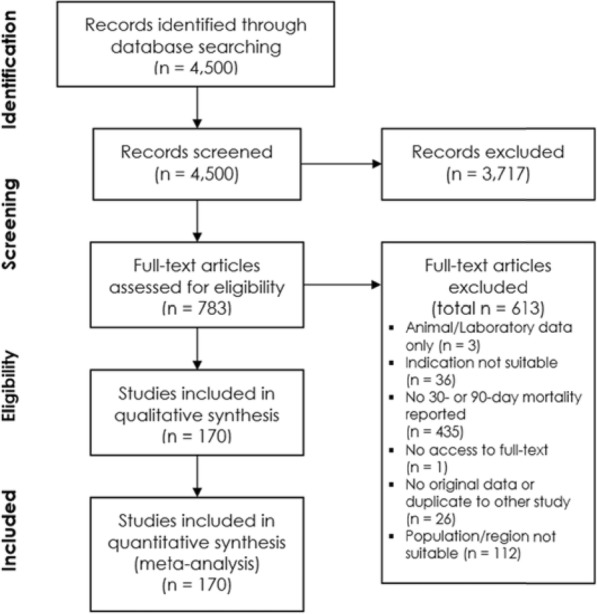
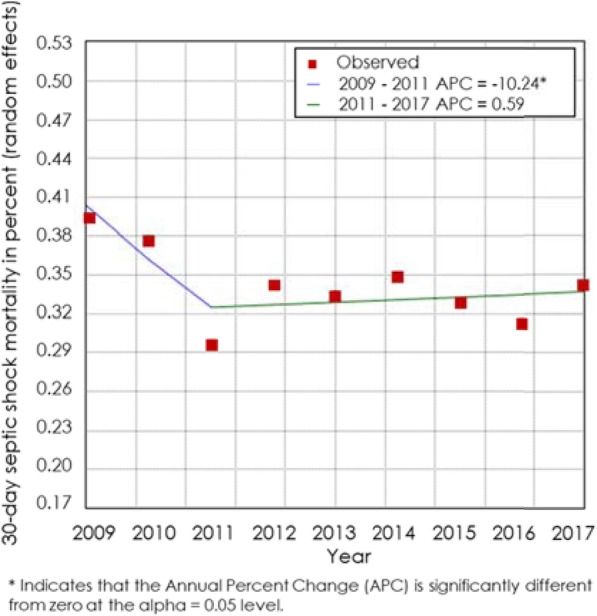
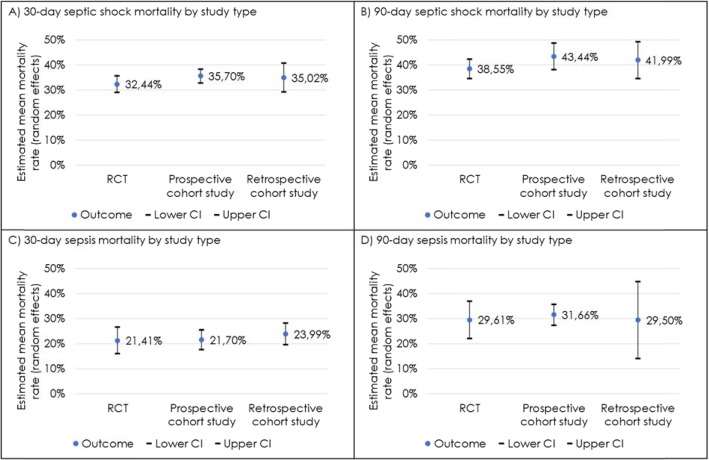
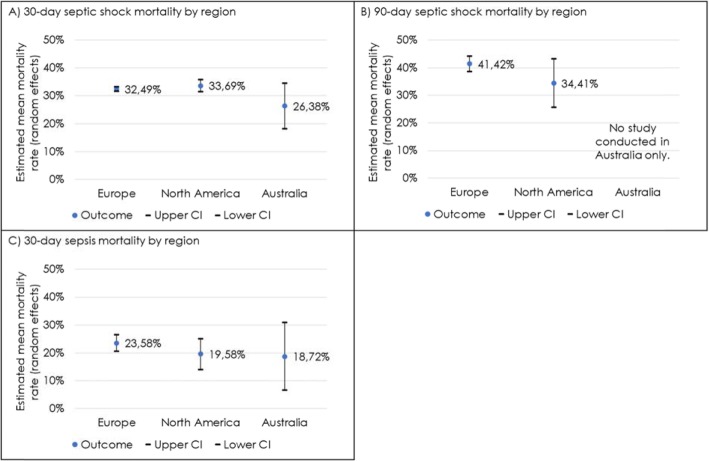
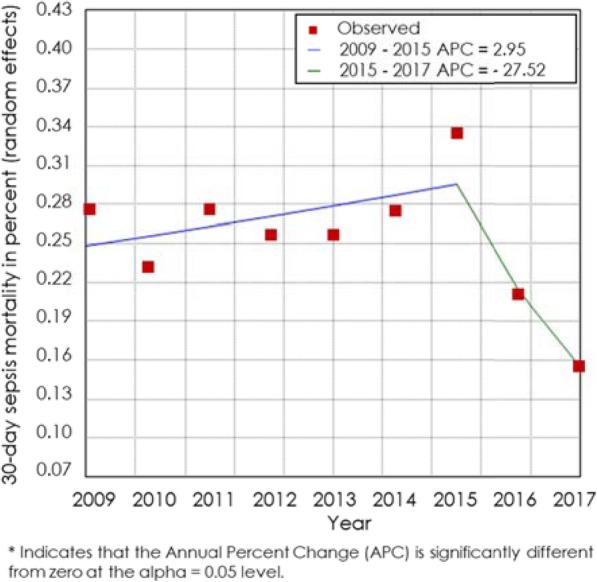
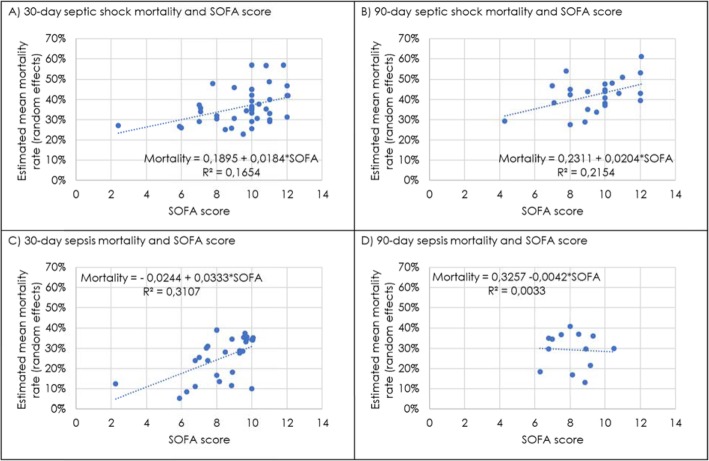
Background: Sepsis and septic shock remain drivers for mortality in critically ill patients. The heterogeneity of the syndrome hinders the generation of reproducible numbers on mortality risks. Consequently, mortality rates range from 15 to 56%. We aimed to update and extend the existing knowledge from meta-analyses and estimate 30- and 90-day mortality rates for sepsis and septic shock separately, stratify rates by region and study type and assess mortality rates across different sequential organ failure assessment (SOFA) scores. Methods: We performed a systematic review of articles published in PubMed or in the Cochrane Database, between 2009 and 2019 in English language including interventional and observational studies. A meta-analysis of pooled 28/30- and 90-day mortality rated separately for sepsis and septic shock was done using a random-effects model. Time trends were assessed via Joinpoint methodology and for the assessment of mortality rate over different SOFA scores, and linear regression was applied. Results: Four thousand five hundred records were identified. After title/abstract screening, 783 articles were assessed in full text for eligibility. Of those, 170 studies were included. Average 30-day septic shock mortality was 34.7% (95% CI 32.6–36.9%), and 90-day septic shock mortality was 38.5% (95% CI 35.4–41.5%). Average 30-day sepsis mortality was 24.4% (95% CI 21.5–27.2%), and 90-day sepsis mortality was 32.2% (95% CI 27.0–37.5%). Estimated mortality rates from RCTs were below prospective and retrospective cohort studies. Rates varied between regions, with 30-day septic shock mortality being 33.7% (95% CI 31.5–35.9) in North America, 32.5% (95% CI 31.7–33.3) in Europe and 26.4% (95% CI 18.1–34.6) in Australia. A statistically significant decrease of 30-day septic shock mortality rate was found between 2009 and 2011, but not after 2011. Per 1-point increase of the average SOFA score, average mortality increased by 1.8–3.3%. Conclusion: Trends of lower sepsis and continuous septic shock mortality rates over time and regional disparities indicate a remaining unmet need for improving sepsis management. Further research is needed to investigate how trends in the burden of disease influence mortality rates in sepsis and septic shock at 30- and 90-day mortality over time.
Overview
The claims and statistics of this paper haven’t been checked yet.
Free: it reads the open-access text and checks the first 5 claims that cite a source we can check. Create a free account to check every claim.
Integrity signals
Registry
Cites
Statistics
Figures
Verification
Claims the paper makes
The claims and statistics of this paper haven’t been checked yet.
Free: it reads the open-access text and checks the first 5 claims that cite a source we can check. Create a free account to check every claim.
Self-check
Percentages, sums and reported differences re-computed from the paper’s own numbers.
The self-check needs the paper’s full text.
Citations
Cites
Preferred Reporting Items for Systematic Reviews and Meta-Analyses: the PRISMA statement
Moher, D., Liberati, A., Tetzlaff, J., Altman, D. G., & for the PRISMA Group (2009) · BMJ · doi:10.1136/bmj.b2535 · Cited by 83,823
Preferred reporting items for systematic reviews and meta-analyses: the PRISMA Statement.
(2009) · PubMed Central · Cited by 44,859
RoB 2: a revised tool for assessing risk of bias in randomised trials
Sterne, J. A. C., Savović, J., Page, M. J., Elbers, R. G., Blencowe, N. S., Boutron, I., Cates, C. J., Cheng, H.-Y., Corbett, M. S., Eldridge, S. M., et al. (2019) · BMJ · doi:10.1136/bmj.l4898 · Cited by 34,787 · cited 1×
“RoB 2’ for randomized trials [18] and with ‘ROBINS-I’ used for observational studies [19], for sepsis and septic shock, 30 and 90 days mortality each.”
MethodThe third international consensus definitions for sepsis and septic shock (Sepsis-3).
Singer, M., Deutschman, C. S., Seymour, C. W., Shankar-Hari, M., Annane, D., Bauer, M., Bellomo, R., Bernard, G. R., Chiche, J.-D., Coopersmith, C. M., et al. (2016) · JAMA · doi:10.1001/jama.2016.0287 · Cited by 28,250
Self-citationROBINS-I: a tool for assessing risk of bias in non-randomised studies of interventions
Sterne, J. A., Hernán, M. A., Reeves, B. C., Savović, J., Berkman, N. D., Viswanathan, M., Henry, D., Altman, D. G., Ansari, M. T., Boutron, I., et al. (2016) · BMJ · doi:10.1136/bmj.i4919 · Cited by 20,329 · cited 1×
“RoB 2’ for randomized trials [18] and with ‘ROBINS-I’ used for observational studies [19], for sepsis and septic shock, 30 and 90 days mortality each.”
MethodBone, R. C., Balk, R. A., Cerra, F. B., Dellinger, R. P., Fein, A. M., Knaus, W. A., Schein, R. M. H., & Sibbald, W. J. (1992) · Chest · doi:10.1378/chest.101.6.1644 · Cited by 13,198
Surviving Sepsis Campaign: International Guidelines for Management of Severe Sepsis and Septic Shock
Dellinger, R. P., Levy, M. M., Rhodes, A., Annane, D., Gerlach, H., Opal, S. M., Sevransky, J. E., Sprung, C. L., Douglas, I. S., Jaeschke, R., et al. (2013) · Critical Care Medicine · doi:10.1097/ccm.0b013e31827e83af · Cited by 9,694
Self-citationThe Surviving Sepsis Campaign Guidelines Committee including The Pediatric Subgroup*, Dellinger, R. P., Levy, M. M., Rhodes, A., Annane, D., Gerlach, H., Opal, S. M., Sevransky, J. E., Sprung, C. L., Douglas, I. S., et al. (2013) · Intensive Care Medicine · doi:10.1007/s00134-012-2769-8 · Cited by 7,290
Self-citationPermutation tests for joinpoint regression with applications to cancer rates
Kim, H.-J., Fay, M. P., Feuer, E. J., & Midthune, D. N. (2000) · Statistics in Medicine · doi:10.1002/(sici)1097-0258(20000215)19:3<335::aid-sim336>3.0.co;2-z · Cited by 6,318
Severe Sepsis and Septic Shock
Angus, D. C., & van der Poll, T. (2013) · New England Journal of Medicine · doi:10.1056/nejmra1208623 · Cited by 3,961
Cited by
Items 201–300 of 985
Centner, F.-S., Schoettler, J. J., Brohm, K., Mindt, S., Jäger, E., Hahn, B., Fuderer, T., Lindner, H. A., Schneider‐Lindner, V., Krebs, J., et al. (2023) · International Journal of Molecular Sciences · doi:10.3390/ijms241612600 · Cited by 13
“Specifically, upon the onset of sepsis-associated organ dysfunction, the prognosis worsens significantly, as consistently confirmed by studies based on sepsis-1/2 and sepsis-3 definition criteria [26,27].”
BackgroundDepletion of mTOR ameliorates CD4+ T cell pyroptosis by promoting autophagy activity in septic mice
Guo, R., Zhao, G., Bai, G., Chen, J., Han, W., Cui, N., & Wang, H. (2023) · International Immunopharmacology · doi:10.1016/j.intimp.2023.110964 · Cited by 13
Arnés-García, D., Robles, I., Parra, J. C., SALVADOR, M. C., Rodríguez, C. H., Gisbert, L., & Hidalgo-Tenorio, C. (2023) · Antibiotics · doi:10.3390/antibiotics12121692 · Cited by 13
“Septic shock, reported by some authors to increase the mortality risk by up to 40% [23], was five-fold more prevalent among the ceftaroline-F-treated patients in our cohort.”
BackgroundRuan, X., Gao, Y., Lai, X., Wang, B., Wu, J., & Yu, X. (2024) · Journal of the Formosan Medical Association · doi:10.1016/j.jfma.2024.05.012 · Cited by 13
“The average mortality rate for septic shock patients within 30 days is reported at 34.7%, with a 38.5% mortality rate at 90 days [2].”
BackgroundInfluentialHu, T., Qiao, Z., & Mei, Y. (2021) · Frontiers in Medicine · doi:10.3389/fmed.2021.737654 · Cited by 13
Emerging concepts in the care of patients with cirrhosis and septic shock
Jiménez, J. V., García–Tsao, G., & Saffo, S. (2023) · World Journal of Hepatology · doi:10.4254/wjh.v15.i4.497 · Cited by 13
Palamim, C. V. C., Boschiero, M. N., & Marson, F. A. L. (2023) · Frontiers in Medicine · doi:10.3389/fmed.2023.1064120 · Cited by 12
“When considering death risk markers, sepsis is responsible for ~30–60% of deaths in the ICU (49).”
BackgroundSun, S., Liu, H., Liang, Q., Yang, Y., Cao, X., & Zheng, B. (2024) · Frontiers in Medicine · doi:10.3389/fmed.2024.1346855 · Cited by 12
Microcirculation-driven mitochondrion dysfunction during the progression of experimental sepsis
Fejes, R., Rutai, A., Juhász, L., Poles, M. Z., Szabó, A., Kaszaki, J., Boros, M., & Tallósy, S. P. (2024) · Scientific Reports · doi:10.1038/s41598-024-57855-9 · Cited by 12
“…impairment, or MMDS, has already been identified as a significant element in the pathogenesis of human MOF, but alterations to intestinal microcirculation and hepatic mitochondrial functions to date have not been studied together in MOF associated with intraab-dominal sepsis 22,25,26 .”
BackgroundMethodChau, E. Y. W., Bakar, A. A., Zamhot, A. B., Zaini, I. Z., Adanan, S. N. B., & Sabardin, D. M. (2024) · BMC Emergency Medicine · doi:10.1186/s12873-024-00973-4 · Cited by 12
“There was a higher mortality burden in patients with septic shock compared to those without shock and this finding was consistent with previous meta-analysis done [29, 31, 32].”
ResultUrosepsis: Pathophysiologie, Diagnose und Management – ein Update
Stangl, F. P., Wagenlehner, F., Schneidewind, L., & Kranz, J. (2024) · Die Urologie · doi:10.1007/s00120-024-02336-0 · Cited by 12
Early peripheral perfusion index predicts 28-day outcome in patients with septic shock
Chi, C., Gong, H., Yang, K. G., Peng, P., & Zhang, X. (2024) · World Journal of Emergency Medicine · doi:10.5847/wjem.j.1920-8642.2024.081 · Cited by 12
Sun, L., Zhang, C., Song, P., Zhong, X., Xie, B., Huang, Y., Yuanjia, H., Xu, X., & Lei, X. (2024) · Heart & Lung · doi:10.1016/j.hrtlng.2024.11.020 · Cited by 12
Huangfu, L., Wang, J., Li, D., Fei, H., Chen, X., Dong, J., & Sun, L. (2025) · Chemico-Biological Interactions · doi:10.1016/j.cbi.2025.111406 · Cited by 12
Hao, J., Tian, Y., Tang, J., Zhu, N., Li, Z., Li, L., Wang, Y., & Jiang, G. (2025) · Environmental Science & Technology · doi:10.1021/acs.est.4c12577 · Cited by 12
Turcato, G., Zaboli, A., Filippi, L., Cipriano, A., Ferretto, P., Maggi, M., Lucente, F., Marchetti, M., Ghiadoni, L., & Wiedermann, C. J. (2025) · Clinics and Practice · doi:10.3390/clinpract15070120 · Cited by 12
“Sepsis remains a complex clinical syndrome and one of the main causes of morbidity and mortality worldwide [1,2].”
Resolvin D5 (RvD5) Reduces Renal Damage Caused by LPS Endotoxemia in Female Mice
Cardoso, R. D. R., Chambo, S. D., Zaninelli, T. H., Bianchini, B. H. S., da Silva, M. D. V., Bertozzi, M. M., Saraiva‐Santos, T., Franciosi, A., Martelossi-Cebinelli, G., Garcia-Miguel, P. E., et al. (2022) · Molecules · doi:10.3390/molecules28010121 · Cited by 12
“Survival rates can be even lower, depending on the country [3].”
BackgroundLee, E. H., Lee, K. H., Lee, K., Park, Y., Han, K. D., & Han, S. H. (2024) · Journal of Epidemiology and Global Health · doi:10.1007/s44197-024-00197-6 · Cited by 12
“Despite advancements in intensive care, including early recolonization and initial resuscitation, the 30-day mortality attributable to sepsis remains high, exceeding 25–30% [3, 4].”
BackgroundYuan, X., Zhang, J., Shi, J., Liu, W., Kritchenkov, A. S., Vlierberghe, S. V., Wang, L., Liu, W., & Gao, J. (2024) · Polymers · doi:10.3390/polym16101346 · Cited by 12
Hernandez, G. N., Francis, A. J., & Hamid, P. (2024) · Cureus · doi:10.7759/cureus.60947 · Cited by 12
Julián-Jiménez, A., de Guadiana‐Romualdo, L. G., Merinos-Sánchez, G., & García, D. E. (2024) · Revista Clínica Española (English Edition) · doi:10.1016/j.rceng.2024.05.006 · Cited by 12
Deng, J., Zuo, Q., Venugopal, K., Hung, J., Zubair, A., Blais, S., Porter, V., Moskalyk, M., & Heybati, K. (2024) · International Archives of Allergy and Immunology · doi:10.1159/000538959 · Cited by 12
Antibiotic dose optimisation in the critically ill: targets, evidence and future strategies
Dyer, C. J., Waele, J. J. D., & Roberts, J. A. (2024) · Current Opinion in Critical Care · doi:10.1097/mcc.0000000000001187 · Cited by 12
“underscoring the need for prompt and precise therapeutic intervention, especially with regards to antibiotic therapy [1 – 3].”
Modulating Immune Responses: The Double-Edged Sword of Platelet CD40L
Bendas, G., Gobec, M., & Schlesinger, M. (2024) · Seminars in Thrombosis and Hemostasis · doi:10.1055/s-0044-1791512 · Cited by 12
Ma, C.-H., Healy, J., Kinteh, E., Ma, C.-C., Tzeng, C.-F. T., Chou, E. H.-C., Wu, C., Shao, S., & Chen, K. (2025) · Annals of Intensive Care · doi:10.1186/s13613-025-01428-0 · Cited by 12
“It is a significant global health concern, with an average 30-day mortality of 20–30% [1, 2].”
Wu, C., Zhang, X., Xie, J., Li, Q., He, J., Hu, L., Wang, H., Liu, A., Xu, J., Yang, C., et al. (2022) · The Journal of Clinical Pharmacology · doi:10.1002/jcph.2031 · Cited by 12
“Study Population Patients were eligible for enrollment if they were (1) between 18 and 75 years of age; (2) expected, in the opinion of the investigator, to stay in the ICU for more than 3 days; (3) diagnosedwith severe pneumonia, requiring mechanical ventilatory support, with sepsis; (4) diagnosed with severe pneumon…”
BackgroundMethodNichttraumatologisches Schockraummanagement in einer nichtuniversitären Notaufnahme
Wasser, C., Schmid, N., Müller, M., Günther, M., Beller, C., & Rudolph, B. (2022) · Notfall + Rettungsmedizin · doi:10.1007/s10049-022-01027-7 · Cited by 12
Coman, O., Grigorescu, B.-L., Huţanu, A., Bacârea, A., Văsieșiu, A.-M., Fodor, R. Ș., Stoica, F., & Azamfirei, L. (2024) · Medicina · doi:10.3390/medicina60071174 · Cited by 11
Karlsson, H., Afrasiabi, A., Ohlsson, M. A., Månsson, V., Hartman, H., & Torisson, G. (2024) · BMJ Open · doi:10.1136/bmjopen-2024-091311 · Cited by 11
Hou, G. Y., Lal, A., Schulte, P. J., Dong, Y., Kılıçkaya, O., Gajic, O., & Zhong, X. (2025) · Shock · doi:10.1097/shk.0000000000002536 · Cited by 11
“The 30-day septic shock mortality rate is around 33.7% (2).”
InfluentialWei, X., Min, Y., Yu, J.-C., Wang, Q., Wang, H., Li, S., & Su, L. (2021) · Frontiers in Medicine · doi:10.3389/fmed.2021.757061 · Cited by 11
“(6) demonstrated the average 30day septic shock mortality was nearly 35%, and 90-day septic shock mortality was even higher and reached 38.”
BackgroundDetection of the Frail Elderly at Risk of Postoperative Sepsis
Sarría‐Santamera, A., Yessimova, D., Viderman, D., Polo-deSantos, M., Glushkova, N., & Semenova, Y. M. (2022) · International Journal of Environmental Research and Public Health · doi:10.3390/ijerph20010359 · Cited by 11
“Eurostat forecasted that by 2080, in the European Union, the proportion of the population aged 65 years and older will reach 30% [1].”
BackgroundWichmann, S., Schønemann‐Lund, M., Perner, A., Itenov, T. S., Lange, T., Gluud, C. N., Berthelsen, R. E., Brøchner, A. C., Wiis, J., & Bestle, M. H. (2023) · Acta Anaesthesiologica Scandinavica · doi:10.1111/aas.14196 · Cited by 11
Pushkaran, A. C., Kumaran, K., Ann Maria, T., Biswas, R., & Mohan, C. G. (2023) · Molecular Informatics · doi:10.1002/minf.202200254 · Cited by 11
Trovão, L. O., Rodrigues, L. D. S., Mendes, P. M., Alves, P. C. S., Oliveira, A. D. S., Brito, J. M., Vale, A. Á. M., Garbis, D. V. D. O., Simão, G., dos Santos, A. P. S. D. A., et al. (2023) · Journal of Immunology Research · doi:10.1155/2023/2868707 · Cited by 11
Shapiro, L., Scherger, S. J., Franco‐Paredes, C., Gharamti, A. A., & Henao‐Martínez, A. F. (2023) · Frontiers in Microbiology · doi:10.3389/fmicb.2023.1250483 · Cited by 12
“Sepsis mortality was quantified in a meta-analysis of 170 interventional or observational studies conducted 2009–2019 (Bauer et al., 2020).”
MethodAssociation between reduced muscle mass and poor prognosis of biliary sepsis
Chun, S. Y., Cho, Y. S., & Kim, H. B. (2024) · Scientific Reports · doi:10.1038/s41598-024-52502-9 · Cited by 11
“In a study by Bauer, the 30-day septic shock mortality rate was 33.7% (95% CI, 31.5–35.9) in North America, 32.5% (95% CI, 31.7–33.3) in Europe, and 26.4% (95% CI, 18.1–34.6) in Australia 9 .”
InfluentialSteatotic Liver Disease and Sepsis Outcomes—A Prospective Cohort Study (SepsisFAT)
Krznarić, J., Papić, N., Vrsaljko, N., Gjurašin, B., Kutleša, M., & Vince, A. (2024) · Journal of Clinical Medicine · doi:10.3390/jcm13030798 · Cited by 11
“Sepsis is a life-threatening organ dysfunction caused by a dysregulated host response to infection, often resulting in severe multiorgan failure with a high mortality rate of 25–30% [1–3].”
BackgroundVerra, C., Paulmann, M. K., Wegener, J., Marzani, E., Alves, G. F., Collino, M., Coldewey, S. M., & Thiemermann, C. (2024) · Frontiers in Immunology · doi:10.3389/fimmu.2024.1447901 · Cited by 11
Post-discharge functional outcomes in older patients with sepsis
Ge, S., Zha, L., Tanaka, A., Narii, N., Shimomura, Y., Komatsu, M., Komukai, S., Murata, F., Maeda, M., Kiyohara, K., et al. (2024) · Critical Care · doi:10.1186/s13054-024-05080-1 · Cited by 10
“…sequelae, including physical limitations, cognitive impairments, and exacerbation of chronic medical conditions, are often observed in patients who survive sepsis [1–3], in-hospital mortality associated with sepsis has decreased worldwide with the establishment of treatment guidelines [4].”
BackgroundCheng, D., Pan, S., Fang, X., Wang, S., Zou, X., Shu, H., Yang, X., Xu, J., & Shang, Y. (2025) · Scientific Reports · doi:10.1038/s41598-025-89354-w · Cited by 10
Jaramillo, G. D., Erazo-Guerrero, L., Laguado-Castro, V., & Alfonso-Parada, J. M. (2025) · Journal of Clinical Medicine · doi:10.3390/jcm14144869 · Cited by 10
“This is comparable to the meta-analysis by Bauer et al. [29], which reported a mortality rate of 34.7% for septic shock, as well as the study by Fleischmann et al., which reported a mortality rate of 26% [30].”
InfluentialBolanaki, M., Kurland, L., Brabrand, M., Daniels, R., Govender, K., Hanses, F., Innocenti, F., Lassen, A. T., Martín‐Loeches, I., & Möckel, M. (2025) · European Journal of Emergency Medicine · doi:10.1097/mej.0000000000001255 · Cited by 10
“In-hospital mortality for sepsis remains high – reaching approximately 24% – making sepsis one of the leading causes of death in European hospitals [2].”
DPP4 inhibition curbs systemic inflammation
Hellenthal, K. E. M., Kintrup, S., Wirth, T., Brabenec, L., Cursiefen, C., Beulen, R., Hollmann, K., Lehmann, M., Burkard, P., Roth, J., et al. (2025) · Critical Care · doi:10.1186/s13054-025-05599-x · Cited by 10
“Acute inflammatory syndromes as observed in sepsis are associated with exceptionally high and – over the past decades – almost unchanged mortality due to organ dysfunction and failure [42].”
Bhattacharjee, A., Datta, P. K., Kumar, V., Ravikumar, R. H., Sathe, P., & Kundu, R. (2025) · Indian Journal of Critical Care Medicine · doi:10.5005/jp-journals-10071-25054 · Cited by 10
Management of Sepsis in Hospitalized Patients
Palakshappa, J. A., & Taylor, S. P. (2025) · Annals of Internal Medicine · doi:10.7326/annals-25-02685 · Cited by 10
Vasoactive Medications and the Microcirculation in Septic Shock: A Scoping Review
Sathianathan, S., SACHAR, S., Berro, J., Nero, N., Bauer, S. R., Tonelli, A. R., Hamzaoui, O., & Siuba, M. (2026) · Critical Care Medicine · doi:10.1097/ccm.0000000000007016 · Cited by 11
Chae, B., Shin, Y. S., Hong, S., Kim, S. M., Kim, Y., Ryoo, S. M., & Kim, W. Y. (2021) · Journal of Clinical Medicine · doi:10.3390/jcm10132917 · Cited by 10
“Despite these supportive therapies, mortality rates remain high, suggesting the need to identify modifiable factors or targets for adjuvant therapies in patients with septic shock [2,3].”
BackgroundHe, D., Zhang, L., Hu, H., Gu, W., Lu, X., Qiu, M., Li, C., Yin, H., & Lyu, J. (2023) · The American Journal of Emergency Medicine · doi:10.1016/j.ajem.2023.04.040 · Cited by 10
Sun, Z., Zhang, T., Ning, C., Shen, D., Pei, W., Zhou, R., Zhu, S., & Huang, G. (2023) · Shock · doi:10.1097/shk.0000000000002137 · Cited by 10
The dynamics of the endothelial glycocalyx: a rare snapshot by electron microscopy
Drost, C. C., Unger, A., Linke, W. A., Vink, H., & Kümpers, P. (2023) · Angiogenesis · doi:10.1007/s10456-023-09880-x · Cited by 10
“Sufficient therapeutic approaches to break this vicious cycle are lacking, but are urgently needed as the lethality of these entities remained high in recent years [7].”
BackgroundShao, Y., Shao, F., Zhou, J., Fang, S., Zhu, J., & Li, F. (2023) · Advances in Clinical and Experimental Medicine · doi:10.17219/acem/166656 · Cited by 10
The estimation of glomerular filtration in acute and critical illness: Challenges and opportunities
Roy, R., MacDonald, J., Dark, P. M., Kalra, P. A., & Green, D. (2023) · Clinical Biochemistry · doi:10.1016/j.clinbiochem.2023.110608 · Cited by 10
Abu-Humaidan, A. H. A., Ahmad, F. M., Theeb, L. S., Sulieman, A. J., Battah, A., Hani, A. B., & Abeeleh, M. A. A. (2023) · Critical Care Research and Practice · doi:10.1155/2023/3775670 · Cited by 10
Yang, Y., Griffin, K., Li, X., Sharp, E., Young, L., Garcia, L., Griswold, J., & Pappas, D. (2023) · Analytical Chemistry · doi:10.1021/acs.analchem.3c01797 · Cited by 10
Zhu, Y., Wang, Z., Zheng, J., Wang, J., Chen, Y., Huang, C., & Zhou, H. (2023) · Gene · doi:10.1016/j.gene.2023.147888 · Cited by 10
Reinicke, M., Braun, S. D., Diezel, C., Lemuth, O., Engelmann, I., Liebe, T., & Ehricht, R. (2024) · Antibiotics · doi:10.3390/antibiotics13020161 · Cited by 10
“Despite advancements in medical technology and healthcare systems, the global mortality rate associated with bloodstream infections remains alarmingly high [1].”
BackgroundDevelopment of a rectally administrable Dnase1 to treat septic shock by targeting NETs
Kwak, S.-B., Kim, S.-J., Kang, Y. J., Lee, W., Huh, J., & Park, J. (2024) · Life Sciences · doi:10.1016/j.lfs.2024.122526 · Cited by 10
Pipitò, L., Puccio, R., Marrali, D., Mancuso, A., Gagliano, M. C., Gaudiano, R., Piccione, M., Iaria, C., & Cascio, A. (2024) · Journal of Clinical Medicine · doi:10.3390/jcm13082239 · Cited by 10
“For sepsis without septic shock, the 30-day and 90-day mortality rates were even lower, at 24.4% and 32.2%, respectively [18].”
BackgroundInfluentialLi, F., Qu, H., Li, Y., Liu, J., & Fu, H. (2024) · Aging · doi:10.18632/aging.205772 · Cited by 11
“A study reviewing the mortality of septic patients in Europe, North America, and Australia from 2009 to 2019 found that the average 30-day mortality rate of sepsis was 24.4% [17], which is consistent with our results that the 28-day mortality rate of septic patients is 25.0%.”
ResultInfluentialMartinez, G. S., Garduno, A., Ostadgavahi, A. T., Hewins, B., Dutt, M., Kumar, A., Martín‐Loeches, I., & Kelvin, D. J. (2024) · International Journal of Molecular Sciences · doi:10.3390/ijms25115920 · Cited by 10
“It is estimated that up to a third of intensive care unit (ICU) patients contend with sepsis [3].”
BackgroundProlonged Beta-Lactam Infusions in Children: A Systematic Review and Meta-Analysis
Briand, A., Bernier, L., Pincivy, A., Roumeliotis, N., Autmizguine, J., Marsot, A., Métras, M., & Thibault, C. (2024) · The Journal of Pediatrics · doi:10.1016/j.jpeds.2024.114220 · Cited by 10
“Contrasting with these results, Maimongkol et al 60 reported no difference in microbiological eradication rate on day 3 to 7 in children with culture-positive gram-negative infections who had repeated cultures following meropenem initiation (53.8% [7/13]”
InfluentialYang, Y., Dong, Q., Su, J., Xiao, H., Zan, D., Chen, J., Chen, X., Wei, F., Zeng, C., & Yong, Y. (2024) · Medicina Intensiva · doi:10.1016/j.medine.2024.09.012 · Cited by 10
Assessing the Risk of Delirium and Death in Sepsis Using the Braden Score: A Retrospective Study
Li, X., Tang, Y., Bai, Z., Liang, X., Huang, X., Chen, J., Cheng, H., Lyu, J., & Wang, Y. (2024) · Journal of Clinical Nursing · doi:10.1111/jocn.17476 · Cited by 10
Orban, C., Bratu, A., Agapie, M., Borjog, T., Jafal, M., Sima, R., Dumitrașcu, O. C., & Popescu, M. (2025) · Biomedicines · doi:10.3390/biomedicines13010180 · Cited by 10
“Despite all these improvements, mortality remains high in septic patients and has a wide geographic variation based on different socio-economic factors [3,4].”
Thang, N. V., Luyen, L. T., Tuong, N. T., & Hai, P. D. (2025) · Acute and Critical Care · doi:10.4266/acc.003576 · Cited by 10
“Although significantly developed for the management of patients, sepsis remains a leading cause of death across the world, with a mortality rate of 34.7% in a meta-analysis in 2020 [2].”
InfluentialIncidence and associated risk factors for limb amputation among sepsis survivors in South Korea
Oh, T. K., & Song, I. (2020) · Journal of Anesthesia · doi:10.1007/s00540-020-02858-9 · Cited by 10
Magnin, M., Amson, H., Vacheron, C., Thiollière, F., Piriou, V., Junot, S., Garin, J. B., & Allaouchiche, B. (2021) · Clinical and Experimental Pharmacology and Physiology · doi:10.1111/1440-1681.13540 · Cited by 10
Vaidie, J., Péju, E., Jandeaux, L.-M., Lesouhaitier, M., Lachérade, J.-C., Guillon, A., Wittebole, X., Asfar, P., Evrard, B., Daix, T., et al. (2023) · Critical Care · doi:10.1186/s13054-023-04626-z · Cited by 10
Sepsis and antibiotics: When should we deploy a parachute?
Einav, S., Léone, M., & Martín‐Loeches, I. (2023) · International Journal of Antimicrobial Agents · doi:10.1016/j.ijantimicag.2023.106732 · Cited by 10
Jia, J., Ji, J., & Liu, Z. (2024) · Trials · doi:10.1186/s13063-024-08439-5 · Cited by 9
Zhang, P., Yuan, S., Zhang, S., Yuan, Z., Ye, Z., Lv, L., Yang, H., Peng, H., Li, H., & Zhao, N. (2025) · Frontiers in Physiology · doi:10.3389/fphys.2025.1617196 · Cited by 9
Choi, H. W., Noh, J. H., Iskarpatyoti, J. A., Zhu, X., Bao, C., Abraham, M., Hoffmann, U., Privratsky, J. R., Lee, R. H., Bergmeier, W., et al. (2025) · Nature Communications · doi:10.1038/s41467-025-66978-0 · Cited by 9
“Thestrikingfactthatsurvivalratesmarkedlydecrease with development of shock 2,3 , suggests that preventing shock is paramount for improving outcomes in septic patients.”
Wang, J., Diao, S.-T., Zhu, T.-Y., Chen, Y., Li, S., Peng, J., Dong, R., Xu, J., Weng, L., & Du, B. (2025) · Anesthesiology · doi:10.1097/aln.0000000000005881 · Cited by 9
Lotz, C., Heckelmann, J., Lendzian, C., Herrmann, J., Haack, B., Gieselmann, M., Wedekink, F., Röder, D., Schlegel, N., Meybohm, P., et al. (2026) · Shock · doi:10.1097/shk.0000000000002802 · Cited by 9
“In Europe, septic shock is associated with a mortality of 40% without significant improvements within the last decade (2,3).”
Zeng, J., & Zhao, G. (2023) · Open Medicine · doi:10.1515/med-2023-0695 · Cited by 9
“Worldwide, it is estimated that more than 30 million cases of sepsis occur every year, and approximately 6 million deaths because of this cause [3].”
BackgroundAlshehri, A. M., Kovacevic, M. P., Dube, K. M., Lupi, K. E., & DeGrado, J. R. (2023) · Annals of Pharmacotherapy · doi:10.1177/10600280231191131 · Cited by 9
Duan, Y., Liu, M., Wang, J., & Wei, B. (2023) · Medical Science Monitor · doi:10.12659/msm.942079 · Cited by 9
Yang, Y., Tian, T., Wang, Z., Li, S., Li, N., Luo, H., & Jiang, Y. (2024) · International Immunopharmacology · doi:10.1016/j.intimp.2024.111497 · Cited by 9
Influence of lymphopenia on long-term mortality in septic shock, a retrospective observational study
Rico-Feijoó, J., Bermejo, J., Pérez-González, A., Martín-Alfonso, S., & Aldecoa, C. (2024) · Revista Española de Anestesiología y Reanimación (English Edition) · doi:10.1016/j.redare.2024.02.014 · Cited by 9
Hadi, N. R., Zaini, A., & Jawad, H. E. (2023) · Journal of Medicine and Life · doi:10.25122/jml-2023-0064 · Cited by 9
Jiang, Y., Jiang, Y., Li, L., Liu, X., Hou, X., & Wang, W. (2024) · Biology · doi:10.3390/biology13050319 · Cited by 9
“Sepsis is a life-threatening medical condition caused by infections, burns, and other factors with a mortality rate of 25–30% [6,7].”
BackgroundThe Emerging Roles of Hydrogen Sulfide in Ferroptosis
Zhu, Y., Liu, Z.-T., Tang, A.-Q., Liang, X., Wang, Y., Liu, Y., Jin, Y., Gao, W., Yuan, H., Wang, D., et al. (2024) · Antioxidants and Redox Signaling · doi:10.1089/ars.2023.0535 · Cited by 9
“The incidence is high and increasing year by year and the mortality rate is high, usually with multiple organ dysfunction, hypotension, and poor perfusion (Bauer et al., 2020).”
Diagnostic and Prognostic Utilities of Pancreatic Stone Protein in Patients with Suspected Sepsis
Lee, G.-H., Kim, H., Moon, H., Yun, Y., Park, M., Lee, S., & Hur, M. (2024) · Diagnostics · doi:10.3390/diagnostics14182076 · Cited by 9
“The inputs were as follows: analysis time t = 1 or 8 months, accrual time α = 1 or 8 months, follow-up time b = 1 or 8 months, null survival probability S0(t) = 0.244, and alternative survival probability S1(t) = 0.123 or 0.147 [26].”
MethodInfluentialThe smell of sepsis: Electronic nose measurements improve early recognition of sepsis in the ED
van der Aart, T. J., Visser, M., van Londen, M., van de Wetering, K. M. H., ter Maaten, J. C., & Bouma, H. R. (2024) · The American Journal of Emergency Medicine · doi:10.1016/j.ajem.2024.11.045 · Cited by 9
Yang, R., Hu, C., Zhuo, Y., Tan, Q., Shen, Y., Jiang, K., Xia, Q. J., & Deng, L. (2024) · Phytomedicine · doi:10.1016/j.phymed.2024.156295 · Cited by 9
Sasidharan, P., Kaeley, N., Sharma, P., Jain, G., Shankar, T., Jayachandran, S., Kumar, B., Kumar, M. A., Jose, J. R., & Lalotra, D. K. (2025) · Cureus · doi:10.7759/cureus.77353 · Cited by 9
Bauer, S. R., Wieruszewski, P. M., Bissell, B. D., Dugar, S. P., Sacha, G. L., Sato, R., Siuba, M., Schleicher, M. C., Vachharajani, V., Falck-Ytter, Y. T., et al. (2025) · Shock · doi:10.1097/shk.0000000000002558 · Cited by 9
“To adjudicate imprecision, we also estimated the optimal information size for each outcome measure (41 – 43).”
McDonald, R., Burns, M., Wong, A., Smith, C., Ostermann, M., & Hutchings, S. (2025) · Critical Care · doi:10.1186/s13054-025-05573-7 · Cited by 9
“The mortality rate in this patient population is in the region of 35–40% [2, 3].”
S1PR3 agonism and S1P lyase inhibition rescue mice in the severe state of experimental sepsis
Ziegler, A. C., Haider, R. S., Hoffmann, C., & Gräler, M. H. (2024) · Biomedicine & Pharmacotherapy · doi:10.1016/j.biopha.2024.116575 · Cited by 9
The impact of the overuse of short-acting β2-agonists on the risk of sepsis and septic shock
Lai, C., Chen, C., Wang, Y., Wang, C., & Wang, H. (2022) · Journal of Allergy and Clinical Immunology · doi:10.1016/j.jaci.2021.11.029 · Cited by 9
Bates, D. W., & Syrowatka, A. (2022) · Nature Medicine · doi:10.1038/s41591-022-01878-0 · Cited by 9
Jiang, S., Xu, J., Ke, C., & Huang, P. (2024) · BMC Infectious Diseases · doi:10.1186/s12879-024-09421-x · Cited by 8
“Despite advances in critical care medicine and antimicrobial therapy, patients with sepsis still face a high risk of death, with an average 30-day mortality rate of 24.4% [2].”
BackgroundInfluentialSun, Q., Zhang, H., Wang, Y., Xiu, H., Lu, Y., He, N. S. M., & Li, Y. (2025) · International Journal of Molecular Sciences · doi:10.3390/ijms26094433 · Cited by 8
“The incidence of sepsis and its associated healthcare burden are both escalating, attributed to global population aging trends and the rising prevalence of comorbidities among patients [19].”
Marx, G., Beneš, J., Ferrer, R., Fries, D. R., Ehler, J., Dembinski, R., Rosenberger, P., Zacharowski, K. D., Sánchez-Sánchez, M., Asehnoune, K., et al. (2025) · Journal of Clinical Medicine · doi:10.3390/jcm14155323 · Cited by 8
“In general, morbidity and mortality from sepsis or septic shock remain high, with recently reported average 30-day and 90-day mortality of 34.7% and 38.5%, respectively [37].”
InfluentialEndo, A., Yamakawa, K., Tagami, T., Umemura, Y., Takahashi, K., Nagasawa, H., Araki, Y., Kojima, M., Sera, T., Yagi, M., et al. (2022) · Trials · doi:10.1186/s13063-022-06732-9 · Cited by 8
Evaluation of electronic measurement of capillary refill for Sepsis screening at ED triage
Hansen, M. L., Gillespie, J. A., Riddick, T. A., Samatham, R. V., Baker, S. D., Filer, S., Xin, H., & Sheridan, D. C. (2023) · The American Journal of Emergency Medicine · doi:10.1016/j.ajem.2023.05.009 · Cited by 8
Wu, R., Xu, J., Zeng, H., Fan, Y., Li, H., Peng, T., & Xiao, F. (2024) · Biochimica et Biophysica Acta (BBA) - Molecular Basis of Disease · doi:10.1016/j.bbadis.2024.167049 · Cited by 8
Tićac, M., Kezele, T. G., & Bubonja‐Šonje, M. (2024) · Antibiotics · doi:10.3390/antibiotics13060569 · Cited by 8
“According to the results of a systematic review and meta-analysis, the 30-day mortality rate for sepsis in developed countries (Europe, North America, and Australia) is 24%, and for septic shock, it is 34% [20].”
BackgroundTheisen, B. E., Lichtenstern, C., Nußhag, C., Tan, B., Hölle, T., Weigand, M. A., Kalenka, A., & Fiedler-Kalenka, M. O. (2024) · Scientific Reports · doi:10.1038/s41598-024-70522-3 · Cited by 8
Metadata
- Authors
- Bauer, M., Gerlach, H., Vogelmann, T., Preissing, F., Stiefel, J., & Adam, D.
- Affiliations
- Jena University Hospital (DE)
- Vivantes Klinikum (DE)
- CytoSorbents (Germany) (DE)
- Corresponding author
- Bauer, Michael
- Venue
- Critical Care
- Published
- 2020-05-19
- Volume
- 24
- Issue
- 1
- Pages
- 239-239
- ISSN
- 1364-8535 (ISSN-L)
- PMC
- PMC7236499
- OpenAlex
- W3027548201
- Semantic Scholar
- 17551feef1e5ba684094ee873ccb0dabe3675738
- Cited by
- 867
- References
- 32
- Citations by year
- 2026: 137 · 2025: 223 · 2024: 217 · 2023: 162 · 2022: 91 · 2021: 33 · 2020: 4
- FWCI
- 10.67
- Type
- journal article
- Language
- en
- Open access
- gold
- doi.org
- Licence
- cc-by
- creativecommons.org/licenses/by/4.0 (tdm)
- creativecommons.org/licenses/by/4.0 (vor)
- Locations
- Critical Care (publishedVersion, cc-by)
- PubMed Central (publishedVersion, cc-by)
- PubMed (publishedVersion)
- DOAJ (DOAJ: Directory of Open Access Journals) (submittedVersion, cc-by-sa)
- Funders
- CytoSorbents Europe
- Topics
- Health Sciences › Medicine › Critical Care and Intensive Care Medicine › Sepsis Diagnosis and Treatment
- Health Sciences › Medicine › Surgery › Abdominal Surgery and Complications
- Health Sciences › Medicine › Nephrology › Acute Kidney Injury Research
- Keywords
- sepsis, septic shock, mortality rates, 30-day mortality, 90-day mortality, SOFA score, regional variation, mortality trends, critically ill patients
- MeSH terms
- Australia, Europe, Humans, Mortality, North America, Shock, Septic, Sepsis
About these checks
Registry, retraction, Cites and statistics results are computed, not judged, with one exception: a printed reference that no index lists is read once by a model before it counts as a citation error. Claims are extracted by a model and kept only when their quote appears verbatim in the text; each cited source is then checked, with a model’s help, for whether it says what the claim relies on. Those verdicts can be wrong — read the claim’s quote and the cited source before relying on one.
Statistics and arithmetic are recomputed, not judged.
Confidence bands are shown only for fields calibrated on our annotated test set. None is calibrated yet, so no band is shown.
What counts as a claim ›How we measure confidence ›How we check this ›
Are you an author, or do you see a problem with this page? Request a review
Data sources
Bibliographic data: Semantic Scholar, OpenAlex, Crossref.
Contains information from the Semantic Scholar Academic Graph Datasets, made available under the ODC Attribution License (ODC-BY 1.0).
Semantic Scholar’s data is described in: Kinney, R., et al. (2023). The Semantic Scholar Open Data Platform. arXiv:2301.10140.
