

Mortality in sepsis and septic shock in Europe, North America and Australia between 2009 and 2019 – results from a systematic review and meta-analysis
Open accessThe DOI matches its Crossref record; 30 of the 32 references it cites were found in a registry or an index.
Abstract
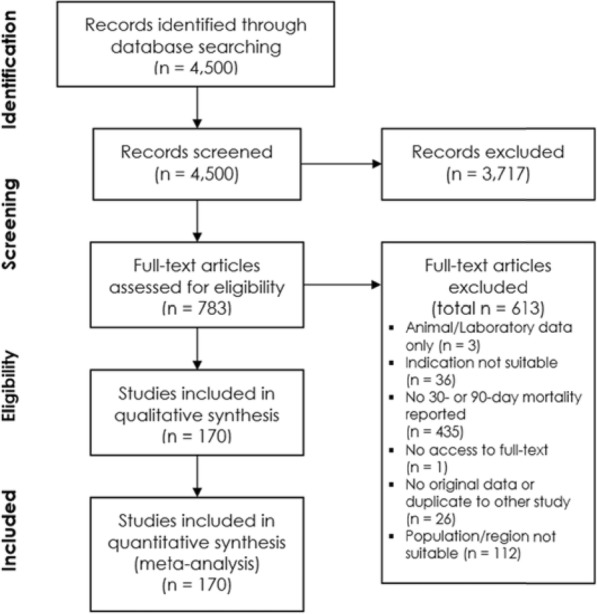
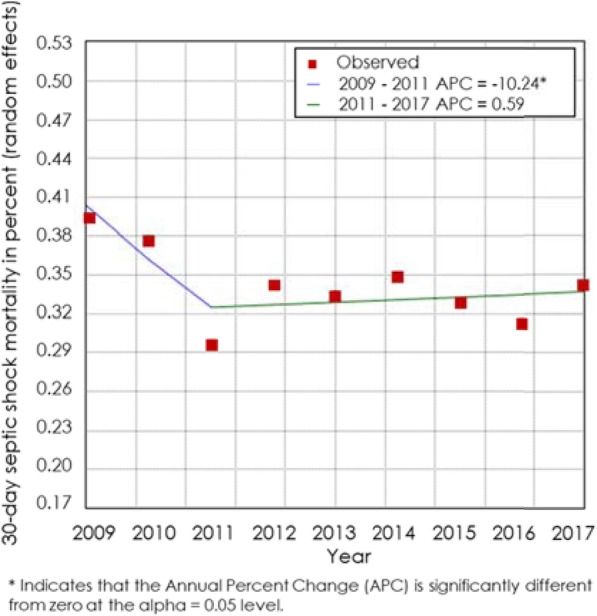
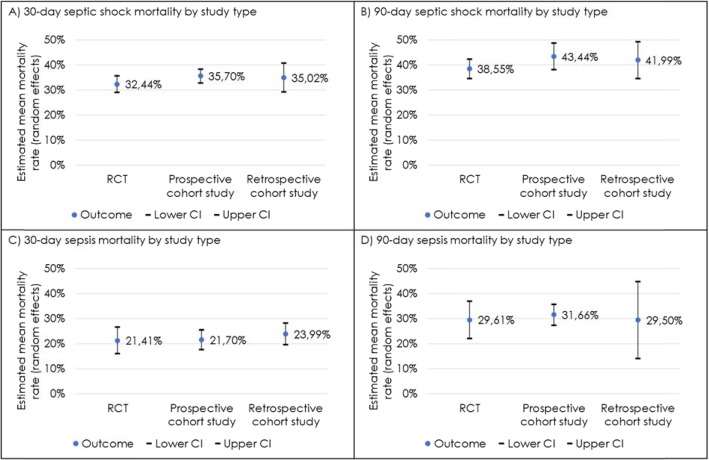
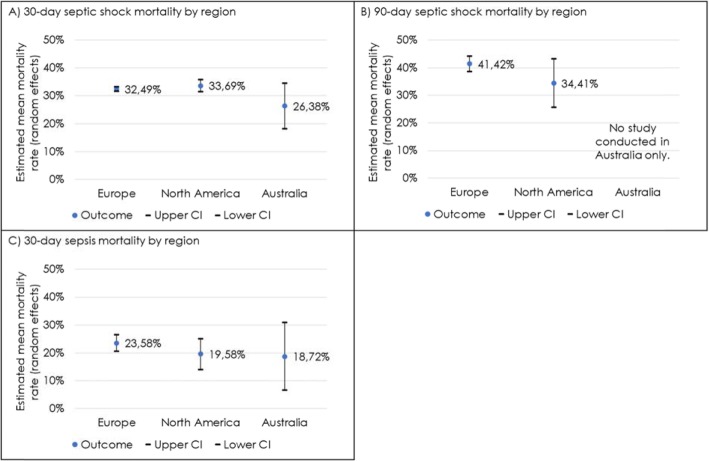
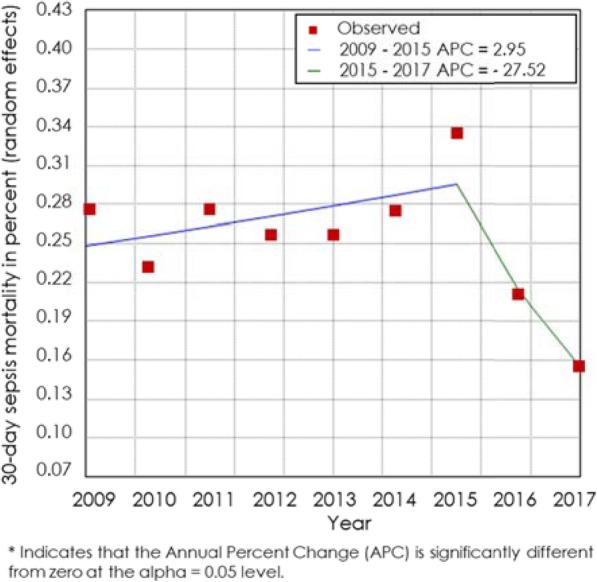
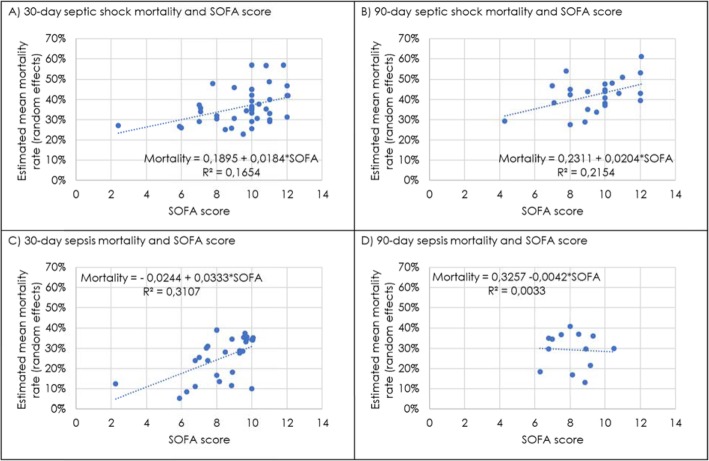
Background: Sepsis and septic shock remain drivers for mortality in critically ill patients. The heterogeneity of the syndrome hinders the generation of reproducible numbers on mortality risks. Consequently, mortality rates range from 15 to 56%. We aimed to update and extend the existing knowledge from meta-analyses and estimate 30- and 90-day mortality rates for sepsis and septic shock separately, stratify rates by region and study type and assess mortality rates across different sequential organ failure assessment (SOFA) scores. Methods: We performed a systematic review of articles published in PubMed or in the Cochrane Database, between 2009 and 2019 in English language including interventional and observational studies. A meta-analysis of pooled 28/30- and 90-day mortality rated separately for sepsis and septic shock was done using a random-effects model. Time trends were assessed via Joinpoint methodology and for the assessment of mortality rate over different SOFA scores, and linear regression was applied. Results: Four thousand five hundred records were identified. After title/abstract screening, 783 articles were assessed in full text for eligibility. Of those, 170 studies were included. Average 30-day septic shock mortality was 34.7% (95% CI 32.6–36.9%), and 90-day septic shock mortality was 38.5% (95% CI 35.4–41.5%). Average 30-day sepsis mortality was 24.4% (95% CI 21.5–27.2%), and 90-day sepsis mortality was 32.2% (95% CI 27.0–37.5%). Estimated mortality rates from RCTs were below prospective and retrospective cohort studies. Rates varied between regions, with 30-day septic shock mortality being 33.7% (95% CI 31.5–35.9) in North America, 32.5% (95% CI 31.7–33.3) in Europe and 26.4% (95% CI 18.1–34.6) in Australia. A statistically significant decrease of 30-day septic shock mortality rate was found between 2009 and 2011, but not after 2011. Per 1-point increase of the average SOFA score, average mortality increased by 1.8–3.3%. Conclusion: Trends of lower sepsis and continuous septic shock mortality rates over time and regional disparities indicate a remaining unmet need for improving sepsis management. Further research is needed to investigate how trends in the burden of disease influence mortality rates in sepsis and septic shock at 30- and 90-day mortality over time.
Overview
The claims and statistics of this paper haven’t been checked yet.
Free: it reads the open-access text and checks the first 5 claims that cite a source we can check. Create a free account to check every claim.
Integrity signals
Registry
Cites
Statistics
Figures
Verification
Claims the paper makes
The claims and statistics of this paper haven’t been checked yet.
Free: it reads the open-access text and checks the first 5 claims that cite a source we can check. Create a free account to check every claim.
Self-check
Percentages, sums and reported differences re-computed from the paper’s own numbers.
The self-check needs the paper’s full text.
Citations
Cites
Preferred Reporting Items for Systematic Reviews and Meta-Analyses: the PRISMA statement
Moher, D., Liberati, A., Tetzlaff, J., Altman, D. G., & for the PRISMA Group (2009) · BMJ · doi:10.1136/bmj.b2535 · Cited by 83,823
Preferred reporting items for systematic reviews and meta-analyses: the PRISMA Statement.
(2009) · PubMed Central · Cited by 44,859
RoB 2: a revised tool for assessing risk of bias in randomised trials
Sterne, J. A. C., Savović, J., Page, M. J., Elbers, R. G., Blencowe, N. S., Boutron, I., Cates, C. J., Cheng, H.-Y., Corbett, M. S., Eldridge, S. M., et al. (2019) · BMJ · doi:10.1136/bmj.l4898 · Cited by 34,787 · cited 1×
“RoB 2’ for randomized trials [18] and with ‘ROBINS-I’ used for observational studies [19], for sepsis and septic shock, 30 and 90 days mortality each.”
MethodThe third international consensus definitions for sepsis and septic shock (Sepsis-3).
Singer, M., Deutschman, C. S., Seymour, C. W., Shankar-Hari, M., Annane, D., Bauer, M., Bellomo, R., Bernard, G. R., Chiche, J.-D., Coopersmith, C. M., et al. (2016) · JAMA · doi:10.1001/jama.2016.0287 · Cited by 28,250
Self-citationROBINS-I: a tool for assessing risk of bias in non-randomised studies of interventions
Sterne, J. A., Hernán, M. A., Reeves, B. C., Savović, J., Berkman, N. D., Viswanathan, M., Henry, D., Altman, D. G., Ansari, M. T., Boutron, I., et al. (2016) · BMJ · doi:10.1136/bmj.i4919 · Cited by 20,329 · cited 1×
“RoB 2’ for randomized trials [18] and with ‘ROBINS-I’ used for observational studies [19], for sepsis and septic shock, 30 and 90 days mortality each.”
MethodBone, R. C., Balk, R. A., Cerra, F. B., Dellinger, R. P., Fein, A. M., Knaus, W. A., Schein, R. M. H., & Sibbald, W. J. (1992) · Chest · doi:10.1378/chest.101.6.1644 · Cited by 13,198
Surviving Sepsis Campaign: International Guidelines for Management of Severe Sepsis and Septic Shock
Dellinger, R. P., Levy, M. M., Rhodes, A., Annane, D., Gerlach, H., Opal, S. M., Sevransky, J. E., Sprung, C. L., Douglas, I. S., Jaeschke, R., et al. (2013) · Critical Care Medicine · doi:10.1097/ccm.0b013e31827e83af · Cited by 9,694
Self-citationThe Surviving Sepsis Campaign Guidelines Committee including The Pediatric Subgroup*, Dellinger, R. P., Levy, M. M., Rhodes, A., Annane, D., Gerlach, H., Opal, S. M., Sevransky, J. E., Sprung, C. L., Douglas, I. S., et al. (2013) · Intensive Care Medicine · doi:10.1007/s00134-012-2769-8 · Cited by 7,290
Self-citationPermutation tests for joinpoint regression with applications to cancer rates
Kim, H.-J., Fay, M. P., Feuer, E. J., & Midthune, D. N. (2000) · Statistics in Medicine · doi:10.1002/(sici)1097-0258(20000215)19:3<335::aid-sim336>3.0.co;2-z · Cited by 6,318
Severe Sepsis and Septic Shock
Angus, D. C., & van der Poll, T. (2013) · New England Journal of Medicine · doi:10.1056/nejmra1208623 · Cited by 3,961
Cited by
Items 501–600 of 985
Inclusiones azul-verdosas en neutrófilos y monocitos: ¿resultados de riesgo crítico?
Aguilar, J. L. H., & Lyzett, D. (2023) · REVISTA PERUANA DE CIENCIAS DE LA SALUD · doi:10.37711/rpcs.2023.5.3.424 · Cited by 3
Ayaz, A., Ibrahim, M., & Arshad, A. (2024) · Journal of Intensive Care Medicine · doi:10.1177/08850666241251755 · Cited by 3
Outcomes after acute kidney injury and critical illness
Jeong, R., Haines, R. W., & Ostermann, M. (2024) · Current Opinion in Critical Care · doi:10.1097/mcc.0000000000001183 · Cited by 4
Oriho, L. J., Shale, W. T., & Woldemariam, S. T. (2024) · Cureus · doi:10.7759/cureus.67723 · Cited by 3
“Other studies from high-income countries such as Germany, the United States, and China have shown higher lengths of hospital and intensive care stay, largely due to advanced ICU care and better medical outcomes related to mortality rates in these countries [12,17,18].”
BackgroundInfluentialMa, L., Jiang, Y., Feng, H., Gao, J., Du, X., Fan, Z., Zheng, H., & Zhu, J. (2024) · BMC Infectious Diseases · doi:10.1186/s12879-024-09768-1 · Cited by 3
“…difference in evaluating microcirculation and clinical prognosis of patients with septic shock: a prospective observational study Background Sepsis and septic shock are one of the most serious healthcare problems jeopardizing human life [1], with extremely high morbidity and mortality rates [2, 3].”
BackgroundKeng, H.-T., Wu, C., Peng, Y.-K., Lo, M., Herry, C. L., Yunusa, I. U., Chen, S., SEELY, A. J. E., & Chen, K. (2024) · Biomedical Signal Processing and Control · doi:10.1016/j.bspc.2024.106854 · Cited by 3
Lee, H., Rahman, M. H., Abdul-Nasir, S., Kim, C.-S., Kim, B., Park, J., Lim, T., Rajoriya, S., Kim, W., & Kim, S. (2024) · Molecular & Cellular Toxicology · doi:10.1007/s13273-024-00494-y · Cited by 3
“Sepsis is a serious infection with a 30-day mortality rate of 24.4% according to a recent study (Bauer et al. 2020; Li et al. 2021).”
InfluentialJaramillo, G. D., & Guerrero, L. E. (2025) · International Journal of Emergency Medicine · doi:10.1186/s12245-024-00761-8 · Cited by 3
“…due to septic shock documented in this study was 33.3% of the total sample, which is comparable to other studies such as the meta-analysis by Bauer et al. [31], which reported a septic shock mortality rate of 34.7%, and the study by Fleischmann et al., which reported a mortality rate of 26% [32].”
InfluentialEarly Prediction of Septic Shock in Emergency Department Using Serum Metabolites
Hong, Y., Li, L.-H., Kuo, T.-H., Lee, Y., & Hsu, C. (2025) · Journal of the American Society for Mass Spectrometry · doi:10.1021/jasms.5c00009 · Cited by 3
Moran, B. J., Major, E., Kufera, J. A., Tisherman, S. A., & Diaz, J. J. (2021) · BMC Emergency Medicine · doi:10.1186/s12873-021-00479-3 · Cited by 3
The relationship of hypothermia and organ dysfunction in sepsis: a single-center retrospective study
Makoveev, S. A., Semenkova, T. N., Lochekhina, E. B., Hussain, A., & Кirov, М. Y. (2022) · Russian Journal of Anesthesiology and Reanimatology · doi:10.17116/anaesthesiology202204126 · Cited by 3
NAMPT-associated gene signature in the prediction of severe sepsis.
Feng, A., Simpson, E., Wu, J., Robinson, T., Ma, W., Tieu, K., Black, S. M., & Wang, T. (2022) · PubMed Central · Cited by 3
Flacks, N., Martin, C., Liew, D., Walker, K., & Jones, D. A. (2024) · Emergency Medicine Australasia · doi:10.1111/1742-6723.14384 · Cited by 3
Sepsis best practices: Definitions, guidelines, and updates
Seckel, M. A. (2024) · Nursing · doi:10.1097/nsg.0000000000000010 · Cited by 3
Role of the intensive care in allogeneic hematopoietic stem cell transplantation
Shchekina, A. E., Galstyan, G. M., & Drokov, M. Y. (2022) · Гематология и трансфузиология · doi:10.35754/0234-5730-2022-67-2-216-239 · Cited by 3
Gregorius, J., & Brenner, T. (2023) · AINS - Anästhesiologie · Intensivmedizin · Notfallmedizin · Schmerztherapie · doi:10.1055/a-1813-2057 · Cited by 3
Leaño, D. R., Danguilan, R. A., Arakama, M.-H., Apelin, V., Alamillo, P. P., & Chua, E. (2024) · Tropical Medicine and Infectious Disease · doi:10.3390/tropicalmed9090206 · Cited by 2
“Sepsis and septic shock continue to be major contributors to global mortality, with approximately six million deaths occurring annually despite advances in diagnostic meth-ods and the availability of a broad spectrum of antimicrobials [1–3].”
BackgroundSharifan, A. (2024) · Journal of Translational Critical Care Medicine · doi:10.1097/jtccm-d-24-00032 · Cited by 2
Tỷ lệ tử vong và một số yếu tố liên quan đến thời gian tử vong ở bệnh nhân sốc nhiễm khuẩn
Ngân, T. T. D., & Thảo, H. T. (2024) · Tạp chí Nghiên cứu Y học · doi:10.52852/tcncyh.v182i9.2652 · Cited by 2
Connexin hemichannels and early atrophic signaling in muscle during sepsis
Balboa, E., Saavedra, F., Cea, L. A., Vargas, A. A., Regueira, T., & Sáez, J. C. (2025) · Frontiers in Physiology · doi:10.3389/fphys.2025.1514769 · Cited by 2
Shenfu injection alleviates lipopolysaccharide-induced liver injury in septic mice
Lu, B.-T., Wang, Y., Wang, L., Wu, D., Lin, Y.-L., Xu, J.-X., Zhang, J., Liu, B.-W., Liu, H., Meng, H., et al. (2025) · Scientific Reports · doi:10.1038/s41598-025-98740-3 · Cited by 2
Endotoxin: A Bona Fide Treatable Sepsis Endotype?
Gómez, H. (2025) · Blood Purification · doi:10.1159/000546294 · Cited by 2
“Mortality from septic shock remains high, close to 35% at 30 days [17], despite the use of intravenous fl uids, vasopressors, antibiotics, and organ support.”
Shock epidemiology and outcomes among internal medicine patients
Maluangnon, C., Joyjumroon, B., Phawanawichian, C., & Tongyoo, S. (2025) · Southern African Journal of Critical Care · doi:10.7196/sajcc.2025.v41i1.2453 · Cited by 2
O'Brien, J. P., & Schrock, J. W. (2025) · Western Journal of Emergency Medicine · doi:10.5811/westjem.40005 · Cited by 2
Zeleke, A., Solela, G., Sitotaw, A., Arega, B., Tewabe, E., Teshome, H., Alemu, H., Legese, S., Ahmed, S., Gissa, S. B., et al. (2025) · Health Science Reports · doi:10.1002/hsr2.71064 · Cited by 2
“A systematic review and meta ‐ analysis of 170 studies from Europe, North America, and Australia (2009 – 2019) found a 30 ‐ day septic shock mortality rate of 34.7% [10].”
InfluentialPopović, R., Anđelić, N., Jovanović, G., Maričić-Prijić, S., Uvelin, A., Tomić, N., Đurić, A. P., Todorović, N., Milijašević, B., & Markovic, D. Z. (2025) · Frontiers in Medicine · doi:10.3389/fmed.2025.1608388 · Cited by 2
Li, X., Li, M., Sun, Y., & Zhou, Q. (2025) · PeerJ · doi:10.7717/peerj.19689 · Cited by 2
Takahashi, N., Campbell, K. R., Nakada, T., & Walley, K. R. (2025) · Critical Care Medicine · doi:10.1097/ccm.0000000000006809 · Cited by 2
Aparicio, E. E. R., Jaramillo, G. D., Cuellar, L. M. R., Herran, S. E. P., Lima, D. R. R., & Herpain, A. (2025) · Journal of Clinical Medicine · doi:10.3390/jcm14155496 · Cited by 2
“Sepsis and septic shock are considered independent risk factors for mortality in critically ill patients [2].”
Cannabinoids in preclinical research of sepsis: a scoping review
Inamassu, C. H., Sordi, R., & Marchioni, C. (2025) · Inflammation Research · doi:10.1007/s00011-025-02090-9 · Cited by 2
“With this, the development of new therapies and treatments for septic shock is an even bigger challenge, and should be more researched [84].”
Bao, D., Shao, S., Wang, Y., Chen, X., Ren, Y., Zhou, C., & Mao, Q. (2025) · Journal of Inflammation Research · doi:10.2147/jir.s546492 · Cited by 2
Rabasa, J. T. A., Ribes, I., Ronda, E., & Algado-Sellés, N. (2025) · Revista Clínica Española (English Edition) · doi:10.1016/j.rceng.2025.502369 · Cited by 2
Lacquaniti, A., Pistolesi, V., Smeriglio, A., Santoro, D., Iannetti, C., Lentini, G., Chimenz, R., Chirico, V., Trombetta, D., Morabito, S., et al. (2025) · Antibiotics · doi:10.3390/antibiotics14111097 · Cited by 2
“Worldwide, sepsis is estimated to affect more than 30 million individuals annually, potentially causing 6 million deaths [2].”
Sun, Q., Wang, S., Ding, X., Sun, T., Wang, B., Shao, T.-H., Yu, Z., & Han, Y. S. (2025) · Scientific Reports · doi:10.1038/s41598-025-22773-x · Cited by 2
Han, S. H., Hong, Y., Kim, D., Lee, E. H., & Seong, H. (2025) · Intensive Care Medicine Experimental · doi:10.1186/s40635-025-00829-6 · Cited by 2
“…and specific drugs are currently unavailable, is a serious infectious condition leading to high mortality and long-term disabilities, irrespective of immediate intensive resuscitation, appropriate antimicrobial treatment, and immunomodulation with corticosteroids or immunoglobulins (Ig) [1–4].”
Mai, C., Zhong, X., Huang, X., Cheng, H., Wang, H., Qi, X., Cui, Y., Xu, Y., Lan, H., Bai, X., et al. (2025) · IEEE Transactions on Medical Imaging · doi:10.1109/tmi.2025.3637090 · Cited by 2
“S EPSIS and septic shock, resulting from dysregulated host responses to infection, are leading causes of systemic inflammation and multi-organ dysfunction [1], [2], [3], and remain leading causes of mortality in intensive care units [4], [5].”
Gatti, M., Grimaldi, P., Rinaldi, M., Siniscalchi, A., Tonetti, T., Viale, P., & Pea, F. (2025) · Journal of Anesthesia Analgesia and Critical Care · doi:10.1186/s44158-025-00324-0 · Cited by 2
“Sepsis and/or septic shock may be life-threatening conditions often requiring intensive care unit (ICU) admission or complicating ICU stay among critically ill patients [1– 3].”
Gatti, M., & Pea, F. (2025) · Expert Review of Anti-infective Therapy · doi:10.1080/14787210.2025.2609700 · Cited by 2
“Sepsis and septic shock may often represent life-threatening conditions commonly requiring intensive care unit (ICU) admission or complicating ICU stay among critically ill patients, and causing remarkable morbidity and mortality [1–4].”
Illustrating the functional heterogeneity of M-MDSCs to predict sepsis outcomes
Tang, G., Xing, W., Zhu, L., Lu, Y., Jiang, K.-S., Wu, S., Sun, Z., Hou, H., Cheng, L., He, F., et al. (2026) · Journal of Advanced Research · doi:10.1016/j.jare.2026.01.008 · Cited by 2
“Many mediators associated with the excessive inflammatory response, such as monocytes, cytokines, and coagulation system, contribute to tissue damage and organ dysfunction [3,7,8].”
Inflammatory imbalance in ambulance patients is associated with sepsis and septic shock
Tuerxun, K., Kurland, L., Särndahl, E., Wallgren, U. M., Eklund, D., & Kruse, R. (2026) · Cytokine · doi:10.1016/j.cyto.2026.157107 · Cited by 2
Bielak, K., Bandyszewska, M., Ambrożek-Latecka, M., Kosińska–Kaczyńska, K., Osuchowski, M. F., Skirecki, T., & Hoser, G. (2026) · Shock · doi:10.1097/shk.0000000000002660 · Cited by 2
Zaboli, A., Parodi, M., Filippi, L., Greselin, S., Pretto, A., Genco, R., Fulghesu, F., Carlana, G., Bertoncello, N., Brigiari, G., et al. (2026) · Nursing in Critical Care · doi:10.1111/nicc.70386 · Cited by 2
Simon, E. L., Maldonado, A., Gaye, A., Mangira, C., & Krizo, J. A. (2026) · Emergencias · doi:10.55633/s3me/023.2026 · Cited by 2
Mușat, F., Andronic, O., Bolocan, A., Palcău, A. C., Dobre, A. M., Daniel, I., & Păduraru, D. N. (2026) · Medicina · doi:10.3390/medicina62040640 · Cited by 2
“While data from Central and Eastern Europe on the epidemiology and prognosis of sepsis remain limited, previous reports show that sepsis has a disproportionate impact incurring the heaviest burden on countries with limited resources [1,2].”
Jeong, D., Park, J. E., Maeng, S. J., Choi, J. W., Lee, G. T., Hwang, S. Y., Kim, C., Park, J. E., & Shin, T. J. (2026) · BMC Emergency Medicine · doi:10.1186/s12873-026-01566-z · Cited by 2
“Septic shock is responsible for approximately 40% of hospital mortality [1, 2] with an average 30-d sepsis mortality rate of 24.4% [3].”
InfluentialOkuzawa, H., Endo, A., Akutsu, T., Suzuki, K., Hoshi, H., Yamakawa, K., Tagami, T., & Umemura, Y. (2026) · Journal of Intensive Care · doi:10.1186/s40560-026-00882-7 · Cited by 2
“Septic shock remains a major cause of morbidity and mortality in the intensive care unit [1].”
Early sepsis prediction using a hybrid LSTM-GAT model: a study on the PhysioNet 2019 dataset
Khorram, B., & Kouchaki, S. (2026) · BMJ Health & Care Informatics · doi:10.1136/bmjhci-2025-101762 · Cited by 2
Ghifari, M. R., Dewi, L. L., & Anjani, A. (2026) · The Journal of Infection in Developing Countries · doi:10.3855/jidc.21943 · Cited by 2
Jiménez-Zarazúa, O., Tolentino-Pérez, B., Vélez-Ramírez, L. N., & Mondragón, J. (2026) · Clinical Medicine · doi:10.1016/j.clinme.2026.100610 · Cited by 2
“4 Mortality rates remain alarmingly high, ranging from 24% to 68%, 5–7 highlighting the urgent need for improved early detection and risk stratification strategies.”
Han, S. J., Lee, S. Y., Kang, D., Cho, J., Oh, D. K., Hyun, D., Park, M. H., Lim, C., & On behalf of the Korean Sepsis Alliance (KSA) Investigators (2026) · Journal of Korean Medical Science · doi:10.3346/jkms.2026.41.e273 · Cited by 2
Park, J., Choi, J., Lee, S. J., & Son, Y. (2026) · Journal of Nursing Management · doi:10.1155/jonm/3010166 · Cited by 2
“The main clinical outcome was 30-day in-hospital mortality after ICU admission, a commonly used short-term outcome measure in critical care research [28].”
Can Multidisciplinary Sepsis Teams Help Solve a Global Concern? A Review of the Literature
Halstead, D. (2022) · Clinical Microbiology Newsletter · doi:10.1016/j.clinmicnews.2022.08.001 · Cited by 2
Elek, Z., Losoncz, E., Fülep, Z., Kovács-Nagy, R., Bánlaki, Z., Szlobodnyik, G., Keszler, G., & Rónai, Z. (2023) · Human Immunology · doi:10.1016/j.humimm.2023.08.146 · Cited by 2
Lee, D., Ryu, H., Chae, Y. J., Binjaffar, H., Woo, C., Woo, D., & Lee, D. (2025) · Metabolites · doi:10.3390/metabo15070465 · Cited by 2
“Moreover, SAE is associated with higher mortality rates, prolonged hospitalization, and persistent cerebral biomolecular changes [7–9].”
The Complications of Musculoskeletal Conditions and Trauma
Santy‐Tomlinson, J., Clarke, S., & Davis, P. (2022) · Wiley eBooks · doi:10.1002/9781119833413.ch9 · Cited by 2
Sepsis et immunodépression acquise en réanimation
Lepage, M., Rahimi, M. H., Gossez, M., Bidar, F., Lukaszewicz, A., Venet, F., & Monneret, G. (2023) · Revue Francophone des Laboratoires · doi:10.1016/s1773-035x(23)00026-6 · Cited by 2
Association of current hepatitis B virus infection with mortality in adults with sepsis
Gao, C., Ni, J., Gao, Y., Xie, D., Yang, L., Yang, B., Lu, X., & Guo, Q. (2023) · Epidemiology and Infection · doi:10.1017/s0950268823000729 · Cited by 2
Salsabela, R., Widyastiti, N. S., Retnoningrum, D., Ariosta, A., & Susilaningsih, N. (2023) · Jurnal Kedokteran Diponegoro (Diponegoro Medical Journal) · doi:10.14710/dmj.v12i3.37645 · Cited by 2
Ndibarema, E. R., Olum, R., Ogavu, J., & Makhoba, A. (2024) · Clinical Case Reports · doi:10.1002/ccr3.8402 · Cited by 2
“18,19 Early recognition of sepsis and interventions such as optimal antimicrobial therapy, fluid resuscitation, and source control are essential for survival.”
BackgroundMenchinelli, G., Oliveti, A., Fiori, B., D’Inzeo, T., Spanu, T., Murri, R., Fantoni, M., Sanguinetti, M., Posteraro, B., & Angelis, G. D. (2024) · Heliyon · doi:10.1016/j.heliyon.2024.e27849 · Cited by 2
“Especially when sepsis or septic shock is suspected [2], initiation of empirical broad-spectrum antimicrobial therapy (i.e., before antimicrobial susceptibility results for the infecting pathogen(s) are available) is required [3].”
BackgroundWang, Q., Tang, J., Li, Y., Lu, J., Yang, D., He, C., Li, T., Fu, K., & Liu, R. (2024) · Shock · doi:10.1097/shk.0000000000002363 · Cited by 2
“Despite the continuous improvement of sepsis treatment guidelines, sepsis and septic shock are still the driving factors of death in critically ill patients (5,6).”
BackgroundImpact of Gram-Negative Bacilli Resistance Rates on Risk of Death in Septic Shock and Pneumonia
Hixon, A. M., Micek, S. T., Fraser, V. J., Kollef, M. H., & Guillamet, C. V. (2024) · Open Forum Infectious Diseases · doi:10.1093/ofid/ofae219 · Cited by 2
“The rate of mortality has been found to be similar across study types (randomized controlled trials vs cohort studies), so no weighting was applied for subsequent analyses [19].”
BackgroundComprehensive analysis of Burkholderia species head and neck infections: A systematic review
Nanu, D. P., Marrero‐Gonzalez, A. R., Nguyen, S. A., & Newman, J. G. (2024) · American Journal of Otolaryngology · doi:10.1016/j.amjoto.2024.104544 · Cited by 2
The endothelium or mitochondrial level therapy: new frontiers in sepsis?
Datta, R., & Singh, S. (2025) · Medicina Intensiva · doi:10.1016/j.medin.2024.502130 · Cited by 2
Güler, S., Demirtaş, E., Kocaşaban, D. Ü., Sarıhan, M. B., Esen, E., Ata, M. A., & Günaydın, Y. K. (2025) · Medizinische Klinik - Intensivmedizin und Notfallmedizin · doi:10.1007/s00063-024-01244-7 · Cited by 2
Smith, S. S., Edwards, L., Wigmore, T., Jhanji, S., Antcliffe, D. B., & Tatham, K. C. (2025) · Journal of Intensive Care Medicine · doi:10.1177/08850666241312621 · Cited by 2
Betanin ameliorates lipopolysaccharide-caused testis damage via multiple signal networks
Geyikoğlu, F., Deniz, G. Y., Arslan, M., Yıldırım, S., Yüce, N., Şişman, T., Kılıçlıoğlu, M., Bolat, İ., Çolak, S., Çelik, M., et al. (2025) · International Journal of Environmental Health Research · doi:10.1080/09603123.2025.2474701 · Cited by 2
“Sepsis caused by LPS infection can lead to high mortality and morbidity rates in intensive care units (Bauer et al. 2020).”
Acar, C., Bozgül, Ş. M. K., Yüksel, H. Ç., & Bozkurt, D. (2025) · Medicine · doi:10.1097/md.0000000000042190 · Cited by 2
“[3] Standardized definitions for multidrug-resistant (MDR), extensive drug-resistant (XDR), and pandrug-resistant (PDR) were proposed in 2012.”
Influential(2025) · The Egyptian Journal of Hospital Medicine · doi:10.21608/ejhm.2025.429384 · Cited by 2
Asfaw, K. G., Adugna, A. G., Mekonen, N. M., Merahi, M. K., Kejela, S., Moges, F. H., & Leulseged, T. W. (2025) · African Journal of Emergency Medicine · doi:10.1016/j.afjem.2025.100917 · Cited by 2
Tang, Z., Sun, Q., Xu, J., Yang, Y. J., & Peng, F. (2025) · Critical Care Medicine · doi:10.1097/ccm.0000000000006966 · Cited by 2
Dudoignon, E., Bækgaard, J. S., Léone, M., & Dépret, F. (2023) · Clinical Microbiology and Infection · doi:10.1016/j.cmi.2023.04.003 · Cited by 2
Hassoun, Y., Konan, A. N., Simon, G., Verdot, P., Lakkis, Z., Loffroy, R., Besch, G., Piton, G., Delabrousse, É., & Calame, P. (2023) · European Journal of Radiology · doi:10.1016/j.ejrad.2023.111075 · Cited by 2
Zhang, J., Shen, K., Xie, J., Liu, S., Bai, X., Wang, J., Zhao, M., Li, J., Li, S., Li, J., et al. (2021) · Research Square · doi:10.21203/rs.3.rs-618570/v1 · Cited by 2
Sepsis in the intensive care unit: from definitions to outcomes
Driessen, R. (2022) · Research Publications (Maastricht University) · doi:10.26481/dis.20220407rd · Cited by 2
Death as a metric for outcome: Dusk between day and night
Laupland, K. B. (2022) · Journal of the Association of Medical Microbiology and Infectious Disease Canada · doi:10.3138/jammi-2022-06-09 · Cited by 1
Increase Mortality Rate in Sepsis Patients with qSOFA Score Greater than Two
Khan, R. M. W., Mahmood, A., Qayyum, M., & Younas, Z. (2022) · Pakistan Armed Forces Medical Journal · doi:10.51253/pafmj.v72i6.9072 · Cited by 1
Coen, D. (2023) · Emergency Care Journal · doi:10.4081/ecj.2023.10810 · Cited by 1
Intensive Care: Principles and Therapy
Bauman, Z. M., & O’Keeffe, T. (2023) · Springer eBooks · doi:10.1007/978-3-031-47006-6_12 · Cited by 1
Esmolol increases the fecal abundance of Lactobacillus in a rat model of sepsis
Yao, B., Wang, F., Han, X., Yang, J., Xue, P., Qi, Q., Wei, G., & Xing, J.-Y. (2024) · Intensive Care Medicine Experimental · doi:10.1186/s40635-023-00589-1 · Cited by 1
Use of Inotropes and vasopressors in Septic Shock: When, Why, and How?
Qura’an, B., Omar, H. B., Al-Qaqa, O., Abu‐Jeyyab, M., Hattab, M. G., & Ruzieh, M. (2024) · JAP Academy Journal · doi:10.58877/japaj.v2i1.115 · Cited by 1
Modification of qSOFA Increases Mortality Prediction Accuracy in Sepsis Patients
Gunawan, E. J., Siahaan, S. C., Idarto, A., Pribadi, F., & Handayani, L. (2024) · Jurnal Kedokteran Brawijaya · doi:10.21776/ub.jkb.2024.033.01.3 · Cited by 1
A Reinforcement Learning Approach for Predicting the Onset of Septic Shock Patients with Unfair Bias
Zhang, S., Wang, Z., Zhang, Y., & Liu, S. (2024) · International Conference on Biomedical Engineering and Applications (ICBEA) · doi:10.1109/icbea62825.2024.00041 · Cited by 1
“Septic shock is defined as a subset of sepsis, however, it is associated with higher mortality rates within critically ill patients worldwide [2,3].”
BackgroundBrajković, A. V., Košuta, I., Batur, L., Šundalić, S., Medic, M. G., Vujević, A., Bielen, L., & Babel, J. (2024) · World Journal of Transplantation · doi:10.5500/wjt.v15.i1.98975 · Cited by 1
Abdul-Aziz, M. H., Dulhunty, J. M., Rajbhandari, D., Roberts, J. A., & Lipman, J. (2024) · Internal Medicine Journal · doi:10.1111/imj.16584 · Cited by 1
Mukhtar, O., Lal, A., Jentzer, J. C., & KASHANI, K. B. (2025) · Journal of Community Hospital Internal Medicine Perspectives · doi:10.55729/2000-9666.1436 · Cited by 1
Sakai, T., Yanagawa, Y., & Ito, H. (2025) · JEM Reports · doi:10.1016/j.jemrpt.2025.100151 · Cited by 1
Use of H1N1 strain A/PR/8/34 influenza to build a mouse model of viral respiratory sepsis
Jiao, Y., Cai, Y., Zhang, Y., Choy, K.-T., Cheng, K.-M., Nicholls, J. M., Lam, P.-K., Yen, H., & Rainer, T. H. (2025) · Laboratory Animal Research · doi:10.1186/s42826-025-00248-4 · Cited by 1
“Mortality has been used to reflect sepsis, but although the mortality rate correlates with disease severity, it does not reflect organ dysfunction [24].”
Gulácsi, L. F., Rutai, A., Juhász, L., Czakó, B., Szabó, A., Boros, M., Kaszaki, J., Poles, M. Z., & Tallósy, S. P. (2025) · Antioxidants · doi:10.3390/antiox14070814 · Cited by 1
Wu, M., Zou, Z., Peng, Y., & Luo, S. (2025) · Clinica Chimica Acta · doi:10.1016/j.cca.2025.120489 · Cited by 1
Jo, Y., Kang, S. H., Hwang, J. E., Jo, Y. H., Lee, J. H., & Um, Y. W. (2025) · The American Journal of Emergency Medicine · doi:10.1016/j.ajem.2025.07.048 · Cited by 1
Qi, Y., Zhou, C., & Chen, B. (2025) · PLoS ONE · doi:10.1371/journal.pone.0328551 · Cited by 1
“Common symptoms include shortness of breath, chest pain, and respiratory failure [24].”
Racial differences in outcomes among patients with septic shock: A national cohort study
Ang, S.-P., Chia, J.-E., & Iglesias, J. I. (2025) · World Journal of Critical Care Medicine · doi:10.5492/wjccm.v14.i3.106387 · Cited by 1
Bonnet, R., Abbas, M., Fischer, A., Pugin, J., Suppan, L., & Harbarth, S. (2025) · Prehospital Emergency Care · doi:10.1080/10903127.2025.2547653 · Cited by 1
“%) as previously reported in similar studies (22, 23).”
Belsky, J., Wira, C., Fryman, A., He, Z., Boccio, E., Haimovich, A. D., Jacob, V., & Pischel, L. (2025) · Journal of Emergency Medicine · doi:10.1016/j.jemermed.2025.08.039 · Cited by 1
Prognostic value of RDW/albumin ratio in sepsis patients in intensive care units
Duran, H. T., Çam, B., Akdoğan, M. A., Tüzen, A. S., & Evirgen, S. (2025) · Medicine Science | International Medical Journal · doi:10.5455/medscience.2025.02.062 · Cited by 1
Macrolide Therapy in Patients with Sepsis or Septic Shock: A Systematic Review and Meta-Analysis
Kim, K., & Lee, J. H. (2025) · Journal of Clinical Medicine · doi:10.3390/jcm14176254 · Cited by 1
“Recent meta-analyses have reported 30-day mortality rates ranging from 24.4% to 34.7% and 90-day mortality rates from 32.2% to 38.5%, despite early identification and appropriate management strategies [1].”
InfluentialCollins, C. M., Jalilvand, A., Kellett, W. F., Baselice, H. E., & Wisler, J. (2025) · The American Journal of Surgery · doi:10.1016/j.amjsurg.2025.116618 · Cited by 1
Zhu, G., Huo, Y., Yin, Y.-C., Li, B., & Hu, Z. (2025) · Shock · doi:10.1097/shk.0000000000002685 · Cited by 1
Destruction of the Anaerobic Gut Microbiota in Hospitalized Patients Increases the Risk of Sepsis
Nv, B. (2025) · IntechOpen eBooks · doi:10.5772/intechopen.1012483 · Cited by 1
Metadata
- Authors
- Bauer, M., Gerlach, H., Vogelmann, T., Preissing, F., Stiefel, J., & Adam, D.
- Affiliations
- Jena University Hospital (DE)
- Vivantes Klinikum (DE)
- CytoSorbents (Germany) (DE)
- Corresponding author
- Bauer, Michael
- Venue
- Critical Care
- Published
- 2020-05-19
- Volume
- 24
- Issue
- 1
- Pages
- 239-239
- ISSN
- 1364-8535 (ISSN-L)
- PMC
- PMC7236499
- OpenAlex
- W3027548201
- Semantic Scholar
- 17551feef1e5ba684094ee873ccb0dabe3675738
- Cited by
- 867
- References
- 32
- Citations by year
- 2026: 137 · 2025: 223 · 2024: 217 · 2023: 162 · 2022: 91 · 2021: 33 · 2020: 4
- FWCI
- 10.67
- Type
- journal article
- Language
- en
- Open access
- gold
- doi.org
- Licence
- cc-by
- creativecommons.org/licenses/by/4.0 (tdm)
- creativecommons.org/licenses/by/4.0 (vor)
- Locations
- Critical Care (publishedVersion, cc-by)
- PubMed Central (publishedVersion, cc-by)
- PubMed (publishedVersion)
- DOAJ (DOAJ: Directory of Open Access Journals) (submittedVersion, cc-by-sa)
- Funders
- CytoSorbents Europe
- Topics
- Health Sciences › Medicine › Critical Care and Intensive Care Medicine › Sepsis Diagnosis and Treatment
- Health Sciences › Medicine › Surgery › Abdominal Surgery and Complications
- Health Sciences › Medicine › Nephrology › Acute Kidney Injury Research
- Keywords
- sepsis, septic shock, mortality rates, 30-day mortality, 90-day mortality, SOFA score, regional variation, mortality trends, critically ill patients
- MeSH terms
- Australia, Europe, Humans, Mortality, North America, Shock, Septic, Sepsis
About these checks
Registry, retraction, Cites and statistics results are computed, not judged, with one exception: a printed reference that no index lists is read once by a model before it counts as a citation error. Claims are extracted by a model and kept only when their quote appears verbatim in the text; each cited source is then checked, with a model’s help, for whether it says what the claim relies on. Those verdicts can be wrong — read the claim’s quote and the cited source before relying on one.
Statistics and arithmetic are recomputed, not judged.
Confidence bands are shown only for fields calibrated on our annotated test set. None is calibrated yet, so no band is shown.
What counts as a claim ›How we measure confidence ›How we check this ›
Are you an author, or do you see a problem with this page? Request a review
Data sources
Bibliographic data: Semantic Scholar, OpenAlex, Crossref.
Contains information from the Semantic Scholar Academic Graph Datasets, made available under the ODC Attribution License (ODC-BY 1.0).
Semantic Scholar’s data is described in: Kinney, R., et al. (2023). The Semantic Scholar Open Data Platform. arXiv:2301.10140.
