

A psychological intervention to promote acceptance and adherence to non-invasive ventilation in people with chronic obstructive pulmonary disease: study protocol of a randomised controlled trial.
Open accessThe DOI matches its Crossref record; 65 of the 66 references it cites were found in a registry or an index; 13 of the 21 sources its claims cite were checked for support.
Abstract
Background: People with chronic obstructive pulmonary disease (COPD) sometimes experience anxiety, depression and comorbid cognitive deficits. Rather than being merely a consequence of symptom-related physical impairments these additional problems may be part of the clinical course of the condition. The relationship between the physical and psychological aspects of the condition is illustrated by the patterns of use of non-invasive ventilation (NIV); NIV is often rejected or used inappropriately, resulting in clinical deterioration and an increase in health care costs. The study aims to analyse the effects of psychological support on the acceptance of, and adherence to, NIV. The primary outcome will be a latent variable related to indices of use of NIV equipment and adherence to treatment regime; while survival rates and psychological variables will constitute the secondary outcomes.Methods: A two-arm randomised controlled trial will be conducted. We aim to recruit 150 COPD patients for whom NIV is indicated. The experimental group will receive a brief course of psychological support that will include counselling, relaxation and mindfulness-based exercises. In some cases, it will also include neuropsychological rehabilitation exercises. Support will be delivered via four to eight meetings at the HD Respiratory Rehabilitation Unit, at home or via telemedicine. Controls will receive standard care and watch educational videos related to the management of their disease.Discussion: This investigation will gain insight about the role of a psychological intervention as part of a treatment plan during the process of adaptation to NIV in COPD patients.Trial Registration: ClinicalTrials.gov, ID: NCT02499653 . Registered on 14 July 2015.
Overview
CoChat Summary
## TL;DR
This is a study protocol for a two-arm randomized controlled trial testing whether brief psychological support improves acceptance and adherence to non-invasive ventilation (NIV) in people with COPD. The trial plans to enroll 150 patients and measure NIV use/adherence as the primary outcome, with quality of life, survival, and psychological variables as secondary outcomes.
## Key findings
- The paper is a protocol, so it reports no trial results; it states the trial will recruit 150 COPD patients for whom NIV is indicated.
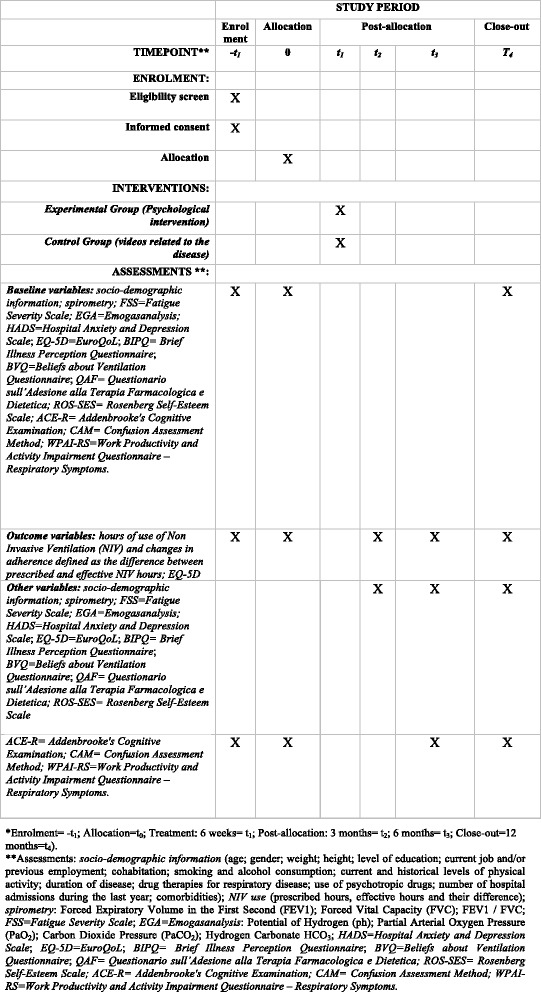
- The primary outcome is a latent variable based on NIV use and adherence, with acceptance/adherence assessed at 3, 6, and 12 months after recruitment.
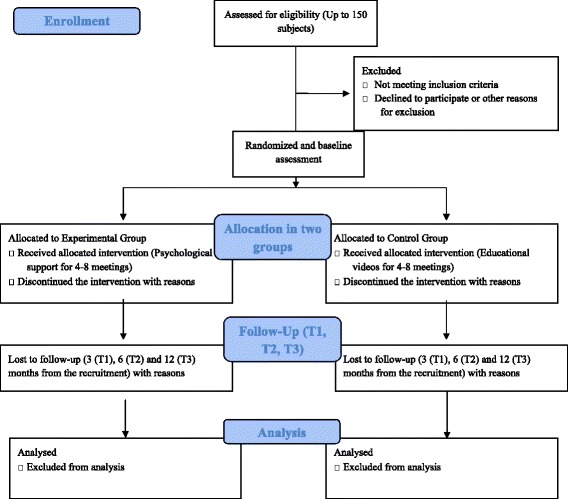
- The intervention arm will receive 4 to 8 sessions of brief psychological support, each lasting about 30–45 min, including counselling, relaxation, mindfulness-based exercises, and sometimes neuropsychological rehabilitation.
- The control arm will receive standard care plus six sessions of videos about disease management, intended as an active control.
## Methods
- Design: Two-arm randomized controlled trial with blinded assessors; allocation is concealed via a centralized computer-based system and randomization uses random.org.
- Sample/setting: Planned recruitment of 150 adults with COPD (age 18+) in a respiratory rehabilitation unit in Milan, Italy; eligible patients have moderate to severe COPD and NIV is indicated.
- Analysis: Descriptive analyses, treatment-by-time interaction tests on primary outcomes, within-group tests, multiple regression for predictors, intention-to-treat, and multiple imputation for missing data.
## Limitations
- The paper explicitly notes that the rigorous RCT design is in contrast with the “single-patient” approach, and that allowing patients to choose the setting may make it hard to achieve an even distribution of settings.
- It also states that patients choosing telemedicine may face access problems due to technical issues.
- Evident from the text: this is a protocol, so efficacy and outcome claims are not yet supported by study results.
Model-written summary. Check it against the paper before relying on it.
Integrity signals
Registry
Cites
Statistics
Figures
Verification
Claims the paper makes
9 Valid · 0 Not valid · 4 Not checked · 16 Own results and interpretations
None of the sources cited for this claim have been checked yet.
In the paper
“No study has identified the individual psychological factors that increase the risk of rejection or improper use of NIV.”
§ A psychological intervention to promote acceptance and adherence to non-invasive ventilation in people with chronic obstructive pulmonary disease: study protocol of a randomised controlled trial > Background
What the sources say
- Not checked yetcites [30] Ko BS Ahn S Lim KS Kim WY Lee Y-S Lee JH Early failure of noninvasive ventilation in chronic obstructive pulmonary disease with acute hypercapnic respiratory failure Intern Emerg Med 2015 10 855 60 10.1007/s11739-015-1293-6 26341216 source
Checked before — its earlier verdict is held back until a new check runs.
- Could not verifycites [31] Ozyilmaz E, Ugurlu AO, Nava S. Timing of noninvasive ventilation failure: causes, risk factors, and potential remedies. BMC Pulm Med [Internet]. 2014;14. Available from: http://bmcpulmmed.biomedcentral.com/articles/10.1186/1471-2466-14-19. Accessed 16 Dec 2016. PMC3925956 24520952 sourceExperimental — accuracy not yet measured
The Review’s “Intolerance and psychomotor agitation” section identifies patient tolerance and agitation as relevant to NIV failure. It does not say whether studies have identified individual psychological factors that increase rejection or improper use of NIV; searches for those terms found no such statement in our copy. (LLM, conf=0.76)
- Not checked — no full text of the sourcecites [32] Hess DR. The growing role of noninvasive ventilation in patients requiring prolonged mechanical ventilation. Respir Care. 2012;57(6):900–20. 22663966 source
- Could not verifycites [33] Leiva-Fernández J, Leiva-Fernández F, García-Ruiz A, Prados-Torres D, Barnestein-Fonseca P. Efficacy of a multifactorial intervention on therapeutic adherence in patients with chronic obstructive pulmonary disease (COPD): a randomized controlled trial. BMC Pulm Med. 2014;14(1):70. PMC4011779 24762026 sourceExperimental — accuracy not yet measured
The Background says COPD adherence studies have focused more on measuring adherence than on factors affecting it. The Discussion addresses motivation and incorrect inhaler use, but the passages found when searching for NIV, rejection, and psychological risk factors do not address whether any study has identified psychological predictors of NIV rejection or improper use. (LLM, conf=0.77)
plain- Asserted: passes — The authors put it forward as true.
- Checkable: passes — It can be checked against evidence.
- Load-bearing: passes — The paper’s conclusions depend on it.
- Based: passes — The paper gives a reason why it holds.
- Not checked yet
Every source the paper cites for this claim was checked and supports it.
In the paper
“Psychological changes may be a consequence of physical symptoms, but they may also influence the course of the disease, as in other chronic conditions [22].”
§ A psychological intervention to promote acceptance and adherence to non-invasive ventilation in people with chronic obstructive pulmonary disease: study protocol of a randomised controlled trial > Background
What the sources say
- Supportedcites [22] Pagnini F, Bosma CM, Phillips D, Langer E. Symptom changes in multiple sclerosis following psychological interventions: a systematic review. BMC Neurol. 2014;14(1):222. PMC4253984 25433519 source
The citation supports the comparison with another chronic condition, not a direct finding about COPD. In the Background, the review describes psychological consequences of MS and evidence that stress may increase relapse risk; the Results report that improved psychological outcomes were associated with improved MS symptoms, while noting the limited number of studies. (LLM, conf=0.88)
hedgedstates a possible cause- Asserted: passes — The authors put it forward as true.
- Checkable: passes — It can be checked against evidence.
- Load-bearing: passes — The paper’s conclusions depend on it.
- Based: passes — The paper gives a reason why it holds.
- Supported
Every source the paper cites for this claim was checked and supports it.
In the paper
“Previous studies suggest that COPD patients who clearly demonstrated a lower survival benefit from the NIV usage exhibit worse average daily NIV adherence, because of the imbalance between the constraints that NIV imposes and the improvement that patients’ perceive in their condition [34].”
§ A psychological intervention to promote acceptance and adherence to non-invasive ventilation in people with chronic obstructive pulmonary disease: study protocol of a randomised controlled trial > Background
What the sources say
- Supportedcites [34] Borel J-C Pepin J-L Pison C Vesin A Gonzalez-Bermejo J Court-Fortune I Long-term adherence with non-invasive ventilation improves prognosis in obese COPD patients Respirol Carlton Vic 2014 19 857 65 10.1111/resp.12327 24912564 source
Split into 2 atoms — 2 confirmed, 0 partially supported, 0 disputed, 0 misattributed, 0 unverifiable. Expand the claim to see per-atom verdicts.
hedgedstates a cause- Asserted: passes — The authors put it forward as true.
- Checkable: passes — It can be checked against evidence.
- Load-bearing: passes — The paper’s conclusions depend on it.
- Based: passes — The paper gives a reason why it holds.
- Supported
A claim is checked only against the cited paper’s full text, never its abstract, and none is available for its sources.
In the paper
“leading to high levels of anxiety and depression [4, 5].”
§ A psychological intervention to promote acceptance and adherence to non-invasive ventilation in people with chronic obstructive pulmonary disease: study protocol of a randomised controlled trial > Background
What the sources say
- Not checked — no full text of the sourcecites [4] Wells KB Detection of depressive disorder for patients receiving prepaid or fee-for-service care. Results from the Medical Outcomes Study JAMA 1989 262 3298 302 10.1001/jama.1989.03430230083030 2585674 source
- Not checked — no full text of the sourcecites [5] Williams JW, Mulrow CD, Kroenke K, Dhanda R, Badgett RG, Omori D, Lee S. Case-finding for depression in primary care: a randomized trial. Am J Med. 1999;106(1):36–43. 10320115 source
plainstates a cause- Asserted: passes — The authors put it forward as true.
- Checkable: passes — It can be checked against evidence.
- Load-bearing: passes — The paper’s conclusions depend on it.
- Based: passes — The paper gives a reason why it holds.
In the paper
“Acceptance and adherence to NIV treatment can reduce hospital admissions and physician visits [25].”
§ A psychological intervention to promote acceptance and adherence to non-invasive ventilation in people with chronic obstructive pulmonary disease: study protocol of a randomised controlled trial > Background
What the sources say
- Not checked — no full text of the sourcecites [25] Balkrishnan R Christensen DB Inhaled corticosteroid use and associated outcomes in elderly patients with moderate to severe chronic pulmonary disease Clin Ther 2000 22 452 69 10.1016/S0149-2918(00)89013-X 10823366 source
plainstates a cause- Asserted: passes — The authors put it forward as true.
- Checkable: passes — It can be checked against evidence.
- Load-bearing: passes — The paper’s conclusions depend on it.
- Based: passes — The paper gives a reason why it holds.
2 references still to check
A free account verifies the references that are still open.
- It may state two separate claims as one. 10
- Probably not a substantial claim. 20
Claims other papers make about this one
Each is checked against this paper’s own text: does it say what the citing paper says it does?
The source backs part of the claim, not all of it — or backs it for a different population, condition or comparison.
In the citing paper
“This approach is supported by recent meta-analyses of controlled studies that emphasize that psychosocial interventions, especially those incorporating cognitive elements, reduce psychological distress (41) and, when based on meditative and relaxation practices, have the potential to improve physical and psychological outcomes (42).”
From Promoting Acceptance and Adherence to Noninvasive Ventilation in Chronic Obstructive Pulmonary Disease: A Randomized Controlled Trial. (2022) · cites this paper as [41]
Experimental — accuracy not yet measured
Citations
Cites
Diagnostic and Statistical Manual of Mental Disorders
Williams, J. B. W., & First, M. (2013) · Encyclopedia of Social Work · doi:10.1093/acrefore/9780199975839.013.104 · Cited by 109,519
The Hospital Anxiety and Depression Scale
Zigmond, A. S., & Snaith, R. P. (1983) · Acta Psychiatrica Scandinavica · doi:10.1111/j.1600-0447.1983.tb09716.x · Cited by 47,139
Hirono, N., Mori, E., Ikejiri, Y., Imamura, T., Shimomura, T., Hashimoto, M., Yamashita, H., & Ikeda, M. (1997) · Brain and nerve · Cited by 21,039
Hirono, N., Mori, E., Ikejiri, Y., et al. (1997) · PubMed · Cited by 20,849
Vestbo, J., Hurd, S. S., Agustí, A. G., Jones, P. W., Vogelmeier, C., Anzueto, A., Barnes, P. J., Fabbri, L. M., Martinez, F. J., Nishimura, M., et al. (2013) · American Journal of Respiratory and Critical Care Medicine · doi:10.1164/rccm.201204-0596pp · Cited by 15,983
Depression and quality of life in older persons: A review
Sivertsen, H., Bjørkløf, G. H., Engedal, K., Selbæk, G., & Helvik, A.-S. (2015) · Dementia and Geriatric Cognitive Disorders · doi:10.1159/000437299 · Cited by 14,152
PAUWELS, R. A., BUIST, A. S., CALVERLEY, P. M. A., JENKINS, C. R., & HURD, S. S. (2001) · American Journal of Respiratory and Critical Care Medicine · doi:10.1164/ajrccm.163.5.2101039 · Cited by 6,587
Clarifying Confusion: The Confusion Assessment Method: A New Method for Detection of Delirium
Inouye, S. K., van Dyck, C. H., Alessi, C. A., Balkin, S., Siegal, A. P., & Horwitz, R. I. (1990) · Annals of Internal Medicine · doi:10.7326/0003-4819-113-12-941 · Cited by 5,250
The Brief Illness Perception Questionnaire
Broadbent, E., Petrie, K. J., Main, J., & Weinman, J. (2006) · Journal of Psychosomatic Research · doi:10.1016/j.jpsychores.2005.10.020 · Cited by 3,431 · cited 1×
“Representation of the disease The representation that the patient has of their disease will be assessed using the Brief Illness Perception Questionnaire (BIPQ), developed by Broadbent and colleagues [46, 47].”
MethodThe Validity and Reproducibility of a Work Productivity and Activity Impairment Instrument
Reilly, M. C., Zbrozek, A. S., & Dukes, E. M. (1993) · PharmacoEconomics · doi:10.2165/00019053-199304050-00006 · Cited by 3,071 · cited 1×
“We also plan to use econometric tools such as the Work Productivity and Activity Impairment Questionnaire – Respiratory Symptoms (WPAI-RS) [56, 57].”
MethodRobins, R. W., Hendin, H. M., & Trzesniewski, K. H. (2001) · Personality and Social Psychology Bulletin · doi:10.1177/0146167201272002 · Cited by 3,041 · cited 3×
“(DOC 122 kb) Abbreviations ACE-R: Addenbrooke’s Cognitive Examination; BIPQ: The Brief Illness Perception Questionnaire; CAM: Confusion Assessment Method; COPD: Chronic obstructive pulmonary disease; DALY: Disability-adjusted life year; EQ-5D: Hospital Anxiety and Depression Scale; FEV1: Forced expiratory volume in th…”
MethodPulmonary rehabilitation for chronic obstructive pulmonary disease
McCarthy, B., Casey, D., Devane, D., Murphy, K., Murphy, E., & Lacasse, Y. (2015) · Cochrane Database of Systematic Reviews · doi:10.1002/14651858.cd003793.pub3 · Cited by 2,643
A systematic review of the associations between dose regimens and medication compliance
Claxton, A. J., Cramer, J., & Pierce, C. (2001) · Clinical Therapeutics · doi:10.1016/s0149-2918(01)80109-0 · Cited by 2,388 · cited 1×
“Appropriate use of NIV is crucial, given that adherence to medication decreases over time and is inversely related to the number of drugs prescribed [23, 24].”
BackgroundHorne, R., & Weinman, J. (1999) · Journal of Psychosomatic Research · doi:10.1016/s0022-3999(99)00057-4 · Cited by 2,201 · cited 1×
“Representation of proposed therapies This assessment will be based on a modified version of the Beliefs about Medicines Questionnaire (BMQ) developed by Horne and colleagues [48].”
MethodMioshi, E., Dawson, K., Mitchell, J., Arnold, R., & Hodges, J. R. (2006) · International Journal of Geriatric Psychiatry · doi:10.1002/gps.1610 · Cited by 2,016
Murray, C. J. L., Barber, R. M., Foreman, K. J., Ozgoren, A. A., Abd-Allah, F., Abera, S. F., Aboyans, V., Abraham, J. P., Abubakar, I., Abu-Raddad, L. J., et al. (2015) · The Lancet · doi:10.1016/s0140-6736(15)61340-x · Cited by 1,964
Quantifying the burden of disease: the technical basis for disability-adjusted life years.
Murray, C. J. L. (1994) · Europe PMC (PubMed Central) · Cited by 1,916
Global Strategy for the Diagnosis, Management and Prevention of COPD: 2003 update
Fabbri, L. M., & Hurd, S. S. (2003) · European Respiratory Journal · doi:10.1183/09031936.03.00063703 · Cited by 1,277 · cited 1×
“life (QoL) and psychological wellbeing [3], leading to high levels of anxiety and depression [4, 5].”
BackgroundPulmonary rehabilitation for chronic obstructive pulmonary disease
Lacasse, Y., Goldstein, R., Lasserson, T. J., & Martin, S. (2006) · Cochrane Database of Systematic Reviews · doi:10.1002/14651858.cd003793.pub2 · Cited by 821
Anxiety and Depression in COPD
Maurer, J., Rebbapragada, V., Borson, S., Goldstein, R., Kunik, M. E., Yohannes, A. M., & Hanania, N. A. (2008) · Chest · doi:10.1378/chest.08-0342 · Cited by 720
EuroQol-5D (EQ-5D): an instrument for measuring quality of life
Balestroni, G., & Bertolotti, G. (2015) · Monaldi Archives for Chest Disease · doi:10.4081/monaldi.2012.121 · Cited by 572 · cited 5×
“Balestroni G, Bertolotti G. EuroQol-5D (EQ-5D): an instrument for measuring quality of life.”
MethodInfluentialThe measurement of fatigue: a new instrument
Schwartz, J. E., Jandorf, L., & Krupp, L. B. (1993) · Journal of Psychosomatic Research · doi:10.1016/0022-3999(93)90104-n · Cited by 562 · cited 3×
“(DOC 122 kb) Abbreviations ACE-R: Addenbrooke’s Cognitive Examination; BIPQ: The Brief Illness Perception Questionnaire; CAM: Confusion Assessment Method; COPD: Chronic obstructive pulmonary disease; DALY: Disability-adjusted life year; EQ-5D: Hospital Anxiety and Depression Scale; FEV1: Forced expiratory volume in th…”
MethodLacasse, Y., Martín, S., Lasserson, T., & Goldstein, R. S. (2007) · PubMed · Cited by 558
Groenwold, R. H. H., White, I. R., Donders, A. R. T., Carpenter, J. R., Altman, D. G., & Moons, K. G. M. (2012) · Canadian Medical Association Journal · doi:10.1503/cmaj.110977 · Cited by 538
What is a mental/psychiatric disorder? From DSM-IV to DSM-V
Stein, D. J., Phillips, K. A., Bolton, D., Fulford, K. W. M., Sadler, J. Z., & Kendler, K. S. (2010) · Psychological Medicine · doi:10.1017/s0033291709992261 · Cited by 477 · cited 1×
“The exclusion criteria are as follows: refusal of consent; pregnancy; oncological history or history of psychiatric/ mental disorders, according to Diagnostic and Statistical Manual of Mental Disorders, fifth edition (DSM-V) criteria [38, 39], with the exception of anxiety and depression, as indicated in the patient’s…”
BackgroundAnxiety and depression in COPD patients: the roles of gender and disease severity
Di Marco, F., Verga, M., Reggente, M., Maria Casanova, F., Santus, P., Blasi, F., Allegra, L., & Centanni, S. (2006) · Respiratory Medicine · doi:10.1016/j.rmed.2006.01.026 · Cited by 474
Pulmonary Rehabilitation for Chronic Obstructive Pulmonary Disease
Lacasse, Y., Brosseau, L., Milne, S., Martin, S., Wong, E., Guyatt, G., & Goldstein, R. (2002) · Physiotherapy · doi:10.1016/s0031-9406(05)60714-6 · Cited by 428
Dodd, J. W., Getov, S. V., & Jones, P. W. (2010) · European Respiratory Journal · doi:10.1183/09031936.00125109 · Cited by 426 · cited 1×
“Clinical experience suggests that patients with cognitive deficits [12, 28, 29] or psychological problems, such as anxiety and depression, are less likely to accept and comply with NIV regimes; however, there has been little research on this.”
BackgroundMedication adherence issues in patients treated for COPD
Restrepo, R. (2008) · International Journal of Chronic Obstructive Pulmonary Disease · doi:10.2147/copd.s3036 · Cited by 407 · cited 2×
“Appropriate use of NIV is crucial, given that adherence to medication decreases over time and is inversely related to the number of drugs prescribed [23, 24].”
BackgroundDealing With Missing Outcome Data in Randomized Trials and Observational Studies
Groenwold, R. H. H., Donders, A. R. T., Roes, K. C. B., Harrell, F. E., & Moons, K. G. M. (2012) · American Journal of Epidemiology · doi:10.1093/aje/kwr302 · Cited by 398
(2007) · EuroQol Group Monographs · doi:10.1007/1-4020-5511-0 · Cited by 367
Prevalence of depression in patients with chronic obstructive pulmonary disease: a systematic review
van Ede, L., Yzermans, C. J., & Brouwer, H. J. (1999) · Thorax · doi:10.1136/thx.54.8.688 · Cited by 287 · cited 1×
“Systematic reviews state that the prevalence of depression ranges between 7% and 42% [10], whereas that of anxiety varieties between 10% and 19% [11].”
BackgroundTiming of noninvasive ventilation failure: causes, risk factors, and potential remedies
Ozyilmaz, E., Ugurlu, A. O., & Nava, S. (2014) · BMC Pulmonary Medicine · doi:10.1186/1471-2466-14-19 · Cited by 260 · cited 1×
“tubation or death within 24–48 h of starting NIV) [30, 31],”
BackgroundGudmundsson, G., Gislason, T., Janson, C., Lindberg, E., Suppli Ulrik, C., Brøndum, E., Nieminen, M. M., Aine, T., Hallin, R., & Bakke, P. (2006) · Respiratory Medicine · doi:10.1016/j.rmed.2005.04.003 · Cited by 238
Pulmonary rehabilitation in patients with COPD.
Celli, B. R. (1995) · American Journal of Respiratory and Critical Care Medicine · doi:10.1164/ajrccm.152.3.7663796 · Cited by 235
Case-finding for depression in primary care: a randomized trial∗
Williams, J. W., Mulrow, C. D., Kroenke, K., Dhanda, R., Badgett, R. G., Omori, D., & Lee, S. (1999) · The American Journal of Medicine · doi:10.1016/s0002-9343(98)00371-4 · Cited by 221 · cited 1×
“life (QoL) and psychological wellbeing [3], leading to high levels of anxiety and depression [4, 5].”
BackgroundChronic Obstructive Pulmonary Disease: An Original Model of Cognitive Decline
Incalzi, R. A., Gemma, A., Marra, C., Muzzolon, R., Capparella, O., & Carbonin, P. (1993) · American Review of Respiratory Disease · doi:10.1164/ajrccm/148.2.418 · Cited by 198
Cognitive impairment in chronic obstructive pulmonary disease
Antonelli Incalzi, R., Marra, C., Giordano, A., Calcagni, M. L., Cappa, A., Basso, S., Pagliari, G., & Fuso, L. (2003) · Journal of Neurology · doi:10.1007/s00415-003-1005-4 · Cited by 172 · cited 1×
“Clinical experience suggests that patients with cognitive deficits [12, 28, 29] or psychological problems, such as anxiety and depression, are less likely to accept and comply with NIV regimes; however, there has been little research on this.”
BackgroundImproving adherence with inhaler therapy in COPD
Lareau, & Yawn, B. P. (2010) · International Journal of COPD · doi:10.2147/copd.s14715 · Cited by 160 · cited 1×
“Clinical experience suggests that patients with cognitive deficits [12, 28, 29] or psychological problems, such as anxiety and depression, are less likely to accept and comply with NIV regimes; however, there has been little research on this.”
BackgroundMedication Adherence Patterns in Chronic Obstructive Pulmonary Disease
Dolce, J. J., Crisp, C., Manzella, B., Richards, J. M., Hardin, J. M., & Bailey, W. C. (1991) · Chest · doi:10.1378/chest.99.4.837 · Cited by 154 · cited 1×
“Treatment adherence may also be adversely affected by the use of different drugs and devices, or because patients receive inadequate education about the illness and associated morbidities from their physician [26, 27].”
BackgroundSingh, B., Mielke, M. M., Parsaik, A. K., Cha, R. H., Roberts, R. O., Scanlon, P. D., Geda, Y. E., Christianson, T. J., Pankratz, V. S., & Petersen, R. C. (2014) · JAMA Neurology · doi:10.1001/jamaneurol.2014.94 · Cited by 143 · cited 1×
“Moreover, COPD is associated with a significant risk of developing mild cognitive impairment, especially in patients older than 70 years [18].”
BackgroundCognitive dysfunction in patients with chronic obstructive pulmonary disease – A systematic review
Schou, L., Østergaard, B., Rasmussen, L. S., Rydahl-Hansen, S., & Phanareth, K. (2012) · Respiratory Medicine · doi:10.1016/j.rmed.2012.03.013 · Cited by 131
Gift, A. G., Sm, P., & Jacox, A. K. (1986) · PubMed · Cited by 131
Adler, D., Perrig, S., Takahashi, H., Espa, F., Rodenstein, D., Pépin, J. L., & Janssens, J.-P. (2012) · Sleep and Breathing · doi:10.1007/s11325-011-0605-y · Cited by 104 · cited 1×
“are not easy to adjust and they influence sleep quality, which has spill-over effects on daytime life [34, 35].”
BackgroundDoyle, T., Palmer, S., Johnson, J., Babyak, M. A., Smith, P., Mabe, S., Welty-Wolf, K., Martinu, T., & Blumenthal, J. A. (2013) · The International Journal of Psychiatry in Medicine · doi:10.2190/pm.45.2.g · Cited by 91 · cited 1×
“and an increase in symptom exacerbations [6], engendering a psychological vicious circle of negativity [7–9].”
BackgroundLong‐term adherence with non‐invasive ventilation improves prognosis in obese COPD patients
Borel, J., Pepin, J., Pison, C., Vesin, A., Gonzalez‐Bermejo, J., Court‐Fortune, I., & Timsit, J. (2014) · Respirology · doi:10.1111/resp.12327 · Cited by 83 · cited 2×
“benefit from the NIV usage exhibit worse average daily NIV adherence, because of the imbalance between the constraints that NIV imposes and the improvement that patients’ perceive in their condition [34].”
BackgroundPuma, J. L. (1990) · JAMA · doi:10.1001/jama.1990.03440210067034 · Cited by 81
Fluid intelligence in an older COPD sample after short- or long-term exercise
ETNIER, J. L., & BERRY, M. (2001) · Medicine & Science in Sports & Exercise · doi:10.1097/00005768-200110000-00002 · Cited by 69 · cited 1×
“Cognitive deficits, whether global or in specific domains, such as perception, memory, attention [12–14], learning, visuospatial and construction abilities and language skills [15, 16], can also have an impact on functional, social, emotional and communication skills [17].”
BackgroundBeing mindful about mindfulness
Pagnini, F., & Philips, D. (2015) · The Lancet Psychiatry · doi:10.1016/s2215-0366(15)00041-3 · Cited by 66 · cited 2×
“Based on statistical analysis, preventive inherent power and sample size [40] we anticipate that the study will require 150 subjects.”
BackgroundSelf-citationBalkrishnan, R., & Christensen, D. B. (2000) · Clinical Therapeutics · doi:10.1016/s0149-2918(00)89013-x · Cited by 64 · cited 1×
“Acceptance and adherence to NIV treatment can reduce hospital admissions and physician visits [25].”
BackgroundSymptom changes in multiple sclerosis following psychological interventions: a systematic review
Pagnini, F., Bosma, C. M., Phillips, D., & Langer, E. (2014) · BMC Neurology · doi:10.1186/s12883-014-0222-z · Cited by 62 · cited 1×
“Psychological changes may be a consequence of physical symptoms, but they may also influence the course of the disease, as in other chronic conditions [22].”
BackgroundSelf-citationStåhl, E., Jansson, S., Jonsson, A.-C., Svensson, K., Lundbäck, B., & Andersson, F. L. (2003) · Health and Quality of Life Outcomes · doi:10.1186/1477-7525-1-18 · Cited by 61
Andreou, G., Vlachos, F., & Makanikas, K. (2014) · Sleep Disorders · doi:10.1155/2014/768210 · Cited by 59 · cited 1×
“Cognitive deficits, whether global or in specific domains, such as perception, memory, attention [12–14], learning, visuospatial and construction abilities and language skills [15, 16], can also have an impact on functional, social, emotional and communication skills [17].”
BackgroundThe growing role of noninvasive ventilation in patients requiring prolonged mechanical ventilation
Hess, D. R. (2012) · Respiratory Care · doi:10.4187/respcare.01692 · Cited by 59 · cited 1×
“quantifying adherence [32] and largely neglected predictors of nonadherence [33].”
BackgroundLeiva-Fernández, J., Leiva-Fernández, F., García-Ruiz, A., Prados-Torres, D., & Barnestein-Fonseca, P. (2014) · BMC Pulmonary Medicine · doi:10.1186/1471-2466-14-70 · Cited by 57 · cited 2×
“quantifying adherence [32] and largely neglected predictors of nonadherence [33].”
BackgroundScreening of Cognitive Impairment in Chronic Obstructive Pulmonary Disease
Antonelli-Incalzi, R., Corsonello, A., Trojano, L., Pedone, C., Acanfora, D., Spada, A., Izzo, O., & Rengo, F. (2007) · Dementia and Geriatric Cognitive Disorders · doi:10.1159/000100773 · Cited by 54 · cited 1×
“Cognitive deficits, whether global or in specific domains, such as perception, memory, attention [12–14], learning, visuospatial and construction abilities and language skills [15, 16], can also have an impact on functional, social, emotional and communication skills [17].”
BackgroundVolpato, E., Banfi, P., Rogers, S. M., & Pagnini, F. (2015) · Evidence-Based Complementary and Alternative Medicine · doi:10.1155/2015/628365 · Cited by 53 · cited 1×
“mindfulness-based cognitive restructuring exercises [40] and relaxation training [41].”
Self-citationKo, B. S., Ahn, S., Lim, K. S., Kim, W. Y., Lee, Y.-S., & Lee, J. H. (2015) · Internal and Emergency Medicine · doi:10.1007/s11739-015-1293-6 · Cited by 27 · cited 1×
“tubation or death within 24–48 h of starting NIV) [30, 31],”
Background[Adherence to therapy in patients on hemodialysis].
Gerbino, G., Dimonte, V., Albasi, C., Lasorsa, C., Vitale, C., & Marangella, M. (2011) · PubMed · Cited by 27
A Mindful Approach to Chronic Illness
Phillips, D., & Pagnini, F. (2014) · The Wiley Blackwell Handbook of Mindfulness · doi:10.1002/9781118294895.ch43 · Cited by 24
Self-citationPain, D., Angelino, E., & Miglioretti, M. (2006) · BOA (University of Milano-Bicocca) · doi:10.1400/91143 · Cited by 21 · cited 1×
“Representation of the disease The representation that the patient has of their disease will be assessed using the Brief Illness Perception Questionnaire (BIPQ), developed by Broadbent and colleagues [46, 47].”
MethodWilliams, A., Evans, R., & Drummond, M. (1987) · The Lancet · doi:10.1016/s0140-6736(87)90672-6 · Cited by 11
Adesione alla terapia del paziente in emodialisi
Gianfranca, G., Dimonte, V., Albasi, C., et al. (2011) · Institutional Research Information System University of Turin (University of Turin) · Cited by 5
Wells, K. B. (1989) · JAMA · doi:10.1001/jama.1989.03430230083030 · Cited by 3 · cited 1×
“life (QoL) and psychological wellbeing [3], leading to high levels of anxiety and depression [4, 5].”
Background2) Compliance with aerosol therapy in chronic obstructive lung disease
(1983) · Patient Counselling and Health Education · doi:10.1016/s0190-2040(83)80009-3
Cited by
Psychological therapies for the treatment of depression in chronic obstructive pulmonary disease
Pollok, J., van Agteren, J. E., Esterman, A. J., & Carson‐Chahhoud, K. (2019) · Cochrane Database of Systematic Reviews · doi:10.1002/14651858.cd012347.pub2 · Cited by 110
Rosińćzuk, J., Przyszlak, M., & Uchmanowicz, I. (2018) · International Journal of COPD · doi:10.2147/copd.s165714 · Cited by 43
“A lower total score indicates a lower level of acceptance and stronger mental discomfort.(24,25)”
BackgroundThe right interface for the right patient in noninvasive ventilation: a systematic review
Pierucci, P., Portacci, A., Carpagnano, G. E., Banfi, P., Crimi, C., Misseri, G., & Gregoretti, C. (2022) · Expert Review of Respiratory Medicine · doi:10.1080/17476348.2022.2121706 · Cited by 40
Self-citationThe optimisation of noninvasive ventilation in amyotrophic lateral sclerosis: a systematic review
O’Brien, D., Stavroulakis, T., Baxter, S. K., Norman, P. E., Bianchi, S. M., Elliott, M., Johnson, M., Clowes, M., García‐Sánchez, A., Hobson, E., et al. (2019) · European Respiratory Journal · doi:10.1183/13993003.00261-2019 · Cited by 44
Marques, M. D. C., Mourato, A. I. C., Batista, G., et al. (2020) · Advances in medical diagnosis, treatment, and care (AMDTC) book series · doi:10.4018/978-1-7998-3531-8.ch003 · Cited by 30
Metadata
- Authors
- Volpato, E., Banfi, P., & Pagnini, F.
- Affiliations
- Università Cattolica del Sacro Cuore (IT)
- Don Carlo Gnocchi Foundation (IT)
- Corresponding author
- Volpato, Eleonora
- Venue
- Trials
- Published
- 2017-02-06
- Volume
- 18
- Issue
- 1
- Pages
- 59-59
- ISSN
- 1745-6215 (ISSN-L)
- PMC
- PMC5294889
- OpenAlex
- W2587485705
- Cited by
- 18
- References
- 66
- Citations by year
- 2023: 5 · 2022: 2 · 2021: 3 · 2020: 3 · 2019: 3 · 2018: 1 · 2017: 1
- FWCI
- 1.81
- Type
- journal article
- Language
- en
- Open access
- gold
- doi.org
- Licence
- cc-by
- Locations
- Trials (publishedVersion, cc-by)
- PubMed Central (publishedVersion, cc-by)
- PubMed (publishedVersion)
- Lirias (submittedVersion, cc-by)
- Digital Access to Scholarship at Harvard (DASH) (Harvard University) (submittedVersion, cc-by)
- PubliCatt (Università Cattolica del Sacro Cuore) (submittedVersion, other-oa)
- Topics
- Health Sciences › Medicine › Pulmonary and Respiratory Medicine › Chronic Obstructive Pulmonary Disease (COPD) Research
- Health Sciences › Medicine › Pulmonary and Respiratory Medicine › Respiratory Support and Mechanisms
- Health Sciences › Medicine › Physiology (medical) › Obstructive Sleep Apnea Research
- Keywords
- chronic obstructive pulmonary disease, non-invasive ventilation, psychological intervention, medication adherence, acceptance of treatment, anxiety, depression, mindfulness-based interventions, relaxation training, neuropsychological rehabilitation, telemedicine, home-based intervention, pulmonary rehabilitation
- MeSH terms
- Clinical Protocols, Cost-Benefit Analysis, Counseling, Forced Expiratory Volume, Humans, Italy, Lung, Patient Compliance, Patient Education as Topic, Relaxation Therapy, Research Design, Time Factors, Treatment Outcome, Health Care Costs, Pulmonary Disease, Chronic Obstructive, Noninvasive Ventilation, Mindfulness
About these checks
Registry, retraction, Cites and statistics results are computed, not judged, with one exception: a printed reference that no index lists is read once by a model before it counts as a citation error. Claims are extracted by a model and kept only when their quote appears verbatim in the text; each cited source is then checked, with a model’s help, for whether it says what the claim relies on. Those verdicts can be wrong — read the claim’s quote and the cited source before relying on one.
The claim verdicts this report counts are experimental: their accuracy is not yet measured.
A language model drew the claims from the paper on 2026-10-11, under version 3 of the claim definition (model deepseek-v4.1-flash, prompt extract-v3).
A second model labelled each claim on 2026-10-11 (model jev-1.13-20260917, definition revision gold-guideline-v0.2).
Cited sources are checked with a language model’s help (gpt-6-sol).
Statistics and arithmetic are recomputed, not judged.
Confidence bands are shown only for fields calibrated on our annotated test set. None is calibrated yet, so no band is shown.
What counts as a claim ›How we measure confidence ›How we check this ›
Are you an author, or do you see a problem with this page? Request a review
Data sources
Bibliographic data: Semantic Scholar, OpenAlex, Crossref.
Contains information from the Semantic Scholar Academic Graph Datasets, made available under the ODC Attribution License (ODC-BY 1.0).
Semantic Scholar’s data is described in: Kinney, R., et al. (2023). The Semantic Scholar Open Data Platform. arXiv:2301.10140.
