

The ACTyourCHANGE study protocol: promoting a healthy lifestyle in patients with obesity with Acceptance and Commitment Therapy-a randomized controlled trial.
Open accessPublished version of a preprint
The DOI matches its Crossref record; 80 of the 82 references it cites were found in a registry or an index; 19 of the 48 sources its claims cite were checked for support.
Abstract
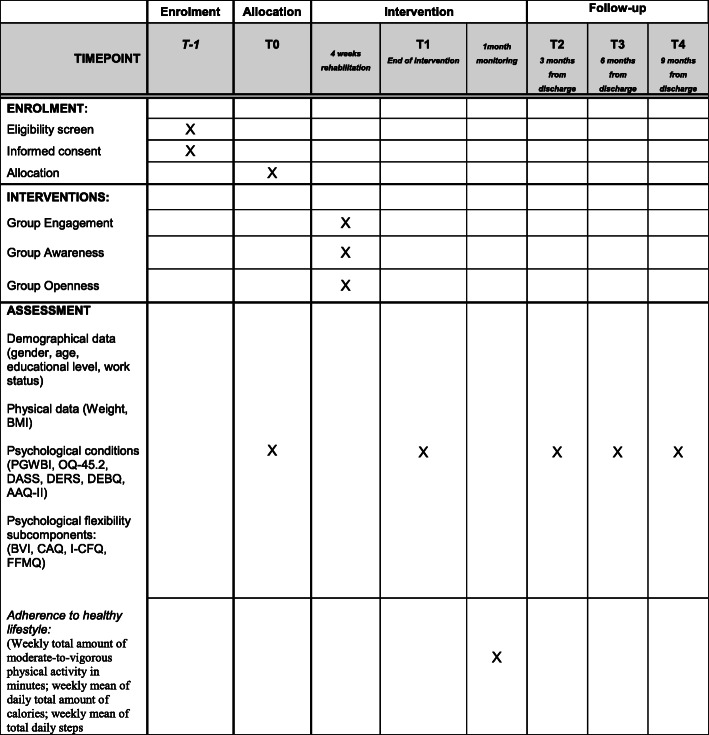
Background: As treatment of choice in promoting psychological flexibility, Acceptance and Commitment Therapy (ACT) was found to be effective in several conditions, and among different populations, including weight management in individuals with obesity. However, the mechanism of action of psychological flexibility is less known. The aim of the present study is, within the context of a brief ACT intervention for behavioral change and behavioral maintenance of a healthy lifestyle in a sample of inpatients with obesity, to explore the effect of each subcomponent of the psychological flexibility model on treatment processes and outcomes.Methods: A randomized controlled trial will be conducted. Ninety Italian adult inpatients with obesity attending a rehabilitation program for weight loss will be randomly allocated into three experimental conditions targeting respectively each subcomponent of the psychological flexibility model: group Engage focused on values-oriented behaviors, group Openness focused on acceptance and cognitive defusion, and group Awareness focused on being present and aware of thoughts, feelings, and behaviors at every moment. Weight, BMI (kg/m2), the Psychological General Well-Being Inventory (PGWBI), the Outcome Questionnaire-45.2 (OQ-45.2), the Depression Anxiety and Stress Scale (DASS-21), the Difficulties in Emotion Regulation Scale (DERS), the Dutch Eating Behaviors Questionnaire (DEBQ), the Brief Values Inventory (BVI), the Committed Action Questionnaire (CAQ), the Italian-Cognitive Fusion Questionnaire (I-CFQ), the Five Facet Mindfulness Questionnaire (FFMQ), and the Acceptance and Action Questionnaire (AAQ-II) will be assessed at the beginning (time 0), at the end of psychological intervention (time 1), and after 3 (time 2) and 6 months (time 3) and 9 months (time 4) from discharge. During the following month after discharge, outpatients will be monitored in their adherence to a healthy lifestyle, using a wearable device. To assess the effectiveness of the intervention, mixed between-within 3 (conditions) × 4 (times) repeated measure ANOVAs will be conducted to examine changes from time 0 to time 1, 2, 3, and 4 in means of weight, BMI, and means of scores PGWBI, OQ-45.2, DASS, DERS, DEBQ, AAQ-II, BVI, CAQ, I-CFQ, and FFMQ, between three groups.Discussion: This study will contribute to clarify the mechanism of action of each subcomponent of the psychological flexibility model and understand its impact on the promotion of a healthy lifestyle.Trial Registration: ClinicalTrials.gov NCT04474509 . Registered on July 4, 2020.
Overview
CoChat Summary
## TL;DR
This is a randomized controlled trial protocol for testing three brief ACT-based modules in 90 Italian adult inpatients with obesity to see how each subcomponent of psychological flexibility affects weight, psychological outcomes, and healthy-lifestyle adherence. The study is designed to clarify mechanisms of action rather than report results.
## Key findings
- The trial will enroll 90 Italian adult inpatients with obesity (BMI ≥ 30) and randomize them 1:1:1 into Engage, Openness, or Awareness conditions.
- Outcomes will be measured at 5 time points: baseline (time 0), post-intervention (time 1), and 3, 6, and 9 months after discharge (times 2–4), with healthy-lifestyle adherence additionally monitored for 1 month after discharge using a wearable device.
- The protocol specifies assessment of weight, BMI, PGWBI, OQ-45.2, DASS-21, DERS, DEBQ, BVI, CAQ, I-CFQ, FFMQ, and AAQ-II, and plans mixed between-within 3 × 4 repeated-measures ANOVAs.
- Sample size was calculated for a 3 (between) × 4 (within) ANOVA with alpha = 0.05, power = 0.80, and a total sample of 90 to detect a small effect size (f = 0.20).
## Methods
- Design: Equivalent parallel-group randomized controlled trial with simple randomization and 1:1:1 allocation; researchers are blinded to the randomization association, and session observers are blinded.
- Sample/data: 90 Italian adults aged 18–65 with obesity, recruited from a single clinical center in Northern Italy during a multidisciplinary 1-month rehabilitation program; exclusion criteria include psychiatric disturbances (including eating disorders) and medical conditions compromising participation.
- Main analysis: Intention-to-treat analysis using mixed between-within 3 × 4 repeated-measures ANOVAs for outcomes over time; missing data will be checked with Little’s MCAR test and handled with multiple imputation if needed.
## Limitations
- The paper states that the sample will be exclusively composed of hospitalized individuals, which may induce selection bias and limits generalizability to other settings.
- The paper also states that the highly specific context of the study will make the results less generalizable.
- Evident from the text: this is a study protocol, so it does not report outcome data or intervention effects yet.
Model-written summary. Check it against the paper before relying on it.
Integrity signals
Registry
Cites
Statistics
Figures
Verification
Claims the paper makes
14 Valid · 1 Not valid · 19 Not checked · 24 Own results and interpretations
The cited sources support only part of this claim — read each source’s verdict below.
In the paper
“The treatment of choice to promote self-regulation skills is Acceptance and Commitment Therapy (ACT [18];).”
§ The ACTyourCHANGE study protocol: promoting a healthy lifestyle in patients with obesity with Acceptance and Commitment Therapy—a randomized controlled trial > Background
What the sources say
- Partly supportedcites [18] Hayes SC, Luoma JB, Bond FW, Masuda A, Lillis J. Acceptance and commitment therapy: model, processes and outcomes. Behav Res Ther. 2006; 10.1016/j.brat.2005.06.006 16300724 sourceExperimental — accuracy not yet measured
The “Six core processes of ACT” section (p. 7) describes ACT as targeting psychological flexibility and conceptualizes its processes as positive psychological skills. But the Abstract (p. 1) says there are not enough well-controlled studies to conclude that ACT is generally more effective than other active treatments; it does not establish ACT as the treatment of choice for promoting self-regulation skills. (LLM, conf=0.88)
plainstates a cause- Asserted: passes — The authors put it forward as true.
- Checkable: passes — It can be checked against evidence.
- Load-bearing: passes — The paper’s conclusions depend on it.
- Based: passes — The paper gives a reason why it holds.
- Partly supported
Every source the paper cites for this claim was checked and supports it.
In the paper
“On the contrary, at 6-month follow-up, the effect of the intervention was more extensive in the ACT condition than in CBT.”
§ The ACTyourCHANGE study protocol: promoting a healthy lifestyle in patients with obesity with Acceptance and Commitment Therapy—a randomized controlled trial > Background
What the sources say
- Supportedcites [23] Cattivelli R, Manzoni GM, Musetti A, Vailati Riboni F, Bastoni I, Guerrini Usubini A, Pietrabissa G, Granese V, Maffini N, Villa V, Caretti A, Varallo G, Consoli S, Spatola CM, Giusti EM, Castelnuovo G, Molinari E. ACTonFood. Acceptance and commitment therapy-based group treatment compared to cognitive-behavioral therapy-based group treatment for weight maintenance: an individually randomized group treatment trial. J Contextual Behav Sci. 2021. (under review). PMC8472644 34574482 source
The Discussion states that at follow-up the psychological treatment effect was larger in ACT than in CBT for CORE-OM outcomes. The Results also report greater weight-loss maintenance in ACT at the 6-month follow-up, supporting the citing sentence’s broader comparison. (LLM, conf=0.91)
plainstates a cause- Asserted: passes — The authors put it forward as true.
- Checkable: passes — It can be checked against evidence.
- Load-bearing: passes — The paper’s conclusions depend on it.
- Based: passes — The paper gives a reason why it holds.
- Supported
The cited sources support only part of this claim — read each source’s verdict below.
In the paper
“As a consequence, they regain about one-third of the weight lost over the following year after treatment [7, 8].”
§ The ACTyourCHANGE study protocol: promoting a healthy lifestyle in patients with obesity with Acceptance and Commitment Therapy—a randomized controlled trial > Background
What the sources say
- Could not verifycites [7] Castelnuovo G Simpson S Ebesity – e-health for obesity – new technologies for the treatment of obesity in clinical psychology and medicine Clin Pract Epidemiol Mental Health 2011 7 1 5 7 10.2174/1745017901107010005 PMC3087971 21559215 sourceExperimental — accuracy not yet measured
The main text discusses long-term treatment and weight-loss maintenance, but does not report how much weight patients regain after treatment. Searches for one-third weight regain and regain over the following year found no supporting passage in our copy. (LLM, conf=0.75)
- Supportedcites [8] Cattivelli R Castelnuovo G Musetti A Varallo G Spatola CAM Riboni FV Guerrini Usubini A Tosolin F Manzoni GM Capodaglio P Rossi A Pietrabissa G Molinari E ACTonHEALTH study protocol: promoting psychological flexibility with activity tracker and mHealth tools to foster healthful lifestyle for obesity and other chronic health conditions Trials 2018 19 1 1 11 10.1186/s13063-018-2968-x 30486868 PMC6262958 source
The Background states that obese individuals frequently regain about 30% of the weight lost within the first year. This supports the paraphrase “about one-third” over the year after treatment. The supplied copy does not provide a page number. (LLM, conf=0.93)
plainstates a cause- Asserted: passes — The authors put it forward as true.
- Checkable: passes — It can be checked against evidence.
- Load-bearing: passes — The paper’s conclusions depend on it.
- Based: passes — The paper gives a reason why it holds.
- Could not verify
The sources with a verdict support this claim; the rest weren’t checked yet, have no full text we could read, or their verdicts aren’t rated yet.
In the paper
“Many studies suggested that dysfunctional eating habits, such as emotional eating, may emerge as a failure of emotion regulation strategies that allow individuals to regulate their own emotions by modulating their responses [16, 17].”
§ The ACTyourCHANGE study protocol: promoting a healthy lifestyle in patients with obesity with Acceptance and Commitment Therapy—a randomized controlled trial > Background
What the sources say
- Supportedcites [16] Gianini LM White MA Masheb RM Eating pathology, emotion regulation, and emotional overeating in obese adults with binge eating disorder Eat Behav 2013 14 3 309 313 10.1016/j.eatbeh.2013.05.008 23910772 PMC4015336 source
The Introduction describes the hypothesis that emotional overeating may occur when people lack adaptive emotion-regulation strategies. The Discussion reports an association between emotion-regulation difficulties and emotional overeating and says the findings are consistent with that model. The claim’s tentative wording matches the paper’s caution that its cross-sectional data cannot establish causation. (LLM, conf=0.90)
- Not checked — no full text of the sourcecites [17] Stice E Bearman SK Body-image and eating disturbances prospectively predict increases in depressive symptoms in adolescent girls: a growth curve analysis Dev Psychol 2001 37 5 597 607 10.1037/0012-1649.37.5.597 11552756 source
hedgedstates a possible cause- Asserted: passes — The authors put it forward as true.
- Checkable: passes — It can be checked against evidence.
- Load-bearing: passes — The paper’s conclusions depend on it.
- Based: passes — The paper gives a reason why it holds.
- Supported
The cited sources support only part of this claim — read each source’s verdict below.
In the paper
“Most obese or overweight people who attend a weight loss rehabilitation program fail to maintain a healthy lifestyle over time.”
§ The ACTyourCHANGE study protocol: promoting a healthy lifestyle in patients with obesity with Acceptance and Commitment Therapy—a randomized controlled trial > Background
What the sources say
- Could not verifycites [7] Castelnuovo G Simpson S Ebesity – e-health for obesity – new technologies for the treatment of obesity in clinical psychology and medicine Clin Pract Epidemiol Mental Health 2011 7 1 5 7 10.2174/1745017901107010005 PMC3087971 21559215 sourceExperimental — accuracy not yet measured
The paper’s main text says obesity needs long-lasting treatment and discusses programs intended to improve weight-loss maintenance. It does not report whether most overweight or obese people who attend rehabilitation programs fail to maintain a healthy lifestyle over time; searches for rehabilitation, long-term maintenance, and failure found no such outcome. (LLM, conf=0.72)
- Supportedcites [8] Cattivelli R Castelnuovo G Musetti A Varallo G Spatola CAM Riboni FV Guerrini Usubini A Tosolin F Manzoni GM Capodaglio P Rossi A Pietrabissa G Molinari E ACTonHEALTH study protocol: promoting psychological flexibility with activity tracker and mHealth tools to foster healthful lifestyle for obesity and other chronic health conditions Trials 2018 19 1 1 11 10.1186/s13063-018-2968-x 30486868 PMC6262958 source
The Abstract (Background; page unavailable) says most rehabilitation programs do not produce long-lasting results. The Background (‘The present study’; page unavailable) adds that patients often fail to maintain nutrition and activity plans after treatment and frequently return to previous habits. Together, these support the claim as a broad paraphrase. (LLM, conf=0.87)
plain- Asserted: passes — The authors put it forward as true.
- Checkable: passes — It can be checked against evidence.
- Load-bearing: passes — The paper’s conclusions depend on it.
- Based: passes — The paper gives a reason why it holds.
- Could not verify
6 more claims · 2 with their cited sources checked
Create a free account to see all 58 claims and to verify the 6 references still open.
- Probably not a substantial claim. 38
- It may state two separate claims as one. 31
Self-check
Percentages, sums and reported differences re-computed from the paper’s own numbers.
Each contradiction between two passages listed here was confirmed by an independent check.
Rated major: it would touch a result — a value a result rests on, reported and recomputed p-values on opposite sides of the significance level, two passages that conflict with no sign which is right, or a cited work retracted before this paper was published.
In the paper
§ The ACTyourCHANGE study protocol: promoting a healthy lifestyle in patients with obesity with Acceptance and Commitment Therapy—a randomized controlled trial > Abstract > Methods
“after 3 (time 2) and 6 months (time 3) and 9 months (time 4) from discharge.”
§ The ACTyourCHANGE study protocol: promoting a healthy lifestyle in patients with obesity with Acceptance and Commitment Therapy—a randomized controlled trial > Discussion
“Finally, two measures of follow-up (at 6 and 12 months after discharge) will allow to assess long-standing adoption of healthy lifestyle of participants.”
Citations
Cites
Faul, F., Erdfelder, E., Lang, A.-G., & Buchner, A. (2007) · Behavior Research Methods · doi:10.3758/bf03193146 · Cited by 65,971
Gratz, K. L., & Roemer, L. (2004) · Journal of Psychopathology and Behavioral Assessment · doi:10.1023/b:joba.0000007455.08539.94 · Cited by 8,942
Using Self-Report Assessment Methods to Explore Facets of Mindfulness
Baer, R. A., Smith, G. T., Hopkins, J., Krietemeyer, J., & Toney, L. (2006) · Assessment · doi:10.1177/1073191105283504 · Cited by 7,511
(1995) · Cited by 6,909
Acceptance and commitment therapy: model, processes and outcomes
Hayes, S. C., Luoma, J. B., Bond, F. W., Masuda, A., & Lillis, J. (2006) · Behaviour Research and Therapy · doi:10.1016/j.brat.2005.06.006 · Cited by 6,587 · cited 3×
“It is a transdiagnostic approach aimed at promoting psychological flexibility defined as the ability of “being in contact with the present moment fully as a conscious human being and, basing on what the situation affords, changing or persisting in behavior in the service of chosen values” [18].”
BackgroundHASKELL, W. L., LEE, I.-M., PATE, R. R., POWELL, K. E., BLAIR, S. N., FRANKLIN, B. A., MACERA, C. A., HEATH, G. W., THOMPSON, P. D., & BAUMAN, A. (2007) · Medicine & Science in Sports & Exercise · doi:10.1249/mss.0b013e3180616b27 · Cited by 4,616
Bond, F. W., Hayes, S. C., Baer, R. A., Carpenter, K. M., Guenole, N., Orcutt, H. K., Waltz, T., & Zettle, R. D. (2011) · Behavior Therapy · doi:10.1016/j.beth.2011.03.007 · Cited by 3,950 · cited 1×
“The Acceptance and Action Questionnaire (AAQ-II [31];”
European Guidelines for Obesity Management in Adults
Yumuk, V., Tsigos, C., Fried, M., Schindler, K., Busetto, L., Micic, D., & Toplak, H. (2015) · Obesity Facts · doi:10.1159/000442721 · Cited by 3,432
Depression Anxiety Stress Scales
Lovibond, S. H., & Lovibond, P. F. (2011) · PsycTESTS Dataset · doi:10.1037/t01004-000 · Cited by 2,416
S UCCESSFUL W EIGHT L OSS M AINTENANCE
Wing, R. R., & Hill, J. O. (2001) · Annual Review of Nutrition · doi:10.1146/annurev.nutr.21.1.323 · Cited by 1,382
Hayes, S. C., Levin, M. E., Plumb-Vilardaga, J., Villatte, J. L., & Pistorello, J. (2013) · Behavior Therapy · doi:10.1016/j.beth.2009.08.002 · Cited by 1,120
A-Tjak, J. G. L., Davis, M. L., Morina, N., Powers, M. B., Smits, J. A. J., & Emmelkamp, P. M. G. (2015) · Psychotherapy and Psychosomatics · doi:10.1159/000365764 · Cited by 1,031
The Future of Intervention Science: Process-Based Therapy
Hofmann, S. G., & Hayes, S. C. (2019) · Clinical Psychological Science · doi:10.1177/2167702618772296 · Cited by 888
The development and initial validation of the cognitive fusion questionnaire
Gillanders, D. T., Bolderston, H., Bond, F. W., Dempster, M., Flaxman, P. E., Campbell, L., Kerr, S., Tansey, L., Noel, P., Ferenbach, C., et al. (2014) · Behavior Therapy · doi:10.1016/j.beth.2013.09.001 · Cited by 837 · cited 1×
“The Italian-Cognitive Fusion Questionnaire (I-CFQ [44];).”
(1984) · Medical Entomology and Zoology · Cited by 741
Chorpita, B. F., Daleiden, E. L., & Weisz, J. R. (2005) · Mental Health Services Research · doi:10.1007/s11020-005-1962-6 · Cited by 717
Stice, E., & Bearman, S. K. (2001) · Developmental Psychology · doi:10.1037/0012-1649.37.5.597 · Cited by 704 · cited 1×
“Many studies suggested that dysfunctional eating habits, such as emotional eating, may emerge as a failure of emotion regulation strategies that allow individuals to regulate their own emotions by modulating their responses [16, 17].”
BackgroundBottesi, G., Ghisi, M., Altoè, G., Conforti, E., Melli, G., & Sica, C. (2015) · Comprehensive Psychiatry · doi:10.1016/j.comppsych.2015.04.005 · Cited by 701 · cited 1×
“The Italian version [34] is administered as a measure of psychological”
MethodDONNER, A., BIRKETT, N., & BUCK, C. (1981) · American Journal of Epidemiology · doi:10.1093/oxfordjournals.aje.a113261 · Cited by 698
Behavioral treatment of obesity
Butryn, M. L., Webb, V., & Wadden, T. A. (2011) · Psychiatric Clinics of North America · doi:10.1016/j.psc.2011.08.006 · Cited by 636
The third wave of cognitive behavioral therapy and the rise of process-based care
Hayes, S. C., & Hofmann, S. G. (2017) · World Psychiatry · doi:10.1002/wps.20442 · Cited by 613
Kolotkin, R. L., & Andersen, J. R. (2017) · Clinical Obesity · doi:10.1111/cob.12203 · Cited by 590 · cited 1×
“Obesity is frequently associated with many physical comorbidities, including type II diabetes mellitus, cardiovascular disease, hypertension, kidney failure, and osteoarthritis [3]; psychological problems such as depression, feelings of shame, low self-esteem, and stigma [4]; and eating disorders, as well as social an…”
BackgroundEmotional eating, depressive symptoms and self-reported food consumption. A population-based study.
Konttinen, H., Männistö, S., Sarlio-Lähteenkorva, S., Silventoinen, K., & Haukkala, A. (2010) · Appetite · doi:10.1016/j.appet.2010.01.014 · Cited by 546
European Practical and Patient-Centred Guidelines for Adult Obesity Management in Primary Care
Durrer Schutz, D., Busetto, L., Dicker, D., Farpour-Lambert, N., Pryke, R., Toplak, H., Widmer, D., Yumuk, V., & Schutz, Y. (2019) · Obesity Facts · doi:10.1159/000496183 · Cited by 492
Motivation, self-determination, and long-term weight control
Teixeira, P. J., Silva, M. N., Mata, J., Palmeira, A. L., & Markland, D. (2012) · International Journal of Behavioral Nutrition and Physical Activity · doi:10.1186/1479-5868-9-22 · Cited by 422 · cited 1×
“The difference between the two interventions was reasonably attributed to the intrinsic different goals of the therapy: while CBT is focused on the reduction of symptoms [24], providing an immediate—but not lasting—relief, ACT fosters psychological flexibility, considered the core mechanism of action of therapy [18].”
BackgroundAcceptance and commitment therapy: altering the verbal support for experiential avoidance
Hayes, S. C., & Wilson, K. G. (1994) · The Behavior Analyst · doi:10.1007/bf03392677 · Cited by 354
Emotional Eating and Weight in Adults: A Review
Frayn, M., & Knäuper, B. (2018) · Current Psychology · doi:10.1007/s12144-017-9577-9 · Cited by 307 · cited 1×
“Emotional eating refers to eating in response to unpleasant emotional states [10].”
BackgroundGiromini, L., Velotti, P., de Campora, G., Bonalume, L., & Cesare Zavattini, G. (2012) · Journal of Clinical Psychology · doi:10.1002/jclp.21876 · Cited by 301 · cited 1×
“The Italian version [36, 37] is administered to assess difficulties in emotional regulation.”
MethodModularity in the design and application of therapeutic interventions
Chorpita, B. F., Daleiden, E. L., & Weisz, J. R. (2005) · Applied and Preventive Psychology · doi:10.1016/j.appsy.2005.05.002 · Cited by 295
Grossi, E., Groth, N., Mosconi, P., Cerutti, R., Pace, F., Compare, A., & Apolone, G. (2006) · Health and Quality of Life Outcomes · doi:10.1186/1477-7525-4-88 · Cited by 291
Emotional eating as a mediator between depression and weight gain
van Strien, T., Konttinen, H., Homberg, J. R., Engels, R. C. M. E., & Winkens, L. H. H. (2016) · Appetite · doi:10.1016/j.appet.2016.02.034 · Cited by 277 · cited 1×
“Since emotional eating has been associated with elevated consumption of highcalorie and high fat, it does not surprise that emotional eating was found to be strongly related to obesity [11] both in adults and in the younger population [12, 13].”
BackgroundGianini, L. M., White, M. A., & Masheb, R. M. (2013) · Eating Behaviors · doi:10.1016/j.eatbeh.2013.05.008 · Cited by 263 · cited 1×
“Many studies suggested that dysfunctional eating habits, such as emotional eating, may emerge as a failure of emotion regulation strategies that allow individuals to regulate their own emotions by modulating their responses [16, 17].”
BackgroundThe role of values in a contextual cognitive-behavioral approach to chronic pain
McCracken, L. M., & Yang, S.-Y. (2006) · Pain · doi:10.1016/j.pain.2006.02.021 · Cited by 260
Biglan, A., & Hayes, S. C. (1996) · Applied and Preventive Psychology · doi:10.1016/s0962-1849(96)80026-6 · Cited by 234
Disruptive innovations for designing and diffusing evidence-based interventions
Rotheram-Borus, M. J., Swendeman, D., & Chorpita, B. F. (2012) · American Psychologist · doi:10.1037/a0028180 · Cited by 210
Forman, E. M., & Butryn, M. L. (2015) · Appetite · doi:10.1016/j.appet.2014.10.004 · Cited by 208
Lambert, M. J., Lunnen, K., Umphress, V., Hansen, N., & Burlingame, G. M. (2012) · PsycTESTS Dataset · doi:10.1037/t00830-000 · Cited by 193
Cognitive behavioral therapy to aid weight loss in obese patients: current perspectives
Castelnuovo, G., Pietrabissa, G., Manzoni, G. M., Cattivelli, R., Rossi, A., Novelli, M., Varallo, G., & Molinari, E. (2017) · Psychology Research and Behavior Management · doi:10.2147/prbm.s113278 · Cited by 187 · cited 1×
“9 billion adults in the world were overweight and, of these, more than 650 million were obese [2].”
BackgroundSelf-citationBest practices for analyzing large-scale health data from wearables and smartphone apps
Hicks, J. L., Althoff, T., Sosic, R., Kuhar, P., Bostjancic, B., King, A. C., Leskovec, J., & Delp, S. L. (2019) · npj Digital Medicine · doi:10.1038/s41746-019-0121-1 · Cited by 183
McCracken, L. M. (2013) · The Journal of Pain · doi:10.1016/j.jpain.2013.02.009 · Cited by 172 · cited 1×
“The Committed Action Questionnaire (CAQ [42];).”
Linardon, J., de la Piedad Garcia, X., & Brennan, L. (2017) · European Eating Disorders Review · doi:10.1002/erv.2492 · Cited by 155
Acceptance and commitment therapy for bariatric surgery patients, a pilot RCT
Weineland, S., Arvidsson, D., Kakoulidis, T. P., & Dahl, J. (2012) · Obesity Research & Clinical Practice · doi:10.1016/j.orcp.2011.04.004 · Cited by 148
Forman, E. M., Butryn, M. L., Manasse, S. M., Crosby, R. D., Goldstein, S. P., Wyckoff, E. P., & Thomas, J. G. (2016) · Obesity · doi:10.1002/oby.21601 · Cited by 145
Acceptance and Commitment Therapy modules: Differential impact on treatment processes and outcomes
Villatte, J. L., Vilardaga, R., Villatte, M., Plumb Vilardaga, J. C., Atkins, D. C., & Hayes, S. C. (2016) · Behaviour Research and Therapy · doi:10.1016/j.brat.2015.12.001 · Cited by 136 · cited 2×
“With lower level of agreement, the data will be dismissed [26].”
BackgroundA Pilot Study of Acceptance and Commitment Therapy for Promotion of Physical Activity
Butryn, M. L., Forman, E., Hoffman, K., Shaw, J., & Juarascio, A. (2011) · Journal of Physical Activity and Health · doi:10.1123/jpah.8.4.516 · Cited by 134 · cited 1×
“Finally, it improves the ability to be present in the moment and face events in the context they happen [25].”
BackgroundDakanalis, A., Zanetti, M. A., Clerici, M., Madeddu, F., Riva, G., & Caccialanza, R. (2013) · Appetite · doi:10.1016/j.appet.2013.08.010 · Cited by 130 · cited 1×
“The Italian version [39] is composed of 13 of 33 items of the DEBQ to assess emotional eating.”
MethodApps and eating disorders: A systematic clinical appraisal
Fairburn, C. G., & Rothwell, E. R. (2015) · International Journal of Eating Disorders · doi:10.1002/eat.22398 · Cited by 121
Pals, S. L., Murray, D. M., Alfano, C. M., Shadish, W. R., Hannan, P. J., & Baker, W. L. (2008) · American Journal of Public Health · doi:10.2105/ajph.2007.127027 · Cited by 104
Shapiro, J. R., Woolson, S. L., Hamer, R. M., Kalarchian, M. A., Marcus, M. D., & Bulik, C. M. (2007) · International Journal of Eating Disorders · doi:10.1002/eat.20318 · Cited by 101 · cited 1×
“Since emotional eating has been associated with elevated consumption of highcalorie and high fat, it does not surprise that emotional eating was found to be strongly related to obesity [11] both in adults and in the younger population [12, 13].”
BackgroundWing, R. R., Tate, D. F., Espeland, M. A., Lewis, C. E., LaRose, J. G., Gorin, A. A., Bahnson, J., Perdue, L. H., Hatley, K. E., Ferguson, E., et al. (2016) · JAMA Internal Medicine · doi:10.1001/jamainternmed.2016.1236 · Cited by 100
Is Severe Obesity a Form of Addiction?: Rationale, Clinical Approach, and Controlled Clinical Trial
Riva, G., Bacchetta, M., Cesa, G., Conti, S., Castelnuovo, G., Mantovani, F., & Molinari, E. (2006) · CyberPsychology & Behavior · doi:10.1089/cpb.2006.9.457 · Cited by 98 · cited 1×
“Obesity is frequently associated with many physical comorbidities, including type II diabetes mellitus, cardiovascular disease, hypertension, kidney failure, and osteoarthritis [3]; psychological problems such as depression, feelings of shame, low self-esteem, and stigma [4]; and eating disorders, as well as social an…”
BackgroundSelf-citationfor the Dutch Pancreatic Cancer Group, de Rooij, T., van Hilst, J., Bosscha, K. P., Dijkgraaf, M. G. W., Gerhards, M. F., Koerkamp, B. G., Hagendoorn, J., de Hingh, I. H. J. T., Karsten, T. M., et al. (2018) · Trials · doi:10.1186/s13063-017-2423-4 · Cited by 96
Negative emotions and emotional eating: the mediating role of experiential avoidance
Litwin, R., Goldbacher, E. M., Cardaciotto, L., & Gambrel, L. E. (2017) · Eating and Weight Disorders - Studies on Anorexia, Bulimia and Obesity · doi:10.1007/s40519-016-0301-9 · Cited by 94 · cited 1×
“The link between negative emotions and emotional eating has been well-established both in general [14] and in obese population [15].”
BackgroundPennato, T., Berrocal, C., Bernini, O., & Rivas, T. (2013) · Journal of Psychopathology and Behavioral Assessment · doi:10.1007/s10862-013-9355-4 · Cited by 87 · cited 1×
“The Italian version [32] is the most widely used selfreported questionnaire that measures psychological in-”
BackgroundDifficulties in Emotion Regulation Scale (DERS): traduzione e adattamento italiano
Sighinolfi, C., Pala, A. N., Chiri, L. R., Marchetti, I., & Sica, C. (2010) · ArTS Archivio della ricerca di Trieste (University of Trieste https://www.units.it/) · Cited by 72
The empirically supported status of acceptance and commitment therapy: An update.
Smout, M. F., Hayes, L., Atkins, P. W. B., Klausen, J., & Duguid, J. E. (2012) · Clinical Psychologist · doi:10.1111/j.1742-9552.2012.00051.x · Cited by 69
Psychological General Well-Being Index (PGWB)
Grossi, E., & Compare, A. (2014) · Encyclopedia of Quality of Life and Well-Being Research · doi:10.1007/978-94-007-0753-5_2309 · Cited by 67
Butryn, M. L., Forman, E. M., Lowe, M. R., Gorin, A. A., Zhang, F., & Schaumberg, K. (2017) · Obesity · doi:10.1002/oby.21813 · Cited by 57
The relationship between obesity and other medical comorbidities
Afolabi, H. A., Zakariya, Z. B., Ahmed Shokri, A. B., Mohammad Hasim, M. N. B., Vinayak, R., Afolabi-Owolabi, O. T., & Elesho, R. F. (2020) · Obesity Medicine · doi:10.1016/j.obmed.2019.100164 · Cited by 54 · cited 1×
“Obesity is frequently associated with many physical comorbidities, including type II diabetes mellitus, cardiovascular disease, hypertension, kidney failure, and osteoarthritis [3]; psychological problems such as depression, feelings of shame, low self-esteem, and stigma [4]; and eating disorders, as well as social an…”
BackgroundRelational frame theory and executive function: A behavioral approach.
Hayes, S. C., Gifford, E. V., & Ruckstuhl, L. E. (1996) · Cited by 54
Levin, M. E., Petersen, J. M., Durward, C., Bingeman, B., Davis, E., Nelson, C., & Cromwell, S. (2021) · Translational Behavioral Medicine · doi:10.1093/tbm/ibaa123 · Cited by 50
The efficacy of focused acceptance and commitment therapy in VA primary care
Glover, N. G., Sylvers, P. D., Shearer, E. M., Kane, M.-C., Clasen, P. C., Epler, A. J., Plumb-Vilardaga, J. C., Bonow, J. T., & Jakupcak, M. (2016) · Psychological Services · doi:10.1037/ser0000062 · Cited by 46
Castelnuovo, G., Manzoni, G. M., Villa, V., Cesa, G. L., Pietrabissa, G., & Molinari, E. (2011) · Trials · doi:10.1186/1745-6215-12-114 · Cited by 45
Self-citationChiappelli, M., Coco, G. L., Gullo, S., Bensi, L., & Prestano, C. (2008) · Epidemiologia e Psichiatria Sociale · doi:10.1705/357.4157 · Cited by 41
Cattivelli, R., Castelnuovo, G., Musetti, A., Varallo, G., Spatola, C. A. M., Riboni, F. V., Usubini, A. G., Tosolin, F., Manzoni, G. M., Capodaglio, P., et al. (2018) · Trials · doi:10.1186/s13063-018-2968-x · Cited by 41
Self-citationDifficulties in emotion regulation scale (DERS): the italian translation and adaptation
Sighinolfi, C., Pala, A. N., Chiri, L. R., Marchetti, I., & Sica, C. (2010) · Ghent University Academic Bibliography (Ghent University) · Cited by 39
Chiappelli, M., Coco, G. L., Gullo, S., Bensi, L., & Prestano, C. (2008) · Epidemiologia e Psichiatria Sociale · doi:10.1017/s1121189x00002852 · Cited by 35 · cited 1×
“The Italian version [30] is used to assess the effectiveness of clinical interventions.”
MethodCastelnuovo, G., & Simpson, S. (2011) · Clinical Practice & Epidemiology in Mental Health · doi:10.2174/1745017901107010005 · Cited by 34 · cited 1×
“As a consequence, they regain about one-third of the weight lost over the following year after treatment [7, 8].”
BackgroundSelf-citationLevin, M. E., Krafft, J., & Twohig, M. P. (2020) · Journal of Contextual Behavioral Science · doi:10.1016/j.jcbs.2020.05.001 · Cited by 28
GIUSTI, E. M., SPATOLA, C. A., BRUNANI, A., KUMBHARE, D., ORAL, A., ILIEVA, E., KIEKENS, C., PIETRABISSA, G., MANZONI, G. M., IMAMURA, M., et al. (2020) · European Journal of Physical and Rehabilitation Medicine · doi:10.23736/s1973-9087.20.06232-2 · Cited by 25
Self-citationBerman, M. I., Morton, S. N., & Hegel, M. T. (2016) · Clinical Social Work Journal · doi:10.1007/s10615-015-0565-y · Cited by 23
Cattivelli, R., Guerrini Usubini, A., Manzoni, G. M., Vailati Riboni, F., Pietrabissa, G., Musetti, A., Franceschini, C., Varallo, G., Spatola, C. A. M., Giusti, E., et al. (2021) · International Journal of Environmental Research and Public Health · doi:10.3390/ijerph18189558 · Cited by 20
Self-citationCattivelli, R., Guerrini Usubini, A., Manzoni, G. M., Vailati Riboni, F., Pietrabissa, G., Musetti, A., Franceschini, C., Varallo, G., Spatola, C. A. M., Giusti, E., et al. (2021) · doi:10.20944/preprints202107.0156.v1 · Cited by 20 · cited 6×
“Since we already assessed the efficacy of an ACTbased intervention compared to a CBT-based intervention in the same context of obesity rehabilitation in a previous study [23], in this study, the aim was to compare the three subcomponents of the psychological flexibility model with each other.”
MethodInfluentialSelf-citationAndridge, R., Shoben, A. B., Muller, K. E., & Murray, D. M. (2014) · Statistics in Medicine · doi:10.1002/sim.6083 · Cited by 17
ACTonFOOD: opportunities of ACT to address food addiction
Cattivelli, R., Pietrabissa, G., Ceccarini, M., Spatola, C. A. M., Villa, V., Caretti, A., Gatti, A., Manzoni, G. M., & Castelnuovo, G. (2015) · Frontiers in Psychology · doi:10.3389/fpsyg.2015.00396 · Cited by 13
Self-citationA Case Study: An ACT Stress Management Group in a University Counseling Center
Daltry, R. M. (2015) · Journal of College Student Psychotherapy · doi:10.1080/87568225.2015.976076 · Cited by 12
Giusti, E. M., Spatola, C. A. M., Brunani, A., Kumbhare, D., Oral, A., Ilieva, E., Kiekens, C., Pietrabissa, G., Manzoni, G. M., Imamura, M., et al. (2020) · The Journal of the International Society of Physical and Rehabilitation Medicine · doi:10.4103/jisprm.jisprm_6_20 · Cited by 2 · cited 2×
“They include nutrition and dieting, physical activity, and psychological support, aimed at fostering the adoption of a healthy lifestyle through the Cognitive Behavioral Therapy-based interventions considered the gold standard for the treatment of obesity [6].”
BackgroundSelf-citation(2019) · Florence Research (University of Florence) · Cited by 1
Oppo, A., Prevedini, A. B., Orco, F. D., et al. (2019) · Cited by 1
Cognitive Fusion Questionnaire--Italian Version
Oppo, A., Prevedini, A. B., Dell'Orco, F., Dordoni, P., Presti, G., Gillanders, D. T., & Moderato, P. (2019) · PsycTESTS Dataset · doi:10.1037/t72778-000 · Cited by 1
(2017) · Cited by 1
van Strien (1986) · doi:10.1002/1098-108x(198602)5:2<295::aid-eat2260050209>3.0.co;2-t
Research works printed but not linked: 5
- Varallo, G., Guerrini Usubini, A., Granese, V., Cattivelli, R., Consoli, S., Bastoni, I., Volpi, C., Giusti, E. M., Castelnuovo, G., & Molinari, E. (2021). Experiential avoidance as a mediator of the relationship between anxiety and emotional eating in individuals with obesity. Appetite (Under Review).
- Strosahl K Robinson P Gustavsson T Brief interventions for radical change: principles and practice of focused acceptance and commitment therapy Brief interventions for radical change: principles and practice of focused acceptance and commitment therapy 2012
- Lambert MJ Gregersen AT Burlingame GM The Outcome Questionnaire-45 2004
- Boffitto S Bonalume L Rivolta L Giovannini C Giromini L Amadei G Validazione italiana del Five facte Mindfulness Questionnaire (FFMQ) Congresso Nazionale della Sezione di Psicologia Clinica e Dinamica 2009
- World Health Organization Pacific physical activity guidelines for adults: framework for accelerating the communication of physical activity guidelines 2008 Manila WHO Regional Office for the Western Pacific 23785738
Cited by
Guerrini Usubini, A., Varallo, G., Giusti, E. M., Cattivelli, R., Granese, V., Consoli, S., Bastoni, I., Volpi, C., & Castelnuovo, G. (2022) · Frontiers in Psychology · doi:10.3389/fpsyg.2022.861341 · Cited by 22
Self-citationCattivelli, R., Guerrini Usubini, A., Manzoni, G. M., Vailati Riboni, F., Pietrabissa, G., Musetti, A., Franceschini, C., Varallo, G., Spatola, C. A. M., Giusti, E., et al. (2021) · International Journal of Environmental Research and Public Health · doi:10.3390/ijerph18189558 · Cited by 20
Self-citationRossi, A. A., Manzoni, G. M., Pietrabissa, G., Pauli, D. D., Mannarini, S., & Castelnuovo, G. (2022) · Eating and Weight Disorders - Studies on Anorexia Bulimia and Obesity · doi:10.1007/s40519-022-01385-8 · Cited by 27
Self-citationMeditation for the primary and secondary prevention of cardiovascular disease
Rees, K., Takeda, A., Court, R. A., Kudrna, L., Hartley, L., & Ernst, E. (2024) · Cochrane Database of Systematic Reviews · doi:10.1002/14651858.cd013358.pub2 · Cited by 23
The importance of patient engagement in the multimodal treatment of MASLD
Boeckmans, J., Hagström, H., Cryer, D. R. H., & Schattenberg, J. M. (2025) · Communications Medicine · doi:10.1038/s43856-025-00871-1 · Cited by 19
“During the process of changing lifestyle, failure should be seen as an opportunity toidentifypointstoimprove and asastepintherightdirection as this is more motivating than viewing it as personal malfunctioning 30,31 .”
Metadata
- Authors
- Guerrini Usubini, A., Cattivelli, R., Giusti, E. M., Riboni, F. V., Varallo, G., Pietrabissa, G., Manzoni, G. M., Consoli, S., Bastoni, I., Granese, V., Volpi, C., Villa, V., Caretti, A., Bottacchi, M., Castelnuovo, G., & Molinari, E.
- Affiliations
- Università Cattolica del Sacro Cuore (IT)
- Università degli Studi eCampus (IT)
- IRCCS Istituto Auxologico Italiano (IT)
- ORCID
- Venue
- Trials
- Published
- 2021-04-20
- Volume
- 22
- Issue
- 1
- Pages
- 290-290
- ISSN
- 1745-6215 (ISSN-L)
- PMC
- PMC8056547
- OpenAlex
- W3152622440
- Cited by
- 14
- References
- 57
- Citations by year
- 2026: 2 · 2025: 3 · 2024: 3 · 2022: 5 · 2021: 1
- FWCI
- 1.53
- Type
- journal article
- Language
- en
- Open access
- gold
- doi.org
- Licence
- cc-by
- creativecommons.org/licenses/by/4.0/ (tdm)
- creativecommons.org/licenses/by/4.0/ (vor)
- Locations
- Trials (publishedVersion, cc-by)
- Research Square (acceptedVersion, cc-by)
- PubMed Central (publishedVersion, cc-by)
- PubMed (publishedVersion)
- IRIS UNIMORE (University of Modena and Reggio Emilia) (submittedVersion, cc-by)
- Archivio istituzionale della ricerca (Alma Mater Studiorum Università di Bologna) (submittedVersion, cc-by)
- DOAJ (DOAJ: Directory of Open Access Journals) (submittedVersion, cc-by-sa)
- IrInSubria (University of Insubria) (submittedVersion, cc-by)
- IRIS eCampus Telematic University (Università degli Studi eCampus) (submittedVersion)
- PubliCatt (Università Cattolica del Sacro Cuore) (submittedVersion, other-oa)
- Topics
- Social Sciences › Psychology › Clinical Psychology › Mindfulness and Compassion Interventions
- Social Sciences › Psychology › Applied Psychology › Behavioral Health and Interventions
- Health Sciences › Medicine › Public Health, Environmental and Occupational Health › Obesity and Health Practices
- Keywords
- acceptance and commitment therapy, obesity, psychological flexibility, healthy lifestyle, weight loss, inpatient rehabilitation, acceptance, cognitive defusion, mindfulness, dietary habits, emotion regulation, psychological well-being, medication adherence, wearable devices, mechanism of action, brief psychological intervention, Italian adults, anxiety and depression, stress, comorbidities
- MeSH terms
- Healthy Lifestyle, Adult, Humans, Italy, Obesity, Randomized Controlled Trials as Topic, Mindfulness, Acceptance and Commitment Therapy
About these checks
Registry, retraction, Cites and statistics results are computed, not judged, with one exception: a printed reference that no index lists is read once by a model before it counts as a citation error. Claims are extracted by a model and kept only when their quote appears verbatim in the text; each cited source is then checked, with a model’s help, for whether it says what the claim relies on. Those verdicts can be wrong — read the claim’s quote and the cited source before relying on one.
The claim verdicts this report counts are experimental: their accuracy is not yet measured.
A language model drew the claims from the paper on 2026-10-11, under version 3 of the claim definition (model deepseek-v4.1-flash, prompt extract-v3).
A second model labelled each claim on 2026-10-11 (model jev-1.13-20260917, definition revision gold-guideline-v0.2).
Cited sources are checked with a language model’s help (gpt-6-sol).
Statistics and arithmetic are recomputed, not judged.
Confidence bands are shown only for fields calibrated on our annotated test set. None is calibrated yet, so no band is shown.
What counts as a claim ›How we measure confidence ›How we check this ›
Are you an author, or do you see a problem with this page? Request a review
Data sources
Bibliographic data: Semantic Scholar, OpenAlex, Crossref.
Contains information from the Semantic Scholar Academic Graph Datasets, made available under the ODC Attribution License (ODC-BY 1.0).
Semantic Scholar’s data is described in: Kinney, R., et al. (2023). The Semantic Scholar Open Data Platform. arXiv:2301.10140.
