

The impact of social activities, social networks, social support and social relationships on the cognitive functioning of healthy older adults: a systematic review
Open accessThe DOI matches its Crossref record; 102 of the 103 references it cites were found in a registry or an index.
Abstract
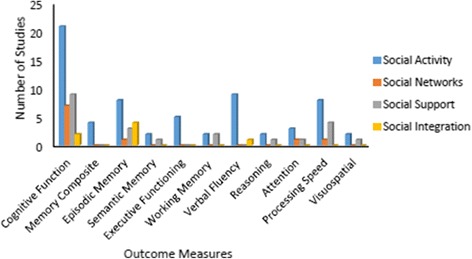
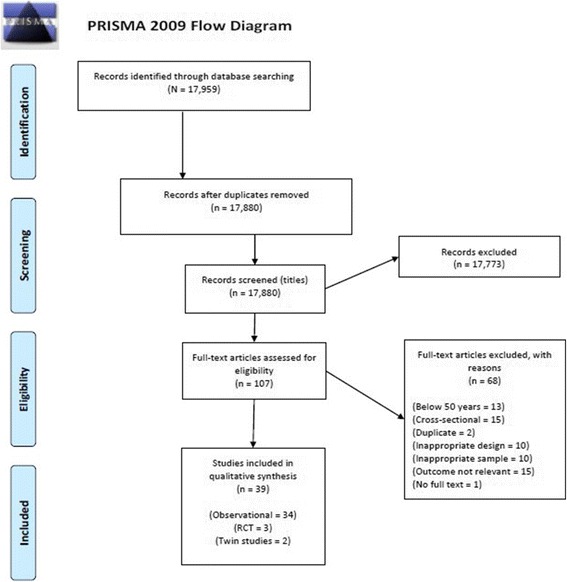
BACKGROUND: Social relationships, which are contingent on access to social networks, promote engagement in social activities and provide access to social support. These social factors have been shown to positively impact health outcomes. In the current systematic review, we offer a comprehensive overview of the impact of social activities, social networks and social support on the cognitive functioning of healthy older adults (50+) and examine the differential effects of aspects of social relationships on various cognitive domains. METHODS: We followed PRISMA (Preferred Reporting Items for Systematic Reviews and Meta-Analysis) guidelines, and collated data from randomised controlled trials (RCTs), genetic and observational studies. Independent variables of interest included subjective measures of social activities, social networks, and social support, and composite measures of social relationships (CMSR). The primary outcome of interest was cognitive function divided into domains of episodic memory, semantic memory, overall memory ability, working memory, verbal fluency, reasoning, attention, processing speed, visuospatial abilities, overall executive functioning and global cognition. RESULTS: Thirty-nine studies were included in the review; three RCTs, 34 observational studies, and two genetic studies. Evidence suggests a relationship between (1) social activity and global cognition and overall executive functioning, working memory, visuospatial abilities and processing speed but not episodic memory, verbal fluency, reasoning or attention; (2) social networks and global cognition but not episodic memory, attention or processing speed; (3) social support and global cognition and episodic memory but not attention or processing speed; and (4) CMSR and episodic memory and verbal fluency but not global cognition. CONCLUSIONS: The results support prior conclusions that there is an association between social relationships and cognitive function but the exact nature of this association remains unclear. Implications of the findings are discussed and suggestions for future research provided. SYSTEMATIC REVIEW REGISTRATION: PROSPERO 2012: CRD42012003248 .
Overview
The claims and statistics of this paper haven’t been checked yet.
Free: it reads the open-access text and checks the first 5 claims that cite a source we can check. Create a free account to check every claim.
Integrity signals
Registry
Cites
Statistics
Figures
Verification
Claims the paper makes
The claims and statistics of this paper haven’t been checked yet.
Free: it reads the open-access text and checks the first 5 claims that cite a source we can check. Create a free account to check every claim.
Claims other papers make about this one
Each is checked against this paper’s own text: does it say what the citing paper says it does?
The cited source doesn’t support the claim as written.
In the citing paper
“Frequent social activity was associated with improved memory, executive function, visuospatial ability, and processing speed, whereas frequent social support was associated only with improved memory.8”
From Associations between social connections and cognition: a global collaborative individual participant data meta-analysis (2022) · cites this paper as [8]
Checked by a reasoning model — may be wrong.
Experimental — accuracy not yet measuredThe source backs part of the claim, not all of it — or backs it for a different population, condition or comparison.
In the citing paper
“Despite clear cultural variation in the meaning and perception of social isolation, findings of protective effect of more social contact are largely consistent in different settings and for either sex across the studies and meta-analyses.”
From Dementia prevention, intervention, and care: 2020 report of the Lancet Commission (2020) · cites this paper as [118]
Experimental — accuracy not yet measuredThe source backs part of the claim, not all of it — or backs it for a different population, condition or comparison.
In the citing paper
“a systematic review of low quality RCTs of 576 adults aged 60 or more years with normal cognition found facilitated meeting and discussion groups were associated with improved global cognition and increased brain volume at follow-up.”
From Dementia prevention, intervention, and care: 2020 report of the Lancet Commission (2020) · cites this paper as [118]
Experimental — accuracy not yet measuredThe source backs part of the claim, not all of it — or backs it for a different population, condition or comparison.
In the citing paper
“Another meta-analysis of 39 studies reported that social activity and social support were associated with decline in global cognition and specific cognitive domains.8”
From Associations between social connections and cognition: a global collaborative individual participant data meta-analysis (2022) · cites this paper as [8]
Experimental — accuracy not yet measuredThe source backs part of the claim, not all of it — or backs it for a different population, condition or comparison.
In the citing paper
“Consequently, measurement of this kind often does not permit testing of alternative hypotheses about social or biological mechanisms.”
From Why the cognitive ‘fountain of youth’ may be upstream: pathways to dementia risk and resilience through social connectedness (2022) · cites this paper as [11]
Experimental — accuracy not yet measured
11 more claims about this paper
Create a free account to see every claim other papers make about this one.
Self-check
Percentages, sums and reported differences re-computed from the paper’s own numbers.
The self-check needs the paper’s full text.
Citations
Cites
Stress, social support, and the buffering hypothesis
Cohen, S., & Wills, T. A. (1985) · Psychological Bulletin · doi:10.1037/0033-2909.98.2.310 · Cited by 18,093 · cited 1×
“Social support in particular may impact cognitive outcomes via its buffering effect on stress [44].”
BackgroundSocial Relationships and Mortality Risk: A Meta-analytic Review
Holt-Lunstad, J., Smith, T. B., & Layton, J. B. (2010) · PLoS Medicine · doi:10.1371/journal.pmed.1000316 · Cited by 7,272 · cited 1×
“One difficulty when trying to determine the effect of social relationships on cognitive function is the use of discrepant and unclear definitions of different social factors [14].”
BackgroundEffects of stress throughout the lifespan on the brain, behaviour and cognition
Lupien, S. J., McEwen, B. S., Gunnar, M. R., & Heim, C. (2009) · Nature Reviews Neuroscience · doi:10.1038/nrn2639 · Cited by 6,256
From social integration to health: durkheim in the new millennium
Berkman, L. F., Glass, T., Brissette, I., & Seeman, T. E. (2000) · Social Science & Medicine · doi:10.1016/s0277-9536(00)00065-4 · Cited by 4,821 · cited 6×
“In an attempt to address the issue of discrepant definitions in the literature, Berkman and colleagues suggested a framework to clarify terms describing social factors and behaviours [15].”
BackgroundInfluentialWhat is cognitive reserve? Theory and research application of the reserve concept
STERN, Y. (2002) · Journal of the International Neuropsychological Society · doi:10.1017/s1355617702813248 · Cited by 3,951 · cited 1×
“Social activities may include a type of cognitive stimulation, thus contributing to cognitive outcomes via the building of cognitive reserve [41]; cognitive reserve optimises cognitive performance through the recruitment of alternate brain networks and cognitive strategies to compensate for cognitive difficulties rela…”
BackgroundSocial and emotional patterns in adulthood: Support for socioemotional selectivity theory
Carstensen, L. L. (1992) · Psychology and Aging · doi:10.1037/0882-7974.7.3.331 · Cited by 2,174
Perceived social isolation and cognition
Cacioppo, J. T., & Hawkley, L. C. (2009) · Trends in Cognitive Sciences · doi:10.1016/j.tics.2009.06.005 · Cited by 2,144 · cited 1×
“In addition, social factors tend to be considered alongside or as part of other lifestyle factors such as leisure or intellectual activity [41]; outcomes such as mortality, physical health, or dementia are included in lieu of cognitive function [10, 18]; only specific aspects of social relationships are considered, su…”
BackgroundAn active and socially integrated lifestyle in late life might protect against dementia
Fratiglioni, L., Paillard-Borg, S., & Winblad, B. (2004) · The Lancet Neurology · doi:10.1016/s1474-4422(04)00767-7 · Cited by 2,135 · cited 1×
“In addition, social factors tend to be considered alongside or as part of other lifestyle factors such as leisure or intellectual activity [41]; outcomes such as mortality, physical health, or dementia are included in lieu of cognitive function [10, 18]; only specific aspects of social relationships are considered, su…”
BackgroundThe handbook of aging and cognition
Craik, F. I. M., & Salthouse, T. A. (1992) · doi:10.4324/9781410601988 · Cited by 2,003
A Meta-Analysis of Interventions to Reduce Loneliness
Masi, C. M., Chen, H.-Y., Hawkley, L. C., & Cacioppo, J. T. (2011) · Personality and Social Psychology Review · doi:10.1177/1088868310377394 · Cited by 1,995
Cited by
Dementia prevention, intervention, and care: 2020 report of the Lancet Commission
Livingston, G., Huntley, J., Sommerlad, A., Ames, D., Ballard, C., Banerjee, S., Brayne, C., Burns, A., Cohen-Mansfield, J., Cooper, C., et al. (2020) · The Lancet · doi:10.1016/s0140-6736(20)30367-6 · Cited by 10,430
“118,120,121”
RetractedAssociations between nature exposure and health: a review of the evidence
Jimenez, M. P., DeVille, N. V., Elliott, E. G., Schiff, J. E., Wilt, G. E., Hart, J. E., & James, P. (2021) · International Journal of Environmental Research and Public Health · doi:10.3390/ijerph18094790 · Cited by 726
Social Isolation and Cognitive Function in Later Life: A Systematic Review and Meta-Analysis
Evans, I. E. M., Martyr, A., Collins, R., Brayne, C., & Clare, L. (2019) · Journal of Alzheimer’s Disease · doi:10.3233/jad-180501 · Cited by 531
“g, attending social groups, visiting family, friends, and neighbors, engaging in voluntary or paid work, participation in cultural or leisure activities) was employed across articles, which may account for the remaining observed heterogeneity [25, 55].”
MethodAre loneliness and social isolation associated with cognitive decline?
Lara, E., Caballero, F. F., Rico‐Uribe, L. A., Olaya, B., Haro, J. M., Ayuso‐Mateos, J. L., & Miret, M. (2019) · International Journal of Geriatric Psychiatry · doi:10.1002/gps.5174 · Cited by 423
Goodman-Casanova, J. M., Dura-Perez, E., Guzman-Parra, J., Cuesta-Vargas, A., & Mayoral-Cleries, F. (2020) · Journal of Medical Internet Research · doi:10.2196/19434 · Cited by 311
Barriers and Facilitators to Social Participation in Older Adults: A Systematic Literature Review
Townsend, B. G., Chen, J. T.-H., & Wuthrich, V. M. (2021) · Clinical Gerontologist · doi:10.1080/07317115.2020.1863890 · Cited by 213
“Studies have found that social participation is associated with an increase in social and emotional well-being (Mikkelsen, Petersen, Dragsted, & Kristiansen, 2019), continued cognitive function into older age (Anatürk, Demnitz, Ebmeier, & Sexton, 2018; Kelly et al., 2017), and overall quality of life (Huang, Liu, & Bo…”
BackgroundCrawford, J., Allen, K.-A., Pani, B., & Cowling, M. (2024) · Studies in Higher Education · doi:10.1080/03075079.2024.2326956 · Cited by 224
“This could be explained by past fi ndings that suggest social support improves cognition (Kelly et al. 2017), lessens psychosocial e ff ects of depression and stress (Lee and Goldstein 2016), and correlates to university retention (Nieuwoudt and Pedler 2023).”
BackgroundDementia Prevention and Treatment: A Narrative Review
Reuben, D. B., Kremen, S., & Maust, D. T. (2024) · JAMA Internal Medicine · doi:10.1001/jamainternmed.2023.8522 · Cited by 202
Social participation and risk of developing dementia
Sommerlad, A., Kivimäki, M., Larson, E. B., Röhr, S., Shirai, K., Singh-Manoux, A., & Livingston, G. (2023) · Nature Aging · doi:10.1038/s43587-023-00387-0 · Cited by 207
Mehrabi, F., & Béland, F. (2020) · Archives of Gerontology and Geriatrics · doi:10.1016/j.archger.2020.104119 · Cited by 176
Lisko, I., Kulmala, J., Annetorp, M., Ngandu, T., Mangialasche, F., & Kivipelto, M. (2021) · Journal of Internal Medicine · doi:10.1111/joim.13227 · Cited by 181
Are social isolation and loneliness associated with cognitive decline in ageing?
Cardona, M., & Andrés, P. (2023) · Frontiers in Aging Neuroscience · doi:10.3389/fnagi.2023.1075563 · Cited by 170
“Previous reviews have, however, addressed this question considering only separately the link between cognition and aspects of social relationships (Kuiper et al., 2016; Kelly et al., 2017; Evans et al., 2019) and between cognition and loneliness (Cacioppo and Hawkley, 2009; Boss et al.”
BackgroundWalsh, E. I., Smith, L., Northey, J., Rattray, B., & Cherbuin, N. (2020) · Ageing Research Reviews · doi:10.1016/j.arr.2020.101044 · Cited by 162
“Exposure to novel, socially and cognitively engaging circumstances are associated with preserved cognitive function in late life (Kelly et al., 2017; Park et al., 2014; Staff et al., 2018), and combining”
Bethell, J., Aelick, K., Babineau, J., Bretzlaff, M., Edwards, C., Gibson, J.-L., Hewitt Colborne, D., Iaboni, A., Lender, D., Schon, D., et al. (2021) · Journal of the American Medical Directors Association · doi:10.1016/j.jamda.2020.11.025 · Cited by 161
“Dement Geriatr Cogn Disord 2016;42(3-4):186e197.”
Samtani, S., Mahalingam, G., Lam, B. C. P., Lipnicki, D. M., Lima-Costa, M. F., Blay, S. L., Castro-Costa, E., Shifu, X., Guerchet, M., Preux, P.-M., et al. (2022) · The Lancet Healthy Longevity · doi:10.1016/s2666-7568(22)00199-4 · Cited by 151
“8 Finally, we hypothesised that sex differences exist in the association between social connection markers and cognitive function.”
InfluentialSocial Support and Cognition: A Systematic Review
Costa‐Cordella, S., Arévalo-Romero, C. A., Parada, F. J., & Rossi, A. (2021) · Frontiers in Psychology · doi:10.3389/fpsyg.2021.637060 · Cited by 159
“Higher levels of social support have been frequently associated with better cognitive functioning and less cognitive decline (Seeman et al., 2001; Kelly et al., 2017), while social isolation shows the opposite pattern (Cacioppo and Hawkley, 2009; Yin et al.”
BackgroundMulti-domain interventions for the prevention of dementia and cognitive decline
Hafdi, M., Hoevenaar-Blom, M. P., & Richard, E. (2021) · Cochrane Database of Systematic Reviews · doi:10.1002/14651858.cd013572.pub2 · Cited by 124
Welch, V., Ghogomu, E. T., Barbeau, V. I., Dowling, S., Doyle, R., Beveridge, E., Boulton, E., Desai, P., Huang, J., Elmestekawy, N., et al. (2023) · Campbell Systematic Reviews · doi:10.1002/cl2.1369 · Cited by 100
ElKefi, S., & Asan, O. (2021) · International Journal of Medical Informatics · doi:10.1016/j.ijmedinf.2021.104430 · Cited by 109
A Primary Care Agenda for Brain Health: A Scientific Statement From the American Heart Association
Lazar, R. M., Howard, V. J., Kernan, W. N., Aparicio, H. J., Levine, D. A., Viera, A. J., Jordan, L. C., Nyenhuis, D. L., Possin, K. L., Sorond, F. A., et al. (2021) · Stroke · doi:10.1161/str.0000000000000367 · Cited by 109
Vaingankar, J. A., Abdin, E., Chong, S. A., Shafie, S., Sambasivam, R., Zhang, Y. J., Chang, S. S. H., Chua, B. Y., Shahwan, S., Jeyagurunathan, A., et al. (2020) · Archives of Public Health · doi:10.1186/s13690-020-00476-1 · Cited by 129
Hwang, J., Park, S. M., & Kim, S. (2018) · International Journal of Environmental Research and Public Health · doi:10.3390/ijerph15102315 · Cited by 116
Ma, W., Wu, B., Gao, X., & Zhong, R. (2022) · Journal of Affective Disorders · doi:10.1016/j.jad.2022.08.032 · Cited by 113
Yu, R., Tong, C., Ho, F., & Woo, J. (2020) · Journal of the American Medical Directors Association · doi:10.1016/j.jamda.2019.08.024 · Cited by 101
Professional social media usage: Work engagement perspective
Oksa, R., Kaakinen, M., Savela, N., Ellonen, N., & Oksanen, A. (2020) · New Media & Society · doi:10.1177/1461444820921938 · Cited by 136
“…fundamental and comprehensive human motivation concerning the need to belong, which embraces forming and maintaining social relationships (Baumeister and Leary, 1995; Kelly et al., 2017) and consists of emotional, informational, instrumental support, and social belonging (Cohen and Wills, 1985).”
BackgroundYang, R., Wang, H., Edelman, L. S., Tracy, E. L., Demiris, G., Sward, K. A., & Donaldson, G. W. (2020) · Age and Ageing · doi:10.1093/ageing/afaa020 · Cited by 108
Cumulative effect of loneliness and social isolation on health outcomes among older adults
Barnes, T. L., MacLeod, S., Tkatch, R., Ahuja, M., Albright, L., Schaeffer, J. A., & Yeh, C. S. (2022) · Aging & Mental Health · doi:10.1080/13607863.2021.1940096 · Cited by 97
“…associated with similar negative physical and mental health outcomes later in life including higher rates of mortality, depression, and cognitive decline (Beutel et al., 2017; Drageset et al., 2013; HoltLunstad et al., 2010; 2015; 2017; Kelly et al., 2017; Kuiper et al., © 2021 UnitedHealth group.”
BackgroundJoyce, J., Ryan, J. L., Owen, A. J., Hu, J., Power, J. M., Shah, R. C., Woods, R. L., Storey, E., Britt, C. J., Freak‐Poli, R., et al. (2021) · International Journal of Geriatric Psychiatry · doi:10.1002/gps.5644 · Cited by 110
“Two recent systematic reviews, of 39 and 43 studies, show that better social health is associated with higher average cognitive function in older adults.(13,15) Furthermore, poor social health has been associated with an increased risk of dementia in two additional systematic reviews, including 19 and 33 studies, resp…”
BackgroundSun, J., Kong, X., Li, H., Chen, J., Yao, Q., Li, H., Zhou, F. L., & Hu, H. (2022) · BMC Geriatrics · doi:10.1186/s12877-022-03219-9 · Cited by 100
Changes in Older Adults’ Social Contact During the COVID-19 Pandemic
Freedman, V. A., Hu, M., & Kasper, J. D. (2021) · The Journals of Gerontology Series B · doi:10.1093/geronb/gbab166 · Cited by 96
“…COVID-19, Disability, Long-term care, Social networks Lack of social interaction has been established as a risk factor for reduced health and well-being, cognitive declines, and mortality in later life (Berkman et al., 2000; Courtin & Knapp, 2017; Holt-Lunstad et al., 2015; Kelly et al., 2017).”
BackgroundSystematic review of social prescribing and older adults: where to from here?
Percival, A., Newton, C., Mulligan, K., Petrella, R. J., & Ashe, M. C. (2022) · Family Medicine and Community Health · doi:10.1136/fmch-2022-001829 · Cited by 112
“Importantly, the community and people are in the best place to create the next steps.”
BackgroundSocial Networks and Cognitive Function: An Evaluation of Social Bridging and Bonding Mechanisms
Perry, B. L., McConnell, W. R., Peng, S., Roth, A. R., Coleman, M., Manchella, M., Roessler, M., Francis, H., Sheean, H., & Apostolova, L. A. (2022) · The Gerontologist · doi:10.1093/geront/gnab112 · Cited by 84
Chang, Y., Wu, I., & Hsiung, C. A. (2020) · International Psychogeriatrics · doi:10.1017/s1041610220000812 · Cited by 103
“…(Lara et al. , 2017; Palmer et al. , 2011; Potvin et al. , 2011), vascular factors (Baumgart et al. , 2015; Debette et al. , 2011), substance use and medication (Anstey et al. , 2009; Fox et al. , 2011), loneliness (Boss et al. , 2015), low social support, and isolation (Kelly et al. , 2017).”
Khoo, S. S., & Yang, H. (2020) · Computers in Human Behavior · doi:10.1016/j.chb.2020.106388 · Cited by 77
Freak-Poli, R., Wagemaker, N., Wang, R., Lysen, T. S., Ikram, M. A., Vernooij, M. W., Dintica, C. S., Vernooij-Dassen, M., Melis, R. J. F., Laukka, E. J., et al. (2022) · Journal of Alzheimer's Disease · doi:10.3233/jad-210330 · Cited by 79
“[14] conclude in a systematic review that the 39 included studies (34 of which were observational) were consistent in demonstrating an association between more social activity, better social networks, and more social support with better cognitive function.”
BackgroundLoneliness, Social Isolation, and All-Cause Mortality in a Large Sample of Older Adults
Barnes, T. L., Ahuja, M., MacLeod, S., Tkatch, R., Albright, L., Schaeffer, J. A., & Yeh, C. S. (2022) · Journal of Aging and Health · doi:10.1177/08982643221074857 · Cited by 111
“For instance, both have been independently associated with negative physical and mental health outcomes later in life including higher rates of depression and cognitive decline (Beutel et al., 2017; Drageset et al., 2013; Holt-Lunstad et al., 2010; HoltLunstad et al. 2015; Holt-Lunstad et al. 2017; IOM, 2014; Kelly et…”
BackgroundOng, C. H., Pham, B. L., Levasseur, M., Tan, G. R., & Seah, B. (2024) · Frontiers in Public Health · doi:10.3389/fpubh.2024.1335692 · Cited by 97
“Frequent social participation among older adults contributes to greater social integration and improves health outcomes such as cardiovascular health (7–9) and cognition (10).”
BackgroundPerry, B. L., McConnell, W. R., Coleman, M. E., Roth, A. R., Peng, S., & Apostolova, L. G. (2022) · Alzheimer's & Dementia · doi:10.1002/alz.12443 · Cited by 77
Zhou, Y., Chen, Z., SHAW, I. F., Wu, X. L., Liao, S., Qi, L., Huo, L., Liu, Y., & Wang, R. (2020) · Journal of Global Health · doi:10.7189/jogh.10.020801 · Cited by 83
Beyond Friendship: The Spectrum of Social Participation of Autistic Adults
Chan, D. V., Doran, J. D., & Galobardi, O. (2022) · Journal of Autism and Developmental Disorders · doi:10.1007/s10803-022-05441-1 · Cited by 101
The Influence of Providing and Receiving Social Support on Older Adults' Well-being
Zanjari, N., Momtaz, Y. A., Kamal, S. H. M., Basakha, M., & Ahmadi, S. (2022) · Clinical Practice and Epidemiology in Mental Health · doi:10.2174/17450179-v18-e2112241 · Cited by 92
Social support and links to quality of life among middle-aged and older autistic adults
Charlton, R. A., McQuaid, G. A., & Wallace, G. L. (2022) · Autism · doi:10.1177/13623613221081917 · Cited by 96
“However, it is multidimensional and reflects access to interpersonal resources including social interactions, perceived emotional support, and practical or instrumental support (Kelly et al., 2017; Sahin et al., 2019; Tyler, 2006).”
BackgroundUmbrella review and Delphi study on modifiable factors for dementia risk reduction
Rosenau, C., Köhler, S., Soons, L. M., Anstey, K. J., Brayne, C., Brodaty, H., Engedal, K., Farina, F. R., Ganguli, M., Livingston, G., et al. (2024) · Alzheimer's & Dementia · doi:10.1002/alz.13577 · Cited by 74
“65 The experts allocated the second and third highest number of points to social contact in the first and second Delphi study round, respectively.”
BackgroundYin, S., Yang, Q. X., Xiong, J., Tian, L., & Zhu, X. (2020) · Frontiers in Psychiatry · doi:10.3389/fpsyt.2020.00254 · Cited by 76
Gao, Y., Jia, Z., Zhao, L., & Han, S. (2023) · JMIR Public Health and Surveillance · doi:10.2196/44682 · Cited by 87
Daily social interactions related to daily performance on mobile cognitive tests among older adults
Zhaoyang, R., Scott, S., Martire, L. M., & Sliwinski, M. J. (2021) · PLoS ONE · doi:10.1371/journal.pone.0256583 · Cited by 79
“Social interactions may also enable people to receive social support from others, which could buffer against stress and its deleterious effects on cognitive outcomes [5, 12].”
BackgroundFan, Z., Lv, X., Tu, L., Zhang, M., Yu, X., & Wang, H. (2021) · Social Science & Medicine · doi:10.1016/j.socscimed.2021.114423 · Cited by 81
The roles of attention, executive function and knowledge in cognitive ageing of working memory
Naveh‐Benjamin, M., & Cowan, N. (2023) · Nature Reviews Psychology · doi:10.1038/s44159-023-00149-0 · Cited by 87
Morgan, K., Meléndez‐Torres, G. J., Bond, A. R. F., Hawkins, J. L., Hewitt, G., Murphy, S., & Moore, G. F. (2019) · International Journal of Environmental Research and Public Health · doi:10.3390/ijerph16071107 · Cited by 84
Multi-domain interventions for the prevention of dementia and cognitive decline
Hafdi, M., Hoevenaar-Blom, M. P., & Richard, E. (2020) · Cochrane Database of Systematic Reviews · doi:10.1002/14651858.cd013572 · Cited by 65
Changes in Social Network Size Are Associated With Cognitive Changes in the Oldest-Old
Röhr, S., Löbner, M., Gühne, U., Heser, K., Kleineidam, L., Pentzek, M., Fuchs, Â., Eisele, M., Kaduszkiewicz, H., König, H., et al. (2020) · Frontiers in Psychiatry · doi:10.3389/fpsyt.2020.00330 · Cited by 81
Lane, A., Hou, Y., Wong, C. H., & Yuen, B. (2020) · Social Science & Medicine · doi:10.1016/j.socscimed.2020.113057 · Cited by 71
The Prospective Association of Social Integration With Life Span and Exceptional Longevity in Women
Trudel‐Fitzgerald, C., Zevon, E. S., Kawachi, I. I., Tucker‐Seeley, R. D., Grodstein, F., & Kubzansky, L. D. (2019) · The Journals of Gerontology Series B · doi:10.1093/geronb/gbz116 · Cited by 64
“Furthermore, prior findings also showed that social relationships, including the size of one’s social network, are positively associated with cognitive abilities and slower cognitive decline in midlife and older adults (Kelly et al., 2017).”
BackgroundMah, J. C., Rockwood, K. J., Stevens, S., Keefe, J. M., & Andrew, M. (2022) · Clinical Interventions in Aging · doi:10.2147/cia.s349836 · Cited by 68
Mogic, L., Rutter, E. C., Tyas, S. L., Maxwell, C. J., O’Connell, M. E., & Oremus, M. (2023) · Systematic Reviews · doi:10.1186/s13643-023-02251-z · Cited by 69
“’s review [15], additional literature [6, 7, 16, 17] has emerged on the topic, underlining the need for an updated review.”
BackgroundSutin, A. R., Luchetti, M., Stéphan, Y., Strickhouser, J. E., & Terracciano, A. (2021) · International Psychogeriatrics · doi:10.1017/s1041610220004214 · Cited by 66
“Such social integration helps support cognitive health (Kelly et al., 2017), including lower long-term risk of cognitive impairment (Sutin et al., 2018a).”
BackgroundChoi, M. (2020) · International Journal of Nursing Practice · doi:10.1111/ijn.12841 · Cited by 62
Teachers’ Burnout – The Role of Social Support, Gratitude, Hope, Entitlement and Loneliness
Einav, M., Confino, D., Geva, N., & Margalit, M. (2024) · International Journal of Applied Positive Psychology · doi:10.1007/s41042-024-00154-5 · Cited by 83
“They also help people make more informed decisions and improve their problem-solving skills (Brooks et al., 2019; Kelly et al., 2017; Wang et al., 2018).”
Huang, G., Hung, Y., Proctor, R. W., & Pitts, B. J. (2022) · Accident Analysis & Prevention · doi:10.1016/j.aap.2022.106850 · Cited by 61
Dodge, H. H., Yu, K., Wu, C.-Y., Pruitt, P. J., Asgari, M., Kaye, J. A., Hampstead, B. M., Struble, L., Potempa, K., Lichtenberg, P., et al. (2024) · The Gerontologist · doi:10.1093/geront/gnad147 · Cited by 56
“…networks might provide tangible support (e.g., care and transportation for medical treatments) and/or intangible support (e.g., emotional support with resulting diminished anxiety; information and encouragement for healthy lifestyles; Amieva et al., 2010; Ashida & Heaney, 2008; Kelly et al., 2017).”
BackgroundThe Molecular Effects of Environmental Enrichment on Alzheimer’s Disease
Liew, A. K. Y., Teo, C. H., & Soga, T. (2022) · Molecular Neurobiology · doi:10.1007/s12035-022-03016-w · Cited by 62
“Similar results were also observed in subsequent studies, with decreased cognitive decline being associated with higher social activity [228, 229].”
ResultLee, H., & Schafer, M. H. (2020) · Journal of Aging and Health · doi:10.1177/0898264320972547 · Cited by 63
“Indeed, older adults with large networks, diverse social ties, and greater social contacts and participation have better cognitive function than those who are socially disconnected (Kelly et al., 2017; Lee & Ang, 2019).”
BackgroundPerry, B. L., Roth, A. R., Peng, S., Risacher, S. L., Saykin, A. J., & Apostolova, L. G. (2021) · The Journals of Gerontology Series B · doi:10.1093/geronb/gbab192 · Cited by 61
Deciphering the mechanisms, biochemistry, physiology, and social habits in the process of aging
Asejeje, F. O., & Ogunro, O. B. (2023) · Archives of Gerontology and Geriatrics Plus · doi:10.1016/j.aggp.2023.100003 · Cited by 71
Frailty transitions and cognitive function among South Korean older adults
Nari, F., Jang, B. N., Youn, H. M., Jeong, W., Jang, S., & Park, E. (2021) · Scientific Reports · doi:10.1038/s41598-021-90125-6 · Cited by 58
Social networks and cognitive function in older adults: findings from the HAPIEE study
Nie, Y., Richards, M., Kubínová, R., Titarenko, A. V., Malyutina, S. K., Kozela, M., Pająk, A., Bobák, M., & Ruiz, M. A. (2021) · BMC Geriatrics · doi:10.1186/s12877-021-02531-0 · Cited by 58
Social Connectivity is Related to Mild Cognitive Impairment and Dementia
Gardener, H. E., Levin, B. E., DeRosa, J. T., Rundek, T., Wright, C. B., Elkind, M. S. V., & Sacco, R. L. (2021) · Journal of Alzheimer s Disease · doi:10.3233/jad-210519 · Cited by 59
Peng, C., Burr, J. A., & Han, S. H. (2022) · Aging & Mental Health · doi:10.1080/13607863.2022.2088693 · Cited by 57
“…in or outside of one’s social network may serve as modifiable and protective factor for cognitive function among older adults (Ellwardt et al., 2013; Kelly et al., 2017), but there is limited research exploring the relationship between these social and economic factors and cognitive function in…”
BackgroundReiner, A., & Steinhoff, P. (2024) · Systematic Reviews · doi:10.1186/s13643-024-02581-6 · Cited by 65
Offspring Educational Attainment and Older Parents' Cognition in Mexico
Ma, M., Yahirun, J., Saenz, J. L., & Sheehan, C. (2021) · Demography · doi:10.1215/00703370-8931725 · Cited by 58
Estrada‐Plana, V., Montanera, R., Ibarz‐Estruga, A., March‐Llanes, J., Vita‐Barrull, N., Guzmán, N., Ros‐Morente, A., Ayesa‐Arriola, R., & Moya-Higueras, J. (2020) · International Journal of Geriatric Psychiatry · doi:10.1002/gps.5484 · Cited by 61
Tuấn, L. T. (2021) · Industrial Marketing Management · doi:10.1016/j.indmarman.2021.03.007 · Cited by 55
“Building on the COR theory (Hobfoll, 1989) and the impact of social support on cognitive processes (Kelly et al., 2017), our study expects that employer event communication can function as a resource to set in motion two cognitive processes, namely intrusive rumination and deliberate rumination.”
BackgroundShapira, S., Cohn-Schwartz, E., Yeshua-Katz, D., Aharonson-Daniel, L., Clarfield, A. M., & Sarid, O. (2021) · International Journal of Environmental Research and Public Health · doi:10.3390/ijerph182010563 · Cited by 50
Xiang, X., Lai, P. H. L., Bao, L., Sun, Y., Chen, J., Dunkle, R. E., & Maust, D. T. (2020) · Journal of Aging and Health · doi:10.1177/0898264320953693 · Cited by 58
“Our study results also echo reports from studies showing that changes in social relations and cognitive function are interconnected (Béland et al., 2005; Donovan et al., 2017; Elovainio et al., 2018; Kelly et al., 2017; Park et al., 2017).”
ResultInampudi, S., Rajkumar, E., Gopi, A., Vany Mol, K. S., & Sruthi, K. S. (2024) · Humanities and Social Sciences Communications · doi:10.1057/s41599-024-03081-7 · Cited by 53
Social network type and subsequent cognitive health among older Europeans
Cohn‐Schwartz, E., Levinsky, M., & Litwin, H. (2020) · International Psychogeriatrics · doi:10.1017/s1041610220003439 · Cited by 60
“Social embeddedness, that is, the ties that people variously maintain, has long been identi fi ed as a factor that is related to cognitive function (Crooks et al. , 2008; Hertzog et al. , 2009; Kelly et al. , 2017).”
Miceli, S., Maniscalco, L., & Matranga, D. (2018) · European Journal of Ageing · doi:10.1007/s10433-018-0486-z · Cited by 54
A national longitudinal study of marital quality and cognitive decline among older men and women
Liu, H., Zhang, Z., & Zhang, Y. (2021) · Social Science & Medicine · doi:10.1016/j.socscimed.2021.114151 · Cited by 54
Tuấn, L. T. (2021) · Tourism Management · doi:10.1016/j.tourman.2021.104399 · Cited by 55
“As a cognitive process, positive stress mindset can function as this mediation mechanism due to the impact of social support on cognitive processes (Kelly et al., 2017) as well as the role of cognitive processes in triggering positive change in a traumatic situation (Calhoun et al.”
BackgroundChild, S. T., Nicklett, E. J., Stauber, D. B., & Ward, D. M. (2021) · American Public Health Association eBooks · doi:10.2105/9780875533162ch09 · Cited by 50
Deng, Q., & Liu, W. (2021) · International Journal for Equity in Health · doi:10.1186/s12939-021-01422-5 · Cited by 51
Otake, M., Tokunaga, S., Watanabe, K., Abe, M., Sekiguchi, T., Sugimoto, H., Kishimoto, T., & Kudo, T. (2021) · Frontiers in Robotics and AI · doi:10.3389/frobt.2021.633076 · Cited by 51
“While a systematic review found that social activity intervention may help maintain cognitive function among healthy older adults (Kelly et al., 2017), there are no global recommendations for social activity interventions related to cognitive health because evidence of social activity intervention’s impact is limited…”
BackgroundPaiva, A. F. D., Cunha, C., Voss, G., & Matos, A. D. (2021) · Ageing and Society · doi:10.1017/s0144686x2100129x · Cited by 58
“…within the social network of the individual, which will help build cognitive reserve (Watson and Andrews, 2002) by providing ‘ cognitive exercise ’ and stimulation, act as a buffer against stressful situations and promote healthy behaviours (Cohen and Wills, 1985; House, 1987; Kelly et al ., 2017).”
Measuring Social Participation in the Health and Retirement Study
Howrey, B. T., & Hand, C. L. (2018) · The Gerontologist · doi:10.1093/geront/gny094 · Cited by 55
Chatzopoulou, E., Carocho, M., Gioia, F. D., & Petropoulos, S. A. (2020) · Applied Sciences · doi:10.3390/app10249144 · Cited by 56
Wu, C., Zhang, L., Zhang, X., Du, Y., He, S., Yu, L., Chen, H., Shang, L., & Lang, H. (2021) · Journal of Nursing Management · doi:10.1111/jonm.13499 · Cited by 53
“Social support means material, mental and daily care and support or help received from colleagues, friends and family (Kelly et al., 2017).”
BackgroundLoving Others: The Impact of Compassionate Love on Later-Life Psychological Well-being
Kahana, E. F., Bhatta, T. R., Kahana, B., & Lekhak, N. (2020) · The Journals of Gerontology Series B · doi:10.1093/geronb/gbaa188 · Cited by 57
Age and gender disparities in depression and subjective cognitive decline-related outcomes
Brown, M. J., Hill, N. L., & Haider, M. R. (2020) · Aging & Mental Health · doi:10.1080/13607863.2020.1861214 · Cited by 52
“Consideration of how SCD influences the lives of middle- and older- aged adults in the context of depression is particularly important to consider, as limitations in instrumental activities of daily living (such as chores) as well as participation in physical, social, and cognitive activities have profound implication…”
BackgroundHsu, H., & Bai, C. (2022) · BMC Geriatrics · doi:10.1186/s12877-022-02940-9 · Cited by 49
Horgan, S. A., Prorok, J. C., Ellis, K., Mullaly, L., Cassidy, K.-L., Seitz, D. P., & Checkland, C. (2024) · International Journal of Environmental Research and Public Health · doi:10.3390/ijerph21060664 · Cited by 55
“Currently, there is substantial evidence that older adults have insufficient access to community and healthcare environments that promote their mental health [2,13].”
BackgroundLou, Y., Irakoze, S., Huang, S., You, Q., Wang, S., Xu, M., Gan, Y., Lu, Z., Jiang, Q., & Cao, S. (2023) · Journal of Affective Disorders · doi:10.1016/j.jad.2023.01.112 · Cited by 44
Recognition of social health: A conceptual framework in the context of dementia research
Vernooij-Dassen, M. J. F. J., Verspoor, E., Samtani, S., Sachdev, P. S., Ikram, M. A., Vernooij, M. W., Hubers, C., Chattat, R., Lenart‐Bugla, M., Rymaszewska, J., et al. (2022) · Frontiers in Psychiatry · doi:10.3389/fpsyt.2022.1052009 · Cited by 54
Nuñez, T. R., & Radtke, T. (2023) · Behaviour and Information Technology · doi:10.1080/0144929x.2023.2209213 · Cited by 48
“During all stages of life, connections with others are vital, they are bene fi cial to a ff ective, cognitive, behavioural, and physical functioning (Kelly et al. 2017; Santini et al. 2015; Umberson, Crosnoe, and Reczek 2010; Yang et al. 2016), promote longevity (Holt-Lunstad, Smith, and Layton 2010;…”
BackgroundExploring the impact of social network change: Experiences of older adults ageing in place
Vos, W., van Boekel, L. C., Janssen, M. M., Leenders, R., & Luijkx, K. G. (2019) · Health & Social Care in the Community · doi:10.1111/hsc.12846 · Cited by 66
“…with older adults’ health and well‐being (Ellwardt, van Tilburg, Aartsen, Wittek, & Steverink, 2015; Ellwardt, van Tilburg, & Aartsen, 2015; Kelly et al., 2017; Krause, 2004) and they affect sup‐ port needs and resources (Guiaux, van Tilburg, & Broese van Groenou, 2007; Tomassini et al.,…”
BackgroundDobbins, S. K., Hubbard, E. M., Flentje, A., Dawson-Rose, C. S., & Leutwyler, H. C. (2018) · Aging & Mental Health · doi:10.1080/13607863.2018.1544218 · Cited by 48
“Researchers are examining the importance of social relationships and perceived loneliness in aging, and particularly how social experiences affect older adults (Cornwell & Waite, 2009; Nicholson, 2012; Kelly et al., 2017).”
BackgroundZhaoyang, R., Sliwinski, M. J., Martire, L. M., Katz, M. J., & Scott, S. (2021) · The Journals of Gerontology Series B · doi:10.1093/geronb/gbab019 · Cited by 49
Wanders, L., Bakker, E. A., van Hout, H. P. J., Eijsvogels, T. M. H., Hopman, M. T. E., Visser, L. N. C., Wouters, H., & Thijssen, D. H. J. (2021) · Preventive Medicine · doi:10.1016/j.ypmed.2021.106731 · Cited by 48
Midlife Marital Dissolution and the Onset of Cognitive Impairment
Brown, S. L., Lin, I., Vielee, A., & Mellencamp, K. A. (2020) · The Gerontologist · doi:10.1093/geront/gnaa193 · Cited by 47
“First, social interactions provide mental stimulation and social support that can help individuals to maintain cognitive health (Kelly et al., 2017; Sommerlad et al., 2018).”
BackgroundWang, Y., Li, J., Fu, P., Jing, Z., Zhao, D., & Zhou, C. (2022) · BMC Geriatrics · doi:10.1186/s12877-022-02839-5 · Cited by 42
“One potential modifiable protective factor for cognitive frailty among older people is social support [8], which is defined as “the perceived and actual assistance that individuals can receive from family, friends, and other connections in the social environment” [9].”
BackgroundCognitively stimulating environments and cognitive reserve: the case of personal social networks
Peng, S., Roth, A. R., Apostolova, L. G., Saykin, A. J., & Perry, B. L. (2022) · Neurobiology of Aging · doi:10.1016/j.neurobiolaging.2022.01.004 · Cited by 41
Metadata
- Authors
- Kelly, M. E., Duff, H., Kelly, S., McHugh Power, J. E., Brennan, S., Lawlor, B. A., & Loughrey, D. G.
- Affiliations
- National College of Ireland (IE)
- Trinity College Dublin (IE)
- Corresponding author
- Kelly, Michelle E.
- Venue
- Systematic Reviews
- Published
- 2017-12
- Volume
- 6
- Issue
- 1
- Pages
- 259-259
- ISSN
- 2046-4053 (ISSN-L)
- PMC
- PMC5735742
- OpenAlex
- W2777525821
- Cited by
- 1,027
- References
- 103
- Citations by year
- 2026: 128 · 2025: 172 · 2024: 195 · 2023: 135 · 2022: 144 · 2021: 140 · 2020: 71 · 2019: 28 · 2018: 13
- FWCI
- 4.65
- Type
- journal article
- Language
- en
- Open access
- gold
- doi.org
- Licence
- cc-by
- Locations
- Systematic Reviews (publishedVersion, cc-by)
- Europe PMC (PubMed Central) (publishedVersion, cc-by)
- PubMed Central (publishedVersion, cc-by)
- PubMed (publishedVersion)
- DOAJ (DOAJ: Directory of Open Access Journals) (submittedVersion, cc-by-sa)
- Topics
- Health Sciences › Medicine › Psychiatry and Mental health › Dementia and Cognitive Impairment Research
- Social Sciences › Psychology › Developmental and Educational Psychology › Aging and Gerontology Research
- Health Sciences › Medicine › Public Health, Environmental and Occupational Health › Aging, Health, and Disability
- Keywords
- social activity, social networks, social support, interpersonal relationships, cognitive function, older adults, episodic memory, executive function, working memory, processing speed, visuospatial ability, verbal fluency, global cognition
- MeSH terms
- Cognition, Humans, Interpersonal Relations, Memory, Social Support, Executive Function, Social Participation
About these checks
Registry, retraction, Cites and statistics results are computed, not judged, with one exception: a printed reference that no index lists is read once by a model before it counts as a citation error. Claims are extracted by a model and kept only when their quote appears verbatim in the text; each cited source is then checked, with a model’s help, for whether it says what the claim relies on. Those verdicts can be wrong — read the claim’s quote and the cited source before relying on one.
Statistics and arithmetic are recomputed, not judged.
Confidence bands are shown only for fields calibrated on our annotated test set. None is calibrated yet, so no band is shown.
What counts as a claim ›How we measure confidence ›How we check this ›
Are you an author, or do you see a problem with this page? Request a review
Data sources
Bibliographic data: Semantic Scholar, OpenAlex, Crossref.
Contains information from the Semantic Scholar Academic Graph Datasets, made available under the ODC Attribution License (ODC-BY 1.0).
Semantic Scholar’s data is described in: Kinney, R., et al. (2023). The Semantic Scholar Open Data Platform. arXiv:2301.10140.
