

The impact of social activities, social networks, social support and social relationships on the cognitive functioning of healthy older adults: a systematic review
Open accessThe DOI matches its Crossref record; 102 of the 103 references it cites were found in a registry or an index.
Abstract
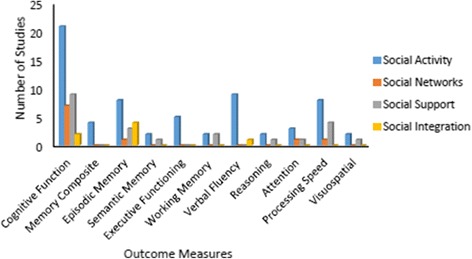
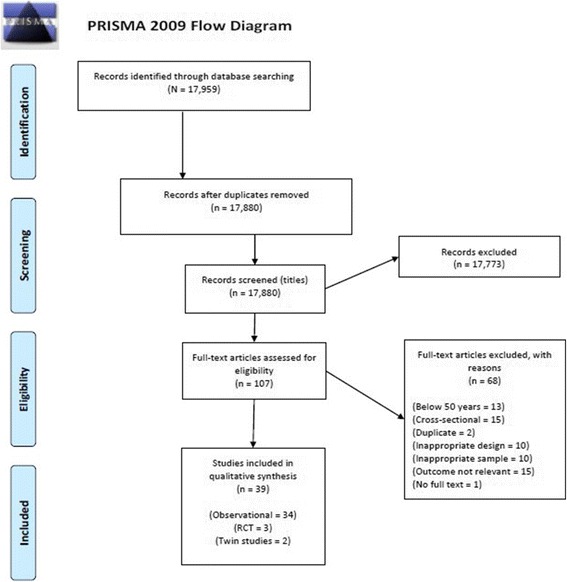
BACKGROUND: Social relationships, which are contingent on access to social networks, promote engagement in social activities and provide access to social support. These social factors have been shown to positively impact health outcomes. In the current systematic review, we offer a comprehensive overview of the impact of social activities, social networks and social support on the cognitive functioning of healthy older adults (50+) and examine the differential effects of aspects of social relationships on various cognitive domains. METHODS: We followed PRISMA (Preferred Reporting Items for Systematic Reviews and Meta-Analysis) guidelines, and collated data from randomised controlled trials (RCTs), genetic and observational studies. Independent variables of interest included subjective measures of social activities, social networks, and social support, and composite measures of social relationships (CMSR). The primary outcome of interest was cognitive function divided into domains of episodic memory, semantic memory, overall memory ability, working memory, verbal fluency, reasoning, attention, processing speed, visuospatial abilities, overall executive functioning and global cognition. RESULTS: Thirty-nine studies were included in the review; three RCTs, 34 observational studies, and two genetic studies. Evidence suggests a relationship between (1) social activity and global cognition and overall executive functioning, working memory, visuospatial abilities and processing speed but not episodic memory, verbal fluency, reasoning or attention; (2) social networks and global cognition but not episodic memory, attention or processing speed; (3) social support and global cognition and episodic memory but not attention or processing speed; and (4) CMSR and episodic memory and verbal fluency but not global cognition. CONCLUSIONS: The results support prior conclusions that there is an association between social relationships and cognitive function but the exact nature of this association remains unclear. Implications of the findings are discussed and suggestions for future research provided. SYSTEMATIC REVIEW REGISTRATION: PROSPERO 2012: CRD42012003248 .
Overview
The claims and statistics of this paper haven’t been checked yet.
Free: it reads the open-access text and checks the first 5 claims that cite a source we can check. Create a free account to check every claim.
Integrity signals
Registry
Cites
Statistics
Figures
Verification
Claims the paper makes
The claims and statistics of this paper haven’t been checked yet.
Free: it reads the open-access text and checks the first 5 claims that cite a source we can check. Create a free account to check every claim.
Claims other papers make about this one
Each is checked against this paper’s own text: does it say what the citing paper says it does?
The cited source doesn’t support the claim as written.
In the citing paper
“Frequent social activity was associated with improved memory, executive function, visuospatial ability, and processing speed, whereas frequent social support was associated only with improved memory.8”
From Associations between social connections and cognition: a global collaborative individual participant data meta-analysis (2022) · cites this paper as [8]
Checked by a reasoning model — may be wrong.
Experimental — accuracy not yet measuredThe source backs part of the claim, not all of it — or backs it for a different population, condition or comparison.
In the citing paper
“Despite clear cultural variation in the meaning and perception of social isolation, findings of protective effect of more social contact are largely consistent in different settings and for either sex across the studies and meta-analyses.”
From Dementia prevention, intervention, and care: 2020 report of the Lancet Commission (2020) · cites this paper as [118]
Experimental — accuracy not yet measuredThe source backs part of the claim, not all of it — or backs it for a different population, condition or comparison.
In the citing paper
“a systematic review of low quality RCTs of 576 adults aged 60 or more years with normal cognition found facilitated meeting and discussion groups were associated with improved global cognition and increased brain volume at follow-up.”
From Dementia prevention, intervention, and care: 2020 report of the Lancet Commission (2020) · cites this paper as [118]
Experimental — accuracy not yet measuredThe source backs part of the claim, not all of it — or backs it for a different population, condition or comparison.
In the citing paper
“Another meta-analysis of 39 studies reported that social activity and social support were associated with decline in global cognition and specific cognitive domains.8”
From Associations between social connections and cognition: a global collaborative individual participant data meta-analysis (2022) · cites this paper as [8]
Experimental — accuracy not yet measuredThe source backs part of the claim, not all of it — or backs it for a different population, condition or comparison.
In the citing paper
“Consequently, measurement of this kind often does not permit testing of alternative hypotheses about social or biological mechanisms.”
From Why the cognitive ‘fountain of youth’ may be upstream: pathways to dementia risk and resilience through social connectedness (2022) · cites this paper as [11]
Experimental — accuracy not yet measured
11 more claims about this paper
Create a free account to see every claim other papers make about this one.
Self-check
Percentages, sums and reported differences re-computed from the paper’s own numbers.
The self-check needs the paper’s full text.
Citations
Cites
Stress, social support, and the buffering hypothesis
Cohen, S., & Wills, T. A. (1985) · Psychological Bulletin · doi:10.1037/0033-2909.98.2.310 · Cited by 18,093 · cited 1×
“Social support in particular may impact cognitive outcomes via its buffering effect on stress [44].”
BackgroundSocial Relationships and Mortality Risk: A Meta-analytic Review
Holt-Lunstad, J., Smith, T. B., & Layton, J. B. (2010) · PLoS Medicine · doi:10.1371/journal.pmed.1000316 · Cited by 7,272 · cited 1×
“One difficulty when trying to determine the effect of social relationships on cognitive function is the use of discrepant and unclear definitions of different social factors [14].”
BackgroundEffects of stress throughout the lifespan on the brain, behaviour and cognition
Lupien, S. J., McEwen, B. S., Gunnar, M. R., & Heim, C. (2009) · Nature Reviews Neuroscience · doi:10.1038/nrn2639 · Cited by 6,256
From social integration to health: durkheim in the new millennium
Berkman, L. F., Glass, T., Brissette, I., & Seeman, T. E. (2000) · Social Science & Medicine · doi:10.1016/s0277-9536(00)00065-4 · Cited by 4,821 · cited 6×
“In an attempt to address the issue of discrepant definitions in the literature, Berkman and colleagues suggested a framework to clarify terms describing social factors and behaviours [15].”
BackgroundInfluentialWhat is cognitive reserve? Theory and research application of the reserve concept
STERN, Y. (2002) · Journal of the International Neuropsychological Society · doi:10.1017/s1355617702813248 · Cited by 3,951 · cited 1×
“Social activities may include a type of cognitive stimulation, thus contributing to cognitive outcomes via the building of cognitive reserve [41]; cognitive reserve optimises cognitive performance through the recruitment of alternate brain networks and cognitive strategies to compensate for cognitive difficulties rela…”
BackgroundSocial and emotional patterns in adulthood: Support for socioemotional selectivity theory
Carstensen, L. L. (1992) · Psychology and Aging · doi:10.1037/0882-7974.7.3.331 · Cited by 2,174
Perceived social isolation and cognition
Cacioppo, J. T., & Hawkley, L. C. (2009) · Trends in Cognitive Sciences · doi:10.1016/j.tics.2009.06.005 · Cited by 2,144 · cited 1×
“In addition, social factors tend to be considered alongside or as part of other lifestyle factors such as leisure or intellectual activity [41]; outcomes such as mortality, physical health, or dementia are included in lieu of cognitive function [10, 18]; only specific aspects of social relationships are considered, su…”
BackgroundAn active and socially integrated lifestyle in late life might protect against dementia
Fratiglioni, L., Paillard-Borg, S., & Winblad, B. (2004) · The Lancet Neurology · doi:10.1016/s1474-4422(04)00767-7 · Cited by 2,135 · cited 1×
“In addition, social factors tend to be considered alongside or as part of other lifestyle factors such as leisure or intellectual activity [41]; outcomes such as mortality, physical health, or dementia are included in lieu of cognitive function [10, 18]; only specific aspects of social relationships are considered, su…”
BackgroundThe handbook of aging and cognition
Craik, F. I. M., & Salthouse, T. A. (1992) · doi:10.4324/9781410601988 · Cited by 2,003
A Meta-Analysis of Interventions to Reduce Loneliness
Masi, C. M., Chen, H.-Y., Hawkley, L. C., & Cacioppo, J. T. (2011) · Personality and Social Psychology Review · doi:10.1177/1088868310377394 · Cited by 1,995
Cited by
Items 101–200 of 1,000
The Impact of Cognitive Impairment on Cardiovascular Disease
Jamil, Y., Krishnaswami, A., Orkaby, A. R., Stimmel, M. B., Brown, C. H., Mecca, A. P., Forman, D. E., Rich, M. W., Nanna, M. G., & Damluji, A. A. (2025) · Journal of the American College of Cardiology · doi:10.1016/j.jacc.2025.04.057 · Cited by 49
The Elderly Nursing Core Set and the cognition of Portuguese older adults: a cross-sectional study
da Fonseca, C. J. V., de Pinho, L. G., Lopes, M. J., Marques, M. D. C., & García-Alonso, J. M. (2021) · BMC Nursing · doi:10.1186/s12912-021-00623-1 · Cited by 45
Effects of a Mobile App to Promote Social Participation on Older Adults: Randomized Controlled Trial
Kawaguchi, K., Nakagomi, A., Ide, K., & Kondo, K. (2024) · Journal of Medical Internet Research · doi:10.2196/64196 · Cited by 47
“Social participation benefits older adults, improving their physical activities [3,4], physical and mental health [5-8], cognitive function [9,10], and overall quality of life [11].”
Cognitive impairment in Irritable Bowel Syndrome (IBS): A systematic review
Lam, N. C.-Y., Yeung, H.-Y., Li, W.-K., Lo, H.-Y., Yuen, C.-F., Chang, R. C., & Ho, J. Y. S. (2019) · Brain Research · doi:10.1016/j.brainres.2019.05.036 · Cited by 42
Petersen, C. L., Brooks, J., Titus, A., Vásquez, E., & Batsis, J. A. (2019) · Journal of Nutrition in Gerontology and Geriatrics · doi:10.1080/21551197.2019.1617219 · Cited by 45
Noguchi, T., Nojima, I., Inoue‐Hirakawa, T., & Sugiura, H. (2019) · International Journal of Environmental Research and Public Health · doi:10.3390/ijerph16214228 · Cited by 43
Hamid, T. A., Din, H. M., Bagat, M. F., & Ibrahim, R. (2021) · Frontiers in Public Health · doi:10.3389/fpubh.2021.624394 · Cited by 45
“Prior literature had demonstrated the consequences of poor social network on individuals’ quality of life (8, 27), mental health outcomes (9, 28, 29), cognitive decline (30, 31), mortality (20), and psychological well-being (32).”
BackgroundRoestorf, A., Howlin, P., & Bowler, D. (2022) · Frontiers in Psychology · doi:10.3389/fpsyg.2022.741213 · Cited by 48
van der Velden, P. G., Setti, I., van der Meulen, E., & Das, M. (2019) · Computers in Human Behavior · doi:10.1016/j.chb.2018.11.047 · Cited by 37
Social factors that predict cognitive decline in older African American adults
Pugh, E., Vito, A. N. D., Divers, R. M., Robinson, A. D., Weitzner, D. S., & Calamia, M. R. (2020) · International Journal of Geriatric Psychiatry · doi:10.1002/gps.5435 · Cited by 42
“) that impact health through behavioral, psychological, and physiological pathways.(27,28) Social factors are thought to influence cognition by various mechanisms including providing cognitive stimulation and fostering cognitive reserve, providing stress buffering, and increasing positive health behaviors.”
BackgroundInfluentialLydon, E. A., Nguyen, L. T., Nie, Q., Rogers, W. A., & Mudar, R. A. (2022) · Frontiers in Public Health · doi:10.3389/fpubh.2021.750340 · Cited by 48
Zhang, Z., Abdullah, H. B., Ghazali, A. H. A., D’Silva, J. L., Ismail, I. A., & Huang, Z. (2024) · PLoS ONE · doi:10.1371/journal.pone.0311886 · Cited by 36
Is loneliness associated with mild cognitive impairment in low‐ and middle‐income countries?
Smith, L., Bloska, J., Jacob, L., Barnett, Y., Butler, L. T., Trott, M., Odell‐Miller, H., Veronese, N., Kostev, K., Bettac, E. L., et al. (2021) · International Journal of Geriatric Psychiatry · doi:10.1002/gps.5524 · Cited by 45
“(1) social activity and global cognition and overall executive functioning, working memory, visuospatial abilities and processing speed but not episodic memory, verbal fluency, reasoning or attention; (2) social networks and global cognition but not episodic memory, attention or processing speed; and (3) social suppor…”
BackgroundPersonality traits, cognitive states, and mortality in older adulthood.
Yoneda, T. B., Graham, E. K., Lozinski, T., Bennett, D. A., Mroczek, D. K., Piccinin, A. M., Hofer, S. M., & Terrera, G. M. (2023) · Journal of Personality and Social Psychology · doi:10.1037/pspp0000418 · Cited by 42
Yang, Y., Lin, Y., Sikapokoo, G. O., Min, S. H., Caviness‐Ashe, N., Zhang, J., Ledbetter, L., & Nolan, T. S. (2022) · PLoS ONE · doi:10.1371/journal.pone.0272649 · Cited by 43
“the literature search, we found several studies that investigated this association in healthy older adults [10, 11].”
BackgroundSharifi, S., Khorzoughi, K. B., Khaledi‐Paveh, B., & Rahmati, M. (2023) · Geriatric Nursing · doi:10.1016/j.gerinurse.2023.05.014 · Cited by 43
The Role of Online Social Support in Mental Health: Comparing Rural and Urban Youth
Knowles, E. A., & Danzi, B. A. (2025) · Children · doi:10.3390/children12020113 · Cited by 47
“Support from peers and family has been identified as a major factor in promoting healthy development for youth globally [1] by supporting mental and emotional development across the lifespan [2–4].”
Roles of Religious Commitment, Emotion Regulation and Social Support in Preoperative Anxiety
Aliche, C. J., Ifeagwazi, C. M., Chukwuorji, J. C., & Eze, J. E. (2018) · Journal of Religion and Health · doi:10.1007/s10943-018-0693-0 · Cited by 44
Tuấn, L. T. (2021) · International Journal of Contemporary Hospitality Management · doi:10.1108/ijchm-08-2020-0877 · Cited by 42
Lenart‐Bugla, M., Łuc, M., Pawłowski, M., Szcześniak, D. M., Seifert, I., Wiegelmann, H., Gerhardus, A., Wolf‐Ostermann, K., Rouwette, E. A. J. A., Ikram, M. A., et al. (2022) · Brain Sciences · doi:10.3390/brainsci12091214 · Cited by 41
Dodds, L., Brayne, C., & Siette, J. (2024) · BMC Geriatrics · doi:10.1186/s12877-024-04794-9 · Cited by 46
“However, evidence over time is inconclusive and specific to cognitive domains [7, 35, 37, 63].”
BackgroundKim, J., & Hwang, S.-S. (2024) · The Journals of Gerontology Series B · doi:10.1093/geronb/gbae082 · Cited by 39
Kujawski, S., Kujawska, A., Perkowski, R., Androsiuk-Perkowska, J., Hajec, W., Kwiatkowska, M. M., Skierkowska, N., Husejko, J., Bieniek, D., Newton, J. L., et al. (2021) · Frontiers in Aging Neuroscience · doi:10.3389/fnagi.2021.653570 · Cited by 37
Effects of smartphone application usage on mobility choices
Khan, N. A., Habib, M. A., & Jamal, S. (2020) · Transportation Research Part A Policy and Practice · doi:10.1016/j.tra.2019.12.024 · Cited by 34
Franz, C. E., Hatton, S. N., Elman, J. A., Warren, T. S., Gillespie, N. A., Whitsel, N. A., Puckett, O. K., Dale, A. M., Eyler, L. T., Fennema‐Notestine, C., et al. (2021) · Neurobiology of Aging · doi:10.1016/j.neurobiolaging.2021.08.007 · Cited by 43
Schliep, K. C., Barbeau, W. A., Lynch, K. E., Sorweid, M. K., Varner, M. W., Foster, N. L., & Qeadan, F. (2022) · Biology of Sex Differences · doi:10.1186/s13293-022-00425-3 · Cited by 39
Coleman, M. E., Roessler, M., Peng, S., Roth, A. R., Risacher, S. L., Saykin, A. J., Apostolova, L. G., & Perry, B. L. (2023) · Alzheimer s & Dementia · doi:10.1002/alz.13035 · Cited by 41
Ma, T., Liao, J., Ye, Y., & Li, J. (2024) · BMC Geriatrics · doi:10.1186/s12877-024-04655-5 · Cited by 45
He, C. Y. Y., Zhou, Z., Kan, M. M. P., Chan, D. H. Y., Wong, A. C. T., Mok, K. H. Y., Lam, F. M. H., Chan, S. C. C., Cheung, C. K. C., Yeung, M. K. C., et al. (2024) · Ageing Research Reviews · doi:10.1016/j.arr.2024.102350 · Cited by 48
Lee, H. J., Jang, J., Choi, D., Chae, W., Park, E., & Jang, S. (2020) · BMC Geriatrics · doi:10.1186/s12877-020-01693-7 · Cited by 34
Estrella, M. L., Durazo-Arvizú, R., Gallo, L. C., Tarraf, W., Isasi, C. R., Perreira, K. M., Zeng, D., Marquine, M. J., Lipton, R. B., González, H. M., et al. (2020) · Journal of Alzheimer s Disease · doi:10.3233/jad-200612 · Cited by 35
“Given that there is precedence of differential associations of psychosocial factors with distinct domains of cognitive function [2, 7], we present in our tables the global cognitive scores and the individual tests.”
Associations between social network components and cognitive domains in older adults.
Meister, L. M., & Zahodne, L. B. (2022) · Psychology and Aging · doi:10.1037/pag0000672 · Cited by 41
Andries, E., Bosmans, J., Engelborghs, S., Cras, P. P., Vanderveken, O. M., Lammers, M. J. W., de Heyning, P. V., Rompaey, V. V., & Mertens, G. (2023) · JAMA Otolaryngology–Head & Neck Surgery · doi:10.1001/jamaoto.2022.5046 · Cited by 39
Asiamah, N., Kouveliotis, K., Eduafo, R., & Borkey, R. (2020) · International Quarterly of Community Health Education · doi:10.1177/0272684x20915379 · Cited by 35
“Also, none of the studies confirming the foregoing relationship used a geriatric sample from a developing country,(4) and the opposing evidence is largely theoretical and anecdotal.(4,30) That being so, our result could be a true reflection of the fact that the built environment, even if walkable, cannot independently…”
BackgroundHill‐Jarrett, T. G., & Jones, M. K. (2021) · The Clinical Neuropsychologist · doi:10.1080/13854046.2021.1923804 · Cited by 39
“…social support has implications for cognition, such that the less social support one has the more at risk they may be for cognitive decline (Kelly et al., 2017; Livingston et al., 2020; Sommerlad et al., 2018) and, at the same time, cognitive impairment may preclude someone from accurately…”
BackgroundGonnord, T., Clarys, D., Boucard, G., & Esnard, C. (2023) · Frontiers in Psychology · doi:10.3389/fpsyg.2023.1166072 · Cited by 44
Song, Y., Yuan, Q., Liu, H., Gu, K., & Liu, Y. (2024) · Journal of Affective Disorders · doi:10.1016/j.jad.2024.09.059 · Cited by 37
Oremus, M., Tyas, S. L., Maxwell, C. J., Konnert, C. A., O’Connell, M. E., & Law, J. (2019) · Archives of Gerontology and Geriatrics · doi:10.1016/j.archger.2019.103962 · Cited by 40
Blondal, B. S., Geirsdóttir, Ó. G., Halldorsson, T. I., Beck, A. M., Jónsson, P. V., & Ramel, A. (2022) · Clinical Nutrition ESPEN · doi:10.1016/j.clnesp.2022.01.010 · Cited by 40
Kim, J., & Park, G. (2023) · Aging & Mental Health · doi:10.1080/13607863.2023.2202616 · Cited by 32
“To assess social isolation, we considered two commonly used sources of social isolation from prior research (Kelly et al., 2017): social contact and social activity.”
BackgroundMethodResultInfluentialXian, G., Chai, Y., Gong, Y., He, W., Ma, C., Zhang, X., Zhang, J., & Ma, Y. (2024) · BMC Geriatrics · doi:10.1186/s12877-024-04922-5 · Cited by 33
Neurodegenerative disorders, metabolic icebergs, and mitohormesis
Phillips, M. C. L., & Picard, M. A. (2024) · Translational Neurodegeneration · doi:10.1186/s40035-024-00435-8 · Cited by 33
Guo, N., Xia, F., & Yu, S. (2024) · Buildings · doi:10.3390/buildings14092845 · Cited by 32
Late‐life social activity and subsequent risk of dementia and mild cognitive impairment
Chen, Y., Grodstein, F., Capuano, A. W., Wang, T., Bennett, D. A., & James, B. D. (2024) · Alzheimer s & Dementia · doi:10.1002/alz.14316 · Cited by 38
Luo, M., Edelsbrunner, P. A., Siebert, J., Martin, M., & Aschwanden, D. (2021) · The Journals of Gerontology Series B · doi:10.1093/geronb/gbab001 · Cited by 34
Social Cognitive Abilities Predict Unique Aspects of Older Adults’ Personal Social Networks
Krendl, A. C., Kennedy, D. P., Hugenberg, K., & Perry, B. L. (2021) · The Journals of Gerontology Series B · doi:10.1093/geronb/gbab048 · Cited by 37
“…having large, supportive personal social networks—defined by the quantity and quality of social relationships that individuals have with others—predicts older adults’ longevity, physical and mental health, and cognitive function over time (Barnes et al., 2004; Kelly et al., 2017; Luo et al., 2012).”
BackgroundParra-Rizo, M. A., & Sanchís-Soler, G. (2021) · International Journal of Environmental Research and Public Health · doi:10.3390/ijerph18136926 · Cited by 43
“These results must be taken into consideration, since social relationships are an indicator of life expectancy, as well as an important factor for maintaining good physical and cognitive health [37,38].”
BackgroundGemmill, A., & Weiss, J. (2021) · The Journals of Gerontology Series B · doi:10.1093/geronb/gbab183 · Cited by 32
Social participation and tooth loss, vision, and hearing impairments among older Brazilian adults
Bernabé, E., de Oliveira, C. M., Duarte, Y. A. O., de Andrade, F. B., & Sabbah, W. (2023) · Journal of the American Geriatrics Society · doi:10.1111/jgs.18423 · Cited by 30
“Social participation is a strong measure of successful aging,(1) which is associated with a higher quality of life, better cognition and lower risk of mortality.(2,3) Older adults are at greater risk of experiencing a reduction in social participation due to changes in their physical and mental health (chronic conditi…”
The A-to-Z factors associated with cognitive impairment. Results of the DeCo study
Gil‐Peinado, M., Alacreu, M., Ramos, H., Sendra‐Lillo, J., García-García, C., García‐Lluch, G., de Coca, T. L., Sala‐Climent, M., & Moreno, L. (2023) · Frontiers in Psychology · doi:10.3389/fpsyg.2023.1152527 · Cited by 33
“Frequent social activity has also been associated with improved memory, executive function, visuospatial ability, and processing speed, whereas frequent social support has been linked to improved memory (Kelly et al., 2017).”
Backgroundvan der Velden, P. G., Oudejans, M., Das, M., Bosmans, M. W. G., & Maercker, A. (2019) · Psychiatry Research · doi:10.1016/j.psychres.2019.05.044 · Cited by 33
“Introduction The lack or loss of social relationships and support that meet people's needs may put their (mental) health and wellbeing at risk (Greenberg et al., 2014; Hobfoll, 1989, 2002; Holt-Lunstad et al., 2010; Holt-Lunstad, 2018; Kawachi and Berkman, 2001; Kelly et al., 2017; Maercker and Müller, 2004; Shor and…”
BackgroundEfficacy of Smart Speaker–Based Metamemory Training in Older Adults: Case-Control Cohort Study
Kim, J., Shin, E., Han, K., Park, S., Youn, J. H., Jin, G., & Lee, J.-Y. (2021) · Journal of Medical Internet Research · doi:10.2196/20177 · Cited by 28
“Previous studies have reported that verbal fluency was significantly associated with social activity [36].”
Maxfield, M., Li, X., & Widom, C. S. (2023) · Neuropsychology · doi:10.1037/neu0000911 · Cited by 34
Rosa, M., Scassellati, C., & Cattaneo, A. (2023) · Frontiers in Psychology · doi:10.3389/fpsyg.2023.1156415 · Cited by 36
Stafford, J., Dekhtyar, S., Welmer, A., Vetrano, D. L., Grande, G., Laukka, E. J., Marseglia, A., Moulton, V., Mansfield, R., Liu, Y., et al. (2024) · The Lancet Healthy Longevity · doi:10.1016/s2666-7568(24)00046-1 · Cited by 33
Ge, H., Dong, S., Su, W., Guan, W., Yu, Q. S., Liu, Y., Qi, Y., Sun, X., Zhang, H., & Ma, G. (2024) · BMC Public Health · doi:10.1186/s12889-024-19157-7 · Cited by 34
“Active social participation can help develop a social support network, providing patients with increased social support [19], enhancing psychological stimulation, leading to improved synaptic density and neural growth in the nervous system [55, 56], and regulating the immune and neuroendocrine…”
BackgroundCavalcante, B. R., de Souza, M. F., Falck, R. S., Liu-Ambrose, T. Y. L., Behm, D. G., Pitangui, A. C. R., & de Araújo, R. C. (2020) · Journal of Alzheimer s Disease · doi:10.3233/jad-200349 · Cited by 38
Religion and human flourishing
Wormley, A. S., Vornlocher, C., Aglozo, E. Y., Jayawickreme, E., Johnson, K. A., Moon, J. W., Cappellen, P. V., Verma, A., & Cohen, A. B. (2023) · The Journal of Positive Psychology · doi:10.1080/17439760.2023.2297208 · Cited by 38
“Integration is typically defined as the frequency of interactions with one’s network members, and/or the extent to which an individual feels connected to those within their network (Holt-Lunstad et al., 2015; Kelly et al., 2017; Uchino, 2006).”
Cipolletta, S., Morandini, B., & Tomaino, S. C. M. (2021) · Ageing and Society · doi:10.1017/s0144686x21000696 · Cited by 33
“, 2020) that are essential for older people (Kuiper et al., 2015; Kelly et al., 2017).”
BackgroundHamlin, A. M., Kraal, A. Z., Sol, K., Morris, E. P., Martino, A., Zaheed, A. B., & Zahodne, L. B. (2022) · Neuropsychology · doi:10.1037/neu0000844 · Cited by 29
Cao, X., Liu, Q., Liu, J., Yang, B., & Zhou, J. (2023) · Frontiers in Public Health · doi:10.3389/fpubh.2023.1149769 · Cited by 39
Li, P. W. C., Yu, D. S. F., Parco Ming-fai, S. I. U., Wong, S. C. K., & Chan, B. S. (2022) · Age and Ageing · doi:10.1093/ageing/afac213 · Cited by 32
Loughrey, D. G., Feeney, J. C., Kee, F., LAWLOR, B. A., Woodside, J. V., Setti, A., & Power, J. M. (2020) · Aging & Mental Health · doi:10.1080/13607863.2020.1727847 · Cited by 30
Self-citationYu, Y., Yuan, C., Zhang, Q., Song, C., Cui, S., Ye, J., Zhang, X., & Chen, C. (2021) · Health & Social Care in the Community · doi:10.1111/hsc.13353 · Cited by 29
Associations Between Active Mobility Index and Disability
Doi, T., Tsutsumimoto, K., Nakakubo, S., Kurita, S., Ishii, H. H., & Shimada, H. (2021) · Journal of the American Medical Directors Association · doi:10.1016/j.jamda.2021.08.036 · Cited by 30
The role of social factors in the successful ageing – Systematic review
Takács, J., & Nyakas, C. J. (2021) · Developments in Health Sciences · doi:10.1556/2066.2021.00044 · Cited by 34
“Social relationships including social networks, participation, and support benefit older adults’ global cognitive functioning and working memory [54] and can play role in decreasing the risk of dementia [55].”
BackgroundLee, J. (2022) · Archives of Gerontology and Geriatrics · doi:10.1016/j.archger.2022.104690 · Cited by 27
Lanooij, S. D., Eisel, U. L. M., Drinkenburg, W. H. I. M., van der Zee, E. A., & Kas, M. J. (2022) · Molecular Psychiatry · doi:10.1038/s41380-022-01698-1 · Cited by 27
Cognitive decline and dementia in women after menopause: Prevention strategies
Stefanowski, B., Kucharski, M., Szeliga, A., Snopek, M., Kostrzak, A., Smolarczyk, R., Maciejewska-Jeske, M., Duszewska, A. M., Niwczyk, O., Drozd, S., et al. (2022) · Maturitas · doi:10.1016/j.maturitas.2022.10.012 · Cited by 32
Baka, W. K., Rianse, I. S., & Zulfikar, Z. L. (2024) · Sustainability · doi:10.3390/su16177541 · Cited by 49
Roig-Coll, F., Castells-Sánchez, A., Lamonja-Vicente, N., Torán‐Monserrat, P., Pera, G., García‐Molina, A., Tormos, J. M., Montero-Alía, P., Alzamora, M. T., Dacosta‐Aguayo, R., et al. (2020) · Frontiers in Aging Neuroscience · doi:10.3389/fnagi.2020.590168 · Cited by 35
“Further studies should address and compare the effect of these interventions when they are applied individually or in a group given the recent bibliography suggesting cognitive enhancement as a result of social interaction (Kelly et al., 2017).”
BackgroundKim, D. E., & Yoon, J. Y. (2021) · Archives of Gerontology and Geriatrics · doi:10.1016/j.archger.2021.104532 · Cited by 30
Matsangidou, M., Frangoudes, F., Hadjiaros, M., Schiza, E. C., Neokleous, K. C., Papayianni, E., Avraamides, M. N., & Pattichis, C. S. (2022) · International Journal of Human-Computer Studies · doi:10.1016/j.ijhcs.2022.102840 · Cited by 34
Kieckhäfer, C., Schilbach, L., & Bzdok, D. (2022) · Cerebral Cortex · doi:10.1093/cercor/bhac351 · Cited by 36
Quach, L., Ward, R. E., Pedersen, M. M., Leveille, S. G., Grande, L. J., GAGNON, D. R., & Bean, J. F. (2019) · Archives of Physical Medicine and Rehabilitation · doi:10.1016/j.apmr.2019.01.020 · Cited by 33
Cunha, C., Voss, G., Andrade, R., & Matos, A. D. (2024) · Behavioral Sciences · doi:10.3390/bs14040262 · Cited by 32
“…knowledge, existing systematic reviews and meta-analyses on the association between social participation and cognition lack a specific focus on formal social participation, frequently combining informal and formal social participation and sometimes collapsing them into a single index [10,12,13].”
BackgroundResultInfluentialThe brain in solitude: an (other) eighth amendment challenge to solitary confinement
Coppola, F. (2019) · Journal of Law and the Biosciences · doi:10.1093/jlb/lsz014 · Cited by 35
Cultural Adaption and Psychometric Analysis of Family APGAR Scale in Iranian Older People
Karimi, Z., Taheri‐Kharameh, Z., & Sharififard, F. (2022) · Korean Journal of Family Medicine · doi:10.4082/kjfm.21.0028 · Cited by 25
Examining the Combined Effects of Social Isolation and Loneliness on Memory: A Systematic Review
Kang, J. W., & Oremus, M. (2022) · Archives of Gerontology and Geriatrics · doi:10.1016/j.archger.2022.104801 · Cited by 37
Kumar, M., Muhammad, T., & Dwivedi, L. K. (2022) · BMJ Open · doi:10.1136/bmjopen-2022-063336 · Cited by 29
In-person interventions to reduce social isolation and loneliness: An evidence and gap map
Welch, V. A., Ghogomu, E. T., Dowling, S., Barbeau, V. I., Al‐Zubaidi, A. A. A., Beveridge, E., Bondok, M., Desai, P., Doyle, R., Huang, J. X., et al. (2024) · Campbell Systematic Reviews · doi:10.1002/cl2.1408 · Cited by 38
Wang, H., Pei, Z., & Liu, Y. (2024) · BMC Geriatrics · doi:10.1186/s12877-024-04714-x · Cited by 28
“Therefore, the improvement of the social ability of the elderly may also be another factor causing the improvement of their cognitive function because it was found that the increase of individuals’ social activities has a positive effect on their cognitive function [69].”
BackgroundSocial integration and loneliness among long-term care home residents: protocol for a scoping review
Bethell, J., Babineau, J., Iaboni, A., Green, R., Cuaresma-Canlas, R., Karunananthan, R., Schon, B., Schon, D., & McGilton, K. S. (2019) · BMJ Open · doi:10.1136/bmjopen-2019-033240 · Cited by 23
Moored, K., Bandeen‐Roche, K., Snitz, B. E., DeKosky, S. T., Williamson, J. D., Fitzpatrick, A. L., & Carlson, M. C. (2021) · The Journals of Gerontology Series B · doi:10.1093/geronb/gbab152 · Cited by 24
Kulmala, J., Tiilikainen, E., Lisko, I., Ngandu, T., Kivipelto, M., & Solomon, A. (2021) · Frontiers in Public Health · doi:10.3389/fpubh.2021.770965 · Cited by 35
Cognitive and hippocampal changes weeks and years after memory training
Bråthen, A. C. S., Sørensen, Ø., de Lange, A. G., Mowinckel, A. M., Fjell, A. M., & Walhovd, K. B. (2022) · Scientific Reports · doi:10.1038/s41598-022-11636-4 · Cited by 32
Effectiveness of chronic disease self-management education (CDSME) programs to reduce loneliness
Smith, M. L., Chen, E., Lau, C. A., Davis, D., Simmons, W. J., & Merianos, A. L. (2022) · Chronic Illness · doi:10.1177/17423953221113604 · Cited by 24
Patterns and risk factors of cognitive decline among community-dwelling older adults in South Korea
Shin, J., & Cho, E. (2022) · Archives of Gerontology and Geriatrics · doi:10.1016/j.archger.2022.104809 · Cited by 30
The Black radical imagination: a space of hope and possible futures
Hill‐Jarrett, T. G. (2023) · Frontiers in Neurology · doi:10.3389/fneur.2023.1241922 · Cited by 28
Social Isolation and Cognitive Functioning: A Quasi-Experimental Approach
Okamoto, S., & Kobayashi, E. (2020) · The Journals of Gerontology Series B · doi:10.1093/geronb/gbaa226 · Cited by 27
Christl, J., Grumbach, P., Jockwitz, C., Wege, N., Caspers, S., & Meisenzahl, E. M. (2024) · Journal of Affective Disorders · doi:10.1016/j.jad.2024.12.099 · Cited by 22
Race/Ethnic Differences in Social Resources as Cognitive Risk and Protective Factors
Katz, B., Turney, I. C., Lee, J., Amini, R., Ajrouch, K. J., & Antonucci, T. C. (2020) · Research in Human Development · doi:10.1080/15427609.2020.1743809 · Cited by 24
“Furthermore, there is a general finding that poor social relations are associated with global cognitive decline or risk of dementia, yet relatively little is known about the differential effects of social networks on specific domains of cognition (Kelly et al., 2017).”
BackgroundFranklin, H., Russell, L. L., Peakman, G., Greaves, C. V., Bocchetta, M., Nicholas, J. M., Poos, J. M., Convery, R. S., Cash, D. M., Swieten, J. C. V., et al. (2021) · Alzheimer s Research & Therapy · doi:10.1186/s13195-021-00865-w · Cited by 29
“The reason for this relationship is unclear but interestingly, prior studies have shown an association between verbal fluency and both social relationships and activity [24, 25], hypothesizing that fluency is better when social interaction can be maintained.”
ResultRandom sampling of alters from networks: A promising direction in egocentric network research
Peng, S., Roth, A. R., & Perry, B. L. (2022) · Social Networks · doi:10.1016/j.socnet.2022.09.004 · Cited by 25
Stinchcombe, A., & Hammond, N. G. (2021) · The Journals of Gerontology Series B · doi:10.1093/geronb/gbab084 · Cited by 29
Exploring the Recent Trends in Management of Dementia and Frailty: Focus on Diagnosis and Treatment
Rahman, M. M., Mim, S. A., Islam, M. R., Parvez, A., Islam, F., Uddin, M. B., Rahaman, M. S., Shuvo, P. A., Ahmed, M., Greig, N. H., et al. (2022) · Current Medicinal Chemistry · doi:10.2174/0929867329666220408102051 · Cited by 26
Matsuyama, S., Murakami, Y., Lu, Y., Sone, T., Sugawara, Y., & Tsuji, I. (2021) · Journal of Epidemiology · doi:10.2188/jea.je20200574 · Cited by 21
The relationship between cognitive engagement and better memory in midlife
Bransby, L., Buckley, R. F., Rosenich, E., Franks, K. H., Yassi, N., Maruff, P. T., Pase, M. P., & Lim, Y. Y. (2022) · Alzheimer s & Dementia Diagnosis Assessment & Disease Monitoring · doi:10.1002/dad2.12278 · Cited by 28
Wang, R., Ye, C., Huang, X., Halimulati, M., Sun, M., Ma, Y., Fan, R., & Zhang, Z. (2023) · Nutrients · doi:10.3390/nu15051203 · Cited by 25
Duan, Y., Jiang, S., Yin, Z., Wang, S., Gao, J., Yang, M., Chen, C., Fu, H., & Wang, C. (2023) · BMC Public Health · doi:10.1186/s12889-023-16274-7 · Cited by 25
“Other researchers have investigated whether poor social relationships are associated with cognitive decline [9, 10].”
Background
Metadata
- Authors
- Kelly, M. E., Duff, H., Kelly, S., McHugh Power, J. E., Brennan, S., Lawlor, B. A., & Loughrey, D. G.
- Affiliations
- National College of Ireland (IE)
- Trinity College Dublin (IE)
- Corresponding author
- Kelly, Michelle E.
- Venue
- Systematic Reviews
- Published
- 2017-12
- Volume
- 6
- Issue
- 1
- Pages
- 259-259
- ISSN
- 2046-4053 (ISSN-L)
- PMC
- PMC5735742
- OpenAlex
- W2777525821
- Cited by
- 1,027
- References
- 103
- Citations by year
- 2026: 128 · 2025: 172 · 2024: 195 · 2023: 135 · 2022: 144 · 2021: 140 · 2020: 71 · 2019: 28 · 2018: 13
- FWCI
- 4.65
- Type
- journal article
- Language
- en
- Open access
- gold
- doi.org
- Licence
- cc-by
- Locations
- Systematic Reviews (publishedVersion, cc-by)
- Europe PMC (PubMed Central) (publishedVersion, cc-by)
- PubMed Central (publishedVersion, cc-by)
- PubMed (publishedVersion)
- DOAJ (DOAJ: Directory of Open Access Journals) (submittedVersion, cc-by-sa)
- Topics
- Health Sciences › Medicine › Psychiatry and Mental health › Dementia and Cognitive Impairment Research
- Social Sciences › Psychology › Developmental and Educational Psychology › Aging and Gerontology Research
- Health Sciences › Medicine › Public Health, Environmental and Occupational Health › Aging, Health, and Disability
- Keywords
- social activity, social networks, social support, interpersonal relationships, cognitive function, older adults, episodic memory, executive function, working memory, processing speed, visuospatial ability, verbal fluency, global cognition
- MeSH terms
- Cognition, Humans, Interpersonal Relations, Memory, Social Support, Executive Function, Social Participation
About these checks
Registry, retraction, Cites and statistics results are computed, not judged, with one exception: a printed reference that no index lists is read once by a model before it counts as a citation error. Claims are extracted by a model and kept only when their quote appears verbatim in the text; each cited source is then checked, with a model’s help, for whether it says what the claim relies on. Those verdicts can be wrong — read the claim’s quote and the cited source before relying on one.
Statistics and arithmetic are recomputed, not judged.
Confidence bands are shown only for fields calibrated on our annotated test set. None is calibrated yet, so no band is shown.
What counts as a claim ›How we measure confidence ›How we check this ›
Are you an author, or do you see a problem with this page? Request a review
Data sources
Bibliographic data: Semantic Scholar, OpenAlex, Crossref.
Contains information from the Semantic Scholar Academic Graph Datasets, made available under the ODC Attribution License (ODC-BY 1.0).
Semantic Scholar’s data is described in: Kinney, R., et al. (2023). The Semantic Scholar Open Data Platform. arXiv:2301.10140.
