

The impact of social activities, social networks, social support and social relationships on the cognitive functioning of healthy older adults: a systematic review
Open accessThe DOI matches its Crossref record; 102 of the 103 references it cites were found in a registry or an index.
Abstract
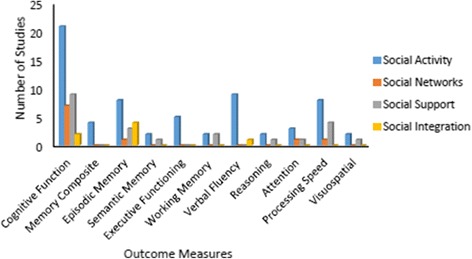
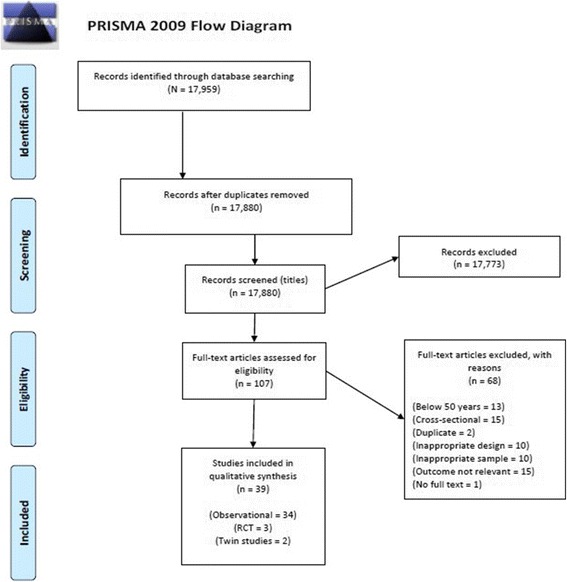
BACKGROUND: Social relationships, which are contingent on access to social networks, promote engagement in social activities and provide access to social support. These social factors have been shown to positively impact health outcomes. In the current systematic review, we offer a comprehensive overview of the impact of social activities, social networks and social support on the cognitive functioning of healthy older adults (50+) and examine the differential effects of aspects of social relationships on various cognitive domains. METHODS: We followed PRISMA (Preferred Reporting Items for Systematic Reviews and Meta-Analysis) guidelines, and collated data from randomised controlled trials (RCTs), genetic and observational studies. Independent variables of interest included subjective measures of social activities, social networks, and social support, and composite measures of social relationships (CMSR). The primary outcome of interest was cognitive function divided into domains of episodic memory, semantic memory, overall memory ability, working memory, verbal fluency, reasoning, attention, processing speed, visuospatial abilities, overall executive functioning and global cognition. RESULTS: Thirty-nine studies were included in the review; three RCTs, 34 observational studies, and two genetic studies. Evidence suggests a relationship between (1) social activity and global cognition and overall executive functioning, working memory, visuospatial abilities and processing speed but not episodic memory, verbal fluency, reasoning or attention; (2) social networks and global cognition but not episodic memory, attention or processing speed; (3) social support and global cognition and episodic memory but not attention or processing speed; and (4) CMSR and episodic memory and verbal fluency but not global cognition. CONCLUSIONS: The results support prior conclusions that there is an association between social relationships and cognitive function but the exact nature of this association remains unclear. Implications of the findings are discussed and suggestions for future research provided. SYSTEMATIC REVIEW REGISTRATION: PROSPERO 2012: CRD42012003248 .
Overview
The claims and statistics of this paper haven’t been checked yet.
Free: it reads the open-access text and checks the first 5 claims that cite a source we can check. Create a free account to check every claim.
Integrity signals
Registry
Cites
Statistics
Figures
Verification
Claims the paper makes
The claims and statistics of this paper haven’t been checked yet.
Free: it reads the open-access text and checks the first 5 claims that cite a source we can check. Create a free account to check every claim.
Claims other papers make about this one
Each is checked against this paper’s own text: does it say what the citing paper says it does?
The cited source doesn’t support the claim as written.
In the citing paper
“Frequent social activity was associated with improved memory, executive function, visuospatial ability, and processing speed, whereas frequent social support was associated only with improved memory.8”
From Associations between social connections and cognition: a global collaborative individual participant data meta-analysis (2022) · cites this paper as [8]
Checked by a reasoning model — may be wrong.
Experimental — accuracy not yet measuredThe source backs part of the claim, not all of it — or backs it for a different population, condition or comparison.
In the citing paper
“Despite clear cultural variation in the meaning and perception of social isolation, findings of protective effect of more social contact are largely consistent in different settings and for either sex across the studies and meta-analyses.”
From Dementia prevention, intervention, and care: 2020 report of the Lancet Commission (2020) · cites this paper as [118]
Experimental — accuracy not yet measuredThe source backs part of the claim, not all of it — or backs it for a different population, condition or comparison.
In the citing paper
“a systematic review of low quality RCTs of 576 adults aged 60 or more years with normal cognition found facilitated meeting and discussion groups were associated with improved global cognition and increased brain volume at follow-up.”
From Dementia prevention, intervention, and care: 2020 report of the Lancet Commission (2020) · cites this paper as [118]
Experimental — accuracy not yet measuredThe source backs part of the claim, not all of it — or backs it for a different population, condition or comparison.
In the citing paper
“Another meta-analysis of 39 studies reported that social activity and social support were associated with decline in global cognition and specific cognitive domains.8”
From Associations between social connections and cognition: a global collaborative individual participant data meta-analysis (2022) · cites this paper as [8]
Experimental — accuracy not yet measuredThe source backs part of the claim, not all of it — or backs it for a different population, condition or comparison.
In the citing paper
“Consequently, measurement of this kind often does not permit testing of alternative hypotheses about social or biological mechanisms.”
From Why the cognitive ‘fountain of youth’ may be upstream: pathways to dementia risk and resilience through social connectedness (2022) · cites this paper as [11]
Experimental — accuracy not yet measured
11 more claims about this paper
Create a free account to see every claim other papers make about this one.
Self-check
Percentages, sums and reported differences re-computed from the paper’s own numbers.
The self-check needs the paper’s full text.
Citations
Cites
Stress, social support, and the buffering hypothesis
Cohen, S., & Wills, T. A. (1985) · Psychological Bulletin · doi:10.1037/0033-2909.98.2.310 · Cited by 18,093 · cited 1×
“Social support in particular may impact cognitive outcomes via its buffering effect on stress [44].”
BackgroundSocial Relationships and Mortality Risk: A Meta-analytic Review
Holt-Lunstad, J., Smith, T. B., & Layton, J. B. (2010) · PLoS Medicine · doi:10.1371/journal.pmed.1000316 · Cited by 7,272 · cited 1×
“One difficulty when trying to determine the effect of social relationships on cognitive function is the use of discrepant and unclear definitions of different social factors [14].”
BackgroundEffects of stress throughout the lifespan on the brain, behaviour and cognition
Lupien, S. J., McEwen, B. S., Gunnar, M. R., & Heim, C. (2009) · Nature Reviews Neuroscience · doi:10.1038/nrn2639 · Cited by 6,256
From social integration to health: durkheim in the new millennium
Berkman, L. F., Glass, T., Brissette, I., & Seeman, T. E. (2000) · Social Science & Medicine · doi:10.1016/s0277-9536(00)00065-4 · Cited by 4,821 · cited 6×
“In an attempt to address the issue of discrepant definitions in the literature, Berkman and colleagues suggested a framework to clarify terms describing social factors and behaviours [15].”
BackgroundInfluentialWhat is cognitive reserve? Theory and research application of the reserve concept
STERN, Y. (2002) · Journal of the International Neuropsychological Society · doi:10.1017/s1355617702813248 · Cited by 3,951 · cited 1×
“Social activities may include a type of cognitive stimulation, thus contributing to cognitive outcomes via the building of cognitive reserve [41]; cognitive reserve optimises cognitive performance through the recruitment of alternate brain networks and cognitive strategies to compensate for cognitive difficulties rela…”
BackgroundSocial and emotional patterns in adulthood: Support for socioemotional selectivity theory
Carstensen, L. L. (1992) · Psychology and Aging · doi:10.1037/0882-7974.7.3.331 · Cited by 2,174
Perceived social isolation and cognition
Cacioppo, J. T., & Hawkley, L. C. (2009) · Trends in Cognitive Sciences · doi:10.1016/j.tics.2009.06.005 · Cited by 2,144 · cited 1×
“In addition, social factors tend to be considered alongside or as part of other lifestyle factors such as leisure or intellectual activity [41]; outcomes such as mortality, physical health, or dementia are included in lieu of cognitive function [10, 18]; only specific aspects of social relationships are considered, su…”
BackgroundAn active and socially integrated lifestyle in late life might protect against dementia
Fratiglioni, L., Paillard-Borg, S., & Winblad, B. (2004) · The Lancet Neurology · doi:10.1016/s1474-4422(04)00767-7 · Cited by 2,135 · cited 1×
“In addition, social factors tend to be considered alongside or as part of other lifestyle factors such as leisure or intellectual activity [41]; outcomes such as mortality, physical health, or dementia are included in lieu of cognitive function [10, 18]; only specific aspects of social relationships are considered, su…”
BackgroundThe handbook of aging and cognition
Craik, F. I. M., & Salthouse, T. A. (1992) · doi:10.4324/9781410601988 · Cited by 2,003
A Meta-Analysis of Interventions to Reduce Loneliness
Masi, C. M., Chen, H.-Y., Hawkley, L. C., & Cacioppo, J. T. (2011) · Personality and Social Psychology Review · doi:10.1177/1088868310377394 · Cited by 1,995
Cited by
Items 601–700 of 1,000
Wittmann, F., Zülke, A. E., Schultz, A., Claus, M., Röhr, S., Luppa, M., & Riedel-Heller, S. G. (2023) · International Journal of Environmental Research and Public Health · doi:10.3390/ijerph20043520 · Cited by 3
“, combined with physical activity [25].”
Jiao, D., Li, X., Zhu, Z., Zhang, J., Liu, Y., Cui, M., Matsumoto, M., Banu, A. A., Sawada, Y., Watanabe, T., et al. (2023) · Healthcare · doi:10.3390/healthcare11131933 · Cited by 3
Ma, W., Wu, B., Yu, Y., & Zhong, R. (2023) · Geriatric Nursing · doi:10.1016/j.gerinurse.2023.06.016 · Cited by 4
The Greenhouse Model of Nursing Home Care: A Scoping Review
Williams, C., & Joshi, A. (2023) · Journal of Applied Gerontology · doi:10.1177/07334648231216005 · Cited by 4
“Several studies, including Freedman et al. (2021) and Kelly et al. (2017), have established the association between a lack of social engagement and socio-emotional decline among older adults.”
BackgroundFor whom can a robot be a partner
Szatmáry, R. (2023) · IEEE International Symposium on Computational Intelligence and Informatics (CINTI) · doi:10.1109/cinti59972.2023.10381961 · Cited by 3
“…to know each other, share their thoughts, feelings and experiences, which can help shape their development of individuals and to their mental health and happiness, as they enable emotional support, the transmission of social norms and values, and the realization of common activities and goals [13].”
BackgroundRole of Social Support in Screening Colonoscopy/Sigmoidoscopy Uptake among U.S. Adults
Ansa, B. E., Datta, B. K., Ibrahim, S., Islam, K. M., Saucier, A., & Coffin, J. S. (2024) · Healthcare · doi:10.3390/healthcare12030344 · Cited by 3
“It refers to a person’s perception of the availability of help or support from others in their social network [12].”
BackgroundThe relationship between social support and erectile dysfunction in middle-aged and older males
Hu, D., Zhang, Y., Zhang, Y., Liu, Y., & Han, J. D. J. (2024) · Frontiers in Public Health · doi:10.3389/fpubh.2024.1332561 · Cited by 5
Bushnell, M. L., Roberts, N. A., & Caraher, K. J. (2024) · Neurologic Clinics · doi:10.1016/j.ncl.2024.05.014 · Cited by 3
Ferguson, L. A., Harikumar, A., & Leal, S. L. (2024) · Work Aging and Retirement · doi:10.1093/workar/waae014 · Cited by 4
Desch, A., Holmberg, C., Demmerer, N., Euler, S., Jaehn, P., & Bergholz, A. (2025) · Journal of Rural Studies · doi:10.1016/j.jrurstud.2025.103567 · Cited by 4
Social Behavior of Early Childhood Through Playing Beams Activity
Karmila, M., & Muhtarom, M. (2021) · Jurnal Obsesi Jurnal Pendidikan Anak Usia Dini · doi:10.31004/obsesi.v6i1.1198 · Cited by 4
“When children talks to their friends about what building that they build, it is a form of social contact (Kelly et al., 2017; Wood, 2014).”
BackgroundShea, T. B. (2021) · Free Radical Biology and Medicine · doi:10.1016/j.freeradbiomed.2021.07.039 · Cited by 3
Quigley, A., Brouillette, M., Fellows, L. K., & Mayo, N. E. (2021) · BMC Infectious Diseases · doi:10.1186/s12879-021-06540-7 · Cited by 3
Cognition, care homes and COVID-19: sacrificing minds to keep bodies alive
Russell, G. (2022) · International Journal of Care and Caring · doi:10.1332/239788221x16196097994737 · Cited by 3
Quality of life predictors in European aging population: A multigroup model
Georgieva, S., Carbonell, Á., Martínez‐Gregorio, S., Alberola-Enguix, S., & Oliver, A. (2021) · Anuario de Psicología/The UB Journal of Psychology · doi:10.1344/anpsic2021.51/3.33180 · Cited by 3
Tehreem, H., Parveen, F., & Shams, Q.-U.-A. (2023) · journal of social sciences review · doi:10.54183/jssr.v3i1.190 · Cited by 7
Cohen, H. R., & Holtzer, R. (2023) · Multiple Sclerosis and Related Disorders · doi:10.1016/j.msard.2023.104913 · Cited by 3
Sanchez-Lara, E., Lozano-Ruiz, Á., Rute-Pérez, S., Sáez-Sanz, N., Bombín, I., & Caracuel, A. (2022) · Journal of Applied Gerontology · doi:10.1177/07334648211057096 · Cited by 6
“Higher participation is related to higher levels of global cognition and lower rates of cognitive decline (Endeshaw & Goldstein, 2021; Kelly et al., 2017; Sun & Lyu, 2020), whereas low participation is a predictor of cognitive decline and dementia (Small et al., 2012).”
BackgroundResultInfluentialLi, Y., Feng, Q., Zhu, H., Dupre, M. E., & Gu, D. (2021) · Springer eBooks · doi:10.1007/978-3-030-22009-9_647 · Cited by 3
Gonnord, T., Clarys, D., Dupuy, O., Albouy-Llaty, M., Migeot, V., Grangeiro, R. D. R., Esnard, C., & Boucard, G. (2023) · BMJ Open Sport & Exercise Medicine · doi:10.1136/bmjsem-2023-001577 · Cited by 2
“We predict that changes in social factors (self-esteem, perceived social support and anxiety) across the training sessions will mediate the relationship between social practice environment and the cognitive abilities and perceived quality of life of older participants.”
BackgroundSubgroups of mild cognitive impairment based on cognitive function among Chinese older adults
Zhou, Y., Yan, Y., Lin, R., Luo, Y., Cai, Z., Zhu, K.-Y., Huang, C., Wang, Y.-X., Xu, Y., Chao, Y., et al. (2024) · Interdisciplinary Nursing Research · doi:10.1097/nr9.0000000000000057 · Cited by 2
“Many studies have reported that low levels of social support are associated with a higher risk of MCI or dementia 51 – 53 .”
Lange‐Maia, B. S., Wang, T., Poole, V. N., Lamar, M., Shah, R. C., Barnes, L. L., & James, B. D. (2024) · American Journal of Epidemiology · doi:10.1093/aje/kwae236 · Cited by 4
Cansino, S., Torres-Trejo, F., Estrada-Manilla, C., & Ruiz‐Velasco, S. (2024) · Journal of Cognitive Enhancement · doi:10.1007/s41465-024-00312-2 · Cited by 4
“We expected that social leisure activity would have no effects on episodic memory in older adults based on previous findings (Kelly et al., 2017).”
InfluentialHunter, R. F., Cleland, C., Trott, M., O’Neill, S., Küçükali, H., Mullineaux, S. T., Kee, F., McKinley, J. M., Neville, C. E., O’Hara, L., et al. (2024) · BMJ Open · doi:10.1136/bmjopen-2024-085318 · Cited by 3
Association of personality and social support with subjective well‐being among Japanese older adults
Iwasa, H., Inagaki, H., Masui, Y., & Gondo, Y. (2024) · Geriatrics and gerontology international/Geriatrics & gerontology international · doi:10.1111/ggi.15043 · Cited by 2
Yoshizaki, R., Nakane, A., Yoshimi, K., Saito, T., Saito, M., Yamaguchi, K., Nakagawa, K., Aida, J., & Tohara, H. (2025) · Cureus · doi:10.7759/cureus.77528 · Cited by 6
Schneider, J. A., Smith, L. R., Bouris, A. M., Oser, C. B., Pho, M. T., Boodram, B., Minardi, S., Hondal, E. T., Ozik, J., Taylor, B. G., et al. (2025) · SSM - Mental Health · doi:10.1016/j.ssmmh.2025.100428 · Cited by 4
“This information can be advice, valuable knowledge, data related to specific needs (Berkman et al., 2000), suggestions, and referrals (Zhang et al., 2018) that the person seeking help gets from their social network (Kelly et al., 2017).”
Terkelsen, A. S., Guliš, G., Jespersen, J., Berg‐Beckhoff, G., & Andersen, P. T. (2025) · Journal of Aging and Environment · doi:10.1080/26892618.2025.2475436 · Cited by 5
“Furthermore, the social networks that residents form may foster a sense of belonging and community and lessen feelings of loneliness (Kelly et al., 2017).”
High-Impact Participation? Social Activities, Activity Frequency, and Older Adult Cognition
Vogelsang, E. M., Moorman, S. M., & Zanotelli, Z. (2025) · Journal of Aging and Health · doi:10.1177/08982643251331808 · Cited by 3
“…(or no) associations with cognition, it is concerning that almost all empirical research in this line of work combines social activity survey responses to form an index measure (Kelly et al., 2017; Kuiper et al., 2016), which assumes that each activity has the same associations with cognition.”
InfluentialRelationship Between Family Functioning and Problem Behaviors of Left-behind Adolescents in China
Gao, F., Miao, M., Yao, Y., Ji, Z., Xiong, Y., Liu, Y., & Chen, M. (2025) · Journal of Child and Family Studies · doi:10.1007/s10826-024-02981-1 · Cited by 2
“…with higher levels of social support frequently had more problem-focused coping (Kishore et al., 2018) and greater cognitive skills (Costa-Cordella et al., 2021; Kelly et al., 2017), and are convinced that their parent will offer unconditional acceptance to them (Callaghan and Morrissey, 1993).”
Xiao, J., Guo, B., Ma, Y., Huang, N., Huang, T., & Liang, H. (2025) · Depression and Anxiety · doi:10.1155/da/1293449 · Cited by 3
McLaren, C., Pearl, R. L., Smith, G. E., & Anton, S. D. (2025) · Nutrients · doi:10.3390/nu17132075 · Cited by 5
“Conversely, social engagement through structured group activities supports cognitive health by providing mental stimulation, reducing stress, and fostering emotional well-being [18,19].”
Lee, J. K., Johnson, L. A., Hall, J. R., Bateman, J. R., O’Bryant, S. E., & Mielke, M. M. (2025) · Journal of Alzheimer s Disease · doi:10.1177/13872877251352110 · Cited by 4
Sun, H., & Xi, Y. (2025) · The Journals of Gerontology Series B · doi:10.1093/geronb/gbaf128 · Cited by 2
Zhu, S., Yang, W., Ma, A., Wang, L., Zhao, T., & Gao, X. (2025) · Scientific Reports · doi:10.1038/s41598-025-10890-6 · Cited by 2
“Numerous studies have demonstrated that older adults generally engage in lower levels of social activity, and this decline in participation tends to become more pronounced with advancing age 17–19 .”
Su, L., Jiang, L., Ma, Y., Wang, Z., Wang, X., & Lin, Y. (2025) · Journal of the American Medical Directors Association · doi:10.1016/j.jamda.2025.105771 · Cited by 2
Verspeek, E. A. M., Haas, M., Brehmer, Y., van Scheppingen, M. A., Bender, N., Kliegel, M., & Hering, A. (2025) · European Journal of Ageing · doi:10.1007/s10433-025-00869-7 · Cited by 4
“Moreover, these resources are important for cognitive functioning (Kelly et al. 2017), and various indicators of quality of life (Cooney et al. 2014).”
Endresz, N., Tyas, S. L., Maxwell, C. J., & Oremus, M. (2025) · Journal of Applied Gerontology · doi:10.1177/07334648251363655 · Cited by 2
“Meaningful social connections with persons who can provide FSS amplify the cognitive bene fi ts of social engagement (Kelly et al., 2017).”
Fausto, B. A., Paruzel, V., Yu, K., Grass, D., Gills, J. L., & Duberstein, P. R. (2025) · AJPM Focus · doi:10.1016/j.focus.2025.100435 · Cited by 2
“27,28 Indeed, the authors found that overall, living in hazardous built environments — characterized by poor air quality, high noise pollution, and dilapidated building infrastructure — was associated with poorer cognition.”
Dai, J., Thais, A., Shi, Y. V., Fan, W., Poole, E. M., Manson, S. M., & Jiang, L. (2025) · Journal of Aging and Health · doi:10.1177/08982643251381438 · Cited by 2
“…engagement is linked to improved cognitive functions, while less social engagement or a lack of interaction is associated with increased risks of cognitive decline and ADRD among older populations (Kelly et al., 2017; Kuiper et al., 2015, 2016; Penninkilampi et al., 2018; Sommerlad et al., 2023).”
Björnwall, A., Colombo, P. E., Sydner, Y. M., Koochek, A., & Neuman, N. (2025) · Aging & Mental Health · doi:10.1080/13607863.2025.2562138 · Cited by 2
“The association between lower engagement in social activities and lower self-rated health confirms the findings from previous research (Kelly et al., 2017; Nyqvist et al., 2023).”
Guardiano, M., Andel, R., Trudel, X., & Li, J. (2025) · American Journal of Industrial Medicine · doi:10.1002/ajim.70031 · Cited by 2
Li, J., Sun, L., Zhao, Y.-Y., Wang, H.-T., & Liu, J. (2025) · Journal of Psychosomatic Research · doi:10.1016/j.jpsychores.2025.112449 · Cited by 4
Hasan, M. J., Noor, S., & Momen, S. (2025) · Alexandria Engineering Journal · doi:10.1016/j.aej.2025.11.050 · Cited by 2
Wu, T.-K., Chiu, C., Ku, L. E., Chang, J., & Hu, S. C. (2025) · BMC Public Health · doi:10.1186/s12889-025-25325-0 · Cited by 2
Han, Y., Li, B., & Zhang, J. (2026) · Frontiers in Public Health · doi:10.3389/fpubh.2025.1736308 · Cited by 2
Wang, X., Dang, J., Yu, X., Cao, D., Wang, Y., Ji, Q., Wang, Y., Zheng, X., Chen, M., Feng, J., et al. (2026) · Translational Psychiatry · doi:10.1038/s41398-026-03820-1 · Cited by 2
Huang, D., Lei, H. C., Chao, T., & Koh, D. (2026) · Frontiers in Psychology · doi:10.3389/fpsyg.2026.1752353 · Cited by 3
Cognitive reserve effects on discourse production processing in healthy aging
Marini, A., Petriglia, F., D’Ortenzio, S., Gasparotto, G., & Gabbatore, I. (2026) · Journal of Neurolinguistics · doi:10.1016/j.jneuroling.2026.101315 · Cited by 3
Huang, J., Cho, Y., Wang, C., Beeber, A., Vu, B., Szanton, S. L., Rebok, G. W., & Li, J. (2026) · Journal of Alzheimer s Disease · doi:10.1177/13872877261443974 · Cited by 3
Effect of Environment on the Cognition of Older Adults: A Narrative Review
Sánchez-Nieto, J. M., Hernández-Monjaraz, B., & Mendoza-Núñez, V. M. (2026) · Brain Sciences · doi:10.3390/brainsci16050502 · Cited by 3
Brianzoni, I., Rossi, M., Colombo, M., Guaita, A., & Rolandi, E. (2026) · Neuroepidemiology · doi:10.1159/000552066 · Cited by 2
Cognitive-Enhancing Substances and the Developing Brain: Risks and Benefits
Urban, K. R., & Gao, W. (2021) · Contemporary clinical neuroscience · doi:10.1007/978-3-030-54564-2_29 · Cited by 2
Power, J. M., Feeney, J. C., Fowler, E. J., McMichael, A., Hyland, P., LAWLOR, B. A., Cruise, S. M., Potter, C., Young, I. S., McGuinness, B., et al. (2022) · European Journal of Ageing · doi:10.1007/s10433-022-00683-5 · Cited by 4
Self-citationMaman, R., Rand, D., & Bar, M. A. (2023) · PLoS ONE · doi:10.1371/journal.pone.0283992 · Cited by 5
Jesús, M. D., Sullivan, N., Hopman, W., Martinez, A., Glenn, P. D., Msopa, S., Milligan, B., Doney, N., Howell, W., Sellers, K. F., et al. (2023) · International Journal of Environmental Research and Public Health · doi:10.3390/ijerph20146413 · Cited by 2
Rute-Pérez, S., Rodríguez-Domínguez, C., Sanchez-Lara, E., Pérez-García, M., & Caracuel, A. (2024) · Clinical Rehabilitation · doi:10.1177/02692155241228832 · Cited by 2
Yuan, H., Wang, S., Sun, Y., Liu, M., Wu, F., Sun, H., & Zhou, F. J. (2024) · Geriatric Nursing · doi:10.1016/j.gerinurse.2024.02.028 · Cited by 2
Lee, H., Kim, H. K., Park, H. Y., & Park, K.-H. (2024) · Annals of Geriatric Medicine and Research · doi:10.4235/agmr.23.0174 · Cited by 2
“12,13) Moreover, strengthening social networks can help prevent suicide attempts among older adults.”
Social Engagement and Neurocognition in Latino and Non-Latino White Older Persons with HIV
Wang, C. X., Hussain, M., Tibiriçá, L., Castellanos-Ponce, V., Cherner, M., Palmer, B. W., Kamalyan, L., Yassai-Gonzalez, D., Umlauf, A., Barnes, L. L., et al. (2024) · AIDS and Behavior · doi:10.1007/s10461-024-04586-7 · Cited by 2
Haghighi, P., Zeng, L., Tyas, S. L., Meyer, S. B., & Oremus, M. (2025) · Archives of Gerontology and Geriatrics · doi:10.1016/j.archger.2025.105770 · Cited by 2
Positive Childhood Experiences, Cognition, and Biomarkers of Alzheimer’s Disease
Owens, J. H., Windon, C., Mungas, D., Whitmer, R. A., Gilsanz, P., Manly, J. J., & Glymour, M. M. (2025) · International Journal of Environmental Research and Public Health · doi:10.3390/ijerph22040525 · Cited by 2
“Exposure to PCEs can promote social connectedness, which builds reserve into adulthood through relationships that place cognitive demands on individuals and promote mental stimulation [42].”
A Pilot and Feasibility Study of the Aging Together Anti-Ageism Peer Support Program
Steward, A. T., Keane, C. T., Lee, Y., & Cho, Y. S. (2025) · Journal of Applied Gerontology · doi:10.1177/07334648251340445 · Cited by 3
“…hypothesis was worth exploring for two reasons: (1) prior research has shown that social support can bene fi t cognitive function (Ge et al., 2017; Kelly et al., 2017; Mogic et al., 2023), and (2) given that some of the most insidious age stereotypes are related to cognition, we thought that…”
Low, S. K., Moh, A. M. C., Pandian, B., Zheng, H., Pek, S. L. T., Liu, J., Ang, K., Kwan, T. K., Tang, W. E., Lim, Z., et al. (2025) · Journal of Alzheimer s Disease · doi:10.1177/13872877251344881 · Cited by 3
Tajik, A., Varmaghani, M., Shirazinia, M., Sharifi, F., Honari, S., Moodi, M., Barekati, H., Khorashadizadeh, M., & Naderimagham, S. (2025) · BMJ Open · doi:10.1136/bmjopen-2024-096145 · Cited by 2
Barajas-Lizarazo, M. A., Lee-Osorno, B. I., Torres, J. M., & Malpica, P. A. C. (2023) · Salud Uninorte · doi:10.14482/sun.39.01.614.421 · Cited by 2
Stephan, A. T., Chai, H. W., McVey, A., Sprague, B. N., Wolf, A. V., Phillips, C. B., & Ross, L. A. (2024) · Journal of Applied Gerontology · doi:10.1177/07334648241285602 · Cited by 2
“Given diverse social network and support types (Gottlieb & Bergen, 2010; Kelly et al., 2017), it could be that certain forms of social engagement promote cognitive reserve particularly well for older adults, dependent on their depressive status.”
Kaigaishi, Y., & Yamamoto, S. (2024) · Scientific Reports · doi:10.1038/s41598-024-77912-7 · Cited by 5
Urdu Translation and validation of Hogg Eco Anxiety Scale
Nayab, F., Zia, S., & Imtiaz, M. (2025) · iRASD journal of educational research. · doi:10.52131/jer.2025.v6i1.2675 · Cited by 2
“These measures capture environmental anxiety and climate change anxiety as described in Helferich et al. (2020) together with Helm et al. (2018); Kelly et al. (2017) and Searle and Gow (2010) and previous studies on the topic.”
Social Engagement Among Older Adults With Mild Cognitive Impairment and Conversion to Dementia
Amano, T. (2019) · Open Scholarship Institutional Repository (Washington University in St. Louis) · doi:10.7936/js96-7732 · Cited by 2
“, 2009; Wang, He, & Dong, 2015), some studies imply more consistent relationships between cognitive impairment and social activity than with the other two constructs (Conroy, Golden, Jeffares, O’Neill, & McGee, 2010; Hertzog et al., 2008; Kelly et al., 2017).”
ResultXu, C., Wang, C., Tian, X., Wu, Y., Zhang, D., Pang, Z., Li, S., & Tan, Q. (2020) · Aging & Mental Health · doi:10.1080/13607863.2020.1856777 · Cited by 3
“Published studies also confirmed that high level of social engagement was associated with good cognitive function and reduced rate of cognitive decline at old ages (Kelly et al., 2017).”
ResultDo subjective or objective cognitive measures better predict social network type among older adults?
Roth, A. R., Peng, S., Coleman, M. E., Apostolova, L. G., & Perry, B. L. (2022) · Biodemography and Social Biology · doi:10.1080/19485565.2022.2052711 · Cited by 3
Sentiment Analysis-Based Method to Prevent Cyber Bullying
Ciaburro, G., Iannace, G., & Puyana‐Romero, V. (2022) · Lecture notes in electrical engineering · doi:10.1007/978-981-19-2456-9_73 · Cited by 8
Minaki, K., Amano, H., Masumoto, T., Otani, S., Urakami, K., & Kurozawa, Y. (2022) · Psychogeriatrics · doi:10.1111/psyg.12890 · Cited by 2
Smith, F. (2022) · Springer eBooks · doi:10.1007/978-3-031-13388-6_8 · Cited by 2
Assessment of Lifestyle Factors Associated with Brain Health
Randolph, J. J., Strober, L. B., & Arnett, P. A. (2022) · Springer eBooks · doi:10.1007/978-3-031-11389-5_5 · Cited by 2
A novel evaluation approach for the ability of older adults based on grey clustering model
Zhang, W., Liu, S., Du, J., Tao, L., & Dong, W. (2023) · Journal of Modelling in Management · doi:10.1108/jm2-09-2022-0215 · Cited by 2
Mauldin, R. L., Wong, C. M., Fernandez, J., & Fujimoto, K. (2020) · The Gerontologist · doi:10.1093/geront/gnaa149 · Cited by 4
Exploring differential response to an emergency department-based care transition intervention
Seidenfeld, J., Stechuchak, K. M., Coffman, C. J., Mahanna, E. P., Gladney, M. N., & Hastings, S. N. (2021) · The American Journal of Emergency Medicine · doi:10.1016/j.ajem.2021.09.026 · Cited by 3
The impact of threats to belonging on health, peripheral physiology, and social behavior
(2022) · Advances in experimental social psychology · doi:10.1016/bs.aesp.2022.11.005 · Cited by 4
The 'Home' / 'Homelessness' Continuum in Residential Aged Care
Bitner, G. (2019) · Queensland University of Technology · doi:10.5204/thesis.eprints.128714 · Cited by 3
CONCEPTUAL ADVANCEMENT: SOCIAL HEALTH AS A FACILITATOR IN THE USE OF COGNITIVE RESERVEPreprint
Vernooij-Dassen, M. J. F. J., Verspoor, E., Samtani, S., Sachdev, P. S., Ikram, M. A., Vernooij, M. W., Hubers, C., Chattat, R., Lenart‐Bugla, M., Rymaszewska, J., et al. (2022) · medRxiv · doi:10.1101/2022.06.07.22276079 · Cited by 2
“Social networks serve a variety of functions, including emotional support and instrumental aid (Berkman et al., 2000; Pescosolido) of which the associations with cognitive functioning have been demonstrated (Kelly et al., 2017).”
BackgroundInfluentialSun, X., & Yan, Z. (2023) · Research Square · doi:10.21203/rs.3.rs-2797183/v1 · Cited by 2
Bruinsma, J., Roodbeen, R. T. J., Menting, G. G. A., Deckers, K., Hendriks, S., & Crutzen, R. (2024) · PsyArXiv (OSF Preprints) · doi:10.31234/osf.io/q3u9a · Cited by 2
LeBlanc, R., & Jacelon, C. S. (2022) · Rehabilitation Nursing · doi:10.1097/rnj.0000000000000369 · Cited by 1
“Perceptions of self-control over one’s health and social control by others have been shown to influence health behavior and health outcomes (Bisconti & Bergeman, 1999; Jacelon, 2007; Kelly et al., 2017; Lachman, 1986; Rook & Charles, 2017; Uchino et al., 2015; Wallhagen, 1998; Wallhagen et al., 1994).”
BackgroundSuzuki, M., Otobe, Y., Ichikawa, T., Koyama, S., Tanaka, S., Maetani, Y., Masuda, H., Shino, S., Kimura, Y., & Yamada, M. (2022) · Ageing International · doi:10.1007/s12126-022-09494-6 · Cited by 2
“The interpersonal interaction of older adults changes quantitatively and qualitatively as they age, with a decline in interaction more likely to increase the incidence of adverse health issues (Kelly et al., 2017; Holt-Lunstad et al., 2010).”
BackgroundLifestyle Factors and Cognitive Health
Singha, R. (2024) · Advances in medical technologies and clinical practice book series · doi:10.4018/979-8-3693-1090-8.ch003 · Cited by 1
Factors associated with above-average cognitive performance in long-lived older adults
Pereira, C. A., Gomes, L., Freitas, E. R., Chariglione, I. P. F. S., Moraes, C. F., Alves, V. P., & da Silva, H. S. (2024) · Estudos de Psicologia (Campinas) · doi:10.1590/1982-0275202441e210207en · Cited by 1
Britt, K. C., Richards, K. C., Hamilton, J. B., & Radhakrishnan, K. (2024) · Journal of Spirituality in Mental Health · doi:10.1080/19349637.2024.2357311 · Cited by 4
“Several studies report positive associations between leisure activities, including social connection and cognitive reserve (Kelly et al., 2017; Ribeiro, Monteiro, & Pereira, 2017), supporting the need further to explore the impact of public/organized R/S activity.”
León-Escobedo, C. E., & Ramírez-Arellano, O. A. (2024) · Casos y Revisiones de Salud · doi:10.22201/fesz.26831422e.2024.6.1.5 · Cited by 1
Kraake, S., Pabst, A., Bickel, H., Pentzek, M., Fuchs, Â., Wiese, B., Oey, A., König, H., Brettschneider, C., Scherer, M., et al. (2024) · Dementia and Geriatric Cognitive Disorders · doi:10.1159/000541118 · Cited by 1
“However, there is con fl icting evidence on the effects of social interventions on cognition and little evidence on delaying or preventing dementia [62, 67 – 69].”
Babazadeh, T., Javadivala, Z., Yaghoubi, F., Shirzadi, S., Özkan, H., & Allahverdipour, H. (2024) · BioSocial Health Journal. · doi:10.34172/bshj.26 · Cited by 1
Zeng, Y., Tan, Y., Jia, C. X., & Li, L. (2025) · Healthcare · doi:10.3390/healthcare13030232 · Cited by 1
Association between social capital and trajectories of cognitive function among Chinese older adults
Xiong, M., Wen, Z. H., Ma, W., Hu, X., Tong, Y., & Wang, Z. (2025) · BMC Public Health · doi:10.1186/s12889-025-21570-5 · Cited by 2
Antwi, G. O. (2025) · Cancer Causes & Control · doi:10.1007/s10552-025-01990-9 · Cited by 3
Song, Y., Lü, J., Wu, Y., Zhang, X., Zhuang, Y., Fang, Q., & Zhang, X. (2025) · Dementia and Geriatric Cognitive Disorders · doi:10.1159/000547516 · Cited by 2
“A robust social support system is well documented for its protective role in preserving cognitive function [73].”
Ma, Y.-X., Li, Y.-D., Yang, T., Yang, Y.-F., Wang, X., He, X., Qian, Q.-X., Nan, J.-H., Ma, G., Wei, S., et al. (2025) · Neurological Research · doi:10.1080/01616412.2025.2551868 · Cited by 2
“Therefore, it is crucial to provide adequate social support to stroke patients to reduce the incidence of PSCI [39].”
Jang, H., Zhang, S., & Han, S. H. (2025) · Research on Aging · doi:10.1177/01640275251379366 · Cited by 1
“Indeed, a growing body of research has demonstrated that older adults with socially integrated lifestyles experience slower cognitive decline (Fratiglioni et al., 2004; Kelly et al., 2017; Li et al., 2021; Zunzunegui et al., 2003).”
Silent Struggles: Age-Specific Patterns of Suicidal Ideation and Protective Factors in Kermanshah
Mahmoudi, O., Rahimi, F., Rahimi, H., & Amiri, N. (2025) · international journal high risk behaviors & addiction · doi:10.5812/ijhrba-153653 · Cited by 1
Raymond, É., Rodríguez-Gutiérrez, B., Carrasco-Pavez, M. V., & Osorio-Parraguez, P. (2025) · Ageing and Society · doi:10.1017/s0144686x25100226 · Cited by 1
“…granted to social participation in ageing policy, given its benefits for social and emotional wellbeing (Mikkelsen et al. 2019), continued cognitive function (Anatürk et al. 2018; Kelly et al. 2017) and overall quality of life (Huang et al. 2019) of older people, among many other benefits.”
Metadata
- Authors
- Kelly, M. E., Duff, H., Kelly, S., McHugh Power, J. E., Brennan, S., Lawlor, B. A., & Loughrey, D. G.
- Affiliations
- National College of Ireland (IE)
- Trinity College Dublin (IE)
- Corresponding author
- Kelly, Michelle E.
- Venue
- Systematic Reviews
- Published
- 2017-12
- Volume
- 6
- Issue
- 1
- Pages
- 259-259
- ISSN
- 2046-4053 (ISSN-L)
- PMC
- PMC5735742
- OpenAlex
- W2777525821
- Cited by
- 1,027
- References
- 103
- Citations by year
- 2026: 128 · 2025: 172 · 2024: 195 · 2023: 135 · 2022: 144 · 2021: 140 · 2020: 71 · 2019: 28 · 2018: 13
- FWCI
- 4.65
- Type
- journal article
- Language
- en
- Open access
- gold
- doi.org
- Licence
- cc-by
- Locations
- Systematic Reviews (publishedVersion, cc-by)
- Europe PMC (PubMed Central) (publishedVersion, cc-by)
- PubMed Central (publishedVersion, cc-by)
- PubMed (publishedVersion)
- DOAJ (DOAJ: Directory of Open Access Journals) (submittedVersion, cc-by-sa)
- Topics
- Health Sciences › Medicine › Psychiatry and Mental health › Dementia and Cognitive Impairment Research
- Social Sciences › Psychology › Developmental and Educational Psychology › Aging and Gerontology Research
- Health Sciences › Medicine › Public Health, Environmental and Occupational Health › Aging, Health, and Disability
- Keywords
- social activity, social networks, social support, interpersonal relationships, cognitive function, older adults, episodic memory, executive function, working memory, processing speed, visuospatial ability, verbal fluency, global cognition
- MeSH terms
- Cognition, Humans, Interpersonal Relations, Memory, Social Support, Executive Function, Social Participation
About these checks
Registry, retraction, Cites and statistics results are computed, not judged, with one exception: a printed reference that no index lists is read once by a model before it counts as a citation error. Claims are extracted by a model and kept only when their quote appears verbatim in the text; each cited source is then checked, with a model’s help, for whether it says what the claim relies on. Those verdicts can be wrong — read the claim’s quote and the cited source before relying on one.
Statistics and arithmetic are recomputed, not judged.
Confidence bands are shown only for fields calibrated on our annotated test set. None is calibrated yet, so no band is shown.
What counts as a claim ›How we measure confidence ›How we check this ›
Are you an author, or do you see a problem with this page? Request a review
Data sources
Bibliographic data: Semantic Scholar, OpenAlex, Crossref.
Contains information from the Semantic Scholar Academic Graph Datasets, made available under the ODC Attribution License (ODC-BY 1.0).
Semantic Scholar’s data is described in: Kinney, R., et al. (2023). The Semantic Scholar Open Data Platform. arXiv:2301.10140.
