

The impact of social activities, social networks, social support and social relationships on the cognitive functioning of healthy older adults: a systematic review
Open accessThe DOI matches its Crossref record; 102 of the 103 references it cites were found in a registry or an index.
Abstract
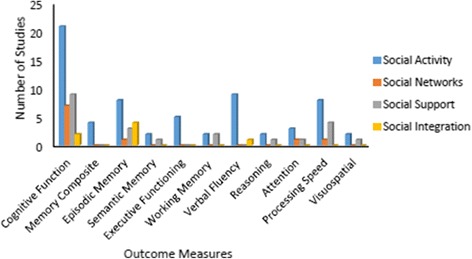
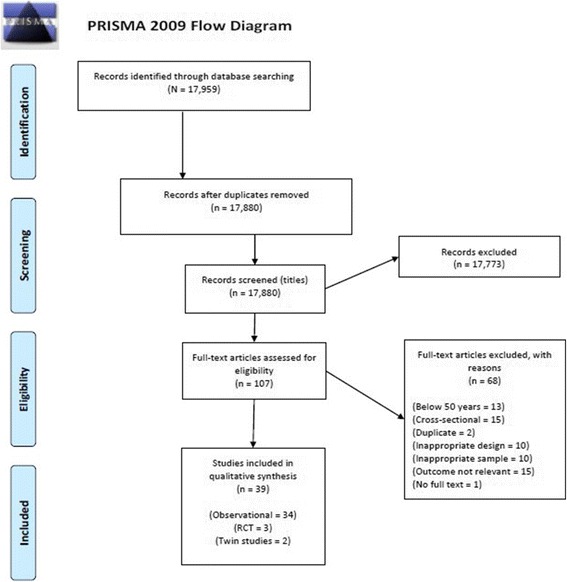
BACKGROUND: Social relationships, which are contingent on access to social networks, promote engagement in social activities and provide access to social support. These social factors have been shown to positively impact health outcomes. In the current systematic review, we offer a comprehensive overview of the impact of social activities, social networks and social support on the cognitive functioning of healthy older adults (50+) and examine the differential effects of aspects of social relationships on various cognitive domains. METHODS: We followed PRISMA (Preferred Reporting Items for Systematic Reviews and Meta-Analysis) guidelines, and collated data from randomised controlled trials (RCTs), genetic and observational studies. Independent variables of interest included subjective measures of social activities, social networks, and social support, and composite measures of social relationships (CMSR). The primary outcome of interest was cognitive function divided into domains of episodic memory, semantic memory, overall memory ability, working memory, verbal fluency, reasoning, attention, processing speed, visuospatial abilities, overall executive functioning and global cognition. RESULTS: Thirty-nine studies were included in the review; three RCTs, 34 observational studies, and two genetic studies. Evidence suggests a relationship between (1) social activity and global cognition and overall executive functioning, working memory, visuospatial abilities and processing speed but not episodic memory, verbal fluency, reasoning or attention; (2) social networks and global cognition but not episodic memory, attention or processing speed; (3) social support and global cognition and episodic memory but not attention or processing speed; and (4) CMSR and episodic memory and verbal fluency but not global cognition. CONCLUSIONS: The results support prior conclusions that there is an association between social relationships and cognitive function but the exact nature of this association remains unclear. Implications of the findings are discussed and suggestions for future research provided. SYSTEMATIC REVIEW REGISTRATION: PROSPERO 2012: CRD42012003248 .
Overview
The claims and statistics of this paper haven’t been checked yet.
Free: it reads the open-access text and checks the first 5 claims that cite a source we can check. Create a free account to check every claim.
Integrity signals
Registry
Cites
Statistics
Figures
Verification
Claims the paper makes
The claims and statistics of this paper haven’t been checked yet.
Free: it reads the open-access text and checks the first 5 claims that cite a source we can check. Create a free account to check every claim.
Claims other papers make about this one
Each is checked against this paper’s own text: does it say what the citing paper says it does?
The cited source doesn’t support the claim as written.
In the citing paper
“Frequent social activity was associated with improved memory, executive function, visuospatial ability, and processing speed, whereas frequent social support was associated only with improved memory.8”
From Associations between social connections and cognition: a global collaborative individual participant data meta-analysis (2022) · cites this paper as [8]
Checked by a reasoning model — may be wrong.
Experimental — accuracy not yet measuredThe source backs part of the claim, not all of it — or backs it for a different population, condition or comparison.
In the citing paper
“Despite clear cultural variation in the meaning and perception of social isolation, findings of protective effect of more social contact are largely consistent in different settings and for either sex across the studies and meta-analyses.”
From Dementia prevention, intervention, and care: 2020 report of the Lancet Commission (2020) · cites this paper as [118]
Experimental — accuracy not yet measuredThe source backs part of the claim, not all of it — or backs it for a different population, condition or comparison.
In the citing paper
“a systematic review of low quality RCTs of 576 adults aged 60 or more years with normal cognition found facilitated meeting and discussion groups were associated with improved global cognition and increased brain volume at follow-up.”
From Dementia prevention, intervention, and care: 2020 report of the Lancet Commission (2020) · cites this paper as [118]
Experimental — accuracy not yet measuredThe source backs part of the claim, not all of it — or backs it for a different population, condition or comparison.
In the citing paper
“Another meta-analysis of 39 studies reported that social activity and social support were associated with decline in global cognition and specific cognitive domains.8”
From Associations between social connections and cognition: a global collaborative individual participant data meta-analysis (2022) · cites this paper as [8]
Experimental — accuracy not yet measuredThe source backs part of the claim, not all of it — or backs it for a different population, condition or comparison.
In the citing paper
“Consequently, measurement of this kind often does not permit testing of alternative hypotheses about social or biological mechanisms.”
From Why the cognitive ‘fountain of youth’ may be upstream: pathways to dementia risk and resilience through social connectedness (2022) · cites this paper as [11]
Experimental — accuracy not yet measured
11 more claims about this paper
Create a free account to see every claim other papers make about this one.
Self-check
Percentages, sums and reported differences re-computed from the paper’s own numbers.
The self-check needs the paper’s full text.
Citations
Cites
Stress, social support, and the buffering hypothesis
Cohen, S., & Wills, T. A. (1985) · Psychological Bulletin · doi:10.1037/0033-2909.98.2.310 · Cited by 18,093 · cited 1×
“Social support in particular may impact cognitive outcomes via its buffering effect on stress [44].”
BackgroundSocial Relationships and Mortality Risk: A Meta-analytic Review
Holt-Lunstad, J., Smith, T. B., & Layton, J. B. (2010) · PLoS Medicine · doi:10.1371/journal.pmed.1000316 · Cited by 7,272 · cited 1×
“One difficulty when trying to determine the effect of social relationships on cognitive function is the use of discrepant and unclear definitions of different social factors [14].”
BackgroundEffects of stress throughout the lifespan on the brain, behaviour and cognition
Lupien, S. J., McEwen, B. S., Gunnar, M. R., & Heim, C. (2009) · Nature Reviews Neuroscience · doi:10.1038/nrn2639 · Cited by 6,256
From social integration to health: durkheim in the new millennium
Berkman, L. F., Glass, T., Brissette, I., & Seeman, T. E. (2000) · Social Science & Medicine · doi:10.1016/s0277-9536(00)00065-4 · Cited by 4,821 · cited 6×
“In an attempt to address the issue of discrepant definitions in the literature, Berkman and colleagues suggested a framework to clarify terms describing social factors and behaviours [15].”
BackgroundInfluentialWhat is cognitive reserve? Theory and research application of the reserve concept
STERN, Y. (2002) · Journal of the International Neuropsychological Society · doi:10.1017/s1355617702813248 · Cited by 3,951 · cited 1×
“Social activities may include a type of cognitive stimulation, thus contributing to cognitive outcomes via the building of cognitive reserve [41]; cognitive reserve optimises cognitive performance through the recruitment of alternate brain networks and cognitive strategies to compensate for cognitive difficulties rela…”
BackgroundSocial and emotional patterns in adulthood: Support for socioemotional selectivity theory
Carstensen, L. L. (1992) · Psychology and Aging · doi:10.1037/0882-7974.7.3.331 · Cited by 2,174
Perceived social isolation and cognition
Cacioppo, J. T., & Hawkley, L. C. (2009) · Trends in Cognitive Sciences · doi:10.1016/j.tics.2009.06.005 · Cited by 2,144 · cited 1×
“In addition, social factors tend to be considered alongside or as part of other lifestyle factors such as leisure or intellectual activity [41]; outcomes such as mortality, physical health, or dementia are included in lieu of cognitive function [10, 18]; only specific aspects of social relationships are considered, su…”
BackgroundAn active and socially integrated lifestyle in late life might protect against dementia
Fratiglioni, L., Paillard-Borg, S., & Winblad, B. (2004) · The Lancet Neurology · doi:10.1016/s1474-4422(04)00767-7 · Cited by 2,135 · cited 1×
“In addition, social factors tend to be considered alongside or as part of other lifestyle factors such as leisure or intellectual activity [41]; outcomes such as mortality, physical health, or dementia are included in lieu of cognitive function [10, 18]; only specific aspects of social relationships are considered, su…”
BackgroundThe handbook of aging and cognition
Craik, F. I. M., & Salthouse, T. A. (1992) · doi:10.4324/9781410601988 · Cited by 2,003
A Meta-Analysis of Interventions to Reduce Loneliness
Masi, C. M., Chen, H.-Y., Hawkley, L. C., & Cacioppo, J. T. (2011) · Personality and Social Psychology Review · doi:10.1177/1088868310377394 · Cited by 1,995
Cited by
Items 201–300 of 1,000
Liang, Y., Wu, X., Lu, C., & Xiao, F. (2021) · Annals of Palliative Medicine · doi:10.21037/apm-20-1885 · Cited by 21
The association between oral health and mild cognitive impairment in community-dwelling older adults
Ye, N., Deng, B., Hu, H., Ai, Y., Wang, L., Liu, X., Peng, Y., Shi, Z., & Li, Y. (2024) · Frontiers in Public Health · doi:10.3389/fpubh.2024.1464439 · Cited by 25
“Loneliness (40), depression (41), and reduced social activities (42) have been associated with cognitive decline in older adults.”
BackgroundPetkus, A. J., & Gomez, M. E. (2021) · International Psychogeriatrics · doi:10.1017/s1041610220003336 · Cited by 21
Hyodo, K., Kitano, N., Ueno, A., Yamaguchi, D., Watanabe, Y., Noda, T., Nishida, S., Kai, Y., & Arao, T. (2023) · Frontiers in Human Neuroscience · doi:10.3389/fnhum.2022.1018087 · Cited by 25
“On the other hand, a previous study suggested that social participation (Kelly et al., 2017), mainly included in LPA, is associated with better executive function.”
BackgroundIizuka, G., Tsuji, T., Ide, K., Watanabe, R., & Kondo, K. (2023) · SSM - Population Health · doi:10.1016/j.ssmph.2023.101410 · Cited by 20
“As for cognitive function, there was a significant association between emotional support and improved outcomes on global cognition, which was measured using global or composite measures of cognitive function (Kelly et al., 2017).”
BackgroundInfluentialWang, L., Ma, Y., Yan, Z., Zhang, L., Hu, Y., & Zhao, S. (2025) · Computers in Human Behavior · doi:10.1016/j.chb.2025.108669 · Cited by 26
Peng, S., Roth, A. R., & Perry, B. L. (2021) · Social Neuroscience · doi:10.1080/17470919.2021.2001368 · Cited by 24
“For example, network size is one of the most frequently used network measures to predict cognitive health and brain structure, and it is sometimes treated as a convenient proxy measure of bridging social capital (Ellwardt et al., 2015; Kelly et al., 2017; Kwak et al., 2018).”
BackgroundInfluentialFoong, H. F., Ibrahim, R., Hamid, T. A., & Haron, S. A. (2021) · BMC Geriatrics · doi:10.1186/s12877-021-02617-9 · Cited by 26
Everly, J., Plummer, J., Lohman, M. C., & Neils‐Strunjas, J. (2022) · American Journal of Speech-Language Pathology · doi:10.1044/2022_ajslp-22-00035 · Cited by 23
Zhu, X., Luchetti, M., Aschwanden, D., Sesker, A. A., Stéphan, Y., Sutin, A. R., & Terracciano, A. (2022) · Journal of Happiness Studies · doi:10.1007/s10902-022-00613-3 · Cited by 20
PROTOCOL: In-person interventions to reduce social isolation and loneliness: An evidence and gap map
Welch, V. A., Ghogomu, E. T., Dowling, S., Barbeau, V. I., Al-Zubaidi, A. A., Beveridge, E., Bondok, M., Desai, P., Doyle, R., Huang, J., et al. (2023) · Campbell Systematic Reviews · doi:10.1002/cl2.1340 · Cited by 30
Vetere, G., Williams, G. H., Ballard, C. G., Creese, B., Hampshire, A., Palmer, A., Pickering, E., Richards, M., Brooker, H. J., & Corbett, A. (2024) · International Journal of Geriatric Psychiatry · doi:10.1002/gps.6061 · Cited by 23
“Social engagement is known to be associated with cognitive health 37 so there may be interplay in the related benefits of musical activity and social activity in participants taking part in these types of music.”
BackgroundRutter, E. C., Tyas, S. L., Maxwell, C. J., Law, J., O’Connell, M. E., Konnert, C. A., & Oremus, M. (2020) · BMJ Open · doi:10.1136/bmjopen-2020-037301 · Cited by 22
Ye, Y., Zhang, Y., Ren, J.-J., & Zhu, Y. (2025) · Frontiers in Public Health · doi:10.3389/fpubh.2024.1516895 · Cited by 18
Sasaki, R., & Hirano, M. (2020) · International Journal of Environmental Research and Public Health · doi:10.3390/ijerph17124499 · Cited by 18
Resilience and Social Support-Giving Scales: Conceptual and Empirical Validation
Hawkley, L. C., Wroblewski, K., Cagney, K. A., & Waite, L. J. (2021) · The Journals of Gerontology Series B · doi:10.1093/geronb/gbab091 · Cited by 23
“The benefits of believing that social support is available have been well documented, and include protection of well-being (Thomas, 2010), mental health (Prati & Pietrantoni, 2010; Thoits, 2011), cognitive functioning (Kelly et al., 2017), physical health (Nicklett et al.”
Provision of social support and mental health in U.S. military veterans
Na, P. J., Tsai, J., Southwick, S. M., & Pietrzak, R. H. (2022) · npj Mental Health Research · doi:10.1038/s44184-022-00004-9 · Cited by 21
Wang, H., & Yu, X. (2023) · The Lancet Regional Health - Western Pacific · doi:10.1016/j.lanwpc.2023.100721 · Cited by 24
Fu, C., Hao, W., Ma, Y., Shrestha, N., Virani, S. S., Mishra, S. R., & Zhu, D. (2023) · Journal of Women s Health · doi:10.1089/jwh.2022.0396 · Cited by 20
Does Voluntary Work Contribute to Cognitive Performance? – An International Systematic Review
Keefer, A., Steichele, K., Graessel, E., Prokosch, H., & Kolominsky‐Rabas, P. L. (2023) · Journal of Multidisciplinary Healthcare · doi:10.2147/jmdh.s404880 · Cited by 20
Zhao, I. Y., Parial, L. L., Montayre, J., Golub, J. S., Ng, J. H., Sweetow, R. W., Chan, E. A., & Leung, A. Y. M. (2023) · International Journal of Geriatric Psychiatry · doi:10.1002/gps.5982 · Cited by 22
Poblete, F., Barticevic, N. A., Sapag, J. C., Tapía, P., Gabriel Bastías, S., Quevedo, D., Valdés, C., Bustamante, C., Alcayaga, C., & Perez, G. G. (2018) · Revista médica de Chile · doi:10.4067/s0034-98872018001001135 · Cited by 28
Hippocampus Mediates the Effect of Emotional Support on Cognitive Function in Older Adults
Kim, G. E., Han, J. W., Kim, T. H., Suh, S. W., Bae, J. B., Kim, J. H., & Kim, K. W. (2019) · The Journals of Gerontology Series A · doi:10.1093/gerona/glz183 · Cited by 21
Talbot, L., Thomas, M. M., Bauman, A. E., Manera, K., & Smith, B. J. (2021) · Journal of Alzheimer s Disease · doi:10.3233/jad-210317 · Cited by 19
“Maintenance of social connections and cognitive activity has also been shown to protect against dementia risk [16].”
Pharmacists’ Knowledge of Factors Associated with Dementia: The A-to-Z Dementia Knowledge List
Ramos, H., Moreno, L., Gil‐Peinado, M., García‐Lluch, G., Sendra‐Lillo, J., & Alacreu, M. (2021) · International Journal of Environmental Research and Public Health · doi:10.3390/ijerph18199934 · Cited by 20
Motion, Relation, and Passion in Brain Physiological and Cognitive Aging
Sigmundsson, H., Dybendal, B. H., & Grassini, S. (2022) · Brain Sciences · doi:10.3390/brainsci12091122 · Cited by 23
Kim, Y. B., & Lee, S. H. (2019) · International Journal of Geriatric Psychiatry · doi:10.1002/gps.5200 · Cited by 20
“A few studies have demonstrated evidence for an association between SN and CD in the elderly.(5,10) For example, smaller SN significantly increased the risk of CD, whereas larger or diverse SN had a protective effect.”
BackgroundInfluentialYe, Z., Li, X., Lang, H., Xin, J., Xu, H., & Fang, Y. (2024) · International Journal of Geriatric Psychiatry · doi:10.1002/gps.6063 · Cited by 20
“44 Numerical studies have confirmed exercises and social activities could improve cognitive performance in adults, 45,46 which was entirely consistent with our findings.”
ResultSocial support and health among older adults – the Singapore Chinese Health Study
Barrenetxea, J., Yang, Y., Markides, K. S., Pan, A., Koh, W., & Feng, Q. (2021) · Ageing and Society · doi:10.1017/s0144686x20001944 · Cited by 17
“While it is well established in the literature that social support leads to better health (Kelly et al., 2017; Wang et al., 2018; Tengku Mohd et al., 2019), poor health can also impose restrictions on social support by conditioning the availability, frequency, quality, source and structure of…”
BackgroundIntensive care‐related cognitive impairment: A biopsychosocial overview
Tingey, J. L., Dasher, N. A., Bunnell, A. E., & Starosta, A. J. (2022) · PM&R · doi:10.1002/pmrj.12773 · Cited by 17
Borella, E., Ghisletta, P., Carbone, E., & Aichele, S. (2023) · European Journal of Ageing · doi:10.1007/s10433-023-00766-x · Cited by 18
“Communication and contact with family members and close friends have been shown to contribute both to emotional wellbeing and cognitive functioning in older adults (Ihle et al. 2021; Kelly et al. 2017), and thus to successful/healthy aging (Rowe and Kahn 1998).”
BackgroundResultWhat are the active ingredients in recovery activities? Introducing a dimensional approach.
Alameer, K. M., Uitdewilligen, S., & Hulsheger, U. R. (2023) · Journal of Occupational Health Psychology · doi:10.1037/ocp0000354 · Cited by 27
Dual trajectories of depression and social participation among Chinese older adults
Pan, C., & Cao, N. (2023) · Geriatric Nursing · doi:10.1016/j.gerinurse.2023.07.013 · Cited by 17
Yu, X., Ang, S., & Zhang, Y. (2023) · The Journals of Gerontology Series B · doi:10.1093/geronb/gbad195 · Cited by 22
Baciu, M., & Roger, É. (2024) · Topics in Cognitive Science · doi:10.1111/tops.12736 · Cited by 20
HaGani, N., Clare, P. J., Luo, M., Merom, D., Smith, B. J., & Ding, D. (2024) · Journal of Epidemiology & Community Health · doi:10.1136/jech-2023-221606 · Cited by 23
“71 In China, however, our findings show that loneliness decreased after retirement regardless of social engagement.”
Pavarini, S. C. I., Brígola, A. G., Luchesi, B. M., Oliveira, D., Orlandi, F. D. S., de Moura, F. G., Silva, H. R. O., de Oliveira, N. A., Zazzetta, M. S., dos Santos‐Orlandi, A. A., et al. (2020) · Dementia & Neuropsychologia · doi:10.1590/1980-57642020dn14-040007 · Cited by 18
Bae, S. (2021) · Psychogeriatrics · doi:10.1111/psyg.12674 · Cited by 20
Putnam, M., Morgan, K. A., Desai, R. H., Yan, Y., Chen, S., & Stark, S. L. (2022) · Healthcare · doi:10.3390/healthcare10050903 · Cited by 17
Network recall among older adults with cognitive impairments
Roth, A. R., Peng, S., Coleman, M. E., Finley, E., & Perry, B. L. (2021) · Social Networks · doi:10.1016/j.socnet.2020.08.005 · Cited by 16
Jeon, S., & Charles, S. T. (2024) · JMIR Aging · doi:10.2196/63907 · Cited by 20
“Moreover, internet-based social activity participation may be a channel to exchange social support, which further relates to cognitive functioning [7].”
Huang, C., Yan, Y., Tam, W., Sun, W., Ye, Y., Wang, N., Shi, Y., Zhu, Z., Chen, D., Chen, L., et al. (2025) · BMC Medicine · doi:10.1186/s12916-025-04085-z · Cited by 20
“A systematic review confirmed the link between social relationships and cognitive health [15], while a randomized controlled trial found that a 3-month social intervention significantly improved cognitive function, with sustained benefits observed 12 months later [16].”
Demnitz, N., Stathi, A., Withall, J., Stainer, C., Seager, P., Koning, J. D., Esser, P., Wassenaar, T. M., Dawes, H., Brooks, J., et al. (2021) · NeuroImage Clinical · doi:10.1016/j.nicl.2021.102762 · Cited by 17
Cognitive functions among healthy older adults using online social networking
Yildirim, E., & Ögel-Balaban, H. (2021) · Applied Neuropsychology Adult · doi:10.1080/23279095.2021.1951269 · Cited by 20
“Considering the relationship between offline social support and cognitive functions (for a review, Kelly et al., 2017), we controlled offline sociality.”
BackgroundMethodBrugnoli, A. V. M., Gonçalves, T. R., da Silva, R. C. D., & Pattussi, M. P. (2022) · Ciência & Saúde Coletiva · doi:10.1590/1413-812320222711.08592022 · Cited by 26
“The questions are answered on a 7-point Likert scale, as follows: very strongly disagree (1); strongly disagree (2); mildly disagree (3); neutral (4); mildly agree (5); strongly agree (6); very strongly agree (7).”
BackgroundHaghighi, P., & Oremus, M. (2023) · BMC Geriatrics · doi:10.1186/s12877-023-03982-3 · Cited by 19
“Therefore, investigating potentially modifiable risk or protective factors for memory is crucial to help offset future health challenges and promote healthy aging in middle-aged and older adults [3].”
BackgroundUntari, I., Subijanto, A. A., Mirawati, D. K., Probandari, A. N., & Sanusi, R. (2019) · Journal of Health Research · doi:10.1108/jhr-11-2018-0135 · Cited by 24
Askari, S., Fellows, L. K., Brouillette, M., & Mayo, N. E. (2020) · Quality of Life Research · doi:10.1007/s11136-020-02679-z · Cited by 21
IMPACT OF COVID-19 AMONG THE ELDERLY POPULATION
İlgili, Ö., & Kutsal, Y. G. (2020) · The Turkish Journal of Geriatrics · doi:10.31086/tjgeri.2020.179 · Cited by 21
On the novel mechanisms for social memory and the emerging role of neurogenesis
Lunardi, P. S., Mansk, L. M. Z., Jaimes, L. F., & Pereira, G. S. (2021) · Brain Research Bulletin · doi:10.1016/j.brainresbull.2021.03.006 · Cited by 21
Schröders, J., Nichter, M., Sebastiån, M. S., Nilsson, M., & Dewi, F. S. T. (2021) · Frontiers in Sociology · doi:10.3389/fsoc.2021.659285 · Cited by 17
Wion, R. K., Fazeli, P. L., & Vance, D. E. (2021) · The Gerontologist · doi:10.1093/geront/gnab172 · Cited by 18
Welch, V. A., Ghogomu, E. T., Barbeau, V. I., Boulton, E., Boutin, S., Haitas, N., Kneale, D., Salzwedel, D. M., Simard, R., Herbert, P., et al. (2022) · Campbell Systematic Reviews · doi:10.1002/cl2.1260 · Cited by 20
Dürst, A., Graf, C. E., Ruggiero, C., Zekry, D., Boccardi, V., Monney, L., Joss, I., Vuilloud, K., Vespignani, G., Bosshard, W., et al. (2022) · Aging Clinical and Experimental Research · doi:10.1007/s40520-022-02188-8 · Cited by 18
“For a long, social support has been recognized as a key determinant of health [4, 5, 7, 8].”
Happy Alone? Motivational Profiles of Solitude and Well-Being Among Senior Living Residents
Smith, J. L., Thomas, V., & Azmitia, M. (2022) · The International Journal of Aging and Human Development · doi:10.1177/00914150221112283 · Cited by 18
“…that activity programs tend to involve group activities, including the well-established benefits of social engagement and the dangers of loneliness (Holt-Lunstad et al., 2015; Kelly et al., 2017), the ability to offer services to a greater number of people, and the preferences of participants.”
BackgroundRieker, J. A., Gajewski, P. D., Avilés, J. M. R., Ballesteros, S., Golka, K., Hengstler, J. G., Wascher, E., & Getzmann, S. (2022) · International Archives of Occupational and Environmental Health · doi:10.1007/s00420-022-01943-8 · Cited by 21
Cao, G., Yao, S., Wang, K., Han, L., Chen, Z., Huang, Z.-T., Zhang, Q., Wang, C., Hu, Y., & Xu, B. (2020) · Aging & Mental Health · doi:10.1080/13607863.2020.1828271 · Cited by 16
Fujii, Y., Seol, J., Joho, K., Liu, J., Inoue, T., Nagata, K., & Okura, T. (2021) · Journal of Physical Therapy Science · doi:10.1589/jpts.33.15 · Cited by 19
Curiosity across the adult lifespan: Age-related differences in state and trait curiosity
Whatley, M. C., Murayama, K., Sakaki, M., & Castel, A. D. (2025) · PLoS ONE · doi:10.1371/journal.pone.0320600 · Cited by 20
“Engaging with any of these activities can be beneficial for overall well-being and cognitive outcomes in older age, for example by fostering social connections [71,72] and learning complex new skills [17].”
Constraints to travel outside the local area: Effect on social participation and self-rated health
Anciães, P. R., & Metcalfe, P. (2023) · Journal of Transport & Health · doi:10.1016/j.jth.2022.101535 · Cited by 17
“…on the health outcomes of older people, being associated with better self-rated health (Lee et al. 2008; Sirven and Debrand 2008; Gilmour 2012), cognitive functioning (Kelly et al. 2017), psychological well-being (Thanakwang et al. 2012) and reduced probability of depression (Chiao et al., 2011).”
Yao, G., Luo, Y., Wu, H., Gao, M., & Sun, J. (2023) · BMC Geriatrics · doi:10.1186/s12877-023-03934-x · Cited by 16
Parents’ attitudes towards a difficult situation resulting from the chronic disease of their child
Guz, E., Brodowicz-Król, M., Kulbaka, E., Bartoszuk-Popko, M., & Lutomski, P. (2020) · Annals of Agricultural and Environmental Medicine · doi:10.26444/aaem/119085 · Cited by 19
“In acute diseases, it is possible for the patient to recover fully after undergoing appropriate treatment [10].”
BackgroundKamioka, Y., Miura, Y., Matsuda, T., 飯島, 弥., Suzuki, A., Nakazato, K., Saito, H., & ARITA, M. (2020) · Journal of Physical Therapy Science · doi:10.1589/jpts.32.375 · Cited by 15
Grossmann, J. A., Kölsch, V., Degirmenci, M. G., Aschenbrenner, S., Teichmann, B., & Meyer, P. (2021) · BMC Geriatrics · doi:10.1186/s12877-021-02051-x · Cited by 21
Psychosocial factors and hippocampal subfields: The Medea‐7T study
Twait, E. L., Blom, K., Koek, H. L., Zwartbol, M. H. T., Ghaznawi, R., Hendrikse, J., Gerritsen, L., Geerlings, M. I., & UCC SMART Study Group (2022) · Human Brain Mapping · doi:10.1002/hbm.26185 · Cited by 17
Liang, C., Subramaniam, P., Goh, N. S. M. R., Tay, K. W., & Moustafa, A. A. (2023) · Healthcare · doi:10.3390/healthcare11212822 · Cited by 19
The causal effect of social activities on cognition: Evidence from 20 European countries
Christelis, D., & Dobrescu, L. I. (2020) · Social Science & Medicine · doi:10.1016/j.socscimed.2020.112783 · Cited by 17
“The use of the MTR assumption can also be justified by the results of several metaanalyses (see, e.g. Kuiper et al., 2016; Yates et al., 2016; Kelly et al., 2017; Evans et al., 2019)”
Layne, C. M., Ruzek, J. I., & Dixon, K. E. (2021) · Psychiatry · doi:10.1080/00332747.2021.2005444 · Cited by 17
“…lifespan, social support is also linked to positive behavioral and academic adjustment during childhood and adolescence (Demaray et al., 2005; Dubow et al., 1991), better physical health and health outcomes (Uchino, 2006), and improved cognitive functioning in older adulthood (Kelly et al., 2017).”
BackgroundPredicting cognitive function changes from oral health status: a longitudinal cohort study
Ya, M. T., Hasegawa, Y., Maria, M. T. S., Hattori, H., Kusunoki, H., Nagai, K., Tamaki, K., Hori, K., Kishimoto, H., & Shinmura, K. (2024) · Scientific Reports · doi:10.1038/s41598-024-75169-8 · Cited by 14
“In addition, Kelly et al. reported that larger social networks and greater levels of social support were associated with improved global cognition 39 .”
BackgroundSiefkas, A. C., McCarthy, E. P., Leff, B. A., Dufour, A. B., & Hannan, M. T. (2021) · Journal of Applied Gerontology · doi:10.1177/07334648211062373 · Cited by 16
“…to impact health outcomes and behaviors through a number of processes including social engagement and social influence (Kawachi & Berkman, 2001; Kelly et al., 2017; Kiely et al., 2000; Zunzunegui et al., 2003), the precise mechanisms underlying this associations merit further investigation.”
BackgroundOkamae, A., Ogawa, T., Makizako, H., Matsumoto, D., Ishigaki, T., Kamiya, M., Miyashita, T., Ihira, H., Taniguchi, Y., Misu, S., et al. (2022) · Archives of Physical Medicine and Rehabilitation · doi:10.1016/j.apmr.2022.11.002 · Cited by 15
Yang, Y., McLaughlin, E. M., Naughton, M. J., Lustberg, M. B., Nolan, T. S., Kroenke, C. H., Weitlauf, J. C., Saquib, N., Shadyab, A. H., Follis, S., et al. (2022) · Supportive Care in Cancer · doi:10.1007/s00520-022-07505-5 · Cited by 17
“Past research has found that social support is associated with better cognitive functioning in older adults[17, 19, 47], and is protective against memory decline [18].”
BackgroundMaddock, J., Gallo, F., Wolters, F. J., Stafford, J., Marseglia, A., Dekhtyar, S., Lenart‐Bugla, M., Verspoor, E., Perry, M., Samtani, S., et al. (2023) · Gerontology · doi:10.1159/000531969 · Cited by 17
“memory, processing speed) observed in some previous studies are worth exploring [12,18] Third, heterogeneity in findings may be attributed to different statistical approaches implemented by previous studies as”
BackgroundResultKatanga, J., Hamilton, C. A., Walker, L., Attems, J., & Thomas, A. J. (2023) · Brain Pathology · doi:10.1111/bpa.13188 · Cited by 16
“Loneliness has been shown by meta-analysis to positively correlate with developing dementia — RR 1.26 (95% CI 1.14 – 1.40) [9] and isolation, defined by having fewer social interactions and a smaller social network [10] predicts sharper decline in the cognitive function of older adults [11, 12].”
BackgroundInfluentialColverson, A. J., Barsoum, S., Cohen, R. A., & Williamson, J. B. (2024) · Experimental Gerontology · doi:10.1016/j.exger.2023.112354 · Cited by 18
“…2012; Schilbach et al., 2013; Cacioppo et al., 2014; Farajnia et al., 2014; Cacioppo et al., 2015; Hari et al., 2015; Schirmer et al., 2016; Kelly et al., 2017; Cacioppo and Cacioppo, 2018), it may be that music-based activities promote healthy social and cognitive functioning in older…”
Chen, H., Xiao, Y., Huang, X., Fan, S., Wu, H., Li, L., & Wu, Y. (2024) · Frontiers in Public Health · doi:10.3389/fpubh.2024.1285208 · Cited by 14
Cui, M., Jiao, D., Liu, Y., Zhu, Y., Li, X., Zhu, Z., Zhang, J., Banu, A. A., Wang, Y., Qian, M., et al. (2024) · BMC Public Health · doi:10.1186/s12889-024-18234-1 · Cited by 16
“In recent years, a growing number of studies have begun to explore the connection between social relationships and frailty using population-based samples, however, the direction and mechanism of this connection is not fully understood [14].”
BackgroundAi, F., Li, E., Dong, A., & Zhang, H. (2024) · Frontiers in Public Health · doi:10.3389/fpubh.2024.1354877 · Cited by 16
Associations of Cognitively Active Versus Passive Sedentary Behaviors and Cognition in Older Adults
Wingood, M., Gell, N., Rosenberg, D. E., Stoddard, G. J., & Bouldin, E. D. (2024) · Journal of Physical Activity and Health · doi:10.1123/jpah.2024-0003 · Cited by 15
Yuan, S., Zhao, Y. W., Gao, W., Zhao, S., Liu, R., Ahmad, B., Li, H., Shi, Y., Wang, L., & Han, C. (2024) · BMC Public Health · doi:10.1186/s12889-024-21107-2 · Cited by 14
Dong, P., Zhang, X.-Q., Yin, W., Li, Z., Li, X.-N., Gao, M., Shi, Y.-L., Guo, H.-W., & Chen, Z. (2025) · Aging Clinical and Experimental Research · doi:10.1007/s40520-025-03013-8 · Cited by 18
“In addition, a longitudinal study involving middle-aged and elderly people in the Ruhr region of Germany by Nico Vonneilich et al. found that individuals with high socioeconomic status generally had more positive social relationships [30], whose functional aspect is exactly social support [31, 32].”
full-text, O. P. R. S. I., [, C. A. O. D. D. A. E. F. T. R. I. P. I. E., cohort, ]. O. S. D. A. L., study, C., or database registry and experimental studies designed as RCTs or non-randomized trials will be eligible. Prospective and retrospective studies will also be eligible. We will exclude cross-sectional studies, series, C., & reports., A. C. (2018) · Systematic Reviews · doi:10.1186/s13643-018-0811-9 · Cited by 14
Nanthamongkolchai, S., Tojeen, A., Munsawaengsub, C., Yodmai, K., & Suksatan, W. (2022) · Sustainability · doi:10.3390/su14148525 · Cited by 18
Social connectedness and cognitive decline
Roth, A. R. (2022) · The Lancet Healthy Longevity · doi:10.1016/s2666-7568(22)00217-3 · Cited by 14
How an Intergenerational Book Club Can Prevent Cognitive Decline in Older Adults: A Pilot Study
Plummer, J., Nguyen, K., Everly, J., Kiesow, A., Leith, K. H., Aging, C. O. G. S. I., & Neils-Strunjas, J. (2023) · Gerontology and Geriatric Medicine · doi:10.1177/23337214221150061 · Cited by 15
“Social activities require the use of language, attention, memory, and orientation and will therefore naturally incorporate cognitive stimulation, which may build cognitive reserve and/ or stimulate neural networks (Kelly et al., 2017).”
BackgroundCholerton, B., Poston, K. L., Yang, L., Rosenthal, L. S., Dawson, T. M., Pantelyat, A. Y., Edwards, K. L., Tian, L., Quinn, J. F., Chung, K. A., et al. (2021) · Journal of Clinical and Experimental Neuropsychology · doi:10.1080/13803395.2021.1927995 · Cited by 16
“…that exercise, cognitive training, and enhancing social relationships may help improve semantic fluency performance, thus pointing to potential candidates for future intervention programs (Bahar-Fuchs et al., 2019; Holthoff et al., 2015; Kelly et al., 2017; Nocera et al., 2015; Paris et al., 2011).”
BackgroundZachariae, R. H. (2020) · Healthy ageing and longevity · doi:10.1007/978-3-030-52663-4_22 · Cited by 14
Fang, J. S., Cheng, W., Li, H., Chen, Y., Zhang, N., Zhang, B., Zhang, Y., & Zhang, M. (2025) · Journal of Affective Disorders · doi:10.1016/j.jad.2025.119465 · Cited by 13
Personal Network Bridging Potential Across Geographic Context
Roth, A. R., Peng, S., & Perry, B. L. (2021) · The Journals of Gerontology Series B · doi:10.1093/geronb/gbab103 · Cited by 14
Gao, J., Hu, H., & He, H. (2023) · Journal of Speech Language and Hearing Research · doi:10.1044/2023_jslhr-22-00209 · Cited by 16
Liang, A., & Gomaa, N. A. (2023) · The International Journal of Aging and Human Development · doi:10.1177/00914150231208689 · Cited by 21
Cunha, C., Rodrigues, P., Voss, G., Martínez-Pecino, R., & Matos, A. D. (2024) · Aging Neuropsychology and Cognition · doi:10.1080/13825585.2024.2315769 · Cited by 14
“Building on the social control hypothesis, formal social participation fosters the adoption of healthy behaviors crucial for maintaining cognitive health (Kelly et al., 2017; Umberson, 1987).”
InfluentialBlotenberg, I., Boekholt, M., Michalowsky, B., Platen, M., Rodriguez, F. S., Teipel, S. J., Hoffmann, W. U., & Thyrian, J. R. (2024) · Age and Ageing · doi:10.1093/ageing/afae044 · Cited by 16
“…shown that the functionality of the social environment— the ‘perception or experience that one is cared for, esteemed, and part of a mutually supportive social network’ [17]—is more strongly associated with health and well-being than formal or structural characteristics of the network [18, 20].”
BackgroundBruinsma, J., Visser, L. N. C., Abaci, A., Rosenberg, A., Diaz, A., Hanke, S., Crutzen, R., Mangialasche, F., Kivipelto, M., & Thunborg, C. (2024) · Frontiers in Psychiatry · doi:10.3389/fpsyt.2024.1386688 · Cited by 14
Wei, C.-C., Hsieh, M.-J., & Chuang, Y. (2024) · Innovation in Aging · doi:10.1093/geroni/igae084 · Cited by 17
“In contrast to the stronger relationships identified in previous systematic reviews and meta-analyses (Evans et al., 2019; Kelly et al., 2017; Kuiper et al., 2016; Piolatto et al., 2022), we found a smaller effect of social interaction on cognitive function for several reasons.”
ResultReiner, A., Gioannis, E. D., & Steinhoff, P. (2025) · Aging & Mental Health · doi:10.1080/13607863.2025.2468892 · Cited by 20
“…informed by previous systematic reviews covering these three topics (Ayalon & Levkovich, 2019; Fasihi Harandi et al., 2017; Gariépy et al., 2016; Kelly et al., 2017; Mohd et al., 2019; Piolatto et al., 2022; Santini et al., 2015; Schwarzbach et al., 2014; Tajvar et al., 2013; Visentini et al.,…”
InfluentialRafnsson, S. B., Maharani, A., & Tampubolon, G. (2021) · The Journals of Gerontology Series B · doi:10.1093/geronb/gbab029 · Cited by 15
Pluim, C. F., Anzai, J. A. U., Martinez, J. E., Munera, D., Garza‐Naveda, A. P., Vila‐Castelar, C., Guzmán‐Vélez, E., Ramirez-Gomez, L. A., Bustin, J., Serrano, C. M., et al. (2022) · Journal of Applied Gerontology · doi:10.1177/07334648221139479 · Cited by 14
“Social support, online, and group interventions to increase socialization are associated with better objective cognitive functioning and reduced dementia risk (Akhter-Khan et al., 2021; Kelly et al., 2017; Myhre et al., 2016; Pitkala et al., 2011).”
BackgroundGrossmann, J. A., Aschenbrenner, S., Teichmann, B., & Meyer, P. (2023) · Frontiers in Aging Neuroscience · doi:10.3389/fnagi.2023.1123185 · Cited by 19
“Thus, we cannot rule out that the benefit in response inhibition after foreign language learning for subjects with lower baseline cognition is due to general cognitive stimulation through social interaction (Kelly et al., 2017).”
BackgroundDíaz‐Santos, M., González, D. A., Henry, S. K., Vuong, K. D., & Strutt, A. M. (2023) · Archives of Clinical Neuropsychology · doi:10.1093/arclin/acad011 · Cited by 14
Metadata
- Authors
- Kelly, M. E., Duff, H., Kelly, S., McHugh Power, J. E., Brennan, S., Lawlor, B. A., & Loughrey, D. G.
- Affiliations
- National College of Ireland (IE)
- Trinity College Dublin (IE)
- Corresponding author
- Kelly, Michelle E.
- Venue
- Systematic Reviews
- Published
- 2017-12
- Volume
- 6
- Issue
- 1
- Pages
- 259-259
- ISSN
- 2046-4053 (ISSN-L)
- PMC
- PMC5735742
- OpenAlex
- W2777525821
- Cited by
- 1,027
- References
- 103
- Citations by year
- 2026: 128 · 2025: 172 · 2024: 195 · 2023: 135 · 2022: 144 · 2021: 140 · 2020: 71 · 2019: 28 · 2018: 13
- FWCI
- 4.65
- Type
- journal article
- Language
- en
- Open access
- gold
- doi.org
- Licence
- cc-by
- Locations
- Systematic Reviews (publishedVersion, cc-by)
- Europe PMC (PubMed Central) (publishedVersion, cc-by)
- PubMed Central (publishedVersion, cc-by)
- PubMed (publishedVersion)
- DOAJ (DOAJ: Directory of Open Access Journals) (submittedVersion, cc-by-sa)
- Topics
- Health Sciences › Medicine › Psychiatry and Mental health › Dementia and Cognitive Impairment Research
- Social Sciences › Psychology › Developmental and Educational Psychology › Aging and Gerontology Research
- Health Sciences › Medicine › Public Health, Environmental and Occupational Health › Aging, Health, and Disability
- Keywords
- social activity, social networks, social support, interpersonal relationships, cognitive function, older adults, episodic memory, executive function, working memory, processing speed, visuospatial ability, verbal fluency, global cognition
- MeSH terms
- Cognition, Humans, Interpersonal Relations, Memory, Social Support, Executive Function, Social Participation
About these checks
Registry, retraction, Cites and statistics results are computed, not judged, with one exception: a printed reference that no index lists is read once by a model before it counts as a citation error. Claims are extracted by a model and kept only when their quote appears verbatim in the text; each cited source is then checked, with a model’s help, for whether it says what the claim relies on. Those verdicts can be wrong — read the claim’s quote and the cited source before relying on one.
Statistics and arithmetic are recomputed, not judged.
Confidence bands are shown only for fields calibrated on our annotated test set. None is calibrated yet, so no band is shown.
What counts as a claim ›How we measure confidence ›How we check this ›
Are you an author, or do you see a problem with this page? Request a review
Data sources
Bibliographic data: Semantic Scholar, OpenAlex, Crossref.
Contains information from the Semantic Scholar Academic Graph Datasets, made available under the ODC Attribution License (ODC-BY 1.0).
Semantic Scholar’s data is described in: Kinney, R., et al. (2023). The Semantic Scholar Open Data Platform. arXiv:2301.10140.
