

The impact of social activities, social networks, social support and social relationships on the cognitive functioning of healthy older adults: a systematic review
Open accessThe DOI matches its Crossref record; 102 of the 103 references it cites were found in a registry or an index.
Abstract
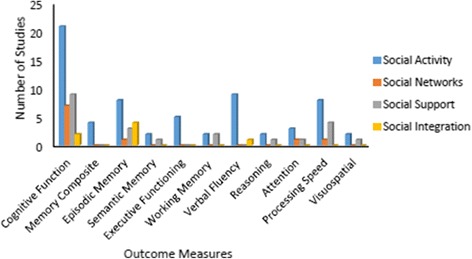
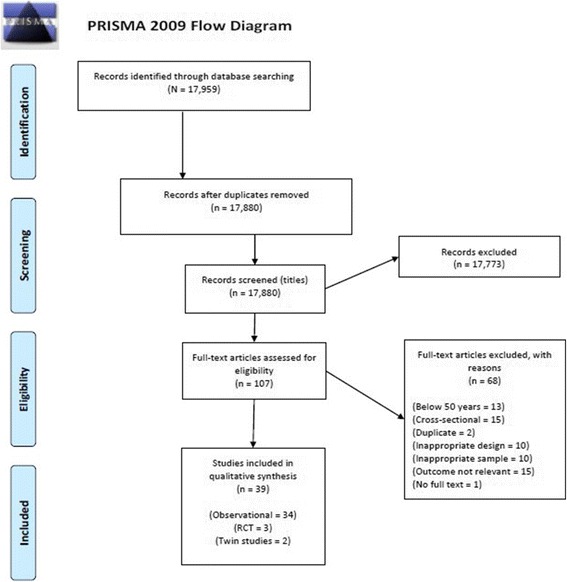
BACKGROUND: Social relationships, which are contingent on access to social networks, promote engagement in social activities and provide access to social support. These social factors have been shown to positively impact health outcomes. In the current systematic review, we offer a comprehensive overview of the impact of social activities, social networks and social support on the cognitive functioning of healthy older adults (50+) and examine the differential effects of aspects of social relationships on various cognitive domains. METHODS: We followed PRISMA (Preferred Reporting Items for Systematic Reviews and Meta-Analysis) guidelines, and collated data from randomised controlled trials (RCTs), genetic and observational studies. Independent variables of interest included subjective measures of social activities, social networks, and social support, and composite measures of social relationships (CMSR). The primary outcome of interest was cognitive function divided into domains of episodic memory, semantic memory, overall memory ability, working memory, verbal fluency, reasoning, attention, processing speed, visuospatial abilities, overall executive functioning and global cognition. RESULTS: Thirty-nine studies were included in the review; three RCTs, 34 observational studies, and two genetic studies. Evidence suggests a relationship between (1) social activity and global cognition and overall executive functioning, working memory, visuospatial abilities and processing speed but not episodic memory, verbal fluency, reasoning or attention; (2) social networks and global cognition but not episodic memory, attention or processing speed; (3) social support and global cognition and episodic memory but not attention or processing speed; and (4) CMSR and episodic memory and verbal fluency but not global cognition. CONCLUSIONS: The results support prior conclusions that there is an association between social relationships and cognitive function but the exact nature of this association remains unclear. Implications of the findings are discussed and suggestions for future research provided. SYSTEMATIC REVIEW REGISTRATION: PROSPERO 2012: CRD42012003248 .
Overview
The claims and statistics of this paper haven’t been checked yet.
Free: it reads the open-access text and checks the first 5 claims that cite a source we can check. Create a free account to check every claim.
Integrity signals
Registry
Cites
Statistics
Figures
Verification
Claims the paper makes
The claims and statistics of this paper haven’t been checked yet.
Free: it reads the open-access text and checks the first 5 claims that cite a source we can check. Create a free account to check every claim.
Claims other papers make about this one
Each is checked against this paper’s own text: does it say what the citing paper says it does?
The cited source doesn’t support the claim as written.
In the citing paper
“Frequent social activity was associated with improved memory, executive function, visuospatial ability, and processing speed, whereas frequent social support was associated only with improved memory.8”
From Associations between social connections and cognition: a global collaborative individual participant data meta-analysis (2022) · cites this paper as [8]
Checked by a reasoning model — may be wrong.
Experimental — accuracy not yet measuredThe source backs part of the claim, not all of it — or backs it for a different population, condition or comparison.
In the citing paper
“Despite clear cultural variation in the meaning and perception of social isolation, findings of protective effect of more social contact are largely consistent in different settings and for either sex across the studies and meta-analyses.”
From Dementia prevention, intervention, and care: 2020 report of the Lancet Commission (2020) · cites this paper as [118]
Experimental — accuracy not yet measuredThe source backs part of the claim, not all of it — or backs it for a different population, condition or comparison.
In the citing paper
“a systematic review of low quality RCTs of 576 adults aged 60 or more years with normal cognition found facilitated meeting and discussion groups were associated with improved global cognition and increased brain volume at follow-up.”
From Dementia prevention, intervention, and care: 2020 report of the Lancet Commission (2020) · cites this paper as [118]
Experimental — accuracy not yet measuredThe source backs part of the claim, not all of it — or backs it for a different population, condition or comparison.
In the citing paper
“Another meta-analysis of 39 studies reported that social activity and social support were associated with decline in global cognition and specific cognitive domains.8”
From Associations between social connections and cognition: a global collaborative individual participant data meta-analysis (2022) · cites this paper as [8]
Experimental — accuracy not yet measuredThe source backs part of the claim, not all of it — or backs it for a different population, condition or comparison.
In the citing paper
“Consequently, measurement of this kind often does not permit testing of alternative hypotheses about social or biological mechanisms.”
From Why the cognitive ‘fountain of youth’ may be upstream: pathways to dementia risk and resilience through social connectedness (2022) · cites this paper as [11]
Experimental — accuracy not yet measured
11 more claims about this paper
Create a free account to see every claim other papers make about this one.
Self-check
Percentages, sums and reported differences re-computed from the paper’s own numbers.
The self-check needs the paper’s full text.
Citations
Cites
Stress, social support, and the buffering hypothesis
Cohen, S., & Wills, T. A. (1985) · Psychological Bulletin · doi:10.1037/0033-2909.98.2.310 · Cited by 18,093 · cited 1×
“Social support in particular may impact cognitive outcomes via its buffering effect on stress [44].”
BackgroundSocial Relationships and Mortality Risk: A Meta-analytic Review
Holt-Lunstad, J., Smith, T. B., & Layton, J. B. (2010) · PLoS Medicine · doi:10.1371/journal.pmed.1000316 · Cited by 7,272 · cited 1×
“One difficulty when trying to determine the effect of social relationships on cognitive function is the use of discrepant and unclear definitions of different social factors [14].”
BackgroundEffects of stress throughout the lifespan on the brain, behaviour and cognition
Lupien, S. J., McEwen, B. S., Gunnar, M. R., & Heim, C. (2009) · Nature Reviews Neuroscience · doi:10.1038/nrn2639 · Cited by 6,256
From social integration to health: durkheim in the new millennium
Berkman, L. F., Glass, T., Brissette, I., & Seeman, T. E. (2000) · Social Science & Medicine · doi:10.1016/s0277-9536(00)00065-4 · Cited by 4,821 · cited 6×
“In an attempt to address the issue of discrepant definitions in the literature, Berkman and colleagues suggested a framework to clarify terms describing social factors and behaviours [15].”
BackgroundInfluentialWhat is cognitive reserve? Theory and research application of the reserve concept
STERN, Y. (2002) · Journal of the International Neuropsychological Society · doi:10.1017/s1355617702813248 · Cited by 3,951 · cited 1×
“Social activities may include a type of cognitive stimulation, thus contributing to cognitive outcomes via the building of cognitive reserve [41]; cognitive reserve optimises cognitive performance through the recruitment of alternate brain networks and cognitive strategies to compensate for cognitive difficulties rela…”
BackgroundSocial and emotional patterns in adulthood: Support for socioemotional selectivity theory
Carstensen, L. L. (1992) · Psychology and Aging · doi:10.1037/0882-7974.7.3.331 · Cited by 2,174
Perceived social isolation and cognition
Cacioppo, J. T., & Hawkley, L. C. (2009) · Trends in Cognitive Sciences · doi:10.1016/j.tics.2009.06.005 · Cited by 2,144 · cited 1×
“In addition, social factors tend to be considered alongside or as part of other lifestyle factors such as leisure or intellectual activity [41]; outcomes such as mortality, physical health, or dementia are included in lieu of cognitive function [10, 18]; only specific aspects of social relationships are considered, su…”
BackgroundAn active and socially integrated lifestyle in late life might protect against dementia
Fratiglioni, L., Paillard-Borg, S., & Winblad, B. (2004) · The Lancet Neurology · doi:10.1016/s1474-4422(04)00767-7 · Cited by 2,135 · cited 1×
“In addition, social factors tend to be considered alongside or as part of other lifestyle factors such as leisure or intellectual activity [41]; outcomes such as mortality, physical health, or dementia are included in lieu of cognitive function [10, 18]; only specific aspects of social relationships are considered, su…”
BackgroundThe handbook of aging and cognition
Craik, F. I. M., & Salthouse, T. A. (1992) · doi:10.4324/9781410601988 · Cited by 2,003
A Meta-Analysis of Interventions to Reduce Loneliness
Masi, C. M., Chen, H.-Y., Hawkley, L. C., & Cacioppo, J. T. (2011) · Personality and Social Psychology Review · doi:10.1177/1088868310377394 · Cited by 1,995
Cited by
Items 401–500 of 1,000
Won, M. H. (2025) · Journal of Clinical Medicine · doi:10.3390/jcm14051744 · Cited by 8
“Studies report that social support plays a crucial role in improving the physical and mental health of older adults by helping them solve problems, reducing stress, and encouraging a healthy lifestyle [13,14].”
Salutogenesis for thriving nations: Sense of coherence and longevity across income strata
Alkharafi, N. (2025) · SSM - Population Health · doi:10.1016/j.ssmph.2025.101839 · Cited by 10
“Positive social interactions contribute to higher self-esteem (Harris & Orth, 2020), greater empathy (Melloni et al., 2014), better cognitive functions (Kelly et al., 2017), and a longer life (Friedman et al., 2024; Holt-Lunstad et al., 2010).”
Arenson, M. B., McCaslin, S. E., & Cohen, B. E. (2019) · Depression and Anxiety · doi:10.1002/da.22945 · Cited by 9
Instruments to Assess Social Functioning in Individuals with Dementia: A Systematic Review
Grothe, J., Schomerus, G., Dietzel, J., Riedel-Heller, S. G., & Röhr, S. (2021) · Journal of Alzheimer s Disease · doi:10.3233/jad-200762 · Cited by 12
“Theassessmentofthesocialnetworkincludes network size, the relationship between members and their frequency of contact [9].”
Pretscher, A., Kauzner, S., Rohleder, N., & Becker, L. (2021) · European Journal of Ageing · doi:10.1007/s10433-021-00616-8 · Cited by 10
“We referred to the two EF domains inhibition and cognitive flexibility, which are both important for an active and independent lifestyle in older age (Kelly et al. 2017; Wirth, Haase et al. 2014).”
MethodOlegário, R. L., Fernandes, S. R., & de Moraes, R. (2023) · Psychology and Health · doi:10.1080/08870446.2023.2267610 · Cited by 12
“…keep recommending other interventions that have been proven to maintain or boost general cognition and executive functions: physical activity, healthy diet, social and meaningful connections, and daily-life complex cognitive tasks (Dominguez et al., 2021; Kelly et al., 2017; Newson & Kemps, 2006).”
Outdoor activity among older adults: Exploring the role of informational Internet use
Schehl, B. (2019) · Educational Gerontology · doi:10.1080/03601277.2019.1698200 · Cited by 8
“For instance, greater participation in cultural activities can reduce the mortality risk for older adults (Adams, Leibbrandt, & Moon, 2011) and more frequent involvement in social activities can lower the risk for cognitive impairments and depression (Kelly et al., 2017).”
BackgroundA pilot voxel-based morphometry study of older adults after the PICMOR intervention program
Sugimoto, H., & Otake, M. (2022) · BMC Geriatrics · doi:10.1186/s12877-021-02669-x · Cited by 8
“To prevent or delay age-related changes in cognitive function, cognitive intervention methods that are based on social activity, such as conversations, have been proposed in some intervention studies [22].”
MethodInvestigating age differences in the influence of joint attention on working memory.
Gregory, S. E. A., & Kessler, K. (2022) · Psychology and Aging · doi:10.1037/pag0000694 · Cited by 12
“…attention makes it easier to process the shared information (Gregory, Wang, et al., 2021), therefore this effect of shared attention on working memory may be one of the reasons that older adults with strong social networks fair better cognitively (e.g. Kelly et al., 2017; Livingston et al., 2017).”
BackgroundShea, T. B., & Remington, R. (2018) · Journal of Alzheimer's disease reports · doi:10.3233/adr-180056 · Cited by 7
Lim, M. L., Zammit, C., Lewis, E., Ee, N., Maiden, G., Goldwater, M. B., Kimonis, E. R., Kenning, G., Rockwood, K. J., Fitzgerald, A., et al. (2024) · Pilot and Feasibility Studies · doi:10.1186/s40814-024-01446-y · Cited by 9
Microbial phenolic metabolites are associated with better frontal lobe cognition
Domínguez‐López, I., Parilli‐Moser, I., Vallverdú‐Queralt, A., Tresserra‐Rimbau, A., Valls‐Pedret, C., Ruiz, Z. V., Castañer, O., Estruch, R., Ros, E., & Lamuela-Raventós, R. M. (2024) · Food Science and Human Wellness · doi:10.26599/fshw.2023.9250013 · Cited by 7
Reinwarth, A. C., Petersen, J., Beutel, M. E., Hautzinger, M., & Brähler, E. (2024) · PLoS ONE · doi:10.1371/journal.pone.0299467 · Cited by 13
Forte, F. D. S., Vieira, N. F. C., Farias, S. F., Barbosa, I. L., Castro, M. C., Yousafzai, A. K., & Vieira‐Meyer, A. P. G. F. (2024) · Scientific Reports · doi:10.1038/s41598-024-63828-9 · Cited by 7
Calatayud, E., Oliván‐Blázquez, B., Aguilar‐Latorre, A., Cuenca‐Zaldívar, J. N., Botaya, R. M., & Gómez‐Soria, I. (2024) · Experimental Gerontology · doi:10.1016/j.exger.2024.112568 · Cited by 8
“This is why cognitive aging researchers point to the importance of baseline cognitive assessment and the need for interventions to maintain this cognitive function (Kelly et al., 2017; Lenze et al., 2022; Rabbitt et al., 2008).”
Older age cognition in Indonesia: differences in the moderating role of social capital
Mahadevan, R., & Fan, S. (2025) · BMC Public Health · doi:10.1186/s12889-025-21871-9 · Cited by 7
Zhou, S., Deng, T., Shao, S., & Zeng, Z. (2025) · Frontiers in Aging Neuroscience · doi:10.3389/fnagi.2025.1549615 · Cited by 8
Desai, P., Ng, T. K. S., Krueger, K. R., Wilson, R. S., Evans, D. A., & Rajan, K. B. (2025) · The American Journal of Geriatric Psychiatry Open Science Education and Practice · doi:10.1016/j.osep.2025.02.004 · Cited by 8
Wang, J., Yu, Y., Xu, L., Xie, X., Liu, X., Zhou, J. H., Cheng, G., Hu, F., Liu, D., Huang, L., et al. (2025) · BMC Public Health · doi:10.1186/s12889-025-22596-5 · Cited by 9
“Social isolation was assessed at baseline according to previously published methods [48, 49], and included four domains: social engagement, living situation, social network, and social support (Table S2; Method S1).”
Reilly, S., & Harding, A. J. E. (2025) · Alzheimer s & Dementia · doi:10.1002/alz.70359 · Cited by 8
Brain Rot: A Scale Development Study
Yılmaz, E., & Aktürk, A. (2025) · Research on Education and Psychology · doi:10.54535/rep.1666895 · Cited by 11
“Even individuals with high social activity may face brain rot and a decrease in cognitive abilities, lack of participation in social activities, social isolation and loneliness (Kelly et al., 2017).”
Chang, J.-Y., Chou, K., Chang, Y., Lin, W.-Y., Chiu, H., Liao, Y., & Yang, C.-T. (2025) · Journal of Physical Activity and Health · doi:10.1123/jpah.2025-0401 · Cited by 8
Peng, S., & Perry, B. L. (2025) · Journal of Health and Social Behavior · doi:10.1177/00221465251356611 · Cited by 9
“For example, frequency of contacts, social activities, and the number of ties are all conceptualized as social connectedness and are found to be associated with cognitive health (Kelly et al. 2017; Kuiper et al. 2016).”
InfluentialBerardi, N., & Sale, A. (2025) · Brain and Environment · doi:10.1016/j.braen.2025.100010 · Cited by 10
Perception of Social Support and Cognitive Performance in Older Adults With Depression
Doreste-Méndez, R., Oberlin, L. E., Ilieva, I. P., Chen, S. Z., Gunning, F. M., & Solomonov, N. (2023) · JAMA Network Open · doi:10.1001/jamanetworkopen.2023.3978 · Cited by 8
Cook, B. R., Kamstra, P., Winterton, R., Willis, R., & Kammoora, R. (2022) · Journal of Extreme Events · doi:10.1142/s2345737623410014 · Cited by 8
Li, Q., Guo, Z., Hu, F., Xiao, M., Zhang, Q., Wen, J., Ying, T., Zheng, D., Wang, Y., Song, Y., et al. (2023) · Frontiers in Public Health · doi:10.3389/fpubh.2023.1271319 · Cited by 10
Vance, D. E., Billings, R., Lambert, C. C., Fazeli, P. L., Goodin, B. R., Kempf, M.-C., Rubin, L. H., Turan, B., Wise, J. M., Hellemann, G. S., et al. (2024) · Neuropsychology Review · doi:10.1007/s11065-024-09643-5 · Cited by 9
“The non-social cognitive aging literature is filled with such examples (Kelly et al., 2017).”
Siette, J., Chong, V., Samtani, S., Harris, C. B., Steiner-Lim, G. Z., & MacMillan, F. (2025) · BMC Public Health · doi:10.1186/s12889-025-22229-x · Cited by 9
Zhai, Y., Zhang, T., Li, Q., Lin, J., Wang, X., Li, F., Gu, X. F., Wu, M., & He, F. (2020) · Archives of Gerontology and Geriatrics · doi:10.1016/j.archger.2020.104120 · Cited by 7
Lima, S. M., Ren, X., Mu, L., Ochs‐Balcom, H. M., & Palermo, T. (2023) · Public Health Nutrition · doi:10.1017/s1368980023002008 · Cited by 8
“(25, 40-42) Studies on telomere length, in particular, have found such protection from social support.”
BackgroundBatallas, D., Rodríguez-Hernández, V., Hidalgo, V., & Salvador, A. (2023) · Behavioural Brain Research · doi:10.1016/j.bbr.2023.114771 · Cited by 9
“Similarly, the results are consistent with research conducted in the older population that concluded that better cognitive functioning was associated with more social support [23,41,43], whereas social isolation showed an inverse pattern [12,57].”
ResultThe Interactive Effects of Education and Social Support on Blood Pressure in African Americans
Byrd, D. R., Jiang, Y., Zilioli, S., Thorpe, R. J., Lichtenberg, P. A., & Whitfield, K. E. (2021) · The Journals of Gerontology Series A · doi:10.1093/gerona/glab289 · Cited by 7
Lewis, A. P., Škarić‐Jurić, T., Lučanin, J. D., & Smolić, Š. (2022) · Ageing and Society · doi:10.1017/s0144686x22000319 · Cited by 7
Study protocol of the self‐monitoring activity program: Effects of activity on incident dementia
Shimada, H., Lee, S., Doi, T., Bae, S., Makino, K., Chiba, I., & Arai, H. (2019) · Alzheimer s & Dementia Translational Research & Clinical Interventions · doi:10.1016/j.trci.2019.05.009 · Cited by 8
“Compared to PA, fewer behavior change techniques for cognitive and social activities have been reported, although numerous studies have identified the relationships between these activities and health outcomes [6,7].”
BackgroundKrendl, A. C., Hamilton, L. J., Apostolova, L. G., & Perry, B. L. (2025) · The Journals of Gerontology Series B · doi:10.1093/geronb/gbae209 · Cited by 9
da Rocha, C. G., von Gunten, A., Vandel, P., Jopp, D. S., Ribeiro, O. M. P. L., & Verloo, H. (2025) · JMIR Aging · doi:10.2196/64352 · Cited by 7
“…round 2: critical life events (eg, loss of a child or another loved one) (criterion 81), emotional indifference (criterion 82), anhedonia (criterion 83), afraid of being alone (criterion 84), resurfacing of “old wounds” (eg, long-standing conflicts with children) (criterion 85), feeling of…”
Liu, X., Zhou, C., Li, Y. H., & Fang, F. (2025) · International Review of Economics & Finance · doi:10.1016/j.iref.2025.104041 · Cited by 9
The impacts of household factors and proxies of human social determinants of health on dog behavior
Powell, L., Stefanovski, D., Dreschel, N. A., & Serpell, J. A. (2025) · Preventive Veterinary Medicine · doi:10.1016/j.prevetmed.2025.106520 · Cited by 7
Zheng, Z., Chen, L., Wang, Y., Jin, Y., & Liu, Y. (2025) · Journal of Asian Architecture and Building Engineering · doi:10.1080/13467581.2025.2487262 · Cited by 6
“Social behavior pertains to the interactions, communications, and participation of older adults in social activities, including neighborhood engagement, friendship formation, and involvement in public events (Kelly et al. 2017).”
Hsu, Y., Hoven, H., Grodstein, F., Liu, T.-H., Chang, C., Hsieh, Y.-L., Chen, J. T., & Kawachi, I. I. (2025) · SSM - Population Health · doi:10.1016/j.ssmph.2025.101821 · Cited by 8
“Previous research suggests that the cognitive benefits of social activities depend on their complexity and the level of mental stimulation they provide (Kelly et al., 2017).”
Kim, J., & Kwon, K. Y. (2025) · Innovation in Aging · doi:10.1093/geroni/igaf096 · Cited by 6
Matsuyama, Y., Shirai, K., & Aida, J. (2025) · Social Science & Medicine · doi:10.1016/j.socscimed.2025.118608 · Cited by 7
Altona, J., Wiegelmann, H., Mena, E., Schüz, B., & Wolf‐Ostermann, K. (2025) · BMC Geriatrics · doi:10.1186/s12877-025-06693-z · Cited by 8
Sketch of a Dynamic Common Pathways, Epigenetic Theory of Psychopathology with Hypotheses
Nigg, J. T. (2026) · Studies in systems, decision and control · doi:10.1007/978-3-032-17029-3_3 · Cited by 8
SmartCards as Analogous Tools to Operate Tablet Computers for Elderly—A Feasibility Study
Mueller, S. M., Göttke-Krogmann, B., Kortus, J., Wiechmann, M., Weber, M., Mozek, S., Mau, W., Golla, A., & Huebner, G. (2021) · Healthcare · doi:10.3390/healthcare9091198 · Cited by 8
Lingling, Tsuji, T., Ide, K., & Kondo, K. (2023) · Preventive Medicine · doi:10.1016/j.ypmed.2023.107573 · Cited by 6
Lawton, A., Miller-Lewis, L. R., & Gerace, A. (2023) · Journal of Adult Development · doi:10.1007/s10804-023-09455-6 · Cited by 6
“Engagement in leisure activities is important to older adults’ cognitive health (Kelly et al., 2017; Kuykendall et al., 2015), and when such activities generate subjective leisure satisfaction, they are associated with increases in wellbeing (Freund, 2020; Henning et al., 2021; Kuykendall et al.,…”
Jong, M. C., Dahlqvist, H. Z., Lown, E. A., Schats, W., Beckman, L., & Jong, M. (2023) · BMC Public Health · doi:10.1186/s12889-023-16408-x · Cited by 6
Older Adults’ Views on Characteristics of Groups to Support Engagement
WALKER, R. B., Belperio, I., Scott, J. E. T., Luszcz, M. A., Mazzucchelli, T. G., Evans, T., & Windsor, T. D. (2023) · Activities Adaptation & Aging · doi:10.1080/01924788.2023.2249722 · Cited by 7
“…of depression (Duncan et al., 2017; Roh et al., 2015), greater physical health (Chang et al., 2014; Cherry et al., 2013), lower incidence of frailty and mortality (Fushiki et al., 2012), greater cognitive function (Kelly et al., 2017) and a reduced risk of dementia (Foubert-Samier et al., 2014).”
Li, Y., Xiang, Q., Song, Q., Liang, R., Deng, L., Dong, B., & Yue, J. (2024) · The journal of nutrition health & aging · doi:10.1016/j.jnha.2023.100014 · Cited by 7
Chen, N., McGrath, C. B., Stopsack, K. H., Morgans, A. K., Nethery, R. C., Dickerman, B. A., & Mucci, L. A. (2024) · Journal of Cancer Survivorship · doi:10.1007/s11764-024-01632-0 · Cited by 9
Dell’Acqua, C., Allison, G. O., Yun, C. H., & Weinberg, A. (2024) · Psychophysiology · doi:10.1111/psyp.14640 · Cited by 8
Falck, R. S., Stein, R. G., Davis, J. C., Eng, J. J., Middleton, L. E., Hall, P. A., & Liu-Ambrose, T. Y. L. (2024) · The Journals of Gerontology Series A · doi:10.1093/gerona/glae264 · Cited by 9
“A systematic review by Kelly and colleagues (8) high-lighted the importance of social relationships for maintaining cognitive function as adults age.”
Sun, J., Zhang, H., Mo, X., Liu, Y., Pan, L., & Luo, H. (2024) · Archives of Public Health · doi:10.1186/s13690-024-01431-0 · Cited by 8
“Based on Kelly et al. [49], social participation is also called social activities.”
Ni, P., Chen, H., & Hu, X. (2024) · Aging Clinical and Experimental Research · doi:10.1007/s40520-024-02897-2 · Cited by 10
Richer, M., Grenier, S., LUPIEN, S. J., & Plusquellec, P. (2025) · Frontiers in Psychology · doi:10.3389/fpsyg.2024.1499609 · Cited by 12
Zhang, L., Xie, Q., Qiu, S. S., Liu, M., You, F., & Zhao, X. (2025) · Digital Health · doi:10.1177/20552076251337948 · Cited by 8
Frissen, L., Aarts, S., Rosteius, K., de Boer, B., Gabrio, A., & Verbeek, H. (2025) · International Psychogeriatrics · doi:10.1016/j.inpsyc.2025.100091 · Cited by 7
Castanho, T. C., Santos, N. C., Meleiro-Neves, C., Neto, S. C., Moura, G. R., Santos, M. A. S., Cruz, A. R., Cunha, O. S., Rodrigues, A. D. C., Rodrigues, A. J., et al. (2021) · Aging Brain · doi:10.1016/j.nbas.2021.100020 · Cited by 8
Kawata, N. Y. S., Nouchi, R., Saito, T. I., & Kawashima, R. (2021) · Experimental Gerontology · doi:10.1016/j.exger.2021.111614 · Cited by 14
The racial and cultural ecology of home and community-based services for diverse older adults
Ezell, J. M., Alsmadi, I., Gosnell, N., & Kaur, A. (2022) · Journal of Aging Studies · doi:10.1016/j.jaging.2022.101023 · Cited by 7
Wu, C., Jing, W., Du, J., Lu, L., Zhang, Y., Yanling, D., He, S., Kejian, Y., Yuhai, Z., & Hongjuan, L. (2023) · Medical Teacher · doi:10.1080/0142159x.2023.2207722 · Cited by 9
“Social support referred to the material and spiritual support that individuals get from social relationships such as friends, colleagues and organizations (Kelly et al. 2017).”
BackgroundCao, X., Yang, B., & Zhou, J. (2023) · Clinical Gerontologist · doi:10.1080/07317115.2023.2240337 · Cited by 7
“In view of the positive effects of close social ties on health behavior, it is possible that social interaction influences cognitive outcomes (the social control hypothesis) (Kelly et al., 2017).”
Wu, J., Wang, C., Qi, S., Qin, Z., Xu, H., & Hong, X. (2023) · Psychogeriatrics · doi:10.1111/psyg.13056 · Cited by 8
Calatayud, E., Oliván‐Blázquez, B., Sánchez-Peña, M., Aguilar‐Latorre, A., & Tena-Bernal, O. (2023) · Experimental Gerontology · doi:10.1016/j.exger.2023.112352 · Cited by 7
Wittmann, F., Pabst, A., Zülke, A. E., Luppa, M., Blotenberg, I., Cardona, M. I., Bauer, A., Fuchs, S., Zöllinger, I., Sanftenberg, L., et al. (2024) · The Journal of Prevention of Alzheimer s Disease · doi:10.14283/jpad.2024.13 · Cited by 7
Shtompel, N., Ruggiano, N., Thomlison, B., & Fant, K. (2019) · Activities Adaptation & Aging · doi:10.1080/01924788.2019.1673115 · Cited by 7
“Notably, dyadic format is likely to increase social engagement, an important protective factor for cognitive vitality (Kelly et al., 2017), emotional well-being (Glass, Mendes De Leon, Bassuk, & Berkman, 2006), and health outcomes (Courtin & Knapp, 2015; HoltLunstad, Smith, Baker, Harris, &…”
BackgroundLaermans, J., Scheers, H., Vandekerckhove, P. G., & Buck, E. D. J. D. (2020) · Campbell Systematic Reviews · doi:10.1002/cl2.1117 · Cited by 10
Carlson, M. C. (2021) · Archives of Clinical Neuropsychology · doi:10.1093/arclin/acab058 · Cited by 7
Jiang, F., Kong, F., & Li, S. (2021) · Healthcare · doi:10.3390/healthcare9111443 · Cited by 7
Venturini, C., Moreira, B. D. S., Ferriolli, E., Neri, A. L., Lourenço, R. A., & Sampaio, R. F. (2022) · Journal of Applied Gerontology · doi:10.1177/07334648211064267 · Cited by 6
Sugimoto, H., & Otake, M. (2022) · Frontiers in Aging Neuroscience · doi:10.3389/fnagi.2022.867417 · Cited by 7
Lin, J., Wang, K., Zhang, Y., Lu, K., Xia, H., Hua, M., Zheng, W., & Chen, R. (2023) · Aging Clinical and Experimental Research · doi:10.1007/s40520-023-02617-2 · Cited by 7
Britt, K. C., Boateng, A. C. O., Sebu, J., Oh, H., Lekwauwa, R., Massimo, L. M., & Doolittle, B. R. (2024) · Aging & Mental Health · doi:10.1080/13607863.2024.2335390 · Cited by 12
“Systematic reviews of studies report the importance of social connected-ness for cognitive health (Kelly et al., 2017; Piolatto et al., 2022).”
Jin, X., Xiong, Y., Liang, H., Mao, Q., Zhang, Y., Li, Y., Jiang, Z., & Yuan, X. (2025) · Frontiers in Aging Neuroscience · doi:10.3389/fnagi.2025.1622804 · Cited by 5
Deng, Y., Liu, L., Yang, Q., & Yu, T. (2025) · Journal of Health Psychology · doi:10.1177/13591053251371788 · Cited by 6
“…not only offers emotional support, cognitive stimulation, and social interaction— key factors that enhance psychological well-being and cognitive reserve—but also fosters social connectedness, which may help slow the progression of cognitive decline (Kelly et al., 2017; Seeman et al., 2001).”
Wang, R., Chen, Y., Teopiz, K. M., McIntyre, R. S., & Cao, B. (2025) · BMC Medicine · doi:10.1186/s12916-025-04298-2 · Cited by 10
Singh, R. K., Bekena, S., Zhu, Y., Trani, J., Briggs, A., Bubu, O. M., Lucey, B. P., Ances, B. M., Babulal, G. M., & for the Aging Adult Brain Connectome (AABC) study team (2025) · Alzheimer s & Dementia · doi:10.1002/alz.70940 · Cited by 7
“18 Taken together, these findings underscore that neighborhood context is deeply inter-twined with sleep, psychosocial well-being, and resilience in later life.”
Roth, A. R., Peng, S., Jarin, J. N., Qu, T., Fekete, M., & Perry, B. L. (2026) · The Journals of Gerontology Series B · doi:10.1093/geronb/gbag184 · Cited by 8
The Effects of Loneliness on the Aged: A Review
Rokach, A. (2023) · OBM Geriatrics · doi:10.21926/obm.geriatr.2302236 · Cited by 8
Bethell, J., Andrew, M. K., Hothi, S., Mick, P. T., Morgan, D., O’Connell, M. E., Phillips, N. A., Stewart, S., Walker, J. D., Wittich, W., et al. (2023) · Aging & Mental Health · doi:10.1080/13607863.2023.2252369 · Cited by 6
“…and social isolation as the aspects of social connection that have been linked to the risk of dementia and cognitive function (Evans et al., 2019; Kelly et al., 2017; Kuiper et al., 2015, 2016; Lara et al., 2019; Penninkilampi et al., 2018), it is possible social support may influence cognitive…”
BackgroundWang, W., Xia, X., & Zhang, H. (2023) · Journal of Interpersonal Violence · doi:10.1177/08862605231198245 · Cited by 6
“Several studies have shown that social engagement is positively associated with cognitive function (Du et al., 2023; Kelly et al., 2017).”
BackgroundZhan, R., Mpofu, E., Prybutok, G. T., & Ingman, S. (2024) · PLoS ONE · doi:10.1371/journal.pone.0302138 · Cited by 5
Kakihara, M., Wang, X., Iwasaki, S., Soshi, T., Yamashita, M., & Sekiyama, K. (2024) · Psychology of Music · doi:10.1177/03057356241248086 · Cited by 7
“In this sense, the same positive effects could be achieved through other types of interventions that involve change of routine and extra amount of social interaction and leisure (Kelly et al., 2017; Verghese et al., 2003).”
Tan, S. B., Tov, W., & Straughan, P. T. (2024) · Journal of Transport & Health · doi:10.1016/j.jth.2024.101877 · Cited by 5
Santini, S., Colombo, M. M., Guaita, A., Fabbietti, P., & Casanova, G. (2025) · BMC Geriatrics · doi:10.1186/s12877-025-05678-2 · Cited by 8
Clustering of Behavioral Changes and Their Associations With Cognitive Decline in Older Adults
Peeters, G. M. E. E., Romero‐Ortuño, R., LAWLOR, B. A., Kenny, R. A., & Power, J. M. (2020) · Journal of the American Medical Directors Association · doi:10.1016/j.jamda.2020.05.063 · Cited by 6
Self-citationKim, J., Yang, J. S., Youm, Y., Kim, D. J., Kim, H. C., & Jung, S. J. (2022) · Frontiers in Psychiatry · doi:10.3389/fpsyt.2022.893290 · Cited by 7
“Social network size and frequency of contact were associated with better global cognition and episodic memory but not with processing speed or attention (10).”
BackgroundResultInfluentialJohar, H., Schaefer, A., & Su, T. T. (2022) · Preventive Medicine · doi:10.1016/j.ypmed.2022.107390 · Cited by 6
Janssen, J. H. M., Châtel, B. D. L., Heijer, N. D., Tieben, R., Deen, M., Corten, R., Peeters, G. M. E. E., & Rikkert, M. G. M. O. (2023) · JMIR Formative Research · doi:10.2196/45173 · Cited by 8
Zhang, Z., Huh, J., Joy, K., Angeles, M., Sachs, D., Migliaccio, J., & Schiaffino, M. K. (2023) · PubMed Central · Cited by 7
Angevaare, M. J., Pieters, J. A., Twisk, J. W. R., & van Hout, H. P. J. (2024) · Journal of Alzheimer s Disease · doi:10.3233/jad-221053 · Cited by 5
Langergaard, S., Evans, R., Andreasen, J., Petersen, K. S., & Overgaard, C. (2024) · Health Promotion International · doi:10.1093/heapro/daae032 · Cited by 6
A 10-YEAR SCOPING REVIEW OF PARTICIPATION IN SOCIAL ACTIVITIES AMONG HEALTHY OLDER ADULTS
Dahlan, A., Ibrahim, S. A. S., Masuri, M. G., Poot, E. F. M., Azman, N. A., Makhtar, T. M. A. T., Haidhir, H., & Hamid, N. (2023) · Journal of Health and Translational Medicine · doi:10.22452/jummec.sp2023no2.28 · Cited by 5
Effects of different types of leisure activities on working memory across the adult lifespan
Cansino, S., Torres-Trejo, F., Estrada-Manilla, C., & Ruiz‐Velasco, S. (2024) · Psychological Research · doi:10.1007/s00426-024-01998-x · Cited by 7
“Additionally, based on previous findings, we expected that mental (Ferreira et al., 2015) and social (Kelly et al., 2017) leisure activity would be associated with better working memory performance.”
BackgroundResultInfluentialKawaguchi, K., Ueno, T., Ide, K., & Kondo, K. (2024) · Journal of Applied Gerontology · doi:10.1177/07334648241290327 · Cited by 5
“Systematic reviews indicate that social participation positively affects older adults ’ physical, psychological, and social health, including functional ability (Bourassa et al., 2017; Holt-Lunstad et al., 2010; Kelly et al., 2017; Webber & Fendt-Newlin, 2017).”
Deslauriers, V., & Levasseur, M. (2025) · Journal of Aging and Health · doi:10.1177/08982643241311632 · Cited by 5
“Both the quantity and quality of social relationships play an important role in their physical, mental, and cognitive health (Holt-Lunstad & Steptoe, 2022; Kelly et al., 2017; Santini et al., 2015).”
Social Relationships and Cognitive Development in Adulthood
Fingerman, K. L., Huo, M. L., Ng, Y. T., & Zarit, S. H. (2020) · Cambridge University Press eBooks · doi:10.1017/9781108552684.022 · Cited by 8
Xiao, C., Mao, S., Jia, S., & Lü, N. (2021) · Hispanic Journal of Behavioral Sciences · doi:10.1177/07399863211025419 · Cited by 6
“There is growing evidence that social relationships serve as an important contributor among older population by promoting social engagement, garnering social support (Kelly et al., 2017), and modifying health behaviors (Wu & Sheng, 2019).”
Background
Metadata
- Authors
- Kelly, M. E., Duff, H., Kelly, S., McHugh Power, J. E., Brennan, S., Lawlor, B. A., & Loughrey, D. G.
- Affiliations
- National College of Ireland (IE)
- Trinity College Dublin (IE)
- Corresponding author
- Kelly, Michelle E.
- Venue
- Systematic Reviews
- Published
- 2017-12
- Volume
- 6
- Issue
- 1
- Pages
- 259-259
- ISSN
- 2046-4053 (ISSN-L)
- PMC
- PMC5735742
- OpenAlex
- W2777525821
- Cited by
- 1,027
- References
- 103
- Citations by year
- 2026: 128 · 2025: 172 · 2024: 195 · 2023: 135 · 2022: 144 · 2021: 140 · 2020: 71 · 2019: 28 · 2018: 13
- FWCI
- 4.65
- Type
- journal article
- Language
- en
- Open access
- gold
- doi.org
- Licence
- cc-by
- Locations
- Systematic Reviews (publishedVersion, cc-by)
- Europe PMC (PubMed Central) (publishedVersion, cc-by)
- PubMed Central (publishedVersion, cc-by)
- PubMed (publishedVersion)
- DOAJ (DOAJ: Directory of Open Access Journals) (submittedVersion, cc-by-sa)
- Topics
- Health Sciences › Medicine › Psychiatry and Mental health › Dementia and Cognitive Impairment Research
- Social Sciences › Psychology › Developmental and Educational Psychology › Aging and Gerontology Research
- Health Sciences › Medicine › Public Health, Environmental and Occupational Health › Aging, Health, and Disability
- Keywords
- social activity, social networks, social support, interpersonal relationships, cognitive function, older adults, episodic memory, executive function, working memory, processing speed, visuospatial ability, verbal fluency, global cognition
- MeSH terms
- Cognition, Humans, Interpersonal Relations, Memory, Social Support, Executive Function, Social Participation
About these checks
Registry, retraction, Cites and statistics results are computed, not judged, with one exception: a printed reference that no index lists is read once by a model before it counts as a citation error. Claims are extracted by a model and kept only when their quote appears verbatim in the text; each cited source is then checked, with a model’s help, for whether it says what the claim relies on. Those verdicts can be wrong — read the claim’s quote and the cited source before relying on one.
Statistics and arithmetic are recomputed, not judged.
Confidence bands are shown only for fields calibrated on our annotated test set. None is calibrated yet, so no band is shown.
What counts as a claim ›How we measure confidence ›How we check this ›
Are you an author, or do you see a problem with this page? Request a review
Data sources
Bibliographic data: Semantic Scholar, OpenAlex, Crossref.
Contains information from the Semantic Scholar Academic Graph Datasets, made available under the ODC Attribution License (ODC-BY 1.0).
Semantic Scholar’s data is described in: Kinney, R., et al. (2023). The Semantic Scholar Open Data Platform. arXiv:2301.10140.
