

The impact of social activities, social networks, social support and social relationships on the cognitive functioning of healthy older adults: a systematic review
Open accessThe DOI matches its Crossref record; 102 of the 103 references it cites were found in a registry or an index.
Abstract
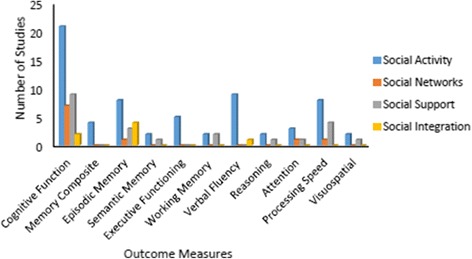
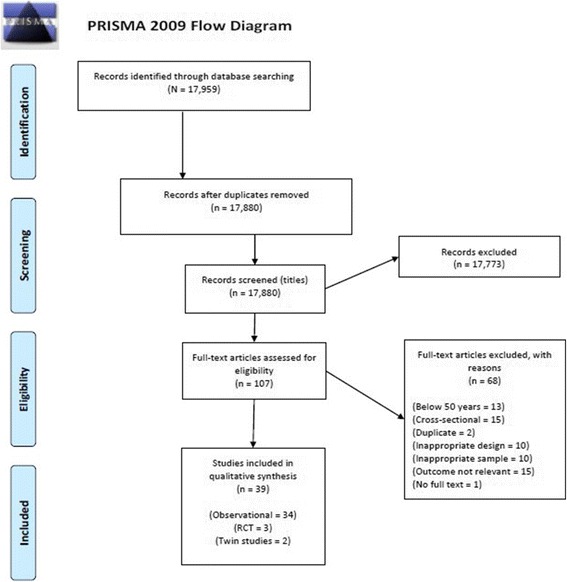
BACKGROUND: Social relationships, which are contingent on access to social networks, promote engagement in social activities and provide access to social support. These social factors have been shown to positively impact health outcomes. In the current systematic review, we offer a comprehensive overview of the impact of social activities, social networks and social support on the cognitive functioning of healthy older adults (50+) and examine the differential effects of aspects of social relationships on various cognitive domains. METHODS: We followed PRISMA (Preferred Reporting Items for Systematic Reviews and Meta-Analysis) guidelines, and collated data from randomised controlled trials (RCTs), genetic and observational studies. Independent variables of interest included subjective measures of social activities, social networks, and social support, and composite measures of social relationships (CMSR). The primary outcome of interest was cognitive function divided into domains of episodic memory, semantic memory, overall memory ability, working memory, verbal fluency, reasoning, attention, processing speed, visuospatial abilities, overall executive functioning and global cognition. RESULTS: Thirty-nine studies were included in the review; three RCTs, 34 observational studies, and two genetic studies. Evidence suggests a relationship between (1) social activity and global cognition and overall executive functioning, working memory, visuospatial abilities and processing speed but not episodic memory, verbal fluency, reasoning or attention; (2) social networks and global cognition but not episodic memory, attention or processing speed; (3) social support and global cognition and episodic memory but not attention or processing speed; and (4) CMSR and episodic memory and verbal fluency but not global cognition. CONCLUSIONS: The results support prior conclusions that there is an association between social relationships and cognitive function but the exact nature of this association remains unclear. Implications of the findings are discussed and suggestions for future research provided. SYSTEMATIC REVIEW REGISTRATION: PROSPERO 2012: CRD42012003248 .
Overview
The claims and statistics of this paper haven’t been checked yet.
Free: it reads the open-access text and checks the first 5 claims that cite a source we can check. Create a free account to check every claim.
Integrity signals
Registry
Cites
Statistics
Figures
Verification
Claims the paper makes
The claims and statistics of this paper haven’t been checked yet.
Free: it reads the open-access text and checks the first 5 claims that cite a source we can check. Create a free account to check every claim.
Claims other papers make about this one
Each is checked against this paper’s own text: does it say what the citing paper says it does?
The cited source doesn’t support the claim as written.
In the citing paper
“Frequent social activity was associated with improved memory, executive function, visuospatial ability, and processing speed, whereas frequent social support was associated only with improved memory.8”
From Associations between social connections and cognition: a global collaborative individual participant data meta-analysis (2022) · cites this paper as [8]
Checked by a reasoning model — may be wrong.
Experimental — accuracy not yet measuredThe source backs part of the claim, not all of it — or backs it for a different population, condition or comparison.
In the citing paper
“Despite clear cultural variation in the meaning and perception of social isolation, findings of protective effect of more social contact are largely consistent in different settings and for either sex across the studies and meta-analyses.”
From Dementia prevention, intervention, and care: 2020 report of the Lancet Commission (2020) · cites this paper as [118]
Experimental — accuracy not yet measuredThe source backs part of the claim, not all of it — or backs it for a different population, condition or comparison.
In the citing paper
“a systematic review of low quality RCTs of 576 adults aged 60 or more years with normal cognition found facilitated meeting and discussion groups were associated with improved global cognition and increased brain volume at follow-up.”
From Dementia prevention, intervention, and care: 2020 report of the Lancet Commission (2020) · cites this paper as [118]
Experimental — accuracy not yet measuredThe source backs part of the claim, not all of it — or backs it for a different population, condition or comparison.
In the citing paper
“Another meta-analysis of 39 studies reported that social activity and social support were associated with decline in global cognition and specific cognitive domains.8”
From Associations between social connections and cognition: a global collaborative individual participant data meta-analysis (2022) · cites this paper as [8]
Experimental — accuracy not yet measuredThe source backs part of the claim, not all of it — or backs it for a different population, condition or comparison.
In the citing paper
“Consequently, measurement of this kind often does not permit testing of alternative hypotheses about social or biological mechanisms.”
From Why the cognitive ‘fountain of youth’ may be upstream: pathways to dementia risk and resilience through social connectedness (2022) · cites this paper as [11]
Experimental — accuracy not yet measured
11 more claims about this paper
Create a free account to see every claim other papers make about this one.
Self-check
Percentages, sums and reported differences re-computed from the paper’s own numbers.
The self-check needs the paper’s full text.
Citations
Cites
Stress, social support, and the buffering hypothesis
Cohen, S., & Wills, T. A. (1985) · Psychological Bulletin · doi:10.1037/0033-2909.98.2.310 · Cited by 18,093 · cited 1×
“Social support in particular may impact cognitive outcomes via its buffering effect on stress [44].”
BackgroundSocial Relationships and Mortality Risk: A Meta-analytic Review
Holt-Lunstad, J., Smith, T. B., & Layton, J. B. (2010) · PLoS Medicine · doi:10.1371/journal.pmed.1000316 · Cited by 7,272 · cited 1×
“One difficulty when trying to determine the effect of social relationships on cognitive function is the use of discrepant and unclear definitions of different social factors [14].”
BackgroundEffects of stress throughout the lifespan on the brain, behaviour and cognition
Lupien, S. J., McEwen, B. S., Gunnar, M. R., & Heim, C. (2009) · Nature Reviews Neuroscience · doi:10.1038/nrn2639 · Cited by 6,256
From social integration to health: durkheim in the new millennium
Berkman, L. F., Glass, T., Brissette, I., & Seeman, T. E. (2000) · Social Science & Medicine · doi:10.1016/s0277-9536(00)00065-4 · Cited by 4,821 · cited 6×
“In an attempt to address the issue of discrepant definitions in the literature, Berkman and colleagues suggested a framework to clarify terms describing social factors and behaviours [15].”
BackgroundInfluentialWhat is cognitive reserve? Theory and research application of the reserve concept
STERN, Y. (2002) · Journal of the International Neuropsychological Society · doi:10.1017/s1355617702813248 · Cited by 3,951 · cited 1×
“Social activities may include a type of cognitive stimulation, thus contributing to cognitive outcomes via the building of cognitive reserve [41]; cognitive reserve optimises cognitive performance through the recruitment of alternate brain networks and cognitive strategies to compensate for cognitive difficulties rela…”
BackgroundSocial and emotional patterns in adulthood: Support for socioemotional selectivity theory
Carstensen, L. L. (1992) · Psychology and Aging · doi:10.1037/0882-7974.7.3.331 · Cited by 2,174
Perceived social isolation and cognition
Cacioppo, J. T., & Hawkley, L. C. (2009) · Trends in Cognitive Sciences · doi:10.1016/j.tics.2009.06.005 · Cited by 2,144 · cited 1×
“In addition, social factors tend to be considered alongside or as part of other lifestyle factors such as leisure or intellectual activity [41]; outcomes such as mortality, physical health, or dementia are included in lieu of cognitive function [10, 18]; only specific aspects of social relationships are considered, su…”
BackgroundAn active and socially integrated lifestyle in late life might protect against dementia
Fratiglioni, L., Paillard-Borg, S., & Winblad, B. (2004) · The Lancet Neurology · doi:10.1016/s1474-4422(04)00767-7 · Cited by 2,135 · cited 1×
“In addition, social factors tend to be considered alongside or as part of other lifestyle factors such as leisure or intellectual activity [41]; outcomes such as mortality, physical health, or dementia are included in lieu of cognitive function [10, 18]; only specific aspects of social relationships are considered, su…”
BackgroundThe handbook of aging and cognition
Craik, F. I. M., & Salthouse, T. A. (1992) · doi:10.4324/9781410601988 · Cited by 2,003
A Meta-Analysis of Interventions to Reduce Loneliness
Masi, C. M., Chen, H.-Y., Hawkley, L. C., & Cacioppo, J. T. (2011) · Personality and Social Psychology Review · doi:10.1177/1088868310377394 · Cited by 1,995
Cited by
Items 501–600 of 1,000
Iron, Zinc and Copper from Cereal Food Sources and Cognitive Performance in Older Adults in China
Wang, Y., Sun, X., Ma, H., Qu, X., & Wang, H. (2021) · Iranian Journal of Public Health · doi:10.18502/ijph.v50i12.7937 · Cited by 5
“ventions to prevent cognitive decline or impairment with aging (5-7).”
BackgroundTaştan, S. B. (2021) · Sosyal Politika Çalışmaları Dergisi · doi:10.21560/spcd.vi.881001 · Cited by 5
Byeon, H. (2021) · World Journal of Psychiatry · doi:10.5498/wjp.v11.i12.1314 · Cited by 5
Kuchta, K., Aritake, K., Urade, Y., Tùng, N. H., Yuan, C., Sasaki, Y., Shimizu, K., & Shoyama, Y. (2022) · Frontiers in Pharmacology · doi:10.3389/fphar.2021.779821 · Cited by 8
Urmanche, A. A., Solomonov, N., Sankin, L. S., Subramanyam, A., Pedreza-Cumba, M., Scaduto, L., Garcia, J., Jockers, K., Wolf, R., & Sirey, J. A. (2022) · American Journal of Geriatric Psychiatry · doi:10.1016/j.jagp.2022.12.191 · Cited by 5
“Previous literature supports these areas as prevalent and linked with long-term negative psychological and medical outcomes.(31-34) We hypothesized that the tool would be integrated”
BackgroundLee, J., & Kim, J. (2023) · Psychiatry Investigation · doi:10.30773/pi.2022.0303 · Cited by 5
Cognitive Effects and Educational Possibilities of Physical Activity in Sustainable Cities
Romance, R., Rodríguez, A. N., Benítez‐Porres, J., Minguet, J. L. C., & Oria, H. M. (2018) · Sustainability · doi:10.3390/su10072420 · Cited by 7
Personal networks and mortality in later life: racial and ethnic differences
Roth, A. R. (2020) · Journal of Public Health · doi:10.1093/pubmed/fdaa135 · Cited by 6
Addington, E. L., Javandel, S., Gruttola, V. D., Paul, R. H., Milanini, B., Ances, B. M., Moskowitz, J. T., & Valcour, V. (2020) · Contemporary Clinical Trials · doi:10.1016/j.cct.2020.106150 · Cited by 7
Effects of support network structure and position on cancer care experience
Fares, J., & Chung, K. S. K. (2021) · Social Network Analysis and Mining · doi:10.1007/s13278-021-00740-4 · Cited by 5
Zhou, R., Chen, J., Zhao, G., Wang, Z., Peng, D., Xia, W., Mao, R., Xu, J., Wang, F., Zhang, C., et al. (2021) · Progress in Neuro-Psychopharmacology and Biological Psychiatry · doi:10.1016/j.pnpbp.2021.110337 · Cited by 7
Wang, S., Yin, H., Liu, Z., Jia, Y., Shang, B., Meng, Q., Yan, M., Wang, L., & Chen, L. (2021) · The Journal of Nervous and Mental Disease · doi:10.1097/nmd.0000000000001361 · Cited by 6
“to be associated with higher cognitive function (Kelly et al., 2017), and physical activity may lead to a larger social network (Vance et al.”
BackgroundDurán, M. V. C., López, S. R., Falero, R. F., & Trabadela-Robles, J. (2022) · Comunicação e Sociedade · doi:10.17231/comsoc.41(2022).3516 · Cited by 13
Li, Y., Yang, Y., Zhao, P., Wang, J., Mi, B., Zhao, Y., Pei, L., Yan, H., & Chen, F. (2023) · Journal of Affective Disorders · doi:10.1016/j.jad.2023.03.039 · Cited by 6
Multi-Dimensional Social Relations and Mental Health among Rural Older Adults
Park, S., Shin, O., Lee, S., & Baek, J. (2020) · Research on Aging · doi:10.1177/0164027520948833 · Cited by 6
Zhang, H., Ni, R., Cao, Y., Chen, Y., Fang, W., Hu, W., & Pan, G. (2023) · Environmental Research · doi:10.1016/j.envres.2023.116048 · Cited by 6
Randolph, J. J., Lacritz, L. H., Colvin, M. K., Espe‐Pfeifer, P., Carter, K. R., Arnett, P. A., Fox‐Fuller, J. T., Aduen, P. A., Cullum, C. M., & Sperling, S. A. (2023) · Archives of Clinical Neuropsychology · doi:10.1093/arclin/acad078 · Cited by 4
“GO” to move toward dementia‐friendly communities: A pilot study
Iizuka, A., Ura, C., Yamashita, M., Ito, K., Yamashiro, M., & Okamura, T. (2024) · Brain and Behavior · doi:10.1002/brb3.3581 · Cited by 4
Geels, P. L., Flynn, K., Fogarty, K. J., & Lyerla, R. (2024) · American Journal of Speech-Language Pathology · doi:10.1044/2024_ajslp-24-00072 · Cited by 4
Bergman, Y. S., Shrira, A., Swisa, O., & Weissberger, G. H. (2024) · Aging & Mental Health · doi:10.1080/13607863.2024.2382798 · Cited by 6
“…experiences based on emotional benefits, and in line with research demonstrating the importance of such experiences for older adults’ cognitive (e.g. Kelly et al., 2017) and emotional (e.g. Chang et al., 2017) well-being, it seems important to enhance our understanding on how both generalized and…”
Chereches, F. S., Ballhausen, N., Olaru, G., Laukka, E. J., & Brehmer, Y. (2024) · The Journals of Gerontology Series B · doi:10.1093/geronb/gbae175 · Cited by 5
“For social interactions specifically, past studies have shown that older adults who engaged in more social interactions showed better cognitive functioning (Kelly et al., 2017) and slower rates of cognitive decline (Zahodne et al., 2019).”
Alaofè, H., Okechukwu, A., Yeo, S. K., McClelland, J. D., Hounkpatin, W. A., & Ehiri, J. E. (2024) · BMJ Open · doi:10.1136/bmjopen-2023-082946 · Cited by 5
Importance of Design in Smart Digitalization: Smart Living Environments for the Aging Korean Elderly
Mihyun, O. (2024) · Buildings · doi:10.3390/buildings14123748 · Cited by 6
Personality and neuropsychiatric symptoms in individuals diagnosed with long COVID
Avinir, A., Kupershmidt, A., Amsterdam, D., Choshen, G., Ablin, J. N., & Elkana, O. (2024) · BMC Infectious Diseases · doi:10.1186/s12879-024-10308-0 · Cited by 4
Kuroda, Y., Fujita, K., Sugimoto, T., Uchida, K., Yokoyama, Y., Shimazu, T., Saito, J., Arai, H., & Sakurai, T. (2025) · Journal of Alzheimer s Disease · doi:10.1177/13872877251315042 · Cited by 5
Koçak, O., Çevık, O., & Şimşek, O. M. (2025) · Psychiatric Quarterly · doi:10.1007/s11126-025-10126-w · Cited by 5
Bi, S., Lam, C. B., & Chung, K. K. H. (2025) · Stress and Health · doi:10.1002/smi.70068 · Cited by 5
Luo, J., & Zhou, C. (2025) · European Journal of Psychotraumatology · doi:10.1080/20008066.2025.2543630 · Cited by 4
“Social support refers to ‘the actual help and support received and perceived by individuals through social contacts and par-ticipation’ (Kelly et al., 2017).”
Role of social capital on edentulism, social participation and cognition
Chan, C. C. K., Li, K. Y., Chen, H., Chen, H., & McGrath, C. P. J. (2025) · Journal of Dentistry · doi:10.1016/j.jdent.2025.106163 · Cited by 5
Distinct social network structures and their cognitive and psychological correlates
Hamilton, L. J., Peng, S., Coleman, M. E., Apostolova, L. G., Krendl, A. C., & Perry, B. L. (2026) · Scientific Reports · doi:10.1038/s41598-026-44571-9 · Cited by 4
The Impact of Lifestyle on Depression and Anxiety in Older Adults
Bertollo, A. G., Puntel, C. F., Albuquerque, M. F. P. A., Narzetti, R. A., & Ignácio, Z. M. (2025) · Neuroscience Research and Clinical Practice · doi:10.64229/nm1tg766 · Cited by 9
“In particular, social activities and support networks have been shown to improve global cognition, executive functioning, and episodic memory, all of which are crucial for mental well-being [86] .”
InfluentialBridging Potential in Friend Networks and Cognitive Function in Older Korean Americans
Jang, Y., Kim, J., Yoon, H., Park, N. S., & Chiriboga, D. A. (2021) · Journal of Aging and Health · doi:10.1177/08982643211041240 · Cited by 6
“Recent studies suggest that older adults’ social position with greater bridging potential promotes cognitive enrichment and delays cognitive deterioration through exposures to diverse social stimuli and the flow of novel information (Ellwardt et al., 2015; Kelly et al., 2017).”
BackgroundResultInfluentialImmobility: Surviving the COVID-19 Outbreak
Liu, Q. (2021) · Springer eBooks · doi:10.1007/978-981-16-4675-1_6 · Cited by 8
La COVID-19 : « une seconde prison »
Aubut, V., Goyette, M., & Plourde, C. (2022) · Criminologie · doi:10.7202/1093865ar · Cited by 4
Meijers, J., Harte, J. M., & Scherder, E. (2023) · Handbook of clinical neurology · doi:10.1016/b978-0-12-821375-9.00012-8 · Cited by 8
Perioperative Evaluation of Brain Health
Romero, C. S., Urman, R. D., & Luedi, M. M. (2023) · Anesthesiology Clinics · doi:10.1016/j.anclin.2023.08.001 · Cited by 4
Blumberg, M. J., Petersson, A. M., Jones, P., Jones, A. A., Panenka, W. J., Leonova, O., Vila‐Rodriguez, F., Lang, D. J., Barr, A. M., MacEwan, G. W., et al. (2024) · The Clinical Neuropsychologist · doi:10.1080/13854046.2024.2325167 · Cited by 4
“Multiple cognitive domains, including verbal working memory, response inhibition, processing speed, verbal long-term memory, and visuo-spatial long-term memory, are implicated in social functioning (Kelly et al., 2017; Penadés et al., 2003; Reeder et al., 2006; Tominaga et al., 2018).”
Bian, S., Tian, X., Meng, F., Xu, C., Zhao, Y., Gao, Q., & Bian, C. (2024) · Frontiers in Psychiatry · doi:10.3389/fpsyt.2024.1355708 · Cited by 6
Cancino, V., Terán-Mendoza, O., & Valdebenito, D. M. (2024) · Anuario de Psicología/The UB Journal of Psychology · doi:10.1344/anpsic2024.54/1.6 · Cited by 5
The Effect of Social Support on Consumers' Variety Seeking
Cai, Y., Xu, L., & Zhang, K. (2024) · International Journal of Consumer Studies · doi:10.1111/ijcs.13080 · Cited by 5
Kosilek, R. P., Wendel, F., Zöllinger, I., Knecht, H. L., Blotenberg, I., Weise, S., Fankhänel, T., Döhring, J., Williamson, M., Luppa, M., et al. (2024) · Social Psychiatry and Psychiatric Epidemiology · doi:10.1007/s00127-024-02757-4 · Cited by 4
Cognitive abilities predict naturalistic speech length in older adults
Neff, P. K. A., Demiray, B., Martin, M., & Röcke, C. (2024) · Scientific Reports · doi:10.1038/s41598-024-82144-w · Cited by 4
Social health and prevention of dementia: Integration of human and mice studies
Vernooij-Dassen, M. J. F. J., van der Velpen, I. F., Lanooij, S. D., van der Zee, E. A., Ikram, M. A., Drinkenburg, W. H. I. M., Costanzo, A., Vernooij, M. W., Eisel, U. L. M., Melis, R. J. F., et al. (2025) · International Psychogeriatrics · doi:10.1016/j.inpsyc.2025.100054 · Cited by 4
Zhu, D., Mahmud, A. A., & Liu, W. (2025) · JMIR Human Factors · doi:10.2196/70177 · Cited by 5
“Despite this, people with MCI often experience reduced social connections and activities, which are fundamental to social participation [9,10].”
Jeong, W., Jeong, W., & Kim, S. J. (2025) · Health Science Reports · doi:10.1002/hsr2.70929 · Cited by 5
Schönfeldová, J., Cohen, C., Otmazgin, O., & Saban, W. (2025) · Scientific Reports · doi:10.1038/s41598-025-12787-w · Cited by 7
Older Men With Living Spouses Versus Men Without Spouses: An Example From the Arab World—Kuwait
Al‐Kandari, Y. Y. (2020) · American Journal of Men s Health · doi:10.1177/1557988320937213 · Cited by 4
“While many studies have confirmed this association (e.g., Kang et al., 2018; Smith et al., 2017; Kelly et al., 2017), other research has identified that social support is vital to mental health but not to other physical health outcomes in older adults (Tajvar et al., 2013; Tengku Mohd et al., 2019).”
ResultArango-Paternina, C. M., Villada, J. F. R., Tibaduiza-Romero, A., & Perdomo, L. R. (2021) · Journal of Aging and Physical Activity · doi:10.1123/japa.2020-0054 · Cited by 5
Burgdorf, J. G., Chase, J. D., Whitehouse, C. R., & Bowles, K. H. (2022) · Journal of Applied Gerontology · doi:10.1177/07334648221104084 · Cited by 5
“Unmet caregiving needs may exacerbate these risks as the sepsis survivor lacks a care partner to help compensate for reduced executive function and memory (particularly necessary for self-management) (Gaugler et al., 2005; Kelly et al., 2017).”
BackgroundMeasuring Social Embeddedness of Older Adults
Mikulionienė, S., Gaižauskaitė, I., & Dirvanskienė, R. (2022) · Filosofija Sociologija · doi:10.6001/fil-soc.v33i2.4719 · Cited by 4
Calvino, M., Cuadrado, I. P. S., Gavilán, J., & Lassaletta, L. (2022) · Frontiers in Psychology · doi:10.3389/fpsyg.2022.837366 · Cited by 4
“Other systematic reviews and meta-analyses have demonstrated how social contact exerts a protective effect against dementia (Kelly et al., 2017; Evans et al., 2019).”
BackgroundLifestyle Factors and Successful Cognitive Aging in Older Adults
O’Connor, M. K., Kraft, M. L., & Randolph, J. J. (2022) · Springer eBooks · doi:10.1007/978-3-031-11389-5_3 · Cited by 5
Sugimoto, H., Sekiguchi, T., & Otake, M. (2022) · Social Neuroscience · doi:10.1080/17470919.2023.2166580 · Cited by 5
“This finding is supported by available evidence on associations between social activity engagement and cognitive function in older adults (for review, see Kelly et al., 2017).”
Guareña, L. A., Kamalyan, L., Watson, C. W., Karcher, K., Umlauf, A., Morgan, E. E., Moore, D. J., Ellis, R. J., Grant, I., Cherner, M., et al. (2023) · Journal of the International Neuropsychological Society · doi:10.1017/s1355617723000188 · Cited by 4
“Relatedly, loneliness and social isolation in adults with and without HIV have been associated with worse neurocognition (Han et al., 2017; Kelly et al., 2017; Wilson et al., 2007).”
BackgroundResultLiougas, M. P., Sommerlad, A., O’Rourke, H. M., McGilton, K. S., & Bethell, J. (2024) · Systematic Reviews · doi:10.1186/s13643-024-02468-6 · Cited by 4
de Almeida, W. L. S., Ottaviani, A. C., dos Santos, B. R., Brígola, A. G., de Brito, T. R. P., & Pavarini, S. C. L. (2018) · Revista Brasileira de Geriatria e Gerontologia · doi:10.1590/1981-22562018021.180107 · Cited by 4
Pan, H. (2019) · Health & Social Care in the Community · doi:10.1111/hsc.12763 · Cited by 5
Li, C., Chen, Y., Liang, J., Matthews, A. K., & Barnes, L. L. (2021) · Journal of Aging and Health · doi:10.1177/08982643211005905 · Cited by 5
“For example, social relationships (e.g., social activities, social networks, and social support) have been found to have influences on cognitive function (Kelly et al., 2017).”
BackgroundAgustang, A. D. M. P. (2021) · Studies on Ethno-Medicine · doi:10.31901/24566772.2021/15.1-2.625 · Cited by 4
Railey, A. F., Muller, C. J., Noonan, C., Schmitter‐Edgecombe, M., Sinclair, K., Kim, C., Look, M. A., & Kaholokula, J. K. (2021) · PharmacoEconomics - Open · doi:10.1007/s41669-021-00291-6 · Cited by 8
Age- and Individual Specificity of Training Visual Short-term Spatial Memory
Разумникова, О. М. (2022) · Experimental Psychology (Russia) · doi:10.17759/exppsy.2022150101 · Cited by 6
INDICADORES DE DEPRESIÓN Y FACTORES DE APOYO SOCIAL PERCIBIDO EN UNIVERSITARIOS
Muñoz-Alonzo, H. M., Archila-Bonilla, D. G., María, K. M.-S., & González-Aguilar, D. W. (2023) · PSICOLOGÍA UNEMI · doi:10.29076/issn.2602-8379vol7iss12.2023pp100-109p · Cited by 8
“La red de apoyo, por otro lado, está relacionada al apoyo social que se define como el conjunto de recursos psicológicos y sociales que el individuo ha obtenido a lo largo de su desarrollo, por medio de los lazos interpersonales que posee y establece con el tiempo (Kelly et al., 2017; Xu, 2019).”
BackgroundAmmar, A., Boujelbane, M. A., Simak, M., Fraile-Fuente, I., Trabelsi, K., Bouaziz, B., Rizzi, N., & Schöllhorn, W. I. (2023) · Frontiers in Human Neuroscience · doi:10.3389/fnhum.2023.1282728 · Cited by 4
I Am in Love with the Shape of You: The Effect of Mass Customization on the Human-Robot Relationship
Liberman-Pincu, E., Bulgaro, A., & Oron-Gilad, T. (2023) · Communications in computer and information science · doi:10.1007/978-3-031-49368-3_1 · Cited by 6
Goodman‐Casanova, J. M., Dura-Perez, E., Guerrero-Pertiñez, G., Barnestein‐Fonseca, P., Parra, J. G., Vega-Núñez, A., Moreno, E. V., Vargas, A. I. C., & Mayoral, F. (2021) · JMIR Research Protocols · doi:10.2196/26431 · Cited by 4
“Numerous observational studies have reported associations between social isolation and an increased risk of dementia and cognitive decline in older adults [6-8].”
BackgroundJung, D., Choi, J. H., & Emerson, K. G. (2024) · The Journal of Rural Health · doi:10.1111/jrh.12872 · Cited by 3
Life-Space Activities and Incident Dementia Among Older Adults: Insights From a Cohort Study
Doi, T., Makino, K., Tomida, K., Tsutsumimoto, K., Sakimoto, F., Matsuda, S., & Shimada, H. (2024) · Journal of the American Medical Directors Association · doi:10.1016/j.jamda.2024.105416 · Cited by 3
Bartlett, L., Fair, H. L., Bindoff, A. D., Kitsos, A., Hamrah, M. S., Roccati, E., & Vickers, J. C. (2025) · Journal of Public Health · doi:10.1007/s10389-025-02412-5 · Cited by 6
“There is also meta-analytic evidence that the size and supportiveness of social networks is associated with cognitive decline (Kelly et al. 2017; Kuiper et al. 2016) and that social isolation significantly enhances the risk of developing dementia (Fratiglioni et al. 2000; Kuiper et al. 2015).”
Treatment Burden and Uncertainty in the Context of Advanced Multimorbidity: A Focussed Ethnography
McParland, C., Johnston, B. M., & Cooper, M. (2025) · Qualitative Health Research · doi:10.1177/10497323251320836 · Cited by 4
“Strong social support and social activity help protect cognitive function (Kelly et al., 2017), which is particularly important given the need to both educate people about the ways of accessing healthcare effectively while also seeking to control the cognitive burden placed on them by healthcare…”
Social functioning in individuals with Alzheimer's disease and the situation of caregivers
Kraake, S., Luppa, M., Saur, D., Dietzel, J., Bach, J., Riedel-Heller, S. G., & Stein, J. (2025) · Journal of Alzheimer s Disease · doi:10.1177/13872877251326029 · Cited by 4
Bruinsma, J., Roodbeen, R. T. J., Menting, G. G. A., Deckers, K., Hendriks, S., & Crutzen, R. (2025) · Aging & Mental Health · doi:10.1080/13607863.2025.2515519 · Cited by 5
“It also appears important to differentiate between activities based on the proximity to others (Levasseur et al., 2010), to capture both small, sporadic interactions with distant others (Moreton et al., 2023) and deep, emotional connections with close relatives and friends (Kelly et al., 2017).”
Myers, J. A. C., Stafford, T., Koychev, I. G., Perneczky, R., Bandmann, O., & Vaci, N. (2025) · Alzheimer s & Dementia Diagnosis Assessment & Disease Monitoring · doi:10.1002/dad2.70149 · Cited by 6
Chen, I., & Phanumartwiwath, A. (2025) · Journal of Gerontological Social Work · doi:10.1080/01634372.2025.2545475 · Cited by 3
“The weaker influence of political and occupational activities aligns with findings that less socially integrative activities provide limited cognitive benefits (Kelly et al., 2017).”
Ma, C., & Wu, C. (2025) · Archives of Gerontology and Geriatrics · doi:10.1016/j.archger.2025.106000 · Cited by 3
Social Frailty and Social Isolation in Chinese Community-Dwelling Older Adults: A Network Analysis
He, H., Duan, D., Yan, L.-J., & Lın, L. (2025) · Nursing Reports · doi:10.3390/nursrep15090315 · Cited by 3
“…high correlation suggested that individuals who feel a sense of belonging are more likely to have close personal relationships, which aligns with a previous study where strong social ties were shown to significantly decrease loneliness and improve overall health outcomes among older adults [51].”
Perceived stress and cognitive decline: the moderating role of emotion regulation
Jurgens, S. M., Howard, E., Einstein, D., Prieto, S., & Hayes, J. P. (2025) · Innovation in Aging · doi:10.1093/geroni/igaf099 · Cited by 7
“Of note, both cross-sectional and longitudinal studies have demonstrated the benefits of social well-being on a broad range of cognitive domains, including episodic memory (Kelly et al., 2017).”
Chen, A., & Ang, S. (2025) · Social Science & Medicine · doi:10.1016/j.socscimed.2025.118831 · Cited by 3
Cognitive Functioning in Rural Older Adults: The Mediating Role of Perceived Social Support
Krnjajić, M., Mudri, Ž., Barišić, M., Barać, I., Vujanić, J., Čebohin, M., Lovrić, R., Poljak, K., & Farčić, N. (2026) · Healthcare · doi:10.3390/healthcare14020152 · Cited by 3
“Given the inconsistent conclusions regarding the specific nature of the association between social support and cognitive functioning among older adults [72], alternative plausible causal directions should be acknowledged.”
Cui, Y., Yuan, T., Zheng, C., Liu, K., Zhang, C., Zhang, L., Su, Y., Ding, F., Pan, L., & Mei, S. (2026) · Journal of Affective Disorders · doi:10.1016/j.jad.2025.121070 · Cited by 3
Wang, X., Si, H., Li, Y., Yu, J., Zhou, W., Chen, H., & Wang, C. (2026) · Maturitas · doi:10.1016/j.maturitas.2026.108852 · Cited by 3
Barbosa, I., & de Oliveira, E. R. (2026) · Education and Information Technologies · doi:10.1007/s10639-026-13980-8 · Cited by 3
“…adults has documented growing adoption rates and identified common benefits and barriers related to maintaining relation - ships, accessing information, and coping with health and mobility constraints (Bar - nard et al., 2013; Kelly et al., 2017; Lee & Coughlin, 2015; Ramírez-Correa et al., 2023).”
Parra-Rizo, M. A., Cigarroa, I., Parra-Ortiz, M. C., González-Moreno, J., & Fajardo-Ramos, E. (2026) · Journal of Population Ageing · doi:10.1007/s12062-026-09554-8 · Cited by 5
Sugisawa, H., Harada, K., Sugihara, Y., Yanagisawa, S., & Shinmei, M. (2022) · Journal of Multidisciplinary Healthcare · doi:10.2147/jmdh.s356760 · Cited by 5
Rajna, K. M., Samuel, S. E., Haripriya, S., & Muraleedharan, K. (2021) · Indian Journal of Physiotherapy and Occupational Therapy - An International Journal · doi:10.37506/ijpot.v16i1.17784 · Cited by 3
“James also concluded that socially active older adults tend to be more physically active with better physical functioning characteristics [41].”
BackgroundHome-Dwelling Older Adults’ Day-to-Day Community Interactions: A Qualitative Study
Perruchoud, É., von Gunten, A., Ferreira, T., Queirós, A. M., & Verloo, H. (2022) · Geriatrics · doi:10.3390/geriatrics7040082 · Cited by 3
Liu, X., Wang, S., Liu, S., Yao, N. A., Wang, Q., & Sun, X. (2022) · International Journal of Environmental Research and Public Health · doi:10.3390/ijerph192316123 · Cited by 3
Office Environment and Work Experience as Predictors of Professional Burnout among IT Specialists
Reznichenko, S. I., & Podtiagina, P. O. (2024) · Experimental Psychology (Russia) · doi:10.17759/exppsy.2024170112 · Cited by 3
Influence of social activities on delayed memory in older adults: A cross-cultural study
Yuchi, L., Javed, A., & Shirahada, K. (2024) · Archives of Gerontology and Geriatrics · doi:10.1016/j.archger.2024.105664 · Cited by 3
Altona, J., Wiegelmann, H., Lenart‐Bugla, M., Vernooij-Dassen, M. J. F. J., Verspoor, E., Seifert, I., Misonow, J., Szcześniak, D. M., Rymaszewska, J., Chattat, R., et al. (2024) · Frontiers in Psychiatry · doi:10.3389/fpsyt.2024.1387192 · Cited by 5
Wan, R., Tu, J., Gao, J., Cao, L., Zhang, L., Huang, J., & Liu, Z. (2024) · Journal of Alzheimer s Disease · doi:10.1177/13872877241299452 · Cited by 3
“13 These fi ndings suggested that the impact of social networks on cognitive function may be direct.”
Hu, Y., Sun, X.-L., Guo, C., Wu, R., Dou, J., Song, S., Guo, F., & Wei, J. J. (2024) · Frontiers in Aging Neuroscience · doi:10.3389/fnagi.2024.1465310 · Cited by 3
Dhauria, M., Pyne, T., Nandagopal, K., Chakraborty, I., Ganguly, K., Sengupta, D., Mondal, S., Sengupta, M., & Das, M. (2025) · The Nucleus · doi:10.1007/s13237-025-00530-9 · Cited by 3
Ham, L., Kohli, M., Tang, B., Grant, I., & Moore, D. J. (2025) · AIDS and Behavior · doi:10.1007/s10461-025-04636-8 · Cited by 3
Luo, C., Zhang, Y., Zhang, J., Hui, L., Qi, R., Han, Y., Sun, X. Y., Li, Y., Wei, Y., Zhang, Y., et al. (2025) · Sensors · doi:10.3390/s25072153 · Cited by 3
“Secondly, social interaction can stimulate the brain and help maintain a person’s cognitive function [89].”
Disseminating Sustainable End-of-life Product Disposal Information Through Social Media Nudging
Mukucha, P., Katsande, T., Dube, T., Jaravaza, D. C., & Chisango, S. (2025) · Palgrave studies of marketing in emerging economies · doi:10.1007/978-3-031-81627-7_12 · Cited by 3
Disentangling the effects of sex and gender on APOE ɛ4–related neurocognitive impairment
Dessy, T., Barhdadi, A., Cyr, M., Sandoval, J., Bherer, L., Rouleau, J., Provost, S., Perreault, L. L., Sylvestre, M., Taliun, S. A. G., et al. (2025) · Alzheimer s & Dementia Diagnosis Assessment & Disease Monitoring · doi:10.1002/dad2.70111 · Cited by 10
“29 While the FS does not directly measure these factors, it may indirectly reflect broader femininity-related attributes that contribute to NCI risk.”
Costello, N., Knight, S. P., Symonds, J. E., & Santos, F. H. (2025) · Aging & Mental Health · doi:10.1080/13607863.2025.2515183 · Cited by 4
“The connection between various life experiences (e.g. education, work, and social or leisure activities) and cognitive reserve has received increasing attention, with several reviews providing empirical support (Anthony & Lin, 2018; Kelly et al., 2014, 2017).”
Uno, A., Browne, R., Shinada, T., Takahashi, M., Soga, K., Du, Y., Abiko, F., & Taki, Y. (2025) · Frontiers in Aging · doi:10.3389/fragi.2025.1635789 · Cited by 3
Older Adults’ Emotion Recognition Ability Is Unaffected by Stereotype Threat
Atkinson, L., Murray, J. E., & Halberstadt, J. B. (2021) · Frontiers in Psychology · doi:10.3389/fpsyg.2020.605724 · Cited by 5
“Metaanalyses have consistently found that people hold more negative attitudes toward older people than younger people (Kite and Johnson, 1988; Kite et al., 2005; North and Fiske, 2012).”
BackgroundWhite, M. R., Huang, X., Langenheim, N., Yang, T., Schofield, R., Young, M., Livesley, S. J., Seneviratne, S., & Stevenson, M. (2022) · ISPRS annals of the photogrammetry, remote sensing and spatial information sciences · doi:10.5194/isprs-annals-x-4-w3-2022-269-2022 · Cited by 3
“Social factors refer to connections with social activities, which include: club membership, frequency of participation in physical activity with groups of significant others, and frequency of a significant others doing physical activity with respondent (Kelly et al., 2017).”
Background
Metadata
- Authors
- Kelly, M. E., Duff, H., Kelly, S., McHugh Power, J. E., Brennan, S., Lawlor, B. A., & Loughrey, D. G.
- Affiliations
- National College of Ireland (IE)
- Trinity College Dublin (IE)
- Corresponding author
- Kelly, Michelle E.
- Venue
- Systematic Reviews
- Published
- 2017-12
- Volume
- 6
- Issue
- 1
- Pages
- 259-259
- ISSN
- 2046-4053 (ISSN-L)
- PMC
- PMC5735742
- OpenAlex
- W2777525821
- Cited by
- 1,027
- References
- 103
- Citations by year
- 2026: 128 · 2025: 172 · 2024: 195 · 2023: 135 · 2022: 144 · 2021: 140 · 2020: 71 · 2019: 28 · 2018: 13
- FWCI
- 4.65
- Type
- journal article
- Language
- en
- Open access
- gold
- doi.org
- Licence
- cc-by
- Locations
- Systematic Reviews (publishedVersion, cc-by)
- Europe PMC (PubMed Central) (publishedVersion, cc-by)
- PubMed Central (publishedVersion, cc-by)
- PubMed (publishedVersion)
- DOAJ (DOAJ: Directory of Open Access Journals) (submittedVersion, cc-by-sa)
- Topics
- Health Sciences › Medicine › Psychiatry and Mental health › Dementia and Cognitive Impairment Research
- Social Sciences › Psychology › Developmental and Educational Psychology › Aging and Gerontology Research
- Health Sciences › Medicine › Public Health, Environmental and Occupational Health › Aging, Health, and Disability
- Keywords
- social activity, social networks, social support, interpersonal relationships, cognitive function, older adults, episodic memory, executive function, working memory, processing speed, visuospatial ability, verbal fluency, global cognition
- MeSH terms
- Cognition, Humans, Interpersonal Relations, Memory, Social Support, Executive Function, Social Participation
About these checks
Registry, retraction, Cites and statistics results are computed, not judged, with one exception: a printed reference that no index lists is read once by a model before it counts as a citation error. Claims are extracted by a model and kept only when their quote appears verbatim in the text; each cited source is then checked, with a model’s help, for whether it says what the claim relies on. Those verdicts can be wrong — read the claim’s quote and the cited source before relying on one.
Statistics and arithmetic are recomputed, not judged.
Confidence bands are shown only for fields calibrated on our annotated test set. None is calibrated yet, so no band is shown.
What counts as a claim ›How we measure confidence ›How we check this ›
Are you an author, or do you see a problem with this page? Request a review
Data sources
Bibliographic data: Semantic Scholar, OpenAlex, Crossref.
Contains information from the Semantic Scholar Academic Graph Datasets, made available under the ODC Attribution License (ODC-BY 1.0).
Semantic Scholar’s data is described in: Kinney, R., et al. (2023). The Semantic Scholar Open Data Platform. arXiv:2301.10140.
