

The impact of social activities, social networks, social support and social relationships on the cognitive functioning of healthy older adults: a systematic review
Open accessThe DOI matches its Crossref record; 102 of the 103 references it cites were found in a registry or an index.
Abstract
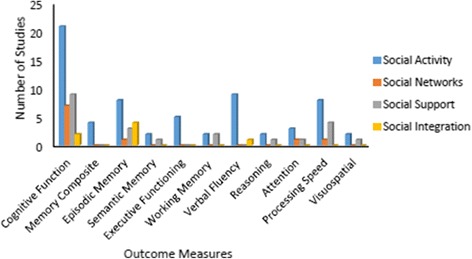
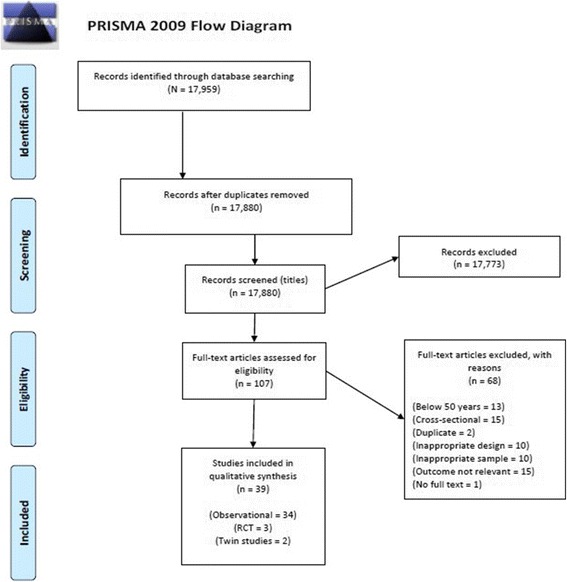
BACKGROUND: Social relationships, which are contingent on access to social networks, promote engagement in social activities and provide access to social support. These social factors have been shown to positively impact health outcomes. In the current systematic review, we offer a comprehensive overview of the impact of social activities, social networks and social support on the cognitive functioning of healthy older adults (50+) and examine the differential effects of aspects of social relationships on various cognitive domains. METHODS: We followed PRISMA (Preferred Reporting Items for Systematic Reviews and Meta-Analysis) guidelines, and collated data from randomised controlled trials (RCTs), genetic and observational studies. Independent variables of interest included subjective measures of social activities, social networks, and social support, and composite measures of social relationships (CMSR). The primary outcome of interest was cognitive function divided into domains of episodic memory, semantic memory, overall memory ability, working memory, verbal fluency, reasoning, attention, processing speed, visuospatial abilities, overall executive functioning and global cognition. RESULTS: Thirty-nine studies were included in the review; three RCTs, 34 observational studies, and two genetic studies. Evidence suggests a relationship between (1) social activity and global cognition and overall executive functioning, working memory, visuospatial abilities and processing speed but not episodic memory, verbal fluency, reasoning or attention; (2) social networks and global cognition but not episodic memory, attention or processing speed; (3) social support and global cognition and episodic memory but not attention or processing speed; and (4) CMSR and episodic memory and verbal fluency but not global cognition. CONCLUSIONS: The results support prior conclusions that there is an association between social relationships and cognitive function but the exact nature of this association remains unclear. Implications of the findings are discussed and suggestions for future research provided. SYSTEMATIC REVIEW REGISTRATION: PROSPERO 2012: CRD42012003248 .
Overview
The claims and statistics of this paper haven’t been checked yet.
Free: it reads the open-access text and checks the first 5 claims that cite a source we can check. Create a free account to check every claim.
Integrity signals
Registry
Cites
Statistics
Figures
Verification
Claims the paper makes
The claims and statistics of this paper haven’t been checked yet.
Free: it reads the open-access text and checks the first 5 claims that cite a source we can check. Create a free account to check every claim.
Claims other papers make about this one
Each is checked against this paper’s own text: does it say what the citing paper says it does?
The cited source doesn’t support the claim as written.
In the citing paper
“Frequent social activity was associated with improved memory, executive function, visuospatial ability, and processing speed, whereas frequent social support was associated only with improved memory.8”
From Associations between social connections and cognition: a global collaborative individual participant data meta-analysis (2022) · cites this paper as [8]
Checked by a reasoning model — may be wrong.
Experimental — accuracy not yet measuredThe source backs part of the claim, not all of it — or backs it for a different population, condition or comparison.
In the citing paper
“Despite clear cultural variation in the meaning and perception of social isolation, findings of protective effect of more social contact are largely consistent in different settings and for either sex across the studies and meta-analyses.”
From Dementia prevention, intervention, and care: 2020 report of the Lancet Commission (2020) · cites this paper as [118]
Experimental — accuracy not yet measuredThe source backs part of the claim, not all of it — or backs it for a different population, condition or comparison.
In the citing paper
“a systematic review of low quality RCTs of 576 adults aged 60 or more years with normal cognition found facilitated meeting and discussion groups were associated with improved global cognition and increased brain volume at follow-up.”
From Dementia prevention, intervention, and care: 2020 report of the Lancet Commission (2020) · cites this paper as [118]
Experimental — accuracy not yet measuredThe source backs part of the claim, not all of it — or backs it for a different population, condition or comparison.
In the citing paper
“Another meta-analysis of 39 studies reported that social activity and social support were associated with decline in global cognition and specific cognitive domains.8”
From Associations between social connections and cognition: a global collaborative individual participant data meta-analysis (2022) · cites this paper as [8]
Experimental — accuracy not yet measuredThe source backs part of the claim, not all of it — or backs it for a different population, condition or comparison.
In the citing paper
“Consequently, measurement of this kind often does not permit testing of alternative hypotheses about social or biological mechanisms.”
From Why the cognitive ‘fountain of youth’ may be upstream: pathways to dementia risk and resilience through social connectedness (2022) · cites this paper as [11]
Experimental — accuracy not yet measured
11 more claims about this paper
Create a free account to see every claim other papers make about this one.
Self-check
Percentages, sums and reported differences re-computed from the paper’s own numbers.
The self-check needs the paper’s full text.
Citations
Cites
Stress, social support, and the buffering hypothesis
Cohen, S., & Wills, T. A. (1985) · Psychological Bulletin · doi:10.1037/0033-2909.98.2.310 · Cited by 18,093 · cited 1×
“Social support in particular may impact cognitive outcomes via its buffering effect on stress [44].”
BackgroundSocial Relationships and Mortality Risk: A Meta-analytic Review
Holt-Lunstad, J., Smith, T. B., & Layton, J. B. (2010) · PLoS Medicine · doi:10.1371/journal.pmed.1000316 · Cited by 7,272 · cited 1×
“One difficulty when trying to determine the effect of social relationships on cognitive function is the use of discrepant and unclear definitions of different social factors [14].”
BackgroundEffects of stress throughout the lifespan on the brain, behaviour and cognition
Lupien, S. J., McEwen, B. S., Gunnar, M. R., & Heim, C. (2009) · Nature Reviews Neuroscience · doi:10.1038/nrn2639 · Cited by 6,256
From social integration to health: durkheim in the new millennium
Berkman, L. F., Glass, T., Brissette, I., & Seeman, T. E. (2000) · Social Science & Medicine · doi:10.1016/s0277-9536(00)00065-4 · Cited by 4,821 · cited 6×
“In an attempt to address the issue of discrepant definitions in the literature, Berkman and colleagues suggested a framework to clarify terms describing social factors and behaviours [15].”
BackgroundInfluentialWhat is cognitive reserve? Theory and research application of the reserve concept
STERN, Y. (2002) · Journal of the International Neuropsychological Society · doi:10.1017/s1355617702813248 · Cited by 3,951 · cited 1×
“Social activities may include a type of cognitive stimulation, thus contributing to cognitive outcomes via the building of cognitive reserve [41]; cognitive reserve optimises cognitive performance through the recruitment of alternate brain networks and cognitive strategies to compensate for cognitive difficulties rela…”
BackgroundSocial and emotional patterns in adulthood: Support for socioemotional selectivity theory
Carstensen, L. L. (1992) · Psychology and Aging · doi:10.1037/0882-7974.7.3.331 · Cited by 2,174
Perceived social isolation and cognition
Cacioppo, J. T., & Hawkley, L. C. (2009) · Trends in Cognitive Sciences · doi:10.1016/j.tics.2009.06.005 · Cited by 2,144 · cited 1×
“In addition, social factors tend to be considered alongside or as part of other lifestyle factors such as leisure or intellectual activity [41]; outcomes such as mortality, physical health, or dementia are included in lieu of cognitive function [10, 18]; only specific aspects of social relationships are considered, su…”
BackgroundAn active and socially integrated lifestyle in late life might protect against dementia
Fratiglioni, L., Paillard-Borg, S., & Winblad, B. (2004) · The Lancet Neurology · doi:10.1016/s1474-4422(04)00767-7 · Cited by 2,135 · cited 1×
“In addition, social factors tend to be considered alongside or as part of other lifestyle factors such as leisure or intellectual activity [41]; outcomes such as mortality, physical health, or dementia are included in lieu of cognitive function [10, 18]; only specific aspects of social relationships are considered, su…”
BackgroundThe handbook of aging and cognition
Craik, F. I. M., & Salthouse, T. A. (1992) · doi:10.4324/9781410601988 · Cited by 2,003
A Meta-Analysis of Interventions to Reduce Loneliness
Masi, C. M., Chen, H.-Y., Hawkley, L. C., & Cacioppo, J. T. (2011) · Personality and Social Psychology Review · doi:10.1177/1088868310377394 · Cited by 1,995
Cited by
Items 701–800 of 1,000
Successful aging among older adults with and without disability
Khamzina, M., Mejía, S. T., & Rogers, W. A. (2025) · Experimental Gerontology · doi:10.1016/j.exger.2025.112964 · Cited by 1
Social Engagement and Cognitive Function Among Older Mexican Heritage Latinos
Talavera-Garza, L., Hirai, M., & Hovey, J. D. (2025) · Clinical Gerontologist · doi:10.1080/07317115.2025.2596782 · Cited by 2
“…cognitive function among older adults reveals that the presence of social relationships is linked to better cognitive health, while a lack of social relationships is associated with an increased risk of poor cognitive functioning (Barnes et al., 2004; Kelly et al., 2017; Sharifian et al., 2019).”
InfluentialPaiva-Zuazánabar, D., Galvañ, M. A. D. M., Antúnez, J. V. V., Martínez, C. S., & Bravo-Wollhk, H. (2025) · European Public & Social Innovation Review · doi:10.31637/epsir-2026-2659 · Cited by 1
Cognitive Status Classification Among Older Adults: A Study from SHARE-HCAP
Sanz, A., Galiana, L., & Fernández, I. (2025) · Journal of Clinical Medicine · doi:10.3390/jcm14248625 · Cited by 2
“In some other studies, social activity did show an impact on overall global cognition, but not in specific cognitive domains [49].”
Huber, M., Illg, A., Reuter, L., & Weitgasser, L. (2026) · Frontiers in Aging Neuroscience · doi:10.3389/fnagi.2025.1701934 · Cited by 1
Huang, J., Liu, J., Shi, Z., Luo, W., & Liu, X. (2026) · Current Psychology · doi:10.1007/s12144-025-08589-y · Cited by 1
“Social networks provide practical solutions to challenges (Kelly et al., 2017 ), and they enhance the sense of support by increasing opportunities for social par - ticipation and emotional support (Rodgers et al., 2019).”
Charif, M. H. E., Melhem, J. M., Asmar, K. E., Elbejjani, M., Gross, A. L., & Chaaya, M. (2026) · Social Sciences & Humanities Open · doi:10.1016/j.ssaho.2026.102485 · Cited by 1
Kim, B., Hyun, J., Kang, H., Choi, S., Lee, J., & Choi, J. (2026) · Journal of Affective Disorders · doi:10.1016/j.jad.2026.121342 · Cited by 1
Growney, C. M., Carstensen, L. L., & English, T. (2026) · The Gerontologist · doi:10.1093/geront/gnag023 · Cited by 1
Loneliness, social inactivity and social isolation of older adults in assisted living facilities
Rautiainen, L. J., Jansson, A. H., Aalto, U. L., Kautiainen, H., Laakkonen, M., Roitto, H., Strandberg, T. E., Carbó, A., Coll‐Planas, L., Litt, J., et al. (2026) · Experimental Gerontology · doi:10.1016/j.exger.2026.113119 · Cited by 1
Gadahad, P. R., Joshi, A. N., & Dumre, R. P. (2026) · CHI Conference on Human Factors in Computing Systems · doi:10.1145/3772318.3791564 · Cited by 1
“Regular contact and support from others positively impact cognitive functioning [31] and overall physical and mental health [16].”
Xiao, P., Wang, X., Xu, D., & Gao, Y. (2026) · Frontiers in Public Health · doi:10.3389/fpubh.2026.1732990 · Cited by 2
Xue, W.-L., Hass, Z., Richards, E. A., Abrahamson, K. A., & Liu, P. J. (2026) · Journal of Elder Abuse & Neglect · doi:10.1080/08946566.2026.2663785 · Cited by 1
“Social engagement reflects the behavioral and participatory aspects of social life, including activities such as volunteering, visiting friends, or attending religious services that indicate connectedness to community networks (Kelly et al., 2017; Yang, Kotwal, et al., 2021).”
Dai, M., Xu, S., Ling, J., Xiao, L., Xu, J., Zhang, R., Wang, H., & Su, T. (2026) · Frontiers in Public Health · doi:10.3389/fpubh.2026.1801742 · Cited by 1
“Good social relationships can provide individuals with emotional, informational, and instrumental support, and these objectively existing relationships form the basis for an individual’s perception of support (16, 57).”
Yiannis, T., Macpherson, H., Scott, D. S., Callisaya, M. L., Gourlay, C., Maddison, R., Gvozdenko, E., & Jansons, P. (2026) · Health Expectations · doi:10.1111/hex.70783 · Cited by 1
Akaida, S., Makizako, H., Tateishi, M., Shiratsuchi, D., Taniguchi, Y., Kiuchi, Y., Kiyama, R., Takenaka, T., Kubozono, T., & Ohishi, M. (2024) · Journal of Applied Gerontology · doi:10.1177/07334648241277043 · Cited by 2
“Social support may bene fi t older adults ’ cognitive function and physical activity (Kelly et al., 2017; Lindsay Smith et al., 2017).”
Ma, C., Gong, B., & Wu, C. (2024) · Aging Neuropsychology and Cognition · doi:10.1080/13825585.2024.2405509 · Cited by 1
“Higher levels of social support are generally associated with better cognitive function and less cognitive decline in healthy older adults (Kelly et al., 2017).”
Occupational Participation Among Older Adults During the COVID-19 Pandemic
Oostlander, S. A., Joanisse, C., Mulvey, M. S., Fraser, S., Lagacé, M., Bélanger-Hardy, L., Garcia, L. V., Robitaille, A., Gillis, M., Courtemanche, J., et al. (2024) · Canadian Journal of Occupational Therapy · doi:10.1177/00084174241287297 · Cited by 1
“For older adults, social connectivity fostered through engagement in activities has been linked to maintaining cognitive function, supporting emotional well-being, and overall quality of life (Kelly et al., 2017; UN, 2020).”
Social factors associated with everyday functioning in older Black adults
Davis, K., & Calamia, M. R. (2025) · Journal of the International Neuropsychological Society · doi:10.1017/s1355617725000037 · Cited by 1
“…and increased social activity were associated with better global cognitive scores while late life social activity alone was found to inconsistently impact various other domains (e.g., visuospatial abilities, working memory, memory, processing speed, and executive functioning) (Kelly et al., 2017).”
Kim, J., Shin, J.-K., & Kim, A. (2025) · Asia Pacific Journal of Marketing and Logistics · doi:10.1108/apjml-09-2024-1219 · Cited by 1
Comorbidity of Depression and Dementia: Epidemiological, Biological, and Therapeutic Aspects
Петрова, Н. Н. (2025) · Neuroscience and Behavioral Physiology · doi:10.1007/s11055-025-01822-y · Cited by 2
“A UK study involving over 10,000 people reported that depression increased the risk of dementia when it became manifest in old age, but not in younger people [26].”
Newsom, J. T., Saucedo, J., Kroeck, M. R., O’Neill, A. S., Allore, H. G., Nagel, C., Botoseneanu, A., Trubits, E. F., Dorr, D. A., & Quiñones, A. R. (2025) · Journal of Aging and Health · doi:10.1177/08982643251351090 · Cited by 2
“…have been shown to improve health behaviors and self-care practices (Pamungkas et al., 2017), improve quality of healthcare and reduce hospital readmission (Park et al., 2018), and to slow cognitive decline (Kelly et al., 2017), all of which can potentially slow multimorbidity accumulation.”
Older adults’ perceptions about methodologies used to learn English as a foreign language
Zenteno, C. C., Abarza, M. C., & Herrera, I. R. (2025) · Cuadernos de Investigación Educativa · doi:10.18861/cied.2025.16.2.4022 · Cited by 2
“Kelly et al. (2017) indicate that individuals need frequent contact and support from others, and this affects positively their cognitive functioning.”
Emeklilikte Yaşam Kalitesi: Sağlık, Sosyal ve Ekonomik Boyutlar
Epik, M. T. (2025) · Yaşlı sorunları araştırma dergisi · doi:10.46414/yasad.1651837 · Cited by 1
Dankert, A. M., Hernandez, A. R., Wise, T. B., Dayaw, K. I. T., Dayaw, J. N. T., Layden, R. M., Lubke, K. N., Burke, S. N., & Templer, V. L. (2025) · Aging · doi:10.18632/aging.206310 · Cited by 1
The Role of Technology Use and Employment Status in Shaping Social Engagement Among Older Americans
Lee, J. S., O’Shields, J., & Dunnigan, A. (2025) · Journal of Applied Gerontology · doi:10.1177/07334648251369265 · Cited by 1
“Older adults experience a reduction in network size due to retirement (Kauppi et al., 2021), which decreases social engagement (Kelly et al., 2017).”
Huang, P., Hu, H., Wang, J., Xu, J., Li, Y., Huang, Y., He, X., & Hu, W. (2025) · Supportive Care in Cancer · doi:10.1007/s00520-025-09903-x · Cited by 2
He, S., & Lai, S. L. (2025) · Journal of Applied Gerontology · doi:10.1177/07334648251380420 · Cited by 1
“Diverse SP enhances social interaction, broadens social networks, and provides greater social support, all of which help alleviate depressive symptoms through increased connectedness (Du et al., 2022; Kelly et al., 2017; Santini et al., 2020).”
Xu, J., Li, H., Cruz, G. T., Saito, Y., & Wu, C. (2025) · Global Health Research and Policy · doi:10.1186/s41256-025-00453-7 · Cited by 1
Biological Mechanisms Linking Social Adversity and Cognition
Liang, A., Watt, E., & Gomaa, N. A. (2025) · Public health reviews · doi:10.3389/phrs.2025.1608740 · Cited by 1
“For an example, studies have consistently shown that social engagement is protective against cognitive decline, with older adults who maintain active social lives exhibiting better cognitive performance and a reduced risk of dementia [1, 3].”
Bayram, S., Çolakça, E., Derin, İ. E., Tavşan, D., Demirci, G., Yıldız, S., Şen, N., Yağmur, Z., Geçal, G., & Ceylan, G. (2025) · Sosyal sağlık dergisi. · doi:10.69514/sosyalsaglik.1603082 · Cited by 1
Mair, C. A., & Ornstein, K. A. (2025) · Social Science & Medicine · doi:10.1016/j.socscimed.2025.118861 · Cited by 4
Social participation and cognitive health in older adults: A scoping review
Sandoval-Obando, E., Barros-Osorio, C., Fuentes-Vilugrón, G., Castellanos-Alvarenga, L. M., Videla, R., Salazar-Muñoz, M., & Sepúlveda‐Loyola, W. (2025) · Nutrición clínica y dietética hospitalaria/Nutrición clínica, dietética hospitalaria · doi:10.12873/454sepulveda · Cited by 1
Zhang, H., & Zhu, S. (2026) · Frontiers in Public Health · doi:10.3389/fpubh.2025.1718222 · Cited by 1
Music and dementia care: Future directions for research and innovation
Clements-Cortés, A., Bryan, A. D., Faber, S. E. M., Forde, L., Hepdoğan, D., Wang, Z., Fang, M. L., Munteanu, C., Polden, M., Mudd, T., et al. (2026) · Journal of Alzheimer s Disease Reports · doi:10.1177/25424823251415163 · Cited by 2
“70 The potential of MBIs extends beyond social connectedness, offering a multidimensional approach to dementia care that supports both psychological and cognitive domains.”
Wang, Y., Qiu, Y., Shang, Y., & Xu, X. (2026) · Geriatric Nursing · doi:10.1016/j.gerinurse.2026.103794 · Cited by 1
Irshad, M., Varghese, A. L., & Al-Ozairi, A. (2026) · Elsevier eBooks · doi:10.1016/b978-0-443-33347-7.00008-7 · Cited by 1
Chen, L., Le, Q., Procter-Gray, E., LoPilato, D., Ferretto, M., Zhang, M., Berry, S. D., Hannan, M. T., & Li, W. (2026) · Aging & Mental Health · doi:10.1080/13607863.2026.2619002 · Cited by 1
“Social activity includes meeting friends, family members, attending events, volunteering or group recreational activities (Kelly et al., 2017; Lee & Kim, 2016).”
Schmitz, A., Brandt, M., Levinsky, M., Wagner, M., & Cohn‐Schwartz, E. (2026) · Social Science & Medicine · doi:10.1016/j.socscimed.2026.119070 · Cited by 1
Li, P., Liu, Q., Ma, L., Huang, J., Shi, J., Yang, D., Su, Y., & Xie, H. (2026) · BMC Public Health · doi:10.1186/s12889-026-26588-x · Cited by 1
Zhang, Q. (2026) · International Journal of Healthcare Information Systems and Informatics · doi:10.4018/ijhisi.403437 · Cited by 1
The Bright Side of Life: Optimism and Risk of Dementia
Stenlund, S., Koga, H. K., James, P., Farmer, J., McGrath, C. B., Grodstein, F., & Kubzansky, L. D. (2026) · Journal of the American Geriatrics Society · doi:10.1111/jgs.70392 · Cited by 2
“For example, studies suggest optimism contributes to having more psychosocial resources such as stronger social networks [37], and lower levels of stress [38], factors also associated with healthier trajectories of cognitive aging [39–41].”
Prevalence and correlates of neurocognitive impairment among older persons in rural Eastern Uganda
Wandera, S. O., Nolasco, M., Kawooya, S., Rubin, L. H., Nakasujja, N., & Diaz, M. M. (2026) · npj Dementia · doi:10.1038/s44400-026-00077-9 · Cited by 2
Perović, M., Phillips, N. A., & Einstein, G. (2026) · Alzheimer s & Dementia · doi:10.1002/alz.71612 · Cited by 1
“We assessed the effects of sex and ACEs on several psychosocial measures known to be affected by ACEs 33,41 and that themselves are associated with cognition 42,43 in order to (1) characterize the cohort and (2) account for possible confounding factors.”
Herrmann‐Lunecke, M. G., Cerda-Gosselin, C., Zumelzu, A., & Mora, R. (2026) · Cities · doi:10.1016/j.cities.2026.107319 · Cited by 1
Williams, L., Salamati, S., Heshmati, S., & Oravecz, Z. (2026) · The Journals of Gerontology Series B · doi:10.1093/geronb/gbag192 · Cited by 1
Shea, T. B., & Remington, R. (2019) · Journal of Alzheimer s Disease Reports · doi:10.3233/adr-190124 · Cited by 2
“Lifestyle modifications including nutritional and social enrichments and cognitive exercise/training can enhance and preserve cognitive performance in older adults [1].”
BackgroundElectronic interventions aimed at increasing self-worth in mild dementia may not be feasible
Martinez, N., Stutzman, S. E., & Olson, D. M. (2019) · Journal of the American Association of Nurse Practitioners · doi:10.1097/jxx.0000000000000280 · Cited by 1
“Social activities, such as contact with friends, recreational, church, socialized living arrangements, memberships, and others, were found to have a protective effect on the risk of cognitive decline (Kelly et al., 2017).”
BackgroundInfluence of Health Social Networks on Healthcare: A Systematic Literature Review
Makena, N., & Adebesin, F. (2022) · EPiC series in computing · doi:10.29007/pcw4 · Cited by 1
What Is Positive Neuropsychology?
Randolph, J. J. (2022) · Springer eBooks · doi:10.1007/978-3-031-11389-5_1 · Cited by 1
Orsega-Smith, E. M., Wolfle, B., Amato, N., & Suminski, R. R., Jr. (2023) · Educational Gerontology · doi:10.1080/03601277.2023.2223819 · Cited by 1
“Diet, physical activity, mental stimulation, and social networks all may positively influence cognitive functioning in older adults (Hugo & Ganguli, 2014; Kelly et al., 2017).”
BackgroundMa, X., Zheng, P., Guo, R., Du, M., & Ran, L. (2023) · Gerontology & Geriatric Medicine · doi:10.24966/ggm-8662/100189 · Cited by 2
Biopsychosocial contexts influence adult cognitive function concurrently and longitudinally
Payen, A., Bateman, J. R., Persin, M. J., & Bennett, J. M. (2024) · Brain Behavior & Immunity - Health · doi:10.1016/j.bbih.2024.100732 · Cited by 3
“…nervous systems by strengthening neural networks related to reward processing and mentalizing (Güro ˘ glu, 2022), strengthening the hippocampal learning and memory-associated neural patterns (Kelly et al., 2017) and improving cognitive reserve through supportive listening (Salinas et al., 2021).”
BackgroundHwang, W. (2024) · Applied Research in Quality of Life · doi:10.1007/s11482-024-10284-2 · Cited by 1
“The link between intergenerational social support and older adults’ cognitive function is widely documented (Kelly et al., 2017).”
Kluckert, C., & Hüll, M. (2024) · Fortschritte der Neurologie · Psychiatrie · doi:10.1055/a-2230-1845 · Cited by 1
The negative impact of poor health on civic participation in older adults of the Baltic countries
Mikulionienė, S. (2024) · SHS Web of Conferences · doi:10.1051/shsconf/202418403004 · Cited by 1
Choi, M. S., Marçal, K. E., & Showalter, K. (2024) · Journal of Applied Gerontology · doi:10.1177/07334648241246484 · Cited by 1
“This high-functioning class of respondents may bene fi t from stronger social connections in the workplace that protect against age-related cognitive decline (Kelly et al., 2017).”
Vogel, S., y Hausmann, A. O., & Zank, S. (2024) · Aging & Mental Health · doi:10.1080/13607863.2024.2348616 · Cited by 2
“Notably, researchers have underlined the need to investigate structural and functional social aspects together to identify the key social factors against cognitive decline (Kelly et al., 2017; Paiva et al., 2021).”
Lydon, E. A., Mois, G., Shende, S. A., Myers, D., Danilovich, M., Rogers, W. A., & Mudar, R. A. (2024) · Contemporary Clinical Trials Communications · doi:10.1016/j.conctc.2024.101308 · Cited by 1
“Intervention studies in aging offer evidence supporting the benefits of in-person social engagement on health outcomes [20 – 22].”
BackgroundProactive TV Gamification: Engaging Older Adults Socially
Faria, G., Silva, T., & Abreu, J. (2024) · Lecture notes in computer science · doi:10.1007/978-3-031-61356-2_5 · Cited by 1
Elhania, N., Moullec, G., & Kestens, Y. (2024) · Health & Place · doi:10.1016/j.healthplace.2024.103173 · Cited by 1
Hassan, S. M. U., Akbar, H., & Nawaz, S. (2024) · Current Psychology · doi:10.1007/s12144-024-06677-z · Cited by 1
“Firstly, physical, social and cognitive activity are well-established correlates of high CF (Lee & Yeung, 2019 ; Sharifian et al., 2019 ; Zhou et al., 2018 ; Kelly et al., 2017 ), thus a shared underlying mechanism for the association of each activity with CF needs to be closely examined.”
Impact of physical fitness and lifelong education on mild cognitive impairment in older adults
Kang, S.-J., & Lee, J. (2024) · Physical Activity and Nutrition · doi:10.20463/pan.2024.0035 · Cited by 1
Urban-Rural Differences in Elderly Caregiving Preferences: Empirical Study in China
Li, C., & Ma, M. (2025) · American Journal of Health Behavior · doi:10.5993/ajhb.49.1.6 · Cited by 1
Matsuda, S., Doi, T., Nakakubo, S., Sakimoto, F., & Shimada, H. (2025) · Journal of the American Medical Directors Association · doi:10.1016/j.jamda.2025.105623 · Cited by 1
Fragilidade em idosos brasileiros : Estudo Fibra Campinas e Ermelino Matarazzo 2016-2018
(2023) · Universidade Estadual de Campinas. Faculdade de CIências Médicas eBooks · doi:10.20396/isbn9786587100241 · Cited by 1
Photobiomodulation for Brain Function in Healthy Young and Aging Adults
Salehpour, F., Sadigh‐Eteghad, S., Mahmoudi, J., Kamari, F., Cassano, P., & Hamblin, M. R. (2023) · Synthesis lectures on biomedical engineering · doi:10.1007/978-3-031-36231-6_15 · Cited by 1
Kamioka, Y., Miura, Y., Matsuda, T., Miyata, S., Hosota, T., & Isaji, T. (2023) · Journal of Physical Therapy Science · doi:10.1589/jpts.35.689 · Cited by 3
Duguma, G., Beyene, F., Ketem, M., Jemal, K., & Ahmed, B. (2023) · International Journal of Agricultural Economics · doi:10.11648/j.ijae.20230805.15 · Cited by 2
Bildung und sozialer Zusammenhalt. Gutachten
Anders, Y., Hannover, B., Jungbauer-Gans, M., Lenzen, D., McElvany, N., Seidel, T., Tippelt, R., Wilbers, K., & Woessmann, L. (2024) · Waxmann Verlag GmbH eBooks · doi:10.31244/9783830998709 · Cited by 6
Buchholz, M., Zöllinger, I., Thyrian, J. R., Luppa, M., Zülke, A. E., Döhring, J., Lunden, L., Sanftenberg, L., Brettschneider, C., Czock, D., et al. (2024) · Journal of Alzheimer s Disease · doi:10.3233/jad-231226 · Cited by 3
Trevissón‐Redondo, B., Pérez-Boal, E., Liébana‐Presa, C., Martínez-Fernández, M. C., Losa‐Iglesias, M. E., Vallejo, R., & Martínez‐Jiménez, E. M. (2024) · BMC Geriatrics · doi:10.1186/s12877-024-05210-y · Cited by 2
Social connectedness in the digital age: senior citizens’ experiences
Superable, C. S., Revelo, J. J. S., & Alegarme, H. (2020) · International Forum Journal · doi:10.63201/broi6652 · Cited by 1
Li, Y., Feng, Q., Zhu, H., Dupre, M. E., & Gu, D. (2022) · Springer eBooks · doi:10.1007/978-3-319-69892-2_647-2 · Cited by 2
Müller, N., & Mok, Z. (2021) · Wiley eBooks · doi:10.1002/9781119606987.ch26 · Cited by 1
Asociaciones entre dieta y función cognitiva en el Proyecto SUN
Muñoz, M. I. (2022) · Depósito Académico Digital Universidad de Navarra (University of Navarra) · doi:10.15581/10171/63292 · Cited by 1
Li, Y., Feng, Q., Zhu, H., Dupre, M. E., & Gu, D. (2021) · Springer eBooks · doi:10.1007/978-3-319-69892-2_647-1 · Cited by 1
Editorial: Brain health: risk, resilience and reserve
Kelly, M. E., Power, J. M., Parra, M. A., & Hannigan, C. (2024) · Frontiers in Psychology · doi:10.3389/fpsyg.2024.1386516 · Cited by 1
Self-citationWatson, P., Smith, M., Koychev, I. G., Gallacher, J., & Bauermeister, S. (2024) · medRxiv · doi:10.1101/2024.11.15.24317375 · Cited by 1
Energy Poverty and Mental Health Related Quality of Life DimensionsPreprint
Hashmi, R., Clair, A., & Baker, E. (2025) · SSRN Electronic Journal · doi:10.2139/ssrn.5175411 · Cited by 1
Editorial: The potential of a multifactorial perspective on dementia
van der Velpen, I. F., Chattat, R., & Vernooij-Dassen, M. J. F. J. (2025) · Frontiers in Psychiatry · doi:10.3389/fpsyt.2025.1612550 · Cited by 1
Rodriguez, F. S., Ross, S. D., & Spilski, J. (2019) · Nervenheilkunde · doi:10.1055/a-0982-9317
Scholes, S., & Liao, J. (2020) · medRxiv · doi:10.1101/2020.07.02.20145037
“ageing and depressive symptomology, poor social relationships have been longitudinally associated with higher risk of cognitive decline (Kuiper et al., 2016; Kelly et al., 2017).”
BackgroundThe Relationship between Social Isolation and Wellbeing in Older Adults
Sen, K. (2020) · University of North Texas Digital Library (University of North Texas) · doi:10.12794/metadc1707364
Franz, C. E., Hatton, S. N., Elman, J. A., Warren, T. S., Gillespie, N. A., Whitsel, N. A., Puckett, O. K., Dale, A. M., Eyler, L. T., Fennema‐Notestine, C., et al. (2020) · bioRxiv (Cold Spring Harbor Laboratory) · doi:10.1101/2020.11.02.362780
Rajna, K. M. (2020) · International Journal of Physical Medicine & Rehabilitation · doi:10.35248/2329-9096.21.8.574
Yoo, S. S. (2021) · UWSpace (University of Waterloo) · Cited by 5
Relationship between Multimorbidity and Cognitive Decline Moderated by Social Health
Alizadehfard, S., & Alipour, A. (2020) · doi:10.32592/ajnpp.2021.8.3.107 · Cited by 1
“Moreover, the results of previous studies indicated that social health negatively affected cognitive decline, which means social health could be considered a protective factor for cognition impairment [14-19].”
BackgroundResultIacono, A. J. (2021) · UWSpace (University of Waterloo)
Factors Affecting the Sense of Life Worth Living and Cognitive Function for Older Caregiver;
Kim, M., & SUNAHARA, M. (2021) · Asian Journal of Human Services · doi:10.14391/ajhs.21.91
СҮЛЖЭЭГ ЗАДЛАХ БОДЛОГОД ЗОРИУЛСАН ДАХИН ОРУУЛАХ ТЕХНИКИЙГ САЙЖРУУЛАХ
Гантулга, Г., & Далайжаргал, П. (2021) · Mongolian Journal of Engineering and Applied Sciences · doi:10.22353/mjeas.v3i1.42
Henke, A., Rosenbaum, S., Henke, O., & Serventi, F. (2021) · Research Square · doi:10.21203/rs.3.rs-1050016/v1
Jakość życia, nastrój i funkcjonowanie społeczne osób zakażonych HIV
Sobańska, M. (2021) · Wydawnictwa Uniwersytetu Warszawskiego eBooks · doi:10.31338/uw.9788323550709.pp.59-76
Lesions of bone tissues following mammary carcinoma treated by radiotherapy
Guzecki, A. (1973) · OSTI OAI (U.S. Department of Energy Office of Scientific and Technical Information)
Improving cognition and healthy lifestyle behavior in chronic obstructive pulmonary disease
van Beers, M. C. M. (2021) · Research Publications (Maastricht University) · doi:10.26481/dis.20210421mb
Łojek, E. (2021) · Wydawnictwa Uniwersytetu Warszawskiego eBooks · doi:10.31338/uw.9788323550709.pp.7-20
CARING FOR OLDER ADULTS WITH MENTAL HEALTH DISORDERS DURING THE PANDEMIC
Mathew, N. (2021) · THE RESEARCH RESERVOIR · doi:10.47211/trr.2021.v07i02.008
Feibel, A., Swart, E., Wangenheim, F. V., & Drewitz, K. P. (2021) · Journal of Integrative Cardiology · doi:10.15761/jic.1000311
Servaes, S., Lussier, F. Z., Tissot, C., Therriault, J., Bezgin, G., Wang, Y.-T., Stevenson, J., Rahmouni, N., Pallen, V., Elgbeili, G., et al. (2022) · Research Square · doi:10.21203/rs.3.rs-1968616/v1
The association between social support and mental health in the elderly with hypertension
Wang, C., Sun, Y.-W., Chen, T., & Han, B. (2022) · International Conference on Biomedical and Intelligent Systems (IC-BIS) · doi:10.1117/12.2660746 · Cited by 1
“Evidence has shown that social support is an important factor for mental health [10,11].”
Background
Metadata
- Authors
- Kelly, M. E., Duff, H., Kelly, S., McHugh Power, J. E., Brennan, S., Lawlor, B. A., & Loughrey, D. G.
- Affiliations
- National College of Ireland (IE)
- Trinity College Dublin (IE)
- Corresponding author
- Kelly, Michelle E.
- Venue
- Systematic Reviews
- Published
- 2017-12
- Volume
- 6
- Issue
- 1
- Pages
- 259-259
- ISSN
- 2046-4053 (ISSN-L)
- PMC
- PMC5735742
- OpenAlex
- W2777525821
- Cited by
- 1,027
- References
- 103
- Citations by year
- 2026: 128 · 2025: 172 · 2024: 195 · 2023: 135 · 2022: 144 · 2021: 140 · 2020: 71 · 2019: 28 · 2018: 13
- FWCI
- 4.65
- Type
- journal article
- Language
- en
- Open access
- gold
- doi.org
- Licence
- cc-by
- Locations
- Systematic Reviews (publishedVersion, cc-by)
- Europe PMC (PubMed Central) (publishedVersion, cc-by)
- PubMed Central (publishedVersion, cc-by)
- PubMed (publishedVersion)
- DOAJ (DOAJ: Directory of Open Access Journals) (submittedVersion, cc-by-sa)
- Topics
- Health Sciences › Medicine › Psychiatry and Mental health › Dementia and Cognitive Impairment Research
- Social Sciences › Psychology › Developmental and Educational Psychology › Aging and Gerontology Research
- Health Sciences › Medicine › Public Health, Environmental and Occupational Health › Aging, Health, and Disability
- Keywords
- social activity, social networks, social support, interpersonal relationships, cognitive function, older adults, episodic memory, executive function, working memory, processing speed, visuospatial ability, verbal fluency, global cognition
- MeSH terms
- Cognition, Humans, Interpersonal Relations, Memory, Social Support, Executive Function, Social Participation
About these checks
Registry, retraction, Cites and statistics results are computed, not judged, with one exception: a printed reference that no index lists is read once by a model before it counts as a citation error. Claims are extracted by a model and kept only when their quote appears verbatim in the text; each cited source is then checked, with a model’s help, for whether it says what the claim relies on. Those verdicts can be wrong — read the claim’s quote and the cited source before relying on one.
Statistics and arithmetic are recomputed, not judged.
Confidence bands are shown only for fields calibrated on our annotated test set. None is calibrated yet, so no band is shown.
What counts as a claim ›How we measure confidence ›How we check this ›
Are you an author, or do you see a problem with this page? Request a review
Data sources
Bibliographic data: Semantic Scholar, OpenAlex, Crossref.
Contains information from the Semantic Scholar Academic Graph Datasets, made available under the ODC Attribution License (ODC-BY 1.0).
Semantic Scholar’s data is described in: Kinney, R., et al. (2023). The Semantic Scholar Open Data Platform. arXiv:2301.10140.
