

The impact of social activities, social networks, social support and social relationships on the cognitive functioning of healthy older adults: a systematic review
Open accessThe DOI matches its Crossref record; 102 of the 103 references it cites were found in a registry or an index.
Abstract
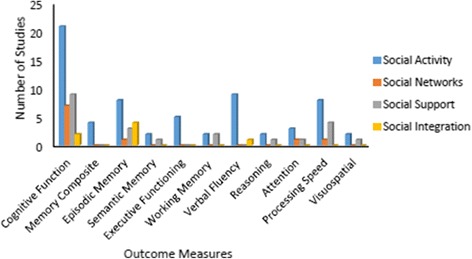
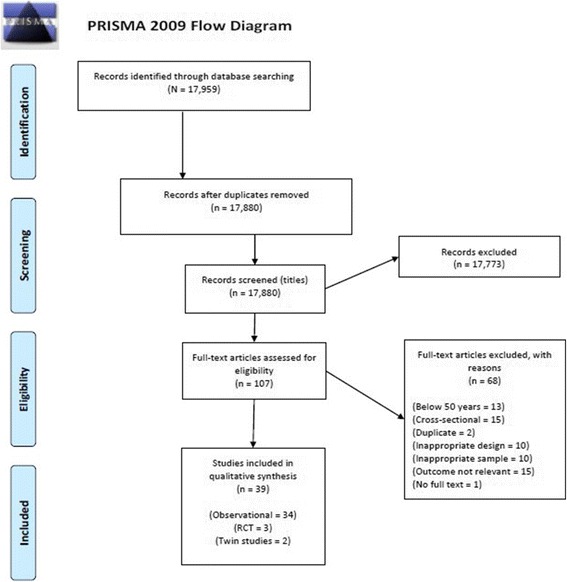
BACKGROUND: Social relationships, which are contingent on access to social networks, promote engagement in social activities and provide access to social support. These social factors have been shown to positively impact health outcomes. In the current systematic review, we offer a comprehensive overview of the impact of social activities, social networks and social support on the cognitive functioning of healthy older adults (50+) and examine the differential effects of aspects of social relationships on various cognitive domains. METHODS: We followed PRISMA (Preferred Reporting Items for Systematic Reviews and Meta-Analysis) guidelines, and collated data from randomised controlled trials (RCTs), genetic and observational studies. Independent variables of interest included subjective measures of social activities, social networks, and social support, and composite measures of social relationships (CMSR). The primary outcome of interest was cognitive function divided into domains of episodic memory, semantic memory, overall memory ability, working memory, verbal fluency, reasoning, attention, processing speed, visuospatial abilities, overall executive functioning and global cognition. RESULTS: Thirty-nine studies were included in the review; three RCTs, 34 observational studies, and two genetic studies. Evidence suggests a relationship between (1) social activity and global cognition and overall executive functioning, working memory, visuospatial abilities and processing speed but not episodic memory, verbal fluency, reasoning or attention; (2) social networks and global cognition but not episodic memory, attention or processing speed; (3) social support and global cognition and episodic memory but not attention or processing speed; and (4) CMSR and episodic memory and verbal fluency but not global cognition. CONCLUSIONS: The results support prior conclusions that there is an association between social relationships and cognitive function but the exact nature of this association remains unclear. Implications of the findings are discussed and suggestions for future research provided. SYSTEMATIC REVIEW REGISTRATION: PROSPERO 2012: CRD42012003248 .
Overview
The claims and statistics of this paper haven’t been checked yet.
Free: it reads the open-access text and checks the first 5 claims that cite a source we can check. Create a free account to check every claim.
Integrity signals
Registry
Cites
Statistics
Figures
Verification
Claims the paper makes
The claims and statistics of this paper haven’t been checked yet.
Free: it reads the open-access text and checks the first 5 claims that cite a source we can check. Create a free account to check every claim.
Claims other papers make about this one
Each is checked against this paper’s own text: does it say what the citing paper says it does?
The cited source doesn’t support the claim as written.
In the citing paper
“Frequent social activity was associated with improved memory, executive function, visuospatial ability, and processing speed, whereas frequent social support was associated only with improved memory.8”
From Associations between social connections and cognition: a global collaborative individual participant data meta-analysis (2022) · cites this paper as [8]
Checked by a reasoning model — may be wrong.
Experimental — accuracy not yet measuredThe source backs part of the claim, not all of it — or backs it for a different population, condition or comparison.
In the citing paper
“Despite clear cultural variation in the meaning and perception of social isolation, findings of protective effect of more social contact are largely consistent in different settings and for either sex across the studies and meta-analyses.”
From Dementia prevention, intervention, and care: 2020 report of the Lancet Commission (2020) · cites this paper as [118]
Experimental — accuracy not yet measuredThe source backs part of the claim, not all of it — or backs it for a different population, condition or comparison.
In the citing paper
“a systematic review of low quality RCTs of 576 adults aged 60 or more years with normal cognition found facilitated meeting and discussion groups were associated with improved global cognition and increased brain volume at follow-up.”
From Dementia prevention, intervention, and care: 2020 report of the Lancet Commission (2020) · cites this paper as [118]
Experimental — accuracy not yet measuredThe source backs part of the claim, not all of it — or backs it for a different population, condition or comparison.
In the citing paper
“Another meta-analysis of 39 studies reported that social activity and social support were associated with decline in global cognition and specific cognitive domains.8”
From Associations between social connections and cognition: a global collaborative individual participant data meta-analysis (2022) · cites this paper as [8]
Experimental — accuracy not yet measuredThe source backs part of the claim, not all of it — or backs it for a different population, condition or comparison.
In the citing paper
“Consequently, measurement of this kind often does not permit testing of alternative hypotheses about social or biological mechanisms.”
From Why the cognitive ‘fountain of youth’ may be upstream: pathways to dementia risk and resilience through social connectedness (2022) · cites this paper as [11]
Experimental — accuracy not yet measured
11 more claims about this paper
Create a free account to see every claim other papers make about this one.
Self-check
Percentages, sums and reported differences re-computed from the paper’s own numbers.
The self-check needs the paper’s full text.
Citations
Cites
Stress, social support, and the buffering hypothesis
Cohen, S., & Wills, T. A. (1985) · Psychological Bulletin · doi:10.1037/0033-2909.98.2.310 · Cited by 18,093 · cited 1×
“Social support in particular may impact cognitive outcomes via its buffering effect on stress [44].”
BackgroundSocial Relationships and Mortality Risk: A Meta-analytic Review
Holt-Lunstad, J., Smith, T. B., & Layton, J. B. (2010) · PLoS Medicine · doi:10.1371/journal.pmed.1000316 · Cited by 7,272 · cited 1×
“One difficulty when trying to determine the effect of social relationships on cognitive function is the use of discrepant and unclear definitions of different social factors [14].”
BackgroundEffects of stress throughout the lifespan on the brain, behaviour and cognition
Lupien, S. J., McEwen, B. S., Gunnar, M. R., & Heim, C. (2009) · Nature Reviews Neuroscience · doi:10.1038/nrn2639 · Cited by 6,256
From social integration to health: durkheim in the new millennium
Berkman, L. F., Glass, T., Brissette, I., & Seeman, T. E. (2000) · Social Science & Medicine · doi:10.1016/s0277-9536(00)00065-4 · Cited by 4,821 · cited 6×
“In an attempt to address the issue of discrepant definitions in the literature, Berkman and colleagues suggested a framework to clarify terms describing social factors and behaviours [15].”
BackgroundInfluentialWhat is cognitive reserve? Theory and research application of the reserve concept
STERN, Y. (2002) · Journal of the International Neuropsychological Society · doi:10.1017/s1355617702813248 · Cited by 3,951 · cited 1×
“Social activities may include a type of cognitive stimulation, thus contributing to cognitive outcomes via the building of cognitive reserve [41]; cognitive reserve optimises cognitive performance through the recruitment of alternate brain networks and cognitive strategies to compensate for cognitive difficulties rela…”
BackgroundSocial and emotional patterns in adulthood: Support for socioemotional selectivity theory
Carstensen, L. L. (1992) · Psychology and Aging · doi:10.1037/0882-7974.7.3.331 · Cited by 2,174
Perceived social isolation and cognition
Cacioppo, J. T., & Hawkley, L. C. (2009) · Trends in Cognitive Sciences · doi:10.1016/j.tics.2009.06.005 · Cited by 2,144 · cited 1×
“In addition, social factors tend to be considered alongside or as part of other lifestyle factors such as leisure or intellectual activity [41]; outcomes such as mortality, physical health, or dementia are included in lieu of cognitive function [10, 18]; only specific aspects of social relationships are considered, su…”
BackgroundAn active and socially integrated lifestyle in late life might protect against dementia
Fratiglioni, L., Paillard-Borg, S., & Winblad, B. (2004) · The Lancet Neurology · doi:10.1016/s1474-4422(04)00767-7 · Cited by 2,135 · cited 1×
“In addition, social factors tend to be considered alongside or as part of other lifestyle factors such as leisure or intellectual activity [41]; outcomes such as mortality, physical health, or dementia are included in lieu of cognitive function [10, 18]; only specific aspects of social relationships are considered, su…”
BackgroundThe handbook of aging and cognition
Craik, F. I. M., & Salthouse, T. A. (1992) · doi:10.4324/9781410601988 · Cited by 2,003
A Meta-Analysis of Interventions to Reduce Loneliness
Masi, C. M., Chen, H.-Y., Hawkley, L. C., & Cacioppo, J. T. (2011) · Personality and Social Psychology Review · doi:10.1177/1088868310377394 · Cited by 1,995
Cited by
Items 301–400 of 1,000
Takatori, K., & Matsumoto, D. (2023) · BMJ Open · doi:10.1136/bmjopen-2023-072243 · Cited by 13
Association Between Social Participation and Cognitive Function in Community-Dwelling Adults
Park, S., Downer, B. G., Nam, S., Bae, S., & Hong, I. (2022) · OTJR Occupational Therapy Journal of Research · doi:10.1177/15394492221113506 · Cited by 17
“Considerable evidence indicates that older adults who are more socially engaged have higher cognitive functioning (Kelly et al., 2017), experience less cognitive decline (Park et al., 2017), and have a lower risk of dementia (Penninkilampi et al., 2018) than those who are not socially active.”
BackgroundFujihara, S., Tsuji, T., Nakagomi, A., Miyaguni, Y., Hanazato, M., Muto, G., & Kondo, K. (2023) · Social Science & Medicine · doi:10.1016/j.socscimed.2023.116316 · Cited by 14
Toward a Medication Information Literacy Indicator System for Older Adults: A Delphi Study
Zhou, X., Yi, J., Bai, L., Jiang, M., Peng, W., Liao, J. P., Wang, H., & Hou, X. (2024) · Health Expectations · doi:10.1111/hex.14127 · Cited by 12
Impact of social wellbeing on tooth loss and cognition: A scoping review
Chan, C. C. K., Chen, H., McGrath, C. P. J., Klineberg, I. J., Wong, G. H. Y., & Chen, H. (2024) · Journal of Dentistry · doi:10.1016/j.jdent.2024.105376 · Cited by 13
A multifactorial lens on risk factors promoting the progression of Alzheimer’s disease
Parker, J., Moris, J. M., Goodman, L. C., Paidisetty, V. K., Vanegas, V., Turner, H. A., Melgar, D., & Koh, Y. (2024) · Brain Research · doi:10.1016/j.brainres.2024.149262 · Cited by 12
Zhai, B., Liu, X., Fu, J., Zhu, X., & Li, J. (2024) · Frontiers in Psychology · doi:10.3389/fpsyg.2024.1382141 · Cited by 26
Matina, S. S., Manderson, L. H., Brear, M., Rusere, F., Gómez-Olivé, F. X., Kahn, K., & Harling, G. (2025) · The Journals of Gerontology Series B · doi:10.1093/geronb/gbaf008 · Cited by 12
“However, LMIC households are frequently multigenerational—one-third of all South African households contained members at least two generations apart in 2011 (Makiwane, 2017)— and are strongly connected to nearby extended family and friends (Kelly et al., 2017).”
Xiang, L., Yang, J., Yamada, M., Shi, Y., & Nie, H. (2025) · Scientific Reports · doi:10.1038/s41598-025-91679-5 · Cited by 15
Blocker, E. M., Fry, A. C., Luebbers, P. E., Burns, J. M., Perales‐Puchalt, J., Hansen, D. T., & Vidoni, E. D. (2020) · Kansas Journal of Medicine · doi:10.17161/kjm.v13i.13872 · Cited by 14
Preserving and enhancing social health in neurocognitive disorders
Samtani, S., Stevens, A., & Brodaty, H. (2020) · Current Opinion in Psychiatry · doi:10.1097/yco.0000000000000683 · Cited by 12
“Previous reviews about social health interventions [7] only focused on healthy older adults, excluding PLWD.”
BackgroundPeng, C., Burr, J. A., Yang, D. W., & Lü, N. (2021) · Journal of Aging and Health · doi:10.1177/0898264321996562 · Cited by 13
“First, the majority of relevant research focuses on the association between the quality of late-life intergenerational relationships and cognitive function in late adulthood (Amieva et al., 2010; Kelly et al., 2017; Kuiper et al., 2016).”
BackgroundInfluentialMa, Y., Wang, Y., Tan, L., Xu, W., Shen, X., Wang, H.-F., Hou, X., Cao, X., Bi, Y., Dong, Q., et al. (2021) · Journal of Alzheimer s Disease · doi:10.3233/jad-201426 · Cited by 13
Secular Improvements in Cognitive Aging: Contribution of Education, Health, and Routine Activities
Beller, J., Kuhlmann, B. G., Sperlich, S., & Geyer, S. (2022) · Journal of Aging and Health · doi:10.1177/08982643211065571 · Cited by 12
“Several studies had already demonstrated that these factors might protect cognitive functioning in longitudinal studies (Kelly et al., 2017; Llewellyn et al., 2008; Menec, 2003; Walsemann & Ailshire, 2020).”
BackgroundXu, Z., Tian, Y., Li, A.-X., Tang, J., Jing, X.-Y., Deng, C., Mo, Z., Wang, J., Lai, J., Liu, X., et al. (2022) · Frontiers in Molecular Neuroscience · doi:10.3389/fnmol.2022.800406 · Cited by 17
“Normal Spatial Learning and Memory in Mice With Long-Term Exposure of Electronic Nicotine Delivery Systems With or Without Menthol Flavor Previous studies have suggested a potential relationship between social activity and the overall executive functioning, working memory, and visuospatial abilities in healthy older a…”
BackgroundDomènech‐Abella, J., Díaz-Cofine, S., Rubio-Valera, M., & Aznar‐Lou, I. (2022) · Revista Española de Geriatría y Gerontología · doi:10.1016/j.regg.2022.04.005 · Cited by 17
Ji, L., & Qiang, F. (2022) · Behavioral Sciences · doi:10.3390/bs12060175 · Cited by 13
Older Adults’ Views on Social Interactions and Online Socializing Games – A Qualitative Study
Janssen, J. H. M., Kremers, E. M., Nieuwboer, M. S., Châtel, B. D. L., Corten, R., Rikkert, M. G. M. O., & Peeters, G. M. E. E. (2022) · Journal of Gerontological Social Work · doi:10.1080/01634372.2022.2100548 · Cited by 21
Cohn‐Schwartz, E., Joshi, R., & McClure, L. A. (2023) · International Journal of Environmental Research and Public Health · doi:10.3390/ijerph20031885 · Cited by 14
Vásquez, P. M., Tarraf, W., Doza, A., Marquine, M. J., Perreira, K. M., Schneiderman, N., Zeng, D., Cai, J., Isasi, C. R., Daviglus, M. L., et al. (2019) · Alzheimer s & Dementia Translational Research & Clinical Interventions · doi:10.1016/j.trci.2019.07.006 · Cited by 12
“There is evidence on the benefits of stronger social networks and cognitive function using neuropsychological tests [38] and neuroimaging data [39].”
BackgroundGalinha, I. C., Pinal, D., Lima, M. L., & Palmeira, A. L. (2021) · Psychosocial Intervention · doi:10.5093/pi2021a3 · Cited by 17
“Indeed, higher social activity frequency has been associated with better executive functioning, working memory, visuospatial abilities, and processing speed (Kelly et al., 2017).”
BackgroundLaBrenz, C. A., Yu, M., Washburn, M., Palmer, A. N., Jenkins, L. M., & Kennedy, D. (2022) · Journal of Public Child Welfare · doi:10.1080/15548732.2022.2069202 · Cited by 13
“…youth, social support is associated with positive outcomes such as decreased mental health problems (Wang et al., 2018), better cognitive functioning (Kelly et al., 2017), increased overall life satisfaction (LaBrenz et al., 2021b), and better overall psychosocial functioning (Long et al., 2018).”
BackgroundSon, J., & Sung, P. (2022) · Journal of Applied Gerontology · doi:10.1177/07334648221148953 · Cited by 12
“Specifically, social support, a type of informal social engagement, is positively related to better cognitive abilities, while lacking it is associated with slower processing speed (Gow et al., 2013; Kelly et al., 2017).”
BackgroundHowland, J., & Stone, A. (2023) · Frontiers in Public Health · doi:10.3389/fpubh.2023.1114792 · Cited by 11
de Jager, C. A., Price, G. J., Barbera, M., Neely, A. S., Gavelin, H. M., Lehtisalo, J., Ngandu, T., Solomon, A., Mangialasche, F., & Kivipelto, M. (2024) · Frontiers in Dementia · doi:10.3389/frdem.2024.1331741 · Cited by 12
Huszár, Z., Solomon, A., Engh, M. A., Koszovácz, V., Terebessy, T., Molnár, Z., Hegyi, P., Horvath, A. A., Mangialasche, F., Kivipelto, M., et al. (2024) · Alzheimer s Research & Therapy · doi:10.1186/s13195-024-01602-9 · Cited by 13
“Research suggests that certain types of social media use can have a positive impact on mental health, which may help to reduce certain dementia risk factors [71, 72].”
BackgroundAdvances in risk prediction models for cancer-related cognitive impairment
Duan, R., Wen, Z., Zhang, T., Liu, J., Feng, T., & Ren, T. (2025) · Clinical and Experimental Medicine · doi:10.1007/s10238-025-01590-6 · Cited by 13
Çöp, S. (2020) · Turk Turizm Arastirmalari Dergisi · doi:10.26677/tr1010.2020.553 · Cited by 14
Souza‐Talarico, J. N., Bromberg, E., Santos, J. L. F., de Freitas, B. S., da Silva, D. F., & Duarte, Y. A. O. (2021) · Frontiers in Behavioral Neuroscience · doi:10.3389/fnbeh.2021.717847 · Cited by 13
Ohman, A., Maxwell, C. J., Tyas, S. L., & Oremus, M. (2022) · Aging Neuropsychology and Cognition · doi:10.1080/13825585.2022.2030294 · Cited by 13
“The investigation of modifiable risk and protective factors for memory is important to help identify interventions that prevent memory loss and offset dementia, functional decline, and loss of independence, among other adverse outcomes (Cattan et al., 2005; Kelly et al., 2017).”
BackgroundRevealing the Role of Social Support on Cognitive Deficits in Fibromyalgia Syndrome
Galvez-Sánchez, C. M., del Paso, G. A. R., & Montoro, C. I. (2022) · Behavioural Neurology · doi:10.1155/2022/3852746 · Cited by 12
Jong, M., Stub, T., Mulder, E., & Jong, M. (2022) · International Journal of Environmental Research and Public Health · doi:10.3390/ijerph191912012 · Cited by 13
Barrenetxea, J., Feng, Q., Gu, D., & Koh, W. (2022) · The Journals of Gerontology Series B · doi:10.1093/geronb/gbac171 · Cited by 11
Yang, Y., Liang, S., Fan, S., Liu, Y., Li, Y., Xi, J., Yuan, D., & Xiao, J. (2023) · BMC Infectious Diseases · doi:10.1186/s12879-023-08178-z · Cited by 11
“Social isolation as the result of reduced social interactions due to retirement, shrinking network size, living alone and so on is more prevalent among elderly population than general population, is threating their mental and physical health [34, 35], and need more studies to confirm the mechanisms [36].”
BackgroundData‐driven lifestyle patterns and risk of dementia in older Australian women
Dingle, S. E., Bowe, S. J., Bujtor, M., Milte, C. M., Daly, R. M., Byles, J., Cavenagh, D., & Torres, S. J. (2023) · Alzheimer s & Dementia · doi:10.1002/alz.13467 · Cited by 11
“3,14 Potential mechanisms involved may include bolstering brain resilience by increasing cognitive reserve and reducing stress-inducedbraindamage.”
BackgroundLiu, J., Yang, Y., Li, C., Pérez, A., Raine, A., Shi, H., & Zou, L. (2024) · Journal of Aging Research · doi:10.1155/2024/2481518 · Cited by 13
A Greater Variety of Social Activities Is Associated With Lower Mortality Risk
Jeon, S., Turiano, N. A., & Charles, S. T. (2024) · The Journals of Gerontology Series B · doi:10.1093/geronb/gbae021 · Cited by 13
Jang, H., Hill, N. L., Turner, J. R., Bratlee‐Whitaker, E., Jeong, M., & Mogle, J. A. (2024) · Innovation in Aging · doi:10.1093/geroni/igae038 · Cited by 11
“…influence cognitive functioning, mostly objective cognitive decline—has also been examined in previous studies (Bourassa et al., 2017; Fingerman et al., 2020; Kelly et al., 2017; La Fleur & Salthouse, 2017); however, there is little research on the link between daily social encounters and SCD.”
ResultGourlay, C., Collin, P., D’Auteuil, C., Jacques, M., Caron, P., & Scherzer, P. B. (2021) · Aging Neuropsychology and Cognition · doi:10.1080/13825585.2021.1962789 · Cited by 14
Dornellas, L. H., & Afonso, M. P. D. (2024) · Seven Editora eBooks · doi:10.56238/medestvida-002 · Cited by 11
Scholes, S., & Liao, J. (2022) · Aging & Mental Health · doi:10.1080/13607863.2022.2089628 · Cited by 12
“…to cognitive functioning in older age through the mentally stimulating nature of social interactions and the stress-buffering effects of social support; in contrast, socially strained relations are negatively linked through being a source of chronic stress (Kuiper et al., 2016, Kelly et al., 2017).”
BackgroundLee, G., & Martin, P. (2023) · Journal of Aging and Health · doi:10.1177/08982643231156721 · Cited by 11
Social isolation from childhood to mid-adulthood: is there an association with older brain age?
Lay‐Yee, R., Hariri, A. R., Knodt, A. R., Barrett-Young, A., Matthews, T., & Milne, B. J. (2023) · Psychological Medicine · doi:10.1017/s0033291723001964 · Cited by 11
“…with slower cognitive decline (Samtani et al., 2022), and that, conversely, a lack of social contact is associated with reduced cognitive function (Kelly et al., 2017), with social isolation specifically related to progressive cognitive decline in older adults (Evans, Martyr, Collins, Brayne, &…”
Socially-supported sleep in older adults aged 50 and older: a concept analysis
Huang, Y., & Fleury, J. (2024) · Frontiers in Public Health · doi:10.3389/fpubh.2024.1364639 · Cited by 10
Necaise, A., & Amon, M. J. (2024) · Journal of Medical Internet Research · doi:10.2196/45858 · Cited by 17
Zhou, Y., Abuduxukuer, K., Wang, C., Jin, W., Shi, W., Li, Y., Huang, G., Zhou, Y., Zhang, Y., & Luo, J. (2024) · BMC Public Health · doi:10.1186/s12889-024-19210-5 · Cited by 17
“Meta-analytical studies suggest that greater social activities are positively associated with executive functions and global cognition in the older population [31].”
BackgroundRautiainen, L. J., Jansson, A. H., Knuutila, M. T., Aalto, U. L., Kolster, A., Kautiainen, H., Strandberg, T. E., & Pitkälä, K. H. (2024) · Gerontology · doi:10.1159/000540345 · Cited by 12
“Social activity and participation may be a protective factor in reducing mortality in older adults [10] and in improving cognitive function and working memory [11].”
Beydoun, M. A., Beydoun, H. A., Kuczmarski, M. F., Hu, Y., Shaked, D., Weiss, J., Waldstein, S. R., Launer, L. J., Evans, M. K., & Zonderman, A. B. (2024) · GeroScience · doi:10.1007/s11357-024-01371-1 · Cited by 11
Pacca, L., Gaye, S. A., Brenowitz, W. D., Fujishiro, K., Glymour, M. M., Harrati, A., & Vable, A. M. (2025) · Social Science & Medicine · doi:10.1016/j.socscimed.2025.117976 · Cited by 13
Long, C., Yang, W. Y. L., & Glaser, K. (2025) · Social Science & Medicine · doi:10.1016/j.socscimed.2025.118279 · Cited by 13
STATISTICAL ANALYSIS AND TOPOLOGICAL PROPERTY OF A CLASS OF FRACTAL NETWORKS
Liu, J.-B., WANG, K., & Zhai, X. (2026) · Fractals · doi:10.1142/s0218348x26400013 · Cited by 10
Bae, S., & Kim, J. (2020) · Japan Journal of Nursing Science · doi:10.1111/jjns.12390 · Cited by 10
Out-of-Home Activities and Health in Older Adults: A Scoping Review
Rotenberg, S., Fritz, H., Chippendale, T. L., Lysack, C. L., & Cutchin, M. P. (2021) · OTJR Occupational Therapy Journal of Research · doi:10.1177/15394492211023192 · Cited by 10
“…of research to support the association of these types of activities with health-related outcomes (Brajša-Žganec et al., 2011; Christie et al., 2017; Kelly et al., 2017; Moritani, 2015), as well as a growing body of research that shows that being out of home supports health in aging (Chow et al.,…”
BackgroundSen, K., Prybutok, V. R., Prybutok, G. T., & Senn, W. D. (2022) · Healthcare · doi:10.3390/healthcare10030553 · Cited by 16
Chang, Y., Erickson, K. I., Aghjayan, S. L., Chen, F., Li, R., Shih, J.-R., Chang, S.-H., Huang, C., & Chu, C. (2022) · Frontiers in Aging Neuroscience · doi:10.3389/fnagi.2022.929789 · Cited by 12
Posis, A. I. B., Yarish, N. M., McEvoy, L. K., Jain, P., Kroenke, C. H., Saquib, N., Ikramuddin, F. S., Schnatz, P. F., Bellettiere, J., Rapp, S. R., et al. (2022) · Journal of Alzheimer s Disease · doi:10.3233/jad-220967 · Cited by 10
Yeung, D. Y.-L., Chow, L. C., Ho, A., & Chung, E. K. H. (2022) · Educational Gerontology · doi:10.1080/03601277.2022.2160131 · Cited by 11
“In addition, several studies have demonstrated the importance of social interaction in promoting cognitive functioning among older adults (Kelly et al., 2017; Ybarra et al., 2008; Zhaoyang et al., 2021).”
BackgroundResultJock, J., Kobayashi, L. C., Chakraborty, R., Chen, X., Wing, C., Berkman, L. F., Canning, D., Kabudula, C. W., Tollman, S. M., & Rosenberg, M. S. (2023) · Journal of Aging & Social Policy · doi:10.1080/08959420.2023.2195785 · Cited by 14
“First, we added a social network variable to the predictive model (Appendix Table 2), as social networks have been shown to have positive impacts on cognitive function (Kelly et al., 2017).”
Cao, X., Yang, B., & Zhou, J. (2023) · Frontiers in Aging Neuroscience · doi:10.3389/fnagi.2023.1166341 · Cited by 10
“Details of the study participants and methods have been reported elsewhere (Kelly et al., 2017; Katayama et al., 2022).”
MethodBeyond social engagement: cognitive training leads to greater cognitive improvement in older adults
Izhak, S. B., Diedrich, L., Antal, A., & Lavidor, M. (2023) · Aging Neuropsychology and Cognition · doi:10.1080/13825585.2023.2216927 · Cited by 12
“There is a wealth of research indicating that continuous social interactions have a positive impact on the cognitive abilities of older individuals, including improved working memory, visuospatial abilities, and attention (Kelly et al., 2017).”
BackgroundYang, J. M., Kim, J. H., & Hwang, J. E. (2024) · Psychogeriatrics · doi:10.1111/psyg.13085 · Cited by 10
Aftyka, A., Rozalska, I., Pawlak, A., Mazur, A., Bednarek, A., & Zarzycka, D. (2018) · Annals of Agricultural and Environmental Medicine · doi:10.26444/aaem/91783 · Cited by 11
“Indirect mechanisms that involve a link with behavioural [7, 8] and psychological factors such as resistance to depression [9] or cognitive functions [10], which rebound on physiological processes [11, 12] are also well documented.”
BackgroundDušek, R., & Sagapová, N. (2022) · Journal of Tourism and Services · doi:10.29036/jots.v13i24.350 · Cited by 13
“Social networks facilitate social contact and social activities (Kelly et al., 2017), and foster the maintenance of relationships by enabling communication, interaction, coordination, decision-making, sharing of knowledge (Romero, Uzzi, and Kleinberg, 2019), data, opinions, emotions and ideas, and…”
BackgroundLinden, B., Ecclestone, A., & Stuart, H. L. (2022) · SSM - Population Health · doi:10.1016/j.ssmph.2022.101227 · Cited by 11
Sugimoto, H., Kawagoe, T., & Otake, M. (2020) · BMC Geriatrics · doi:10.1186/s12877-020-01892-2 · Cited by 10
“Given the evidence of a relationship between cognitive function and social interaction [2], interventions that include social activities could be candidates for such methods.”
BackgroundMethodThe effect of online social evaluation on mood and cognition in young people
Grunewald, K., Deng, J., Wertz, J., & Schweizer, S. (2022) · Scientific Reports · doi:10.1038/s41598-022-24932-w · Cited by 9
Wang, Y., Chen, X., & Hu, Y. (2023) · Journal of Epidemiology & Community Health · doi:10.1136/jech-2022-219733 · Cited by 10
Byrd, D. R., Martin, D. A., & Joseph, R. P. (2023) · Current Epidemiology Reports · doi:10.1007/s40471-023-00337-9 · Cited by 13
Wang, X., Xu, J., Sun, X., Chen, Y., Pang, C., & Zang, S. (2024) · Geriatric Nursing · doi:10.1016/j.gerinurse.2024.06.025 · Cited by 10
Gui, S., Wang, J., Li, Q., Chen, H., Jiang, Z., Hu, J., Yang, X., & Yang, J. (2024) · Frontiers in Aging Neuroscience · doi:10.3389/fnagi.2024.1443689 · Cited by 11
Patterns of Social Connection Among Older Adults in England
Bu, F., & Fancourt, D. E. (2024) · JAMA Network Open · doi:10.1001/jamanetworkopen.2024.51580 · Cited by 11
Rehan, S., & Phillips, N. A. (2025) · Journal of Applied Gerontology · doi:10.1177/07334648241311661 · Cited by 11
“…with cognitive function in various domains (e.g., memory, working memory, and executive function) in cognitively healthy older adults (see Kelly et al., 2017 for a systematic review), we found relationships between low social participation and poor processing speed and verbal fl uency…”
InfluentialPredicting older adults smart healthcare adoption using an extended TAM
Zhang, J., Ma, Y., Zhang, H., Chen, Y., & Yu, J. (2025) · Scientific Reports · doi:10.1038/s41598-025-21419-2 · Cited by 11
“Second, the construct of social support is explicitly conceptualized as an operationalization of the social influence factor 29 .”
Xie, G., Focacci, C. N., Li, J., Wang, R., & Chen, G. (2025) · The journal of nutrition health & aging · doi:10.1016/j.jnha.2025.100719 · Cited by 11
“Social participation is conducive to improving the social contact and networks of older adults with other people, accumulating social capital, and getting access to emotional, financial, and care support from friends, communities, and societies [36,37].”
Schröders, J., Dewi, F. S. T., Nilsson, M., Nichter, M., & Sebastiån, M. S. (2020) · International Journal for Equity in Health · doi:10.1186/s12939-020-01238-9 · Cited by 10
“Research from high-income countries strongly suggests that social networks are instrumental for healthy aging by protecting against a range of negative health outcomes, including chronic non-communicable disease (NCD) morbidity [12–15], by slowing down or aiding recovery from aging-related impairments [16, 17], cognit…”
BackgroundInfluentialThe Interprocessual-Self Theory in Support of Human Neuroscience Studies
Luís, E. O., Akrivou, K., Bermejo‐Martins, E., Scalzo, G. R., & Semper, J. V. O. (2022) · Frontiers in Psychology · doi:10.3389/fpsyg.2021.686928 · Cited by 9
Wang, H., Yang, C., & Yao, Y. (2022) · International Journal of Methods in Psychiatric Research · doi:10.1002/mpr.1913 · Cited by 11
“We consider that living with spouse/child has distinctive effect on elders’ cognitive functioning for it provides intimacy and coping resources which other types of social relationships cannot (Kelly et al., 2017).”
BackgroundThe Relationship Between Prior Cancer Diagnosis and All-Cause Dementia Progression Among US Adults
Fowler, M. E., Wright, N. C., Triebel, K. L., Rocque, G. B., Irvin, M. R., & Kennedy, R. (2022) · Journal of Alzheimer s Disease · doi:10.3233/jad-220054 · Cited by 10
The role of social support on cognitive function among midlife and older adult MSM
Henderson, E. R., Haberlen, S., Coulter, R. W. S., Weinstein, A. M., Meanley, S., Brennan‐Ing, M., Mimiaga, M. J., Turan, J. M., Turan, B., Teplin, L. A., et al. (2022) · AIDS · doi:10.1097/qad.0000000000003464 · Cited by 9
“the aging process generally, rather than specific domains such as executive function [9].”
BackgroundZhang, Y., Luo, A., Hou, L., Chen, S., Zhang, W., Schwartz, A., & Clouston, S. (2023) · PLoS ONE · doi:10.1371/journal.pone.0284935 · Cited by 12
“…political, and volunteer community activities [3]) and social contact (e.g., the presence of robust social interactions) can stimulate physical activity and cognitive function among older adults, delaying autonomy loss while protecting against cognitive impairment [5] and mortality [6].”
BackgroundThe impact of loneliness on mental and physical health outcomes: An umbrella review
Molinera, V. G., Khan, K. S., Núñez‐Núñez, M., & Kouiti, M. (2024) · Medicina de Familia SEMERGEN · doi:10.1016/j.semerg.2024.102261 · Cited by 11
Loneliness and Cognitive Function in Older Adults Living in Latin America: A Systematic Review
Camacho, D., Tella‐Vega, P., Wagner, F. A., Santamaría‐Ulloa, C., Lehning, A. J., Gallo, J. J., & García‐Peña, C. (2025) · Archives of Medical Research · doi:10.1016/j.arcmed.2025.103182 · Cited by 9
Mediterranean lifestyle patterns are associated with cognition in older adults
Mamalaki, E., Poulimeneas, D., Kosmidis, M. H., & Yannakoulia, M. (2021) · Lifestyle Medicine · doi:10.1002/lim2.30 · Cited by 9
Zhang, L., & Wu, Y. (2022) · Land · doi:10.3390/land11081261 · Cited by 11
The Association Between Social Isolation and Memory Loss Among Older Adults
Mosen, D. M., Banegas, M. P., Keast, E. M., & Ertz-Berger, B. L. (2022) · The Journal of the American Board of Family Medicine · doi:10.3122/jabfm.2022.210497r2 · Cited by 10
“They are also similar to studies that found less frequent social contact and lower levels of community involvement were associated with lower global cognition, executive function, visuospatial abilities, and processing speed.(26) Future research should identify interventions to reduce social isolation among older indi…”
ResultLiu, X., Wang, Q., Liu, S., Liu, B., Kong, F., Zhang, W., Sun, Q., & Li, H. (2023) · Journal of Affective Disorders Reports · doi:10.1016/j.jadr.2023.100466 · Cited by 13
Alzheimer’s Disease and Empathic Abilities: The Proposed Role of the Cingulate Cortex
Ávila‐Villanueva, M., Gómez‐Ramírez, J., Ávila, J., & Fernández‐Blázquez, M. A. (2021) · Journal of Alzheimer s Disease Reports · doi:10.3233/adr-200282 · Cited by 10
“Since social interaction has beneficial effects on cognitive status and specific domains such as memory [30]; a decrease in the quantity and quality of social contacts may be indicative of a neurodegenerative disorder onset.”
BackgroundHealthy aging in frail older adults: Active aging project of a national survey
Seo, J., Joo, K., Li, Y., Kim, N., Oh, E., Gansukh, L., & Song, R. (2025) · International Journal of Nursing Studies Advances · doi:10.1016/j.ijnsa.2025.100302 · Cited by 12
Quan, Y., Lo, C. Y., Wolff, L., Wang, J., Olsen, K. N., & Thompson, W. F. (2025) · Archives of Gerontology and Geriatrics · doi:10.1016/j.archger.2025.105848 · Cited by 8
Association between social networking and dementia: A systematic review of observational studies
Arshad, F., Boopalan, D., Arora, S., Rosen, H. J., & Alladi, S. (2025) · Neuroscience · doi:10.1016/j.neuroscience.2025.04.019 · Cited by 10
Li, W., Ma, Y., Wei, J., Wu, S., Cui, L., & Zhou, C. (2025) · Frontiers in Aging Neuroscience · doi:10.3389/fnagi.2025.1579485 · Cited by 8
Revealing the nuances of ‘Grey Digital Divide’ in Hong Kong: A latent profile analysis
Lau, B. H.-P., Shum, E. N.-Y., Kwok, A. P. K., Liu, B. C.-P., Chan, C., Kwan, R. Y. C., Fong, S. F.-F., Lam, G., Tsang, C.-K., Leung, D. D.-M., et al. (2025) · PLoS ONE · doi:10.1371/journal.pone.0326413 · Cited by 12
The Role of Social Engagement in Older Adults' Health
Steppe, J. D., Ramos, M. D., & Falvai, R. (2022) · Research in Gerontological Nursing · doi:10.3928/19404921-20220324-01 · Cited by 10
Wang, C., Wang, C., Wang, J., Yu, N. X., Tang, Y., Liu, Z., & Chen, T. (2022) · Research on Social Work Practice · doi:10.1177/10497315221119991 · Cited by 11
“Furthermore, group intervention offers participants an opportunity to engage in social activities, which is a welldocumented predictor of symptoms of depression (Hong et al., 2009) and cognitive functions in old age (Kelly et al., 2017).”
BackgroundInvestigating social connection as a protective factor against exam stress in college students
Steinmetz, K. R. M., Gaudier‐Diaz, M. M., Huber, E. C., Edwards, B. H., & Muscatell, K. A. (2022) · Journal of American College Health · doi:10.1080/07448481.2022.2109037 · Cited by 8
“27 Therefore, students who regularly navigate their social networks may be receiving regular cognitive control practice, which may benefit them in their ability to regulate their emotions and manage their perceived stress.”
Sánchez-Rodrı́guez, M. A., Zacarías-Flores, M., Correa‐Muñoz, E., & Mendoza-Núñez, V. M. (2023) · Healthcare · doi:10.3390/healthcare11142107 · Cited by 9
Chan, S. C. Y., Huang, Q. L., & Fung, C. K. (2023) · Geriatrics and gerontology international/Geriatrics & gerontology international · doi:10.1111/ggi.14675 · Cited by 9
“30 Regarding policy, the positive impacts of cultural, recreational, and religious activities on speci fi c well-being aspects suggest that policymakers should adopt a multidimensional approach to promote successful aging.”
BackgroundImproving the Social Connectedness of Older Adults Through Digital Social Gaming - A Pilot Study
Janssen, J. H. M., van Es, V. E., Châtel, B. D. L., Tieben, R., Deen, M., Rikkert, M. G. M. O., & Peeters, G. M. E. E. (2023) · Journal of Technology in Behavioral Science · doi:10.1007/s41347-023-00344-z · Cited by 11
“…a strong network throughout the lifespan is essential for our cognitive and physical health (Cornwell & Waite, 2009; Hawkley & Cacioppo, 2010; Kelly et al., 2017; Zunzunegui et al., 2003), and extra important for older adults (Suragarn et al., 2021), as it may play a protective role in…”
Hong, I., Norman, R. S., Woo, H., Jin, Y., & Reistetter, T. (2024) · Dysphagia · doi:10.1007/s00455-024-10680-8 · Cited by 8
Kawaguchi, K., Ueno, T., Ide, K., & Kondo, K. (2024) · Journal of Public Health · doi:10.1007/s10389-024-02253-8 · Cited by 8
“Several systematic reviews have discovered that social participation can benefit older people’s physical, psychological, and social health (Bourassa et al. 2017; Holt-Lunstad et al. 2010; Kelly et al. 2017; Stuck et al. 1999; Webber and Fendt-Newlin 2017).”
Metadata
- Authors
- Kelly, M. E., Duff, H., Kelly, S., McHugh Power, J. E., Brennan, S., Lawlor, B. A., & Loughrey, D. G.
- Affiliations
- National College of Ireland (IE)
- Trinity College Dublin (IE)
- Corresponding author
- Kelly, Michelle E.
- Venue
- Systematic Reviews
- Published
- 2017-12
- Volume
- 6
- Issue
- 1
- Pages
- 259-259
- ISSN
- 2046-4053 (ISSN-L)
- PMC
- PMC5735742
- OpenAlex
- W2777525821
- Cited by
- 1,027
- References
- 103
- Citations by year
- 2026: 128 · 2025: 172 · 2024: 195 · 2023: 135 · 2022: 144 · 2021: 140 · 2020: 71 · 2019: 28 · 2018: 13
- FWCI
- 4.65
- Type
- journal article
- Language
- en
- Open access
- gold
- doi.org
- Licence
- cc-by
- Locations
- Systematic Reviews (publishedVersion, cc-by)
- Europe PMC (PubMed Central) (publishedVersion, cc-by)
- PubMed Central (publishedVersion, cc-by)
- PubMed (publishedVersion)
- DOAJ (DOAJ: Directory of Open Access Journals) (submittedVersion, cc-by-sa)
- Topics
- Health Sciences › Medicine › Psychiatry and Mental health › Dementia and Cognitive Impairment Research
- Social Sciences › Psychology › Developmental and Educational Psychology › Aging and Gerontology Research
- Health Sciences › Medicine › Public Health, Environmental and Occupational Health › Aging, Health, and Disability
- Keywords
- social activity, social networks, social support, interpersonal relationships, cognitive function, older adults, episodic memory, executive function, working memory, processing speed, visuospatial ability, verbal fluency, global cognition
- MeSH terms
- Cognition, Humans, Interpersonal Relations, Memory, Social Support, Executive Function, Social Participation
About these checks
Registry, retraction, Cites and statistics results are computed, not judged, with one exception: a printed reference that no index lists is read once by a model before it counts as a citation error. Claims are extracted by a model and kept only when their quote appears verbatim in the text; each cited source is then checked, with a model’s help, for whether it says what the claim relies on. Those verdicts can be wrong — read the claim’s quote and the cited source before relying on one.
Statistics and arithmetic are recomputed, not judged.
Confidence bands are shown only for fields calibrated on our annotated test set. None is calibrated yet, so no band is shown.
What counts as a claim ›How we measure confidence ›How we check this ›
Are you an author, or do you see a problem with this page? Request a review
Data sources
Bibliographic data: Semantic Scholar, OpenAlex, Crossref.
Contains information from the Semantic Scholar Academic Graph Datasets, made available under the ODC Attribution License (ODC-BY 1.0).
Semantic Scholar’s data is described in: Kinney, R., et al. (2023). The Semantic Scholar Open Data Platform. arXiv:2301.10140.
