

Chemical and pathogen-induced inflammation disrupt the murine intestinal microbiome
Open accessThe DOI matches its Crossref record; 81 of the 82 references it cites were found in a registry or an index.
Abstract
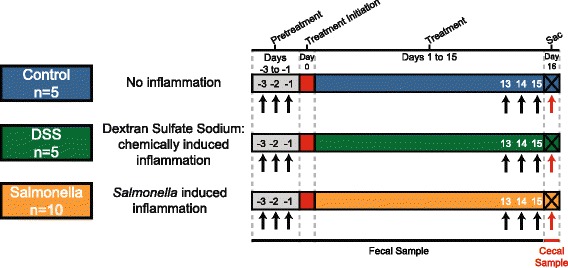
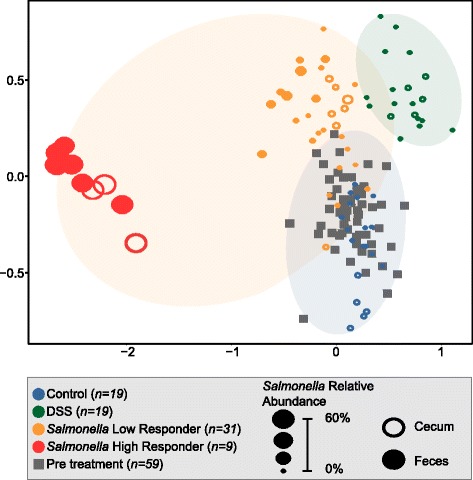
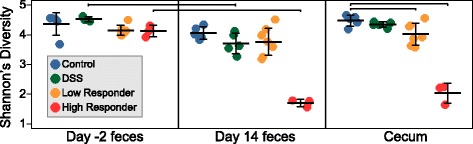
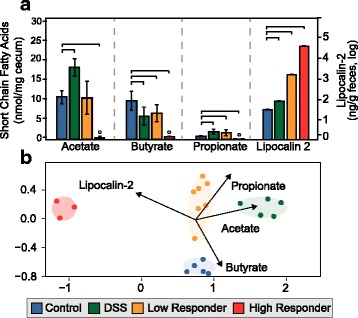
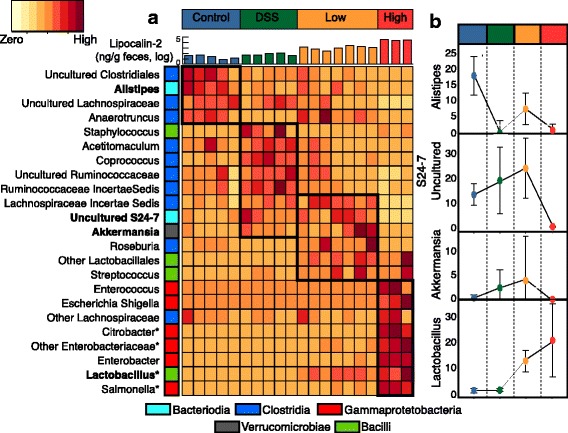
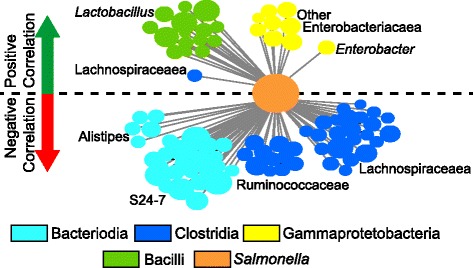
BACKGROUND: Salmonella is one of the most significant food-borne pathogens to affect humans and agriculture. While it is well documented that Salmonella infection triggers host inflammation, the impacts on the gut environment are largely unknown. A CBA/J mouse model was used to evaluate intestinal responses to Salmonella-induced inflammation. In parallel, we evaluated chemically induced inflammation by dextran sodium sulfate (DSS) and a non-inflammation control. We profiled gut microbial diversity by sequencing 16S ribosomal ribonucleic acid (rRNA) genes from fecal and cecal samples. These data were correlated to the inflammation marker lipocalin-2 and short-chain fatty acid concentrations. RESULTS: We demonstrated that inflammation, chemically or biologically induced, restructures the chemical and microbial environment of the gut over a 16-day period. We observed that the ten mice within the Salmonella treatment group had a variable Salmonella relative abundance, with three high responding mice dominated by >46% Salmonella at later time points and the remaining seven mice denoted as low responders. These low- and high-responding Salmonella groups, along with the chemical DSS treatment, established an inflammation gradient with chemical and low levels of Salmonella having at least 3 log-fold lower lipocalin-2 concentration than the high-responding Salmonella mice. Total short-chain fatty acid and individual butyrate concentrations each negatively correlated with inflammation levels. Microbial communities were also structured along this inflammation gradient. Low levels of inflammation, regardless of chemical or biological induction, enriched for Akkermansia spp. in the Verrucomicrobiaceae and members of the Bacteroidetes family S24-7. Relative to the control or low inflammation groups, high levels of Salmonella drastically decreased the overall microbial diversity, specifically driven by the reduction of Alistipes and Lachnospiraceae in the Bacteroidetes and Firmicutes phyla, respectively. Conversely, members of the Enterobacteriaceae and Lactobacillus were positively correlated to high levels of Salmonella-induced inflammation. CONCLUSIONS: Our results show that enteropathogenic infection and intestinal inflammation are interrelated factors modulating gut homeostasis. These findings may prove informative with regard to prophylactic or therapeutic strategies to prevent disruption of microbial communities, or promote their restoration.
Overview
The claims and statistics of this paper haven’t been checked yet.
Free: it reads the open-access text and checks the first 5 claims that cite a source we can check. Create a free account to check every claim.
Integrity signals
Registry
Cites
Statistics
Figures
Verification
Claims the paper makes
The claims and statistics of this paper haven’t been checked yet.
Free: it reads the open-access text and checks the first 5 claims that cite a source we can check. Create a free account to check every claim.
Self-check
Percentages, sums and reported differences re-computed from the paper’s own numbers.
The self-check needs the paper’s full text.
Citations
Cites
Controlling the False Discovery Rate: A Practical and Powerful Approach to Multiple Testing
Benjamini, Y., & Hochberg, Y. (1995) · Journal of the Royal Statistical Society Series B: Statistical Methodology · doi:10.1111/j.2517-6161.1995.tb02031.x · Cited by 109,482
Gapped BLAST and PSI-BLAST: a new generation of protein database search programs
Altschul, S. (1997) · Nucleic Acids Research · doi:10.1093/nar/25.17.3389 · Cited by 73,302 · cited 3×
“Genomes were accessed via NCBI and JGI-IMG (analysis performed with data from December 2016) [75, 76].”
QIIME allows analysis of high-throughput community sequencing data
Caporaso, J. G., Kuczynski, J., Stombaugh, J., Bittinger, K., Bushman, F. D., Costello, E. K., Fierer, N., Peña, A. G., Goodrich, J. K., Gordon, J. I., et al. (2010) · Nature Methods · doi:10.1038/nmeth.f.303 · Cited by 34,887
The SILVA ribosomal RNA gene database project: improved data processing and web-based tools
Quast, C., Pruesse, E., Yilmaz, P., Gerken, J., Schweer, T., Yarza, P., Peplies, J., & Glöckner, F. O. (2012) · Nucleic Acids Research · doi:10.1093/nar/gks1219 · Cited by 33,055
WGCNA: an R package for weighted correlation network analysis
Langfelder, P., & Horvath, S. (2008) · BMC Bioinformatics · doi:10.1186/1471-2105-9-559 · Cited by 27,252
Metagenomic biomarker discovery and explanation
Segata, N., Izard, J., Waldron, L., Gevers, D., Miropolsky, L., Garrett, W. S., & Huttenhower, C. (2011) · Genome Biology · doi:10.1186/gb-2011-12-6-r60 · Cited by 16,192 · cited 3×
“wise Wilcoxon test) with linear discriminate analysis [36].”
Non‐parametric multivariate analyses of changes in community structure
CLARKE, K. R. (1993) · Australian Journal of Ecology · doi:10.1111/j.1442-9993.1993.tb00438.x · Cited by 14,128
Global patterns of 16S rRNA diversity at a depth of millions of sequences per sample
Caporaso, J. G., Lauber, C. L., Walters, W. A., Berg-Lyons, D., Lozupone, C. A., Turnbaugh, P. J., Fierer, N., & Knight, R. (2011) · Proceedings of the National Academy of Sciences · doi:10.1073/pnas.1000080107 · Cited by 9,711
Skyline: an open source document editor for creating and analyzing targeted proteomics experiments
MacLean, B., Tomazela, D. M., Shulman, N., Chambers, M., Finney, G. L., Frewen, B., Kern, R., Tabb, D. L., Liebler, D. C., & MacCoss, M. J. (2010) · Bioinformatics · doi:10.1093/bioinformatics/btq054 · Cited by 4,697
Regulation of inflammatory responses by gut microbiota and chemoattractant receptor GPR43
Maslowski, K. M., Vieira, A. T., Ng, A., Kranich, J., Sierro, F., Yu, D., Schilter, H. C., Rolph, M. S., Mackay, F., Artis, D., et al. (2009) · Nature · doi:10.1038/nature08530 · Cited by 3,241 · cited 1×
“Consistent with prior reports in germ-free mice [45], decreased SCFA levels may feedback to further exacerbate inflammation, contributing to the 3 log-fold higher lipocalin-2 levels detected in our high responder Salmonella samples.”
Colonic Health: Fermentation and Short Chain Fatty Acids
Wong, J. M. W., de Souza, R., Kendall, C. W. C., Emam, A., & Jenkins, D. J. A. (2006) · Journal of Clinical Gastroenterology · doi:10.1097/00004836-200603000-00015 · Cited by 2,739
Intestinal Short Chain Fatty Acids and their Link with Diet and Human Health
Ríos-Covián, D., Ruas-Madiedo, P., Margolles, A., Gueimonde, M., de los Reyes-Gavilán, C. G., & Salazar, N. (2016) · Frontiers in Microbiology · doi:10.3389/fmicb.2016.00185 · Cited by 2,179
Dextran Sulfate Sodium (DSS)‐Induced Colitis in Mice
Chassaing, B., Aitken, J. D., Malleshappa, M., & Vijay‐Kumar, M. (2014) · Current Protocols in Immunology · doi:10.1002/0471142735.im1525s104 · Cited by 2,090
Microbial Influences in Inflammatory Bowel Diseases
Sartor, R. B. (2008) · Gastroenterology · doi:10.1053/j.gastro.2007.11.059 · Cited by 1,927
Machiels, K., Joossens, M., Sabino, J., De Preter, V., Arijs, I., Eeckhaut, V., Ballet, V., Claes, K., Van Immerseel, F., Verbeke, K., et al. (2014) · Gut · doi:10.1136/gutjnl-2013-304833 · Cited by 1,904
Regulation of inflammation by short chain fatty acids
Vinolo, M. A. R., Rodrigues, H. G., Nachbar, R. T., & Curi, R. (2011) · Nutrients · doi:10.3390/nu3100858 · Cited by 1,724
Chemically induced mouse models of intestinal inflammation
Wirtz, S., Neufert, C., Weigmann, B., & Neurath, M. F. (2007) · Nature Protocols · doi:10.1038/nprot.2007.41 · Cited by 1,567
Gut inflammation provides a respiratory electron acceptor for Salmonella
Winter, S. E., Thiennimitr, P., Winter, M. G., Butler, B. P., Huseby, D. L., Crawford, R. W., Russell, J. M., Bevins, C. L., Adams, L. G., Tsolis, R. M., et al. (2010) · Nature · doi:10.1038/nature09415 · Cited by 1,290
Reichardt, N., Duncan, S. H., Young, P., Belenguer, A., McWilliam Leitch, C., Scott, K. P., Flint, H. J., & Louis, P. (2014) · The ISME Journal · doi:10.1038/ismej.2014.14 · Cited by 1,289
Revealing the Bacterial Butyrate Synthesis Pathways by Analyzing (Meta)genomic Data
Vital, M., Howe, A. C., & Tiedje, J. M. (2014) · mBio · doi:10.1128/mbio.00889-14 · Cited by 1,173
Stecher, B., Robbiani, R., Walker, A. W., Westendorf, A. M., Barthel, M., Kremer, M., Chaffron, S., Macpherson, A. J., Buer, J., Parkhill, J., et al. (2007) · PLoS Biology · doi:10.1371/journal.pbio.0050244 · Cited by 1,048 · cited 16×
“Together, these findings demonstrate that moving forward, OTU level changes should be considered, as members of the class Clostridia are present in all treatments, but strains are niche differentiated enabling unique biological and chemical treatment responses.”
InfluentialWilling, B. P., Dicksved, J., Halfvarson, J., Andersson, A. F., Lucio, M., Zheng, Z., Järnerot, G., Tysk, C., Jansson, J. K., & Engstrand, L. (2010) · Gastroenterology · doi:10.1053/j.gastro.2010.08.049 · Cited by 1,032
Barthel, M., Hapfelmeier, S., Quintanilla-Martínez, L., Kremer, M., Rohde, M., Hogardt, M., Pfeffer, K., Rüssmann, H., & Hardt, W.-D. (2003) · Infection and Immunity · doi:10.1128/iai.71.5.2839-2858.2003 · Cited by 1,020
Host-Derived Nitrate Boosts Growth of E. coli in the Inflamed Gut
Winter, S. E., Winter, M. G., Xavier, M. N., Thiennimitr, P., Poon, V., Keestra, A. M., Laughlin, R. C., Gomez, G., Wu, J., Lawhon, S. D., et al. (2013) · Science · doi:10.1126/science.1232467 · Cited by 1,019
Self-citationRivera-Chávez, F., Zhang, L. F., Faber, F., Lopez, C. A., Byndloss, M. X., Olsan, E. E., Xu, G., Velazquez, E. M., Lebrilla, C. B., Winter, S. E., et al. (2016) · Cell Host & Microbe · doi:10.1016/j.chom.2016.03.004 · Cited by 864 · cited 18×
“Together, these findings demonstrate that moving forward, OTU level changes should be considered, as members of the class Clostridia are present in all treatments, but strains are niche differentiated enabling unique biological and chemical treatment responses.”
InfluentialMicrobial Dysbiosis in Colorectal Cancer (CRC) Patients
Sobhani, I., Tap, J., Roudot-Thoraval, F., Roperch, J. P., Letulle, S., Langella, P., Corthier, G., Van Nhieu, J. T., & Furet, J. P. (2011) · PLoS ONE · doi:10.1371/journal.pone.0016393 · Cited by 842
Schneeberger, M., Everard, A., Gómez-Valadés, A. G., Matamoros, S., Ramírez, S., Delzenne, N. M., Gomis, R., Claret, M., & Cani, P. D. (2015) · Scientific Reports · doi:10.1038/srep16643 · Cited by 798
Ormerod, K. L., Wood, D. L. A., Lachner, N., Gellatly, S. L., Daly, J. N., Parsons, J. D., Dal’Molin, C. G. O., Palfreyman, R. W., Nielsen, L. K., Cooper, M. A., et al. (2016) · Microbiome · doi:10.1186/s40168-016-0181-2 · Cited by 728
Fermentation, Hydrogen, and Sulfur Metabolism in Multiple Uncultivated Bacterial Phyla
Wrighton, K. C., Thomas, B. C., Sharon, I., Miller, C. S., Castelle, C. J., VerBerkmoes, N. C., Wilkins, M. J., Hettich, R. L., Lipton, M. S., Williams, K. H., et al. (2012) · Science · doi:10.1126/science.1224041 · Cited by 661
Self-citationJiang, W., Wu, N., Wang, X., Chi, Y., Zhang, Y., Qiu, X., Hu, Y., Li, J., & Liu, Y. (2015) · Scientific Reports · doi:10.1038/srep08096 · Cited by 649
Supplement 2003–2007 (No. 47) to the White-Kauffmann-Le Minor scheme
Guibourdenche, M., Roggentin, P., Mikoleit, M., Fields, P. I., Bockemühl, J., Grimont, P. A. D., & Weill, F.-X. (2010) · Research in Microbiology · doi:10.1016/j.resmic.2009.10.002 · Cited by 635
Intestinal inflammation allows Salmonella to use ethanolamine to compete with the microbiota
Thiennimitr, P., Winter, S. E., Winter, M. G., Xavier, M. N., Tolstikov, V., Huseby, D. L., Sterzenbach, T., Tsolis, R. M., Roth, J. R., & Bäumler, A. J. (2011) · Proceedings of the National Academy of Sciences · doi:10.1073/pnas.1107857108 · Cited by 619
Hosseini, E., Grootaert, C., Verstraete, W., & Van de Wiele, T. (2011) · Nutrition Reviews · doi:10.1111/j.1753-4887.2011.00388.x · Cited by 583
Liévin-Le Moal, V., & Servin, A. L. (2006) · Clinical Microbiology Reviews · doi:10.1128/cmr.19.2.315-337.2006 · Cited by 568
Chassaing, B., Srinivasan, G., Delgado, M. A., Young, A. N., Gewirtz, A. T., & Vijay-Kumar, M. (2012) · PLoS ONE · doi:10.1371/journal.pone.0044328 · Cited by 554
Probiotic Bacteria Reduce Salmonella Typhimurium Intestinal Colonization by Competing for Iron
Deriu, E., Liu, J. Z., Pezeshki, M., Edwards, R. A., Ochoa, R. J., Contreras, H., Libby, S. J., Fang, F. C., & Raffatellu, M. (2013) · Cell Host & Microbe · doi:10.1016/j.chom.2013.06.007 · Cited by 550
IMG 4 version of the integrated microbial genomes comparative analysis system
Markowitz, V. M., Chen, I.-M. A., Palaniappan, K., Chu, K., Szeto, E., Pillay, M., Ratner, A., Huang, J., Woyke, T., Huntemann, M., et al. (2014) · Nucleic Acids Research · doi:10.1093/nar/gkt963 · Cited by 546
Raffatellu, M., George, M. D., Akiyama, Y., Hornsby, M. J., Nuccio, S.-P., Paixao, T. A., Butler, B. P., Chu, H., Santos, R. L., Berger, T., et al. (2009) · Cell Host & Microbe · doi:10.1016/j.chom.2009.03.011 · Cited by 525 · cited 1×
“This method has been shown to detect low-grade inflammation and severe colitis, and compared to histopathology, lipocalin is more sensitive for detecting low-grade inflammation [32, 33].”
Ganesh, B. P., Klopfleisch, R., Loh, G., & Blaut, M. (2013) · PLoS ONE · doi:10.1371/journal.pone.0074963 · Cited by 522
Lagkouvardos, I., Pukall, R., Abt, B., Foesel, B. U., Meier-Kolthoff, J. P., Kumar, N., Bresciani, A., Martínez, I., Just, S., Ziegler, C., et al. (2016) · Nature Microbiology · doi:10.1038/nmicrobiol.2016.131 · Cited by 505
Salmonellae interactions with host processes
LaRock, D. L., Chaudhary, A., & Miller, S. I. (2015) · Nature Reviews Microbiology · doi:10.1038/nrmicro3420 · Cited by 502 · cited 1×
“monella injects effector proteins into the host intestinal epithelial cells [3].”
Sekirov, I., Tam, N. M., Jogova, M., Robertson, M. L., Li, Y., Lupp, C., & Finlay, B. B. (2008) · Infection and Immunity · doi:10.1128/iai.00319-08 · Cited by 490
Enteric infections, diarrhea, and their impact on function and development
Petri, W. A., Miller, M., Binder, H. J., Levine, M. M., Dillingham, R., & Guerrant, R. L. (2008) · Journal of Clinical Investigation · doi:10.1172/jci34005 · Cited by 486
Brugiroux, S., Beutler, M., Pfann, C., Garzetti, D., Ruscheweyh, H.-J., Ring, D., Diehl, M., Herp, S., Lötscher, Y., Hussain, S., et al. (2016) · Nature Microbiology · doi:10.1038/nmicrobiol.2016.215 · Cited by 476
Acute appendicitis is characterised by local invasion with Fusobacterium nucleatum / necrophorum
Swidsinski, A., Dörffel, Y., Loening-Baucke, V., Theissig, F., Rückert, J. C., Ismail, M., Rau, W. A., Gaschler, D., Weizenegger, M., Kühn, S., et al. (2011) · Gut · doi:10.1136/gut.2009.191320 · Cited by 442
Stecher, B., Chaffron, S., Käppeli, R., Hapfelmeier, S., Freedrich, S., Weber, T. C., Kirundi, J., Suar, M., McCoy, K. D., von Mering, C., et al. (2010) · PLoS Pathogens · doi:10.1371/journal.ppat.1000711 · Cited by 435
Enteric Salmonellosis Disrupts the Microbial Ecology of the Murine Gastrointestinal Tract
Barman, M., Unold, D., Shifley, K., Amir, E., Hung, K., Bos, N., & Salzman, N. (2008) · Infection and Immunity · doi:10.1128/iai.01432-07 · Cited by 431
van Passel, M. W. J., Kant, R., Zoetendal, E. G., Plugge, C. M., Derrien, M., Malfatti, S. A., Chain, P. S. G., Woyke, T., Palva, A., de Vos, W. M., et al. (2011) · PLoS ONE · doi:10.1371/journal.pone.0016876 · Cited by 423
Tracy, B. P., Jones, S. W., Fast, A. G., Indurthi, D. C., & Papoutsakis, E. T. (2012) · Current Opinion in Biotechnology · doi:10.1016/j.copbio.2011.10.008 · Cited by 408
Liévin-Le Moal, V., & Servin, A. L. (2014) · Clinical Microbiology Reviews · doi:10.1128/cmr.00080-13 · Cited by 354
Endt, K., Stecher, B., Chaffron, S., Slack, E., Tchitchek, N., Benecke, A., Van Maele, L., Sirard, J.-C., Mueller, A. J., Heikenwalder, M., et al. (2010) · PLoS Pathogens · doi:10.1371/journal.ppat.1001097 · Cited by 344
A comparative genomic view of clostridial sporulation and physiology
Paredes, C. J., Alsaker, K. V., & Papoutsakis, E. T. (2005) · Nature Reviews Microbiology · doi:10.1038/nrmicro1288 · Cited by 342
Giloteaux, L., Goodrich, J. K., Walters, W. A., Levine, S. M., Ley, R. E., & Hanson, M. R. (2016) · Microbiome · doi:10.1186/s40168-016-0171-4 · Cited by 342
Berry, D., Schwab, C., Milinovich, G., Reichert, J., Ben Mahfoudh, K., Decker, T., Engel, M., Hai, B., Hainzl, E., Heider, S., et al. (2012) · The ISME Journal · doi:10.1038/ismej.2012.39 · Cited by 332
Probiotics: Properties, Examples, and Specific Applications
Behnsen, J., Deriu, E., Sassone-Corsi, M., & Raffatellu, M. (2013) · Cold Spring Harbor Perspectives in Medicine · doi:10.1101/cshperspect.a010074 · Cited by 293
Maltby, R., Leatham-Jensen, M. P., Gibson, T., Cohen, P. S., & Conway, T. (2013) · PLoS ONE · doi:10.1371/journal.pone.0053957 · Cited by 285
Salmonella infections: An update on epidemiology, management, and prevention
Sánchez-Vargas, F. M., Abu-El-Haija, M. A., & Gómez-Duarte, O. G. (2011) · Travel Medicine and Infectious Disease · doi:10.1016/j.tmaid.2011.11.001 · Cited by 264
Lopez, C. A., Winter, S. E., Rivera-Chávez, F., Xavier, M. N., Poon, V., Nuccio, S.-P., Tsolis, R. M., & Bäumler, A. J. (2012) · mBio · doi:10.1128/mbio.00143-12 · Cited by 249
Higgins, S. E., Higgins, J. P., Wolfenden, A. D., Henderson, S. N., Torres-Rodriguez, A., Tellez, G., & Hargis, B. (2008) · Poultry Science · doi:10.3382/ps.2007-00210 · Cited by 223
Coburn, B., Li, Y., Owen, D., Vallance, B. A., & Finlay, B. B. (2005) · Infection and Immunity · doi:10.1128/iai.73.6.3219-3227.2005 · Cited by 204
A mouse model for S. typhimurium-induced enterocolitis
Hapfelmeier, S., & Hardt, W.-D. (2005) · Trends in Microbiology · doi:10.1016/j.tim.2005.08.008 · Cited by 199
Host-mediated sugar oxidation promotes post-antibiotic pathogen expansion
Faber, F., Tran, L., Byndloss, M. X., Lopez, C. A., Velazquez, E. M., Kerrinnes, T., Nuccio, S.-P., Wangdi, T., Fiehn, O., Tsolis, R. M., et al. (2016) · Nature · doi:10.1038/nature18597 · Cited by 180
Salmonella Uses Energy Taxis to Benefit from Intestinal Inflammation
Rivera-Chávez, F., Winter, S. E., Lopez, C. A., Xavier, M. N., Winter, M. G., Nuccio, S.-P., Russell, J. M., Laughlin, R. C., Lawhon, S. D., Sterzenbach, T., et al. (2013) · PLoS Pathogens · doi:10.1371/journal.ppat.1003267 · Cited by 177
Intestinal microbial communities associated with acute enteric infections and disease recovery
Singh, P., Teal, T. K., Marsh, T. L., Tiedje, J. M., Mosci, R., Jernigan, K., Zell, A., Newton, D. W., Salimnia, H., Lephart, P., et al. (2015) · Microbiome · doi:10.1186/s40168-015-0109-2 · Cited by 175
Probiotics/direct fed microbials for Salmonella control in poultry
Tellez, G., Pixley, C., Wolfenden, R. E., Layton, S. L., & Hargis, B. M. (2012) · Food Research International · doi:10.1016/j.foodres.2011.03.047 · Cited by 173
Stecher, B., Macpherson, A. J., Hapfelmeier, S., Kremer, M., Stallmach, T., & Hardt, W.-D. (2005) · Infection and Immunity · doi:10.1128/iai.73.6.3228-3241.2005 · Cited by 164
Microbial Dysbiosis in Pediatric Patients with Crohn's Disease
Kaakoush, N. O., Day, A. S., Huinao, K. D., Leach, S. T., Lemberg, D. A., Dowd, S. E., & Mitchell, H. M. (2012) · Journal of Clinical Microbiology · doi:10.1128/jcm.01396-12 · Cited by 147
New roles in hemicellulosic sugar fermentation for the uncultivated Bacteroidetes family BS11
Solden, L. M., Hoyt, D. W., Collins, W. B., Plank, J. E., Daly, R. A., Hildebrand, E., Beavers, T. J., Wolfe, R., Nicora, C. D., Purvine, S. O., et al. (2017) · The ISME Journal · doi:10.1038/ismej.2016.150 · Cited by 136
Self-citationRegulation of human airway mucins by acrolein and inflammatory mediators
Borchers, M. T., Carty, M. P., & Leikauf, G. D. (1999) · American Journal of Physiology-Lung Cellular and Molecular Physiology · doi:10.1152/ajplung.1999.276.4.l549 · Cited by 122
Nagai, F., Morotomi, M., Watanabe, Y., Sakon, H., & Tanaka, R. (2010) · International Journal of Systematic and Evolutionary Microbiology · doi:10.1099/ijs.0.014571-0 · Cited by 117
Vital, M., Gao, J., Rizzo, M., Harrison, T., & Tiedje, J. M. (2015) · The ISME Journal · doi:10.1038/ismej.2014.179 · Cited by 116
Mutarelli, M., Cicatiello, L., Ferraro, L., Grober, O. M. V., Ravo, M., Facchiano, A. M., Angelini, C., & Weisz, A. (2008) · BMC Bioinformatics · doi:10.1186/1471-2105-9-s2-s12 · Cited by 114
Importance of Host Factors in Human Salmonellosis Caused by Multiresistant Strains of Salmonella
Riley, L. W., Cohen, M. L., Seals, J. E., Blaser, M. J., BIRKNESS, K. A., Hargrett, N. T., Martin, S. M., & Feldman, R. A. (1984) · The Journal of Infectious Diseases · doi:10.1093/infdis/149.6.878 · Cited by 107
O’Mahony, L., O’Callaghan, L., McCarthy, J., Shilling, D., Scully, P., Sibartie, S., Kavanagh, E., Kirwan, W. O., Redmond, H. P., Collins, J. K., et al. (2006) · American Journal of Physiology-Gastrointestinal and Liver Physiology · doi:10.1152/ajpgi.00112.2005 · Cited by 104
Alistipes inops sp. nov. and Coprobacter secundus sp. nov., isolated from human faeces
Shkoporov, A. N., Chaplin, A. V., Khokhlova, E. V., Shcherbakova, V. A., Motuzova, O. V., Bozhenko, K. V., Kafarskaia, L. I., & Efimov, B. A. (2015) · INTERNATIONAL JOURNAL OF SYSTEMATIC AND EVOLUTIONARY MICROBIOLOGY · doi:10.1099/ijsem.0.000617 · Cited by 93
A Multi-Omic View of Host-Pathogen-Commensal Interplay in Salmonella-Mediated Intestinal Infection
Kaiser, B. L. D., Li, J., Sanford, J. A., Kim, Y., Kronewitter, S. R., Jones, M. B., Peterson, C. T., Peterson, S. N., Frank, B. C., Purvine, S. O., et al. (2013) · PLoS ONE · doi:10.1371/journal.pone.0067155 · Cited by 87
Colonization Resistance: Battle of the Bugs or Ménage à Trois with the Host?
Spees, A. M., Lopez, C. A., Kingsbury, D. D., Winter, S. E., & Bäumler, A. J. (2013) · PLoS Pathogens · doi:10.1371/journal.ppat.1003730 · Cited by 79
Bassett, S., Young, W., Barnett, M., Cookson, A., McNabb, W., & Roy, N. (2015) · Nutrients · doi:10.3390/nu7031798 · Cited by 43
Kitajima, S., MORIMOTO, M., & Sagara, E. (2002) · EXPERIMENTAL ANIMALS · doi:10.1538/expanim.51.203 · Cited by 22
Sabag-Daigle, A., Blunk, H. M., Gonzalez, J. F., Steidley, B. L., Boyaka, P. N., & Ahmer, B. M. M. (2016) · Infection and Immunity · doi:10.1128/iai.00250-16 · Cited by 19
Self-citationGalley, J. D., Mackos, A. R., Parry, N. M., Ahmer, B. M. M., & Bailey, M. T. (2014) · Brain Behavior and Immunity · doi:10.1016/j.bbi.2014.06.037 · Cited by 1
Self-citation
Research works printed but not linked: 2
- Oksanen J, Kindt R, Legendre P, O’Hara B, Stevens MHH, Oksanen MJ, Suggests M. The vegan package. Community Ecol Package. 2007;10:631-7.
- McCune B Grace J Urban DL MRPP (multi-response permutation procedures) in analysis of ecological communities 2002 Oregon MjM Software Design
Cited by
Priority effects in microbiome assembly
Debray, R., Herbert, R. A., Jaffe, A. L., Crits-Christoph, A., Power, M. E., & Koskella, B. (2022) · Nature Reviews Microbiology · doi:10.1038/s41579-021-00604-w · Cited by 545
Li, N., Wang, Q., Wang, Y., Sun, A., Lin, Y., Jin, Y., & Li, X. (2019) · Stress · doi:10.1080/10253890.2019.1617267 · Cited by 327
“Group differences were analyzed by t-tests: recipient mice colonized with microbiota from the CON-D mice vs. the CUMS-D mice; p< .01, p< .001. model of Parkinson’s disease, phagocytic microglia numbers in the substantia nigra were positively correlated with the relative abundance of fecal Akkermansia (Dodiya et al., 2…”
BackgroundInfluentialPereira, F. C., Wasmund, K., Cobankovic, I., Jehmlich, N., Herbold, C. W., Lee, K. S., Sziranyi, B., Vesely, C., Decker, T., Stocker, R., et al. (2020) · Nature Communications · doi:10.1038/s41467-020-18928-1 · Cited by 317
The role of gut dysbiosis in Parkinson’s disease: mechanistic insights and therapeutic options
Wang, Q., Luo, Y., Ray Chaudhuri, K., Reynolds, R., Tan, E.-K., & Pettersson, S. (2021) · Brain · doi:10.1093/brain/awab156 · Cited by 281
Wu, Q., Guo, W., Bao, X., Meng, X., Yin, R., Du, J., Zheng, H., Feng, X., Luo, H., & Ren, N. (2018) · Water Research · doi:10.1016/j.watres.2018.08.046 · Cited by 263
Metadata
- Authors
- Borton, M. A., Sabag-Daigle, A., Wu, J., Solden, L. M., O’Banion, B. S., Daly, R. A., Wolfe, R. A., Gonzalez, J. F., Wysocki, V. H., Ahmer, B. M. M., & Wrighton, K. C.
- Affiliations
- The Ohio State University (US)
- Corresponding author
- Wrighton, Kelly C.
- ORCID
- Venue
- Microbiome
- Published
- 2017-04-27
- Volume
- 5
- Issue
- 1
- Pages
- 47-47
- ISSN
- 2049-2618 (ISSN-L)
- PMC
- PMC5408407
- OpenAlex
- W2607531920
- Semantic Scholar
- 3005dc3df68f3032e6a4670415bd72fcd7a7ad25
- Cited by
- 149
- References
- 82
- Citations by year
- 2026: 4 · 2025: 14 · 2024: 22 · 2023: 20 · 2022: 27 · 2021: 15 · 2020: 14 · 2019: 15 · 2018: 17 · 2017: 1
- FWCI
- 5.25
- Type
- journal article
- Language
- en
- Open access
- gold
- doi.org
- Licence
- cc-by
- creativecommons.org/licenses/by/4.0/ (tdm)
- creativecommons.org/licenses/by/4.0/ (vor)
- Locations
- Microbiome (publishedVersion, cc-by)
- Europe PMC (PubMed Central) (publishedVersion, cc-by)
- PubMed Central (publishedVersion, cc-by)
- PubMed (publishedVersion)
- DOAJ (DOAJ: Directory of Open Access Journals) (submittedVersion, cc-by-sa)
- Funders
- National Institute of Allergy and Infectious Diseases (RO1AI116119)
- Topics
- Life Sciences › Biochemistry, Genetics and Molecular Biology › Molecular Biology › Gut microbiota and health
- Health Sciences › Medicine › Gastroenterology › Inflammatory Bowel Disease
- Life Sciences › Agricultural and Biological Sciences › Animal Science and Zoology › Animal Nutrition and Physiology
- Keywords
- Salmonella, intestinal inflammation, gut microbiota, dextran sodium sulfate, neutrophil gelatinase-associated lipocalin, short-chain fatty acids, butyrate, Akkermansia, microbial diversity, host-pathogen response, CBA/J mice, Lachnospiraceae, Enterobacteriaceae, Lactobacillus
- MeSH terms
- Gastrointestinal Microbiome, Lipocalin-2, Animals, Bacteria, Cecum, DNA, Bacterial, DNA, Ribosomal, Feces, RNA, Ribosomal, 16S, Salmonella Infections, Animal, Dextran Sulfate, Sequence Analysis, DNA, Mice
About these checks
Registry, retraction, Cites and statistics results are computed, not judged, with one exception: a printed reference that no index lists is read once by a model before it counts as a citation error. Claims are extracted by a model and kept only when their quote appears verbatim in the text; each cited source is then checked, with a model’s help, for whether it says what the claim relies on. Those verdicts can be wrong — read the claim’s quote and the cited source before relying on one.
Statistics and arithmetic are recomputed, not judged.
Confidence bands are shown only for fields calibrated on our annotated test set. None is calibrated yet, so no band is shown.
What counts as a claim ›How we measure confidence ›How we check this ›
Are you an author, or do you see a problem with this page? Request a review
Data sources
Bibliographic data: Semantic Scholar, OpenAlex, Crossref.
Contains information from the Semantic Scholar Academic Graph Datasets, made available under the ODC Attribution License (ODC-BY 1.0).
Semantic Scholar’s data is described in: Kinney, R., et al. (2023). The Semantic Scholar Open Data Platform. arXiv:2301.10140.
