

The DOI matches its Crossref record; 154 of the 154 references it cites were found in a registry or an index.
A critical assessment of the “sterile womb” and “in utero colonization” hypotheses: implications for research on the pioneer infant microbiome
Open accessAbstract
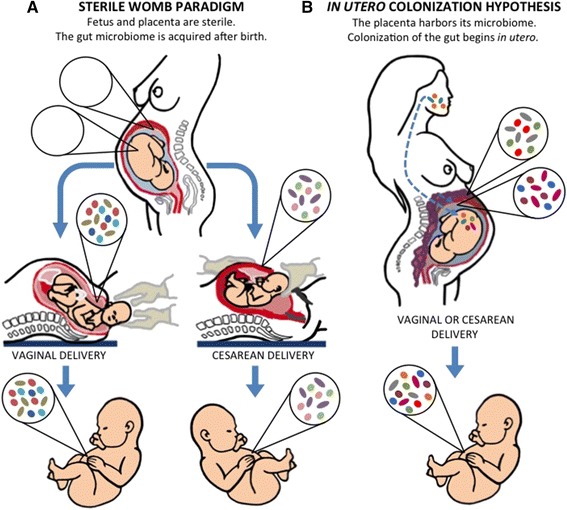
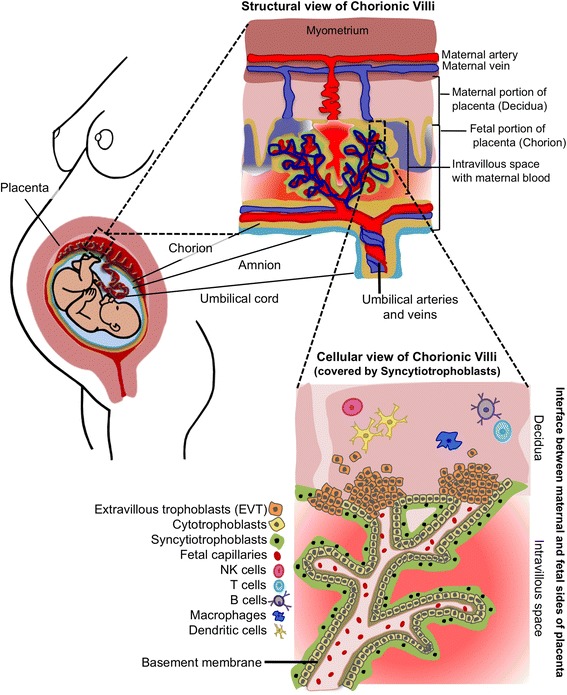
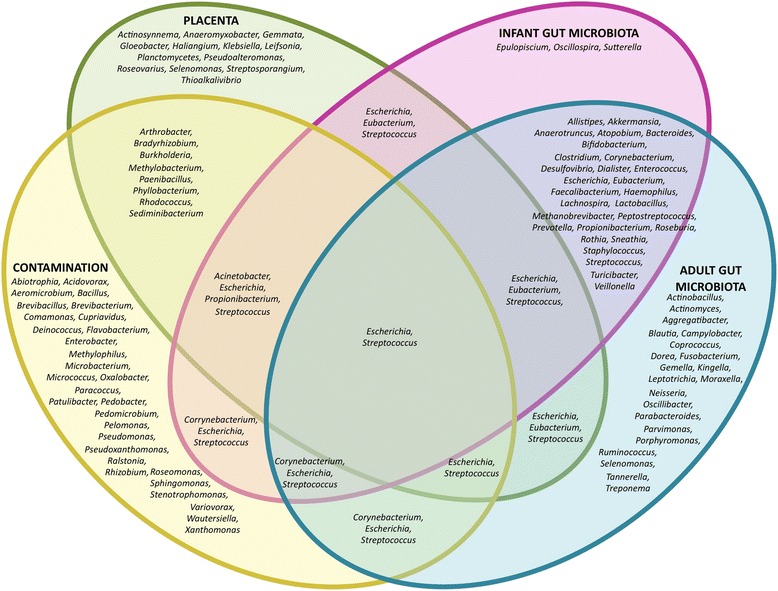
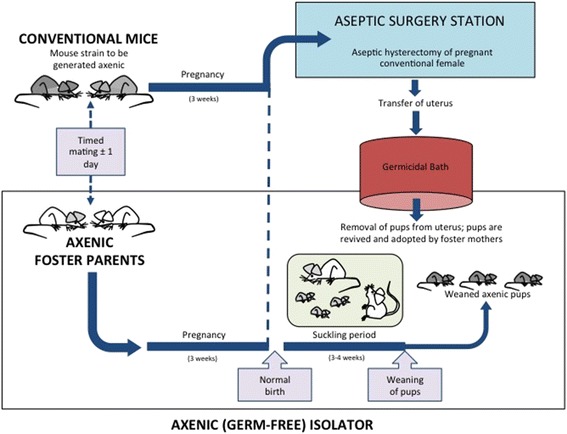
After more than a century of active research, the notion that the human fetal environment is sterile and that the neonate's microbiome is acquired during and after birth was an accepted dogma. However, recent studies using molecular techniques suggest bacterial communities in the placenta, amniotic fluid, and meconium from healthy pregnancies. These findings have led many scientists to challenge the "sterile womb paradigm" and propose that microbiome acquisition instead begins in utero, an idea that would fundamentally change our understanding of gut microbiota acquisition and its role in human development. In this review, we provide a critical assessment of the evidence supporting these two opposing hypotheses, specifically as it relates to (i) anatomical, immunological, and physiological characteristics of the placenta and fetus; (ii) the research methods currently used to study microbial populations in the intrauterine environment; (iii) the fecal microbiome during the first days of life; and (iv) the generation of axenic animals and humans. Based on this analysis, we argue that the evidence in support of the "in utero colonization hypothesis" is extremely weak as it is founded almost entirely on studies that (i) used molecular approaches with an insufficient detection limit to study "low-biomass" microbial populations, (ii) lacked appropriate controls for contamination, and (iii) failed to provide evidence of bacterial viability. Most importantly, the ability to reliably derive axenic animals via cesarean sections strongly supports sterility of the fetal environment in mammals. We conclude that current scientific evidence does not support the existence of microbiomes within the healthy fetal milieu, which has implications for the development of clinical practices that prevent microbiome perturbations after birth and the establishment of future research priorities.
Overview
The claims and statistics of this paper haven’t been checked yet.
Run the check — free, no account needed. It reads the open-access text and checks the sources it cites.
Integrity signals
Registry
Cites
Statistics
Figures
Verification
Claims the paper makes
The claims and statistics of this paper haven’t been checked yet.
Run the check — free, no account needed. It reads the open-access text and checks the sources it cites.
Claims other papers make about this one
Each is checked against this paper’s own text: does it say what the citing paper says it does?
The source backs part of the claim, not all of it — or backs it for a different population, condition or comparison.
In the citing paper
“However, oral bacteria have been detected at various sites within the uterus.110, 111”
From The oral microbiome: Role of key organisms and complex networks in oral health and disease (2021) · cites this paper as [110]
Experimental — accuracy not yet measuredIn the citing paper
“Conversely, but equally important, the infant gut is largely thought to be sterile in utero and colonized during birth and postnatally with a trajectory toward an adult-like complexity taking approximately 3 years (Clarke et al., 2014a;Perez-Munoz et al., 2017).”
From Gut reactions: Breaking down xenobiotic–microbiome interactions (2019) · cites this paper as Perez-Munoz et al., 2017
In the citing paper
“Current research findings suggest that the prenatal oral cavity is sterile until birth after which colonization with microorganisms occurs upon exposure to the external environment.110”
From The oral microbiome: Role of key organisms and complex networks in oral health and disease (2021) · cites this paper as [110]
Self-check
Percentages, sums and reported differences re-computed from the paper’s own numbers.
The self-check needs the paper’s full text.
Citations
Cites
Structure, function and diversity of the healthy human microbiome
The Human Microbiome Project Consortium (2012) · Nature · doi:10.1038/nature11234 · Cited by 11,726
Dominguez-Bello, M. G., Costello, E. K., Contreras, M., Magris, M., Hidalgo, G., Fierer, N., & Knight, R. (2010) · Proceedings of the National Academy of Sciences · doi:10.1073/pnas.1002601107 · Cited by 4,774
Conjectures and Refutations: The Growth of Scientific Knowledge.
HESSE, M. B., & Popper, K. R. (1965) · The Philosophical Quarterly · doi:10.2307/2218271 · Cited by 4,213
The Sociology of Science: Theoretical and Empirical Investigations
Kaplan, N. M., Merton, R. Κ., & Storer, N. W. (1974) · Technology and Culture · doi:10.2307/3102264 · Cited by 4,030
Reagent and laboratory contamination can critically impact sequence-based microbiome analyses
Salter, S. J., Cox, M. J., Turek, E. M., Calus, S. T., Cookson, W. O., Moffatt, M. F., Turner, P., Parkhill, J., Loman, N. J., & Walker, A. W. (2014) · BMC Biology · doi:10.1186/s12915-014-0087-z · Cited by 3,463
Dynamics and Stabilization of the Human Gut Microbiome during the First Year of Life
Bäckhed, F., Roswall, J., Peng, Y., Feng, Q., Jia, H., Kovatcheva-Datchary, P., Li, Y., Xia, Y., Xie, H., Zhong, H., et al. (2015) · Cell Host & Microbe · doi:10.1016/j.chom.2015.04.004 · Cited by 3,315
The Placenta Harbors a Unique Microbiome
Aagaard, K., Ma, J., Antony, K. M., Ganu, R., Petrosino, J., & Versalovic, J. (2014) · Science Translational Medicine · doi:10.1126/scitranslmed.3008599 · Cited by 2,494
Akkermansia muciniphila gen. nov., sp. nov., a human intestinal mucin-degrading bacterium
Derrien, M., Vaughan, E. E., Plugge, C. M., & de Vos, W. M. (2004) · International Journal of Systematic and Evolutionary Microbiology · doi:10.1099/ijs.0.02873-0 · Cited by 2,094
Early infancy microbial and metabolic alterations affect risk of childhood asthma
Arrieta, M., Stiemsma, L. T., Dimitriu, P. A., Thorson, L., Russell, S., Yurist‐Doutsch, S., Kuzeljevic, B., Gold, M. J., Britton, H. M., Lefebvre, D. L., et al. (2015) · Science Translational Medicine · doi:10.1126/scitranslmed.aab2271 · Cited by 1,832
Antibiotics, birth mode, and diet shape microbiome maturation during early life
Bokulich, N. A., Chung, J., Battaglia, T., Henderson, N., Jay, M., Li, H., D. Lieber, A., Wu, F., Perez-Perez, G. I., Chen, Y., et al. (2016) · Science Translational Medicine · doi:10.1126/scitranslmed.aad7121 · Cited by 1,469
Research works printed but not linked: 1
- Burrage S. Bacteria in the supposedly sterile meconium. J Bacteriol. 1927;13:47.
Cited by
Sorted by citations
Items 901–1,000 of 1,001
Neu, J. (2021) · Elsevier eBooks · doi:10.1016/b978-0-12-820590-7.00002-4
Assessment Of Presumed Sterility Of The Human Placenta And Maternal Bladder
Alhousseini, A. (2019) · Human Biology
Greenberg, J. M. (2020) · Human Biology
Modulating the immune system and intestinal barrier integrity with functional oligosaccharides
Figueroa‐Lozano, S. (2021) · University of Groningen research database (University of Groningen / Centre for Information Technology) · doi:10.33612/diss.151659844
Early Life Events With Microbiota Mediated Effects on Brain Functions
Ignjatović, Đ. (2021) · Elsevier eBooks · doi:10.1016/b978-0-12-819265-8.00058-9
Gut Dysbiosis and Neurological Disorders—An Eclectic Perspective
Bostancıklıoğlu, M., & Demir, T. (2021) · Elsevier eBooks · doi:10.1016/b978-0-12-819265-8.00041-3 · Cited by 1
Τaka, S. (2021) · The microbiomes of humans, animals, plants, and the environment · doi:10.1007/978-3-030-59642-2_10
Compliance to Gluten-Free Diet May Regenerate Probiotic Microbiota
Kumari, M., Arora, M., Kaur, N., Singh, R., & Bansal, P. (2021) · Journal of Integrated Health Sciences · doi:10.4103/jihs.jihs_34_20
Bippert, C. (2020) · eScholarship@McGill (McGill) · doi:10.82308/53640
Curi, M. A. M., Borges, M. C. L., Geraldo-Martins, V. R., da Silva, C. B., Rodrigues, R. R., Rodrigues, D. B. R., Pereira, S. A. D. L., & Nogueira, R. D. (2021) · Research Society and Development · doi:10.33448/rsd-v10i16.23791
Update on fecal microbial transplantation for the treatment of inflammatory bowel disease
Llirós, M., Lluansí, A., Peries, L., Bahí, A., Ramió‐Pujol, S., & Aldeguer, X. (2021) · Journal of IMIDs · doi:10.24875/jimids.m21000008
Prenatal and perinatal risk factors for allergic disease development
Filipović, Đ., Filipović, I., Lacković, M., & Mihajlović, S. (2021) · Naucni casopis urgentne medicine - Halo 194 · doi:10.5937/halo27-34346
Yadav, M., & Bhambi, M. (2021) · Elsevier eBooks · doi:10.1016/b978-0-12-819265-8.00078-4
Microbiota in utero? When and Where Microbial Establishment Starts?
Jiménez, E. (2021) · Elsevier eBooks · doi:10.1016/b978-0-12-819265-8.00073-5
Characterization of microbial communities in carbonate sediments
Hoyningen-Huene, A. V. (2021) · doi:10.53846/goediss-8975
Khullar, S., Bamola, V. D., & Chaudhry, R. (2022) · Springer eBooks · doi:10.1007/978-981-16-7865-3_3
Nikolinyová, J. (2022) · Pediatrie pro praxi · doi:10.36290/ped.2022.036
Maternal Microbiota as a Therapeutic Target
Saraçoğlu, F. (2022) · Wiley eBooks · doi:10.1002/9783527825462.ch9
Faculty Opinions recommendation of Innate lymphoid cells in the maternal and fetal compartments.
Lash, G. E. (2019) · Faculty Opinions – Post-Publication Peer Review of the Biomedical Literature · doi:10.3410/f.734311058.793561736
Hall, L. J. (2020) · Faculty Opinions – Post-Publication Peer Review of the Biomedical Literature · doi:10.3410/f.736297589.793574631
Reports of recent Committee meetings
(2017) · Physiology News · doi:10.36866/pn.108.8
Microbiology of Fermented Foods and Beverages
Varzakas, T. H. (2021) · MDPI eBooks · doi:10.3390/books978-3-0365-1847-3
Meet the newest members of your Council
(2017) · Physiology News · doi:10.36866/pn.108.42
Hall, L. J. (2020) · Faculty Opinions – Post-Publication Peer Review of the Biomedical Literature · doi:10.3410/f.735440779.793574633
(2020) · Вестник Российского государственного медицинского университета · doi:10.24075/vrgmu.2020-01
Biscoe, T. (2017) · Physiology News · doi:10.36866/pn.108.6
O’Halloran, K. D. (2017) · Physiology News · doi:10.36866/pn.108.6a
Pierro, A. (2019) · Faculty Opinions – Post-Publication Peer Review of the Biomedical Literature · doi:10.3410/f.733543786.793555359
Be the next Member in the spotlight
(2017) · Physiology News · doi:10.36866/pn.108.9
(2017) · Physiology News · doi:10.36866/pn108.9a
Doyle, K. (2017) · Physiology News · doi:10.36866/pn.108.5
Hall, L. J. (2020) · Faculty Opinions – Post-Publication Peer Review of the Biomedical Literature · doi:10.3410/f.735907003.793574630
Hall, L. J. (2020) · Faculty Opinions – Post-Publication Peer Review of the Biomedical Literature · doi:10.3410/f.737069239.793574617
Neu, J. (2021) · Elsevier eBooks · doi:10.1016/b978-0-12-820590-7.00001-2
Larsen, B. (2019) · Faculty Opinions – Post-Publication Peer Review of the Biomedical Literature · doi:10.3410/f.736297589.793564076
Germain, R. N., & Khan, M. M. (2019) · Faculty Opinions – Post-Publication Peer Review of the Biomedical Literature · doi:10.3410/f.736297589.793566710
Hall, L. J. (2020) · Faculty Opinions – Post-Publication Peer Review of the Biomedical Literature · doi:10.3410/f.733629219.793574622
(2021) · Al-Azhar Journal of Pediatrics · doi:10.21608/azjp.2021.223331
Knudsen, J. K. (2021) · VBN Forskningsportal (Aalborg Universitet) · doi:10.54337/aau455013245
Rehman, K. (2021) · Clinical Research Notes · doi:10.31579/2690-8816/041
Early colonization of the human gut
Gómez, J. M. R. (2022) · Elsevier eBooks · doi:10.1016/b978-0-323-91313-3.00010-6
Bundgaard‐Nielsen, C. (2021) · VBN Forskningsportal (Aalborg Universitet) · doi:10.54337/aau466210133
Alberca, G. G. F. (2020) · Digital Library of Theses and Dissertations (Universidade de São Paulo) · doi:10.11606/t.42.2020.tde-13012022-153608
Porras, D. (2021) · Buleria (Universidad de León) · doi:10.18002/10612/13641
THE ROLE OF “MICROBIAL FACTOR” IN THE DEVELOPMENT OF ADENOMYOSIS (review)
Shcherbyna, M. A., & CHEKHUNOVA, A. O. (2022) · Inter Collegas · doi:10.35339/ic.9.1.59-65
Nutrition and Immunology in Swine
Rodrigues, L. A., Wellington, M. O., Kessel, A. G. V., & Columbus, D. A. (2022) · Wiley eBooks · doi:10.1002/9781119583998.ch9
Role of prenatal microbiota in fetal programming
Zhuk, S. I., Shchurevska, O. D., & Yefisko, V. M. (2022) · Reproductive Endocrinology · doi:10.18370/2309-4117.2022.66.32-38
The Human Gut Microbiome in Health, Disease, and Therapeutics
Pati, N. B., Panda, S., & Jahnsen, F. L. (2022) · Springer eBooks · doi:10.1007/978-981-19-3979-2_11
Interaction of the Microbiota and the Enteric Nervous System During Development
Foong, J. P. P. (2022) · Advances in experimental medicine and biology · doi:10.1007/978-3-031-05843-1_15
Gut microbiome interventions in regenerative medicine
Assalin, H. B., Santos, A., de Souza, A. B., & Bastos, R. G. (2023) · Elsevier eBooks · doi:10.1016/b978-0-323-90471-1.00006-2
Influence of the Gut Microbiota on Neuroendocrine-Immune Interactions
Bailey, M. T. (2023) · Masterclass in neuroendocrinology · doi:10.1007/978-3-031-21358-8_12
NIKITINA, I. M., MYKYTYN, K. V., & GORBAN, N. Y. (2022) · Scientific digest of association of obstetricians and gynecologists of Ukraine · doi:10.35278/2664-0767.2(50).2023.274997
When it doesn't run in the blood(vessels) – events involved in vascular disorders
Kattner, A. A. (2023) · Biomedical Journal · doi:10.1016/j.bj.2023.03.004
Contribution of the Microbiome on Reproductive Outcomes During Pregnancy
Beckers, K. F. (2023) · Louisiana State University · doi:10.31390/gradschool_dissertations.6116
Maternal Factors and the Placenta: A Programming Environment for Cardiovascular Disease
Ching, W. L. W., Day-Walsh, P. E., & Sferruzzi-Perri, A. N. (2023) · BENTHAM SCIENCE PUBLISHERS eBooks · doi:10.2174/9789815165012123010007
Impact of Early Nutrition on the Gut Microbiome
Abad-Jorge, A., & Comess, J. E. (2023) · Topics in Clinical Nutrition · doi:10.1097/tin.0000000000000321
Impacto do consumo de alimentos ultraprocessados na microbiota intestinal na infância
Faggiani, L. D. (2023) · Digital Library of Theses and Dissertations (Universidade de São Paulo) · doi:10.11606/d.6.2023.tde-27102023-130929
MODERN DATA ON THE INTESTINAL MICROBIOME AND THE STAGES OF ITS FORMATION
Богданова, Н. М. (2023) · Children s medicine of the North-West · doi:10.56871/cmn-w.2023.62.43.002
Does Neonatal Microbiome Research Encompass the Placental Transfer Pathway?
Choi, Y. (2023) · Neonatal Medicine · doi:10.5385/nm.2023.30.4.96
Lee, K., Choi, H. J., Shin, H. L., Shin, Y. M., Oh, E. J., Kim, H., Kim, H. J., Park, J. Y., Jung, Y. H., Oh, K. J., et al. (2023) · Journal of Perinatal Medicine · doi:10.1515/jpm-2023-0123
Probiotics as Curators of a Healthy Gut Microbiota
Mills, S., Murphy, A., Dinan, T. G., Cryan, J. F., Stanton, C., & Ross, R. P. (2024) · Elsevier eBooks · doi:10.1016/b978-0-323-99971-7.00006-0
The effect of probiotics oral administration during gestation on infant gut microbiota in early lifePreprint
Lin, Y., Chai, Y., Wu, L., Li, Y., Long, Q., Gong, X., Luo, H., & Xiao, X. (2024) · Research Square · doi:10.21203/rs.3.rs-3989775/v1
Gan, M., Wu, B., Yan, G., Li, G., Sun, L., Lü, G., & Zhou, W. (2021) · Figshare · doi:10.6084/m9.figshare.16779894
Gan, M., Wu, B., Yan, G., Li, G., Sun, L., Lü, G., & Zhou, W. (2021) · Figshare · doi:10.6084/m9.figshare.16779903
Gan, M., Wu, B., Yan, G., Li, G., Sun, L., Lü, G., & Zhou, W. (2021) · Figshare · doi:10.6084/m9.figshare.16779897
Gan, M., Wu, B., Yan, G., Li, G., Sun, L., Lü, G., & Zhou, W. (2021) · Figshare · doi:10.6084/m9.figshare.16779876
Gan, M., Wu, B., Yan, G., Li, G., Sun, L., Lü, G., & Zhou, W. (2021) · Figshare · doi:10.6084/m9.figshare.16779900
Manus, M. B., Sardaro, M. L. S., Dada, O., Davis, M. I., Romoff, M. R., Torello, S. G., Ubadigbo, E., Wu, R. C., Domínguez-Bello, M. G., Melby, M. K., et al. (2024) · Evolution Medicine and Public Health · doi:10.1093/emph/eoae023
Darmmikrobiota und chronische Nierenerkrankung
Carioca, A. A. F., Sales, S. D. S., & de Melo, B. R. C. (2024) · Springer eBooks · doi:10.1007/978-3-031-65236-3_6
Implantation des Mikrobioms beim Kind
Weidlich, S. (2024) · Springer eBooks · doi:10.1007/978-3-662-68455-9_5
The Role of Microbiome in Nervous and Immune System Development
Wang, H., Lim, J. J., & Tang, Q. (2025) · Elsevier eBooks · doi:10.1016/b978-0-323-95488-4.00244-8
Research Progress on Intestinal Microbiota in Neonatal Necrotizing Enterocolitis
曹, 涵. (2025) · Advances in Clinical Medicine · doi:10.12677/acm.2025.154901
Microbiome in Patients with Atopic Dermatitis
Rehbinder, E. M., Rapin, A., & Ubags, N. D. J. (2025) · Springer eBooks · doi:10.1007/978-3-031-82689-4_6
Kumar, H., Dhanjal, D. S., Dhalaria, R., Kimta, N., Cimler, R., & Kuča, K. (2025) · International review of neurobiology · doi:10.1016/bs.irn.2025.04.005
Patronidou, D., Taskou, C., Athanasiadou, C. R., Dourou, P. D., & Sousamli, A. E. (2025) · World Journal of Advanced Research and Reviews · doi:10.30574/wjarr.2025.27.1.2601
Yang, Y., He, W., Li, J., Wang, J., Tang, Y., & Shang, H. (2025) · Scientific Reports · doi:10.1038/s41598-025-05411-4
Dietary and gut microbial factors in the development of bipolar disorder
Czarnik, W., Broniecka, A., Batko, K., Jakubczak, A., Malik, S., Wacławek, K., Głodowska, K., Bacik, M., & Rdzanek, B. J. (2025) · Medical Science · doi:10.54905/disssi.v29i163.e182ms3718
Wang, X., Ding, N., Li, X.-F., Lu, M., & Wang, P. (2025) · Frontiers in Cellular and Infection Microbiology · doi:10.3389/fcimb.2025.1646125
Jimenez, C. R., Assalim, G., Gomes, J. F., Fernandes, M. A., Presuto, L. M., Corrêa, P. S., & Louvandini, H. (2025) · Ciência Animal Brasileira · doi:10.1590/1809-6891v26e-80984p
Examining associations among caregiver stress, social support, and the infant gut microbiota
Vogel, S. C., Querdasi, F. R., Callaghan, B. L., & Brito, N. H. (2025) · Scientific Reports · doi:10.1038/s41598-025-30553-w
Xue, C., Xie, Q., Zhang, C., Hu, Y., Song, X., Jia, Y., Shi, X., Chen, Y., Liu, Y., Zhao, L., et al. (2022) · Figshare · doi:10.6084/m9.figshare.20454680
Zou, A., Nadeau, K., Xiong, X., Wang, P. W., Copeland, J. K., Lee, J. Y., Pierre, J. S., Ty, M., Taj, B., Brumell, J. H., et al. (2022) · Figshare · doi:10.6084/m9.figshare.20488779
dos Anjos Borges, L. G., Pastuschek, J., Heimann, Y., Dawczynski, K., Schleußner, E., Dietmar, P., & Zöllkau, J. (2024) · Figshare · doi:10.6084/m9.figshare.26574691
Casaro, M. B., Thomas, A. M., Mendes, E., Fukumori, C., Ribeiro, W. R., Oliveira, F. A., Crisma, A. R., Murata, G. M., Bizzarro, B., Sá‐Nunes, A., et al. (2021) · Figshare · doi:10.6084/m9.figshare.14767480
Zou, A., Nadeau, K., Xiong, X., Wang, P. W., Copeland, J. K., Lee, J. Y., Pierre, J. S., Ty, M., Taj, B., Brumell, J. H., et al. (2022) · Figshare · doi:10.6084/m9.figshare.20488758
Wanelik, K. M., Raulo, A., Troitsky, T. S., Husby, A., & Knowles, S. C. L. (2023) · Figshare · doi:10.6084/m9.figshare.23273356
Wanelik, K. M., Raulo, A., Troitsky, T. S., Husby, A., & Knowles, S. C. L. (2023) · Figshare · doi:10.6084/m9.figshare.23273353
Wanelik, K. M., Raulo, A., Troitsky, T. S., Husby, A., & Knowles, S. C. L. (2023) · Figshare · doi:10.6084/m9.figshare.23273350
Zou, A., Nadeau, K., Xiong, X., Wang, P. W., Copeland, J. K., Lee, J. Y., Pierre, J. S., Ty, M., Taj, B., Brumell, J. H., et al. (2022) · Figshare · doi:10.6084/m9.figshare.20488821
Zou, A., Nadeau, K., Xiong, X., Wang, P. W., Copeland, J. K., Lee, J. Y., Pierre, J. S., Ty, M., Taj, B., Brumell, J. H., et al. (2022) · Figshare · doi:10.6084/m9.figshare.20488767
dos Anjos Borges, L. G., Pastuschek, J., Heimann, Y., Dawczynski, K., Schleußner, E., Dietmar, P., & Zöllkau, J. (2024) · Figshare · doi:10.6084/m9.figshare.26574679
Zou, A., Nadeau, K., Xiong, X., Wang, P. W., Copeland, J. K., Lee, J. Y., Pierre, J. S., Ty, M., Taj, B., Brumell, J. H., et al. (2022) · Figshare · doi:10.6084/m9.figshare.20488809
Zou, A., Nadeau, K., Xiong, X., Wang, P. W., Copeland, J. K., Lee, J. Y., Pierre, J. S., Ty, M., Taj, B., Brumell, J. H., et al. (2022) · Figshare · doi:10.6084/m9.figshare.20488749
Zou, A., Nadeau, K., Xiong, X., Wang, P. W., Copeland, J. K., Lee, J. Y., Pierre, J. S., Ty, M., Taj, B., Brumell, J. H., et al. (2022) · Figshare · doi:10.6084/m9.figshare.20488824
Xue, C., Xie, Q., Zhang, C., Hu, Y., Song, X., Jia, Y., Shi, X., Chen, Y., Liu, Y., Zhao, L., et al. (2022) · Figshare · doi:10.6084/m9.figshare.20454692
Xue, C., Xie, Q., Zhang, C., Hu, Y., Song, X., Jia, Y., Shi, X., Chen, Y., Liu, Y., Zhao, L., et al. (2022) · Figshare · doi:10.6084/m9.figshare.20454677
Gan, M., Wu, B., Yan, G., Li, G., Sun, L., Lu, G., & Zhou, W. (2021) · Figshare · doi:10.6084/m9.figshare.16779882
Metadata
- Authors
- Perez-Muñoz, M. E., Arrieta, M.-C., Ramer-Tait, A. E., & Walter, J.
- Affiliations
- University of Calgary (CA)
- University of Alberta (CA)
- Corresponding author
- Walter, Jens
- Venue
- Microbiome
- Published
- 2017-04-28
- Volume
- 5
- Issue
- 1
- Pages
- 48-48
- ISSN
- 2049-2618 (ISSN-L)
- PMC
- PMC5410102
- OpenAlex
- W2609646274
- Cited by
- 1,096
- References
- 154
- Citations by year
- 2026: 56 · 2025: 81 · 2024: 108 · 2023: 116 · 2022: 140 · 2021: 154 · 2020: 167 · 2019: 117 · 2018: 104 · 2017: 52
- FWCI
- 11.25
- Type
- journal article
- Language
- en
- Open access
- gold
- doi.org
- Licence
- cc-by
- Locations
- Microbiome (publishedVersion, cc-by)
- Europe PMC (PubMed Central) (publishedVersion, cc-by)
- PubMed Central (publishedVersion, cc-by)
- PubMed (publishedVersion)
- Lincoln (University of Nebraska) (submittedVersion, cc-by)
- DOAJ (DOAJ: Directory of Open Access Journals) (submittedVersion, cc-by-sa)
- Libraries and Cultural Resources (University of Calgary) (submittedVersion)
- Funders
- Crohn's and Colitis Foundation of America
- University of Nebraska-Lincoln
- University of Calgary
- Crohn's and Colitis Foundation
- Nebraska Corn Board
- University of Alberta
- Alberta Innovates
- National Institutes of Health
- Directorate for Biological Sciences
- National Institute of General Medical Sciences (P20GM104320, R01GM099525)
- Topics
- Life Sciences › Biochemistry, Genetics and Molecular Biology › Molecular Biology › Gut microbiota and health
- Health Sciences › Nursing › Nutrition and Dietetics › Infant Nutrition and Health
- Physical Sciences › Environmental Science › Ecology › Microbial Community Ecology and Physiology
- Keywords
- neonatal gut microbiota, placenta, amniotic fluid, meconium, cesarean section, contamination control, bacterial viability
- MeSH terms
- Gastrointestinal Microbiome, Animals, Female, Fetus, Humans, Infant, Infant, Newborn, Pregnancy, Uterus, Microbiota
About these checks
Registry, retraction, Cites and statistics results are computed, not judged, with one exception: a printed reference that no index lists is read once by a model before it counts as a citation error. Claims are extracted by a model and kept only when their quote appears verbatim in the text; each cited source is then checked, with a model’s help, for whether it says what the claim relies on. Those verdicts can be wrong — read the claim’s quote and the cited source before relying on one.
Statistics and arithmetic are recomputed, not judged.
Confidence bands are shown only for fields calibrated on our annotated test set. None is calibrated yet, so no band is shown.
What counts as a claim ›How we measure confidence ›How we check this ›
Are you an author, or do you see a problem with this page? Request a review
