

The DOI matches its Crossref record; 154 of the 154 references it cites were found in a registry or an index.
A critical assessment of the “sterile womb” and “in utero colonization” hypotheses: implications for research on the pioneer infant microbiome
Open accessAbstract
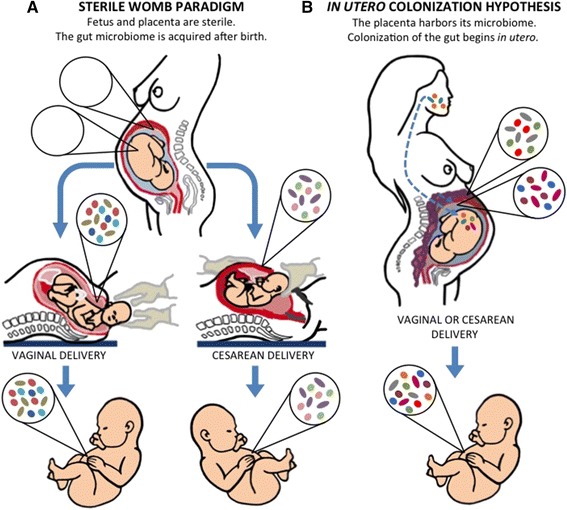
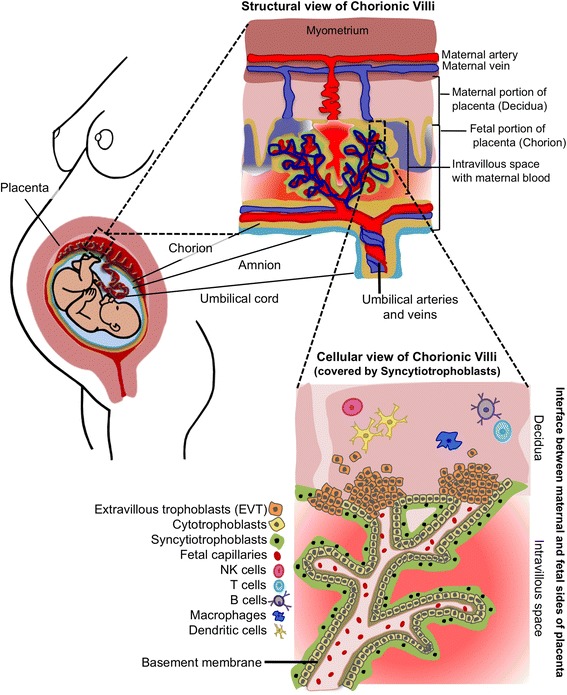
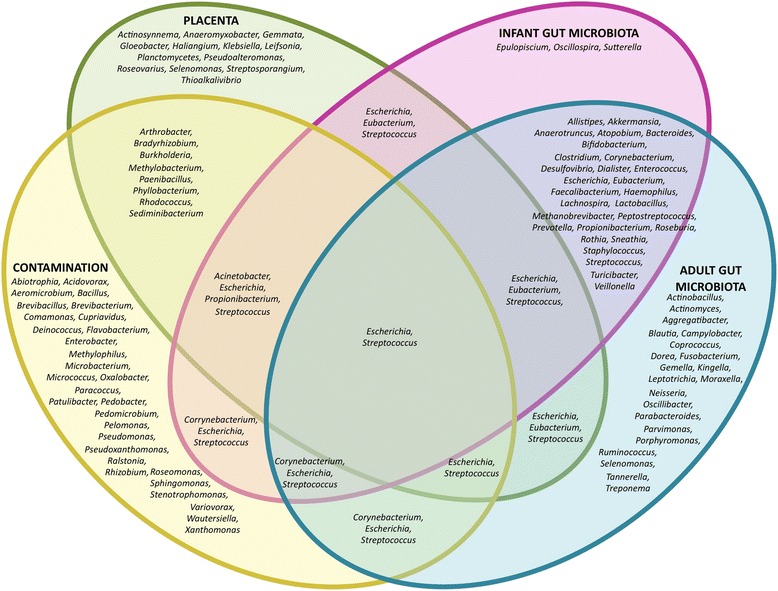
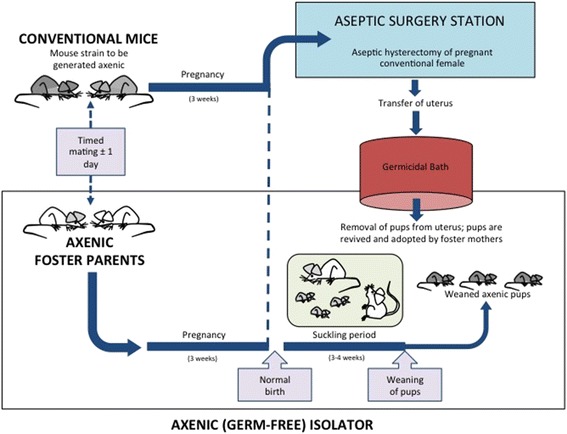
After more than a century of active research, the notion that the human fetal environment is sterile and that the neonate's microbiome is acquired during and after birth was an accepted dogma. However, recent studies using molecular techniques suggest bacterial communities in the placenta, amniotic fluid, and meconium from healthy pregnancies. These findings have led many scientists to challenge the "sterile womb paradigm" and propose that microbiome acquisition instead begins in utero, an idea that would fundamentally change our understanding of gut microbiota acquisition and its role in human development. In this review, we provide a critical assessment of the evidence supporting these two opposing hypotheses, specifically as it relates to (i) anatomical, immunological, and physiological characteristics of the placenta and fetus; (ii) the research methods currently used to study microbial populations in the intrauterine environment; (iii) the fecal microbiome during the first days of life; and (iv) the generation of axenic animals and humans. Based on this analysis, we argue that the evidence in support of the "in utero colonization hypothesis" is extremely weak as it is founded almost entirely on studies that (i) used molecular approaches with an insufficient detection limit to study "low-biomass" microbial populations, (ii) lacked appropriate controls for contamination, and (iii) failed to provide evidence of bacterial viability. Most importantly, the ability to reliably derive axenic animals via cesarean sections strongly supports sterility of the fetal environment in mammals. We conclude that current scientific evidence does not support the existence of microbiomes within the healthy fetal milieu, which has implications for the development of clinical practices that prevent microbiome perturbations after birth and the establishment of future research priorities.
Overview
The claims and statistics of this paper haven’t been checked yet.
Run the check — free, no account needed. It reads the open-access text and checks the sources it cites.
Integrity signals
Registry
Cites
Statistics
Figures
Verification
Claims the paper makes
The claims and statistics of this paper haven’t been checked yet.
Run the check — free, no account needed. It reads the open-access text and checks the sources it cites.
Claims other papers make about this one
Each is checked against this paper’s own text: does it say what the citing paper says it does?
The source backs part of the claim, not all of it — or backs it for a different population, condition or comparison.
In the citing paper
“However, oral bacteria have been detected at various sites within the uterus.110, 111”
From The oral microbiome: Role of key organisms and complex networks in oral health and disease (2021) · cites this paper as [110]
Experimental — accuracy not yet measuredIn the citing paper
“Conversely, but equally important, the infant gut is largely thought to be sterile in utero and colonized during birth and postnatally with a trajectory toward an adult-like complexity taking approximately 3 years (Clarke et al., 2014a;Perez-Munoz et al., 2017).”
From Gut reactions: Breaking down xenobiotic–microbiome interactions (2019) · cites this paper as Perez-Munoz et al., 2017
In the citing paper
“Current research findings suggest that the prenatal oral cavity is sterile until birth after which colonization with microorganisms occurs upon exposure to the external environment.110”
From The oral microbiome: Role of key organisms and complex networks in oral health and disease (2021) · cites this paper as [110]
Self-check
Percentages, sums and reported differences re-computed from the paper’s own numbers.
The self-check needs the paper’s full text.
Citations
Cites
Structure, function and diversity of the healthy human microbiome
The Human Microbiome Project Consortium (2012) · Nature · doi:10.1038/nature11234 · Cited by 11,726
Dominguez-Bello, M. G., Costello, E. K., Contreras, M., Magris, M., Hidalgo, G., Fierer, N., & Knight, R. (2010) · Proceedings of the National Academy of Sciences · doi:10.1073/pnas.1002601107 · Cited by 4,774
Conjectures and Refutations: The Growth of Scientific Knowledge.
HESSE, M. B., & Popper, K. R. (1965) · The Philosophical Quarterly · doi:10.2307/2218271 · Cited by 4,213
The Sociology of Science: Theoretical and Empirical Investigations
Kaplan, N. M., Merton, R. Κ., & Storer, N. W. (1974) · Technology and Culture · doi:10.2307/3102264 · Cited by 4,030
Reagent and laboratory contamination can critically impact sequence-based microbiome analyses
Salter, S. J., Cox, M. J., Turek, E. M., Calus, S. T., Cookson, W. O., Moffatt, M. F., Turner, P., Parkhill, J., Loman, N. J., & Walker, A. W. (2014) · BMC Biology · doi:10.1186/s12915-014-0087-z · Cited by 3,463
Dynamics and Stabilization of the Human Gut Microbiome during the First Year of Life
Bäckhed, F., Roswall, J., Peng, Y., Feng, Q., Jia, H., Kovatcheva-Datchary, P., Li, Y., Xia, Y., Xie, H., Zhong, H., et al. (2015) · Cell Host & Microbe · doi:10.1016/j.chom.2015.04.004 · Cited by 3,315
The Placenta Harbors a Unique Microbiome
Aagaard, K., Ma, J., Antony, K. M., Ganu, R., Petrosino, J., & Versalovic, J. (2014) · Science Translational Medicine · doi:10.1126/scitranslmed.3008599 · Cited by 2,494
Akkermansia muciniphila gen. nov., sp. nov., a human intestinal mucin-degrading bacterium
Derrien, M., Vaughan, E. E., Plugge, C. M., & de Vos, W. M. (2004) · International Journal of Systematic and Evolutionary Microbiology · doi:10.1099/ijs.0.02873-0 · Cited by 2,094
Early infancy microbial and metabolic alterations affect risk of childhood asthma
Arrieta, M., Stiemsma, L. T., Dimitriu, P. A., Thorson, L., Russell, S., Yurist‐Doutsch, S., Kuzeljevic, B., Gold, M. J., Britton, H. M., Lefebvre, D. L., et al. (2015) · Science Translational Medicine · doi:10.1126/scitranslmed.aab2271 · Cited by 1,832
Antibiotics, birth mode, and diet shape microbiome maturation during early life
Bokulich, N. A., Chung, J., Battaglia, T., Henderson, N., Jay, M., Li, H., D. Lieber, A., Wu, F., Perez-Perez, G. I., Chen, Y., et al. (2016) · Science Translational Medicine · doi:10.1126/scitranslmed.aad7121 · Cited by 1,469
Research works printed but not linked: 1
- Burrage S. Bacteria in the supposedly sterile meconium. J Bacteriol. 1927;13:47.
Cited by
Sorted by citations
Items 801–900 of 1,001
Microbe–Host Metabolic Interaction: Probiotic Approach
Parvathy, K. R. K., Mallick, B., Unpaprom, Y., Maniam, G. P., Govindan, N., & Balasubramanian, P. (2022) · Springer eBooks · doi:10.1007/978-981-19-3979-2_9 · Cited by 2
Importance of the Microbiota in Early Life and Influence on Future Health
Collins, J. M., Cryan, J. F., & O’Mahony, S. M. (2024) · Elsevier eBooks · doi:10.1016/b978-0-323-99971-7.00017-5 · Cited by 2
Adhikari, B., Kwon, Y. M., Hargis, B. M., & Téllez‐Isaías, G. (2018) · IntechOpen eBooks · doi:10.5772/intechopen.77953 · Cited by 3
Laboratory Analysis Techniques for the Perinatal Microbiome
Malloy, E., Kates, A., Watson, L., VandeVusse, L., Safdar, N., & Hanson, L. (2020) · The Journal of Perinatal & Neonatal Nursing · doi:10.1097/jpn.0000000000000496 · Cited by 2
Prenatal Programming in the Fetus and Placenta
Scorza, P., Doyle, C., & Monk, C. E. (2021) · Springer eBooks · doi:10.1007/978-3-030-60159-1_4 · Cited by 2
Diet Rather than Genetic Status Shapes the Gut Microbiota in Two Congeneric SnakesPreprint
Qu, Y., Wu, Y., Jiang, Y., & Ji, X. (2022) · Research Square · doi:10.21203/rs.3.rs-1199811/v1 · Cited by 2
Bacterial profiles of the human placenta from term and preterm deliveriesPreprint
Theis, K. R., Winters, A. D., Romero, R. J., Alhousseini, A., Greenberg, J. M., Panzer, J. J., Galaz, J., Pacora, P., Shaffer, Z. D., Jung, E., et al. (2022) · bioRxiv (Cold Spring Harbor Laboratory) · doi:10.1101/2022.06.21.497119 · Cited by 2
Effects of Antibiotics on the Uterine Microbial Community of Mice
Kim, S.-G., Kim, D., & Jang, H. S. (2022) · Development & Reproduction · doi:10.12717/dr.2022.26.4.145 · Cited by 2
Lactancia materna como elemento clave para la integración neurosensorial
Castaño, M. C. (2024) · Acta Pediátrica de México · doi:10.18233/apm.v45is3.2793 · Cited by 1
Косенкова, Т. В., Новикова, В. П., Александровна, Б. Е., Kelmanson, I. A., Zazerskaya, I. E., Lavrova, O., & Болдырева, М. Н. (2024) · Meditsinskiy sovet = Medical Council · doi:10.21518/ms2024-304 · Cited by 1
Antibiotic-associated dysbiosis: modern strategy for microbiota restoration. A review
Dzottsoeva, E. S., Gorelov, A. V., & Khabibulina, L. R. (2024) · Pediatrics Consilium Medicum · doi:10.26442/26586630.2024.4.203021 · Cited by 1
The Microbial and Metabolic Link Between Gut and Brain
Salamalek, R., Shareef, Y., Abdulridha, F., & Soliman, S. S. M. (2025) · Springer eBooks · doi:10.1007/978-981-96-1305-2_17 · Cited by 1
Microbiome-based dietary supplements for better development and healthy brain
Upadhyay, R., Mani, S., & Sevanan, M. (2025) · International review of neurobiology · doi:10.1016/bs.irn.2025.03.009 · Cited by 1
Bichri, K., Ghanmi, A. E., Kouhen, F., Hamdi, S., Fichtali, K., Mansouri, F. E., Bakkouri, J. E., & Ghazi, B. (2025) · Viruses · doi:10.3390/v17050607 · Cited by 1
Oral microbiota in cesarean-delivered puppies
Burgio, M., Pellegrini, F., Frattina, L., Carbonari, A., Bramante, G., Andriulo, O. M., Camero, M., Lanave, G., Parisi, A., Martella, V., et al. (2025) · Frontiers in Veterinary Science · doi:10.3389/fvets.2025.1711728 · Cited by 2
Rizzi, F. L., Romano, L. F., & Farouk, A. S. (2024) · Journal of Current Research in Oral Surgery · doi:10.51847/npv9lui2oj · Cited by 1
Unraveling Oral Dysbiosis: Microbial Complexity in Common Oral Diseases
Kang, Z., Huang, H., Lin, J., Niu, Y., Chen, J., Tang, J., Hu, Z., Liu, P., & Qu, J. (2026) · MicrobiologyOpen · doi:10.1002/mbo3.70305 · Cited by 1
Microbial shifts in early life: the pediatric gut microbiome and its role in health and disease
Waghmode, S., Viswanathan, R., Koligudde, V., Umare, P., & Lavania, M. (2026) · Gut Microbes · doi:10.1080/19490976.2026.2681763 · Cited by 1
The Immunopathology of Preeclampsia
Garmendia, J. V., Azpurua, H., García, A. H., & Sanctis, J. B. D. (2026) · Biomedicines · doi:10.3390/biomedicines14071591 · Cited by 1
Cömert, T. K., Yavuz, A., & KURAN, Ö. (2026) · International Journal of Molecular Sciences · doi:10.3390/ijms27146488 · Cited by 1
Amniotic fluid microbiome in asymptomatic pregnants at second trimester
Karuserci, Ö. K., Zer, Y., Sucu, S., İşbilen, E., Bademkıran, M. H., & TAŞDEMİR, H. (2021) · Ege Tıp Dergisi · doi:10.19161/etd.886661 · Cited by 1
Allara, M., & Girard, J. R. (2024) · BioEssays · doi:10.1002/bies.202300142 · Cited by 1
Bendová, B., Bímová, B. V., Čížková, D., Daniszová, K., Ďureje, Ľ., Hiadlovská, Z., Macholán, M., Piálek, J., Schmiedová, L., & Kreisinger, J. (2024) · FEMS Microbiology Ecology · doi:10.1093/femsec/fiae075 · Cited by 1
Environmental microbiota as a regulator of children’s health: a one health perspective
Vázquez-Euán, R., Pérez‐Herrera, N., & Rios, J. H. P. (2025) · International Journal of Environmental Health Research · doi:10.1080/09603123.2025.2558204 · Cited by 1
Teh, Z., García-Mauriño, C., & Bhatia, K. (2025) · Gut Microbiome · doi:10.1017/gmb.2025.10014 · Cited by 1
Ragusa, A. (2025) · Toxics · doi:10.3390/toxics13090776 · Cited by 1
Microbiome: Friend or Friendly Foe
Reddy, L. B., & Saier, M. H. (2025) · Microbial Physiology · doi:10.1159/000548748 · Cited by 1
Drivers of diversity within and between microbial communities during stochastic assembly
Marrec, L., & Bank, C. (2025) · Journal of The Royal Society Interface · doi:10.1098/rsif.2025.0329 · Cited by 1
Majeed, U., Fatima, R., Majeed, H., Fu, X., Meng, Q., & Luo, Y. (2026) · Journal of Drug Delivery Science and Technology · doi:10.1016/j.jddst.2026.108460 · Cited by 1
How Trillions of Microbes Residing on Gastrointestinal Tract Maintain Homeostasis with Host Cells?
Adhikari, B., Kwon, Y. M., Hargis, B. M., & Tellez, G. (2018) · Food & Nutrition Journal · doi:10.29011/2575-7091.100070 · Cited by 1
Oxidative stress is harmful, and the TRPM2 channel bears part of the responsibility
Jiang, L. (2017) · Physiology News · doi:10.36866/pn.108.36 · Cited by 1
Microbiota intestinal en pediatría
Camacho, J. H., Pinilla, L. R., Peña, D. S., Dueñas, S. S., Carvajal, D. R., Castillo, N. B., Peña, R. R., Saenz, I. P., Quesada, S. M., Salazar, A. G., et al. (2020) · Revista Repertorio de Medicina y Cirugía · doi:10.31260/repertmedcir.01217372.1100 · Cited by 1
The microbiome and pregnancy complications
Fuhler, G. M. (2020) · Elsevier eBooks · doi:10.1016/b978-0-12-818097-6.00002-x · Cited by 1
Veleri, S. (2021) · Elsevier eBooks · doi:10.1016/b978-0-323-85652-2.00015-4 · Cited by 1
Gut Microbiota and Chronic Kidney Disease
Carioca, A. A. F., Sales, S. D. S., & de Melo, B. R. C. (2022) · Springer eBooks · doi:10.1007/978-3-031-11570-7_6 · Cited by 1
Gut Microbiota Throughout the Lifespan
Ishiguro, E. E., Haskey, N., & Campbell, K. (2023) · Elsevier eBooks · doi:10.1016/b978-0-323-91387-4.00006-5 · Cited by 1
Neubauer, J. C., Kaiser, A., & Hohmann, S. (2023) · Zeitschrift für Kinder- und Jugendpsychiatrie und Psychotherapie · doi:10.1024/1422-4917/a000962 · Cited by 1
Normal human microbiota and dysbiosis: Implications for health and disease
Božić, D. D., Milenković, M., Antić‐Stanković, J., Arsenović-Ranin, N., & Bufan, B. (2024) · Arhiv za farmaciju · doi:10.5937/arhfarm74-46612 · Cited by 1
Bacterial Diversity in Placentas from Complicated Pregnancies Using 16s rRNA Gene Sequencing
Sprong, K. E., Wright, C. A., Pillay, S., San, J. E., Wilkinson, E., & Govender, S. (2024) · Archives of Obstetrics and Gynaecology · doi:10.33696/gynaecology.5.059 · Cited by 1
Hummel, G. L., & Aagaard, K. M. (2024) · American Journal of Reproductive Immunology · doi:10.1111/aji.13897 · Cited by 1
Microbiome and Neurological Disorders
Ijaz, M. U., Akbar, A., Ashraf, A., Yeni, D. K., Naz, H. U., & Shahid, M. (2024) · Springer eBooks · doi:10.1007/978-981-97-3790-1_9 · Cited by 1
Disbiome: A Database Describing Microbiome Alterations in Different Disease States
Janssens, Y., Bronselaer, A., Wynendaele, E., Tré, G. D., & Spiegeleer, B. M. J. D. (2019) · Elsevier eBooks · doi:10.1016/b978-0-12-801238-3.11526-0 · Cited by 1
The rise in eminence of the pseudo ‘exercise guru’ in social media
Onambélé-Pearson, G. L., & Tsintzas, K. (2017) · Physiology News · doi:10.36866/pn.108.22 · Cited by 1
Microbes and the womb: does it matter?
Patton, L., & Neu, J. (2020) · Elsevier eBooks · doi:10.1016/b978-0-12-820602-7.00001-5 · Cited by 1
Epigenetics, exposome and development of the intestinal microbiota in the neonate
Benitez, P. S., & y Terrón, R. P. (2020) · GSC Biological and Pharmaceutical Sciences · doi:10.30574/gscbps.2020.13.2.0367 · Cited by 1
Perinatal factors affecting the gut microbiota — are they preventable?
Ziętek, M., Szczuko, M., Celewicz, Z., & Kordek, A. (2020) · Ginekologia Polska · doi:10.5603/gp.2020.0114 · Cited by 1
Vaginal dysbiosis as a risk factor for the chronic endometritis development
Lyzikova, Y. A. (2020) · Russian Bulletin of Obstetrician-Gynecologist · doi:10.17116/rosakush20202006176 · Cited by 1
The respiratory system, the microbiome and nutrition – new frontiers
Pribac, M., & Pribac, I. L. (2020) · Medic ro · doi:10.26416/med.138.6.2020.4000 · Cited by 1
Effects of Normal and Cancer Host Tissues on Microbiota Development, Persistence, and Dynamics
Amadei, S. S., & Notario, V. (2021) · Springer eBooks · doi:10.1007/978-3-030-77595-7_20 · Cited by 1
THE CONTROVERSIAL ROLE OF PLACENTAL MICROBIOME IN PRETERM BIRTH
Varlas, V. N., Peneş, O. N., & Părlătescu, I. (2021) · Romanian Journal of Infectious Diseases · doi:10.37897/rjid.2021.2.3 · Cited by 1
Microbiota Changes Throughout Life - An Overview
Bačić, A., & Rajilić-Stojanović, M. D. (2021) · Elsevier eBooks · doi:10.1016/b978-0-12-819265-8.00107-8 · Cited by 1
The gut microbiome in neurodegenerative disorders
Abughazaleh, S. J., Euers, L. A., & Quigley, E. M. M. (2021) · Elsevier eBooks · doi:10.1016/b978-0-12-821039-0.00006-x · Cited by 1
How and why to analyze microbiota – a quick guide for clinicians
Horvat, S., & Rupnik, M. (2021) · Acta Medico-Biotechnica · doi:10.18690/actabiomed.191 · Cited by 1
"Human Gut Microbes Assisted Agricultural Food Production for Better Human Health: A New Concept"
Borkar, S. (2023) · Biomedical Journal of Scientific & Technical Research · doi:10.26717/bjstr.2023.48.007655 · Cited by 1
Immunology of Pregnancy and Systemic Consequences
Menzies, F. M. (2023) · Current topics in microbiology and immunology · doi:10.1007/978-3-031-35139-6_10 · Cited by 1
Perschbacher, S., Eckel, N., Gomes, D., Nehring, I., & Ensenauer, R. E. (2024) · Springer eBooks · doi:10.1007/978-3-662-58895-6_7 · Cited by 1
Improving the functional properties of Lactobacillus reuteri
Pallin, A. (2018) · Epsilon Open Archive (Sveriges lantbruksuniversitet biblioteket (Swedish University of Agricultural Sciences)) · Cited by 1
AV Hill’s memoir, Memories and reflections, now available digitally
Elliott, A. C. (2017) · Physiology News · doi:10.36866/pn.108.15 · Cited by 1
Physiology – current trends and future challenges
Lovett, H. (2017) · Physiology News · doi:10.36866/pn.108.13 · Cited by 1
Gut Microbiota; Impacts on Human Health and Wellbeing
Depken, D. E. (2018) · Encyclopedia of the UN sustainable development goals · doi:10.1007/978-3-319-69627-0_77-1 · Cited by 1
Mother to fetus transfer of probiotic lactobacilli in mice
Hashemi, A. (2017) · TSpace (University of Toronto) · Cited by 1
Delivery, Feeding and Gender Differently Contribute to Infant Gut Microbiota DevelopmentPreprint
Ding, J., Ma, X., Ren, H., Zhi, C., Qi, X., Li, Z., Han, L., Zhao, X., Zhuo, Z., Li, A., et al. (2021) · Research Square · doi:10.21203/rs.3.rs-828854/v1 · Cited by 1
(2020) · Bulletin of Russian State Medical University · doi:10.24075/brsmu.2020-01 · Cited by 1
Gut Microbiota: Impacts on Human Health and Wellbeing
Depken, D. E. (2019) · Encyclopedia of the UN sustainable development goals · doi:10.1007/978-3-319-95681-7_77 · Cited by 1
Pai, V., & Prabhu, S. R. (2022) · Wiley eBooks · doi:10.1002/9781119826781.ch7 · Cited by 1
Daele, E. V. (2024) · doi:10.18174/656497 · Cited by 1
Lemaire, M. (2018) · theses.fr (ABES) · doi:10.70675/d4a3481fzc7f5z40b0zba41z08905cdd9ce8 · Cited by 1
Ilchmann-Diounou, H. (2019) · theses.fr (ABES) · doi:10.70675/77d1e895zc1e7z4ff0zab27z0432cc19c25d · Cited by 1
Sciellour, M. L. (2019) · theses.fr (ABES) · doi:10.70675/9856b9fbz4b6fz4178zb870z35e3676a87e0 · Cited by 1
Darmmikrobiom des Menschen: Status quo und Perspektiven
Clavel, T., & Hörmannsperger, G. (2017) · Pädiatrie up2date · doi:10.1055/s-0043-115278
Das veränderte Mikrobiom in Uterus und Plazenta
von Schönfeldt, V., & Jeschke, U. (2018) · Der Gynäkologe · doi:10.1007/s00129-018-4349-7
de Hoog, L., & Bruens, M. (2018) · Huisarts en Wetenschap · doi:10.1007/s12445-018-0397-4
The Microbiome, Metabolome, and Proteome in Preterm Neonatal Sepsis
Nelson, A., & Stewart, C. J. (2019) · Elsevier eBooks · doi:10.1016/b978-0-12-815249-2.00029-4
Early-Life Contributors to Child Well-Being
Lifschitz, C. H., & Lin, W. (2019) · Annals of Nutrition and Metabolism · doi:10.1159/000499153
Effects of the periodontal pathogens Porphyromonas gingivalis and Tannerella forsythia on platelets
Andrews, A. (2019) · Sheffield Hallam University · doi:10.7190/shu-thesis-00159
Furfaro, L. L. (2019) · UWA Profiles and Research Repository (UWA) · doi:10.26182/5cd28171b6884
The Pathogenesis of Preterm Birth: A Guide to Potential Therapeutic Targets
Bennett, P. R. (2019) · Cambridge University Press eBooks · doi:10.1017/9781108564434.028
Yen, S. (2019) · The Atrium (University of Guelph)
Keebaugh, E. S., Williams, L. D., & Ja, W. W. (2019) · Springer eBooks · doi:10.1007/978-3-030-28737-5_12
Impact of infant feeding on the development of preterm gut microbiota
Morais, J. (2019) · Portuguese National Funding Agency for Science, Research and Technology (RCAAP Project by FCT)
Vacation Studentship Scheme: survey of 2013-2015 awardees
Breslin, A. (2017) · Physiology News · doi:10.36866/pn.108.14
Meeting Notes IUPS 2017: The Rhythms of Life
Gurgel, A. R. B. (2017) · Physiology News · doi:10.36866/pn.108.21
Meeting Notes: The Physiological Society Annual General Meeting 2017
Thomas, R. (2017) · Physiology News · doi:10.36866/pn.108.20
Stress and the gut – it’s not all in your mind
Barrett, K. E. (2017) · Physiology News · doi:10.36866/pn.108.28
Mabbett, A. (2017) · Physiology News · doi:10.36866/pn.108.16
Rolfe, V. E. (2017) · Physiology News · doi:10.36866/pn.108.40
Meeting Notes: H3 Symposium: Glio-vascular Coupling
Craggs, L. (2017) · Physiology News · doi:10.36866/pn.108.18
The Association Between Environmental Factors and the Risk of Paediatric Inflammatory Bowel Disease
Elten, M. (2020) · uO Research (University of Ottawa) · doi:10.20381/ruor-24448
Ilie, O., Ciobica, A. S., Bacoanu, G., & Timofte, D. V. (2020) · Bulletin of Integrative Psychiatry · doi:10.36219/bpi.2020.2.07
The microbiome in preterm infants and implications in health
Wang, A. Z., & Claud, E. C. (2020) · Elsevier eBooks · doi:10.1016/b978-0-12-820602-7.00004-0
The Gut Microbiome in Neurodegenerative Disorders
Euers, L. A., & Quigley, E. M. M. (2020) · Oxford University Press eBooks · doi:10.1093/oxfordhb/9780190931544.013.11 · Cited by 1
Орунбаева, Б. М., Attokurov, K., Attokurova, G., Abdullaeva, Z. D., Aytieva, F., & Tuychieva, D. (2020) · Open Journal of Medical Microbiology · doi:10.4236/ojmm.2020.103014
Prenatal origins of the infant gut microbiome
Jochum, M. D., Seferovic, M. D., & Aagaard, K. M. (2020) · Elsevier eBooks · doi:10.1016/b978-0-12-818097-6.00004-3
Nutritional programming effects of probiotic lactobacilli on bone health in CD-1 Elite mice
Stinson, S. E. (2018) · TSpace (University of Toronto)
Human milk oligosaccharides and gut microbiota
Boženský, J. (2020) · Pediatrie pro praxi · doi:10.36290/ped.2020.071
The effect of intestinal microbiota on pregnancy and baby's health
Wójcik, J., Obuchowska, A., Ozga, A., Standyło, A., Obuchowska, K., Kimber-Trojnar, Ż., & Leszczyńska‐Gorzelak, B. (2020) · Journal of Education Health and Sport · doi:10.12775/jehs.2020.10.09.097
Current debate: the trend in probiotic use in preterm infants
Ţincu, I. F., Iancu, M. S., Daviţoiu, A. M., Chindriş, S., & Pleşca, D. A. (2020) · Pediatru ro · doi:10.26416/pedi.60.4.2020.4069
Metadata
- Authors
- Perez-Muñoz, M. E., Arrieta, M.-C., Ramer-Tait, A. E., & Walter, J.
- Affiliations
- University of Calgary (CA)
- University of Alberta (CA)
- Corresponding author
- Walter, Jens
- Venue
- Microbiome
- Published
- 2017-04-28
- Volume
- 5
- Issue
- 1
- Pages
- 48-48
- ISSN
- 2049-2618 (ISSN-L)
- PMC
- PMC5410102
- OpenAlex
- W2609646274
- Cited by
- 1,096
- References
- 154
- Citations by year
- 2026: 56 · 2025: 81 · 2024: 108 · 2023: 116 · 2022: 140 · 2021: 154 · 2020: 167 · 2019: 117 · 2018: 104 · 2017: 52
- FWCI
- 11.25
- Type
- journal article
- Language
- en
- Open access
- gold
- doi.org
- Licence
- cc-by
- Locations
- Microbiome (publishedVersion, cc-by)
- Europe PMC (PubMed Central) (publishedVersion, cc-by)
- PubMed Central (publishedVersion, cc-by)
- PubMed (publishedVersion)
- Lincoln (University of Nebraska) (submittedVersion, cc-by)
- DOAJ (DOAJ: Directory of Open Access Journals) (submittedVersion, cc-by-sa)
- Libraries and Cultural Resources (University of Calgary) (submittedVersion)
- Funders
- Crohn's and Colitis Foundation of America
- University of Nebraska-Lincoln
- University of Calgary
- Crohn's and Colitis Foundation
- Nebraska Corn Board
- University of Alberta
- Alberta Innovates
- National Institutes of Health
- Directorate for Biological Sciences
- National Institute of General Medical Sciences (P20GM104320, R01GM099525)
- Topics
- Life Sciences › Biochemistry, Genetics and Molecular Biology › Molecular Biology › Gut microbiota and health
- Health Sciences › Nursing › Nutrition and Dietetics › Infant Nutrition and Health
- Physical Sciences › Environmental Science › Ecology › Microbial Community Ecology and Physiology
- Keywords
- neonatal gut microbiota, placenta, amniotic fluid, meconium, cesarean section, contamination control, bacterial viability
- MeSH terms
- Gastrointestinal Microbiome, Animals, Female, Fetus, Humans, Infant, Infant, Newborn, Pregnancy, Uterus, Microbiota
About these checks
Registry, retraction, Cites and statistics results are computed, not judged, with one exception: a printed reference that no index lists is read once by a model before it counts as a citation error. Claims are extracted by a model and kept only when their quote appears verbatim in the text; each cited source is then checked, with a model’s help, for whether it says what the claim relies on. Those verdicts can be wrong — read the claim’s quote and the cited source before relying on one.
Statistics and arithmetic are recomputed, not judged.
Confidence bands are shown only for fields calibrated on our annotated test set. None is calibrated yet, so no band is shown.
What counts as a claim ›How we measure confidence ›How we check this ›
Are you an author, or do you see a problem with this page? Request a review
