

The DOI matches its Crossref record; 154 of the 154 references it cites were found in a registry or an index.
A critical assessment of the “sterile womb” and “in utero colonization” hypotheses: implications for research on the pioneer infant microbiome
Open accessAbstract
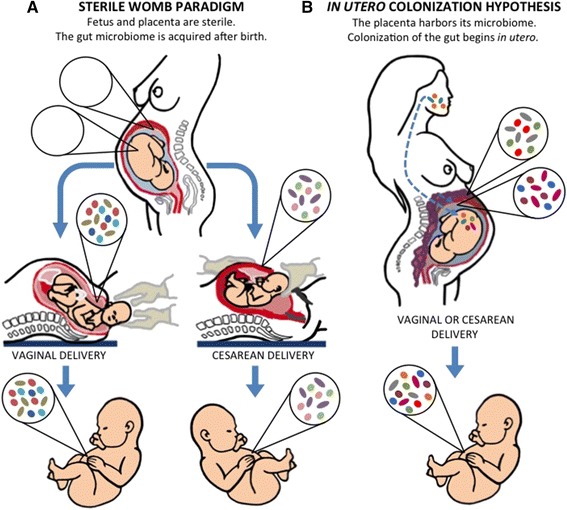
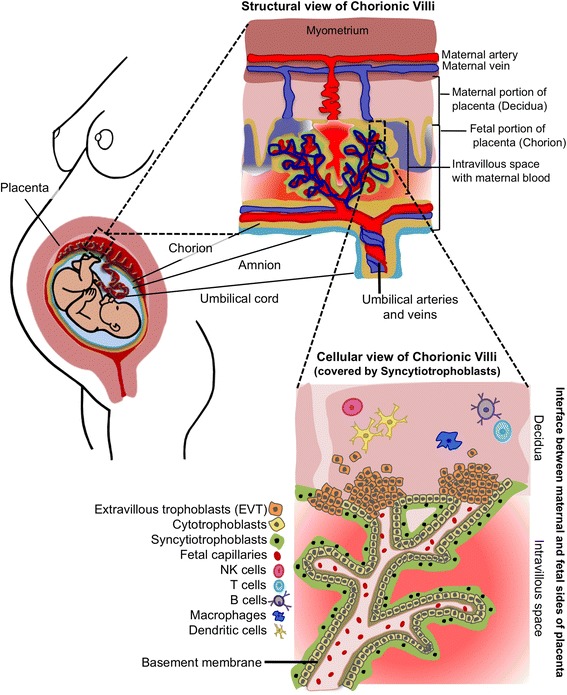
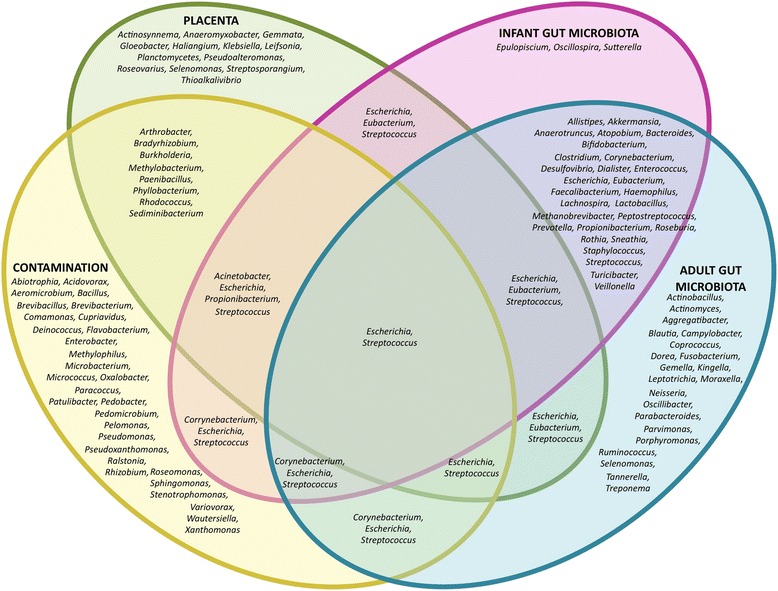
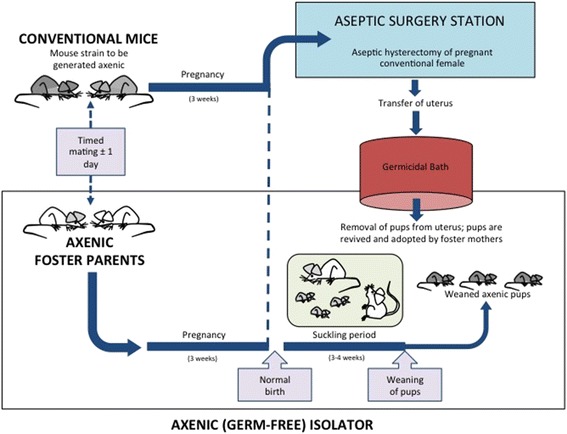
After more than a century of active research, the notion that the human fetal environment is sterile and that the neonate's microbiome is acquired during and after birth was an accepted dogma. However, recent studies using molecular techniques suggest bacterial communities in the placenta, amniotic fluid, and meconium from healthy pregnancies. These findings have led many scientists to challenge the "sterile womb paradigm" and propose that microbiome acquisition instead begins in utero, an idea that would fundamentally change our understanding of gut microbiota acquisition and its role in human development. In this review, we provide a critical assessment of the evidence supporting these two opposing hypotheses, specifically as it relates to (i) anatomical, immunological, and physiological characteristics of the placenta and fetus; (ii) the research methods currently used to study microbial populations in the intrauterine environment; (iii) the fecal microbiome during the first days of life; and (iv) the generation of axenic animals and humans. Based on this analysis, we argue that the evidence in support of the "in utero colonization hypothesis" is extremely weak as it is founded almost entirely on studies that (i) used molecular approaches with an insufficient detection limit to study "low-biomass" microbial populations, (ii) lacked appropriate controls for contamination, and (iii) failed to provide evidence of bacterial viability. Most importantly, the ability to reliably derive axenic animals via cesarean sections strongly supports sterility of the fetal environment in mammals. We conclude that current scientific evidence does not support the existence of microbiomes within the healthy fetal milieu, which has implications for the development of clinical practices that prevent microbiome perturbations after birth and the establishment of future research priorities.
Overview
The claims and statistics of this paper haven’t been checked yet.
Run the check — free, no account needed. It reads the open-access text and checks the sources it cites.
Integrity signals
Registry
Cites
Statistics
Figures
Verification
Claims the paper makes
The claims and statistics of this paper haven’t been checked yet.
Run the check — free, no account needed. It reads the open-access text and checks the sources it cites.
Claims other papers make about this one
Each is checked against this paper’s own text: does it say what the citing paper says it does?
The source backs part of the claim, not all of it — or backs it for a different population, condition or comparison.
In the citing paper
“However, oral bacteria have been detected at various sites within the uterus.110, 111”
From The oral microbiome: Role of key organisms and complex networks in oral health and disease (2021) · cites this paper as [110]
Experimental — accuracy not yet measuredIn the citing paper
“Conversely, but equally important, the infant gut is largely thought to be sterile in utero and colonized during birth and postnatally with a trajectory toward an adult-like complexity taking approximately 3 years (Clarke et al., 2014a;Perez-Munoz et al., 2017).”
From Gut reactions: Breaking down xenobiotic–microbiome interactions (2019) · cites this paper as Perez-Munoz et al., 2017
In the citing paper
“Current research findings suggest that the prenatal oral cavity is sterile until birth after which colonization with microorganisms occurs upon exposure to the external environment.110”
From The oral microbiome: Role of key organisms and complex networks in oral health and disease (2021) · cites this paper as [110]
Self-check
Percentages, sums and reported differences re-computed from the paper’s own numbers.
The self-check needs the paper’s full text.
Citations
Cites
Structure, function and diversity of the healthy human microbiome
The Human Microbiome Project Consortium (2012) · Nature · doi:10.1038/nature11234 · Cited by 11,726
Dominguez-Bello, M. G., Costello, E. K., Contreras, M., Magris, M., Hidalgo, G., Fierer, N., & Knight, R. (2010) · Proceedings of the National Academy of Sciences · doi:10.1073/pnas.1002601107 · Cited by 4,774
Conjectures and Refutations: The Growth of Scientific Knowledge.
HESSE, M. B., & Popper, K. R. (1965) · The Philosophical Quarterly · doi:10.2307/2218271 · Cited by 4,213
The Sociology of Science: Theoretical and Empirical Investigations
Kaplan, N. M., Merton, R. Κ., & Storer, N. W. (1974) · Technology and Culture · doi:10.2307/3102264 · Cited by 4,030
Reagent and laboratory contamination can critically impact sequence-based microbiome analyses
Salter, S. J., Cox, M. J., Turek, E. M., Calus, S. T., Cookson, W. O., Moffatt, M. F., Turner, P., Parkhill, J., Loman, N. J., & Walker, A. W. (2014) · BMC Biology · doi:10.1186/s12915-014-0087-z · Cited by 3,463
Dynamics and Stabilization of the Human Gut Microbiome during the First Year of Life
Bäckhed, F., Roswall, J., Peng, Y., Feng, Q., Jia, H., Kovatcheva-Datchary, P., Li, Y., Xia, Y., Xie, H., Zhong, H., et al. (2015) · Cell Host & Microbe · doi:10.1016/j.chom.2015.04.004 · Cited by 3,315
The Placenta Harbors a Unique Microbiome
Aagaard, K., Ma, J., Antony, K. M., Ganu, R., Petrosino, J., & Versalovic, J. (2014) · Science Translational Medicine · doi:10.1126/scitranslmed.3008599 · Cited by 2,494
Akkermansia muciniphila gen. nov., sp. nov., a human intestinal mucin-degrading bacterium
Derrien, M., Vaughan, E. E., Plugge, C. M., & de Vos, W. M. (2004) · International Journal of Systematic and Evolutionary Microbiology · doi:10.1099/ijs.0.02873-0 · Cited by 2,094
Early infancy microbial and metabolic alterations affect risk of childhood asthma
Arrieta, M., Stiemsma, L. T., Dimitriu, P. A., Thorson, L., Russell, S., Yurist‐Doutsch, S., Kuzeljevic, B., Gold, M. J., Britton, H. M., Lefebvre, D. L., et al. (2015) · Science Translational Medicine · doi:10.1126/scitranslmed.aab2271 · Cited by 1,832
Antibiotics, birth mode, and diet shape microbiome maturation during early life
Bokulich, N. A., Chung, J., Battaglia, T., Henderson, N., Jay, M., Li, H., D. Lieber, A., Wu, F., Perez-Perez, G. I., Chen, Y., et al. (2016) · Science Translational Medicine · doi:10.1126/scitranslmed.aad7121 · Cited by 1,469
Research works printed but not linked: 1
- Burrage S. Bacteria in the supposedly sterile meconium. J Bacteriol. 1927;13:47.
Cited by
Sorted by citations
Items 701–800 of 1,001
Ma, G., Li, Y., Tye, K. D., Huang, T., Tang, X., Luo, H., Wang, D., Zhou, J., Li, Z., & Xiao, X. (2024) · Heliyon · doi:10.1016/j.heliyon.2024.e37157 · Cited by 4
The Existence of an Intra-Amniotic Microbiome: Assessing a Controversy
Uddipto, K., Quinlivan, J. A., & Mendz, G. L. (2024) · Biology · doi:10.3390/biology13110888 · Cited by 4
Relationship with food allergies and birth mode and microbiota
Koç, B. P., Şanlıer, N. T., & Şanlıer, N. (2025) · Egyptian Pediatric Association Gazette · doi:10.1186/s43054-025-00363-w · Cited by 4
Reproductive microbiota in humans: characterization and role in infertility
Poole, R. K., Soffa, D. R., Hickman, K., Ognibene, O. J., & Stuehr, M. D. (2025) · Systems Biology in Reproductive Medicine · doi:10.1080/19396368.2025.2511323 · Cited by 4
Ecological insights into the assembly of bifidobacterial communities in the infant gut
Ojima, M. N., Sakanaka, M., Nakajima, A., Odamaki, T., & Katayama, T. (2025) · Ecological Research · doi:10.1111/1440-1703.70001 · Cited by 5
“The Holobiont as a Biosemiotic System: Health and Dysbiosis Signals in the Human Gut Microbiome”
Méndez-Veras, R. (2025) · Biosemiotics · doi:10.1007/s12304-025-09627-9 · Cited by 4
Kiwior, J., Malina, M. S., Kosiń, K., Polak, A., & Liszka, W. (2025) · Wiadomości Lekarskie · doi:10.36740/wlek/213657 · Cited by 4
Microbiome establishment and maturation: early life environmental factors
Yee, A. L., Das, P., Garcia, M. C. S., Buschmann, M. M., & Gilbert, J. A. (2020) · Elsevier eBooks · doi:10.1016/b978-0-12-820602-7.00002-7 · Cited by 4
On the effect of inheritance of microbes in commensal microbiomes
Zapién-Campos, R., Bansept, F., Sieber, M., & Traulsen, A. (2022) · BMC Ecology and Evolution · doi:10.1186/s12862-022-02029-2 · Cited by 4
Diaz-Lundahl, S., Nørstebø, S. F., Klem, T. B., Gilfillan, G. D., Dalland, M., Gillund, P., & Krogenæs, A. (2023) · Theriogenology · doi:10.1016/j.theriogenology.2023.06.024 · Cited by 4
Šplı́chalová, A., Kindlova, Z., Killer, J., Bunešová, V., Vlková, E., Valaskova, B., Pechar, R., Poláková, K., & Šplı́chal, I. (2023) · Pathogens · doi:10.3390/pathogens12111293 · Cited by 4
Rold, L. S., Jensen, A.-M., Arenholt, L. T. S., Leutscher, P. D. C., Ovesen, P., Hagstrøm, S., & Sørensen, S. (2024) · BMJ Open · doi:10.1136/bmjopen-2023-083358 · Cited by 4
Temporal and Spatial Variation of the Human Placental Microbiota During Pregnancy
Liu, L., Yin, T., Zhang, X., Sun, L., & Yin, Y. (2024) · American Journal of Reproductive Immunology · doi:10.1111/aji.70023 · Cited by 5
Vaginal Seeding: Is There Any Positive Effect in Canine C-Sections?
Beretta, S., de Araújo, R. A., Bianchini, M. O., Bonavina, J. T., Rocha-Júnior, J. D., CAMPOS, N. C., Pizauro, L. J. L., Rodrigues-Silva, F. A., Toniollo, G. H., Cardozo, M. V., et al. (2025) · Animals · doi:10.3390/ani15030416 · Cited by 4
Zhang, X., Li, Y., Pei, Y., Cheng, Y., Zhang, X. C., & Cao, F. (2025) · Journal of Affective Disorders · doi:10.1016/j.jad.2025.04.120 · Cited by 4
Microbiome of the uterine cavity in female patients with chronic endometritis
Lyzikova, Y. A. (2020) · Vestnik of Vitebsk State Medical University · doi:10.22263/2312-4156.2020.6.79 · Cited by 4
Model development: establishing pigs with homogenous microbial profile in the hind gut
Kiros, T. G. G., Pinloche, E., d'Inca, R., Auclair, E., & Kessel, A. V. (2018) · Canadian Journal of Animal Science · doi:10.1139/cjas-2017-0066 · Cited by 4
Modern Medical Genetics and Genomics
Gomy, I. (2019) · IntechOpen eBooks · doi:10.5772/intechopen.76597 · Cited by 4
Gut microbiota as risk factor causing obesity in children
Petrova, P., Aga, A. D., Trapeznikova, E., & Budanova, E. V. (2021) · Health Risk Analysis · doi:10.21668/health.risk/2021.1.17.eng · Cited by 4
The search for aliens within us: a review of evidence and theory regarding the foetal microbiome
Cariño, R., Takayasu, L., Suda, W., Masuoka, H., Hirayama, K., Konishi, S., & Umezaki, M. (2021) · Critical Reviews in Microbiology · doi:10.1080/1040841x.2021.1999903 · Cited by 5
Probiotics in Allergic Diseases
Filipović, I., Lacković, M., Mihajlović, S., Filipović, Đ., Bakic, T. V., & Živković, Z. (2020) · IntechOpen eBooks · doi:10.5772/intechopen.93535 · Cited by 5
Microbioma and probiotics: from gut to Mars
Barreto, B. A. P. (2017) · Brazilian Journal of Otorhinolaryngology · doi:10.1016/j.bjorl.2017.10.004 · Cited by 4
Thulasiraman, S., Gunasekar, M., Narayansamy, A., Sampathkumar, K. U., Kumar, R., & Alam, K. (2024) · Wiley eBooks · doi:10.1002/9781394204007.ch13 · Cited by 4
Influence of the Microbiota Through the Gut-Brain Axis in Neurological Diseases
Guarnotta, V., Mandarino, F. V., Fasulo, E., Maida, M. F., Laterza, L., Sferrazza, S., Raimondo, D., & Sinagra, E. (2024) · Integrated science · doi:10.1007/978-3-031-73061-0_20 · Cited by 3
Du, H., Li, K., Guo, W., Na, M., Zhang, J., Zhang, J., & Na, R. (2025) · Animals · doi:10.3390/ani15070954 · Cited by 5
Gastrointestinal (GI)-lung-brain axis
Bazacliu, C., Roig, J. C., & Neu, J. (2025) · Seminars in Fetal and Neonatal Medicine · doi:10.1016/j.siny.2025.101639 · Cited by 3
Ma, G., Yang, P. C., Lu, T., Deng, X., Meng, L., Xie, H., Zhou, J., Xiao, X., & Tang, X. (2025) · Journal of Reproductive Immunology · doi:10.1016/j.jri.2025.104535 · Cited by 3
The role of dysbiosis in shaping host immunity in endometrial cancer development
Wierzbińska, W., Kuźmycz, O., Kowalczyk, A., & Stączek, P. (2025) · Frontiers in Immunology · doi:10.3389/fimmu.2025.1627285 · Cited by 4
Per- and polyfluoroalkyl substances and the gut microbiota in infants: A scoping review
Olsen, I. A., Eggesbø, M. Å., Trivedi, U., & Timmermann, C. A. G. (2025) · Environmental Research · doi:10.1016/j.envres.2025.122937 · Cited by 3
Early-Life β-Lactam Exposure and the Developing Microbiome: Clinical Relevance and Controversies
Kundnani, N. R., Sharma, A., Levai, M. C., Marin-Bancila, L., Georgescu, D., Botaş, L., Chiriac, S. D., Valcovici, M. D., & Popa, M.-D. (2026) · Microorganisms · doi:10.3390/microorganisms14020440 · Cited by 3
Placental and Fetal Microbiota in Rhesus Macaque: A Case Study Using Metagenomic Sequencing
Du, Q., Liu, X., Zhang, R., Hu, G., Liu, Q., Wang, R., Ma, W., Hu, Y., Fan, Z., & Li, J. (2024) · American Journal of Primatology · doi:10.1002/ajp.23718 · Cited by 3
Hou, S., Jiang, Y., Zhang, F., Cheng, T., Zhao, D., Yao, J., Wen, P., Jin, L., & Huang, S. W. (2025) · Frontiers in Microbiology · doi:10.3389/fmicb.2025.1521108 · Cited by 3
Eriksson, P., Kerney, R. R., Larson-Pollock, R., Vickers, E., & Laugen, A. T. (2025) · Oikos · doi:10.1111/oik.10752 · Cited by 3
Maniscalco, I., Bartochowski, P., Priori, V., Iancau, S. P., Francesco, M. D., Innamorati, M., Jagodzinska, N., Giupponi, G., Masucci, L., Conca, A., et al. (2025) · Microorganisms · doi:10.3390/microorganisms13061290 · Cited by 4
Perinatal nutritional intervention
Campoy, C., Escudero-Marín, M., Diéguez, E., & Cerdó, T. (2020) · Elsevier eBooks · doi:10.1016/b978-0-12-813862-5.00008-6 · Cited by 3
Is There a Role for the Microbiome and Sudden Death? A Systematic Review
Collados-Ros, A., Pérez-Cárceles, M. D., & Legáz, I. (2021) · Life · doi:10.3390/life11121345 · Cited by 3
Presence of Streptococcus mutans and interleukin-6 and -10 in amniotic fluid
Moreira, L. B., da Silva, C. B., Geraldo-Martins, V. R., Frade, F. M. F., Santiago, M. B., & Nogueira, R. D. (2022) · The Journal of Maternal-Fetal & Neonatal Medicine · doi:10.1080/14767058.2022.2042245 · Cited by 3
Mejía-León, M. E., Argüelles-Lopez, A., Briseño-Sahagun, P. G., Aguayo-Patrón, S., & de la Barca, A. M. C. (2022) · IntechOpen eBooks · doi:10.5772/intechopen.105168 · Cited by 3
Insufficient Evidence of a Breastmilk Microbiota at Six-Weeks Postpartum: A Pilot Study
Leech, S. M., Gilbert, M. C., Clifton, V. L., Kumar, S., Rae, K. M., Borg, D. J., & Nitert, M. D. (2023) · Nutrients · doi:10.3390/nu15030696 · Cited by 3
Hughes, C. L., & Hughes, G. C. (2023) · Frontiers in Reproductive Health · doi:10.3389/frph.2023.1112935 · Cited by 3
Biocenosis of the vagina. Norm. Disruption. Restoration
Radzinskiy, V. E., Savicheva, A. M., Vorob'ev, S., Владимировна, С. Е., Shalepo, K. V., Budilovskaya, O. V., Husnutdinova, T., Krysanova, A. А., Guschin, A. E., Raevskaya, O., et al. (2023) · Publishing Center RIOR eBooks · doi:10.29039/978-5-907218-72-7 · Cited by 3
Ortiz-Olvera, N. X., Fernández-Figueroa, E. A., Argueta, J., Miranda-Ortíz, H., & Ruíz‐García, E. (2023) · Frontiers in Microbiomes · doi:10.3389/frmbi.2023.1219960 · Cited by 3
Liu, C., Lu, Q., Xi, Q., Xiao, S., Du, J., Qin, R., Wang, J., Xu, B., Han, X., Zhou, K., et al. (2025) · Journal of genetics and genomics/Journal of Genetics and Genomics · doi:10.1016/j.jgg.2025.01.015 · Cited by 3
Human microbiota in dengue infection: A narrative review
Romani, F. E., Luvira, V., Chancharoenthana, W., Albanese, M., Maddaloni, L., Branda, F., D’Amelio, S., Gabrielli, S., Scagnolari, C., Mastroianni, C. M., et al. (2025) · Microbial Pathogenesis · doi:10.1016/j.micpath.2025.107643 · Cited by 3
Cross-Sectional Study on Microbiota and Probiotic with Health Workers
Taş, B. G., Öztürk, G. Z., Maç, Ç. E., Eğici, M. T., & Toprak, D. (2019) · Journal of Academic Research in Nursing · doi:10.5222/jaren.2018.96530 · Cited by 3
Recent advances in the infant gut microbiome and health
Díaz, R., & Garrido, D. A. (2019) · Elsevier eBooks · doi:10.1016/b978-0-12-819178-1.00004-6 · Cited by 3
Maternal microbiome during pregnancy and their impact on the canine microbiome in neonates
Pipan, M. Z., & Mrkun, J. (2020) · Veterinarska stanica · doi:10.46419/vs.51.6.10 · Cited by 4
Ecosistema intestinal en la infancia: rol de los “bióticos”
(2020) · Archivos Argentinos de Pediatria · doi:10.5546/aap.2020.278 · Cited by 3
Early Life Microbiota—Impact of Delivery Mode and Infant Feeding
Ouyang, R., Korpela, K., Liu, X., Xu, G., de Vos, W. M., & Kovatcheva‐Datchary, P. (2021) · Elsevier eBooks · doi:10.1016/b978-0-12-819265-8.00064-4 · Cited by 3
Targeted Development of Infant Microbiota on Formula Feeding: Modern Options
Belyaeva, I. A., Namazova-Baranova, L. S., Петровна, Б. Е., Turti, T. V., & Sadchikov, P. E. (2021) · Вопросы современной педиатрии · doi:10.15690/vsp.v20i6.2354 · Cited by 3
Addressing Spaceflight Biology through the Lens of a Histologist–Embryologist
Theotokis, P., Μanthou, M. E., Deftereou, T.-E., Miliaras, D., & Meditskou, S. (2023) · Life · doi:10.3390/life13020588 · Cited by 3
Kashyap, S., & Das, A. (2023) · Acta Microbiologica et Immunologica Hungarica · doi:10.1556/030.2023.02054 · Cited by 4
Woman’s microbiome and obstetrical and perinatal risks: what do they have in common?
Artyomenko, V., Mnikh, L. V., & Domakova, N. V. (2023) · Reproductive health of woman · doi:10.30841/2708-8731.6.2023.289995 · Cited by 8
Establecimiento del microbiota intestinal del recién nacido durante la lactancia materna
Sánchez-Salguero, E. S. (2024) · Acta Pediátrica de México · doi:10.18233/apm.v45is3.2792 · Cited by 3
Chandel, N., Maile, A., Shrivastava, S., Verma, A. K., & Thakur, V. (2024) · Gut Microbiome · doi:10.1017/gmb.2024.6 · Cited by 3
Maternal transmission as a microbial symbiont sieve, and the absence of lactation in male mammals
Fagan, B., Constable, G. W. A., & Law, R. (2024) · Nature Communications · doi:10.1038/s41467-024-49559-5 · Cited by 4
Horwell, E., Bearn, P. E., & Cutting, S. M. (2024) · Microbiome Research Reports · doi:10.20517/mrr.2024.32 · Cited by 3
Radstake, T. R. D. J. (2018) · Annals of the Rheumatic Diseases · doi:10.1136/annrheumdis-2018-213974 · Cited by 3
Fortune, F., & Hatemi, G. (2019) · Springer eBooks · doi:10.1007/978-3-030-24131-5_13 · Cited by 3
Baby’s First Microbes: The Microbiome of Human Milk
Collado, M. C., Gueimonde, M., Ruíz, L., Aparicio, M., Castro, I., & Rodríguez, J. M. (2019) · Springer eBooks · doi:10.1007/978-3-030-28737-5_1 · Cited by 3
Effect of uterine microbiota on female and offspring health
Macura, B., Majewska‐Szczepanik, M., Strzępa, A., & Szczepanik, M. (2020) · Medycyna Ogólna i Nauki o Zdrowiu · doi:10.26444/monz/124891 · Cited by 3
Transgenerational inheritance: understanding the etiology of a disease
Tolkunova, K., Moguchaya, E. V., & Rotar, O. P. (2021) · Arterial’naya Gipertenziya (Arterial Hypertension) · doi:10.18705/1607-419x-2021-27-2-122-132 · Cited by 3
Microbiota-Brain-Gut Axis and Neurodegenerative Disorders
Abughazaleh, S. J., Euers, L. A., & Quigley, E. M. M. (2021) · Elsevier eBooks · doi:10.1016/b978-0-12-819265-8.00031-0 · Cited by 3
Fontes‐Dutra, M., Rabelo, B. F., Santos‐Terra, J., Deckmann, I., Schwingel, G. B., & Gottfried, C. (2020) · Progress in inflammation research · doi:10.1007/978-3-030-39335-9_11 · Cited by 3
McGill, S., Burchmore, R., Pomeroy, P. P., & Kennedy, M. W. (2022) · Frontiers in Ecology and Evolution · doi:10.3389/fevo.2021.802510 · Cited by 3
Markey, L., Qu, E. B., Mendall, C., Finzel, A., Materna, A. C., & Lieberman, T. D. (2025) · bioRxiv (Cold Spring Harbor Laboratory) · doi:10.1101/2025.06.24.661265 · Cited by 3
Ramcharran, H., Ghosh, A., Meng, Q., Li, G., Chernov, E. S., Lutz, M. R., Mansour, H. M., Satalin, J. M., Satalin, S., Gaver, D. P., et al. (2024) · Biomedicine Hub · doi:10.1159/000542807 · Cited by 2
Introduction to microbiomes in health and diseases
Agrawal, P., Mendhey, P., Kumar, R., Patel, S., Kaushik, P. K., Dadsena, A., & Kumar, S. (2025) · International review of cytology · doi:10.1016/bs.ircmb.2024.12.010 · Cited by 2
Farooq, S., Talat, A., Dhariwal, A., Petersen, F. C., & Khan, A. U. (2025) · International Journal of Antimicrobial Agents · doi:10.1016/j.ijantimicag.2025.107458 · Cited by 2
Goodwin, L., Badrick, E., Santorelli, G., da Cunha, S. S., Petherick, E., Oddie, S., Pearce, N. E., Wright, J., & Pembrey, L. (2026) · BMC Public Health · doi:10.1186/s12889-026-28420-y · Cited by 2
Arif, T. B., Damianos, J., Rahman, A., & Hasnain, N. (2025) · Current Gastroenterology Reports · doi:10.1007/s11894-025-01001-6 · Cited by 2
Mohammadi, A., Moini, A., Falsafi, S., & Feizabadi, M. M. (2025) · Journal of Family & Reproductive Health · doi:10.18502/jfrh.v19i2.19300 · Cited by 2
Adaptive Evolution in the Mammalian Gut Microbiota: Insights and Discoveries
Wei, L., Yue, P., Mao, J., & Hu, Q. (2025) · Current Microbiology · doi:10.1007/s00284-025-04516-3 · Cited by 2
How to search for microbiomes: the example of bacteria in gallbladder bile
Quintero, G. A., & Clay, O. (2025) · Future Microbiology · doi:10.1080/17460913.2025.2601522 · Cited by 2
The influence of prenatal nutrition on ruminal microbiome of beef cattle
Furlan, É., Polizel, G. H. G., Fernandes, A. C., Prati, B. C. T., Pombo, G. D. V., Ramírez-Zamudio, G. D., Fukumasu, H., & Santana, M. H. D. A. (2026) · Frontiers in Genetics · doi:10.3389/fgene.2025.1708543 · Cited by 2
Lund, A. K., Zhang, R., Xuelan, M., Zhu, L., & Zhang, M. (2026) · Journal of Reproductive Immunology · doi:10.1016/j.jri.2026.104842 · Cited by 2
DHYANESH, R., SHREE, N., I., J., ALBERT, K. S., M., S. S., & S., V. P. (2025) · International Journal of Applied Pharmaceutics · doi:10.22159/ijap.2026v18i2.56700 · Cited by 2
Microbial regulation of immune tolerance during embryonic implantation and pregnancy
Kanannejad, Z., Taylor, W. R. J., Ghatee, M. A., & Mohkam, M. (2026) · Journal of Reproductive Immunology · doi:10.1016/j.jri.2026.104898 · Cited by 2
Maternal and infant gut microbiome
Wang, H., Tin, F., Chen, H., Jiao, F., Wu, M., Sun, S., Lin, L., Li, D., Zheng, H., Niu, Z., et al. (2026) · iMeta · doi:10.1002/imt2.70151 · Cited by 2
Metagenomic profiling of placental tissue suggests DNA virus infection of the placenta is rare
Witney, A. A., Aller, S., & Strang, B. L. (2021) · Journal of General Virology · doi:10.1099/jgv.0.001677 · Cited by 2
Relationship between Gut Microbiota and Bone Health
Lü, H., You, K., Yang, L., Shen, J., Liu, B., Guo, Y., Chen, T., & Li, G. (2022) · Mini-Reviews in Medicinal Chemistry · doi:10.2174/1389557522666220304230920 · Cited by 2
Gao, X., Zhang, T., Bai, X., Wen, Q., Li, D., Kwok, L., Zhang, H., & Sun, Z. (2023) · Food Science and Human Wellness · doi:10.1016/j.fshw.2023.02.036 · Cited by 2
Maternal provisions in type 1 diabetes: Evidence for both protective & pathogenic potential
Strachan, E. R., Clemente‐Casares, X., & Tsai, S. J. (2023) · Frontiers in Immunology · doi:10.3389/fimmu.2023.1146082 · Cited by 3
Assessment of Microbiome Signature for Predicting Prognosis of Gastrointestinal Cancers
Mehrabadi, S. (2024) · Current Cancer Therapy Reviews · doi:10.2174/0115733947333326240925092332 · Cited by 2
Vorapreechapanich, A., Thammahong, A., Chatsuwan, T., Edwards, S. W., Kumtornrut, C., Chantawarangul, K., Chatproedprai, S., Wananukul, S., & Chiewchengchol, D. (2024) · International Journal of Dermatology · doi:10.1111/ijd.17568 · Cited by 2
Lifestyle Medicine and the Microbiome: Holistic Prevention and Treatment.
Manske, S. (2024) · PubMed Central · Cited by 2
BioGaia Protectis baby drops for managing infant gastrointestinal disorders
Mustafa, T. (2025) · British Journal of Midwifery · doi:10.12968/bjom.2025.0052 · Cited by 2
Hologenomics: The Interaction Between Host, Microbiome and Diet
Marsh, A. J., & Azcárate-Peril, M. A. (2020) · Elsevier eBooks · doi:10.1016/b978-0-08-100596-5.22701-7 · Cited by 2
Kappler, K., Restin, T., Lasanajak, Y., Smith, D. F., Bassler, D., & Hennet, T. (2020) · Frontiers in Immunology · doi:10.3389/fimmu.2020.573629 · Cited by 2
The dark matter of microbiome: the mother-infant pair virome
Comitini, F., & Fanos, V. (2020) · Minerva Pediatrics · doi:10.23736/s0026-4946.20.05938-1 · Cited by 2
Microbiome and the Immune System
Cortes‐Perez, N. G. (2021) · Elsevier eBooks · doi:10.1016/b978-0-12-819265-8.00034-6 · Cited by 2
The Potential to Lower the Incidence of Necrotising Enterocolitis with Branched Chain Fatty Acids
Bosnar, L. M., Shindler, A. E., Jennifer, W., Craig, P., & Franks, A. E. (2022) · Journal of Clinical Gastroenterology and Treatment · doi:10.23937/2469-584x/1510085 · Cited by 2
Understanding the Impact of Maternal Health on Neonatal Disease: A New Horizon
Maheshwari, A., Motta, M., & Lui, K. (2022) · Newborn · doi:10.5005/newborn-1-4-iv · Cited by 2
Abdurasulova, I. N. (2023) · Medical academic journal · doi:10.17816/maj115019 · Cited by 2
Can bugs be an alternative or adjuvant to drugs in schizophrenia?
Syed, M., Nayak, V., & Shenoy, P. A. (2023) · Journal of Applied Pharmaceutical Science · doi:10.7324/japs.2024.142934 · Cited by 2
Hornef, M. W. (2018) · Springer eBooks · doi:10.1007/978-3-319-90545-7_3 · Cited by 3
Camarinha‐Silva, A., & Fricke, W. F. (2018) · Springer eBooks · doi:10.1007/978-3-319-90545-7_4 · Cited by 2
Microbiomes: Infant Chimps Crawling with Bacteria
Sprockett, D. D., & Moeller, A. H. (2021) · Current Biology · doi:10.1016/j.cub.2020.11.045 · Cited by 2
Placental Microbiome: a Paradigm Shift or Flaw in the Methodology?
Shipitsyna, E. V. (2021) · Annals of the Russian academy of medical sciences · doi:10.15690/vramn1489 · Cited by 2
Probiotic Prophylaxis of Neonatal Jaundice
Itova, T. D., & Georgieva, V. A. (2022) · Journal of Biomedical and Clinical Research · doi:10.2478/jbcr-2022-0022 · Cited by 2
Metadata
- Authors
- Perez-Muñoz, M. E., Arrieta, M.-C., Ramer-Tait, A. E., & Walter, J.
- Affiliations
- University of Calgary (CA)
- University of Alberta (CA)
- Corresponding author
- Walter, Jens
- Venue
- Microbiome
- Published
- 2017-04-28
- Volume
- 5
- Issue
- 1
- Pages
- 48-48
- ISSN
- 2049-2618 (ISSN-L)
- PMC
- PMC5410102
- OpenAlex
- W2609646274
- Cited by
- 1,096
- References
- 154
- Citations by year
- 2026: 56 · 2025: 81 · 2024: 108 · 2023: 116 · 2022: 140 · 2021: 154 · 2020: 167 · 2019: 117 · 2018: 104 · 2017: 52
- FWCI
- 11.25
- Type
- journal article
- Language
- en
- Open access
- gold
- doi.org
- Licence
- cc-by
- Locations
- Microbiome (publishedVersion, cc-by)
- Europe PMC (PubMed Central) (publishedVersion, cc-by)
- PubMed Central (publishedVersion, cc-by)
- PubMed (publishedVersion)
- Lincoln (University of Nebraska) (submittedVersion, cc-by)
- DOAJ (DOAJ: Directory of Open Access Journals) (submittedVersion, cc-by-sa)
- Libraries and Cultural Resources (University of Calgary) (submittedVersion)
- Funders
- Crohn's and Colitis Foundation of America
- University of Nebraska-Lincoln
- University of Calgary
- Crohn's and Colitis Foundation
- Nebraska Corn Board
- University of Alberta
- Alberta Innovates
- National Institutes of Health
- Directorate for Biological Sciences
- National Institute of General Medical Sciences (P20GM104320, R01GM099525)
- Topics
- Life Sciences › Biochemistry, Genetics and Molecular Biology › Molecular Biology › Gut microbiota and health
- Health Sciences › Nursing › Nutrition and Dietetics › Infant Nutrition and Health
- Physical Sciences › Environmental Science › Ecology › Microbial Community Ecology and Physiology
- Keywords
- neonatal gut microbiota, placenta, amniotic fluid, meconium, cesarean section, contamination control, bacterial viability
- MeSH terms
- Gastrointestinal Microbiome, Animals, Female, Fetus, Humans, Infant, Infant, Newborn, Pregnancy, Uterus, Microbiota
About these checks
Registry, retraction, Cites and statistics results are computed, not judged, with one exception: a printed reference that no index lists is read once by a model before it counts as a citation error. Claims are extracted by a model and kept only when their quote appears verbatim in the text; each cited source is then checked, with a model’s help, for whether it says what the claim relies on. Those verdicts can be wrong — read the claim’s quote and the cited source before relying on one.
Statistics and arithmetic are recomputed, not judged.
Confidence bands are shown only for fields calibrated on our annotated test set. None is calibrated yet, so no band is shown.
What counts as a claim ›How we measure confidence ›How we check this ›
Are you an author, or do you see a problem with this page? Request a review
