

The DOI matches its Crossref record; 154 of the 154 references it cites were found in a registry or an index.
A critical assessment of the “sterile womb” and “in utero colonization” hypotheses: implications for research on the pioneer infant microbiome
Open accessAbstract
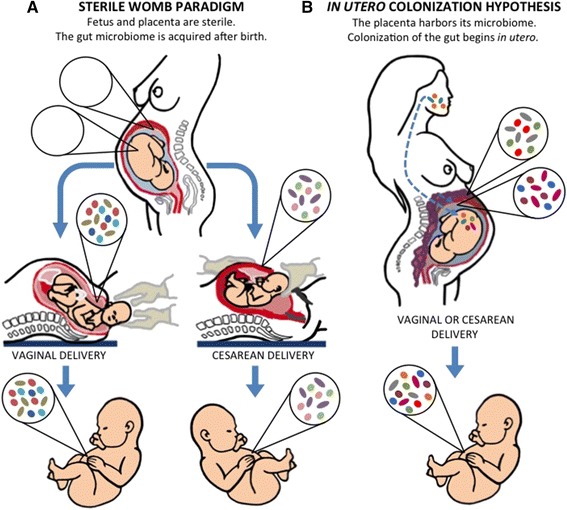
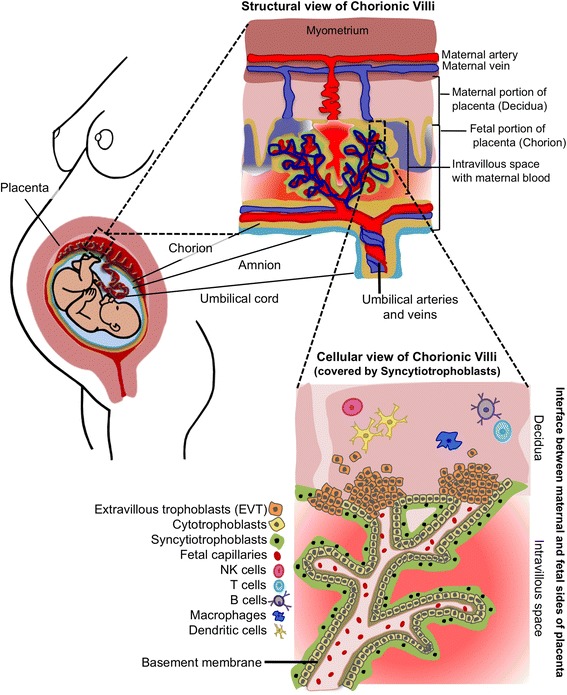
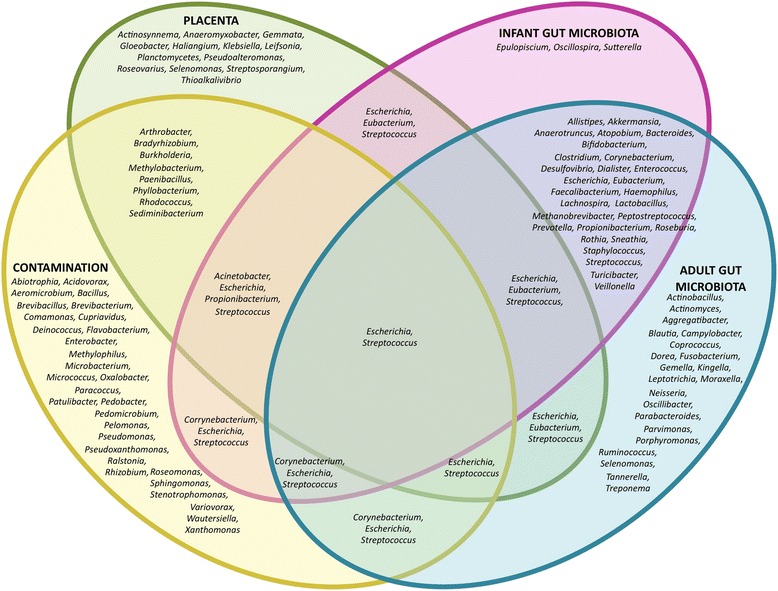
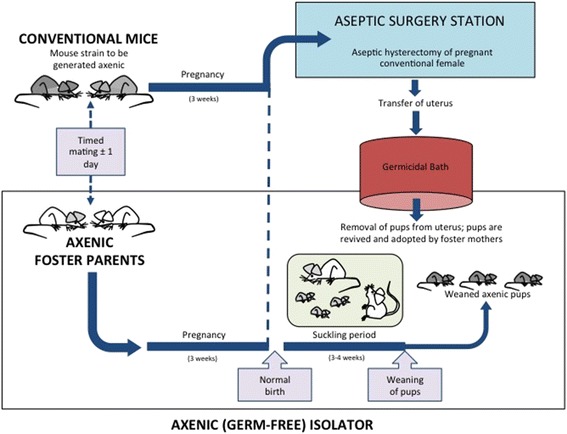
After more than a century of active research, the notion that the human fetal environment is sterile and that the neonate's microbiome is acquired during and after birth was an accepted dogma. However, recent studies using molecular techniques suggest bacterial communities in the placenta, amniotic fluid, and meconium from healthy pregnancies. These findings have led many scientists to challenge the "sterile womb paradigm" and propose that microbiome acquisition instead begins in utero, an idea that would fundamentally change our understanding of gut microbiota acquisition and its role in human development. In this review, we provide a critical assessment of the evidence supporting these two opposing hypotheses, specifically as it relates to (i) anatomical, immunological, and physiological characteristics of the placenta and fetus; (ii) the research methods currently used to study microbial populations in the intrauterine environment; (iii) the fecal microbiome during the first days of life; and (iv) the generation of axenic animals and humans. Based on this analysis, we argue that the evidence in support of the "in utero colonization hypothesis" is extremely weak as it is founded almost entirely on studies that (i) used molecular approaches with an insufficient detection limit to study "low-biomass" microbial populations, (ii) lacked appropriate controls for contamination, and (iii) failed to provide evidence of bacterial viability. Most importantly, the ability to reliably derive axenic animals via cesarean sections strongly supports sterility of the fetal environment in mammals. We conclude that current scientific evidence does not support the existence of microbiomes within the healthy fetal milieu, which has implications for the development of clinical practices that prevent microbiome perturbations after birth and the establishment of future research priorities.
Overview
The claims and statistics of this paper haven’t been checked yet.
Run the check — free, no account needed. It reads the open-access text and checks the sources it cites.
Integrity signals
Registry
Cites
Statistics
Figures
Verification
Claims the paper makes
The claims and statistics of this paper haven’t been checked yet.
Run the check — free, no account needed. It reads the open-access text and checks the sources it cites.
Claims other papers make about this one
Each is checked against this paper’s own text: does it say what the citing paper says it does?
The source backs part of the claim, not all of it — or backs it for a different population, condition or comparison.
In the citing paper
“However, oral bacteria have been detected at various sites within the uterus.110, 111”
From The oral microbiome: Role of key organisms and complex networks in oral health and disease (2021) · cites this paper as [110]
Experimental — accuracy not yet measuredIn the citing paper
“Conversely, but equally important, the infant gut is largely thought to be sterile in utero and colonized during birth and postnatally with a trajectory toward an adult-like complexity taking approximately 3 years (Clarke et al., 2014a;Perez-Munoz et al., 2017).”
From Gut reactions: Breaking down xenobiotic–microbiome interactions (2019) · cites this paper as Perez-Munoz et al., 2017
In the citing paper
“Current research findings suggest that the prenatal oral cavity is sterile until birth after which colonization with microorganisms occurs upon exposure to the external environment.110”
From The oral microbiome: Role of key organisms and complex networks in oral health and disease (2021) · cites this paper as [110]
Self-check
Percentages, sums and reported differences re-computed from the paper’s own numbers.
The self-check needs the paper’s full text.
Citations
Cites
Structure, function and diversity of the healthy human microbiome
The Human Microbiome Project Consortium (2012) · Nature · doi:10.1038/nature11234 · Cited by 11,726
Dominguez-Bello, M. G., Costello, E. K., Contreras, M., Magris, M., Hidalgo, G., Fierer, N., & Knight, R. (2010) · Proceedings of the National Academy of Sciences · doi:10.1073/pnas.1002601107 · Cited by 4,774
Conjectures and Refutations: The Growth of Scientific Knowledge.
HESSE, M. B., & Popper, K. R. (1965) · The Philosophical Quarterly · doi:10.2307/2218271 · Cited by 4,213
The Sociology of Science: Theoretical and Empirical Investigations
Kaplan, N. M., Merton, R. Κ., & Storer, N. W. (1974) · Technology and Culture · doi:10.2307/3102264 · Cited by 4,030
Reagent and laboratory contamination can critically impact sequence-based microbiome analyses
Salter, S. J., Cox, M. J., Turek, E. M., Calus, S. T., Cookson, W. O., Moffatt, M. F., Turner, P., Parkhill, J., Loman, N. J., & Walker, A. W. (2014) · BMC Biology · doi:10.1186/s12915-014-0087-z · Cited by 3,463
Dynamics and Stabilization of the Human Gut Microbiome during the First Year of Life
Bäckhed, F., Roswall, J., Peng, Y., Feng, Q., Jia, H., Kovatcheva-Datchary, P., Li, Y., Xia, Y., Xie, H., Zhong, H., et al. (2015) · Cell Host & Microbe · doi:10.1016/j.chom.2015.04.004 · Cited by 3,315
The Placenta Harbors a Unique Microbiome
Aagaard, K., Ma, J., Antony, K. M., Ganu, R., Petrosino, J., & Versalovic, J. (2014) · Science Translational Medicine · doi:10.1126/scitranslmed.3008599 · Cited by 2,494
Akkermansia muciniphila gen. nov., sp. nov., a human intestinal mucin-degrading bacterium
Derrien, M., Vaughan, E. E., Plugge, C. M., & de Vos, W. M. (2004) · International Journal of Systematic and Evolutionary Microbiology · doi:10.1099/ijs.0.02873-0 · Cited by 2,094
Early infancy microbial and metabolic alterations affect risk of childhood asthma
Arrieta, M., Stiemsma, L. T., Dimitriu, P. A., Thorson, L., Russell, S., Yurist‐Doutsch, S., Kuzeljevic, B., Gold, M. J., Britton, H. M., Lefebvre, D. L., et al. (2015) · Science Translational Medicine · doi:10.1126/scitranslmed.aab2271 · Cited by 1,832
Antibiotics, birth mode, and diet shape microbiome maturation during early life
Bokulich, N. A., Chung, J., Battaglia, T., Henderson, N., Jay, M., Li, H., D. Lieber, A., Wu, F., Perez-Perez, G. I., Chen, Y., et al. (2016) · Science Translational Medicine · doi:10.1126/scitranslmed.aad7121 · Cited by 1,469
Research works printed but not linked: 1
- Burrage S. Bacteria in the supposedly sterile meconium. J Bacteriol. 1927;13:47.
Cited by
Sorted by citations
Items 501–600 of 1,001
An altered gut microbiome in pre-eclampsia: cause or consequence
Deady, C., McCarthy, F. P., Barron, A., McCarthy, C., O’Keeffe, G. W., & O’Mahony, S. M. (2024) · Frontiers in Cellular and Infection Microbiology · doi:10.3389/fcimb.2024.1352267 · Cited by 15
Liu, Y., Ma, J., Li, X., Zhao, H., Ai, Q., Zhang, L., Tong, Y., Meng, L., & Yang, H. (2025) · Microbiome · doi:10.1186/s40168-024-02024-3 · Cited by 15
No bacteria found in healthy placentas
Segata, N. (2019) · Nature · doi:10.1038/d41586-019-02262-8 · Cited by 15
Vaccine Interactions With the Infant Microbiome: Do They Define Health and Disease?
Ruck, C. E., Odumade, O. A., & Smolen, K. K. (2020) · Frontiers in Pediatrics · doi:10.3389/fped.2020.565368 · Cited by 15
Low microbial biomass within the reproductive tract of mid-lactation dairy cows: A study approach
Lietaer, L., Pascottini, O. B., Hernandez‐Sanabria, E., Kerckhof, F., Lacoere, T., Boon, N., Vlaminck, L. E. M., OPSOMER, G., & de Wiele, T. V. (2021) · Journal of Dairy Science · doi:10.3168/jds.2020-19554 · Cited by 15
Buffet‐Bataillon, S., Bellanger, A., Boudry, G., Gangneux, J., Yverneau, M., Beuchée, A., Blat, S., & Huërou‐Luron, I. L. (2021) · Frontiers in Microbiology · doi:10.3389/fmicb.2021.676622 · Cited by 17
Jeje, S. O., Akpan, E. E., Kunle-Alabi, O. T., Akindele, O. O., & Raji, Y. (2021) · Current Research in Physiology · doi:10.1016/j.crphys.2021.06.001 · Cited by 15
Investigating the origin of the fetal gut and placenta microbiome in twins
Williams, N. S., Vella, R., Zhou, Y., Gao, H., Maas, K. R., Townsel, C., Campbell, W. A., & Luo, G. (2021) · The Journal of Maternal-Fetal & Neonatal Medicine · doi:10.1080/14767058.2021.1936487 · Cited by 15
The jury is still out on the existence of a placental microbiome
Briana, D. D., Papaevangelou, V., & Malamitsi‐Puchner, A. (2021) · Acta Paediatrica · doi:10.1111/apa.16048 · Cited by 15
Metagenomics Approaches to Investigate the Neonatal Gut Microbiome
Boudar, Z., Sehli, S., Janahi, S. E., Idrissi, N. A., Hamdi, S., Dini, N., Brim, H., Amzazi, S., Nejjari, C., Lloyd-Puryear, M. A., et al. (2022) · Frontiers in Pediatrics · doi:10.3389/fped.2022.886627 · Cited by 16
What Pediatricians Should Know before Studying Gut Microbiota
Drago, L., Panelli, S., Bandi, C., Zuccotti, G., Perini, M., & D’Auria, E. (2019) · Journal of Clinical Medicine · doi:10.3390/jcm8081206 · Cited by 16
IBDs and the pediatric age: Their peculiarities and the involvement of the microbiota
Cococcioni, L., Panelli, S., Varotto-Boccazzi, I., Carlo, D. D., Pistone, D., Leccese, G., Zuccotti, G., & Comandatore, F. (2020) · Digestive and Liver Disease · doi:10.1016/j.dld.2020.10.033 · Cited by 15
The role of the endometrial microbiome in embryo implantation and recurrent implantation failure
Rokhsartalab Azar, P., Karimi, S., Haghtalab, A., Taram, S., Hejazi, M., Sadeghpour, S., Pashaei, M. R., Ghasemnejad-Berenji, H., & Taheri-Anganeh, M. (2024) · Journal of Reproductive Immunology · doi:10.1016/j.jri.2024.104192 · Cited by 14
Campisciano, G., Zanotta, N., Quadrifoglio, M., Careri, A., Torresani, A., Cason, C., Seta, F. D., Ricci, G., Comar, M., & Stampalija, T. (2023) · International Journal of Molecular Sciences · doi:10.3390/ijms24032873 · Cited by 14
New Insights in Immunometabolism in Neonatal Monocytes and Macrophages in Health and Disease
de Jong, R., Tenbrock, K., & Ohl, K. (2023) · International Journal of Molecular Sciences · doi:10.3390/ijms241814173 · Cited by 14
Tissue-resident bacteria in metabolic diseases: emerging evidence and challenges
Massier, L., Musat, N., Stümvoll, M., Tremaroli, V., Chakaroun, R., & Kovacs, P. L. (2024) · Nature Metabolism · doi:10.1038/s42255-024-01065-0 · Cited by 15
Tang, M. H., Ligthart, I., Varga, S., Lebeer, S., van Overveld, F. J., & Rijkers, G. T. (2025) · Biology · doi:10.3390/biology14030299 · Cited by 16
Initial microbial community of the neonatal stomach immediately after birth
Bajorek, S. A., Parker, L. A., Li, N., Winglee, K., Weaver, M. T., Johnson, J., Sioda, M., Gauthier, J., Lemas, D. J., Jobin, C., et al. (2018) · Gut Microbes · doi:10.1080/19490976.2018.1520578 · Cited by 14
Tirone, C., Paladini, A., Maio, F. D., Tersigni, C., D’Ippolito, S., Simone, N. D., Monzo, F. R., Santarelli, G., Bianco, D. M., Tana, M., et al. (2022) · Frontiers in Pediatrics · doi:10.3389/fped.2022.909962 · Cited by 14
Mancini, V. O., Brook, J., Hernandez, C., Strickland, D. H., Christophersen, C. T., D’Vaz, N., Silva, D. T., Prescott, S. L., Callaghan, B. L., Downs, J. A., et al. (2023) · Developmental Psychobiology · doi:10.1002/dev.22360 · Cited by 15
Niazi, M. K., Hassan, F., Tufail, T., Ismail, M. A., & Riaz, K. (2023) · Advanced Gut & Microbiome Research · doi:10.1155/2023/1566684 · Cited by 14
Parents with periodontitis drive the early acquisition of dysbiotic microbiomes in their offspring
Reis, A. A., Monteiro, M. F., Bonilha, G. M., Saraiva, L. M., Araújo, C. F., Santamaria, M. P., Casati, M. Z., Kumar, P., & Casarin, R. C. V. (2023) · Journal Of Clinical Periodontology · doi:10.1111/jcpe.13815 · Cited by 14
Abais‐Battad, J. M., & Mattson, D. L. (2018) · American Journal of Physiology-Regulatory, Integrative and Comparative Physiology · doi:10.1152/ajpregu.00399.2017 · Cited by 14
Prenatal stress enhances postnatal plasticity: The role of microbiota
Hartman, S., Sayler, K., & Belsky, J. (2018) · Developmental Psychobiology · doi:10.1002/dev.21816 · Cited by 16
Pan, X., Zhang, D., Nguyen, D. N., Wei, W., Yu, X., Gao, F., & Sangild, P. T. (2020) · Frontiers in Immunology · doi:10.3389/fimmu.2020.00420 · Cited by 14
Development and Functions of the Infant Gut Microflora: Westernvs. Indian Infants
Bharadia, L., Agrawal, N., & Joshi, N. A. (2020) · International Journal of Pediatrics · doi:10.1155/2020/7586264 · Cited by 14
Godoy, R. V. C. (2021) · Digital Library of Theses and Dissertations (Universidade de São Paulo) · doi:10.11606/t.9.2021.tde-21122021-111518 · Cited by 14
Reddel, S., Pascucci, G. R., Foligno, S., CHIERICO, F. D., Vernocchi, P., Marzullo, A., Pattumelli, M. G., Palma, P., Salvatori, G., & Putignani, L. (2022) · Microorganisms · doi:10.3390/microorganisms10020468 · Cited by 13
Metabolic Alternations During Gestation in Dezhou Donkeys and the Link to the Gut Microbiota
Li, Y., Ma, Q., Liu, G., Zhang, Z., Zhan, Y., Zhu, M., & Wang, C. (2022) · Frontiers in Microbiology · doi:10.3389/fmicb.2022.801976 · Cited by 13
Tang, M., & Marroquin, E. (2022) · Frontiers in Medicine · doi:10.3389/fmed.2022.1057424 · Cited by 13
Kang, H. M., Kim, S., Hwang-Bo, S., Yoo, I. H., Seo, Y.-M., Oh, M. Y., Im, S. A., & Youn, Y. (2022) · Pathogens · doi:10.3390/pathogens12010055 · Cited by 13
Selby, C. M., Beer, L. C., Forga, A. J., Coles, M. E., Graham, L. E., Teague, K. D., Téllez‐Isaías, G., Hargis, B. M., Vuong, C. N., & Graham, D. B. (2023) · Poultry Science · doi:10.1016/j.psj.2023.102584 · Cited by 13
Yu, J., Sawabe, T., Yamano, R., Koike, S., Sakai, Y., & Mino, S. (2023) · Frontiers in Marine Science · doi:10.3389/fmars.2023.1225318 · Cited by 13
Chen, Q., Lyu, W., Pan, C., Ma, L., Sun, Y., Yang, H., Wang, W., & Xiao, Y. (2024) · The Science of The Total Environment · doi:10.1016/j.scitotenv.2024.172078 · Cited by 13
Schwarzer, M. (2018) · Current Opinion in Clinical Nutrition & Metabolic Care · doi:10.1097/mco.0000000000000463 · Cited by 14
Inherited nongenetic influences on the gut microbiome and immune system
Knoop, K. A., Holtz, L. R., & Newberry, R. D. (2018) · Birth Defects Research · doi:10.1002/bdr2.1436 · Cited by 13
Zapién-Campos, R., Sieber, M., & Traulsen, A. (2020) · PLoS Computational Biology · doi:10.1371/journal.pcbi.1008392 · Cited by 13
Heart development and regeneration—a multi‐organ effort
Filosa, A., & Sawamiphak, S. (2021) · FEBS Journal · doi:10.1111/febs.16319 · Cited by 13
Stupak, A., & Kwaśniewski, W. M. (2023) · Biomolecules · doi:10.3390/biom13060911 · Cited by 14
Bihl, S., de Goffau, M. C., Podlesny, D., Segata, N., Shanahan, F., Walter, J., & Fricke, W. F. (2021) · Gut Microbes · doi:10.1080/19490976.2021.2005751 · Cited by 13
Self-citationOh, J. H., & Rehermann, B. (2021) · The Journal of Immunology · doi:10.4049/jimmunol.2100426 · Cited by 13
Moraes, J. G. N., Gull, T. B., Ericsson, A. C., Poock, S. E., Caldeira, M. O., & Lucy, M. C. (2024) · Frontiers in Microbiology · doi:10.3389/fmicb.2024.1385497 · Cited by 12
Meconium microbiota in naturally delivered canine puppies
Bertero, A., Banchi, P., Carro, A. D., Corrò, M., Colitti, B., Soom, A. V., Bertolotti, L., & Rota, A. (2024) · BMC Veterinary Research · doi:10.1186/s12917-024-04225-2 · Cited by 12
Low Bacterial Biomass in Human Pancreatic Cancer and Adjacent Normal Tissue
May, M. S., Park, H., Moallem, D. H., Seeram, D., Da-jiang, S., Hibshoosh, H. H., Jamison, J. K. R., Uhlemann, A., & Manji, G. A. (2024) · International Journal of Molecular Sciences · doi:10.3390/ijms26010140 · Cited by 12
Petersen, C., & Turvey, S. E. (2020) · Current Opinion in Pediatrics · doi:10.1097/mop.0000000000000956 · Cited by 12
Maternal microbial factors that affect the fetus and subsequent offspring
Mirpuri, J., & Neu, J. (2021) · Seminars in Perinatology · doi:10.1016/j.semperi.2021.151449 · Cited by 13
Respiratory Tract Microecology and Bronchopulmonary Dysplasia in Preterm Infants
Sun, T., Yu, H., & Fu, J. (2021) · Frontiers in Pediatrics · doi:10.3389/fped.2021.762545 · Cited by 14
Fasano, A., & Flaherty, S. (2021) · The MIT Press eBooks · doi:10.7551/mitpress/11291.001.0001 · Cited by 14
Liu, X., He, G., Lan, Y., Guo, W., Liu, X., Li, J., Liu, A., He, M., Liu, X., Fan, Z., et al. (2023) · Frontiers in Immunology · doi:10.3389/fimmu.2022.1079294 · Cited by 12
Shen, L., Wang, W., Hou, W., Jiang, C., Yuan, Y., Hu, L., & Shang, A. (2023) · Frontiers in Cellular and Infection Microbiology · doi:10.3389/fcimb.2022.1025714 · Cited by 14
Longitudinal Investigation of Enteric Virome Signatures from Parental-Generation to Offspring Pigs
Chen, Q., Zhang, X., Shi, W., Du, X., Ma, L., Wang, W., Tao, S., & Xiao, Y. (2023) · Microbiology Spectrum · doi:10.1128/spectrum.00023-23 · Cited by 12
Does the Human Gut Virome Contribute to Host Health or Disease?
Pavia, G., Marascio, N., Matera, G., & Quirino, A. (2023) · Viruses · doi:10.3390/v15112271 · Cited by 12
Maritan, E., Gallo, M., Šrůtková, D., Jelinkova, A., Benada, O., Kofroňová, O., Silva-Soares, N. F., Hudcovic, T., Gifford, I., Barrick, J. E., et al. (2022) · BMC Biology · doi:10.1186/s12915-022-01477-y · Cited by 12
Odogwu, N. M. (2023) · Frontiers in Reproductive Health · doi:10.3389/frph.2022.1082199 · Cited by 11
Overview of the Gut Microbiome
Blackmer‐Raynolds, L., & Sampson, T. R. (2023) · Seminars in Neurology · doi:10.1055/s-0043-1771463 · Cited by 11
The importance of the intestinal microbiota in humans and dogs in the neonatal period
Beretta, S., Apparício, M., Toniollo, G. H., & Cardozo, M. V. (2023) · Animal Reproduction · doi:10.1590/1984-3143-ar2023-0082 · Cited by 11
Frazier, A., Ferree, L., Belk, A. D., Al-Lakhen, K., Cramer, C., & Metcalf, J. L. (2025) · Animals · doi:10.3390/ani15030361 · Cited by 11
Kadam, O., Dalai, S., Chauhan, B., Guru, R. R., Mitra, S., Raytekar, N., & Kumar, R. (2025) · Cureus · doi:10.7759/cureus.80478 · Cited by 13
Impact of the maternal microbiome on neonatal immune development
Dubé‐Zinatelli, E., Mayotte, E., Cappelletti, L., & Ismail, N. (2025) · Journal of Reproductive Immunology · doi:10.1016/j.jri.2025.104542 · Cited by 11
Talat, A., Zuberi, A., & Khan, A. U. (2025) · Current Microbiology · doi:10.1007/s00284-025-04370-3 · Cited by 12
Olate, P., Martínez, A., Sans-Serramitjana, E., Cortés, M., Díaz, R., Hernández, G., Paz, E. A., Sepúlveda, N., & Quiñones, J. (2025) · International Journal of Molecular Sciences · doi:10.3390/ijms26167983 · Cited by 11
The Fanconi anemia pathway repairs colibactin-induced DNA interstrand cross-links
Altshuller, M., Xu, H., MacKrell, E. J., Wernke, K. M., Airan, Y., Wong, J. W. H., Sellés‐Baiget, S., Wang, T., Chou, T., Duxin, J. P., et al. (2025) · Nature Communications · doi:10.1038/s41467-025-65606-1 · Cited by 12
Jennings, E. C., Korthauer, M. W., Hamilton, T. L., & Benoit, J. B. (2019) · Ecology and Evolution · doi:10.1002/ece3.5580 · Cited by 11
Kasarełło, K., & Sajdel, E. M. (2019) · Open Journal of Pediatrics and Child Health · doi:10.17352/ojpch.000019 · Cited by 11
Wang, Y., Yuan, H., Huang, J., & Li, C. (2021) · Molecular Biology Reports · doi:10.1007/s11033-021-06884-y · Cited by 11
Jantsch, J., Tassinari, I. D., Giovenardi, M., Bambini-Júnior, V., Guedes, R. P., & de Fraga, L. S. (2022) · Frontiers in Cell and Developmental Biology · doi:10.3389/fcell.2022.795384 · Cited by 12
Ellis, J. L., Wang, M., Fu, X., Fields, C. J., Donovan, S. M., & Booth, S. L. (2022) · Current Developments in Nutrition · doi:10.1093/cdn/nzac019 · Cited by 11
Hanachi, M., Maghrebi, O., Bichiou, H., Trabelsi, F., Bouyahia, M., Zhioua, F., Belghith, M., Harigua‐Souiai, E., Baouendi, M., Guizani-Tabbane, L., et al. (2022) · Frontiers in Microbiology · doi:10.3389/fmicb.2022.780568 · Cited by 11
Simon, D., & Kellermayer, R. (2022) · Journal of Pediatric Gastroenterology and Nutrition · doi:10.1097/mpg.0000000000003664 · Cited by 11
Maternal vaginal fluids play a major role in the colonization of the neonatal intestinal microbiota
Xie, J., Tang, C. Y., Hong, S., Xin, Y., Zhang, J., Lin, Y., Mao, L., Xiao, Y., Wu, Q., Zhang, X., et al. (2023) · Frontiers in Cellular and Infection Microbiology · doi:10.3389/fcimb.2023.1065884 · Cited by 11
The Human Microbiome and Gender Medicine
Levy, G., & Solt, I. (2018) · Gender and the Genome · doi:10.1177/2470289718811764 · Cited by 13
Early life microbial exposure shapes subsequent animal health
Marcolla, C. S., Alvarado, C. S., & Willing, B. P. (2019) · Canadian Journal of Animal Science · doi:10.1139/cjas-2019-0029 · Cited by 11
Microbiomes in ruminant protein production and food security.
Myer, P. R., Clemmons, B. A., Schneider, L. G., & Ault, T. B. (2019) · CABI Reviews · doi:10.1079/pavsnnr201914008 · Cited by 11
Developing infant gut microflora and complementary nutrition
Kim, C. C., Parkar, S. G., & Gopal, P. K. (2020) · Journal of the Royal Society of New Zealand · doi:10.1080/03036758.2020.1718716 · Cited by 11
Colonizing Microbes, IL-10 and IL-22: Keeping the Peace at the Mucosal Surface
Kidess, E., Kleerebezem, M., & Brugman, S. (2021) · Frontiers in Microbiology · doi:10.3389/fmicb.2021.729053 · Cited by 11
The use of real-time PCR for evaluation of endometrial microbiota
Сергеевна, В. Е., Zornikov, D. L., Копосова, О. В., Islamidi, D. K., Ignatova, K. Y., Abakumova, E., Kurbatova, N. V., & Plotko, E. E. (2020) · Bulletin of Russian State Medical University · doi:10.24075/vrgmu.2020.012 · Cited by 10
Exploring the Diet-Gut Microbiota-Epigenetics Crosstalk Relevant to Neonatal Diabetes
Alsharairi, N. A. (2023) · Genes · doi:10.3390/genes14051017 · Cited by 11
Shaping Microbiota During the First 1000 Days of Life
Samarra, A., Ventura, E. F., Bernabeu, M., Cabrera‐Rubio, R., Bäuerl, C., Selma‐Royo, M., & Collado, M. C. (2024) · Advances in experimental medicine and biology · doi:10.1007/978-3-031-58572-2_1 · Cited by 10
Immune development in early life
Palma, P., Färber, D. L., Konnikova, L., & Levy, O. (2026) · Nature Immunology · doi:10.1038/s41590-026-02523-5 · Cited by 13
Cheng, R., Guo, J., Zhang, Y., Cheng, G., Qian, W., Wan, C., Li, M., Marotta, F., Shen, X. P., & He, F. (2020) · EXPERIMENTAL ANIMALS · doi:10.1538/expanim.20-0114 · Cited by 10
Nowland, T. L., Kirkwood, R. N., Torok, V. A., Plush, K. J., & BARTON, M. D. (2021) · Life · doi:10.3390/life11040312 · Cited by 10
M’Barek, I. B., Landraud, L., Desfrère, L., Sallah, K., Couffignal, C., Schneider, M., & Mandelbrot, L. (2021) · European Journal of Obstetrics & Gynecology and Reproductive Biology · doi:10.1016/j.ejogrb.2021.04.016 · Cited by 10
Natural Product Co-Metabolism and the Microbiota–Gut–Brain Axis in Age-Related Diseases
Obrenovich, M. E., Singh, S. K., Li, Y., Perry, G. L., Siddiqui, B., Haq, W., & Reddy, V. P. (2022) · Life · doi:10.3390/life13010041 · Cited by 11
Zubiría-Barrera, C., Stock, M., Neubert, R., Vester, A., Kulle, A., Schneegans, A., Leistner, R., Gastmeier, P., Slevogt, H., & Klassert, T. E. (2020) · Journal of Microbiological Methods · doi:10.1016/j.mimet.2020.106060 · Cited by 10
Beneficial Effect Of Lactoferrin On The Microbiota From Gastrointestinal Tract
Artym, J., & Zimecki, M. (2020) · Postępy Mikrobiologii - Advancements of Microbiology · doi:10.21307/pm-2020.59.3.20 · Cited by 10
Microbial community in human gut: a therapeutic prospect and implication in health and diseases
Dwivedi, M., Powali, S., Rastogi, S., Singh, A., & Gupta, D. K. (2021) · Letters in Applied Microbiology · doi:10.1111/lam.13549 · Cited by 12
Fetal and preterm infant microbiomes: a new perspective of necrotizing enterocolitis
Choi, Y., & Song, I. G. (2017) · Korean Journal of Pediatrics · doi:10.3345/kjp.2017.60.10.307 · Cited by 10
Andrews, K., & González, A. (2019) · Developmental Psychobiology · doi:10.1002/dev.21823 · Cited by 9
The infant pharyngeal microbiomes: origin, impact and manipulation
Theodosiou, A. A., Dorey, R. B., Read, R. C., & Jones, C. E. (2020) · Current Opinion in Infectious Diseases · doi:10.1097/qco.0000000000000691 · Cited by 10
Kim, S. Y., & Youn, Y. (2024) · Microorganisms · doi:10.3390/microorganisms12071271 · Cited by 9
Approaching the sterile womb theory in dogs and cats: A multi-technique investigation
Banchi, P., Bertero, A., Corrò, M., Colitti, B., Maniscalco, L., Soom, A. V., & Rota, A. (2024) · Theriogenology · doi:10.1016/j.theriogenology.2024.11.011 · Cited by 9
Kilama, J., Dahlen, C. R., Abbasi, M., Shi, X., Nagaraja, T. G., Crouse, M. S., Cushman, R. A., Snider, A. P., McCarthy, K. L., Caton, J. S. S., et al. (2025) · Microbiology Spectrum · doi:10.1128/spectrum.03145-24 · Cited by 9
Hu, Y. P., Liu, Z., Yao, H., Wu, S., Zhang, Q., Pan, S., & Shi, S. (2025) · Science China Life Sciences · doi:10.1007/s11427-024-2873-3 · Cited by 9
Asaduzzaman, M., Oláh, P., Yaseen, N. J., Taifi, A., Járay, T., Gulyás, G. M., Boldogkői, Z., & Tombácz, D. (2026) · mSystems · doi:10.1128/msystems.01279-25 · Cited by 9
Microbiomes and Childhood Malnutrition: What Is the Evidence?
McGuire, M. K., & McGuire, M. A. (2021) · Annals of Nutrition and Metabolism · doi:10.1159/000519001 · Cited by 9
Adaptations and alterations of maternal microbiota: From physiology to pathology
Zhou, Y., Qi, H., & Yin, N. (2021) · Medicine in Microecology · doi:10.1016/j.medmic.2021.100045 · Cited by 11
Brand, M. W., Proctor, A., Hostetter, J. M., Zhou, N., Friedberg, I., Jergens, A. E., Phillips, G. J., & Wannemuehler, M. J. (2022) · PLoS ONE · doi:10.1371/journal.pone.0266005 · Cited by 9
Nearly (?) sterile avian egg in a passerine bird
Těšičký, M., Schmiedová, L., Krajzingrová, T., Gómez-Samblás, M., Bauerová, P., Kreisinger, J., & Vinkler, M. (2023) · FEMS Microbiology Ecology · doi:10.1093/femsec/fiad164 · Cited by 9
Maternal Prenatal Infections and Biliary Atresia in Offspring
Wang, W.-H., Chiu, F.-Y., Kuo, T., & Shao, Y. J. (2024) · JAMA Network Open · doi:10.1001/jamanetworkopen.2023.50044 · Cited by 9
The gut microbiota in persistent post-operative pain following breast cancer surgery
Masaud, K., Collins, J. M., Cabrera‐Rubio, R., Corrigan, M. A., Cotter, P. D., O’Brien, N., Bluett, R., Jimenez, C. K., O’Mahony, S. M., & Shorten, G. (2024) · Scientific Reports · doi:10.1038/s41598-024-62397-1 · Cited by 9
Metadata
- Authors
- Perez-Muñoz, M. E., Arrieta, M.-C., Ramer-Tait, A. E., & Walter, J.
- Affiliations
- University of Calgary (CA)
- University of Alberta (CA)
- Corresponding author
- Walter, Jens
- Venue
- Microbiome
- Published
- 2017-04-28
- Volume
- 5
- Issue
- 1
- Pages
- 48-48
- ISSN
- 2049-2618 (ISSN-L)
- PMC
- PMC5410102
- OpenAlex
- W2609646274
- Cited by
- 1,096
- References
- 154
- Citations by year
- 2026: 56 · 2025: 81 · 2024: 108 · 2023: 116 · 2022: 140 · 2021: 154 · 2020: 167 · 2019: 117 · 2018: 104 · 2017: 52
- FWCI
- 11.25
- Type
- journal article
- Language
- en
- Open access
- gold
- doi.org
- Licence
- cc-by
- Locations
- Microbiome (publishedVersion, cc-by)
- Europe PMC (PubMed Central) (publishedVersion, cc-by)
- PubMed Central (publishedVersion, cc-by)
- PubMed (publishedVersion)
- Lincoln (University of Nebraska) (submittedVersion, cc-by)
- DOAJ (DOAJ: Directory of Open Access Journals) (submittedVersion, cc-by-sa)
- Libraries and Cultural Resources (University of Calgary) (submittedVersion)
- Funders
- Crohn's and Colitis Foundation of America
- University of Nebraska-Lincoln
- University of Calgary
- Crohn's and Colitis Foundation
- Nebraska Corn Board
- University of Alberta
- Alberta Innovates
- National Institutes of Health
- Directorate for Biological Sciences
- National Institute of General Medical Sciences (P20GM104320, R01GM099525)
- Topics
- Life Sciences › Biochemistry, Genetics and Molecular Biology › Molecular Biology › Gut microbiota and health
- Health Sciences › Nursing › Nutrition and Dietetics › Infant Nutrition and Health
- Physical Sciences › Environmental Science › Ecology › Microbial Community Ecology and Physiology
- Keywords
- neonatal gut microbiota, placenta, amniotic fluid, meconium, cesarean section, contamination control, bacterial viability
- MeSH terms
- Gastrointestinal Microbiome, Animals, Female, Fetus, Humans, Infant, Infant, Newborn, Pregnancy, Uterus, Microbiota
About these checks
Registry, retraction, Cites and statistics results are computed, not judged, with one exception: a printed reference that no index lists is read once by a model before it counts as a citation error. Claims are extracted by a model and kept only when their quote appears verbatim in the text; each cited source is then checked, with a model’s help, for whether it says what the claim relies on. Those verdicts can be wrong — read the claim’s quote and the cited source before relying on one.
Statistics and arithmetic are recomputed, not judged.
Confidence bands are shown only for fields calibrated on our annotated test set. None is calibrated yet, so no band is shown.
What counts as a claim ›How we measure confidence ›How we check this ›
Are you an author, or do you see a problem with this page? Request a review
