

Supported online cognitive behavioural therapy for bulimia nervosa: a study protocol of a randomised controlled trial
Open accessThe DOI matches its Crossref record; 76 of the 79 references it cites were found in a registry or an index.
Abstract
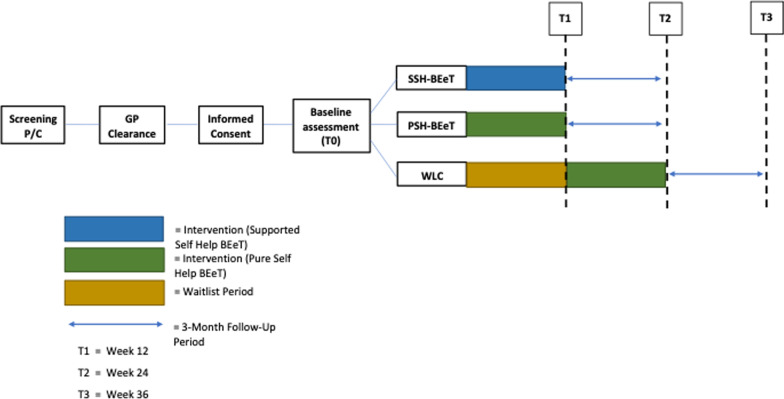
Background: Despite the availability of effective treatments for bulimia nervosa (BN), a number of barriers to accessibility exist. Examples include access to trained clinicians, the expense of treatment, geographical limitations, and personal limitations such as stigma regarding help seeking. Self-help interventions, delivered via a digital platform, have the potential to overcome treatment gaps by providing patients with standardised, evidence-based treatments that are easily accessible, cost-effective, and require minimal clinician support. Equally, it is important to examine the shortcomings of digital interventions when compared to traditional to face-to-face delivery (e.g., high dropout rates) in order to maximise the therapeutic effectiveness of online, self-help interventions. Methods: A three-arm, multisite randomised controlled trial will be conducted in Australia examining the effectiveness and cost-effectiveness of a newly developed online self-help intervention, Binge Eating eTherapy (BEeT), in a sample of patients with full or sub-threshold BN. The BEeT program consists of 10, multimedia sessions delivering the core components of cognitive behaviour therapy. Eligible participants will be randomised to one of three groups: independent completion of BEeT as a purely self-help program, completion of BEeT alongside clinician support (in the form of weekly telemedicine sessions), or waitlist control. Assessments will take place at baseline, weekly, post-intervention, and three-month follow up. The primary outcome is frequency of objective binge episodes. Secondary outcomes include frequency of other core eating disorder behavioural symptoms and beliefs, psychological distress, and quality of life. Statistical analyses will examine treatment effectiveness, feasibility, acceptability and cost effectiveness. Discussion: There is limited capacity within the mental health workforce in Australia to meet the demand of people seeking treatment for eating disorders. This imbalance has only worsened following outbreak of the COVID-19 pandemic. Further research is required into innovative digital modes of treatment delivery with the capacity to service mental health needs in an accessible and affordable manner. Self-help programs may also appeal to individuals who are more reluctant to engage in traditional face-to-face treatment formats. This study will provide rigorous evidence on how to diversify treatment options for individuals with BN, ensuring more people with the illness can access evidence-based treatment. The study has been registered with the Australia New Zealand Clinical Trials Registry (ANZCTR Registration Number: ACTRN12619000123145p). Registered 22 January 2019, https://www.australianclinicaltrials.gov.au/anzctr/trial/ACTRN12619000123145.
Overview
The claims and statistics of this paper haven’t been checked yet.
Free: it reads the open-access text and checks the first 5 claims that cite a source we can check. Create a free account to check every claim.
Integrity signals
Registry
Cites
Statistics
Figures
Verification
Claims the paper makes
The claims and statistics of this paper haven’t been checked yet.
Free: it reads the open-access text and checks the first 5 claims that cite a source we can check. Create a free account to check every claim.
Self-check
Percentages, sums and reported differences re-computed from the paper’s own numbers.
The self-check needs the paper’s full text.
Citations
Cites
Diagnostic and Statistical Manual of Mental Disorders
American Psychiatric Association (2013) · doi:10.1176/appi.books.9780890425596 · Cited by 116,369
Diagnostic and Statistical Manual of Mental Disorders
Williams, J. B. W., & First, M. (2013) · Encyclopedia of Social Work · doi:10.1093/acrefore/9780199975839.013.104 · Cited by 109,519
EuroQol: a new facility for the measurement of health-related quality of life
(1990) · Health Policy · doi:10.1016/0168-8510(90)90421-9 · Cited by 15,736
KESSLER, R. C., ANDREWS, G., COLPE, L. J., HIRIPI, E., MROCZEK, D. K., NORMAND, S.-L. T., WALTERS, E. E., & ZASLAVSKY, A. M. (2002) · Psychological Medicine · doi:10.1017/s0033291702006074 · Cited by 10,327 · cited 1×
“Measures of general mental health psychopathology K10 The Kessler Psychological Distress (K10) is a 10-item self-report questionnaire used to monitor the degree of psychological distress [59].”
MethodSPIRIT 2013 Statement: Defining Standard Protocol Items for Clinical Trials
Chan, A.-W., Tetzlaff, J. M., Altman, D. G., Laupacis, A., Gøtzsche, P. C., Krleža-Jerić, K., Hróbjartsson, A., Mann, H., Dickersin, K., Berlin, J. A., et al. (2013) · Annals of Internal Medicine · doi:10.7326/0003-4819-158-3-201302050-00583 · Cited by 7,363
The three-factor eating questionnaire to measure dietary restraint, disinhibition and hunger
Stunkard, A. J., & Messick, S. (1985) · Journal of Psychosomatic Research · doi:10.1016/0022-3999(85)90010-8 · Cited by 4,687 · cited 2×
“TFEQ The three factor eating questionnaire (TFEQ) is a 51-item self-report assessment which measures three dimensions of eating behaviour: cognitive restraint of eating, disinhibition/loss of control, and hunger [58].”
BackgroundMethodGlasgow, R. E., Lichtenstein, E., & Marcus, A. C. (2003) · American Journal of Public Health · doi:10.2105/ajph.93.8.1261 · Cited by 1,836 · cited 1×
“This is particularly important to consider within the domain of digital interventions, with research suggesting poor association between research studies on web-based interventions and meaningful outcomes for patients in clinical settings [75].”
Background(2008) · Cited by 1,397
Development and validation of a revised short version of the working alliance inventory
Hatcher, R. L., & Gillaspy, J. A. (2006) · Psychotherapy Research · doi:10.1080/10503300500352500 · Cited by 1,355 · cited 1×
“Other measures regarding the intervention WAI-SR The working alliance inventory-short revised (WAI-SR) is a 12-item self-report assessment which examines the degree of therapeutic alliance experienced by the patient with the clinician across three subscales: bond, task, and goal [65].”
BackgroundPeters, D. H., Adam, T., Alonge, O., Agyepong, I. A., & Tran, N. (2014) · British Journal of Sports Medicine · doi:10.1136/bmj.f6753 · Cited by 1,109 · cited 1×
“The outcome variables include acceptability, adoption, appropriateness, feasibility, fidelity, and sustainability [68].”
BackgroundBower, P., & Gilbody, S. (2005) · British Journal of Psychiatry · doi:10.1192/bjp.186.1.11 · Cited by 1,084 · cited 2×
“Low-intensity programs, such as BEeT, are designed to be integrated within the early stages of a stepped-care model, either as a pure self-help intervention or a clinician-supported intervention [23, 73].”
BackgroundThe impact of guidance on Internet-based mental health interventions — A systematic review
Baumeister, H., Reichler, L., Munzinger, M., & Lin, J. (2014) · Internet Interventions · doi:10.1016/j.invent.2014.08.003 · Cited by 1,037
Torous, J., Jän Myrick, K., Rauseo-Ricupero, N., & Firth, J. (2020) · JMIR Mental Health · doi:10.2196/18848 · Cited by 946 · cited 1×
“Fortunately, digital platforms have allowed mental health services to meet the needs of patients in lieu of in-person contact, highlighting the convenience and flexibility of online treatments and their capacity to overcome the shortcomings of traditional treatment delivery in the current pandemic situation [26, 27, 3…”
BackgroundStice, E., Marti, C. N., & Rohde, P. (2013) · Journal of Abnormal Psychology · doi:10.1037/a0030679 · Cited by 822 · cited 1×
“Individuals with BN have been found to report greater functional impairment, higher emotional distress, and lower quality of life than their age-matched peers without the illness [5, 6].”
BackgroundHay, P., Chinn, D., Forbes, D., Madden, S., Newton, R., Sugenor, L., Touyz, S., & Ward, W. (2014) · Australian & New Zealand Journal of Psychiatry · doi:10.1177/0004867414555814 · Cited by 656 · cited 1×
“Individual psychological therapy is recognised as the first-line treatment for adults with BN [11], with cognitive behavioural therapy (CBT) having the strongest evidence base of all therapeutic modalities [12–14].”
BackgroundSelf-citationHart, L. M., Granillo, M. T., Jorm, A. F., & Paxton, S. J. (2011) · Clinical Psychology Review · doi:10.1016/j.cpr.2011.03.004 · Cited by 557 · cited 1×
“2% of individuals with an ED access an evidence-based treatment [15].”
BackgroundMunder, T., Wilmers, F., Leonhart, R., Linster, H. W., & Barth, J. (2010) · Clinical Psychology & Psychotherapy · doi:10.1002/cpp.658 · Cited by 538 · cited 1×
“It is a widely used measure with good psychometric properties [66].”
MethodThree Psychological Treatments for Bulimia Nervosa: A Comparative Trial
Fairburn, C. G. (1991) · Archives of General Psychiatry · doi:10.1001/archpsyc.1991.01810290075014 · Cited by 529
Fisk, M., Livingstone, A., & Pit, S. W. (2020) · Journal of Medical Internet Research · doi:10.2196/19264 · Cited by 486
Peterson, C. B., Crosby, R. D., Wonderlich, S. A., Joiner, T., Crow, S. J., Mitchell, J. E., Bardone‐Cone, A. M., Klein, M., & le Grange, D. (2007) · International Journal of Eating Disorders · doi:10.1002/eat.20373 · Cited by 425
Gideon, N., Hawkes, N., Mond, J., Saunders, R., Tchanturia, K., & Serpell, L. (2016) · PLoS ONE · doi:10.1371/journal.pone.0152744 · Cited by 419 · cited 1×
“Measures of eating disorder psychopathology: EDE-QS A shorter 12-item version derived from the EDE-Q, the eating disorder examination questionnaireshort (EDE-QS) assesses ED behaviours and psychopathology severity in the preceding seven days [55].”
MethodStaples, L. G., Dear, B. F., Gandy, M., Fogliati, V., Fogliati, R., Karin, E., Nielssen, O., & Titov, N. (2019) · General Hospital Psychiatry · doi:10.1016/j.genhosppsych.2018.11.003 · Cited by 405 · cited 1×
“There is evidence to support the reliability of the K10 as a measure of negative emotionality [60, 61, 62].”
BackgroundCOVID ‐19 and implications for eating disorders
Fernández‐Aranda, F., Casas, M., Claes, L., Bryan, D. C., Favaro, A., Granero, R., Gudiol, C., Jiménez‐Murcia, S., Karwautz, A., Le Grange, D., et al. (2020) · European Eating Disorders Review · doi:10.1002/erv.2738 · Cited by 392 · cited 1×
“Fortunately, digital platforms have allowed mental health services to meet the needs of patients in lieu of in-person contact, highlighting the convenience and flexibility of online treatments and their capacity to overcome the shortcomings of traditional treatment delivery in the current pandemic situation [26, 27, 3…”
BackgroundSantomauro, D. F., Melen, S., Mitchison, D., Vos, T., Whiteford, H., & Ferrari, A. J. (2021) · The Lancet Psychiatry · doi:10.1016/s2215-0366(21)00040-7 · Cited by 391
Torous, J., & Roberts, L. W. (2017) · JAMA Psychiatry · doi:10.1001/jamapsychiatry.2017.0262 · Cited by 362 · cited 1×
“Despite the documented effectiveness of online therapies for ED, the availability and uptake of evidence-based digital interventions in the public has been minimal [50].”
BackgroundAgras, W. S., Crow, S. J., Halmi, K. A., Mitchell, J. E., Wilson, G. T., & Kraemer, H. C. (2000) · American Journal of Psychiatry · doi:10.1176/appi.ajp.157.8.1302 · Cited by 346
Anorexia nervosa – medical complications
Mehler, P. S., & Brown, C. (2015) · Journal of Eating Disorders · doi:10.1186/s40337-015-0040-8 · Cited by 301 · cited 1×
“These findings are concerning given the significant physical and psychological impairments imposed by BN [4].”
BackgroundEating disorders and quality of life: A review of the literature
Jenkins, P. E., Hoste, R. R., Meyer, C., & Blissett, J. M. (2011) · Clinical Psychology Review · doi:10.1016/j.cpr.2010.08.003 · Cited by 300 · cited 1×
“Individuals with BN have been found to report greater functional impairment, higher emotional distress, and lower quality of life than their age-matched peers without the illness [5, 6].”
BackgroundEating disorders in the time of COVID-19
Touyz, S., Lacey, H., & Hay, P. (2020) · Journal of Eating Disorders · doi:10.1186/s40337-020-00295-3 · Cited by 262
Self-citationThe Need for a Mental Health Technology Revolution in the COVID-19 Pandemic
Figueroa, C. A., & Aguilera, A. (2020) · Frontiers in Psychiatry · doi:10.3389/fpsyt.2020.00523 · Cited by 227
Cognitive–behavioral guided self-help for eating disorders: Effectiveness and scalability
Wilson, G. T., & Zandberg, L. J. (2012) · Clinical Psychology Review · doi:10.1016/j.cpr.2012.03.001 · Cited by 223
Ellis, L. A., Collin, P., Hurley, P. J., Davenport, T. A., Burns, J. M., & Hickie, I. B. (2013) · BMC Psychiatry · doi:10.1186/1471-244x-13-119 · Cited by 222
Engel, S. G., Wittrock, D. A., Crosby, R. D., Wonderlich, S. A., Mitchell, J. E., & Kolotkin, R. L. (2006) · International Journal of Eating Disorders · doi:10.1002/eat.20200 · Cited by 216 · cited 1×
“EDQOL The eating disorder quality of life questionnaire (EDQOL) is a disease-specific measure of healthrelated quality of life [57].”
BackgroundPsychological treatments for bulimia nervosa and binging
Hay, P. P., Bacaltchuk, J., Stefano, S., & Kashyap, P. (2009) · Cochrane Database of Systematic Reviews · doi:10.1002/14651858.cd000562.pub3 · Cited by 215
Self-citationTaylor, C. B., Fitzsimmons‐Craft, E. E., & Graham, A. K. (2020) · International Journal of Eating Disorders · doi:10.1002/eat.23300 · Cited by 183
Psychotherapy for bulimia nervosa and binging
Hay, P. P., Bacaltchuk, J., & Stefano, S. (2004) · Cochrane Database of Systematic Reviews · doi:10.1002/14651858.cd000562.pub2 · Cited by 175
Self-citationE-therapy in the treatment and prevention of eating disorders: A systematic review and meta-analysis
Loucas, C. E., Fairburn, C. G., Whittington, C., Pennant, M. E., Stockton, S., & Kendall, T. (2014) · Behaviour Research and Therapy · doi:10.1016/j.brat.2014.09.011 · Cited by 169 · cited 2×
“Given the potential impact of non-adherence upon the therapeutic outcomes for patients, several reviews have highlighted the need for ongoing development and examination of novel digital treatments, with the aim of reducing the discrepancy in adherence between online platforms and more traditional modes of face-to-fac…”
BackgroundYoung Schema Questionnaire-Short Form; Version 3
Young, J. E., & Brown, G. (2018) · PsycTESTS Dataset · doi:10.1037/t67023-000 · Cited by 168 · cited 1×
“YSQ-S3 The young schema questionnaire-short form (YSQ-SF) is a self-report questionnaire which assesses early maladaptive schemas thought to contribute to underlying dysfunctional beliefs and associated psychopathology [63].”
BackgroundLjótsson, B., Lundin, C., Mitsell, K., Carlbring, P., Ramklint, M., & Ghaderi, A. (2006) · Behaviour Research and Therapy · doi:10.1016/j.brat.2006.06.010 · Cited by 167 · cited 1×
“There are also concerns regarding the quality of CBT being delivered in the community with studies reporting that as few as 6% of clinicians adhere to evidence-based manuals [22].”
BackgroundTreating eating disorders over the internet: A systematic review and future research directions
Aardoom, J. J., Dingemans, A. E., Spinhoven, P., & Van Furth, E. F. (2013) · International Journal of Eating Disorders · doi:10.1002/eat.22135 · Cited by 158
Sánchez-Ortiz, V. C., Munro, C., Stahl, D., House, J., Startup, H., Treasure, J., Williams, C., & Schmidt, U. (2011) · Psychological Medicine · doi:10.1017/s0033291710000711 · Cited by 154 · cited 1×
“[45] significant improvements were reported in a sample of 75 patients with full or subthreshold BN following completion of an eight-session online CBT-based program.”
Backgroundde Zwaan, M., Herpertz, S., Zipfel, S., Svaldi, J., Friederich, H.-C., Schmidt, F., Mayr, A., Lam, T., Schade-Brittinger, C., & Hilbert, A. (2017) · JAMA Psychiatry · doi:10.1001/jamapsychiatry.2017.2150 · Cited by 153
Mitchison, D., Hay, P., Slewa-Younan, S., & Mond, J. (2012) · PLoS ONE · doi:10.1371/journal.pone.0048450 · Cited by 147 · cited 1×
“Epidemiological research conducted on an Australian sample from 1998 to 2008 has identified an upward trend in core symptoms BN including objective binge episodes and extreme dieting [3].”
BackgroundSelf-citationReducing eating disorder symptoms and risk factors using the internet: A meta‐analytic review
Melioli, T., Bauer, S., Franko, D. L., Moessner, M., Ozer, F., Chabrol, H., & Rodgers, R. F. (2016) · International Journal of Eating Disorders · doi:10.1002/eat.22477 · Cited by 147
Linardon, J., Hindle, A., & Brennan, L. (2018) · International Journal of Eating Disorders · doi:10.1002/eat.22850 · Cited by 146
Sequential Treatment for Bulimia Nervosa Incorporating A Self-Care Manual
Treasure, J., Schmidt, U., Troop, N., Tiller, J., Todd, G., & Turnbull, S. (1996) · British Journal of Psychiatry · doi:10.1192/bjp.168.1.94 · Cited by 144 · cited 1×
“Abstinence rates were comparable to those of patients receiving a manual-based CBT self-help intervention and face-toface CBT program [46, 47].”
ResultAccess to evidence‐based care for eating disorders during the COVID ‐19 crisis
Weissman, R. S., Bauer, S., & Thomas, J. J. (2020) · International Journal of Eating Disorders · doi:10.1002/eat.23279 · Cited by 143 · cited 1×
“Fortunately, digital platforms have allowed mental health services to meet the needs of patients in lieu of in-person contact, highlighting the convenience and flexibility of online treatments and their capacity to overcome the shortcomings of traditional treatment delivery in the current pandemic situation [26, 27, 3…”
BackgroundFurther development of the 12-item EDE-QS: identifying a cut-off for screening purposes
Prnjak, K., Mitchison, D., Griffiths, S., Mond, J., Gideon, N., Serpell, L., & Hay, P. (2020) · BMC Psychiatry · doi:10.1186/s12888-020-02565-5 · Cited by 134
Self-citationUnderstanding treatment delay: perceived barriers preventing treatment-seeking for eating disorders
Hamilton, A., Mitchison, D., Basten, C., Byrne, S., Goldstein, M., Hay, P., Heruc, G., Thornton, C., & Touyz, S. (2022) · Australian & New Zealand Journal of Psychiatry · doi:10.1177/00048674211020102 · Cited by 133 · cited 1×
“4 years between the onset of BN symptoms and the first instance of help seeking behaviours, with stigma reported as the most impactful barrier [10].”
BackgroundSelf-citationHarnessing the power of technology for the treatment and prevention of eating disorders
Bauer, S., & Moessner, M. (2013) · International Journal of Eating Disorders · doi:10.1002/eat.22109 · Cited by 128 · cited 2×
“Technology-based interventions allow for numerous patients to simultaneously engage with standardised, evidence-based treatments at any time and location that best suits them [16, 23].”
BackgroundPrediction of the course and outcome of depression
Jablensky, A. V. (1987) · Psychological Medicine · doi:10.1017/s0033291700012915 · Cited by 124
Apps and eating disorders: A systematic clinical appraisal
Fairburn, C. G., & Rothwell, E. R. (2015) · International Journal of Eating Disorders · doi:10.1002/eat.22398 · Cited by 121 · cited 1×
“Further, the vast majority of ED smartphone applications available in the commercial marketplace have not been developed or evaluated by clinical researchers and provide advice that is not informed by evidence-based approaches [51].”
BackgroundBauer, S., Okon, E., Meermann, R., & Kordy, H. (2012) · Journal of Consulting and Clinical Psychology · doi:10.1037/a0028030 · Cited by 119 · cited 1×
“Low-intensity programs, such as BEeT, are designed to be integrated within the early stages of a stepped-care model, either as a pure self-help intervention or a clinician-supported intervention [23, 73].”
BackgroundEvans, E. J., Hay, P. J., Mond, J., Paxton, S. J., Quirk, F., Rodgers, B., Jhajj, A. K., & Sawoniewska, M. A. (2011) · Eating Disorders · doi:10.1080/10640266.2011.566152 · Cited by 109
Self-citationUser‐centered design for technology‐enabled services for eating disorders
Graham, A. K., Wildes, J. E., Reddy, M., Munson, S. A., Barr Taylor, C., & Mohr, D. C. (2019) · International Journal of Eating Disorders · doi:10.1002/eat.23130 · Cited by 104 · cited 1×
“platform designed by an interdisciplinary team of digital programmers and designers as well as clinical staff [77].”
BackgroundInternet-based interventions for eating disorders in adults: a systematic review
Dölemeyer, R., Tietjen, A., Kersting, A., & Wagner, B. (2013) · BMC Psychiatry · doi:10.1186/1471-244x-13-207 · Cited by 99
Pretorius, N., Arcelus, J., Beecham, J., Dawson, H., Doherty, F., Eisler, I., Gallagher, C., Gowers, S., Isaacs, G., Johnson-Sabine, E., et al. (2009) · Behaviour Research and Therapy · doi:10.1016/j.brat.2009.05.006 · Cited by 97 · cited 1×
“[48] observed significant reductions in BN symptomology in response to an online CBT program, supplemented with email support from a clinician and peer support via message boards, which were maintained at six-month follow up.”
BackgroundAn interactive internet‐based intervention for women at risk of eating disorders: A pilot study
Zabinski, M. F., Wilfley, D. E., Pung, M. A., Winzelberg, A. J., Eldredge, K., & Taylor, C. B. (2001) · International Journal of Eating Disorders · doi:10.1002/eat.1065 · Cited by 95 · cited 1×
“The anonymity of digital interventions may assist with the shame and secrecy experienced in relation to bulimic behaviours and the seeking of treatment [24].”
BackgroundAardoom, J. J., Dingemans, A. E., Spinhoven, P., van Ginkel, J. R., de Rooij, M., & van Furth, E. F. (2016) · Journal of Medical Internet Research · doi:10.2196/jmir.5709 · Cited by 93
Clinical use of the Kessler psychological distress scales with culturally diverse groups
Stolk, Y., Kaplan, I., & Szwarc, J. (2014) · International Journal of Methods in Psychiatric Research · doi:10.1002/mpr.1426 · Cited by 92 · cited 1×
“There is evidence to support the reliability of the K10 as a measure of negative emotionality [60, 61, 62].”
BackgroundA systematic review of mHealth interventions for the support of eating disorders
Anastasiadou, D., Folkvord, F., & Lupiañez‐Villanueva, F. (2018) · European Eating Disorders Review · doi:10.1002/erv.2609 · Cited by 90
Herrero, R., Vara, M. D., Miragall, M., Botella, C., García-Palacios, A., Riper, H., Kleiboer, A., & Baños, R. M. (2020) · International Journal of Environmental Research and Public Health · doi:10.3390/ijerph17176169 · Cited by 81 · cited 1×
“It is also a self-report measure with 12-items and has been shown to be a reliable questionnaire [67].”
BackgroundDimitropoulos, G., Freeman, V. E., Allemang, B., Couturier, J., McVey, G., Lock, J., & Le Grange, D. (2015) · Journal of Eating Disorders · doi:10.1186/s40337-015-0037-3 · Cited by 79
ter Huurne, E. D., de Haan, H. A., Postel, M. G., van der Palen, J., VanDerNagel, J. E., & DeJong, C. A. (2015) · Journal of Medical Internet Research · doi:10.2196/jmir.3946 · Cited by 78
Barakat, S., Maguire, S., Smith, K. E., Mason, T. B., Crosby, R. D., & Touyz, S. (2019) · International Journal of Eating Disorders · doi:10.1002/eat.23131 · Cited by 77 · cited 3×
“Given the potential impact of non-adherence upon the therapeutic outcomes for patients, several reviews have highlighted the need for ongoing development and examination of novel digital treatments, with the aim of reducing the discrepancy in adherence between online platforms and more traditional modes of face-to-fac…”
BackgroundSelf-citationMercer, J. G., Lawrence, C. B., Beck, B., Burlet, A., Atkinson, T., & Barrett, P. (1995) · American Journal of Physiology-Regulatory, Integrative and Comparative Physiology · doi:10.1152/ajpregu.1995.269.5.r1099 · Cited by 72
The temporal stability of the Kessler Psychological Distress Scale
Merson, F., Newby, J. M., Shires, A. G., Millard, M., & Mahoney, A. (2021) · Australian Psychologist · doi:10.1080/00050067.2021.1893603 · Cited by 69 · cited 1×
“There is evidence to support the reliability of the K10 as a measure of negative emotionality [60, 61, 62].”
BackgroundThe economic cost of bulimia nervosa and binge eating disorder: a population-based study
Tannous, K., Hay, P., Girosi, F., Heriseanu, A. I., Ahmed, M. U., & Touyz, S. W. (2021) · Psychological Medicine · doi:10.1017/s0033291721000775 · Cited by 57
Self-citationPellizzer, M. L., Waller, G., & Wade, T. D. (2019) · European Eating Disorders Review · doi:10.1002/erv.2684 · Cited by 44 · cited 1×
“Although there is emerging evidence to suggest ten-session therapistled CBT may produce similar clinical outcomes for BN [19], the predicament of limited treatment accessibility remains for those residing in rural and remote areas with very few ED trained clinicians operating outside of metropolitan regions of Austral…”
BackgroundLaMonica, H. M., Davenport, T. A., Braunstein, K., Ottavio, A., Piper, S., Martin, C., Hickie, I. B., & Cross, S. (2019) · JMIR Mental Health · doi:10.2196/14719 · Cited by 39 · cited 1×
“Implementation science is a rapidly growing field of research, which is vital in facilitating the transfer of evidence-based interventions into clinical practice and community settings [74].”
BackgroundBarakat, S., Maguire, S., Surgenor, L., Donnelly, B., Miceska, B., Fromholtz, K., Russell, J., Hay, P., & Touyz, S. (2017) · Behavioral Sciences · doi:10.3390/bs7030039 · Cited by 37 · cited 5×
“[49]), 55 participants are needed in each group.”
BackgroundMethodResultInfluentialSelf-citationBagaric, M., Touyz, S. W., Heriseanu, A. I., Conti, J., & Hay, P. (2020) · European Eating Disorders Review · doi:10.1002/erv.2726 · Cited by 37 · cited 1×
“Additionally, significant medical complications are often incurred by individuals with BN as well as economic costs as a result of lower labour force participation, greater absenteeism, and higher healthcare costs [2, 7, 8].”
BackgroundSelf-citationBulimia nervosa: online interventions.
Hay, P. J., & Claudino, A. M. (2015) · PubMed Central · doi:10.20628/toshokankai.64.1_38 · Cited by 17
Self-citationBinge frequency predicts outcome in guided self-care treatment of bulimia nervosa
Thiels, C., Schmidt, U. H., Troop, N. A., Treasure, J. L., & Garthe, R. (2000) · European Eating Disorders Review · doi:10.1002/1099-0968(200008)8:4<272::aid-erv323>3.0.co;2-k · Cited by 11
Jain, N., & Jayaram, M. (2020) · JMIR Mental Health · doi:10.2196/23023 · Cited by 2
[Imerslund's syndrome. (Apropos of 3 cases in one family)].
Francois, R. A., Revol, L., Germain, D., Bourlier, V., Karlin, Coeur, P., Pellet, H., & Manuel, Y. (1967) · PubMed · Cited by 1
Research works printed but not linked: 3
- Collaboration NED Eating disorders prevention, treatment and management: an evidence review 2010 Sydney NEDC
- Fairburn CG, Beglin SJ. Eating disorder examination questionnaire (6.0). In: Fairburn CG, editor. Cognitive behavior therapy and eating disorders. New York: Guildford Press; 2008. pp. 309–315.
- StataCorp. Stata statistical software: release 15 2017 College Station StataCorp LLC
Cited by
The use of technology in the treatment of youth with eating disorders: A scoping review
Dufour, R., Novack, K., Picard, L., Chadi, N., & Booij, L. (2022) · Journal of Eating Disorders · doi:10.1186/s40337-022-00697-5 · Cited by 39
“A third study proposed an RCT evaluating a CBT-based self-help program, with and without therapist support, for participants with BN [57].”
BackgroundBarakat, S., Burton, A. L., Cunich, M. M., Hay, P., Hazelton, J. L., Kim, M., Lymer, S. J., Madden, S., Maloney, D., Miskovic‐Wheatley, J., et al. (2023) · Psychiatry Research · doi:10.1016/j.psychres.2023.115534 · Cited by 33
“…several engaging digital features including recorded videos of a live action therapist, lived experience videos, interactive activities, guided reviews of weekly self-monitoring records, personalized feedback and tailored automated feedback (Barakat et al., 2021; see supplementary material).”
InfluentialSelf-citationClohessy, S., Arvanitis, T. N., Rashid, U., Craddock, C., Evans, M., Toro, C. T., & Elliott, M. T. (2024) · BMJ Open · doi:10.1136/bmjopen-2023-076613 · Cited by 11
Rom, S., Miskovic‐Wheatley, J., Barakat, S., Aouad, P., Fuller‐Tyszkiewicz, M., & Maguire, S. (2022) · International Journal of Eating Disorders · doi:10.1002/eat.23803 · Cited by 8
“Those interested were assessed via a 20-min screening call with a trained researcher using self-designed questions (Barakat et al., 2021), with eligibility confirmed in an online assessment at baseline (Figure S2).”
BackgroundMethodSelf-citationBurke, F., Higgins, M., & MacGinley, M. (2024) · Journal of Eating Disorders · doi:10.1186/s40337-024-01164-z · Cited by 9
Metadata
- Authors
- Barakat, S., Touyz, S., Maloney, D., Russell, J., Hay, P., Cunich, M., Lymer, S., Kim, M., Madden, S., Miskovic-Wheatley, J., & Maguire, S.
- Affiliations
- The University of Sydney (AU)
- Camden and Campbelltown Hospitals (AU)
- Royal Prince Alfred Hospital (AU)
- Children's Hospital at Westmead (AU)
- Corresponding author
- Barakat, Sarah
- ORCID
- Venue
- Journal of Eating Disorders
- Published
- 2021-10-14
- Volume
- 9
- Issue
- 1
- Pages
- 126-126
- ISSN
- 2050-2974 (ISSN-L)
- PMC
- PMC8515319
- OpenAlex
- W3206964926
- Cited by
- 14
- References
- 79
- Citations by year
- 2026: 2 · 2025: 2 · 2024: 3 · 2023: 3 · 2022: 4
- FWCI
- 1.71
- Type
- journal article
- Language
- en
- Open access
- gold
- doi.org
- Licence
- cc-by
- creativecommons.org/licenses/by/4.0 (tdm)
- creativecommons.org/licenses/by/4.0 (vor)
- Locations
- Journal of Eating Disorders (publishedVersion, cc-by)
- PubMed Central (publishedVersion, cc-by)
- PubMed (publishedVersion)
- DOAJ (DOAJ: Directory of Open Access Journals) (submittedVersion, cc-by-sa)
- Funders
- nsw health (61)
- Topics
- Social Sciences › Psychology › Clinical Psychology › Eating Disorders and Behaviors
- Social Sciences › Psychology › Applied Psychology › Digital Mental Health Interventions
- Health Sciences › Nursing › Nutrition and Dietetics › Nutrition, Health and Food Behavior
- Keywords
- bulimia nervosa, internet-based cognitive behavioral therapy, self-help intervention, telemedicine, binge eating, treatment accessibility, cost-effectiveness, dropout, eating disorders, treatment gap, mental health professionals, COVID-19 pandemic, multimedia intervention, quality of life, psychological distress, treatment acceptability, treatment feasibility
About these checks
Registry, retraction, Cites and statistics results are computed, not judged, with one exception: a printed reference that no index lists is read once by a model before it counts as a citation error. Claims are extracted by a model and kept only when their quote appears verbatim in the text; each cited source is then checked, with a model’s help, for whether it says what the claim relies on. Those verdicts can be wrong — read the claim’s quote and the cited source before relying on one.
Statistics and arithmetic are recomputed, not judged.
Confidence bands are shown only for fields calibrated on our annotated test set. None is calibrated yet, so no band is shown.
What counts as a claim ›How we measure confidence ›How we check this ›
Are you an author, or do you see a problem with this page? Request a review
Data sources
Bibliographic data: Semantic Scholar, OpenAlex, Crossref.
Contains information from the Semantic Scholar Academic Graph Datasets, made available under the ODC Attribution License (ODC-BY 1.0).
Semantic Scholar’s data is described in: Kinney, R., et al. (2023). The Semantic Scholar Open Data Platform. arXiv:2301.10140.
