

A blended psychosocial support program for partners of patients with amyotrophic lateral sclerosis and progressive muscular atrophy: protocol of a randomized controlled trial
Open accessThe DOI matches its Crossref record; 68 of the 70 references it cites were found in a registry or an index; 16 of the 59 sources its claims cite were checked for support.
Abstract
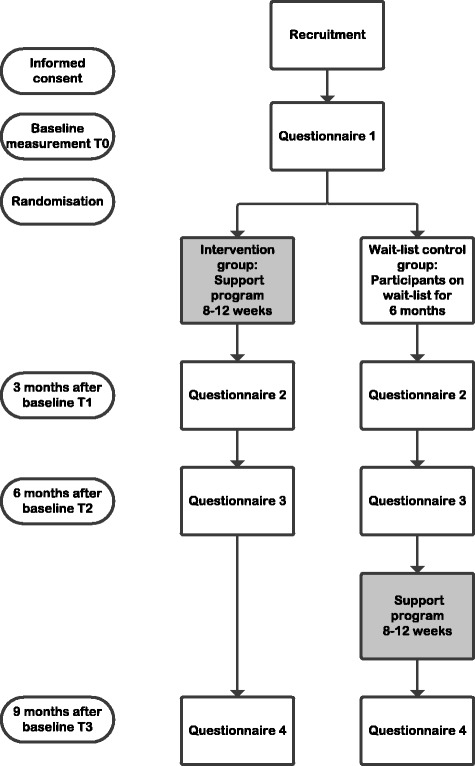
Background: Informal caregivers of patients with Amyotrophic Lateral Sclerosis (ALS) or Progressive Muscular Atrophy (PMA) face stressful demands due to severe impairments and prospect of early death of the patients they care for. Caregivers often experience feelings of psychological distress and caregiver burden, but supportive interventions are lacking. The objective of this study is to investigate the effectiveness of a psychosocial support program aimed at enhancing feelings of control over caregiving tasks and reducing psychological distress. This support program is based on an existing program for adult partners of people with cancer and is adapted to meet the needs of ALS caregivers. Methods: This study is a randomized controlled trial using a wait-list control design. One hundred and forty caregiver-patient dyads, recruited from a nationwide database and through the website of the Dutch ALS Center, will be either randomized to a support program or a wait-list control group. The blended intervention is based on Acceptance and Commitment Therapy and consists of 1 face-to-face contact, 6 online guided modules and 1 telephone contact. The intervention can be worked through in 8 weeks. The effectiveness and the participants' satisfaction with the intervention will be evaluated using a mixed method design. Caregivers and patients will be asked to fill in questionnaires on 4 occasions during the study: baseline, 3 months, 6 months and 9 months. The main study outcome is the psychological distress of the caregiver assessed with the Hospital Anxiety and Depression Scale. Secondary outcomes are caregiver burden, caregiver quality of life, quality of life of the patient and psychological distress of the patient. Group differences in primary and secondary outcomes at 6 months will be compared with linear mixed model analysis. In a subgroup of caregivers we will explore experiences with the support program through semi-structured interviews. Usage of the online modules will be logged. Discussion: The study will provide insights into the effectiveness of a blended psychosocial support program on psychological distress of caregivers of patients with ALS or PMA, as well as into indirect relations with patients' wellbeing. © 2018 The Author(s).
Overview
CoChat Summary
TL;DR
This paper is a randomized controlled trial protocol testing a blended psychosocial support program for partners of patients with ALS or PMA. The intervention combines 1 face-to-face session, 6 online guided modules, and 1 telephone contact over 8 weeks, with caregiver psychological distress as the main outcome.
Key findings
- The planned trial will randomize 140 caregiver-patient dyads; the sample size calculation said 116 dyads were needed to detect a clinically relevant difference of 3.65 points on the HADS (SD 7.3), with alpha = 0.05 and power = 80%, and the target was raised to 140 to allow for 20% attrition.
- The primary outcome is caregivers’ psychological distress on the Hospital Anxiety and Depression Scale (HADS); secondary outcomes are caregiver burden, caregiver quality of life, patient quality of life, and patient psychological distress.
- Outcomes will be assessed at baseline, 3 months, 6 months, and 9 months, and group differences at 6 months will be analyzed with linear mixed models.
- The intervention was developed with input from 21 ALS caregivers, plus feedback from 6 caregivers/professionals and a usability test with 5 partners.
Methods
- Design: Randomized controlled trial with a wait-list control group; caregivers only receive the support program, while patients are assessed alongside them.
- Sample/data: 140 caregiver-patient dyads recruited from a nationwide ALS/PMA database, the Dutch ALS Center website, and patient-association websites; caregivers had to be partners, 18+, Dutch-proficient, and have internet access.
- Analysis: Quantitative data will be analyzed with linear mixed models under intention-to-treat and per-protocol principles; qualitative interviews will be analyzed thematically.
Limitations
- The paper states that the online part may be an obstacle for caregivers with limited information and communication technology literacy, who may prefer face-to-face support.
- The intervention is only focused on partners, so primary caregivers with other relationships to the patient are excluded; the paper says an adapted version might be needed for them later.
- The paper notes possible contamination with care as usual because caregiver support in standard care may have improved, making differences harder to detect.
Model-written summary. Check it against the paper before relying on it.
Integrity signals
Registry
Cites
Statistics
Figures
Verification
Claims the paper makes
11 Valid · 3 Not valid · 18 Not checked · 16 Own results and interpretations
The cited sources support only part of this claim — read each source’s verdict below.
In the paper
“PMA caregivers are, therefore, likely to struggle with the same issues as ALS caregivers.”
§ A blended psychosocial support program for partners of patients with amyotrophic lateral sclerosis and progressive muscular atrophy: protocol of a randomized controlled trial > Background
What the sources say
- Partly supportedcites [5] Kim WK Liu X Sandner J Pasmantier M Andrews J Rowland LP Study of 962 patients indicates progressive muscular atrophy is a form of ALS Neurology 2009 73 20 1686 1692 10.1212/WNL.0b013e3181c1dea3 19917992 PMC2788803 sourceExperimental — accuracy not yet measured
The Medical management in PMA and ALS section says the conditions cannot be distinguished by their need for multidisciplinary care, supporting the inference that their caregivers may face similar care demands. It does not examine caregivers or establish that they struggle with the same issues. (LLM, conf=0.82)
hedgedstates an association- Asserted: passes — The authors put it forward as true.
- Checkable: passes — It can be checked against evidence.
- Load-bearing: passes — The paper’s conclusions depend on it.
- Based: passes — The paper gives a reason why it holds.
- Partly supported
The cited sources support only part of this claim — read each source’s verdict below.
In the paper
“ALS and PMA caregivers are faced with situations, yet may lack the relevant knowledge and skills, such as communicating about the disease and death, dealing with the patients’ behavioral changes, dealing with their own emotions or expressing their own boundaries [17].”
§ A blended psychosocial support program for partners of patients with amyotrophic lateral sclerosis and progressive muscular atrophy: protocol of a randomized controlled trial > Background
What the sources say
- Partly supportedcites [17] de Wit J, Schröder, CD, el Mecky, J, Beelen, A, van den Berg, LH & Visser-Meily, JMA. Support needs of caregivers of patients with amyotrophic lateral sclerosis: a qualitative study. Palliat Support Care. 2018:0:1–7. 29397051 sourceExperimental — accuracy not yet measured
The Results (Mechanisms of impact; page unavailable) describe caregivers learning to set boundaries, accept difficult emotions, and discuss topics such as funeral preparations with their partners. The Background says patients’ behavioral changes increase caregiving demands, but the passages do not establish that caregivers lack knowledge or skills for dealing with those changes. (LLM, conf=0.84)
hedged- Asserted: passes — The authors put it forward as true.
- Checkable: passes — It can be checked against evidence.
- Load-bearing: passes — The paper’s conclusions depend on it.
- Based: passes — The paper gives a reason why it holds.
- Partly supported
Every source the paper cites for this claim was checked and supports it.
In the paper
“The content of the support program for informal caregivers is based on an online intervention aimed at partners of patients with cancer [37, 38].”
§ A blended psychosocial support program for partners of patients with amyotrophic lateral sclerosis and progressive muscular atrophy: protocol of a randomized controlled trial > Methods > The intervention
What the sources say
- Supportedcites [37] Kohle N Drossaert CH Schreurs KM Hagedoorn M Verdonck-de Leeuw IM Bohlmeijer ET A web-based self-help intervention for partners of cancer patients based on acceptance and commitment therapy: a protocol of a randomized controlled trial BMC Public Health 2015 15 303 10.1186/s12889-015-1656-y 25884187 PMC4392862 source
The Background’s developmental-process section describes the web-based intervention “Hold on, for each other” and its development for partners of cancer patients. This supports the citation’s role in identifying the intervention on which the citing authors say they based their program. (LLM, conf=0.90)
- Supportedcites [38] Kohle N Drossaert CH Jaran J Schreurs KM Leeuw IM Bohlmeijer ET User-experiences with a web-based self-help intervention for partners of cancer patients based on acceptance and commitment therapy and self-compassion: a qualitative study BMC Public Health 2017 17 1 225 10.1186/s12889-017-4121-2 28245794 PMC5331662 source
The Background identifies “Hold on, for each other” as a web-based self-help intervention developed for partners of cancer patients. The Methods section describes its lessons and content, supporting its identification as the online intervention cited as the basis for the caregivers’ program. (LLM, conf=0.92)
plain- Asserted: passes — The authors put it forward as true.
- Checkable: passes — It can be checked against evidence.
- Load-bearing: unclear — It is unclear whether the paper’s conclusions depend on it.
- Based: passes — The paper gives a reason why it holds.
- Supported
The cited sources that could be checked couldn’t confirm or dispute this claim.
In the paper
“The test-retest reliability for the total scale and both subscales proved to be high (correlation coefficient ranging from .86 to .91) [42, 44].”
§ A blended psychosocial support program for partners of patients with amyotrophic lateral sclerosis and progressive muscular atrophy: protocol of a randomized controlled trial > Methods > Assessments
What the sources say
- Not checked — no full text of the sourcecites [42] Zigmond AS Snaith RP The hospital anxiety and depression scale Acta Psychiatr Scand 1983 67 6 361 370 10.1111/j.1600-0447.1983.tb09716.x 6880820 source
- Could not verifycites [44] Spinhoven P van Peski-Oosterbaan AS Van der Does AJ Willems LN Sterk PJ Association of anxiety with perception of histamine induced bronchoconstriction in patients with asthma Thorax 1997 52 2 149 152 10.1136/thx.52.2.149 9059475 PMC1758479 sourceExperimental — accuracy not yet measured
The baseline-anxiety assessment passage (indexed under Results; page unavailable) lists the instruments used, including the STAI and Self-Rating Depression Scale, but does not mention the HADS. Searches for HADS, test–retest reliability, and the reported .86–.91 correlations found no passage addressing the claim. (LLM, conf=0.76)
plain- Asserted: passes — The authors put it forward as true.
- Checkable: passes — It can be checked against evidence.
- Load-bearing: unclear — It is unclear whether the paper’s conclusions depend on it.
- Based: passes — The paper gives a reason why it holds.
The cited sources support only part of this claim — read each source’s verdict below.
In the paper
“ACT has proven to be effective in decreasing feelings of psychological distress in various target groups, including caregivers of other patient populations [26–28].”
§ A blended psychosocial support program for partners of patients with amyotrophic lateral sclerosis and progressive muscular atrophy: protocol of a randomized controlled trial > Background
What the sources say
- Partly supportedcites [26] A-Tjak JG Davis ML Morina N Powers MB Smits JA Emmelkamp PM A meta-analysis of the efficacy of acceptance and commitment therapy for clinically relevant mental and physical health problems Psychother Psychosom 2015 84 1 30 36 10.1159/000365764 25547522 sourceExperimental — accuracy not yet measured
The Discussion reports that ACT outperformed control conditions across studies of mental and physical health problems, supporting its effectiveness across several clinical groups. The Abstract and Description of Studies identify patients with mental disorders or somatic health problems, but the passages do not establish reduced psychological distress specifically among caregivers of other patient populations. (LLM, conf=0.84)
- Not checked — no full text of the sourcecites [27] Losada A Marquez-Gonzalez M Romero-Moreno R Mausbach BT Lopez J Fernandez-Fernandez V Cognitive-behavioral therapy (CBT) versus acceptance and commitment therapy (ACT) for dementia family caregivers with significant depressive symptoms: results of a randomized clinical trial J Consult Clin Psychol 2015 83 4 760 772 10.1037/ccp0000028 26075381 source
- Not checked — no full text of the sourcecites [28] Burke K Muscara F McCarthy M Dimovski A Hearps S Anderson V Adapting acceptance and commitment therapy for parents of children with life-threatening illness: pilot study Fam Syst Health 2014 32 1 122 127 10.1037/fsh0000012 24684156 source
boostedstates a cause- Asserted: passes — The authors put it forward as true.
- Checkable: passes — It can be checked against evidence.
- Load-bearing: passes — The paper’s conclusions depend on it.
- Based: passes — The paper gives a reason why it holds.
- Partly supported
11 more claims
Create a free account to see all 48 claims and every source verdict.
- It may state two separate claims as one. 21
- Probably not a substantial claim. 21
Citations
Cites
Using thematic analysis in psychology
Braun, V., & Clarke, V. (2006) · Qualitative Research in Psychology · doi:10.1191/1478088706qp063oa · Cited by 194,414
The Hospital Anxiety and Depression Scale
Zigmond, A. S., & Snaith, R. P. (1983) · Acta Psychiatrica Scandinavica · doi:10.1111/j.1600-0447.1983.tb09716.x · Cited by 47,139
Depression and quality of life in older persons: A review
Sivertsen, H., Bjørkløf, G. H., Engedal, K., Selbæk, G., & Helvik, A.-S. (2015) · Dementia and Geriatric Cognitive Disorders · doi:10.1159/000437299 · Cited by 14,152
The Multidimensional Scale of Perceived Social Support
Zimet, G. D., Dahlem, N. W., Zimet, S. G., & Farley, G. K. (1988) · Journal of Personality Assessment · doi:10.1207/s15327752jpa5201_2 · Cited by 13,339
Hoffmann, T. C., Glasziou, P. P., Boutron, I., Milne, R., Perera, R., Moher, D., Altman, D. G., Barbour, V., Macdonald, H., Johnston, M., et al. (2014) · BMJ · doi:10.1136/bmj.g1687 · Cited by 10,548 · cited 1×
“the Template for Intervention Description and Replication (TIDieR) [30, 31].”
MethodSPIRIT 2013 Statement: Defining Standard Protocol Items for Clinical Trials
Chan, A.-W., Tetzlaff, J. M., Altman, D. G., Laupacis, A., Gøtzsche, P. C., Krleža-Jerić, K., Hróbjartsson, A., Mann, H., Dickersin, K., Berlin, J. A., et al. (2013) · Annals of Internal Medicine · doi:10.7326/0003-4819-158-3-201302050-00583 · Cited by 7,363 · cited 1×
“the Template for Intervention Description and Replication (TIDieR) [30, 31].”
MethodAcceptance and commitment therapy: model, processes and outcomes
Hayes, S. C., Luoma, J. B., Bond, F. W., Masuda, A., & Lillis, J. (2006) · Behaviour Research and Therapy · doi:10.1016/j.brat.2005.06.006 · Cited by 6,587 · cited 1×
“The content of the online modules is focused on the following key components: 1] acceptance (embracing the private events without unnecessary attempts to change them [39]), 2] values (identifying valued domains of life [40]), 3] committed action (actions to pursue one’s values [40]), 4] mindfulness (training conscious…”
Background(1999) · Cited by 5,934
Relatives of the Impaired Elderly: Correlates of Feelings of Burden
Zarit, S. H., Reever, K. E., & Bach-Peterson, J. (1980) · The Gerontologist · doi:10.1093/geront/20.6.649 · Cited by 5,810
Psychometric Characteristics of the Multidimensional Scale of Perceived Social Support
Zimet, G. D., Powell, S. S., Farley, G. K., Werkman, S., & Berkoff, K. A. (1990) · Journal of Personality Assessment · doi:10.1080/00223891.1990.9674095 · Cited by 4,855
Cedarbaum, J. M., Stambler, N., Malta, E., Fuller, C., Hilt, D., Thurmond, B., & Nakanishi, A. (1999) · Journal of the Neurological Sciences · doi:10.1016/s0022-510x(99)00210-5 · Cited by 3,307 · cited 3×
“Randomization will be stratified for the degree of functional impairment of the patient (Amyotrophic Lateral Sclerosis Functional Rating Scale-Revised, using the cut off score for severe disabilities ≥ 24) [34, 35], presence of behavioral problems of the patient (Amyotrophic Lateral Sclerosis-Frontotemporal Dementia-Q…”
MethodKarasek, R. A., Brisson, C., Kawakami, N., Houtman, I. L. D., Bongers, P. M., & Amick, B. C. (1998) · Journal of Occupational Health Psychology · doi:10.1037//1076-8998.3.4.322 · Cited by 3,189 · cited 1×
“We added 3 additional questions based on the Job Content Questionnaire aimed at the control that caregivers perceive over fulfilling the caregiver tasks [53].”
MethodAssessment of client/patient satisfaction: development of a general scale
Larsen, D. L., Attkisson, C. C., Hargreaves, W. A., & Nguyen, T. D. (1979) · Evaluation and Program Planning · doi:10.1016/0149-7189(79)90094-6 · Cited by 2,887 · cited 1×
“Satisfaction with received support To measure the satisfaction of the caregiver for the support they received, the 8-item Client Satisfaction Questionnaire (CSQ-8) is used [60].”
MethodKiernan, M. C., Vucic, S., Cheah, B. C., Turner, M. R., Eisen, A., Hardiman, O., Burrell, J. R., & Zoing, M. C. (2011) · The Lancet · doi:10.1016/s0140-6736(10)61156-7 · Cited by 2,603
SPINHOVEN, P., ORMEL, J., SLOEKERS, P. P. A., KEMPEN, G. I. J. M., SPECKENS, A. E. M., & HEMERT, A. M. V. (1997) · Psychological Medicine · doi:10.1017/s0033291796004382 · Cited by 2,158 · cited 4×
“The sample size calculation was based on Hospital Anxiety Depression Scale (HADS) data of informal caregivers in a previously completed study [6].”
MethodInfluentialPatient engagement in research: a systematic review
Domecq, J. P., Prutsky, G., Elraiyah, T., Wang, Z., Nabhan, M., Shippee, N., Brito, J. P., Boehmer, K., Hasan, R., Firwana, B., et al. (2014) · BMC Health Services Research · doi:10.1186/1472-6963-14-89 · Cited by 1,773 · cited 1×
“studies indicated that engaging the target group increases study enrollment and may enhance the uptake and the acceptance of interventions [67, 68].”
BackgroundBédard, M., Molloy, D. W., Squire, L., Dubois, S., Lever, J. A., & O'Donnell, M. (2001) · The Gerontologist · doi:10.1093/geront/41.5.652 · Cited by 1,691
A-Tjak, J. G. L., Davis, M. L., Morina, N., Powers, M. B., Smits, J. A. J., & Emmelkamp, P. M. G. (2015) · Psychotherapy and Psychosomatics · doi:10.1159/000365764 · Cited by 1,031
Canty-Mitchell, J., & Zimet, G. D. (2000) · American Journal of Community Psychology · doi:10.1023/a:1005109522457 · Cited by 844
Cohen, S. R., Mount, B. M., Strobel, M. G., & Bui, F. (1995) · Palliative Medicine · doi:10.1177/026921639500900306 · Cited by 738 · cited 1×
“Patients’ quality of life Patients’ self-rated quality of life will be measured using the McGill Quality of Life Questionnaire (MQOL) [51], which is designed to measure the quality of life of patients with a terminal illness.”
MethodEvaluating patient and stakeholder engagement in research: moving from theory to practice
Esmail, L., Moore, E., & Rein, A. (2015) · Journal of Comparative Effectiveness Research · doi:10.2217/cer.14.79 · Cited by 502
The Revised Scale for Caregiving Self-Efficacy: Reliability and Validity Studies
Steffen, A. M., McKibbin, C., Zeiss, A. M., Gallagher-Thompson, D., & Bandura, A. (2002) · The Journals of Gerontology Series B: Psychological Sciences and Social Sciences · doi:10.1093/geronb/57.1.p74 · Cited by 485 · cited 2×
“All subscales demonstrate strong internal consistency and adequate test-retest reliability [52].”
A proposed staging system for amyotrophic lateral sclerosis
Roche, J. C., Rojas-Garcia, R., Scott, K. M., Scotton, W., Ellis, C. E., Burman, R., Wijesekera, L., Turner, M. R., Leigh, P. N., Shaw, C. E., et al. (2012) · Brain · doi:10.1093/brain/awr351 · Cited by 465
Brouwer, W. B. F., van Exel, N. J. A., van Gorp, B., & Redekop, W. K. (2006) · Quality of Life Research · doi:10.1007/s11136-005-5994-6 · Cited by 452 · cited 1×
“Caregivers' quality of life Caregivers’ quality of life will be assessed using the Care-related Quality of Life (CarerQoL) [48].”
MethodFletcher, L., & Hayes, S. C. (2005) · Journal of Rational-Emotive & Cognitive-Behavior Therapy · doi:10.1007/s10942-005-0017-7 · Cited by 373 · cited 1×
“The content of the online modules is focused on the following key components: 1] acceptance (embracing the private events without unnecessary attempts to change them [39]), 2] values (identifying valued domains of life [40]), 3] committed action (actions to pursue one’s values [40]), 4] mindfulness (training conscious…”
BackgroundShort-form Zarit caregiver burden interviews were valid in advanced conditions
Higginson, I. J., Gao, W., Jackson, D., Murray, J., & Harding, R. (2010) · Journal of Clinical Epidemiology · doi:10.1016/j.jclinepi.2009.06.014 · Cited by 343 · cited 1×
“short form shows good validity, internal consistency, and discriminative ability [47].”
BackgroundGuizzo, B. S., Krziminski, C. D. O., & de Oliveira, D. L. L. C. (2003) · PubMed · Cited by 312
Arch, J. J., & Craske, M. G. (2008) · Clinical Psychology: Science and Practice · doi:10.1111/j.1468-2850.2008.00137.x · Cited by 310 · cited 1×
“Applying acceptance strategies and living up to personal values requires a different way of responding to situations and may increase the feeling of control [25].”
BackgroundAcademic Mindfulness Interest Group, M., & Academic Mindfulness Interest Group, M. (2006) · Australian & New Zealand Journal of Psychiatry · doi:10.1080/j.1440-1614.2006.01794.x · Cited by 304
Resilience and Distress Among Amyotrophic Lateral Sclerosis Patients and Caregivers
Rabkin, J. G., Wagner, G. J., & Del Bene, M. (2000) · Psychosomatic Medicine · doi:10.1097/00006842-200003000-00020 · Cited by 288 · cited 1×
“The wellbeing of ALS caregivers has been studied more intensively and shows that as the disease progresses, ALS caregivers experience heightened feelings of psychological distress and burden [6–8], which is related to a diminished quality of life [9].”
BackgroundBuhrman, M., Skoglund, A., Husell, J., Bergström, K., Gordh, T., Hursti, T., Bendelin, N., Furmark, T., & Andersson, G. (2013) · Behaviour Research and Therapy · doi:10.1016/j.brat.2013.02.010 · Cited by 285 · cited 1×
“Recently, ACT has also been proved to be effective when delivered via the internet [28, 29].”
BackgroundCousineau, N., McDowell, I., Hotz, S., & Hébert, P. (2003) · Medical Care · doi:10.1097/00005650-200301000-00013 · Cited by 259 · cited 1×
“(SPBS): “I feel that I am a burden to my caregiver” [59].”
BackgroundA longitudinal study on quality of life and depression in ALS patient–caregiver couples
Gauthier, A., Vignola, A., Calvo, A., Cavallo, E., Moglia, C., Sellitti, L., Mutani, R., & Chiò, A. (2007) · Neurology · doi:10.1212/01.wnl.0000257093.53430.a8 · Cited by 256
Losada, A., Márquez-González, M., Romero-Moreno, R., Mausbach, B. T., López, J., Fernández-Fernández, V., & Nogales-González, C. (2015) · Journal of Consulting and Clinical Psychology · doi:10.1037/ccp0000028 · Cited by 255 · cited 1×
“ACT interventions have proven to reduce psychological distress in other caregiver populations [27, 28] and are valuable in contexts with circumstances that cannot be changed [23, 24].”
Backgroundvan Exel, N. J. A., op Reimer, W. J. S., Brouwer, W. B., van den Berg, B., Koopmanschap, M. A., & van den Bos, G. A. (2004) · Clinical Rehabilitation · doi:10.1191/0269215504cr723oa · Cited by 229 · cited 4×
“Caregivers who do not want to participate will be asked for their reasons for not participating and we will assess their burden of caregiving with the one item, Self-Rated Burden scale (SRB) [33].”
BackgroundMethodInfluentialStudy of 962 patients indicates progressive muscular atrophy is a form of ALS
Kim, W. K., Liu, X., Sandner, J., Pasmantier, M., Andrews, J., Rowland, L. P., & Mitsumoto, H. (2009) · Neurology · doi:10.1212/wnl.0b013e3181c1dea3 · Cited by 217
Neurobehavioral symptoms in ALS are negatively related to caregivers’ burden and quality of life
Chiò, A., Vignola, A., Mastro, E., Giudici, A. D., Iazzolino, B., Calvo, A., Moglia, C., & Montuschi, A. (2010) · European Journal of Neurology · doi:10.1111/j.1468-1331.2010.03016.x · Cited by 157
Aoun, S. M., Bentley, B., Funk, L., Toye, C., Grande, G., & Stajduhar, K. J. (2013) · Palliative Medicine · doi:10.1177/0269216312455729 · Cited by 152 · cited 2×
“Previous studies have indicated that there is a need for psychosocial interventions for caregivers, but such interventions are still lacking [6, 20, 21].”
BackgroundBurden, depression, and anxiety in caregivers of people with amyotrophic lateral sclerosis
Pagnini, F., Rossi, G., Lunetta, C., Banfi, P., Castelnuovo, G., Corbo, M., & Molinari, E. (2010) · Psychology, Health & Medicine · doi:10.1080/13548506.2010.507773 · Cited by 139
GOLDSTEIN, L. H., ATKINS, L., LANDAU, S., BROWN, R., & LEIGH, P. N. (2006) · Psychological Medicine · doi:10.1017/s0033291706007124 · Cited by 123 · cited 1×
“Previous research on ALS caregiving revealed increasing levels of psychological distress in caregivers, a lack of existing interventions and an urgent need for support [7, 21].”
BackgroundMeijer, A. M., & van den Wittenboer, G. L. H. (2007) · Journal of Family Psychology · doi:10.1037/0893-3200.21.1.49 · Cited by 118 · cited 1×
“The satisfaction scale shows reasonable internal consistency [58].”
BackgroundThe ALS-FTD-Q: A new screening tool for behavioral disturbances in ALS
Raaphorst, J., Beeldman, E., Schmand, B., Berkhout, J., Linssen, W. H. J. P., van den Berg, L. H., Pijnenburg, Y. A., Grupstra, H. F., Weikamp, J. G., Schelhaas, H. J., et al. (2012) · Neurology · doi:10.1212/wnl.0b013e31826c1aa1 · Cited by 111
A cross-national validation of the client satisfaction questionnaire: the Dutch experience
De Brey, H. (1983) · Evaluation and Program Planning · doi:10.1016/0149-7189(83)90018-6 · Cited by 109
Burke, K., Muscara, F., McCarthy, M., Dimovski, A., Hearps, S., Anderson, V., & Walser, R. (2014) · Families, Systems, & Health · doi:10.1037/fsh0000012 · Cited by 107 · cited 2×
“Recently, ACT has also been proved to be effective when delivered via the internet [28, 29].”
BackgroundHoefman, R. J., van Exel, J., & Brouwer, W. B. (2013) · Health and Quality of Life Outcomes · doi:10.1186/1477-7525-11-173 · Cited by 101
Weisser, F. B., Bristowe, K., & Jackson, D. (2015) · Palliative Medicine · doi:10.1177/0269216315575851 · Cited by 97 · cited 1×
“accepting a loved one’s illness and accepting the loss of the patient in the near future are examples of issues ALS caregivers struggle with [16].”
BackgroundHoefman, R. J., van Exel, N. J. A., Looren de Jong, S., Redekop, W. K., & Brouwer, W. B. F. (2011) · Quality of Life Research · doi:10.1007/s11136-010-9829-8 · Cited by 86
Chiò, A., Gauthier, A., Vignola, A., Calvo, A., Ghiglione, P., Cavallo, E., Terreni, A. A., & Mutani, R. (2006) · Neurology · doi:10.1212/01.wnl.0000233840.41688.df · Cited by 83
A systematic review of behavioural changes in motor neuron disease
Raaphorst, J., Beeldman, E., De Visser, M., De Haan, R. J., & Schmand, B. (2012) · Amyotrophic Lateral Sclerosis · doi:10.3109/17482968.2012.656652 · Cited by 75
Spinhoven, P., van Peski-Oosterbaan, A. S., Van der Does, A. J., Willems, L. N., & Sterk, P. J. (1997) · Thorax · doi:10.1136/thx.52.2.149 · Cited by 70
Liewluck, T., & Saperstein, D. S. (2015) · Neurologic Clinics · doi:10.1016/j.ncl.2015.07.005 · Cited by 65
Pagnini, F., Phillips, D., Bosma, C. M., Reece, A., & Langer, E. (2016) · Journal of Clinical Psychology · doi:10.1002/jclp.22235 · Cited by 54
van Groenestijn, A. C., Schröder, C. D., Visser-Meily, J. M. A., Reenen, E. T. K.-V., Veldink, J. H., & van den Berg, L. H. (2015) · Amyotrophic Lateral Sclerosis and Frontotemporal Degeneration · doi:10.3109/21678421.2015.1038276 · Cited by 54 · cited 1×
“Previous studies have indicated that there is a need for psychosocial interventions for caregivers, but such interventions are still lacking [6, 20, 21].”
BackgroundSelf-citationFactors related to caregiver strain in ALS: a longitudinal study
Creemers, H., de Morée, S., Veldink, J. H., Nollet, F., van den Berg, L. H., & Beelen, A. (2016) · Journal of Neurology, Neurosurgery & Psychiatry · doi:10.1136/jnnp-2015-311651 · Cited by 52
Self-citationGraham, C. D., Weinman, J., Sadjadi, R., Chalder, T., Petty, R., Hanna, M. G., Turner, C., Parton, M., Maddison, P., Radunovic, A., et al. (2014) · Clinical Rehabilitation · doi:10.1177/0269215513511340 · Cited by 47 · cited 2×
“The acceptance component in ACT makes this therapy valuable in contexts with circumstances that cannot be changed [23, 24], for instance, receiving a diagnosis of ALS or PMA.”
BackgroundProblem solving skills predict quality of life and psychological morbidity in ALS caregivers
Murphy, V., Felgoise, S. H., Walsh, S. M., & Simmons, Z. (2009) · Amyotrophic Lateral Sclerosis · doi:10.1080/17482960802245007 · Cited by 46
Support needs of caregivers of patients with amyotrophic lateral sclerosis: A qualitative study
de Wit, J., Schröder, C. D., el Mecky, J., Beelen, A., van den Berg, L. H., & Visser-Meily, J. M. A. (2019) · Palliative and Supportive Care · doi:10.1017/s1478951517001213 · Cited by 40 · cited 3×
“We interviewed 21 ALS caregivers about their support needs [17] and added information and exercises related to these needs to the support program.”
BackgroundSelf-citationKöhle, N., Drossaert, C. H. C., Jaran, J., Schreurs, K. M. G., Verdonck-de Leeuw, I. M., & Bohlmeijer, E. T. (2017) · BMC Public Health · doi:10.1186/s12889-017-4121-2 · Cited by 39
Self-citationKöhle, N., Drossaert, C. H., Schreurs, K. M., Hagedoorn, M., Verdonck-de Leeuw, I. M., & Bohlmeijer, E. T. (2015) · BMC Public Health · doi:10.1186/s12889-015-1656-y · Cited by 38 · cited 1×
“The content of the support program for informal caregivers is based on an online intervention aimed at partners of patients with cancer [37, 38].”
BackgroundSelf-citationde Wit, J., Vervoort, S. C. J. M., van Eerden, E., van den Berg, L. H., Visser-Meily, J. M. A., Beelen, A., & Schröder, C. D. (2019) · BMC Psychology · doi:10.1186/s40359-019-0308-x · Cited by 37
Self-citationDavis, E. L., Deane, F. P., & Lyons, G. C. B. (2015) · Palliative and Supportive Care · doi:10.1017/s1478951514000431 · Cited by 33 · cited 3×
“The acceptance component in ACT makes this therapy valuable in contexts with circumstances that cannot be changed [23, 24], for instance, receiving a diagnosis of ALS or PMA.”
BackgroundCluster RCT of case management on patients' quality of life and caregiver strain in ALS
Creemers, H., Veldink, J. H., Grupstra, H., Nollet, F., Beelen, A., & van den Berg, L. H. (2014) · Neurology · doi:10.1212/01.wnl.0000438227.48470.62 · Cited by 32
Self-citationDying at home: a way of maintaining control for the person with ALS/M N D
Moore, M. K. (1993) · Palliative Medicine · doi:10.1177/0269216393007004s10 · Cited by 32 · cited 1×
“The wellbeing of ALS caregivers is critical because a high level of burden might predict a breakdown in care, leading to earlier placement of the patient in a care-home or hospice [10].”
BackgroundActivities of daily living in motor neuron disease: role of behavioural and motor changes
Mioshi, E., Lillo, P., Kiernan, M., & Hodges, J. (2012) · Journal of Clinical Neuroscience · doi:10.1016/j.jocn.2011.07.042 · Cited by 30 · cited 1×
“Randomization will be stratified for the degree of functional impairment of the patient (Amyotrophic Lateral Sclerosis Functional Rating Scale-Revised, using the cut off score for severe disabilities ≥ 24) [34, 35], presence of behavioral problems of the patient (Amyotrophic Lateral Sclerosis-Frontotemporal Dementia-Q…”
MethodMolloy, G. J., Johnston, D. W., Johnston, M., Gao, C., Witham, M. D., Struthers, A. D., & McMurdo, M. E. T. (2008) · British Journal of Health Psychology · doi:10.1348/135910707x203363 · Cited by 28 · cited 9×
“Due to the many hours ALS and PMA caregivers spend on providing care, they often experience a lack of personal time [17], which reduces the opportunity to access traditional forms of support.”
BackgroundInfluentialWhat's Stressful About Caring?1
Orbell, S., & Gillies, B. (1993) · Journal of Applied Social Psychology · doi:10.1111/j.1559-1816.1993.tb01087.x · Cited by 25
[Statistical significance or clinical relevance?].
Vanhoutte, E. K., Faber, C. G., & Merkies, I. S. J. (2010) · PubMed · Cited by 7
Rapid screening for psychologic distress in men with prostate carcinoma
Roth, A. J., Kornblith, A. B., Batel-Copel, L., Peabody, E., Scher, H. I., & Holland, J. C. (1998) · Cancer · doi:10.1002/(sici)1097-0142(19980515)82:10<1904::aid-cncr13>3.0.co;2-x
Research works printed but not linked: 3
- Vanhoutte EK Faber CG Merkies ISJ Statistische significantie of klinische relevantie? Ned Tijdschr Genees 2010 154 A2516 21176250
- Lange A Handleiding Interactionele Probleem Oplossings Vragenlijst (IPOV) [manual for interactional problem- solving inventory (IPSI)] 1983 Deventer Van Loghum Slaterus
- Hoefman R Van Exel N Brouwer W iMTA valuation of informal care questionnaire (iVICQ). Version 1.0 Rotterdam: iBMG/iMTA 2011
Cited by
De Wit, J., Beelen, A., Drossaert, C. H. C., Kolijn, R., Van Den Berg, L. H., SchrÖder, C. D., & Visser-Meily, J. M. A. (2020) · Amyotrophic Lateral Sclerosis and Frontotemporal Degeneration · doi:10.1080/21678421.2020.1757114 · Cited by 46
Self-citationde Wit, J., Vervoort, S. C. J. M., van Eerden, E., van den Berg, L. H., Visser-Meily, J. M. A., Beelen, A., & Schröder, C. D. (2019) · BMC Psychology · doi:10.1186/s40359-019-0308-x · Cited by 37
“The protocol of the RCT is described in detail elsewhere [8].”
BackgroundMethodSelf-citationD’Alvano, G., Buonanno, D., Passaniti, C., De Stefano, M., Lavorgna, L., Tedeschi, G., Siciliano, M., & Trojsi, F. (2021) · Brain Sciences · doi:10.3390/brainsci12010049 · Cited by 32
“Practical needs can vary from help with assisting devices [26] to help in managing the logistics of care provision and applying for resources, which is often time consuming, bureaucratic, and a source of stress [23].”
BackgroundInfluentialCaga, J., Kiernan, M. C., & Piguet, O. (2021) · Journal of Geriatric Psychiatry and Neurology · doi:10.1177/08919887211060016 · Cited by 15
“Two randomised controlled trials are underway to explore the efficacy of mindfulness-based interventions on caregiver wellbeing.(57,58) In light of the findings from the current review, perhaps the efficacy of these interventions may be improved by focusing on commonly encountered problems by ALS caregivers at differe…”
BackgroundGenuis, S. K., Luth, W., Bubela, T. M., & Johnston, W. S. W. (2023) · Muscle & Nerve · doi:10.1002/mus.27935 · Cited by 16
“At the same time, a communication agreement will shape patient and caregiver expectations and foster a sense of control within the therapeutic relationship.(51,83,84) This sense of control may be achieved by prioritizing of patients' communication preferences and by developing trust in clinicians who will sensitively…”
Background
Metadata
- Authors
- de Wit, J., Beelen, A., Drossaert, C. H. C., Kolijn, R., van den Berg, L. H., Visser-Meily, J. M. A., & Schröder, C. D.
- Affiliations
- Amsterdam UMC Location University of Amsterdam (NL)
- University of Twente (NL)
- Utrecht University (NL)
- Corresponding author
- Schröder, Carin D.
- Venue
- BMC Psychology
- Published
- 2018-05-02
- Volume
- 6
- Issue
- 1
- Pages
- 20-20
- ISSN
- 2050-7283 (ISSN-L)
- PMC
- PMC5930742
- OpenAlex
- W2804778376
- Semantic Scholar
- 13313521cc62cd1215ce547b5932adce8663915d
- Cited by
- 12
- References
- 70
- Citations by year
- 2026: 1 · 2023: 2 · 2022: 2 · 2021: 2 · 2020: 2 · 2019: 3
- FWCI
- 3.45
- Type
- journal article
- Language
- en
- Open access
- gold
- doi.org
- Licence
- cc-by
- creativecommons.org/licenses/by/4.0/ (tdm)
- Locations
- BMC Psychology (publishedVersion, cc-by)
- Europe PMC (PubMed Central) (publishedVersion, other-oa)
- PubMed Central (publishedVersion, cc-by)
- PubMed (publishedVersion)
- Pure Amsterdam UMC (submittedVersion, cc-by)
- Data Archiving and Networked Services (DANS) (submittedVersion, other-oa)
- DOAJ (DOAJ: Directory of Open Access Journals) (submittedVersion, cc-by-sa)
- Utrecht University Repository (Utrecht University) (submittedVersion, other-oa)
- University of Twente Research Information (submittedVersion, cc-by)
- Funders
- The Netherlands ALS Foundation (2014-27)
- Topics
- Health Sciences › Nursing › Research and Theory › Nursing care and research
- Social Sciences › Psychology › Clinical Psychology › Mindfulness and Compassion Interventions
- Social Sciences › Psychology › Clinical Psychology › Family Caregiving in Mental Illness
- Keywords
- amyotrophic lateral sclerosis, progressive muscular atrophy, informal caregivers, caregiver burden, psychological distress, psychosocial support, acceptance and commitment therapy, blended intervention, telephone support, patient-caregiver dyads, quality of life, patient well-being
- MeSH terms
- Psychosocial Support Systems, Adaptation, Psychological, Adult, Aged, Amyotrophic Lateral Sclerosis, Clinical Protocols, Female, Humans, Male, Muscular Atrophy, Spinal, Netherlands, Quality of Life, Surveys and Questionnaires, Research Design, Caregivers, Spouses
About these checks
Registry, retraction, Cites and statistics results are computed, not judged, with one exception: a printed reference that no index lists is read once by a model before it counts as a citation error. Claims are extracted by a model and kept only when their quote appears verbatim in the text; each cited source is then checked, with a model’s help, for whether it says what the claim relies on. Those verdicts can be wrong — read the claim’s quote and the cited source before relying on one.
The claim verdicts this report counts are experimental: their accuracy is not yet measured.
A language model drew the claims from the paper on 2026-10-11, under version 3 of the claim definition (model deepseek-v4.1-flash, prompt extract-v3).
A second model labelled each claim on 2026-10-11 (model jev-1.13-20260917, definition revision gold-guideline-v0.2).
Cited sources are checked with a language model’s help (gpt-6-sol).
Statistics and arithmetic are recomputed, not judged.
Confidence bands are shown only for fields calibrated on our annotated test set. None is calibrated yet, so no band is shown.
What counts as a claim ›How we measure confidence ›How we check this ›
Are you an author, or do you see a problem with this page? Request a review
Data sources
Bibliographic data: Semantic Scholar, OpenAlex, Crossref.
Contains information from the Semantic Scholar Academic Graph Datasets, made available under the ODC Attribution License (ODC-BY 1.0).
Semantic Scholar’s data is described in: Kinney, R., et al. (2023). The Semantic Scholar Open Data Platform. arXiv:2301.10140.
