

mixOmics: An R package for ‘omics feature selection and multiple data integration
Open accessPublished version of a preprint
The DOI matches its Crossref record; 58 of the 58 references it cites were found in a registry or an index.
Abstract
The advent of high throughput technologies has led to a wealth of publicly available 'omics data coming from different sources, such as transcriptomics, proteomics, metabolomics. Combining such large-scale biological data sets can lead to the discovery of important biological insights, provided that relevant information can be extracted in a holistic manner. Current statistical approaches have been focusing on identifying small subsets of molecules (a 'molecular signature') to explain or predict biological conditions, but mainly for a single type of 'omics. In addition, commonly used methods are univariate and consider each biological feature independently. We introduce mixOmics, an R package dedicated to the multivariate analysis of biological data sets with a specific focus on data exploration, dimension reduction and visualisation. By adopting a systems biology approach, the toolkit provides a wide range of methods that statistically integrate several data sets at once to probe relationships between heterogeneous 'omics data sets. Our recent methods extend Projection to Latent Structure (PLS) models for discriminant analysis, for data integration across multiple 'omics data or across independent studies, and for the identification of molecular signatures. We illustrate our latest mixOmics integrative frameworks for the multivariate analyses of 'omics data available from the package.
Overview
The claims and statistics of this paper haven’t been checked yet.
Free: it reads the open-access text and checks the first 5 claims that cite a source we can check. Create a free account to check every claim.
Integrity signals
Registry
Cites
Statistics
Figures



Verification
Claims the paper makes
The claims and statistics of this paper haven’t been checked yet.
Free: it reads the open-access text and checks the first 5 claims that cite a source we can check. Create a free account to check every claim.
Self-check
Percentages, sums and reported differences re-computed from the paper’s own numbers.
The self-check needs the paper’s full text.
Citations
Cites
R: A Language and Environment for Statistical Computing
R Core Team (2025) · doi:10.32614/r.manuals · Cited by 352,181
Regression shrinkage and selection via the lasso
Tibshirani, R. (1996) · Journal of the Royal Statistical Society Series B: Statistical Methodology · doi:10.1111/j.2517-6161.1996.tb02080.x · Cited by 51,482 · cited 1×
“Feature selection is performed via l1 regularisation (LASSO, [27]), which is implemented into each method’s statistical criterion to be optimised.”
MethodRegularization Paths for Generalized Linear Models via Coordinate Descent
Friedman, J., Hastie, T., & Tibshirani, R. (2010) · Journal of Statistical Software · doi:10.18637/jss.v033.i01 · Cited by 19,927 · cited 1×
“glmnet, [38], PMA, [39]), mixOmics uses soft-thresholding to improve usability by replacing the l(1) parameter by the number keepX of features to select on each dimension.”
MethodEnterotypes of the human gut microbiome
MetaHIT Consortium (additional members), Arumugam, M., Raes, J., Pelletier, E., Le Paslier, D., Yamada, T., Mende, D. R., Fernandes, G. R., Tap, J., Bruls, T., et al. (2011) · Nature · doi:10.1038/nature09944 · Cited by 7,548
Partial least squares for discrimination
Barker, M., & Rayens, W. (2003) · Journal of Chemometrics · doi:10.1002/cem.785 · Cited by 2,841
Khan, J., Wei, J. S., Ringnér, M., Saal, L. H., Ladanyi, M., Westermann, F., Berthold, F., Schwab, M., Antonescu, C. R., Peterson, C., et al. (2001) · Nature Medicine · doi:10.1038/89044 · Cited by 2,644 · cited 2×
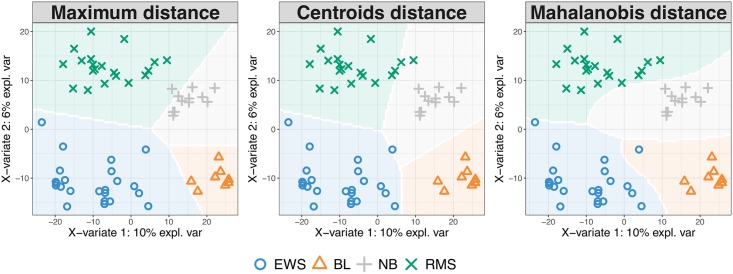
“The study investigates Small Round Blue Cell Tumors (SRBCT, [35]) of 63 tumour samples with the expression levels of 2,308 genes.”
BackgroundMethodLê Cao, K.-A., Boitard, S., & Besse, P. (2011) · BMC Bioinformatics · doi:10.1186/1471-2105-12-253 · Cited by 1,007 · cited 3×
“In single ‘omics analyses this distance achieves best accuracy when the predicted values are close to 0 or 1 [10].”
BackgroundMethodInfluentialPlankton networks driving carbon export in the oligotrophic ocean
Guidi, L., Chaffron, S., Bittner, L., Eveillard, D., Larhlimi, A., Roux, S., Darzi, Y., Audic, S., Berline, L., Brum, J. R., et al. (2016) · Nature · doi:10.1038/nature16942 · Cited by 870 · cited 1×
“(2016), Table 3 and factomineR Husson et al. (2017)). However, very few methods propose feature selection, including sparse CCA (pma package Witten et al. (2013)), sparse PLS (spls package, Chung et al.”
MethodTumor classification by partial least squares using microarray gene expression data
Nguyen, D. V., & Rocke, D. M. (2002) · Bioinformatics · doi:10.1093/bioinformatics/18.1.39 · Cited by 816 · cited 1×
“The assessment is data-driven and similar to the process detailed in Rohart et al. (2016), where one-sided t-tests assess whether there is a gain in performance when adding components to the model.”
MethodPath Models with Latent Variables: The NIPALS Approach
WOLD, H. (1975) · Quantitative Sociology · doi:10.1016/b978-0-12-103950-9.50017-4 · Cited by 802 · cited 1×
“Unsupervised analyses methods include Principal Component Analysis—based on NonLinear Iterative Partial Least Squares for missing values [18], Independent Component Analysis [19], Partial Least Squares regression—PLS, also known as Projection to Latent Structures [20], multi-group PLS [21], regularised Canonical Corre…”
Method
Research works printed but not linked: 3
- A Singh, 2016, DIABLO-an integrative, multi-omics, multivariate method for multi-group classification, bioRxiv, 067611
- F Rohart, 2017, MINT: A multivariate integrative approach to identify a reproducible biomarker signature across multiple experiments and platforms, BMC Bioinformatics, 18
- H Wold, 1966, Estimation of principal components and related models by iterative least squares, J Multivar Anal, 391
Cited by
Items 901–1,000 of 1,013
Metaphor—A workflow for streamlined assembly and binning of metagenomes
Salazar, V. W., Shaban, B., Quiroga, M. D. M., Turnbull, R., Tescari, E., Marcelino, V. R., Verbruggen, H., & Cao, K. L. (2022) · GigaScience · doi:10.1093/gigascience/giad055 · Cited by 25
Hubers, N., Hagenbeek, F. A., Pool, R., Dejean, S., Harms, A. C., Roetman, P. J., van Beijsterveldt, C. E. M., Fanos, V., Ehli, E. A., Vermeiren, R. R. J. M., et al. (2023) · American Journal of Medical Genetics Part B Neuropsychiatric Genetics · doi:10.1002/ajmg.b.32955 · Cited by 29
“All analyses were performed in R (version 4.1.1), mainly in the mixOmics package (version 6.16.3; Rohart et al., 2017).”
MethodInfluentialLow-no-calorie sweeteners exert marked compound-specific impact on the human gut microbiota ex vivo
den Abbeele, P. V., Poppe, J., Deyaert, S., Laurie, I., Gravert, T. K. O., Abrahamsson, A., Baudot, A., Karnik, K., & Risso, D. S. (2023) · International Journal of Food Sciences and Nutrition · doi:10.1080/09637486.2023.2240037 · Cited by 33
“The first three components of the rCCA were maintained and used to generate the correlation matrix (version 6.20.3) (Rohart et al. 2017).”
MethodInfluentialEvaluating Machine Learning Methods of Analyzing Multiclass Metabolomics
Gong, Y., Ding, W., Wang, P., Wu, Q., Yao, X., & Yang, Q. (2023) · Journal of Chemical Information and Modeling · doi:10.1021/acs.jcim.3c01525 · Cited by 28
Tintoré, M., Cune, J., Vu, L. D., Poppe, J., van den Abbeele, P., Baudot, A., & de Lecea, C. (2024) · Biology · doi:10.3390/biology13010051 · Cited by 26
“Regularized Canonical Correlation Analysis (rCCA) was executed using the mixOmics package with the shrinkage method for estimation of penalization parameters (version 6.20.3) [37].”
MethodInfluentialAmeliorating microalgal OMEGA production using omics platforms
Mariam, I., Bettiga, M., Rova, U., Christakopoulos, P., Μάτσακας, Λ., & Patel, A. (2024) · Trends in Plant Science · doi:10.1016/j.tplants.2024.01.002 · Cited by 25
Diet-omics in the Study of Urban and Rural Crohn disease Evolution (SOURCE) cohort
Braun, T., Feng, R., Amir, A., Levhar, N., Shacham, H., Mao, R., Hadar, R., Toren, I., Algavi, Y. M., Abu-Saad, K., et al. (2024) · Nature Communications · doi:10.1038/s41467-024-48106-6 · Cited by 25
“Both sPLS regression and DIABLO were calculated using the MixOmics package 66 .”
Hulme, C. H., Stevens, A., Dunn, W. B., Heazell, A. E. P., Hollywood, K. A., Begley, P., Westwood, M., & Myers, J. (2018) · Scientific Reports · doi:10.1038/s41598-018-22535-y · Cited by 25
Kurita, J.-I., Hirao, Y., Nakano, H., Fukunishi, Y., & Nishimura, Y. (2018) · Scientific Reports · doi:10.1038/s41598-018-31852-1 · Cited by 25
Gängler, S., Waldenberger, M., Artati, A., Adamski, J., van Bolhuis, J. N., Sørgjerd, E. P., van Vliet‐Ostaptchouk, J. V., & Makris, K. C. (2019) · Metabolomics · doi:10.1007/s11306-019-1519-0 · Cited by 25
Favreau, B., Denis, M., Ployet, R., Mounet, F., da Silva, H. P., Franceschini, L. M., Laclau, J., Labate, C. A., & Carrer, H. (2019) · PLoS ONE · doi:10.1371/journal.pone.0218528 · Cited by 30
Microbiome composition and implications for ballast water classification using machine learning
Gerhard, W. A., & Gunsch, C. K. (2019) · The Science of The Total Environment · doi:10.1016/j.scitotenv.2019.07.053 · Cited by 25
Prenatal programming by testosterone of follicular theca cell functions in ovary
Monniaux, D., Genêt, C., Maillard, V., Jarrier-Gaillard, P., Adriaensen, H., Hennequet‐Antier, C., Lainé, A.-L., Laclie, C., Papillier, P., Plisson‐Petit, F., et al. (2019) · Cellular and Molecular Life Sciences · doi:10.1007/s00018-019-03230-1 · Cited by 29
Soares-Castro, P., Araújo-Rodrigues, H., Godoy‐Vitorino, F., Ferreira, M., Covelo, P., López, A., Vingada, J. V., Eira, C., & Santos, P. M. (2019) · Scientific Reports · doi:10.1038/s41598-019-50139-7 · Cited by 28
Modulatory Effect of Protein and Carotene Dietary Levels on Pig gut Microbiota
González-Prendes, R., Pena, R. N., Solé, E., Seradj, A. R., Estany, J., & Ramayo‐Caldas, Y. (2019) · Scientific Reports · doi:10.1038/s41598-019-51136-6 · Cited by 26
Janitschke, D., Lauer, A. A., Bachmann, C. M., Seyfried, M. S., Grimm, H. S., Hartmann, T., & Grimm, M. O. W. (2020) · International Journal of Molecular Sciences · doi:10.3390/ijms21239015 · Cited by 24
“Computation of statistical significance and principle component analysis [54] were performed in R (R Core Team 2020; Vienna, Austria; https://www.”
MethodFar and wide: Associations between childhood socio-economic status and brain connectomics
Johnson, A., Bathelt, J., Akarca, D., Crickmore, G., & Astle, D. E. (2020) · Developmental Cognitive Neuroscience · doi:10.1016/j.dcn.2020.100888 · Cited by 30
Dwiyanto, J., Ayub, Q., Lee, S. M., Foo, S. C., Chong, C. W., & Rahman, S. (2021) · Microbial Genomics · doi:10.1099/mgen.0.000619 · Cited by 35
Polypharmacological reprogramming of tumor-associated macrophages towards an inflammatory phenotype
Nishida-Aoki, N., & Gujral, T. (2021) · Cancer Research · doi:10.1158/0008-5472.can-21-1428 · Cited by 14
Gut Mycobiome Dysbiosis is Linked to Hypertriglyceridemia Among Home Dwelling Elderly DanesPreprint
Ahmad, H. F., Castro-Mejía, J. L., Krych, Ł., Khakimov, B., Kot, W., Bechshøft, R. L., Reitelseder, S., Højfeldt, G. W., Engelsen, S. B., Holm, L., et al. (2020) · bioRxiv (Cold Spring Harbor Laboratory) · doi:10.1101/2020.04.16.044693 · Cited by 26
DeepMF: deciphering the latent patterns in omics profiles with a deep learning method
Chen, L., Xu, J., & Li, S. C. (2019) · BMC Bioinformatics · doi:10.1186/s12859-019-3291-6 · Cited by 23
Deciphering the Source of Primary Biological Aerosol Particles: A Pollen Case Study
Rivas‐Ubach, A., Stanfill, B., China, S., Paša‐Tolić, L., Guenther, A., & Steiner, A. L. (2021) · ACS Earth and Space Chemistry · doi:10.1021/acsearthspacechem.0c00295 · Cited by 25
Hu, B., Wen, G., Wang, Y., Zhang, X., Li, T., Cui, H. S., Qian, Y., Zhang, Y., & Li, Z. (2021) · Frontiers in Genetics · doi:10.3389/fgene.2021.789485 · Cited by 23
“Partial Least Squares Discrimination Analysis (OPLS-DA) The overall proteomic and metabolic changes in AF were determined by OPLS-DA on R package “mixOmics” (Rohart et al., 2017).”
MethodTranscriptome-wide mapping of milk somatic cells upon subclinical mastitis infection in dairy cattle
Bisutti, V., Mach, N., Giannuzzi, D., Vanzin, A., Capra, E., Negrini, R., Gelain, M. E., Cecchinato, A., Ajmone‐Marsan, P., & Pegolo, S. (2023) · Journal of Animal Science and Biotechnology/Journal of animal science and biotechnology · doi:10.1186/s40104-023-00890-9 · Cited by 25
Wang, H., Xu, W., Zhang, X., Wang, L., Jia, S., Zhao, S., Wan, L., Lu, R., Ren, A., & Zhang, S. (2024) · BMC Plant Biology · doi:10.1186/s12870-024-05543-1 · Cited by 23
“Sparse partial least squares discriminant analysis (SPLSDA) was performed using the mixOmics package in R [52].”
MethodAlakwaa, F., Das, V., Majumdar, Å., Nair, V., Fermin, D., Dey, A., Slidel, T. W. F., Reilly, D. F., Myshkin, E., Duffin, K. L., et al. (2025) · JCI Insight · doi:10.1172/jci.insight.186070 · Cited by 26
“Finally, these supervised feature numbers were fitted to block.splsda (51) with a weighted design matrix of 10% contribution across -omics types that can discriminate and explain the phenotypic variance.”
InfluentialFujiogi, M., Camargo, C. A., Raita, Y., Bochkov, Y. A., Gern, J. E., Mansbach, J. M., Piedra, P. A., & Hasegawa, K. (2020) · Pediatric Allergy and Immunology · doi:10.1111/pai.13296 · Cited by 23
“68 Prematurity (32-37 wks) 13 (21) 5 (24) 6 (21) .”
Effects on the liver lipidome of rat offspring prenatally exposed to bisphenol A
Nguyen, H. T., Li, L., Eguchi, A., Kannan, K., Kim, E., & Iwata, H. (2020) · The Science of The Total Environment · doi:10.1016/j.scitotenv.2020.143466 · Cited by 24
Ye, Y., Eyres, G. T., Reis, M. G., Schreurs, N. M., Silcock, P. J., Agnew, M. P., Johnson, P. L., Maclean, P. H., & Realini, C. E. (2020) · Foods · doi:10.3390/foods9121885 · Cited by 28
“2 [27] and plotted using the factoextra package version 1.”
MethodKong, J., Liu, X., Wang, L., Huang, H., Ou, D., Guo, J., Laws, E. A., & Huang, B. (2021) · Frontiers in Microbiology · doi:10.3389/fmicb.2020.599614 · Cited by 23
Houser, D. S., Derous, D., Douglas, A., & Lusseau, D. (2021) · Journal of Experimental Biology · doi:10.1242/jeb.238915 · Cited by 23
“This was done by defining a function based on two principal components of the variance in metabolite expression, taking the paired design into consideration using a partial-least square approach to discriminant analysis (PLS-DA) using the mixOmics package in R (Rohart et al., 2017).”
MethodCompositional Data Analysis of Periodontal Disease Microbial Communities
Sisk-Hackworth, L., Ortiz-Velez, A. N., Reed, M., & Kelley, S. T. (2021) · Frontiers in Microbiology · doi:10.3389/fmicb.2021.617949 · Cited by 23
Sparse HJ Biplot: A New Methodology via Elastic Net
Cubilla‐Montilla, M., Librero, A. B. N., Galindo‐Villardón, P., & Torres-Cubilla, C. A. (2021) · Mathematics · doi:10.3390/math9111298 · Cited by 24
“TCGA” and it was down-loaded from the mixOmics R language package [31].”
Metabolic and Immunological Subtypes of Esophageal Cancer Reveal Potential Therapeutic Opportunities
King, R. J., Qiu, F., Yu, F., & Singh, P. K. (2021) · Frontiers in Cell and Developmental Biology · doi:10.3389/fcell.2021.667852 · Cited by 24
McIntyre, R. L., Denis, S. W., Kamble, R., Molenaars, M., Petr, M. A., Schomakers, B. V., Rahman, M., Gupta, S. D., Tóth, M. L., Vanapalli, S. A., et al. (2021) · Aging Cell · doi:10.1111/acel.13381 · Cited by 25
Liu, D., Jin, X., Yu, G., Wang, M., Liu, L., Zhang, W., Jia Rui, W. U., Wang, F., Yang, J., Luo, Q. F., et al. (2021) · Molecular Therapy — Oncolytics · doi:10.1016/j.omto.2021.08.013 · Cited by 23
“For multivariate analysis of metabolomics data, a principal component analysis model was fitted to capture the metabolic signatures of different groups with an R package of mixOmics.(60) Differential abundance scores of metabolic pathways were computed to evaluate the impact of OA treatment on the activity of metaboli…”
MethodIntegrated N- and O-Glycomics of Acute Myeloid Leukemia (AML) Cell Lines
Blöchl, C., Wang, D., Madunić, K., Lageveen‐Kammeijer, G. S. M., Huber, C. G., Wuhrer, M., & Zhang, T. (2021) · Cells · doi:10.3390/cells10113058 · Cited by 23
“Moreover, rCCA was conducted employing the mixOmics package [41].”
Methodde Borba, M. C., Velho, A. C., de Freitas, M. B., Holvoet, M., Maia-Grondard, A., Baltenweck, R., Magnin‐Robert, M., Randoux, B., Hilbert, J., Reignault, P. L., et al. (2022) · Plant Disease · doi:10.1094/pdis-08-21-1675-re · Cited by 23
Advances in proteomic profiling of pediatric kidney diseases
Cummins, T. D., Korte, E. A., Bhayana, S., Merchant, M. L., Barati, M. T., Smoyer, W. E., & Klein, J. B. (2022) · Pediatric Nephrology · doi:10.1007/s00467-022-05497-2 · Cited by 23
“0 [41, 42], similarity network fusion (SNF) [43], mixOmics [44], and multi-omic factor analysis (MOFA) [45].”
BackgroundMetaproteomic Profile of the Colonic Luminal Microbiota From Patients With Colon Cancer
Tanca, A., Abbondio, M., Fiorito, G., Pira, G., Sau, R., Manca, A., Muroni, M. R., Porcu, A., Scanu, A. M., Cossu‐Rocca, P., et al. (2022) · Frontiers in Microbiology · doi:10.3389/fmicb.2022.869523 · Cited by 24
Chen, L., Zheng, T., Yang, Y., Chaudhary, P. P., Teh, J. P. Y., Cheon, B. K., Moses, D., Schuster, S. C., Schlundt, J., Li, J., et al. (2022) · Gut Microbes · doi:10.1080/19490976.2022.2070392 · Cited by 28
TNFR2 Costimulation Differentially Impacts Regulatory and Conventional CD4+ T-Cell Metabolism
Mensink, M., Zaal, E. A., Minh, T. T. N., Schrama, E., Berkers, C. R., Borst, J. G., & de Kivit, S. (2022) · Frontiers in Immunology · doi:10.3389/fimmu.2022.881166 · Cited by 23
Vicente, A. L. S. A., Novoloaca, A., Cahais, V., Awada, Z., Cuenin, C., Spitz, N., Carvalho, A. L., Evangelista, A. F., Crovador, C. S., Reis, R. M., et al. (2022) · Nature Communications · doi:10.1038/s41467-022-31488-w · Cited by 29
Fearer, C. J., Conrad, A. O., Marra, R. E., Georskey, C., Villari, C., Slot, J. C., & Bonello, P. (2022) · Frontiers in Forests and Global Change · doi:10.3389/ffgc.2022.934545 · Cited by 23
“Finally, we used sparse partial least squares discriminant analysis (sPLS-DA) to confirm the identities of important spectral bands across analyses using the package “mixOmics” (Rohart et al., 2017).”
MethodFavre, L., Hunter, D. A., O’Donoghue, E. M., Erridge, Z. A., Napier, N. J., Somerfield, S. D., Hunt, M., McGhie, T. K., Cooney, J. M., Saei, A., et al. (2022) · Postharvest Biology and Technology · doi:10.1016/j.postharvbio.2022.112059 · Cited by 25
Dai, D., Dai, F., Chen, J., Jin, M., Li, M., Hu, D., Liu, Z., Zhang, Z., Xu, F., & Chen, W. (2022) · Communications Biology · doi:10.1038/s42003-022-03887-8 · Cited by 24
Spick, M. P., Campbell, A. E., Baričević-Jones, I., von Gerichten, J., Lewis, H.-M., Frampas, C., Longman, K., Stewart, A., Dunn‐Walters, D. K., Skene, D. J., et al. (2022) · International Journal of Molecular Sciences · doi:10.3390/ijms232012079 · Cited by 23
“The relevance network was constructed using the R package MixOmics [50].”
MethodpmartR 2.0: A Quality Control, Visualization, and Statistics Pipeline for Multiple Omics Datatypes
Degnan, D. J., Stratton, K. G., Richardson, R. E., Claborne, D. M., Martin, E. A., Johnson, N. A., Leach, D. T., Webb‐Robertson, B., & Bramer, L. (2023) · Journal of Proteome Research · doi:10.1021/acs.jproteome.2c00610 · Cited by 23
Vaccari, F., Zhang, L., Giuberti, G., Grasso, A., Bandini, F., García-Pérez, P., Copat, C., Lucini, L., Dall’Asta, M., Ferrante, M., et al. (2023) · Journal of Hazardous Materials · doi:10.1016/j.jhazmat.2023.131331 · Cited by 23
Palladino, G., Rampelli, S., Scicchitano, D., Nanetti, E., Iuffrida, L., Wathsala, R. H. G. R., Interino, N., Marini, M., Porru, E., Turroni, S., et al. (2023) · The Science of The Total Environment · doi:10.1016/j.scitotenv.2023.163948 · Cited by 24
Carrillo, M. P., Sevilla, M., Casado, M., Piña, B., Pastor-López, E. J., Matamoros, V., Vila‐Costa, M., & Barata, C. (2023) · Environmental Pollution · doi:10.1016/j.envpol.2023.122188 · Cited by 23
Plett, K. L., Wojtalewicz, D., Anderson, I. C., & Plett, J. M. (2023) · New Phytologist · doi:10.1111/nph.19400 · Cited by 25
“PCA and PLS-DA analyses were performed using the MIXOMICS package in R (6.14.1; Rohart et al ., 2017).”
InfluentialFlaviis, R. D., Santarelli, V., Grilli, S., & Sacchetti, G. (2024) · Food Chemistry · doi:10.1016/j.foodchem.2024.138387 · Cited by 23
Callister, A. N., Costa‐Neto, G., Bradshaw, B. P., Elms, S. R., Crossa, J. L., & Brawner, J. T. (2024) · Tree Genetics & Genomes · doi:10.1007/s11295-023-01636-4 · Cited by 30
“All EV input data were centered and scaled and the NIPALS algorithm was implemented within Mixomics to input missing values.”
Liang, H., Luo, H., Sang, Z., Jia, M., Jiang, X., Wang, Z., Yao, X., & Cong, S. (2024) · IEEE Journal of Biomedical and Health Informatics · doi:10.1109/jbhi.2024.3439713 · Cited by 27
“…[48]) that projects multiomics data in latent space via discriminant analysis, (9) block sparse least squares discriminant analysis (BSPLSDA [49]) that adds sparse regularization on BPLSDA to select the relevant features, (10) concatenation of final mul-tiomics representations (CF [50]),…”
MethodSpecific metabolic signatures of fish exposed to cyanobacterial blooms
Sotton, B., Paris, A., Manach, S. L., Blond, A., Duval, C., Qiao, Q., Catherine, A., Combès, A., Pichon, V., Bernard, C., et al. (2018) · Chemosphere · doi:10.1016/j.chemosphere.2019.03.115 · Cited by 24
Deciphering host immunity to malaria using systems immunology
Loiseau, C., Cooper, M. M., & Doolan, D. L. (2019) · Immunological Reviews · doi:10.1111/imr.12814 · Cited by 24
Connecting secretome to hematopoietic stem cell phenotype shifts in an engineered bone marrow niche
Gilchrist, A. E., & Harley, B. A. C. (2020) · Integrative Biology · doi:10.1093/intbio/zyaa013 · Cited by 28
EARN: an ensemble machine learning algorithm to predict driver genes in metastatic breast cancer
Mirsadeghi, L., Hajihosseini, R., Banaei-Moghaddam, A., & Kavousi, K. (2020) · BMC Medical Genomics · doi:10.1186/s12920-021-00974-3 · Cited by 24
MuSA: a graphical user interface for multi-OMICs data integration in radiogenomic studies
Zanfardino, M., Castaldo, R., Pane, K., Affinito, O., Aiello, M., Salvatore, M., & Franzese, M. (2021) · Scientific Reports · doi:10.1038/s41598-021-81200-z · Cited by 25
Guerrero-Sánchez, V. M., Castillejo, M. Á., López‐Hidalgo, C., Alconada, A. M. M., Jorrín-Novo, J. V., & Rey, M.-D. (2021) · Journal of Proteomics · doi:10.1016/j.jprot.2021.104263 · Cited by 28
Lichenoid dysplasia is not a distinct pathological entity
Farah, C. S., Fox, S. A., Shearston, K., Newman, L., Babic, S., & Vacher, M. A. (2021) · Oral Oncology · doi:10.1016/j.oraloncology.2021.105362 · Cited by 23
Deserno, M. K., Bathelt, J., Groenman, A. P., & Geurts, H. M. (2023) · European Child & Adolescent Psychiatry · doi:10.1007/s00787-022-01986-9 · Cited by 22
Kaulich, E., Waselenchuk, Q., Fürst, N., Desch, K., Mosbacher, J., Ciirdaeva, E., Juengling, M., Tushev, G., Langer, J., & Schuman, E. M. (2024) · doi:10.1101/2024.08.05.606570 · Cited by 22
Senizza, B., Araniti, F., Lewin, S. A., Wende, S., Kolb, S., & Lucini, L. (2023) · Frontiers in Plant Science · doi:10.3389/fpls.2023.1190304 · Cited by 24
“Data Integration Analysis for Biomarker discovery using Latent variable approaches for Omics studies (DIABLO) from the package “mixOmics” was used for the integration of metabolomics and root metabarcoding datasets (Rohart et al., 2017).”
MethodAdvances in Environmental Microbiology: A Multi-omic Perspective
Satya, S., Sharma, S., Choudhary, G., & Kaushik, G. (2024) · Springer eBooks · doi:10.1007/978-981-97-1769-9_7 · Cited by 35
Basting, C. M., Langat, R., Broedlow, C. A., Guerrero, C. R., Bold, T. D., Bailey, M. A., Velez, A., Schroeder, T. A., Short-Miller, J. C., Cromarty, R. T., et al. (2024) · Microbiology Spectrum · doi:10.1128/spectrum.00680-24 · Cited by 27
“To identify the most important variables in discriminating between patients who died or survived or healthy controls, we performed a supervised clustering analysis with sparse partial least squares-discriminant analysis (sPLS-DA) using the MixOmics R package (56) (Fig.”
MethodThe gut microbiome is associated with susceptibility to febrile malaria in Malian children
Ham, K. M. V. D., Bower, L., Li, S., Lorenzi, H., Doumbo, S., Doumtabé, D., Kayentao, K., Ongoïba, A., Traoré, B., Crompton, P. D., et al. (2024) · Nature Communications · doi:10.1038/s41467-024-52953-8 · Cited by 23
“We applied sPLS-DA (Sparse Partial Least Square – Discriminant Analysis) 94,95 to select taxa and/or metabolites that are important for discriminating resistant and susceptible microbiomes.”
MethodMaternal Inflammatory Proteins in Pregnancy and Neurodevelopmental Disorders at Age 10 Years
Wang, T., Mohammadzadeh, P., Jepsen, J. R. M., Thorsen, J., Rosenberg, J. B., Lemvigh, C. K., Brustad, N., Chen, L., Ali, M., Vinding, R., et al. (2025) · JAMA Psychiatry · doi:10.1001/jamapsychiatry.2025.0122 · Cited by 24
Correlation of gut microbiota and neurotransmitters in a rat model of post-traumatic stress disorder
Zhou, Q., Sun, T., Wu, F., Li, F., Liu, Y., Li, W., Dai, N., Tan, L., Li, T., & Song, Y. (2020) · Journal of Traditional Chinese Medical Sciences · doi:10.1016/j.jtcms.2020.10.005 · Cited by 26
Transcriptome and metabolomic analysis to reveal the browning spot formation of ‘Huangguan’ pear
Wang, Q., Wu, X., Liu, L., Yao, D., Li, J., Fang, J., Chen, X., Zhu, L., Liu, P., Ye, Z., et al. (2021) · BMC Plant Biology · doi:10.1186/s12870-021-03049-8 · Cited by 22
Asri, M., Verma, R., Ibrahim, M. H., Sharma, V., & Nor, N. A. M. (2021) · Microchemical Journal · doi:10.1016/j.microc.2021.106556 · Cited by 22
Beaumont, M., Mussard, E., Barilly, C., Lencina, C., Gress, L., Painteaux, L., Gabinaud, B., Cauquil, L., Aymard, P., Canlet, C., et al. (2021) · Journal of Nutrition · doi:10.1093/jn/nxab411 · Cited by 28
Menden, A., Hall, D., Hahn-Townsend, C., Broedlow, C. A., Joshi, U., Pearson, A., Crawford, F., Evans, J. E., Klatt, N. R., Crynen, S., et al. (2022) · Scientific Reports · doi:10.1038/s41598-022-08840-7 · Cited by 23
Multi-Omics Strategies for Investigating the Microbiome in Toxicology Research
Morgan, E. W., Perdew, G. H., & Patterson, A. D. (2022) · Toxicological Sciences · doi:10.1093/toxsci/kfac029 · Cited by 23
Lyu, Z., Schmidt, R., Martin, R. E., Green, M. T., Kinkade, J. A., Mao, J., Bivens, N. J., Joshi, T., & Rosenfeld, C. S. (2022) · mSystems · doi:10.1128/msystems.00336-22 · Cited by 26
“The mixOmics (68) R package was used to correlate the bacterial genera changes simultaneously with body composition, brain histological data, and behavioral results, which enabled the integration of the microbiome, behavioral (social testing, ultrasonic vocalization, Barnes maze, and elevated plus maze, EPM), metaboli…”
MethodChou, C., Mohanty, S., Kang, H. A., Kong, L., Ávila-Pacheco, J., Joshi, S. R., Ueda, I., Devine, L., Raddassi, K., Pierce, K. A., et al. (2022) · Aging Cell · doi:10.1111/acel.13682 · Cited by 23
“transcriptomics Sparse partial least squared was performed using mixOmics (Rohart et al., 2017) to identify highly positively and negatively correlated genes and metabolites.”
MethodMultivariate Analysis with the R Package mixOmics
Welham, Z., Dejean, S., & Cao, K. L. (2012) · Methods in molecular biology · doi:10.1007/978-1-0716-1967-4_15 · Cited by 26
DNN-PNN: A parallel deep neural network model to improve anticancer drug sensitivity
Chen, S., Yang, Y., Zhou, H., Sun, Q., & Su, R. (2022) · Methods · doi:10.1016/j.ymeth.2022.11.002 · Cited by 23
Olmedo, P., Núñez‐Lillo, G., Vidal, J., Leiva, C., Rojas, B., Sagredo, K., Arriagada, C., Defilippi, B. G., Pérez-Donoso, A. G., Meneses, C., et al. (2023) · Food Chemistry · doi:10.1016/j.foodchem.2023.135498 · Cited by 22
Non-invasive monitoring of T cell differentiation through Raman spectroscopy
Pavillon, N., & Smith, N. I. (2023) · Scientific Reports · doi:10.1038/s41598-023-29259-8 · Cited by 27
den Abbeele, P. V., Detzel, C. J., Rose, A., Deyaert, S., Baudot, A., & Warner, C. D. (2023) · Microorganisms · doi:10.3390/microorganisms11030659 · Cited by 28
“org; accessed on 26 December 2022) [30].”
Applying a GAN-based classifier to improve transcriptome-based prognostication in breast cancer
Guttà, C., Morhard, C., & Rehm, M. (2023) · PLoS Computational Biology · doi:10.1371/journal.pcbi.1011035 · Cited by 24
Vu, L. T., Garcia‐Mansfield, K., Pompeiano, A., An, J., David‐Dirgo, V., Sharma, R., Venugopal, V., Halait, H., Marcucci, G., Kuo, Y., et al. (2023) · Annals of Clinical and Translational Neurology · doi:10.1002/acn3.51890 · Cited by 27
Wang, S., Mantilla, S. M. O., Stokes, J. R., Smith, P. A., & Smyth, H. E. (2023) · Food Hydrocolloids · doi:10.1016/j.foodhyd.2023.109274 · Cited by 22
Jacques, M., Landen, S., Alvarez‐Romero, J., Hiam, D., Schittenhelm, R. B., Hanchapola, I., Shah, A. D., Voisin, S. A. C., & Eynon, N. (2023) · The FASEB Journal · doi:10.1096/fj.202300840rr · Cited by 24
Welham, Z., Li, J., Engel, A. F., & Molloy, M. P. (2023) · Cancers · doi:10.3390/cancers15205045 · Cited by 25
“All analyses were conducted using the R package mixOmics , Version 6.22.0 [28].”
MethodInfluentialHuffmyer, A. S., Ashey, J., Strand, E., Chiles, E. N., Su, X., & Putnam, H. M. (2024) · PLoS Biology · doi:10.1371/journal.pbio.3002875 · Cited by 26
Metabolomic Responses to Manganese Dose in SH-SY5Y Human Neuroblastoma Cells
Fernandes, J., Chandler, J. D., Liu, K., Uppal, K., Li, H., Hu, X. Y., Go, Y., & Jones, D. P. (2019) · Toxicological Sciences · doi:10.1093/toxsci/kfz028 · Cited by 23
“To identify discriminatory metabolites contributing most to separation according to Mn exposure, PLS-DA was performed using Metaboanalyst (Xia and Wishart, 2016) and PLSDA function in R package mixOmics (Rohart et al., 2017).”
MethodKrohn, C. C., Jin, J., Wood, J. L., Hayden, H. L., Kitching, M., Ryan, J., Fabijański, P., Franks, A. E., & Tang, C. (2020) · Journal of Hazardous Materials · doi:10.1016/j.jhazmat.2020.124077 · Cited by 23
Martínez-Álvaro, M., Zubiri-Gaitán, A., Hernández, P., Greenacre, M. J., Ferrer, A., & Blasco, A. (2021) · Communications Biology · doi:10.1038/s42003-021-02784-w · Cited by 25
Liu, Z., Waters, J., & Rui, B. (2022) · Biomedical Journal · doi:10.1016/j.bj.2022.01.004 · Cited by 26
“It targets small molecules and can provide information not readily obtained from genomics, transcriptomics, or proteomics [18].”
BackgroundMullin, B. H., Ribet, A. B. P., & Pavlos, N. J. (2023) · Current Osteoporosis Reports · doi:10.1007/s11914-023-00812-8 · Cited by 23
Sacristán‐Soriano, O., Jarma, D., Sánchez, M. I., Romero, N., Alonso, E., Green, A. J., Sànchez-Melsió, A., Hortas, F., Balcázar, J. L., Peralta‐Sánchez, J. M., et al. (2024) · The Science of The Total Environment · doi:10.1016/j.scitotenv.2024.169946 · Cited by 24
SIMOA Diagnostics on Alzheimer’s Disease and Frontotemporal Dementia
Chatziefstathiou, A., Canaslan, S., Kanata, Ε., Vekrellis, K., Constantinides, V. C., Paraskevas, G. P., Kapaki, E. N., Schmitz, M., Zerr, I., Xanthopoulos, K., et al. (2024) · Biomedicines · doi:10.3390/biomedicines12061253 · Cited by 22
“The inclusion of such data increases the strength of the analysis and of the discriminatory potential of our CSF SIMOA markers in AD and FTD [43].”
BackgroundKolb, S., Senizza, B., Araniti, F., Lewin, S., Wende, S., & Lucini, L. (2024) · Frontiers in Plant Science · doi:10.3389/fpls.2024.1484251 · Cited by 21
Decoding Codon Bias: The Role of tRNA Modifications in Tissue-Specific Translation
Ando, D., Rashad, S., Begley, T. J., Endo, H., Aoki, M., Dedon, P. C., & Niizuma, K. (2025) · International Journal of Molecular Sciences · doi:10.3390/ijms26020706 · Cited by 25
Lipid Ratios for Diagnosis and Prognosis of Pulmonary Hypertension
Bordag, N., Nagy, B. M., Zügner, E., Ludwig, H., Foris, V., Nagaraj, C., Biasin, V., Kovács, G., Kneidinger, N., Bodenhofer, U., et al. (2025) · American Journal of Respiratory and Critical Care Medicine · doi:10.1164/rccm.202407-1345oc · Cited by 25
Machine learning-powered multi-omics for food microbiology and smarter food safety
Bansal, S., Rodriguez, C. Z., Thompson‐Witrick, K. A., Wang, Y., Taft, D. H., & Zhang, B. (2025) · Trends in Food Science & Technology · doi:10.1016/j.tifs.2025.105145 · Cited by 25
Zhang, Z., Liu, Y., Zhao, W., Liu, K., Chen, Y., Wang, F., Mao, G., & Ji, M. (2025) · Nature Communications · doi:10.1038/s41467-025-61002-x · Cited by 22
“14.1) package 87 , followed by variable importance in projection (VIP) analysis was conducted by ropls (v1.”
Influential
Metadata
- Authors
- Rohart, F., Gautier, B., Singh, A., & Lê Cao, K.-A.
- Affiliations
- Translational Research Institute (AU)
- University of British Columbia (CA)
- Venue
- PLOS Computational Biology
- Publisher
- Public Library of Science (PLoS)
- Published
- 2017-11-03
- Volume
- 13
- Issue
- 11
- Pages
- e1005752
- ISSN
- 1553-734X (ISSN-L)
- 1553-7358
- PMC
- PMC5687754
- OpenAlex
- W2950985821
- Cited by
- 4,056
- References
- 57
- Citations by year
- 2026: 629 · 2025: 612 · 2024: 600 · 2023: 523 · 2022: 496 · 2021: 489 · 2020: 350 · 2019: 241 · 2018: 95 · 2017: 14
- FWCI
- 78.13
- Type
- journal article
- Language
- en
- Update notices
- new_version (2017-11-15)
- Open access
- gold
- doi.org
- Licence
- Locations
- PLoS Computational Biology (publishedVersion, cc-by)
- bioRxiv (Cold Spring Harbor Laboratory) (acceptedVersion, cc-by-nc-nd)
- PubMed Central (publishedVersion, cc-by)
- PubMed (publishedVersion)
- Minerva Access (University of Melbourne) (submittedVersion, cc-by)
- RePEc: Research Papers in Economics (submittedVersion)
- DOAJ (DOAJ: Directory of Open Access Journals) (submittedVersion, cc-by-sa)
- Figshare (submittedVersion, cc-by)
- Funders
- National Health and Medical Research Council (APP1087415)
- Australian Cancer Research Foundation (ACRF) for the Diamantina Individualised Oncology Care Centre
- Topics
- Life Sciences › Biochemistry, Genetics and Molecular Biology › Molecular Biology › Bioinformatics and Genomic Networks
- Life Sciences › Biochemistry, Genetics and Molecular Biology › Molecular Biology › Metabolomics and Mass Spectrometry Studies
- Life Sciences › Biochemistry, Genetics and Molecular Biology › Molecular Biology › Gene expression and cancer classification
- Keywords
- R package, multi-omics integration, feature selection, multivariate analysis, dimensionality reduction, partial least squares regression, discriminant analysis, molecular signatures, systems biology, transcriptomics, proteomics, metabolomics, exploratory data analysis
- MeSH terms
- Data Interpretation, Statistical, Humans, Neoplasms, Software, Computational Biology, Genomics, Systems Biology, Metabolomics
About these checks
Registry, retraction, Cites and statistics results are computed, not judged, with one exception: a printed reference that no index lists is read once by a model before it counts as a citation error. Claims are extracted by a model and kept only when their quote appears verbatim in the text; each cited source is then checked, with a model’s help, for whether it says what the claim relies on. Those verdicts can be wrong — read the claim’s quote and the cited source before relying on one.
Statistics and arithmetic are recomputed, not judged.
Confidence bands are shown only for fields calibrated on our annotated test set. None is calibrated yet, so no band is shown.
What counts as a claim ›How we measure confidence ›How we check this ›
Are you an author, or do you see a problem with this page? Request a review
Data sources
Bibliographic data: Semantic Scholar, OpenAlex, Crossref.
Contains information from the Semantic Scholar Academic Graph Datasets, made available under the ODC Attribution License (ODC-BY 1.0).
Semantic Scholar’s data is described in: Kinney, R., et al. (2023). The Semantic Scholar Open Data Platform. arXiv:2301.10140.
