

mixOmics: An R package for ‘omics feature selection and multiple data integration
Open accessPublished version of a preprint
The DOI matches its Crossref record; 58 of the 58 references it cites were found in a registry or an index.
Abstract
The advent of high throughput technologies has led to a wealth of publicly available 'omics data coming from different sources, such as transcriptomics, proteomics, metabolomics. Combining such large-scale biological data sets can lead to the discovery of important biological insights, provided that relevant information can be extracted in a holistic manner. Current statistical approaches have been focusing on identifying small subsets of molecules (a 'molecular signature') to explain or predict biological conditions, but mainly for a single type of 'omics. In addition, commonly used methods are univariate and consider each biological feature independently. We introduce mixOmics, an R package dedicated to the multivariate analysis of biological data sets with a specific focus on data exploration, dimension reduction and visualisation. By adopting a systems biology approach, the toolkit provides a wide range of methods that statistically integrate several data sets at once to probe relationships between heterogeneous 'omics data sets. Our recent methods extend Projection to Latent Structure (PLS) models for discriminant analysis, for data integration across multiple 'omics data or across independent studies, and for the identification of molecular signatures. We illustrate our latest mixOmics integrative frameworks for the multivariate analyses of 'omics data available from the package.
Overview
The claims and statistics of this paper haven’t been checked yet.
Free: it reads the open-access text and checks the first 5 claims that cite a source we can check. Create a free account to check every claim.
Integrity signals
Registry
Cites
Statistics
Figures



Verification
Claims the paper makes
The claims and statistics of this paper haven’t been checked yet.
Free: it reads the open-access text and checks the first 5 claims that cite a source we can check. Create a free account to check every claim.
Self-check
Percentages, sums and reported differences re-computed from the paper’s own numbers.
The self-check needs the paper’s full text.
Citations
Cites
R: A Language and Environment for Statistical Computing
R Core Team (2025) · doi:10.32614/r.manuals · Cited by 352,181
Regression shrinkage and selection via the lasso
Tibshirani, R. (1996) · Journal of the Royal Statistical Society Series B: Statistical Methodology · doi:10.1111/j.2517-6161.1996.tb02080.x · Cited by 51,482 · cited 1×
“Feature selection is performed via l1 regularisation (LASSO, [27]), which is implemented into each method’s statistical criterion to be optimised.”
MethodRegularization Paths for Generalized Linear Models via Coordinate Descent
Friedman, J., Hastie, T., & Tibshirani, R. (2010) · Journal of Statistical Software · doi:10.18637/jss.v033.i01 · Cited by 19,927 · cited 1×
“glmnet, [38], PMA, [39]), mixOmics uses soft-thresholding to improve usability by replacing the l(1) parameter by the number keepX of features to select on each dimension.”
MethodEnterotypes of the human gut microbiome
MetaHIT Consortium (additional members), Arumugam, M., Raes, J., Pelletier, E., Le Paslier, D., Yamada, T., Mende, D. R., Fernandes, G. R., Tap, J., Bruls, T., et al. (2011) · Nature · doi:10.1038/nature09944 · Cited by 7,548
Partial least squares for discrimination
Barker, M., & Rayens, W. (2003) · Journal of Chemometrics · doi:10.1002/cem.785 · Cited by 2,841
Khan, J., Wei, J. S., Ringnér, M., Saal, L. H., Ladanyi, M., Westermann, F., Berthold, F., Schwab, M., Antonescu, C. R., Peterson, C., et al. (2001) · Nature Medicine · doi:10.1038/89044 · Cited by 2,644 · cited 2×
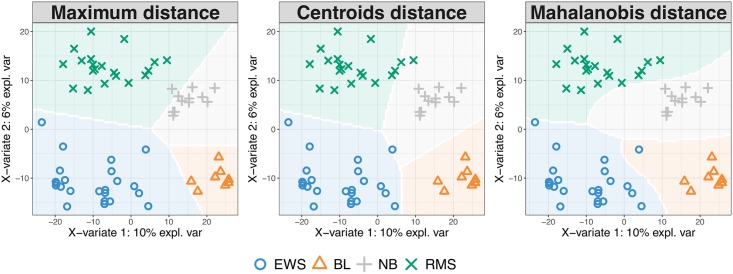
“The study investigates Small Round Blue Cell Tumors (SRBCT, [35]) of 63 tumour samples with the expression levels of 2,308 genes.”
BackgroundMethodLê Cao, K.-A., Boitard, S., & Besse, P. (2011) · BMC Bioinformatics · doi:10.1186/1471-2105-12-253 · Cited by 1,007 · cited 3×
“In single ‘omics analyses this distance achieves best accuracy when the predicted values are close to 0 or 1 [10].”
BackgroundMethodInfluentialPlankton networks driving carbon export in the oligotrophic ocean
Guidi, L., Chaffron, S., Bittner, L., Eveillard, D., Larhlimi, A., Roux, S., Darzi, Y., Audic, S., Berline, L., Brum, J. R., et al. (2016) · Nature · doi:10.1038/nature16942 · Cited by 870 · cited 1×
“(2016), Table 3 and factomineR Husson et al. (2017)). However, very few methods propose feature selection, including sparse CCA (pma package Witten et al. (2013)), sparse PLS (spls package, Chung et al.”
MethodTumor classification by partial least squares using microarray gene expression data
Nguyen, D. V., & Rocke, D. M. (2002) · Bioinformatics · doi:10.1093/bioinformatics/18.1.39 · Cited by 816 · cited 1×
“The assessment is data-driven and similar to the process detailed in Rohart et al. (2016), where one-sided t-tests assess whether there is a gain in performance when adding components to the model.”
MethodPath Models with Latent Variables: The NIPALS Approach
WOLD, H. (1975) · Quantitative Sociology · doi:10.1016/b978-0-12-103950-9.50017-4 · Cited by 802 · cited 1×
“Unsupervised analyses methods include Principal Component Analysis—based on NonLinear Iterative Partial Least Squares for missing values [18], Independent Component Analysis [19], Partial Least Squares regression—PLS, also known as Projection to Latent Structures [20], multi-group PLS [21], regularised Canonical Corre…”
Method
Research works printed but not linked: 3
- A Singh, 2016, DIABLO-an integrative, multi-omics, multivariate method for multi-group classification, bioRxiv, 067611
- F Rohart, 2017, MINT: A multivariate integrative approach to identify a reproducible biomarker signature across multiple experiments and platforms, BMC Bioinformatics, 18
- H Wold, 1966, Estimation of principal components and related models by iterative least squares, J Multivar Anal, 391
Cited by
Items 501–600 of 1,013
Chan, J., Wright, J., Wong, H. T., Ardasheva, A., Brumbaugh, J. T., McLimans, C. J., & Lamendella, R. (2019) · Scientific Reports · doi:10.1038/s41598-019-41452-2 · Cited by 41
Rapid Multi-Omics Sample Preparation for Mass Spectrometry
Muehlbauer, L. K., Jen, A., Zhu, Y., He, Y., Shishkova, E., Overmyer, K. A., & Coon, J. J. (2023) · Analytical Chemistry · doi:10.1021/acs.analchem.2c02042 · Cited by 45
Guo, L., Appelman, B., Kalverda, K. A., Houtkooper, R. H., van Weeghel, M., Vaz, F. M., Dijkhuis, A., Dekker, T., Smids, B., Duitman, J., et al. (2023) · EBioMedicine · doi:10.1016/j.ebiom.2023.104729 · Cited by 42
Pathogenic mitochondrial DNA mutations inhibit melanoma metastasis
Shelton, S. D., House, S., Melo, L. M. N., Ramesh, V., Chen, Z., Wei, T., Wang, X., Llamas, C. B., Venigalla, S. S. K., Menezes, C. J., et al. (2024) · Science Advances · doi:10.1126/sciadv.adk8801 · Cited by 43
Budinska, E., Gojda, J., Heczkova, M., Bratova, M., Dankova, H., Wohl, P., Bastova, H., Lanska, V., Kostovcik, M., Dastych, M., et al. (2020) · Journal of Parenteral and Enteral Nutrition · doi:10.1002/jpen.1595 · Cited by 39
Dheer, R., Davies, J. M., Quintero, M. A., Damas, O. M., Deshpande, A. R., Kerman, D. H., Sawyer, W. P., Pignac-Kobinger, J., Ban, Y. J., Fernández, I., et al. (2019) · Cellular and Molecular Gastroenterology and Hepatology · doi:10.1016/j.jcmgh.2019.10.013 · Cited by 43
The fungal community outperforms the bacterial community in predicting plant health status
Liu, L., Yan, Y., Ding, H., Zhao, J., Cai, Z., Dai, C., & Huang, X. (2021) · Applied Microbiology and Biotechnology · doi:10.1007/s00253-021-11486-6 · Cited by 41
Alladio, E., Poggiali, B., Cosenza, G., & Pilli, E. (2022) · Scientific Reports · doi:10.1038/s41598-022-12903-0 · Cited by 44
“The following R packages were exploited for this purpose: correlationfunnel 50 , dplyr 51 , ggplot2 52 , mdatools 53 , mixOmics 54 , mlr 55 , plotly 56 , pls , plsVarSel 57 and xgboost 58 .”
MethodXu, J., Cai, M., Li, J., Chen, B., Chen, Z., Jia, W., & Xu, Z. (2022) · Industrial Crops and Products · doi:10.1016/j.indcrop.2022.114844 · Cited by 41
Stool multi-omics for the study of host–microbe interactions in inflammatory bowel disease
Sauceda, C., Bayne, C. F., Sudqi, K., González, A., Dulai, P. S., Knight, R. D., Gonzalez, D. J., & Gonzalez, C. G. (2022) · Gut Microbes · doi:10.1080/19490976.2022.2154092 · Cited by 41
“While many efforts that address properly merging feature sets are described, a majority focus on integration of multi-omics profiling a single organism, which is not reflective of stool-based multi-omic efforts.(103,104) Therefore, a common bioinformatic pipeline that generates consistent and lab-to-lab reproducible r…”
BackgroundSingh, V. M. (2023) · Nutrition · doi:10.1016/j.nut.2023.112002 · Cited by 48
Peláez‐Vico, M. Á., Sinha, R., Induri, S. P., Lyu, Z., Venigalla, S. D., Vasireddy, D., Singh, P., Immadi, M. S., Pascual, L. S., Shostak, B., et al. (2023) · The Plant Journal · doi:10.1111/tpj.16570 · Cited by 40
Meldrum, O. W., Donaldson, G. C., Narayana, J. K., Ivan, F. X., Jaggi, T. K., Aogáin, M. M., Finney, L., Allinson, J. P., Wedzicha, J. A., & Chotirmall, S. H. (2024) · American Journal of Respiratory and Critical Care Medicine · doi:10.1164/rccm.202306-1060oc · Cited by 39
Life at the borderlands: microbiomes of interfaces critical to One Health
Law, S. R., Mathes, F., Paten, A. M., Alexandre, P. A., Regmi, R., Reid, C. J., Safarchi, A., Shaktivesh, S., Wang, Y., Wilson, A., et al. (2024) · FEMS Microbiology Reviews · doi:10.1093/femsre/fuae008 · Cited by 42
“Packages enabling these methods include mixOmics, MOFA, and MEFISTO, the latter of which handles spatio-temporal data that fails assumptions of the former models (Rohart et al. 2017 , Ar gela guet et al. 2020 , Velten et al. 2022 ).”
MethodRoles of engineered lignocellulolytic microbiota in bioaugmenting lignocellulose biomethanation
Basak, B., Kumar, R., Tanpure, R. S., Mishra, A., Tripathy, S. K., Chakrabortty, S., Roh, H., Yadav, K. K., Chung, W., & Jeon, B. (2024) · Renewable and Sustainable Energy Reviews · doi:10.1016/j.rser.2024.114913 · Cited by 38
Li, S., Cirillo, P., Hu, X., Tran, V., Krigbaum, N., Yu, S., Jones, D. P., & Cohn, B. (2020) · Reproductive Toxicology · doi:10.1016/j.reprotox.2019.06.013 · Cited by 39
Kaur, S., Sarma, S. J., Marshall, B. L., Liu, Y., Kinkade, J. A., Bellamy, M. M., Mao, J., Helferich, W. G., Schenk, A. K., Bivens, N. J., et al. (2020) · Scientific Reports · doi:10.1038/s41598-020-67709-9 · Cited by 42
Cardona, L., Mazéas, L., & Chapleur, O. (2020) · Chemosphere · doi:10.1016/j.chemosphere.2020.127932 · Cited by 38
Factors Responsible for the Success of a Start-up: A Meta-Analytic Approach
Pasayat, A. K., Bhowmick, B., & Roy, R. (2020) · IEEE Transactions on Engineering Management · doi:10.1109/tem.2020.3016613 · Cited by 49
“Machine learning also provides an upper hand on integrating multipledatatypesfromavarietyofsourcestocorrectforhetero-geneityinthepooleddatasets[48],[50],[51].”
BackgroundComputational Analysis of Phosphoproteomics Data in Multi‐Omics Cancer Studies
Mantini, G., Pham, T. V., Piersma, S. R., & Jiménez, C. R. (2020) · PROTEOMICS · doi:10.1002/pmic.201900312 · Cited by 41
Ordóñez-Díaz, J. L., Hervalejo, Á., Pereira‐Caro, G., Muñoz–Redondo, J. M., Romero-Rodríguez, E., Arenas-Arenas, F. J., & Moreno‐Rojas, J. M. (2020) · Processes · doi:10.3390/pr8101212 · Cited by 41
“Multivariate analyses were performed using in-house routines based on the mixOmics package [40] built under the R v.”
MethodMulti-gene metabolic engineering of tomato plants results in increased fruit yield up to 23%
Vallarino, J. G., Kubiszewski-Jakubiak, S., Ruf, S., Rößner, M., Timm, S., Bauwe, H., Carrari, F. O., Rentsch, D., Bock, R., Sweetlove, L. J., et al. (2020) · Scientific Reports · doi:10.1038/s41598-020-73709-6 · Cited by 43
Djemiel, C., Goulas, E., Badalato, N., Chabbert, B., Hawkins, S., & Grec, S. (2020) · Frontiers in Genetics · doi:10.3389/fgene.2020.581664 · Cited by 42
Gubert, C., Kong, G., Uzungil, V., Zeleznikow-Johnston, A., Burrows, E. L., Renoir, T., & Hannan, A. J. (2020) · Frontiers in Cell and Developmental Biology · doi:10.3389/fcell.2020.582320 · Cited by 42
Labory, J., Fierville, M., Ait-El-Mkadem, S., Bannwarth, S., Paquis‐Flucklinger, V., & Bottini, S. (2020) · Frontiers in Molecular Biosciences · doi:10.3389/fmolb.2020.590842 · Cited by 48
“For example, MixOmics (Rohart et al., 2017) allows the integration of multiomics datasets using different methods such as PCA and partial least squares regression.”
MethodInfluentialNovel Metabolic Signatures of Prostate Cancer Revealed by 1H-NMR Metabolomics of Urine
Yang, B., Zhang, C., Cheng, S., Li, G., Griebel, J., & Neuhaus, J. (2021) · Diagnostics · doi:10.3390/diagnostics11020149 · Cited by 44
“The Multivariate statistical analysis was carried out using R packages “MetaboAnalyst” [21– 23],”ropls” [24], ”mixOmics” [25].”
Barnett, M. P. G., Young, W., Armstrong, K., Brewster, D. T., Cooney, J. M., Ellett, S., Espley, R. V., Laing, W. A., Maclean, P. H., McGhie, T. K., et al. (2021) · Nutrients · doi:10.3390/nu13041092 · Cited by 39
“Partial least squares discriminant analysis (PLS-DA) was performed on community compositions at intervention endpoints (T2 and T4) using the mixOmics package [37] for R.”
MethodSebastián, M., Ortega‐Retuerta, E., Gómez‐Consarnau, L., Zamanillo, M., Álvarez, M., Arístegui, J., & Gasol, J. M. (2021) · Limnology and Oceanography · doi:10.1002/lno.11944 · Cited by 41
Fishbein, S. R. S., Robinson, J. I., Hink, T., Reske, K. A., Newcomer, E. P., Burnham, C.-A. D., Henderson, J. P., Dubberke, E. R., & Dantas, G. A. (2022) · eLife · doi:10.7554/elife.72801 · Cited by 42
Direct and Indirect Effects of Penguin Feces on Microbiomes in Antarctic Ornithogenic Soils
Guo, Y., Wang, N., Li, G., Rosas, G., Zang, J., Ma, Y., Liu, J., Han, W., & Cao, H. (2018) · Frontiers in Microbiology · doi:10.3389/fmicb.2018.00552 · Cited by 38
“Specifically, we first correlated each OTU with seven of nine geochemical parameters using sparse partial least square (sPLS) (Shen and Huang, 2008) as implemented in the R package mixOmics (Rohart et al., 2017).”
MethodAnalysis of the Microbial Intestinal Tract in Broiler Chickens during the Rearing Period
Stamilla, A., Ruiz‐Ruiz, S., Artacho, A., Pons, J., Messina, A., Randazzo, C. L., Caggia, C., Lanza, M., & Moyá, A. (2021) · Biology · doi:10.3390/biology10090942 · Cited by 46
“All the computations were carried out using the mixOmics R library [29].”
MethodAdaptation of the infant gut microbiome during the complementary feeding transition
McKeen, S., Roy, N. C., Mullaney, J. A., Eriksen, H., Lovell, A. L., Kussmann, M., Young, W., Fraser, K., Wall, C. R., & McNabb, W. C. (2022) · PLoS ONE · doi:10.1371/journal.pone.0270213 · Cited by 43
“2 after filtering low-abundance reads and total sum scaling [22].”
BackgroundMateo‐Otero, Y., Madrid-Gambín, F., Llavanera, M., Gomez‐Gómez, À., Haro, N., Pozo, Ó. J., & Yeste, M. (2023) · Communications Biology · doi:10.1038/s42003-023-04715-3 · Cited by 42
Multi-omics analysis reveals the molecular response to heat stress in a “red tide” dinoflagellate
Dougan, K. E., Deng, Z.-L., Wöhlbrand, L., Reuse, C., Bunk, B., Chen, Y., Hartlich, J., Hiller, K., John, U., Kalvelage, J., et al. (2023) · Genome biology · doi:10.1186/s13059-023-03107-4 · Cited by 39
“…using the proteomic and transcriptomic data to identify a systems level heat stress response across the growth phases using the mixOmics package [119] in R. Transcriptome FPKM values were first log 2 transformed prior to quality filtering with normalized proteomic data, requiring features be…”
MethodMulti-omics approaches: transforming the landscape of natural product isolation
Sahana, S., Sarkar, J., Mandal, S., Chatterjee, I., Dhar, S., Datta, S., & Mondal, S. (2025) · Functional & Integrative Genomics · doi:10.1007/s10142-025-01645-7 · Cited by 44
“It offers a way of statistically combining multiple sets of data in one step for exploring relationships within heterogeneous omics sets of data (Rohart et al. 2017).”
Cambiaghi, A., Díaz, R., Bauzá‐Martinez, J., Odena, M. A., Brunelli, L., Caironi, P., Masson, S., Baselli, G., Ristagno, G., Gattinoni, L., et al. (2018) · Scientific Reports · doi:10.1038/s41598-018-25035-1 · Cited by 37
Bioinformatics applied to biotechnology: A review towards bioenergy research
de Carvalho, L. M., Borelli, G., Camargo, A. P., de Assis, M. A., de Ferraz, S. M. F., Fiamenghi, M. B., José, J., Mofatto, L. S., Nagamatsu, S. T., Persinoti, G. F., et al. (2019) · Biomass and Bioenergy · doi:10.1016/j.biombioe.2019.02.016 · Cited by 43
Exploring drivers of gene expression in the Cancer Genome Atlas
Rau, A., Flister, M. J., Rui, H., & Auer, P. L. (2018) · Bioinformatics · doi:10.1093/bioinformatics/bty551 · Cited by 37
Preece, C., Farré‐Armengol, G., & Peñuelas, J. (2020) · The Science of The Total Environment · doi:10.1016/j.scitotenv.2020.139554 · Cited by 40
Human epidermal stem cell differentiation is modulated by specific lipid subspecies
Rudan, M. V., Mishra, A., Klose, C. D., Eggert, U., & Watt, F. M. (2020) · Proceedings of the National Academy of Sciences · doi:10.1073/pnas.2011310117 · Cited by 43
He, J., Zhou, S., Li, Y., Wang, Y., Liu, L., Shi, S., Xin, X., Li, R., Falchi, M., Lv, J., et al. (2021) · mSystems · doi:10.1128/msystems.00819-20 · Cited by 43
“PLS-DA was used to reveal taxonomic changes in different groups, and VIP scores were used to rank the abilities of different taxa to discriminate groups (49).”
MethodPOMAShiny: A user-friendly web-based workflow for metabolomics and proteomics data analysis
Castellano‐Escuder, P., González‐Domínguez, R., Carmona, F., Andrés‐Lacueva, C., & Sánchez‐Pla, Á. (2021) · PLoS Computational Biology · doi:10.1371/journal.pcbi.1009148 · Cited by 37
“POMAShiny provides a collection of three different multivariate approaches powered by the mixOmics Bioconductor package [32].”
MethodMachine learning implicates the IL-18 signaling axis in severe asthma
Camiolo, M. J., Zhou, X., Wei, Q., Bittar, H. E. T., Kaminski, N., Ray, A., & Wenzel, S. E. (2021) · JCI Insight · doi:10.1172/jci.insight.149945 · Cited by 39
“using the R package “mixOmics” (79) (version 6.”
McFarlane, C. M., Krishnasamy, R., Stanton, T., Savill, E., Snelson, M., Mihala, G., Morrison, M., Johnson, D. W., & Campbell, K. L. (2021) · Journal of Renal Nutrition · doi:10.1053/j.jrn.2021.10.003 · Cited by 45
Susceptibility to diet-induced obesity at thermoneutral conditions is independent of UCP1
Dieckmann, S., Strohmeyer, A., Willershäuser, M., Maurer, S., Wurst, W., Marschall, S., de Angelis, M. H., Kühn, R., Worthmann, A., Fuh, M. M., et al. (2021) · American Journal of Physiology-Endocrinology and Metabolism · doi:10.1152/ajpendo.00278.2021 · Cited by 41
DeePathNet: A Transformer-Based Deep Learning Model Integrating Multiomic Data with Cancer Pathways
Cai, Z., Poulos, R. C., Aref, A., Robinson, P. J., Reddel, R. R., & Zhong, Q. (2024) · Cancer Research Communications · doi:10.1158/2767-9764.crc-24-0285 · Cited by 36
Devall, M. A. M., Jennelle, L. T., Bryant, J., Bien, S. A., Peters, U., Powell, S. M., & Casey, G. (2020) · PLoS ONE · doi:10.1371/journal.pone.0227116 · Cited by 40
“Further, using the R package mixOmics [27] we determined that differential levels of expression and chromatin accessibility at these regions were strong enough to cluster samples according to ethanol treatment, while this was not possible using gene expression data alone (Fig 3A and 3B).”
MethodHernández, B. C., Lopez-Villalobos, N., & Vignes, M. (2021) · Animals · doi:10.3390/ani11082154 · Cited by 46
Mach, N., Midoux, C., Leclercq, S., Pennarun, S., Moyec, L. L., Rué, O., Robert, C., Sallé, G., & Barrey, É. (2022) · Communications Biology · doi:10.1038/s42003-022-03977-7 · Cited by 39
Lehmann, C. J., Dylla, N. P., Odenwald, M. A., Nayak, R., Khalid, M., Boissiere, J. C., Cantoral, J., Adler, E., Stutz, M. R., Cruz, M. D., et al. (2023) · Cell Host & Microbe · doi:10.1016/j.chom.2023.11.016 · Cited by 39
Mahmoud, F., Pritsch, K., Siani, R., Benning, S., Radl, V., Kublik, S., Bunk, B., Spröer, C., & Schloter, M. (2024) · Microbiology Spectrum · doi:10.1128/spectrum.00422-24 · Cited by 38
Xiang, Q., Yang, K., Li, C., Sun, A., Lu, C., Gao, J.-Q., Hao, Y., Ma, B., Hu, H., Singh, B. K., et al. (2025) · Nature Food · doi:10.1038/s43016-025-01248-2 · Cited by 40
“Partial least square-discriminate analysis (PLS-DA) plots were performed using the ‘mixOmics’ 54 and ‘ggplot2’ 55 packages in R4.”
Panek, J., Gryta, A., Maj, W., Mącik, M., Oszust, K., Pertile, G., Pylak, M., Siegieda, D., Hallama, M., Hatano, R., et al. (2026) · Frontiers in Microbiology · doi:10.3389/fmicb.2026.1762743 · Cited by 48
“…enabled by The Data Integration Analysis for Biomarker discovery using a Latent cOmponents (DIABLO) framework (Singh et al., 2019) in mixOmics (Rohart et al., 2017), with zero radius Operational taxonomic units (zOTU) constructed by USEARCH (Edgar, 2010) and Ribosomal Database Project (Cole…”
Ferreira, D. A., Martins, M. C. M., Cheavegatti-Gianotto, A., Carneiro, M. S., Amadeu, R. R., Aricetti, J. A., Wolf, L. D., Hoffmann, H. P., de Abreu, L. G. F., & Caldana, C. (2018) · Frontiers in Plant Science · doi:10.3389/fpls.2018.00857 · Cited by 38
Clinically Relevant Biomarker Discovery in High-Risk Recurrent Neuroblastoma
Utnes, P. V., Løkke, C., Flægstad, T., & Einvik, C. (2019) · Cancer Informatics · doi:10.1177/1176935119832910 · Cited by 37
Volatile Compounds in Fruit Peels as Novel Biomarkers for the Identification of Four Citrus Species
Zhang, H., Wen, H., Chen, J., Peng, Z., Shi, M., Chen, M., Yuan, Z., Liu, Y., Zhang, H., & Xu, J. (2019) · Molecules · doi:10.3390/molecules24244550 · Cited by 36
Absence of miRNA-146a Differentially Alters Microglia Function and Proteome
Martin, N. A., Hyrlov, K. H., Elkjaer, M. L., Thygesen, E. K., Wlodarczyk, A., Elbaek, K. J., Aboo, C., Okarmus, J., Benedikz, E., Reynolds, R., et al. (2020) · Frontiers in Immunology · doi:10.3389/fimmu.2020.01110 · Cited by 36
“The sPLS-DA was also able to separate the CPZ-WT and CPZ-KOmice on component 2 (Figure 8A).”
MethodInfluentialSinisalu, L., Sen, P., Salihović, S., Virtanen, S. M., Hyöty, H., Ilonen, J., Toppari, J., Veijola, R., Orešič, M., Knip, M., et al. (2020) · Environmental Research · doi:10.1016/j.envres.2020.109864 · Cited by 37
Almeida, T., Pinto, G., Correia, B., Gonçalves, S., Meijón, M., & Escandón, M. (2020) · Plant Science · doi:10.1016/j.plantsci.2020.110606 · Cited by 37
Microbiome-Aware Ecotoxicology of Organisms: Relevance, Pitfalls, and Challenges
Duperron, S., Halary, S., Gallet, A., & Marie, B. (2020) · Frontiers in Public Health · doi:10.3389/fpubh.2020.00407 · Cited by 44
Childhood severe acute malnutrition is associated with metabolomic changes in adulthood
Thompson, D. S., Bourdon, C., Massara, P., Boyne, M. S., Forrester, T., Gonzales, G. B., & Bandsma, R. (2020) · JCI Insight · doi:10.1172/jci.insight.141316 · Cited by 38
“The mixOmics package was used to perform sparse PLS-DA or sparse PLS regression to reveal the multivariate relationships between metabolites and their association to either participant groups or clinical features (57).”
Keating, C., Bolton‐Warberg, M., Hinchcliffe, J., Davies, R., Whelan, S., Wan, A. H. L., FitzGerald, R. D., Davies, S. J., Ijaz, U. Z., & Smith, C. J. (2021) · Animal Microbiome · doi:10.1186/s42523-020-00065-1 · Cited by 42
Niimi, J., Deveau, A., & Splivallo, R. (2021) · New Phytologist · doi:10.1111/nph.17259 · Cited by 36
Vlachavas, E., Bohn, J. R., Ückert, F., & Nürnberg, S. (2021) · International Journal of Molecular Sciences · doi:10.3390/ijms22062822 · Cited by 38
Near-infrared spectroscopy outperforms genomics for predicting sugarcane feedstock quality traits
Gonçalves, M. T. V., Morota, G., Costa, P. M. D. A., Vidigal, P. M. P., Barbosa, M. H. P., & Peternelli, L. A. (2021) · PLoS ONE · doi:10.1371/journal.pone.0236853 · Cited by 43
“The PLS regression was performed using the mixOmics package [37].”
MethodChanges to the sebum lipidome upon COVID-19 infection observed via rapid sampling from the skin
Spick, M. P., Longman, K., Frampas, C., Lewis, H., Costa, C., Dunn‐Walters, D. K., Stewart, A., Wilde, M. J., Greener, D., Evetts, G., et al. (2021) · EClinicalMedicine · doi:10.1016/j.eclinm.2021.100786 · Cited by 38
The faecal metabolome and mycobiome in Parkinson's disease
Pablo‐Fernández, E. D., Gebeyehu, G. G., Flain, L., Slater, R., Frau, A., Ijaz, U. Z., Warner, T. T., & Probert, C. S. (2022) · Parkinsonism & Related Disorders · doi:10.1016/j.parkreldis.2022.01.005 · Cited by 37
Virtual Human Coherence and Plausibility – Towards a Validated Scale
Mal, D., Wolf, E., Döllinger, N., Botsch, M., Wienrich, C., & Latoschik, M. E. (2022) · IEEE Conference on Virtual Reality and 3D User Interfaces Abstracts and Workshops (VRW) · doi:10.1109/vrw55335.2022.00245 · Cited by 36
“A multilevel PCA variation was performed using an R package provided by Rohart et al. [3] to identify the underlying structure domains of the newly created VHP items.”
MethodSmith, E., Ericson, U., Hellstrand, S., Orho‐Melander, M., Nilsson, P. M., Fernandez, C., Melander, O., & Ottosson, F. A. (2022) · BMC Medicine · doi:10.1186/s12916-022-02326-z · Cited by 43
Heterogeneous data integration methods for patient similarity networks
Gliozzo, J., Mesiti, M., Notaro, M., Petrini, A., Patak, A., Gallardo, A. P., Paccanaro, A., Valentini, G., & Casiraghi, E. (2022) · Briefings in Bioinformatics · doi:10.1093/bib/bbac207 · Cited by 46
“Given this representation, supervised clusters may be identified either (1) by averaging the components across data-blocks, to obtain an integrated patient representation that is then used by any supervised clustering algorithm (such as the Maximum Centroids algorithm [116]); (2) by applying the Maximum Centroids algo…”
Chantzichristos, D., Svensson, P.-A., Garner, T., Glad, C. A., Walker, B. R., Bergthorsdottir, R., Ragnarsson, O., Trimpou, P., Stimson, R. H., Borresen, S. W., et al. (2021) · eLife · doi:10.7554/elife.62236 · Cited by 36
“0 (Sartorius) or PLS-DA MixOmics plug-in (Rohart et al., 2017) for R.”
Transformer-based deep learning integrates multi-omic data with cancer pathways
Cai, Z., Poulos, R. C., Aref, A., Robinson, P. J., Reddel, R. R., & Zhong, Q. (2022) · doi:10.1101/2022.10.27.514141 · Cited by 36
Zoll, J., Read, M. N., Heywood, S. E., Estevez, E., Marshall, J. P. S., Kammoun, H. L., Allen, T. L., Holmes, A. J., Febbraio, M. A., & Henstridge, D. C. (2020) · American Journal of Physiology-Endocrinology and Metabolism · doi:10.1152/ajpendo.00037.2020 · Cited by 35
“12 component analyses (PCA) were performed using the ‘mixomics’ R package (38); data were 235 transformed using the isometric logratio transformation.”
MethodSong, K., Gong, Y., Guo, S., Lv, D., Wang, H., Wan, Z., Yu, Y., Tang, R., Li, T., Tan, R. Q., et al. (2022) · Journal of Chromatography A · doi:10.1016/j.chroma.2022.462808 · Cited by 36
Review of Variable Selection Methods for Discriminant-Type Problems in Chemometrics
Armstrong, M., de la Mata, A. P., & Harynuk, J. J. (2022) · Frontiers in Analytical Science · doi:10.3389/frans.2022.867938 · Cited by 40
“This method has been included in the R package mixOmics (Rohart et al., 2017).”
MethodMiano, R. N., Ayelo, P. M., Musau, R. M., Hassanali, A., & Mohamed, S. A. (2022) · Scientific Reports · doi:10.1038/s41598-022-13125-0 · Cited by 41
Busato, S., Gordon, M., Chaudhari, M., Jensen, I. T., Akyol, T. Y., Andersen, S. U., & Williams, C. (2022) · Current Opinion in Plant Biology · doi:10.1016/j.pbi.2022.102326 · Cited by 41
Xing, Y., Dao, J., Chen, M., Chen, C., BaoShen, L., & Wang, Z. (2023) · Applied Soil Ecology · doi:10.1016/j.apsoil.2023.104994 · Cited by 36
Connect the dots: sketching out microbiome interactions through networking approaches
Fabbrini, M., Scicchitano, D., Candela, M., Turroni, S., & Rampelli, S. (2023) · Microbiome Research Reports · doi:10.20517/mrr.2023.25 · Cited by 43
Role of Artificial Intelligence in Drug Discovery and Target Identification in Cancer
Sharma, V., Singh, A. K., Chauhan, S., Sharma, P. K., Chaudhary, S., Sharma, A., Porwal, O., & Fuloria, N. K. (2023) · Current Drug Delivery · doi:10.2174/1567201821666230905090621 · Cited by 36
Self-citationIdentification of intestinal and fecal microbial biomarkers using a porcine social stress model
Nguyen, T. Q., Martínez-Álvaro, M., Lima, J., Auffret, M. D., Rutherford, K., Simm, G., Dewhurst, R. J., Baima, E. T., & Roehe, R. (2023) · Frontiers in Microbiology · doi:10.3389/fmicb.2023.1197371 · Cited by 40
A toolbox of machine learning software to support microbiome analysis
Marcos-Zambrano, L. J., López-Molina, V. M., Bakır-Güngör, B., Frohme, M., Karađuzović-Hadžiabdić, K., Klammsteiner, T., Ibrahimi, E., Lahti, L., Lončar-Turukalo, T., Dhamo, X., et al. (2023) · Frontiers in Microbiology · doi:10.3389/fmicb.2023.1250806 · Cited by 50
Xu, S., Na, M., Huang, Y., Zhang, J., Zhou, J., & Li, L. (2024) · Soil Biology and Biochemistry · doi:10.1016/j.soilbio.2024.109699 · Cited by 38
Gut microbiota and derived metabolites mediate obstructive sleep apnea induced atherosclerosis
Xue, J., Allaband, C., Zuffa, S., Poulsen, O., Meadows, J. D., Zhou, D., Dorrestein, P. C., Knight, R. D., & Haddad, G. G. (2025) · Gut Microbes · doi:10.1080/19490976.2025.2474142 · Cited by 39
Jiang, R., Zhao, C., Gao, B., Xu, J., Song, W., & Shi, P. (2018) · The International Journal of Biochemistry & Cell Biology · doi:10.1016/j.biocel.2018.06.003 · Cited by 35
Fourati, S., Ribeiro, S. P., Lopes, F. B. T. P., Talla, A., Lefebvre, F., Cameron, M. J., Kaewkungwal, J., Pitisuttithum, P., Nitayaphan, S., Rerks‐Ngarm, S., et al. (2019) · Nature Communications · doi:10.1038/s41467-019-08854-2 · Cited by 42
Metabolome and microbiome profiling of a stress-sensitive rat model of gut-brain axis dysfunction
Bassett, S. A., Young, W., Fraser, K., Dalziel, J. E., Webster, J., Ryan, L., Fitzgerald, P., Stanton, C., Dinan, T. G., Cryan, J. F., et al. (2019) · Scientific Reports · doi:10.1038/s41598-019-50593-3 · Cited by 37
Quiroz-Moreno, C. D., Furlan, M. F., Belinato, J. R., Augusto, F., Alexandrino, G. L., & Mogollón, N. G. S. (2020) · Microchemical Journal · doi:10.1016/j.microc.2020.104830 · Cited by 35
Single and Combined Abiotic Stress in Maize Root Morphology
Vescio, R., Abenavoli, M. R., & Sorgonà, A. (2020) · Plants · doi:10.3390/plants10010005 · Cited by 35
“In order to identify the root morphological key predictors that could constitute a root strategy among the treatments, we used a preliminary unsupervised (Principal Component Analysis, PCA) followed by the supervised analysis (Sparse Projection to Latent Structure-Discriminant Analysis, sPLS-DA) using the package mixO…”
MethodFranck, M., de Toro‐Martín, J., Garneau, V., Guay, V., Kearney, M., Pilon, G., Roy, D., Couture, P., Couillard, C., Marette, A., et al. (2020) · Nutrients · doi:10.3390/nu12123858 · Cited by 42
“Predictors with large VIP were the most relevant for discriminating class membership [43].”
BackgroundGautam, R., Chauhan, R., Kumar, R., & Sharma, V. (2020) · Forensic Science International Reports · doi:10.1016/j.fsir.2020.100162 · Cited by 35
RV144 HIV-1 vaccination impacts post-infection antibody responses
Mdluli, T., Jian, N., Slike, B. M., Paquin‐Proulx, D., Donofrio, G. C., Alrubayyi, A., Gift, S. K., Grande, R. C., Bryson, M., Lee, A. D., et al. (2020) · PLoS Pathogens · doi:10.1371/journal.ppat.1009101 · Cited by 39
“Statistical analysis and visualization were performed using R statistical computing environment (with R packages ggplot2, gplot, rpart and mixOmics) [45].”
MethodLi, P., Sundh, D., Ji, B., Lappa, D., Ye, L., Nielsen, J., & Lorentzon, M. (2021) · JBMR Plus · doi:10.1002/jbm4.10478 · Cited by 38
“reuteri group from the placebo group, partial least squares-discriminant analysis (PLS-DA) were performed using the mixOmics package with default parameters.((24)) The response of a metabolite was considered to be the differential between the placebo and L.”
MethodTrees and Insects Have Microbiomes: Consequences for Forest Health and Management
Vacher, C., Castagneyrol, B., Jousselin, E., & Schimann, H. (2021) · Current Forestry Reports · doi:10.1007/s40725-021-00136-9 · Cited by 38
Plasma Metabolomics and Lipidomics Differentiate Obese Individuals by Peripheral Neuropathy Status
Guo, K., Savelieff, M. G., Rumora, A. E., Alakwaa, F., Callaghan, B. C., Hur, J., & Feldman, E. L. (2021) · The Journal of Clinical Endocrinology & Metabolism · doi:10.1210/clinem/dgab844 · Cited by 35
Comparing methods for statistical inference with model uncertainty
Porwal, A., & Raftery, A. E. (2022) · Proceedings of the National Academy of Sciences · doi:10.1073/pnas.2120737119 · Cited by 49
“College 777 14 ISLR (72) Bias Correction-Tmax 7,590 21 UCI ML repository Bias Correction-Tmin 7,590 21 UCI ML repository SML2010 1,373 22 UCI ML repository Bike sharing-daily 731 28 UCI ML repository Bike sharing-hourly 17,379 32 UCI ML repository Superconductivity 21,263 81 UCI ML repository Diabetes 442 64 spikeslab…”
BackgroundMethodLi, W., Wang, X., Zhang, J., Zhao, X., Wu, Y., Tan, S., Zheng, Q., & Gao, X. (2019) · Journal of Food Science · doi:10.1111/1750-3841.14500 · Cited by 36
SARS-CoV-2 activates ER stress and Unfolded protein responsePreprint
Rosa-Fernandes, L., Lázari, L. C., da Silva, J. M., Gomes, V. M., Machado, R. R. G., dos Santos, A. F., Araújo, D. B., Coutinho, J. V. P., Arini, G. S., Angeli, C. B., et al. (2021) · bioRxiv (Cold Spring Harbor Laboratory) · doi:10.1101/2021.06.21.449284 · Cited by 37
Nguyen, T.-K.-O., Marcelo, P., Gontier, É., & Dauwe, R. (2019) · Phytochemistry · doi:10.1016/j.phytochem.2019.04.006 · Cited by 34
Nalbantoğlu, S., & Karadağ, A. (2021) · Journal of Pharmaceutical and Biomedical Analysis · doi:10.1016/j.jpba.2021.114031 · Cited by 39
Metadata
- Authors
- Rohart, F., Gautier, B., Singh, A., & Lê Cao, K.-A.
- Affiliations
- Translational Research Institute (AU)
- University of British Columbia (CA)
- Venue
- PLOS Computational Biology
- Publisher
- Public Library of Science (PLoS)
- Published
- 2017-11-03
- Volume
- 13
- Issue
- 11
- Pages
- e1005752
- ISSN
- 1553-734X (ISSN-L)
- 1553-7358
- PMC
- PMC5687754
- OpenAlex
- W2950985821
- Cited by
- 4,056
- References
- 57
- Citations by year
- 2026: 629 · 2025: 612 · 2024: 600 · 2023: 523 · 2022: 496 · 2021: 489 · 2020: 350 · 2019: 241 · 2018: 95 · 2017: 14
- FWCI
- 78.13
- Type
- journal article
- Language
- en
- Update notices
- new_version (2017-11-15)
- Open access
- gold
- doi.org
- Licence
- Locations
- PLoS Computational Biology (publishedVersion, cc-by)
- bioRxiv (Cold Spring Harbor Laboratory) (acceptedVersion, cc-by-nc-nd)
- PubMed Central (publishedVersion, cc-by)
- PubMed (publishedVersion)
- Minerva Access (University of Melbourne) (submittedVersion, cc-by)
- RePEc: Research Papers in Economics (submittedVersion)
- DOAJ (DOAJ: Directory of Open Access Journals) (submittedVersion, cc-by-sa)
- Figshare (submittedVersion, cc-by)
- Funders
- National Health and Medical Research Council (APP1087415)
- Australian Cancer Research Foundation (ACRF) for the Diamantina Individualised Oncology Care Centre
- Topics
- Life Sciences › Biochemistry, Genetics and Molecular Biology › Molecular Biology › Bioinformatics and Genomic Networks
- Life Sciences › Biochemistry, Genetics and Molecular Biology › Molecular Biology › Metabolomics and Mass Spectrometry Studies
- Life Sciences › Biochemistry, Genetics and Molecular Biology › Molecular Biology › Gene expression and cancer classification
- Keywords
- R package, multi-omics integration, feature selection, multivariate analysis, dimensionality reduction, partial least squares regression, discriminant analysis, molecular signatures, systems biology, transcriptomics, proteomics, metabolomics, exploratory data analysis
- MeSH terms
- Data Interpretation, Statistical, Humans, Neoplasms, Software, Computational Biology, Genomics, Systems Biology, Metabolomics
About these checks
Registry, retraction, Cites and statistics results are computed, not judged, with one exception: a printed reference that no index lists is read once by a model before it counts as a citation error. Claims are extracted by a model and kept only when their quote appears verbatim in the text; each cited source is then checked, with a model’s help, for whether it says what the claim relies on. Those verdicts can be wrong — read the claim’s quote and the cited source before relying on one.
Statistics and arithmetic are recomputed, not judged.
Confidence bands are shown only for fields calibrated on our annotated test set. None is calibrated yet, so no band is shown.
What counts as a claim ›How we measure confidence ›How we check this ›
Are you an author, or do you see a problem with this page? Request a review
Data sources
Bibliographic data: Semantic Scholar, OpenAlex, Crossref.
Contains information from the Semantic Scholar Academic Graph Datasets, made available under the ODC Attribution License (ODC-BY 1.0).
Semantic Scholar’s data is described in: Kinney, R., et al. (2023). The Semantic Scholar Open Data Platform. arXiv:2301.10140.
