

mixOmics: An R package for ‘omics feature selection and multiple data integration
Open accessPublished version of a preprint
The DOI matches its Crossref record; 58 of the 58 references it cites were found in a registry or an index.
Abstract
The advent of high throughput technologies has led to a wealth of publicly available 'omics data coming from different sources, such as transcriptomics, proteomics, metabolomics. Combining such large-scale biological data sets can lead to the discovery of important biological insights, provided that relevant information can be extracted in a holistic manner. Current statistical approaches have been focusing on identifying small subsets of molecules (a 'molecular signature') to explain or predict biological conditions, but mainly for a single type of 'omics. In addition, commonly used methods are univariate and consider each biological feature independently. We introduce mixOmics, an R package dedicated to the multivariate analysis of biological data sets with a specific focus on data exploration, dimension reduction and visualisation. By adopting a systems biology approach, the toolkit provides a wide range of methods that statistically integrate several data sets at once to probe relationships between heterogeneous 'omics data sets. Our recent methods extend Projection to Latent Structure (PLS) models for discriminant analysis, for data integration across multiple 'omics data or across independent studies, and for the identification of molecular signatures. We illustrate our latest mixOmics integrative frameworks for the multivariate analyses of 'omics data available from the package.
Overview
The claims and statistics of this paper haven’t been checked yet.
Free: it reads the open-access text and checks the first 5 claims that cite a source we can check. Create a free account to check every claim.
Integrity signals
Registry
Cites
Statistics
Figures



Verification
Claims the paper makes
The claims and statistics of this paper haven’t been checked yet.
Free: it reads the open-access text and checks the first 5 claims that cite a source we can check. Create a free account to check every claim.
Self-check
Percentages, sums and reported differences re-computed from the paper’s own numbers.
The self-check needs the paper’s full text.
Citations
Cites
R: A Language and Environment for Statistical Computing
R Core Team (2025) · doi:10.32614/r.manuals · Cited by 352,181
Regression shrinkage and selection via the lasso
Tibshirani, R. (1996) · Journal of the Royal Statistical Society Series B: Statistical Methodology · doi:10.1111/j.2517-6161.1996.tb02080.x · Cited by 51,482 · cited 1×
“Feature selection is performed via l1 regularisation (LASSO, [27]), which is implemented into each method’s statistical criterion to be optimised.”
MethodRegularization Paths for Generalized Linear Models via Coordinate Descent
Friedman, J., Hastie, T., & Tibshirani, R. (2010) · Journal of Statistical Software · doi:10.18637/jss.v033.i01 · Cited by 19,927 · cited 1×
“glmnet, [38], PMA, [39]), mixOmics uses soft-thresholding to improve usability by replacing the l(1) parameter by the number keepX of features to select on each dimension.”
MethodEnterotypes of the human gut microbiome
MetaHIT Consortium (additional members), Arumugam, M., Raes, J., Pelletier, E., Le Paslier, D., Yamada, T., Mende, D. R., Fernandes, G. R., Tap, J., Bruls, T., et al. (2011) · Nature · doi:10.1038/nature09944 · Cited by 7,548
Partial least squares for discrimination
Barker, M., & Rayens, W. (2003) · Journal of Chemometrics · doi:10.1002/cem.785 · Cited by 2,841
Khan, J., Wei, J. S., Ringnér, M., Saal, L. H., Ladanyi, M., Westermann, F., Berthold, F., Schwab, M., Antonescu, C. R., Peterson, C., et al. (2001) · Nature Medicine · doi:10.1038/89044 · Cited by 2,644 · cited 2×
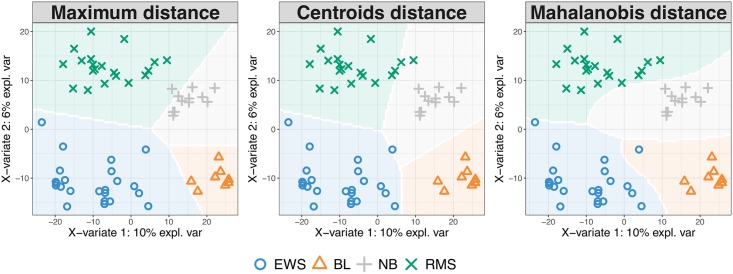
“The study investigates Small Round Blue Cell Tumors (SRBCT, [35]) of 63 tumour samples with the expression levels of 2,308 genes.”
BackgroundMethodLê Cao, K.-A., Boitard, S., & Besse, P. (2011) · BMC Bioinformatics · doi:10.1186/1471-2105-12-253 · Cited by 1,007 · cited 3×
“In single ‘omics analyses this distance achieves best accuracy when the predicted values are close to 0 or 1 [10].”
BackgroundMethodInfluentialPlankton networks driving carbon export in the oligotrophic ocean
Guidi, L., Chaffron, S., Bittner, L., Eveillard, D., Larhlimi, A., Roux, S., Darzi, Y., Audic, S., Berline, L., Brum, J. R., et al. (2016) · Nature · doi:10.1038/nature16942 · Cited by 870 · cited 1×
“(2016), Table 3 and factomineR Husson et al. (2017)). However, very few methods propose feature selection, including sparse CCA (pma package Witten et al. (2013)), sparse PLS (spls package, Chung et al.”
MethodTumor classification by partial least squares using microarray gene expression data
Nguyen, D. V., & Rocke, D. M. (2002) · Bioinformatics · doi:10.1093/bioinformatics/18.1.39 · Cited by 816 · cited 1×
“The assessment is data-driven and similar to the process detailed in Rohart et al. (2016), where one-sided t-tests assess whether there is a gain in performance when adding components to the model.”
MethodPath Models with Latent Variables: The NIPALS Approach
WOLD, H. (1975) · Quantitative Sociology · doi:10.1016/b978-0-12-103950-9.50017-4 · Cited by 802 · cited 1×
“Unsupervised analyses methods include Principal Component Analysis—based on NonLinear Iterative Partial Least Squares for missing values [18], Independent Component Analysis [19], Partial Least Squares regression—PLS, also known as Projection to Latent Structures [20], multi-group PLS [21], regularised Canonical Corre…”
Method
Research works printed but not linked: 3
- A Singh, 2016, DIABLO-an integrative, multi-omics, multivariate method for multi-group classification, bioRxiv, 067611
- F Rohart, 2017, MINT: A multivariate integrative approach to identify a reproducible biomarker signature across multiple experiments and platforms, BMC Bioinformatics, 18
- H Wold, 1966, Estimation of principal components and related models by iterative least squares, J Multivar Anal, 391
Cited by
Items 301–400 of 1,013
Hanson, A., Nel, H. J., Bradbury, L. A., Phipps, J., Thomas, R., Cao, K. L., Kenna, T., & Brown, M. A. (2020) · Arthritis & Rheumatology · doi:10.1002/art.41252 · Cited by 72
“function from the R package mixOmics (31) (see Supplementary”
BackgroundFiggett, W. A., Monaghan, K., Ng, M., Alhamdoosh, M., Maraskovsky, E., Wilson, N. J., Hoi, A. Y.-B., Morand, E. F., & Mackay, F. (2019) · Clinical & Translational Immunology · doi:10.1002/cti2.1093 · Cited by 67
Kasper, C., Ribeiro, D. M., de Almeida, A. M., Larzul, C., Liaubet, L., & Muráni, E. (2020) · Genes · doi:10.3390/genes11080920 · Cited by 76
Multi-Omics Model Applied to Cancer Genetics
Pettini, F., Visibelli, A., Cicaloni, V., Iovinelli, D., & Spiga, O. (2021) · International Journal of Molecular Sciences · doi:10.3390/ijms22115751 · Cited by 70
“mixOmics R package for the multivariate analysis of biological datasets with a specific focus on data exploration, dimension reduction, and visualization [116].”
MethodBacterial Composition and Metabolomics of Dental Plaque From Adolescents
Havsed, K., Stensson, M., Jansson, H., Carda‐Diéguez, M., Pedersen, A., Neilands, J., Svensäter, G., & Mira, Á. (2021) · Frontiers in Cellular and Infection Microbiology · doi:10.3389/fcimb.2021.716493 · Cited by 77
“These associations were plotted in a heatmap and a network using the mixOmics R package (Rohart et al., 2017).”
MethodPardesi, B., Roberton, A. M., Lee, K. C. Y., Angert, E. R., Rosendale, D., Boycheva, S., White, W. L., & Clements, K. D. (2022) · Molecular Ecology · doi:10.1111/mec.16394 · Cited by 62
“The two dominant fungal phyla identified were the Basidiomycota and the Ascomycota (Figure S7), both of which have been reported from the gut of other fish (Romero et al., 2014).”
BackgroundMadunić, K., Zhang, T., Mayboroda, O. A., Holst, S., Stavenhagen, K., Jin, C., Karlsson, N. G., Lageveen‐Kammeijer, G. S. M., & Wuhrer, M. (2020) · Cellular and Molecular Life Sciences · doi:10.1007/s00018-020-03504-z · Cited by 70
Rohaut, B., Calligaris, C., Hermann, B., Perez, P., Faugeras, F., Raimondo, F., King, J. R., Engemann, D., Marois, C., Le Guennec, L., et al. (2024) · Nature Medicine · doi:10.1038/s41591-024-03019-1 · Cited by 62
“50) was used to determine an optimized combination of multimodal markers (derived from the models’ components as weighted sums of examination variables) by maximizing a criterion of covariance with the dichotomized GOS-E (≥4 or 4).”
Farah, C. S., Jessri, M., Bennett, N. J., Dalley, A. J., Shearston, K., & Fox, S. A. (2019) · Oral Oncology · doi:10.1016/j.oraloncology.2019.07.005 · Cited by 62
Falginella, L., André, C. M., Legay, S., Lin‐Wang, K., Dare, A. P., Deng, C. H., Rebstock, R. S., Plunkett, B. J., Guo, L. F., Cipriani, G., et al. (2021) · Horticulture Research · doi:10.1038/s41438-021-00511-4 · Cited by 62
From multi-omics approaches to personalized medicine in myocardial infarction
Zhan, C., Tang, T., Wu, E., Zhang, Y., He, M., Wu, R., Bi, C., Wang, J., Zhang, Y., & Shen, B. (2023) · Frontiers in Cardiovascular Medicine · doi:10.3389/fcvm.2023.1250340 · Cited by 72
Generation of three-dimensional meat-like tissue from stable pig epiblast stem cells
Zhu, G., Gao, D., Li, L., Yao, Y., Wang, Y., Zhi, M., Zhang, J., Chen, X., Zhu, Q., Gao, J., et al. (2023) · Nature Communications · doi:10.1038/s41467-023-44001-8 · Cited by 70
Methionine restriction alleviates age-associated cognitive decline via fibroblast growth factor 21
Ren, B., Wang, L., Shi, L. S., Jin, X., Liu, Y., Liu, R. H., Yin, F., Cadenas, E., Dai, X., Liu, Z., et al. (2021) · Redox Biology · doi:10.1016/j.redox.2021.101940 · Cited by 69
“Latent Component method for OMICs (DIABLO), a multivariate dimension reduction discriminant analysis method designed to identify biologically relevant and highly correlated signatures from various OMICs techniques [37].”
MethodBodein, A., Chapleur, O., Droit, A., & Cao, K. L. (2019) · Frontiers in Genetics · doi:10.3389/fgene.2019.00963 · Cited by 68
Data integration, analysis, and interpretation of eight academic CLARITY-BPA studies
Heindel, J. J., Belcher, S. M., Flaws, J. A., Prins, G. S., Ho, S., Mao, J., Patisaul, H. B., Ricke, W. A., Rosenfeld, C. S., Soto, A. M., et al. (2020) · Reproductive Toxicology · doi:10.1016/j.reprotox.2020.05.014 · Cited by 70
An, A. Y., Choi, K.-Y. G., Baghela, A. S., & Hancock, R. E. W. (2021) · Frontiers in Microbiology · doi:10.3389/fmicb.2021.640787 · Cited by 70
Oral and Gut Microbial Carbohydrate-Active Enzymes Landscape in Health and Disease
Onyango, S. O., Juma, J., Paepe, K. D., & de Wiele, T. V. (2021) · Frontiers in Microbiology · doi:10.3389/fmicb.2021.653448 · Cited by 73
Gut microbiome signatures linked to HIV-1 reservoir size and viremia control
Borgognone, A., Noguera-Julián, M., Oriol-Tordera, B., Noël‐Romas, L., Ruiz‐Riol, M., Guillén, Y., Parera, M., Casadellà, M., Duran-Castells, C., Puertas, M. C., et al. (2022) · Microbiome · doi:10.1186/s40168-022-01247-6 · Cited by 66
ConSIG: consistent discovery of molecular signature from OMIC data
Li, F., Yin, J., Lu, M., Yang, Q., Zeng, Z., Zhang, B., Li, Z., Qiu, Y., Dai, H., Chen, Y., et al. (2022) · Briefings in Bioinformatics · doi:10.1093/bib/bbac253 · Cited by 61
Prenatal exposure to ambient air pollution is associated with early life immune perturbations
Pedersen, C. T., Eliasen, A. U., Ketzel, M., Brandt, J. G., Loft, S. H., Frohn, L. M., Khan, J., Brix, S., Rasmussen, M. A., Stokholm, J., et al. (2022) · Journal of Allergy and Clinical Immunology · doi:10.1016/j.jaci.2022.08.020 · Cited by 69
Integrative Multi-Omics and Artificial Intelligence: A New Paradigm for Systems Biology
Kant, S., Deepika, & Roy, S. (2025) · OMICS A Journal of Integrative Biology · doi:10.1177/15578100251392371 · Cited by 74
“It facilitates cross-contextual comparisons, the identi fi cation of conserved signals, and hypothesis generation across various biological systems (Rohart et al., 2017) (Fig.”
Moreira, J. D., Koch, B. E. V., van Veen, S., Walburg, K. V., Vrieling, F., Guimarães, T. M. P. D., Meijer, A. H., Spaink, H. P., Ottenhoff, T. H. M., Haks, M. C., et al. (2020) · Frontiers in Immunology · doi:10.3389/fimmu.2020.00036 · Cited by 66
The leukocyte non-coding RNA landscape in critically ill patients with sepsis
Scicluna, B. P., Uhel, F., van Vught, L. A., Wiewel, M. A., Hoogendijk, A. J., Baessmann, I., Franitza, M., Nürnberg, P., Horn, J., Cremer, O. L., et al. (2020) · eLife · doi:10.7554/elife.58597 · Cited by 66
“PC analysis was done using the mixOmics package, specifying 10 components (Rohart et al., 2017).”
MethodInfluentialMicrobiome function predicts amphibian chytridiomycosis disease dynamics
Bates, K. A., Sommer, U., Hopkins, K., Shelton, J., Wierzbicki, C., Sergeant, C., Tapley, B., Michaels, C. J., Schmeller, D. S., Loyau, A., et al. (2022) · Microbiome · doi:10.1186/s40168-021-01215-6 · Cited by 67
“To determine if beta diversity of 16S, ITS2, shotgun and metabolome data differed based on population and disease state in the wild, or Bd treatment in the laboratory, each dataset was visualised using principal components analysis (PCA) using mixomics [41].”
MethodInfluentialA review of normalization and differential abundance methods for microbiome counts data
Swift, D. D., Cresswell, K. G., Johnson, R., Stilianoudakis, S., & Wei, X. (2022) · Wiley Interdisciplinary Reviews Computational Statistics · doi:10.1002/wics.1586 · Cited by 69
“…mixMC is a multivariate framework for microbiome data analysis implemented in mixOmics, a R package for omics data analysis (Lê Cao et al., 2016; Rohart et al., 2017), to identify taxa that discriminate multiple groups of samples. mixMC accommodates repeated-measures experiments and accounts…”
MethodSonigra, A., Nel, H. J., Wehr, P., Ramnoruth, N., Patel, S. P., van Schie, K. A., Bladen, M. W., Mehdi, A. M., Tesiram, J., Talekar, M., et al. (2022) · JCI Insight · doi:10.1172/jci.insight.160964 · Cited by 67
Metabolomics meets systems immunology
Fu, J., Zhu, F., Xu, C., & Li, Y. (2023) · EMBO Reports · doi:10.15252/embr.202255747 · Cited by 66
“R packages for this strategy include MOFA (Argelaguet et al , 2018), mixOmics (Rohart et al , 2017), mixKernel (Mariette & Villa-Vialaneix, 2018), and MoSBi (Rose et al , 2022).”
Advance computational tools for multiomics data learning
Mansoor, S., Hamid, S., Tuan, T. T., Park, J.-E., & Chung, Y. S. (2024) · Biotechnology Advances · doi:10.1016/j.biotechadv.2024.108447 · Cited by 63
Bioinformatics-assisted, integrated omics studies on medicinal plants
Ma, X., Meng, Y., Wang, P., Tang, Z., Wang, H., & Xie, T. (2019) · Briefings in Bioinformatics · doi:10.1093/bib/bbz132 · Cited by 65
Fang, Y., Zhang, C., Shi, H., Wei, W., Shang, J., Zheng, R., Yu, L., Wang, P., Yang, J., Deng, X., et al. (2021) · Diabetes Care · doi:10.2337/dc20-2975 · Cited by 66
Xiao, K., Liang, X., Lu, H., Li, X., Zhang, Z., Lu, X., Wang, H., Meng, Y., Roy, A., Luo, W., et al. (2022) · The ISME Journal · doi:10.1038/s41396-022-01247-2 · Cited by 64
Tartu, S., Lille‐Langøy, R., Størseth, T. R., Bourgeon, S., Brunsvik, A., Aars, J., Goksøyr, A., Jenssen, B. M., Polder, A., Thiemann, G. W., et al. (2017) · Scientific Reports · doi:10.1038/s41598-017-16820-5 · Cited by 62
Barajas-López, J. D. D., Tiwari, A., Zarza, X., Shaw, M. W., Pascual, J., Punkkinen, M., Bakowska, J. C., Munnik, T., & Fujii, H. (2020) · Plant and Cell Physiology · doi:10.1093/pcp/pcaa139 · Cited by 59
Metabolic characterization of hypertrophic cardiomyopathy in human heart
Wang, W., Wang, J., Yao, K., Wang, S., Nie, M., Zhao, Y., Wang, B., Pang, H., Xu, J., Wu, G., et al. (2022) · Nature Cardiovascular Research · doi:10.1038/s44161-022-00057-1 · Cited by 59
Blum, B. C., Mousavi, F., & Emili, A. (2018) · Molecular Omics · doi:10.1039/c8mo00136g · Cited by 65
Hu, J., Lesseur, C., Yu, M., Manservisi, F., Panzacchi, S., Mandrioli, D., Belpoggi, F., Chen, J., & Petrick, L. M. (2021) · Scientific Reports · doi:10.1038/s41598-021-82552-2 · Cited by 66
Metabolomics and lipidomics in Caenorhabditis elegans using a single-sample preparation
Molenaars, M., Schomakers, B. V., Elfrink, H. L., Gao, A. W., Vervaart, M. A. T., Pras‐Raves, M. L., Luyf, A. C. M., Smith, R. L., Sterken, M. G., Kammenga, J. E., et al. (2021) · Disease Models & Mechanisms · doi:10.1242/dmm.047746 · Cited by 65
Lee-Ødegård, S., Olsén, T., Vinknes, K. J., Refsum, H., Gulseth, H. L., Birkeland, K. I., & Drevon, C. A. (2018) · Nutrients · doi:10.3390/nu11010010 · Cited by 60
“Data were analysed using mixOmics (University of Melbourne, Melbourne, Australia) [40] and R (University of Auckland, Auckland, New Zealand) v.3.5.0.”
MethodInfluentialde Jong, S. E., van Unen, V., Manurung, M. D., Stam, K. A., Goeman, J. J., Jochems, S. P., Höllt, T., Pezzotti, N., Mouwenda, Y. D., Ongwe, M. E. B., et al. (2021) · Nature Immunology · doi:10.1038/s41590-021-00911-7 · Cited by 61
Implementing the CRISPR/Cas9 Technology in Eucalyptus Hairy Roots Using Wood-Related Genes
Dai, Y., Hu, G., Dupas, A., Medina, L., Blandels, N., San Clemente, H., Ladouce, N., Badawi, M., Hernandez-Raquet, G., Mounet, F., et al. (2020) · International Journal of Molecular Sciences · doi:10.3390/ijms21103408 · Cited by 57
Effects of laboratory domestication on the rodent gut microbiome
Bowerman, K. L., Knowles, S. C. L., Bradley, J. E., Baltrūnaitė, L., Lynch, M. D. J., Jones, K. M., & Hugenholtz, P. (2021) · ISME Communications · doi:10.1038/s43705-021-00053-9 · Cited by 65
“0 [54] using CLRtransformed read mapping counts for genomes passing the presence threshold of ≥500 reads mapped with coverage fraction of ≥0.”
MethodMetabolomics identifies shared lipid pathways in independent amyotrophic lateral sclerosis cohorts
Goutman, S. A., Guo, K., Savelieff, M. G., Patterson, A., Sakowski, S. A., Habra, H., Karnovsky, A., Hur, J., & Feldman, E. L. (2022) · Brain · doi:10.1093/brain/awac025 · Cited by 51
“Partial least squares-discriminant analysis (PLS-DA) was performed using the R package mixOmics 30 separately on the original and replication case and control cohorts (Supplementary Fig.”
Hou, Y., Zhang, Z., Cui, Y., Peng, C., Fan, Y., Tan, C., Wang, Q., Liu, Z., & Gong, J. (2022) · Food Research International · doi:10.1016/j.foodres.2022.112176 · Cited by 58
rANOMALY: AmplicoN wOrkflow for Microbial community AnaLYsis
Theil, S., & Rifa, É. (2021) · F1000Research · doi:10.12688/f1000research.27268.1 · Cited by 64
“To complete differential analysis, we have included the well recognized PLS-DA from the mixOmics package 22 .”
MethodSchaffert, A., Krieg, L., Weiner, J., Schlichting, R., Ueberham, E., Karkossa, I., Bauer, M., Landgraf, K., Junge, K. M., Wabitsch, M., et al. (2021) · Environment International · doi:10.1016/j.envint.2021.106730 · Cited by 59
Hernandez, D., Juelke, K., Müller, N. C., Durek, P., Ugursu, B., Mashreghi, M., Rückert, T., & Romagnani, C. (2021) · Immunity · doi:10.1016/j.immuni.2021.07.019 · Cited by 59
Increased Ca2+ signaling in NRXN1α+/− neurons derived from ASD induced pluripotent stem cells
Avazzadeh, S., McDonagh, K., Reilly, J., Wang, Y., Boomkamp, S. D., McInerney, V., Krawczyk, J., Fitzgerald, J., Feerick, N., O’Sullivan, M., et al. (2019) · Molecular Autism · doi:10.1186/s13229-019-0303-3 · Cited by 56
Urvieta, R., Jones, G. V., Buscema, F., Bottini, R., & Fontana, A. (2021) · Scientific Reports · doi:10.1038/s41598-021-82306-0 · Cited by 69
Diatoms shape the biogeography of heterotrophic prokaryotes in early spring in the Southern Ocean
Yan, L., Debeljak, P., Rembauville, M., Blain, S., & Obernosterer, I. (2019) · Environmental Microbiology · doi:10.1111/1462-2920.14579 · Cited by 66
“The correlation heatmaps were generated using spls() and cim() in the mixOmics package with log-transformed data (Chun and Keleş, 2010; Rohart et al., 2017).”
MethodHerman, S., Niemelä, V., Khoonsari, P. E., Sundblom, J., Burman, J., Landtblom, A., Spjuth, O., Nyholm, D., & Kultima, K. (2019) · Scientific Reports · doi:10.1038/s41598-019-40186-5 · Cited by 57
Roux, P., Oddos, T., & Stamatas, G. N. (2021) · Journal of Investigative Dermatology · doi:10.1016/j.jid.2021.07.159 · Cited by 62
“All statistical analyses were performed in R, version 4.0.0, and rely on the packages mixOmics (Rohart et al., 2017), FactorMineR (Lê et al., 2008), vegan, and phyloseq (McMurdie and Holmes, 2013). www.jidonline.org 477 478 Factorial analysis of mixed data was applied on a matrix containing pH,…”
MethodInfluentialEffects of fecal microbiota transplant on DNA methylation in subjects with metabolic syndrome
van der Vossen, E. W. J., Bastos, D., Stols‐Gonçalves, D., de Goffau, M. C., Davids, M., Pereira, J. P. B., Yim, A. Y. F. L., Henneman, P., Netea, M. G., de Vos, W. M., et al. (2021) · Gut Microbes · doi:10.1080/19490976.2021.1993513 · Cited by 60
“005).(21) As expected, the Euclidian distance before and after FMT was significantly larger in the allogenic group e1993513-2 E.”
BackgroundMurthy, S., Karkossa, I., Schmidt, C., Hoffmann, A., Hagemann, T., Rothe, K., Seifert, O., Anderegg, U., von Bergen�, M., Schubert, K. A., et al. (2022) · Cell Death and Disease · doi:10.1038/s41419-022-04507-3 · Cited by 58
“1 with the use of the packages mixOmics [56], limma [51], plyr [57], reshape2 [58], xlsx [59], DEP [60], calibrate [61], readxlbryan [62], qpcR [63], splitstackshape [64], tidyr [65], and Tmisc [66], ggplot2 [67], circlize [68], ggsci [69], ComplexHeatmap [70], dendsort [71], and dendextend [72].”
MethodAn overview of technologies for MS-based proteomics-centric multi-omics
Rajczewski, A. T., Jagtap, P. D., & Griffin, T. J. (2022) · Expert Review of Proteomics · doi:10.1080/14789450.2022.2070476 · Cited by 60
“The mixOmics package [90] represents an”
Roquilly, A., François, B., Huet, O., Launey, Y., Lasocki, S., Weiss, E., Petrier, M., Hourmant, Y., Bouras, M., Lakhal, K., et al. (2023) · Intensive Care Medicine · doi:10.1007/s00134-023-07065-0 · Cited by 65
Lafage, D., Bergman, E., Eckstein, R. L., Österling, M. E., Sadler, J. P., & Piccolo, J. (2019) · Ecosphere · doi:10.1002/ecs2.2697 · Cited by 68
Mendez, K. M., Broadhurst, D., & Reinke, S. N. (2020) · Metabolomics · doi:10.1007/s11306-020-1640-0 · Cited by 62
“The most popular include support vector machines (Steinwart and Christmann, 2008), random forests (Breiman 2001), and artificial neural networks (Bishop 1995; Wilkins et al.”
BackgroundMu, C., Choudhary, A., Mayengbam, S., Barrett, K. T., Rho, J. M., Shearer, J., & Scantlebury, M. H. (2022) · EBioMedicine · doi:10.1016/j.ebiom.2022.103833 · Cited by 60
Identification of tissue-dependent proteins in knee OA synovial fluid
Timur, U. T., Jahr, H., Anderson, J. R., Green, D. C., Emans, P. J., Smagul, A., van Rhijn, L. W., Peffers, M. J., & Welting, T. J. M. (2020) · Osteoarthritis and Cartilage · doi:10.1016/j.joca.2020.09.005 · Cited by 58
Eriksson, K., Lundmark, A., Delgado, L. F., Hu, Y. O. O., Fei, G., Lee, L., Fei, C., Catrina, A. I., Jansson, L. E., Andersson, A. F., et al. (2022) · Frontiers in Cellular and Infection Microbiology · doi:10.3389/fcimb.2022.841139 · Cited by 60
“Correlation Analysis Between Microbiota and Inflammatory Mediator Levels To investigate the correlations between microbiota and various host-mediated inflammatory mediators such as cytokines, the multivariate method sparse partial least squares discriminant analysis (sPLS-DA), implemented in the mixOmics R package (Ro…”
MethodGuidetti, C., Salvini, E., Viri, M., Deidda, F., Amoruso, A., Visciglia, A., Drago, L., Calgaro, M., Vitulo, N., Pane, M., et al. (2022) · Journal of Clinical Medicine · doi:10.3390/jcm11185263 · Cited by 62
Liu, X. F., Tao, Y., Cai, Z., Bao, P., Ma, H., Li, K., Li, M., Zhu, Y., & Lu, Z. J. (2024) · Bioinformatics · doi:10.1093/bioinformatics/btae316 · Cited by 72
“To integrate multi-omics data of cancer, several supervised methods have been developed, such as mixOmics (Rohart et al. 2017), liNN (Kuru et al. 2022), eiNN (Preuer et al. 2018), liCNN (Islam et al. 2020), eiCNN (Fu et al. 2020), MOGONet (Wang et al. 2021), and MOGAT (Xing et al. 2021).”
MethodMurphy, C. A., Nisbet, R. M., Antczak, P., García‐Reyero, N., Gergs, A., Lika, K., Mathews, T. J., Muller, E. B., Nacci, D. E., Peace, A., et al. (2018) · Integrated Environmental Assessment and Management · doi:10.1002/ieam.4063 · Cited by 61
Qiu, C., Yu, F., Su, K., Zhao, Q., Zhang, L., Xu, C., Hu, W., Wang, Z., Zhao, L., Tian, Q., et al. (2020) · iScience · doi:10.1016/j.isci.2020.100847 · Cited by 68
Novel insights into the disease transcriptome of human diabetic glomeruli and tubulointerstitium
Levin, A., Reznichenko, A., Witasp, A., Liu, P., Greasley, P. J., Sorrentino, A., Blöndal, T., Zambrano, S. S., Nordström, J., Bruchfeld, A. N., et al. (2020) · Nephrology Dialysis Transplantation · doi:10.1093/ndt/gfaa121 · Cited by 56
Salivary bacterial shifts in oral leukoplakia resemble the dysbiotic oral cancer bacteriome
Gopinath, D., Menon, R. K., Wie, C. C., Banerjee, M., Panda, S., Mandal, D. P., Behera, P. K., Roychoudhury, S., Kheur, S. M., Botelho, M. G., et al. (2020) · Journal of Oral Microbiology · doi:10.1080/20002297.2020.1857998 · Cited by 56
“On the other hand, the beta diversity or community overlap was derived using permutational multivariate analysis of variance (PERMANOVA), and sparse partial least squares discriminant analysis (sPLS-DA) implemented in the mixOmics R package [16].”
MethodMatsuyama, M., Morrison, M., Cao, K.-A. L., Pruilh, S., Davies, P. S. W., Wall, C., Lovell, A., & Hill, R. J. (2019) · Scientific Reports · doi:10.1038/s41598-019-48658-4 · Cited by 52
Self-citationMuñoz–Redondo, J. M., Puertas, B., Cantos‐Villar, E., Jiménez‐Hierro, M. J., Carbú, M., Garrido, C., Ruiz‐Moreno, M. J., & Moreno‐Rojas, J. M. (2021) · Journal of Agricultural and Food Chemistry · doi:10.1021/acs.jafc.0c06970 · Cited by 56
Correia, P. M. P., da Silva, A. B., Vaz, M., Carmo‐Silva, E., & da Silva, J. M. (2021) · Frontiers in Plant Science · doi:10.3389/fpls.2021.675546 · Cited by 55
Gallet, A., Halary, S., Duval, C., Huet, H., Duperron, S., & Marie, B. (2023) · Microbiome · doi:10.1186/s40168-023-01558-2 · Cited by 61
“component analyses (PCA) were performed to compare the metabolite composition among groups using the mixOmics package [49] in R 4.”
MethodMinnebo, Y., Delbaere, K., Goethals, V., Raes, J., de Wiele, T. V., & Paepe, K. D. (2023) · Microbiome · doi:10.1186/s40168-023-01691-y · Cited by 59
“Integrative analysis of the quantitative genus level community composition and net daily metabolite production rate was performed with sparse partial least squares (sPLS) analysis from the mixOmics (6.18.1) package [40].”
MethodInfluentialRomdhane, S., Devers‐Lamrani, M., Beguet, J., Bertrand, C., Calvayrac, C., Salvia, M., Jrad, A. B., Dayan, F. E., Spor, A., Barthelmebs, L., et al. (2018) · The Science of The Total Environment · doi:10.1016/j.scitotenv.2018.09.159 · Cited by 52
Bas-Bellver, C., Andrés, C., Seguí, L., Barrera, C., Jiménez‐Hernández, N., Artacho, A., Betoret, N., & Gosalbes, M. J. (2020) · Journal of Agricultural and Food Chemistry · doi:10.1021/acs.jafc.0c02088 · Cited by 63
Sharma, A., Verma, R., Kumar, R., Chauhan, R., & Sharma, V. (2020) · Microchemical Journal · doi:10.1016/j.microc.2020.105504 · Cited by 52
Luise, D., Sciellour, M. L., Buchet, A., Resmond, R., Clement, C., Rossignol, M., Jardet, D., Zemb, O., Belloc, C., & Merlot, É. (2021) · PLoS ONE · doi:10.1371/journal.pone.0250655 · Cited by 71
Khoonsari, P. E., Shevchenko, G., Herman, S., Remnestål, J., Giedraitis, V., Brundin, R., Gunnarsson, M. D., Kilander, L., Zetterberg, H., Nilsson, P., et al. (2019) · Journal of Alzheimer s Disease · doi:10.3233/jad-180855 · Cited by 54
“The variable importance (VIP) of the four most important variables (proteins) for each of the four components used for the diagnostic prediction were automatically selected and extracted from the model using mixOmics [16].”
MethodXicota, L., Ichou, F., Lejeune, F.-X., Colsch, B., Tenenhaus, A., Leroy, I., Fontaine, G., Lhomme, M., Bertin, H., Habert, M.-O., et al. (2019) · EBioMedicine · doi:10.1016/j.ebiom.2019.08.051 · Cited by 51
Lamelas, L., Valledor, L., Escandón, M., Pinto, G., Cañal, M. J., & Meijón, M. (2019) · Journal of Experimental Botany · doi:10.1093/jxb/erz524 · Cited by 52
“Then, the mixOmics R package (Rohart et al., 2017) was used to perform statistical analyses, including principal component analysis (PCA) and sparse partial least-square (sPLS) analysis.”
Methodde la flor, Y. A. D., Perry, K. I., Turo, K. J., Parker, D. M., Thompson, J. L., & Gardiner, M. M. (2020) · Journal of Applied Ecology · doi:10.1111/1365-2664.13636 · Cited by 68
Wen, B., Njunge, J. M., Bourdon, C., Gonzales, G. B., Gichuki, B. M., Lee, D., Wishart, D. S., Ngari, M. M., Chimwezi, E., Thitiri, J., et al. (2022) · Science Advances · doi:10.1126/sciadv.abj6779 · Cited by 58
Chen, M., He, S., Miles, P., Li, C., Ge, Y., Yu, X., Wang, L., Huang, W., Kong, X., Ma, S., et al. (2022) · Frontiers in Cellular and Infection Microbiology · doi:10.3389/fcimb.2022.841995 · Cited by 60
“PLSDA was conducted with R package mixOmics (Rohart et al., 2017).”
MethodMolino, S., Lerma-Aguilera, A., Jiménez‐Hernández, N., Rufián‐Henares, J. Á., & Francino, M. P. (2022) · Frontiers in Microbiology · doi:10.3389/fmicb.2022.848611 · Cited by 57
Fulcher, J. A., Li, F., Tobin, N. H., Zabih, S., Elliott, J. E., Clark, J. L., D’Aquila, R. T., Mustanski, B. S., Kipke, M. D., SHOPTAW, S. J., et al. (2022) · EBioMedicine · doi:10.1016/j.ebiom.2022.104286 · Cited by 57
Zhang, S., Cheng, L.-S., Zhang, Z., Sun, H., & Li, J. (2022) · Pharmacological Research · doi:10.1016/j.phrs.2022.106633 · Cited by 57
Barker‐Tejeda, T. C., Zubeldia‐Varela, E., Macías‐Camero, A., Alonso, L., Martín‐Antoniano, I. A., Rey-Stolle, F., Mera‐Berriatua, L., Bazire, R., Cabrera‐Freitag, P., Shanmuganathan, M., et al. (2024) · Nature Communications · doi:10.1038/s41467-024-47182-y · Cited by 58
“Integration of the different Omic datasets was performed with the mixOmics script 46 usingthe DataIntegrationAnalysisforBiomarkerdiscoveryusingLatent Components (DIABLO) framework 47 using R (v. 4.2.2).”
InfluentialEvolution of tissue-specific expression of ancestral genes across vertebrates and insects
Mantica, F., Iñiguez, L., Márquez, Y., Permanyer, J., Torres-Méndez, A., Cruz, J., Franch‐Marro, X., Tulenko, F. J., Burguera, D., Bertrand, S., et al. (2024) · Nature Ecology & Evolution · doi:10.1038/s41559-024-02398-5 · Cited by 60
“2a, we first performed an sPLS-DA with the splsda function in the mixOmics package 57 in R, using as input the best-ancestral orthogroups normalized expression matrix (but where all bilaterian-conserved orthogroups are included).”
(2019) · doi:10.1093/conphys/coz051 · Cited by 50
“Next, to identify the top 100 features that separated parr and smolt for both species, significant features of the Rainbow trout and the Sockeye salmon datasets (both 44K platforms) were combined and analysed collectively using a sparse independent principal component analysis with the mixOmics R package (Rohart et al…”
MethodNardozza, S., Cooney, J. M., Boldingh, H. L., Hewitt, K. G., Trower, T. M., Jones, D., Thrimawithana, A. H., Allan, A. C., & Richardson, A. C. (2020) · Metabolites · doi:10.3390/metabo10010023 · Cited by 50
“Principal component analysis for cytokinin hormones were also performed in R using the MixOmics libraries [49].”
MethodZhang, H., Chen, M., Wen, H., Wang, Z., Chen, J., Fang, L., Zhang, H., Xie, Z., Jiang, D., Cheng, Y., et al. (2020) · BMC Plant Biology · doi:10.1186/s12870-019-2222-z · Cited by 50
Peng, F., Hardy, E. M., Béranger, R., Mezzache, S., Bourokba, N., Bastien, P., Li, J., Zaros, C., Chevrier, C., Palazzi, P., et al. (2020) · Environmental Pollution · doi:10.1016/j.envpol.2020.115425 · Cited by 50
Pinheiro, T., Lip, K. Y. F., García‐Ríos, E., Querol, A., Teixeira, J. A., van Gulik, W. M., Guillamón, J. M., & Domingues, L. (2020) · Scientific Reports · doi:10.1038/s41598-020-77846-w · Cited by 50
Cerebrospinal fluid biomarkers for assessing Huntington disease onset and severity
Caron, N. S., Haqqani, A. S., Sandhu, A., Aly, A. E.-E., Black, H. F., Bone, J. N., McBride, J. L., Abulrob, A., Stanimirovic, D. B., Leavitt, B. R., et al. (2022) · Brain Communications · doi:10.1093/braincomms/fcac309 · Cited by 53
Multi-omic analysis of Huntington’s disease reveals a compensatory astrocyte state
Paryani, F., Kwon, J., Ng, C., Jakubiak, K. A., Madden, N., Ofori, K., Tang, A., Lü, H., Xia, S., Li, J., et al. (2024) · Nature Communications · doi:10.1038/s41467-024-50626-0 · Cited by 61
Alakärppä, E., Salo, H. M., Valledor, L., Cañal, M. J., Häggman, H., & Vuosku, J. (2018) · Journal of Experimental Botany · doi:10.1093/jxb/ery292 · Cited by 51
Juliá, E. P., Mandó, P., Rizzo, M., Cueto, G. R., Tsou, F., Luca, R., Pupareli, C. S., Bravo, A., Astorino, W., Mordoh, J., et al. (2019) · Cancer Immunology Immunotherapy · doi:10.1007/s00262-019-02391-z · Cited by 53
Gomes, A. M. F., Rodrigues, A. P., António, C., Rodrigues, A. M., Leitão, A. E., Batista-Santos, P., Nhantumbo, N., Massinga, R. A., Ribeiro-Barros, A. I., & Ramalho, J. C. (2020) · Environmental and Experimental Botany · doi:10.1016/j.envexpbot.2020.104060 · Cited by 56
Titz, B., Szostak, J., Sewer, A., Phillips, B. W., Nury, C., Schneider, T. L., Dijon, S., Lavrynenko, O., Elamin, A., Guedj, E., et al. (2020) · Computational and Structural Biotechnology Journal · doi:10.1016/j.csbj.2020.04.011 · Cited by 53
Hepatoprotective Effects of Indole, a Gut Microbial Metabolite, in Leptin-Deficient Obese Mice
Knudsen, C., Neyrinck, A. M., Leyrolle, Q., Baldin, P., Leclercq, S., Rodriguez, J., Beaumont, M., Cani, P. D., Bindels, L. B., Lanthier, N., et al. (2021) · Journal of Nutrition · doi:10.1093/jn/nxab032 · Cited by 53
“distance) was used to assess the performances of the analyses using the leave one out method according to the guidelines of the R mixOmics package (28).”
MethodDogra, S. K., Martin, F., Donnicola, D., Julita, M., Berger, B. W., & Sprenger, N. (2021) · Microorganisms · doi:10.3390/microorganisms9091939 · Cited by 52
“The modeling was carried out in R [36] using the package caret [37] and mixOmics [38] using standard cross-validation methods (10-fold with 10 repeats) to avoid over-fitting of the models.”
MethodBudzinski, I. G. F., de Moraes, F. E., Cataldi, T. R., Franceschini, L. M., & Labate, C. A. (2019) · Frontiers in Plant Science · doi:10.3389/fpls.2019.01524 · Cited by 53
Metadata
- Authors
- Rohart, F., Gautier, B., Singh, A., & Lê Cao, K.-A.
- Affiliations
- Translational Research Institute (AU)
- University of British Columbia (CA)
- Venue
- PLOS Computational Biology
- Publisher
- Public Library of Science (PLoS)
- Published
- 2017-11-03
- Volume
- 13
- Issue
- 11
- Pages
- e1005752
- ISSN
- 1553-734X (ISSN-L)
- 1553-7358
- PMC
- PMC5687754
- OpenAlex
- W2950985821
- Cited by
- 4,056
- References
- 57
- Citations by year
- 2026: 629 · 2025: 612 · 2024: 600 · 2023: 523 · 2022: 496 · 2021: 489 · 2020: 350 · 2019: 241 · 2018: 95 · 2017: 14
- FWCI
- 78.13
- Type
- journal article
- Language
- en
- Update notices
- new_version (2017-11-15)
- Open access
- gold
- doi.org
- Licence
- Locations
- PLoS Computational Biology (publishedVersion, cc-by)
- bioRxiv (Cold Spring Harbor Laboratory) (acceptedVersion, cc-by-nc-nd)
- PubMed Central (publishedVersion, cc-by)
- PubMed (publishedVersion)
- Minerva Access (University of Melbourne) (submittedVersion, cc-by)
- RePEc: Research Papers in Economics (submittedVersion)
- DOAJ (DOAJ: Directory of Open Access Journals) (submittedVersion, cc-by-sa)
- Figshare (submittedVersion, cc-by)
- Funders
- National Health and Medical Research Council (APP1087415)
- Australian Cancer Research Foundation (ACRF) for the Diamantina Individualised Oncology Care Centre
- Topics
- Life Sciences › Biochemistry, Genetics and Molecular Biology › Molecular Biology › Bioinformatics and Genomic Networks
- Life Sciences › Biochemistry, Genetics and Molecular Biology › Molecular Biology › Metabolomics and Mass Spectrometry Studies
- Life Sciences › Biochemistry, Genetics and Molecular Biology › Molecular Biology › Gene expression and cancer classification
- Keywords
- R package, multi-omics integration, feature selection, multivariate analysis, dimensionality reduction, partial least squares regression, discriminant analysis, molecular signatures, systems biology, transcriptomics, proteomics, metabolomics, exploratory data analysis
- MeSH terms
- Data Interpretation, Statistical, Humans, Neoplasms, Software, Computational Biology, Genomics, Systems Biology, Metabolomics
About these checks
Registry, retraction, Cites and statistics results are computed, not judged, with one exception: a printed reference that no index lists is read once by a model before it counts as a citation error. Claims are extracted by a model and kept only when their quote appears verbatim in the text; each cited source is then checked, with a model’s help, for whether it says what the claim relies on. Those verdicts can be wrong — read the claim’s quote and the cited source before relying on one.
Statistics and arithmetic are recomputed, not judged.
Confidence bands are shown only for fields calibrated on our annotated test set. None is calibrated yet, so no band is shown.
What counts as a claim ›How we measure confidence ›How we check this ›
Are you an author, or do you see a problem with this page? Request a review
Data sources
Bibliographic data: Semantic Scholar, OpenAlex, Crossref.
Contains information from the Semantic Scholar Academic Graph Datasets, made available under the ODC Attribution License (ODC-BY 1.0).
Semantic Scholar’s data is described in: Kinney, R., et al. (2023). The Semantic Scholar Open Data Platform. arXiv:2301.10140.
