

mixOmics: An R package for ‘omics feature selection and multiple data integration
Open accessPublished version of a preprint
The DOI matches its Crossref record; 58 of the 58 references it cites were found in a registry or an index.
Abstract
The advent of high throughput technologies has led to a wealth of publicly available 'omics data coming from different sources, such as transcriptomics, proteomics, metabolomics. Combining such large-scale biological data sets can lead to the discovery of important biological insights, provided that relevant information can be extracted in a holistic manner. Current statistical approaches have been focusing on identifying small subsets of molecules (a 'molecular signature') to explain or predict biological conditions, but mainly for a single type of 'omics. In addition, commonly used methods are univariate and consider each biological feature independently. We introduce mixOmics, an R package dedicated to the multivariate analysis of biological data sets with a specific focus on data exploration, dimension reduction and visualisation. By adopting a systems biology approach, the toolkit provides a wide range of methods that statistically integrate several data sets at once to probe relationships between heterogeneous 'omics data sets. Our recent methods extend Projection to Latent Structure (PLS) models for discriminant analysis, for data integration across multiple 'omics data or across independent studies, and for the identification of molecular signatures. We illustrate our latest mixOmics integrative frameworks for the multivariate analyses of 'omics data available from the package.
Overview
The claims and statistics of this paper haven’t been checked yet.
Free: it reads the open-access text and checks the first 5 claims that cite a source we can check. Create a free account to check every claim.
Integrity signals
Registry
Cites
Statistics
Figures



Verification
Claims the paper makes
The claims and statistics of this paper haven’t been checked yet.
Free: it reads the open-access text and checks the first 5 claims that cite a source we can check. Create a free account to check every claim.
Self-check
Percentages, sums and reported differences re-computed from the paper’s own numbers.
The self-check needs the paper’s full text.
Citations
Cites
R: A Language and Environment for Statistical Computing
R Core Team (2025) · doi:10.32614/r.manuals · Cited by 352,181
Regression shrinkage and selection via the lasso
Tibshirani, R. (1996) · Journal of the Royal Statistical Society Series B: Statistical Methodology · doi:10.1111/j.2517-6161.1996.tb02080.x · Cited by 51,482 · cited 1×
“Feature selection is performed via l1 regularisation (LASSO, [27]), which is implemented into each method’s statistical criterion to be optimised.”
MethodRegularization Paths for Generalized Linear Models via Coordinate Descent
Friedman, J., Hastie, T., & Tibshirani, R. (2010) · Journal of Statistical Software · doi:10.18637/jss.v033.i01 · Cited by 19,927 · cited 1×
“glmnet, [38], PMA, [39]), mixOmics uses soft-thresholding to improve usability by replacing the l(1) parameter by the number keepX of features to select on each dimension.”
MethodEnterotypes of the human gut microbiome
MetaHIT Consortium (additional members), Arumugam, M., Raes, J., Pelletier, E., Le Paslier, D., Yamada, T., Mende, D. R., Fernandes, G. R., Tap, J., Bruls, T., et al. (2011) · Nature · doi:10.1038/nature09944 · Cited by 7,548
Partial least squares for discrimination
Barker, M., & Rayens, W. (2003) · Journal of Chemometrics · doi:10.1002/cem.785 · Cited by 2,841
Khan, J., Wei, J. S., Ringnér, M., Saal, L. H., Ladanyi, M., Westermann, F., Berthold, F., Schwab, M., Antonescu, C. R., Peterson, C., et al. (2001) · Nature Medicine · doi:10.1038/89044 · Cited by 2,644 · cited 2×
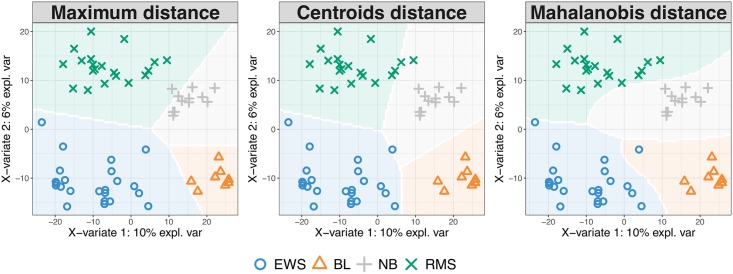
“The study investigates Small Round Blue Cell Tumors (SRBCT, [35]) of 63 tumour samples with the expression levels of 2,308 genes.”
BackgroundMethodLê Cao, K.-A., Boitard, S., & Besse, P. (2011) · BMC Bioinformatics · doi:10.1186/1471-2105-12-253 · Cited by 1,007 · cited 3×
“In single ‘omics analyses this distance achieves best accuracy when the predicted values are close to 0 or 1 [10].”
BackgroundMethodInfluentialPlankton networks driving carbon export in the oligotrophic ocean
Guidi, L., Chaffron, S., Bittner, L., Eveillard, D., Larhlimi, A., Roux, S., Darzi, Y., Audic, S., Berline, L., Brum, J. R., et al. (2016) · Nature · doi:10.1038/nature16942 · Cited by 870 · cited 1×
“(2016), Table 3 and factomineR Husson et al. (2017)). However, very few methods propose feature selection, including sparse CCA (pma package Witten et al. (2013)), sparse PLS (spls package, Chung et al.”
MethodTumor classification by partial least squares using microarray gene expression data
Nguyen, D. V., & Rocke, D. M. (2002) · Bioinformatics · doi:10.1093/bioinformatics/18.1.39 · Cited by 816 · cited 1×
“The assessment is data-driven and similar to the process detailed in Rohart et al. (2016), where one-sided t-tests assess whether there is a gain in performance when adding components to the model.”
MethodPath Models with Latent Variables: The NIPALS Approach
WOLD, H. (1975) · Quantitative Sociology · doi:10.1016/b978-0-12-103950-9.50017-4 · Cited by 802 · cited 1×
“Unsupervised analyses methods include Principal Component Analysis—based on NonLinear Iterative Partial Least Squares for missing values [18], Independent Component Analysis [19], Partial Least Squares regression—PLS, also known as Projection to Latent Structures [20], multi-group PLS [21], regularised Canonical Corre…”
Method
Research works printed but not linked: 3
- A Singh, 2016, DIABLO-an integrative, multi-omics, multivariate method for multi-group classification, bioRxiv, 067611
- F Rohart, 2017, MINT: A multivariate integrative approach to identify a reproducible biomarker signature across multiple experiments and platforms, BMC Bioinformatics, 18
- H Wold, 1966, Estimation of principal components and related models by iterative least squares, J Multivar Anal, 391
Cited by
Multi-omics Data Integration, Interpretation, and Its Application
Subramanian, I., Verma, S., Kumar, S., Jere, A., & Anamika, K. (2020) · Bioinformatics and Biology Insights · doi:10.1177/1177932219899051 · Cited by 1,609
“…to identify multi-omics signatures (putative biomarkers) that could distinguish the breast cancer subtypes, namely, Basal, HER2, and Luminal A. 51 Thus, mix-Omics can address both disease subtyping and biomarker prediction. moCluster. moCluster uses multi-table multivariate analysis approach…”
BackgroundEleven grand challenges in single-cell data science
Lähnemann, D., Köster, J., Szczurek, E., McCarthy, D. J., Hicks, S. C., Robinson, M. D., Vallejos, C. A., Campbell, K. R., Beerenwinkel, N., Mahfouz, A., et al. (2020) · Genome Biology · doi:10.1186/s13059-020-1926-6 · Cited by 1,327
DIABLO: an integrative approach for identifying key molecular drivers from multi-omics assays
Singh, A., Shannon, C. P., Gautier, B., Rohart, F., Vacher, M., Tebbutt, S. J., & Lê Cao, K.-A. (2019) · Bioinformatics · doi:10.1093/bioinformatics/bty1054 · Cited by 1,072
“Note that the design matrix is not restricted to 0 and 1 values only and a compromise between correlation and discrimination can also be modeled as described in Rohart et al. (2017).”
BackgroundSelf-citationThe vaginal microbiome and preterm birth
Fettweis, J. M., Serrano, M. G., Brooks, J. P., Edwards, D. J., Girerd, P. H., Parikh, H. I., Huang, B., Arodz, T. J., Edupuganti, L., Glascock, A. L., et al. (2019) · Nature Medicine · doi:10.1038/s41591-019-0450-2 · Cited by 983
Orchestrating single-cell analysis with Bioconductor
Amezquita, R. A., Lun, A. T. L., Becht, E., Carey, V. J., Carpp, L. N., Geistlinger, L., Marini, F., Rue-Albrecht, K., Risso, D., Soneson, C., et al. (2020) · Nature Methods · doi:10.1038/s41592-019-0654-x · Cited by 945
“Finally, several data integration methods developed for bulk assays are available in themixOmics [79] package and have shown good performance on single-cell data [80].”
MethodSystems biology and multi-omics integration: viewpoints from the metabolomics research community
Pinu, F. R., Beale, D. J., Paten, A. M., Kouremenos, K., Swarup, S., Schirra, H. J., & Wishart, D. (2019) · Metabolites · doi:10.3390/metabo9040076 · Cited by 723
“Name to ID conversion Open [41] BiofOmics • Transcriptomics • Proteomics • Metabolomics Biofilm - Experiment library - Data depository Open [113] BioCyc/MetaCyc • Genomics • Proteomics • Metabolomics Unspecified - Online encyclopedia of metabolism - Predicted metabolic pathways in sequenced genomes - Enzyme data set -…”
BackgroundInfluentialIntegrated omics: tools, advances and future approaches
Misra, B. B., Langefeld, C., Olivier, M., & Cox, L. A. (2019) · Journal of Molecular Endocrinology · doi:10.1530/jme-18-0055 · Cited by 686
Wang, T., Shao, W., Huang, Z., Tang, H., Zhang, J., Ding, Z., & Huang, K. (2021) · Nature Communications · doi:10.1038/s41467-021-23774-w · Cited by 671
Maturation of the gut microbiome and risk of asthma in childhood
Stokholm, J., Blaser, M. J., Thorsen, J., Rasmussen, M. A., Waage, J., Vinding, R. K., Schoos, A.-M. M., Kunøe, A., Fink, N. R., Chawes, B. L., et al. (2018) · Nature Communications · doi:10.1038/s41467-017-02573-2 · Cited by 614
Bharath, L. P., Agrawal, M., McCambridge, G., Nicholas, D. A., Hasturk, H., Liu, J., Jiang, K., Liu, R., Guo, Z., Deeney, J., et al. (2020) · Cell Metabolism · doi:10.1016/j.cmet.2020.04.015 · Cited by 614
“This analysis was carried out using R ‘‘ropls’’ package (Thévenot, 2016) and ‘‘mixOmics’’ package (Rohart et al., 2017).”
Gut microbiota mediates intermittent-fasting alleviation of diabetes-induced cognitive impairment
Liu, Z., Dai, X., Zhang, H., Shi, R., Hui, Y., Jin, X., Zhang, W., Wang, L., Wang, Q., Wang, D., et al. (2020) · Nature Communications · doi:10.1038/s41467-020-14676-4 · Cited by 549
Multi-omic and multi-view clustering algorithms: review and cancer benchmark
Rappoport, N., & Shamir, R. (2018) · Nucleic Acids Research · doi:10.1093/nar/gky889 · Cited by 553
Bowerman, K. L., Rehman, S. F., Vaughan, A., Lachner, N., Budden, K. F., Kim, R. Y., Wood, D. L. A., Gellatly, S. L., Shukla, S. D., Wood, L. G., et al. (2020) · Nature Communications · doi:10.1038/s41467-020-19701-0 · Cited by 425
Ruiz-Perez, D., Guan, H., Madhivanan, P., Mathee, K., & Narasimhan, G. (2020) · BMC Bioinformatics · doi:10.1186/s12859-019-3310-7 · Cited by 426
The plant endosphere world – bacterial life within plants
Compant, S., Cambon, M. C., Vacher, C., Mitter, B., Samad, A., & Sessitsch, A. (2021) · Environmental Microbiology · doi:10.1111/1462-2920.15240 · Cited by 401
“information, using advanced bioinformatics and statistical approaches (Rohart et al., 2017).”
BackgroundMethodLee, Y., Ragguett, R.-M., Mansur, R. B., Boutilier, J. J., Rosenblat, J. D., Trevizol, A., Brietzke, E., Lin, K., Pan, Z., Subramaniapillai, M., et al. (2018) · Journal of Affective Disorders · doi:10.1016/j.jad.2018.08.073 · Cited by 408
Machine learning and integrative analysis of biomedical big data
Mirza, B., Wang, W., Wang, J., Choi, H., Chung, N. C., & Ping, P. (2019) · Genes · doi:10.3390/genes10020087 · Cited by 380
“In [69], mixOmics R package incorporated L1-penalized embedded FS into various supervised omics-integration methods to enable molecular signature extraction.”
MethodZhai, R., Xue, X., Zhang, L., Yang, X., Zhao, L., & Zhang, C. (2019) · Frontiers in Cellular and Infection Microbiology · doi:10.3389/fcimb.2019.00239 · Cited by 368
“, 2011) was established to identify the OTUs contributing to the separation of gut microbiota of the NC group and the DSS group at day 31 using “mixomics” R package (Rohart et al., 2017) in R version 3.”
MethodParker, A., Romano, S., Ansorge, R., Aboelnour, A., Le Gall, G., Savva, G. M., Pontifex, M. G., Telatin, A., Baker, D., Jones, E., et al. (2022) · Microbiome · doi:10.1186/s40168-022-01243-w · Cited by 368
Multi-omics integration in biomedical research – A metabolomics-centric review
Wörheide, M. A., Krumsiek, J., Kastenmüller, G., & Arnold, M. (2021) · Analytica Chimica Acta · doi:10.1016/j.aca.2020.10.038 · Cited by 334
Autism-related dietary preferences mediate autism-gut microbiome associations
Yap, C. X., Henders, A. K., Alvares, G. A., Wood, D. L. A., Krause, L., Tyson, G. W., Restuadi, R., Wallace, L., McLaren, T., Hansell, N. K., et al. (2021) · Cell · doi:10.1016/j.cell.2021.10.015 · Cited by 350
“Weperformed ordination of the taxonomic data using themixOmics package (Rohart et al., 2017).”
MethodState of the field in multi-omics research: from computational needs to data mining and sharing
Krassowski, M., Das, V., Sahu, S. K., & Misra, B. B. (2020) · Frontiers in Genetics · doi:10.3389/fgene.2020.610798 · Cited by 351
“However, some tools have led to improved handling, such as similarity network fusion (SNF) (Wang et al., 2014), mixOmics (Rohart et al., 2017), Multi-Omics Factor Analysis (MOFA) (Argelaguet et al., 2018), among others.”
BackgroundMethodTransformer protein language models are unsupervised structure learners
Rao, R., Meier, J., Sercu, T., Ovchinnikov, S., & Rives, A. (2020) · doi:10.1101/2020.12.15.422761 · Cited by 341
Machine learning for multi-omics data integration in cancer
Cai, Z., Poulos, R. C., Liu, J., & Zhong, Q. (2022) · iScience · doi:10.1016/j.isci.2022.103798 · Cited by 327
“Random forest (Breiman, 2001) uses a set of decision trees (Rokach and Maimon, 2005) to make predictions based on votes over all the trees in the forest.”
MethodWang, R., Li, B., Lam, S. M., & Shui, G. (2020) · Journal of Genetics and Genomics · doi:10.1016/j.jgg.2019.11.009 · Cited by 330
Henry, R. J., Ritzel, R. M., Barrett, J. P., Doran, S. J., Jiao, Y., Leach, J. B., Szeto, G. L., Wu, J., Stoica, B. A., Faden, A. I., et al. (2020) · The Journal of Neuroscience · doi:10.1523/jneurosci.2402-19.2020 · Cited by 335
Yeoh, Y. K., Dennis, P. G., Paungfoo-Lonhienne, C., Weber, L., Brackin, R., Ragan, M. A., Schmidt, S., & Hugenholtz, P. (2017) · Nature Communications · doi:10.1038/s41467-017-00262-8 · Cited by 335
Environmental DNA reveals seasonal shifts and potential interactions in a marine community
Djurhuus, A., Closek, C. J., Kelly, R. P., Pitz, K. J., Michisaki, R. P., Starks, H. A., Walz, K. R., Andruszkiewicz, E. A., Olesin, E., Hubbard, K., et al. (2020) · Nature Communications · doi:10.1038/s41467-019-14105-1 · Cited by 332
Bergamaschi, L., Mescia, F., Turner, L., Hanson, A. L., Kotagiri, P., Dunmore, B. J., Ruffieux, H., De Sa, A., Huhn, O., Morgan, M. D., et al. (2021) · Immunity · doi:10.1016/j.immuni.2021.05.010 · Cited by 338
Navigating Challenges and Opportunities in Multi-Omics Integration for Personalized Healthcare
Mohr, A. E., Ortega-Santos, C. P., Whisner, C. M., Klein-Seetharaman, J., & Jasbi, P. (2024) · Biomedicines · doi:10.3390/biomedicines12071496 · Cited by 311
“A central challenge remains the interpretability of results, particularly understanding the individual versus combined omics interactions [102,103,106,107].”
BackgroundDavis, R. T., Blake, K., Ma, D., Gabra, M. B. I., Hernandez, G. A., Phung, A. T., Yang, Y., Maurer, D., Lefebvre, A. E. Y. T., Alshetaiwi, H., et al. (2020) · Nature Cell Biology · doi:10.1038/s41556-020-0477-0 · Cited by 300
Learning representations of microbe–metabolite interactions
Morton, J. T., Aksenov, A. A., Nothias, L. F., Foulds, J. R., Quinn, R. A., Badri, M. H., Swenson, T. L., Van Goethem, M. W., Northen, T. R., Vazquez-Baeza, Y., et al. (2019) · Nature Methods · doi:10.1038/s41592-019-0616-3 · Cited by 299
“334 [5] Florian Rohart, Benoit Gautier, Amrit Singh, and Kim-Anh Le Cao.”
libPLS: An integrated library for partial least squares regression and linear discriminant analysis
Li, H.-D., Xu, Q.-S., & Liang, Y.-Z. (2018) · Chemometrics and Intelligent Laboratory Systems · doi:10.1016/j.chemolab.2018.03.003 · Cited by 294
Integrated Multi-Omics Analyses in Oncology: A Review of Machine Learning Methods and Tools
Nicora, G., Vitali, F., Dagliati, A., Geifman, N., & Bellazzi, R. (2020) · Frontiers in Oncology · doi:10.3389/fonc.2020.01030 · Cited by 284
“One aimed at integrating different type of omics data of the same biological samples, while the second focus on integrating independent data measured on the same predictors to increase sample size and statistical power (53).”
BackgroundMethodInfluentialSun, Y., Duan, C., Cao, N., Ding, C., Huang, Y., & Wang, J. (2022) · Journal of Hazardous Materials · doi:10.1016/j.jhazmat.2021.127282 · Cited by 282
Chemotherapy-induced oral mucositis is associated with detrimental bacterial dysbiosis
Hong, B.-Y., Sobue, T., Choquette, L., Dupuy, A. K., Thompson, A., Burleson, J. A., Salner, A. L., Schauer, P. K., Joshi, P., Fox, E., et al. (2019) · Microbiome · doi:10.1186/s40168-019-0679-5 · Cited by 267
Dissecting diagnostic heterogeneity in depression by integrating neuroimaging and genetics
Buch, A. M., & Liston, C. (2021) · Neuropsychopharmacology · doi:10.1038/s41386-020-00789-3 · Cited by 274
Resistant starch intake facilitates weight loss in humans by reshaping the gut microbiota
Li, H., Zhang, L., Li, J., Wu, Q., Qian, L., He, J., Ni, Y., Kovatcheva-Datchary, P., Yuan, R., Liu, S., et al. (2024) · Nature Metabolism · doi:10.1038/s42255-024-00988-y · Cited by 249
“To quantify the association between (1) phenotypes and metabolites, (2) gut microbes and blood metabolites and (3) gut microbial pathways and blood metabolites, we adopted partial least-squares discriminant analysis (PLS-DA) using the mixOmics package 60 in R.”
Coker, O. O., Liu, C., Wu, W. K. K., Wong, S. H., Jia, W., Sung, J. J. Y., & Yu, J. (2022) · Microbiome · doi:10.1186/s40168-021-01208-5 · Cited by 255
Simpson, R. C., Shanahan, E. R., Batten, M., Reijers, I. L. M., Read, M., Silva, I. P., Versluis, J. M., Ribeiro, R., Angelatos, A. S., Tan, J., et al. (2022) · Nature Medicine · doi:10.1038/s41591-022-01965-2 · Cited by 256
The Role of the Gut Microbiome in Cattle Production and Health: Driver or Passenger?
O'Hara, E., Neves, A. L. A., Song, Y., & Guan, L. L. (2020) · Annual Review of Animal Biosciences · doi:10.1146/annurev-animal-021419-083952 · Cited by 248
Intestinal fungi are causally implicated in microbiome assembly and immune development in mice
van Tilburg Bernardes, E., Pettersen, V. K., Gutierrez, M. W., Laforest-Lapointe, I., Jendzjowsky, N. G., Cavin, J.-B., Vicentini, F. A., Keenan, C. M., Ramay, H. R., Samara, J., et al. (2020) · Nature Communications · doi:10.1038/s41467-020-16431-1 · Cited by 250
Faecal virome transplantation decreases symptoms of type 2 diabetes and obesity in a murine model
Rasmussen, T. S., Mentzel, C. M. J., Kot, W., Castro-Mejía, J. L., Zuffa, S., Swann, J. R., Hansen, L. H., Vogensen, F. K., Hansen, A. K., & Nielsen, D. S. (2020) · Gut · doi:10.1136/gutjnl-2019-320005 · Cited by 255
“Regularised canonical correlation analysis (rCCA) was performed with mixOmics R package 35 to predict correlations between bacterial and viral taxa.”
Romdhane, S., Spor, A., Aubert, J., Bru, D., Breuil, M.-C., Hallin, S., Mounier, A., Ouadah, S., Tsiknia, M., & Philippot, L. (2022) · The ISME Journal · doi:10.1038/s41396-021-01076-9 · Cited by 238
“Integration and visualization of bacterial OTUs (353), gene copy abundances (16S rRNA, bacterial, and archaeal amoA, nirK, and nirS), and microbial activity measurements were realized using the mixOmics package [53] using DIABLO (Data Integration Analysis for Biomarker discovery using a Latent component method for Omi…”
MethodWright, H. L., Lyon, M., Chapman, E. A., Moots, R. J., & Edwards, S. W. (2021) · Frontiers in Immunology · doi:10.3389/fimmu.2020.584116 · Cited by 232
Williams, A., Langridge, H., Straathof, A. L., Muhamadali, H., Hollywood, K. A., Goodacre, R., & de Vries, F. T. (2022) · Journal of Ecology · doi:10.1111/1365-2745.13630 · Cited by 231
“Supervised sparse partial least-square discriminant analyses (sPLS-DAs) were conducted to obtain the metabolites that provide the greatest source of discrimination between functional groups using the mixomics package (Rohart et al., 2017).”
MethodNi, Y., Qian, L., Siliceo, S. L., Long, X., Nychas, E., Liu, Y., Ismaiah, M. J., Leung, H., Zhang, L., Gao, Q., et al. (2023) · Cell Metabolism · doi:10.1016/j.cmet.2023.08.002 · Cited by 216
Bile acids drive the newborn’s gut microbiota maturation
van Best, N., Rolle-Kampczyk, U., Schaap, F. G., Basic, M., Olde Damink, S. W. M., Bleich, A., Savelkoul, P. H. M., von Bergen, M., Penders, J., & Hornef, M. W. (2020) · Nature Communications · doi:10.1038/s41467-020-17183-8 · Cited by 226
Hadadi, E., Taylor, W., Li, X.-M., Aslan, Y., Villote, M., Rivière, J., Duvallet, G., Auriau, C., Dulong, S., Raymond-Letron, I., et al. (2020) · Nature Communications · doi:10.1038/s41467-020-16890-6 · Cited by 223
Multi-omics data integration considerations and study design for biological systems and disease
Graw, S., Chappell, K., Washam, C. L., Gies, A., Bird, J., Robeson, M. S., & Byrum, S. D. (2020) · Molecular Omics · doi:10.1039/d0mo00041h · Cited by 220
(2020) · Progress in Molecular Biology and Translational Science · doi:10.1016/bs.pmbts.2020.04.003 · Cited by 212
Exploring patterns enriched in a dataset with contrastive principal component analysis
Abid, A., Zhang, M. J., Bagaria, V. K., & Zou, J. (2018) · Nature Communications · doi:10.1038/s41467-018-04608-8 · Cited by 198
Facchin, S., Vitulo, N., Calgaro, M., Buda, A., Romualdi, C., Pohl, D., Perini, B., Lorenzon, G., Marinelli, C., D’Incà, R., et al. (2020) · Neurogastroenterology & Motility · doi:10.1111/nmo.13914 · Cited by 208
Microbiome profiling reveals gut dysbiosis in a transgenic mouse model of Huntington's disease
Kong, G., Cao, K.-A. L., Judd, L. M., Li, S., Renoir, T., & Hannan, A. J. (2020) · Neurobiology of Disease · doi:10.1016/j.nbd.2018.09.001 · Cited by 212
“Sparse PLS discriminant analysis (sPLS-DA) from the ‘mixOmics’ package in R was used to identify a signature of discriminative OTUs associated with either different sexes or the disease phenotype (Lê Cao et al., 2016; Rohart et al., 2017).”
Sasson, S. C., Slevin, S. M., Cheung, V. T. F., Nassiri, I., Olsson-Brown, A., Fryer, E., Ferreira, R. C., Trzupek, D., Gupta, T., Al-Hillawi, L., et al. (2021) · Gastroenterology · doi:10.1053/j.gastro.2021.06.025 · Cited by 210
Systematic Multi-Omics Integration (MOI) Approach in Plant Systems Biology
Jamil, I. N., Remali, J., Azizan, K. A., Nor Muhammad, N. A., Arita, M., Goh, H.-H., & Aizat, W. M. (2020) · Frontiers in Plant Science · doi:10.3389/fpls.2020.00944 · Cited by 207
gEAR: Gene Expression Analysis Resource portal for community-driven, multi-omic data exploration
Orvis, J., Gottfried, B., Kancherla, J., Adkins, R. S., Song, Y., Dror, A. A., Olley, D., Rose, K., Chrysostomou, E., Kelly, M. C., et al. (2021) · Nature Methods · doi:10.1038/s41592-021-01200-9 · Cited by 213
Sexually Dimorphic Control of Parenting Behavior by the Medial Amygdala
Chen, P. B., Hu, R. K., Wu, Y. E., Pan, L., Huang, S., Micevych, P. E., & Hong, W. (2019) · Cell · doi:10.1016/j.cell.2019.01.024 · Cited by 209
Plant nutrient‐acquisition strategies drive topsoil microbiome structure and function
Bahram, M., Netherway, T., Hildebrand, F., Pritsch, K., Drenkhan, R., Loit, K., Anslan, S., Bork, P., & Tedersoo, L. (2020) · New Phytologist · doi:10.1111/nph.16598 · Cited by 203
Companys, J., Gosalbes, M. J., Pla-Pagà, L., Calderón-Pérez, L., Llauradó, E., Pedret, A., Valls, R. M., Jiménez-Hernández, N., Sandoval-Ramirez, B. A., del Bas, J. M., et al. (2021) · Nutrients · doi:10.3390/nu13062032 · Cited by 195
Clos-Garcia, M., Andrés-Marin, N., Fernández-Eulate, G., Abecia, L., Lavín, J. L., van Liempd, S., Cabrera, D., Royo, F., Valero, A., Errazquin, N., et al. (2019) · eBioMedicine · doi:10.1016/j.ebiom.2019.07.031 · Cited by 198
“We employed the Data Integration Analysis for Biomarker Discovery (DIABLO) using Latent cOmponents implementation in the mixOmics R package [79,90].”
MethodHiel, S., Bindels, L. B., Pachikian, B. D., Kalala, G., Broers, V., Zamariola, G., Chang, B. P. I., Kambashi, B., Rodriguez, J., Cani, P. D., et al. (2019) · The American Journal of Clinical Nutrition · doi:10.1093/ajcn/nqz001 · Cited by 197
Transforming Clinical Research: The Power of High-Throughput Omics Integration
Vitorino, R. (2024) · Proteomes · doi:10.3390/proteomes12030025 · Cited by 183
“Tools such as Omics Integrator and mixOmics facilitate the integration and interpretation of complex datasets, enabling researchers to gain new biological insights and develop more effective treatments [99,100].”
BackgroundInvolvement of Burkholderiaceae and sulfurous volatiles in disease-suppressive soils
Carrión, V. J., Cordovez, V., Tyc, O., Etalo, D. W., de Bruijn, I., de Jager, V. C. L., Medema, M. H., Eberl, L., & Raaijmakers, J. M. (2018) · The ISME Journal · doi:10.1038/s41396-018-0186-x · Cited by 190
Quantitative 3D Mapping of the Human Skeletal Muscle Mitochondrial Network
Vincent, A. E., White, K., Davey, T., Philips, J., Ogden, R. T., Lawless, C., Warren, C., Hall, M. G., Ng, Y. S., Falkous, G., et al. (2019) · Cell Reports · doi:10.1016/j.celrep.2019.01.010 · Cited by 195
“Partial least-squares discriminant analysis (PLS-DA) was performed using the mixOmics (6.3.1) (Lê Cao et al., 2009; Rohart et al., 2017) R (3.4.3) Cell Rep. Author manuscript; available in PMC 2019 May 13.”
MethodInfluentialIntegrating multi-omics data through deep learning for accurate cancer prognosis prediction
Chai, H., Zhou, X., Zhang, Z., Rao, J., Zhao, H., & Yang, Y. (2021) · Computers in Biology and Medicine · doi:10.1016/j.compbiomed.2021.104481 · Cited by 194
Implication of the gut microbiome composition of type 2 diabetic patients from northern China
Li, Q., Chang, Y., Zhang, K., Chen, H., Tao, S., & Zhang, Z. (2020) · Scientific Reports · doi:10.1038/s41598-020-62224-3 · Cited by 192
Multiomic Analysis of Lung Tumors Defines Pathways Activated in Neuroendocrine Transformation
Quintanal-Villalonga, A., Taniguchi, H., Zhan, Y. A., Hasan, M. M., Chavan, S. S., Meng, F., Uddin, F., Manoj, P., Donoghue, M. T. A., Won, H. H., et al. (2021) · Cancer Discovery · doi:10.1158/2159-8290.cd-20-1863 · Cited by 188
Lee, A. H., Shannon, C. P., Amenyogbe, N., Bennike, T. B., Diray-Arce, J., Idoko, O. T., Gill, E. E., Ben-Othman, R., Pomat, W. S., van Haren, S. D., et al. (2019) · Nature Communications · doi:10.1038/s41467-019-08794-x · Cited by 186
Self-citationWeb-based multi-omics integration using the Analyst software suite
Ewald, J. D., Zhou, G., Lu, Y., Kolic, J., Ellis, C., Johnson, J. D., Macdonald, P. E., & Xia, J. (2024) · Nature Protocols · doi:10.1038/s41596-023-00950-4 · Cited by 185
Li, W., Zhang, K., & Yang, H. (2018) · Journal of Agricultural and Food Chemistry · doi:10.1021/acs.jafc.8b02979 · Cited by 185
Metabolomics and Multi-Omics Integration: A Survey of Computational Methods and Resources
Eicher, T., Kinnebrew, G., Patt, A., Spencer, K., Ying, K., Ma, Q., Machiraju, R., & Mathé, E. A. (2020) · Metabolites · doi:10.3390/metabo10050202 · Cited by 177
“Examples of opensource and user-friendly workflows include MetaboAnalyst [2], XCMS [3], mixomics [4], miodin [5], and many others reviewed elsewhere [1].”
MethodA guide to multi-omics data collection and integration for translational medicine
Athieniti, E., & Spyrou, G. M. (2023) · Computational and Structural Biotechnology Journal · doi:10.1016/j.csbj.2022.11.050 · Cited by 174
Precision medicine: Concept and tools
Naithani, N., Sinha, S., Misra, P., Vasudevan, B., & Sahu, R. (2021) · Medical Journal Armed Forces India · doi:10.1016/j.mjafi.2021.06.021 · Cited by 172
Ghaemi, M. S., DiGiulio, D. B., Contrepois, K., Callahan, B., Ngo, T. T. M., Lee-McMullen, B., Lehallier, B., Robaczewska, A., Mcilwain, D., Rosenberg-Hasson, Y., et al. (2019) · Bioinformatics · doi:10.1093/bioinformatics/bty537 · Cited by 184
MixMC: A Multivariate Statistical Framework to Gain Insight into Microbial Communities
Lê Cao, K.-A., Costello, M.-E., Lakis, V. A., Bartolo, F., Chua, X.-Y., Brazeilles, R., & Rondeau, P. (2016) · PLOS ONE · doi:10.1371/journal.pone.0160169 · Cited by 183
Approaches to Integrating Metabolomics and Multi-Omics Data: A Primer
Jendoubi, T. (2021) · Metabolites · doi:10.3390/metabo11030184 · Cited by 173
Undisclosed, unmet and neglected challenges in multi-omics studies
Tarazona, S., Arzalluz-Luque, A., & Conesa, A. (2021) · Nature Computational Science · doi:10.1038/s43588-021-00086-z · Cited by 176
Baardman, J., Verberk, S. G. S., Prange, K. H. M., van Weeghel, M., van der Velden, S., Ryan, D. G., Wüst, R. C. I., Neele, A. E., Speijer, D., Denis, S. W., et al. (2018) · Cell Reports · doi:10.1016/j.celrep.2018.10.092 · Cited by 180
Balanis, N. G., Sheu, K. M., Esedebe, F. N., Patel, S. J., Smith, B. A., Park, J. W., Alhani, S., Gomperts, B. N., Huang, J., Witte, O. N., et al. (2019) · Cancer Cell · doi:10.1016/j.ccell.2019.06.005 · Cited by 177
Moscoviz, R., Trably, E., Bernet, N., & Carrère, H. (2018) · Green Chemistry · doi:10.1039/c8gc00572a · Cited by 171
Rampler, E., Abiead, Y. E., Schoeny, H., Rusz, M., Hildebrand, F., Fitz, V., & Koellensperger, G. (2021) · Analytical Chemistry · doi:10.1021/acs.analchem.0c04698 · Cited by 168
Velsko, I. M., Fellows Yates, J. A., Aron, F., Hagan, R. W., Frantz, L. A. F., Loe, L., Martinez, J. B. R., Chaves, E., Gosden, C., Larson, G., et al. (2019) · Microbiome · doi:10.1186/s40168-019-0717-3 · Cited by 170
“Sparse partial least squares-discriminant analysis (sPLSDA) was performed for each metadata category of interest (sample source, sample health status) with the species tables using the R package mixOmics [68], fol-”
MethodInfluentialRosario, D., Bidkhori, G., Lee, S., Bedarf, J., Hildebrand, F., Le Chatelier, E., Uhlen, M., Ehrlich, S. D., Proctor, G., Wüllner, U., et al. (2021) · Cell Reports · doi:10.1016/j.celrep.2021.108807 · Cited by 167
Yang, G., Ryo, M., Roy, J., Lammel, D. R., Ballhausen, M.-B., Jing, X., Zhu, X., & Rillig, M. C. (2022) · Nature Communications · doi:10.1038/s41467-022-31936-7 · Cited by 164
Comparing root exudate collection techniques: An improved hybrid method
Williams, A., Langridge, H., Straathof, A. L., Fox, G., Muhamadali, H., Hollywood, K. A., Yun Xu, A., Goodacre, R., & de Vries, F. T. (2021) · Soil Biology and Biochemistry · doi:10.1016/j.soilbio.2021.108391 · Cited by 172
Combined Nuclear Magnetic Resonance Spectroscopy and Mass Spectrometry Approaches for Metabolomics
Letertre, M. P. M., Dervilly, G., & Giraudeau, P. (2020) · Analytical Chemistry · doi:10.1021/acs.analchem.0c04371 · Cited by 172
Multi-species annotation of transcriptome and chromatin structure in domesticated animals
Foissac, S., Djebali, S., Munyard, K., Vialaneix, N., Rau, A., Muret, K., Esquerré, D., Zytnicki, M., Derrien, T., Bardou, P., et al. (2019) · BMC Biology · doi:10.1186/s12915-019-0726-5 · Cited by 166
Plant Root Exudates and Rhizosphere Bacterial Communities Shift with Competitive Neighbor
Ulbrich, T. C., Rivas‐Ubach, A., Tiemann, L. K., Friesen, M., & Evans, S. E. (2021) · Soil Biology and Biochemistry · doi:10.1016/j.soilbio.2022.108753 · Cited by 162
Holo-Omics: Integrated Host-Microbiota Multi-omics for Basic and Applied Biological Research
Nyholm, L., Koziol, A., Marcos, S., Botnen, A. B., Aizpurua, O., Gopalakrishnan, S., Limborg, M. T., Gilbert, M. T. P., & Alberdi, A. (2020) · iScience · doi:10.1016/j.isci.2020.101414 · Cited by 176
Integrative analysis of metabolomics and proteomics reveals amino acid metabolism disorder in sepsis
Chen, Q., Liang, X., Wu, T., Jiang, J. T., Jiang, Y., Zhang, S., Ruan, Y., Zhang, H., Zhang, C., Chen, P., et al. (2022) · Journal of Translational Medicine · doi:10.1186/s12967-022-03320-y · Cited by 169
“Multiomics data integration To integrate the analysis of metabolomic and proteomic data, sparse generalized canonical correlation discriminant analysis via Data Integration Analysis for Biomarker Discovery using Latent cOmponents (DIABLO) [15] in the R package mixOmics [16] was performed.”
MethodInfant airway microbiota and topical immune perturbations in the origins of childhood asthma
Thorsen, J., Rasmussen, M. A., Waage, J., Mortensen, M. S., Brejnrod, A., Bønnelykke, K., Chawes, B., Brix, S., Sørensen, S. J., Stokholm, J., et al. (2019) · Nature Communications · doi:10.1038/s41467-019-12989-7 · Cited by 166
Mahieu, B., Qannari, E. M., & Jaillais, B. (2023) · Chemometrics and Intelligent Laboratory Systems · doi:10.1016/j.chemolab.2023.104986 · Cited by 160
Paternal microbiome perturbations impact offspring fitness
Argaw-Denboba, A., Schmidt, T., Giacomo, M. D., Ranjan, B., Devendran, S., Mastrorilli, E., Lloyd, C. T., Pugliese, D., Paribeni, V., Dabin, J., et al. (2024) · Nature · doi:10.1038/s41586-024-07336-w · Cited by 161
Metformin rescues Parkinson’s disease phenotypes caused by hyperactive mitochondria
Mor, D. E., Sohrabi, S., Kaletsky, R. L., Keyes, W., Tartici, A., Kalia, V., Miller, G. W., & Murphy, C. T. (2020) · Proceedings of the National Academy of Sciences · doi:10.1073/pnas.2009838117 · Cited by 160
“6.0, using the functions gplots::heatmap2() (43), ggplot2::ggplot() (44), and mixOmics::plsda() (45).”
InfluentialGavin, P. G., Mullaney, J. A., Loo, D., Cao, K. L., Gottlieb, P. A., Hill, M. M. C., Zipris, D., & Hamilton‐Williams, E. E. (2018) · Diabetes Care · doi:10.2337/dc18-0777 · Cited by 157
Wu, W., Zhan, J., Tang, X., Li, T., & Duan, S. (2022) · Food Chemistry · doi:10.1016/j.foodchem.2022.132543 · Cited by 147
Michonneau, D., Latis, E., Curis, E., Dubouchet, L., Ramamoorthy, S., Ingram, B. O., de Latour, R. P., Robin, M., de Fontbrune, F. S., Chevret, S., et al. (2019) · Nature Communications · doi:10.1038/s41467-019-13498-3 · Cited by 165
Mao, J., Jain, A., Denslow, N. D., Nouri, M., Chen, S., Wang, T., Zhu, N., Koh, J., Sarma, S. J., Sumner, B. W., et al. (2020) · Proceedings of the National Academy of Sciences · doi:10.1073/pnas.1919563117 · Cited by 163
“To examine associations between gene expression; changes in concentrations of metabolites, neurotransmitters, and steroid hormones; placental histology; and 5-HT and dopamine immunoreactivity in GCs, we used the mixOmics program (42) (SI Appendix, Fig.”
MethodPluripotency and the origin of animal multicellularity
(2019) · doi:10.1038/s41586-019-1290-4 · Cited by 146
Metadata
- Authors
- Rohart, F., Gautier, B., Singh, A., & Lê Cao, K.-A.
- Affiliations
- Translational Research Institute (AU)
- University of British Columbia (CA)
- Venue
- PLOS Computational Biology
- Publisher
- Public Library of Science (PLoS)
- Published
- 2017-11-03
- Volume
- 13
- Issue
- 11
- Pages
- e1005752
- ISSN
- 1553-734X (ISSN-L)
- 1553-7358
- PMC
- PMC5687754
- OpenAlex
- W2950985821
- Cited by
- 4,056
- References
- 57
- Citations by year
- 2026: 629 · 2025: 612 · 2024: 600 · 2023: 523 · 2022: 496 · 2021: 489 · 2020: 350 · 2019: 241 · 2018: 95 · 2017: 14
- FWCI
- 78.13
- Type
- journal article
- Language
- en
- Update notices
- new_version (2017-11-15)
- Open access
- gold
- doi.org
- Licence
- Locations
- PLoS Computational Biology (publishedVersion, cc-by)
- bioRxiv (Cold Spring Harbor Laboratory) (acceptedVersion, cc-by-nc-nd)
- PubMed Central (publishedVersion, cc-by)
- PubMed (publishedVersion)
- Minerva Access (University of Melbourne) (submittedVersion, cc-by)
- RePEc: Research Papers in Economics (submittedVersion)
- DOAJ (DOAJ: Directory of Open Access Journals) (submittedVersion, cc-by-sa)
- Figshare (submittedVersion, cc-by)
- Funders
- National Health and Medical Research Council (APP1087415)
- Australian Cancer Research Foundation (ACRF) for the Diamantina Individualised Oncology Care Centre
- Topics
- Life Sciences › Biochemistry, Genetics and Molecular Biology › Molecular Biology › Bioinformatics and Genomic Networks
- Life Sciences › Biochemistry, Genetics and Molecular Biology › Molecular Biology › Metabolomics and Mass Spectrometry Studies
- Life Sciences › Biochemistry, Genetics and Molecular Biology › Molecular Biology › Gene expression and cancer classification
- Keywords
- R package, multi-omics integration, feature selection, multivariate analysis, dimensionality reduction, partial least squares regression, discriminant analysis, molecular signatures, systems biology, transcriptomics, proteomics, metabolomics, exploratory data analysis
- MeSH terms
- Data Interpretation, Statistical, Humans, Neoplasms, Software, Computational Biology, Genomics, Systems Biology, Metabolomics
About these checks
Registry, retraction, Cites and statistics results are computed, not judged, with one exception: a printed reference that no index lists is read once by a model before it counts as a citation error. Claims are extracted by a model and kept only when their quote appears verbatim in the text; each cited source is then checked, with a model’s help, for whether it says what the claim relies on. Those verdicts can be wrong — read the claim’s quote and the cited source before relying on one.
Statistics and arithmetic are recomputed, not judged.
Confidence bands are shown only for fields calibrated on our annotated test set. None is calibrated yet, so no band is shown.
What counts as a claim ›How we measure confidence ›How we check this ›
Are you an author, or do you see a problem with this page? Request a review
Data sources
Bibliographic data: Semantic Scholar, OpenAlex, Crossref.
Contains information from the Semantic Scholar Academic Graph Datasets, made available under the ODC Attribution License (ODC-BY 1.0).
Semantic Scholar’s data is described in: Kinney, R., et al. (2023). The Semantic Scholar Open Data Platform. arXiv:2301.10140.
