

Trait-Associated SNPs Are More Likely to Be eQTLs: Annotation to Enhance Discovery from GWAS
Open accessThe DOI matches its Crossref record; 31 of the 31 references it cites were found in a registry or an index.
Abstract
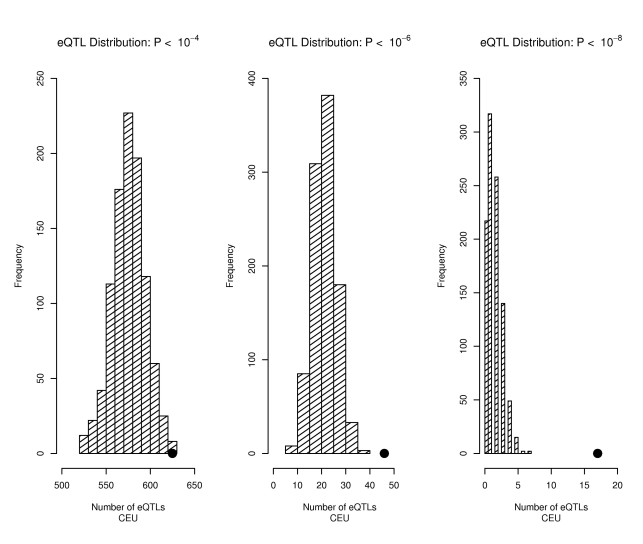
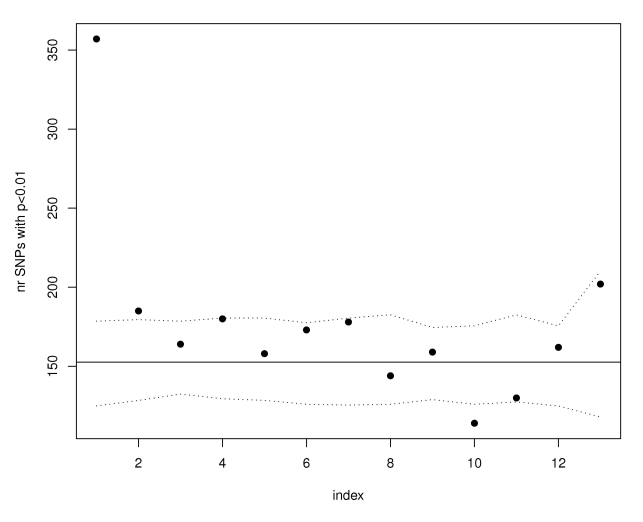
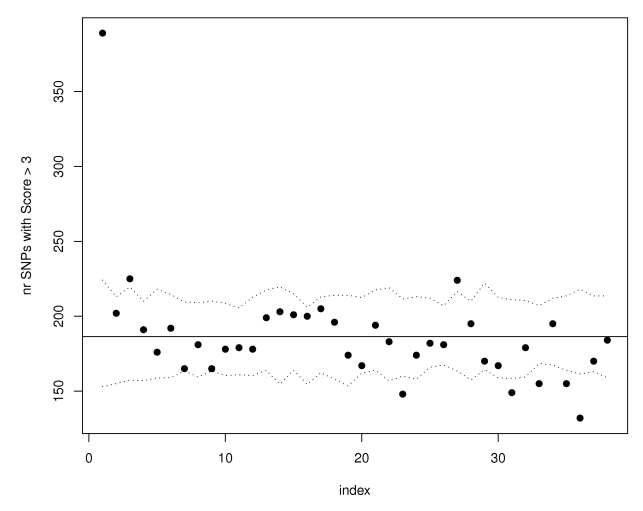
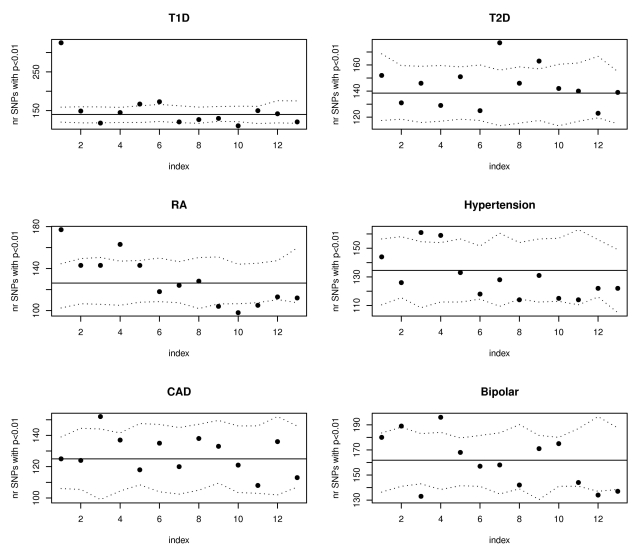
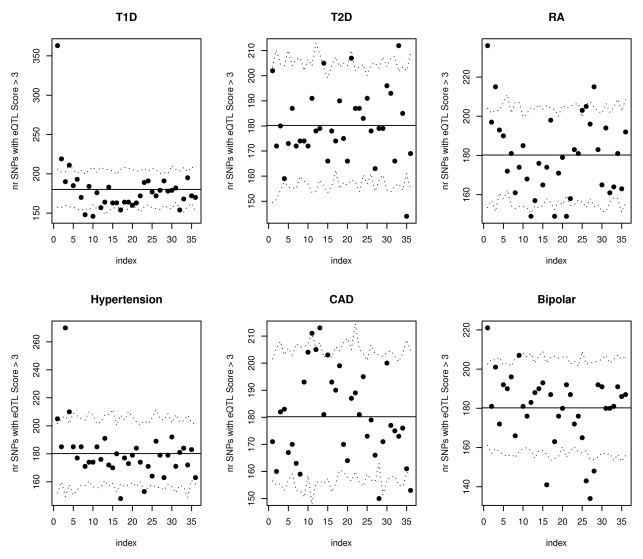
Although genome-wide association studies (GWAS) of complex traits have yielded more reproducible associations than had been discovered using any other approach, the loci characterized to date do not account for much of the heritability to such traits and, in general, have not led to improved understanding of the biology underlying complex phenotypes. Using a web site we developed to serve results of expression quantitative trait locus (eQTL) studies in lymphoblastoid cell lines from HapMap samples (http://www.scandb.org), we show that single nucleotide polymorphisms (SNPs) associated with complex traits (from http://www.genome.gov/gwastudies/) are significantly more likely to be eQTLs than minor-allele-frequency-matched SNPs chosen from high-throughput GWAS platforms. These findings are robust across a range of thresholds for establishing eQTLs (p-values from 10(-4)-10(-8)), and a broad spectrum of human complex traits. Analyses of GWAS data from the Wellcome Trust studies confirm that annotating SNPs with a score reflecting the strength of the evidence that the SNP is an eQTL can improve the ability to discover true associations and clarify the nature of the mechanism driving the associations. Our results showing that trait-associated SNPs are more likely to be eQTLs and that application of this information can enhance discovery of trait-associated SNPs for complex phenotypes raise the possibility that we can utilize this information both to increase the heritability explained by identifiable genetic factors and to gain a better understanding of the biology underlying complex traits.
Overview
The claims and statistics of this paper haven’t been checked yet.
Free: it reads the open-access text and checks the first 5 claims that cite a source we can check. Create a free account to check every claim.
Integrity signals
Registry
Cites
Statistics
Figures
Verification
Claims the paper makes
The claims and statistics of this paper haven’t been checked yet.
Free: it reads the open-access text and checks the first 5 claims that cite a source we can check. Create a free account to check every claim.
Claims other papers make about this one
Each is checked against this paper’s own text: does it say what the citing paper says it does?
The cited source says what the claim attributes to it.
In the citing paper
“Significant GWAS loci are enriched for e QTLs (Nicolae et al., 2010) and meQTLs (X. Zhang et al., 2014).”
From Integrative Analysis of Multi-omics Data for Discovery and Functional Studies of Complex Human Diseases (2016) · cites this paper as Nicolae et al., 2010
Self-check
Percentages, sums and reported differences re-computed from the paper’s own numbers.
The self-check needs the paper’s full text.
Citations
Cites
PLINK: a tool set for whole-genome association and population-based linkage analyses.
Purcell, S., Neale, B., Todd-Brown, K., Thomas, L., Ferreira, M. A. R., Bender, D., Maller, J., Sklar, P., de Bakker, P. I. W., Daly, M. J., et al. (2007) · The American Journal of Human Genetics · doi:10.1086/519795 · Cited by 34,089 · cited 1×
“We used the toolkit PLINK [31] to calculate frequencies.”
MethodGenome-wide association study of 14,000 cases of seven common diseases and 3,000 shared controls
The Wellcome Trust Case Control Consortium, Management Committee, Burton, P. R., Clayton, D. G., Cardon, L. R., Craddock, N., Deloukas, P., Duncanson, A., Kwiatkowski, D. P., McCarthy, M. I., et al. (2007) · Nature · doi:10.1038/nature05911 · Cited by 9,442
Finding the missing heritability of complex diseases
Manolio, T. A., Collins, F. S., Cox, N. J., Goldstein, D. B., Hindorff, L. A., Hunter, D. J., McCarthy, M. I., Ramos, E. M., Cardon, L. R., Chakravarti, A., et al. (2009) · Nature · doi:10.1038/nature08494 · Cited by 8,336 · cited 1×
“The failure to achieve this goal is made particularly acute by the recognition that the loci that have been successfully identified not only provide us with little insight into the genetic basis for the trait, but also account for little of the overall heritability [5].”
BackgroundSelf-citationHindorff, L. A., Sethupathy, P., Junkins, H. A., Ramos, E. M., Mehta, J. P., Collins, F. S., & Manolio, T. A. (2009) · Proceedings of the National Academy of Sciences · doi:10.1073/pnas.0903103106 · Cited by 4,013 · cited 1×
“Our results build on those of previous studies, particularly those of Schadt and colleagues [12–15] that focused on using transcriptome information to improve understanding of genetic signals, but the rapid accumulation of trait-associated SNPs through GWAS, coupled with the systematic efforts to catalog these variant…”
ResultGenome-wide association defines more than 30 distinct susceptibility loci for Crohn's disease
the NIDDK IBD Genetics Consortium, Barrett, J. C., the Belgian-French IBD Consortium, the Wellcome Trust Case Control Consortium, Hansoul, S., Nicolae, D. L., Cho, J. H., Duerr, R. H., Rioux, J. D., Brant, S. R., et al. (2008) · Nature Genetics · doi:10.1038/ng.175 · Cited by 2,593
Self-citationMAQC Consortium, Shi, L., Shi, L., Reid, L. H., Jones, W. D., Shippy, R., Warrington, J. A., Baker, S. C., Collins, P. J., de Longueville, F., et al. (2006) · Nature Biotechnology · doi:10.1038/nbt1239 · Cited by 2,126 · cited 1×
“) that they might be considered unreliable for genomic studies [24], while others highlight the reproducibility of results of transcriptome studies [25,26] and find that LCLs show little variability as a consequence of non-genetic”
ResultHampe, J., Franke, A., Rosenstiel, P., Till, A., Teuber, M., Huse, K., Albrecht, M., Mayr, G., De La Vega, F. M., Briggs, J., et al. (2007) · Nature Genetics · doi:10.1038/ng1954 · Cited by 1,897 · cited 1×
“For a few disorders, results of GWAS have highlighted biological contributing factors to disease that had not previously been recognized as central, such as the complement system in macular degeneration [1] or autophagy in Crohn’s disease [2–4].”
BackgroundGenome-wide association study of blood pressure and hypertension
Levy, D., Ehret, G. B., Rice, K., Verwoert, G. C., Launer, L. J., Dehghan, A., Glazer, N. L., Morrison, A. C., Johnson, A. D., Aspelund, T., et al. (2009) · Nature Genetics · doi:10.1038/ng.384 · Cited by 1,364 · cited 1×
“has enabled us to generalize the concept that information on eQTLs will have utility for understanding the genetic component to complex traits. Our primary observations – that SNPs reproducibly associated with complex human traits are more likely to be eQTLs – are novel, although perhaps not unexpected given that few…”
ResultGenetics of gene expression and its effect on disease
Emilsson, V., Thorleifsson, G., Zhang, B., Leonardson, A. S., Zink, F., Zhu, J., Carlson, S., Helgason, A., Walters, G. B., Gunnarsdottir, S., et al. (2008) · Nature · doi:10.1038/nature06758 · Cited by 1,296 · cited 1×
“studies have highlighted the potential sensitivity of eQTL studies to cell and tissue subtypes [15,19,20].”
BackgroundA General Test of Association for Quantitative Traits in Nuclear Families
Abecasis, G. R., Cardon, L. R., & Cookson, W. O. C. (2000) · The American Journal of Human Genetics · doi:10.1086/302698 · Cited by 1,126 · cited 1×
“Genome-wide association analyses of 13,080 transcript clusters (gene-level) with reliable expression and more than 2 million SNPs in the CEU or YRI populations were conducted using the Quantitative Trait Disequilibrium Test (QTDT) [30].”
Method
Research works printed but not linked: 1
- Hindorff LA Sethupathy P Junkins HA Ramos EM Mehta JP 2009 Potential etiologic and functional implications of genome-wide association loci for human diseases and traits. Proc Natl Acad Sci U S A 106 9362 9367 19474294 PMC2687147 · DOI · Paper page
Cited by
Items 901–1,000 of 1,003
Integration of multidimensional splicing data and GWAS summary statistics for risk gene discovery
Ji, Y., Wei, Q., Chen, R., Wang, Q., Tao, R., & Li, B. (2022) · PLoS Genetics · doi:10.1371/journal.pgen.1009814 · Cited by 6
“Recent 4 research suggested that a large portion of GWAS loci might influence complex traits 5 through regulating gene expression levels [2, 3].”
Liu, N., Sadlon, T. J., Wong, Y. Y., Pederson, S., Breen, J., & Barry, S. C. (2022) · Epigenetics & Chromatin · doi:10.1186/s13072-022-00456-5 · Cited by 7
“aim to associate allelic changes to a cis (within 1Mbp of the associated gene) and trans (>1Mbp) change in gene expression (21,22).”
BackgroundLeveraging omics data to boost the power of genome-wide association studies
Lin, Z., Knutson, K. A., & Pan, W. (2022) · Human Genetics and Genomics Advances · doi:10.1016/j.xhgg.2022.100144 · Cited by 8
Gedik, H., Peterson, R. E., Riley, B. P., Vladimirov, V. I., & Bacanu, S. (2023) · Complex Psychiatry · doi:10.1159/000530223 · Cited by 7
Single cell expression quantitative trait loci and complex traits
Petretto, E. G. (2013) · Genome Medicine · doi:10.1186/gm476 · Cited by 6
“Furthermore, eQTL analyses can be integrated with clinical genomewide association studies (GWAS) to identify diseaseassociated variants [3,4].”
BackgroundIdentifying cis-mediators for trans-eQTLs across many human tissues using genomic mediation analysisPreprint
Yang, F., Wang, J., Pierce, B. L., & Chen, L. (2016) · bioRxiv (Cold Spring Harbor Laboratory) · doi:10.1101/078683 · Cited by 8
Learning causal biological networks with the principle of Mendelian randomizationPreprint
Badsha, M. B., & Fu, A. Q. (2017) · bioRxiv (Cold Spring Harbor Laboratory) · doi:10.1101/171348 · Cited by 6
RACER: A data visualization strategy for exploring multiple genetic associationsPreprint
Sabik, O. L., & Farber, C. R. (2018) · bioRxiv (Cold Spring Harbor Laboratory) · doi:10.1101/495366 · Cited by 6
“A common approach to identify causal genes is to determine if disease-associated variants also influence molecular phenotypes, such as gene expression (Nicolae et al., 2010).”
BackgroundSoliai, M. M., Kato, A., Stanhope, C. T., Norton, J. E., Naughton, K. A., Klinger, A. I., Kern, R. C., Tan, B. K., Schleimer, R. P., Nicolae, D. L., et al. (2019) · bioRxiv (Cold Spring Harbor Laboratory) · doi:10.1101/593558 · Cited by 6
Self-citationThe genetic basis for DNA methylation variation across tissues and development
Rosenski, J., Sabag, O., Marcus, E., Loyfer, N., Dor, Y., Cedar, H., & Kaplan, T. (2026) · Nature Communications · doi:10.1038/s41467-026-71693-5 · Cited by 7
Analysis of Gene-Gene Interactions Using Gene-Trait Similarity Regression
Wang, X., Epstein, M. P., & Tzeng, J. (2014) · Human Heredity · doi:10.1159/000360161 · Cited by 6
Expressional profiling of prostate cancer risk SNPs at 11q13.5 identifies DGAT2 as a new target gene
Nurminen, R., Rantapero, T., Wong, S. C., Fischer, D., Lehtonen, R., Tammela, T. L. J., Nykter, M., Visakorpi, T., Wahlfors, T., & Schleutker, J. (2016) · Genes Chromosomes and Cancer · doi:10.1002/gcc.22368 · Cited by 5
“Loci associated with complex traits, including cancer, are enriched for genetic variants that affect gene expression, that is, they are likely to be expression quantitative trait loci (eQTLs) (Nicolae et al., 2010).”
BackgroundGenetic variants associated mRNA stability in lung
Lǐ, J., Tang, M., Li, Y., Amos, C. I., & Cheng, C. (2022) · BMC Genomics · doi:10.1186/s12864-022-08405-y · Cited by 5
Senko, A. N., Overall, R. W., Šilhavý, J., Mlejnek, P., Malínská, H., Hüttl, M., Marková, I., Fabel, K., Lu, L., Stuchlík, A., et al. (2022) · PLoS Genetics · doi:10.1371/journal.pgen.1009638 · Cited by 5
“The majority of disease-associated variants in humans are likely to be involved in regulation of transcription [58,59].”
BackgroundIdentification and Validation of Candidate Genes from Genome-Wide Association Studies
Albert, E., & Sauvage, C. (2022) · Methods in molecular biology · doi:10.1007/978-1-0716-2237-7_15 · Cited by 6
A novel method for in silico identification of regulatory SNPs in human genome
Li, R., Zhong, D., Liu, R., Lv, H., Zhang, X., Liu, J., & Han, J. (2016) · Journal of Theoretical Biology · doi:10.1016/j.jtbi.2016.11.022 · Cited by 5
A framework for pathway knowledge driven prioritization in genome‐wide association studies
Biswas, S., Pal, S., Majumder, P. P., & Bhattacharjee, S. (2020) · Genetic Epidemiology · doi:10.1002/gepi.22345 · Cited by 5
“…such as their location, functional annotations, epigenetic features or expression quantitative trait loci (eQTLs) evidence (Iversen, Lipton, Clyde, & Monteiro, 2014; Nicolae et al., 2010; Pickrell, 2014; Schork et al., 2013; Sveinbjornsson et al., 2016; Yang, Fritsche, Zhou, & Abecasis, 2017).”
BackgroundGlomerular Kidney Diseases in the Single-Cell Era
Latt, K. Z., Heymann, J. A. W., Yoshida, T., & Kopp, J. B. (2021) · Frontiers in Medicine · doi:10.3389/fmed.2021.761996 · Cited by 5
“Many GWAS-identified disease loci are located in non-coding intronic or intergenic genomic regions and yet are associated with gene expression levels in tissues (44, 45).”
BackgroundNova, A., Fazia, T., Beecham, A. H., Saddi, V., Piras, M., McCauley, J. L., Berzuini, C., & Bernardinelli, L. (2022) · Life · doi:10.3390/life12020151 · Cited by 6
Grassi, M. A., Rao, V. R., Winkler, K. P., Zhang, W., Bogaard, J. D., Chen, S., LaCroix, B. L., Lenkala, D., Rehman, J., Malik, A. B., et al. (2014) · PLoS ONE · doi:10.1371/journal.pone.0087883 · Cited by 5
“Previous work has demonstrated the broad translatability of studies with lymphoblastoid cell lines [24], in particular for complex traits in which white blood cells are the most relevant human tissue as in leukocyte endothelial adhesion or the diseases of type 1 diabetes, Crohn’s disease, and multiple sclerosis [25,26…”
BackgroundSelf-citationTissue-Specific Enrichment of Lymphoma Risk Loci in Regulatory Elements
Hayes, J. E., Trynka, G., Vijai, J., Offit, K., Raychaudhuri, S., & Klein, R. J. (2015) · PLoS ONE · doi:10.1371/journal.pone.0139360 · Cited by 8
“Others have shown that risk variants are enriched in particular epigenomic marks of transcriptional regulatory regions[18, 19] and that trait-associated SNPs, including GWAS-identified risk SNPs, are often found in expression quantitative trait loci (eQTL) that affect nearby gene expression[20].”
BackgroundA Summary of Recent Updates on the Genetic Determinants of Depression
Dunn, E. C., Wang, M., & Perlis, R. H. (2019) · Elsevier eBooks · doi:10.1016/b978-0-323-58131-8.00001-x · Cited by 10
Cheng, B., Liang, C., Li, P., Liu, L., Cheng, S., Ma, M., Zhang, L., Qi, X., Wen, Y. F., & Zhang, F. (2020) · Biochemical Genetics · doi:10.1007/s10528-020-09952-3 · Cited by 5
“The disease-associated SNPs identified by GWAS are significantly enriched in eQTLs, supporting the importance of eQTLs in the pathogenesis of complex diseases (Nicolae et al. 2010).”
Genome-Wide Identification of Cis-acting Expression QTLs in Large Yellow Croaker
Jiang, D. L., Li, W., Wang, Z., & Fang, M. (2021) · Marine Biotechnology · doi:10.1007/s10126-020-10017-0 · Cited by 5
Shared associations identify causal relationships between gene expression and immune cell phenotypes
Gasperi, C., Chun, S., Sunyaev, S. R., & Cotsapas, C. J. (2021) · Communications Biology · doi:10.1038/s42003-021-01823-w · Cited by 6
Molstad, A. J., Sun, W., & Hsu, L. (2021) · The Annals of Applied Statistics · doi:10.1214/20-aoas1432 · Cited by 5
Chen, X., Yao, T., Cai, J., Zhang, Q., Li, S., Li, H., Fu, X., & Wu, J. (2021) · Journal of Affective Disorders · doi:10.1016/j.jad.2021.12.066 · Cited by 7
Yuan, J., Wang, T., Wang, L., Li, P., Shen, H., Mo, Y., Zhang, Q., & Ni, C. (2022) · Environmental Toxicology · doi:10.1002/tox.23554 · Cited by 5
Genetic and Gene Expression Resources for Osteoporosis and Bone Biology Research
Kaya, S., Alliston, T. N., & Evans, D. S. (2023) · Current Osteoporosis Reports · doi:10.1007/s11914-023-00821-7 · Cited by 5
“First, trait-associated genetic variants are rarely missense mutations and are often located in non-coding DNA, so the associated variant does not directly alter the protein sequence coded by a gene [21].”
Garcia, I. S., Silva‐Vignato, B., César, A. S. M., Petrini, J., da Silva, V. H., Morosini, N. S., Goes, C. P., Afonso, J., da Silva, T. R., Lima, B. D., et al. (2024) · Scientific Reports · doi:10.1038/s41598-024-60703-5 · Cited by 6
“6, 7, and 8.”
Cross-population Joint Analysis of eQTLs: Fine Mapping and Functional AnnotationPreprint
Wen, X., Luca, F., & Piqué-Regi, R. (2014) · bioRxiv (Cold Spring Harbor Laboratory) · doi:10.1101/008797 · Cited by 5
Disease-associated loci share properties with response eQTLs under common environmental exposuresPreprint
Lin, W., Li, M., Allen, O., Burnett, J. E., Popp, J. M., Stephens, M., Battle, A. J., & Gilad, Y. (2025) · bioRxiv (Cold Spring Harbor Laboratory) · doi:10.1101/2025.04.30.651602 · Cited by 13
“Although GWAS signals are broadly enriched for eQTLs 47 , steady-state eQTLs have failed to explain an appreciable fraction of disease-associated loci.”
Zhao, X., Li, J., Jia, W., Ren, Y., Wang, Y., Shan, T., & Wang, J. (2025) · Genetics Selection Evolution · doi:10.1186/s12711-025-01014-9 · Cited by 8
“To better understand the genetic basis of IMF content and develop effective breeding strategies, GWAS studies are commonly employed to identify SNPs associated with IMF content in pigs, and many have indicated that some of the SNPs associated with complex traits may also be eQTLs [18].”
Zhou, C., Li, Y., Cheng, W., & Lian, Z. (2025) · BMC Genomics · doi:10.1186/s12864-025-12300-7 · Cited by 4
CERENKOV: Computational Elucidation of the Regulatory Noncoding Variome
Yao, Y., Liu, Z., Singh, S. H., Wei, Q., & Ramsey, S. A. (2017) · ACM International Conference on Bioinformatics, Computational Biology, and Health Informatics (ACM-BCB) · doi:10.1145/3107411.3107414 · Cited by 4
“Various correlates of rSNPs are known [31], with expression quantitative trait locus (expression QTL, or eQTL) associations being one validated example [36].”
BackgroundQadri, Q. R., Lai, X., Zhao, W., Zhang, Z., Zhao, Q., Ma, P., Pan, Y., & Wang, Q. (2024) · International Journal of Molecular Sciences · doi:10.3390/ijms25116234 · Cited by 5
“Most of these associations are likely to be expression quantitative trait loci (eQTL) in complex traits [15], and they bridge the gap between genetic variations and gene expression levels across tissues or cell types.”
Sinniah, E., Mizikovsky, D., Shim, W. J., Chow, C. S. Y., Souilmi, Y., Cheng, F., Zheng, Z., Laurie, J., Foster, M., Shah, S. H., et al. (2025) · Nucleic Acids Research · doi:10.1093/nar/gkaf971 · Cited by 5
Shedding new light on genetic dark matter
Melhem, N., & Devlin, B. (2010) · Genome Medicine · doi:10.1186/gm200 · Cited by 4
“Many other methods and designs are available to illuminate dark matter [8-15].”
BackgroundFast eQTL Analysis for Twin Studies
Yin, Z., Xia, K., Chung, W., Sullivan, P. F., & Zou, F. (2015) · Genetic Epidemiology · doi:10.1002/gepi.21900 · Cited by 4
“…detected by GWAS are significantly more likely to be eQTL, which can be used to boost the discovery of trait-associated SNPs, and improve understanding of the biology underlying complex traits [Hsu et al., 2010; Nicolae et al., 2010; Schadt et al., 2008; Zhang et al., 2012; Zhong et al., 2010].”
BackgroundThe Promise of Epigenetics. Has It Delivered New Insights?
Cho, J. H. (2016) · Digestive Diseases · doi:10.1159/000442919 · Cited by 4
Venkateswaran, S., Denson, L. A., Jurickova, I., Dodd, A., Zwick, M. E., Cutler, D. J., Kugathasan, S., & Okou, D. T. (2019) · Scientific Reports · doi:10.1038/s41598-019-45701-2 · Cited by 4
Ran, S., Lin, X., Wang, S., Li, Z., & Liu, B. (2025) · Calcified Tissue International · doi:10.1007/s00223-024-01312-2 · Cited by 5
“Correlation analysis between eQTLs and phenotypic variants has highlighted the significance of gene expression regulation [20].”
Sangalli, A., Malerba, G., Tessari, G., Rodolfo, M., & Gomez‐Lira, M. (2016) · Experimental Dermatology · doi:10.1111/exd.13247 · Cited by 4
Trans-eQTLs identified in whole blood have limited influence on complex disease biology
Yap, C. X., Lloyd‐Jones, L. R., Holloway, A., Smartt, P., Wray, N. R., Gratten, J., & Powell, J. E. (2018) · European Journal of Human Genetics · doi:10.1038/s41431-018-0174-7 · Cited by 4
Hu, Y., Tan, A., Yu, L., Hou, C., kuang, H., Wu, Q., Su, J., Zhou, Q., Zhu, Y., Zhang, C., et al. (2019) · BMC Genomics · doi:10.1186/s12864-019-6363-0 · Cited by 6
Cheng, B., Du, Y., Wen, Y. F., Zhao, Y., He, A., Ding, M., Fan, Q., Li, P., Liu, L., Liang, X., et al. (2018) · Comprehensive Psychiatry · doi:10.1016/j.comppsych.2018.11.006 · Cited by 4
Xue, H., Wu, C., & Pan, W. (2020) · Genetic Epidemiology · doi:10.1002/gepi.22333 · Cited by 5
“For example, it has been shown that GWAS trait ‐ associated SNPs are more likely to be expression quantitative trait loci (Nicolae et al., 2010).”
BackgroundZhu, Y., Ji, J., Lin, W., Li, M., Liu, L., Zhu, H., Xue, F., Li, X., Zhou, X., & Yuan, Z. (2020) · BMC Genetics · doi:10.1186/s12863-020-00899-3 · Cited by 4
Li, X., Lai, L., Su, J., Chen, S., Lin, S., Wang, B., Gao, J., Linghua, Z., Yao, K., & Duan, S. (2021) · Journal of Diabetes Investigation · doi:10.1111/jdi.13572 · Cited by 4
Self-citationJoint-Tissue Integrative Analysis Identified Hundreds of Schizophrenia Risk Genes
Wu, Y., Yu, X., Xiao, X., Li, M., & Li, Y. (2021) · Molecular Neurobiology · doi:10.1007/s12035-021-02572-x · Cited by 4
Chen, J., Wang, L., Jager, P. L. D., Bennett, D. A. A., Buchman, A. S., & Yang, J. (2022) · Human Genetics and Genomics Advances · doi:10.1016/j.xhgg.2022.100143 · Cited by 4
“20 An intuitive but widely used ad hoc approach is to fine-map and prioritize potential causal GWAS signals that are also molecular QTLs 21 or located in a region with histone modifications.”
MethodChen, D. M., Dong, R., Kachuri, L., Hoffmann, T. J., Jiang, Y., Berndt, S. I., Shelley, J. P., Schaffer, K. R., Machiela, M. J., Freedman, N. D., et al. (2024) · Human Genetics and Genomics Advances · doi:10.1016/j.xhgg.2024.100315 · Cited by 5
“21–24 To identify genes associated with PSA levels and prioritize them for functional investigation, we performed a TWAS of PSA levels based on summary statistics from a GWAS meta-analysis of 95,768 men without PCa.”
MethodPoCos: Population Covering Locus Sets for Risk Assessment in Complex Diseases
Ayati, M., & Koyutürk, M. (2016) · PLoS Computational Biology · doi:10.1371/journal.pcbi.1005195 · Cited by 8
Ramsey, S. A., Liu, Z., Yao, Y., & Weeder, B. R. (2019) · Methods in molecular biology · doi:10.1007/978-1-0716-0026-9_6 · Cited by 5
Genetic predictors of gene expression associated with risk of bipolar disorderPreprint
Shah, K. P., Wheeler, H. E., Gamazon, E. R., Nicolae, D. L., Cox, N. J., & Im, H. K. (2016) · bioRxiv (Cold Spring Harbor Laboratory) · doi:10.1101/043752 · Cited by 4
“These so-called expression quantitative trait loci (eQTLs) are enriched among GWAS-identified loci across diseases [13], and specifically in BD [14].”
BackgroundResultSelf-citationRETRACTION: Illuminating the dark road from schizophrenia genetic associations to disease mechanisms
Li, M., & Weinberger, D. R. (2016) · National Science Review · doi:10.1093/nsr/nww065 · Cited by 4
“This apparently limited role of protein-coding variants is consistent both with exome sequencing findings [3] andwith the hypothesis that most associated variants detected by GWAS exert their effects through altering gene expression rather than protein structure [12,13] and with the observation that schizophrenia risk…”
ResultRetractedImpact of the X chromosome and sex on regulatory variationPreprint
Kukurba, K. R., Parsana, P., Smith, K. S., Zappala, Z., Knowles, D. A., Favé, M.-J., Li, X., Zhu, X., Potash, J. B., Weissman, M. M., et al. (2015) · bioRxiv (Cold Spring Harbor Laboratory) · doi:10.1101/024117 · Cited by 4
Jeong, R., & Bulyk, M. L. (2024) · eLife · doi:10.7554/elife.98289.1 · Cited by 8
Vaz, E., Wang, L., Galvin, J., Keener, R., & Battle, A. J. (2025) · bioRxiv (Cold Spring Harbor Laboratory) · doi:10.1101/2025.09.26.678908 · Cited by 8
Teng, J., Zhao, X., Yan, Q., Yang, J., Pei, F., Zhang, X., Duan, C., Chen, Z., Xu, Q., Liu, Y., et al. (2026) · Genetics Selection Evolution · doi:10.1186/s12711-025-01028-3 · Cited by 5
“Therefore, integrating additional data such as expression quantitative trait loci (eQTL) is essential to connect causal variant effects to gene function [17].”
Wenz, B. M., Dudek, M. F., Ramdas, S., Creasy, K. T., Xin, D., Olthoff, K. M., Shaked, A. A., Rader, D. J., Brown, C. D., & Voight, B. F. (2026) · The American Journal of Human Genetics · doi:10.1016/j.ajhg.2026.01.003 · Cited by 5
An, H., Kim, J.-H., Yoon, S., Choi, J., Koo, J., & Lee, S. (2022) · Diagnostics · doi:10.3390/diagnostics12102497 · Cited by 3
“This tool evaluates millions of SNPs from the genome by performing case-control association analysis and screens SNPs in the whole genome to identify susceptible sites and regions associated with diseases [14].”
Pruett, D. G., Scartozzi, A., Polikowsky, H. G., Highland, H. M., Shaw, D. M., Petty, L. E., Petty, A. S., Kraft, S. J., & Below, J. E. (2025) · Journal of Speech Language and Hearing Research · doi:10.1044/2025_jslhr-25-00093 · Cited by 4
“Consequently, various methods have been developed to help interpret GWAS signals, often focused on gene expression, highlighting the importance of gene expression in trait variation (Nicolae et al., 2010).”
BMI-genome interactions regulate global gene expression with emphasis in brain and gut
Signer, R. H., Seah, C., Young, H., Townsley, K. G., Ciarcia, J., de Pins, A. M., Cote, A. C., Lee, S. H., Jia, M., Johnson, J., et al. (2026) · Cell Genomics · doi:10.1016/j.xgen.2026.101280 · Cited by 3
“8 This enrichment of eQTLs may imply that the primary modality by which GWAS variants affect disease is through a cumulative impact of gene expression in disease-relevant tissues.”
Polymorphisms in the SNRPN gene are associated with obesity susceptibility in a Spanish population
Albuquerque, D., Manco, L., González, L. M., Gervasini, G., Benito, G. M., González, J. R., & Rodríguez‐López, R. (2017) · The Journal of Gene Medicine · doi:10.1002/jgm.2956 · Cited by 4
“The combination between SNPs and eQTLs may be important for confirming the relationship of SNPs with a trait.(25) Indeed, if one allele is more frequently present in cases than in controls and, at the same time, it impacts upon the expression of a nearby gene, this may probably establish causality for this variant.”
BackgroundiFunMed: Integrative functional mediation analysis of GWAS and eQTL studies
Rojo, C., Zhang, Q., & Keleş, S. (2019) · Genetic Epidemiology · doi:10.1002/gepi.22217 · Cited by 3
“These approaches capitalize on the idea that trait ‐ associated single ‐ nucleotide polymorphisms (SNPs) are more likely to be functional and thus eQTLs (Nicolae et al., 2010); therefore, they aim to identify significant GWAS SNPs that are also eQTL SNPs.”
BackgroundThe statistical practice of the GTEx Project: from single to multiple tissues
Liao, X., Chai, X., Shi, X., Chen, L., & Liu, J. (2020) · Quantitative Biology · doi:10.1007/s40484-020-0210-9 · Cited by 3
“It is, therefore, anticipated to have a larger impact on the understanding of regulatory variation across tissues in future studies. eQTL analysis aims to identifying associations between genetic variants and gene expression across the genome [37].”
BackgroundIntrinsic DNA topology as a prioritization metric in genomic fine-mapping studies
Ainsworth, H. C., Howard, T. D., & Langefeld, C. D. (2020) · Nucleic Acids Research · doi:10.1093/nar/gkaa877 · Cited by 5
Clarelli, F., Rocca, M. A., Santoro, S., Meo, E. D., Ferrè, L., Sorosina, M., Boneschi, F. M., Esposito, F., & Filippi, M. (2021) · European Journal of Neurology · doi:10.1111/ene.14872 · Cited by 3
“It is widely known that the majority of risk variants for complex traits are not located in coding regions [47], and it has been found that SNPs associated with complex traits as reported in the National Human Genome Research Institute GWAS Catalog are significantly more likely to be eQTL than frequencymatched SNPs [4…”
BackgroundMartínez‐García, P. J., Mas-Gómez, J., Wegrzyn, J., & Botía, J. A. (2022) · Scientific Reports · doi:10.1038/s41598-022-11689-5 · Cited by 4
“Almost 50% of trait-associated SNPs have a cis -acting effect on gene expression 9,10 .”
BackgroundGenetic identification of tissues and cell types underlying attention-deficit/hyperactivity disorder
Wei, W.-Q., Sun, H. Y., Chen, Y., Liu, X.-W., Zhou, R., Li, Y., & Liu, X. (2022) · Frontiers in Psychiatry · doi:10.3389/fpsyt.2022.999007 · Cited by 3
A resource for integrated genomic analysis of the human liver
Zhou, Y., Gallins, P. J., Etheridge, A. S., Jima, D. D., Scholl, E. H., Wright, F. A., & Innocenti, F. (2022) · Scientific Reports · doi:10.1038/s41598-022-18506-z · Cited by 3
Liu, Y., Chen, Y., Yang, Q., Shen, D., Du, Z., & Zhang, G. (2022) · Acta Diabetologica · doi:10.1007/s00592-022-01988-8 · Cited by 3
“It is not yet clear how these noncoding variants affect traits and diseases [19].”
BackgroundAn integrated strategy to identify COVID‐19 causal genes and characteristics represented by LRRC37A2
Zhu, Z., Chen, X., Wang, C., Zhang, S., Yu, R., Xie, Y., Yuan, S., Cheng, L., Shi, L., & Zhang, X. (2023) · Journal of Medical Virology · doi:10.1002/jmv.28585 · Cited by 3
“Most GWAS ‐ associated variants fall in the non-coding part of the genome, suggesting that they affect complex traits and diseases by altering the expression of neighboring genes using regulatory mechanisms 39,40 (Figure 1E).”
BackgroundTrans-Acting Genotypes Associated with mRNA Expression Affect Metabolic and Thermal Tolerance Traits
Drown, M. K., Oleksiak, M. F., & Crawford, D. L. (2023) · Genome Biology and Evolution · doi:10.1093/gbe/evad123 · Cited by 3
Genome-wide association study on pharmacological outcomes of musculoskeletal pain in UK Biobank
Li, S., Poelmans, G., van Boekel, R. L. M., & Coenen, M. J. H. (2023) · The Pharmacogenomics Journal · doi:10.1038/s41397-023-00314-x · Cited by 3
Nguyen, D. (2023) · Bioinformatics · doi:10.1093/bioinformatics/btad667 · Cited by 3
“…studies have shown that GWAS hits are enriched in significant eQTLs/sQTLs loci and regulatory elements, suggesting gene regulation mechanisms of trait-associated DNA variants (Nicolae et al. 2010, Maurano et al. 2012, Walker et al. 2019, GTEx Consortium 2020, Kerimov et al. 2021, Mu et al. 2021).”
BackgroundHua, T., Zhang, C., Fu, Y., Qin, N., Liu, S., Chen, C., Gong, L., Ma, H., Ding, Y., Wei, X., et al. (2023) · Molecular Carcinogenesis · doi:10.1002/mc.23669 · Cited by 3
Mei, H., Simino, J. M., Li, L., Jiang, F., Bis, J. C., Davies, G., Hill, W. D., Xia, C., Gudnason, V. G., Yang, Q., et al. (2024) · Alzheimer s Research & Therapy · doi:10.1186/s13195-023-01376-6 · Cited by 3
“The multi-omics analyses showed that PAR-dr and WL-dr single-variant associations exhibited LD with eQTLs in every tissue and meQTLs in the hippocampus, bolstering evidence that trait-associated variants are enriched in eQTLs [9, 33] and regions involved in expression regulation [34, 35].”
QTL Mapping of Molecular Traits for Studies of Human Complex Diseases
Liu, C. (2012) · Translational bioinformatics · doi:10.1007/978-94-007-5558-1_5 · Cited by 3
PERSPECTIVES Transcriptome sequencing: next generation approach to RNA functional analysis
Żmieńko, A., Jackowiak, P., & Figlerowicz, M. (2014) · Biotechnologia · doi:10.5114/bta.2011.46548 · Cited by 4
“Therefore, one can attempt to narrow down the analyzed region to the gene coding parts, as the variances located there are more likely to serve as trait-associated markers for complex phenotypes (Nicolae et al., 2010).”
BackgroundThe smoking gun: Genetics and genomics reveal causal pathways for COPD
Paré, P. D. (2017) · Canadian Journal of Respiratory Critical Care and Sleep Medicine · doi:10.1080/24745332.2017.1361203 · Cited by 3
S100B has pleiotropic effects on vaso‐occlusive manifestations in sickle cell disease
Zhang, X., Shah, B. N., Zhang, W., Saraf, S. L., Nouraie, M. S., Nekhai, S. A., Machado, R. F., Gladwin, M. T., & Gordeuk, V. R. (2019) · American Journal of Hematology · doi:10.1002/ajh.25691 · Cited by 3
“eQTL Mapping: Genetic regulation of gene expression plays an important role in complex traits, as indicated by the enrichment of trait-associated SNPs in eQTL.(4,5) Such enrichment exhibits tissue-, disease-, and population-specificity.”
BackgroundSelf-citationThe genome as pharmacopeia: Association of genetic dose with phenotypic response
Wadhawan, S., Runz, H., & Burchard, J. (2015) · Biochemical Pharmacology · doi:10.1016/j.bcp.2015.02.005 · Cited by 3
Genome-wide imputed differential expression enrichment analysis identifies trait-relevant tissues
Ghaffar, A., & Nyholt, D. R. (2023) · Frontiers in Genetics · doi:10.3389/fgene.2022.1008511 · Cited by 3
“The eQTL status of a trait-associated SNP provides a potential link between GWAS loci and genes mediating potential genetic effects (Nicolae et al., 2010).”
BackgroundQuantifying the impact of genetically regulated expression on complex traits and diseasesPreprint
Cai, M., Chen, L., Liu, J., & Yang, C. (2019) · bioRxiv (Cold Spring Harbor Laboratory) · doi:10.1101/546580 · Cited by 5
Characterizing and comparing missense variants in monogenic disease and in cancerPreprint
Yin, Y., & Moult, J. (2019) · bioRxiv (Cold Spring Harbor Laboratory) · doi:10.1101/534693 · Cited by 3
“In monogenic disease, and in contrast to complex trait disease [9–11], very few mutations affecting expression have been”
BackgroundEl conjunto religioso del Ribat califal de las dunas de Guardamar (Alicante)
Ruíz, R. A. (1989) · Archivo de prehistoria levantina · Cited by 3
Tournaire, M., Nouira, A., Moiron, M. F., Rozenholc, Y., & Verbanck, M. (2024) · medRxiv · doi:10.1101/2024.06.01.24308193 · Cited by 3
Neonatal genetics of gene expression reveal the origins of autoimmune and allergic disease riskPreprint
Huang, Q. Q., Tang, H. H. F., Teo, S. M., Ritchie, S. C., Nath, A. P., Brożyńska, M., Salim, A., Bakshi, A., Holt, B. J., Mok, D., et al. (2019) · bioRxiv (Cold Spring Harbor Laboratory) · doi:10.1101/683086 · Cited by 3
Liang, X., He, A., Wang, W., Liu, L., Du, Y., Fan, Q., Li, P., Wen, Y. F., Hao, J., Guo, X., et al. (2017) · BioMed Research International · doi:10.1155/2017/1758636 · Cited by 2
“The disease-associated SNPs identified by GWAS are significantly enriched in eQTLs, supporting the implication of eQTLs in the pathogenesis of complex diseases [6].”
BackgroundYang, T., Tang, H., Risch, H. A., Olson, S. H., Peterson, G., Bracci, P. M., Gallinger, S., Hung, R. J., Neale, R. Ε., Scélo, G., et al. (2020) · Genetic Epidemiology · doi:10.1002/gepi.22348 · Cited by 2
Randolph, H. E., Aguirre‐Gamboa, R., Brunet‐Ratnasingham, E., Nakanishi, T., Mu, Z., Locher, V., Ketter, E., Brandolino, C., Larochelle, C., Prat, A., et al. (2026) · Nature Communications · doi:10.1038/s41467-026-72393-w · Cited by 3
“Although trait-associated loci are enriched for eQTL 59 , only ~ 40% of GWAS variants colocalize with eQTL in relevant tissues, which drops to ~20% for autoimmune trait GWAS 60,61 .”
Transferability of Single‐ and Cross‐Tissue Transcriptome Imputation Models Across Ancestry Groups
Pagnuco, I. A., Eyre, S., Rattray, M., & Morris, A. P. (2025) · Genetic Epidemiology · doi:10.1002/gepi.22611 · Cited by 2
“Previous studies have indicated that many of these GWAS signals may act as regulators of gene transcript abundance, referred to as expression quantitative trait loci (eQTL) (Nicolae et al. 2010).”
Pudjihartono, N., Ho, D., & O’Sullivan, J. M. (2025) · RMD Open · doi:10.1136/rmdopen-2025-005737 · Cited by 3
“11 Consequently, numerous integrative studies that combine GWAS results with tissue-specific eQTL data have been conducted to pinpoint the target genes regulated by SNPs within GWAS-identified loci.”
Jiao, S., Bao, L., Lu, X., Wu, Y., & Li, Y. (2025) · BMC Psychiatry · doi:10.1186/s12888-025-07209-0 · Cited by 2
“Accumulating evidence suggests that the disease-associated non-coding variants may confer risk by regulating gene expression, often referred to as expression quantitative trait loci (eQTL) [12–14].”
Wilson, E. P., Broadaway, K. A., Parsons, V. A., Vadlamudi, S., Narisu, N., Brotman, S. M., Currin, K. W., Stringham, H. M., Erdos, M. R., Welch, R., et al. (2025) · The American Journal of Human Genetics · doi:10.1016/j.ajhg.2025.09.003 · Cited by 5
“To compare the primary eQTL meta-analysis results to the skeletal muscle eGenes reported in GTEx v.8, 7 we required that eGenes meet the significance thresholds established by both studies.”
Yi, S., Liu, A., Zhang, X., Deng, Y., Chen, Y., & Huoshen, W. (2025) · Free Radical Biology and Medicine · doi:10.1016/j.freeradbiomed.2025.11.053 · Cited by 4
Genetic insights and mechanistic parallels in gestational diabetes mellitus and type 2 diabetes
Fu, L., Han, X., Wang, Y., & Hu, Y. (2026) · Nature Communications · doi:10.1038/s41467-025-67385-1 · Cited by 4
scTWAS: a powerful statistical framework for single-cell transcriptome-wide association studies
Lin, Z., & Su, C. (2026) · Nature Communications · doi:10.1038/s41467-026-70374-7 · Cited by 7
Metadata
- Authors
- Nicolae, D. L., Gamazon, E., Zhang, W., Duan, S., Dolan, M. E., & Cox, N. J.
- Affiliations
- University of Chicago (US)
- Corresponding author
- Cox, Nancy J.
- Venue
- PLoS Genetics
- Publisher
- Public Library of Science (PLoS)
- Published
- 2010-04-01
- Volume
- 6
- Issue
- 4
- Pages
- e1000888
- ISSN
- 1553-7390 (ISSN-L)
- 1553-7404
- PMC
- PMC2848547
- OpenAlex
- W2019983262
- Cited by
- 1,292
- References
- 31
- Citations by year
- 2026: 35 · 2025: 57 · 2024: 50 · 2023: 40 · 2022: 63 · 2021: 104 · 2020: 80 · 2019: 87 · 2018: 97 · 2017: 112 · 2016: 101 · 2015: 103 · 2014: 125 · 2013: 78 · 2012: 84
- FWCI
- 42.59
- Type
- journal article
- Language
- en
- Open access
- gold
- doi.org
- Locations
- PLoS Genetics (publishedVersion, cc-by)
- PubMed Central (publishedVersion, cc-by)
- PubMed (publishedVersion)
- Knowledge@UChicago (University of Chicago) (submittedVersion, cc-by-nc-nd)
- DOAJ (DOAJ: Directory of Open Access Journals) (submittedVersion, cc-by-sa)
- Figshare (submittedVersion, cc-by)
- University of Chicago (cc-by)
- Funders
- National Institutes of Health
- National Heart, Lung, and Blood Institute (U01HL084715)
- National Cancer Institute (P50CA125183)
- National Institute of General Medical Sciences (U01 GM61393, U01GM061393)
- National Institute of Diabetes and Digestive and Kidney Diseases (P60DK20595, P60DK020595)
- Topics
- Life Sciences › Biochemistry, Genetics and Molecular Biology › Genetics › Genetic Associations and Epidemiology
- Life Sciences › Biochemistry, Genetics and Molecular Biology › Genetics › Genetic Mapping and Diversity in Plants and Animals
- Life Sciences › Biochemistry, Genetics and Molecular Biology › Genetics › Genetic and phenotypic traits in livestock
- Keywords
- expression quantitative trait loci, single nucleotide polymorphisms, complex traits, genome-wide association study, SNP annotation, heritability, lymphoblastoid cell lines, gene expression
- MeSH terms
- Humans, Phenotype, Genome, Human, Polymorphism, Single Nucleotide, Quantitative Trait Loci, Genome-Wide Association Study
About these checks
Registry, retraction, Cites and statistics results are computed, not judged, with one exception: a printed reference that no index lists is read once by a model before it counts as a citation error. Claims are extracted by a model and kept only when their quote appears verbatim in the text; each cited source is then checked, with a model’s help, for whether it says what the claim relies on. Those verdicts can be wrong — read the claim’s quote and the cited source before relying on one.
Statistics and arithmetic are recomputed, not judged.
Confidence bands are shown only for fields calibrated on our annotated test set. None is calibrated yet, so no band is shown.
What counts as a claim ›How we measure confidence ›How we check this ›
Are you an author, or do you see a problem with this page? Request a review
Data sources
Bibliographic data: Semantic Scholar, OpenAlex, Crossref.
Contains information from the Semantic Scholar Academic Graph Datasets, made available under the ODC Attribution License (ODC-BY 1.0).
Semantic Scholar’s data is described in: Kinney, R., et al. (2023). The Semantic Scholar Open Data Platform. arXiv:2301.10140.
