

Trait-Associated SNPs Are More Likely to Be eQTLs: Annotation to Enhance Discovery from GWAS
Open accessThe DOI matches its Crossref record; 31 of the 31 references it cites were found in a registry or an index.
Abstract
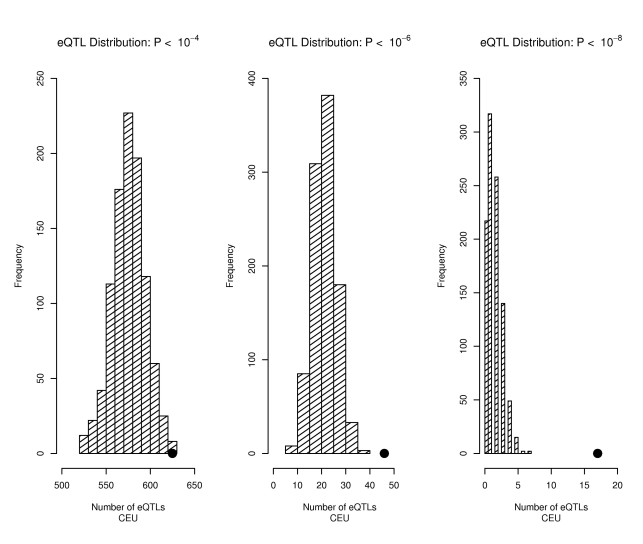
Although genome-wide association studies (GWAS) of complex traits have yielded more reproducible associations than had been discovered using any other approach, the loci characterized to date do not account for much of the heritability to such traits and, in general, have not led to improved understanding of the biology underlying complex phenotypes. Using a web site we developed to serve results of expression quantitative trait locus (eQTL) studies in lymphoblastoid cell lines from HapMap samples (http://www.scandb.org), we show that single nucleotide polymorphisms (SNPs) associated with complex traits (from http://www.genome.gov/gwastudies/) are significantly more likely to be eQTLs than minor-allele-frequency-matched SNPs chosen from high-throughput GWAS platforms. These findings are robust across a range of thresholds for establishing eQTLs (p-values from 10(-4)-10(-8)), and a broad spectrum of human complex traits. Analyses of GWAS data from the Wellcome Trust studies confirm that annotating SNPs with a score reflecting the strength of the evidence that the SNP is an eQTL can improve the ability to discover true associations and clarify the nature of the mechanism driving the associations. Our results showing that trait-associated SNPs are more likely to be eQTLs and that application of this information can enhance discovery of trait-associated SNPs for complex phenotypes raise the possibility that we can utilize this information both to increase the heritability explained by identifiable genetic factors and to gain a better understanding of the biology underlying complex traits.
Overview
The claims and statistics of this paper haven’t been checked yet.
Free: it reads the open-access text and checks the first 5 claims that cite a source we can check. Create a free account to check every claim.
Integrity signals
Registry
Cites
Statistics
Figures
Verification
Claims the paper makes
The claims and statistics of this paper haven’t been checked yet.
Free: it reads the open-access text and checks the first 5 claims that cite a source we can check. Create a free account to check every claim.
Claims other papers make about this one
Each is checked against this paper’s own text: does it say what the citing paper says it does?
The cited source says what the claim attributes to it.
In the citing paper
“Significant GWAS loci are enriched for e QTLs (Nicolae et al., 2010) and meQTLs (X. Zhang et al., 2014).”
From Integrative Analysis of Multi-omics Data for Discovery and Functional Studies of Complex Human Diseases (2016) · cites this paper as Nicolae et al., 2010
Self-check
Percentages, sums and reported differences re-computed from the paper’s own numbers.
The self-check needs the paper’s full text.
Citations
Cites
PLINK: a tool set for whole-genome association and population-based linkage analyses.
Purcell, S., Neale, B., Todd-Brown, K., Thomas, L., Ferreira, M. A. R., Bender, D., Maller, J., Sklar, P., de Bakker, P. I. W., Daly, M. J., et al. (2007) · The American Journal of Human Genetics · doi:10.1086/519795 · Cited by 34,089 · cited 1×
“We used the toolkit PLINK [31] to calculate frequencies.”
MethodGenome-wide association study of 14,000 cases of seven common diseases and 3,000 shared controls
The Wellcome Trust Case Control Consortium, Management Committee, Burton, P. R., Clayton, D. G., Cardon, L. R., Craddock, N., Deloukas, P., Duncanson, A., Kwiatkowski, D. P., McCarthy, M. I., et al. (2007) · Nature · doi:10.1038/nature05911 · Cited by 9,442
Finding the missing heritability of complex diseases
Manolio, T. A., Collins, F. S., Cox, N. J., Goldstein, D. B., Hindorff, L. A., Hunter, D. J., McCarthy, M. I., Ramos, E. M., Cardon, L. R., Chakravarti, A., et al. (2009) · Nature · doi:10.1038/nature08494 · Cited by 8,336 · cited 1×
“The failure to achieve this goal is made particularly acute by the recognition that the loci that have been successfully identified not only provide us with little insight into the genetic basis for the trait, but also account for little of the overall heritability [5].”
BackgroundSelf-citationHindorff, L. A., Sethupathy, P., Junkins, H. A., Ramos, E. M., Mehta, J. P., Collins, F. S., & Manolio, T. A. (2009) · Proceedings of the National Academy of Sciences · doi:10.1073/pnas.0903103106 · Cited by 4,013 · cited 1×
“Our results build on those of previous studies, particularly those of Schadt and colleagues [12–15] that focused on using transcriptome information to improve understanding of genetic signals, but the rapid accumulation of trait-associated SNPs through GWAS, coupled with the systematic efforts to catalog these variant…”
ResultGenome-wide association defines more than 30 distinct susceptibility loci for Crohn's disease
the NIDDK IBD Genetics Consortium, Barrett, J. C., the Belgian-French IBD Consortium, the Wellcome Trust Case Control Consortium, Hansoul, S., Nicolae, D. L., Cho, J. H., Duerr, R. H., Rioux, J. D., Brant, S. R., et al. (2008) · Nature Genetics · doi:10.1038/ng.175 · Cited by 2,593
Self-citationMAQC Consortium, Shi, L., Shi, L., Reid, L. H., Jones, W. D., Shippy, R., Warrington, J. A., Baker, S. C., Collins, P. J., de Longueville, F., et al. (2006) · Nature Biotechnology · doi:10.1038/nbt1239 · Cited by 2,126 · cited 1×
“) that they might be considered unreliable for genomic studies [24], while others highlight the reproducibility of results of transcriptome studies [25,26] and find that LCLs show little variability as a consequence of non-genetic”
ResultHampe, J., Franke, A., Rosenstiel, P., Till, A., Teuber, M., Huse, K., Albrecht, M., Mayr, G., De La Vega, F. M., Briggs, J., et al. (2007) · Nature Genetics · doi:10.1038/ng1954 · Cited by 1,897 · cited 1×
“For a few disorders, results of GWAS have highlighted biological contributing factors to disease that had not previously been recognized as central, such as the complement system in macular degeneration [1] or autophagy in Crohn’s disease [2–4].”
BackgroundGenome-wide association study of blood pressure and hypertension
Levy, D., Ehret, G. B., Rice, K., Verwoert, G. C., Launer, L. J., Dehghan, A., Glazer, N. L., Morrison, A. C., Johnson, A. D., Aspelund, T., et al. (2009) · Nature Genetics · doi:10.1038/ng.384 · Cited by 1,364 · cited 1×
“has enabled us to generalize the concept that information on eQTLs will have utility for understanding the genetic component to complex traits. Our primary observations – that SNPs reproducibly associated with complex human traits are more likely to be eQTLs – are novel, although perhaps not unexpected given that few…”
ResultGenetics of gene expression and its effect on disease
Emilsson, V., Thorleifsson, G., Zhang, B., Leonardson, A. S., Zink, F., Zhu, J., Carlson, S., Helgason, A., Walters, G. B., Gunnarsdottir, S., et al. (2008) · Nature · doi:10.1038/nature06758 · Cited by 1,296 · cited 1×
“studies have highlighted the potential sensitivity of eQTL studies to cell and tissue subtypes [15,19,20].”
BackgroundA General Test of Association for Quantitative Traits in Nuclear Families
Abecasis, G. R., Cardon, L. R., & Cookson, W. O. C. (2000) · The American Journal of Human Genetics · doi:10.1086/302698 · Cited by 1,126 · cited 1×
“Genome-wide association analyses of 13,080 transcript clusters (gene-level) with reliable expression and more than 2 million SNPs in the CEU or YRI populations were conducted using the Quantitative Trait Disequilibrium Test (QTDT) [30].”
Method
Research works printed but not linked: 1
- Hindorff LA Sethupathy P Junkins HA Ramos EM Mehta JP 2009 Potential etiologic and functional implications of genome-wide association loci for human diseases and traits. Proc Natl Acad Sci U S A 106 9362 9367 19474294 PMC2687147 · DOI · Paper page
Cited by
Items 501–600 of 1,003
Aggregative trans-eQTL analysis detects trait-specific target gene sets in whole blood
Dutta, D., He, Y. M., Saha, A., Arvanitis, M., Battle, A. J., & Chatterjee, N. (2022) · Nature Communications · doi:10.1038/s41467-022-31845-9 · Cited by 39
Chen, C., Yang, B. J., Zeng, Z., Yang, H., Liu, C., Ren, J., & Huang, L. (2013) · BMC Genomics · doi:10.1186/1471-2164-14-848 · Cited by 36
“It has been reported that trait-associated SNPs are more likely to be eQTLs [51].”
BackgroundO’Donnell, P. H., Gamazon, E. R., Zhang, W., Stark, A. L., Kistner‐Griffin, E., Huang, R. S., & Dolan, M. E. (2010) · Pharmacogenetics and Genomics · doi:10.1097/fpc.0b013e3283396c4e · Cited by 33
Self-citationIntroduction: What is a ‘gene’ and why does it matter for political science?
Hatemi, P., Byrne, E. M., & McDermott, R. (2012) · Journal of Theoretical Politics · doi:10.1177/0951629812437752 · Cited by 33
“Indeed, many of the variants identified in GWAS studies have been demonstrated to have an effect on the expression of both the gene in which they’re located and also on other genes (Nicolae et al., 2010).”
BackgroundYuan, F.-F., Gu, X., Huang, X., Zhong, Y., & Wu, J. (2017) · Progress in Neuro-Psychopharmacology and Biological Psychiatry · doi:10.1016/j.pnpbp.2017.04.015 · Cited by 34
“Given that most trait-associated SNPs are expression quantitative trait loci (eQTL) (Nicolae et al., 2010) influencing gene expression, we used a large open-source repository of eQTL analysis results (www. braineac.org) (Ramasamy et al., 2014).”
Fryett, J. J., Inshaw, J. R. J., Morris, A. P., & Cordell, H. J. (2018) · European Journal of Human Genetics · doi:10.1038/s41431-018-0176-5 · Cited by 34
“SNPs driving association signals in GWAS risk loci tend to fall within regulatory regions of genes, and are enriched for expression quantitative trait loci (eQTLs) [3], suggesting a key role of genetically regulated gene expression in complex human traits.”
BackgroundEnvironmental perturbations lead to extensive directional shifts in RNA processing
Richards, A. L., Watza, D., Findley, A. S., Alazizi, A., Wen, X., Pai, A. A., Piqué-Regi, R., & Luca, F. (2017) · PLoS Genetics · doi:10.1371/journal.pgen.1006995 · Cited by 34
“These studies, and others, have demonstrated that variation in gene expression plays a role in complex traits and cellular responses [8, 9, 10, 11, 12].”
Yoshida, M., Shiroiwa, K., Mouri, K., Ishiguro, H., Supriyanto, I., Ratta‐apha, W., Eguchi, N., Okazaki, S., Sasada, T., Fukutake, M., et al. (2012) · Schizophrenia Research · doi:10.1016/j.schres.2012.06.031 · Cited by 34
“Recent genome-wide association study (GWAS) and genome-wide gene expression analyses based on brain, peripheral tissues and cell lines revealed that SNPs associatedwith complex diseases such as schizophrenia are significantly more likely to be associated with expression quantitative trait loci (eQTL) than minor-allele…”
BackgroundGajbhiye, R., McKinnon, B. D., Mortlock, S., Mueller, M. D., & Montgomery, G. W. (2018) · Reproductive Sciences · doi:10.1177/1933719118768688 · Cited by 35
“It is increasingly being shown, however, that intergenic SNPs may influence disease risk via an influence on mRNA expression of both surrounding (cis) and distant (trans) genes.(43) Genetic regions that influence gene expression are termed expression quantitative trait loci (eQTL) and lead SNPs are often defined as eS…”
BackgroundSasaki, E., Frommlet, F., & Nordborg, M. (2018) · G3 Genes Genomes Genetics · doi:10.1534/g3.118.200571 · Cited by 32
Regulatory sites for splicing in human basal ganglia are enriched for disease-relevant information
Guelfi, S., D’Sa, K., Botía, J. A., Vandrovcová, J., Reynolds, R. H., Zhang, D., Trabzuni, D., Collado‐Torres, L., Thomason, A., Leyton, P. Q., et al. (2020) · Nature Communications · doi:10.1038/s41467-020-14483-x · Cited by 32
LaCroix, B. L., Gamazon, E. R., Lenkala, D., Im, H. K., Geeleher, P., Ziliak, D. M., Cox, N. J., & Huang, R. S. (2014) · BMC Genomics · doi:10.1186/1471-2164-15-292 · Cited by 30
“This method is supported by previous studies that demonstrated that reproducible GWAS findings for human complex traits are more likely to fall in loci with gene/miRNA regulatory effects in the form of mRNA and miRNA expression quantitative trait loci (m-eQTLs and mi-eQTLs) [4,5,12].”
MethodSelf-citationEvolution of DNA Methylation in Papio Baboons
Vilgalys, T. P., Rogers, J., Jolly, C. J., Analysis, B. G., Mukherjee, S., & Tung, J. (2018) · Molecular Biology and Evolution · doi:10.1093/molbev/msy227 · Cited by 28
Deconvoluting the heterogeneity of SLE: The contribution of ancestry
Owen, K. A., Grammer, A. C., & Lipsky, P. E. (2021) · Journal of Allergy and Clinical Immunology · doi:10.1016/j.jaci.2021.11.005 · Cited by 31
Castaldi, P. J., Abood, A., Farber, C. R., & Sheynkman, G. (2022) · Human Molecular Genetics · doi:10.1093/hmg/ddac196 · Cited by 41
“In addition to GWAS, association studies across multiple tissues and cell types have mapped expression quantitative trait loci (eQTLs), whereby common genetic variants alter total gene expression levels (6).”
BackgroundNFAT5 and SLC4A10 Loci Associate with Plasma Osmolality
Böger, C. A., Gorski, M., McMahon, G. M., Xu, H., Chang, Y.-P. C., van der Most, P. J., Navis, G., Nolte, I. M., de Borst, M. H., Zhang, W., et al. (2017) · Journal of the American Society of Nephrology · doi:10.1681/asn.2016080892 · Cited by 33
Self-citationLiu, B., Calton, M. A., Abell, N. S., Benchorin, G., Gloudemans, M. J., Chen, M., Hu, J. G., Li, X., Balliu, B., Bok, D., et al. (2019) · Communications Biology · doi:10.1038/s42003-019-0430-6 · Cited by 32
Networking in Biology: The Hybrid Rat Diversity Panel
Tabakoff, B., Smith, H., Vanderlinden, L. A., Hoffman, P. L., & Saba, L. M. (2019) · Methods in molecular biology · doi:10.1007/978-1-4939-9581-3_10 · Cited by 30
An update on the genetics of systemic lupus erythematosus
Oparina, N. Y., Martínez‐Bueno, M., & Alarcón-Riquelme, M. E. (2019) · Current Opinion in Rheumatology · doi:10.1097/bor.0000000000000654 · Cited by 31
“These approaches initially showed that trait-associated SNPs were more likely to be eQTLs [50].”
BackgroundXylem systems genetics analysis reveals a key regulator of lignin biosynthesis in Populus deltoides
Balmant, K. M., Noble, J. D., Alves, F. C., Dervinis, C., Conde, D., Schmidt, H. W., Vazquez, A. I., Barbazuk, W. B., Campos, G. D. L., Resende, M. F. R., et al. (2020) · Genome Research · doi:10.1101/gr.261438.120 · Cited by 33
“Single-nucleotide polymorphisms (SNPs) associated with complex phenotypes are enriched for variants that affect gene ex- pression (Nicolae et al. 2010).”
BackgroundDecoding the non‐coding genome: elucidating genetic risk outside the coding genome
Barr, C. L., & Misener, V. L. (2016) · Genes Brain & Behavior · doi:10.1111/gbb.12269 · Cited by 30
“loci that correlate with gene expression (Ellinghaus et al. 2012; Franke et al. 2010; Khor et al. 2011; Nicolae et al. 2010; Ramasamy et al. 2014; Zhong et al. 2010), and are enriched for markers located within gene-regulatory regions (Farh et al.”
BackgroundJavan, M. R., Shahraki, S., Safa, A., Zamani, M. R., Salmaninejad, A., & Aslani, S. (2017) · Neurological Research · doi:10.1080/01616412.2017.1301623 · Cited by 31
Genetic interactions between ANLN and KDR are prognostic for breast cancer survival
Dai, X., Chen, X., Hakizimana, O., & Mei, Y. (2019) · Oncology Reports · doi:10.3892/or.2019.7332 · Cited by 31
“To identify those genes for which expression was significantly affected by the identified disease‐associating SNPs, eQTL analysis was performed using a linear model in R to identify genes associated with complex phenotypes (29).”
Adu, E. A., Obirikorang, C., Acheampong, E., Annani-Akollor, M. E., Laing, E. F., Owiredu, E., & Anto, E. O. (2020) · Journal of Diabetes Research · doi:10.1155/2020/3198671 · Cited by 33
“SNPs associated with common traits by far have been found to be enriched for expression quantitative trait loci (eQTLs) [80].”
BackgroundTrans-eQTL mapping in gene sets identifies network effects of genetic variants
Wang, L., Babushkin, N., Liu, Z., & Liu, X. (2024) · Cell Genomics · doi:10.1016/j.xgen.2024.100538 · Cited by 39
Insights from GWAS: emerging landscape of mechanisms underlying complex trait disease
Pal, L. R., Yu, C.-H. A., Mount, S. M., & Moult, J. (2015) · BMC Genomics · doi:10.1186/1471-2164-16-s8-s4 · Cited by 34
Pharmacogenomics discovery and implementation in genome‐wide association studies era
Ni, X., Zhang, W., & Huang, R. S. (2012) · WIREs Systems Biology and Medicine · doi:10.1002/wsbm.1199 · Cited by 33
Self-citationLamontagne, M., Timens, W., Hao, K., Bossé, Y., Laviolette, M., Steiling, K. A., Campbell, J. D., Couture, C., Conti, M., Sherwood, K. R., et al. (2014) · Thorax · doi:10.1136/thoraxjnl-2014-205630 · Cited by 51
Teruel, M., Chamberlain, C., & Alarcón-Riquelme, M. E. (2016) · Rheumatology · doi:10.1093/rheumatology/kew339 · Cited by 35
Fine-mapping alleles for body weight in LG/J × SM/J F2 and F34 advanced intercross lines
Parker, C. C., Cheng, R., Sokoloff, G., Lim, J. E., Skol, A. D., Abney, M., & Palmer, A. A. (2011) · Mammalian Genome · doi:10.1007/s00335-011-9349-z · Cited by 32
“…others are due to SNPs in promoter or enhancer regions that gave rise to expression QTLs (eQTLs) resulting in differences in gene expression that underlie body weight QTLs. Loci identified by human GWAS are enriched for eQTLs, suggesting that the latter may cause the former (Nicolae et al 2010).”
Jiang, J., Jia, P., Shen, B., & Zhao, Z. (2014) · Oncotarget · doi:10.18632/oncotarget.2179 · Cited by 31
“[12], we classified the SNPs to the 10 MAF bins, which were constructed with an interval of 5%, i.”
BackgroundMethodStark, A. L., Hause, R. J., Gorsic, L. K., Antao, N. N., Wong, S. S., Chung, S. H., Gill, D. F., Im, H. K., Myers, J. L., White, K. P., et al. (2014) · PLoS Genetics · doi:10.1371/journal.pgen.1004192 · Cited by 28
“Interpreting GWAS results continues to present challenges; increasingly, eQTL studies are being used to inform [25,61,62] interpretation of these results and are the focus of expanded studies to understand biological mechanisms [63,64].”
BackgroundSelf-citationIntegrative genomics identifies new genes associated with severe COPD and emphysema
Sakornsakolpat, P., Morrow, J. D., Castaldi, P. J., Hersh, C. P., Bossé, Y., Silverman, E. K., Manichaikul, A. W., & Cho, M. H. (2018) · Respiratory Research · doi:10.1186/s12931-018-0744-9 · Cited by 33
Gong, L., Zhang, D., Lei, Y., Qian, Y., Tan, X., & Han, S. (2018) · Cancer Medicine · doi:10.1002/cam4.1836 · Cited by 28
Ndungu, A., Payne, A., Torres, J., van de Bunt, M., & McCarthy, M. I. (2020) · The American Journal of Human Genetics · doi:10.1016/j.ajhg.2020.01.003 · Cited by 30
DNA methylation and cis-regulation of gene expression by prostate cancer risk SNPs
Dai, J. Y., Wang, X., Wang, B., Sun, W., Jordahl, K. M., Kolb, S., Nyame, Y. A., Wright, J. L., Ostrander, E. A., Feng, Z., et al. (2020) · PLoS Genetics · doi:10.1371/journal.pgen.1008667 · Cited by 35
Exome-wide screening identifies novel rare risk variants for major depression disorder
Cheng, S., Cheng, B., Liu, L., Yang, X., Meng, P., Yao, Y., Pan, C., Zhang, J., Li, C., Zhang, H., et al. (2022) · Molecular Psychiatry · doi:10.1038/s41380-022-01536-4 · Cited by 31
“Furthermore, GWAS risk variants were mostly enriched in non-coding regulatory regions that affected gene expression [9].”
BackgroundMachine learning in onco-pharmacogenomics: a path to precision medicine with many challenges
Mondello, A., Bo, M. D., Toffoli, G., & Polano, M. (2024) · Frontiers in Pharmacology · doi:10.3389/fphar.2023.1260276 · Cited by 35
TheN-Ethylmaleimide-Sensitive Factor and Dysbindin Interact To Modulate Synaptic Plasticity
Gokhale, A., Mullin, A. P., Zlatic, S. A., Easley, C. A., Merritt, M. E., Raj, N., Larimore, J. L., Gordon, D. E., Peden, A. A., Sanyal, S., et al. (2015) · Journal of Neuroscience · doi:10.1523/jneurosci.4724-14.2015 · Cited by 29
“…disorders frequently reside in noncoding regions, arguing that most genetic variants modify gene and/or protein levels rather than protein primary structure (Nicolae et al., 2010; Maurano et al., 2012; Richards et al., 2012; Schizophrenia Working Group of the Psychiatric Genomics, 2014).”
BackgroundKang, H. P., Yang, X., Chen, R., Zhang, B., Corona, E., Schadt, E. E., & Butte, A. J. (2012) · Diabetologia · doi:10.1007/s00125-012-2568-3 · Cited by 31
“Nicolae et al demonstrated that trait-associated SNPs in general are enriched for eQTLs [4].”
Parker, M. M., Hao, Y. T., Guo, F., Pham, B., Chase, R., Platig, J., Cho, M. H., Hersh, C. P., Thannickal, V. J., Crapo, J. D., et al. (2019) · eLife · doi:10.7554/elife.42720 · Cited by 30
“The majority of GWAS-identified loci for genetically complex diseases are located in non-coding DNA and influence gene regulatory elements (Maurano et al., 2012; Nicolae et al., 2010).”
BackgroundAllele-specific expression of Parkinson’s disease susceptibility genes in human brain
Langmyhr, M., Henriksen, S. P., Cappelletti, C., van de Berg, W. D. J., Pihlstrøm, L., & Toft, M. (2021) · Scientific Reports · doi:10.1038/s41598-020-79990-9 · Cited by 30
Taliun, S. A. G., Barnes, M. R., Weale, M. E., & Knight, J. (2014) · PLoS ONE · doi:10.1371/journal.pone.0098122 · Cited by 30
Ponsuksili, S., Siengdee, P., Du, Y., Trakooljul, N., Muráni, E., Schwerin, M., & Wimmers, K. (2015) · PLoS ONE · doi:10.1371/journal.pone.0123678 · Cited by 31
“gov/gwastudies) [16–18].”
Manunza, A., Casellas, J., Quintanilla, R., González-Prendes, R., Pena, R. N., Tibau, J., Mercadé, A., Castelló, A., Aznárez, N., Hernández‐Sánchez, J., et al. (2014) · BMC Genomics · doi:10.1186/1471-2164-15-758 · Cited by 34
“[46] concluded that TARs are mostly explained by the segregation of expression QTL (eQTL), thus suggesting that causal mutations exert their effects mainly through the regulation of gene expression.”
BackgroundAssociation of blood-based transcriptional risk scores with biomarkers for Alzheimer disease
Park, Y. H., Hodges, A., Simmons, A., Lovestone, S., Weiner, M. W., Kim, S., Saykin, A. J., & Nho, K. T. (2020) · Neurology Genetics · doi:10.1212/nxg.0000000000000517 · Cited by 30
“It is known that trait-associated single nucleotide polymorphisms (SNPs) are likely to be expression quantitative trait loci (eQTL).(5) The risk SNPs identified by GWASs may contribute to the pathogenesis of disease by controlling expression of nearby genes, and the transcriptomic analysis to identify target genes reg…”
Langley, S. R., Bottolo, L., Kuneš, J., Zicha, J., Zídek, V., Hübner, N., Cook, S. A., Pravenec, M., Aitman, T. J., & Petretto, E. G. (2012) · Cardiovascular Research · doi:10.1093/cvr/cvs329 · Cited by 29
“data on annotation of human eQTL from lymphoblastoid cell lines that are enriched for trait-associated SNPs in GWAS studies.(46) Intriguingly, the group of cis-regulated genes that associated with BP para-”
BackgroundLi, H., Achour, I., Bastarache, L. A., Berghout, J., Gardeux, V., Li, J., Lee, Y., Pesce, L. L., Yang, X. H., Ramos, K. S., et al. (2016) · npj Genomic Medicine · doi:10.1038/npjgenmed.2016.6 · Cited by 31
Genome-wide association studies of body size traits in Tibetan sheep
Liu, D., Li, X., Wang, L., Pei, Q., Zhao, J., Sun, D., Ren, Q., Tian, D., Han, B., Jiang, H.-J., et al. (2024) · BMC Genomics · doi:10.1186/s12864-024-10633-3 · Cited by 32
Self-citationKnight, J., Barnes, M. R., Breen, G., & Weale, M. E. (2011) · PLoS ONE · doi:10.1371/journal.pone.0014808 · Cited by 27
“. Hindorff et al looked at 20 different annotations and established that non-synonymous sites and 5kb promoter regions are enriched in GWAS hits relative to regular GWAS panel SNPs. Johnson and O’Donnell demonstrated that SNPs that are hits in multiple studies are more likely to be true hits. They also described an ov…”
BackgroundIm, H. K., Gamazon, E. R., Stark, A. L., Huang, R. S., Cox, N. J., & Dolan, M. E. (2012) · PLoS Genetics · doi:10.1371/journal.pgen.1002525 · Cited by 30
“Since eQTLs have been shown to be more likely to be associated with complex phenotypes”
BackgroundSelf-citationJohansson, M., Roberts, A., Chen, D., Li, Y., Delahaye-Sourdeix, M., Aswani, N., Greenwood, M., Benhamou, S., Λάγιου, Π., Holcátová, I., et al. (2012) · PLoS ONE · doi:10.1371/journal.pone.0036888 · Cited by 26
“) would not have been deemed noteworthy after adjustment for multiple testing in the replication phase (i.e. a Bonferroni adjusted significance threshold of p = 0.0007). Hence, it appears that the AdAPT-BFDP strategy assisted the detection and validation of the rs991316 variant. The AdAPT process can also be easily ad…”
MethodInfluentialIntegrative genetic analysis suggests that skin color modifies the genetic architecture of melanoma
Hulur, I., Skol, A. D., Gamazon, E. R., Cox, N. J., & Onel, K. (2017) · PLoS ONE · doi:10.1371/journal.pone.0185730 · Cited by 27
Self-citationShi, X., Chai, X., Yang, Y., Cheng, Q., Jiao, Y., Chen, H., Huang, J., Yang, C., & Liu, J. (2020) · Nucleic Acids Research · doi:10.1093/nar/gkaa767 · Cited by 27
“Recent expression quantitative trait loci (eQTLs) studies indicate that 25 the expression regulatory information may play a pivotal role bridging both genetic variants 26 and traits [3, 4, 5].”
BackgroundImputed gene expression risk scores: a functionally informed component of polygenic risk
Pain, O., Glanville, K. P., Hagenaars, S. P., Selzam, S., Fürtjes, A. E., Coleman, J. R. I., Rimfeld, K., Breen, G. D., Folkersen, L., & Lewis, C. M. (2021) · Human Molecular Genetics · doi:10.1093/hmg/ddab053 · Cited by 28
“For most outcomes this supports previous research showing strong enrichment of eQTLs in GWAS summary statistics (5, 6).”
BackgroundResultRole of Enhancers in Development and Diseases
Maurya, S. S. (2021) · Epigenomes · doi:10.3390/epigenomes5040021 · Cited by 26
“This finding is based on the overlap between SNPs associated with diseases and genomic signatures, revealing that SNPs associated with risk phenotypes are frequently enriched in expression quantitative traits and open chromatin regions [60,77].”
BackgroundQuiver, M. H., & Lachance, J. (2021) · Human Genetics and Genomics Advances · doi:10.1016/j.xhgg.2021.100083 · Cited by 31
Brain expression quantitative trait locus mapping informs genetic studies of psychiatric diseases
Liu, C. (2011) · Neuroscience Bulletin · doi:10.1007/s12264-011-1203-5 · Cited by 29
Framework for the Integration of Genomics, Epigenomics and Transcriptomics in Complex Diseases
Pineda, S., Gómez-Rubio, P., Picornell, A. C., Bessonov, K., Márquez, M., Kogevinas, M., Real, F. X., Steen, K. V., & Malats, N. (2015) · Human Heredity · doi:10.1159/000381184 · Cited by 29
Structural Architecture of SNP Effects on Complex Traits
Gamazon, E. R., Cox, N. J., & Davis, L. K. (2014) · The American Journal of Human Genetics · doi:10.1016/j.ajhg.2014.09.009 · Cited by 28
Self-citationAltered Gene Expression Associated with microRNA Binding Site Polymorphisms
Võsa, U., Esko, T., Kasela, S., & Annilo, T. (2015) · PLoS ONE · doi:10.1371/journal.pone.0141351 · Cited by 33
“Mapping studies of genetic variants associated with individual differences in gene expression levels (expression QTLs or eQTLs) have revealed that the expression of most genes is influenced by multiple loci [2,3] and that signals identified by GWAS are enriched for eQTLs [4].”
BackgroundGenetic regulation of gene expression in the epileptic human hippocampus
Mirza, N., Appleton, R. E., Burn, S. C., du Plessis, D., Duncan, R., Farah, J. O., Feenstra, B., Hviid, A. P., Josan, V., Mohanraj, R., et al. (2017) · Human Molecular Genetics · doi:10.1093/hmg/ddx061 · Cited by 26
“It is known that eQTLs identified in disease-relevant tissue types from normal donors are more enriched in disease-risk loci than eQTLs identified in non-relevant tissue types (5).”
BackgroundInfluentialBioinformatics and genomic databases
Chen, J., & Coppola, G. (2018) · Handbook of clinical neurology · doi:10.1016/b978-0-444-63233-3.00007-5 · Cited by 30
Constraints on eQTL Fine Mapping in the Presence of Multisite Local Regulation of Gene Expression
Zeng, B., Lloyd‐Jones, L. R., Holloway, A., Marigorta, U. M., Metspalu, A., Montgomery, G. W., Esko, T., Brigham, K. L., Quyyumi, A. A., Idaghdour, Y., et al. (2017) · G3 Genes Genomes Genetics · doi:10.1534/g3.117.043752 · Cited by 27
Castellucci, L. C., de Almeida, L. D. S., Cherlin, S., Fakiola, M., Francis, R. W., Carvalho, E. M., da Hora, A. S., Lago, T., Figueiredo, A. B., Cavalcanti, C. M., et al. (2020) · Clinical Infectious Diseases · doi:10.1093/cid/ciaa1230 · Cited by 31
Jack, J., Rotroff, D. M., & Motsinger‐Reif, A. A. (2014) · Current Molecular Medicine · doi:10.2174/1566524014666140811113946 · Cited by 35
“Furthermore, by tagging genomic markers to eQTLs, information from multiple platforms can be utilized and compared, and pseudo-replication across data types can be leveraged [29].”
BackgroundUnravelling the shared genetic mechanisms underlying 18 autoimmune diseases using a systems approach
Gokuladhas, S., Schierding, W., Golovina, E., Fadason, T., & O’Sullivan, J. (2021) · doi:10.1101/2021.03.28.437437 · Cited by 26
Unravelling the Shared Genetic Mechanisms Underlying 18 Autoimmune Diseases Using a Systems Approach
Gokuladhas, S., Schierding, W., Golovina, E., Fadason, T., & O’Sullivan, J. (2021) · Frontiers in Immunology · doi:10.3389/fimmu.2021.693142 · Cited by 25
“Trait-associated SNPs have been shown to be more likely to mark loci that are expression quantitative trait loci (eQTL) (14).”
BackgroundMapping Robust Genetic Variants Associated with Exercise Responses
Alvarez‐Romero, J., Voisin, S. A. C., Eynon, N., & Hiam, D. (2020) · International Journal of Sports Medicine · doi:10.1055/a-1198-5496 · Cited by 31
“Another integrative approach is expression quantitative trait loci (eQTLs) analysis that leverages gene loci identified from GWAS and integrate these with gene expression data to identify differential gene expression levels to try and uncover the ‘molecular phenotype’ that lead to these variations in exercise response…”
BackgroundKim, S., Hudgins, A. D., Yang, J., Zhu, Y., Tu, Z., Rosenfeld, M. G., DiLorenzo, T. P., & Suh, Y. (2021) · PLoS ONE · doi:10.1371/journal.pone.0257265 · Cited by 30
Genetic regulation of human brain proteome reveals proteins implicated in psychiatric disorders
Luo, J., Li, L., Niu, M., Kong, D., Jiang, Y. W., Poudel, S., Shieh, A. W., Cheng, L., Giase, G. M., Grennan, K. S., et al. (2024) · Molecular Psychiatry · doi:10.1038/s41380-024-02576-8 · Cited by 27
JEPEG: a summary statistics based tool for gene-level joint testing of functional variants
Lee, D., Williamson, V. S., Bigdeli, T. B., Riley, B. P., Fanous, A. H., Vladimirov, V. I., & Bacanu, S. (2014) · Bioinformatics · doi:10.1093/bioinformatics/btu816 · Cited by 28
“Contact: dlee4@vcu.edu Supplementary information: Supplementary data are available at Bioinformatics online.”
BackgroundMcClintick, J. N., Brooks, A. I., Deng, L., Liang, L., Wang, J. C., Kapoor, M., Xuei, X., Foroud, T., Tischfield, J. A., & Edenberg, H. J. (2014) · Alcohol · doi:10.1016/j.alcohol.2014.07.004 · Cited by 25
“Traitassociated SNPs are more likely to be expression quantitative trait loci (Nicolae et al., 2010).”
BackgroundAnalytical strategies for large imaging genetic datasets: experiences from the IMAGEN study
Nymberg, C., Jia, T., Ruggeri, B., & Schumann, G. (2013) · Annals of the New York Academy of Sciences · doi:10.1111/nyas.12088 · Cited by 25
Jones, M. R., Peng, P.-C., Coetzee, S. G., Tyrer, J. P., Reyes, A. L. P., Corona, R. I., Davis, B. D., Chen, S., Dezem, F. S., Seo, J.-H., et al. (2020) · The American Journal of Human Genetics · doi:10.1016/j.ajhg.2020.08.021 · Cited by 28
Liu, L., Fan, Q., Zhang, F., Guo, X., Liang, X., Du, Y., Li, P., Wen, Y. F., Hao, J., Wang, W., et al. (2018) · BioMed Research International · doi:10.1155/2018/3848560 · Cited by 25
“found that disease-associated loci are significantly enriched in eQTLs [22].”
BackgroundMulti-omic characterization of allele-specific regulatory variation in hybrid pigs
Quan, J., Yang, M., Wang, X., Cai, G., Ding, R., Zhuang, Z., Zhou, S., Tan, S., Ruan, D., Wu, J., et al. (2024) · Nature Communications · doi:10.1038/s41467-024-49923-5 · Cited by 28
“To investigate whether the POE genes had allele-speci fi c DNA methylation according to parental origin, we estimated methylation proportion in CpG sites found in the promoter regions of 8, 7, 10, and 11 POE genes in the brain, liver, muscle, and placenta, respectively (Supplementary Data 10).”
InfluentialThe Future of Neuroepigenetics in the Human Brain
Mitchell, A., Roussos, P., Peter, C. J., Tsankova, N. M., & Akbarian, S. (2014) · Progress in molecular biology and translational science · doi:10.1016/b978-0-12-800977-2.00008-5 · Cited by 30
Croteau‐Chonka, D. C., Rogers, A. J., Raj, T., McGeachie, M. J., Qiu, W., Ziniti, J. P., Stubbs, B. J., Liang, L., Martínez, F. D., Strunk, R. C., et al. (2015) · PLoS ONE · doi:10.1371/journal.pone.0140758 · Cited by 26
“Given the reported enrichments of disease-associated variants for eQTLs [2, 3, 9] and for other functional sequence annotations [11, 12], we next assessed the relationship of the eQTL genes detected in the meta-analysis with disease-associated genes by comparing their representation in the NHGRI GWAS Catalog.”
BackgroundMethodCommon variants of SLAMF1 and ITLN1 on 1q21 are associated with type 2 diabetes in Indian population
Tabassum, R., Mahajan, A., Dwivedi, O. P., Chauhan, G., Spurgeon, C. J., Kumar, M. V. K., Ghosh, S., Madhu, S. V., Mathur, S. K., Chandak, G. R., et al. (2012) · Journal of Human Genetics · doi:10.1038/jhg.2011.150 · Cited by 24
Tillmann, T., Gibson, A. R., Scott, G., Harrison, O., Dominiczak, A. F., & Hanlon, P. (2015) · Journal of Medical Internet Research · doi:10.2196/jmir.3082 · Cited by 24
“Such interactions have been documented between behavioral risk factors, between two genes [27], between transcribed mRNA and regulatory microRNA [28], between single nucleotide polymorphisms (SNP) and expression quantitative trait loci [29], as well as between transcription factors [30].”
BackgroundFine-Mapping of IL16 Gene and Prostate Cancer Risk in African Americans
Batai, K., Shah‐Williams, E., Murphy, A. B., Newsome, J., Ruden, M., Ahaghotu, C. A., & Kittles, R. A. (2012) · Cancer Epidemiology Biomarkers & Prevention · doi:10.1158/1055-9965.epi-12-0707 · Cited by 27
Baijer, J., Déchamps, N., Perdry, H., Morales, P., Kerns, S. L., Vasilescu, A., Baulande, S., Azria, D., Roméo, P., & Schmitz, A. (2016) · Oncotarget · doi:10.18632/oncotarget.7893 · Cited by 25
“Gene expression heritability within and across tissues revealed tissue- and/ or cell-specific heritability [8] and trait-associated loci are enriched for expression quantitative trait loci (eQTL; [9]).”
BackgroundJohnson, A. D. (2011) · Cited by 27
Transcriptome prediction performance across machine learning models and diverse ancestries
Okoro, P. C., Schubert, R., Guo, X., Johnson, W. C., Rotter, J. I., Hoeschele, I., Liu, Y., Im, H. K., Luke, A. H., Dugas, L. R., et al. (2021) · Human Genetics and Genomics Advances · doi:10.1016/j.xhgg.2020.100019 · Cited by 30
“The three hyperparameter combinations were drawn from kernel (“linear,” “poly,” “rbf,” “sigmoid”), degree (2, 3, 4, 5, 6, 7), and C (0.”
Rosier, F., Brisebarre, A., Dupuis, C., Baaklini, S., Puthier, D., Brun, C., Pradel, L. C., Rihet, P., & Payen, D. M. (2021) · International Journal of Molecular Sciences · doi:10.3390/ijms22115852 · Cited by 29
“More generally, most of the GWAS variants are non-coding, emphasizing the potential role of regulatory variants in complex diseases [50,51].”
BackgroundLi, Y., Shaw, C. A., Sheffer, I., Sule, N., Powell, S. Z.-E., Dawson, B., Zaidi, S., Bucasas, K. L., Lupski, J. R., Wilhelmsen, K. C., et al. (2012) · Translational Psychiatry · doi:10.1038/tp.2012.119 · Cited by 25
“cases these variations are meaningfully correlated with disease states.(12) As GWAS studies are performed with increasing sample sizes it is becoming clear that in”
GIGSEA: genotype imputed gene set enrichment analysis using GWAS summary level data
Zhu, S., Qian, T., Hoshida, Y., Shen, Y., Yu, J., & Hao, K. (2019) · Bioinformatics · doi:10.1093/bioinformatics/bty529 · Cited by 22
Identifying gene networks underlying the neurobiology of ethanol and alcoholism
Wolen, A. R., & Miles, M. F. (2012) · Alcohol research · doi:10.35946/arcr.v34.3.05 · Cited by 29
Two-phase and family-based designs for next-generation sequencing studies
Thomas, D. C., Yang, Z., & Yang, F. (2013) · Frontiers in Genetics · doi:10.3389/fgene.2013.00276 · Cited by 24
Fransén, K., van Sommeren, S., Westra, H.-J., Veenstra, M., Lamberts, L. E., Modderman, R., Dijkstra, G. D. H., Fu, J., Wijmenga, C., Franke, L., et al. (2014) · Inflammatory Bowel Diseases · doi:10.1097/mib.0000000000000013 · Cited by 23
An integrative functional genomics approach for discovering biomarkers in schizophrenia
Vawter, M. P., Mamdani, F., & Macciardi, F. M. (2011) · Briefings in Functional Genomics · doi:10.1093/bfgp/elr036 · Cited by 26
“These subjects, for example if using array-based genomic measures, can be further screened by principal components analysis (PCA) over all probe sets for both SZ and control subjects, to identify outliers and minimize population stratification in the eQTL analysis [29, 44, 58, 76, 77].”
BackgroundMethodInfluentialCongenic dissection of a major QTL for methamphetamine sensitivity implicates epistasis
Bryant, C. D., Kole, L. A., Guido, M. A., Sokoloff, G., & Palmer, A. A. (2012) · Genes Brain & Behavior · doi:10.1111/j.1601-183x.2012.00795.x · Cited by 23
“Because QTLs for complex traits are often mediated by eQTLs (Nicolae et al. 2010), we first sought to identify differentially expressed genes caused by cis-eQTLs between drug-naïve B6 and congenic mice in the striatum, a brain area critical for psychostimulant-induced locomotor activity.”
Functional annotation of HOT regions in the human genome: implications for human disease and cancer
Li, H., Chen, H., Liu, F., Ren, C., Wang, S., Bo, X., & Shu, W. (2015) · Scientific Reports · doi:10.1038/srep11633 · Cited by 24
LPA Gene Polymorphisms and Gene Expression Associated with Coronary Artery Disease
Song, Z., Cao, H., Wu, H., Zhou, L., & Qin, L. (2017) · BioMed Research International · doi:10.1155/2017/4138376 · Cited by 23
Rathje, M., Waxman, H., Benoit, M., Tammineni, P., Leu, C., Loebrich, S., & Nedivi, E. (2019) · Molecular Psychiatry · doi:10.1038/s41380-018-0314-z · Cited by 26
“Studies of expression quantitative trait loci (eQTLs) in human tissues [69, 70] also show that disease implicated genetic variants tend to associate with quantitative differences in expression levels of the same genes, especially when gene expression is measured in the tissue relevant to the disease [68, 69].”
BackgroundGenetic variants modulate gene expression statin response in human lymphoblastoid cell lines
Theusch, E., Chen, Y. I., Rotter, J. I., Krauss, R. M., & Medina, M. W. (2020) · BMC Genomics · doi:10.1186/s12864-020-06966-4 · Cited by 26
Ma, X., Wang, P., Xu, G., Yu, F., & Ma, Y. (2020) · BMC Medical Genomics · doi:10.1186/s12920-020-00768-z · Cited by 27
“regulatory roles in modulating the expression level of a specific gene [25].”
BackgroundXiao, L., Yuan, Z., Jin, S., Wang, T., Huang, S., & Zeng, P. (2020) · Frontiers in Genetics · doi:10.3389/fgene.2020.587243 · Cited by 25
Causal Inference Methods to Integrate Omics and Complex Traits
Porcu, E., Sjaarda, J., Lepik, K., Carmeli, C., Darrous, L., Sulc, J., Mounier, N., & Kutalik, Z. (2020) · Cold Spring Harbor Perspectives in Medicine · doi:10.1101/cshperspect.a040493 · Cited by 25
“Encourag-ingly, trait-associated SNPs are three times more likely to be associated with gene expression (Nica et al. 2010; Nicolae et al. 2010; Fehrmann et al. 2011; Hernandez et al. 2012), suggesting strongly shared genetic mechanisms between molecular and complex traits.”
Background
Metadata
- Authors
- Nicolae, D. L., Gamazon, E., Zhang, W., Duan, S., Dolan, M. E., & Cox, N. J.
- Affiliations
- University of Chicago (US)
- Corresponding author
- Cox, Nancy J.
- Venue
- PLoS Genetics
- Publisher
- Public Library of Science (PLoS)
- Published
- 2010-04-01
- Volume
- 6
- Issue
- 4
- Pages
- e1000888
- ISSN
- 1553-7390 (ISSN-L)
- 1553-7404
- PMC
- PMC2848547
- OpenAlex
- W2019983262
- Cited by
- 1,292
- References
- 31
- Citations by year
- 2026: 35 · 2025: 57 · 2024: 50 · 2023: 40 · 2022: 63 · 2021: 104 · 2020: 80 · 2019: 87 · 2018: 97 · 2017: 112 · 2016: 101 · 2015: 103 · 2014: 125 · 2013: 78 · 2012: 84
- FWCI
- 42.59
- Type
- journal article
- Language
- en
- Open access
- gold
- doi.org
- Locations
- PLoS Genetics (publishedVersion, cc-by)
- PubMed Central (publishedVersion, cc-by)
- PubMed (publishedVersion)
- Knowledge@UChicago (University of Chicago) (submittedVersion, cc-by-nc-nd)
- DOAJ (DOAJ: Directory of Open Access Journals) (submittedVersion, cc-by-sa)
- Figshare (submittedVersion, cc-by)
- University of Chicago (cc-by)
- Funders
- National Institutes of Health
- National Heart, Lung, and Blood Institute (U01HL084715)
- National Cancer Institute (P50CA125183)
- National Institute of General Medical Sciences (U01 GM61393, U01GM061393)
- National Institute of Diabetes and Digestive and Kidney Diseases (P60DK20595, P60DK020595)
- Topics
- Life Sciences › Biochemistry, Genetics and Molecular Biology › Genetics › Genetic Associations and Epidemiology
- Life Sciences › Biochemistry, Genetics and Molecular Biology › Genetics › Genetic Mapping and Diversity in Plants and Animals
- Life Sciences › Biochemistry, Genetics and Molecular Biology › Genetics › Genetic and phenotypic traits in livestock
- Keywords
- expression quantitative trait loci, single nucleotide polymorphisms, complex traits, genome-wide association study, SNP annotation, heritability, lymphoblastoid cell lines, gene expression
- MeSH terms
- Humans, Phenotype, Genome, Human, Polymorphism, Single Nucleotide, Quantitative Trait Loci, Genome-Wide Association Study
About these checks
Registry, retraction, Cites and statistics results are computed, not judged, with one exception: a printed reference that no index lists is read once by a model before it counts as a citation error. Claims are extracted by a model and kept only when their quote appears verbatim in the text; each cited source is then checked, with a model’s help, for whether it says what the claim relies on. Those verdicts can be wrong — read the claim’s quote and the cited source before relying on one.
Statistics and arithmetic are recomputed, not judged.
Confidence bands are shown only for fields calibrated on our annotated test set. None is calibrated yet, so no band is shown.
What counts as a claim ›How we measure confidence ›How we check this ›
Are you an author, or do you see a problem with this page? Request a review
Data sources
Bibliographic data: Semantic Scholar, OpenAlex, Crossref.
Contains information from the Semantic Scholar Academic Graph Datasets, made available under the ODC Attribution License (ODC-BY 1.0).
Semantic Scholar’s data is described in: Kinney, R., et al. (2023). The Semantic Scholar Open Data Platform. arXiv:2301.10140.
