

Trait-Associated SNPs Are More Likely to Be eQTLs: Annotation to Enhance Discovery from GWAS
Open accessThe DOI matches its Crossref record; 31 of the 31 references it cites were found in a registry or an index.
Abstract
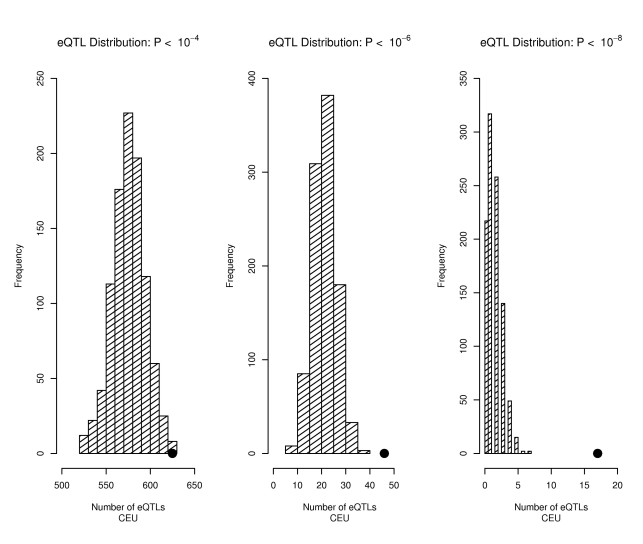
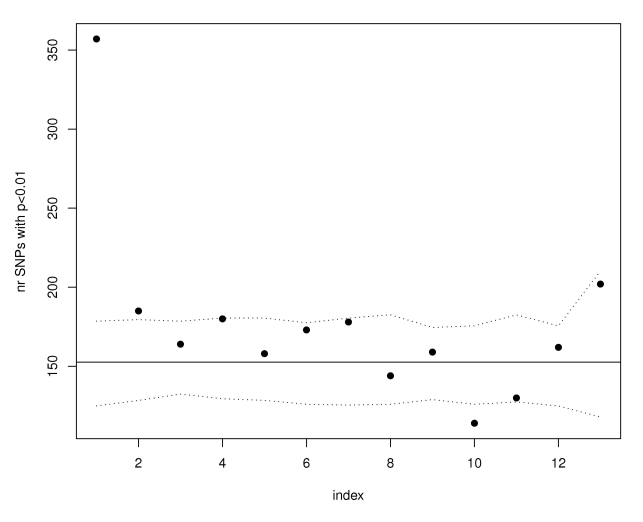
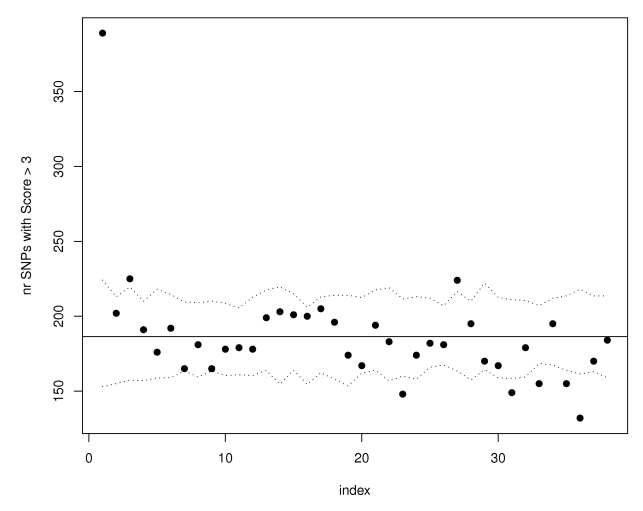
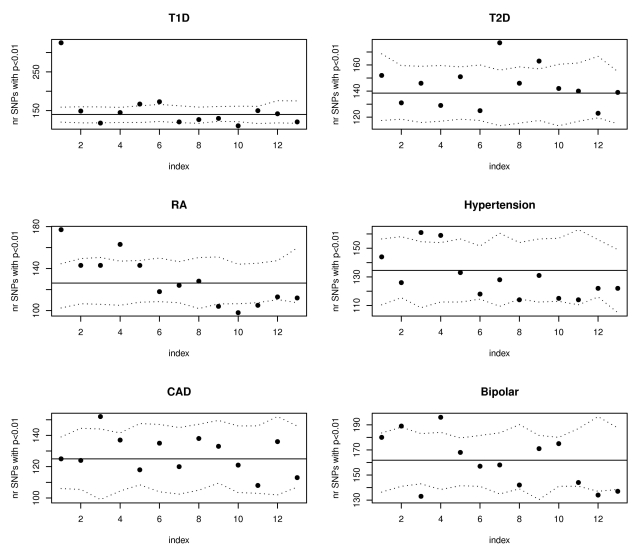
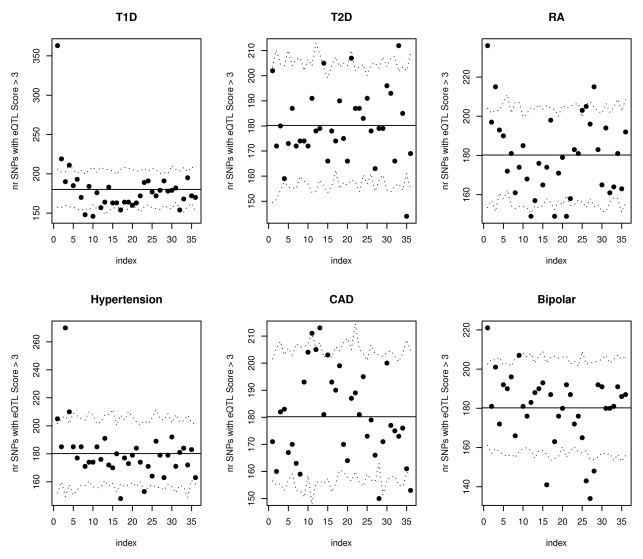
Although genome-wide association studies (GWAS) of complex traits have yielded more reproducible associations than had been discovered using any other approach, the loci characterized to date do not account for much of the heritability to such traits and, in general, have not led to improved understanding of the biology underlying complex phenotypes. Using a web site we developed to serve results of expression quantitative trait locus (eQTL) studies in lymphoblastoid cell lines from HapMap samples (http://www.scandb.org), we show that single nucleotide polymorphisms (SNPs) associated with complex traits (from http://www.genome.gov/gwastudies/) are significantly more likely to be eQTLs than minor-allele-frequency-matched SNPs chosen from high-throughput GWAS platforms. These findings are robust across a range of thresholds for establishing eQTLs (p-values from 10(-4)-10(-8)), and a broad spectrum of human complex traits. Analyses of GWAS data from the Wellcome Trust studies confirm that annotating SNPs with a score reflecting the strength of the evidence that the SNP is an eQTL can improve the ability to discover true associations and clarify the nature of the mechanism driving the associations. Our results showing that trait-associated SNPs are more likely to be eQTLs and that application of this information can enhance discovery of trait-associated SNPs for complex phenotypes raise the possibility that we can utilize this information both to increase the heritability explained by identifiable genetic factors and to gain a better understanding of the biology underlying complex traits.
Overview
The claims and statistics of this paper haven’t been checked yet.
Free: it reads the open-access text and checks the first 5 claims that cite a source we can check. Create a free account to check every claim.
Integrity signals
Registry
Cites
Statistics
Figures
Verification
Claims the paper makes
The claims and statistics of this paper haven’t been checked yet.
Free: it reads the open-access text and checks the first 5 claims that cite a source we can check. Create a free account to check every claim.
Claims other papers make about this one
Each is checked against this paper’s own text: does it say what the citing paper says it does?
The cited source says what the claim attributes to it.
In the citing paper
“Significant GWAS loci are enriched for e QTLs (Nicolae et al., 2010) and meQTLs (X. Zhang et al., 2014).”
From Integrative Analysis of Multi-omics Data for Discovery and Functional Studies of Complex Human Diseases (2016) · cites this paper as Nicolae et al., 2010
Self-check
Percentages, sums and reported differences re-computed from the paper’s own numbers.
The self-check needs the paper’s full text.
Citations
Cites
PLINK: a tool set for whole-genome association and population-based linkage analyses.
Purcell, S., Neale, B., Todd-Brown, K., Thomas, L., Ferreira, M. A. R., Bender, D., Maller, J., Sklar, P., de Bakker, P. I. W., Daly, M. J., et al. (2007) · The American Journal of Human Genetics · doi:10.1086/519795 · Cited by 34,089 · cited 1×
“We used the toolkit PLINK [31] to calculate frequencies.”
MethodGenome-wide association study of 14,000 cases of seven common diseases and 3,000 shared controls
The Wellcome Trust Case Control Consortium, Management Committee, Burton, P. R., Clayton, D. G., Cardon, L. R., Craddock, N., Deloukas, P., Duncanson, A., Kwiatkowski, D. P., McCarthy, M. I., et al. (2007) · Nature · doi:10.1038/nature05911 · Cited by 9,442
Finding the missing heritability of complex diseases
Manolio, T. A., Collins, F. S., Cox, N. J., Goldstein, D. B., Hindorff, L. A., Hunter, D. J., McCarthy, M. I., Ramos, E. M., Cardon, L. R., Chakravarti, A., et al. (2009) · Nature · doi:10.1038/nature08494 · Cited by 8,336 · cited 1×
“The failure to achieve this goal is made particularly acute by the recognition that the loci that have been successfully identified not only provide us with little insight into the genetic basis for the trait, but also account for little of the overall heritability [5].”
BackgroundSelf-citationHindorff, L. A., Sethupathy, P., Junkins, H. A., Ramos, E. M., Mehta, J. P., Collins, F. S., & Manolio, T. A. (2009) · Proceedings of the National Academy of Sciences · doi:10.1073/pnas.0903103106 · Cited by 4,013 · cited 1×
“Our results build on those of previous studies, particularly those of Schadt and colleagues [12–15] that focused on using transcriptome information to improve understanding of genetic signals, but the rapid accumulation of trait-associated SNPs through GWAS, coupled with the systematic efforts to catalog these variant…”
ResultGenome-wide association defines more than 30 distinct susceptibility loci for Crohn's disease
the NIDDK IBD Genetics Consortium, Barrett, J. C., the Belgian-French IBD Consortium, the Wellcome Trust Case Control Consortium, Hansoul, S., Nicolae, D. L., Cho, J. H., Duerr, R. H., Rioux, J. D., Brant, S. R., et al. (2008) · Nature Genetics · doi:10.1038/ng.175 · Cited by 2,593
Self-citationMAQC Consortium, Shi, L., Shi, L., Reid, L. H., Jones, W. D., Shippy, R., Warrington, J. A., Baker, S. C., Collins, P. J., de Longueville, F., et al. (2006) · Nature Biotechnology · doi:10.1038/nbt1239 · Cited by 2,126 · cited 1×
“) that they might be considered unreliable for genomic studies [24], while others highlight the reproducibility of results of transcriptome studies [25,26] and find that LCLs show little variability as a consequence of non-genetic”
ResultHampe, J., Franke, A., Rosenstiel, P., Till, A., Teuber, M., Huse, K., Albrecht, M., Mayr, G., De La Vega, F. M., Briggs, J., et al. (2007) · Nature Genetics · doi:10.1038/ng1954 · Cited by 1,897 · cited 1×
“For a few disorders, results of GWAS have highlighted biological contributing factors to disease that had not previously been recognized as central, such as the complement system in macular degeneration [1] or autophagy in Crohn’s disease [2–4].”
BackgroundGenome-wide association study of blood pressure and hypertension
Levy, D., Ehret, G. B., Rice, K., Verwoert, G. C., Launer, L. J., Dehghan, A., Glazer, N. L., Morrison, A. C., Johnson, A. D., Aspelund, T., et al. (2009) · Nature Genetics · doi:10.1038/ng.384 · Cited by 1,364 · cited 1×
“has enabled us to generalize the concept that information on eQTLs will have utility for understanding the genetic component to complex traits. Our primary observations – that SNPs reproducibly associated with complex human traits are more likely to be eQTLs – are novel, although perhaps not unexpected given that few…”
ResultGenetics of gene expression and its effect on disease
Emilsson, V., Thorleifsson, G., Zhang, B., Leonardson, A. S., Zink, F., Zhu, J., Carlson, S., Helgason, A., Walters, G. B., Gunnarsdottir, S., et al. (2008) · Nature · doi:10.1038/nature06758 · Cited by 1,296 · cited 1×
“studies have highlighted the potential sensitivity of eQTL studies to cell and tissue subtypes [15,19,20].”
BackgroundA General Test of Association for Quantitative Traits in Nuclear Families
Abecasis, G. R., Cardon, L. R., & Cookson, W. O. C. (2000) · The American Journal of Human Genetics · doi:10.1086/302698 · Cited by 1,126 · cited 1×
“Genome-wide association analyses of 13,080 transcript clusters (gene-level) with reliable expression and more than 2 million SNPs in the CEU or YRI populations were conducted using the Quantitative Trait Disequilibrium Test (QTDT) [30].”
Method
Research works printed but not linked: 1
- Hindorff LA Sethupathy P Junkins HA Ramos EM Mehta JP 2009 Potential etiologic and functional implications of genome-wide association loci for human diseases and traits. Proc Natl Acad Sci U S A 106 9362 9367 19474294 PMC2687147 · DOI · Paper page
Cited by
Items 401–500 of 1,003
Larson, N. B., McDonnell, S. K., French, A. J., Fogarty, Z. C., Cheville, J. C., Middha, S., Riska, S. M., Baheti, S., Nair, A., Wang, L., et al. (2015) · The American Journal of Human Genetics · doi:10.1016/j.ajhg.2015.04.015 · Cited by 50
“The Am have concluded that trait-associated SNPs are likely to be eQTLs.(7,8) Consequently, the identification of genetic variation that affects gene expression is fundamental to not only resolving mechanisms governing transcriptomic diversity but also functionally interpreting genetic variation relevant to disease.”
BackgroundAlvarez, M. I., Glover, L. C., Luo, P. M., Wang, L., Theusch, E., Oehlers, S. H., Walton, E. M., Tram, T. T. B., Kuang, Y., Rotter, J. I., et al. (2017) · Proceedings of the National Academy of Sciences · doi:10.1073/pnas.1706070114 · Cited by 45
“GWAS signals are enriched for cis-eQTLs (34), and we previously demonstrated that focusing on cis-eQTLs in a Hi-HOST screen of pyroptosis revealed truepositive hits based on subsequent experimental validation and genotyping in clinical samples (11).”
BackgroundVariants at IRX4 as prostate cancer expression quantitative trait loci
Xu, X., Hussain, W. M., Vijai, J., Offit, K., Rubin, M. A., Demichelis, F., & Klein, R. J. (2013) · European Journal of Human Genetics · doi:10.1038/ejhg.2013.195 · Cited by 47
Hause, R. J., Stark, A. L., Antao, N. N., Gorsic, L. K., Chung, S. H., Brown, C. D., Wong, S. S., Gill, D. F., Myers, J. L., To, L. A., et al. (2014) · The American Journal of Human Genetics · doi:10.1016/j.ajhg.2014.07.005 · Cited by 43
“Overlap of Complex Trait QTLs and pQTLs Previous studies have demonstrated that common genetic variants associated with complex traits significantly overlapped with eQTLs.(7) Genetic risk factors have often been assumed to influence complex traits through their effects on mRNA expression.”
BackgroundSelf-citationSZGR 2.0: a one-stop shop of schizophrenia candidate genes
Jia, P., Han, G., Zhao, J., Lu, P., & Zhao, Z. (2016) · Nucleic Acids Research · doi:10.1093/nar/gkw902 · Cited by 48
Genomic inbreeding depression for climatic adaptation of tropical beef cattle
Reverter, A., Porto-Neto, L. R., Fortes, M. R. S., Kasarapu, P., de Cara, M. Á. R., Burrow, H. M., & Lehnert, S. A. (2017) · Journal of Animal Science · doi:10.2527/jas2017.1643 · Cited by 43
Lawford‐Smith, H. (2015) · Journal of Social Ontology · doi:10.1515/jso-2015-0008 · Cited by 60
The next step in Mendelian randomization
Weith, M., & Beyer, A. (2023) · eLife · doi:10.7554/elife.86416 · Cited by 43
An overview of detecting gene-trait associations by integrating GWAS summary statistics and eQTLs
Zhang, Y., Wang, M., Li, Z., Yang, X., Li, K., Xie, A., Dong, F., Wang, S., Yan, J., & Liu, J. (2024) · Science China Life Sciences · doi:10.1007/s11427-023-2522-8 · Cited by 44
“There are many overlapping loci among these expression quantitative trait loci (eQTLs), protein quantitative trait loci (pQTL), and metabolite quantitative trait loci (mQTL) of the intermediate molecular phenotypes and GWAS results (Nicolae et al., 2010).”
Impact of Natural Genetic Variation on Gene Expression Dynamics
Ackermann, M., Sikora-Wohlfeld, W., & Beyer, A. (2013) · PLoS Genetics · doi:10.1371/journal.pgen.1003514 · Cited by 48
“These findings call for due caution when drawing conclusions about regulatory mechanisms in one condition based on results from another condition [58], although other groups have claimed the innocuousness of such an approach [59].”
BackgroundInfluentialRare-Variant Genome-Wide Association Studies: A New Frontier in Genetic Analysis of Complex Traits
Wagner, M. J. (2013) · Pharmacogenomics · doi:10.2217/pgs.13.36 · Cited by 43
Living in an adaptive world: Genomic dissection of the genus Homo and its immune response
Quach, H., & Quintana-Murci, L. (2017) · Journal of Experimental Medicine · doi:10.1084/jem.20161942 · Cited by 39
Genetic Polymorphisms in Cytokine Genes in Colombian Patients with Ocular Toxoplasmosis
Galvis, C. A. N., de‐la‐Torre, A., Mantilla-Muriel, L. E., Beltrán, L., Elcoroaristizabal-Martín, X., McLeod, R. L., Alliey‐Rodriguez, N., Begeman, I. J., de Mesa, C. L., Gómez‐Marín, J. E., et al. (2018) · Infection and Immunity · doi:10.1128/iai.00597-17 · Cited by 42
Wang, X., Cheng, W., Zhu, J., Yin, H., Chang, S., Yue, W., & Yu, H. (2020) · Journal of Affective Disorders · doi:10.1016/j.jad.2019.11.116 · Cited by 39
Keep, T., Sampoux, J., Blanco‐Pastor, J. L., Dehmer, K. J., Hegarty, M., Ledauphin, T., Litrico, I., Muylle, H., Roldán-Ruíz, I., Roschanski, A. M., et al. (2020) · G3 Genes Genomes Genetics · doi:10.1534/g3.120.401491 · Cited by 46
Lee, Y., Li, H., Li, J., Rebman, E., Achour, I., Regan, K. E., Gamazon, E. R., Chen, J. L., Yang, X. H., Cox, N. J., et al. (2013) · Journal of the American Medical Informatics Association · doi:10.1136/amiajnl-2012-001519 · Cited by 41
Self-citationLinking the genetic architecture of cytosine modifications with human complex traits
Zhang, X., Moen, E. L., Liu, C., Mu, W., Gamazon, E. R., Delaney, S. M., Wing, C., Godley, L. A., Dolan, M. E., & Zhang, W. (2014) · Human Molecular Genetics · doi:10.1093/hmg/ddu313 · Cited by 41
“We estimated null distributions of the number of overlaps with GWAS SNPs, by sampling random SNPs based on the number and MAF spectrum of mQTL or eQTL as described previously (8).”
BackgroundMethodSelf-citationRotival, M., & Petretto, E. G. (2013) · Briefings in Functional Genomics · doi:10.1093/bfgp/elt030 · Cited by 51
“have a sizeable impact on complex traits [4].”
BackgroundVimaleswaran, K. S., Tachmazidou, I., Zhao, J. H., Hirschhorn, J. N., Dudbridge, F., & Loos, R. J. F. (2012) · Human Molecular Genetics · doi:10.1093/hmg/dds283 · Cited by 37
“Finally, the failure of GWASs results to explain the heritability of many traits can be partly attributed to stringent thresholds of statistical significance, due to a high multiple testing burden, and there is considerable interest in applying methods that use prior information to improve the power of tests and reduc…”
BackgroundInfluentialGenetic Regulation ofZfp30, CXCL1, and Neutrophilic Inflammation in Murine Lung
Rutledge, H. R., Aylor, D. L., Carpenter, D. E., Peck, B. C. E., Chines, P. S., Ostrowski, L. E., Chesler, E. J., Churchill, G. A., de Villena, F. P., & Kelada, S. N. P. (2014) · Genetics · doi:10.1534/genetics.114.168138 · Cited by 43
“VARIATION in gene expression is thought to explain a sub-stantial proportion of complex traits, including disease phenotypes (Nica and Dermitzakis 2008; Cookson et al. 2009; Nicolae et al. 2010).”
BackgroundWangler, M. F., Hu, Y., & Shulman, J. M. (2017) · Disease Models & Mechanisms · doi:10.1242/dmm.027680 · Cited by 47
“Given that most signals in GWAS are believed to represent the impact of genomic regulatory variants that cause modest transcriptional changes (GTExConsortium, 2015; Nicolae et al., 2010), it is intriguing that homologs of these genes are broadly expressed in Drosophila .”
FIRE: functional inference of genetic variants that regulate gene expression
Ioannidis, N. M., Davis, J. R., DeGorter, M. K., Larson, N. B., McDonnell, S. K., French, A. J., Battle, A. J., Hastie, T. J., Thibodeau, S. N., Montgomery, S. B., et al. (2017) · Bioinformatics · doi:10.1093/bioinformatics/btx534 · Cited by 45
Leveraging allelic imbalance to refine fine-mapping for eQTL studies
Zou, J., Hormozdiari, F., Jew, B., Castel, S. E., Lappalainen, T., Ernst, J., Sul, J. H., & Eskin, E. (2019) · PLoS Genetics · doi:10.1371/journal.pgen.1008481 · Cited by 44
Transcriptome‐wide association study of breast cancer risk by estrogen‐receptor status
Feng, H., Gusev, A., Paşaniuc, B., Wu, L., Long, J., Abu‐Ful, Z., Aittomäki, K., Andrulis, I. L., Anton‐Culver, H., Antoniou, A. C., et al. (2020) · Genetic Epidemiology · doi:10.1002/gepi.22288 · Cited by 42
“SNPs associated with complex traits are more likely to be in regulatory regions than in protein‐coding regions, and many of these SNPs are also associated with expression levels of nearby genes (Nicolae et al., 2010).”
BackgroundParker, C. C., Carbonetto, P. S., Sokoloff, G., Park, Y. J., Abney, M., & Palmer, A. A. (2014) · Genetics · doi:10.1534/genetics.114.167056 · Cited by 44
“…by SNPs that modulate the recruitment of proteins involved in regulation of gene transcription; studies of complex human traits have shown that a large fraction of the variants underlying these traits coincide with DNA sequences related to gene regulation (Nicolae et al. 2010; Schaub et al. 2012).”
BackgroundDavis, L. K., Gamazon, E. R., Kistner-Griffin, E., Badner, J. A., Liu, C., Cook, E. H., Sutcliffe, J. S., & Cox, N. J. (2012) · Molecular Autism · doi:10.1186/2040-2392-3-3 · Cited by 40
“These findings suggest that SNPs with significant functional impact on the expression of genes are more likely to be associated with disease phenotypes [11].”
BackgroundSelf-citationGALC variants affect galactosylceramidase enzymatic activity and risk of Parkinson’s disease
Senkevich, K., Zorca, C. E., Dworkind, A., Rudakou, U., Somerville, E., Yu, E., Ermolaev, A., Nikanorova, D., Ahmad, J., Ruskey, J. A., et al. (2023) · Brain · doi:10.1093/brain/awac413 · Cited by 40
“and they could be tissue-specific.(4,5) Computational tools such as”
Han, Y., Hazelett, D. J., Wiklund, F. E., Schumacher, F. R., Stram, D. O., Berndt, S. I., Wang, Z., Rand, K. A., Hoover, R. N., Machiela, M. J., et al. (2015) · Human Molecular Genetics · doi:10.1093/hmg/ddv269 · Cited by 47
Genetic Epidemiology of Type 2 Diabetes and Cardiovascular Diseases in Africa
Ayele, F. T., Adeyemo, A., & Rotimi, C. N. (2013) · Progress in Cardiovascular Diseases · doi:10.1016/j.pcad.2013.09.013 · Cited by 45
Leikfoss, I. S., Mero, I.-L., Dahle, M. K., Lie, B. A., Harbo, H. F., Spurkland, A., & Berge, T. (2012) · Genes and Immunity · doi:10.1038/gene.2012.52 · Cited by 41
A systematic characterization of genes underlying both complex and Mendelian diseases
Jin, W., Qin, P., Lou, H., Li, J., & Xu, S. (2011) · Human Molecular Genetics · doi:10.1093/hmg/ddr599 · Cited by 43
“Since both MC genes and CNM genes had higher tissue specificity and transcript count than OTHER genes, it may suggest that complex disease genes might be involved in more complex gene regulations mechanism, which may explained the recent discovery that traits/diseases associated SNPs identified by GWAS are more likely…”
BackgroundFine‐scale mapping of 8q24 locus identifies multiple independent risk variants for breast cancer
Shi, J., Zhang, Y., Zheng, W., Michailidou, K., Ghoussaini, M., Bolla, M. K., Wang, Q., Dennis, J., Lush, M. J., Milne, R. L., et al. (2016) · International Journal of Cancer · doi:10.1002/ijc.30150 · Cited by 44
Identification of breast cancer associated variants that modulate transcription factor binding
Liu, Y., Walavalkar, N. M., Dozmorov, M. G., Rich, S. S., Civelek, M., & Guertin, M. J. (2017) · PLOS Genetics · doi:10.1371/journal.pgen.1006761 · Cited by 40
Salo, P. P., Havulinna, A. S., Tukiainen, T., Raitakari, O. T., Lehtimäki, T. J., Kähönen, M. A. P., Kettunen, J., Männikkö, M., Eriksson, J. G., Jula, A., et al. (2017) · Circulation Cardiovascular Genetics · doi:10.1161/circgenetics.117.001713 · Cited by 41
Genome-Wide Association Studies of Endometrial Cancer: Latest Developments and Future Directions
O’Mara, T. A., Glubb, D. M., Kho, P. F., Thompson, D. J., & Spurdle, A. B. (2019) · Cancer Epidemiology Biomarkers & Prevention · doi:10.1158/1055-9965.epi-18-1031 · Cited by 44
“Evidence from expression quantitative trait loci (eQTL) analyses has demonstrated that GWAS variants are enriched for variants that associate with gene expression (51, 52), indicating that these variants likely affect gene regulation and providing an approach to identify target genes at GWAS loci (52, 53).”
BackgroundHuang, Y., Liang, L., Moffatt, M. F., Cookson, W., & Lin, X. (2015) · Genetic Epidemiology · doi:10.1002/gepi.21905 · Cited by 47
“This type of analyses was supported by the evidence that trait-associated SNPs are more likely to be functional and thus eQTL [Nicolae et al., 2010].”
BackgroundCellular genomics for complex traits
Dermitzakis, E. T. (2012) · Nature Reviews Genetics · doi:10.1038/nrg3115 · Cited by 45
“An example of this has been the integration of variants discovered in large case–control genome-wide association studies (GWASs) with eQTLs discovered in independent small sample size cohorts and samples, where it was reported that there is a high enrichment of GWAS variants in overlapping cis -eQTL”
BackgroundO’Brien, T., Jia, P., Caporaso, N. E., Landi, M. T., & Zhao, Z. (2018) · Genome Medicine · doi:10.1186/s13073-018-0522-9 · Cited by 41
Fonseca, P. A. D. S., Santos, F. C. D., Lam, S., Suárez‐Vega, A., Miglior, F., Schenkel, F. S., Diniz, L. D. A. F., Id‐Lahoucine, S., Carvalho, M. R. S., & Cánovas, Á. (2018) · Journal of Animal Science · doi:10.1093/jas/sky382 · Cited by 43
Multi-omic analysis elucidates the genetic basis of hydrocephalus
Hale, A. T., Bastarache, L. A., Morales, D. M., Wellons, J. C., Limbrick, D. D., & Gamazon, E. R. (2021) · Cell Reports · doi:10.1016/j.celrep.2021.109085 · Cited by 39
“Because of the unavoidably smaller sample size for hydrocephalus (relative to other complex disorders), we aimed to test genes whose expression can be reliably determined using genetic variation (rather than millions of genetic variants, as in conventional GWASs, with unknown gene targets) in order to substantially im…”
BackgroundInfluentialSelf-citationPaul, D. S., Albers, C. A., Rendon, A., Voß, K., Stephens, J. C., van der Harst, P., Chambers, J. C., Soranzo, N., Ouwehand, W. H., & Deloukas, P. (2013) · Genome Research · doi:10.1101/gr.155127.113 · Cited by 43
“As a further example, we recently described the molecular mechanism underlying the DNM3 platelet count and vol- ume locus (Nürnberg et al. 2012).”
BackgroundMethodResultInfluentialIdentification of Alzheimer's Disease-Related Genes Based on Data Integration Method
Hu, Y., Zhao, T., Zang, T., Zhang, Y., & Cheng, L. (2019) · Frontiers in Genetics · doi:10.3389/fgene.2018.00703 · Cited by 40
Locke, J. M., Hysenaj, G., Wood, A. R., Weedon, M. N., & Harries, L. W. (2014) · Diabetes · doi:10.2337/db14-0957 · Cited by 41
“An enrichment of significant genotype effects on cis-linked gene expression has been reported for complex disease traits (13,14), and our results suggest that effects on gene expression may play a significant role in mediating the genotype associations with type 2 diabetes.”
BackgroundZhang, H., Wang, F., Kranzler, H. R., Yang, C., Xu, H., Wang, Z., Zhao, H., & Gelernter, J. (2014) · Human Genetics · doi:10.1007/s00439-014-1452-2 · Cited by 38
Guo, Y., Dong, S.-S., Chen, X.-F., Jing, Y.-A., Yang, M., Yan, H., Shen, H., Chen, X.-D., Tan, L.-J., Tian, Q., et al. (2016) · Scientific Reports · doi:10.1038/srep30558 · Cited by 39
Bhalala, O. G., Nath, A. P., UK Brain Expression Consortium, Inouye, M., & Sibley, C. R. (2018) · PLOS Genetics · doi:10.1371/journal.pgen.1007607 · Cited by 38
Sharma, N., Langberg, K. A., Mondal, A. K., & Das, S. K. (2013) · PLoS ONE · doi:10.1371/journal.pone.0065303 · Cited by 46
“Resent studies have shown that complex trait-associated SNPs are enriched for regulatory SNPs (eSNPs) [16].”
BackgroundChandrashekar, P. B., Alatkar, S., Wang, J., Hoffman, G. E., He, C., Jin, T., Khullar, S., Bendl, J., Fullard, J. F., Roussos, P., et al. (2023) · Genome Medicine · doi:10.1186/s13073-023-01248-6 · Cited by 37
“Many genome-wide association studies (GWAS) determine the association of genetic variants with many heritable diseases [3, 4], including neurodegenerative and psychiatric diseases like Alzheimer’s disease (AD) [5–8] and schizophrenia (SCZ) [9, 10].”
BackgroundEpigenetics in the primary biliary cholangitis and primary sclerosing cholangitis
Cheung, A., LaRusso, N., Gores, G., & Lazaridis, K. (2017) · Seminars in Liver Disease · doi:10.1055/s-0037-1603324 · Cited by 37
Min, J. L., Taylor, J. M., Richards, J. B., Watts, T., Pettersson, F. H., Broxholme, J., Ahmadi, K. R., Surdulescu, G. L., Lowy, E., Gieger, C., et al. (2011) · PLoS ONE · doi:10.1371/journal.pone.0022070 · Cited by 37
“Nica et al. (2010) and Nicolae et al. (2010) observed a significant overrepresentation of cis eQTLs in the LCLs of the HapMap individuals among GWAS SNPs for immunity related traits as compared to random SNPs [42,43].”
BackgroundGene Age Predicts the Strength of Purifying Selection Acting on Gene Expression Variation in Humans
Popadin, K. Y., Gutiérrez‐Arcelus, M., Lappalainen, T., Buil, A., Steinberg, J., Nikolaev, S. I., Lukowski, S. W., Bazykin, G. A., Seplyarskiy, V. B., Ioannidis, P., et al. (2014) · The American Journal of Human Genetics · doi:10.1016/j.ajhg.2014.11.003 · Cited by 39
Genetics of the human metabolome, what is next?
Dharuri, H. K., Demirkan, A., van Klinken, J. B., Mook-Kanamori, D. O., van Duijn, C. M., Hoen, P. A. C. ’., & van Dijk, K. W. (2014) · Biochimica et Biophysica Acta (BBA) - Molecular Basis of Disease · doi:10.1016/j.bbadis.2014.05.030 · Cited by 38
Tough, D. F., & Prinjha, R. K. (2016) · Epigenomics · doi:10.2217/epi-2016-0144 · Cited by 37
Veturi, Y., & Ritchie, M. D. (2017) · Pacific Symposium on Biocomputing (PSB) · doi:10.1142/9789813235533_0021 · Cited by 42
“Y = Xb# + ε# (3) where Y is the 5000×1 vector of the standardized response for the 5000 individuals in the testing set, X is the 5000×m matrix of genotypes (same as those used to simulate gene expression), b# is the m×1 vector of marker effects drawn from a normal distribution with mean zero and variance h#, and ε# is…”
MethodLeveraging Multiple Layers of Data To Predict Drosophila Complex Traits
Morgante, F., Huang, W., Sørensen, P. B., Maltecca, C., & Mackay, T. F. C. (2020) · G3 Genes Genomes Genetics · doi:10.1534/g3.120.401847 · Cited by 42
“Combining eQTL studies with GWAS revealed that signi fi cant hits for many diseases are likely to be eQTLs, meaning that disease-associated SNPs presumably act by altering gene expression levels (Nicolae et al. 2010).”
BackgroundTranslating Lung Function Genome-Wide Association Study (GWAS) Findings
Kheirallah, A. K., Miller, S., Hall, I. P., & Sayers, I. (2016) · Advances in genetics · doi:10.1016/bs.adgen.2015.12.002 · Cited by 40
“Providing support for this, GWAS SNPs were found to be enriched in chromatin regulatory features (Maurano et al., 2012) and over-represented in gene expression quantitative trait locus (eQTL) studies (Nicolae et al., 2010).”
BackgroundGenome‐wide association for methamphetamine sensitivity in an advanced intercross mouse line
Parker, C. C., Cheng, R., Sokoloff, G., & Palmer, A. A. (2011) · Genes Brain & Behavior · doi:10.1111/j.1601-183x.2011.00747.x · Cited by 37
“eQTLs are believed to underlie many QTLs for more complex traits (Li & Deng 2010; Nicolae et al. 2010).”
BackgroundWang, G., Yang, E., Brinkmeyer‐Langford, C., & Cai, J. J. (2013) · Genetics · doi:10.1534/genetics.113.157503 · Cited by 37
“Several studies have utilized eQTL data to interpret the discoveries of association studies of complex traits (Emilsson et al. 2008; Nica et al. 2010; Nicolae et al. 2010).”
BackgroundRaine, T., Liu, J. Z., Anderson, C. A., Parkes, M., & Kaser, A. (2014) · Gut · doi:10.1136/gutjnl-2013-306657 · Cited by 40
Whole genome sequence study of cannabis dependence in two independent cohorts
Gizer, I. R., Bizon, C., Gilder, D. A., Ehlers, C. L., & Wilhelmsen, K. C. (2017) · Addiction Biology · doi:10.1111/adb.12489 · Cited by 38
“Previous studies have indicated that variants associated with complex traits contained in the GWAS catalog are more likely to be located within intronic and other regulatory regions of a gene rather than the protein-coding region (Nicolae et al. 2010).”
BackgroundLi, M. J., Li, M., Liu, Z., Yan, B., Pan, Z., Huang, D., Liang, Q., Ying, D., Xu, F., Yao, H., et al. (2017) · Genome biology · doi:10.1186/s13059-017-1177-3 · Cited by 38
“This is further supported by GWAS risk loci being enriched in genomic regions with many expression quantitative trait loci (eQTLs) and open chromatins [10 – 13].”
BackgroundZeng, P., Dai, J., Jin, S., & Zhou, X. (2021) · Human Molecular Genetics · doi:10.1093/hmg/ddab056 · Cited by 38
Bruxel, E. M., Bruno, D. D. C. F., do Canto, A. M., Geraldis, J. C., Godoi, A. B., Martin, M., & Lopes‐Cendes, Í. (2021) · Seizure · doi:10.1016/j.seizure.2021.03.002 · Cited by 37
Chen, H., Petty, L. E., Sha, J., Zhao, Y., Kuzma, A. B., Valladares, O., Bush, W. S., Naj, A. C., Gamazon, E. R., & Below, J. E. (2021) · Translational Psychiatry · doi:10.1038/s41398-021-01677-0 · Cited by 41
“The importance of gene expression is demonstrated by the enrichment of GWAS-identified loci in expression quantitative trait loci (eQTLs) [13].”
BackgroundSelf-citationNew Advances in the Genetic Basis of Atrial Fibrillation
Mahida, S., & Ellinor, P. T. (2012) · Journal of Cardiovascular Electrophysiology · doi:10.1111/j.1540-8167.2012.02445.x · Cited by 40
Zhou, D., Li, Z., Yu, D., Wan, L., Zhu, Y., Lai, M., & Zhang, D. (2015) · Oncotarget · doi:10.18632/oncotarget.5650 · Cited by 37
“As the MAF distribution for SNPs was different between all the SNPs reported in HapMap II and the SNPs used for GWAS, [24] we used 585,142 proxy SNPs from Illumina Human-OmniExpress 760k chip after LD pruning (threshold r2 = 0.”
MethodInfluentialSchizophrenia Genetics Comes of Age
Need, A. C., & Goldstein, D. B. (2014) · Neuron · doi:10.1016/j.neuron.2014.08.015 · Cited by 37
Genome-wide and gene-based association implicates FRMD6 in alzheimer disease
Hong, M.-G., Reynolds, C. A., Feldman, A. L., Kallin, M., Lambert, J.-C., Amouyel, P., Ingelsson, E., Pedersen, N. L., & Prince, J. A. (2012) · Human Mutation · doi:10.1002/humu.22009 · Cited by 36
“Some diseases may have a large component of regulatory variants (Nicolae et al., 2010), whereas others may be dominated by structural polymorphism.”
BackgroundOhi, K., Kuwata, A., Shimada, T., Kataoka, Y., Yasuyama, T., Uehara, T., & Kawasaki, Y. (2018) · Schizophrenia Bulletin · doi:10.1093/schbul/sby093 · Cited by 38
Sadler, M. C., Auwerx, C., Lepik, K., Porcu, E., & Kutalik, Z. (2022) · Nature Communications · doi:10.1038/s41467-022-35196-3 · Cited by 45
High-throughput identification of noncoding functional SNPs via type IIS enzyme restriction
Li, G., Martínez‐Bonet, M., Wu, D., Yu, Y., Cui, J., Nguyen, H. N., Cunin, P., Levescot, A., Bai, M., Westra, H.-J., et al. (2018) · Nature Genetics · doi:10.1038/s41588-018-0159-z · Cited by 40
Tomblin, J. B., & Mueller, K. L. (2012) · Topics in Language Disorders · doi:10.1097/tld.0b013e318261c264 · Cited by 34
Brotman, S. M., Moustafa, J. S. E.-S., Guan, L., Broadaway, K. A., Wang, D., Jackson, A., Welch, R., Currin, K. W., Tomlinson, M., Vadlamudi, S., et al. (2025) · Nature Genetics · doi:10.1038/s41588-024-01982-6 · Cited by 44
Mapping eQTLs in the Norfolk Island Genetic Isolate Identifies Candidate Genes for CVD Risk Traits
Benton, M. C., Lea, R. A., Macartney-Coxson, D. P., Carless, M. A., Göring, H. H. H., Bellis, C., Hanna, M., Eccles, D., Chambers, G. K., Curran, J. E., et al. (2013) · The American Journal of Human Genetics · doi:10.1016/j.ajhg.2013.11.004 · Cited by 40
“This allowed easy visualization of eQTL-rich regions, such as 6p21 and 12q13, which are both significantly enriched with cis-eQTLs. eQTL-Centric SNP Association with CVD Risk Factors Recent work has suggested that trait-associated SNPs in GWASs are more likely to be associated with eQTLs and, as such, suggests that in…”
BackgroundBiomarkers of Coronary Artery Disease: The Promise of the Transcriptome
Siemelink, M. A., & Zeller, T. (2014) · Current Cardiology Reports · doi:10.1007/s11886-014-0513-4 · Cited by 36
Bulik-Sullivan, B. K., Selitsky, S. R., & Sethupathy, P. (2013) · Human Mutation · doi:10.1002/humu.22337 · Cited by 38
“Comprehensive analyses of these findings have found that GWAS signals are significantly overrepresented in regulatory regions of the genome [Ernst et al., 2011; Hindorff et al., 2009; Maurano et al., 2012; Nica et al., 2010; Nicolae et al., 2010; Schaub et al., 2012].”
BackgroundDu, Y., Wen, Y. F., Guo, X., Hao, J., Wang, W., He, A., Fan, Q., Li, P., Liu, L., Liang, X., et al. (2017) · Cellular and Molecular Neurobiology · doi:10.1007/s10571-017-0512-2 · Cited by 36
Mouse Genetic Reference Populations: Cellular Platforms for Integrative Systems Genetics
Swanzey, E., O’Connor, C., & Reinholdt, L. G. (2020) · Trends in Genetics · doi:10.1016/j.tig.2020.09.007 · Cited by 37
“For example, genetically diverse lymphoblastoid cell lines and primary cells from human populations have been used to map differential / response eQTL and chromatin accessibility QTL (caQTL) [15, 17, 56], providing a framework for systems genetics interrogation of such GxE interactions in panels of cells from GRPs.”
BackgroundHancock, D. B., Wang, J., Gaddis, N., Levy, J. L., Saccone, N. L., Stitzel, J. A., Goate, A., Bierut, L. J., & Johnson, E. O. (2015) · Human Molecular Genetics · doi:10.1093/hmg/ddv303 · Cited by 37
Variants at chromosome 20 (ASIP locus) and melanoma risk
Maccioni, L., Rachakonda, P. S., Scherer, D., Bermejo, J. L., Planelles, D., Requena, C., Hemminki, K., Nagore, E., & Kumar, R. (2013) · International Journal of Cancer · doi:10.1002/ijc.27648 · Cited by 32
“Another plausible possibility could be that either associated or linked variants are eQTL and are instrumental in altering gene expression through long range effect as has been shown in various studies.(49,50) Although in our study, we did find a number of variants linked to rs4911414, rs910871 and rs4911442 that were…”
ResultPonsuksili, S., Zebunke, M., Muráni, E., Trakooljul, N., Krieter, J., Puppe, B., Schwerin, M., & Wimmers, K. (2015) · Scientific Reports · doi:10.1038/srep16264 · Cited by 36
Li, X., Hawkins, G. A., Moore, W. C., Hastie, A. T., Ampleford, E. J., Milošević, J., Li, H., Busse, W. W., ERZURUM, S. C., Kaminski, N., et al. (2016) · Journal of Asthma · doi:10.3109/02770903.2016.1158268 · Cited by 34
“Expression quantitative trait locus (eQTL) SNPs are more likely to associate with complex trait [10].”
BackgroundAlu insertion variants alter gene transcript levels
Payer, L. M., Steranka, J. P., Kryatova, M. S., Grillo, G., Lupien, M., Rocha, P. P., & Burns, K. H. (2021) · Genome Research · doi:10.1101/gr.261305.120 · Cited by 40
“…with the disproportionate number of disease haplotypes associated with enhancer sequences (Ernst et al. 2011; Cowper-Sal lari et al. 2012; Maurano et al. 2012; Schaub et al. 2012; Corradin and Scacheri 2014; Wu and Pan 2018) and eQTLs (Nica et al. 2010; Nicolae et al. 2010; Hernandez et al. 2012).”
BackgroundMei, L., Gao, Y., Chen, M., Zhang, X., Yue, W., Zhang, D., & Yu, H. (2021) · Progress in Neuro-Psychopharmacology and Biological Psychiatry · doi:10.1016/j.pnpbp.2021.110450 · Cited by 35
Genome wide association studies for diabetes: perspective on results and challenges
Torres, J., Cox, N. J., & Philipson, L. H. (2013) · Pediatric Diabetes · doi:10.1111/pedi.12015 · Cited by 33
“1) among the top disease-associated SNPs identified through GWAS (56).”
BackgroundSelf-citationBrown, C., Havener, T. M., Medina, M. W., Auman, J. T., Mangravite, L. M., Krauss, R. M., McLeod, H. L., & Motsinger‐Reif, A. A. (2012) · Pharmacogenetics and Genomics · doi:10.1097/fpc.0b013e3283589c50 · Cited by 38
“0 ST Array that are included in the SCAN database, rs531572 has been shown to be an eQTL in the CEU population (p<1e-05) [23-26].”
Chen, Q.-R., Hu, Y., Yan, C., Buetow, K. H., & Meerzaman, D. M. (2014) · PLoS ONE · doi:10.1371/journal.pone.0105393 · Cited by 35
Genetic predisposition to prostate cancer: Update and future perspectives
Demichelis, F., & Stanford, J. L. (2014) · Urologic Oncology Seminars and Original Investigations · doi:10.1016/j.urolonc.2014.04.021 · Cited by 41
“eQTL analyses are based on the hypothesis that risk loci may contain variants located within regulatory elements, therefore modulating expression levels of nearby genes, as suggested by evidence of enrichment of genome-wide phenotypeassociated SNPs in cis-eQTLs [81].”
BackgroundRobust Prediction of Expression Differences among Human Individuals Using Only Genotype Information
Manor, O., & Segal, E. (2013) · PLoS Genetics · doi:10.1371/journal.pgen.1003396 · Cited by 36
A Mixed-Effects Model for Powerful Association Tests in Integrative Functional Genomics
Su, Y., Di, C., Bien, S. A., Huang, L., Dong, X., Abecasis, G. R., Berndt, S. I., Bezieau, S., Brenner, H., Caan, B. J., et al. (2018) · The American Journal of Human Genetics · doi:10.1016/j.ajhg.2018.03.019 · Cited by 38
Etheridge, A. S., Gallins, P. J., Jima, D. D., Broadaway, K. A., Ratain, M. J., Schuetz, E. G., Schadt, E. E., Schröder, A., Molony, C. M., Zhou, Y., et al. (2019) · Clinical Pharmacology & Therapeutics · doi:10.1002/cpt.1751 · Cited by 35
“It has been reported that GWAS loci associated with complex traits are more likely to be eQTLs.(25) Analysis of liver cis-eQTLs in loci associated with any phenotype in the GWAS catalog demonstrated a more than threefold enrichment.”
BackgroundO’Neal, W. K., Gallins, P. J., Pace, R. G., Dang, H., Wolf, W., Jones, L. C., Guo, X., Zhou, Y., Madar, V., Huang, J., et al. (2015) · The American Journal of Human Genetics · doi:10.1016/j.ajhg.2014.12.022 · Cited by 35
Tang, Y., Jin, B., Zhou, L., & Lu, W. (2016) · Oncotarget · doi:10.18632/oncotarget.13742 · Cited by 36
“Earlier studies showed that GWAS-identified genetic risk for complex traits often affect phenotype by changing the mount of protein production, rather than altering the type of protein production [28].”
BackgroundKommadath, A., Bao, H., Choi, I., Reecy, J. M., Koltes, J. E., Fritz‐Waters, E., Eisley, C. J., Grant, J. R., Rowland, R. R. R., Tuggle, C. K., et al. (2017) · Scientific Reports · doi:10.1038/srep46203 · Cited by 46
Madelaine, R., Notwell, J. H., Skariah, G. M., Halluin, C., Chen, C. C., Bejerano, G., & Mourrain, P. (2018) · Nucleic Acids Research · doi:10.1093/nar/gky166 · Cited by 35
“Furthermore, GWAS studies report tag SNPs that may be merely co-segregating markers with the causal mutation (7,8).”
BackgroundGenetic Risk Factors for Type 2 Diabetes: A Trans-Regulatory Genetic Architecture?
Elbein, S. C., Gamazon, E. R., Das, S. K., Rasouli, N., Kern, P. A., & Cox, N. J. (2012) · The American Journal of Human Genetics · doi:10.1016/j.ajhg.2012.08.002 · Cited by 32
“Nicolae et al.11 reported that SNPs associated with traits from the Wellcome Trust Case Control Consortium were more likely to be eQTLs (e.g., particularly cis eQTLs in Crohn disease [MIM 266600]) in transformed lymphocytes, supporting the use of surrogate tissues to identify functional transcripts.”
BackgroundMethodInfluentialSelf-citationQTL/microarray approach using pathway information
Matsuda, H., Taniguchi, Y., & Iwaisaki, H. (2012) · Algorithms for Molecular Biology · doi:10.1186/1748-7188-7-1 · Cited by 32
“more likely to be eQTL, and annotating SNPs with eQTL scores can be useful for discovering susceptibility loci [12].”
BackgroundRiddell, N., & Crewther, S. G. (2017) · Investigative Ophthalmology & Visual Science · doi:10.1167/iovs.16-20618 · Cited by 33
“In particular, expression quantitative trait locus (eQTLs) studies combining genotype and gene expression data from posterior ocular tissues are needed to improve candidate gene predictions for GWAS loci.(76) Studies collecting concurrent transcriptome and proteome measurements in identical animal models may also help…”
BackgroundYuan, Z., Yu, Y., Zhang, B., Miao, L., Wang, L., Zhao, K., Ji, Y., Wang, R., Ma, H., Chen, N., et al. (2017) · Oncotarget · doi:10.18632/oncotarget.23673 · Cited by 32
“For example, the Genotype-Tissue Expression (GTEx) Project has established a tissue bank for studying the association of genetic variations in gene expression in various tissues or organs of a human body, thereby providing evidence for the expression quantitative trait loci (eQTL) [15, 16].”
BackgroundPark, Y. H., Pyun, J., Hodges, A., Jang, J., Bice, P. J., Kim, S., Saykin, A. J., & Nho, K. T. (2021) · Alzheimer s Research & Therapy · doi:10.1186/s13195-021-00919-z · Cited by 46
“Considering there is a close interaction of Aβ metabolism between the brain and the periphery and trait-associated single nucleotide polymorphisms (SNPs) are likely to be expression quantitative trait loci (cis-eQTL) [7], the integrative analysis of genetics, blood-based transcriptomic profiles, and neuroimaging AD bi…”
Background
Metadata
- Authors
- Nicolae, D. L., Gamazon, E., Zhang, W., Duan, S., Dolan, M. E., & Cox, N. J.
- Affiliations
- University of Chicago (US)
- Corresponding author
- Cox, Nancy J.
- Venue
- PLoS Genetics
- Publisher
- Public Library of Science (PLoS)
- Published
- 2010-04-01
- Volume
- 6
- Issue
- 4
- Pages
- e1000888
- ISSN
- 1553-7390 (ISSN-L)
- 1553-7404
- PMC
- PMC2848547
- OpenAlex
- W2019983262
- Cited by
- 1,292
- References
- 31
- Citations by year
- 2026: 35 · 2025: 57 · 2024: 50 · 2023: 40 · 2022: 63 · 2021: 104 · 2020: 80 · 2019: 87 · 2018: 97 · 2017: 112 · 2016: 101 · 2015: 103 · 2014: 125 · 2013: 78 · 2012: 84
- FWCI
- 42.59
- Type
- journal article
- Language
- en
- Open access
- gold
- doi.org
- Locations
- PLoS Genetics (publishedVersion, cc-by)
- PubMed Central (publishedVersion, cc-by)
- PubMed (publishedVersion)
- Knowledge@UChicago (University of Chicago) (submittedVersion, cc-by-nc-nd)
- DOAJ (DOAJ: Directory of Open Access Journals) (submittedVersion, cc-by-sa)
- Figshare (submittedVersion, cc-by)
- University of Chicago (cc-by)
- Funders
- National Institutes of Health
- National Heart, Lung, and Blood Institute (U01HL084715)
- National Cancer Institute (P50CA125183)
- National Institute of General Medical Sciences (U01 GM61393, U01GM061393)
- National Institute of Diabetes and Digestive and Kidney Diseases (P60DK20595, P60DK020595)
- Topics
- Life Sciences › Biochemistry, Genetics and Molecular Biology › Genetics › Genetic Associations and Epidemiology
- Life Sciences › Biochemistry, Genetics and Molecular Biology › Genetics › Genetic Mapping and Diversity in Plants and Animals
- Life Sciences › Biochemistry, Genetics and Molecular Biology › Genetics › Genetic and phenotypic traits in livestock
- Keywords
- expression quantitative trait loci, single nucleotide polymorphisms, complex traits, genome-wide association study, SNP annotation, heritability, lymphoblastoid cell lines, gene expression
- MeSH terms
- Humans, Phenotype, Genome, Human, Polymorphism, Single Nucleotide, Quantitative Trait Loci, Genome-Wide Association Study
About these checks
Registry, retraction, Cites and statistics results are computed, not judged, with one exception: a printed reference that no index lists is read once by a model before it counts as a citation error. Claims are extracted by a model and kept only when their quote appears verbatim in the text; each cited source is then checked, with a model’s help, for whether it says what the claim relies on. Those verdicts can be wrong — read the claim’s quote and the cited source before relying on one.
Statistics and arithmetic are recomputed, not judged.
Confidence bands are shown only for fields calibrated on our annotated test set. None is calibrated yet, so no band is shown.
What counts as a claim ›How we measure confidence ›How we check this ›
Are you an author, or do you see a problem with this page? Request a review
Data sources
Bibliographic data: Semantic Scholar, OpenAlex, Crossref.
Contains information from the Semantic Scholar Academic Graph Datasets, made available under the ODC Attribution License (ODC-BY 1.0).
Semantic Scholar’s data is described in: Kinney, R., et al. (2023). The Semantic Scholar Open Data Platform. arXiv:2301.10140.
