

Trait-Associated SNPs Are More Likely to Be eQTLs: Annotation to Enhance Discovery from GWAS
Open accessThe DOI matches its Crossref record; 31 of the 31 references it cites were found in a registry or an index.
Abstract
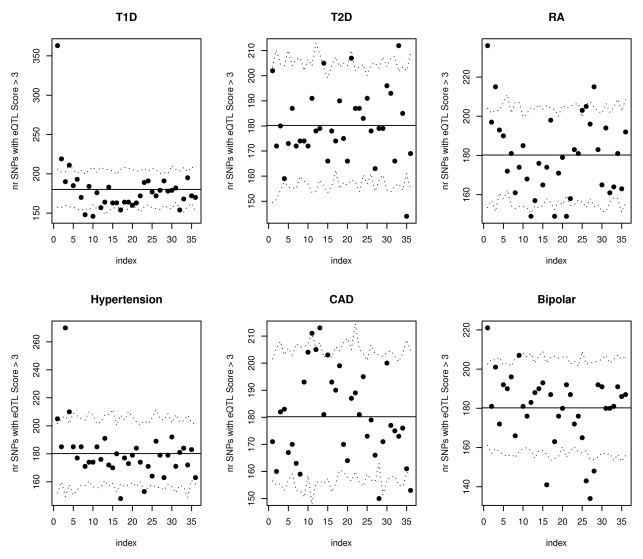
Although genome-wide association studies (GWAS) of complex traits have yielded more reproducible associations than had been discovered using any other approach, the loci characterized to date do not account for much of the heritability to such traits and, in general, have not led to improved understanding of the biology underlying complex phenotypes. Using a web site we developed to serve results of expression quantitative trait locus (eQTL) studies in lymphoblastoid cell lines from HapMap samples (http://www.scandb.org), we show that single nucleotide polymorphisms (SNPs) associated with complex traits (from http://www.genome.gov/gwastudies/) are significantly more likely to be eQTLs than minor-allele-frequency-matched SNPs chosen from high-throughput GWAS platforms. These findings are robust across a range of thresholds for establishing eQTLs (p-values from 10(-4)-10(-8)), and a broad spectrum of human complex traits. Analyses of GWAS data from the Wellcome Trust studies confirm that annotating SNPs with a score reflecting the strength of the evidence that the SNP is an eQTL can improve the ability to discover true associations and clarify the nature of the mechanism driving the associations. Our results showing that trait-associated SNPs are more likely to be eQTLs and that application of this information can enhance discovery of trait-associated SNPs for complex phenotypes raise the possibility that we can utilize this information both to increase the heritability explained by identifiable genetic factors and to gain a better understanding of the biology underlying complex traits.
Overview
The claims and statistics of this paper haven’t been checked yet.
Free: it reads the open-access text and checks the first 5 claims that cite a source we can check. Create a free account to check every claim.
Integrity signals
Registry
Cites
Statistics
Figures
Verification
Claims the paper makes
The claims and statistics of this paper haven’t been checked yet.
Free: it reads the open-access text and checks the first 5 claims that cite a source we can check. Create a free account to check every claim.
Claims other papers make about this one
Each is checked against this paper’s own text: does it say what the citing paper says it does?
The cited source says what the claim attributes to it.
In the citing paper
“Significant GWAS loci are enriched for e QTLs (Nicolae et al., 2010) and meQTLs (X. Zhang et al., 2014).”
From Integrative Analysis of Multi-omics Data for Discovery and Functional Studies of Complex Human Diseases (2016) · cites this paper as Nicolae et al., 2010
Self-check
Percentages, sums and reported differences re-computed from the paper’s own numbers.
The self-check needs the paper’s full text.
Citations
Cites
PLINK: a tool set for whole-genome association and population-based linkage analyses.
Purcell, S., Neale, B., Todd-Brown, K., Thomas, L., Ferreira, M. A. R., Bender, D., Maller, J., Sklar, P., de Bakker, P. I. W., Daly, M. J., et al. (2007) · The American Journal of Human Genetics · doi:10.1086/519795 · Cited by 34,089 · cited 1×
“We used the toolkit PLINK [31] to calculate frequencies.”
MethodGenome-wide association study of 14,000 cases of seven common diseases and 3,000 shared controls
The Wellcome Trust Case Control Consortium, Management Committee, Burton, P. R., Clayton, D. G., Cardon, L. R., Craddock, N., Deloukas, P., Duncanson, A., Kwiatkowski, D. P., McCarthy, M. I., et al. (2007) · Nature · doi:10.1038/nature05911 · Cited by 9,442
Finding the missing heritability of complex diseases
Manolio, T. A., Collins, F. S., Cox, N. J., Goldstein, D. B., Hindorff, L. A., Hunter, D. J., McCarthy, M. I., Ramos, E. M., Cardon, L. R., Chakravarti, A., et al. (2009) · Nature · doi:10.1038/nature08494 · Cited by 8,336 · cited 1×
“The failure to achieve this goal is made particularly acute by the recognition that the loci that have been successfully identified not only provide us with little insight into the genetic basis for the trait, but also account for little of the overall heritability [5].”
BackgroundSelf-citationHindorff, L. A., Sethupathy, P., Junkins, H. A., Ramos, E. M., Mehta, J. P., Collins, F. S., & Manolio, T. A. (2009) · Proceedings of the National Academy of Sciences · doi:10.1073/pnas.0903103106 · Cited by 4,013 · cited 1×
“Our results build on those of previous studies, particularly those of Schadt and colleagues [12–15] that focused on using transcriptome information to improve understanding of genetic signals, but the rapid accumulation of trait-associated SNPs through GWAS, coupled with the systematic efforts to catalog these variant…”
ResultGenome-wide association defines more than 30 distinct susceptibility loci for Crohn's disease
the NIDDK IBD Genetics Consortium, Barrett, J. C., the Belgian-French IBD Consortium, the Wellcome Trust Case Control Consortium, Hansoul, S., Nicolae, D. L., Cho, J. H., Duerr, R. H., Rioux, J. D., Brant, S. R., et al. (2008) · Nature Genetics · doi:10.1038/ng.175 · Cited by 2,593
Self-citationMAQC Consortium, Shi, L., Shi, L., Reid, L. H., Jones, W. D., Shippy, R., Warrington, J. A., Baker, S. C., Collins, P. J., de Longueville, F., et al. (2006) · Nature Biotechnology · doi:10.1038/nbt1239 · Cited by 2,126 · cited 1×
“) that they might be considered unreliable for genomic studies [24], while others highlight the reproducibility of results of transcriptome studies [25,26] and find that LCLs show little variability as a consequence of non-genetic”
ResultHampe, J., Franke, A., Rosenstiel, P., Till, A., Teuber, M., Huse, K., Albrecht, M., Mayr, G., De La Vega, F. M., Briggs, J., et al. (2007) · Nature Genetics · doi:10.1038/ng1954 · Cited by 1,897 · cited 1×
“For a few disorders, results of GWAS have highlighted biological contributing factors to disease that had not previously been recognized as central, such as the complement system in macular degeneration [1] or autophagy in Crohn’s disease [2–4].”
BackgroundGenome-wide association study of blood pressure and hypertension
Levy, D., Ehret, G. B., Rice, K., Verwoert, G. C., Launer, L. J., Dehghan, A., Glazer, N. L., Morrison, A. C., Johnson, A. D., Aspelund, T., et al. (2009) · Nature Genetics · doi:10.1038/ng.384 · Cited by 1,364 · cited 1×
“has enabled us to generalize the concept that information on eQTLs will have utility for understanding the genetic component to complex traits. Our primary observations – that SNPs reproducibly associated with complex human traits are more likely to be eQTLs – are novel, although perhaps not unexpected given that few…”
ResultGenetics of gene expression and its effect on disease
Emilsson, V., Thorleifsson, G., Zhang, B., Leonardson, A. S., Zink, F., Zhu, J., Carlson, S., Helgason, A., Walters, G. B., Gunnarsdottir, S., et al. (2008) · Nature · doi:10.1038/nature06758 · Cited by 1,296 · cited 1×
“studies have highlighted the potential sensitivity of eQTL studies to cell and tissue subtypes [15,19,20].”
BackgroundA General Test of Association for Quantitative Traits in Nuclear Families
Abecasis, G. R., Cardon, L. R., & Cookson, W. O. C. (2000) · The American Journal of Human Genetics · doi:10.1086/302698 · Cited by 1,126 · cited 1×
“Genome-wide association analyses of 13,080 transcript clusters (gene-level) with reliable expression and more than 2 million SNPs in the CEU or YRI populations were conducted using the Quantitative Trait Disequilibrium Test (QTDT) [30].”
Method
Research works printed but not linked: 1
- Hindorff LA Sethupathy P Junkins HA Ramos EM Mehta JP 2009 Potential etiologic and functional implications of genome-wide association loci for human diseases and traits. Proc Natl Acad Sci U S A 106 9362 9367 19474294 PMC2687147 · DOI · Paper page
Cited by
Items 301–400 of 1,003
Genetic association of molecular traits: A help to identify causative variants in complex diseases
Vandiedonck, C. (2018) · Clinical Genetics · doi:10.1111/cge.13187 · Cited by 93
“Overall, there is a significant enrichment for all types of molQTLs in GWAS hits and reciprocally.(110) A classic example is the dissection of the 1p13 locus”
BackgroundProfiling DNA break sites and transcriptional changes in response to contextual fear learning
Stott, R. T., Kritsky, O., & Tsai, L.-H. (2021) · PLOS ONE · doi:10.1371/journal.pone.0249691 · Cited by 62
Analysis of the Placental Tissue Transcriptome of Normal and Preeclampsia Complicated Pregnancies
Trifonova, E. A., Габидулина, Т. В., Ershov, N., Сереброва, В. Н., Ворожищева, А. Ю., & Степанов, В. А. (2014) · Acta Naturae · doi:10.32607/20758251-2014-6-2-71-83 · Cited by 74
Learning Causal Biological Networks With the Principle of Mendelian Randomization
Badsha, M. B., & Fu, A. Q. (2019) · Frontiers in Genetics · doi:10.3389/fgene.2019.00460 · Cited by 72
“Interestingly, likely half of the GWAS-significant genetic variants are eQTLs (Nicolae et al., 2010).”
BackgroundGlobal Properties and Functional Complexity of Human Gene Regulatory Variation
Gaffney, D. J. (2013) · PLoS Genetics · doi:10.1371/journal.pgen.1003501 · Cited by 58
“For example, eQTLs detected in LCLs are also found in primary tissues [42] and are highly enriched in disease associations [6,7], which would be unlikely if most were artefacts of cell line transformation.”
BackgroundTang, S., Buchman, A. S., Jager, P. L. D., Bennett, D. A., Epstein, M. P., & Yang, J. (2021) · PLoS Genetics · doi:10.1371/journal.pgen.1009482 · Cited by 69
Hulur, I., Gamazon, E. R., Skol, A. D., Xicola, R. M., Llor, X., Onel, K., Ellis, N. A., & Kupfer, S. S. (2015) · BMC Genomics · doi:10.1186/s12864-015-1292-z · Cited by 69
“Importantly, it has been shown that variants identified by GWAS as reproducibly associated with complex traits are enriched for eQTL in various cell types [33,44,45].”
BackgroundMethodResultSelf-citationOverlap of expression Quantitative Trait Loci (eQTL) in human brain and blood
McKenzie, M., Henders, A. K., Caracella, A., Wray, N. R., & Powell, J. E. (2014) · BMC Medical Genomics · doi:10.1186/1755-8794-7-31 · Cited by 61
Gerring, Z. F., McRae, A. F., Montgomery, G. W., & Nyholt, D. R. (2018) · BMC Genomics · doi:10.1186/s12864-018-4450-2 · Cited by 65
Missing heritability in Parkinson’s disease: the emerging role of non-coding genetic variation
Ohnmacht, J., May, P., Sinkkonen, L., & Krüger, R. (2020) · Journal of Neural Transmission · doi:10.1007/s00702-020-02184-0 · Cited by 67
Hatzimanolis, A., Bhatnagar, P., Moes, A., Wang, R., Roussos, P., Bitsios, P., Stefanis, C. N., Pulver, A. E., Arking, D. E., Smyrnis, N., et al. (2015) · American Journal of Medical Genetics Part B: Neuropsychiatric Genetics · doi:10.1002/ajmg.b.32323 · Cited by 63
Genomic modulators of the immune response
Knight, J. C. (2013) · Trends in Genetics · doi:10.1016/j.tig.2012.10.006 · Cited by 59
Li, L., Kabesch, M., Bouzigon, E., Démenais, F., Farrall, M., Moffatt, M. F., Lin, X., & Liang, L. (2013) · Frontiers in Genetics · doi:10.3389/fgene.2013.00103 · Cited by 65
“It has been shown that eQTLs are enriched for SNPs associated with complex diseases and traits using GWAS (Cookson et al., 2009; Nicolae et al., 2010). eQTL results can be used to provide functional interpretation for findings from GWAS (Moffatt et al., 2007; Heid et al., 2010; Hsu et al., 2010;…”
MethodResultInfluentialQTL underlying some agronomic traits in barley detected by SNP markers
Wang, J., Sun, G., Ren, X., Li, C., Liu, L., Wang, Q., Du, B., & Sun, D. (2016) · BMC Genetics · doi:10.1186/s12863-016-0409-y · Cited by 60
Population-scale proteome variation in human induced pluripotent stem cells
(2020) · doi:10.7554/elife.57390 · Cited by 59
Simultaneous Grouping Pursuit and Feature Selection Over an Undirected Graph
Zhu, Y., Shen, X., & Pan, W. (2013) · Journal of the American Statistical Association · doi:10.1080/01621459.2013.770704 · Cited by 72
“Furthermore, there is increasing evidence showing that eQTLs are more likely to be disease risk loci, or can be used to boost statistical power to detect disease loci (Nicolae et al. 2010; Zhong et al. 2010).”
BackgroundMethodInfluentialMapping of Gene Expression Reveals CYP27A1 as a Susceptibility Gene for Sporadic ALS
Diekstra, F. P., Saris, C. G. J., van Rheenen, W., Franke, L., Jansen, R. C., van Es, M. A., van Vught, P. W. J., Blauw, H. M., Groen, E. J. N., Horvath, S., et al. (2012) · PLoS ONE · doi:10.1371/journal.pone.0035333 · Cited by 65
275 years of forestry meets genomics inPinus sylvestris
Pyhäjärvi, T., Kujala, S. T., & Savolainen, O. (2019) · Evolutionary Applications · doi:10.1111/eva.12809 · Cited by 75
“…consisting only of anonymous genotypic markers, one could allow more emphasis on markers in functionally relevant genes (Meuwissen et al., 2016; Nicolae et al., 2010; Wang et al., 2018; Zhang et al., 2015, 2010), for example, from well‐known path‐ ways (such as pinosylvin biosynthesis; Lim et…”
BackgroundUsing What We Already Have: Uncovering New Drug Repurposing Strategies in Existing Omics Data
Pulley, J. M., Rhoads, J. P., Jerome, R. N., Challa, A. P., Erreger, K., Joly, M. M., Lavieri, R. R., Perry, K. E., Zaleski, N. M., Shirey-Rice, J. K., et al. (2019) · The Annual Review of Pharmacology and Toxicology · doi:10.1146/annurev-pharmtox-010919-023537 · Cited by 64
Gene expression networks in the Drosophila Genetic Reference PanelPreprint
Everett, L. J., Huang, W., Zhou, S., Carbone, M. A., Lyman, R. F., Arya, G. H., Geisz, M. S., Ma, J., Morgante, F., Armour, G. S., et al. (2020) · Genome Research · doi:10.1101/gr.257592.119 · Cited by 62
A Study of CNVs As Trait-Associated Polymorphisms and As Expression Quantitative Trait Loci
Gamazon, E. R., Nicolae, D. L., & Cox, N. J. (2011) · PLoS Genetics · doi:10.1371/journal.pgen.1001292 · Cited by 55
“, for certain classes of CNVs, and by conducting a comprehensive functional characterization of CNVs as expression quantitative trait loci (eQTLs). The former seeks to evaluate the genetic information contained in CNVs in regard to disease risk and other complex traits; the latter assesses the functional impact of CNV…”
BackgroundSelf-citationGenome-Wide Haplotype Analysis of Cis Expression Quantitative Trait Loci in Monocytes
Garnier, S., Truong, V., Brocheton, J., Zeller, T., Rovital, M., Wild, P. S., Ziegler, A., The Cardiogenics Consortium, Munzel, T., Tiret, L., et al. (2013) · PLoS Genetics · doi:10.1371/journal.pgen.1003240 · Cited by 56
van de Vondervoort, I. I. G. M., Poelmans, G., Aschrafi, A., Pauls, D. L., Buitelaar, J. K., Glennon, J. C., & Franke, B. (2016) · Journal of Psychiatry and Neuroscience · doi:10.1503/jpn.140327 · Cited by 61
Walsh, A. M., Whitaker, J. W., Huang, C., Cherkas, Y., Lamberth, S. L., Brodmerkel, C. M., Curran, M. E., & Dobrin, R. (2016) · Genome biology · doi:10.1186/s13059-016-0948-6 · Cited by 64
“Previous studies have found that GWAS SNPs are enriched in eQTLs [10].”
BackgroundEndometriosis risk alleles at 1p36.12 act through inverse regulation of CDC42 and LINC00339
Powell, J. E., Fung, J. N., Shakhbazov, K., Sapkota, Y., Cloonan, N., Hemani, G., Hillman, K. M., Kaufmann, S., Luong, H. T., Bowdler, L., et al. (2016) · Human Molecular Genetics · doi:10.1093/hmg/ddw320 · Cited by 58
Niewold, T. B. (2015) · Current Opinion in Rheumatology · doi:10.1097/bor.0000000000000205 · Cited by 61
“Genetic risk variants discovered in autoimmune diseases are frequently in regulatory regions instead of the coding region of the gene [54].”
BackgroundMin, J. L., Nicholson, G., Halgrimsdottir, I., Almstrup, K., Petri, A., Barrett, A., Travers, M., Rayner, N. W., Mägi, R., Pettersson, F. H., et al. (2012) · PLoS Genetics · doi:10.1371/journal.pgen.1002505 · Cited by 57
Zhang, X., Johnson, A. D., Hendricks, A. E., Hwang, S.-J., Tanriverdi, K., Ganesh, S. K., Smith, N. L., Peyser, P. A., Freedman, J. E., & O'Donnell, C. J. (2014) · Human Molecular Genetics · doi:10.1093/hmg/ddt461 · Cited by 56
“These results are consistent with recent publications (47,48) and broad surveys of allele-specific SNP expression in biologically relevant human tissues that indicate 30–50% of genes are subject to cis-acting variation (49).”
ResultRole of ATG 10 expression quantitative trait loci in non‐small cell lung cancer survival
Xie, K., Liang, C., Li, Q., Yan, C., Wang, C., Gu, Y., Zhu, M., Du, F., Wang, H., Dai, J., et al. (2016) · International Journal of Cancer · doi:10.1002/ijc.30205 · Cited by 61
Hungate, E. A., Vora, S., Gamazon, E. R., Moriyama, T., Best, T., Hulur, I., Lee, Y., Evans, T., Ellinghaus, E., Stanulla, M., et al. (2016) · Nature Communications · doi:10.1038/ncomms10635 · Cited by 59
Self-citationImaging-wide association study: integrating imaging endophenotypes in GWAS
Xu, Z., Wu, C., & Pan, W. (2017) · NeuroImage · doi:10.1016/j.neuroimage.2017.07.036 · Cited by 56
“TWAS is motivated by possible regulatory roles of eQTL (expression quantitative trait loci) or expression SNPs which are more likely to be disease-associated (Nicolae et al., 2010).”
BackgroundLoo, L. W. M., Cheng, I. C., Tiirikainen, M., Lum‐Jones, A., Seifried, A., Dunklee, L. M., Church, J. M., Gryfe, R., Weisenberger, D. J., Haile, R. W., et al. (2012) · PLoS ONE · doi:10.1371/journal.pone.0030477 · Cited by 62
“Indeed, GWAS risk loci have been reported to be enriched for eQTLs, providing insight into possible mechanistic effects as well as aiding in the identification of additional variants that can account for the heritability of disease [14].”
BackgroundVariants Affecting Exon Skipping Contribute to Complex Traits
Lee, Y., Gamazon, E. R., Rebman, E., Lee, Y., Lee, S., Dolan, M. E., Cox, N. J., & Lussier, Y. A. (2012) · PLoS Genetics · doi:10.1371/journal.pgen.1002998 · Cited by 62
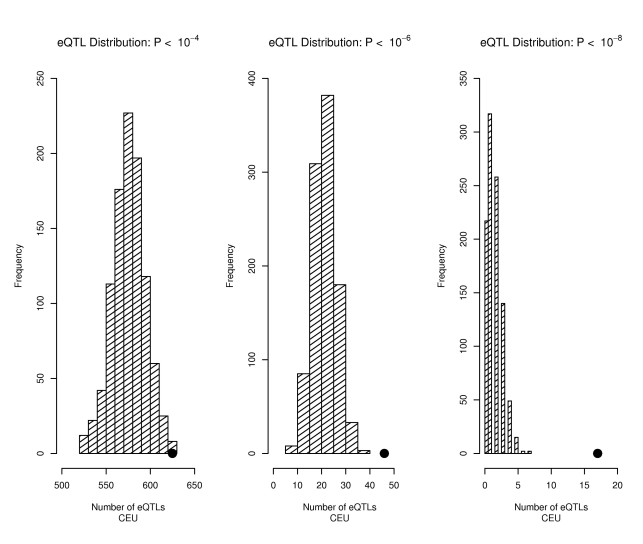
“The distribution of the number of predicted exonskipping associated ISE SNPs observed for each of the 1,000 random sets (each consisting of 3,353 SNPs, equal to the number of trait-associated SNPs) while conditioning on MAF (using HapMap CEU MAF data) and distance to the nearest exon is shown in the bar graphs.”
BackgroundMethodInfluentialSelf-citationTurner, A. W., Martinuk, A., Silva, A., Lau, P., Nikpay, M., Eriksson, P., Folkersen, L., Perisic, L., Hedin, U., Soubeyrand, S., et al. (2016) · Arteriosclerosis, Thrombosis, and Vascular Biology · doi:10.1161/atvbaha.116.307294 · Cited by 56
“During the course of these experiments, another report highlighted rs17293632C>T as a strong candidate functional SNP. Farh et al40 developed a fine-mapping algorithm to identify candidate casual variants for numerous autoimmune diseases and provide ChIP-Seq data for AP-1 in HeLa cells heterozygous at rs17293632.”
BackgroundInfluentialNieuwenhuis, M. A. E., Siedliński, M., van den Berge, M., Granell, R., Li, X., Niens, M., van der Vlies, P., Altmüller, J., Nürnberg, P., Kerkhof, M., et al. (2016) · Allergy · doi:10.1111/all.12990 · Cited by 70
“We identified a strong enrichment of cis-eQTLs among our top SNPs, which is consistent with the literature (14).”
The Future of Genomic Studies Must Be Globally Representative: Perspectives from PAGE
Bien, S. A., Wojcik, G. L., Hodonsky, C. J., Gignoux, C. R., Cheng, I., Matise, T. C., Peters, U., Kenny, E. E., & North, K. E. (2019) · Annual Review of Genomics and Human Genetics · doi:10.1146/annurev-genom-091416-035517 · Cited by 60
“To aid in the characterization of candidate functional variants, integrative multiomic resources are now emerging, accompanied by the development of new analytical methods (10, 91, 98).”
BackgroundMethodTranscriptome Sequencing of a Large Human Family Identifies the Impact of Rare Noncoding Variants
Li, X., Battle, A. J., Karczewski, K. J., Zappala, Z., Knowles, D. A., Smith, K. S., Kukurba, K., Wu, E., Simon, N., & Montgomery, S. B. (2014) · The American Journal of Human Genetics · doi:10.1016/j.ajhg.2014.08.004 · Cited by 59
Strengthening Causal Inference for Complex Disease Using Molecular Quantitative Trait Loci
Neumeyer, S., Hemani, G., & Zeggini, E. (2019) · Trends in Molecular Medicine · doi:10.1016/j.molmed.2019.10.004 · Cited by 60
“Several studies have already discovered GWAS signals enriched for molQTLs in a tissue-dependent manner [26].”
Ballester, M., Ramayo‐Caldas, Y., Revilla, M., Corominas, J., Castelló, A., Estellé, J., Fernández, A. I., & Folch, J. M. (2017) · Scientific Reports · doi:10.1038/srep46539 · Cited by 75
Genome-wide approaches to schizophrenia
Duan, J., Sanders, A. R., & Gejman, P. V. (2010) · Brain Research Bulletin · doi:10.1016/j.brainresbull.2010.04.009 · Cited by 53
“[132].”
Genome-wide Epigenetic Data Facilitate Understanding of Disease Susceptibility Association Studies
Hardison, R. C. (2012) · Journal of Biological Chemistry · doi:10.1074/jbc.r112.352427 · Cited by 55
“Strikingly, trait-associated variants from GWASs are more likely to be associated with quantitative variation in gene expression than are other variants on the genotyping arrays (17, 18), further supporting the expectation that many variants associated with complex traits affect gene expression.”
BackgroundDetermining causality and consequence of expression quantitative trait loci
Battle, A. J., & Montgomery, S. B. (2014) · Human Genetics · doi:10.1007/s00439-014-1446-0 · Cited by 63
Chatterjee, P., Roy, D., Bhattacharyya, M., & Bandyopadhyay, S. (2017) · BMC Genomics · doi:10.1186/s12864-017-4098-3 · Cited by 61
“Genes were queried to retrieve information about the relationship between SNPs and genes at user-specified p-value thresholds [77].”
MethodHu, X., Kim, H., Raj, T., Brennan, P. J., Trynka, G., Teslovich, N., Slowikowski, K., Chen, W.-M., Onengut, S., Baecher-Allan, C., et al. (2014) · PLoS Genetics · doi:10.1371/journal.pgen.1004404 · Cited by 52
A genome-wide survey of CD4+ lymphocyte regulatory genetic variants identifies novel asthma genes
Sharma, S., Zhou, X., Thibault, D. M., Himes, B. E., Liu, A., Szefler, S. J., Strunk, R. C., Castro, M., Hansel, N. N., Diette, G. B., et al. (2014) · Journal of Allergy and Clinical Immunology · doi:10.1016/j.jaci.2014.04.011 · Cited by 52
Self-citationAging Uncouples Heritability and Expression-QTL in Caenorhabditis elegans
Viñuela, A., Snoek, B. L., Riksen, J. A. G., & Kammenga, J. E. (2012) · G3 Genes Genomes Genetics · doi:10.1534/g3.112.002212 · Cited by 56
The Relationship of Common Risk Variants and Polygenic Risk for Schizophrenia to Sensorimotor Gating
Roussos, P., Giakoumaki, S. G., Zouraraki, C., Fullard, J. F., Karagiorga, V. E., Tsapakis, E.-M., Petraki, Z., Siever, L. J., Lencz, T., Malhotra, A. K., et al. (2015) · Biological Psychiatry · doi:10.1016/j.biopsych.2015.06.019 · Cited by 52
Heidary, M., Rakhshi, N., Kakhki, M. P., Behmanesh, M., Sanati, M. H., Sanadgol, N., Kamaladini, H., & Nikravesh, A. (2014) · Journal of the Neurological Sciences · doi:10.1016/j.jns.2014.05.013 · Cited by 55
“There are some evidences that the expression of some genes in cis, may be affected by some non-coding SNPs which confers susceptibility to disease development [9, 10].”
BackgroundPal, L. R., & Moult, J. (2015) · Journal of Molecular Biology · doi:10.1016/j.jmb.2015.04.014 · Cited by 58
“There is one report of this type of enrichment [32].”
BackgroundA systems view of genetics in chronic kidney disease
Keller, B. J., Martini, S., Sedor, J. R., & Kretzler, M. (2011) · Kidney International · doi:10.1038/ki.2011.359 · Cited by 54
Goh, C., & Knight, J. C. (2017) · The Lancet Respiratory Medicine · doi:10.1016/s2213-2600(17)30045-0 · Cited by 59
Castaldi, P. J., Guo, F., Qiao, D., Du, F., Naing, Z. Z. C., Li, Y., Pham, B., Mikkelsen, T. S., Cho, M. H., Silverman, E. K., et al. (2019) · American Journal of Respiratory and Critical Care Medicine · doi:10.1164/rccm.201802-0337oc · Cited by 55
Wu, Y., Bi, R., Zeng, C., Ma, C., Sun, C., Li, J., Xiao, X., Li, M., Zhang, D., Zheng, P., et al. (2019) · EBioMedicine · doi:10.1016/j.ebiom.2019.05.006 · Cited by 55
Functional genomics bridges the gap between quantitative genetics and molecular biology
Lappalainen, T. (2015) · Genome Research · doi:10.1101/gr.190983.115 · Cited by 53
“Disease-associated variants are expected to impact cellular phenotypes that ultimately underlie the change in disease risk; indeed, several studies have shown an overrepresentation of eQTLs among GWAS loci (Nica et al. 2010; Nicolae et al. 2010).”
BackgroundCastaldi, P. J., Cho, M. H., Zhou, X., Qiu, W., McGeachie, M. J., Celli, B. R., Bakke, P. S., Gulsvik, A., Lomas, D. A., Crapo, J. D., et al. (2014) · Human Molecular Genetics · doi:10.1093/hmg/ddu525 · Cited by 59
Sakamoto, K., & Crowley, J. J. (2017) · American Journal of Medical Genetics Part B Neuropsychiatric Genetics · doi:10.1002/ajmg.b.32554 · Cited by 63
“In other disorders, there are documented examples of causal regulatory SNPs explaining GWAS signals (Fogarty, Cannon, Vadlamudi, Gaulton, & Mohlke, 2014; Nicolae et al., 2010; Smemo et al., 2014).”
BackgroundEpigenetic control of variation and stochasticity in metabolic disease
Panzeri, I., & Pospisilik, J. A. (2018) · Molecular Metabolism · doi:10.1016/j.molmet.2018.05.010 · Cited by 50
“Genome-wide association study (GWAS; now replaced by exon and subsequently whole genome sequencing), which searches for association between disease traits and DNA-sequence ‘linkage’ blocks, have suggested thatw88% of the disease-associated common genetic variants fall into noncoding areas of the genome [17].”
BackgroundMikhaylova, A. V., & Thornton, T. A. (2019) · Frontiers in Genetics · doi:10.3389/fgene.2019.00261 · Cited by 58
“Prior studies have shown that a large proportion of GWAS variants identified for complex traits are expression quantitative trait loci (eQTLs), i.e., they play a role in regulating gene expression ( Nicolae et al., 2010).”
BackgroundGenetics of rheumatoid arthritis: GWAS and beyond
Orozco, G., Duffus, K., & Eyre, S. (2011) · Open Access Rheumatology Research and Reviews · doi:10.2147/oarrr.s14725 · Cited by 54
“152,153 Whole genome mRNA expression data are becoming publicly available for a growing number of cell and tissue types enabling resources, such as the Gene Regulators in Disease project, to aid the performance of in silicoeQTL analysis and the correlation of genotype to different transcript levels.”
A non-human primate system for large-scale genetic studies of complex traits
Jasinska, A. J., Lin, M. K., Service, S., Choi, O.-W., DeYoung, J., Grujic, O., Kong, S.-Y., Jung, Y., Jorgensen, M. J., Fairbanks, L. A., et al. (2012) · Human Molecular Genetics · doi:10.1093/hmg/dds160 · Cited by 50
“For example, eQTL are significantly overrepresented among single nucleotide polymorphisms (SNPs) that that are associated with complex traits in genome wide association studies (18).”
BackgroundLi, H., Chan, L., Bartuzi, P., Melton, S. D., Weber, A., Ben–Shlomo, S., Varol, C., Raetz, M., Mao, X., Starokadomskyy, P., et al. (2014) · Gastroenterology · doi:10.1053/j.gastro.2014.04.007 · Cited by 47
“In agreement with this notion, the SNP and CNV Annotation (SCAN) database [35] indicates that there is a significant eQTL effect of rs921319 on COMMD1 gene expression.”
Genome-Wide Association for Fear Conditioning in an Advanced Intercross Mouse Line
Parker, C. C., Sokoloff, G., Cheng, R., & Palmer, A. A. (2012) · Behavior Genetics · doi:10.1007/s10519-011-9524-8 · Cited by 51
“First, we identified eQTLs that co-mapped with our QTLs. eQTLs are genomic loci that regulate gene transcription and expression on a genome-wide scale, and are believed to underlie many QTLs for complex traits (Nicolae et al. 2010; Li and Deng 2010).”
Cusanovich, D. A., Billstrand, C., Zhou, X., Chavarria, C., De Leon, S., Michelini, K., Pai, A. A., Ober, C., & Gilad, Y. (2012) · Human Molecular Genetics · doi:10.1093/hmg/dds021 · Cited by 49
Genetics of systemic lupus erythematosus and Sjögren's syndrome: an update
Teruel, M., & Alarcón-Riquelme, M. E. (2016) · Current Opinion in Rheumatology · doi:10.1097/bor.0000000000000310 · Cited by 54
Sajuthi, S. P., Sharma, N., Chou, J. W., Palmer, N. D., McWilliams, D. R., Beal, J., Comeau, M. E., Ma, L., Calles-Escandón, J., Demons, J. L., et al. (2016) · Human Genetics · doi:10.1007/s00439-016-1680-8 · Cited by 49
“We and others reported that T2D and related trait-associated variants are enriched for expression-regulatory single nucleotide polymorphisms (eSNPs) in tissues important for glucose homeostasis (Das and Sharma 2014; GTEx consortium 2015; Nicolae et al. 2010).”
Intragenic CNTNAP2 Deletions: A Bridge Too Far
Poot, M. (2017) · Molecular Syndromology · doi:10.1159/000456021 · Cited by 51
“Indeed, an association of a locus may also involve mechanisms not directly related to the protein-coding part of a nearby gene, but for instance an eQTL [Nicolae et al., 2010].”
BackgroundPopulation- and individual-specific regulatory variation in Sardinia
Pala, M., Zappala, Z., Marongiu, M., Li, X., Davis, J. R., Cusano, R., Crobu, F., Kukurba, K. R., Gloudemans, M. J., Reinier, F., et al. (2017) · Nature Genetics · doi:10.1038/ng.3840 · Cited by 48
“Log odds scores and confidence intervals were calculated using Fisher’s exact tests for all functional annotations (Supplementary Tables 19–20).”
InfluentialLeveraging lung tissue transcriptome to uncover candidate causal genes in COPD genetic associations
Lamontagne, M., Bérubé, J., Obeidat, M., Cho, M. H., Hobbs, B. D., Sakornsakolpat, P., de Jong, K., Boezen, H. M., Nickle, D. C., Hao, K., et al. (2018) · Human Molecular Genetics · doi:10.1093/hmg/ddy091 · Cited by 52
“associated variants have regulatory function and are associated with changes in gene expression.(11,12) The mapping of expression quantitative trait loci (eQTL) in disease-relevant”
BackgroundSynthesis of 53 tissue and cell line expression QTL datasets reveals master eQTLs
Zhang, X., Gierman, H. J., Levy, D., Plump, A., Dobrin, R., Goring, H. H., Curran, J. E., Johnson, M. P., Blangero, J., Kim, S. K., et al. (2014) · BMC Genomics · doi:10.1186/1471-2164-15-532 · Cited by 49
“Strong eQTLs are often highly correlated with markers of disease and quantitative traits at loci identified in GWAS [8-13], suggesting that these eQTLs account for a significant fraction of human phenotypic variability.”
BackgroundEpigenomic elements enriched in the promoters of autoimmunity susceptibility genes
Dozmorov, M. G., Wren, J. D., & Alarcón-Riquelme, M. E. (2013) · Epigenetics · doi:10.4161/epi.27021 · Cited by 53
“Although most phenotype-associated variants discovered by genome-wide association studies (GWASs) are far from protein-coding regions, even appearing in gene deserts,(1) they can affect disease-susceptibility genes by altering their expression, either directly or via distant enhancer loops.(2,3) Encouragingly, these d…”
BackgroundGenetic Architecture of Lacunar Stroke
Traylor, M., Bevan, S., Baron, J., Hassan, A., Lewis, C. M., & Markus, H. S. (2015) · Stroke · doi:10.1161/strokeaha.115.009485 · Cited by 51
Liu, Y., Maxwell, S., Feng, T., Zhu, X., Elston, R. C., Koyutürk, M., & Chance, M. R. (2012) · BMC Systems Biology · doi:10.1186/1752-0509-6-s3-s15 · Cited by 55
Rat Genome and Model Resources
Shimoyama, M. E., Smith, J. R., Bryda, E. C., Kuramoto, T., Saba, L. M., & Dwinell, M. R. (2017) · ILAR Journal · doi:10.1093/ilar/ilw041 · Cited by 52
“The majority of human disease variants are likely to be involved in regulation of transcription (Nicolae et al. 2010; Schaub et al. 2012).”
BackgroundMorrow, J. D., Cho, M. H., Platig, J., Zhou, X., DeMeo, D. L., Qiu, W., Celli, B., Marchetti, N. T., Criner, G. J., Bueno, R., et al. (2018) · Human Genomics · doi:10.1186/s40246-018-0132-z · Cited by 52
“Expression quantitative trait locus (eQTL) analysis tests the association between genetic variants and gene expression and can point to relevant single nucleotide polymorphisms (SNPs) and genes within GWAS loci [15–17] using the observation that trait-associated SNPs are likely to be eQTLs/eSNPs [17] and/or have gene…”
BackgroundAebi, M., van Donkelaar, M. M. J., Poelmans, G., Buitelaar, J. K., Sonuga‐Barke, E. J. S., Stringaris, A., consortium, I., Faraone, S. V., Franke, B., Steinhausen, H., et al. (2016) · American Journal of Medical Genetics Part B: Neuropsychiatric Genetics · doi:10.1002/ajmg.b.32346 · Cited by 45
Genome-Wide Identification of Expression Quantitative Trait Loci (eQTLs) in Human Heart
Koopmann, T. T., Adriaens, M. E., Moerland, P. D., Marsman, R. F. J., Westerveld, M., Lal, S., Zhang, T., Simmons, C. Q., Baczkó, I., dos Remedios, C. G., et al. (2014) · PLoS ONE · doi:10.1371/journal.pone.0097380 · Cited by 59
A genome-wide integrative study of microRNAs in human liver
Gamazon, E. R., Innocenti, F., Wei, R., Wang, L., Zhang, M., Mirkov, S., Ramírez, J., Huang, R. S., Cox, N. J., Ratain, M. J., et al. (2013) · BMC Genomics · doi:10.1186/1471-2164-14-395 · Cited by 54
“Thus, the identification of genetic polymorphisms, in the form of expression quantitative trait loci (eQTLs) [4], that have a functional impact on the regulation of gene expression provides a powerful means to characterize the molecular events responsible for disease pathogenesis and to inform potential therapeutic ap…”
BackgroundMethodSelf-citationGenetic data: The new challenge of personalized medicine, insights for rheumatoid arthritis patients
Goulielmos, G. N., Zervou, M. I., Myrthianou, E., Burska, A. N., Niewold, T. B., & Ponchel, F. (2016) · Gene · doi:10.1016/j.gene.2016.02.004 · Cited by 52
Odhams, C. A., Cortini, A., Chen, L., Roberts, A. L., Viñuela, A., Buil, A., Small, K. S., Dermitzakis, E. T., Morris, D. L., Vyse, T. J., et al. (2017) · Human Molecular Genetics · doi:10.1093/hmg/ddw417 · Cited by 52
Accurate and reproducible functional maps in 127 human cell types via 2D genome segmentation
Zhang, Y., & Hardison, R. C. (2017) · Nucleic Acids Research · doi:10.1093/nar/gkx659 · Cited by 52
“Several studies have shown that regulatory elements are significantly enriched in eQTLs (23,24), and thus correlation between the inferred chromatin states and eQTLs can be used to assess accuracy.”
BackgroundLi, Z., Votava, J. A., Zajac, G. J. M., Nguyen, J. N., Jaimes, F. L., Ly, S. M., Brinkman, J. A., Giorgi, M. D., Kaul, S., Green, C. L., et al. (2020) · Cell Metabolism · doi:10.1016/j.cmet.2020.02.015 · Cited by 48
“with complex traits, including plasma lipid levels, are believed to act through modulation of gene expression (Nicolae et al., 2010).”
BackgroundAlbert, E., Gricourt, J., Bertin, N., Bonnefoi, J., Pateyron, S., Tamby, J., Bitton, F., & Causse, M. (2015) · Theoretical and Applied Genetics · doi:10.1007/s00122-015-2635-5 · Cited by 52
“…have been developed by plant biologists (Korte et al. 2012; Saïdou et al. 2014), but the combination of GWAs and gene expression was essentially reported in human genetics until now (Cheung et al. 2005; Cookson et al. 2009) and in few studies on A. thaliana (Nicolae et al. 2010; Chan et al. 2011).”
BackgroundNakaoka, H., Gurumurthy, A., Hayano, T., Ahmadloo, S., Omer, W. H., Yoshihara, K., Yamamoto, A., Kurose, K., Enomoto, T., Akira, S., et al. (2016) · PLOS Genetics · doi:10.1371/journal.pgen.1005893 · Cited by 46
The genomic signature of trait-associated variants
Kindt, A. S. D., Navarro, P., Semple, C. A. M., & Haley, C. (2013) · BMC Genomics · doi:10.1186/1471-2164-14-108 · Cited by 50
Mouse models and the interpretation of human GWAS in type 2 diabetes and obesity
Cox, R., & CHURCH, C. D. (2011) · Disease Models & Mechanisms · doi:10.1242/dmm.000414 · Cited by 53
Saik, O., Сергеевич, Д. П., Ivanisenko, T., Bragina, E. Y., Freidin, M. B., Goncharova, I. A., Dosenko, V., Zolotareva, O. I., Hofestaedt, R., Lavrik, I. N., et al. (2018) · BMC Medical Genomics · doi:10.1186/s12920-018-0331-4 · Cited by 46
Stahl, E. A., Roda, G., Dobbyn, A. L., Hu, J., Zhang, Z., Westerlind, H., Bonfiglio, F., Raj, T., Torres, J., Chen, A., et al. (2020) · Gastroenterology · doi:10.1053/j.gastro.2020.04.063 · Cited by 48
Chen, Y., Zhou, J., Cheng, Z., Yang, S., Chu, H., Fan, Y., Li, C., Wong, B. H., Zheng, S., Zhu, Y., et al. (2015) · Scientific Reports · doi:10.1038/srep08517 · Cited by 48
“Both experimental and computational data support the notion that a considerable proportion of trait-associated loci harbor variations that impact the abundance of specific transcripts 27 .”
BackgroundFrom Identification to Characterization of the Multiple Sclerosis Susceptibility Gene CLEC16A
Berge, T., Leikfoss, I., & Harbo, H. (2013) · International Journal of Molecular Sciences · doi:10.3390/ijms14034476 · Cited by 45
“Non-coding SNPs may confer susceptibility to disease development by affecting expression of nearby genes in cis [110,111].”
BackgroundGenome-enabled prediction of quantitative traits in chickens using genomic annotation
Morota, G., Abdollahi-Arpanahi, R., Kranis, A., & Gianola, D. (2014) · BMC Genomics · doi:10.1186/1471-2164-15-109 · Cited by 52
“If a trait is controlled by SNPs that are not identified by GWAS or QTL analyses due to their small effect sizes, these SNPs are probably disseminated across the whole genome, potentially away All CDS Exons Genes Genes1kb 0.19 0.20 0.21 0.22 0.23 0.24 A ll C D S C D S − IG R E xo ns E xo ns − IG R G en es G en es − IG…”
BackgroundInfluentialYu, C.-H., Pal, L. R., & Moult, J. (2016) · OMICS: A Journal of Integrative Biology · doi:10.1089/omi.2016.0063 · Cited by 45
“Several studies have shown that SNPs associated with human traits and chemotherapeutic drug susceptibility are in general enriched for eQTLs (Cookson et al., 2009; Gamazon et al., 2010; Nicolae et al., 2010).”
InfluentialProperties of STAT1 and IRF1 enhancers and the influence of SNPs
Hassan, M. A. E., Huang, K., Eswara, M. B. K., Xu, Z., Tao, Y., Aubry, A., Ni, Z., Livne-Bar, I., Sangwan, M., Ahmad, M. S., et al. (2017) · BMC Molecular Biology · doi:10.1186/s12867-017-0084-1 · Cited by 50
Hao, S., Wang, R., Zhang, Y., & Zhan, H. (2019) · Frontiers in Genetics · doi:10.3389/fgene.2018.00653 · Cited by 47
“For a complex disease such as AD, the top single nucleotide polymorphisms (SNPs) often located in the non-coding region, hard to know which gene is modified by that mutation and many significant SNPs are in high linkage disequilibrium (LD) with non-significant SNPs, plus many associated SNPs are more likely to locate…”
Gleason, K. J., Yang, F., Pierce, B. L., He, X., & Chen, L. (2020) · Genome biology · doi:10.1186/s13059-020-02125-w · Cited by 49
Dark Matter: Are Mice the Solution to Missing Heritability?
Parker, C. C., & Palmer, A. A. (2011) · Frontiers in Genetics · doi:10.3389/fgene.2011.00032 · Cited by 50
“Nicolae et al. (2010) argue that connecting SNPs with information on gene expression provides a biologically relevant means to identify those associations likely to be replicated while also imparting a better understanding of the biological mechanisms driving the associations.”
BackgroundWang, J., Tao, Y., Song, F., Sun, Y., Ott, J., & Saffen, D. (2015) · Annals of Human Genetics · doi:10.1111/ahg.12121 · Cited by 45
Soliai, M. M., Kato, A., Helling, B. A., Stanhope, C. T., Norton, J. E., Naughton, K. A., Klinger, A. I., Thompson, E. E., Clay, S. M., Kim, S., et al. (2021) · Genome Medicine · doi:10.1186/s13073-021-00967-y · Cited by 47
Self-citationAllele-Specific Methylation Occurs at Genetic Variants Associated with Complex Disease
Hutchinson, J. N., Raj, T., Fagerness, J., Stahl, E. A., Viloria, F. T., Gimelbrant, A. A., Seddon, J. M., Daly, M. J., Chess, A. J., & Plenge, R. M. (2014) · PLoS ONE · doi:10.1371/journal.pone.0098464 · Cited by 50
“Recent evidence showing enrichment of expression Quantitative Trait Loci (eQTLs) within these uncategorized groups of variants [1] suggests they can affect phenotype by regulating gene expression levels, likely through their effects on regulatory mediators.”
Nutritional regulation of genome-wide association obesity genes in a tissue-dependent manner
Yoganathan, P., Karunakaran, S., Ho, M. M., & Clee, S. M. (2012) · Nutrition & Metabolism · doi:10.1186/1743-7075-9-65 · Cited by 50
Approaches for establishing the function of regulatory genetic variants involved in disease
Knight, J. C. (2014) · Genome Medicine · doi:10.1186/s13073-014-0092-4 · Cited by 42
“Moreover, there is significant overrepresentation of GWAS variants in eQTL studies, implicating regulatory variants in a broad spectrum of common diseases [7].”
Background
Metadata
- Authors
- Nicolae, D. L., Gamazon, E., Zhang, W., Duan, S., Dolan, M. E., & Cox, N. J.
- Affiliations
- University of Chicago (US)
- Corresponding author
- Cox, Nancy J.
- Venue
- PLoS Genetics
- Publisher
- Public Library of Science (PLoS)
- Published
- 2010-04-01
- Volume
- 6
- Issue
- 4
- Pages
- e1000888
- ISSN
- 1553-7390 (ISSN-L)
- 1553-7404
- PMC
- PMC2848547
- OpenAlex
- W2019983262
- Cited by
- 1,292
- References
- 31
- Citations by year
- 2026: 35 · 2025: 57 · 2024: 50 · 2023: 40 · 2022: 63 · 2021: 104 · 2020: 80 · 2019: 87 · 2018: 97 · 2017: 112 · 2016: 101 · 2015: 103 · 2014: 125 · 2013: 78 · 2012: 84
- FWCI
- 42.59
- Type
- journal article
- Language
- en
- Open access
- gold
- doi.org
- Locations
- PLoS Genetics (publishedVersion, cc-by)
- PubMed Central (publishedVersion, cc-by)
- PubMed (publishedVersion)
- Knowledge@UChicago (University of Chicago) (submittedVersion, cc-by-nc-nd)
- DOAJ (DOAJ: Directory of Open Access Journals) (submittedVersion, cc-by-sa)
- Figshare (submittedVersion, cc-by)
- University of Chicago (cc-by)
- Funders
- National Institutes of Health
- National Heart, Lung, and Blood Institute (U01HL084715)
- National Cancer Institute (P50CA125183)
- National Institute of General Medical Sciences (U01 GM61393, U01GM061393)
- National Institute of Diabetes and Digestive and Kidney Diseases (P60DK20595, P60DK020595)
- Topics
- Life Sciences › Biochemistry, Genetics and Molecular Biology › Genetics › Genetic Associations and Epidemiology
- Life Sciences › Biochemistry, Genetics and Molecular Biology › Genetics › Genetic Mapping and Diversity in Plants and Animals
- Life Sciences › Biochemistry, Genetics and Molecular Biology › Genetics › Genetic and phenotypic traits in livestock
- Keywords
- expression quantitative trait loci, single nucleotide polymorphisms, complex traits, genome-wide association study, SNP annotation, heritability, lymphoblastoid cell lines, gene expression
- MeSH terms
- Humans, Phenotype, Genome, Human, Polymorphism, Single Nucleotide, Quantitative Trait Loci, Genome-Wide Association Study
About these checks
Registry, retraction, Cites and statistics results are computed, not judged, with one exception: a printed reference that no index lists is read once by a model before it counts as a citation error. Claims are extracted by a model and kept only when their quote appears verbatim in the text; each cited source is then checked, with a model’s help, for whether it says what the claim relies on. Those verdicts can be wrong — read the claim’s quote and the cited source before relying on one.
Statistics and arithmetic are recomputed, not judged.
Confidence bands are shown only for fields calibrated on our annotated test set. None is calibrated yet, so no band is shown.
What counts as a claim ›How we measure confidence ›How we check this ›
Are you an author, or do you see a problem with this page? Request a review
Data sources
Bibliographic data: Semantic Scholar, OpenAlex, Crossref.
Contains information from the Semantic Scholar Academic Graph Datasets, made available under the ODC Attribution License (ODC-BY 1.0).
Semantic Scholar’s data is described in: Kinney, R., et al. (2023). The Semantic Scholar Open Data Platform. arXiv:2301.10140.
