

Trait-Associated SNPs Are More Likely to Be eQTLs: Annotation to Enhance Discovery from GWAS
Open accessThe DOI matches its Crossref record; 31 of the 31 references it cites were found in a registry or an index.
Abstract
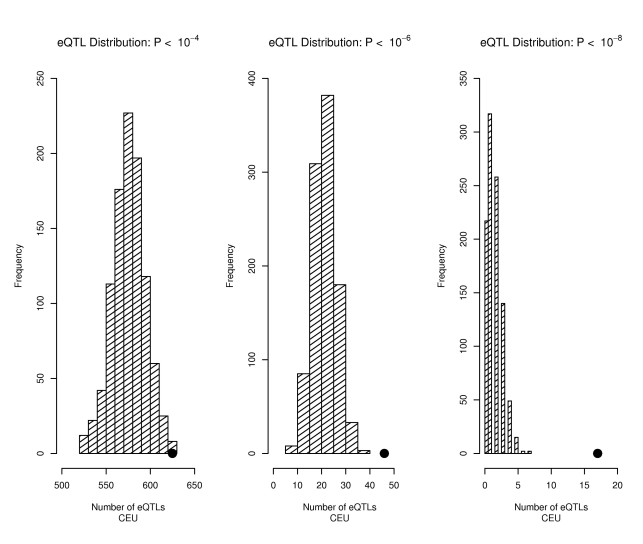
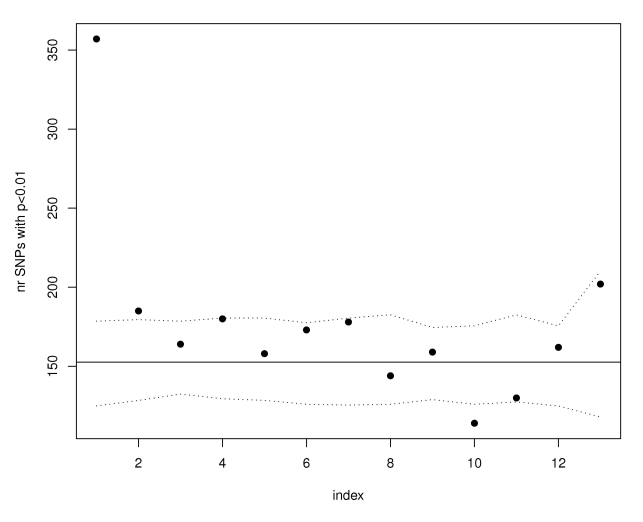
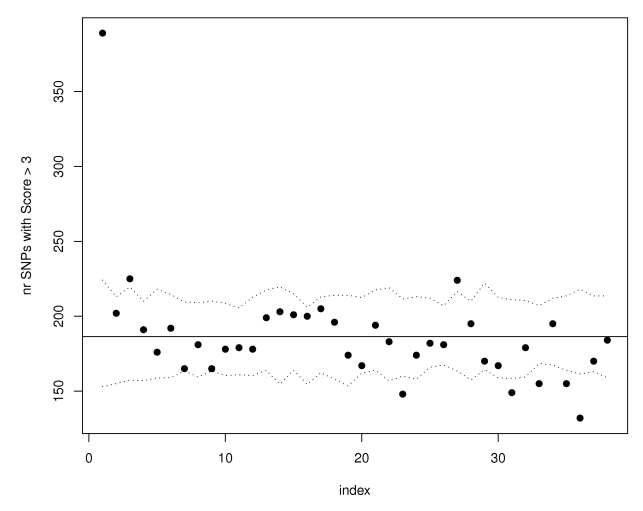
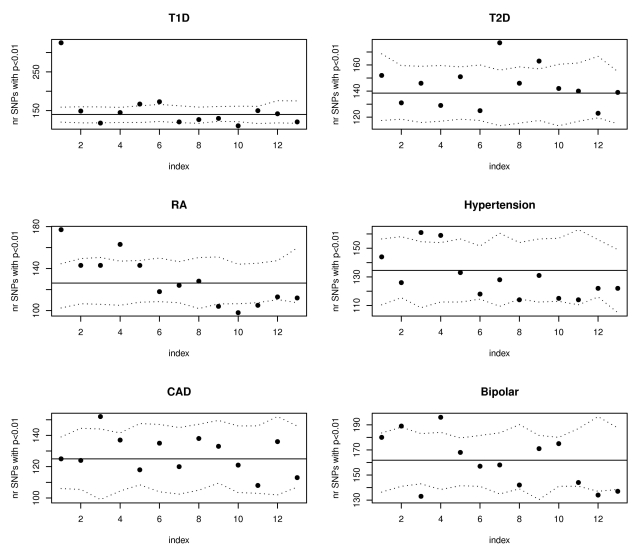
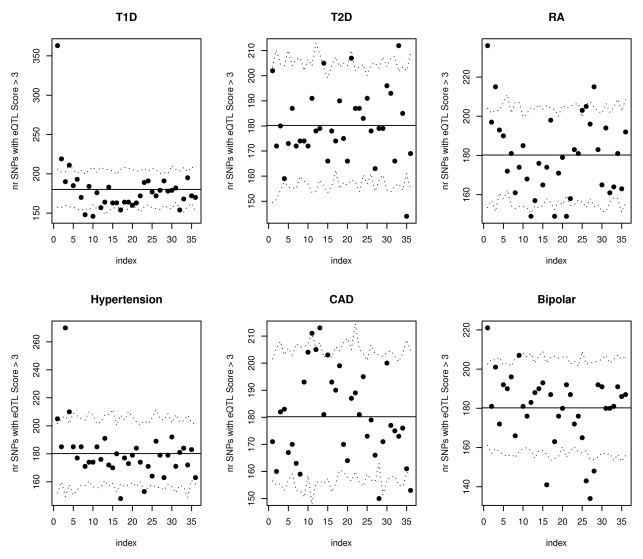
Although genome-wide association studies (GWAS) of complex traits have yielded more reproducible associations than had been discovered using any other approach, the loci characterized to date do not account for much of the heritability to such traits and, in general, have not led to improved understanding of the biology underlying complex phenotypes. Using a web site we developed to serve results of expression quantitative trait locus (eQTL) studies in lymphoblastoid cell lines from HapMap samples (http://www.scandb.org), we show that single nucleotide polymorphisms (SNPs) associated with complex traits (from http://www.genome.gov/gwastudies/) are significantly more likely to be eQTLs than minor-allele-frequency-matched SNPs chosen from high-throughput GWAS platforms. These findings are robust across a range of thresholds for establishing eQTLs (p-values from 10(-4)-10(-8)), and a broad spectrum of human complex traits. Analyses of GWAS data from the Wellcome Trust studies confirm that annotating SNPs with a score reflecting the strength of the evidence that the SNP is an eQTL can improve the ability to discover true associations and clarify the nature of the mechanism driving the associations. Our results showing that trait-associated SNPs are more likely to be eQTLs and that application of this information can enhance discovery of trait-associated SNPs for complex phenotypes raise the possibility that we can utilize this information both to increase the heritability explained by identifiable genetic factors and to gain a better understanding of the biology underlying complex traits.
Overview
The claims and statistics of this paper haven’t been checked yet.
Free: it reads the open-access text and checks the first 5 claims that cite a source we can check. Create a free account to check every claim.
Integrity signals
Registry
Cites
Statistics
Figures
Verification
Claims the paper makes
The claims and statistics of this paper haven’t been checked yet.
Free: it reads the open-access text and checks the first 5 claims that cite a source we can check. Create a free account to check every claim.
Claims other papers make about this one
Each is checked against this paper’s own text: does it say what the citing paper says it does?
The cited source says what the claim attributes to it.
In the citing paper
“Significant GWAS loci are enriched for e QTLs (Nicolae et al., 2010) and meQTLs (X. Zhang et al., 2014).”
From Integrative Analysis of Multi-omics Data for Discovery and Functional Studies of Complex Human Diseases (2016) · cites this paper as Nicolae et al., 2010
Self-check
Percentages, sums and reported differences re-computed from the paper’s own numbers.
The self-check needs the paper’s full text.
Citations
Cites
PLINK: a tool set for whole-genome association and population-based linkage analyses.
Purcell, S., Neale, B., Todd-Brown, K., Thomas, L., Ferreira, M. A. R., Bender, D., Maller, J., Sklar, P., de Bakker, P. I. W., Daly, M. J., et al. (2007) · The American Journal of Human Genetics · doi:10.1086/519795 · Cited by 34,089 · cited 1×
“We used the toolkit PLINK [31] to calculate frequencies.”
MethodGenome-wide association study of 14,000 cases of seven common diseases and 3,000 shared controls
The Wellcome Trust Case Control Consortium, Management Committee, Burton, P. R., Clayton, D. G., Cardon, L. R., Craddock, N., Deloukas, P., Duncanson, A., Kwiatkowski, D. P., McCarthy, M. I., et al. (2007) · Nature · doi:10.1038/nature05911 · Cited by 9,442
Finding the missing heritability of complex diseases
Manolio, T. A., Collins, F. S., Cox, N. J., Goldstein, D. B., Hindorff, L. A., Hunter, D. J., McCarthy, M. I., Ramos, E. M., Cardon, L. R., Chakravarti, A., et al. (2009) · Nature · doi:10.1038/nature08494 · Cited by 8,336 · cited 1×
“The failure to achieve this goal is made particularly acute by the recognition that the loci that have been successfully identified not only provide us with little insight into the genetic basis for the trait, but also account for little of the overall heritability [5].”
BackgroundSelf-citationHindorff, L. A., Sethupathy, P., Junkins, H. A., Ramos, E. M., Mehta, J. P., Collins, F. S., & Manolio, T. A. (2009) · Proceedings of the National Academy of Sciences · doi:10.1073/pnas.0903103106 · Cited by 4,013 · cited 1×
“Our results build on those of previous studies, particularly those of Schadt and colleagues [12–15] that focused on using transcriptome information to improve understanding of genetic signals, but the rapid accumulation of trait-associated SNPs through GWAS, coupled with the systematic efforts to catalog these variant…”
ResultGenome-wide association defines more than 30 distinct susceptibility loci for Crohn's disease
the NIDDK IBD Genetics Consortium, Barrett, J. C., the Belgian-French IBD Consortium, the Wellcome Trust Case Control Consortium, Hansoul, S., Nicolae, D. L., Cho, J. H., Duerr, R. H., Rioux, J. D., Brant, S. R., et al. (2008) · Nature Genetics · doi:10.1038/ng.175 · Cited by 2,593
Self-citationMAQC Consortium, Shi, L., Shi, L., Reid, L. H., Jones, W. D., Shippy, R., Warrington, J. A., Baker, S. C., Collins, P. J., de Longueville, F., et al. (2006) · Nature Biotechnology · doi:10.1038/nbt1239 · Cited by 2,126 · cited 1×
“) that they might be considered unreliable for genomic studies [24], while others highlight the reproducibility of results of transcriptome studies [25,26] and find that LCLs show little variability as a consequence of non-genetic”
ResultHampe, J., Franke, A., Rosenstiel, P., Till, A., Teuber, M., Huse, K., Albrecht, M., Mayr, G., De La Vega, F. M., Briggs, J., et al. (2007) · Nature Genetics · doi:10.1038/ng1954 · Cited by 1,897 · cited 1×
“For a few disorders, results of GWAS have highlighted biological contributing factors to disease that had not previously been recognized as central, such as the complement system in macular degeneration [1] or autophagy in Crohn’s disease [2–4].”
BackgroundGenome-wide association study of blood pressure and hypertension
Levy, D., Ehret, G. B., Rice, K., Verwoert, G. C., Launer, L. J., Dehghan, A., Glazer, N. L., Morrison, A. C., Johnson, A. D., Aspelund, T., et al. (2009) · Nature Genetics · doi:10.1038/ng.384 · Cited by 1,364 · cited 1×
“has enabled us to generalize the concept that information on eQTLs will have utility for understanding the genetic component to complex traits. Our primary observations – that SNPs reproducibly associated with complex human traits are more likely to be eQTLs – are novel, although perhaps not unexpected given that few…”
ResultGenetics of gene expression and its effect on disease
Emilsson, V., Thorleifsson, G., Zhang, B., Leonardson, A. S., Zink, F., Zhu, J., Carlson, S., Helgason, A., Walters, G. B., Gunnarsdottir, S., et al. (2008) · Nature · doi:10.1038/nature06758 · Cited by 1,296 · cited 1×
“studies have highlighted the potential sensitivity of eQTL studies to cell and tissue subtypes [15,19,20].”
BackgroundA General Test of Association for Quantitative Traits in Nuclear Families
Abecasis, G. R., Cardon, L. R., & Cookson, W. O. C. (2000) · The American Journal of Human Genetics · doi:10.1086/302698 · Cited by 1,126 · cited 1×
“Genome-wide association analyses of 13,080 transcript clusters (gene-level) with reliable expression and more than 2 million SNPs in the CEU or YRI populations were conducted using the Quantitative Trait Disequilibrium Test (QTDT) [30].”
Method
Research works printed but not linked: 1
- Hindorff LA Sethupathy P Junkins HA Ramos EM Mehta JP 2009 Potential etiologic and functional implications of genome-wide association loci for human diseases and traits. Proc Natl Acad Sci U S A 106 9362 9367 19474294 PMC2687147 · DOI · Paper page
Cited by
Items 601–700 of 1,003
Neurocognitive Phenotypes and Genetic Dissection of Disorders of Brain and Behavior
Congdon, E., Poldrack, R. A., & Freimer, N. B. (2010) · Neuron · doi:10.1016/j.neuron.2010.10.007 · Cited by 22
Das, S. K., & Sharma, N. (2014) · World Journal of Diabetes · doi:10.4239/wjd.v5.i2.97 · Cited by 24
Ghandikota, S. K., Hershey, G. K. K., & Baye, T. M. (2018) · Bioinformatics · doi:10.1093/bioinformatics/bty182 · Cited by 23
Yao, S., Wu, H., Ding, J., Wang, Z., Ullah, T., Dong, S., Chen, H., & Guo, Y. (2021) · International Journal of Obesity · doi:10.1038/s41366-021-00780-y · Cited by 22
“The enrichment of expression quantitative trait loci (eQTLs) of trait-associated variants also shows the importance of gene expression regulation [25].”
BackgroundIslam, T., Rahman, M. R., Khan, A., & Moni, M. A. (2023) · Journal of Biomedical Informatics · doi:10.1016/j.jbi.2023.104345 · Cited by 23
Genetic breeding for indoor vertical farming
Teo, Z. W. N., & Yu, H. Q. (2024) · npj Sustainable Agriculture · doi:10.1038/s44264-024-00021-5 · Cited by 27
“Trait-associated SNPs are more likely to be relevant to differential gene expression 90 . eQTL analysis provides an additional dimension to understand how genetic variants affect phenotypes and contributes to identifying potential loci for breeding 91 .”
Zhong, C., Li, X., Guan, D., Zhang, B., Wang, X., Qu, L., Zhou, H., Fang, L., Sun, C., & Yang, N. (2024) · Journal of genetics and genomics/Journal of Genetics and Genomics · doi:10.1016/j.jgg.2024.09.003 · Cited by 22
Computational Tools for Discovery and Interpretation of Expression Quantitative Trait Loci
Wright, F. A., Shabalin, A. A., & Rusyn, I. (2012) · Pharmacogenomics · doi:10.2217/pgs.11.185 · Cited by 27
“The work of Nicolae et al. has taken advantage of the rapid accumulation of publicly available databases of complex trait-associated SNPs from GWAS, to generalize the concept that information on eQTLs has utility for understanding the genetic component of complex traits [59].”
BackgroundBasu, M., Das, T., Ghosh, A., Majumder, S., Maji, A. K., Kanjilal, S. D., Mukhopadhyay, I., Roychowdhury, S., Banerjee, S., & Sengupta, S. (2012) · PLoS ONE · doi:10.1371/journal.pone.0046441 · Cited by 23
Genetics of human gene expression
Stranger, B. E., & Raj, T. (2013) · Current Opinion in Genetics & Development · doi:10.1016/j.gde.2013.10.004 · Cited by 27
SCAN database: facilitating integrative analyses of cytosine modification and expression QTL
Zhang, W., Gamazon, E. R., Zhang, X., Konkashbaev, A. I., Liu, C., Szilágyi, K. L., Dolan, M. E., & Cox, N. J. (2015) · Database · doi:10.1093/database/bav025 · Cited by 22
“GWAS of complex trait-associated loci (6) as well as toxicity-associated loci detected for various anticancer chemotherapies (7) are enriched in eQTL, thus providing important novel annotations for these genetic variants and contributing to an improved understanding of their functional consequences.”
BackgroundSelf-citationvan Dijk, A. D. J., & Molenaar, J. (2017) · PeerJ · doi:10.7717/peerj.3197 · Cited by 24
“Also, it has beenobserved that genetic variation associated with trait variation is likely to influence expression variation as well (Nicolae et al., 2010), suggesting that this expression variation is intermediate in establishing the link between change in genotype and change in phenotype.”
BackgroundIntegrative analyses prioritize GNL3 as a risk gene for bipolar disorder
Meng, Q., Wang, L., Dai, R., Wang, J., Ren, Z., Liu, S., Xia, Y., Jiang, Y. W., Duan, F., Wang, K., et al. (2020) · Molecular Psychiatry · doi:10.1038/s41380-020-00866-5 · Cited by 22
“Studies have shown that disease-associated variants are concentrated in regulatory DNA elements [8, 9], and are more likely to be expression quantitative trait loci (eQTL) [10].”
BackgroundUsing biological knowledge to discover higher order interactions in genetic association studies
Chen, G. K., & Thomas, D. C. (2010) · Genetic Epidemiology · doi:10.1002/gepi.20542 · Cited by 22
“Such analyses are appealing, given the evidence showing that confirmed hits in GWAS are enriched for eQTLs [Nicolae et al., 2010].”
BackgroundGenome-wide expression and response to exposure-based psychological therapy for anxiety disorders
Roberts, S., Wong, C. C. Y., Breen, G. D., Coleman, J. R. I., de Jong, S., Jöhren, P., Keers, R., Curtis, C. J. C., Lee, S. H., Margraf, J., et al. (2017) · Translational Psychiatry · doi:10.1038/tp.2017.177 · Cited by 24
Annotating individual human genomes
Torkamani, A., Zeeland, A. A. S., Topol, E. J., & Schork, N. J. (2011) · Genomics · doi:10.1016/j.ygeno.2011.07.006 · Cited by 24
“…and methylation levels (‘mQTLs’) can be very revealing about the likely functional effects of the variant, especially since it has been shown that variants that influence expression levels of genes from association studies are more likely to be associated with overt phenotypes and/or disease [63].”
BackgroundReus, L. M., Paşaniuc, B., Posthuma, D., Boltz, T. A., Ferrari, R., Hernandez, D. G., Nalls, M. A., Rohrer, J. D., Ramasamy, A., Kwok, J. B., et al. (2021) · Biological Psychiatry · doi:10.1016/j.biopsych.2020.12.023 · Cited by 21
“These risk variants are likely to predispose individuals to disease susceptibility by modulating messenger RNA expression levels through local (cis) or distal (trans) expression quantitative trait loci (eQTL) (13).”
BackgroundLimited evidence for blood eQTLs in human sexual dimorphism
Porcu, E., Claringbould, A., Weihs, A., Lepik, K., Richardson, T. G., Völker, U., Santoni, F. A., Teumer, A., Franke, L., Reymond, A., et al. (2022) · Genome Medicine · doi:10.1186/s13073-022-01088-w · Cited by 23
Tang, H., Wang, J., Deng, P., Li, Y., Cao, Y., Yi, B., Zhu, L., Zhu, S., & Lu, Y. (2023) · Diabetologia · doi:10.1007/s00125-023-05978-5 · Cited by 21
“In addition, the biological interpretation of genetic association results remains a major challenge because most GWAS-identified variants are located in non-coding or intergenic regions, indicating the presence of regulatory mechanisms of gene expression [7, 8].”
BackgroundZhang, Z., Cheng, Y., Zhou, X., Li, Y., Gao, J., Han, J., Quan, C., He, S., Lv, Y., Hu, D., et al. (2010) · Journal of Medical Genetics · doi:10.1136/jmg.2010.077859 · Cited by 21
“Recently, there has been mounting evidence that subtle effects of genetic variation on gene expression are probably pathogenic mechanisms for complex diseases.(16) 17 With this in mind, we explored the regulatory effects of the top associated SNP with nearby genes using a public Expression Quantitative Trait Loci (eQT…”
BackgroundGenetics of pleiotropic effects of dexamethasone
Ramsey, L. B., Pounds, S. B., Cheng, C., Cao, X., Yang, W., Smith, C. J., Karol, S. E., Liu, C., Panetta, J. C., Inaba, H., et al. (2017) · Pharmacogenetics and Genomics · doi:10.1097/fpc.0000000000000293 · Cited by 23
Baker, A. R., Zalwango, S. K., Malone, L. L., Igo, R. P., Qiu, F., Nsereko, M., Adams, M. D., Supelak, P. J., Mayanja‐Kizza, H., Boom, W. H., et al. (2011) · Human Immunology · doi:10.1016/j.humimm.2011.02.016 · Cited by 26
Sharma, N., Langberg, K. A., Mondal, A. K., Elbein, S. C., & Das, S. K. (2010) · The Journal of Clinical Endocrinology & Metabolism · doi:10.1210/jc.2010-1754 · Cited by 21
Brown, K. E., & Kelly, J. K. (2021) · Genetics · doi:10.1093/genetics/iyab189 · Cited by 23
Gene set enrichment analysis of pathophysiological pathways highlights oxidative stress in psychosis
Pistis, G., Vázquez-Bourgón, J., Fournier, M., Jenni, R., Cleusix, M., Papiol, S., Smart, S. E., Pardiñas, A. F., Walters, J., MacCabe, J. H., et al. (2022) · Molecular Psychiatry · doi:10.1038/s41380-022-01779-1 · Cited by 25
“Prephasing and imputation were performed using,respectively,eagle [42] andMinimac4[26] and theHaplotype Reference Consortium (HRC version r1.”
BackgroundMethodShim, H., & Stephens, M. (2015) · The Annals of Applied Statistics · doi:10.1214/14-aoas776 · Cited by 27
“Ultimately, by combining these types of data on molecular-level phenotypes, and integrating them with similar data on organismal level phenotypes, we hope to understand which genetic variants affect human disease susceptibility, and the biological mechanisms by which they operate [Nicolae et al. (2010)].”
BackgroundInfluentialA Perception on Genome-Wide Genetic Analysis of Metabolic Traits in Arab Populations
Hebbar, P., Abubaker, J. A., Abu‐Farha, M., Tuomilehto, J., Al‐Mulla, F., & Thanaraj, T. A. (2019) · Frontiers in Endocrinology · doi:10.3389/fendo.2019.00008 · Cited by 22
“Integration of data on expression quantitative trait loci (eQTL), which represent regulatory loci, with genetic variants identified from GWA studies can give new insights into identification of causal genes for T2DM (119, 120).”
BackgroundGuhaThakurta, D., Sheikh, N. A., Meagher, T. C., Letarte, S., & Trager, J. B. (2013) · Expert Review of Clinical Pharmacology · doi:10.1586/17512433.2013.811814 · Cited by 22
An eQTL-based method identifies CTTN and ZMAT3 as pemetrexed susceptibility markers
Wen, Y., Gamazon, E. R., Bleibel, W. K., Wing, C., Mi, S., McIlwee, B. E., Delaney, S. M., Duan, S., Im, H. K., & Dolan, M. E. (2011) · Human Molecular Genetics · doi:10.1093/hmg/ddr583 · Cited by 21
“It has been shown that annotating SNPs with information on how a locus affects transcriptional expression has great utility in enhancing the ability of GWAS to identify SNPs likely to be reproducible (30).”
BackgroundSelf-citationComprehensive promoter level expression quantitative trait loci analysis of the human frontal lobe
Blauwendraat, C., Francescatto, M., Gibbs, J. R., Jansen, I. E., Simón‐Sánchez, J., Hernandez, D. G., Dillman, A., Singleton, A., Cookson, M., Rizzu, P., et al. (2016) · Genome Medicine · doi:10.1186/s13073-016-0320-1 · Cited by 22
Implication of NOTCH1 gene in susceptibility to anxiety and depression among sexual abuse victims
Steine, I. M., Zayats, T., Stansberg, C. T., Pallesen, S., Mrdalj, J., Håvik, B., Soule, J. D., Haavik, J., Milde, A. M., Skrede, S., et al. (2016) · Translational Psychiatry · doi:10.1038/tp.2016.248 · Cited by 22
de Almeida, R. C., Chagas, V. S., Castro, M. A. A., & Petzl‐Erler, M. L. (2018) · Frontiers in Genetics · doi:10.3389/fgene.2018.00139 · Cited by 20
“…that ectopic or increased expression of this miRNA could be a candidate biomarker for immune-related diseases. eQTL mapping studies have shown that SNPs associated with complex diseases, detected in GWAS, are more likely to be an eQTL compared to non-associated SNPs (Nicolae et al., 2010).”
BackgroundDing, M., Li, P., Wen, Y. F., Zhao, Y., Cheng, B., Zhang, L., Ma, M., Cheng, S., Liu, L., Du, Y., et al. (2018) · Progress in Neuro-Psychopharmacology and Biological Psychiatry · doi:10.1016/j.pnpbp.2018.05.026 · Cited by 20
“Recent studies observed that the significant single nucleotide polymorphisms (SNPs) identified by GWAS were enriched in chromosomal non-coding regulatory regions (Nicolae et al., 2010).”
BackgroundGenetic risk variants for autoimmune diseases that influence gene expression in thymus
Gabrielsen, I., Amundsen, S. S., Helgeland, H., Flåm, S. T., Hatinoor, N., Holm, K., Viken, M. K., & Lie, B. A. (2016) · Human Molecular Genetics · doi:10.1093/hmg/ddw152 · Cited by 21
“The polymorphisms associated with AIDs, and complex traits in general, are enriched in non-coding regions of the genome (1,2), suggesting gene regulatory functions.”
BackgroundLi, J., Amoh, B. K., McCormick, E., Tarkunde, A., Zhu, K. F., Perez, A. M., Mair, M. L., Moore, J., Shulman, J. M., Al‐Ramahi, I., et al. (2022) · Human Molecular Genetics · doi:10.1093/hmg/ddac230 · Cited by 21
Brain transcriptome-wide association study implicates novel risk genes underlying schizophrenia risk
Zhang, C., Li, X., Zhao, L., Guo, W., Deng, W., Wang, Q., Hu, X., Du, X., Sham, P. C., Luo, X., et al. (2023) · Psychological Medicine · doi:10.1017/s0033291723000417 · Cited by 21
“It has been proposed that trait-associated SNPs are more likely to be eQTLs (Nicolae et al., 2010), suggesting that integration of eQTL data will facilitate to identify risk genes and delineate disease pathophysiology.”
BackgroundTranscriptome‐Wide Association Studies (TWAS): Methodologies, Applications, and Challenges
Evans, P. D., Nagai, T. H., Konkashbaev, A. I., Zhou, D., Knapik, E. W., & Gamazon, E. R. (2024) · Current Protocols · doi:10.1002/cpz1.981 · Cited by 20
“…exert their phenotypic effects by playing a critical role in the genetic regulation of gene expression, which is supported by the observation that trait-associated single-nucleotide polymorphisms (SNPs) are often expression quantitative trait loci (eQTLs) (Nica et al., 2010; Nicolae et al., 2010).”
BackgroundSelf-citationKlemann, C. J. H. M., Visser, J. E., Bosch, L. V. D., Martens, G. J. M., & Poelmans, G. (2017) · Brain Pathology · doi:10.1111/bpa.12485 · Cited by 23
“The latter was based on the fact that the vast majority of expression quantitative trait loci (eQTL) for a given gene are located within 100 kb downstream and/or upstream of a gene (26, 74, 99) and because trait-associated SNPs are more likely to be eQTL (72).”
BackgroundJia, P., Chen, X., Fanous, A. H., & Zhao, Z. (2018) · Translational Psychiatry · doi:10.1038/s41398-018-0154-2 · Cited by 24
Assessing the Role of Long Noncoding RNA in Nucleus Accumbens in Subjects With Alcohol Dependence
McMichael, G. O., Drake, J., Vornholt, E., Cresswell, K. G., Williamson, V. S., Chatzinakos, C., Mamdani, M., Hariharan, S., Kendler, K. S., Miles, M. F., et al. (2020) · Alcoholism Clinical and Experimental Research · doi:10.1111/acer.14479 · Cited by 25
“…(LD) of eQTLs with genetic variants implicated in AUD can further establish a biological mechanism for disease-associated variants with no apparent functions; there is empirical evidence suggesting that eQTLs are overrepresented among GWAS signals (Nica et al., 2010; Nicolae et al., 2010).”
Lu, H., Zhang, J., Jiang, Z., Zhang, M., Wang, T., Zhao, H., & Zeng, P. (2021) · Frontiers in Genetics · doi:10.3389/fgene.2021.656545 · Cited by 21
“Second, as shown in previous studies, disease-associated SNPs were more likely to be eQTLs (Nicolae et al., 2010), implying that the functional roles of associated SNPs were regulated through gene expression; thus, the power improvement of gene-based association studies would be further achieved by integrating eQTLs i…”
Lessons From Transcriptome Analysis of Autoimmune Diseases
Nagafuchi, Y., Yanaoka, H., & Fujio, K. (2022) · Frontiers in Immunology · doi:10.3389/fimmu.2022.857269 · Cited by 21
Gamazon, E. R., Huang, R. S., Dolan, M. E., Cox, N. J., & Im, H. K. (2013) · Frontiers in Genetics · doi:10.3389/fgene.2012.00202 · Cited by 20
“One information to expand on the nature of the genetic component to complex phenotypes (Gamazon et al., 2010a; Nicolae et al., 2010).”
BackgroundSelf-citationSingh, S., McDonough, C. W., Gong, Y., Alghamdi, W. A., Arwood, M. J., Bargal, S. A., Dumeny, L., Li, W., Mehanna, M., Stockard, B., et al. (2018) · Journal of the American Heart Association · doi:10.1161/jaha.117.007339 · Cited by 22
“GWAS of Chlorthalidone Induced Glucose Change Singh et al O R IG IN A L R E S E A R C H significant in PEAR-2 and successfully replicated in PEAR, reached genome-wide significance with meta-analysis as expected (meta-analysis P=3.71910 8; Table 4). rs9943291 was associated with higher glucose levels at the end of the…”
MethodInfluentialIntegrative Genomics Analysis Identifies ACVR1B as a Candidate Causal Gene of Emphysema Distribution
Boueiz, A. R., Pham, B., Chase, R., Lamb, A. E., Lee, S., Naing, Z. Z. C., Cho, M. H., Parker, M. M., Sakornsakolpat, P., Hersh, C. P., et al. (2019) · American Journal of Respiratory Cell and Molecular Biology · doi:10.1165/rcmb.2018-0110oc · Cited by 24
“Enrichment in Tissue-/Cell Type–Specific Chromatin States Genetic variants associated with complex diseases have been shown to overlap regulatory enhancer elements (1, 2).”
BackgroundMoore, J. H., Raghavachari, N., & Speakers, W. (2019) · Frontiers in Artificial Intelligence · doi:10.3389/frai.2019.00012 · Cited by 23
“The vast majority of genetic variants identified in GWAS are noncoding (Nicolae et al., 2010), which presents a challenge in identifying the gene whose function might be impacted by traitassociated variants.”
Integrative genomics sheds light on the immunogenetics of tuberculosis in cattle
O'Grady, J. F., McHugo, G. P., Ward, J. A., Hall, T. J., O’Donnell, S. L. F., Correia, C. N., Browne, J. A., McDonald, M., Gormley, E. P., Riggio, V., et al. (2025) · Communications Biology · doi:10.1038/s42003-025-07846-x · Cited by 18
“In this regard, SNPs that are signi fi cantly associated with a trait of interest often exert an eQTL regulatory effect 42 – 44 .”
Hart, A. B., Gamazon, E. R., Engelhardt, B. E., Sklar, P. B., Kähler, A. K., Hultman, C. M., Sullivan, P. F., Neale, B. M., Faraone, S. V., de Wit, H., et al. (2014) · Proceedings of the National Academy of Sciences · doi:10.1073/pnas.1318810111 · Cited by 19
“Philos Psychiatry Psychol 18(1):41–63.”
Self-citationNing, K., Gettler, K., Zhang, W., Ng, S. M. E., Bowen, B. M., Hyams, J. S., Stephens, M. C., Kugathasan, S., Denson, L. A., Schadt, E. E., et al. (2015) · Human Molecular Genetics · doi:10.1093/hmg/ddv142 · Cited by 18
Self-citationKakhki, M. P., Rakhshi, N., Heidary, M., Behmanesh, M., & Nikravesh, A. (2015) · Journal of the Neurological Sciences · doi:10.1016/j.jns.2015.02.005 · Cited by 21
“To further explore the association between SOCS1 and MS, in the present study, we investigated the mRNA expression level of SOCS1 in PBMCs and genotyped the rs243324 SNP in MS patients and healthy controls; but, whereas the potential effect of non-coding SNPs on the expression level of genes leading to disease develop…”
BackgroundAllele-specific gene expression can underlie altered transcript abundance in zebrafish mutants
White, R. J., Mackay, E., Wilson, S. W., & Busch‐Nentwich, E. M. (2022) · eLife · doi:10.7554/elife.72825 · Cited by 19
“…were driven by ASE, which has been widely demonstrated across different tissues and organisms ( Battle et al., 2017 ; Huang et al., 2015 ; Kim-Hellmuth et al., 2020 ) and can play a role in developmental and disease processes ( Libioulle et al., 2007 ; Moffatt et al., 2007 ; Nicolae et al., 2010 ).”
Illuminating links between cis-regulators and trans-acting variants in the human prefrontal cortex
Liu, S., Won, H., Clarke, D., Matoba, N., Khullar, S., Mu, Y., Wang, D., & Gerstein, M. (2022) · Genome Medicine · doi:10.1186/s13073-022-01133-8 · Cited by 19
“Previous studies have demonstrated that variants associated with a range of human phenotypes frequently function as eQTLs [1], suggesting that eGene expression may play the role of a so-called intermediate phenotype.”
BackgroundLiang, M., An, B., Deng, T., Du, L., Li, K., Cao, S., Du, Y., Xu, L., Zhang, L., Gao, X., et al. (2023) · Frontiers in Genetics · doi:10.3389/fgene.2022.982433 · Cited by 21
“, 2013), and many genetic variations associated with phenotypes were likely to be expression quantitative trait loci (eQTL) (Nicolae et al., 2010).”
BackgroundSun, S., Aboelenain, M., Ariad, D., Haywood, M. E., Wageman, C. R., Duke, M., Bag, A., Viotti, M., Katz-Jaffe, M., McCoy, R. C., et al. (2023) · The American Journal of Human Genetics · doi:10.1016/j.ajhg.2023.11.002 · Cited by 18
Shi, J., Mao, C., Guo, Y.-Z., Fan, Y., Hao, X.-Y., Li, S., Tian, J., Hu, Z., Li, M., Li, J.-D., et al. (2024) · Aging · doi:10.18632/aging.205444 · Cited by 18
Gupta, R. M., & Musunuru, K. (2013) · Frontiers in Genetics · doi:10.3389/fgene.2012.00232 · Cited by 19
“Furthermore, it has been shown that many common trait-associated variants act by altering transcript levels (Nicolae et al., 2010).”
BackgroundBrubaker, D. K., Liu, Y., Wang, J., Tan, H., Zhang, G., Jacobsson, B., Muglia, L. J., Mesiano, S. A., & Chance, M. R. (2016) · Human Molecular Genetics · doi:10.1093/hmg/ddw325 · Cited by 18
Singh, S., Rouby, N. M. E., McDonough, C. W., Gong, Y., Bailey, K. R., Boerwinkle, E., Chapman, A. B., Gums, J. G., Turner, S. T., Cooper‐DeHoff, R. M., et al. (2019) · Clinical and Translational Science · doi:10.1111/cts.12643 · Cited by 22
“We have previously published pharmacogenomic findings related to β- blocker BP response using only PEAR as the discovery cohort because this was before the PEAR2 trial was completed.(19) Hence, in this study, PEAR2 was used as the discovery and PEAR as the replication cohort.”
MethodRole of non‐coding variants in cardiovascular disease
Heshmatzad, K., Naderi, N., Maleki, M., Abbasi, S., Ghasemi, S., Ashrafi, N., Fazelifar, A. F., Mahdavi, M., & Kalayinia, S. (2023) · Journal of Cellular and Molecular Medicine · doi:10.1111/jcmm.17762 · Cited by 18
SNP characteristics predict replication success in association studies
Gorlov, I. P., Moore, J. H., Peng, B., Jin, J. L., Gorlova, O. Y., & Amos, C. I. (2014) · Human Genetics · doi:10.1007/s00439-014-1493-6 · Cited by 20
“GWAS-detected SNPs tend to influence quantitative trait loci (eQTLs) (Cookson et al. 2009; Nicolae et al. 2010).”
Blood gene expression studies in migraine: Potential and caveats
Gerring, Z. F., Rodriguez‐Acevedo, A. J., Powell, J. E., Griffiths, L. R., Montgomery, G. W., & Nyholt, D. R. (2016) · Cephalalgia · doi:10.1177/0333102416628463 · Cited by 20
“Many eQTL, particularly those associated with disease, are specific to a given tissue, and the fold change in expression and direction of effect of shared eQTL can differ across tissues (64,65).”
BackgroundGao, G., Pierce, B. L., Olopade, O. I., Im, H. K., & Huo, D. (2017) · PLoS Genetics · doi:10.1371/journal.pgen.1006727 · Cited by 19
Identifying Multi-Omics Causers and Causal Pathways for Complex Traits
Qin, H., Niu, T., & Zhao, J. (2019) · Frontiers in Genetics · doi:10.3389/fgene.2019.00110 · Cited by 23
“Multiple studies have provided strong evidence that GWA signals are enriched with eQTLs in a tissue-specific manner (Dimas et al., 2009; Nicolae et al., 2010), highlighting their utility in understanding the mechanisms underlying GWA hits.”
BackgroundIntegrative modeling of multi-platform genomic data under the framework of mediation analysis
Huang, Y. (2015) · Statistics in Medicine · doi:10.1002/sim.6326 · Cited by 17
“SNPs are more likely to be QTL [8, 9], and thus decreases false positives, whether the association of those QTL SNPs with methylation/expression can be translated to be a contribution to the disease risk is rarely addressed.”
BackgroundInfluentialDecoding polygenic diseases: advances in noncoding variant prioritization and validation
Chin, I. M., Gardell, Z. A., & Corces, M. R. (2024) · Trends in Cell Biology · doi:10.1016/j.tcb.2024.03.005 · Cited by 21
Takagi, Y., Matsuda, H., Taniguchi, Y., & Iwaisaki, H. (2014) · PLoS ONE · doi:10.1371/journal.pone.0115532 · Cited by 17
“A SNP that is relevant to a trait is often an eQTL [38], and such SNPs have tissue-specific effects on gene expression [37].”
BackgroundPleiotropic genetic influence on birth weight and childhood obesity
Chatterjee, S., Ouidir, M., & Ayele, F. T. (2021) · Scientific Reports · doi:10.1038/s41598-020-80084-9 · Cited by 17
ECM Microenvironment in Vascular Homeostasis: New Targets for Atherosclerosis
Zhang, L., Feng, Q., & Kong, W. (2024) · Physiology · doi:10.1152/physiol.00028.2023 · Cited by 19
Considerations for integrative multi‐omic approaches to explore Alzheimer's disease mechanisms
Ma, Y., Klein, H., & Jager, P. L. D. (2020) · Brain Pathology · doi:10.1111/bpa.12878 · Cited by 19
“The observation that GWAS risk loci are enriched for genetic variants that affect gene transcription motivated the development of methods to integrate genetic and transcriptomic data to study complex diseases such as AD (31).”
BackgroundConvergent lines of evidence support BIN1 as a risk gene of Alzheimer’s disease
Zhu, J. L., Liu, X., Yin, H., Gao, Y., & Yu, H. (2021) · Human Genomics · doi:10.1186/s40246-021-00307-6 · Cited by 21
Li, H., Yu, X., Shi, B., Zhang, K., Yuan, L., Liu, X., Wang, P., Lv, J., Meng, G., Xuan, Q., et al. (2021) · Science Translational Medicine · doi:10.1126/scitranslmed.aaz6169 · Cited by 17
Functional analysis of the 1p34.3 risk locus implicates GNL2 in high-grade serous ovarian cancer
Nakamura, K., Reid, B. M., Chen, A., Chen, Z., Goode, E. L., Permuth, J. B., Teer, J. K., Tyrer, J. P., Yu, X., Kanetsky, P. A., et al. (2021) · The American Journal of Human Genetics · doi:10.1016/j.ajhg.2021.11.020 · Cited by 18
Soubeyrand, S., Lau, P., Nikpay, M., Dang, A.-T., & McPherson, R. (2022) · Circulation Genomic and Precision Medicine · doi:10.1161/circgen.121.003428 · Cited by 19
Sex-heterogeneous SNPs disproportionately influence gene expression and health
Traglia, M., Bout, M., & Weiss, L. A. (2022) · PLoS Genetics · doi:10.1371/journal.pgen.1010147 · Cited by 17
“Since trait-associated variants from genome-wide association studies tend to overlap with expression quantitative trait loci, are more likely to be associated with gene expression [20,21], and have been shown to regulate DNA methylation [22], we hypothesized that sex-het SNPs extracted from large studies may be involv…”
BackgroundPouladi, N., Bime, C., Garcia, J. G. N., & Lussier, Y. A. (2015) · Translational research · doi:10.1016/j.trsl.2015.04.016 · Cited by 19
Mapping of hepatic expression quantitative trait loci (eQTLs) in a Han Chinese population
Wang, X., Tang, H., Teng, M., Li, Z., Li, J., Fan, J., Zhong, L., Sun, X., Xu, J., Chen, G., et al. (2014) · Journal of Medical Genetics · doi:10.1136/jmedgenet-2013-102045 · Cited by 20
Functional annotation signatures of disease susceptibility loci improve SNP association analysis
Iversen, E. S., Lipton, G. B., Clyde, M. A., & Monteiro, Á. N. A. (2014) · BMC Genomics · doi:10.1186/1471-2164-15-398 · Cited by 18
“It is becoming increasingly clear that a widening array of annotation data correlates with a variant’s having been associated with a human phenotype (Hindorff et al., 2009; Nicolae et al., 2010; The ENCODE Project Consortium, 2012; Schaub et al., 2012).”
Ip, H. F., Jansen, R., Abdellaoui, A., Bartels, M., Boomsma, D. I., & Nivard, M. G. (2018) · Behavior Genetics · doi:10.1007/s10519-018-9914-2 · Cited by 17
Banos, G., Clark, E. L., Bush, S. J., Dutta, P., Bramis, G., Arsenos, G. I., Hume, D. A., & Psifidi, A. (2019) · PLoS ONE · doi:10.1371/journal.pone.0214346 · Cited by 17
“In fact, many quantitative traits associated with altered gene expression, and trait-associated loci are enriched for eQTLs [30].”
BackgroundRoles of cytotoxic lymphocytes and MIC/LILR families in pathophysiology of Takayasu arteritis
Yoshifuji, H., & Terao, C. (2020) · Inflammation and Regeneration · doi:10.1186/s41232-020-00119-6 · Cited by 17
Genetics of Human Handedness and Laterality
Paracchini, S., & Scerri, T. S. (2017) · Neuromethods · doi:10.1007/978-1-4939-6725-4_16 · Cited by 18
Statistical Methods in Genome-Wide Association Studies
Sun, N., & Zhao, H. (2020) · Annual Review of Biomedical Data Science · doi:10.1146/annurev-biodatasci-030320-041026 · Cited by 17
Flitman, R. S., Khalili, B., Kutalik, Z., Rueedi, R., Brümmer, A., & Bergmann, S. (2021) · Journal of Proteome Research · doi:10.1021/acs.jproteome.1c00585 · Cited by 17
Jiang, L., Miao, L., Yi, G., Li, X., Xue, C., Li, M. J., Huang, H., & Li, M. (2022) · The American Journal of Human Genetics · doi:10.1016/j.ajhg.2022.04.004 · Cited by 17
From GWAS to function: lessons from blood cells
Vasquez, L. J., Mann, A., Chen, L., & Soranzo, N. (2015) · ISBT Science Series · doi:10.1111/voxs.12217 · Cited by 16
Alternative Approaches in Gene Discovery and Characterization in Alzheimer’s Disease
Ertekin‐Taner, N., Jager, P. L. D., Yu, L., & Bennett, D. A. (2013) · Current Genetic Medicine Reports · doi:10.1007/s40142-013-0007-5 · Cited by 16
“[40] identified sig-”
Sudarsanam, P., & Cohen, B. A. (2014) · PLoS Genetics · doi:10.1371/journal.pgen.1004325 · Cited by 17
Detecting gene-gene interactions in prostate disease in African American men
Reams, R. R., Kalari, K. R., Wang, H., Odedina, F. T., Soliman, K. F. A., & Yates, C. C. (2011) · Infectious Agents and Cancer · doi:10.1186/1750-9378-6-s2-s1 · Cited by 16
Ju, J. H., Shenoy, S. A., Crystal, R. G., & Mezey, J. G. (2017) · PLoS Computational Biology · doi:10.1371/journal.pcbi.1005537 · Cited by 27
Cheng, B., Liang, X., Wen, Y. F., Li, P., Zhang, L., Ma, M., Cheng, S., Du, Y., Liu, L., Ding, M., et al. (2019) · Journal of Cellular Biochemistry · doi:10.1002/jcb.28744 · Cited by 17
“The disease‐associated single nucleotide polymorphisms (SNPs) identified by GWAS are significantly enriched in eQTLs, supporting the significance of eQTLs in the pathogenesis of complex diseases.(13) Recently, transcriptome‐wide association study (TWAS) was proposed to integrate the information of GWAS and eQTLs.”
BackgroundNicoletti, P., Bansal, M., Lefèbvre, C., Guarnieri, P., Shen, Y., Pe’er, I., Califano, A., & Floratos, A. (2015) · PLoS ONE · doi:10.1371/journal.pone.0131038 · Cited by 17
“There is strong evidence that SNPs associated with complex traits are most likely acting by affecting gene regulation [25].”
BackgroundResultWilliamson, V. S., Mamdani, M., McMichael, G. O., Kim, A. H., Lee, D., Bacanu, S., & Vladimirov, V. I. (2015) · Psychological Medicine · doi:10.1017/s0033291715000483 · Cited by 19
“Multiple authors have noted already the enrichment of eQTLs among top GWAS findings in a wide variety of disorders, including SZ, diabetes, and specific types of cancer (Nicolae et al. 2010; Richards et al. 2012; Bacanu et al. 2014; Jiang et al. 2014; Roussos et al. 2014; Zhang et al. 2014).”
BackgroundWang, Z., Chen, W., Cao, Y., Dou, Y., Fu, Y., Zhang, Y., Luo, X., Kang, L., Shi, Y. S., Shi, Y. S., et al. (2021) · Australian & New Zealand Journal of Psychiatry · doi:10.1177/00048674211009595 · Cited by 16
“The positive regulatory effect on the CACNA1C mRNA expression reduced the likelihood of false positives of SNP–schizophrenia associations, because biologically functional variants are more likely to be true in its association with a disease (Nicolae et al., 2010).”
BackgroundSiegel, D., Thanh, C., Wan, E., Hoh, R., Hobbs, K. S., Pan, T., Gibson, E. A., Kroetz, D. L., Hunt, P. W., Martin, J., et al. (2022) · AIDS · doi:10.1097/qad.0000000000003428 · Cited by 17
Mapping the regulatory genetic landscape of complex traits using a chicken advanced intercross line
Zhu, X., Li, C., Luo, C., Bai, Z., Shu, D., Chen, P., Ren, J., Song, R., Fang, L., Qu, H., et al. (2025) · Nature Communications · doi:10.1038/s41467-025-60834-x · Cited by 18
“In contrast, complex traits are primarily driven by non-coding variants that presumably affect gene regulation 4,5 .”
Resolving the Variable Genome and Epigenome in Human Disease
Knight, J. C. (2012) · Journal of Internal Medicine · doi:10.1111/j.1365-2796.2011.02508.x · Cited by 17
Bastami, M., Nariman‐Saleh‐Fam, Z., Saadatian, Z., Nariman-Saleh-Fam, L., Omrani, M. D., Ghaderian, S. M. H., & Masotti, A. (2016) · Gene · doi:10.1016/j.gene.2016.08.054 · Cited by 15
Shahin, M. H., Sá, A. C. C., Webb, A., Gong, Y., Langaee, T. Y., McDonough, C. W., Riva, A., Beitleshees, A. L., Chapman, A. B., Gums, J. G., et al. (2017) · Circulation Cardiovascular Genetics · doi:10.1161/circgenetics.116.001404 · Cited by 15
“Mapping statistics of the RNA-Seq runs were generated with RSeQC.(12) Transcript assembly was performed using Cufflinks (v2.”
Shi, J., Wu, L., Li, B., Lu, Y., Guo, X., Cai, Q., Long, J., Wen, W., Zheng, W., & Shu, X. (2019) · Reproductive Sciences · doi:10.1177/1933719118776788 · Cited by 18
Widespread cis -regulation of RNA editing in a large mammal
Lopdell, T., Hawkins, V., Couldrey, C., Tiplady, K., Davis, S. R., Harris, B. L., Snell, R. G., & Littlejohn, M. D. (2018) · RNA · doi:10.1261/rna.066902.118 · Cited by 14
“Genetic regulation of gene expression, whether operating through polymorphic variation in cis or trans regulatory elements, or through other mechanisms such as DNA methylation, is thought to account for the majority of genetic variance in phenotypic traits (Nicolae et al., 2010).”
Background
Metadata
- Authors
- Nicolae, D. L., Gamazon, E., Zhang, W., Duan, S., Dolan, M. E., & Cox, N. J.
- Affiliations
- University of Chicago (US)
- Corresponding author
- Cox, Nancy J.
- Venue
- PLoS Genetics
- Publisher
- Public Library of Science (PLoS)
- Published
- 2010-04-01
- Volume
- 6
- Issue
- 4
- Pages
- e1000888
- ISSN
- 1553-7390 (ISSN-L)
- 1553-7404
- PMC
- PMC2848547
- OpenAlex
- W2019983262
- Cited by
- 1,292
- References
- 31
- Citations by year
- 2026: 35 · 2025: 57 · 2024: 50 · 2023: 40 · 2022: 63 · 2021: 104 · 2020: 80 · 2019: 87 · 2018: 97 · 2017: 112 · 2016: 101 · 2015: 103 · 2014: 125 · 2013: 78 · 2012: 84
- FWCI
- 42.59
- Type
- journal article
- Language
- en
- Open access
- gold
- doi.org
- Locations
- PLoS Genetics (publishedVersion, cc-by)
- PubMed Central (publishedVersion, cc-by)
- PubMed (publishedVersion)
- Knowledge@UChicago (University of Chicago) (submittedVersion, cc-by-nc-nd)
- DOAJ (DOAJ: Directory of Open Access Journals) (submittedVersion, cc-by-sa)
- Figshare (submittedVersion, cc-by)
- University of Chicago (cc-by)
- Funders
- National Institutes of Health
- National Heart, Lung, and Blood Institute (U01HL084715)
- National Cancer Institute (P50CA125183)
- National Institute of General Medical Sciences (U01 GM61393, U01GM061393)
- National Institute of Diabetes and Digestive and Kidney Diseases (P60DK20595, P60DK020595)
- Topics
- Life Sciences › Biochemistry, Genetics and Molecular Biology › Genetics › Genetic Associations and Epidemiology
- Life Sciences › Biochemistry, Genetics and Molecular Biology › Genetics › Genetic Mapping and Diversity in Plants and Animals
- Life Sciences › Biochemistry, Genetics and Molecular Biology › Genetics › Genetic and phenotypic traits in livestock
- Keywords
- expression quantitative trait loci, single nucleotide polymorphisms, complex traits, genome-wide association study, SNP annotation, heritability, lymphoblastoid cell lines, gene expression
- MeSH terms
- Humans, Phenotype, Genome, Human, Polymorphism, Single Nucleotide, Quantitative Trait Loci, Genome-Wide Association Study
About these checks
Registry, retraction, Cites and statistics results are computed, not judged, with one exception: a printed reference that no index lists is read once by a model before it counts as a citation error. Claims are extracted by a model and kept only when their quote appears verbatim in the text; each cited source is then checked, with a model’s help, for whether it says what the claim relies on. Those verdicts can be wrong — read the claim’s quote and the cited source before relying on one.
Statistics and arithmetic are recomputed, not judged.
Confidence bands are shown only for fields calibrated on our annotated test set. None is calibrated yet, so no band is shown.
What counts as a claim ›How we measure confidence ›How we check this ›
Are you an author, or do you see a problem with this page? Request a review
Data sources
Bibliographic data: Semantic Scholar, OpenAlex, Crossref.
Contains information from the Semantic Scholar Academic Graph Datasets, made available under the ODC Attribution License (ODC-BY 1.0).
Semantic Scholar’s data is described in: Kinney, R., et al. (2023). The Semantic Scholar Open Data Platform. arXiv:2301.10140.
