

Trait-Associated SNPs Are More Likely to Be eQTLs: Annotation to Enhance Discovery from GWAS
Open accessThe DOI matches its Crossref record; 31 of the 31 references it cites were found in a registry or an index.
Abstract
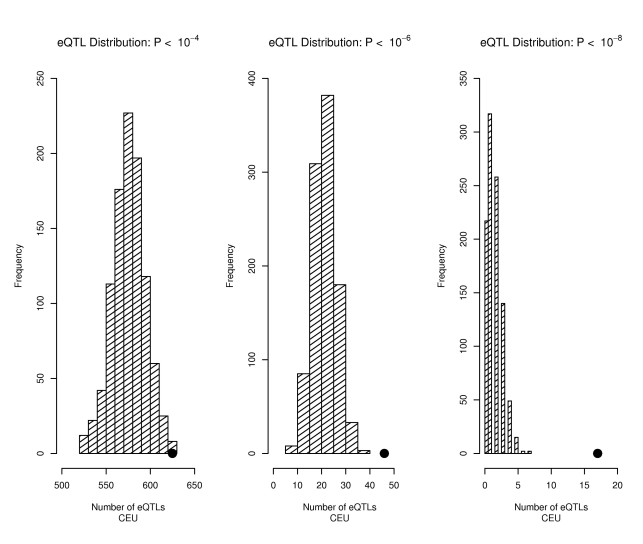
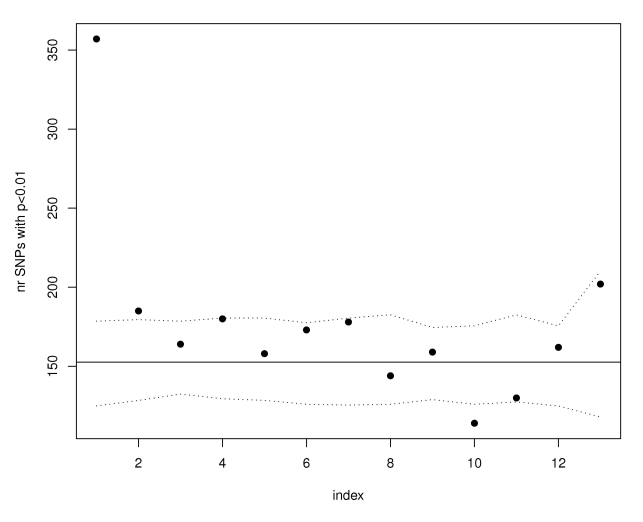
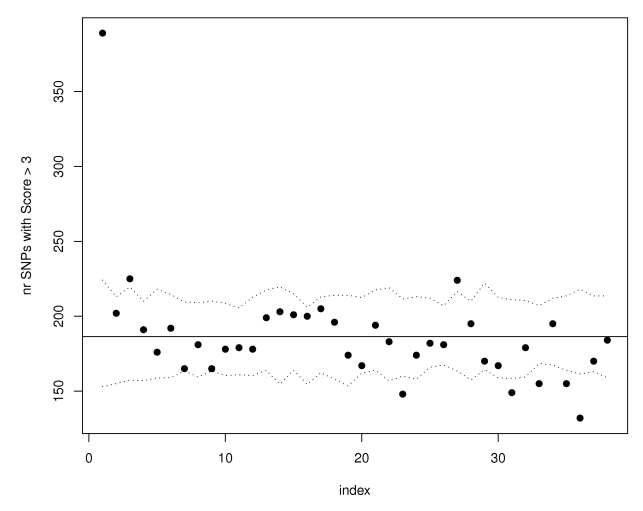
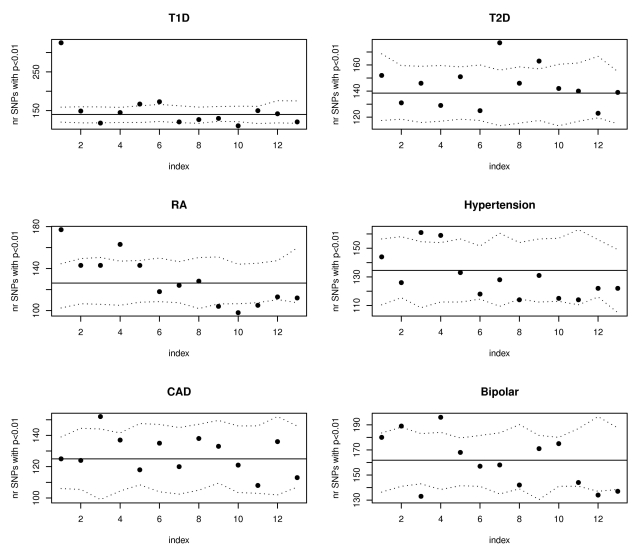
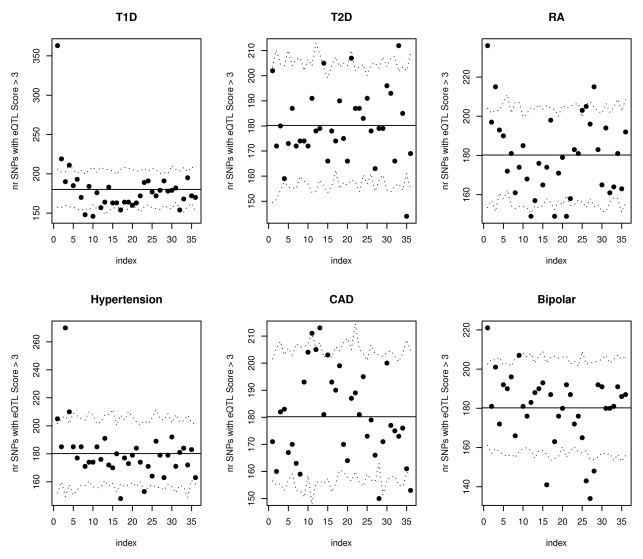
Although genome-wide association studies (GWAS) of complex traits have yielded more reproducible associations than had been discovered using any other approach, the loci characterized to date do not account for much of the heritability to such traits and, in general, have not led to improved understanding of the biology underlying complex phenotypes. Using a web site we developed to serve results of expression quantitative trait locus (eQTL) studies in lymphoblastoid cell lines from HapMap samples (http://www.scandb.org), we show that single nucleotide polymorphisms (SNPs) associated with complex traits (from http://www.genome.gov/gwastudies/) are significantly more likely to be eQTLs than minor-allele-frequency-matched SNPs chosen from high-throughput GWAS platforms. These findings are robust across a range of thresholds for establishing eQTLs (p-values from 10(-4)-10(-8)), and a broad spectrum of human complex traits. Analyses of GWAS data from the Wellcome Trust studies confirm that annotating SNPs with a score reflecting the strength of the evidence that the SNP is an eQTL can improve the ability to discover true associations and clarify the nature of the mechanism driving the associations. Our results showing that trait-associated SNPs are more likely to be eQTLs and that application of this information can enhance discovery of trait-associated SNPs for complex phenotypes raise the possibility that we can utilize this information both to increase the heritability explained by identifiable genetic factors and to gain a better understanding of the biology underlying complex traits.
Overview
The claims and statistics of this paper haven’t been checked yet.
Free: it reads the open-access text and checks the first 5 claims that cite a source we can check. Create a free account to check every claim.
Integrity signals
Registry
Cites
Statistics
Figures
Verification
Claims the paper makes
The claims and statistics of this paper haven’t been checked yet.
Free: it reads the open-access text and checks the first 5 claims that cite a source we can check. Create a free account to check every claim.
Claims other papers make about this one
Each is checked against this paper’s own text: does it say what the citing paper says it does?
The cited source says what the claim attributes to it.
In the citing paper
“Significant GWAS loci are enriched for e QTLs (Nicolae et al., 2010) and meQTLs (X. Zhang et al., 2014).”
From Integrative Analysis of Multi-omics Data for Discovery and Functional Studies of Complex Human Diseases (2016) · cites this paper as Nicolae et al., 2010
Self-check
Percentages, sums and reported differences re-computed from the paper’s own numbers.
The self-check needs the paper’s full text.
Citations
Cites
PLINK: a tool set for whole-genome association and population-based linkage analyses.
Purcell, S., Neale, B., Todd-Brown, K., Thomas, L., Ferreira, M. A. R., Bender, D., Maller, J., Sklar, P., de Bakker, P. I. W., Daly, M. J., et al. (2007) · The American Journal of Human Genetics · doi:10.1086/519795 · Cited by 34,089 · cited 1×
“We used the toolkit PLINK [31] to calculate frequencies.”
MethodGenome-wide association study of 14,000 cases of seven common diseases and 3,000 shared controls
The Wellcome Trust Case Control Consortium, Management Committee, Burton, P. R., Clayton, D. G., Cardon, L. R., Craddock, N., Deloukas, P., Duncanson, A., Kwiatkowski, D. P., McCarthy, M. I., et al. (2007) · Nature · doi:10.1038/nature05911 · Cited by 9,442
Finding the missing heritability of complex diseases
Manolio, T. A., Collins, F. S., Cox, N. J., Goldstein, D. B., Hindorff, L. A., Hunter, D. J., McCarthy, M. I., Ramos, E. M., Cardon, L. R., Chakravarti, A., et al. (2009) · Nature · doi:10.1038/nature08494 · Cited by 8,336 · cited 1×
“The failure to achieve this goal is made particularly acute by the recognition that the loci that have been successfully identified not only provide us with little insight into the genetic basis for the trait, but also account for little of the overall heritability [5].”
BackgroundSelf-citationHindorff, L. A., Sethupathy, P., Junkins, H. A., Ramos, E. M., Mehta, J. P., Collins, F. S., & Manolio, T. A. (2009) · Proceedings of the National Academy of Sciences · doi:10.1073/pnas.0903103106 · Cited by 4,013 · cited 1×
“Our results build on those of previous studies, particularly those of Schadt and colleagues [12–15] that focused on using transcriptome information to improve understanding of genetic signals, but the rapid accumulation of trait-associated SNPs through GWAS, coupled with the systematic efforts to catalog these variant…”
ResultGenome-wide association defines more than 30 distinct susceptibility loci for Crohn's disease
the NIDDK IBD Genetics Consortium, Barrett, J. C., the Belgian-French IBD Consortium, the Wellcome Trust Case Control Consortium, Hansoul, S., Nicolae, D. L., Cho, J. H., Duerr, R. H., Rioux, J. D., Brant, S. R., et al. (2008) · Nature Genetics · doi:10.1038/ng.175 · Cited by 2,593
Self-citationMAQC Consortium, Shi, L., Shi, L., Reid, L. H., Jones, W. D., Shippy, R., Warrington, J. A., Baker, S. C., Collins, P. J., de Longueville, F., et al. (2006) · Nature Biotechnology · doi:10.1038/nbt1239 · Cited by 2,126 · cited 1×
“) that they might be considered unreliable for genomic studies [24], while others highlight the reproducibility of results of transcriptome studies [25,26] and find that LCLs show little variability as a consequence of non-genetic”
ResultHampe, J., Franke, A., Rosenstiel, P., Till, A., Teuber, M., Huse, K., Albrecht, M., Mayr, G., De La Vega, F. M., Briggs, J., et al. (2007) · Nature Genetics · doi:10.1038/ng1954 · Cited by 1,897 · cited 1×
“For a few disorders, results of GWAS have highlighted biological contributing factors to disease that had not previously been recognized as central, such as the complement system in macular degeneration [1] or autophagy in Crohn’s disease [2–4].”
BackgroundGenome-wide association study of blood pressure and hypertension
Levy, D., Ehret, G. B., Rice, K., Verwoert, G. C., Launer, L. J., Dehghan, A., Glazer, N. L., Morrison, A. C., Johnson, A. D., Aspelund, T., et al. (2009) · Nature Genetics · doi:10.1038/ng.384 · Cited by 1,364 · cited 1×
“has enabled us to generalize the concept that information on eQTLs will have utility for understanding the genetic component to complex traits. Our primary observations – that SNPs reproducibly associated with complex human traits are more likely to be eQTLs – are novel, although perhaps not unexpected given that few…”
ResultGenetics of gene expression and its effect on disease
Emilsson, V., Thorleifsson, G., Zhang, B., Leonardson, A. S., Zink, F., Zhu, J., Carlson, S., Helgason, A., Walters, G. B., Gunnarsdottir, S., et al. (2008) · Nature · doi:10.1038/nature06758 · Cited by 1,296 · cited 1×
“studies have highlighted the potential sensitivity of eQTL studies to cell and tissue subtypes [15,19,20].”
BackgroundA General Test of Association for Quantitative Traits in Nuclear Families
Abecasis, G. R., Cardon, L. R., & Cookson, W. O. C. (2000) · The American Journal of Human Genetics · doi:10.1086/302698 · Cited by 1,126 · cited 1×
“Genome-wide association analyses of 13,080 transcript clusters (gene-level) with reliable expression and more than 2 million SNPs in the CEU or YRI populations were conducted using the Quantitative Trait Disequilibrium Test (QTDT) [30].”
Method
Research works printed but not linked: 1
- Hindorff LA Sethupathy P Junkins HA Ramos EM Mehta JP 2009 Potential etiologic and functional implications of genome-wide association loci for human diseases and traits. Proc Natl Acad Sci U S A 106 9362 9367 19474294 PMC2687147 · DOI · Paper page
Cited by
Items 801–900 of 1,003
Dissection of complex adult traits in a mouse synthetic population
Burke, D., Kozloff, K. M., Chen, S., West, J. L., Wilkowski, J. M., Goldstein, S. A., Miller, R. A., & Gałecki, A. T. (2012) · Genome Research · doi:10.1101/gr.135582.111 · Cited by 12
“Nearby transcribed RNAs (or non-coding DNA sequences) are then vetted as candidates for deeper biological analyses using additional human subject resources or experimentation in model organisms (Cantor et al. 2010; Nicolae et al. 2010).”
BackgroundPopulation-scale proteome variation in human induced pluripotent stem cells
Mirauta, B. A., Seaton, D. D., Bensaddek, D., Brenes, A., Bonder, M. J., Kilpinen, H., HipSci Consortium, Stegle, O., & Lamond, A. I. (2018) · doi:10.1101/439216 · Cited by 10
Wenz, B. M., He, Y., Chen, N.-C., Pickrell, J. K., Li, J. H., Dudek, M. F., Li, T., Keener, R., Voight, B. F., Brown, C. D., et al. (2025) · Genome biology · doi:10.1186/s13059-025-03538-1 · Cited by 13
“Characterizing the effects of genetic variants on gene expression as revealed by expression quantitative trait locus (eQTL) mapping has provided insights into the molecular basis of phenotypes [3, 5–7].”
A review of post-GWAS studies in schizophrenia
Maserrat, S., & Cairns, M. J. (2025) · Translational Psychiatry · doi:10.1038/s41398-025-03656-1 · Cited by 12
“It is theorised that GWAS SNPs are enriched with eQTLs [93, 94].”
OmiGA for ultra-efficient molecular quantitative trait loci mapping
Teng, J., Zhang, W., Gong, W., Chen, J., Gao, Y., Fang, L., & Zhang, Z. (2026) · Nature Communications · doi:10.1038/s41467-026-68978-0 · Cited by 17
“The majority of trait-associated variants discovered by genome-wide associationstudies (GWAS) arenon-coding and act through regulating intermediate molecular phenotypes (for example, gene expression and alternative splicing) 1,2 .”
Self-citationWang, X., Gharahkhani, P., Levine, D., Fitzgerald, R. C., Gockel, I., Corley, D. A., Risch, H. A., Bernstein, L., Chow, W., Onstad, L., et al. (2022) · Cancer Epidemiology Biomarkers & Prevention · doi:10.1158/1055-9965.epi-22-0096 · Cited by 9
“Evidence is abundant that trait-associated SNPs are more likely to be expression quantitative trait loci (eQTLs)(33), which are pervasive in the human genome(34-38).”
BackgroundMultitissue Integrative Analysis Identifies Susceptibility Genes for Atopic Dermatitis
Wu, H., Ke, X., Huang, W., Shi, W., Yao, S., Duan, Y.-Y., Tian, W., Dong, S., Xue, H., & Guo, Y. (2022) · Journal of Investigative Dermatology · doi:10.1016/j.jid.2022.09.006 · Cited by 11
Jeong, R., & Bulyk, M. L. (2025) · eLife · doi:10.7554/elife.98289.3 · Cited by 15
Okamoto, J., Yin, X., Ryan, B., Chiou, J., Luca, F., Piqué-Regi, R., Im, H. K., Morrison, J., Burant, C., Fauman, E. B., et al. (2025) · Genome biology · doi:10.1186/s13059-025-03480-2 · Cited by 11
You've Gotta Be Lucky: Coverage and the Elusive Gene-Gene Interaction
Reimherr, M. L., & Nicolae, D. L. (2010) · Annals of Human Genetics · doi:10.1111/j.1469-1809.2010.00615.x · Cited by 9
“org) that contains SNP information such as LD patterns and eQTLs from expression studies of human tissues (Gamazon et al., 2010; Nicolae et al., 2010).”
BackgroundMethodSelf-citationGlubb, D. M., & Innocenti, F. (2012) · Pharmacogenomics · doi:10.2217/pgs.12.188 · Cited by 9
“eQTLs are SNPs associated with the interindividual variance in mRNA expression, and are more likely to associate with phenotypes in GWAS than other SNPs with matching frequencies [13].”
Matsumoto, T., Okumura, N., Uenishi, H., HAYASHI, T., Hamasima, N., & Awata, T. (2011) · Animal Science Journal · doi:10.1111/j.1740-0929.2011.00920.x · Cited by 9
“Our continual validation of detected SNPs and measurement of frequency information for the said SNPs will be useful for further study, especially in eQTL analysis (Nicolae et al. 2010).”
MethodKorir, P. K., Roberts, L. J., Ramesar, R., & Seoighe, C. (2014) · BMC Research Notes · doi:10.1186/1756-0500-7-401 · Cited by 12
“In support of this view, GWAS results have been found to be enriched for expression quantitative trait loci (eQTLs) [15].”
ResultIdentification of STOML2 as a putative novel asthma risk gene associated with IL6R
Revez, J. A., Matheson, M. C., Hui, J., Baltic, S., James, A., Upham, J. W., Dharmage, S. C., Thompson, P. J., Martin, N. G., Hopper, J. L., et al. (2016) · Allergy · doi:10.1111/all.12869 · Cited by 9
“Instead, it is consistent with previous studies that demonstrate that eSNPs are more likely to be associated with human traits than frequency-matched SNPs that are not related to gene expression (35).”
BackgroundResultInfluentialMarkunas, C. A., Johnson, E. O., & Hancock, D. B. (2017) · Human Genetics · doi:10.1007/s00439-017-1815-6 · Cited by 9
“…2010; Nica et al. 2010; Pasquali et al. 2014; Richards et al. 2012) with a smaller number focused on disease/trait categories (Maurano et al. 2012; Nicolae et al. 2010); of these, some also examined functional enrichment across a combined set of disease/ trait-related SNPs (Hnisz et al. 2013;…”
BackgroundResultInfluentialGamazon, E. R., Konkashbaev, A. I., Derks, E. M., Cox, N. J., & Lee, Y. (2017) · Scientific Reports · doi:10.1038/s41598-017-05744-9 · Cited by 11
Self-citationQi, X., Guan, F., Wen, Y. F., Li, P., Ma, M., Cheng, S., Zhang, L., Liang, C., Cheng, B., & Zhang, F. (2019) · Progress in Neuro-Psychopharmacology and Biological Psychiatry · doi:10.1016/j.pnpbp.2019.109736 · Cited by 9
INFIMA leverages multi-omics model organism data to identify effector genes of human GWAS variants
Dong, C., Simonett, S. P., Shin, S., Stapleton, D. S., Schueler, K. L., Churchill, G. A., Lu, L., Liu, X., Jin, F., Li, Y., et al. (2021) · Genome biology · doi:10.1186/s13059-021-02450-8 · Cited by 11
“Third, only a subset of the trait-associated human GWAS SNPs are likely to be eQTLs [81], and, furthermore, GWAS SNPs can mediate their effects through molecular mechanisms beyond expression modulation.”
BackgroundLu, H., Wei, Y., Jiang, Z., Zhang, J., Wang, T., Huang, S., & Zeng, P. (2021) · Journal of Translational Medicine · doi:10.1186/s12967-021-03090-z · Cited by 11
Genetic variation in chromatin state across multiple tissues in Drosophila melanogaster
Huynh, K., Smith, B. R., Macdonald, S. J., & Long, A. D. (2023) · PLoS Genetics · doi:10.1371/journal.pgen.1010439 · Cited by 13
Jeong, R., & Bulyk, M. L. (2023) · Cell Genomics · doi:10.1016/j.xgen.2023.100327 · Cited by 11
Over-expression of EPS15 is a favorable prognostic factor in breast cancer
Dai, X., Liu, Z., & Zhang, S. (2015) · Molecular BioSystems · doi:10.1039/c5mb00219b · Cited by 9
Deconvoluting complex tissues for expression quantitative trait locus-based analyses
Seo, J.-H., Li, Q., Fatima, A., Eklund, A. C., Szállási, Z., Polyák, K., Richardson, A. L., & Freedman, M. L. (2013) · Philosophical Transactions of the Royal Society B Biological Sciences · doi:10.1098/rstb.2012.0363 · Cited by 9
“Several studies strongly suggest that GWAS loci are enriched for eQTLs and regulatory elements [2,3].”
BackgroundWen, Y. F., Zhang, F., Ma, X., Fan, Q., Wang, W., Xu, J., Zhu, F., Hao, J., He, A., Liu, L., et al. (2018) · Schizophrenia Bulletin · doi:10.1093/schbul/sby080 · Cited by 10
Li, P., Wu, C., Guo, X., Wen, Y. F., Liu, L., Liang, X., Du, Y., Zhang, L., Ma, M., Cheng, S., et al. (2019) · Cartilage · doi:10.1177/1947603519858748 · Cited by 9
“In addition, it has been found that the disease-associated loci identified by GWAS were enriched in regulatory genetic variants.(15) Therefore, integrative analysis of GWAS, meQTLs, and DNA methylation profiles data may uncover novel insight into the epigenetic modifications for complex diseases.”
BackgroundSCAN: A Systems Biology Approach to Pharmacogenomic Discovery
Gamazon, E. R., Huang, R. S., & Cox, N. J. (2013) · Methods in molecular biology · doi:10.1007/978-1-62703-435-7_14 · Cited by 9
“Our preliminary studies with SCAN have shown that SNPs associated with complex traits are more likely to be expression quantitative trait loci (eQTLs) than minor allele-frequency-matched SNPs drawn from high-density SNP genotyping platforms [4].”
BackgroundSelf-citationInnovative strategies for annotating the “relationSNP” between variants and molecular phenotypes
Miller, J. E., Veturi, Y., & Ritchie, M. D. (2019) · BioData Mining · doi:10.1186/s13040-019-0197-9 · Cited by 9
“Another study that investigated the co-occurrence of GWAS and eQTL signals in LCLs concluded that trait-associated SNPs are more likely to be eQTLs [118].”
BackgroundGermline Genetics in Immuno-oncology: From Genome-Wide to Targeted Biomarker Strategies
Kirchhoff, T., & Ferguson, R. (2019) · Methods in molecular biology · doi:10.1007/978-1-4939-9773-2_4 · Cited by 9
Expression variation of the porcine ADRB2 has a complex genetic background
Muráni, E., Ponsuksili, S., Reyer, H., Wittenburg, D., & Wimmers, K. (2013) · Molecular Genetics and Genomics · doi:10.1007/s00438-013-0776-2 · Cited by 11
“However, the majority of genetic variants contributing to variation in complex traits have weak phenotypic effects (Hayes and Goddard 2001) and are most likely enriched for polymorphisms affecting gene expression (Nicolae et al. 2010).”
BackgroundZhang, T., Choi, J., Kovacs, M. A., Shi, J., Xu, M., Program, N. C. S., Goldstein, A. M., Iles, M. M., Duffy, D. L., MacGregor, S., et al. (2017) · bioRxiv (Cold Spring Harbor Laboratory) · doi:10.1101/231423 · Cited by 9
The Association Between STX1B Polymorphisms and Treatment Response in Patients With Epilepsy
Wang, S., Zhou, L., He, C., Wang, D., Cai, X., Yu, Y., Chen, L., Lu, D., Bian, L., Du, S., et al. (2021) · Frontiers in Pharmacology · doi:10.3389/fphar.2021.701575 · Cited by 9
“As reported in previous studies, disease-associated SNPs often influence the risk of disease by regulating gene expression (Nicolae et al., 2010; Maurano et al., 2012; Ward TABLE 6 | Association between Haplotypes of STX1B SNPs and epilepsy risk.”
ResultXu, J., Ma, J., Zeng, Y., Si, H., Wu, Y., Zhang, S., & Shen, B. (2022) · Endocrine · doi:10.1007/s12020-022-03225-2 · Cited by 9
“stantial proportion of risk variants exert their influence on traits by modulating the expression levels of the target genes (for example, in the case of expression quantitative trait loci (eQTLs)) [16, 17].”
Backgroundreg-eQTL: Integrating transcription factor effects to unveil regulatory variants
Mudappathi, R., Patton, T., Chen, H., Yang, P., Sun, Z., Wang, P., Shi, C.-X., Wang, J., & Liu, L. (2025) · The American Journal of Human Genetics · doi:10.1016/j.ajhg.2025.01.015 · Cited by 10
Wu, Z., Qin, J., You, Y., Ma, Y., Jia, M., Wang, L., Lu, T., Yue, W., Ruan, Y., Zhang, D., et al. (2017) · Scientific Reports · doi:10.1038/s41598-017-02348-1 · Cited by 10
Martínez-Pinteño, A., Gassó, P., Prohens, L., Segura, À. G., Parellada, M., Sáiz, P. A., Cuesta, M. J., Bernardo, M., Lafuente, A., Mas, S., et al. (2021) · Frontiers in Pharmacology · doi:10.3389/fphar.2021.729474 · Cited by 8
“Most diseaseassociated genetic variants are located in non-coding regions, suggesting that these variants may exert their effects by modulating gene expression (Nicolae et al., 2010).”
BackgroundSolving the genetic puzzle of systemic lupus erythematosus
Yang, W., & Lau, Y. (2014) · Pediatric Nephrology · doi:10.1007/s00467-014-2947-8 · Cited by 9
“[87] showed that SNPs associated with complex traits are more likely to be eQTLs [expression quantitative trait loci: genetic variants that correlate with the expression level of a gene(s)].”
BackgroundUsing Gene Expression to Improve the Power of Genome-Wide Association Analysis
Ho, Y.-Y., Baechler, E. C., Ortmann, W. A., Behrens, T. W., Graham, R., Bhangale, T., & Pan, W. (2014) · Human Heredity · doi:10.1159/000362837 · Cited by 8
MiRNA Profiles in Lymphoblastoid Cell Lines of Finnish Prostate Cancer Families
Fischer, D., Wahlfors, T., Mattila, H., Oja, H., Tammela, T. L. J., & Schleutker, J. (2015) · PLoS ONE · doi:10.1371/journal.pone.0127427 · Cited by 10
“These findings suggest that they have a regulatory role, such as in transcription, splicing or mRNA stability, instead of a direct effect on the function of the gene product [6].”
BackgroundGuo, C. C., Ni, W., Liang, S., Wang, B. L., Sha, S. M., & Wu, K. (2016) · Journal of Digestive Diseases · doi:10.1111/1751-2980.12399 · Cited by 8
Han, S., Jung, H., Lee, K., Kim, H., & Kim, S. (2017) · Genes & Genomics · doi:10.1007/s13258-016-0466-7 · Cited by 8
GWAS and Beyond: Using Omics Approaches to Interpret SNP Associations
Chen, H., Petty, L. E., Bush, W. S., Naj, A. C., & Below, J. E. (2019) · Current Genetic Medicine Reports · doi:10.1007/s40142-019-0159-z · Cited by 9
Informing disease modelling with brain-relevant functional genomic annotations
Reynolds, R. H., Hardy, J., Ryten, M., & Taliun, S. A. G. (2019) · Brain · doi:10.1093/brain/awz295 · Cited by 8
“…including expression quantitative trait loci (eQTLs) and measures of chromatin accessibility, such as deoxyribo-nuclease I (DNase I) hypersensitive sites (DHSs) and trans-posome hypersensitive sites (THSs) (Nicolae et al. , 2010; Grundberg et al. , 2012; Maurano et al. , 2012; Lake et al. , 2018).”
BackgroundGene–Diet Interactions on Bone
Ferrari, S., & Karasik, D. (2014) · Springer eBooks · doi:10.1007/978-1-4939-2001-3_2 · Cited by 13
Population Differences in Transcript-Regulator Expression Quantitative Trait Loci
Bushel, P. R., McGovern, R., Liu, L., Hofmann, O., Huda, A., Lü, J., Hide, W. A., & Lin, X. (2012) · PLoS ONE · doi:10.1371/journal.pone.0034286 · Cited by 10
“Recently it has been shown that SNPs associated with a phenotypic trait are more likely to be eQTLs [6].”
BackgroundThe genetic regulation of skeletal muscle development: insights from chicken studies
Wen, L. U. O., Abdalla, B. A., Nie, Q., & Zhang, X. (2017) · Frontiers of Agricultural Science and Engineering · doi:10.15302/j-fase-2017159 · Cited by 22
Genome-Wide Association Studies and Heritability Estimation in the Functional Genomics Era
Carpio, D. P. D., Lozano, R. D., Wolfe, M. D., & Jannink, J. (2018) · Population genomics · doi:10.1007/13836_2018_12 · Cited by 11
Dai, J., Li, Z., Amos, C. I., Hung, R. J., Tardón, A., Andrew, A. S., Chen, C., Christiani, D. C., Albanes, D., van der Heijden, E. H. F. M., et al. (2018) · Carcinogenesis · doi:10.1093/carcin/bgy187 · Cited by 11
“expression quantitative trait loci (eQTL) (12-14).”
Gorlov, I. P., Xiao, X., Mayes, M. D., Gorlova, O. Y., & Amos, C. I. (2019) · BMC Genetics · doi:10.1186/s12863-019-0786-0 · Cited by 8
Gamazon, E. R., Im, H. K., Liu, C., Study, M. O. T. B. D. G., Consortium, Nicolae, D. L., & Cox, N. J. (2013) · arXiv (Cornell University) · doi:10.13140/rg.2.1.2662.5123 · Cited by 10
Self-citationFu, L., Han, X., Wang, Y., & Hu, Y. (2025) · Free Radical Biology and Medicine · doi:10.1016/j.freeradbiomed.2025.02.033 · Cited by 8
Fryett, J. J., Morris, A. P., & Cordell, H. J. (2022) · Genetic Epidemiology · doi:10.1002/gepi.22496 · Cited by 7
“Indeed, enrichment of expression quantitative trait loci (eQTLs) at known GWAS risk loci (Nicolae et al., 2010), and overlaps between GWAS risk variants and genomic loci affecting markers of genome regulation (such as histone modifications) have been identified (Chen et al., 2016; Tehranchi et al.,…”
BackgroundMultivariate Bayesian variable selection for multi-trait genetic fine mapping
Canida, T. A., Ke, H., Chen, S., Ye, Z., & Ma, T. (2024) · Journal of the Royal Statistical Society Series C (Applied Statistics) · doi:10.1093/jrsssc/qlae055 · Cited by 8
Yin, Z.-Y., Xu, H.-M., Wang, M., Wang, X., Liu, Z., Jin, Y., Zhang, Y., Zhang, J., Zhou, T., You, W., et al. (2025) · EBioMedicine · doi:10.1016/j.ebiom.2025.105767 · Cited by 7
“16 – 18 Drawn upon the concept that a multitude of genetic variants exert in fl uence on complex traits by modulating gene expression, 19 – 21 transcriptome-wide association studies (TWASs) assess the association between genetically imputed gene expression within speci fi c tissues and complex…”
Guénard, F., Lamontagne, M., Bossé, Y., Deshaies, Y., Cianflone, K., Kral, J. G., Marceau, P., & Vohl, M. (2015) · PLoS ONE · doi:10.1371/journal.pone.0117011 · Cited by 7
“Taken together, the identification of SNPs located in genes previously reported by others to be associated with obesity traits support our results and is consistent with studies showing that SNPs associated with complex traits are more likely to be eQTLs [50, 51].”
ResultCross-tissue eQTL enrichment of associations in schizophrenia
Bettella, F., Brown, A. A., Smeland, O. B., Wang, Y., Witoelar, A., Demur, A. A. B., Thompson, W. K., Zuber, V., Dale, A. M., Djurovic, S., et al. (2018) · PLoS ONE · doi:10.1371/journal.pone.0202812 · Cited by 10
Learning gene networks underlying clinical phenotypes using SNP perturbation
McCarter, C., Howrylak, J. A., & Kim, S.-Y. (2020) · PLoS Computational Biology · doi:10.1371/journal.pcbi.1007940 · Cited by 7
Mapping the expression of an ANK3 isoform associated with bipolar disorder in the human brain
Holmgren, A., Hansson, L. J., Bjerkaas-Kjeldal, K., Impellizzeri, A. A. R., Gilfillan, G. D., Djurovic, S., & Hughes, T. (2022) · Translational Psychiatry · doi:10.1038/s41398-022-01784-6 · Cited by 10
“A number of studies have leveraged expression quantitative trait loci (eQTLs) in order to find links between genetic loci indicated in GWAS and gene expression [19].”
BackgroundIdentifying genetic regulatory variants that affect transcription factor activity
Li, X., Lappalainen, T., & Bussemaker, H. J. (2023) · Cell Genomics · doi:10.1016/j.xgen.2023.100382 · Cited by 7
“These variants are enriched for genomic features associated with gene regulation.”
Transcriptome-wide association studies associated with Crohn’s disease: challenges and perspectives
Jia, K., & Shen, J. (2024) · Cell & Bioscience · doi:10.1186/s13578-024-01204-w · Cited by 8
“…data from the same population, which is an effective tool for fine-mapping GWAS that identifies SNPs associated with complex phenotypic traits and can be used to improve the heritability explained by identifiable genetic factors and to better understand the biological basis of complex traits [26].”
MethodPudjihartono, N., Ho, D., & O'Sullivan, J. M. (2024) · Frontiers in Genetics · doi:10.3389/fgene.2024.1448363 · Cited by 7
“Studies have demonstrated that disease-associated variants (e.g., Single nucleotide polymorphisms [SNPs]) are enriched within regulatory DNA elements (Nicolae et al., 2010; Ernst et al., 2011; Maurano et al., 2012).”
BackgroundIdentification of expression quantitative trait loci of RPTOR for susceptibility to glioma
Huang, L., Xu, W., Yan, D., Dai, L., & Shi, X. (2015) · Tumor Biology · doi:10.1007/s13277-015-3956-3 · Cited by 7
“Recently, GWAS and genome-wide gene expression analyses have demonstrated that single nucleotide polymorphisms (SNPs) associated with complex diseases including cancer are more likely to be eQTLs [22, 23].”
BackgroundSzigeti, K. (2015) · Methods in molecular biology · doi:10.1007/978-1-4939-2627-5_19 · Cited by 8
PExFInS: An Integrative Post-GWAS Explorer for Functional Indels and SNPs
Cheng, Z., Chu, H., Fan, Y., Li, C., Song, Y., Zhou, J., & Yuen, K. (2015) · Scientific Reports · doi:10.1038/srep17302 · Cited by 7
“Previous studies have demonstrated that GWAS association SNPs are significantly enriched for SNP cis-eQTLs 21 .”
BackgroundA polyclonal allelic expression assay for detecting regulatory effects of transcript variants
Brandt, M. K., Gokden, A., Ziosi, M., & Lappalainen, T. (2020) · Genome Medicine · doi:10.1186/s13073-020-00777-8 · Cited by 7
Maude, H., Lau, W., Maniatis, N., & Andrew, T. (2021) · Frontiers in Endocrinology · doi:10.3389/fendo.2021.694893 · Cited by 7
“Since T2D loci are overwhelmingly non-coding (1, 30, 31), cis-genes were here defined based on the colocation of disease loci with adipose tissue eQTL (expression quantitative trait loci), independently mapped using LDU-based gene mapping, under the hypothesis of shared functional variants.”
MethodLiu, Y., Jin, G., Wang, X., Dong, Y., & Ding, F. (2021) · Frontiers in Genetics · doi:10.3389/fgene.2021.728563 · Cited by 6
Neuroimaging genetics of oxytocin: A transcriptomics-informed systematic review
Prata, D. P., & Silva, M. (2022) · Neuroscience & Biobehavioral Reviews · doi:10.1016/j.neubiorev.2022.104912 · Cited by 8
“This database lists the degree of association of quantitative trait loci (QTLs), mostly SNPs, with RNA levels in brain tissue (i.e. expression QTLs or eQTLs) (Consortium, 2013; Nicolae et al., 2010).”
BackgroundEpigenomics in Translational Research
Replogle, J. M., & Jager, P. L. D. (2014) · Translational research · doi:10.1016/j.trsl.2014.09.011 · Cited by 7
GWAS in a Box: Statistical and Visual Analytics of Structured Associations via GenAMap
Xing, E. P., Curtis, R. E., Schoenherr, G. P., Lee, S., Yin, J., Puniyani, K., Wu, W., & Kinnaird, P. (2014) · PLoS ONE · doi:10.1371/journal.pone.0097524 · Cited by 8
Review: Enhancers in Autoimmune Arthritis: Implications and Therapeutic Potential
Peeters, J. G. C., Vastert, S. J., van Wijk, F., & van Loosdregt, J. (2017) · Arthritis & Rheumatology · doi:10.1002/art.40194 · Cited by 9
Zhou, D., Zhang, D., Sun, X., Li, Z., Ni, Y., Shan, Z., Li, H., Liu, C., Zhang, S., Liu, Y., et al. (2018) · European Journal of Human Genetics · doi:10.1038/s41431-018-0108-4 · Cited by 7
Lusk, R., Saba, L. M., Vanderlinden, L. A., Zídek, V., Šilhavý, J., Pravenec, M., Hoffman, P. L., & Tabakoff, B. (2018) · Alcoholism Clinical and Experimental Research · doi:10.1111/acer.13763 · Cited by 9
“…do not fully explain the heritability of the complex trait anticipated from epidemiologic studies (e.g., alcohol dependence) (Edenberg and Foroud, 2013), and the relationship between the identified loci and the biology underlying complex diseases may not be easily deciphered (Nicolae et al., 2010).”
Cheng, B., Ning, Y., Liang, C., Li, P., Liu, L., Cheng, S., Ma, M., Zhang, L., Qi, X., Wen, Y. F., et al. (2020) · G3 Genes Genomes Genetics · doi:10.1534/g3.120.401257 · Cited by 9
Unravelling Genes and Pathways Implicated in Working Memory of Schizophrenia in Han Chinese
Ren, H., Zhang, C., Huang, C., Li, N., Li, M., Li, Y., Deng, W., Ma, X., Xiang, B., Wang, Q., et al. (2015) · International Journal of Molecular Sciences · doi:10.3390/ijms16012145 · Cited by 9
“[50] found that trait-associated SNPs below 5 × 10⁻⁴ are more likely to be eQTLs, and these signals from GWA study are not exhausted after fully investigating the results of expression quantitative trait locus (eQTL) studies in lymphoblastoid cell lines from HapMap samples.”
BackgroundJeong, R., & Bulyk, M. L. (2025) · eLife · doi:10.7554/elife.98289 · Cited by 15
“Expression quantitative trait loci (eQTLs), which are loci associated with gene expression levels, are enriched for trait associations ( Nicolae et al., 2010 ; Hormozdiari et al., 2018 ).”
Interpreting noncoding genetic variation in complex traits and human disease
Ward, L. D., & Kellis, M. (2012) · Nature Biotechnology · doi:10.1038/nbt.2422 · Cited by 6
Penno, J. R. C. Z., Santos‐Bezerra, D. P., Cavaleiro, A. M., Sousa, A. M. D. S., Zaccara, T. A., da Costa, R. A., Francisco, R. P. V., & Corrêa‐Giannella, M. L. (2023) · European journal of medical research · doi:10.1186/s40001-023-01211-6 · Cited by 6
Xu, J., IGUDESMAN, D. A., Huckins, L. M., & Bulik, C. M. (2025) · Psychiatric Clinics of North America · doi:10.1016/j.psc.2025.01.007 · Cited by 9
Effects of aging on gene expression networks in the Drosophila genetic reference panel
Tan, S., Carbone, M. A., Zhou, S., Morozova, T. V., Arya, G. H., Zhang, F., Anholt, R. R. H., Huang, W., & Mackay, T. F. C. (2025) · Cell Reports · doi:10.1016/j.celrep.2025.115999 · Cited by 7
“32 41–43 It is therefore informative to integrate genetic variation at the genomic, transcriptomic, and organismal level to understand the genetic basis of aging and senescence.”
ATHENA Optimization: The Effect of Initial Parameter Settings across Different Genetic Models
Holzinger, E. R., DUDEK, S. M., Torstenson, E. C., & Ritchie, M. D. (2011) · Lecture notes in computer science · doi:10.1007/978-3-642-20389-3_5 · Cited by 6
“These studies have successfully elucidated novel genetic architectures for many complex human diseases [1, 2].”
BackgroundInvestigation of Splicing Quantitative Trait Loci inArabidopsis thaliana
Yoo, W., Kyung, S., Han, S., & Kim, S. (2016) · Genomics & Informatics · doi:10.5808/gi.2016.14.4.211 · Cited by 6
“In Arabidopsis thaliana, there have been many studies to identify eQTLs, and these accumulated eQTLs have been greatly helpful for explaining trait-associated loci [5-7].”
BackgroundWang, S., Wang, D., Cai, X., Wu, Q., & Han, Y. (2020) · Journal of International Medical Research · doi:10.1177/0300060520980527 · Cited by 6
The molecular genetic basis of creativity: a mini review and perspectives
Zhang, S., Yang, X., Zhang, B., & Zhang, J. (2022) · Psychological Research · doi:10.1007/s00426-022-01649-z · Cited by 6
“One promising approach to address these issues is to integrate gene expression information with GWAS.”
BackgroundInfluentialPredicting ExWAS findings from GWAS data: a shorter path to causal genes
Liang, K. Y. H., Farjoun, Y., Forgetta, V., Chen, Y., Yoshiji, S., Lu, T., & Richards, J. B. (2023) · Human Genetics · doi:10.1007/s00439-023-02548-y · Cited by 6
“…it is well established that many non-coding variants can influence phenotypes through interactions with regulatory elements (Stranger et al. 2007; Nicolae et al. 2010; Zhang and Lupski 2015), it is expected that ABC is capable of identifying causal genes for which a gene-enhancer relationship…”
BackgroundCis-regulatory variation: significance in biomedicine and evolution
Friedensohn, S., & Sawarkar, R. (2014) · Cell and Tissue Research · doi:10.1007/s00441-014-1855-3 · Cited by 8
Abo, R., Jenkins, G. D., Wang, L., & Fridley, B. L. (2012) · PLoS ONE · doi:10.1371/journal.pone.0043301 · Cited by 6
A genome-wide association study on photic sneeze syndrome in a Japanese population
Sasayama, D., Asano, S., Nogawa, S., Takahashi, S., Saito, K., & Kunugi, H. (2018) · Journal of Human Genetics · doi:10.1038/s10038-018-0441-z · Cited by 8
“gical samples, and recent evidence indicates that various human traits are associated with expression quantitative trait locus (eQTL) and protein quantitative trait locus (pQTL) SNPs [13, 14].”
CERENKOV2: improved detection of functional noncoding SNPs using data-space geometric features
Yao, Y., Liu, Z., Wei, Q., & Ramsey, S. A. (2019) · BMC Bioinformatics · doi:10.1186/s12859-019-2637-4 · Cited by 6
“Functional interpretation of genetic loci or eQTL) association [7].”
BackgroundGermline genetic host factors as predictive biomarkers in immuno-oncology
Chat, V., Ferguson, R., & Kirchhoff, T. (2019) · Immuno-Oncology Technology · doi:10.1016/j.iotech.2019.08.001 · Cited by 6
“with complex disorders [54] as well as certain pharmacologic phenotypes [55] are significantly enriched for eQTLs relative to”
BackgroundTenenbaum, J. D., Shah, N. H., & Altman, R. B. (2013) · Springer eBooks · doi:10.1007/978-1-4471-4474-8_25 · Cited by 8
eQTLs as causal instruments for the reconstruction of hormone linked gene networks
Bankier, S., & Michoel, T. (2022) · Frontiers in Endocrinology · doi:10.3389/fendo.2022.949061 · Cited by 12
“Linking GWAS loci to gene expression provides some indication of a functional relationship, and indeed data have demonstrated that trait-associated SNPs are more likely than non-trait associated SNPs to also be associated with changes in gene expression (eSNPs) (25).”
BackgroundGuo, X., Li, Z., Zhang, C., Yi, Z., Li, H., Cao, L., Yuan, C., Hong, W., Wu, Z., Peng, D., et al. (2015) · Journal of Psychiatric Research · doi:10.1016/j.jpsychires.2015.07.011 · Cited by 7
Zhang, X., Shah, B. N., Zhang, W., Saraf, S. L., Miasnikova, G., Sergueeva, A., Ammosova, T., Niu, X., Nouraie, M. S., Nekhai, S. A., et al. (2016) · Human Molecular Genetics · doi:10.1093/hmg/ddw299 · Cited by 6
Self-citationYin, X., Lin, Y., Shen, C., Wang, L., Zuo, X., Zheng, X., Yang, S., Liu, J., Wilhelmsen, K. C., & Zhang, X. (2017) · The Journal of Gene Medicine · doi:10.1002/jgm.2939 · Cited by 7
“It has been hypothesized that GWAS variants modulate gene expression levels through an eQTL effect in specific tissues.(5) This hypothesis is supported by the identification of eQTL enrichment in GWAS for many common human diseases.”
BackgroundRegional enrichment analyses on genetic profiles for schizophrenia and bipolar disorder
Liu, J., Chen, J., Perrone‐Bizzozero, N. I., Turner, J. A., & Calhoun, V. D. (2017) · Schizophrenia Research · doi:10.1016/j.schres.2017.04.033 · Cited by 6
“…enrichment analyses have extended to sets of loci derived from genomic or methylomic studies, many of which are not in coding gene regions but with promising regulation effects, and are tested for enrichment of diseases’ association (GTEx-Consortium, 2015; Jaffe et al., 2016; Nicolae et al., 2010).”
BackgroundImmunogenomic approaches to understand the function of immune disease variants
Glinos, D. A., Soskic, B., & Trynka, G. (2017) · Immunology · doi:10.1111/imm.12796 · Cited by 8
“Disease associated variants are enriched for eQTLs, suggesting that a large proportion of disease variants is likely to function through gene expression regulation (13,14).”
BackgroundDu, Y., Ning, Y., Wen, Y. F., Liu, L., Liang, X., Li, P., Ding, M., Zhao, Y., Cheng, B., Ma, M., et al. (2018) · Psychiatry Research · doi:10.1016/j.psychres.2018.07.029 · Cited by 6
“Recent studies observed that the significant SNPs identified by GWAS were enriched in chromosomal non-coding regulatory regions (Nicolae et al., 2010).”
TAGOOS: genome-wide supervised learning of non-coding loci associated to complex phenotypes
González, A., Artufel, M., & Rihet, P. (2019) · Nucleic Acids Research · doi:10.1093/nar/gkz320 · Cited by 6
“In the present model, we found that eQTLs, DNA accessibility and H3K27ac are very predictive of GWAS SNPs, which agrees with known properties of gene regulatory regions (7,8,56).”
BackgroundInfluentialJEPEGMIX2: improved gene-level joint analysis of eQTLs in cosmopolitan cohorts
Chatzinakos, C., Lee, D., Webb, B. T., Vladimirov, V. I., Kendler, K. S., & Bacanu, S. (2017) · Bioinformatics · doi:10.1093/bioinformatics/btx509 · Cited by 6
Optimal detection of weak positive latent dependence between two sequences of multiple tests
Zhao, S. D., Cai, T., & Li, H. (2017) · Journal of Multivariate Analysis · doi:10.1016/j.jmva.2017.06.009 · Cited by 6
Metadata
- Authors
- Nicolae, D. L., Gamazon, E., Zhang, W., Duan, S., Dolan, M. E., & Cox, N. J.
- Affiliations
- University of Chicago (US)
- Corresponding author
- Cox, Nancy J.
- Venue
- PLoS Genetics
- Publisher
- Public Library of Science (PLoS)
- Published
- 2010-04-01
- Volume
- 6
- Issue
- 4
- Pages
- e1000888
- ISSN
- 1553-7390 (ISSN-L)
- 1553-7404
- PMC
- PMC2848547
- OpenAlex
- W2019983262
- Cited by
- 1,292
- References
- 31
- Citations by year
- 2026: 35 · 2025: 57 · 2024: 50 · 2023: 40 · 2022: 63 · 2021: 104 · 2020: 80 · 2019: 87 · 2018: 97 · 2017: 112 · 2016: 101 · 2015: 103 · 2014: 125 · 2013: 78 · 2012: 84
- FWCI
- 42.59
- Type
- journal article
- Language
- en
- Open access
- gold
- doi.org
- Locations
- PLoS Genetics (publishedVersion, cc-by)
- PubMed Central (publishedVersion, cc-by)
- PubMed (publishedVersion)
- Knowledge@UChicago (University of Chicago) (submittedVersion, cc-by-nc-nd)
- DOAJ (DOAJ: Directory of Open Access Journals) (submittedVersion, cc-by-sa)
- Figshare (submittedVersion, cc-by)
- University of Chicago (cc-by)
- Funders
- National Institutes of Health
- National Heart, Lung, and Blood Institute (U01HL084715)
- National Cancer Institute (P50CA125183)
- National Institute of General Medical Sciences (U01 GM61393, U01GM061393)
- National Institute of Diabetes and Digestive and Kidney Diseases (P60DK20595, P60DK020595)
- Topics
- Life Sciences › Biochemistry, Genetics and Molecular Biology › Genetics › Genetic Associations and Epidemiology
- Life Sciences › Biochemistry, Genetics and Molecular Biology › Genetics › Genetic Mapping and Diversity in Plants and Animals
- Life Sciences › Biochemistry, Genetics and Molecular Biology › Genetics › Genetic and phenotypic traits in livestock
- Keywords
- expression quantitative trait loci, single nucleotide polymorphisms, complex traits, genome-wide association study, SNP annotation, heritability, lymphoblastoid cell lines, gene expression
- MeSH terms
- Humans, Phenotype, Genome, Human, Polymorphism, Single Nucleotide, Quantitative Trait Loci, Genome-Wide Association Study
About these checks
Registry, retraction, Cites and statistics results are computed, not judged, with one exception: a printed reference that no index lists is read once by a model before it counts as a citation error. Claims are extracted by a model and kept only when their quote appears verbatim in the text; each cited source is then checked, with a model’s help, for whether it says what the claim relies on. Those verdicts can be wrong — read the claim’s quote and the cited source before relying on one.
Statistics and arithmetic are recomputed, not judged.
Confidence bands are shown only for fields calibrated on our annotated test set. None is calibrated yet, so no band is shown.
What counts as a claim ›How we measure confidence ›How we check this ›
Are you an author, or do you see a problem with this page? Request a review
Data sources
Bibliographic data: Semantic Scholar, OpenAlex, Crossref.
Contains information from the Semantic Scholar Academic Graph Datasets, made available under the ODC Attribution License (ODC-BY 1.0).
Semantic Scholar’s data is described in: Kinney, R., et al. (2023). The Semantic Scholar Open Data Platform. arXiv:2301.10140.
