

Trait-Associated SNPs Are More Likely to Be eQTLs: Annotation to Enhance Discovery from GWAS
Open accessThe DOI matches its Crossref record; 31 of the 31 references it cites were found in a registry or an index.
Abstract
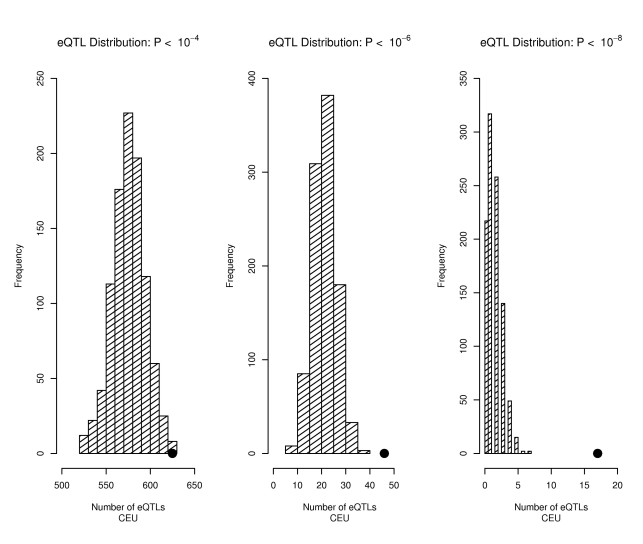
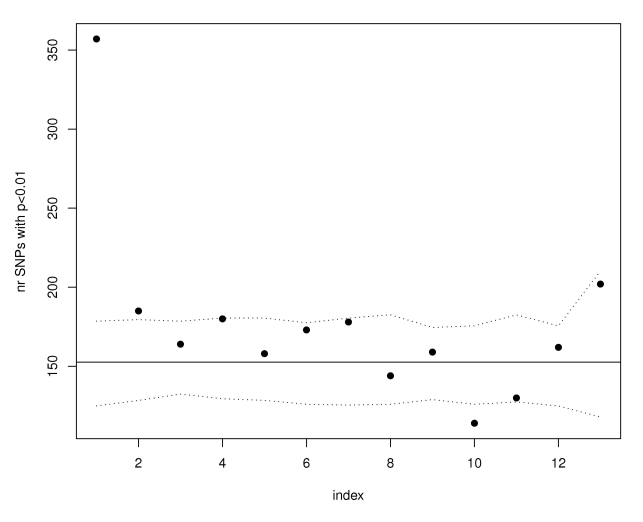
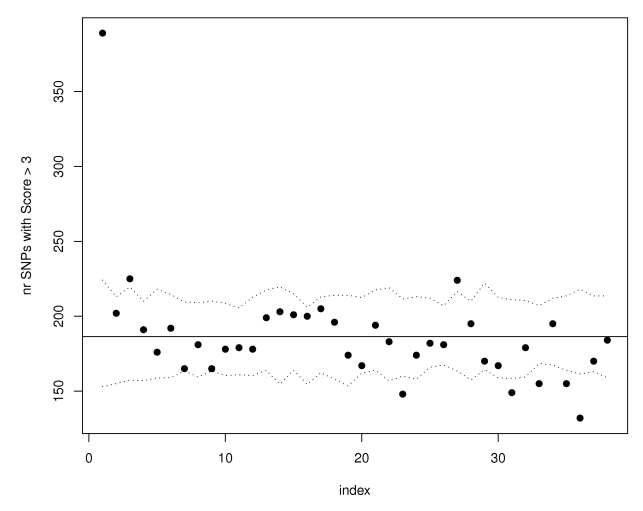
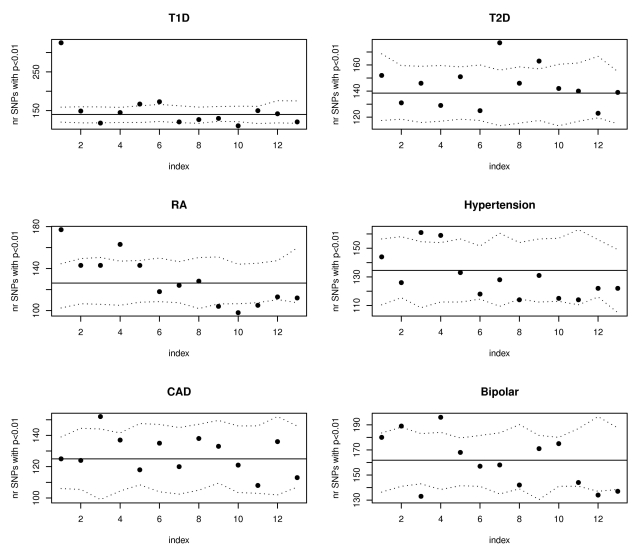
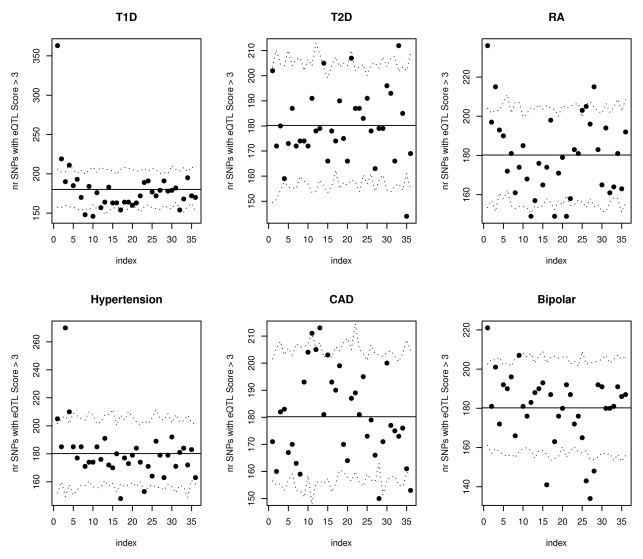
Although genome-wide association studies (GWAS) of complex traits have yielded more reproducible associations than had been discovered using any other approach, the loci characterized to date do not account for much of the heritability to such traits and, in general, have not led to improved understanding of the biology underlying complex phenotypes. Using a web site we developed to serve results of expression quantitative trait locus (eQTL) studies in lymphoblastoid cell lines from HapMap samples (http://www.scandb.org), we show that single nucleotide polymorphisms (SNPs) associated with complex traits (from http://www.genome.gov/gwastudies/) are significantly more likely to be eQTLs than minor-allele-frequency-matched SNPs chosen from high-throughput GWAS platforms. These findings are robust across a range of thresholds for establishing eQTLs (p-values from 10(-4)-10(-8)), and a broad spectrum of human complex traits. Analyses of GWAS data from the Wellcome Trust studies confirm that annotating SNPs with a score reflecting the strength of the evidence that the SNP is an eQTL can improve the ability to discover true associations and clarify the nature of the mechanism driving the associations. Our results showing that trait-associated SNPs are more likely to be eQTLs and that application of this information can enhance discovery of trait-associated SNPs for complex phenotypes raise the possibility that we can utilize this information both to increase the heritability explained by identifiable genetic factors and to gain a better understanding of the biology underlying complex traits.
Overview
The claims and statistics of this paper haven’t been checked yet.
Free: it reads the open-access text and checks the first 5 claims that cite a source we can check. Create a free account to check every claim.
Integrity signals
Registry
Cites
Statistics
Figures
Verification
Claims the paper makes
The claims and statistics of this paper haven’t been checked yet.
Free: it reads the open-access text and checks the first 5 claims that cite a source we can check. Create a free account to check every claim.
Claims other papers make about this one
Each is checked against this paper’s own text: does it say what the citing paper says it does?
The cited source says what the claim attributes to it.
In the citing paper
“Significant GWAS loci are enriched for e QTLs (Nicolae et al., 2010) and meQTLs (X. Zhang et al., 2014).”
From Integrative Analysis of Multi-omics Data for Discovery and Functional Studies of Complex Human Diseases (2016) · cites this paper as Nicolae et al., 2010
Self-check
Percentages, sums and reported differences re-computed from the paper’s own numbers.
The self-check needs the paper’s full text.
Citations
Cites
PLINK: a tool set for whole-genome association and population-based linkage analyses.
Purcell, S., Neale, B., Todd-Brown, K., Thomas, L., Ferreira, M. A. R., Bender, D., Maller, J., Sklar, P., de Bakker, P. I. W., Daly, M. J., et al. (2007) · The American Journal of Human Genetics · doi:10.1086/519795 · Cited by 34,089 · cited 1×
“We used the toolkit PLINK [31] to calculate frequencies.”
MethodGenome-wide association study of 14,000 cases of seven common diseases and 3,000 shared controls
The Wellcome Trust Case Control Consortium, Management Committee, Burton, P. R., Clayton, D. G., Cardon, L. R., Craddock, N., Deloukas, P., Duncanson, A., Kwiatkowski, D. P., McCarthy, M. I., et al. (2007) · Nature · doi:10.1038/nature05911 · Cited by 9,442
Finding the missing heritability of complex diseases
Manolio, T. A., Collins, F. S., Cox, N. J., Goldstein, D. B., Hindorff, L. A., Hunter, D. J., McCarthy, M. I., Ramos, E. M., Cardon, L. R., Chakravarti, A., et al. (2009) · Nature · doi:10.1038/nature08494 · Cited by 8,336 · cited 1×
“The failure to achieve this goal is made particularly acute by the recognition that the loci that have been successfully identified not only provide us with little insight into the genetic basis for the trait, but also account for little of the overall heritability [5].”
BackgroundSelf-citationHindorff, L. A., Sethupathy, P., Junkins, H. A., Ramos, E. M., Mehta, J. P., Collins, F. S., & Manolio, T. A. (2009) · Proceedings of the National Academy of Sciences · doi:10.1073/pnas.0903103106 · Cited by 4,013 · cited 1×
“Our results build on those of previous studies, particularly those of Schadt and colleagues [12–15] that focused on using transcriptome information to improve understanding of genetic signals, but the rapid accumulation of trait-associated SNPs through GWAS, coupled with the systematic efforts to catalog these variant…”
ResultGenome-wide association defines more than 30 distinct susceptibility loci for Crohn's disease
the NIDDK IBD Genetics Consortium, Barrett, J. C., the Belgian-French IBD Consortium, the Wellcome Trust Case Control Consortium, Hansoul, S., Nicolae, D. L., Cho, J. H., Duerr, R. H., Rioux, J. D., Brant, S. R., et al. (2008) · Nature Genetics · doi:10.1038/ng.175 · Cited by 2,593
Self-citationMAQC Consortium, Shi, L., Shi, L., Reid, L. H., Jones, W. D., Shippy, R., Warrington, J. A., Baker, S. C., Collins, P. J., de Longueville, F., et al. (2006) · Nature Biotechnology · doi:10.1038/nbt1239 · Cited by 2,126 · cited 1×
“) that they might be considered unreliable for genomic studies [24], while others highlight the reproducibility of results of transcriptome studies [25,26] and find that LCLs show little variability as a consequence of non-genetic”
ResultHampe, J., Franke, A., Rosenstiel, P., Till, A., Teuber, M., Huse, K., Albrecht, M., Mayr, G., De La Vega, F. M., Briggs, J., et al. (2007) · Nature Genetics · doi:10.1038/ng1954 · Cited by 1,897 · cited 1×
“For a few disorders, results of GWAS have highlighted biological contributing factors to disease that had not previously been recognized as central, such as the complement system in macular degeneration [1] or autophagy in Crohn’s disease [2–4].”
BackgroundGenome-wide association study of blood pressure and hypertension
Levy, D., Ehret, G. B., Rice, K., Verwoert, G. C., Launer, L. J., Dehghan, A., Glazer, N. L., Morrison, A. C., Johnson, A. D., Aspelund, T., et al. (2009) · Nature Genetics · doi:10.1038/ng.384 · Cited by 1,364 · cited 1×
“has enabled us to generalize the concept that information on eQTLs will have utility for understanding the genetic component to complex traits. Our primary observations – that SNPs reproducibly associated with complex human traits are more likely to be eQTLs – are novel, although perhaps not unexpected given that few…”
ResultGenetics of gene expression and its effect on disease
Emilsson, V., Thorleifsson, G., Zhang, B., Leonardson, A. S., Zink, F., Zhu, J., Carlson, S., Helgason, A., Walters, G. B., Gunnarsdottir, S., et al. (2008) · Nature · doi:10.1038/nature06758 · Cited by 1,296 · cited 1×
“studies have highlighted the potential sensitivity of eQTL studies to cell and tissue subtypes [15,19,20].”
BackgroundA General Test of Association for Quantitative Traits in Nuclear Families
Abecasis, G. R., Cardon, L. R., & Cookson, W. O. C. (2000) · The American Journal of Human Genetics · doi:10.1086/302698 · Cited by 1,126 · cited 1×
“Genome-wide association analyses of 13,080 transcript clusters (gene-level) with reliable expression and more than 2 million SNPs in the CEU or YRI populations were conducted using the Quantitative Trait Disequilibrium Test (QTDT) [30].”
Method
Research works printed but not linked: 1
- Hindorff LA Sethupathy P Junkins HA Ramos EM Mehta JP 2009 Potential etiologic and functional implications of genome-wide association loci for human diseases and traits. Proc Natl Acad Sci U S A 106 9362 9367 19474294 PMC2687147 · DOI · Paper page
Cited by
Items 201–300 of 1,003
Genetic Architecture of MicroRNA Expression: Implications for the Transcriptome and Complex Traits
Gamazon, E. R., Ziliak, D. M., Im, H. K., LaCroix, B. L., Park, D. S., Cox, N. J., & Huang, R. S. (2012) · The American Journal of Human Genetics · doi:10.1016/j.ajhg.2012.04.023 · Cited by 104
Self-citationGenetic Study of Complex Diseases in the Post-GWAS Era
Huang, Q. (2015) · Journal of genetics and genomics/Journal of Genetics and Genomics · doi:10.1016/j.jgg.2015.02.001 · Cited by 110
Zhang, X., Joehanes, R., Chen, B. H., Huan, T., Ying, S., Munson, P. J., Johnson, A. D., Levy, D., & O'Donnell, C. J. (2015) · Nature Genetics · doi:10.1038/ng.3220 · Cited by 103
Li, X., Hastie, A. T., Hawkins, G. A., Moore, W. C., Ampleford, E. J., Milošević, J., Li, H., Busse, W. W., ERZURUM, S. C., Kaminski, N., et al. (2015) · Allergy · doi:10.1111/all.12683 · Cited by 113
“Instead, SNPs associated with complex traits are more likely to be associated with expression quantitative trait locus (eQTL) (8).”
BackgroundGenetic analysis of amyotrophic lateral sclerosis identifies contributing pathways and cell types
Saez-Atienzar, S., Bandres-Ciga, S., Langston, R. G., Kim, J. J., Choi, S. W., Reynolds, R. H., the International ALS Genomics Consortium, ITALSGEN, Abramzon, Y., Dewan, R., et al. (2021) · Science Advances · doi:10.1126/sciadv.abd9036 · Cited by 97
Laying a solid foundation for Manhattan – ‘setting the functional basis for the post-GWAS era’
Zhang, X., Bailey, S. D., & Lupien, M. (2014) · Trends in Genetics · doi:10.1016/j.tig.2014.02.006 · Cited by 91
Pierce, B. L., Tong, L., Chen, L. S., Rahaman, R., Argos, M., Jasmine, F., Roy, S., Paul-Brutus, R., Westra, H.-J., Franke, L., et al. (2014) · PLoS Genetics · doi:10.1371/journal.pgen.1004818 · Cited by 97
“Enrichment analysis for eQTLs Consistent with findings from previous studies [5,11,12], SNPs known to be associated with human traits (1,930 unlinked SNPs with P,5610(28) in the NHGRI GWAS catalog) were more likely to show association with local gene expression (P = 2.”
MethodKirsten, H., Al-Hasani, H., Holdt, L., Gross, A., Beutner, F., Krohn, K., Horn, K., Ahnert, P., Burkhardt, R., Reiche, K., et al. (2015) · Human Molecular Genetics · doi:10.1093/hmg/ddv194 · Cited by 94
“Observed enrichment of GWAS-SNPs within eSNPs corroborates this approach (6).”
BackgroundVariable number tandem repeats mediate the expression of proximal genes
Bakhtiari, M., Park, J., Ding, Y.-C., Shleizer-Burko, S., Neuhausen, S. L., Halldórsson, B. V., Stefánsson, K., Gymrek, M., & Bafna, V. (2021) · Nature Communications · doi:10.1038/s41467-021-22206-z · Cited by 103
“Single nucleotide polymorphisms (SNPs) that associate with gene expression, often referred to as expression quantitative trait loci (eQTLs), are molecular intermediates that drive disease and variation in complex traits 16 – 18 .”
BackgroundImmunogenetics of rheumatoid arthritis: Understanding functional implications
Messemaker, T. C., Huizinga, T. W. J., & Kurreeman, F. A. S. (2015) · Journal of Autoimmunity · doi:10.1016/j.jaut.2015.07.007 · Cited by 106
Castaldi, P. J., Cho, M. H., Estépar, R. S. J., McDonald, M., Laird, N. M., Beaty, T. H., Washko, G. R., Crapo, J. D., & Silverman, E. K. (2014) · American Journal of Respiratory and Critical Care Medicine · doi:10.1164/rccm.201403-0569oc · Cited by 97
Simcoe, M. J., Valdes, A. M., Liu, F., Furlotte, N. A., Evans, D. M., Hemani, G., Ring, S. M., Smith, G. D., Duffy, D. L., Zhu, G., et al. (2021) · Science Advances · doi:10.1126/sciadv.abd1239 · Cited by 104
“Despite the lack of iris tissue in the GTEx repository, many SNPs showed signif icant eQTL (expression quantitative trait loci) effects in multiple cell types and tissues (44), as seen for the associated SNPs across 38 (79%) of the 48 tissues in the GTEx dataset (table ST9).”
BackgroundCross-Population Joint Analysis of eQTLs: Fine Mapping and Functional Annotation
Wen, X., Luca, F., & Pique-Regi, R. (2015) · PLOS Genetics · doi:10.1371/journal.pgen.1005176 · Cited by 87
“Suppose that from the posterior sampling, we observe posterior model [1, 2] and [1, 3] 40% and 60% of the time, respectively.”
Deelen, P., Zhernakova, D. V., de Haan, M., van der Sijde, M., Bonder, M. J., Karjalainen, J., van der Velde, K. J., Abbott, K. M., Fu, J., Wijmenga, C., et al. (2015) · Genome Medicine · doi:10.1186/s13073-015-0152-4 · Cited by 94
“Most disease-associated genetic variants in humans are regulatory and affect gene-expression levels [1-3].”
Yin, H., Pantazatos, S. P., Galfalvy, H., Huang, Y., Rosoklija, G. B., Dwork, A. J., Burke, A., Arango, V., Oquendo, M. A., & Mann, J. J. (2016) · American Journal of Medical Genetics Part B: Neuropsychiatric Genetics · doi:10.1002/ajmg.b.32423 · Cited by 91
“Since it has been shown that most trait-associated SNPs are expression quantitative trait loci (eQTL) [Nicolae et al., 2010], thereby influencing gene expression, we used a large open-source repository of eQTL analysis results (www.”
BackgroundMethodInfluentialHe, F., Wang, W., Rutter, W. B., Jordan, K. W., Ren, J., Taagen, E., DeWitt, N., Sehgal, D., Sukumaran, S., Dreisigacker, S., et al. (2022) · Nature Communications · doi:10.1038/s41467-022-28453-y · Cited by 116
Progress in the Genetics of Polygenic Brain Disorders: Significant New Challenges for Neurobiology
McCarroll, S. A., & Hyman, S. E. (2013) · Neuron · doi:10.1016/j.neuron.2013.10.046 · Cited by 88
“…common variants that are implicated in genome-wide association studies tend also to associate with quantitative measurements of the expression levels of the same genes, especially when gene expression is measured in the tissue relevant to the disease (Nicolae et al., 2010; Richards et al., 2012).”
Genome sequencing in the clinic: the past, present, and future of genomic medicine
Prokop, J. W., May, T., Strong, K. A., Bilinovich, S. M., Bupp, C. P., Rajasekaran, S., Worthey, E. A., & Lazar, J. (2018) · Physiological Genomics · doi:10.1152/physiolgenomics.00046.2018 · Cited by 94
Li, M. J., Yan, B., Sham, P. C., & Wang, J. (2014) · Briefings in Bioinformatics · doi:10.1093/bib/bbu018 · Cited by 95
Guo, X., Lin, W., Bao, J., Cai, Q., Pan, X., Bai, M., Yuan, Y., Shi, J., Sun, Y., Han, M.-R., et al. (2018) · The American Journal of Human Genetics · doi:10.1016/j.ajhg.2018.03.016 · Cited by 103
The GAME-ON/ELLIPSE Consortium, Spisák, S., Lawrenson, K., Fu, Y., Csabai, I., Cottman, R. T., Seo, J.-H., Haiman, C., Han, Y., Lenci, R., et al. (2015) · Nature Medicine · doi:10.1038/nm.3975 · Cited by 91
“Trait-associated polymorphisms are enriched for expression quantitative trait loci (eQTLs) 2,3 .”
Cotsapas, C. J., Mitrovič, M., & Hafler, D. A. (2018) · Handbook of clinical neurology · doi:10.1016/b978-0-444-64076-5.00046-6 · Cited by 114
Kabakchiev, B., & Silverberg, M. S. (2013) · Gastroenterology · doi:10.1053/j.gastro.2013.03.001 · Cited by 84
César, A. S. M., Regitano, L. C. D. A., Reecy, J. M., Poleti, M., de Oliveira, P. S. N., de Oliveira, G. B., Moreira, G. C. M., Mudadu, M. A., Tizioto, P. C., Koltes, J. E., et al. (2018) · BMC Genomics · doi:10.1186/s12864-018-4871-y · Cited by 100
Single nucleotide polymorphisms in clinics: Fantasy or reality for cancer?
Srinivasan, S., Clements, J. A., & Batra, J. (2015) · Critical Reviews in Clinical Laboratory Sciences · doi:10.3109/10408363.2015.1075469 · Cited by 94
Transcriptome study of differential expression in schizophrenia
Sanders, A. R., Göring, H. H. H., Duan, J., Drigalenko, E. I., Moy, W., Freda, J., He, D., Shi, J., & Gejman, P. V. (2013) · Human Molecular Genetics · doi:10.1093/hmg/ddt350 · Cited by 88
“Using data from HapMap LCLs, it has been shown that trait-associated SNPs are enriched for expression quantitative trait nucleotides (eQTNs), with neurological/psychiatric disorders showing similar enrichment levels to other complex traits (23).”
BackgroundNew Ethical Issues for Genetic Counseling in Common Mental Disorders
Gershon, E. S., & Alliey-Rodriguez, N. (2013) · American Journal of Psychiatry · doi:10.1176/appi.ajp.2013.12121558 · Cited by 83
ExprTarget: An Integrative Approach to Predicting Human MicroRNA Targets
Gamazon, E. R., Im, H. K., Duan, S., Lussier, Y. A., Cox, N. J., Dolan, M. E., & Zhang, W. E. (2010) · PLoS ONE · doi:10.1371/journal.pone.0013534 · Cited by 87
“extends, in the direction of miRNA-mediated gene regulation, earlier studies on these same samples that have successfully been used as models for studies of complex traits”
ResultSelf-citationDolan, M. E., Charif, O. E., Wheeler, H. E., Gamazon, E. R., Ardeshir‐Rouhani‐Fard, S., Monahan, P. O., Feldman, D. R., Hamilton, R. J., Vaughn, D. J., Beard, C. J., et al. (2017) · Clinical Cancer Research · doi:10.1158/1078-0432.ccr-16-3224 · Cited by 99
“The use of genetically determined gene expression to identify trait-associated genes is supported by evidence that SNPs associated with chemotherapeutic drug susceptibility (42) and complex traits (43) are more likely to be sites that associate with gene expression.”
BackgroundSelf-citationMulti-tissue transcriptome analyses identify genetic mechanisms underlying neuropsychiatric traits
Gamazon, E. R., Zwinderman, A. H., Cox, N. J., Denys, D., & Derks, E. M. (2019) · Nature Genetics · doi:10.1038/s41588-019-0409-8 · Cited by 87
Self-citationα-1-Antitrypsin deficiency: clinical variability, assessment, and treatment
Stockley, R. A., & Turner, A. M. (2014) · Trends in Molecular Medicine · doi:10.1016/j.molmed.2013.11.006 · Cited by 92
QuASAR: quantitative allele-specific analysis of reads
Harvey, C. T., Moyerbrailean, G. A., Davis, G. O., Wen, X., Luca, F., & Pique-Regi, R. (2015) · Bioinformatics · doi:10.1093/bioinformatics/btu802 · Cited by 84
Genomic approaches for understanding the genetics of complex disease
Lowe, W. L., & Reddy, T. E. (2015) · Genome Research · doi:10.1101/gr.190603.115 · Cited by 82
“Known eQTLs are highly enriched in variants associated with traits and diseases (e.g., Nica et al. 2010; Nicolae et al. 2010; Torres et al. 2014), and those associations can mark candidate target genes for downstream mechanistic investigation (Cookson et al. 2009).”
BackgroundIntronic locus determines SHROOM3 expression and potentiates renal allograft fibrosis
Menon, M. C., Chuang, P. Y., Li, Z., Wei, C., Zhang, W., Luan, Y., Yi, Z., Xiong, H., Woytovich, C., Greene, I., et al. (2014) · Journal of Clinical Investigation · doi:10.1172/jci76902 · Cited by 93
Self-citationAhsan, H., Halpern, J., Kibriya, M. G., Pierce, B. L., Lin, T., Gamazon, E. R., McGuire, V. M., Felberg, A., Shi, J., Jasmine, F., et al. (2014) · Cancer Epidemiology Biomarkers & Prevention · doi:10.1158/1055-9965.epi-13-0340 · Cited by 85
“For step 1, we used expression-quantitative trait locus (eQTL) mapping of SNPs to genes, as implemented in the online database SCAN (20, 21) and used the eQTL”
Self-citationMolecular mechanisms underlying variations in lung function: a systems genetics analysis
Obeidat, M., Hao, K., Bossé, Y., Nickle, D. C., Nie, Y., Postma, D. S., Laviolette, M., Sandford, A. J., Daley, D., Hogg, J. C., et al. (2015) · The Lancet Respiratory Medicine · doi:10.1016/s2213-2600(15)00380-x · Cited by 91
Luningham, J. M., Chen, J., Tang, S., Jager, P. L. D., Bennett, D. A. A., Buchman, A. S., & Yang, J. (2020) · The American Journal of Human Genetics · doi:10.1016/j.ajhg.2020.08.022 · Cited by 98
Systems genetics: From GWAS to disease pathways
van der Sijde, M. R., Ng, A., & Fu, J. (2014) · Biochimica et Biophysica Acta (BBA) - Molecular Basis of Disease · doi:10.1016/j.bbadis.2014.04.025 · Cited by 94
Kachroo, P., Eraso, J. M., Beres, S. B., Olsen, R. J., Zhu, L., Nasser, W., Bernard, P. E., Cantu, C. C., Saavedra, M. O., Arredondo, M. J., et al. (2019) · Nature Genetics · doi:10.1038/s41588-018-0343-1 · Cited by 89
How next-generation sequencing is transforming complex disease genetics
Kilpinen, H., & Barrett, J. C. (2012) · Trends in Genetics · doi:10.1016/j.tig.2012.10.001 · Cited by 98
Zhang, T., Choi, J., Kovacs, M. A., Shi, J., Xu, M., Program, N. C. S., Melanoma Meta-Analysis Consortium, Goldstein, A. M., Trower, A. J., Bishop, D. T., et al. (2018) · Genome Research · doi:10.1101/gr.233304.117 · Cited by 84
eQTL studies: from bulk tissues to single cells
Zhang, J., & Zhao, H. (2023) · Journal of genetics and genomics/Journal of Genetics and Genomics · doi:10.1016/j.jgg.2023.05.003 · Cited by 87
Large-Scale Identification of Common Trait and Disease Variants Affecting Gene Expression
Hauberg, M. E., Zhang, W., Giambartolomei, C., Franzén, O., Morris, D. L., Vyse, T. J., Ruusalepp, A., Sklar, P. B., Schadt, E. E., Björkegren, J., et al. (2017) · The American Journal of Human Genetics · doi:10.1016/j.ajhg.2017.04.016 · Cited by 84
“The Ame approach is justified by the current notion that many variants identified by GWASs alter gene expression rather than gene function.(5,6) Although gene expression changes could also be studied directly in the trait or disease of interest, this might not be preferable over combining GWASs with eQTL studies: per…”
BackgroundSelf-citationShang, L., Smith, J. A., Zhao, W., Kho, M., Turner, S. T., Mosley, T. H., Kardia, S. L. R., & Zhou, X. (2020) · The American Journal of Human Genetics · doi:10.1016/j.ajhg.2020.03.002 · Cited by 88
“For example, it has been shown that genetic variants associated with common diseases tend to be eQTLs and vice versa.(1,9,10) In addition, identified eQTLs in mapping studies can also provide invaluable information to enhance the power of future GWASs.”
BackgroundNuclear genetic regulation of the human mitochondrial transcriptome
Ali, A. T., Boehme, L., Carbajosa, G., Seitan, V. C., Small, K. S., & Hodgkinson, A. (2019) · eLife · doi:10.7554/elife.41927 · Cited by 85
Overlap between eQTL and QTL associated with production traits and fertility in dairy cattle
van den Berg, I., Hayes, B. J., Chamberlain, A. J., & Goddard, M. E. (2019) · BMC Genomics · doi:10.1186/s12864-019-5656-7 · Cited by 101
“[8], GWAS variants associated with quantitative traits in humans were enriched for eQTL variants, including a 2 fold enrichment of variants associated with Crohn’s disease among eQTL.”
BackgroundElorbany, R., Popp, J. M., Rhodes, K., Strober, B. J., Barr, K., Qi, G., Gilad, Y., & Battle, A. J. (2022) · PLoS Genetics · doi:10.1371/journal.pgen.1009666 · Cited by 87
Ritchie, M. D. (2010) · Annals of Human Genetics · doi:10.1111/j.1469-1809.2010.00630.x · Cited by 84
“Another group has proposed the use of genome annotation based on function to improve the ability to detect the biologically relevant signals in GWAS (Nicolae et al., 2010).”
BackgroundInfluentialAKAPs integrate genetic findings for autism spectrum disorders
Poelmans, G., Franke, B., Pauls, D. L., Glennon, J. C., & Buitelaar, J. K. (2013) · Translational Psychiatry · doi:10.1038/tp.2013.48 · Cited by 71
Fan, J., Hu, J., Xue, C., Zhang, H., Suszták, K., Reilly, M. P., Xiao, R., & Li, M. (2020) · PLoS Genetics · doi:10.1371/journal.pgen.1008786 · Cited by 87
“Studies have found that many GWAS identified single nucleotide polymorphisms (SNPs) are significantly enriched for eQTLs, compared to control SNPs matched by allele frequencies [6].”
BackgroundExpression quantitative trait locus analysis for translational medicine
Gibson, G. C., Powell, J. E., & Marigorta, U. M. (2015) · Genome Medicine · doi:10.1186/s13073-015-0186-7 · Cited by 86
“The importance of expression quantitative trait loci The recognition that the majority of genotypes associated with diseases localize to regulatory regions [1, 2] rather than to protein-coding regions has increased interest in the effect of polymorphisms on gene expression.”
BackgroundZhao, K., Lu, Z.-X., Park, J. W., Zhou, Q., & Xing, Y. (2013) · Genome Biology · doi:10.1186/gb-2013-14-7-r74 · Cited by 78
Cross-Tissue and Tissue-Specific eQTLs: Partitioning the Heritability of a Complex Trait
Torres, J., Gamazon, E. R., Parra, E. J., Below, J. E., Valladares‐Salgado, A., Wacher, N. H., Cruz, M., Hanis, C. L., & Cox, N. J. (2014) · The American Journal of Human Genetics · doi:10.1016/j.ajhg.2014.10.001 · Cited by 81
Self-citationA meta-analysis of gene expression quantitative trait loci in brain
Kim, Y., Xia, K., Tao, R., Giusti-Rodriguez, P., Vladimirov, V, van den Oord, E., & Sullivan, P. F. (2014) · Translational Psychiatry · doi:10.1038/tp.2014.96 · Cited by 73
Mamdani, M., Williamson, V., McMichael, G. O., Blevins, T., Aliev, F., Adkins, A., Hack, L., Bigdeli, T., D. van der Vaart, A., Web, B. T., et al. (2015) · PLOS ONE · doi:10.1371/journal.pone.0137671 · Cited by 73
“Linkage disequilibrium (LD) of eQTLs with genetic variants implicated in AD and ARPs can provide a biological mechanism for disease-associated variants with no otherwise apparent functions as there is empirical evidence suggesting that eQTLs are overrepresented among GWAS signals [38, 39].”
BackgroundGenetics of Sputum Gene Expression in Chronic Obstructive Pulmonary Disease
Qiu, W., Cho, M. H., Riley, J., Anderson, W. H., Singh, D., Bakke, P. S., Gulsvik, A., Litonjua, A. A., Lomas, D. A., Crapo, J. D., et al. (2011) · PLoS ONE · doi:10.1371/journal.pone.0024395 · Cited by 76
“. In contrast to our study, these papers first found gene transcripts correlated with the phenotype, then tested SNPs in/near these genes for association with expression levels. We performed the cis-eQTL analysis as the initial step, then tested the eQTL SNPs for phenotype association. This limits multiple testing com…”
ResultOne SNP at a Time: Moving beyond GWAS in Psoriasis
Ray-Jones, H. F., Eyre, S., Barton, A. C., & Warren, R. B. (2016) · Journal of Investigative Dermatology · doi:10.1016/j.jid.2015.11.025 · Cited by 80
“If the associated genetic variants are involved in differential regulation of gene expression, there should be a correlation between genotype and gene expression (Nicolae et al., 2010).”
BackgroundFunctional Characterization of Schizophrenia-Associated Variation in CACNA1C
Eckart, N., Song, Q., Yang, R. J., Wang, R., Zhu, H., McCallion, A. S., & Avramopoulos, D. (2016) · PLoS ONE · doi:10.1371/journal.pone.0157086 · Cited by 78
“SNPs identified by GWAS for complex diseases, such as SZ and BP, most often lie in noncoding sequences and are enriched for expression quantitative trait loci (eQTLs), suggesting that dysregulation of transcriptional control plays a role in complex disease pathogenesis [12].”
BackgroundA Powerful Framework for Integrating eQTL and GWAS Summary Data
Xu, Z., Wu, C., Wei, P., & Pan, W. (2017) · Genetics · doi:10.1534/genetics.117.300270 · Cited by 75
“…offers a direct and intuitive justi fi cation for PrediXcan and TWAS: the two methods perform well due to their over-weighting on expression-associated SNPs (eSNPs), as supported by empirical evidence that eSNPs are more likely to be associated with complex traits and disease (Nicolae et al. 2010).”
BackgroundMethodAdvances in Dyslexia Genetics—New Insights Into the Role of Brain Asymmetries
Paracchini, S., Diaz, R., & Stein, J. F. (2016) · Advances in genetics · doi:10.1016/bs.adgen.2016.08.003 · Cited by 79
Association genetics of the loblolly pine (Pinus taeda, Pinaceae) metabolome
Eckert, A. J., Wegrzyn, J., Cumbie, W. P., Goldfarb, B., Huber, D. A., Tolstikov, V., Fiehn, O., & Neale, D. B. (2011) · New Phytologist · doi:10.1111/j.1469-8137.2011.03976.x · Cited by 77
Hancock, D. B., Levy, J. L., Gaddis, N. C., Glasheen, C., Saccone, N. L., Page, G. P., Hulse, G. K., Wildenauer, D., Kelty, E. A., Schwab, S. G., et al. (2015) · Biological Psychiatry · doi:10.1016/j.biopsych.2015.01.003 · Cited by 70
Yang, F., Wang, J., Pierce, B. L., & Chen, L. (2017) · Genome Research · doi:10.1101/gr.216754.116 · Cited by 89
“2008), as it is well-known that SNPs influencing human traits tend to be eQTLs (Nicolae et al. 2010).”
BackgroundChoy, M.-K., Javierre, B. M., Williams, S. G., Baross, S. L., Liu, Y., Wingett, S. W., Akbarov, A., Wallace, C., Freire-Pritchett, P., Rugg-Gunn, P. J., et al. (2018) · Nature Communications · doi:10.1038/s41467-018-04931-0 · Cited by 69
Bayesian Genetic Colocalization Test of Two Traits Using coloc
Rasooly, D., Peloso, G. M., & Giambartolomei, C. (2022) · Current Protocols · doi:10.1002/cpz1.627 · Cited by 79
Functional interpretation of non‐coding sequence variation: Concepts and challenges
Paul, D. S., Soranzo, N., & Beck, S. (2013) · BioEssays · doi:10.1002/bies.201300126 · Cited by 83
“Systematic studies have demonstrated the practicality and efficiency of eQTLs as screening tool for candidate regulatory variants [39, 40].”
BackgroundCandidate Gene Studies of a Promising Intermediate Phenotype: Failure to Replicate
Hart, A. B., de Wit, H., & Palmer, A. A. (2012) · Neuropsychopharmacology · doi:10.1038/npp.2012.245 · Cited by 72
Identifying the Biological Basis of GWAS Hits for Endometriosis1
Fung, J. N., Rogers, P. A. W., & Montgomery, G. W. (2015) · Biology of Reproduction · doi:10.1095/biolreprod.114.126458 · Cited by 70
Barbeira, A. N., Dickinson, S. P., Bonazzola, R., Zheng, J., Wheeler, H. E., Torres, J. M., Torstenson, E. S., Shah, K. P., Garcia, T., Edwards, T. L., et al. (2018) · Nature Communications · doi:10.1038/s41467-018-03621-1 · Cited by 69
Self-citationGenetic architecture of type 2 diabetes
Hara, K., Shojima, N., Hosoe, J., & Kadowaki, T. (2014) · Biochemical and Biophysical Research Communications · doi:10.1016/j.bbrc.2014.08.012 · Cited by 76
Thibodeau, S. N., French, A. J., McDonnell, S. K., Cheville, J. C., Middha, S., Tillmans, L. S., Riska, S. M., Baheti, S., Larson, M. C., Fogarty, Z. C., et al. (2015) · Nature Communications · doi:10.1038/ncomms9653 · Cited by 74
“…genome, with many residing at some distance from any nearby annotated gene, it is believed that many of these (or their closely linked causal-SNPs) are located in regulatory domains of the genome that control gene expression rather than in coding regions that directly affect protein function 15 .”
Siddle, K. J., Deschamps, M., Tailleux, L., Nédélec, Y., Pothlichet, J., Lugo‐Villarino, G., Libri, V., Gicquel, B., Neyrolles, O., Laval, G., et al. (2014) · Genome Research · doi:10.1101/gr.161471.113 · Cited by 74
“Given that regulatory variants have been observed to overlap with SNPs associated with complex phenotypes (Nica et al. 2010; Nicolae et al. 2010), we restricted our analysis to SNPs that have been suggestively associated (P < 1 3 10 5) with TB susceptibility by genome-wide association studies…”
MethodLu, Y., Beeghly-Fadiel, A. C., Wu, L., Guo, X., Li, B., Schildkraut, J. M., Im, H. K., Chen, Y. A., Permuth, J. B., Reid, B. M., et al. (2018) · Cancer Research · doi:10.1158/0008-5472.can-18-0951 · Cited by 77
“expression quantitative trait loci (eQTL)(13,14).”
Yao, C., Chen, B. H., Joehanes, R., Otlu, B., Zhang, X., Liu, C., Huan, T., Tastan, O., Cupples, L. A., Meigs, J. B., et al. (2015) · Circulation · doi:10.1161/circulationaha.114.010696 · Cited by 68
“Cardiovascular Phenotypes and Proportion of Interindividual Variation Explained by Associated eQTLs and eQTL Genes in Framingham Heart Study Participants Phenotype Interindividual Variation Explained by eQTLs, % (No. of eQTLs) Interindividual Variation Explained by Expression of eQTL Genes, % (No. of eQTL Genes) No. o…”
InfluentialMartin, A. R., Costa, H. A., Lappalainen, T., Henn, B. M., Kidd, J. M., Yee, M.-C., Grubert, F., Cann, H. M., Snyder, M., Montgomery, S. B., et al. (2014) · PLoS Genetics · doi:10.1371/journal.pgen.1004549 · Cited by 65
Carbonetto, P. S., & Stephens, M. (2013) · PLoS Genetics · doi:10.1371/journal.pgen.1003770 · Cited by 78
Lessons from Functional Analysis of Genome-Wide Association Studies
Sur, I., Tuupanen, S., Whitington, T., Aaltonen, L. A., & Taipale, J. (2013) · Cancer Research · doi:10.1158/0008-5472.can-13-0789 · Cited by 66
“enriched in expression quantitative trait loci (11, 15) and DNase I hypersensitive sites (12) suggest that considerable number of GWAS SNPs may act through a similar mechanism.”
BackgroundSaccone, S. F., Bolze, R., Thomas, P. D., Quan, J., Mehta, G., Deelman, E., Tischfield, J. A., & Rice, J. P. (2010) · Nucleic Acids Research · doi:10.1093/nar/gkq513 · Cited by 73
“Future iterations of SPOT will include additional biological information such as expression quantitative trait loci (12), transcription factor binding sites, micro RNA target sites and other GWAS results [see (13) and (14) for some proposed methods on implementing these kinds of data].”
MethodFerreira, M. A. R., Jansen, R., Willemsen, G. A. H. M., Penninx, B. W. J. H., Bain, L., Vicente, C. T., Revez, J. A., Matheson, M. C., Hui, J., Tung, J. Y., et al. (2016) · Journal of Allergy and Clinical Immunology · doi:10.1016/j.jaci.2016.07.017 · Cited by 77
“variants, such as those that regulate gene expression levels.(11) The aim of this study was to develop a method that combined the 2 latter approaches and apply it to results from a published asthma GWAS to help identify new genes with expression associatedwith genotype and related to disease risk.”
Jasinska, A. J., Zelaya, I., Service, S. K., Peterson, C. B., Cantor, R. M., Choi, O., DeYoung, J. A., Eskin, E., Fairbanks, L. A., Fears, S. C., et al. (2017) · Nature Genetics · doi:10.1038/ng.3959 · Cited by 68
Kasper, C., Ribeiro, D. M., de Almeida, A. M., Larzul, C., Liaubet, L., & Muráni, E. (2020) · Genes · doi:10.3390/genes11080920 · Cited by 76
“While in most cases, major QTLs are caused by coding variants [119], such as GRAla610Val; it is generally assumed that regulatory variation is the common cause of variation in complex traits [120,121].”
BackgroundThe impact of cell type and context-dependent regulatory variants on human immune traits
Mu, Z., Wei, W., Fair, B., Miao, J., Zhu, P., & Li, Y. I. (2021) · Genome Biology · doi:10.1186/s13059-021-02334-x · Cited by 73
“While eQTLs indeed overlap with many variants that have been associated with complex traits and diseases [2], several studies that assessed colocalization between GWAS and eQTL variants concluded that only a minority of GWAS loci can be explained by the eQTLs detected in available samples.”
BackgroundPACSIN2 polymorphism influences TPMT activity and mercaptopurine-related gastrointestinal toxicity
Stocco, G., Yang, W., Crews, K. R., Thierfelder, W. E., Decorti, G., Londero, M., Franca, R., Rabusin, M., Valsecchi, M. G., Pei, D., et al. (2012) · Human Molecular Genetics · doi:10.1093/hmg/dds302 · Cited by 69
Hancock, A. M., Clark, V. J., Qian, Y., & Rienzo, A. D. (2010) · Molecular Biology and Evolution · doi:10.1093/molbev/msq228 · Cited by 72
“In conclusion, our study corroborates the idea that population genetic approaches can provide useful insights into the functional role of genes and of genetic variation (Nielsen et al. 2007).”
ResultPonsuksili, S., Muráni, E., Brand, B., Schwerin, M., & Wimmers, K. (2011) · Journal of Lipid Research · doi:10.1194/jlr.m013342 · Cited by 93
Cis-eQTL-based trans-ethnic meta-analysis reveals novel genes associated with breast cancer risk
Hoffman, J., Graff, R. E., Emami, N. C., Tai, C. G.-L., Passarelli, M. N., Hu, D., Huntsman, S., Hadley, D., Leong, L., Majumdar, A., et al. (2017) · PLoS Genetics · doi:10.1371/journal.pgen.1006690 · Cited by 73
Eleven loci with new reproducible genetic associations with allergic disease risk
Ferreira, M. A. R., Vonk, J. M., Baurecht, H., Marenholz, I., Tian, C., Hoffman, J., Helmer, Q., Tillander, A., Ullemar, V., Lu, Y., et al. (2018) · Journal of Allergy and Clinical Immunology · doi:10.1016/j.jaci.2018.03.012 · Cited by 67
“On the other hand, eQTLs have a greater probability of being associated with common diseases and traits.(11) Based on these observations, an additional suite of gene-based methods has been developed recently that only include in the association test functional SNPs, such as eQTLs.”
Yin, X., Bose, D., Kwon, A., Hanks, S. C., Jackson, A., Stringham, H. M., Welch, R., Oravilahti, A., Silva, L. F., Locke, A. E., et al. (2022) · The American Journal of Human Genetics · doi:10.1016/j.ajhg.2022.08.007 · Cited by 70
The genome revolution and its role in understanding complex diseases
Hofker, M. H., Fu, J., & Wijmenga, C. (2014) · Biochimica et Biophysica Acta (BBA) - Molecular Basis of Disease · doi:10.1016/j.bbadis.2014.05.002 · Cited by 77
“Interestingly, it has been observed that disease-associated SNPs are more likely to have an effect on gene expression than randomly chosen SNPs [39–42].”
Toward a Road Map for Global -Omics: A Primer on -Omic Technologies
Coughlin, S. S. (2014) · American Journal of Epidemiology · doi:10.1093/aje/kwu262 · Cited by 66
“Their results indicate that annotating SNPs with a score reflecting the strength of the evidence that the SNP is an expression quantitative trait locus can enhance the ability to discover true associations in GWAS and clarify the biological mechanism accounting for the associations (45).”
BackgroundEvidence for Weak Selective Constraint on Human Gene Expression
Glassberg, E. C., Gao, Z., Harpak, A., Lan, X., & Pritchard, J. K. (2019) · Genetics · doi:10.1534/genetics.118.301833 · Cited by 63
“We obtainedhumanmajor alleles fromthe1000Genomesdataset (1000 Genomes Project Consortium et al. 2015) and inferred the human-chimp ancestral allele from Ensembl multiple alignments using Ortheus (Paten et al. 2008).”
MethodKo, D. C., Gamazon, E. R., Shukla, K. P., Pfuetzner, R. A., Whittington, D., Holden, T. D., Brittnacher, M., Fong, C. T., Radey, M. C., Ogohara, C., et al. (2012) · Proceedings of the National Academy of Sciences · doi:10.1073/pnas.1206701109 · Cited by 70
Self-citationde Jong, S., van Eijk, K. R., Zeegers, D. W. L. H., Strengman, E., Janson, E., Veldink, J. H., van den Berg, L. H., Cahn, W., Kahn, R. S., Boks, M. P., et al. (2012) · European Journal of Human Genetics · doi:10.1038/ejhg.2012.38 · Cited by 72
Bipartite Community Structure of eQTLs
Platig, J., Castaldi, P. J., DeMeo, D. L., & Quackenbush, J. F. (2016) · PLoS Computational Biology · doi:10.1371/journal.pcbi.1005033 · Cited by 78
“In humans, loci have been associated with the expression of thousands of genes [2, 4], and eQTLs are enriched for phenotype associations and vice versa [5 – 7].”
A transcriptome-wide association study identifies susceptibility genes for Parkinson’s disease
Yao, S., Zhang, X., Zou, S.-C., Zhu, Y. X., Li, B., Kuang, W., Guo, Y., Li, X., Li, L., & Wang, X. (2021) · npj Parkinson s Disease · doi:10.1038/s41531-021-00221-7 · Cited by 72
Multi-omics study for interpretation of genome-wide association study
Akiyama, M. (2020) · Journal of Human Genetics · doi:10.1038/s10038-020-00842-5 · Cited by 68
“Trait-associated variants have been shown to be enriched in eQTLs [11].”
BackgroundThe genetic basis for adult onset glaucoma: Recent advances and future directions
Wang, Z., Wiggs, J. L., Aung, T., Khawaja, A. P., & Khor, C. C. (2022) · Progress in Retinal and Eye Research · doi:10.1016/j.preteyeres.2022.101066 · Cited by 71
Pierce, B. L., & Ahsan, H. (2011) · Cancer Research · doi:10.1158/0008-5472.can-11-0124 · Cited by 60
Discovery of Candidate Genes for Muscle Traits Based on GWAS Supported by eQTL-analysis
Ponsuksili, S., Muráni, E., Trakooljul, N., Schwerin, M., & Wimmers, K. (2014) · International Journal of Biological Sciences · doi:10.7150/ijbs.8134 · Cited by 63
Corradin, O., Cohen, A. J., Luppino, J. M., Bayles, I., Schumacher, F. R., & Scacheri, P. C. (2016) · Nature Genetics · doi:10.1038/ng.3674 · Cited by 63
Metadata
- Authors
- Nicolae, D. L., Gamazon, E., Zhang, W., Duan, S., Dolan, M. E., & Cox, N. J.
- Affiliations
- University of Chicago (US)
- Corresponding author
- Cox, Nancy J.
- Venue
- PLoS Genetics
- Publisher
- Public Library of Science (PLoS)
- Published
- 2010-04-01
- Volume
- 6
- Issue
- 4
- Pages
- e1000888
- ISSN
- 1553-7390 (ISSN-L)
- 1553-7404
- PMC
- PMC2848547
- OpenAlex
- W2019983262
- Cited by
- 1,292
- References
- 31
- Citations by year
- 2026: 35 · 2025: 57 · 2024: 50 · 2023: 40 · 2022: 63 · 2021: 104 · 2020: 80 · 2019: 87 · 2018: 97 · 2017: 112 · 2016: 101 · 2015: 103 · 2014: 125 · 2013: 78 · 2012: 84
- FWCI
- 42.59
- Type
- journal article
- Language
- en
- Open access
- gold
- doi.org
- Locations
- PLoS Genetics (publishedVersion, cc-by)
- PubMed Central (publishedVersion, cc-by)
- PubMed (publishedVersion)
- Knowledge@UChicago (University of Chicago) (submittedVersion, cc-by-nc-nd)
- DOAJ (DOAJ: Directory of Open Access Journals) (submittedVersion, cc-by-sa)
- Figshare (submittedVersion, cc-by)
- University of Chicago (cc-by)
- Funders
- National Institutes of Health
- National Heart, Lung, and Blood Institute (U01HL084715)
- National Cancer Institute (P50CA125183)
- National Institute of General Medical Sciences (U01 GM61393, U01GM061393)
- National Institute of Diabetes and Digestive and Kidney Diseases (P60DK20595, P60DK020595)
- Topics
- Life Sciences › Biochemistry, Genetics and Molecular Biology › Genetics › Genetic Associations and Epidemiology
- Life Sciences › Biochemistry, Genetics and Molecular Biology › Genetics › Genetic Mapping and Diversity in Plants and Animals
- Life Sciences › Biochemistry, Genetics and Molecular Biology › Genetics › Genetic and phenotypic traits in livestock
- Keywords
- expression quantitative trait loci, single nucleotide polymorphisms, complex traits, genome-wide association study, SNP annotation, heritability, lymphoblastoid cell lines, gene expression
- MeSH terms
- Humans, Phenotype, Genome, Human, Polymorphism, Single Nucleotide, Quantitative Trait Loci, Genome-Wide Association Study
About these checks
Registry, retraction, Cites and statistics results are computed, not judged, with one exception: a printed reference that no index lists is read once by a model before it counts as a citation error. Claims are extracted by a model and kept only when their quote appears verbatim in the text; each cited source is then checked, with a model’s help, for whether it says what the claim relies on. Those verdicts can be wrong — read the claim’s quote and the cited source before relying on one.
Statistics and arithmetic are recomputed, not judged.
Confidence bands are shown only for fields calibrated on our annotated test set. None is calibrated yet, so no band is shown.
What counts as a claim ›How we measure confidence ›How we check this ›
Are you an author, or do you see a problem with this page? Request a review
Data sources
Bibliographic data: Semantic Scholar, OpenAlex, Crossref.
Contains information from the Semantic Scholar Academic Graph Datasets, made available under the ODC Attribution License (ODC-BY 1.0).
Semantic Scholar’s data is described in: Kinney, R., et al. (2023). The Semantic Scholar Open Data Platform. arXiv:2301.10140.
