

The DOI matches its Crossref record; 59 of the 60 references it cites were found in a registry or an index.
Loss of ATRX, Genome Instability, and an Altered DNA Damage Response Are Hallmarks of the Alternative Lengthening of Telomeres Pathway
Open accessAbstract
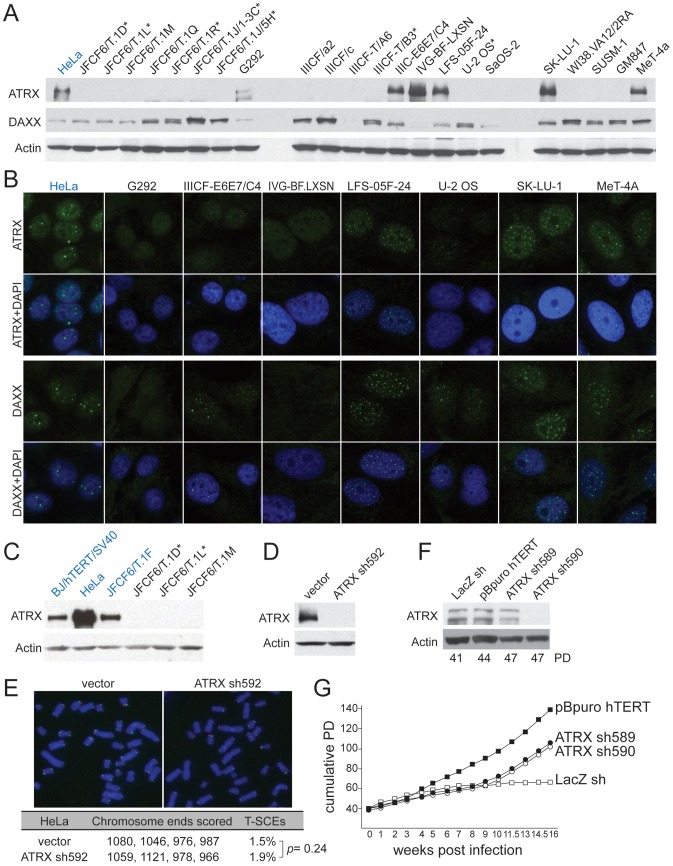
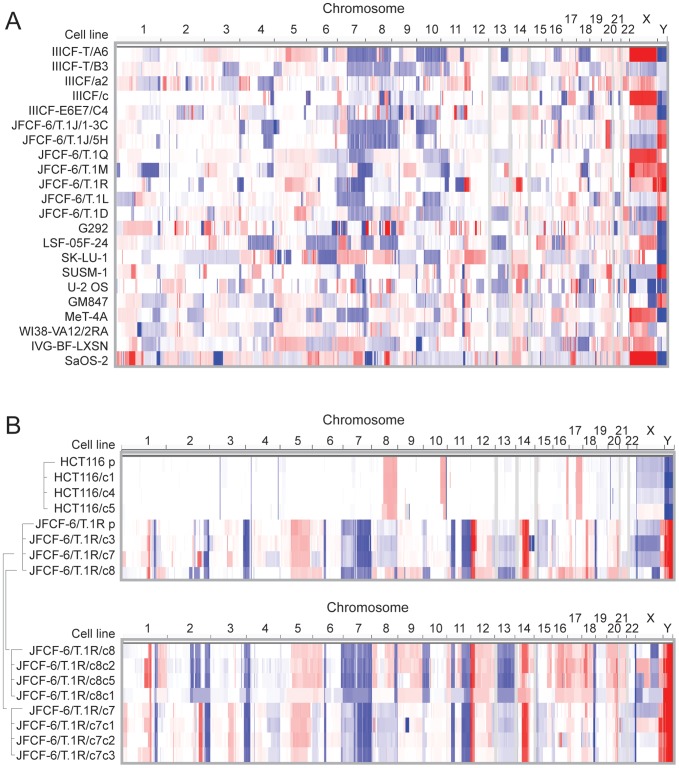
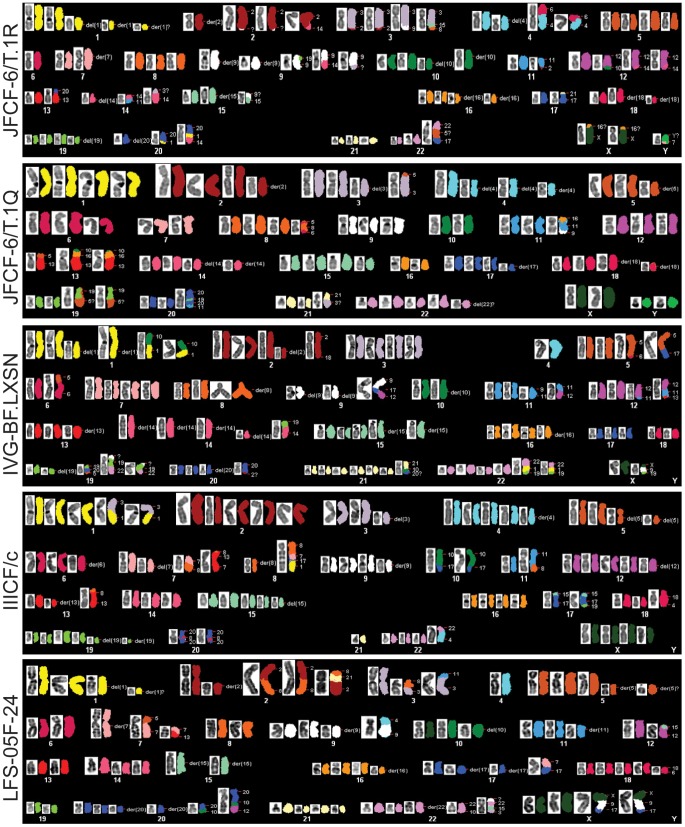
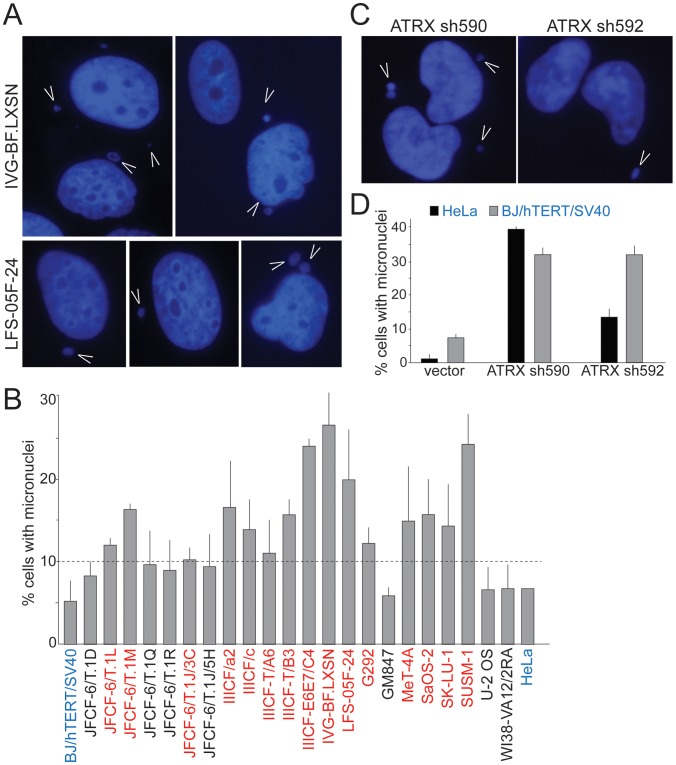
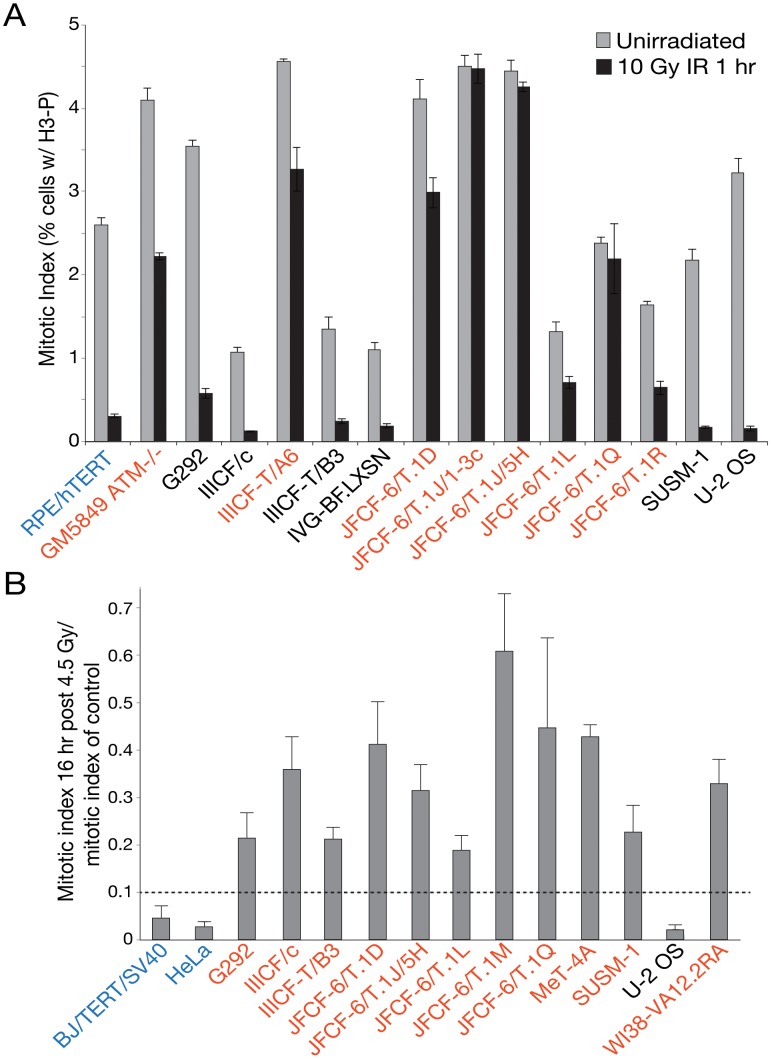
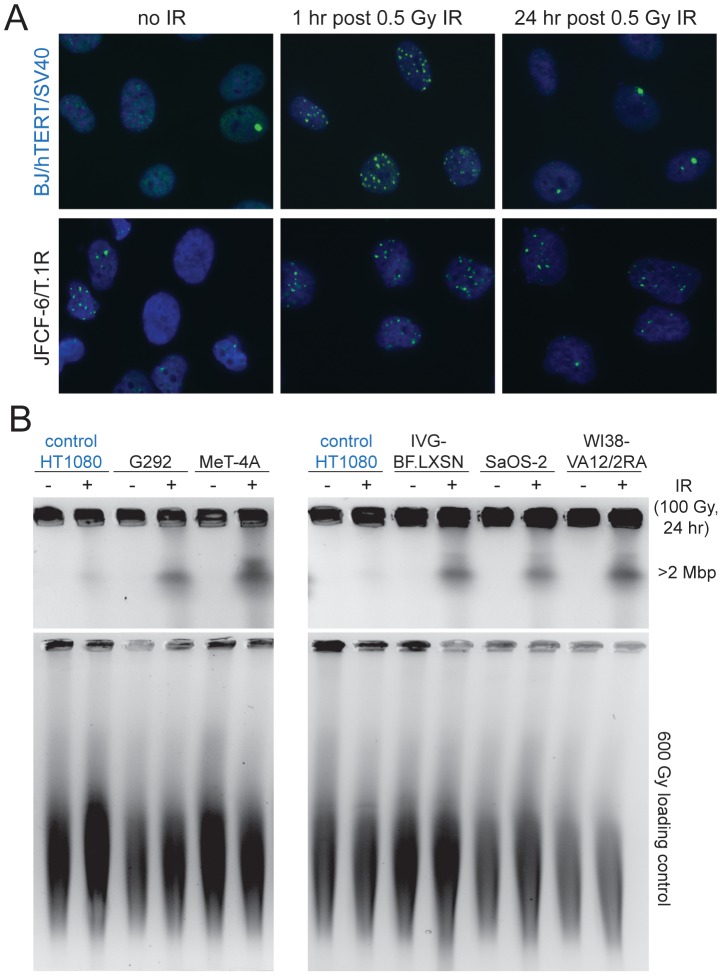
The Alternative Lengthening of Telomeres (ALT) pathway is a telomerase-independent pathway for telomere maintenance that is active in a significant subset of human cancers and in vitro immortalized cell lines. ALT is thought to involve templated extension of telomeres through homologous recombination, but the genetic or epigenetic changes that unleash ALT are not known. Recently, mutations in the ATRX/DAXX chromatin remodeling complex and histone H3.3 were found to correlate with features of ALT in pancreatic neuroendocrine cancers, pediatric glioblastomas, and other tumors of the central nervous system, suggesting that these mutations might contribute to the activation of the ALT pathway in these cancers. We have taken a comprehensive approach to deciphering ALT by applying genomic, molecular biological, and cell biological approaches to a panel of 22 ALT cell lines, including cell lines derived in vitro. Here we show that loss of ATRX protein and mutations in the ATRX gene are hallmarks of ALT-immortalized cell lines. In addition, ALT is associated with extensive genome rearrangements, marked micronucleation, defects in the G2/M checkpoint, and altered double-strand break (DSB) repair. These attributes will facilitate the diagnosis and treatment of ALT positive human cancers.
Overview
The claims and statistics of this paper haven’t been checked yet.
Run the check — free, no account needed. It reads the open-access text and checks the sources it cites.
Integrity signals
Registry
Cites
Statistics
Figures
Verification
Claims the paper makes
The claims and statistics of this paper haven’t been checked yet.
Run the check — free, no account needed. It reads the open-access text and checks the sources it cites.
Claims other papers make about this one
Each is checked against this paper’s own text: does it say what the citing paper says it does?
In the citing paper
“ALT is associated with mutations in the chromatin remodeller α-thalassaemia/mental retardation syndrome X-linked (AT R X ) both in vitro and in several human cancers, including glioblastomas162–165.”
From Telomeres in cancer: tumour suppression and genome instability (2017) · cites this paper as [162]
Self-check
Percentages, sums and reported differences re-computed from the paper’s own numbers.
The self-check needs the paper’s full text.
Citations
Cites
Comprehensive genomic characterization defines human glioblastoma genes and core pathways
The Cancer Genome Atlas Research Network (2008) · Nature · doi:10.1038/nature07385 · Cited by 7,735
The DNA-damage response in human biology and disease
Jackson, S. P., & Bartek, J. (2009) · Nature · doi:10.1038/nature08467 · Cited by 6,092 · cited 1×
“The implication of ATRX and DAXX in the ALT phenotype may have some relevance to the checkpoint defects observed, as the involvement of chromatin remodelers in the DDR becomes increasingly clear [55].”
BackgroundThe landscape of somatic copy-number alteration across human cancers
Beroukhim, R., Mermel, C. H., Porter, D., Wei, G., Raychaudhuri, S., Donovan, J., Barretina, J., Boehm, J. S., Dobson, J., Urashima, M., et al. (2010) · Nature · doi:10.1038/nature08822 · Cited by 4,017 · cited 2×
“0 algorithm was performed as previously described on the resulting segmented copy number data from the 22 ALT lines [39,59].”
BackgroundMethodSelf-citationMermel, C. H., Schumacher, S. E., Hill, B., Meyerson, M. M., Beroukhim, R., & Getz, G. A. (2011) · Genome biology · doi:10.1186/gb-2011-12-4-r41 · Cited by 3,520 · cited 1×
“0 algorithm was performed as previously described on the resulting segmented copy number data from the 22 ALT lines [39,59].”
MethodThe Consensus Coding Sequences of Human Breast and Colorectal Cancers
Sjöblom, T., Jones, S., Wood, L. D., Parsons, D. W., Lin, J., Barber, T. D., Mandelker, D. L., Leary, R. J., Ptak, J., Silliman, N., et al. (2006) · Science · doi:10.1126/science.1133427 · Cited by 3,161
Self-citationDriver mutations in histone H3.3 and chromatin remodelling genes in paediatric glioblastoma
Schwartzentruber, J., Korshunov, A., Liu, X.-Y., Jones, D. T. W., Pfaff, E., Jacob, K., Sturm, D., Fontebasso, A. M., Quang, D.-A. K., Tönjes, M., et al. (2012) · Nature · doi:10.1038/nature10833 · Cited by 2,631 · cited 1×
“The same correlation between inactivation of the ATRX pathway and the ALT-like phenotype was observed in pediatric glioblastoma and several other cancers [16,26].”
BackgroundCounter, C. M., Avilion, A. A., LeFeuvre, C. E., Stewart, N. G., Greider, C. W., Harley, C. B., & Bacchetti, S. (1992) · The EMBO Journal · doi:10.1002/j.1460-2075.1992.tb05245.x · Cited by 2,096 · cited 1×
“In cells that have been immortalized by telomerase activation, the telomere-driven genome instability is largely dampened, resulting in a rearranged but now relatively stable karyotype [43,44].”
BackgroundJiao, Y., Shi, C., Edil, B. H., de Wilde, R. F., Klimstra, D. S., Maitra, A., Schulick, R. D., Tang, L. H., Wolfgang, C. L., Choti, M. A., et al. (2011) · Science · doi:10.1126/science.1200609 · Cited by 1,744 · cited 1×
“Recently, a subset of pancreatic neuroendocrine tumors (PanNETs) were found to have ultrabright telomeric FISH signals, suggesting the presence of ALT-like long telomeres [24,25].”
BackgroundSelf-citationTelomeric Repeat–Containing RNA and RNA Surveillance Factors at Mammalian Chromosome Ends
Azzalin, C. M., Reichenbach, P., Khoriauli, L., Giulotto, E., & Lingner, J. (2007) · Science · doi:10.1126/science.1147182 · Cited by 1,379 · cited 9×
“In addition to shelterin and TERRA, we analyzed 299 genes with potential relevance to telomeres and the ALT pathway.”
BackgroundInfluentialDistinct Factors Control Histone Variant H3.3 Localization at Specific Genomic Regions
Goldberg, A. D., Banaszynski, L. A., Noh, K., Lewis, P. W., Elsässer, S. J., Stadler, S. C., Dewell, S. B., Law, M. J., Guo, X., Li, X., et al. (2010) · Cell · doi:10.1016/j.cell.2010.01.003 · Cited by 1,351
Cited by
Sorted by citations
The Somatic Genomic Landscape of Glioblastoma
Brennan, C. W., Verhaak, R. G. W., McKenna, A., Campos, B., Noushmehr, H., Salama, S. R., Zheng, S., Chakravarty, D., Sanborn, J. Z., Berman, S. H., et al. (2013) · Cell · doi:10.1016/j.cell.2013.09.034 · Cited by 5,016
Epidemiologic and Molecular Prognostic Review of Glioblastoma
Thakkar, J. P., Dolecek, T. A., Horbinski, C., Ostrom, Q. T., Lightner, D. D., Barnholtz‐Sloan, J. S., & Villano, J. L. (2014) · Cancer Epidemiology Biomarkers & Prevention · doi:10.1158/1055-9965.epi-14-0275 · Cited by 1,473
“Mutations in ATRX have been identified in multiple tumor types and appear to cause alternative lengthening of telomeres (ALT), a presumed precursor to genomic instability (130, 131).”
Whole-genome landscape of pancreatic neuroendocrine tumours
Initiative, A. P. C. G., Scarpa, A., Chang, D. K., Nones, K., Corbo, V., Patch, A.-M., Bailey, P., Lawlor, R. T., Johns, A. L., Miller, D. K., et al. (2017) · Nature · doi:10.1038/nature21063 · Cited by 999
Self-citationAdvances in Risk Classification and Treatment Strategies for Neuroblastoma
Pinto, N. R., Applebaum, M. A., Volchenboum, S. L., Matthay, K. K., London, W. B., Ambros, P. F., Nakagawara, A., Berthold, F., Schleiermacher, G., Park, J. R., et al. (2015) · Journal of Clinical Oncology · doi:10.1200/jco.2014.59.4648 · Cited by 924
Shelterin-Mediated Telomere Protection
de Lange, T. (2018) · Annual Review of Genetics · doi:10.1146/annurev-genet-032918-021921 · Cited by 816
Telomeres in cancer: tumour suppression and genome instability
Maciejowski, J., & de Lange, T. (2017) · Nature Reviews Molecular Cell Biology · doi:10.1038/nrm.2016.171 · Cited by 745
DNA damage and its links to neurodegeneration
Madabhushi, R., Pan, L., & Tsai, L.-H. (2014) · Neuron · doi:10.1016/j.neuron.2014.06.034 · Cited by 654
Gastroenteropancreatic Neuroendocrine Tumors
Cives, M., & Strosberg, J. (2018) · CA A Cancer Journal for Clinicians · doi:10.3322/caac.21493 · Cited by 596
G-quadruplexes: a promising target for cancer therapy
Kosiol, N., Juranek, S., Brossart, P., Heine, A., & Paeschke, K. (2021) · Molecular Cancer · doi:10.1186/s12943-021-01328-4 · Cited by 561
Alternative lengthening of telomeres renders cancer cells hypersensitive to ATR inhibitors
Flynn, R. L., Cox, K. E., Jeitany, M., Wakimoto, H., Bryll, A. R., Ganem, N. J., Bersani, F., Pineda, J. R., Suvà, M. L., Benes, C. H., et al. (2015) · Science · doi:10.1126/science.1257216 · Cited by 515
Heterochromatin: Guardian of the Genome
Janssen, A., Colmenares, S. U., & Karpen, G. H. (2018) · Annual Review of Cell and Developmental Biology · doi:10.1146/annurev-cellbio-100617-062653 · Cited by 500
RNaseH1 regulates TERRA-telomeric DNA hybrids and telomere maintenance in ALT tumour cells
Arora, R., Lee, Y., Wischnewski, H., Brun, C. M., Schwarz, T., & Azzalin, C. M. (2014) · Nature Communications · doi:10.1038/ncomms6220 · Cited by 468
“Recently, accumulating evidence also indicates that ALT cells are characterized by elevated levels of TERRA (refs 6,7,11,12).”
Marinoni, I., Kurrer, A. M. S., Vassella, E., Dettmer, M. S., Rudolph, T. J., Banz, V. M., Hunger, F., Pasquinelli, S., Speel, E. M., & Perren, A. A. (2013) · Gastroenterology · doi:10.1053/j.gastro.2013.10.020 · Cited by 473
Landa, I., Ganly, I., Chan, T. A.-T., Mitsutake, N., Matsuse, M., Ibrahimpašić, T., Ghossein, R. A., & Fagin, J. A. (2013) · The Journal of Clinical Endocrinology & Metabolism · doi:10.1210/jc.2013-2383 · Cited by 461
“It should be noted that mutations in the TERT promoter, although remarkably frequent, may be only 1 of the potential mechanisms of illegitimate activation of TERT, which may include aberrant methylation of the TERT promoter (18) or inactivating mutations in the ATRX gene, a Rad54-like ATP-driven DNA translocase, the l…”
BackgroundThe roles of histone variants in fine-tuning chromatin organization and function
Martire, S., & Banaszynski, L. A. (2020) · Nature Reviews Molecular Cell Biology · doi:10.1038/s41580-020-0262-8 · Cited by 392
Sources, resolution and physiological relevance of R-loops and RNA–DNA hybrids
Petermann, E., Lan, L., & Zou, L. (2022) · Nature Reviews Molecular Cell Biology · doi:10.1038/s41580-022-00474-x · Cited by 380
Interchromosomal Homology Searches Drive Directional ALT Telomere Movement and Synapsis
Cho, N. W., Dilley, R. L., Lampson, M. A., & Greenberg, R. A. (2014) · Cell · doi:10.1016/j.cell.2014.08.030 · Cited by 389
Prognostic and Predictive Biomarkers in Gliomas
Śledzińska, P., Bebyn, M. G., Furtak, J., Kowalewski, J., & Lewandowska, M. A. (2021) · International Journal of Molecular Sciences · doi:10.3390/ijms221910373 · Cited by 363
Variants of core histones and their roles in cell fate decisions, development and cancer
Buschbeck, M., & Hake, S. B. (2017) · Nature Reviews Molecular Cell Biology · doi:10.1038/nrm.2016.166 · Cited by 362
Integrative genomic and transcriptomic analysis of leiomyosarcoma
Chudasama, P., Mughal, S. S., Sanders, M. A., Hübschmann, D., Chung, I., Deeg, K. I., Wong, S.-H., Rabe, S., Hlevnjak, M., Zapatka, M., et al. (2018) · Nature Communications · doi:10.1038/s41467-017-02602-0 · Cited by 316
“3 into telomeric and pericentromeric regions in complex with DAXX 26 – 28 .”
Clynes, D., Jelinska, C., Xella, B., Ayyub, H., Scott, C., Mitson, M., Taylor, S., Higgs, D. R., & Gibbons, R. J. (2015) · Nature Communications · doi:10.1038/ncomms8538 · Cited by 303
“3 chromatin immunoprecipitations were performed using Millipore chromatin Immunoprecipitation Assay Kit (17-295) as per manufacturer’s instructions and 10 m g anti-histone H3.”
ATRX loss promotes tumor growth and impairs nonhomologous end joining DNA repair in glioma
Koschmann, C. J., Calinescu, A., Núñez, F. J., Mackay, A. G., Fazal-Salom, J., Thomas, D., Mendez, F., Kamran, N., Dzaman, M., Mulpuri, L., et al. (2016) · Science Translational Medicine · doi:10.1126/scitranslmed.aac8228 · Cited by 293
Self-citationWhole exome sequencing identifies ATRX mutation as a key molecular determinant in lower-grade glioma
Kannan, K. S., Inagaki, A., Silber, J., Gorovets, D. J., Zhang, J., Kastenhuber, E. R., Heguy, A., Petrini, J. H. J., Chan, T. A.-T., & Huse, J. T. (2012) · Oncotarget · doi:10.18632/oncotarget.689 · Cited by 283
“Previous studies have directly linked ATRX mutation to ALT and genomic instability in a variety of tumors [24-26].”
Self-citationTERRA RNA Antagonizes ATRX and Protects Telomeres
Chu, H.-P. C., Cifuentes‐Rojas, C., Kesner, B., Aeby, E., Lee, H.-G., Wei, C., Oh, H. J., Boukhali, M., Haas, W., & Lee, J. T. (2017) · Cell · doi:10.1016/j.cell.2017.06.017 · Cited by 273
Rapid induction of alternative lengthening of telomeres by depletion of the histone chaperone ASF1
O’Sullivan, R. J., Arnoult, N., Lackner, D. H., Oganesian, L., Haggblom, C., Corpet, A., Almouzni, G., & Karlseder, J. (2014) · Nature Structural & Molecular Biology · doi:10.1038/nsmb.2754 · Cited by 273
Singhi, A. D., Liu, T., Roncaioli, J. L., Cao, D., Zeh, H. J., Zureikat, A. H., Tsung, A., Marsh, J. W., Lee, K. K. W., Hogg, M. E., et al. (2016) · Clinical Cancer Research · doi:10.1158/1078-0432.ccr-16-1113 · Cited by 252
TERT promoter mutations in cancer development
Heidenreich, B., Rachakonda, P. S., Hemminki, K., & Kumar, R. (2014) · Current Opinion in Genetics & Development · doi:10.1016/j.gde.2013.11.005 · Cited by 238
ALTernative Telomere Maintenance and Cancer
Dilley, R. L., & Greenberg, R. A. (2015) · Trends in cancer · doi:10.1016/j.trecan.2015.07.007 · Cited by 251
Mabray, M. C., Barajas, R., & Cha, S. (2015) · Brain Tumor Research and Treatment · doi:10.14791/btrt.2015.3.1.8 · Cited by 264
“ATRX The alpha thalassemia-mental retardation syndrome X-linked (ATRX) gene encodes a protein that is involved in telomere maintenance in a mechanism that does not involve telomerases known as alternative lengthening of telomeres [36,53,54].”
BackgroundThe role of telomeres and telomerase in cirrhosis and liver cancer
Nault, J., Ningarhari, M., Rebouissou, S., & Zucman‐Rossi, J. (2019) · Nature Reviews Gastroenterology & Hepatology · doi:10.1038/s41575-019-0165-3 · Cited by 255
Yu, F., Wei, J., Cui, X., Yu, C., Ni, W., Bungert, J., Wu, L., He, C., & Qian, Z. (2021) · Nucleic Acids Research · doi:10.1093/nar/gkab415 · Cited by 240
Targeting telomeres: advances in telomere maintenance mechanism-specific cancer therapies
Gao, J., & Pickett, H. A. (2022) · Nature reviews. Cancer · doi:10.1038/s41568-022-00490-1 · Cited by 213
Cusanelli, E., & Chartrand, P. (2015) · Frontiers in Genetics · doi:10.3389/fgene.2015.00143 · Cited by 219
“Cell-cycle regulation of TERRA depends on the chromatin-remodeling protein ATRX, which loss or mutation correlate with ALT in human cancer (Heaphy et al., 2011; Lovejoy et al., 2012; Schwartzentruber et al., 2012).”
BackgroundSilva, B. D. R., Pentz, R., Figueira, M., Arora, R., Lee, Y. W., Hodson, C., Wischnewski, H., Deans, A. J., & Azzalin, C. M. (2019) · Nature Communications · doi:10.1038/s41467-019-10179-z · Cited by 216
Histone H3.3 maintains genome integrity during mammalian developmentPreprint
Jang, C., Shibata, Y., Starmer, J., Yee, D., & Magnuson, T. (2015) · Genes & Development · doi:10.1101/gad.264150.115 · Cited by 212
“ATRX loss is associated with telomere dysfunction in cancer cells (Heaphy et al. 2011; Lovejoy et al. 2012).”
BackgroundRole of the cGAS–STING pathway in cancer development and oncotherapeutic approaches
Khoo, L. T., & Chen, L. (2018) · The EMBO Reports · doi:10.15252/embr.201846935 · Cited by 204
“3 deficiency in various human cancers and cell lines is highly associated with ALT activity [66 – 69].”
PML nuclear bodies and chromatin dynamics: catch me if you can!
Corpet, A., Kleijwegt, C., Roubille, S., Juillard, F., Jacquet, K., Texier, P., & Lomonte, P. (2020) · Nucleic Acids Research · doi:10.1093/nar/gkaa828 · Cited by 220
Molecular mechanisms of activity and derepression of alternative lengthening of telomeres
Pickett, H. A., & Reddel, R. R. (2015) · Nature Structural & Molecular Biology · doi:10.1038/nsmb.3106 · Cited by 203
Self-citationCharacterizing DNA methylation alterations from The Cancer Genome Atlas
Weisenberger, D. J. (2014) · Journal of Clinical Investigation · doi:10.1172/jci69740 · Cited by 200
“ATRX mutations are predominant in the alternative lengthening of telomeres (ALT), a process by which telomere length is maintained independent of telomerase in cancer cells (48, 49).”
Min, J., Wright, W. E., & Shay, J. W. (2017) · Molecular and Cellular Biology · doi:10.1128/mcb.00226-17 · Cited by 204
ATRX and DAXX: Mechanisms and MutationsPreprint
Dyer, M. A., Qadeer, Z. A., Valle‐García, D., & Bernstein, E. (2017) · Cold Spring Harbor Perspectives in Medicine · doi:10.1101/cshperspect.a026567 · Cited by 208
“Approximately 80% of tumors with ALT harbor mutations in ATRX or DAXX, and conversely 70%– 80% of cancers with ATRX mutations show ALT (Lovejoy et al. 2012).”
BackgroundVoon, H. P. J., Hughes, J. R., Rode, C., Rosa-Velázquez, I. A. D. L., Jenuwein, T., Feil, R., Higgs, D. R., & Gibbons, R. J. (2015) · Cell Reports · doi:10.1016/j.celrep.2015.03.036 · Cited by 198
“aintaining Silencing at”
BackgroundAlternative Lengthening of Telomeres is characterized by reduced compaction of telomeric chromatin
Episkopou, H., Drašković, I., Beneden, A. V., Tilman, G., Mattiussi, M., Gobin, M., Arnoult, N., Londoño‐Vallejo, A., & Decottignies, A. (2014) · Nucleic Acids Research · doi:10.1093/nar/gku114 · Cited by 210
“However, whether and how ATRX loss may drive telomeric chromatin remodeling during the process of ALT activation is still unknown, as ATRX depletion alone is not sufficient to promote telomeric recombinations (18).”
BackgroundWhole-exome sequencing identifies somatic ATRX mutations in pheochromocytomas and paragangliomas
Fishbein, L. M., Khare, S., Wubbenhorst, B. S., DeSloover, D., D'Andrea, K. P., Merrill, S. L., Cho, N. W., Greenberg, R. A., Else, T., Montone, K. T., et al. (2015) · Nature Communications · doi:10.1038/ncomms7140 · Cited by 193
Micco, M., Collie, G. W., Dale, A. G., Ohnmacht, S. A., Pazitna, I., Gunaratnam, M., Reszka, A. P., & Neidle, S. (2013) · Journal of Medicinal Chemistry · doi:10.1021/jm301899y · Cited by 189
Wang, Y., Yang, J., Wild, A. T., Wu, W. H., Shah, R., Danussi, C., Riggins, G. J., Kannan, K., Sulman, E. P., Chan, T. A., et al. (2019) · Nature Communications · doi:10.1038/s41467-019-08905-8 · Cited by 184
de Vitis, M., Berardinelli, F., & Sgura, A. (2018) · International Journal of Molecular Sciences · doi:10.3390/ijms19020606 · Cited by 182
Alternative lengthening of telomeres: from molecular mechanisms to therapeutic outlooks
Zhang, J., & Zou, L. (2020) · Cell & Bioscience · doi:10.1186/s13578-020-00391-6 · Cited by 192
ATRX represses alternative lengthening of telomeres
Napier, C. E., Huschtscha, L. I., Harvey, A., Bower, K., Noble, J. R., Hendrickson, E. A., & Reddel, R. R. (2015) · Oncotarget · doi:10.18632/oncotarget.3846 · Cited by 181
“More recently, it was found that inactivating mutations in one or other of the genes encoding the ATRX/DAXX chromatin remodeling complex, most commonly ATRX, are very common in ALT-positive tumors and cell lines [6-10].”
BackgroundInfluentialSelf-citationFunctions, Regulation, and Therapeutic Implications of the ATR Checkpoint Pathway
Yazinski, S. A., & Zou, L. (2016) · Annual Review of Genetics · doi:10.1146/annurev-genet-121415-121658 · Cited by 178
Min, J., Wright, W. E., & Shay, J. W. (2019) · Genes & Development · doi:10.1101/gad.324905.119 · Cited by 181
“Since most ALT cells do not have an intact G2/M checkpoint (Lovejoy et al. 2012), a subset of ALT cells shows persistent DNA damage responses at telomeres and telomere clustering during mitosis, represented as APB-like foci in metaphase spreads (Cesare et al. 2009), and these ultimately lead to…”
BackgroundLesion Bypass and the Reactivation of Stalled Replication Forks
Marians, K. J. (2018) · Annual Review of Biochemistry · doi:10.1146/annurev-biochem-062917-011921 · Cited by 175
Atrx promotes heterochromatin formation at retrotransposons
Sadic, D., Schmidt, K. M., Groh, S., Kondofersky, I., Ellwart, J. W., Fuchs, C., Theis, F. J., & Schotta, G. (2015) · EMBO Reports · doi:10.15252/embr.201439937 · Cited by 174
“These mutations are generally associated with an activation of the alternative lengthening of telomeres (ALT) pathway, a telomerase-independent mechanism to extend telomere length by recombination [32,36].”
Alternative Lengthening of Telomeres: DNA Repair Pathways Converge
Sobinoff, A. P., & Pickett, H. A. (2017) · Trends in Genetics · doi:10.1016/j.tig.2017.09.003 · Cited by 177
Histone variants: emerging players in cancer biology
Vardabasso, C., Hasson, D., Ratnakumar, K., Chung, C., Duarte, L. F., & Bernstein, E. (2013) · Cellular and Molecular Life Sciences · doi:10.1007/s00018-013-1343-z · Cited by 178
Variant repeats are interspersed throughout the telomeres and recruit nuclear receptors in ALT cells
Conomos, D., Stutz, M. D., Hills, M., Neumann, A. A., Bryan, T. M., Reddel, R. R., & Pickett, H. A. (2012) · The Journal of Cell Biology · doi:10.1083/jcb.201207189 · Cited by 177
“For instance, further genetic alterations such as loss of ATRX, which has recently been shown to be widely mutated in ALT tumors and immortalized cell lines (Heaphy et al., 2011; Lovejoy et al., 2012; Schwartzentruber et al., 2012), may be required for complete ALT activation.”
BackgroundSelf-citationWhat do we know about IDH1/2 mutations so far, and how do we use it?
Horbinski, C. (2013) · Acta Neuropathologica · doi:10.1007/s00401-013-1106-9 · Cited by 169
“3 is encoded by H3F3A and is associated with open, active chromatin at telomeres (and probably elsewhere, too) [3, 110].”
Proteome-wide mapping of short-lived proteins in human cells
Li, J., Cai, Z., Vaites, L. P., Shen, N., Mitchell, D. C., Huttlin, E. L., Paulo, J. A., Harry, B. L., & Gygi, S. P. (2021) · Molecular Cell · doi:10.1016/j.molcel.2021.09.015 · Cited by 159
He, Q., Kim, H., Huang, R., Lu, W., Tang, M., Shi, F.-T., Dong, Y., Zhang, X., Huang, J., Liu, D., et al. (2015) · Cell stem cell · doi:10.1016/j.stem.2015.07.022 · Cited by 165
“…Wolf et al., 2013), the disruption of which can have serious consequences and lead to diseases and cancer in humans (Bourc’his and Bestor, 2004; Dodge et al., 2005; Gaudet et al., 2003; Jackson-Grusby et al., 2001; Lewis et al., 2010; Lovejoy et al., 2012; Ross et al., 2010; Wilson et al., 2007).”
Extrachromosomal telomere repeat DNA is linked to ALT development via cGAS-STING DNA sensing pathway
Chen, Y., Shen, Y., Hsia, H.-Y., Tiang, Y. P., Sung, T.-L., & Chen, L. (2017) · Nature Structural & Molecular Biology · doi:10.1038/nsmb.3498 · Cited by 168
Mutant ATRX: uncovering a new therapeutic target for glioma
Haase, S., Garcia-Fabiani, M. B., Carney, S. V., Altshuler, D. B., Núñez, F. J., Mendez, F., Núñez, F. M., Lowenstein, P. R., & Castro, M. G. (2018) · Expert Opinion on Therapeutic Targets · doi:10.1080/14728222.2018.1487953 · Cited by 161
“In this context, ATRX-mutations in all cancers are associated with ALT [5,6] (see section 4.”
BackgroundInfluentialAnton, T., Bultmann, S., Leonhardt, H., & Markaki, Y. (2014) · Nucleus · doi:10.4161/nucl.28488 · Cited by 157
Moison, M., Pacheco, J. M., Lucero, L. E., Fonouni‐Farde, C., Rodríguez-Melo, J., Mansilla, N., Christ, A., Bazin, J., Benhamed, M., Ibáñez, F., et al. (2021) · Molecular Plant · doi:10.1016/j.molp.2021.03.008 · Cited by 150
Histone variants in pluripotency and disease
Skene, P. J., & Henikoff, S. (2013) · Development · doi:10.1242/dev.091439 · Cited by 161
ATRX Promotes DNA Repair Synthesis and Sister Chromatid Exchange during Homologous Recombination
Juhász, S., Elbakry, A., Mathes, A., & Löbrich, M. (2018) · Molecular Cell · doi:10.1016/j.molcel.2018.05.014 · Cited by 150
Kovatcheva, M., Liu, D. D., Dickson, M. A., Klein, M. E., O’Connor, R., Wilder, F. O., Socci, N. D., Tap, W. D., Schwartz, G. K., Singer, S., et al. (2015) · Oncotarget · doi:10.18632/oncotarget.3364 · Cited by 142
“We measured ALT by both telomere-FISH and telomere restriction fragment assays [43, 44](Supplementary Figure 7).”
BackgroundMethodBallew, B. J., Vijai, J., De, S., Sarek, G., Vannier, J., Stracker, T. H., Schrader, K. A., Small, T. N., O'Reilly, R., Manschreck, C., et al. (2013) · PLoS Genetics · doi:10.1371/journal.pgen.1003695 · Cited by 150
“The frequency of chromatid ends lacking telomeric FISH signal in MSK-41 cells was approximately 10%, approaching that seen in SaOS2, a cell line with the alternative lengthening of telomeres (ALT) phenotype [13].”
BackgroundMethodSelf-citationGarcía-Expósito, L., Bournique, E., Bergoglio, V., Bose, A., González, J. B., Zhang, S., Roncaioli, J. L., Lee, M., Wallace, C. T., Watkins, S. C., et al. (2016) · Cell Reports · doi:10.1016/j.celrep.2016.10.048 · Cited by 150
“To date, no deficiency in shelterin function has been linked with ALT activation or the elevated replicative stress and DNA damage observed at ALT telomeres (Lovejoy et al., 2012).”
Exome Sequencing of Uterine Leiomyosarcomas Identifies Frequent Mutations in TP53, ATRX, and MED12
Mäkinen, N., Aavikko, M., Heikkinen, T., Taipale, M., Taipale, J., Koivisto-Korander, R., Bützow, R. C., & Vahteristo, P. (2016) · PLoS Genetics · doi:10.1371/journal.pgen.1005850 · Cited by 140
“Loss of ATRX expression has been associated with ALT [13,24], which prompted us to analyze the telomeres with telomere-specific FISH.”
BackgroundMechanisms and Consequences of Cancer Genome Instability: Lessons from Genome Sequencing Studies
Lee, J. J.-K., Choi, Y., Kwon, M., & Park, P. J. (2016) · Annual Review of Pathology Mechanisms of Disease · doi:10.1146/annurev-pathol-012615-044446 · Cited by 135
The chromatin remodelling factor ATRX suppresses R‐loops in transcribed telomeric repeats
Nguyen, D. T. T., Voon, H. P. J., Xella, B., Scott, C., Clynes, D., Babbs, C., Ayyub, H., Kerry, J., Sharpe, J. A., Sloane‐Stanley, J., et al. (2017) · EMBO Reports · doi:10.15252/embr.201643078 · Cited by 147
“Acquired mutations in ATRX have been identified in almost all tumours which maintain their telomere length via the alternative lengthening of telomeres (ALT) pathway [17-19].”
Job, S., Drašković, I., Burnichon, N., Buffet, A., Cros, J. F., Lépine, C., Vénisse, A., Robidel, E., Verkarre, V., Méatchi, T., et al. (2018) · Clinical Cancer Research · doi:10.1158/1078-0432.ccr-18-0139 · Cited by 141
“On the other hand, the genetic basis of ALT tumors remains poorly defined, although mutations in ATRX have been reported to be associated with this phenotype (18).”
BackgroundThe Role of Double-Strand Break Repair Pathways at Functional and Dysfunctional TelomeresPreprint
Doksani, Y., & de Lange, T. (2014) · Cold Spring Harbor Perspectives in Biology · doi:10.1101/cshperspect.a016576 · Cited by 143
“The only consistent genetic defect so far identified in ALT is the loss of ATRX (Heaphy et al. 2011a,b; Lovejoy et al. 2012).”
BackgroundInfluentialGenomic footprints of activated telomere maintenance mechanisms in cancer
Sieverling, L., Hong, C., Koser, S. D., Ginsbach, P., Kleinheinz, K., Hutter, B., Braun, D. M., Cortés‐Ciriano, I., Xi, R., Kabbe, R., et al. (2020) · Nature Communications · doi:10.1038/s41467-019-13824-9 · Cited by 141
“In 16 samples, evidence for TERRA expression at telomere insertion sites was found.”
InfluentialTelomere Maintenance Mechanisms in Cancer
Gaspar, T. B., Sá, A., Lopes, J. M., Sobrinho-Simões, M. A., Soares, P., & Vinagre, J. (2018) · Genes · doi:10.3390/genes9050241 · Cited by 144
“Still, no clear correlation between ATRX and global TERRA expression levels is apparent [475,479,480].”
BackgroundAtrx deficiency induces telomere dysfunction, endocrine defects, and reduced life span
Watson, L. A., Solomon, L. A., Li, J. R., Jiang, Y. Y., Edwards, M., Shin‐ya, K., Beier, F., & Bérubé, N. G. (2013) · Journal of Clinical Investigation · doi:10.1172/jci65634 · Cited by 133
“Tumors with ATRX mutations often harbor long telomeres, which are characteristic of the telomere maintenance mechanism known as alternative lengthening of telomeres (ALT) (6, 7, 11, 13, 14).”
NuRD–ZNF827 recruitment to telomeres creates a molecular scaffold for homologous recombination
Conomos, D., Reddel, R. R., & Pickett, H. A. (2014) · Nature Structural & Molecular Biology · doi:10.1038/nsmb.2877 · Cited by 129
Self-citationLi, F., Deng, Z., Zhang, L., Wu, C., Jin, Y., Hwang, I., Vladimirova, O. V., Xu, L., Yang, L., Lu, B., et al. (2019) · The EMBO Journal · doi:10.15252/embj.201796659 · Cited by 135
“In addition, ALT is also associated with massive genome rearrangement, defective G2/M checkpoint control, and altered DNA damage repair (Lovejoy et al , 2012).”
InfluentialBreak induced replication in eukaryotes: mechanisms, functions, and consequences
Sakofsky, C. J., & Malkova, A. (2017) · Critical Reviews in Biochemistry and Molecular Biology · doi:10.1080/10409238.2017.1314444 · Cited by 142
“In addition, recent studies suggested that ALT is also promoted by a replication collapse at positions of R-loops formed by annealing of long noncoding TERRA RNA that is transcribed from the telomeres, which remains attached to the template (Arora et al., 2014; Azzalin et al., 2007; Episkopou et al., 2014; Flynn et al…”
Integrity of the human centromere DNA repeats is protected by CENP-A, CENP-C, and CENP-T
Giunta, S., & Funabiki, H. (2017) · Proceedings of the National Academy of Sciences · doi:10.1073/pnas.1615133114 · Cited by 123
DAXX in cancer: phenomena, processes, mechanisms and regulation
Mahmud, I., & Liao, D. (2019) · Nucleic Acids Research · doi:10.1093/nar/gkz634 · Cited by 122
“Abnormal telomeres due to alternative lengthening of telomeres (ALT) independent of telomerase activity in PanNETs were observed frequently and can be attributed to the loss-of-function mutations of DAXX and/or ATRX (23,24,80).”
BackgroundThe chromatin remodeller ATRX: a repeat offender in human disease
Clynes, D., Higgs, D. R., & Gibbons, R. J. (2013) · Trends in Biochemical Sciences · doi:10.1016/j.tibs.2013.06.011 · Cited by 132
TERRA and the state of the telomere
Rippe, K., & Luke, B. (2015) · Nature Structural & Molecular Biology · doi:10.1038/nsmb.3078 · Cited by 122
METTL3-mediated m6A modification stabilizes TERRA and maintains telomere stability
Chen, L., Zhang, C., Ma, W., Huang, J., Zhao, Y. B., & Liu, H. (2022) · Nucleic Acids Research · doi:10.1093/nar/gkac1027 · Cited by 124
“There are lots of special characteristics in ALT cancer cells such as the C-circle, ALT-associated PML bodies (APBs), heterogeneous telomere length, absence of ATRX, telomere recombination and a high telomeric repeat-containing RNA (TERRA) level (7–11).”
Hoelper, D., Huang, H., Jain, A. Y., Patel, D. J., & Lewis, P. W. (2017) · Nature Communications · doi:10.1038/s41467-017-01206-y · Cited by 127
Leung, J. W. C., Ghosal, G., Wang, W., Shen, X. H., Wang, J., Li, L., & Chen, J. (2013) · Journal of Biological Chemistry · doi:10.1074/jbc.m112.411603 · Cited by 124
“As a matter of fact, SWI/SNF family proteins are implicated in cancers and other human syndromes with mental retardation (MR) and genomic instability, including alpha thalassemia/mental retardation syndrome X-linked (ATRX) (10, 11).”
Aguilera, P., & Lopez-Contreras, A. J. (2023) · Trends in Genetics · doi:10.1016/j.tig.2023.02.009 · Cited by 122
ATRX Dysfunction Induces Replication Defects in Primary Mouse Cells
Clynes, D., Jelinska, C., Xella, B., Ayyub, H., Taylor, S., Mitson, M., Bachrati, C. Z., Higgs, D. R., & Gibbons, R. J. (2014) · PLoS ONE · doi:10.1371/journal.pone.0092915 · Cited by 120
“Interestingly, a role for ATRX in facilitating replication through potential G-quadruplex forming sequences may shed light on its recently ascribed role as a tumor suppressor in a specific subset of malignancies that depend on a telomerase-independent pathway of telomere maintenance called the ‘alternative lengthening…”
BackgroundAlternative lengthening of telomeres in childhood neuroblastoma from genome to proteome
Hartlieb, S., Sieverling, L., Nadler-Holly, M., Ziehm, M., Toprak, U. H., Herrmann, C., Ishaque, N., Okonechnikov, K., Gartlgruber, M., Park, Y.-G., et al. (2021) · Nature Communications · doi:10.1038/s41467-021-21247-8 · Cited by 115
Doxorubicin Enhances Nucleosome Turnover around Promoters
Yang, F., Kemp, C. J., & Henikoff, S. (2013) · Current Biology · doi:10.1016/j.cub.2013.03.043 · Cited by 120
“3/DAXX/ATRX nucleosome assembly pathway [33].”
Nuclear PARPs and genome integrityPreprint
Azarm, K., & Smith, S. H. (2020) · Genes & Development · doi:10.1101/gad.334730.119 · Cited by 116
“Along with its roles in chromatin remodeling and histone deposition, ATRX sequesters the soluble pool of macroH2A (Ratnakumar et al. 2012), a histone variant comprised of an N-terminal H2A-like domain and a C-terminal PAR-binding macrodomain (Gamble and Kraus 2010; Cantariño et al. 2013).”
BackgroundInfluentialExtensive Proliferation of Human Cancer Cells with Ever-Shorter Telomeres
Dagg, R. A., Pickett, H. A., Neumann, A. A., Napier, C. E., Henson, J. D., Teber, E., Arthur, J. W., Reynolds, C. P., Murray, J. E., Haber, M., et al. (2017) · Cell Reports · doi:10.1016/j.celrep.2017.05.087 · Cited by 110
Self-citationTERRA and RAD51AP1 promote alternative lengthening of telomeres through an R- to D-loop switch
Yadav, T., Zhang, J., Ouyang, J., Leung, W., Simoneau, A., & Zou, L. (2022) · Molecular Cell · doi:10.1016/j.molcel.2022.09.026 · Cited by 111
R Loops and Their Composite Cancer Connections
Wells, J. P., White, J., & Stirling, P. C. (2019) · Trends in cancer · doi:10.1016/j.trecan.2019.08.006 · Cited by 111
Telomere Maintenance Mechanisms Define Clinical Outcome in High-Risk Neuroblastoma
Koneru, B., López, G., Farooqi, A. S., Conkrite, K. L., Nguyen, T. H., Macha, S. J., Modi, A., Rokita, J. L., Urias, E., Hindle, A., et al. (2020) · Cancer Research · doi:10.1158/0008-5472.can-19-3068 · Cited by 112
Histone variant H3.3 provides the heterochromatic H3 lysine 9 tri-methylation mark at telomeres
Udugama, M., Chang, F. T. M., Chan, F. L., Tang, M. C., Pickett, H. A., McGhie, J. D. R., Mayne, L., Collas, P., Mann, J. R., & Wong, L. H. (2015) · Nucleic Acids Research · doi:10.1093/nar/gkv847 · Cited by 109
“eric DNA, resulting in persistent replication stalling and in turn leading to DNA damage, ALT and genome instability (23).”
BackgroundNew players in heterochromatin silencing: histone variant H3.3 and the ATRX/DAXX chaperone
Voon, H. P. J., & Wong, L. H. (2016) · Nucleic Acids Research · doi:10.1093/nar/gkw012 · Cited by 118
“This is particularly pertinent to ALT cancers where ATRX mutations have been strongly linked to increased recombination at telomeres (32,33).”
BackgroundSETDB1-dependent heterochromatin stimulates alternative lengthening of telomeres
Gauchier, M., Kan, S., Barral, A., Sauzet, S., Agirre, E., Bonnell, E., Saksouk, N., Barth, T. K., Ide, S., Urbach, S., et al. (2019) · Science Advances · doi:10.1126/sciadv.aav3673 · Cited by 115
“Besides mutations in the ATRX pathway, no other mutation has been linked to ALT in human cancer (6).”
BackgroundAksenova, A. Y., & Mirkin, S. M. (2019) · Genes · doi:10.3390/genes10020118 · Cited by 114
IDH inhibition in gliomas: from preclinical models to clinical trials
Rudà, R., Horbinski, C., van den Bent, M. J., Preusser, M., & Soffietti, R. (2024) · Nature Reviews Neurology · doi:10.1038/s41582-024-00967-7 · Cited by 105
“ATRX inactivation is associated with alternative lengthening of telomeres (ALT) — a telomere maintenance mechanism involving homologous recombination that is characteristic of IDH -mutant astrocytomas with ATRX loss 66–69 .”
Influential
Metadata
- Authors
- Lovejoy, C. A., Li, W., Reisenweber, S., Thongthip, S., Bruno, J., de Lange, T., De, S., Petrini, J. H. J., Sung, P. A., Jasin, M., Rosenbluh, J., Zwang, Y., Weir, B. A., Hatton, C., Ivanova, E., Macconaill, L., Hanna, M., Hahn, W. C., Lue, N. F., Reddel, R. R., Jiao, Y., Kinzler, K., Vogelstein, B., Papadopoulos, N., Meeker, A. K., & for the ALT Starr Cancer Consortium
- Affiliations
- Rockefeller University (US)
- Memorial Sloan Kettering Cancer Center (US)
- Broad Institute (US)
- Dana-Farber Cancer Institute (US)
- Cornell University (US)
- The University of Sydney (AU)
- Johns Hopkins University (US)
- ORCID
- Lovejoy, Courtney A.
- Thongthip, Supawat
- Bruno, Joanne
- De, Saurav
- Petrini, John H. J.
- Sung, Patricia A.
- Jasin, Maria
- Rosenbluh, Joseph
- Zwang, Yaara
- Hatton, Charlie
- Ivanova, Elena
- Macconaill, Laura
- Hahn, William C.
- Lue, Neal F.
- Reddel, Roger R.
- Jiao, Yuchen
- Kinzler, Kenneth
- Vogelstein, Bert
- Papadopoulos, Nickolas
- Meeker, Alan K.
- Venue
- PLoS Genetics
- Publisher
- Public Library of Science (PLoS)
- Published
- 2012-07-19
- Volume
- 8
- Issue
- 7
- Pages
- e1002772
- ISSN
- 1553-7390 (ISSN-L)
- 1553-7404
- PMC
- PMC3400581
- OpenAlex
- W1999626396
- Cited by
- 629
- References
- 60
- Citations by year
- 2026: 34 · 2025: 41 · 2024: 33 · 2023: 44 · 2022: 51 · 2021: 52 · 2020: 49 · 2019: 54 · 2018: 53 · 2017: 44 · 2016: 41 · 2015: 49 · 2014: 44 · 2013: 33 · 2012: 6
- FWCI
- 28.08
- Type
- journal article
- Language
- en
- Open access
- gold
- doi.org
- Locations
- PLoS Genetics (publishedVersion, cc-by)
- Europe PMC (PubMed Central) (publishedVersion, cc-by)
- PubMed Central (publishedVersion, cc-by)
- PubMed (publishedVersion)
- Digital Access to Scholarship at Harvard (DASH) (Harvard University) (submittedVersion, cc-by)
- DOAJ (DOAJ: Directory of Open Access Journals) (submittedVersion, cc-by-sa)
- Figshare (submittedVersion, cc-by)
- Funders
- U.S. Department of Defense
- National Institutes of Health
- Cancer Council NSW
- National Institute on Aging (R01AG023145)
- National Cancer Institute (CA076027, R01CA076027, R37CA043460, R13CA162528)
- National Institute of General Medical Sciences (R37GM059413, R37GM049046, R01GM049046, F32GM090437, GM049046, R01GM056888)
- Topics
- Life Sciences › Biochemistry, Genetics and Molecular Biology › Cell Biology › Telomeres, Telomerase, and Senescence
- Life Sciences › Biochemistry, Genetics and Molecular Biology › Molecular Biology › DNA Repair Mechanisms
- Life Sciences › Biochemistry, Genetics and Molecular Biology › Molecular Biology › DNA and Nucleic Acid Chemistry
- Keywords
- alternative lengthening of telomeres, ATRX, histone H3.3, genomic instability, DNA damage response, DNA double-strand break repair, G2/M checkpoint, micronucleation, genome rearrangement, telomere maintenance
- MeSH terms
- X-linked Nuclear Protein, DNA Damage, DNA Repair, DNA Helicases, HeLa Cells, Histones, Humans, Nuclear Proteins, Signal Transduction, Telomere, Molecular Chaperones, Telomerase, Chromatin Assembly and Disassembly, Genomic Instability, Adaptor Proteins, Signal Transducing, DNA Breaks, Double-Stranded, Co-Repressor Proteins, Telomere Homeostasis, G2 Phase Cell Cycle Checkpoints, Homologous Recombination
About these checks
Registry, retraction, Cites and statistics results are computed, not judged, with one exception: a printed reference that no index lists is read once by a model before it counts as a citation error. Claims are extracted by a model and kept only when their quote appears verbatim in the text; each cited source is then checked, with a model’s help, for whether it says what the claim relies on. Those verdicts can be wrong — read the claim’s quote and the cited source before relying on one.
Statistics and arithmetic are recomputed, not judged.
Confidence bands are shown only for fields calibrated on our annotated test set. None is calibrated yet, so no band is shown.
What counts as a claim ›How we measure confidence ›How we check this ›
Are you an author, or do you see a problem with this page? Request a review
