

A Histone Deacetylase Adjusts Transcription Kinetics at Coding Sequences during Candida albicans Morphogenesis
Open accessThe DOI matches its Crossref record; 50 of the 50 references it cites were found in a registry or an index.
Abstract
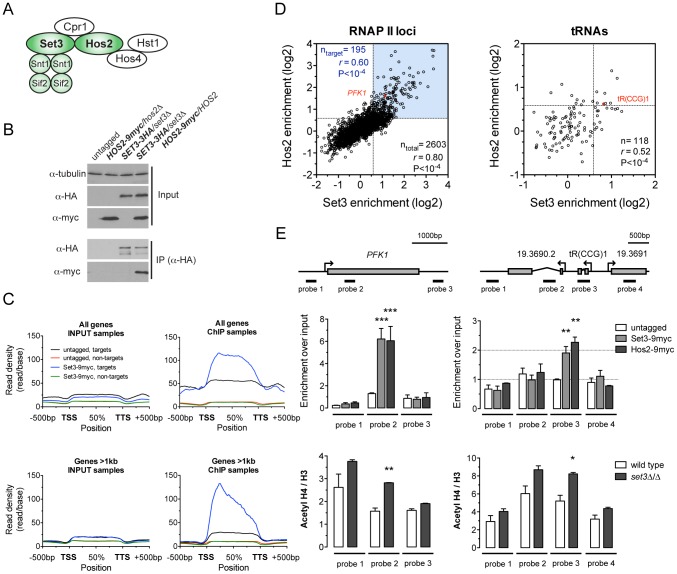
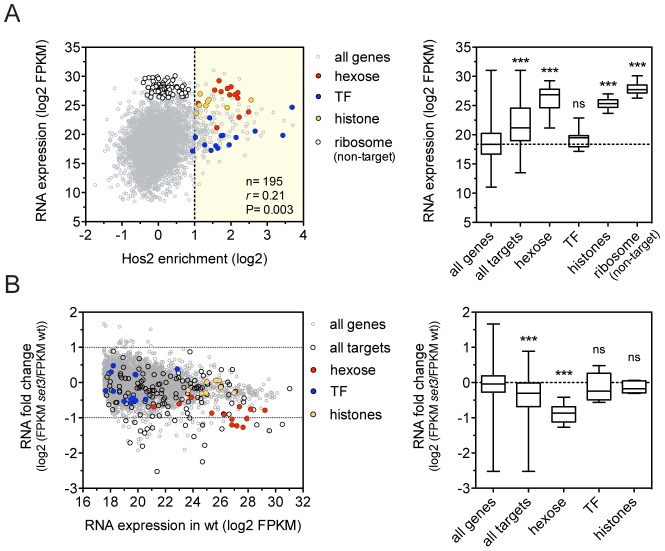
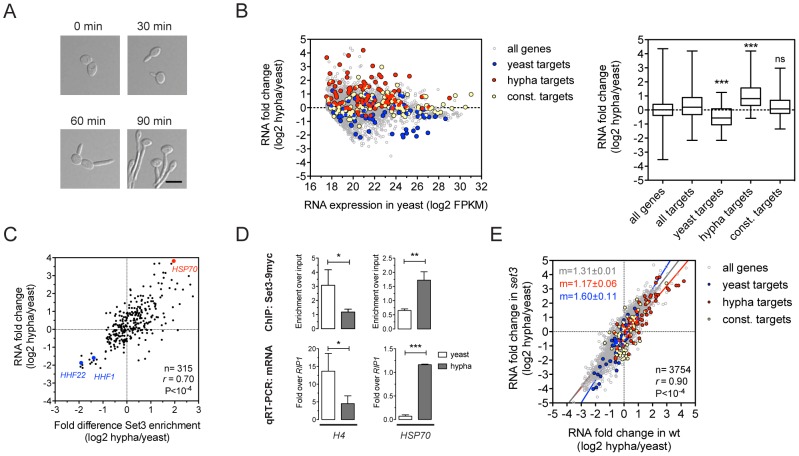
Despite their classical role as transcriptional repressors, several histone deacetylases, including the baker's yeast Set3/Hos2 complex (Set3C), facilitate gene expression. In the dimorphic human pathogen Candida albicans, the homologue of the Set3C inhibits the yeast-to-filament transition, but the precise molecular details of this function have remained elusive. Here, we use a combination of ChIP-Seq and RNA-Seq to show that the Set3C acts as a transcriptional co-factor of metabolic and morphogenesis-related genes in C. albicans. Binding of the Set3C correlates with gene expression during fungal morphogenesis; yet, surprisingly, deletion of SET3 leaves the steady-state expression level of most genes unchanged, both during exponential yeast-phase growth and during the yeast-filament transition. Fine temporal resolution of transcription in cells undergoing this transition revealed that the Set3C modulates transient expression changes of key morphogenesis-related genes. These include a transcription factor cluster comprising of NRG1, EFG1, BRG1, and TEC1, which form a regulatory circuit controlling hyphal differentiation. Set3C appears to restrict the factors by modulating their transcription kinetics, and the hyperfilamentous phenotype of SET3-deficient cells can be reverted by mutating the circuit factors. These results indicate that the chromatin status at coding regions represents a dynamic platform influencing transcription kinetics. Moreover, we suggest that transcription at the coding sequence can be transiently decoupled from potentially conflicting promoter information in dynamic environments.
Overview
The claims and statistics of this paper haven’t been checked yet.
Free: it reads the open-access text and checks the first 5 claims that cite a source we can check. Create a free account to check every claim.
Integrity signals
Registry
Cites
Statistics
Figures
Verification
Claims the paper makes
The claims and statistics of this paper haven’t been checked yet.
Free: it reads the open-access text and checks the first 5 claims that cite a source we can check. Create a free account to check every claim.
Claims other papers make about this one
Each is checked against this paper’s own text: does it say what the citing paper says it does?
The source backs part of the claim, not all of it — or backs it for a different population, condition or comparison.
In the citing paper
“Nrg1 probably acts through a Set3 chromatin-modifying complex (77, 139).”
From Candida albicans Biofilms and Human Disease (2015) · cites this paper as [77]
Experimental — accuracy not yet measuredThe source backs part of the claim, not all of it — or backs it for a different population, condition or comparison.
In the citing paper
“of the 116 genes upregulated at least 2-fold in the set3Δ/Δ mutant, 69 have unknown biological functions, 15 are involved in drug response, and 9 are implicated in septin organization and cell cycle progression on the basis of CGD Gene Ontology Slim Mapper (Candida GO-Slim Process), i.e., SEP7, CEK1, DDC1, HAC1, SGO1, ORF19.1363, ORF19.2713, ORF19.2922, and ORF19.7450 (46–48)”
From A Histone Deacetylase Complex Mediates Biofilm Dispersal and Drug Resistance in Candida albicans (2014) · cites this paper as [23]
Experimental — accuracy not yet measuredThe source backs part of the claim, not all of it — or backs it for a different population, condition or comparison.
In the citing paper
“Of the 33 genes downregulated at least 2-fold in the set3Δ/Δ mutant, 9 have unknown biological functions, 9 are involved in drug response, and 3 play roles in septin organization and cell cycle progression, based on CGD Gene Ontology Slim Mapper (Candida GO-Slim Process), i.e., GIN4, CCN1, and MCD1 (43–45)”
From A Histone Deacetylase Complex Mediates Biofilm Dispersal and Drug Resistance in Candida albicans (2014) · cites this paper as [23]
Experimental — accuracy not yet measuredThe source backs part of the claim, not all of it — or backs it for a different population, condition or comparison.
In the citing paper
“In C. albicans, only the core complex has been studied and, as discussed above, was recently found to be involved in the modulation of morphogenesis-related processes (23, 24).”
From A Histone Deacetylase Complex Mediates Biofilm Dispersal and Drug Resistance in Candida albicans (2014) · cites this paper as [23]
Experimental — accuracy not yet measuredThe cited source says what the claim attributes to it.
In the citing paper
“the Set3 complex mutants are hyperfilamentous (23)”
From A Histone Deacetylase Complex Mediates Biofilm Dispersal and Drug Resistance in Candida albicans (2014) · cites this paper as [23]
4 more claims about this paper
Create a free account to see every claim other papers make about this one.
Self-check
Percentages, sums and reported differences re-computed from the paper’s own numbers.
The self-check needs the paper’s full text.
Citations
Cites
Ultrafast and memory-efficient alignment of short DNA sequences to the human genome.
Langmead, B., Trapnell, C., Pop, M., & Salzberg, S. L. (2009) · Genome Biology · doi:10.1186/gb-2009-10-3-r25 · Cited by 21,849
Model-based Analysis of ChIP-Seq (MACS)
Zhang, Y., Liu, T., Meyer, C. A., Eeckhoute, J., Johnson, D. S., Bernstein, B. E., Nusbaum, C., Myers, R. M., Brown, M., Li, W., et al. (2008) · Genome Biology · doi:10.1186/gb-2008-9-9-r137 · Cited by 18,386 · cited 8×
“(B) Correlation of MACS fold enrichment values with the enrichment measured by the RPKM method in one representative Set3 and Hos2 ChIP-Seq experiment.”
MethodInfluentialTrapnell, C., Williams, B. A., Pertea, G., Mortazavi, A., Kwan, G., van Baren, M. J., Salzberg, S. L., Wold, B. J., & Pachter, L. (2010) · Nature Biotechnology · doi:10.1038/nbt.1621 · Cited by 15,556
Mapping and quantifying mammalian transcriptomes by RNA-Seq
Mortazavi, A., Williams, B. A., McCue, K., Schaeffer, L., & Wold, B. (2008) · Nature Methods · doi:10.1038/nmeth.1226 · Cited by 13,696 · cited 1×
“known [48].”
Comparative Protein Modelling by Satisfaction of Spatial Restraints
Šali, A., & Blundell, T. L. (1993) · Journal of Molecular Biology · doi:10.1006/jmbi.1993.1626 · Cited by 12,977 · cited 1×
“The right side shows the structural model of the CaSet3 PHD overlayed on the crystal structure on the left using Modeller [50] with identical color-coding.”
MethodTopHat: discovering splice junctions with RNA-Seq
Trapnell, C., Pachter, L., & Salzberg, S. L. (2009) · Bioinformatics · doi:10.1093/bioinformatics/btp120 · Cited by 11,617
The distinct morphogenic states of Candida albicans
Sudbery, P., Gow, N., & Berman, J. (2004) · Trends in Microbiology · doi:10.1016/j.tim.2004.05.008 · Cited by 876 · cited 1×
“morphologies ranging from unicellular yeast-like, to multicellular pseudohyphal, and hyphal structures [1,2].”
BackgroundProgression through the RNA Polymerase II CTD Cycle
Buratowski, S. (2009) · Molecular Cell · doi:10.1016/j.molcel.2009.10.019 · Cited by 772 · cited 1×
“Indeed, the plethora of modifications of the RNAPII C-terminal domain (CTD) has been postulated to constitute a ‘‘CTD code’’, whereby specific CTD modifications orchestrate the binding of protein factors that affect RNA processing, RNAPII termination or histone modifications [37,38,39].”
BackgroundThe SAT1 flipper, an optimized tool for gene disruption in Candida albicans
Reuß, O., Vik, Å., Kolter, R., & Morschhäuser, J. (2004) · Gene · doi:10.1016/j.gene.2004.06.021 · Cited by 742
A Recently Evolved Transcriptional Network Controls Biofilm Development in Candida albicans
Nobile, C. J., Fox, E. P., Nett, J. E., Sorrells, T. R., Mitrovich, Q. M., Hernday, A. D., Tuch, B. B., Andes, D. R., & Johnson, A. D. (2012) · Cell · doi:10.1016/j.cell.2011.10.048 · Cited by 711 · cited 17×
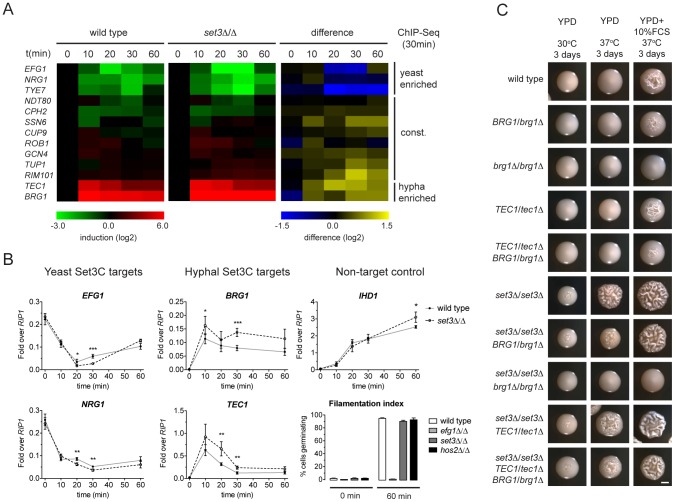
“By contrast, a rapid 50–100-fold induction of transcripts of the hyphal-specific targets BRG1 and TEC1 were visible after only 10 minutes (Figure 5A).”
BackgroundMethodInfluentialSelf-citationNoble, S. M., French, S., Kohn, L. A., Chen, V., & Johnson, A. D. (2010) · Nature Genetics · doi:10.1038/ng.605 · Cited by 678 · cited 2×
“mental and host stimuli and is controlled by several signal transduction cascades and over thirty transcriptional regulators [5,6,7,8].”
BackgroundThe Language of Histone Crosstalk
Lee, J.-S., Smith, E., & Shilatifard, A. (2010) · Cell · doi:10.1016/j.cell.2010.08.011 · Cited by 597
Noble, S. M., & Johnson, A. D. (2005) · Eukaryotic Cell · doi:10.1128/ec.4.2.298-309.2005 · Cited by 592 · cited 1×
“All strains were derived from SN152 [41].”
Regulatory circuitry governing fungal development, drug resistance, and disease.
Shapiro, R. S., Robbins, N., & Cowen, L. E. (2011) · Microbiology and Molecular Biology Reviews · doi:10.1128/mmbr.00045-10 · Cited by 576 · cited 2×
“mental and host stimuli and is controlled by several signal transduction cascades and over thirty transcriptional regulators [5,6,7,8].”
BackgroundFungal morphogenesis and host invasion
Gow, N. A. R., Brown, A. J. P., & Odds, F. C. (2002) · Current Opinion in Microbiology · doi:10.1016/s1369-5274(02)00338-7 · Cited by 482 · cited 2×
“The ability to undergo reversible transitions between the distinct morphologies is a key virulence factor of C. albicans, shared by many other pathogenic fungi of even distantly related taxa such as Histoplasma and Cryptococcus [2,3].”
BackgroundHistone modification: cause or cog?
Henikoff, S., & Shilatifard, A. (2011) · Trends in Genetics · doi:10.1016/j.tig.2011.06.006 · Cited by 482 · cited 1×
“The mechanistic basis of opposing functions (repression and activation) could be that dynamic histone (de)acetylation affects nucleosome density at coding regions, while nucleosomes carry other modifications that directly affect transcription [33].”
BackgroundA Phenotypic Profile of the Candida albicans Regulatory Network
Homann, O. R., Dea, J., Noble, S. M., & Johnson, A. D. (2009) · PLoS Genetics · doi:10.1371/journal.pgen.1000783 · Cited by 444 · cited 2×
“mental and host stimuli and is controlled by several signal transduction cascades and over thirty transcriptional regulators [5,6,7,8].”
BackgroundSystematic Genetic Analysis of Virulence in the Human Fungal Pathogen Cryptococcus neoformans
Liu, O. W., Chun, C. D., Chow, E. D., Chen, C., Madhani, H. D., & Noble, S. M. (2008) · Cell · doi:10.1016/j.cell.2008.07.046 · Cited by 443
Cracking the RNA polymerase II CTD code
Egloff, S., & Murphy, S. (2008) · Trends in Genetics · doi:10.1016/j.tig.2008.03.008 · Cited by 405 · cited 1×
“Indeed, the plethora of modifications of the RNAPII C-terminal domain (CTD) has been postulated to constitute a ‘‘CTD code’’, whereby specific CTD modifications orchestrate the binding of protein factors that affect RNA processing, RNAPII termination or histone modifications [37,38,39].”
BackgroundMorphogenesis in Candida albicans
Whiteway, M., & Bachewich, C. (2007) · Annual Review of Microbiology · doi:10.1146/annurev.micro.61.080706.093341 · Cited by 388 · cited 1×
“mental and host stimuli and is controlled by several signal transduction cascades and over thirty transcriptional regulators [5,6,7,8].”
BackgroundTranscription Profiling of Candida albicans Cells Undergoing the Yeast-to-Hyphal Transition
Nantel, A., Dignard, D., Bachewich, C., Harcus, D., Marcil, A., Bouin, A.-P., Sensen, C. W., Hogues, H., van het Hoog, M., Gordon, P., et al. (2002) · Molecular Biology of the Cell · doi:10.1091/mbc.e02-05-0272 · Cited by 378 · cited 1×
“[11,22].”
Biofilm Matrix Regulation by Candida albicans Zap1
Nobile, C. J., Nett, J. E., Hernday, A. D., Homann, O. R., Deneault, J.-S., Nantel, A., Andes, D. R., Johnson, A. D., & Mitchell, A. P. (2009) · PLoS Biology · doi:10.1371/journal.pbio.1000133 · Cited by 337 · cited 2×
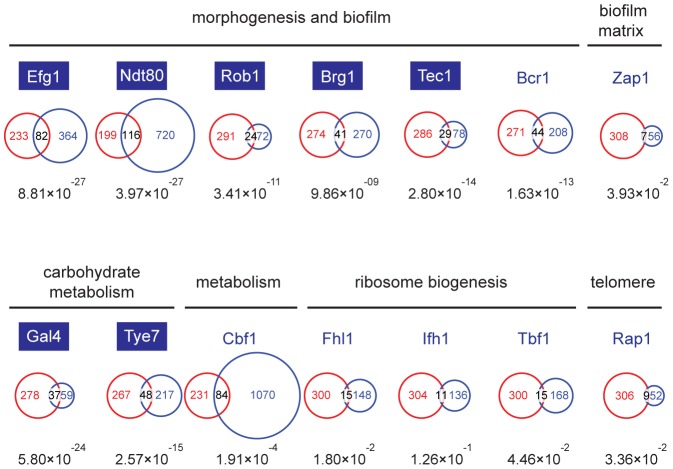
“formation [23], biofilm matrix regulation [24], carbohydrate”
MethodSelf-citationKim, T., & Buratowski, S. (2009) · Cell · doi:10.1016/j.cell.2009.02.045 · Cited by 319
Kadosh, D., & Johnson, A. D. (2005) · Molecular Biology of the Cell · doi:10.1091/mbc.e05-01-0073 · Cited by 289 · cited 7×
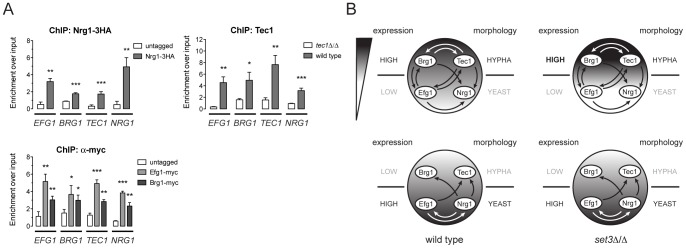
“The relief of Nrg1 repression enables expression of hyphal-specific genes such as the TFs Brg1 and Tec1, which once expressed, repress the promoters of the yeast-specific regulators and reinforce their own expression (Figure 6A).”
BackgroundInfluentialRequirement of Hos2 Histone Deacetylase for Gene Activity in Yeast
Wang, A., Kurdistani, S. K., & Grunstein, M. (2002) · Science · doi:10.1126/science.1077790 · Cited by 272 · cited 7×
“deacetylates various residues of histones H3 and H4 [17].”
BackgroundInfluentialFrohner, I. E., Bourgeois, C., Yatsyk, K., Majer, O., & Kuchler, K. (2009) · Molecular Microbiology · doi:10.1111/j.1365-2958.2008.06528.x · Cited by 266 · cited 1×
“The wild type (CAIF100), SET3/set3D (DHCA401), set3D/D (DHCA402), HOS2/ hos2D (DHCA405) and hos2D/D (DHCA406) strains were previously described [15,42].”
BackgroundSelf-citationPijnappel, W. W. M. P., Schaft, D., Roguev, A., Shevchenko, A., Tekotte, H., Wilm, M., Rigaut, G., Séraphin, B., Aasland, R., & Stewart, A. F. (2001) · Genes & Development · doi:10.1101/gad.207401 · Cited by 265 · cited 4×
“sporulation [16], and indicates that both the context and timing”
BackgroundInfluentialTranscriptional regulation of carbohydrate metabolism in the human pathogen Candida albicans
Askew, C., Sellam, A., Epp, E., Hogues, H., Mullick, A., Nantel, A., & Whiteway, M. (2009) · PLoS Pathogens · doi:10.1371/journal.ppat.1000612 · Cited by 260 · cited 2×
“metabolism [25], ribosome biogenesis [26], telomere control [26]”
MethodThe Specificity and Topology of Chromatin Interaction Pathways in Yeast
Lenstra, T. L., Benschop, J. J., Kim, T., Schulze, J. M., Brabers, N. A. C. H., Margaritis, T., van de Pasch, L. A. L., van Heesch, S. A. A. C., Brok, M. O., Groot Koerkamp, M. J. A., et al. (2011) · Molecular Cell · doi:10.1016/j.molcel.2011.03.026 · Cited by 238 · cited 1×
“only a marginal effect on genome-wide transcription [30].”
BackgroundCoevolution of Morphology and Virulence in Candida Species
Thompson, D. S., Carlisle, P. L., & Kadosh, D. (2011) · Eukaryotic Cell · doi:10.1128/ec.05085-11 · Cited by 224 · cited 3×
“The ability to undergo reversible transitions between the distinct morphologies is a key virulence factor of C. albicans, shared by many other pathogenic fungi of even distantly related taxa such as Histoplasma and Cryptococcus [2,3].”
BackgroundLi, H., Fischle, W., Wang, W., Duncan, E. M., Liang, L., Murakami-Ishibe, S., Allis, C. D., & Patel, D. J. (2007) · Molecular Cell · doi:10.1016/j.molcel.2007.10.023 · Cited by 199 · cited 1×
“The left side shows the crystal structure of the PHD domain of HsBPTF adapted from [49].”
BackgroundSet3 HDAC Mediates Effects of Overlapping Noncoding Transcription on Gene Induction Kinetics
Kim, T., Xu, Z., Clauder-Münster, S., Steinmetz, L. M., & Buratowski, S. (2012) · Cell · doi:10.1016/j.cell.2012.08.016 · Cited by 199 · cited 2×
“Notably, indirect regulatory functions of Set3C can lead to positive regulation of target genes through a mechanism involving repression of overlapping non-coding RNAs [40].”
BackgroundUhl, M. A., Biery, M., Craig, N., & Johnson, A. D. (2003) · The EMBO Journal · doi:10.1093/emboj/cdg256 · Cited by 191
Updating the RNA polymerase CTD code: adding gene-specific layers
Egloff, S., Dienstbier, M., & Murphy, S. (2012) · Trends in Genetics · doi:10.1016/j.tig.2012.03.007 · Cited by 177 · cited 1×
“Indeed, the plethora of modifications of the RNAPII C-terminal domain (CTD) has been postulated to constitute a ‘‘CTD code’’, whereby specific CTD modifications orchestrate the binding of protein factors that affect RNA processing, RNAPII termination or histone modifications [37,38,39].”
BackgroundSystematic Dissection of Roles for Chromatin Regulators in a Yeast Stress Response
Weiner, A., Chen, H. V., Liu, C. L., Rahat, A., Klien, A., Soares, L., Gudipati, M., Pfeffner, J., Regev, A., Buratowski, S., et al. (2012) · PLoS Biology · doi:10.1371/journal.pbio.1001369 · Cited by 168 · cited 1×
“levels [31].”
Ding, S., Liu, W., Iliuk, A. B., Ribot, C., Vallet, J., Tao, A. W., Wang, Y., Lebrun, M., & Xu, J. (2010) · The Plant Cell · doi:10.1105/tpc.110.074302 · Cited by 165
Lu, Y., Su, C., Wang, A., & Liu, H. (2011) · PLoS Biology · doi:10.1371/journal.pbio.1001105 · Cited by 162 · cited 13×
“The relief of Nrg1 repression enables expression of hyphal-specific genes such as the TFs Brg1 and Tec1, which once expressed, repress the promoters of the yeast-specific regulators and reinforce their own expression (Figure 6A).”
BackgroundInfluentialEvolutionary Tinkering with Conserved Components of a Transcriptional Regulatory Network
Lavoie, H., Hogues, H., Mallick, J., Sellam, A., Nantel, A., & Whiteway, M. (2010) · PLoS Biology · doi:10.1371/journal.pbio.1000329 · Cited by 136 · cited 2×
“metabolism [25], ribosome biogenesis [26], telomere control [26]”
MethodHistone acetyltransferase Rtt109 is required for Candida albicans pathogenesis
Lopes da Rosa, J., Boyartchuk, V. L., Zhu, L. J., & Kaufman, P. D. (2010) · Proceedings of the National Academy of Sciences · doi:10.1073/pnas.0912427107 · Cited by 132
Hnisz, D., Majer, O., Frohner, I. E., Komnenovic, V., & Kuchler, K. (2010) · PLoS Pathogens · doi:10.1371/journal.ppat.1000889 · Cited by 124 · cited 7×
“NRG1 and SET3 alleles were deleted using the SAT1 flipping strategy [15,43].”
BackgroundMethodInfluentialSelf-citationInhibition of Filamentation Can Be Used To Treat Disseminated Candidiasis
Saville, S. P., Lazzell, A. L., Bryant, A. P., Fretzen, A., Monreal, A., Solberg, E. O., Monteagudo, C., Lopez-Ribot, J. L., & Milne, G. T. (2006) · Antimicrobial Agents and Chemotherapy · doi:10.1128/aac.00628-06 · Cited by 115 · cited 1×
“Consequently, blocking fungal morphogenesis represents a plausible antifungal therapeutic strategy [4].”
BackgroundLu, Y., Su, C., & Liu, H. (2012) · PLoS Pathogens · doi:10.1371/journal.ppat.1002663 · Cited by 92 · cited 9×
“The relief of Nrg1 repression enables expression of hyphal-specific genes such as the TFs Brg1 and Tec1, which once expressed, repress the promoters of the yeast-specific regulators and reinforce their own expression (Figure 6A).”
BackgroundInfluentialAlejandro-Osorio, A. L., Huebert, D. J., Porcaro, D. T., Sonntag, M. E., Nillasithanukroh, S., Will, J. L., & Gasch, A. P. (2009) · Genome Biology · doi:10.1186/gb-2009-10-5-r57 · Cited by 90
Genetics and Molecular Biology in Candida albicans
Hernday, A. D., Noble, S. M., Mitrovich, Q. M., & Johnson, A. D. (2010) · Methods in enzymology on CD-ROM/Methods in enzymology · doi:10.1016/s0076-6879(10)70031-8 · Cited by 84 · cited 5×
“After overnight incubation at 4uC washing and DNA purification was performed exactly as described [44].”
MethodInfluentialLu, Y., Su, C., Mao, X., Raniga, P. P., Liu, H., & Chen, J. (2008) · Molecular Biology of the Cell · doi:10.1091/mbc.e08-02-0173 · Cited by 82 · cited 1×
“required for the establishment of a normal filamentation expression program [9].”
BackgroundTarget specificity of the Candida albicans Efg1 regulator
Lassak, T., Schneider, E., Bussmann, M., Kurtz, D., Manak, J. R., Srikantha, T., Soll, D. R., & Ernst, J. F. (2011) · Molecular Microbiology · doi:10.1111/j.1365-2958.2011.07837.x · Cited by 76 · cited 2×
“Together with a recent genome-wide binding map of Efg1 in yeast phase [27], these data allow for the reconstruction of a partial map of the transcriptional circuit that underlies hyphal differentiation in C.”
BackgroundHos2 and Set3 Promote Integration of Ty1 Retrotransposons at tRNA Genes in Saccharomyces cerevisiae
Mou, Z., Kenny, A. E., & Curcio, M. J. (2006) · Genetics · doi:10.1534/genetics.105.054072 · Cited by 58 · cited 1×
“SetC3 binds at a few tRNA loci where it is necessary for efficient integration of Ty1 retrotransposons [29].”
BackgroundSellam, A., Hogues, H., Askew, C., Tebbji, F., van het Hoog, M., Lavoie, H., Kumamoto, C. A., Whiteway, M., & Nantel, A. (2010) · Genome Biology · doi:10.1186/gb-2010-11-7-r71 · Cited by 58 · cited 2×
“To rule out that this is caused by differences in RNA stability of the gene clusters, we examined RNAPII density [36], and found a similar correlation of Set3C enrichment with RNAPII density as with RNA level genome-wide (data not shown).”
BackgroundRaman, S. B., Nguyen, M. H., Zhang, Z., Cheng, S., Jia, H. Y., Weisner, N., Iczkowski, K., & Clancy, C. J. (2006) · Molecular Microbiology · doi:10.1111/j.1365-2958.2006.05121.x · Cited by 43 · cited 1×
“Consistent with this notion, several other chromatin modifier mutants, including the histone methyltransferase Set1 [13], the HAT Rtt109 [14], and the Set3 HDAC complex [15] display morphogenesis-related phenotypes.”
BackgroundLohse, M. B., & Johnson, A. D. (2010) · Molecular Microbiology · doi:10.1111/j.1365-2958.2010.07331.x · Cited by 41 · cited 1×
“albicans [35].”
Cited by
Candida albicans Biofilms and Human Disease
Nobile, C. J., & Johnson, A. D. (2015) · Annual Review of Microbiology · doi:10.1146/annurev-micro-091014-104330 · Cited by 1,057
Self-citationCandida albicans biofilms: development, regulation, and molecular mechanisms
Gulati, M., & Nobile, C. J. (2016) · Microbes and Infection · doi:10.1016/j.micinf.2016.01.002 · Cited by 738
Self-citationDevelopment and regulation of single- and multi-species Candida albicans biofilms
Lohse, M. B., Gulati, M., Johnson, A. D., & Nobile, C. J. (2018) · Nature Reviews Microbiology · doi:10.1038/nrmicro.2017.107 · Cited by 643
Self-citationCandida albicans hyphal initiation and elongation
Lu, Y., Su, C., & Liu, H. (2014) · Trends in Microbiology · doi:10.1016/j.tim.2014.09.001 · Cited by 193
“In addition, the Set3/Hos2 complex also modulates the transcription kinetics of BRG1 during hyphal development [71].”
Candida albicans biofilms: building a heterogeneous, drug-tolerant environment
Bonhomme, J., & d’Enfert, C. (2013) · Current Opinion in Microbiology · doi:10.1016/j.mib.2013.03.007 · Cited by 120
Metadata
- Authors
- Hnisz, D., Bardet, A. F., Nobile, C. J., Petryshyn, A., Glaser, W., Schöck, U., Stark, A., & Kuchler, K.
- Affiliations
- Max Perutz Labs (AT)
- Research Institute of Molecular Pathology (AT)
- University of California, San Francisco (US)
- GATC Biotech (Germany) (DE)
- Corresponding author
- Kuchler, Karl
- Venue
- PLoS Genetics
- Publisher
- Public Library of Science (PLoS)
- Published
- 2012-12-06
- Volume
- 8
- Issue
- 12
- Pages
- e1003118
- ISSN
- 1553-7390 (ISSN-L)
- 1553-7404
- PMC
- PMC3516536
- OpenAlex
- W1981441725
- Cited by
- 100
- References
- 50
- Citations by year
- 2026: 2 · 2025: 7 · 2024: 5 · 2023: 4 · 2022: 5 · 2021: 12 · 2020: 7 · 2019: 3 · 2018: 9 · 2017: 6 · 2016: 13 · 2015: 13 · 2014: 6 · 2013: 8
- FWCI
- 3.47
- Type
- journal article
- Language
- en
- Open access
- gold
- doi.org
- Locations
- PLoS Genetics (publishedVersion, cc-by)
- Europe PMC (PubMed Central) (publishedVersion, cc-by)
- PubMed Central (publishedVersion, cc-by)
- PubMed (publishedVersion)
- DOAJ (DOAJ: Directory of Open Access Journals) (submittedVersion, cc-by-sa)
- eScholarship (California Digital Library) (submittedVersion)
- Figshare (submittedVersion, cc-by)
- Funders
- Austrian Science Fund
- National Institutes of Health (FP7/2007-2013)
- National Institute of Allergy and Infectious Diseases (R01AI049187, F32AI088822)
- FP7 Ideas: European Research Council (242922)
- Topics
- Life Sciences › Biochemistry, Genetics and Molecular Biology › Molecular Biology › Fungal and yeast genetics research
- Life Sciences › Biochemistry, Genetics and Molecular Biology › Molecular Biology › Genomics and Chromatin Dynamics
- Life Sciences › Biochemistry, Genetics and Molecular Biology › Molecular Biology › Histone Deacetylase Inhibitors Research
- Keywords
- histone deacetylase, Candida albicans, fungal morphogenesis, transcription kinetics, chromatin dynamics, transcriptional cofactors, hyphal differentiation, neuregulin-1, EFG1, SMARCA4, Tec1, dimorphic fungi
- MeSH terms
- Candida albicans, Chromatin, Histone Deacetylases, Kinetics, Morphogenesis, Promoter Regions, Genetic, Protein Binding, Transcription Factors, Transcription, Genetic, Gene Expression Regulation, Fungal, Open Reading Frames, Hyphae
About these checks
Registry, retraction, Cites and statistics results are computed, not judged, with one exception: a printed reference that no index lists is read once by a model before it counts as a citation error. Claims are extracted by a model and kept only when their quote appears verbatim in the text; each cited source is then checked, with a model’s help, for whether it says what the claim relies on. Those verdicts can be wrong — read the claim’s quote and the cited source before relying on one.
Statistics and arithmetic are recomputed, not judged.
Confidence bands are shown only for fields calibrated on our annotated test set. None is calibrated yet, so no band is shown.
What counts as a claim ›How we measure confidence ›How we check this ›
Are you an author, or do you see a problem with this page? Request a review
Data sources
Bibliographic data: Semantic Scholar, OpenAlex, Crossref.
Contains information from the Semantic Scholar Academic Graph Datasets, made available under the ODC Attribution License (ODC-BY 1.0).
Semantic Scholar’s data is described in: Kinney, R., et al. (2023). The Semantic Scholar Open Data Platform. arXiv:2301.10140.
