

The DOI matches its Crossref record; 148 of the 149 references it cites were found in a registry or an index.
A Framework for the Establishment of a Cnidarian Gene Regulatory Network for “Endomesoderm” Specification: The Inputs of ß-Catenin/TCF Signaling
Open accessAbstract
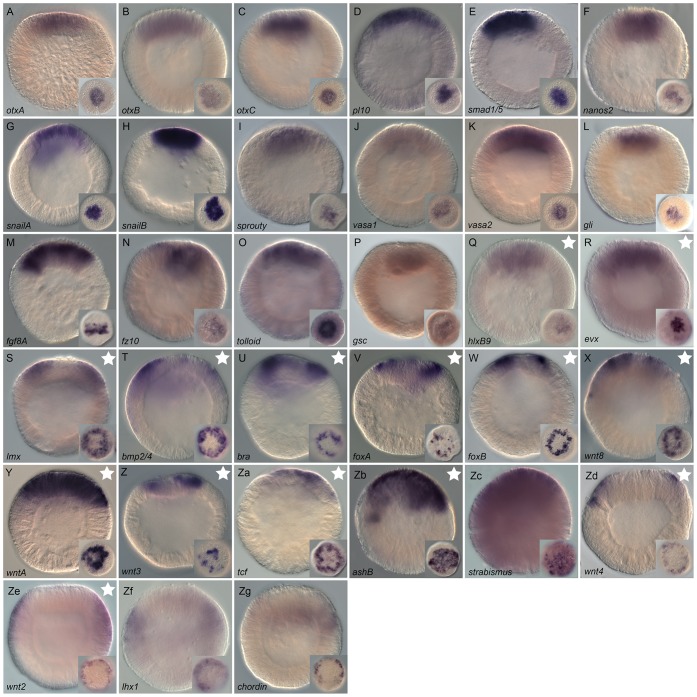
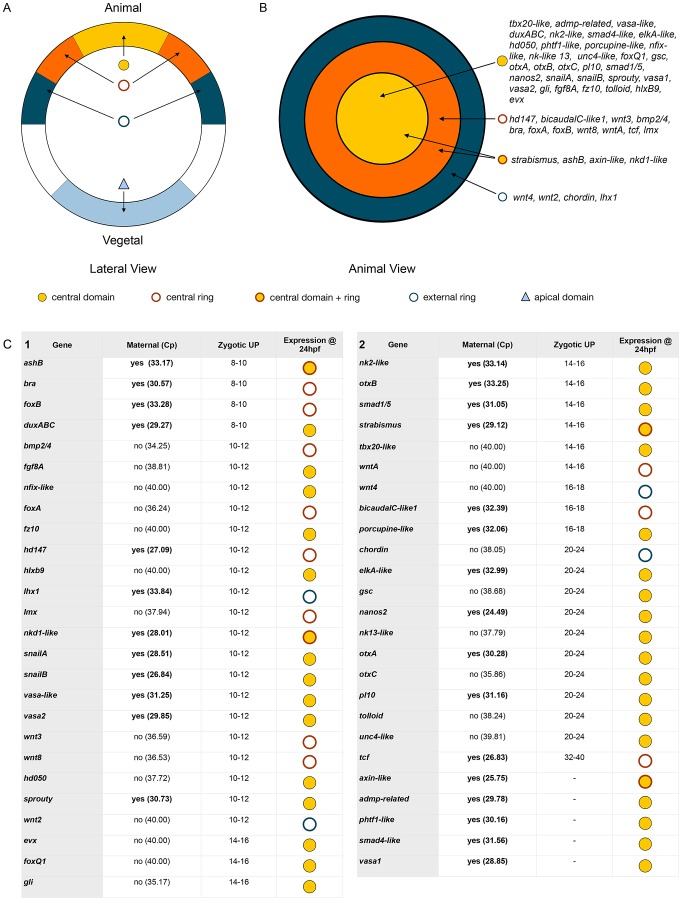
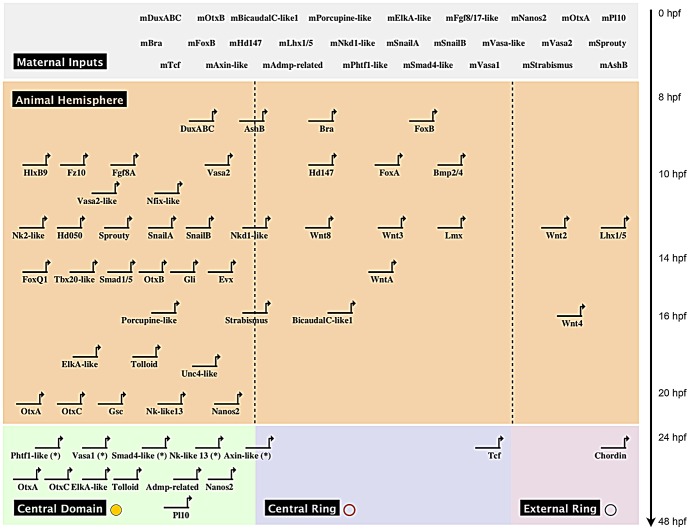
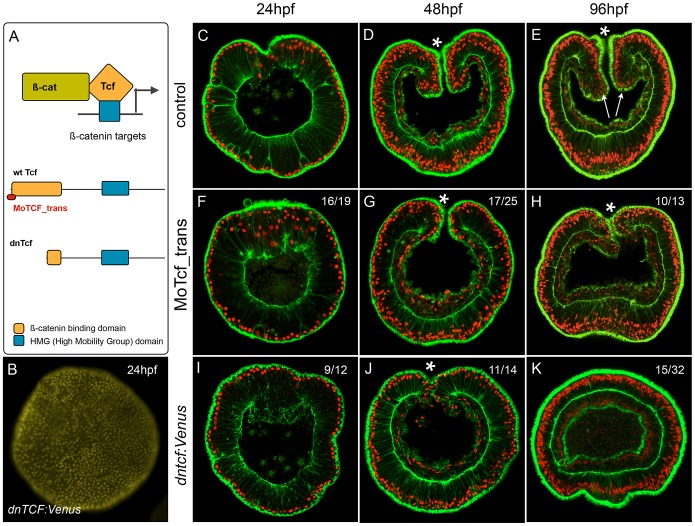
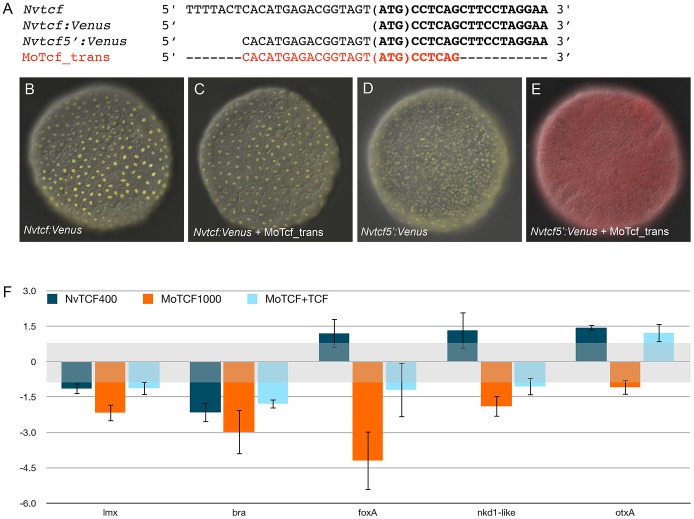
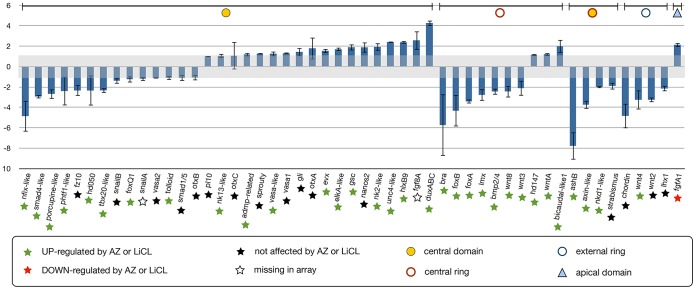
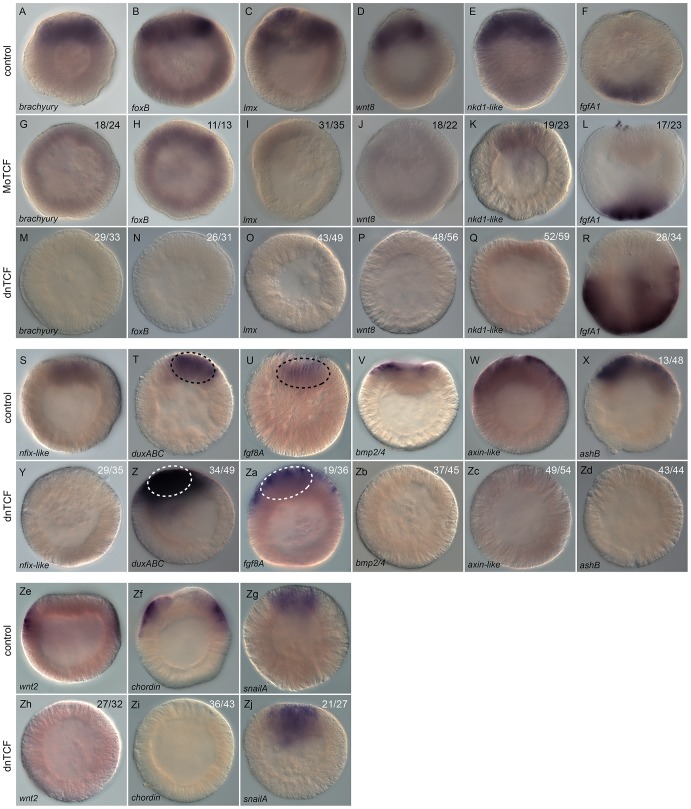
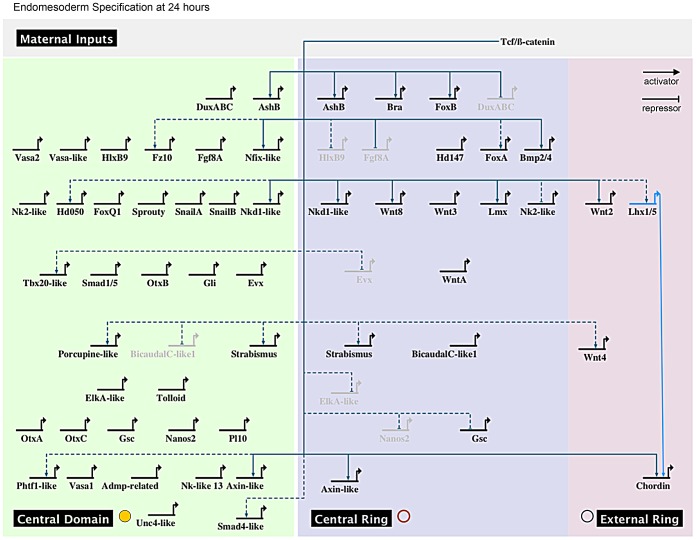
Understanding the functional relationship between intracellular factors and extracellular signals is required for reconstructing gene regulatory networks (GRN) involved in complex biological processes. One of the best-studied bilaterian GRNs describes endomesoderm specification and predicts that both mesoderm and endoderm arose from a common GRN early in animal evolution. Compelling molecular, genomic, developmental, and evolutionary evidence supports the hypothesis that the bifunctional gastrodermis of the cnidarian-bilaterian ancestor is derived from the same evolutionary precursor of both endodermal and mesodermal germ layers in all other triploblastic bilaterian animals. We have begun to establish the framework of a provisional cnidarian "endomesodermal" gene regulatory network in the sea anemone, Nematostella vectensis, by using a genome-wide microarray analysis on embryos in which the canonical Wnt/ß-catenin pathway was ectopically targeted for activation by two distinct pharmaceutical agents (lithium chloride and 1-azakenpaullone) to identify potential targets of endomesoderm specification. We characterized 51 endomesodermally expressed transcription factors and signaling molecule genes (including 18 newly identified) with fine-scale temporal (qPCR) and spatial (in situ) analysis to define distinct co-expression domains within the animal plate of the embryo and clustered genes based on their earliest zygotic expression. Finally, we determined the input of the canonical Wnt/ß-catenin pathway into the cnidarian endomesodermal GRN using morpholino and mRNA overexpression experiments to show that NvTcf/canonical Wnt signaling is required to pattern both the future endomesodermal and ectodermal domains prior to gastrulation, and that both BMP and FGF (but not Notch) pathways play important roles in germ layer specification in this animal. We show both evolutionary conserved as well as profound differences in endomesodermal GRN structure compared to bilaterians that may provide fundamental insight into how GRN subcircuits have been adopted, rewired, or co-opted in various animal lineages that give rise to specialized endomesodermal cell types.
Overview
The claims and statistics of this paper haven’t been checked yet.
Run the check — free, no account needed. It reads the open-access text and checks the sources it cites.
Integrity signals
Registry
Cites
Statistics
Figures
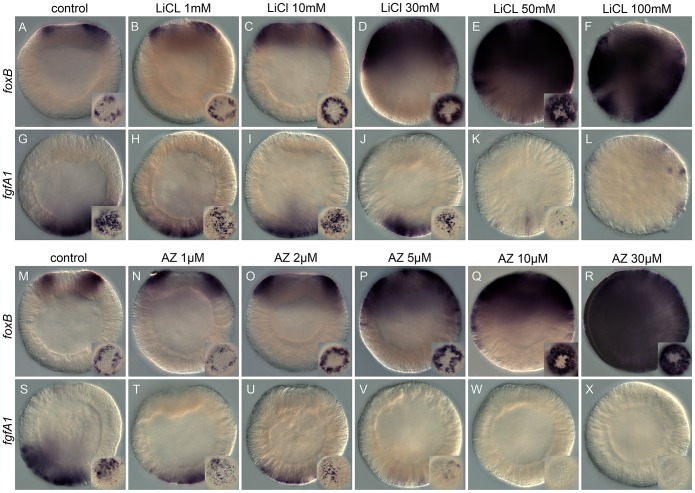
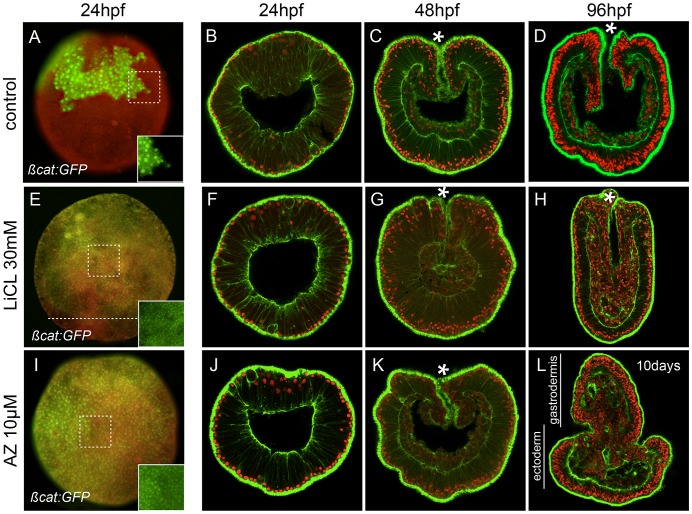
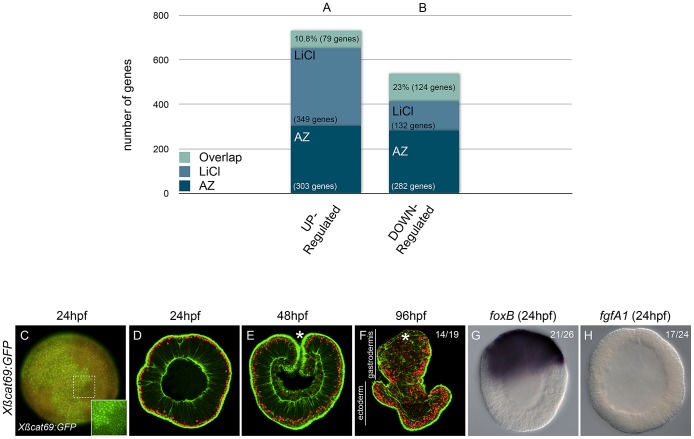
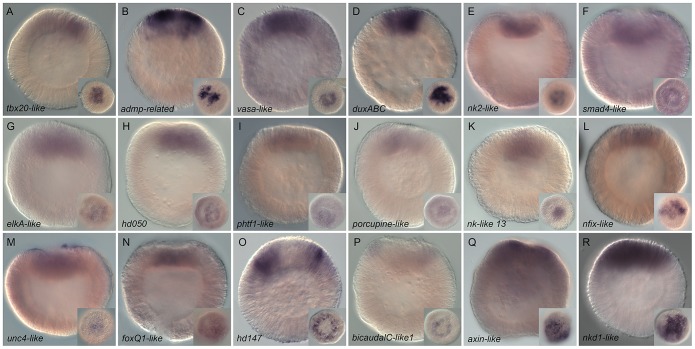
Verification
Claims the paper makes
The claims and statistics of this paper haven’t been checked yet.
Run the check — free, no account needed. It reads the open-access text and checks the sources it cites.
Claims other papers make about this one
Each is checked against this paper’s own text: does it say what the citing paper says it does?
In the citing paper
“While the posterior-anterior gradient of expression of Wnt ligands in larval and adult eumetazoans reflects the conserved role in axial patterning, the earliest function of the canonical Wnt pathway (signalling through b-catenin) is specification of the endomesoderm 19,51,52 .”
From Developmental gene expression provides clues to relationships between sponge and eumetazoan body plans (2014) · cites this paper as [19]
Self-check
Percentages, sums and reported differences re-computed from the paper’s own numbers.
The self-check needs the paper’s full text.
Citations
Cites
Basic local alignment search tool
Altschul, S. F., Gish, W., Miller, W., Myers, E. W., & Lipman, D. J. (1990) · Journal of Molecular Biology · doi:10.1006/jmbi.1990.9999 · Cited by 98,669
Exploration, normalization, and summaries of high density oligonucleotide array probe level data
Irizarry, R. A. (2003) · Biostatistics · doi:10.1093/biostatistics/4.2.249 · Cited by 10,603
Bolstad, B. M., Irizarry, R. A., Åstrand, M., & Speed, T. P. (2003) · Bioinformatics · doi:10.1093/bioinformatics/19.2.185 · Cited by 8,328
A molecular mechanism for the effect of lithium on development.
Klein, P. S., & Melton, D. A. (1996) · Proceedings of the National Academy of Sciences · doi:10.1073/pnas.93.16.8455 · Cited by 2,334
XTcf-3 Transcription Factor Mediates β-Catenin-Induced Axis Formation in Xenopus Embryos
Molenaar, M., van de Wetering, M., Oosterwegel, M., Peterson-Maduro, J., Godsave, S., Korinek, V., Roose, J., Destrée, O., & Clevers, H. (1996) · Cell · doi:10.1016/s0092-8674(00)80112-9 · Cited by 1,824
Newport, J. W., & Kirschner, M. W. (1982) · Cell · doi:10.1016/0092-8674(82)90272-0 · Cited by 1,619
A genomic regulatory network for development
Davidson, E. H., Rast, J. P., Oliveri, P., Ransick, A., Calestani, C., Yuh, C.-H., Minokawa, T., Amore, G., Hinman, V., Arenas-Mena, C., et al. (2002) · Science · doi:10.1126/science.1069883 · Cited by 1,567
Sea Anemone Genome Reveals Ancestral Eumetazoan Gene Repertoire and Genomic Organization
Putnam, N. H., Srivastava, M., Hellsten, U., Dirks, B., Chapman, J., Salamov, A., Terry, A., Shapiro, H., Lindquist, E., Kapitonov, V. V., et al. (2007) · Science · doi:10.1126/science.1139158 · Cited by 1,555
Self-citationThe specificities of protein kinase inhibitors: an update
BAIN, J., McLAUCHLAN, H., ELLIOTT, M., & COHEN, P. (2003) · Biochemical Journal · doi:10.1042/bj20021535 · Cited by 1,369
Lithium inhibits glycogen synthase kinase-3 activity and mimics wingless signalling in intact cells
Stambolic, V., Ruel, L., & Woodgett, J. R. (1996) · Current Biology · doi:10.1016/s0960-9822(02)70790-2 · Cited by 1,321
Yost, C., Torres, M., Miller, J., Huang, E., Kimelman, D., & Moon, R. T. (1996) · Genes & Development · doi:10.1101/gad.10.12.1443 · Cited by 1,167
A major developmental transition in early xenopus embryos: II. control of the onset of transcription
Newport, J., & Kirschner, M. (1982) · Cell · doi:10.1016/0092-8674(82)90273-2 · Cited by 1,055
Gene regulatory networks for development
Levine, M., & Davidson, E. H. (2005) · Proceedings of the National Academy of Sciences · doi:10.1073/pnas.0408031102 · Cited by 796
Hemmati‐Brivanlou, A., Kelly, O., & Melton, D. A. (1994) · Cell · doi:10.1016/0092-8674(94)90320-4 · Cited by 761
Hacohen, N., Krämer, S., Sutherland, D., Hiromi, Y., & Krasnow, M. A. (1998) · Cell · doi:10.1016/s0092-8674(00)80919-8 · Cited by 750
The zebrafish midblastula transition
Kane, D. A., & Kimmel, C. B. (1993) · Development · doi:10.1242/dev.119.2.447 · Cited by 722
Requirement for β-Catenin in Anterior-Posterior Axis Formation in Mice
Huelsken, J., Vogel, R., Brinkmann, V., Erdmann, B., Birchmeier, C., & Birchmeier, W. (2000) · The Journal of Cell Biology · doi:10.1083/jcb.148.3.567 · Cited by 655
Unexpected complexity of the Wnt gene family in a sea anemone
Kusserow, A., Pang, K., Sturm, C., Hrouda, M., Lentfer, J., Schmidt, H. A., Technau, U., von Haeseler, A., Hobmayer, B., Martindale, M. Q., et al. (2005) · Nature · doi:10.1038/nature03158 · Cited by 599
Self-citation(1940) · Andalas University Repository (Andalas University) · Cited by 591
Pharmacological inhibitors of glycogen synthase kinase 3
Meijer, L., Flajolet, M., & Greengard, P. (2004) · Trends in Pharmacological Sciences · doi:10.1016/j.tips.2004.07.006 · Cited by 586
New aspects of Wnt signaling pathways in higher vertebrates
Huelsken, J., & Birchmeier, W. (2001) · Current Opinion in Genetics & Development · doi:10.1016/s0959-437x(00)00231-8 · Cited by 561
Wnt Signaling Controls the Phosphorylation Status of β-Catenin
van Noort, M., Meeldijk, J., van der Zee, R., Destrée, O., & Clevers, H. C. (2002) · Journal of Biological Chemistry · doi:10.1074/jbc.m111635200 · Cited by 468
Nuclear β-catenin is required to specify vegetal cell fates in the sea urchin embryo
Logan, C. Y., Miller, J. R., Ferkowicz, M. J., & McClay, D. R. (1999) · Development · doi:10.1242/dev.126.2.345 · Cited by 456
Synexpression groups in eukaryotes
Niehrs, C., & Pollet, N. (1999) · Nature · doi:10.1038/990025 · Cited by 429
Origins of Bilateral Symmetry: Hox and Dpp Expression in a Sea Anemone
Finnerty, J. R., Pang, K., Burton, P., Paulson, D., & Martindale, M. Q. (2004) · Science · doi:10.1126/science.1091946 · Cited by 407
Self-citationMartindale, M. Q., Pang, K., & Finnerty, J. R. (2004) · Development · doi:10.1242/dev.01119 · Cited by 396
Self-citationNodal and BMP2/4 Signaling Organizes the Oral-Aboral Axis of the Sea Urchin Embryo
Duboc, V., Röttinger, É., Besnardeau, L., & Lepage, T. (2004) · Developmental Cell · doi:10.1016/s1534-5807(04)00056-5 · Cited by 353
Cell cycle control by the nucleo-cytoplasmic ratio in early Drosophila development
Edgar, B. A., Kiehle, C. P., & Schubiger, G. (1986) · Cell · doi:10.1016/0092-8674(86)90771-3 · Cited by 340
A Provisional Regulatory Gene Network for Specification of Endomesoderm in the Sea Urchin Embryo
Davidson, E. H., Rast, J. P., Oliveri, P., Ransick, A., Calestani, C., Yuh, C., Minokawa, T., Amore, G., Hinman, V. F., Arenas‐Mena, C., et al. (2002) · Developmental Biology · doi:10.1006/dbio.2002.0635 · Cited by 338
An ancient role for nuclear β-catenin in the evolution of axial polarity and germ layer segregation
Wikramanayake, A. H., Hong, M., Lee, P. N., Pang, K., Byrum, C. A., Bince, J. M., Xu, R., & Martindale, M. Q. (2003) · Nature · doi:10.1038/nature02113 · Cited by 324
Self-citationSakanaka, C., Weiss, J. B., & Williams, L. T. (1998) · Proceedings of the National Academy of Sciences · doi:10.1073/pnas.95.6.3020 · Cited by 306
The Culture, Sexual and Asexual Reproduction, and Growth of the Sea Anemone Nematostella vectensis
Hand, C., & Uhlinger, K. R. (1992) · Biological Bulletin · doi:10.2307/1542110 · Cited by 288
Wikramanayake, A. H., Huang, L., & Klein, W. H. (1998) · Proceedings of the National Academy of Sciences · doi:10.1073/pnas.95.16.9343 · Cited by 279
Origin and evolution of the Notch signalling pathway: an overview from eukaryotic genomes
Gazave, E., Lapébie, P., Richards, G. S., Brunet, F., Ereskovsky, A. V., Degnan, B. M., Borchiellini, C., Vervoort, M., & Renard, E. (2009) · BMC Evolutionary Biology · doi:10.1186/1471-2148-9-249 · Cited by 276
Evolutionary crossroads in developmental biology: Cnidaria
Technau, U., & Steele, R. E. (2011) · Development · doi:10.1242/dev.048959 · Cited by 274
Developmental gene regulatory network architecture across 500 million years of echinoderm evolution
Hinman, V. F., Nguyen, A. T., Cameron, R. A., & Davidson, E. H. (2003) · Proceedings of the National Academy of Sciences · doi:10.1073/pnas.2235868100 · Cited by 272
DNA-replication checkpoint control at the Drosophila midblastula transition
Sibon, O. C. M., Stevenson, V. A., & Theurkauf, W. E. (1997) · Nature · doi:10.1038/40439 · Cited by 258
A Wnt- and β-catenin-dependent pathway for mammalian cardiac myogenesis
Nakamura, T., Sano, M., Songyang, Z., & Schneider, M. D. (2003) · Proceedings of the National Academy of Sciences · doi:10.1073/pnas.0935626100 · Cited by 252
Independent evolution of striated muscles in cnidarians and bilaterians
Steinmetz, P. R. H., Kraus, J. E. M., Larroux, C., Hammel, J. U., Amon-Hassenzahl, A., Houliston, E., Wörheide, G., Nickel, M., Degnan, B. M., & Technau, U. (2012) · Nature · doi:10.1038/nature11180 · Cited by 252
A Regulatory Gene Network That Directs Micromere Specification in the Sea Urchin Embryo
Oliveri, P., Carrick, D. M., & Davidson, E. H. (2002) · Developmental Biology · doi:10.1006/dbio.2002.0627 · Cited by 251
Anatomy and development of the nervous system of Nematostella vectensis , an anthozoan cnidarian
Marlow, H. Q., Srivastava, M., Matus, D. Q., Rokhsar, D., & Martindale, M. Q. (2009) · Developmental Neurobiology · doi:10.1002/dneu.20698 · Cited by 247
Self-citationRyan, J. F., Mazza, M. E., Pang, K., Matus, D. Q., Baxevanis, A. D., Martindale, M. Q., & Finnerty, J. R. (2007) · PLoS ONE · doi:10.1371/journal.pone.0000153 · Cited by 244
Self-citationβ-catenin mediates the specification of endoderm cells in ascidian embryos
Imai, K. S., Takada, N., Satoh, N., & Satou, Y. (2000) · Development · doi:10.1242/dev.127.14.3009 · Cited by 236
A gene regulatory network controlling the embryonic specification of endoderm
Peter, I. S., & Davidson, E. H. (2011) · Nature · doi:10.1038/nature10100 · Cited by 231
Molecular evidence for deep evolutionary roots of bilaterality in animal development
Matus, D. Q., Pang, K., Marlow, H. Q., Dunn, C. W., Thomsen, G. H., & Martindale, M. Q. (2006) · Proceedings of the National Academy of Sciences · doi:10.1073/pnas.0601257103 · Cited by 227
Self-citationInduction of gametogenesis in the basal cnidarian Nematostella vectensis (Anthozoa)
Fritzenwanker, J. H., & Technau, U. (2002) · Development Genes and Evolution · doi:10.1007/s00427-002-0214-7 · Cited by 218
Bolouri, H., & Davidson, E. H. (2003) · Proceedings of the National Academy of Sciences · doi:10.1073/pnas.1533293100 · Cited by 214
Rising starlet: the starlet sea anemone,Nematostella vectensis
Darling, J. A., Reitzel, A. M., Burton, P. M., Mazza, M. E., Ryan, J. F., Sullivan, J. C., & Finnerty, J. R. (2005) · BioEssays · doi:10.1002/bies.20181 · Cited by 214
LvNotch signaling mediates secondary mesenchyme specification in the sea urchin embryo
Sherwood, D. R., & McClay, D. R. (1999) · Development · doi:10.1242/dev.126.8.1703 · Cited by 209
Origin and evolution of endoderm and mesoderm
Technau, U., & Scholz, C. B. (2003) · The International Journal of Developmental Biology · doi:10.1387/ijdb.14756329 · Cited by 208
The evolution of metazoan axial properties
Martindale, M. Q. (2005) · Nature Reviews Genetics · doi:10.1038/nrg1725 · Cited by 204
Self-citationLapraz, F., Besnardeau, L., & Lepage, T. (2009) · PLoS Biology · doi:10.1371/journal.pbio.1000248 · Cited by 202
Sweet, H. C., Gehring, M. E., & Ettensohn, C. A. (2002) · Development · doi:10.1242/dev.129.8.1945 · Cited by 188
Duloquin, L., Lhomond, G., & Gache, C. (2007) · Development · doi:10.1242/dev.005108 · Cited by 181
A WNT of things to come: Evolution of Wnt signaling and polarity in cnidarians
LEE, P., PANG, K., Matus, D. Q., & Martindale, M. Q. (2006) · Seminars in Cell and Developmental Biology · doi:10.1016/j.semcdb.2006.05.002 · Cited by 180
Self-citationA glimpse into the molecular entrails of endoderm formationPreprint
Stainier, D. Y. R. (2002) · Genes & Development · doi:10.1101/gad.974902 · Cited by 177
GSK3β/shaggy mediates patterning along the animal-vegetal axis of the sea urchin embryo
Emily-Fenouil, F., Ghiglione, C., Lhomond, G., Lepage, T., & Gache, C. (1998) · Development · doi:10.1242/dev.125.13.2489 · Cited by 171
Momose, T., Derelle, R., & Houliston, E. (2008) · Development · doi:10.1242/dev.021543 · Cited by 170
Rentzsch, F., Anton, R., Saina, M., Hammerschmidt, M., Holstein, T. W., & Technau, U. (2006) · Developmental Biology · doi:10.1016/j.ydbio.2006.06.003 · Cited by 169
FGF signalling controls formation of the apical sensory organ in the cnidarianNematostella vectensis
Rentzsch, F., Fritzenwanker, J. H., Scholz, C. B., & Technau, U. (2008) · Development · doi:10.1242/dev.020784 · Cited by 166
Fritzenwanker, J. H., Saina, M., & Technau, U. (2004) · Developmental Biology · doi:10.1016/j.ydbio.2004.08.014 · Cited by 165
A muscle-specific transgenic reporter line of the sea anemone, Nematostella vectensis
Renfer, E., Amon-Hassenzahl, A., Steinmetz, P. R. H., & Technau, U. (2010) · Proceedings of the National Academy of Sciences · doi:10.1073/pnas.0909148107 · Cited by 164
Two Oppositely Localised Frizzled RNAs as Axis Determinants in a Cnidarian Embryo
Momose, T., & Houliston, E. (2007) · PLoS Biology · doi:10.1371/journal.pbio.0050070 · Cited by 163
Vertebrate mesendoderm induction and patterning
Kimelman, D., & Griffin, K. J. P. (2000) · Current Opinion in Genetics & Development · doi:10.1016/s0959-437x(00)00095-2 · Cited by 159
Gould, T. D., Zarate, C. A., & Manji, H. K. (2004) · The Journal of Clinical Psychiatry · doi:10.4088/jcp.v65n0103 · Cited by 159
Genomic inventory and expression of Sox and Fox genes in the cnidarian Nematostella vectensis
Magie, C. R., Pang, K., & Martindale, M. Q. (2005) · Development Genes and Evolution · doi:10.1007/s00427-005-0022-y · Cited by 158
Self-citationEvolutionary plasticity of developmental gene regulatory network architecture
Hinman, V. F., & Davidson, E. H. (2007) · Proceedings of the National Academy of Sciences · doi:10.1073/pnas.0709994104 · Cited by 154
Gene regulatory network controlling embryonic specification in the sea urchin
Oliveri, P., & Davidson, E. H. (2004) · Current Opinion in Genetics & Development · doi:10.1016/j.gde.2004.06.004 · Cited by 153
Röttinger, É., Saudemont, A., Duboc, V., Besnardeau, L., McClay, D. R., & Lepage, T. (2007) · Development · doi:10.1242/dev.014282 · Cited by 152
Rodaway, A., & Patient, R. K. (2001) · Cell · doi:10.1016/s0092-8674(01)00307-5 · Cited by 151
Gene Regulation: Gene Control Network in Development
de‐Leon, S. B., & Davidson, E. H. (2007) · Annual Review of Biophysics and Biomolecular Structure · doi:10.1146/annurev.biophys.35.040405.102002 · Cited by 149
Brachyury, the blastopore and the evolution of the mesoderm
Technau, U. (2001) · BioEssays · doi:10.1002/bies.1114 · Cited by 148
Roure, A., Rothbächer, U., Robin, F., Kalmár, É., Ferone, G., Lamy, C., Missero, C., Müller, F., & Lemaire, P. (2007) · PLoS ONE · doi:10.1371/journal.pone.0000916 · Cited by 148
Extavour, C. G., Pang, K., Matus, D. Q., & Martindale, M. Q. (2005) · Evolution & Development · doi:10.1111/j.1525-142x.2005.05023.x · Cited by 144
Self-citationScholz, C. B., & Technau, U. (2003) · Development Genes and Evolution · doi:10.1007/s00427-002-0272-x · Cited by 142
Early development and axis specification in the sea anemone Nematostella vectensis
Fritzenwanker, J. H., Genikhovich, G., Kraus, Y. A., & Technau, U. (2007) · Developmental Biology · doi:10.1016/j.ydbio.2007.07.029 · Cited by 140
BMPs and Chordin regulate patterning of the directive axis in a sea anemone
Saina, M., Genikhovich, G., Renfer, E., & Technau, U. (2009) · Proceedings of the National Academy of Sciences · doi:10.1073/pnas.0900151106 · Cited by 138
TCF: transcriptional activator or repressor?
Bienz, M. (1998) · Current Opinion in Cell Biology · doi:10.1016/s0955-0674(98)80013-6 · Cited by 135
TCF Is the Nuclear Effector of the β-Catenin Signal That Patterns the Sea Urchin Animal–Vegetal Axis
Vonica, A., Weng, W., Gumbiner, B. M., & Venuti, J. M. (2000) · Developmental Biology · doi:10.1006/dbio.1999.9551 · Cited by 135
Lee, P. N., Kumburegama, S., Marlow, H. Q., Martindale, M. Q., & Wikramanayake, A. H. (2007) · Developmental Biology · doi:10.1016/j.ydbio.2007.05.040 · Cited by 135
Self-citationMatus, D. Q., Magie, C. R., Pang, K., Martindale, M. Q., & Thomsen, G. H. (2007) · Developmental Biology · doi:10.1016/j.ydbio.2007.09.032 · Cited by 134
Self-citationGlycogen Synthase Kinase 3: A Target for Novel Mood Disorder Treatments
Gould, T. D., & Manji, H. K. (2006) · Wiley eBooks · doi:10.1002/0470052171.ch7 · Cited by 134
A genetic regulatory network for Xenopus mesendoderm formation
Loose, M., & Patient, R. K. (2004) · Developmental Biology · doi:10.1016/j.ydbio.2004.04.014 · Cited by 132
Gastrulation in the cnidarian Nematostella vectensis occurs via invagination not ingression
Magie, C. R., Daly, M., & Martindale, M. Q. (2007) · Developmental Biology · doi:10.1016/j.ydbio.2007.02.044 · Cited by 132
Self-citationA Developmental Perspective: Changes in the Position of the Blastopore during Bilaterian Evolution
Martindale, M. Q., & Hejnol, A. (2009) · Developmental Cell · doi:10.1016/j.devcel.2009.07.024 · Cited by 131
Self-citationMatus, D. Q., Thomsen, G. H., & Martindale, M. Q. (2006) · Current Biology · doi:10.1016/j.cub.2006.01.052 · Cited by 129
Self-citationRöttinger, É., Besnardeau, L., & Lepage, T. (2004) · Development · doi:10.1242/dev.01000 · Cited by 128
A Gene Regulatory Network Subcircuit Drives a Dynamic Pattern of Gene Expression
Smith, J., Theodoris, C. V., & Davidson, E. H. (2007) · Science · doi:10.1126/science.1146524 · Cited by 126
Abel, T. G., Michelson, A. M., & Maniatis, T. (1993) · Development · doi:10.1242/dev.119.3.623 · Cited by 125
A simple plan-Cnidarians and the origins of developmental mechanisms
Ball, E. E., Hayward, D. C., Saint, R., & Miller, D. J. (2004) · Nature Reviews Genetics · doi:10.1038/nrg1402 · Cited by 123
Neuroanatomy of sea spiders implies an appendicular origin of the protocerebral segment
Maxmen, A., Browne, W. E., Martindale, M. Q., & Giribet, G. (2005) · Nature · doi:10.1038/nature03984 · Cited by 118
Self-citationGSK3β inhibition promotes melanogenesis in mouse B16 melanoma cells and normal human melanocytes
Bellei, B., Flori, E., Izzo, E., Maresca, V., & Picardo, M. (2008) · Cellular Signalling · doi:10.1016/j.cellsig.2008.06.001 · Cited by 112
Maduro, M., Lin, R., & Rothman, J. H. (2002) · Developmental Biology · doi:10.1006/dbio.2002.0721 · Cited by 111
McClay, D. R., Peterson, R. E., Range, R., Winter-Vann, A. M., & Ferkowicz, M. J. (2000) · Development · doi:10.1242/dev.127.23.5113 · Cited by 111
The Radiata and the evolutionary origins of the bilaterian body plan
Martindale, M. Q., Finnerty, J. R., & Henry, J. Q. (2002) · Molecular Phylogenetics and Evolution · doi:10.1016/s1055-7903(02)00208-7 · Cited by 110
Self-citationNodal and BMP2/4 pattern the mesoderm and endoderm during development of the sea urchin embryo
Duboc, V., Lapraz, F., Saudemont, A., Bessodes, N., Mekpoh, F., Haillot, E., Quirin, M., & Lepage, T. (2009) · Development · doi:10.1242/dev.042531 · Cited by 109
A BMP pathway regulates cell fate allocation along the sea urchin animal- vegetal embryonic axis
Angerer, L. M., Oleksyn, D. W., Logan, C. Y., McClay, D. R., Dale, L., & Angerer, R. C. (2000) · Development · doi:10.1242/dev.127.5.1105 · Cited by 108
Darras, S., Gerhart, J. C., Terasaki, M. R., Kirschner, M. W., & Lowe, C. J. (2011) · Development · doi:10.1242/dev.059493 · Cited by 107
Sweet, H. C., Hodor, P. G., & Ettensohn, C. A. (1999) · Development · doi:10.1242/dev.126.23.5255 · Cited by 107
Did homeodomain proteins duplicate before the origin of angiosperms, fungi, and metazoa?
Geeta, R., Janssen, B. J., Kellogg, E. A., & Sinha, N. R. (1997) · Proceedings of the National Academy of Sciences · doi:10.1073/pnas.94.25.13749 · Cited by 107
ZUR EXPERIMENTELLEN ANALYSE DER WIRKUNG DES LITHIUMS AUF DEN SEEIGELKEIM
RUNNSTRÖM, J. (1928) · Acta Zoologica · doi:10.1111/j.1463-6395.1928.tb01170.x · Cited by 104
Cell cycle transition in early embryonic development of Xenopus laevis
Masui, Y. (1998) · Biology of the Cell · doi:10.1016/s0248-4900(99)80011-2 · Cited by 103
Functional roles of Notch signaling in the cnidarian Nematostella vectensis
Marlow, H. Q., Röttinger, É., Boekhout, M., & Martindale, M. Q. (2011) · Developmental Biology · doi:10.1016/j.ydbio.2011.11.012 · Cited by 101
Self-citationDynamics of Delta/Notch signaling on endomesoderm segregation in the sea urchin embryo
Croce, J. C., & McClay, D. R. (2009) · Development · doi:10.1242/dev.044149 · Cited by 101
Layden, M. J., Boekhout, M., & Martindale, M. Q. (2012) · Development · doi:10.1242/dev.073221 · Cited by 98
Self-citationCell type specification during sea urchin development
Cameron, R. A., & Davidson, E. H. (1991) · Trends in Genetics · doi:10.1016/0168-9525(91)90367-y · Cited by 97
Ishikawa, A., Kitajima, S., Takahashi, Y., Kokubo, H., Kanno, J., Inoue, T., & Saga, Y. (2004) · Mechanisms of Development · doi:10.1016/j.mod.2004.08.003 · Cited by 96
Mesodermal anatomies in cnidarian polyps and medusae
Seipel, K., & Schmid, V. J. (2006) · The International Journal of Developmental Biology · doi:10.1387/ijdb.062150ks · Cited by 95
Evidence for engrailed-Independent wingless Autoregulation in Drosophila
Yoffe, K. B., Manoukian, A. S., Wilder, E. L., Brand, A. H., & Perrimon, N. (1995) · Developmental Biology · doi:10.1006/dbio.1995.1243 · Cited by 94
Matus, D. Q., Thomsen, G. H., & Martindale, M. Q. (2007) · Development Genes and Evolution · doi:10.1007/s00427-006-0122-3 · Cited by 92
Self-citationCell type specification during sea urchin development
Cameron, R. A. (1991) · Trends in Genetics · doi:10.1016/0168-9525(91)90140-l · Cited by 92
Cell-Cell Adhesion in the Cnidaria: Insights Into the Evolution of Tissue Morphogenesis
Magie, C. R., & Martindale, M. Q. (2008) · Biological Bulletin · doi:10.2307/25470665 · Cited by 91
Self-citationAn evolutionary conserved role of Wnt signaling in stem cell fate decision
Teo, R., Möhrlen, F., Plickert, G., Müller, W. A., & Frank, U. (2005) · Developmental Biology · doi:10.1016/j.ydbio.2005.10.009 · Cited by 89
Sherwood, D. R., & McClay, D. R. (2001) · Development · doi:10.1242/dev.128.12.2221 · Cited by 89
Early evolution of a homeobox gene: the parahox gene Gsx in the Cnidaria and the Bilateria
Finnerty, J. R., Paulson, D. A., Burton, P. M., Pang, K., & Martindale, M. Q. (2003) · Evolution & Development · doi:10.1046/j.1525-142x.2003.03041.x · Cited by 85
Self-citationWindsor, P. J., & Leys, S. P. (2010) · Evolution & Development · doi:10.1111/j.1525-142x.2010.00434.x · Cited by 84
Modeling DNA Sequence-Based cis-Regulatory Gene Networks
Bolouri, H., & Davidson, E. H. (2002) · Developmental Biology · doi:10.1006/dbio.2002.0617 · Cited by 82
Fernandez-Serra, M., Consales, C., Livigni, A., & Arnone, M. I. (2004) · Developmental Biology · doi:10.1016/j.ydbio.2003.12.029 · Cited by 77
Kumburegama, S., Wijesena, N. M., Xu, R., & Wikramanayake, A. H. (2011) · EvoDevo · doi:10.1186/2041-9139-2-2 · Cited by 76
A role for maternal β‐catenin in early mesoderm induction in Xenopus
Schohl, A., & Fagotto, F. (2003) · The EMBO Journal · doi:10.1093/emboj/cdg328 · Cited by 74
Network design principles from the sea urchin embryo
Davidson, E. H. (2009) · Current Opinion in Genetics & Development · doi:10.1016/j.gde.2009.10.007 · Cited by 71
The canonical Wnt pathway in embryonic axis polarity
Croce, J. C., & McClay, D. R. (2006) · Seminars in Cell and Developmental Biology · doi:10.1016/j.semcdb.2006.04.004 · Cited by 70
Smith, J., & Davidson, E. H. (2008) · Proceedings of the National Academy of Sciences · doi:10.1073/pnas.0806442105 · Cited by 69
Insights from diploblasts; the evolution of mesoderm and muscle
Burton, P. M. (2007) · Journal of Experimental Zoology Part B Molecular and Developmental Evolution · doi:10.1002/jez.b.21150 · Cited by 69
Uncoupling gastrulation and mesoderm differentiation in the Drosophila embryo.
Ip, Y. T., Maggert, K. A., & Levine, M. (1994) · The EMBO Journal · doi:10.1002/j.1460-2075.1994.tb06926.x · Cited by 69
Sineva, G. S., & Pospelov, V. A. (2010) · Biology of the Cell · doi:10.1042/bc20100016 · Cited by 67
Hinman, V. F., Nguyen, A., & Davidson, E. H. (2007) · Developmental Biology · doi:10.1016/j.ydbio.2007.09.006 · Cited by 67
Sequential Signaling Crosstalk Regulates Endomesoderm Segregation in Sea Urchin Embryos
Sethi, A. J., Wikramanayake, R. M., Angerer, R. C., Range, R., & Angerer, L. M. (2012) · Science · doi:10.1126/science.1212867 · Cited by 66
Wnt6 activates endoderm in the sea urchin gene regulatory network
Croce, J. C., Range, R., Wu, S.-Y., Miranda, E., Lhomond, G., Peng, J. C.-F., Lepage, T., & McClay, D. R. (2011) · Development · doi:10.1242/dev.058792 · Cited by 65
Mazza, M. E., Pang, K., Martindale, M. Q., & Finnerty, J. R. (2007) · Journal of Experimental Zoology Part B Molecular and Developmental Evolution · doi:10.1002/jez.b.21158 · Cited by 57
Self-citationThe blastoporal organiser of a sea anemone
Kraus, Y. A., Fritzenwanker, J. H., Genikhovich, G., & Technau, U. (2007) · Current Biology · doi:10.1016/j.cub.2007.08.017 · Cited by 56
Trevino, M. A., Stefanik, D. J., Rodriguez, R., Harmon, S., & Burton, P. M. (2011) · Developmental Dynamics · doi:10.1002/dvdy.22774 · Cited by 56
Röttinger, E., Croce, J., Lhomond, G., Besnardeau, L., Gache, C., & Lepage, T. (2006) · Development · doi:10.1242/dev.02603 · Cited by 54
Endomesoderm specification in Caenorhabditis elegans and other nematodes
Maduro, M. (2006) · BioEssays · doi:10.1002/bies.20480 · Cited by 47
Structure and evolution of the C. elegans embryonic endomesoderm network
Maduro, M. (2008) · Biochimica et Biophysica Acta (BBA) - Gene Regulatory Mechanisms · doi:10.1016/j.bbagrm.2008.07.013 · Cited by 43
Sikes, J. M., & Bely, A. E. (2009) · Developmental Biology · doi:10.1016/j.ydbio.2009.10.033 · Cited by 42
Glycogen synthase kinase 3 has a proapoptotic function in Hydra gametogenesis
Rentzsch, F., Hobmayer, B., & Holstein, T. W. (2004) · Developmental Biology · doi:10.1016/j.ydbio.2004.10.007 · Cited by 38
Yasuoka, Y., Kobayashi, M., Kurokawa, D., Akasaka, K., Saiga, H., & Taira, M. (2009) · Development · doi:10.1242/dev.028530 · Cited by 36
Genikhovich, G., & Technau, U. (2011) · Development · doi:10.1242/dev.068122 · Cited by 35
The porcupine gene is required for wingless autoregulation in Drosophila
Manoukian, A. S., Yoffe, K. B., Wilder, E. L., & Perrimon, N. (1995) · Development · doi:10.1242/dev.121.12.4037 · Cited by 32
Epigenetic silencing in embryogenesis
Meehan, R. R., Dunican, D. S., Ruzov, A. S., & Pennings, S. (2005) · Experimental Cell Research · doi:10.1016/j.yexcr.2005.06.023 · Cited by 29
Gene Regulatory Network Analysis in Sea Urchin Embryos
Oliveri, P., & Davidson, E. H. (2004) · Methods in cell biology · doi:10.1016/s0091-679x(04)74032-7 · Cited by 27
Vandenberg, L. N., & Levin, M. G. (2010) · Development · doi:10.1242/dev.041798 · Cited by 27
A comparative gene expression database for invertebrates
Ormestad, M., Martindale, M. Q., & Röttinger, É. (2011) · EvoDevo · doi:10.1186/2041-9139-2-17 · Cited by 22
Self-citationPlanarian GSK3s are involved in neural regeneration
Adell, T., Marsal, M., & Saló, E. (2008) · Development, Genes and Evolution · doi:10.1007/s00427-007-0199-3 · Cited by 21
LiCl Perturbs Ectodermal Veg1Lineage Allocations inStrongylocentrotus purpuratusEmbryos
Cameron, R. A., & Davidson, E. H. (1997) · Developmental Biology · doi:10.1006/dbio.1997.8615 · Cited by 15
Thapsigargin-induced apoptosis was prevented by glycogen synthase kinase-3 inhibitors in PC12 cells
Takadera, T., Yoshikawa, R., & Ohyashiki, T. (2006) · Neuroscience Letters · doi:10.1016/j.neulet.2006.08.066 · Cited by 15
Early evolution of the LIM homeobox gene family
Srivastava, M., Larroux, C., Lu, D. R., Mohanty, K., Chapman, J., Degnan, B. M., & Rokhsar, D. S. (2010) · BMC Biology · doi:10.1186/1741-7007-8-4 · Cited by 1
Research works printed but not linked: 4
- A Rodaway, 2001, Mesendoderm. an ancient germ layer?, Cell, 105, 169
- CA Byrum, 2003, Gastrulation in the Cnidara and Ctenophora, Gastrulation, From Cells to Embryo CSHL Press, 33
- Fautin DG, Mariscal R.N. (1991) Cnidaria: Anthozoa. New York: Wiley-Liss.
- U Technau, 2011, Evolutionary crossroads in developmental biology: Cnidaria, Development, 138, 1447, 10.1242/dev.048959 · DOI · Paper page
Cited by
Sorted by citations
From nerve net to nerve ring, nerve cord and brain — evolution of the nervous system
Arendt, D., Tosches, M. A., & Marlow, H. (2016) · Nature Reviews Neuroscience · doi:10.1038/nrn.2015.15 · Cited by 279
The genome of the jellyfish Clytia hemisphaerica and the evolution of the cnidarian life-cycle
Leclère, L., Horin, C., Chevalier, S., Lapébie, P., Dru, P., Péron, S., Jager, M., Condamine, T., Pottin, K., Romano, S., et al. (2019) · Nature Ecology & Evolution · doi:10.1038/s41559-019-0833-2 · Cited by 189
TALEN and CRISPR/Cas9-mediated genome editing in the early-branching metazoan Nematostella vectensis
Ikmi, A., McKinney, S. A., Delventhal, K. M., & Gibson, M. C. (2014) · Nature Communications · doi:10.1038/ncomms6486 · Cited by 165
Layden, M. J., Rentzsch, F., & Röttinger, É. (2016) · Wiley Interdisciplinary Reviews Developmental Biology · doi:10.1002/wdev.222 · Cited by 148
Pre-bilaterian origin of the blastoporal axial organizer
Kraus, Y., Aman, A., Technau, U., & Genikhovich, G. (2016) · Nature Communications · doi:10.1038/ncomms11694 · Cited by 143
Metadata
- Authors
- Röttinger, E., Dahlin, P., & Martindale, M. Q.
- Affiliations
- University of Hawaiʻi at Mānoa (US)
- Corresponding author
- Martindale, Mark Q.
- Venue
- PLoS Genetics
- Publisher
- Public Library of Science (PLoS)
- Published
- 2012-12-27
- Volume
- 8
- Issue
- 12
- Pages
- e1003164
- ISSN
- 1553-7390 (ISSN-L)
- 1553-7404
- PMC
- PMC3531958
- OpenAlex
- W1989889624
- Cited by
- 140
- References
- 149
- Citations by year
- 2026: 3 · 2025: 14 · 2024: 10 · 2023: 3 · 2022: 10 · 2021: 5 · 2020: 5 · 2019: 12 · 2018: 12 · 2017: 13 · 2016: 16 · 2015: 13 · 2014: 15 · 2013: 9
- FWCI
- 4.75
- Type
- journal article
- Language
- en
- Open access
- gold
- doi.org
- Locations
- PLoS Genetics (publishedVersion, cc-by)
- PubMed Central (publishedVersion, cc-by)
- PubMed (publishedVersion)
- HAL (submittedVersion)
- DOAJ (DOAJ: Directory of Open Access Journals) (submittedVersion, cc-by-sa)
- Figshare (submittedVersion, cc-by)
- Funders
- National Institutes of Health
- National Institute of General Medical Sciences (R01GM093116, #GM093116)
- Topics
- Life Sciences › Biochemistry, Genetics and Molecular Biology › Molecular Biology › Developmental Biology and Gene Regulation
- Life Sciences › Agricultural and Biological Sciences › Animal Science and Zoology › Marine Invertebrate Physiology and Ecology
- Life Sciences › Biochemistry, Genetics and Molecular Biology › Molecular Biology › Wnt/β-catenin signaling in development and cancer
- Keywords
- gene regulatory networks, endomesoderm specification, Wnt/β-catenin signaling, Nematostella vectensis, germ layer specification, BMP signaling, FGF signaling, Notch signaling, transcription factors, zygotic gene expression, morpholino knockdown
- MeSH terms
- Amino Acid Sequence, Animals, Cell Differentiation, Cnidaria, Embryo, Nonmammalian, Endoderm, Mesoderm, Sea Anemones, Transcription Factors, Signal Transduction, Lithium Chloride, Gene Expression Regulation, Developmental, Cell Lineage, Evolution, Molecular, beta Catenin, Gene Regulatory Networks, Wnt Signaling Pathway
About these checks
Registry, retraction, Cites and statistics results are computed, not judged, with one exception: a printed reference that no index lists is read once by a model before it counts as a citation error. Claims are extracted by a model and kept only when their quote appears verbatim in the text; each cited source is then checked, with a model’s help, for whether it says what the claim relies on. Those verdicts can be wrong — read the claim’s quote and the cited source before relying on one.
Statistics and arithmetic are recomputed, not judged.
Confidence bands are shown only for fields calibrated on our annotated test set. None is calibrated yet, so no band is shown.
What counts as a claim ›How we measure confidence ›How we check this ›
Are you an author, or do you see a problem with this page? Request a review
