

The DOI matches its Crossref record; 65 of the 67 references it cites were found in a registry or an index.
Persistent Amyloidosis following Suppression of Aβ Production in a Transgenic Model of Alzheimer Disease
Open accessAbstract
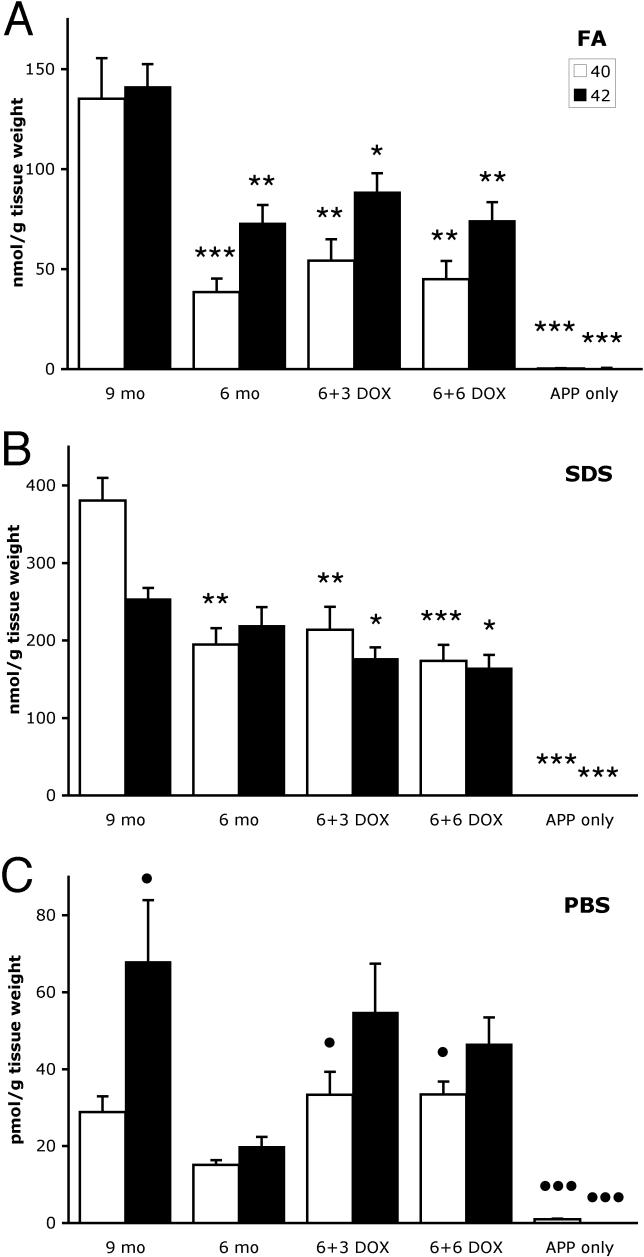
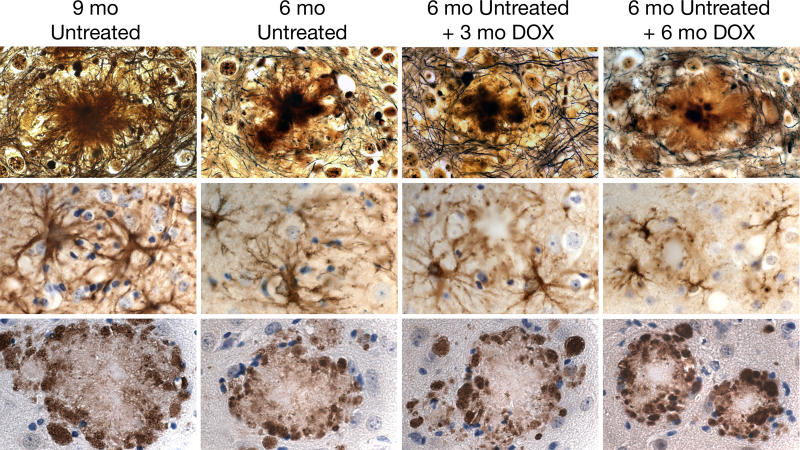
BACKGROUND: The proteases (secretases) that cleave amyloid-beta (Abeta) peptide from the amyloid precursor protein (APP) have been the focus of considerable investigation in the development of treatments for Alzheimer disease. The prediction has been that reducing Abeta production in the brain, even after the onset of clinical symptoms and the development of associated pathology, will facilitate the repair of damaged tissue and removal of amyloid lesions. However, no long-term studies using animal models of amyloid pathology have yet been performed to test this hypothesis. METHODS AND FINDINGS: We have generated a transgenic mouse model that genetically mimics the arrest of Abeta production expected from treatment with secretase inhibitors. These mice overexpress mutant APP from a vector that can be regulated by doxycycline. Under normal conditions, high-level expression of APP quickly induces fulminant amyloid pathology. We show that doxycycline administration inhibits transgenic APP expression by greater than 95% and reduces Abeta production to levels found in nontransgenic mice. Suppression of transgenic Abeta synthesis in this model abruptly halts the progression of amyloid pathology. However, formation and disaggregation of amyloid deposits appear to be in disequilibrium as the plaques require far longer to disperse than to assemble. Mice in which APP synthesis was suppressed for as long as 6 mo after the formation of Abeta deposits retain a considerable amyloid load, with little sign of active clearance. CONCLUSION: This study demonstrates that amyloid lesions in transgenic mice are highly stable structures in vivo that are slow to disaggregate. Our findings suggest that arresting Abeta production in patients with Alzheimer disease should halt the progression of pathology, but that early treatment may be imperative, as it appears that amyloid deposits, once formed, will require additional intervention to clear.
Overview
The claims and statistics of this paper haven’t been checked yet.
Run the check — free, no account needed. It reads the open-access text and checks the sources it cites.
Integrity signals
Registry
Cites
Statistics
Figures
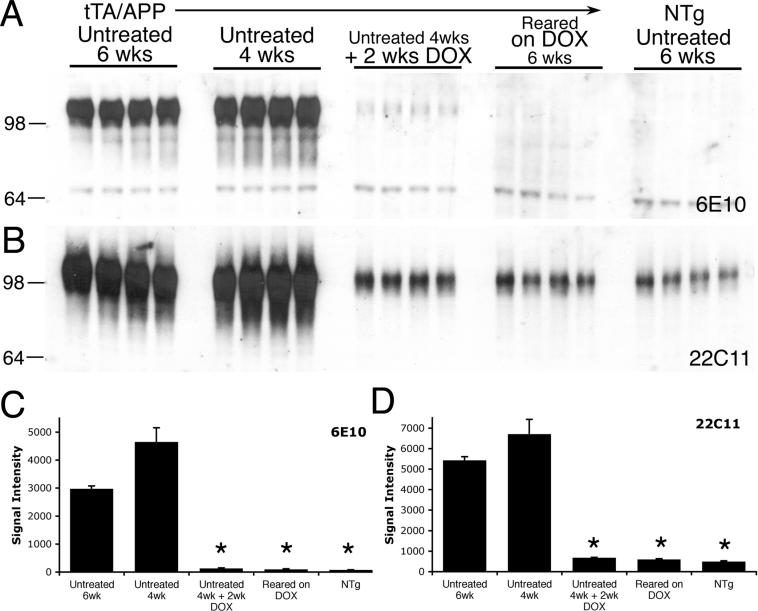
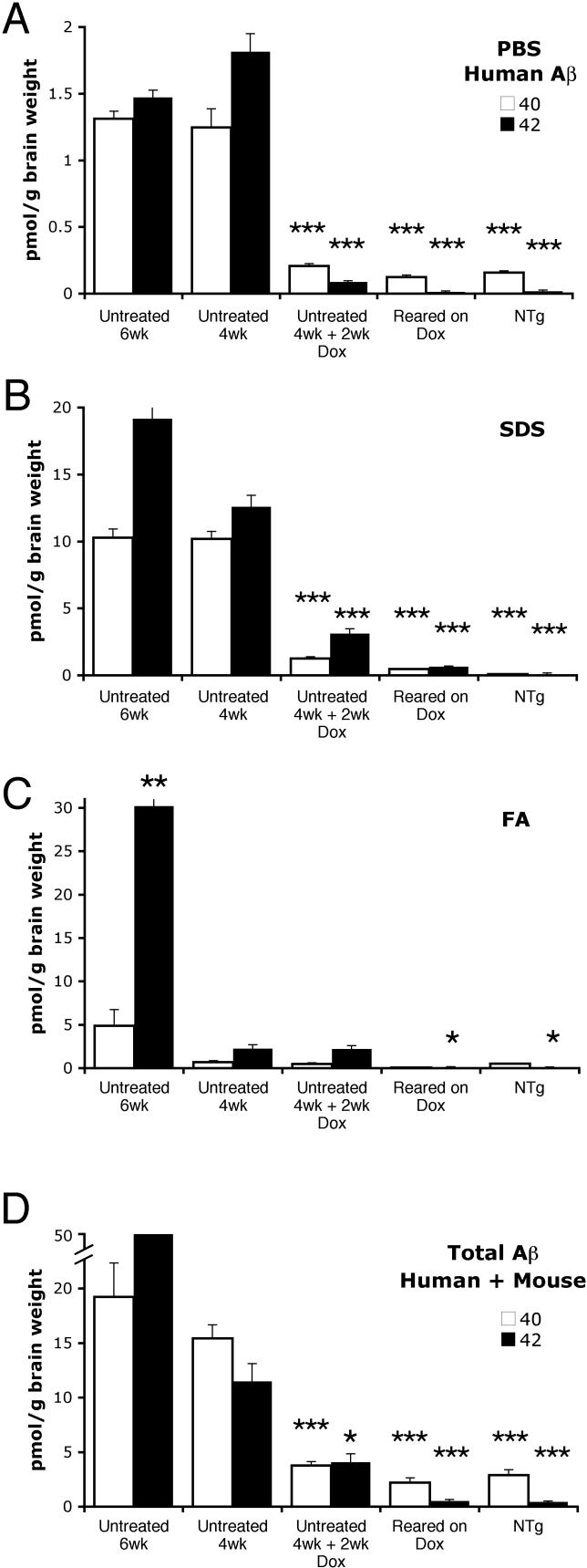
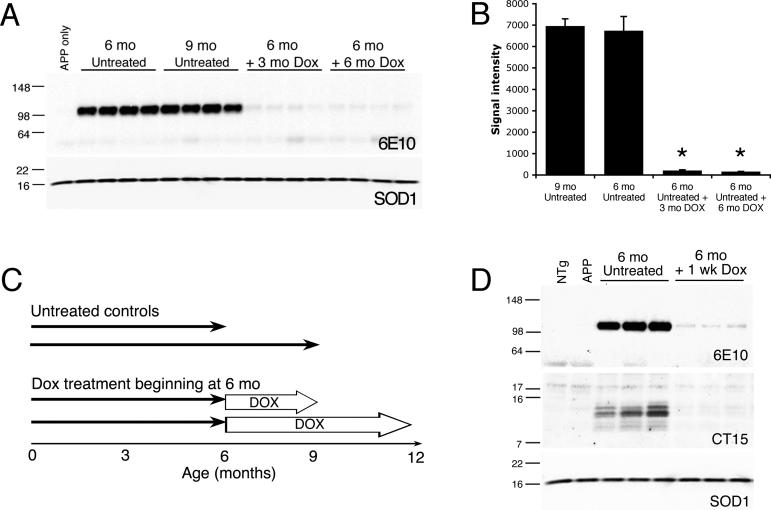
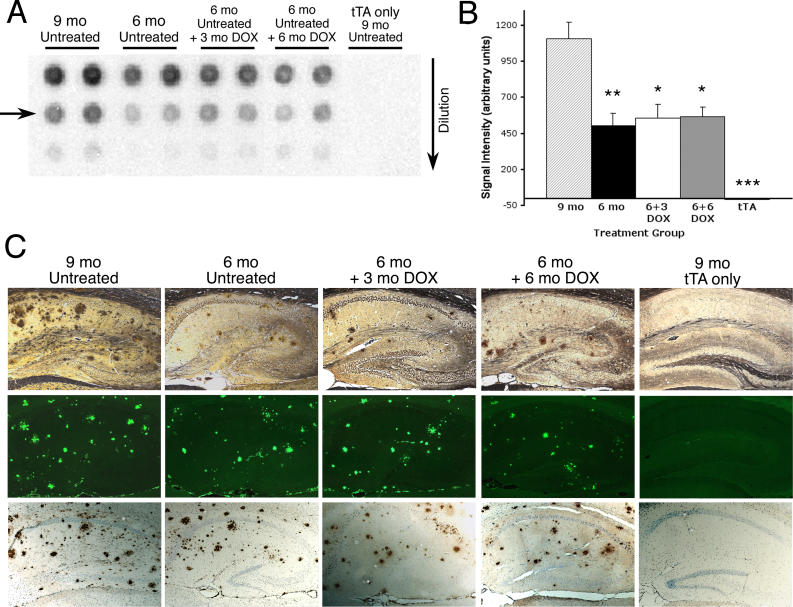
Verification
Claims the paper makes
The claims and statistics of this paper haven’t been checked yet.
Run the check — free, no account needed. It reads the open-access text and checks the sources it cites.
Claims other papers make about this one
Each is checked against this paper’s own text: does it say what the citing paper says it does?
In the citing paper
“Despite this response, however, Aβ clearance and plaque modulation/dynamics is unaffected10–12”
From Sustained microglial depletion with CSF1R inhibitor impairs parenchymal plaque development in an Alzheimer’s disease model (2019) · cites this paper as [12]
Self-check
Percentages, sums and reported differences re-computed from the paper’s own numbers.
The self-check needs the paper’s full text.
Citations
Cites
Amyloid oligomers exacerbate tau pathology in a mouse model of tauopathy
Selenica, M.-L. B., Brownlow, M., Jimenez, J. P., Lee, D. C., Pena, G., Dickey, C. A., Gordon, M. N., & Morgan, D. (2013) · Neurodegenerative Diseases · doi:10.1159/000337230 · Cited by 10,359
Church, G. M., & Gilbert, W. (1984) · Proceedings of the National Academy of Sciences · doi:10.1073/pnas.81.7.1991 · Cited by 8,213
Alzheimer's disease: the amyloid cascade hypothesis
Hardy, J. A., & Higgins, G. A. (1992) · Science · doi:10.1126/science.1566067 · Cited by 7,484
Tight control of gene expression in mammalian cells by tetracycline-responsive promoters.
Gossen, M., & Bujard, H. (1992) · Proceedings of the National Academy of Sciences · doi:10.1073/pnas.89.12.5547 · Cited by 4,943
Correlative Memory Deficits, Aβ Elevation, and Amyloid Plaques in Transgenic Mice
Hsiao, K., Chapman, P., Nilsen, S., Eckman, C., Harigaya, Y., Younkin, S., Yang, F., & Cole, G. (1996) · Science · doi:10.1126/science.274.5284.99 · Cited by 4,210
Self-citationTau Suppression in a Neurodegenerative Mouse Model Improves Memory Function
SantaCruz, K., Lewis, J., Spires, T., Paulson, J., Kotilinek, L., Ingelsson, M., Guimaraes, A., DeTure, M., Ramsden, M., McGowan, E., et al. (2005) · Science · doi:10.1126/science.1113694 · Cited by 2,014
Bard, F., Cannon, C., Barbour, R., Burke, R.-L., Games, D., Grajeda, H., Guido, T., Hu, K., Huang, J., Johnson-Wood, K., et al. (2000) · Nature Medicine · doi:10.1038/78682 · Cited by 2,012
Jankowsky, J. L., Fadale, D. J., Anderson, J., Xu, G. M., Gonzales, V., Jenkins, N. A., Copeland, N. G., Lee, M. K., Younkin, L. H., Wagner, S. L., et al. (2004) · Human Molecular Genetics · doi:10.1093/hmg/ddh019 · Cited by 1,575
Self-citationControl of memory formation through regulated expression of a CaMKII transgene
Mayford, M., Bach, M. E., Huang, Y.-Y., Wang, L., Hawkins, R. D., & Kandel, E. R. (1996) · Science · doi:10.1126/science.274.5293.1678 · Cited by 1,550
Borchelt, D. R., Thinakaran, G., Eckman, C. B., Lee, M. K., Davenport, F., Ratovitsky, T., Prada, C.-M., Kim, G., Seekins, S., Yager, D., et al. (1996) · Neuron · doi:10.1016/s0896-6273(00)80230-5 · Cited by 1,478
Self-citationSuzuki, N., Cheung, T. T., Cai, X.-D., Odaka, A., Otvos, L., Eckman, C., Golde, T. E., & Younkin, S. G. (1994) · Science · doi:10.1126/science.8191290 · Cited by 1,471
Self-citationNeuropathology of human Alzheimer disease after immunization with amyloid-β peptide: a case report
Nicoll, J. A. R., Wilkinson, D., Holmes, C., Steart, P., Markham, H., & Weller, R. O. (2003) · Nature Medicine · doi:10.1038/nm840 · Cited by 1,397
A subset of NSAIDs lower amyloidogenic Aβ42 independently of cyclooxygenase activity
Weggen, S., Eriksen, J. L., Das, P., Sagi, S. A., Wang, R., Pietrzik, C. U., Findlay, K. A., Smith, T. E., Murphy, M. P., Bulter, T., et al. (2001) · Nature · doi:10.1038/35102591 · Cited by 1,388
Subacute meningoencephalitis in a subset of patients with AD after Aβ42 immunization
Orgogozo, J.-M., Gilman, S., Dartigues, J.-F., Laurent, B., Puel, M., Kirby, L. C., Jouanny, P., Dubois, B., Eisner, L., Flitman, S., et al. (2003) · Neurology · doi:10.1212/01.wnl.0000073623.84147.a8 · Cited by 1,356
Identification, biogenesis, and localization of precursors of Alzheimer's disease A4 amyloid protein
Weidemann, A., König, G., Bunke, D., Fischer, P. Q., Salbaum, J. M., Masters, C. L., & Beyreuther, K. T. (1989) · Cell · doi:10.1016/0092-8674(89)90177-3 · Cited by 1,233
Reversal of Neuropathology and Motor Dysfunction in a Conditional Model of Huntington's Disease
Yamamoto, A., Lucas, J. J., & Hen, R. (2000) · Cell · doi:10.1016/s0092-8674(00)80623-6 · Cited by 1,068
Kawarabayashi, T., Younkin, L. H., Saido, T. C., Shoji, M., Ashe, K. H., & Younkin, S. G. (2001) · The Journal of Neuroscience · doi:10.1523/jneurosci.21-02-00372.2001 · Cited by 1,053
Self-citationBorchelt, D. R., Ratovitski, T., van Lare, J., Lee, M. K., Gonzales, V., Jenkins, N. A., Copeland, N. G., Price, D. L., & Sisodia, S. S. (1997) · Neuron · doi:10.1016/s0896-6273(00)80974-5 · Cited by 1,023
Self-citationTetracyclines inhibit microglial activation and are neuroprotective in global brain ischemia
Yrjänheikki, J., Keinänen, R., Pellikka, M., Hökfelt, T., & Koistinaho, J. (1998) · Proceedings of the National Academy of Sciences · doi:10.1073/pnas.95.26.15769 · Cited by 1,006
Chishti, M. A., Yang, D.-S., Janus, C., Phinney, A. L., Horne, P., Pearson, J., Strome, R., Zuker, N., Loukides, J., French, J., et al. (2001) · Journal of Biological Chemistry · doi:10.1074/jbc.m100710200 · Cited by 955
Ibuprofen Suppresses Plaque Pathology and Inflammation in a Mouse Model for Alzheimer's Disease
Lim, G. P., Yang, F., Chu, T., Chen, P., Beech, W. K., Teter, B., Tran, T., Ubeda, O. J., Ashe, K. H., Frautschy, S. A., et al. (2000) · Journal of Neuroscience · doi:10.1523/jneurosci.20-15-05709.2000 · Cited by 876
Antibodies against β-Amyloid Slow Cognitive Decline in Alzheimer's Disease
Höck, C., Konietzko, U., Streffer, J. R., Tracy, J., Signorell, A., Müller-Tillmanns, B., Lemke, U., Henke, K., Moritz, E., Garcia, E., et al. (2003) · Neuron · doi:10.1016/s0896-6273(03)00294-0 · Cited by 786
Doxycycline-mediated quantitative and tissue-specific control of gene expression in transgenic mice.
Kistner, A., Gossen, M., Zimmermann, F., Jerecic, J., Ullmer, C., Lübbert, H., & Bujard, H. (1996) · Proceedings of the National Academy of Sciences · doi:10.1073/pnas.93.20.10933 · Cited by 780
Oddo, S., Billings, L., Kesslak, J. P., Cribbs, D. H., & LaFerla, F. M. (2004) · Neuron · doi:10.1016/j.neuron.2004.07.003 · Cited by 780
Temporal control of gene expression in transgenic mice by a tetracycline-responsive promoter.
Furth, P. A., St‐Onge, L., Boeger, H., Gruss, P., Gossen, M., Kistner, A., Bujard, H., & Hennighausen, L. G. (1994) · Proceedings of the National Academy of Sciences · doi:10.1073/pnas.91.20.9302 · Cited by 768
Wong, G. T., Manfra, D. J., Poulet, F. M., Zhang, Q., Josien, H. B., Bara, T. A., Engstrom, L., Pinzon-Ortiz, M. C., Fine, J. S., Lee, H.-J. J., et al. (2004) · Journal of Biological Chemistry · doi:10.1074/jbc.m311652200 · Cited by 723
Amyloid β Protein (Aβ) in Alzheimeri's Disease Brain
Gravina, S. A., Ho, L., Eckman, C. B., Long, K. E., Otvos, L., Younkin, L. H., Suzuki, N., & Younkin, S. G. (1995) · Journal of Biological Chemistry · doi:10.1074/jbc.270.13.7013 · Cited by 676
Self-citationNSAIDs and enantiomers of flurbiprofen target γ-secretase and lower Aβ42 in vivo
Eriksen, J. L., Sagi, S. A., Smith, T. E., Weggen, S., Das, P., McLendon, D. C., Ozols, V. V., Jessing, K. W., Zavitz, K. H., Koo, E. H., et al. (2003) · Journal of Clinical Investigation · doi:10.1172/jci18162 · Cited by 634
Borchelt, D., Lee, M. K., Slunt, H. S., Guarnieri, M., Xu, Z. S., Wong, P. C., Brown, R. H., Price, D. L., Sisodia, S. S., & Cleveland, D. W. (1994) · Proceedings of the National Academy of Sciences · doi:10.1073/pnas.91.17.8292 · Cited by 622
Self-citationTGF-β1 promotes microglial amyloid-β clearance and reduces plaque burden in transgenic mice
Wyss-Coray, T., Lin, C., Yan, F., Yu, G.-Q., Rohde, M., McConlogue, L., Masliah, E., & Mucke, L. (2001) · Nature Medicine · doi:10.1038/87945 · Cited by 587
Yan, Q., Zhang, J., Liu, H., Babu-Khan, S., Vassar, R., Biere, A. L., Citron, M., & Landreth, G. (2003) · The Journal of Neuroscience · doi:10.1523/jneurosci.23-20-07504.2003 · Cited by 469
Bacskai, B. J., Kajdasz, S. T., Christie, R. H., Carter, C., Games, D., Seubert, P. A., Schenk, D., & Hyman, B. T. (2001) · Nature Medicine · doi:10.1038/85525 · Cited by 445
Reversible memory loss in a mouse transgenic model of Alzheimer’s disease
Kotilinek, L. A., Bacskai, B., Westerman, M., Kawarabayashi, T., Younkin, L., Hyman, B. T., Younkin, S., & Ashe, K. H. (2002) · The Journal of Neuroscience · doi:10.1523/jneurosci.22-15-06331.2002 · Cited by 420
Self-citationNeprilysin Gene Transfer Reduces Human Amyloid Pathology in Transgenic Mice
Marr, R. A., Rockenstein, E. M., Mukherjee, A., Kindy, M. S., Hersh, L. B., Gage, F. H., Verma, I. M., & Masliah, E. (2003) · Journal of Neuroscience · doi:10.1523/jneurosci.23-06-01992.2003 · Cited by 391
Savonenko, A., Xu, G. M., Melnikova, T., Morton, J. L., Gonzales, V., Wong, M. P. F., Price, D. L., Tang, F., Markowska, A. L., & Borchelt, D. R. (2005) · Neurobiology of Disease · doi:10.1016/j.nbd.2004.10.022 · Cited by 346
Self-citationJantzen, P. T., Connor, K. E., DiCarlo, G., Wenk, G. L., Wallace, J. L., Rojiani, A. M., Coppola, D., Morgan, D., & Gordon, M. N. (2002) · Journal of Neuroscience · doi:10.1523/jneurosci.22-06-02246.2002 · Cited by 341
Non-Fc-Mediated Mechanisms Are Involved in Clearance of Amyloid-β In Vivo by Immunotherapy
Bacskai, B. J., Kajdasz, S. T., McLellan, M. E., Games, D., Seubert, P., Schenk, D., & Hyman, B. T. (2002) · The Journal of Neuroscience · doi:10.1523/jneurosci.22-18-07873.2002 · Cited by 323
Yamamoto, T., & Hirano, A. (1986) · Neuropathology and Applied Neurobiology · doi:10.1111/j.1365-2990.1986.tb00677.x · Cited by 320
A vector for expressing foreign genes in the brains and hearts of transgenic mice
Borchelt, D. R., Davis, J., Fischer, M., Lee, M. K., Slunt, H. H., Ratovitsky, T., Regard, J., Copeland, N. G., Jenkins, N. A., Sisodia, S. S., et al. (1996) · Genetic Analysis: Biomolecular Engineering · doi:10.1016/s1050-3862(96)00167-2 · Cited by 317
Self-citationDeciphering the Genetic Basis of Alzheimer's Disease
Selkoe, D. J., & Podlisny, M. B. (2002) · Annual Review of Genomics and Human Genetics · doi:10.1146/annurev.genom.3.022502.103022 · Cited by 303
Wilcock, D. M., Rojiani, A. M., Rosenthal, A., Levkowitz, G., Subbarao, S., Alamed, J., Wilson, D. H., Wilson, N., Freeman, M. J., Gordon, M. N., et al. (2004) · Journal of Neuroscience · doi:10.1523/jneurosci.1090-04.2004 · Cited by 302
Sisodia, S., Koo, E., Hoffman, P., Perry, G. L., & Price, D. (1993) · Journal of Neuroscience · doi:10.1523/jneurosci.13-07-03136.1993 · Cited by 284
Weggen, S., Eriksen, J. L., Sagi, S. A., Pietrzik, C. U., Ozols, V. V., Fauq, A. H., Golde, T. E., & Koo, E. H. (2003) · Journal of Biological Chemistry · doi:10.1074/jbc.m303592200 · Cited by 284
Wilcock, D. M., DiCarlo, G., Henderson, D., Jackson, J., Clarke, K., Ugen, K. E., Gordon, M. N., & Morgan, D. (2003) · The Journal of Neuroscience · doi:10.1523/jneurosci.23-09-03745.2003 · Cited by 232
Intrahippocampal LPS injections reduce Aβ load in APP+PS1 transgenic mice
DiCarlo, G. (2001) · Neurobiology of Aging · doi:10.1016/s0197-4580(01)00292-5 · Cited by 223
Amyloid-β Immunization Effectively Reduces Amyloid Deposition in FcRγ-/-Knock-Out Mice
Das, P., HOWARD, V. G., Loosbrock, N., Dickson, D. W., Murphy, M. P., & Golde, T. E. (2003) · Journal of Neuroscience · doi:10.1523/jneurosci.23-24-08532.2003 · Cited by 213
Wilcock, D. M., Munireddy, S. K., Rosenthal, A., Ugen, K. E., Gordon, M. N., & Morgan, D. (2004) · Neurobiology of Disease · doi:10.1016/j.nbd.2003.09.015 · Cited by 202
β-Secretase inhibition for the treatment of Alzheimer's disease – promise and challenge
Citron, M. (2004) · Trends in Pharmacological Sciences · doi:10.1016/j.tips.2003.12.004 · Cited by 199
Nonsteroidal anti-inflammatory drugs lower Aβ42 and change presenilin 1 conformation
Lleó, A., Berezovska, O., Herl, L. D., Raju, S., Deng, A., Bacskai, B. J., Frosch, M. P., Irizarry, M. C., & Hyman, B. T. (2004) · Nature Medicine · doi:10.1038/nm1112 · Cited by 198
Therapeutic strategies for Alzheimer's disease
Wolfe, M. S. (2002) · Nature Reviews Drug Discovery · doi:10.1038/nrd938 · Cited by 191
Phinney, A. L., Deller, T., Stalder, M., Calhoun, M. E., Frotscher, M., Sommer, B., Staufenbiel, M., & Jucker, M. (1999) · Journal of Neuroscience · doi:10.1523/jneurosci.19-19-08552.1999 · Cited by 188
Nerve inflammation halts trial for Alzheimer's drug
Check, E. (2002) · Nature · doi:10.1038/415462a · Cited by 176
The role of microglial cells and astrocytes in fibrillar plaque evolution in transgenic APPSW mice
Wegiel, J. (2001) · Neurobiology of Aging · doi:10.1016/s0197-4580(00)00181-0 · Cited by 159
Barten, D. M., Guss, V. L., Corsa, J. A., Loo, A., Hansel, S. B., Zheng, M., Munoz, B., Srinivasan, K., Wang, B., Robertson, B. J., et al. (2005) · The Journal of Pharmacology and Experimental Therapeutics · doi:10.1124/jpet.104.075408 · Cited by 159
Time-dependent reduction in Aβ levels after intracranial LPS administration in APP transgenic mice
Herber, D. L., Roth, L. M., Wilson, D. H., Wilson, N., Mason, J. E., Morgan, D., & Gordon, M. N. (2004) · Experimental Neurology · doi:10.1016/j.expneurol.2004.07.007 · Cited by 151
Transgenic mice overexpressing amyloid beta protein are an incomplete model of Alzheimer disease
Schwab, C., Hosokawa, M., & McGeer, P. L. (2004) · Experimental Neurology · doi:10.1016/j.expneurol.2004.03.016 · Cited by 126
Prion clearance in bigenic mice
Safar, J., DeArmond, S. J., Kociuba, K., Deering, C., Didorenko, S., Bouzamondo, E., Prusiner, S. B., & Tremblay, P. (2005) · Journal of General Virology · doi:10.1099/vir.0.80947-0 · Cited by 120
Sasaki, A., Shoji, M., Harigaya, Y., Kawarabayashi, T., Ikeda, M., Naito, M., Matsubara, E., Abe, K., & Nakazato, Y. (2002) · Archiv für Pathologische Anatomie und Physiologie und für Klinische Medicin · doi:10.1007/s00428-002-0643-8 · Cited by 63
Węgiel, J., Imaki, H., Wang, K.-C., Wegiel, J., & Rubenstein, R. (2004) · Brain Research · doi:10.1016/j.brainres.2004.06.058 · Cited by 62
Genetics of Early-Onset Alzheimer Dementia
Rademakers, R., Cruts, M., & Broeckhoven, C. V. (2003) · The Scientific World JOURNAL · doi:10.1100/tsw.2003.39 · Cited by 58
Design and development of BACE-1 inhibitors.
Cumming, J. N., Iserloh, U., & Kennedy, M. E. (2004) · PubMed · Cited by 41
Xu, G., Gonzales, V., & Borchelt, D. R. (2002) · Alzheimer Disease & Associated Disorders · doi:10.1097/00002093-200207000-00010 · Cited by 37
Self-citationThe Search for γ-Secretase and Development of Inhibitors
Tsai, J.-Y., Wolfe, M. S., & Xia, W. (2002) · Current Medicinal Chemistry · doi:10.2174/0929867023370185 · Cited by 37
Herms, J. W., Zurmöhle, U., Brysch, W., & Schlingensiepen, K. (1994) · Developmental Neuroscience · doi:10.1159/000111365 · Cited by 12
Ibuprofen reduces inflammation and plaque pathology in a mouse model for Alzheimer's disease
Lim, G. P., Yang, F., Chu, T., Chen, P., Beech, W. K., Ubeda, O. J., & Frautschy, S. A. (2000) · Neurobiology of Aging · doi:10.1016/s0197-4580(00)82753-0 · Cited by 8
Research works printed but not linked: 2
- Cumming, 2004, Curr Opin Drug Discov Devel, 7, 536
- Campbell, 1987, Soc Neurosci Abstr, 13, 189.9
Cited by
Sorted by citations
Karran, E., Mercken, M., & Strooper, B. D. (2011) · Nature Reviews Drug Discovery · doi:10.1038/nrd3505 · Cited by 2,188
ApoE-Directed Therapeutics Rapidly Clear β-Amyloid and Reverse Deficits in AD Mouse Models
Cramer, P. E., Cirrito, J. R., Wesson, D. W., Lee, C. Y. D., Karlo, J. C., Zinn, A. E., Casali, B. T., Restivo, J. L., Goebel, W. D., James, M. J., et al. (2012) · Science · doi:10.1126/science.1217697 · Cited by 1,050
Spangenberg, E., Severson, P. L., Hohsfield, L. A., Crapser, J., Zhang, J., Burton, E. A., Zhang, Y., Spevak, W., Lin, J., Phan, N. Y., et al. (2019) · Nature Communications · doi:10.1038/s41467-019-11674-z · Cited by 939
Protein aggregation diseases: pathogenicity and therapeutic perspectives
Aguzzi, A., & O’Connor, T. (2010) · Nature Reviews Drug Discovery · doi:10.1038/nrd3050 · Cited by 766
Lian, H., Yang, L., Cole, A., Sun, L., Chiang, A. C.-A., Fowler, S. W., Shim, D. J., Rodriguez-Rivera, J., Taglialatela, G., Jankowsky, J. L., et al. (2015) · Neuron · doi:10.1016/j.neuron.2014.11.018 · Cited by 697
Self-citation
Metadata
- Authors
- Jankowsky, J. L., Slunt, H. H., Gonzales, V., Savonenko, A. V., Wen, J. C., Jenkins, N. A., Copeland, N. G., Younkin, L. H., Lester, H. A., Younkin, S. G., & Borchelt, D. R.
- Affiliations
- California Institute of Technology (US)
- Johns Hopkins University (US)
- National Cancer Institute (US)
- Mayo Clinic (US)
- Corresponding author
- Jankowsky, Joanna L
- Borchelt, David R
- Venue
- PLoS Medicine
- Publisher
- Public Library of Science (PLoS)
- Published
- 2005-11-15
- Volume
- 2
- Issue
- 12
- Pages
- e355
- ISSN
- 1549-1277 (ISSN-L)
- 1549-1676
- PMC
- PMC1283364
- OpenAlex
- W2152864425
- Cited by
- 237
- References
- 67
- Citations by year
- 2026: 3 · 2025: 6 · 2024: 23 · 2023: 10 · 2022: 14 · 2021: 7 · 2020: 5 · 2019: 9 · 2018: 9 · 2017: 14 · 2016: 19 · 2015: 9 · 2014: 13 · 2013: 8 · 2012: 16
- FWCI
- 6.19
- Type
- journal article
- Language
- en
- Open access
- gold
- doi.org
- Locations
- PLoS Medicine (publishedVersion, cc-by)
- Europe PMC (PubMed Central) (publishedVersion, cc-by)
- PubMed Central (publishedVersion, cc-by)
- PubMed (publishedVersion)
- CaltechAUTHORS (California Institute of Technology) (acceptedVersion)
- CaltechAUTHORS (California Institute of Technology) (submittedVersion, cc-by)
- DOAJ (DOAJ: Directory of Open Access Journals) (submittedVersion, cc-by-sa)
- Figshare (submittedVersion, cc-by)
- Funders
- Alzheimer's Association
- Johns Hopkins University
- National Alliance for Research on Schizophrenia and Depression
- Rose Hills Foundation
- National Institute on Aging (K01 AG26144-01, P50 AGO5146-20, K01AG026144, P01AG015453, P50AG005146, R01AG006656)
- National Cancer Institute
- National Institute of Neurological Disorders and Stroke (R01NS047225)
- Topics
- Life Sciences › Neuroscience › Cellular and Molecular Neuroscience › Alzheimer's disease research and treatments
- Health Sciences › Medicine › Psychiatry and Mental health › Dementia and Cognitive Impairment Research
- Life Sciences › Neuroscience › Neurology › Neuroinflammation and Neurodegeneration Mechanisms
- Keywords
- Alzheimer's disease, amyloid-beta, amyloid plaques, amyloidosis, amyloid precursor protein, secretase inhibitors, transgenic mouse model, amyloid clearance
- MeSH terms
- Alzheimer Disease, Animals, Humans, Mice, Inbred C57BL, Mice, Transgenic, Amyloid beta-Peptides, Amyloid beta-Protein Precursor, Gene Expression Profiling, Mice, Plaque, Amyloid
About these checks
Registry, retraction, Cites and statistics results are computed, not judged, with one exception: a printed reference that no index lists is read once by a model before it counts as a citation error. Claims are extracted by a model and kept only when their quote appears verbatim in the text; each cited source is then checked, with a model’s help, for whether it says what the claim relies on. Those verdicts can be wrong — read the claim’s quote and the cited source before relying on one.
Statistics and arithmetic are recomputed, not judged.
Confidence bands are shown only for fields calibrated on our annotated test set. None is calibrated yet, so no band is shown.
What counts as a claim ›How we measure confidence ›How we check this ›
Are you an author, or do you see a problem with this page? Request a review
