

Initial Severity and Antidepressant Benefits: A Meta-Analysis of Data Submitted to the Food and Drug Administration
Open accessThe DOI matches its Crossref record; 49 of the 49 references it cites were found in a registry or an index.
Abstract
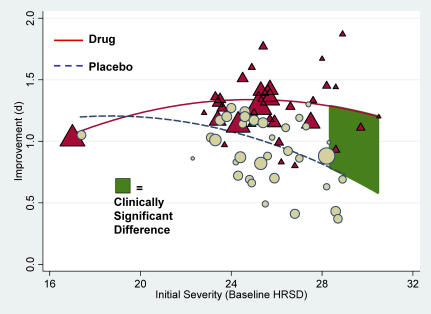
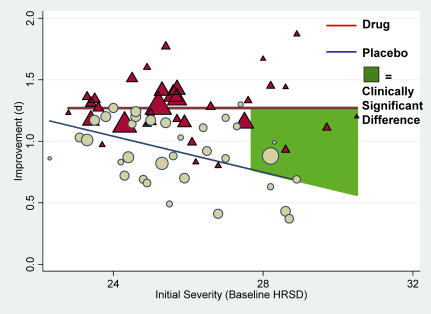
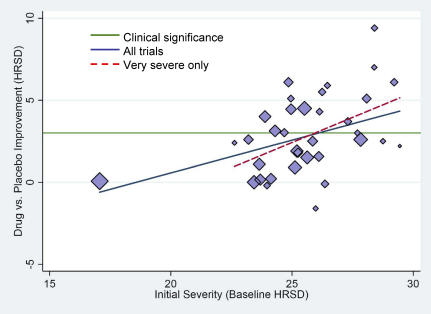
BACKGROUND: Meta-analyses of antidepressant medications have reported only modest benefits over placebo treatment, and when unpublished trial data are included, the benefit falls below accepted criteria for clinical significance. Yet, the efficacy of the antidepressants may also depend on the severity of initial depression scores. The purpose of this analysis is to establish the relation of baseline severity and antidepressant efficacy using a relevant dataset of published and unpublished clinical trials. METHODS AND FINDINGS: We obtained data on all clinical trials submitted to the US Food and Drug Administration (FDA) for the licensing of the four new-generation antidepressants for which full datasets were available. We then used meta-analytic techniques to assess linear and quadratic effects of initial severity on improvement scores for drug and placebo groups and on drug-placebo difference scores. Drug-placebo differences increased as a function of initial severity, rising from virtually no difference at moderate levels of initial depression to a relatively small difference for patients with very severe depression, reaching conventional criteria for clinical significance only for patients at the upper end of the very severely depressed category. Meta-regression analyses indicated that the relation of baseline severity and improvement was curvilinear in drug groups and showed a strong, negative linear component in placebo groups. CONCLUSIONS: Drug-placebo differences in antidepressant efficacy increase as a function of baseline severity, but are relatively small even for severely depressed patients. The relationship between initial severity and antidepressant efficacy is attributable to decreased responsiveness to placebo among very severely depressed patients, rather than to increased responsiveness to medication.
Overview
The claims and statistics of this paper haven’t been checked yet.
Free: it reads the open-access text and checks the first 5 claims that cite a source we can check. Create a free account to check every claim.
Integrity signals
Registry
Cites
Statistics
Figures
Verification
Claims the paper makes
The claims and statistics of this paper haven’t been checked yet.
Free: it reads the open-access text and checks the first 5 claims that cite a source we can check. Create a free account to check every claim.
Claims other papers make about this one
Each is checked against this paper’s own text: does it say what the citing paper says it does?
The source backs part of the claim, not all of it — or backs it for a different population, condition or comparison.
In the citing paper
“Individual-level meta-analyses have found a direct relationship between the magnitude of depressive symptoms and the effectiveness of antidepressants.8–10”
From Comparative effectiveness of exercise, antidepressants and their combination in treating non-severe depression: a systematic review and network meta-analysis of randomised controlled trials (2022) · cites this paper as [9]
Experimental — accuracy not yet measuredThe cited source says what the claim attributes to it.
In the citing paper
“An understanding of users’ own experiences of antidepressant use is increasingly important in the context of growing doubts about the effectiveness of antidepressant treatment [5, 26], concerns about side effects [27] and withdrawal effects [28].”
From ‘In my life antidepressants have been…’: a qualitative analysis of users’ diverse experiences with antidepressants (2016) · cites this paper as [5]
In the citing paper
“In this study, 84 % of participants in this study answered in the affirmative to a question about whether they felt antidepressants had reduced their depression, a number well above that suggested by efficacy studies”
From ‘In my life antidepressants have been…’: a qualitative analysis of users’ diverse experiences with antidepressants (2016) · cites this paper as [5]
In the citing paper
“Other studies have found support for increasing benefit with increasing severity of depression,21 but the effects size even for patients with the most severe depression was still minimal.21”
From Should antidepressants be used for major depressive disorder? (2020) · cites this paper as [21]
Self-check
Percentages, sums and reported differences re-computed from the paper’s own numbers.
The self-check needs the paper’s full text.
Citations
Cites
Measuring inconsistency in meta-analyses
Higgins, J. P. T., Thompson, S. G., Deeks, J. J., & Altman, D. G. (2003) · BMJ · doi:10.1136/bmj.327.7414.557 · Cited by 63,139 · cited 1×
“Both Q [15] and I2 [ 16 ] indices were used to assess”
MethodStatistical Methods for Meta-Analysis
Wasserman, S., Hedges, L. V., & Olkin, I. (1988) · Journal of Educational Statistics · doi:10.2307/1164953 · Cited by 10,326
Statistical Methods for Meta-Analysis.
Freeman, P. R., Hedges, L. V., & Olkin, I. (1986) · Biometrics · doi:10.2307/2531069 · Cited by 4,784
Meta-analysis in social research
(1982) · Evaluation and Program Planning · doi:10.1016/0149-7189(82)90011-8 · Cited by 3,853 · cited 1×
“Finally, to show directly the amount of improvement for each study’s drug group against its placebo group, we calculated the difference between the change for the drug group minus the change for the placebo group, leaving the difference in raw units and deriving its analytic weight from its standard error [11,12,20].”
MethodImputing missing standard deviations in meta-analyses can provide accurate results
Furukawa, T. A., Barbui, C., Cipriani, A., Brambilla, P., & Watanabe, N. (2006) · Journal of Clinical Epidemiology · doi:10.1016/j.jclinepi.2005.06.006 · Cited by 1,568 · cited 1×
“s were known for 28 groups, could be calculated from other inferential statistics in nine comparisons (18 groups), and were imputed in 12 comparisons (24 groups) (47.38%) [”
InfluentialPublication bias in meta-analysis its causes and consequences
Thornton, A. (2000) · Journal of Clinical Epidemiology · doi:10.1016/s0895-4356(99)00161-4 · Cited by 1,291 · cited 1×
“Examination of publication bias often relies on inspections of effect sizes in relation to sample size (or inverse variance) [22].”
BackgroundThe power of statistical tests for moderators in meta-analysis
Hedges, L. V., & Pigott, T. D. (2004) · Psychological Methods · doi:10.1037/1082-989x.9.4.426 · Cited by 672 · cited 1×
“A last, mixedeffects analysis for the amount of change used a randomeffects constant along with fixed-effects moderator dimensions; these models provide more conservative assessments of moderation [19].”
MethodMelander, H., Ahlqvist-Rastad, J., Meijer, G., & Beermann, B. (2003) · BMJ · doi:10.1136/bmj.326.7400.1171 · Cited by 635 · cited 2×
“In the case of antidepressant medication, this limitation has been found to result in considerable reporting bias characterized by multiple publication, selective publication, and selective reporting in studies sponsored by pharmaceutical companies [5].”
BackgroundPlacebo Theory, Research , and Mechanisms
WHITE, L. E., Tursky, B., & SCHWARTZ, G. E. R. (1985) · Guilford Press eBooks · Cited by 485
Khan, A., Leventhal, R. M., Khan, S. R., & Brown, W. A. (2002) · Journal of Clinical Psychopharmacology · doi:10.1097/00004714-200202000-00007 · Cited by 456 · cited 2×
“Similar to prior reports [3,4], this analysis of U.”
BackgroundResult
Research works printed but not linked: 3
- Lipsey MW Wilson DB 2001 Practical meta-analysis. Applied social research methods Volume 49. Thousand Oaks (California) Sage Publications 247
- Evans FJ 1974 The placebo response in pain reduction Adv Neurol 4 289 296
- Fabre LF Crimson L 1985 Efficacy of fluoxetine in outpatients with major depression Curr Ther Res Clin Exp 37 115 123
Cited by
Items 901–1,000 of 1,013
Scientific, Ethical, and Social Issues in Mood Enhancement
Berghmans, R., ter Meulen, R., Malizia, A. L., & Vos, R. (2011) · Wiley eBooks · doi:10.1002/9781444393552.ch10 · Cited by 38
Fox, A. S., Chang, L. J., Gorgolewski, K. J., & Yarkoni, T. (2014) · bioRxiv (Cold Spring Harbor Laboratory) · doi:10.1101/012310 · Cited by 27
False Hopes, Unwarranted Fears: The Trouble with Medical News Stories
Editors, T. P. M. (2008) · PLoS Medicine · doi:10.1371/journal.pmed.0050118 · Cited by 23
“org/cms/ node/335) surrounded our publication of a meta-analysis of all pre-licensing trials submitted to the US Food and Drug Administration, including unpublished trials, on the effi cacy of certain antidepressants [14].”
BackgroundThe antidepressant standoff: Why it continues and how to resolve it
Ormel, J., Spinhoven, P., de Vries, Y. A., Cramer, A. O. J., Siegle, G. J., Bockting, C. L. H., & Hollon, S. D. (2020) · Psychological Medicine · doi:10.1017/s0033291719003295 · Cited by 22
“Critics doubt whether antidepressants have clinically significant surplus value over and above placebo (PLA) (Antonuccio, Danton, DeNelsky, Greenberg, & Gordon, 1999; Fava, 2003; Gotschke, 2013; Kirsch, 2014; Kirsch et al., 2008; Moncrieff, 2002, 2018b; Moncrieff & Kirsch, 2015; Turner, Matthews, Linardatos, Tell, & R…”
Hicks, A. J., Clay, F. J., James, A. C., Hopwood, M., & Ponsford, J. L. (2022) · Neuropsychology Review · doi:10.1007/s11065-022-09543-6 · Cited by 26
“, partial responses or no responses) to anti-depressant medication in non-TBI samples are common (Corey-Lisle et al., 2004; Fournier et al., 2010; Kirsch et al., 2008; Xiao et al., 2018), and it is important to understand which TBI survivors may be at-risk.”
BackgroundEEG Biomarkers to Predict Response to Sertraline and Placebo Treatment in Major Depressive Disorder
Oakley, T., Coskuner, J., Cadwallader, A., Ravan, M., & Hasey, G. (2022) · IEEE Transactions on Biomedical Engineering · doi:10.1109/tbme.2022.3204861 · Cited by 24
“majority of randomized, Placebo-controlled trials demonstrate the clinical efficacy of ADMs relative to control is statistically significant however, the effect size is modest [12], [13], [14].”
BackgroundCronin, C. J., Forsstrom, M. P., & Papageorge, N. (2020) · The Review of Economic Studies · doi:10.1093/restud/rdae061 · Cited by 32
Internetbasierte psychologische Behandlung bei Depressionen
Klein, J. P., & Berger, T. (2013) · Verhaltenstherapie · doi:10.1159/000354046 · Cited by 22
“Erstens sind immer weniger Ärzte bereit, leicht bis mittelschwer depressive Patienten medikamentös zu behandeln, auch weil Metaanalysen nahelegen, dass Antidepressiva bei leichten und mittelschweren Depressionen nicht besser wirken als Placebo [Fournier et al., 2010; Kirsch et al., 2008].”
BackgroundThe Power of Belief and Expectancy in Understanding and Management of Depression
Alladin, A. (2013) · American Journal of Clinical Hypnosis · doi:10.1080/00029157.2012.740607 · Cited by 24
“Based on decades of research, psychotherapy outcome, irrespective of theoretical orientation, can be attributed to the following four common factors (the figures represent portion of outcome variances: Lambert, 1992; Norcross & Lambert, 2011): (1) 15% expectancy or placebo effect; (2) 15% treatment techniques or strat…”
BackgroundObstacles to Early Career Psychiatrists Practicing Psychotherapy
Clemens, N. A., Plakun, E. M., Lazar, S. G., & Mellman, L. A. (2014) · Psychodynamic Psychiatry · doi:10.1521/pdps.2014.42.3.479 · Cited by 25
“In contrast, the efficacy of biological treatments—usually medications, the prevalent treatment modality provided by general psychiatrists—has been overestimated by as much as a third, as in the case of antidepressants (Turner, Matthews, Linardatos, Tell, & Rosenthal, 2008), while most of their effect is placebo effec…”
BackgroundVerdoux, H., Cortaredona, S., Dumesnil, H., Sebbah, R., & Verger, P. (2013) · Social Psychiatry and Psychiatric Epidemiology · doi:10.1007/s00127-013-0717-8 · Cited by 25
“This temporal trend may be explained by recent evidence showing that the benefit/risk ratio of antidepressants in mild-to-moderate depression may be less favourable than previously estimated [18, 28, 30].”
BackgroundArnaud, A. M., Suthoff, E. D., Stenson, K., WERNEBURG, B. G., Hodgkins, P., Bonthapally, V., Jonas, J. M., Meyer, K. L., & O’Day, K. (2021) · Journal of Affective Disorders · doi:10.1016/j.jad.2021.02.027 · Cited by 23
Mental Illness and Mental Health: Is the Glass Half Empty or Half Full?
Pierre, J. M. (2012) · The Canadian Journal of Psychiatry · doi:10.1177/070674371205701102 · Cited by 26
A commentary on ‘Exercise and Depression’ (): And the verdict is…
Blumenthal, J. A., & Ong, L. (2009) · Mental health and physical activity · doi:10.1016/j.mhpa.2009.08.001 · Cited by 30
“N IH -PA Author M anuscript N IH -PA Author M anuscript N IH -PA Author M anuscript Administration of placebo-controlled trials of antidepressants (SMD = 0.32 and 0.31, respectively, Kirsch et al., 2008; Turner, Matthews, Linardatos, Tell, & Rosenthal, 2008).”
MethodInfluentialCarrière, I., Norton, J. L., Farré, A., Wyart, M., Tzourio, C., Noïze, P., Pérès, K., Fourrier‐Réglat, A., Ritchie, K. A., & Ancelin, M. (2017) · BMC Medicine · doi:10.1186/s12916-017-0847-z · Cited by 26
Kirmayer, L. J., & Raikhel, E. (2009) · Transcultural Psychiatry · doi:10.1177/1363461509102284 · Cited by 22
“Pharmaceutical companies have exaggerated the specificity and effectiveness of medications, hidden the results of trials with negative outcomes, and reframed or disguised the meaning of unfavorable studies (Angell, 2004; Healey, 2004; Kirsch et al., 2008).”
BackgroundSandell, K., & Bornäs, H. (2017) · Sociology · doi:10.1177/0038038515591947 · Cited by 21
“…variety in the experience of depression and in patterns of antidepressant use, as might be expected if one takes into account the wide and somewhat vague diagnostic definition of depression, the fairly low and varied efficacy of antidepressants and the known side-effects (Kirsch et al., 2008).”
BackgroundWhich placebo to cure depression? A thought-provoking network meta-analysis
Naudet, F., Millet, B., Charlier, P., Reymann, J. M., Maria, A. S., & Falissard, B. (2013) · BMC Medicine · doi:10.1186/1741-7015-11-230 · Cited by 25
“Nevertheless, these studies have limitations in terms of external validity and even internal validity, and antidepressant literature on major depressive disorder is a striking example of these limitations: some practitioners and researchers [3] consider that most of the antidepressant efficacy reflects simply the plac…”
BackgroundEffort-Reward Imbalance and Affective Disorders
Rugulies, R., Aust, B., & Madsen, I. E. H. (2016) · Aligning perspectives on health, safety and well-being · doi:10.1007/978-3-319-32937-6_6 · Cited by 28
Potential of St John's Wort for the Treatment of Depression: The Economic Perspective
Solomon, D., Ford, E., Adams, J., & Graves, N. (2010) · Australian & New Zealand Journal of Psychiatry · doi:10.3109/00048674.2010.526094 · Cited by 21
“The more well-known instruments used to measure health status in these studies include the SF-6D [35] and the EuroQoL (EQ-5D), and health status can be translated into quality of life units using population-based preferences and incorporated into cost-effectiveness studies [27,51].”
BackgroundMethodMasurovsky, A. (2020) · JMIR Serious Games · doi:10.2196/14030 · Cited by 25
“The placebo effect has been studied for over 100 years [17] and is well-known in pharmaceutical research, especially research involving pain [18-20] and mood disorders [21-23].”
BackgroundTong, X., Xie, H., Wu, W., Keller, C. J., Fonzo, G. A., Chidharom, M., Carlisle, N. B., Etkin, A., & Zhang, Y. (2023) · Journal of Affective Disorders · doi:10.1016/j.jad.2024.01.177 · Cited by 22
Pharmacological Treatment of Unipolar Depression
Anderson, I. M. (2012) · Current topics in behavioral neurosciences · doi:10.1007/7854_2012_208 · Cited by 21
“Meta-analyses at the level of studies (Kirsch et al. 2008) and individual patient data (Fournier et al.”
BackgroundInfluentialPrins, J., Westphal, K. G. C., Korte-Bouws, G. A. H., Quinton, M. S., Schreiber, R., Olivier, B., & Korte, S. M. (2010) · Pharmacology Biochemistry and Behavior · doi:10.1016/j.pbb.2010.10.001 · Cited by 23
Arvidsdotter, T., Marklund, B. R. G., & Taft, C. (2014) · BMC Complementary and Alternative Medicine · doi:10.1186/1472-6882-14-210 · Cited by 25
“The effectiveness and appropriateness of these approaches is, however, debated, particularly for mildly distressed patients [9,10] and also for more severe cases [11].”
BackgroundEnhanced Responsiveness to Selective Serotonin Reuptake Inhibitors during Lactation
Jury, N. J., McCormick, B. A., Horseman, N. D., Benoit, S. C., & Gregerson, K. A. (2015) · PLoS ONE · doi:10.1371/journal.pone.0117339 · Cited by 24
“Two independent research consortiums conducted meta-analyses on clinical trials submitted to the Food and Drug Administration and determined that the therapeutic effect of the SSRIs were relatively small when compared to placebo in severely depressed patients [23,24].”
MethodSearle, A., Haase, A. M., Chalder, M., Fox, K. R., Taylor, A. H., Lewis, G., & Turner, K. M. (2013) · Journal of Health Psychology · doi:10.1177/1359105313493648 · Cited by 48
“…depression (Fournier et al., 2010), there is concern regarding over-prescription of antidepressant medication for depression, particularly as the effectiveness of antidepressants for mild to moderate depression is questionable (Donoghue and Tylee, 1996; Kirsch et al., 2008; Prior et al., 2003).”
BackgroundDrug Approval and Drug Effectiveness
Spielmans, G. I., & Kirsch, I. (2013) · Annual Review of Clinical Psychology · doi:10.1146/annurev-clinpsy-050212-185533 · Cited by 23
“…15 years have cast doubt on the clinical significance of antidepressant treatment, suggesting that an FDA stamp of approval does not equate to substantial benefits relative to placebo for most people taking antidepressants (Kirsch & Sapirstein 1998; Kirsch et al. 2002, 2008; Turner et al. 2008b).”
BackgroundMethodInfluentialSelf-citationJakobsen, J. C., Gluud, C. N., Kongerslev, M., Larsen, K. A., Sørensen, P., Winkel, P., Lange, T., Søgaard, U., & Simonsen, E. H. (2014) · BMJ Open · doi:10.1136/bmjopen-2014-004903 · Cited by 28
Šestan-Peša, M., & Horváth, T. L. (2016) · Trends in Molecular Medicine · doi:10.1016/j.molmed.2015.12.003 · Cited by 22
Serna, C., Cruz, I., Galván, L., Real, J., Eguíluz, E. G., & Soler-González, J. (2010) · PubMed · Cited by 24
Fageera, W., Traicu, A., Sengupta, S. M., Fortier, M., Choudhry, Z., Labbe, A., Grizenko, N., & Joober, R. (2017) · International Journal of Methods in Psychiatric Research · doi:10.1002/mpr.1572 · Cited by 24
“Indeed, an increasing magnitude of placebo response (PR) over the Fond de Recherche du earch. wileyonlinelibrary.com/jou the years has been reported (Tuttle et al., 2015) and may explain, at least in part, the failure of several clinical trails (Kirsch et al., 2008).”
BackgroundRandomised controlled trial of escitalopram for cervical dystonia with dystonic jerks/tremor
Zoons, E., Booij, J., Delnooz, C. C. S., Dijk, J. M., Dreissen, Y. E. M., Koelman, J. H. T. M., der Salm, S. M. A. V., Škorvánek, M., Smit, M., Aramideh, M., et al. (2018) · Journal of Neurology Neurosurgery & Psychiatry · doi:10.1136/jnnp-2017-317352 · Cited by 23
Briffault, X., Morgiève, M., & Courtet, P. (2018) · Brain Sciences · doi:10.3390/brainsci8060098 · Cited by 23
“While it is undeniable that these multiple treatments have therapeutic efficacy, the fact remains that this efficacy is still low and that many disorders and patients are not or only slightly improved by these approaches [5,6].”
BackgroundMethodPharmaco-epidemiology of antidepressant exposure in a UK cohort record-linkage study
Hafferty, J. D., Wigmore, E. M., Howard, D. M., Adams, M. J., Clarke, T., Campbell, A., MacIntyre, D. J., Nicodemus, K. K., Lawrie, S. M., Porteous, D. J., et al. (2019) · Journal of Psychopharmacology · doi:10.1177/0269881119827888 · Cited by 24
“…concerns have been raised about a medicalisation of ordinary distress with antidepressants (Hollinghurst et al., 2005), and there are ongoing debates about the efficacy of antidepressants in mild-moderate depressive illness (Cipriani et al., 2018; Kirsch et al., 2008; Olfson and Marcus, 2009).”
The Dual Continua Model: The Foundation of the Sociology of Mental Health and Mental Illness
Keyes, C. L. M. (2017) · Cambridge University Press eBooks · doi:10.1017/9781316471289.007 · Cited by 30
Treating Depressed Children With Antidepressants: More Harm than Benefit?
Antonuccio, D. O. (2008) · Journal of Clinical Psychology in Medical Settings · doi:10.1007/s10880-008-9108-9 · Cited by 24
“…issues and publication biases may have inflated the apparent efficacy of SSRIs in the treatment of depressed adolescents and children (Garland, 2004; Lancet, 2004) just as these issues appear to have inflated apparent antidepressant efficacy in adults (Turner et al., 2008; Kirsch et al., 2008).”
BackgroundAcupuncture with in vitro fertilisation
Pinborg, A. B., Loft, A., & Andersen, A. N. (2008) · BMJ · doi:10.1136/bmj.39503.643727.80 · Cited by 22
Understanding the non‐pharmacological correlates of self‐reported efficacy of antidepressants
Read, J., Gibson, K., Cartwright, C., Shiels, C., Dowrick, C., & Gabbay, M. (2015) · Acta Psychiatrica Scandinavica · doi:10.1111/acps.12390 · Cited by 20
“A meta-analysis (9), which included previously unpublished drug company studies, found that ‘the overall effect of new-generation AD medications is below recommended criteria for clinical significance’ (p.”
BackgroundSpielmans, G. I., Berman, M. I., Linardatos, E., Rosenlicht, N. Z., Perry, A., & Tsai, A. C. (2016) · Focus · doi:10.1176/appi.focus.140202 · Cited by 20
“32, which they interpreted as not clinically relevant [46].”
BackgroundLevine, S. Z., & Leucht, S. (2014) · Schizophrenia Research · doi:10.1016/j.schres.2014.04.005 · Cited by 22
Hemminki, E., Merikukka, M., Gissler, M., Wahlbeck, K., Savolainen, J., Ristikari, T., & Aaltonen, M. (2016) · Journal of Epidemiology & Community Health · doi:10.1136/jech-2016-207265 · Cited by 20
Efficacy of antidepressants: bias in randomized clinical trials and related issues
Wang, S.-M., Han, C., Lee, S.-J., Jun, T.-Y., Patkar, A. A., Masand, P. S., & Pae, C.-U. (2018) · Expert Review of Clinical Pharmacology · doi:10.1080/17512433.2017.1377070 · Cited by 20
“placebo in treating mild-to-moderate depression [8,20].”
BackgroundControversies in the Pharmacotherapy of Adolescent Depression
Masi, G. (2022) · Current Pharmaceutical Design · doi:10.2174/1381612828666220526150153 · Cited by 25
Matsingos, A., Wilhelm, M., Noor, L., Yildiz, C., Rief, W., Hofmann, S. G., Falkenberg, I., & Kircher, T. T. J. (2024) · Frontiers in Psychiatry · doi:10.3389/fpsyt.2024.1346697 · Cited by 27
Barriers to the Treatment of Mental Illness in Primary Care Clinics in Israel
Ayalon, L., Karkabi, K., Bleichman, I., Fleischmann, S., & Goldfracht, M. (2015) · Administration and Policy in Mental Health and Mental Health Services Research · doi:10.1007/s10488-015-0634-0 · Cited by 26
“2010) and have noted at best, a mild effect for severe cases (Kirsch et al. 2008).”
Background‘Cosmetic Neurology’ and the Moral Complicity Argument
Ravelingien, A., Braeckman, J., Crevits, L., Ridder, D. D., & Mortier, E. P. (2009) · Neuroethics · doi:10.1007/s12152-009-9042-z · Cited by 22
“Examples include the use of beta-blockers by musicians to calm their nerves and control their tremors [10] and the use of SSRIs to increase affiliative behaviour [11], to improve a general sense of wellbeing [12], or to relieve anxiety and social awkwardness [13] (although their clinical efficacy is highly contested […”
BackgroundDiagnostic and statistical manual‑5: Position paper of the Indian psychiatric society
Jacob, K., Kallivayalil, R., Mallik, A., Gupta, N., Trivedi, J., Gangadhar, B. N., Praveenlal, K., Vahia, V. N., & Rao, T. S. (2013) · Indian Journal of Psychiatry · doi:10.4103/0019-5545.105500 · Cited by 25
“[152] Their role in mild to moderate depression has been questioned and the more recent guidelines do not recommend pharmacological interventions for these conditions.”
Stigma and discrimination: A socio-cultural etiology of mental illness.
Levy, B., Celen‐Demirtas, S., Surguladze, T., & Sweeney, K. K. (2014) · The Humanistic Psychologist · doi:10.1080/08873267.2014.893513 · Cited by 29
Viksveen, P., & Relton, C. (2014) · Homeopathy · doi:10.1016/j.homp.2014.01.004 · Cited by 21
Jurvelin, H., Takala, T., Nissilä, J., Timonen, M., Rüger, M., Jokelainen, J. J., & Räsänen, P. K. (2014) · BMC Psychiatry · doi:10.1186/s12888-014-0288-6 · Cited by 23
“In addition the subjects in this study were severe depressed, which decreases the effect of placebo [80].”
BackgroundThe public health impact of antidepressants: An instrumental variable analysis
Mojtabai, R. (2011) · Journal of Affective Disorders · doi:10.1016/j.jad.2011.05.037 · Cited by 22
Griffiths, F. E., Boardman, F., Chondros, P., Dowrick, C. F., Densley, K., Hegarty, K. L., & Gunn, J. M. (2014) · Health An Interdisciplinary Journal for the Social Study of Health Illness and Medicine · doi:10.1177/1363459314539774 · Cited by 28
Holman, B. (2018) · Synthese · doi:10.1007/s11229-018-1690-2 · Cited by 25
“…equally compatible with a set of evidence, does not mean that they are equally well supported by that evidence.6 If we construe each side of the debate as Lakatosian research programmes, we can give principled reasons—at least at this juncture—for preferring the conclusions of Kirsch et al. (2008).”
BackgroundResultInfluentialWhat does the latest meta-analysis really tell us about antidepressants?
Moncrieff, J. (2018) · Epidemiology and Psychiatric Sciences · doi:10.1017/s2045796018000240 · Cited by 26
“In one meta-analysis that detected a severity effect, the difference between drug and placebo among those with severe depression was four points on the HRSD, which still falls well below the level that would indicate minimal improvement on the CGI (Kirsch et al. 2008).”
BackgroundUtilizing placebos to leverage effects of cognitive-behavioral therapy in patients with depression
Jurinec, N., & Schienle, A. (2020) · Journal of Affective Disorders · doi:10.1016/j.jad.2020.08.087 · Cited by 21
Pharmaceuticals as a market for “lemons”: Theory and practice
Light, D. W., & Lexchin, J. (2020) · Social Science & Medicine · doi:10.1016/j.socscimed.2020.113368 · Cited by 28
Treating depression in HIV-positive patients affects adherence
Moosa, M. Y. H., & Jeenah, F. Y. (2012) · Southern African Journal of HIV Medicine · doi:10.4102/sajhivmed.v13i3.128 · Cited by 26
Differences in Quality of Life Outcomes Among Depressed Spinal Cord Injury Trial Participants
Tate, D. G., Forchheimer, M. B., Bombardier, C. H., Heinemann, A. W., Neumann, H. D., & Fann, J. R. (2014) · Archives of Physical Medicine and Rehabilitation · doi:10.1016/j.apmr.2014.09.036 · Cited by 21
The Measurement of Mental Disorder
Wakefield, J. C., & Schmitz, M. F. (2009) · Cambridge University Press eBooks · doi:10.1017/cbo9780511984945.005 · Cited by 21
Barrett, T. W., & Schriger, D. L. (2008) · Annals of Emergency Medicine · doi:10.1016/j.annemergmed.2008.05.001 · Cited by 21
Latimer, E. A., Bond, G. R., & Drake, R. E. (2011) · The Canadian Journal of Psychiatry · doi:10.1177/070674371105600903 · Cited by 23
Depressive Störungen: Major Depression und Dysthymie
Beesdo‐Baum, K., & Wïttchen, H. (2011) · Springer-Lehrbuch · doi:10.1007/978-3-642-13018-2_40 · Cited by 48
Clinical Studies on the Efficacy of Agomelatine on Depressive Symptoms
Goodwin, G. M. (2009) · CNS Drugs · doi:10.2165/11318650-000000000-00000 · Cited by 21
“Therefore, the higher the baseline scores in placebo-controlled trials, the more likely there may be a difference between drug and placebo;([2]) in the particular dataset in which this was found, the drug–placebo difference appeared to be largely due to reduced placebo effects in more depressed patients.”
BackgroundLenzer, J., & Brownlee, S. (2008) · BMJ · doi:10.1136/bmj.39504.662685.0f · Cited by 21
Simon, G. E. (2008) · BMJ · doi:10.1136/bmj.39482.666366.80 · Cited by 21
Editorial: How Should Psychology Interventions Be Reported?
Marks, D. F. (2009) · Journal of Health Psychology · doi:10.1177/1359105309103567 · Cited by 21
“There are other documented instances where an EBP-approved intervention is no more effective than no treatment or placebo (see, for example, the meta-analysis of trials with antidepressants by Kirsch et al., 2008) or where there has been proof of definite harm.”
BackgroundDurai, R., & Hoque, H. (2008) · British Journal of Hospital Medicine · doi:10.12968/hmed.2008.69.6.29632 · Cited by 20
Solanes, A., Albajes-Eizagirre, A., Fullana, M. A., Fortea, L., Fusar-Poli, P., Torrent, C., Solé, B., Bonnín, C. M., Shin, J. I., Vieta, E., et al. (2021) · Revista de Psiquiatría y Salud Mental · doi:10.1016/j.rpsm.2020.08.002 · Cited by 19
Nishida, M., Kikuchi, S., Nisijima, K., & Suda, S. (2017) · The Journal of ECT · doi:10.1097/yct.0000000000000352 · Cited by 19
Depression in primary care: three key challenges
Lester, H., & Howe, A. (2008) · Postgraduate Medical Journal · doi:10.1136/pgmj.2008.068387 · Cited by 19
“This will be particularly important given the findings of the meta-analysis of the efficacy of antidepressants using data from clinical trials submitted to the Food and Drug Administration, which raised issues of full reporting and also of relevance to mild–moderate depression, which was rarely addressed in the studie…”
BackgroundGoldstein, L. A., Mandel, A. A., DeRubeis, R. J., & Strunk, D. R. (2020) · Behaviour Research and Therapy · doi:10.1016/j.brat.2020.103608 · Cited by 21
“3, the approximate magnitude of the drug-placebo difference observed in the depression literature (Kirsch et al., 2008).”
BackgroundTsutsumi, Y., Tsujimoto, Y., Tajika, A., Omae, K., Fujii, T., Ōnishi, A., Kataoka, Y., Katsura, M., Noma, H., Sahker, E., et al. (2022) · BMJ Evidence-Based Medicine · doi:10.1136/bmjebm-2021-111861 · Cited by 21
Misplaced epistemological certainty and pharmaco‐centrism in mental health nursing
Lakeman, R., & Cutcliffe, J. R. (2009) · Journal of Psychiatric and Mental Health Nursing · doi:10.1111/j.1365-2850.2008.01362.x · Cited by 19
Signal-to-Noise Ratio, Variability, and Their Relevance in Clinical Trials
Andrade, C. (2013) · The Journal of Clinical Psychiatry · doi:10.4088/jcp.13f08475 · Cited by 19
Hegerl, U., Schönknecht, P., & Mergl, R. (2011) · Current Opinion in Psychiatry · doi:10.1097/yco.0b013e32834dc15d · Cited by 21
“These findings are in line with the conclusion from recent meta-analyses that relevant treatment effects of antidepressants in RCTs can only be observed in patients with moderate to severe, but not in those with mild, depression [34,35].”
ResultThe Context and Meaning of Placebos for Complementary Medicine
Lewith, G. T., Barlow, F., Eyles, C., Flower, A., Hall, S. L., Hopwood, V., & Walker, J. (2009) · Forschende Komplementärmedizin / Research in Complementary Medicine · doi:10.1159/000259371 · Cited by 21
Pharmaceutical industry and the market: The case of Prozac and other antidepressants
Das, A. (2011) · Asian Journal of Psychiatry · doi:10.1016/j.ajp.2011.01.002 · Cited by 22
Ngo, V. K., Wagner, G. J., Nakasujja, N., Dickens, A., Aunon, F. M., & Musisi, S. (2014) · International Journal of STD & AIDS · doi:10.1177/0956462414564606 · Cited by 21
Prevalence of antidepressants and biosimilars in elite sport
Machnik, M., Sigmund, G., Koch, A., Thevis, M., & Schänzer, W. (2009) · Drug Testing and Analysis · doi:10.1002/dta.49 · Cited by 21
Thase, M. E. (2011) · Current Psychiatry Reports · doi:10.1007/s11920-011-0235-x · Cited by 22
Self-compliance at ‘Prozac campus’
McKinney, K. A., & Greenfield, B. G. (2010) · Anthropology and Medicine · doi:10.1080/13648470.2010.493604 · Cited by 20
“Further, unlike antipsychotic medications, which have sedating and other pronounced effects on users, some evidence suggests that the most commonly prescribed antidepressants do not work significantly better than placebo for mild–moderate depression and that only 20– 30% of patients who try an SSRI will respond positi…”
BackgroundMcPherson, S., Rost, F., Sidhu, S., & Dennis, M. (2018) · Health An Interdisciplinary Journal for the Social Study of Health Illness and Medicine · doi:10.1177/1363459318785720 · Cited by 22
“Informing the development of a sociology of ignorance, McGoey (2010) analysed the debates which emerged when Kirsch et al. (2008) published a meta-analysis of antidepressant trials following freedom of information requests to pharmaceutical companies.”
BackgroundPréville, M., Vasiliadis, H.-M., Bossé, C., Dionne, P.-A., Voyer, P., Brassard, J., & Scientific Committee of the ESA Study (2011) · The Canadian Journal of Psychiatry · doi:10.1177/070674371105600606 · Cited by 20
Mari, J. D. J., Tófoli, L. F., Noto, C. D. S., Li, L. M., Diehl, A., Claudino, A. M., & Juruena, M. F. (2013) · Drugs · doi:10.1007/s40265-013-0113-4 · Cited by 23
“depression and a medium difference in severe depression [98].”
BackgroundThe American Psychiatric Association’s Guideline for Major Depressive Disorder: A Commentary
Cosgrove, L., Shaughnessy, A. F., Wheeler, E. E., Austad, K., Kirsch, I., & Bursztajn, H. J. (2012) · Psychotherapy and Psychosomatics · doi:10.1159/000335523 · Cited by 19
“Although recent meta-analyses questioning the efficacy of ADs are cited in the guideline [4, 5], the context in which they are referenced does not convey the primary conclusions drawn by both meta-analyses: AD medication should not be the default recommendation for mild to moderate depression.”
Self-citationKornstein, S. G., Kocsis, J. H., Ahmed, S., Thase, M. E., Friedman, E. S., Dunlop, B. W., Yan, B., Pedersen, R., Ninan, P. T., Li, T., et al. (2008) · International Clinical Psychopharmacology · doi:10.1097/yic.0b013e328314e2cb · Cited by 19
“…publicly available data from 35 clinical trials of four new-generation antidepressants, including venlafaxine, that was conducted by Kirsch et al. (Kirsch et al., 2008), suggests antidepressants are not effective to a clinically relevant degree in patients with baseline HAM-D17 scores less than…”
InfluentialTreatment Resistance and Psychodynamic Psychiatry: Concepts Psychiatry Needs from Psychoanalysis
Plakun, E. M. (2012) · Psychodynamic Psychiatry · doi:10.1521/pdps.2012.40.2.183 · Cited by 25
“There is disturbing evidence that publication bias and other factors may have led us to overestimate the efficacy of antidepressant medications by about a third (Turner, Matthews, Linardatos, Tell, & Rosenthal, 2008), that 75% of the effect of antidepressants appears to be a placebo effect (Kirsch et al., 2008), and t…”
BackgroundImproving the Capacity to Treat Depression using Talking Therapies
Dunn, B. D., & Roberts, H. (2016) · Wiley eBooks · doi:10.1002/9781118468197.ch13 · Cited by 29
Cohn, D. W. H., Kinoshita, D., & Palermo‐Neto, J. (2012) · Annals of the New York Academy of Sciences · doi:10.1111/j.1749-6632.2012.06635.x · Cited by 19
Alaerts, M., Ceulemans, S., Forero, D. A., Moens, L., Zutter, S. D., Heyrman, L., Lenaerts, A., Norrback, K., Goossens, D., Rijk, P. D., et al. (2008) · American Journal of Medical Genetics Part B Neuropsychiatric Genetics · doi:10.1002/ajmg.b.30853 · Cited by 20
“…for tricyclic antidepressants and SSRIs our finding is in fact consistent with recent pharmacological data doubting the efficacy of antidepressants [Kirsch et al., 2008] and with current treatment guidelines that advise minimal use of antidepressants in BP disorder [Kahn et al., 2000; Ghaemi et…”
ResultAntidepressant-induced suicide, violence and mania: Risks for military personnel
Breggin, P. R. (2010) · International Journal of Risk & Safety in Medicine · doi:10.3233/jrs-2010-0502 · Cited by 19
Reflections on the neuroscientific legacy of Jaak Panksepp (1943–2017)
Watt, D. F. (2017) · Neuropsychoanalysis · doi:10.1080/15294145.2017.1376549 · Cited by 21
“There is additionally evidence from now several meta-analyses (Kirsch et al., 2008) that antidepressants only separate from placebo in moderate to severe depressions, while failing to do so in mild to moderate depressions, not necessarily because they are more effective in more severe depressions but simply because th…”
BackgroundMohamadi, S., Ahmadzad-Asl, M., Nejadghaderi, S. A., Kermani, R. J. N., Mirbehbahani, S. H., Sinyor, M., Richter, M. A., & Davoudi, F. (2022) · The Canadian Journal of Psychiatry · doi:10.1177/07067437221115029 · Cited by 19
Lin, J., Zhang, Y., Wang, K., Wang, J., Kou, S., Chen, K., Zheng, W., & Chen, R. (2023) · European Journal of Nutrition · doi:10.1007/s00394-023-03184-y · Cited by 21
“Therefore, although SSRIs improve the function of neuroactive substances, their side effects cannot achieve a better goal of treatment and may aggravate the state of some patients with other diseases.”
BackgroundInfluentialKang, C., Novák, D., Yao, X., Xie, J., & Hu, Y. S. (2023) · IEEE Transactions on Neural Systems and Rehabilitation Engineering · doi:10.1109/tnsre.2023.3293051 · Cited by 21
“Cognitive behavioural therapy is the best way to treat mild depression, and for severe depression, currently, the combination of psychotherapy and antidepressant drugs is the most effective treatment [4], [5], [6].”
BackgroundMadhoo, M., & Levine, S. Z. (2015) · Journal of Clinical Psychopharmacology · doi:10.1097/jcp.0000000000000354 · Cited by 19
Repetitive Transcranial Magnetic Stimulation in Depression
Spronk, D. B., Arns, M., & Fitzgerald, P. B. (2010) · Elsevier eBooks · doi:10.1016/b978-0-12-382235-2.00010-x · Cited by 26
“cant percentage of patients do not sufficiently respond to antidepressant medication (Keller et al., 2000; Kirsch et al., 2008; Rush et al., 2006) and some of the patients proceed to electroconvulsive therapy (ECT).”
BackgroundLessons to be Learned from Placebo Arms in Psychopharmacology Trials
Doering, B. K., Rief, W., & Petrie, K. J. (2014) · Handbook of experimental pharmacology · doi:10.1007/978-3-662-44519-8_15 · Cited by 19
Corticosterone Facilitates Fluoxetine-Induced Neuronal Plasticity in the Hippocampus
Kobayashi, K., Ikeda, Y., Asada, M., Inagaki, H., Kawada, T., & Suzuki, H. (2013) · PLoS ONE · doi:10.1371/journal.pone.0063662 · Cited by 20
“In humans, the therapeutic efficacy of antidepressants including SSRIs has been shown to depend on the initial severity of depression [32,33,34].”
Background
Metadata
- Authors
- Kirsch, I., Deacon, B. J., Huedo-Medina, T. B., Scoboria, A., Moore, T. J., & Johnson, B. T.
- Affiliations
- University of Hull (GB)
- University of Wyoming (US)
- University of Connecticut (US)
- University of Windsor (CA)
- Institute for Safe Medication Practices (US)
- Corresponding author
- Kirsch, Irving
- Venue
- PLoS Medicine
- Publisher
- Public Library of Science (PLoS)
- Published
- 2008-02-26
- Volume
- 5
- Issue
- 2
- Pages
- e45
- ISSN
- 1549-1277 (ISSN-L)
- 1549-1676
- PMC
- PMC2253608
- OpenAlex
- W2153403353
- Cited by
- 2,442
- References
- 49
- Citations by year
- 2026: 47 · 2025: 53 · 2024: 63 · 2023: 65 · 2022: 90 · 2021: 81 · 2020: 132 · 2019: 100 · 2018: 159 · 2017: 154 · 2016: 142 · 2015: 130 · 2014: 156 · 2013: 191 · 2012: 179
- FWCI
- 24.87
- Type
- journal article
- Language
- en
- Open access
- gold
- doi.org
- Licence
- cc-by
- Locations
- PLoS Medicine (publishedVersion, cc-by)
- PubMed Central (publishedVersion, cc-by)
- PubMed (publishedVersion)
- RePEc: Research Papers in Economics (publishedVersion)
- Research Online (University of Wollongong) (submittedVersion)
- DOAJ (DOAJ: Directory of Open Access Journals) (submittedVersion, cc-by-sa)
- Figshare (submittedVersion)
- Topics
- Health Sciences › Medicine › Pharmacology (medical) › Treatment of Major Depression
- Social Sciences › Psychology › Clinical Psychology › Psychotherapy Techniques and Applications
- Health Sciences › Medicine › Psychiatry and Mental health › Mental Health Treatment and Access
- Keywords
- antidepressants, antidepressant efficacy, placebo response, severe depression, clinical significance
- MeSH terms
- Antidepressive Agents, Clinical Trials as Topic, Depressive Disorder, Humans, Severity of Illness Index, United States, United States Food and Drug Administration, Databases, Factual
About these checks
Registry, retraction, Cites and statistics results are computed, not judged, with one exception: a printed reference that no index lists is read once by a model before it counts as a citation error. Claims are extracted by a model and kept only when their quote appears verbatim in the text; each cited source is then checked, with a model’s help, for whether it says what the claim relies on. Those verdicts can be wrong — read the claim’s quote and the cited source before relying on one.
Statistics and arithmetic are recomputed, not judged.
Confidence bands are shown only for fields calibrated on our annotated test set. None is calibrated yet, so no band is shown.
What counts as a claim ›How we measure confidence ›How we check this ›
Are you an author, or do you see a problem with this page? Request a review
Data sources
Bibliographic data: Semantic Scholar, OpenAlex, Crossref.
Contains information from the Semantic Scholar Academic Graph Datasets, made available under the ODC Attribution License (ODC-BY 1.0).
Semantic Scholar’s data is described in: Kinney, R., et al. (2023). The Semantic Scholar Open Data Platform. arXiv:2301.10140.
