

Initial Severity and Antidepressant Benefits: A Meta-Analysis of Data Submitted to the Food and Drug Administration
Open accessThe DOI matches its Crossref record; 49 of the 49 references it cites were found in a registry or an index.
Abstract
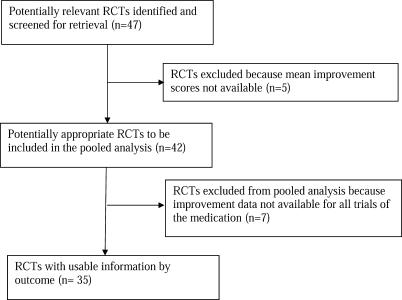
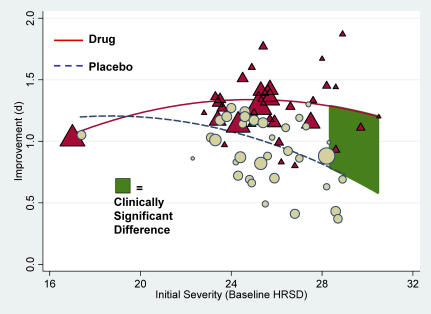
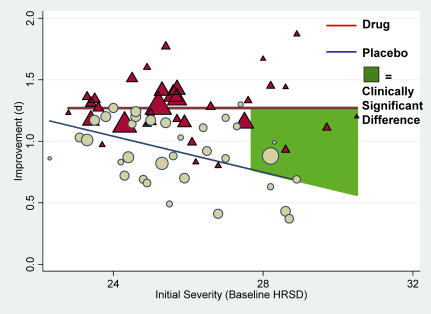
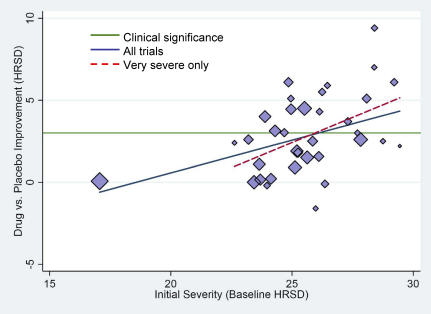
BACKGROUND: Meta-analyses of antidepressant medications have reported only modest benefits over placebo treatment, and when unpublished trial data are included, the benefit falls below accepted criteria for clinical significance. Yet, the efficacy of the antidepressants may also depend on the severity of initial depression scores. The purpose of this analysis is to establish the relation of baseline severity and antidepressant efficacy using a relevant dataset of published and unpublished clinical trials. METHODS AND FINDINGS: We obtained data on all clinical trials submitted to the US Food and Drug Administration (FDA) for the licensing of the four new-generation antidepressants for which full datasets were available. We then used meta-analytic techniques to assess linear and quadratic effects of initial severity on improvement scores for drug and placebo groups and on drug-placebo difference scores. Drug-placebo differences increased as a function of initial severity, rising from virtually no difference at moderate levels of initial depression to a relatively small difference for patients with very severe depression, reaching conventional criteria for clinical significance only for patients at the upper end of the very severely depressed category. Meta-regression analyses indicated that the relation of baseline severity and improvement was curvilinear in drug groups and showed a strong, negative linear component in placebo groups. CONCLUSIONS: Drug-placebo differences in antidepressant efficacy increase as a function of baseline severity, but are relatively small even for severely depressed patients. The relationship between initial severity and antidepressant efficacy is attributable to decreased responsiveness to placebo among very severely depressed patients, rather than to increased responsiveness to medication.
Overview
The claims and statistics of this paper haven’t been checked yet.
Free: it reads the open-access text and checks the first 5 claims that cite a source we can check. Create a free account to check every claim.
Integrity signals
Registry
Cites
Statistics
Figures
Verification
Claims the paper makes
The claims and statistics of this paper haven’t been checked yet.
Free: it reads the open-access text and checks the first 5 claims that cite a source we can check. Create a free account to check every claim.
Claims other papers make about this one
Each is checked against this paper’s own text: does it say what the citing paper says it does?
The source backs part of the claim, not all of it — or backs it for a different population, condition or comparison.
In the citing paper
“Individual-level meta-analyses have found a direct relationship between the magnitude of depressive symptoms and the effectiveness of antidepressants.8–10”
From Comparative effectiveness of exercise, antidepressants and their combination in treating non-severe depression: a systematic review and network meta-analysis of randomised controlled trials (2022) · cites this paper as [9]
Experimental — accuracy not yet measuredThe cited source says what the claim attributes to it.
In the citing paper
“An understanding of users’ own experiences of antidepressant use is increasingly important in the context of growing doubts about the effectiveness of antidepressant treatment [5, 26], concerns about side effects [27] and withdrawal effects [28].”
From ‘In my life antidepressants have been…’: a qualitative analysis of users’ diverse experiences with antidepressants (2016) · cites this paper as [5]
In the citing paper
“In this study, 84 % of participants in this study answered in the affirmative to a question about whether they felt antidepressants had reduced their depression, a number well above that suggested by efficacy studies”
From ‘In my life antidepressants have been…’: a qualitative analysis of users’ diverse experiences with antidepressants (2016) · cites this paper as [5]
In the citing paper
“Other studies have found support for increasing benefit with increasing severity of depression,21 but the effects size even for patients with the most severe depression was still minimal.21”
From Should antidepressants be used for major depressive disorder? (2020) · cites this paper as [21]
Self-check
Percentages, sums and reported differences re-computed from the paper’s own numbers.
The self-check needs the paper’s full text.
Citations
Cites
Measuring inconsistency in meta-analyses
Higgins, J. P. T., Thompson, S. G., Deeks, J. J., & Altman, D. G. (2003) · BMJ · doi:10.1136/bmj.327.7414.557 · Cited by 63,139 · cited 1×
“Both Q [15] and I2 [ 16 ] indices were used to assess”
MethodStatistical Methods for Meta-Analysis
Wasserman, S., Hedges, L. V., & Olkin, I. (1988) · Journal of Educational Statistics · doi:10.2307/1164953 · Cited by 10,326
Statistical Methods for Meta-Analysis.
Freeman, P. R., Hedges, L. V., & Olkin, I. (1986) · Biometrics · doi:10.2307/2531069 · Cited by 4,784
Meta-analysis in social research
(1982) · Evaluation and Program Planning · doi:10.1016/0149-7189(82)90011-8 · Cited by 3,853 · cited 1×
“Finally, to show directly the amount of improvement for each study’s drug group against its placebo group, we calculated the difference between the change for the drug group minus the change for the placebo group, leaving the difference in raw units and deriving its analytic weight from its standard error [11,12,20].”
MethodImputing missing standard deviations in meta-analyses can provide accurate results
Furukawa, T. A., Barbui, C., Cipriani, A., Brambilla, P., & Watanabe, N. (2006) · Journal of Clinical Epidemiology · doi:10.1016/j.jclinepi.2005.06.006 · Cited by 1,568 · cited 1×
“s were known for 28 groups, could be calculated from other inferential statistics in nine comparisons (18 groups), and were imputed in 12 comparisons (24 groups) (47.38%) [”
InfluentialPublication bias in meta-analysis its causes and consequences
Thornton, A. (2000) · Journal of Clinical Epidemiology · doi:10.1016/s0895-4356(99)00161-4 · Cited by 1,291 · cited 1×
“Examination of publication bias often relies on inspections of effect sizes in relation to sample size (or inverse variance) [22].”
BackgroundThe power of statistical tests for moderators in meta-analysis
Hedges, L. V., & Pigott, T. D. (2004) · Psychological Methods · doi:10.1037/1082-989x.9.4.426 · Cited by 672 · cited 1×
“A last, mixedeffects analysis for the amount of change used a randomeffects constant along with fixed-effects moderator dimensions; these models provide more conservative assessments of moderation [19].”
MethodMelander, H., Ahlqvist-Rastad, J., Meijer, G., & Beermann, B. (2003) · BMJ · doi:10.1136/bmj.326.7400.1171 · Cited by 635 · cited 2×
“In the case of antidepressant medication, this limitation has been found to result in considerable reporting bias characterized by multiple publication, selective publication, and selective reporting in studies sponsored by pharmaceutical companies [5].”
BackgroundPlacebo Theory, Research , and Mechanisms
WHITE, L. E., Tursky, B., & SCHWARTZ, G. E. R. (1985) · Guilford Press eBooks · Cited by 485
Khan, A., Leventhal, R. M., Khan, S. R., & Brown, W. A. (2002) · Journal of Clinical Psychopharmacology · doi:10.1097/00004714-200202000-00007 · Cited by 456 · cited 2×
“Similar to prior reports [3,4], this analysis of U.”
BackgroundResult
Research works printed but not linked: 3
- Lipsey MW Wilson DB 2001 Practical meta-analysis. Applied social research methods Volume 49. Thousand Oaks (California) Sage Publications 247
- Evans FJ 1974 The placebo response in pain reduction Adv Neurol 4 289 296
- Fabre LF Crimson L 1985 Efficacy of fluoxetine in outpatients with major depression Curr Ther Res Clin Exp 37 115 123
Cited by
Items 701–800 of 1,013
Structural and ferroelectric phase evolution in [KNbO3]1−x[BaNi1/2Nb1/2O3−δ]x (x=0,0.1)
Hawley, C. J., Wu, L., Xiao, G., Grinberg, I., Rappe, A. M., Davies, P. K., & Spanier, J. E. (2017) · Physical review. B./Physical review. B · doi:10.1103/physrevb.96.054117 · Cited by 33
Prukkanone, B., Vos, T., Bertram, M., & Lim, S. S. (2012) · Value in Health · doi:10.1016/j.jval.2011.11.009 · Cited by 34
The Decline of Pharmaceutical Psychiatry and the Increasing Role of Psychological Medicine
Fava, G. A. (2009) · Psychotherapy and Psychosomatics · doi:10.1159/000214443 · Cited by 36
“Not surprisingly, when all the data of clinical trials submitted to the FDA for the licensing of 4 new-generation antidepressants were analyzed, there were no significant differences between drugs and placebo except in the most severe cases [”
BackgroundAn algorithm for the pharmacological treatment of depression
Spijker, J., & Nolen, W. A. (2010) · Acta Psychiatrica Scandinavica · doi:10.1111/j.1600-0447.2009.01492.x · Cited by 40
“Recent publications state that as a result of publication bias, the efficacy of ADs is overestimated (21) and that the difference between ADs and placebo becomes only manifest and clinically relevant in severe depression (22).”
BackgroundLonie, J. M., & Desai, K. R. (2015) · Currents in Pharmacy Teaching and Learning · doi:10.1016/j.cptl.2015.06.002 · Cited by 37
Fabre, L. F., Brown, C., Smith, L. C., & Derogatis, L. R. (2011) · The Journal of Sexual Medicine · doi:10.1111/j.1743-6109.2011.02216.x · Cited by 33
Honig, G., Jongsma, M. E., van der Hart, M. C. G., & Tecott, L. H. (2009) · PLoS ONE · doi:10.1371/journal.pone.0006797 · Cited by 33
“Clinical evidence suggests that while SSRIs are generally effective for the treatment of many psychiatric disorders, a substantial number of patients will not respond to the SSRI initially prescribed or even to any SSRI, and other patients will attain only a partial remission of symptoms [5,21,22].”
BackgroundDornbierer, D. A., Marten, L., Mueller, J., Aicher, H. D., Mueller, M. J., Boxler, M., Kometer, M., Kosanic, D., von Rotz, R., Puchkov, M., et al. (2023) · Frontiers in Pharmacology · doi:10.3389/fphar.2023.1246892 · Cited by 32
Kudlow, P. A., Cha, D. S., & McLntyre, R. S. (2012) · The Canadian Journal of Psychiatry · doi:10.1177/070674371205701211 · Cited by 32
The placebo effect and homeopathy
Teixeira, M. Z., Guedes, C. H. F. F., Barreto, P. V., & Martins, M. A. (2010) · Homeopathy · doi:10.1016/j.homp.2010.02.001 · Cited by 46
The unfulfilled promise of the antidepressant medications
Davey, C. G., & Chanen, A. M. (2016) · Medical Journal of Australia · doi:10.5694/mja16.00194 · Cited by 31
Metabolite-related antidepressant action of diterpene ginkgolides in the prefrontal cortex
Hu, Q., Shen, P., Bai, S., Dong, M.-X., Liang, Z., Chen, Z., Wang, W., Wang, H., Gui, S., Li, P., et al. (2018) · Neuropsychiatric Disease and Treatment · doi:10.2147/ndt.s161351 · Cited by 33
Historical Controls in Randomized Clinical Trials: Opportunities and Challenges
Hall, K. T., Vase, L., Tobias, D. K., Dashti, H., Vollert, J., Kaptchuk, T. J., & Cook, N. R. (2020) · Clinical Pharmacology & Therapeutics · doi:10.1002/cpt.1970 · Cited by 43
Influence of placebo effect in mental disorders research: A systematic review and meta‐analysis
López, R. F., Gallego, B. R., Bueno‐Cavanillas, A., & Khan, K. S. (2022) · European Journal of Clinical Investigation · doi:10.1111/eci.13762 · Cited by 78
Superiority of escitalopram to paroxetine in the treatment of depression
Kasper, S. F., Baldwin, D. S., Lönn, S. L., & Boulenger, J. (2009) · European Neuropsychopharmacology · doi:10.1016/j.euroneuro.2008.12.003 · Cited by 35
“The study by Kirsch et al. (2008) also concluded that a decreased responsiveness to placebo among severely depressed patients accounted for the apparent efficacy of antidepressants in this group of patients.”
Principle standards and problems regarding proof of efficacy in clinical psychopharmacology
Möller, H., & Broich, K. (2009) · European Archives of Psychiatry and Clinical Neuroscience · doi:10.1007/s00406-009-0071-8 · Cited by 32
“[19] even asked whether antidepressants are superior to placebo in a clinically relevant matter.”
Baltanás, T. R., Olivares, J. M., Calado-Otero, M., Kalynchuk, L. E., Martinez-Villamarin, J. R., & Caruncho, H. J. (2012) · Journal of Affective Disorders · doi:10.1016/j.jad.2011.12.041 · Cited by 34
Bet, P. M., Hugtenburg, J. G., Penninx, B. W. J. H., van Balkom, A. J. L. M., Nolen, W. A., & Hoogendijk, W. J. G. (2013) · Psychiatry Research · doi:10.1016/j.psychres.2013.06.023 · Cited by 36
“BAI scores were used to categorise anxiety disorders: mild (0-21), moderate (22-35) and severe disorder (36-63).”
Zhang, Y., Chow, V., Vitry, A. I., Ryan, P., Roughead, E. E., Caughey, G. E., Ramsay, E. N., Gilbert, A. L., Esterman, A., & Luszcz, M. A. (2010) · International Psychogeriatrics · doi:10.1017/s1041610209991554 · Cited by 35
“Recently, the therapeutic value of antidepressants for depression has also been questioned as a result of finding that negative trials of antidepressants had not been published (Kirsch et al., 2008; Turner et al., 2008).”
BackgroundSTAR*D: A Tale and Trail of Bias
Pigott, H. E. (2011) · Ethical Human Psychology and Psychiatry · doi:10.1891/1559-4343.13.1.6 · Cited by 31
“companies’ relentless marketing efforts (Barbui, Furukawa, & Cipriani, 2008; Eyding et al., 2010; Kirsch, Moore, Scoboria, & Nicholls, 2002; Kirsch et al., 2008; Turner et al., 2008).”
Rahimi, R., Nikfar, S., & Abdollahi, M. R. (2008) · Cited by 32
Nelson, J. C., Zhang, Q., Deberdt, W. G., Marangell, L. B., Karamustafalıoğlu, O., & Lipkovich, I. A. (2012) · Current Medical Research and Opinion · doi:10.1185/03007995.2011.654010 · Cited by 32
“Kirsch et al. (2008) showed an inverse relationship of placebo response and depression severity, with less placebo response in very seriously depressed patients4.”
ResultPark, Y., Lee, B.-H., Um, T. H., & Kim, S. (2014) · PLoS ONE · doi:10.1371/journal.pone.0091061 · Cited by 33
“It was hypothesized that biological changes associated with BDNF levels are larger in patients with a greater severity of depression based on meta-analyses that have shown significant differences between the effects of antidepressants and placebo on changes in HAMD or MADRS scores in such patients [41,42].”
BackgroundForlini, C., Hall, W., Maxwell, B., Outram, S. M., Reiner, P. B., Repantis, D., Schermer, M., & Racine, É. (2013) · EMBO Reports · doi:10.1038/embor.2012.225 · Cited by 38
“Cognitive-enhancement research could be better regulated if clear thresholds for efficacy were established, as illustrated by meta-analyses on anti-depressant clinical trials [42].”
BackgroundFullagar, S. P., & O’Brien, W. (2012) · Health An Interdisciplinary Journal for the Social Study of Health Illness and Medicine · doi:10.1177/1363459312447255 · Cited by 39
“Yet, with growing evidence that there is little clinical difference in response to anti-depressant drugs and placebos (Kirsch et al., 2008), critical and ethical questions continue to be raised about the practices that govern and regulate ‘emotional health’ through ‘quick fix wonder drugs’…”
BackgroundKruisdijk, F. R., Hendriksen, I. J. M., Tak, E. C. P. M., Beekman, A. T. F., & Hopman-Rock, M. (2012) · BMC Public Health · doi:10.1186/1471-2458-12-50 · Cited by 47
“A recent analysis of data of the US Food and Drugs Administration, showed relatively small drug-placebo differences in antidepressant efficacy [2].”
Carrière, I., Farré, A., Proust‐Lima, C., Ryan, J. L., Ancelin, M., & Ritchie, K. A. (2016) · Epidemiology and Psychiatric Sciences · doi:10.1017/s2045796015001122 · Cited by 35
“…as this takes into account clinically significant sub-syndromal states; the latter being not only highly prevalent in the elderly (12–15%), but also associated with high co-morbidity, high mortality and treatment resistance (Olfson et al., 1996; Helmchen & Linden, 2000; Kirsch et al., 2008).”
Backgroundde Vries, Y. A., Roest, A. M., Burgerhof, J. G. M., & de Jonge, P. (2018) · Depression and Anxiety · doi:10.1002/da.22737 · Cited by 34
“…Kolts, & Brown, 2011; Khan, Brodhead, Kolts, & Brown, 2005) have found that antidepressants are more effective for patients with high initial severity, with some of these analyses suggesting that efficacy is minimal for patients with mild depression (Fournier et al., 2010; Kirsch et al., 2008).”
BackgroundInfluentialLiang, X., Tang, J., Qi, Y., Luo, Y., Yang, C., Dou, X., Jiang, L. H., Xiao, Q., Zhang, L., Chao, F., et al. (2022) · Experimental Neurology · doi:10.1016/j.expneurol.2022.114103 · Cited by 36
Positioning mental health nursing practice within a positive health paradigm
Wand, T. (2012) · International Journal of Mental Health Nursing · doi:10.1111/j.1447-0349.2012.00848.x · Cited by 38
“This is due to a decrease in response to placebo, rather than an increase in response to medication (Kirsch et al. 2008).”
BackgroundMethodTadić, A., Wagner, S., Gorbulev, S., Dahmen, N., Hiemke, C., Braus, D. F., & Lieb, K. (2011) · BMC Psychiatry · doi:10.1186/1471-244x-11-16 · Cited by 33
“However, effect sizes of currently available antidepressants are rather small than medium [6-8] and treatment outcome remains disappointing with remission rates of maximal 37% [[9] and references inside].”
BackgroundTrimmer, P. C., Higginson, A. D., Fawcett, T. W., McNamara, J. M., & Houston, A. I. (2015) · Evolution Medicine and Public Health · doi:10.1093/emph/eov009 · Cited by 38
“Two recent meta-analyses have shown that pharmacological treatments are effective only in the most severe cases of depression [12, 13] so it is clear that preventing and curing depression require a deeper understanding of how it arises and persists.”
BackgroundArvidsdotter, T., Marklund, B. R. G., & Taft, C. (2013) · BMC Complementary and Alternative Medicine · doi:10.1186/1472-6882-13-308 · Cited by 44
Reconceptualizing major depressive disorder as an infectious disease
Canli, T. (2014) · Biology of Mood & Anxiety Disorders · doi:10.1186/2045-5380-4-10 · Cited by 35
“These types of antidepressants may bring relief to patients with severe symptoms but are not clinically more effective than placebos in mild to moderate cases [3].”
BackgroundWhat to do about depression? Help-seeking and treatment recommendations of the public
Holzinger, A., Matschinger, H., & Angermeyer, M. C. (2011) · Epidemiology and Psychiatric Sciences · doi:10.1017/s2045796011000266 · Cited by 31
“It remains an open question as to what extent the criticism may have played a part that has been raised only recently concerning the effectiveness of modern antidepressant medication (Kirsch et al. 2009), which found considerable coverage in the media.”
BackgroundKawaguchi, D. M., & Glatt, S. J. (2014) · Pharmacogenomics · doi:10.2217/pgs.14.96 · Cited by 35
The conundrum of depression clinical trials: one size does not fit all
Khan, A., Mar, K. F., & Brown, W. A. (2018) · International Clinical Psychopharmacology · doi:10.1097/yic.0000000000000229 · Cited by 30
“Some investigators have suggested that ADs were not effective (Kirsch et al., 2008; Fournier et al., 2010).”
BackgroundFountoulakis, K. N., & Möller, H.-J. (2012) · Journal of Psychopharmacology · doi:10.1177/0269881111421969 · Cited by 30
“included as Figure 3 in their paper (Kirsch et al., 2008), the placebo and the drug regression lines should have been more or less parallel (which they are not in any paper we know), thus reflecting that the effects are additive (which we argue are not).”
BackgroundResultInfluentialControl Group Outcomes in Trials of Psilocybin, SSRIs, or Esketamine for Depression: A Meta-Analysis
Hieronymus, F., López, E., Sjögren, H. W., & Lundberg, J. (2025) · JAMA Network Open · doi:10.1001/jamanetworkopen.2025.24119 · Cited by 34
Oxymoronic or synergistic: Deconstructing the psychiatric and/or mental health nurse
Cutcliffe, J. R., Stevenson, C., & Lakeman, R. (2012) · International Journal of Mental Health Nursing · doi:10.1111/j.1447-0349.2012.00850.x · Cited by 30
Causal Effects In Psychotherapy: Counterfactuals Counteract Overgeneralization
Höfler, M., Gloster, A. T., & Hoyer, J. (2010) · Psychotherapy Research · doi:10.1080/10503307.2010.501041 · Cited by 34
“( 2008 ) used metaregression, they only considered one moderator of treatment effect, namely the initial severity (with higher effects for the more severe cases).”
BackgroundMethodInfluential(2016) · FOCUS The Journal of Lifelong Learning in Psychiatry · doi:10.1176/appi.focus.140203 · Cited by 30
Lorenzo‐Luaces, L., Rodríguez‐Quintana, N., & Bailey, A. J. (2020) · Behaviour Research and Therapy · doi:10.1016/j.brat.2020.103637 · Cited by 31
“Although patients with severe depression tend to experience worse overall outcomes when compared with patients mild depression, differences between active treatments and controls are often more pronounced the more severe depression is (Bower et al., 2013; Driessen, Cuijpers, Hollon, & Dekker, 2010; Fournier et al., 20…”
BackgroundRead, J., Moncrieff, J., & Horowitz, M. A. (2023) · Journal of Psychiatric Research · doi:10.1016/j.jpsychires.2023.03.013 · Cited by 30
Effectiveness of medical interventions
Stegenga, J. (2015) · Studies in History and Philosophy of Science Part C Studies in History and Philosophy of Biological and Biomedical Sciences · doi:10.1016/j.shpsc.2015.06.005 · Cited by 34
The Borders of Mental Disorder in Psychiatry and the DSM: Past, Present, and Future
Pierre, J. M. (2010) · Journal of Psychiatric Practice · doi:10.1097/01.pra.0000390756.37754.68 · Cited by 37
Is acupuncture a placebo therapy?
Zheng, Y.-C., Yuan, T., & Liu, T. (2014) · Complementary Therapies in Medicine · doi:10.1016/j.ctim.2014.05.005 · Cited by 34
“Precisely resembling what we have seen in RCTs of acupuncture for pain as analyzed in the above, meta-analyses of antidepressant clinical trials have shown that the double-blind antidepressant response is largely the result of the double-blind placebo response.(55,56) Indeed, high placebo responses and small differenc…”
ResultSuggestion in the Treatment of Depression
Kirsch, I., & Low, C. B. (2013) · American Journal of Clinical Hypnosis · doi:10.1080/00029157.2012.738613 · Cited by 30
“In fact, it was this criticism that led Kirsch and colleagues to re-analyze the FDA data (Kirsch et al., 2008).”
BackgroundSelf-citationWang, J. T., Hoffman, B. M., & Blumenthal, J. A. (2010) · Expert Opinion on Pharmacotherapy · doi:10.1517/14656566.2010.513701 · Cited by 32
“RCTs of non-cardiac patients have shown that antidepressant medication may be no better than placebo in patients with mild depression, but may be more efficacious among those patients with more severe depression [77,78].”
BackgroundMethodResultSarris, J. J., Glick, R. M., Hoenders, R. H. J., Duffy, J., & Lake, J. (2013) · Advances in Integrative Medicine · doi:10.1016/j.aimed.2012.12.002 · Cited by 40
“In spite of decades of research and billions of dollars of industry funding, the evidence supporting pharmacologic treatments of many major psychiatric disorders is not compelling [8– 12].”
BackgroundHernandez, J. F., Mantel-Teeuwisse, A. K., van Thiel, G. J. M. W., Belitser, S. V., Warmerdam, J. H. M., de Valk, V., Raaijmakers, J. A. M., & Pieters, T. (2012) · PLoS ONE · doi:10.1371/journal.pone.0045515 · Cited by 31
“concluded that antidepressants were no better than placebo, and that in more severely depressed patients these drugs showed some effect, but only because of a poor response to placebo [42].”
BackgroundPharmacogenetics and the serotonin transporter in late-life depression
Gerretsen, P., & Pollock, B. G. (2008) · Expert Opinion on Drug Metabolism & Toxicology · doi:10.1517/17425250802560279 · Cited by 32
“Moreover, recently published meta-analyses of controlled trials, which included negative unpublished studies, suggest limited efficacy for antidepressants [10,11] .”
BackgroundSSRI Augmentation by 5-Hydroxytryptophan Slow Release: Mouse Pharmacodynamic Proof of Concept
Jacobsen, J. P. R., Rudder, M. L., Roberts, W. L., Royer, E. L., Robinson, T. J., Oh, A., Spasojević, I., Sachs, B. D., & Caron, M. G. (2016) · Neuropsychopharmacology · doi:10.1038/npp.2016.35 · Cited by 33
Psychiatric and Behavioral Aspects of Cardiovascular Disease
Vaccarino, V., & Bremner, J. D. (2012) · Elsevier eBooks · doi:10.1016/b978-1-4377-0398-6.00091-3 · Cited by 32
Dimethyltryptamine: Endogenous Role and Therapeutic Potential
Rodrigues, A. V., Almeida, F., & Vieira‐Coelho, M. A. (2019) · Journal of Psychoactive Drugs · doi:10.1080/02791072.2019.1602291 · Cited by 38
“In light of this, new drugsmay be developed for the treatment of such prevalent psychiatric pathologies (Kessler and Bromet 2013), where a lack of solutions (Kirsch et al. 2008) is notable.”
BackgroundPre-registration and Results-Free Review in Observational and Qualitative Research
Jacobs, A. M. (2020) · Cambridge University Press eBooks · doi:10.1017/9781108762519.009 · Cited by 34
Transparency, Reproducibility, and the Credibility of Economics Research
Christensen, G., & Miguel, E. A. (2016) · National Bureau of Economic Research · doi:10.3386/w22989 · Cited by 49
Masi, A., Lampit, A., DeMayo, M. M., Glozier, N., Hickie, I. B., & Guastella, A. J. (2017) · Psychological Medicine · doi:10.1017/s0033291716003457 · Cited by 46
“Reporting of a specific measure of baseline symptom severity should be included in all ASD RCTs, using a level of detail that facilitates analysis of the relationship between baseline severity and treatment efficacy similar to that undertaken in trials of antidepressants (Kirsch et al. 2008).”
ResultThe Ethics of Clinical Trials Research in Severe Mood Disorders
Nugent, A. C., Miller, F. G., Henter, I. D., & Zarate, C. A. (2017) · Bioethics · doi:10.1111/bioe.12349 · Cited by 30
Psychiatric Neuroethics: Studies in Research and Practice
Glannon, W. (2018) · doi:10.1093/med/9780198758853.001.0001 · Cited by 31
Allida, S. M., Hsieh, C., Cox, K. L., Patel, K., Rouncefield‐Swales, A., Lightbody, C. E., House, A. O., & Hackett, M. L. (2023) · Cochrane Database of Systematic Reviews · doi:10.1002/14651858.cd003437.pub5 · Cited by 40
Nijenhuis, C. M., ter Horst, P. G. J., van Rein, N., Wilffert, B., & den Berg, L. T. W. D. J. (2011) · British Journal of Clinical Pharmacology · doi:10.1111/j.1365-2125.2011.04081.x · Cited by 29
Comparative psychology and the grand challenge of drug discovery in psychiatry and neurodegeneration
Brunner, D., Balcı, F., & Ludvig, E. A. (2011) · Behavioural Processes · doi:10.1016/j.beproc.2011.10.011 · Cited by 32
Can knowledge of Placebo and Nocebo Mechanisms Help Improve Randomized Clinical Trials?
Carlino, E., & Vase, L. (2018) · International review of neurobiology · doi:10.1016/bs.irn.2018.01.012 · Cited by 35
Donald, M., Partanen, R. L., Sharman, L. S., Lynch, J. M., Dingle, G. A., Haslam, C., & van Driel, M. (2021) · British Journal of General Practice · doi:10.3399/bjgp.2020.0913 · Cited by 35
Traditional and Innovative Experimental and Clinical Trial Designs and Their Advantages and Pitfalls
Weimer, K., & Enck, P. (2014) · Handbook of experimental pharmacology · doi:10.1007/978-3-662-44519-8_14 · Cited by 32
Ridge, D., Kokanović, R., Broom, A. F., Kirkpatrick, S., Anderson, C., & Tanner, C. (2015) · Social Science & Medicine · doi:10.1016/j.socscimed.2015.10.012 · Cited by 34
“Subsequently, there were concerns about the lack of effectiveness of SSRI treatments for all but the most serious forms of depression (Kirsch et al., 2002, 2008).”
BackgroundBarbic, S. P., Durisko, Z., & Andrews, P. W. (2014) · PLoS ONE · doi:10.1371/journal.pone.0112077 · Cited by 34
Davidson, K. W., & Korin, M. R. (2010) · Cleveland Clinic Journal of Medicine · doi:10.3949/ccjm.77.s3.04 · Cited by 28
Cognitive vulnerability differentially predicts symptom dimensions of depression
Struijs, S. Y., Groenewold, N. A., Voshaar, R. C. O., & de Jonge, P. (2013) · Journal of Affective Disorders · doi:10.1016/j.jad.2013.05.057 · Cited by 35
“In recent years, pharmacological (Kirsch et al., 2008) and psychotherapeutic (Cuijpers et al.”
BackgroundPsychoanalytic and psychodynamic therapies for depression: the evidence base
Taylor, D. (2008) · Advances in Psychiatric Treatment · doi:10.1192/apt.bp.107.004382 · Cited by 40
Initial severity and efficacy of risperidone in autism: Results from the RUPP trial
Levine, S. Z., Kodesh, A., Goldberg, Y., Reichenberg, A., Furukawa, T. A., Kolevzon, A., & Leucht, S. (2016) · European Psychiatry · doi:10.1016/j.eurpsy.2015.11.004 · Cited by 35
“However, consistent with prior research on initial severity in other disorders [7,8,11,12] baseline showed significant effects on the ABC irritability scale rated by the parent [13].”
ResultBütikofer, A., Cronin, C. J., & Skira, M. M. (2020) · Journal of Health Economics · doi:10.1016/j.jhealeco.2020.102348 · Cited by 40
“These results echo those of an earlier meta-analysis (Kirsch et al., 2008) focused on clinical trials submitted to the FDA, including both approved and non-approved antidepressants.”
Item-based analysis of the effects of duloxetine in depression: a patient-level post hoc study
Lisinski, A., Hieronymus, F., Näslund, J., Nilsson, S., & Eriksson, E. (2019) · Neuropsychopharmacology · doi:10.1038/s41386-019-0523-4 · Cited by 33
Optimizing patient expectancy in the pharmacologic treatment of major depressive disorder
Zilcha-Mano, S., Brown, P. J., Roose, S. P., Cappetta, K., & Rutherford, B. R. (2019) · Psychological Medicine · doi:10.1017/s0033291718003343 · Cited by 29
“5 standard deviation units of improvement, which is 75% of the improvement shown in the antidepressant groups (Kirsch and Sapirstein, 1998; Kirsch et al., 2008).”
BackgroundInfluentialFann, J. R., Hong, F., Halpenny, B., Blonquist, T. M., & Berry, D. L. (2017) · Psycho-Oncology · doi:10.1002/pon.4250 · Cited by 28
“Our findings are consistent with other studies, showing that patients with more severe depression often respond more strongly to interventions aimed at mitigating depression.(23,24) In an analysis of exposure to the ESRA‐C intervention, working participants were more likely to use the remote intervention.”
MethodResultYang, W., Lin, C., Wang, F., & Lu, M.-J. (2017) · BMC Psychiatry · doi:10.1186/s12888-017-1471-3 · Cited by 32
Guu, T., Mischoulon, D., Sarris, J. J., Hibbeln, J. R., McNamara, R. K., Hamazaki, K., Freeman, M. P., Maes, M. H. J., Matsuoka, Y., Belmaker, R. H., et al. (2020) · Journal of Affective Disorders · doi:10.1016/j.jad.2020.01.050 · Cited by 35
Tejeda-Martínez, A. R., Paredes, J. M. V., Hidalgo-Franco, G. V., Pardo-González, E., Chaparro-Huerta, V., González-Castañeda, R., & Flores-Soto, M. E. (2021) · Behavioural Neurology · doi:10.1155/2021/6651492 · Cited by 29
“However, these antidepressant treatments are not universally effective [10], and many of them result in severe side effects, such as cognitive impairment, sexual dysfunction, sleep disturbance, and urinary retention, thus leading to poor therapeutic compliance [11].”
BackgroundHahn, A., Göhler, A. C., Hermann, C., & Winkler, A. (2022) · Journal of Affective Disorders · doi:10.1016/j.jad.2022.02.043 · Cited by 28
Transcranial ultrasound stimulation relieves depression in mice with chronic restraint stress
Zhu, Y., He, J., Wu, C., Wu, J., Cheng, Z., Chen, Y., Yuan, M., Zeng, L., & Ji, X. (2023) · Journal of Neural Engineering · doi:10.1088/1741-2552/ac8bfd · Cited by 31
“However, a rising number of investigations questioned its clinical therapeutic efficacy, safety, tolerability, and non-response rates [30, 31].”
Review of the choice and use of antidepressant drugs
Bleakley, S. (2013) · Progress in Neurology and Psychiatry · doi:10.1002/pnp.311 · Cited by 34
Schmitt, A. B., Bauer, M., Volz, H., Mœller, H., Jiang, Q. L., Ninan, P. T., & Loeschmann, P.-A. (2009) · European Archives of Psychiatry and Clinical Neuroscience · doi:10.1007/s00406-009-0003-7 · Cited by 29
“[26]. The authors conclude that modern antidepressants are associated with greater differences from placebo at higher levels of severity and those clinically meaningful effects of antidepressants may be limited to patients with more severe depression [ 26 ].”
BackgroundInfluentialMancini, M., Wade, A. G., Perugi, G., Lenox-Smith, A., & Schacht, A. (2014) · Journal of Psychiatric Research · doi:10.1016/j.jpsychires.2014.01.001 · Cited by 28
Atlantis, E. E., Sullivan, T., Sartorius, N., & Almeida, O. P. (2012) · Australian & New Zealand Journal of Psychiatry · doi:10.1177/0004867411433218 · Cited by 33
“As for efficacy, two systematic reviews published in 2008 raised serious doubts about the benefits of AD medications (Kirsch et al., 2008; Turner et al., 2008), which also generated significant media attention and controversy (Mathew and Charney, 2009).”
BackgroundVilazodone in the treatment of major depressive disorder
Khan, A., Sambunaris, A., Edwards, J. G., Ruth, A., & Robinson, D. S. (2013) · International Clinical Psychopharmacology · doi:10.1097/yic.0000000000000016 · Cited by 29
“Although a prior meta-analysis has suggested that antidepressant treatment is most efficacious in patients with the most severe symptoms (Kirsch et al., 2008), the results of these analyses support the therapeutic benefit of vilazodone across a spectrum of depression severities.”
ResultInterpreting meta‐regression: application to recent controversies in antidepressants’ efficacy
Petkova, E., Tarpey, T., Huang, L., & Deng, L. (2013) · Statistics in Medicine · doi:10.1002/sim.5766 · Cited by 28
“Although using change score as the outcome is known to have numerous shortfalls [6, 7], here it is carried out to make results comparable with those in [1], as we illustrate weaknesses related to aggregation (or ecological) bias and the ecological fallacy (e.”
InfluentialDatabase Analysis of Adults with Bipolar Disorder Consuming a Micronutrient Formula
Gately, D., & Kaplan, B. J. (2009) · Clinical Medicine Insights Psychiatry · doi:10.4137/cmpsy.s2278 · Cited by 29
Severity of depression and response to antidepressants: GENPOD randomised controlled trial
Wiles, N., Mulligan, J., Peters, T. J., Cowen, P. J., Mason, V. L., Nutt, D., Sharp, D., Tallon, D., Thomas, L., O’Donovan, M. C., et al. (2011) · The British Journal of Psychiatry · doi:10.1192/bjp.bp.110.091223 · Cited by 28
Clomipramine concentration and withdrawal symptoms in 10 neonates
ter Horst, P. G. J., van der Linde, S., Smit, J. P., den Boon, J., van Lingen, R. A., Jansman, F. G. A., De Jong‐van den Berg, L. T. W., & Wilffert, B. (2012) · British Journal of Clinical Pharmacology · doi:10.1111/j.1365-2125.2011.04072.x · Cited by 29
Rief, W., Bleichhardt, G., Dannehl, K., Euteneuer, F., & Wambach, K. (2018) · Psychotherapy and Psychosomatics · doi:10.1159/000487893 · Cited by 32
the EMC Study Group, Tadić, A., Gorbulev, S., Dahmen, N., Hiemke, C., Braus, D. F., Röschke, J., van Calker, D., Wachtlin, D., Kronfeld, K., et al. (2010) · Trials · doi:10.1186/1745-6215-11-21 · Cited by 29
“Drug-placebo difference in efficacy of antidepressants increases with baseline severity, but remains relatively small even for severely depressed patients [7].”
BackgroundEnhancing Placebo Effects: Insights From Social Psychology
Sliwinski, J., & Elkins, G. R. (2013) · American Journal of Clinical Hypnosis · doi:10.1080/00029157.2012.740434 · Cited by 27
“…by Kirsch and colleagues indicated that placebo pills are around 75% to 80% as effective as antidepressant medications for treating depression (Kirsch et al., 2008; Kirsch & Sapirstein, 1998), and that the standardized difference between these modalities on the Hamilton Depression Rating…”
BackgroundInfluentialThombs, B. D., & Ziegelstein, R. C. (2013) · The Canadian Journal of Psychiatry · doi:10.1177/070674371305801207 · Cited by 28
Mercier, A., Kerhuel, N., Stalnikiewitz, B., Aulanier, S., Boulnois, C., Becret, F., & Czernichow, P. (2009) · L Encéphale · doi:10.1016/j.encep.2009.04.002 · Cited by 27
Hellerstein, D. J., & Flaxer, J. M. (2015) · Core evidence · doi:10.2147/ce.s54075 · Cited by 30
“36,37 Response rates in major depression are generally in the 50%–70% range, and remission averages 30% (for instance, 28% remission to citalopram as rated by Hamilton Depression Rating Scale [HAMD] and 33% rated by Quick Inventory of Depressive Symptomatology – self-related [QIDS-SR] in the STAR*D…”
Hyde, A. J., May, B. H., Xue, C. C., & Zhang, A. L. (2017) · American Journal of Geriatric Psychiatry · doi:10.1016/j.jagp.2017.02.022 · Cited by 29
Weiss, D., Brunk, D. K., & Goodman, D. A. (2018) · Journal of the American College of Nutrition · doi:10.1080/07315724.2017.1398686 · Cited by 27
Self-Management of Depression: Beyond the Medical Model
Duggal, H. S. (2019) · The Permanente Journal · doi:10.7812/tpp/18-295 · Cited by 40
A meta-analysis of cranial electrotherapy stimulation in the treatment of depression
Price, L. R., Briley, J., Haltiwanger, S., & Hitching, R. (2020) · Journal of Psychiatric Research · doi:10.1016/j.jpsychires.2020.12.043 · Cited by 31
“The efficacy of antidepressants is often bolstered by baseline severity, and by decreased responsiveness of severely depressed patients in the placebo group (Kirsch et al., 2008).”
Background
Metadata
- Authors
- Kirsch, I., Deacon, B. J., Huedo-Medina, T. B., Scoboria, A., Moore, T. J., & Johnson, B. T.
- Affiliations
- University of Hull (GB)
- University of Wyoming (US)
- University of Connecticut (US)
- University of Windsor (CA)
- Institute for Safe Medication Practices (US)
- Corresponding author
- Kirsch, Irving
- Venue
- PLoS Medicine
- Publisher
- Public Library of Science (PLoS)
- Published
- 2008-02-26
- Volume
- 5
- Issue
- 2
- Pages
- e45
- ISSN
- 1549-1277 (ISSN-L)
- 1549-1676
- PMC
- PMC2253608
- OpenAlex
- W2153403353
- Cited by
- 2,442
- References
- 49
- Citations by year
- 2026: 47 · 2025: 53 · 2024: 63 · 2023: 65 · 2022: 90 · 2021: 81 · 2020: 132 · 2019: 100 · 2018: 159 · 2017: 154 · 2016: 142 · 2015: 130 · 2014: 156 · 2013: 191 · 2012: 179
- FWCI
- 24.87
- Type
- journal article
- Language
- en
- Open access
- gold
- doi.org
- Licence
- cc-by
- Locations
- PLoS Medicine (publishedVersion, cc-by)
- PubMed Central (publishedVersion, cc-by)
- PubMed (publishedVersion)
- RePEc: Research Papers in Economics (publishedVersion)
- Research Online (University of Wollongong) (submittedVersion)
- DOAJ (DOAJ: Directory of Open Access Journals) (submittedVersion, cc-by-sa)
- Figshare (submittedVersion)
- Topics
- Health Sciences › Medicine › Pharmacology (medical) › Treatment of Major Depression
- Social Sciences › Psychology › Clinical Psychology › Psychotherapy Techniques and Applications
- Health Sciences › Medicine › Psychiatry and Mental health › Mental Health Treatment and Access
- Keywords
- antidepressants, antidepressant efficacy, placebo response, severe depression, clinical significance
- MeSH terms
- Antidepressive Agents, Clinical Trials as Topic, Depressive Disorder, Humans, Severity of Illness Index, United States, United States Food and Drug Administration, Databases, Factual
About these checks
Registry, retraction, Cites and statistics results are computed, not judged, with one exception: a printed reference that no index lists is read once by a model before it counts as a citation error. Claims are extracted by a model and kept only when their quote appears verbatim in the text; each cited source is then checked, with a model’s help, for whether it says what the claim relies on. Those verdicts can be wrong — read the claim’s quote and the cited source before relying on one.
Statistics and arithmetic are recomputed, not judged.
Confidence bands are shown only for fields calibrated on our annotated test set. None is calibrated yet, so no band is shown.
What counts as a claim ›How we measure confidence ›How we check this ›
Are you an author, or do you see a problem with this page? Request a review
Data sources
Bibliographic data: Semantic Scholar, OpenAlex, Crossref.
Contains information from the Semantic Scholar Academic Graph Datasets, made available under the ODC Attribution License (ODC-BY 1.0).
Semantic Scholar’s data is described in: Kinney, R., et al. (2023). The Semantic Scholar Open Data Platform. arXiv:2301.10140.
