

Initial Severity and Antidepressant Benefits: A Meta-Analysis of Data Submitted to the Food and Drug Administration
Open accessThe DOI matches its Crossref record; 49 of the 49 references it cites were found in a registry or an index.
Abstract
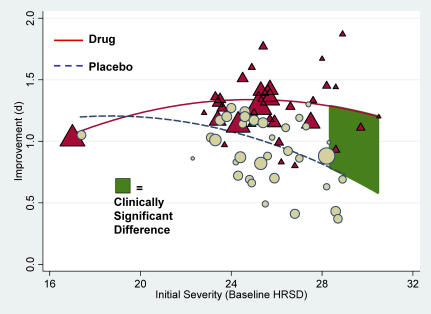
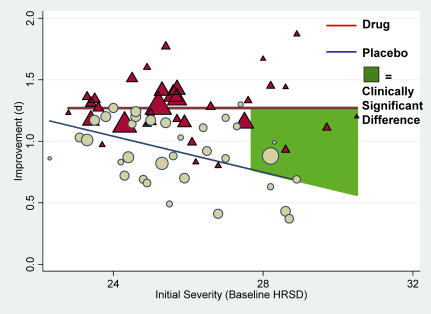
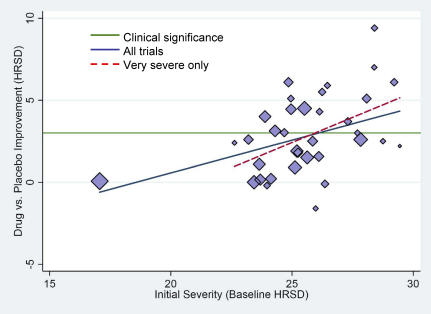
BACKGROUND: Meta-analyses of antidepressant medications have reported only modest benefits over placebo treatment, and when unpublished trial data are included, the benefit falls below accepted criteria for clinical significance. Yet, the efficacy of the antidepressants may also depend on the severity of initial depression scores. The purpose of this analysis is to establish the relation of baseline severity and antidepressant efficacy using a relevant dataset of published and unpublished clinical trials. METHODS AND FINDINGS: We obtained data on all clinical trials submitted to the US Food and Drug Administration (FDA) for the licensing of the four new-generation antidepressants for which full datasets were available. We then used meta-analytic techniques to assess linear and quadratic effects of initial severity on improvement scores for drug and placebo groups and on drug-placebo difference scores. Drug-placebo differences increased as a function of initial severity, rising from virtually no difference at moderate levels of initial depression to a relatively small difference for patients with very severe depression, reaching conventional criteria for clinical significance only for patients at the upper end of the very severely depressed category. Meta-regression analyses indicated that the relation of baseline severity and improvement was curvilinear in drug groups and showed a strong, negative linear component in placebo groups. CONCLUSIONS: Drug-placebo differences in antidepressant efficacy increase as a function of baseline severity, but are relatively small even for severely depressed patients. The relationship between initial severity and antidepressant efficacy is attributable to decreased responsiveness to placebo among very severely depressed patients, rather than to increased responsiveness to medication.
Overview
The claims and statistics of this paper haven’t been checked yet.
Free: it reads the open-access text and checks the first 5 claims that cite a source we can check. Create a free account to check every claim.
Integrity signals
Registry
Cites
Statistics
Figures
Verification
Claims the paper makes
The claims and statistics of this paper haven’t been checked yet.
Free: it reads the open-access text and checks the first 5 claims that cite a source we can check. Create a free account to check every claim.
Claims other papers make about this one
Each is checked against this paper’s own text: does it say what the citing paper says it does?
The source backs part of the claim, not all of it — or backs it for a different population, condition or comparison.
In the citing paper
“Individual-level meta-analyses have found a direct relationship between the magnitude of depressive symptoms and the effectiveness of antidepressants.8–10”
From Comparative effectiveness of exercise, antidepressants and their combination in treating non-severe depression: a systematic review and network meta-analysis of randomised controlled trials (2022) · cites this paper as [9]
Experimental — accuracy not yet measuredThe cited source says what the claim attributes to it.
In the citing paper
“An understanding of users’ own experiences of antidepressant use is increasingly important in the context of growing doubts about the effectiveness of antidepressant treatment [5, 26], concerns about side effects [27] and withdrawal effects [28].”
From ‘In my life antidepressants have been…’: a qualitative analysis of users’ diverse experiences with antidepressants (2016) · cites this paper as [5]
In the citing paper
“In this study, 84 % of participants in this study answered in the affirmative to a question about whether they felt antidepressants had reduced their depression, a number well above that suggested by efficacy studies”
From ‘In my life antidepressants have been…’: a qualitative analysis of users’ diverse experiences with antidepressants (2016) · cites this paper as [5]
In the citing paper
“Other studies have found support for increasing benefit with increasing severity of depression,21 but the effects size even for patients with the most severe depression was still minimal.21”
From Should antidepressants be used for major depressive disorder? (2020) · cites this paper as [21]
Self-check
Percentages, sums and reported differences re-computed from the paper’s own numbers.
The self-check needs the paper’s full text.
Citations
Cites
Measuring inconsistency in meta-analyses
Higgins, J. P. T., Thompson, S. G., Deeks, J. J., & Altman, D. G. (2003) · BMJ · doi:10.1136/bmj.327.7414.557 · Cited by 63,139 · cited 1×
“Both Q [15] and I2 [ 16 ] indices were used to assess”
MethodStatistical Methods for Meta-Analysis
Wasserman, S., Hedges, L. V., & Olkin, I. (1988) · Journal of Educational Statistics · doi:10.2307/1164953 · Cited by 10,326
Statistical Methods for Meta-Analysis.
Freeman, P. R., Hedges, L. V., & Olkin, I. (1986) · Biometrics · doi:10.2307/2531069 · Cited by 4,784
Meta-analysis in social research
(1982) · Evaluation and Program Planning · doi:10.1016/0149-7189(82)90011-8 · Cited by 3,853 · cited 1×
“Finally, to show directly the amount of improvement for each study’s drug group against its placebo group, we calculated the difference between the change for the drug group minus the change for the placebo group, leaving the difference in raw units and deriving its analytic weight from its standard error [11,12,20].”
MethodImputing missing standard deviations in meta-analyses can provide accurate results
Furukawa, T. A., Barbui, C., Cipriani, A., Brambilla, P., & Watanabe, N. (2006) · Journal of Clinical Epidemiology · doi:10.1016/j.jclinepi.2005.06.006 · Cited by 1,568 · cited 1×
“s were known for 28 groups, could be calculated from other inferential statistics in nine comparisons (18 groups), and were imputed in 12 comparisons (24 groups) (47.38%) [”
InfluentialPublication bias in meta-analysis its causes and consequences
Thornton, A. (2000) · Journal of Clinical Epidemiology · doi:10.1016/s0895-4356(99)00161-4 · Cited by 1,291 · cited 1×
“Examination of publication bias often relies on inspections of effect sizes in relation to sample size (or inverse variance) [22].”
BackgroundThe power of statistical tests for moderators in meta-analysis
Hedges, L. V., & Pigott, T. D. (2004) · Psychological Methods · doi:10.1037/1082-989x.9.4.426 · Cited by 672 · cited 1×
“A last, mixedeffects analysis for the amount of change used a randomeffects constant along with fixed-effects moderator dimensions; these models provide more conservative assessments of moderation [19].”
MethodMelander, H., Ahlqvist-Rastad, J., Meijer, G., & Beermann, B. (2003) · BMJ · doi:10.1136/bmj.326.7400.1171 · Cited by 635 · cited 2×
“In the case of antidepressant medication, this limitation has been found to result in considerable reporting bias characterized by multiple publication, selective publication, and selective reporting in studies sponsored by pharmaceutical companies [5].”
BackgroundPlacebo Theory, Research , and Mechanisms
WHITE, L. E., Tursky, B., & SCHWARTZ, G. E. R. (1985) · Guilford Press eBooks · Cited by 485
Khan, A., Leventhal, R. M., Khan, S. R., & Brown, W. A. (2002) · Journal of Clinical Psychopharmacology · doi:10.1097/00004714-200202000-00007 · Cited by 456 · cited 2×
“Similar to prior reports [3,4], this analysis of U.”
BackgroundResult
Research works printed but not linked: 3
- Lipsey MW Wilson DB 2001 Practical meta-analysis. Applied social research methods Volume 49. Thousand Oaks (California) Sage Publications 247
- Evans FJ 1974 The placebo response in pain reduction Adv Neurol 4 289 296
- Fabre LF Crimson L 1985 Efficacy of fluoxetine in outpatients with major depression Curr Ther Res Clin Exp 37 115 123
Cited by
Items 301–400 of 1,013
Comparison of psychotherapies for adult depression to pill placebo control groups: a meta-analysis
Cuijpers, P., Turner, E. H., Mohr, D. C., Hofmann, S. G., Andersson, G., Berking, M., & Coyne, J. (2014) · Psychological Medicine · doi:10.1017/s0033291713000457 · Cited by 101
“…either of these cut-offs were applied to the effect of psychotherapy, consistent with the way others have applied them to the effect of antidepressant medications (Kirsch et al. 2008; Fournier et al. 2010), the conclusion would be that the effect of psychotherapy is also clinically insignificant.”
BackgroundMethodResultInfluentialBranchi, I., Santarelli, S., Capoccia, S., Poggini, S., D’Andrea, I., Cirulli, F., & Alleva, E. (2013) · PLoS ONE · doi:10.1371/journal.pone.0062226 · Cited by 102
“Recent publications have also cast doubts about antidepressant efficacy [5,6,7], claiming that when a comprehensive analysis of all trials available is performed, their effects are not significantly different from placebo [8,9,10,11].”
BackgroundMcCambridge, J., Butor-Bhavsar, K., Witton, J., & Elbourne, D. (2011) · PLoS ONE · doi:10.1371/journal.pone.0025223 · Cited by 100
“It seems unlikely that drug and placebo effects do not have any multiplicative relationships with each other [6,7].”
BackgroundFleck, M. P., Berlim, M. T., Lafer, B., Sougey, E. B., Porto, J. A. D., Brasil, M. A., Juruena, M. F., & Hetem, L. A. (2009) · Revista Brasileira de Psiquiatria · doi:10.1590/s1516-44462009000500003 · Cited by 97
Thombs, B. D., Ziegelstein, R. C., Roseman, M., Kloda, L. A., & Ioannidis, J. P. (2014) · BMC Medicine · doi:10.1186/1741-7015-12-13 · Cited by 100
“These factors have been discussed in detail elsewhere [3], but include the already high rate of antidepressant use in primary care settings [33,34]; the likely overestimation in the research literature of the accuracy of depression screening tools for identifying previously unrecognized cases of depression [35]; and t…”
BackgroundHieronymus, F., Nilsson, S., & Eriksson, E. (2016) · Translational Psychiatry · doi:10.1038/tp.2016.104 · Cited by 100
A Systematic Approach to Pharmacotherapy for Geriatric Major Depression
Mulsant, B. H., Blumberger, D. M., Ismail, Z., Rabheru, K., & Rapoport, M. J. (2014) · Clinics in Geriatric Medicine · doi:10.1016/j.cger.2014.05.002 · Cited by 99
Fromm, E. (2013) · Routledge eBooks · doi:10.4324/9780203708996-7 · Cited by 100
Suggestion, Cognition, and Behavior
Michael, R. B., Garry, M., & Kirsch, I. (2012) · Current Directions in Psychological Science · doi:10.1177/0963721412446369 · Cited by 102
“At other times, suggestion’s effects are surprisingly strong, rivaling the effects of active medication and surgical procedures (Kaptchuk et al., 2008; Kirsch et al., 2008; Moseley et al., 2002).”
BackgroundSelf-citationMusazadeh, V., Keramati, M., Ghalichi, F., Kavyani, Z., Ghoreishi, Z., Alras, K. A., Albadawi, N., Salem, A., Albadawi, M. I., Salem, R. H., et al. (2022) · Pharmacological Research · doi:10.1016/j.phrs.2022.106605 · Cited by 119
Prins, J., Olivier, B., & Korte, S. M. (2011) · Expert Opinion on Investigational Drugs · doi:10.1517/13543784.2011.594039 · Cited by 97
“These patients are mostly diagnosed with moderate depression [17] and do often not respond adequately to antidepressants [18,19].”
BackgroundBrunoni, A. R., Baeken, C., Machado-Vieira, R., Gattaz, W. F., & Vanderhasselt, M.-A. (2014) · The World Journal of Biological Psychiatry · doi:10.3109/15622975.2014.892633 · Cited by 99
Conflicts of interest and the quality of recommendations in clinical guidelines
Cosgrove, L., Bursztajn, H. J., Erlich, D. R., Wheeler, E. E., & Shaughnessy, A. F. (2012) · Journal of Evaluation in Clinical Practice · doi:10.1111/jep.12016 · Cited by 108
“For example, two well-publicized meta-analyses independently concluded that because of a lack of efficacy, antidepressant medication should not be the first-line intervention for mild to moderate depression [12,45].”
BackgroundResultRapid Mood-Elevating Effects of Low Field Magnetic Stimulation in Depression
Rohan, M. L., Yamamoto, R. T., Ravichandran, C. T., Cayetano, K. R., Morales, O. G., Olson, D. P., Vitaliano, G., Paul, S. M., & Cohen, B. M. (2014) · Biological Psychiatry · doi:10.1016/j.biopsych.2013.10.024 · Cited by 97
“Antidepressant drugs are effective in relieving depression in many patients (6) but have limited efficacy overall (7,8); fewer than 40% of patients with MDD in controlled clinical trials have complete remissions (9–11).”
Baumeister, H. (2012) · Journal of Affective Disorders · doi:10.1016/j.jad.2011.05.025 · Cited by 97
“The current evidence highlights that antidepressant drugs are largely ineffective in patients with subthreshold and mild depression when compared to placebo (Barbui et al., 2011; Fournier et al., 2010; Kirsch et al., 2008).”
BackgroundLorenzo‐Luaces, L., DeRubeis, R. J., van Straten, A., & Tiemens, B. G. (2017) · Journal of Affective Disorders · doi:10.1016/j.jad.2017.02.010 · Cited by 110
“For example, the efficacy of antidepressants relative to placebos seems to be limited to patients with more severe depressions (Barbui et al., 2011; Fournier et al., 2010; Khan et al., 2002; Kirsch et al., 2008).”
BackgroundDe Fruyt, J., Deschepper, E., Audenaert, K., Constant, E., Floris, M., Pitchot, W., Sienaert, P., Souery, D., & Claes, S. (2012) · Journal of Psychopharmacology · doi:10.1177/0269881111408461 · Cited by 95
“The advantage of antidepressant agents over placebo is higher in more severely depressed patients, as has been shown for antidepressants (Kirsch et al., 2008) and lamotrigine (Geddes et al.”
BackgroundChronic Low Back Pain and Psychosocial Issues
Moore, J. E. (2010) · Physical Medicine and Rehabilitation Clinics of North America · doi:10.1016/j.pmr.2010.06.005 · Cited by 108
“Recent reviews have found little antidepressant benefit for mild and moderate depression but suggested more serious depression was somewhat responsive to antidepressant medications.(74,76) These results suggest that treating depressed individuals with antidepressants alone may be a poor alternative to other treatments…”
BackgroundResultA Double-Blind, Randomized Controlled Trial of Ethyl-Eicosapentaenoate for Major Depressive Disorder
Mischoulon, D., Papakostas, G. I., Dording, C. M., Farabaugh, A. H., Sonawalla, S. B., Agoston, A. M., Smith, J., Beaumont, E. C., Dahan, L. E., Alpert, J. E., et al. (2009) · The Journal of Clinical Psychiatry · doi:10.4088/jcp.08m04603 · Cited by 94
Searching for unpublished trials in Cochrane reviews may not be worth the effort
van Driel, M., Sutter, A. D., Maeseneer, J. D., & Christiaens, T. (2009) · Journal of Clinical Epidemiology · doi:10.1016/j.jclinepi.2008.09.010 · Cited by 100
Litten, R. Z., Fertig, J. B., Falk, D. E., Ryan, M. L., Mattson, M. E., Collins, J. F., Murtaugh, C., Ciraulo, D., Green, A. I., Johnson, B., et al. (2012) · Alcoholism: Clinical and Experimental Research · doi:10.1111/j.1530-0277.2011.01649.x · Cited by 94
“However, as treatment outcome improves in the placebo group, it may become more difficult to demonstrate a significant medication treatment effect, as observed in depression and schizophrenia studies (Kemp et al., 2010; Kirsch et al., 2008; Mallinckrodt et al., 2010; Walsh et al., 2002).”
BackgroundSelf-citationAntidepressants in inflammatory bowel disease
Mikocka-Walus, A., Ford, A. C., & Drossman, D. A. (2020) · Nature Reviews Gastroenterology & Hepatology · doi:10.1038/s41575-019-0259-y · Cited by 93
Changes of gut microbiota reflect the severity of major depressive disorder: a cross sectional study
Hu, X., Li, Y., Wu, J., Zhang, H., Huang, Y., Tan, X., Wen, L., Zhou, X., Xie, P., Olasunkanmi, O. I., et al. (2023) · Translational Psychiatry · doi:10.1038/s41398-023-02436-z · Cited by 105
Reid, S., & Barbui, C. (2010) · BMJ · doi:10.1136/bmj.c1468 · Cited by 93
“Recent meta-analyses have concluded that antidepressants have only a modest advantage over placebo, with the magnitude of benefit increasing with severity of depression.”
BackgroundThe scientific standing of psychoanalysis
Solms, M. (2018) · BJPsych International · doi:10.1192/bji.2017.4 · Cited by 91
“To put the efficacy of psychotherapy into perspective, recent antidepressant medications achieve effect sizes of between 0.24 and 0.31 (Kirsch et al, 2008; Turner et al, 2008).”
BackgroundInfluentialNeurofeedback and Neuromodulation Techniques and Applications
Coben, R., & Evans, J. R. (2011) · Elsevier eBooks · doi:10.1016/c2009-0-64101-5 · Cited by 118
“(Keller et al., 2000; Kirsch et al., 2008) do demonstrate there is a need for improved efficacy in depression treatment.”
BackgroundDuration and adherence of antidepressant treatment (2003 to 2007) based on prescription database
Serna, M. C., Cruz, I., Real, J., Gascó, E., & Galván, L. (2010) · European Psychiatry · doi:10.1016/j.eurpsy.2009.07.012 · Cited by 91
“effectiveness of antidepressants [13,27].”
Malmström, R. E., Godman, B., Diogène, E., Baumgärtel, C., Bennie, M., Bishop, I., Brzezinska, A., Bucsics, A., Campbell, S., Ferrario, A., et al. (2013) · Frontiers in Pharmacology · doi:10.3389/fphar.2013.00039 · Cited by 98
“…Review potential areas of concern with new treatments, especially around safety issues and potential ways to address this ◦ Check information provided by commercial organizations is comprehensive, addressing any potential publication bias (Melander et al., 2003; Kirsch et al., 2008; Martin, 2012).”
BackgroundKoesters, M., Guaiana, G., Cipriani, A., Becker, T., & Barbui, C. (2013) · British Journal of Psychiatry · doi:10.1192/bjp.bp.112.120196 · Cited by 93
Rolle, C. E., Fonzo, G. A., Wu, W., Toll, R. T., Jha, M. K., Cooper, C. M., Fatt, C. C., Pizzagalli, D. A., Trombello, J. M., Deckersbach, T., et al. (2020) · JAMA Psychiatry · doi:10.1001/jamapsychiatry.2019.3867 · Cited by 99
Methodological considerations of the GRADE method
Malmivaara, A. V. (2014) · Annals of Medicine · doi:10.3109/07853890.2014.969766 · Cited by 101
“by severity of the disease which may be a more powerful effect modifier than the dose-response pattern (23).”
BackgroundOff-Target Effects of Psychoactive Drugs Revealed by Genome-Wide Assays in Yeast
Ericson, E., Gebbia, M., Heisler, L. E., Wildenhain, J., Tyers, M., Giaever, G., & Nislow, C. (2008) · PLoS Genetics · doi:10.1371/journal.pgen.1000151 · Cited by 89
“Other classes of psychoactive drugs, such as the antidepressants, also cause numerous undesirable side effects and the broad usage of these medications have been questioned [8].”
BackgroundChen, P., Hei, M., Kong, L., Liu, Y., Yu, Y., Mu, H., Zhang, X., Zhao, S., & Duan, J. (2019) · Food & Function · doi:10.1039/c9fo01178a · Cited by 94
Role of Orexin in the Pathophysiology of Depression: Potential for Pharmacological Intervention
Nollet, M., & Leman, S. (2013) · CNS Drugs · doi:10.1007/s40263-013-0064-z · Cited by 97
“The limited efficacy of currently available antidepressants, in addition to their serious adverse effects [7, 8], also remains a major concern [9, 10].”
BackgroundHorton, R. E., Apple, D. M., Owens, W. A., Baganz, N. L., Cano, S., Mitchell, N. C., Vitela, M., Gould, G. G., Koek, W., & Daws, L. C. (2013) · Journal of Neuroscience · doi:10.1523/jneurosci.5687-11.2013 · Cited by 88
“However, a major problem in the treatment of depression is that many patients experience modest or no therapeutic benefit (Kirsch et al., 2008), indicating the need for alternative approaches to treat individuals who respond poorly to SSRIs.”
BackgroundDepression, Antidepressant Use and Mortality in Later Life: The Health in Men Study
Almeida, O. P., Alfonso, H., Hankey, G. J., & Flicker, L. (2010) · PLoS ONE · doi:10.1371/journal.pone.0011266 · Cited by 90
“Although these results cannot be considered conclusive at this stage, as mortality information from long-term randomized trials of antidepressants is not yet available, they do highlight the need for further research and caution when prescribing antidepressants to vulnerable older adults, particularly when one conside…”
BackgroundDiagnosing and treating depression in epilepsy
Elger, C. E., Johnston, S. A., & Hoppe, C. (2016) · Seizure · doi:10.1016/j.seizure.2016.10.018 · Cited by 101
Clayton, A. H., Lasser, R., Parikh, S. V., Iosifescu, D. V., Jung, J., Kotecha, M., Forrestal, F., Jonas, J., Kanes, S. J., & Doherty, J. (2023) · American Journal of Psychiatry · doi:10.1176/appi.ajp.20220459 · Cited by 87
Leuchter, A. F., Hunter, A. M., Tartter, M., & Cook, I. A. (2014) · British Journal of Psychiatry · doi:10.1192/bjp.bp.113.140343 · Cited by 86
Kendrick, T., Chatwin, J., Dowrick, C., Tylee, A., Morriss, R., Peveler, R., Leese, M., McCrone, P., Harris, T., Moore, M., et al. (2009) · Health Technology Assessment · doi:10.3310/hta13220 · Cited by 86
'Doing the right thing': factors influencing GP prescribing of antidepressants and prescribed doses
Johnson, C. F., Williams, B., MacGillivray, S. A., Dougall, N. J., & Maxwell, M. (2017) · BMC Family Practice · doi:10.1186/s12875-017-0643-z · Cited by 86
Voss, T., Bahr, D., Cummings, J. L., Mills, R., Ravina, B. M., & Williams, H. (2012) · Parkinsonism & Related Disorders · doi:10.1016/j.parkreldis.2012.10.022 · Cited by 92
Minimum clinically important differences identified for commonly used depression rating scales
Masson, S. C., & Tejani, A. M. (2013) · Journal of Clinical Epidemiology · doi:10.1016/j.jclinepi.2013.01.010 · Cited by 94
“However, two recent meta-analyses examining the preexisting clinical trial data found that the difference in response between treatment and placebo does not meet this threepoint threshold even in cases of severe depression [4,5].”
BackgroundOmega-3 fatty acids for depression in adults
Appleton, K. M., Voyias, P. D., Sallis, H. M., Dawson, S., Ness, A. R., Churchill, R., & Perry, R. (2021) · Cochrane Database of Systematic Reviews · doi:10.1002/14651858.cd004692.pub5 · Cited by 84
Onset, time course and trajectories of improvement with antidepressants
Lam, R. W. M. (2012) · European Neuropsychopharmacology · doi:10.1016/j.euroneuro.2012.07.005 · Cited by 92
“Despite recent controversy about efficacy (Kirsch et al., 2008; Nierenberg et al., 2011), updated evidence has confirmed the positive benefit–risk ratio for antidepressants in the treatment of moderate to severe MDD (Möller et al.”
BackgroundDowrick, C., Billington, J., Robinson, J., Hamer, A., & Williams, C. (2012) · Medical Humanities · doi:10.1136/medhum-2011-010083 · Cited by 83
Agomelatine: A narrative review
Demyttenaere, K. (2011) · European Neuropsychopharmacology · doi:10.1016/j.euroneuro.2011.07.004 · Cited by 90
The Genetics of Major Depression
Flint, J., & Kendler, K. S. (2014) · Neuron · doi:10.1016/j.neuron.2014.02.033 · Cited by 81
Friedman, E. S., Davis, L. L., Zisook, S., Wisniewski, S. R., Trivedi, M. H., Fava, M., & Rush, A. J. (2012) · European Neuropsychopharmacology · doi:10.1016/j.euroneuro.2011.07.010 · Cited by 81
“Similarly, in their meta-analysis of the relationship between initial depressive severity and efficacy in FDA antidepressant trials, Kirsch et al. (2008) concluded that drug-placebo differences in antidepressant efficacy increase as a function of baseline severity, but that this difference is…”
BackgroundSolving the Antidepressant Efficacy Question: Effect Sizes in Major Depressive Disorder
Vöhringer, P. A., & Ghaemi, S. N. (2011) · Clinical Therapeutics · doi:10.1016/j.clinthera.2011.11.019 · Cited by 82
“Kirsch et al reported this result in a table but did not comment on it.(2) Another way to address this problem is to report the relative (not absolute) drug-placebo difference, dividing absolute change by baseline severity of depression.”
Influentialvan der Greef, J., van Wietmarschen, H., Schroën, J., Wang, M., Hankemeier, T., & Xu, G. (2010) · Planta Medica · doi:10.1055/s-0030-1250450 · Cited by 93
Group sequential enrichment design incorporating subgroup selection
Magnusson, B., & Turnbull, B. W. (2013) · Statistics in Medicine · doi:10.1002/sim.5738 · Cited by 104
“Without loss of generality, the prior belief is that 1 > 2 > > `, which could, for example, apply to the nested population setting when testing an antidepressant believed to work best on the subgroup of severely depressed individuals [4,5].”
BackgroundOPINION AND EVIDENCE: Is Exercise a Viable Treatment for Depression?
Blumenthal, J. A., Smith, P. J., & Hoffman, B. M. (2012) · ACSM'S Health & Fitness Journal · doi:10.1249/01.fit.0000416000.09526.eb · Cited by 81
“(9) Thinking that you would be better off dead or that you want to hurt yourself in some way.”
Moderators of Outcome in Late-Life Depression: A Patient-Level Meta-Analysis
Nelson, J. C., Delucchi, K. L., & Schneider, L. S. (2013) · American Journal of Psychiatry · doi:10.1176/appi.ajp.2012.12070927 · Cited by 80
“As noted above, however, our findings are similar to those of previous meta-analyses and large trials with mixed-aged samples (27, 28, 31, 32).”
BackgroundResultPonizovsky, A. M., Rosca, P., Aronovich, E., Weizman, A., & Grinshpoon, A. (2014) · Journal of Substance Abuse Treatment · doi:10.1016/j.jsat.2014.11.007 · Cited by 85
Fischer Fumeaux, C. J., Morisod Harari, M., Weisskopf, E., Eap, C. B., Epiney, M., Vial, Y., Csajka, C., Bickle Graz, M., & Panchaud, A. (2019) · Expert Opinion on Drug Safety · doi:10.1080/14740338.2019.1658740 · Cited by 79
“These recommendations are in line with the results of two meta-analyses published ten years ago, showing that antidepressant effectiveness is correlated with illness severity [43,44].”
ResultMintzes, B. J. (2012) · Annual Review of Public Health · doi:10.1146/annurev-publhealth-031811-124540 · Cited by 83
“Around two-thirds of depression encountered in primary care is mild (72), for which SSRIs are clinically similar to placebo (32, 62).”
BackgroundThe cannabinoid CB 1 receptor and the endocannabinoid anandamide: possible antidepressant targets
Bambico, F. R., & Gobbi, G. (2008) · Expert Opinion on Therapeutic Targets · doi:10.1517/14728222.12.11.1347 · Cited by 80
“This may be attributed, in part, to the difficulty of differentiating placebo and active drug effects, especially during the first weeks of treatment [153] .”
BackgroundCross-sectional networks of depressive symptoms before and after antidepressant medication treatment
Bos, F. M., Fried, E. I., Hollon, S. D., Bringmann, L. F., Dimidjian, S., DeRubeis, R. J., & Bockting, C. L. H. (2018) · Social Psychiatry and Psychiatric Epidemiology · doi:10.1007/s00127-018-1506-1 · Cited by 78
Psykiske lidelser i Norge : et folkehelseperspektiv
Mykletun, A., Knudsen, A. K., & Mathiesen, K. S. (2009) · NORA - Norwegian Open Research Archives · Cited by 326
Dowlati, Y., Herrmann, N., Swardfager, W. L., Reim, E. K., & Lanctôt, K. L. (2010) · The Canadian Journal of Psychiatry · doi:10.1177/070674371005500205 · Cited by 79
“difference demonstrated in both non-CAD meta-analyses is small, particularly in those with lower severities of depression.(84) Thombs et al,(85) reviewing the literature in patients with cardiovascular disease, found that the effect sizes for AD treatment ranged from 0.”
ResultCognitive behavioural therapy halves the risk of repeated suicide attempts: systematic review.
Gøtzsche, P. C., & Gøtzsche, P. K. (2017) · Journal of the Royal Society of Medicine · doi:10.1177/0141076817731904 · Cited by 79
Grunebaum, M. F., Ellis, S. P., Duan, N., Burke, A. K., Oquendo, M. A., & John Mann, J. (2012) · Neuropsychopharmacology · doi:10.1038/npp.2011.247 · Cited by 79
Contribution of spontaneous improvement to placebo response in depression: A meta-analytic review
Rutherford, B. R., Mori, S., Sneed, J. R., Pimontel, M. A., & Roose, S. P. (2012) · Journal of Psychiatric Research · doi:10.1016/j.jpsychires.2012.02.008 · Cited by 79
“, 2002), and meta-analyses suggest that placebo treatment conditions may duplicate 50e75% of the improvement observed with active treatment (Kirsch and Sapirstein, 1998; Kirsch et al., 2008).”
BackgroundKhan, A., Bhat, A., Kolts, R., Thase, M. E., & Brown, W. (2010) · CNS Neuroscience & Therapeutics · doi:10.1111/j.1755-5949.2010.00151.x · Cited by 78
“Although the suggestion that antidepressants have limited utility [1] has been refuted by recent reviews [2],”
Deshauer, D., Moher, D., Fergusson, D., Moher, E., Sampson, M., & Grimshaw, J. (2008) · Canadian Medical Association Journal · doi:10.1503/cmaj.071068 · Cited by 78
Antidepressants for treatment of depression in primary care: a systematic review and meta-analysis
Arroll, B., Chin, W.-Y., Martis, W., Goodyear-Smith, F., Mount, V., Kingsford, D., Humm, S., Blashki, G., & MacGillivray, S. (2016) · The Journal of Primary Health Care · doi:10.1071/hc16008 · Cited by 73
“Journal of Primary Health Care, 8(4), 325-334.”
Schafer, S. M., Geuter, S., & Wager, T. D. (2017) · Progress in Neurobiology · doi:10.1016/j.pneurobio.2017.10.008 · Cited by 88
“, 2002), depression (Fields et al., 1991; Franklin, 1989; Kirsch et al., 2008; Leuchter et al., 2014), Parkinson’s disease”
Mental Illness and the Criminal Justice System
Hiday, V. A., & Burns, P. J. (2009) · Cambridge University Press eBooks · doi:10.1017/cbo9780511984945.029 · Cited by 88
The use of the EEG in measuring therapeutic drug action: focus on depression and antidepressants
Alhaj, H., Wisniewski, G., & McAllister-Williams, R. H. (2011) · Journal of Psychopharmacology · doi:10.1177/0269881110388323 · Cited by 78
“This is reflected by the relatively small drug–placebo difference in clinical trials that has led some to argue that, for example, antidepressants are ineffective (Kirsch et al., 2008).”
BackgroundThe Evolving Understanding of Recovery: What Does the Sociology of Mental Health Have to Offer?
Watson, D. P. (2012) · Humanity & Society · doi:10.1177/0160597612458904 · Cited by 91
“Pharmaceuticalization is such a powerful force within the field of mental health treatment that it continues to occur despite research findings that question the efficacy of some of the most popularly used psychotropic medications (Kirsch et al. 2008).”
BackgroundWolf, U., van Eckert, S., Walter, G., Wienke, A., Bartel, S., Plontke, S. K., & Naumann, C. (2021) · Scientific Reports · doi:10.1038/s41598-021-99858-w · Cited by 100
Lokkerbol, J., Adema, D., Cuijpers, P., Reynolds, C. F., Schulz, R., Weehuizen, R., & Smit, F. (2014) · The American Journal of Geriatric Psychiatry · doi:10.1016/j.jagp.2013.01.058 · Cited by 76
“,(30) and Kirsch et al.(31) Taken from Fournier et al.”
Dirnagl, U., & Macleod, M. R. (2009) · British Journal of Pharmacology · doi:10.1111/j.1476-5381.2009.00211.x · Cited by 77
“Using all data submitted to the FDA (including unpublished data), they showed that these widely prescribed medications are only superior to placebo in the most severely depressed patients (Kirsch et al., 2008).”
MethodPsychological Approaches to Mental Illness
Peterson, C. (2009) · Cambridge University Press eBooks · doi:10.1017/cbo9780511984945.008 · Cited by 78
Serotonin circuits and anxiety: what can invertebrates teach us?
Curran, K. P., & Chalasani, S. H. (2012) · Invertebrate Neuroscience · doi:10.1007/s10158-012-0140-y · Cited by 96
Cuijpers, P., Van Straten, A., Hollon, S. D., & Andersson, G. (2010) · Acta Psychiatrica Scandinavica · doi:10.1111/j.1600-0447.2009.01513.x · Cited by 74
“Some recent meta-analyses of pharmacotherapy as monotherapy have shown that the effects are smaller than was assumed earlier (36, 40).”
BackgroundAllida, S., Cox, K. L., Hsieh, C.-F., Lang, H., House, A., & Hackett, M. L. (2020) · Cochrane Database of Systematic Reviews · doi:10.1002/14651858.cd003437.pub4 · Cited by 71
Shively, C. A., & Willard, S. L. (2012) · Experimental Neurology · doi:10.1016/j.expneurol.2011.09.026 · Cited by 73
“The predictive validity of these models is being reconsidered as evidence accumulates suggesting that antidepressant pharmacotherapies developed using rodents stress models have limited efficacy in human depression (Rush et al., 2006; Kirsch et al., 2008; Spielmans et al., 2011).”
BackgroundStrøm, M., Mortensen, E. L., Halldorsson, T. I., Thorsdottir, I., & Olsen, S. F. (2009) · The American Journal of Clinical Nutrition · doi:10.3945/ajcn.2009.27552 · Cited by 74
Discriminating Between Bipolar Disorder and Major Depressive Disorder
Vöhringer, P. A., & Perlis, R. H. (2016) · Psychiatric Clinics of North America · doi:10.1016/j.psc.2015.10.001 · Cited by 74
The relativity of ‘placebos’: defending a modified version of Grünbaum’s definition
Howick, J. (2016) · Synthese · doi:10.1007/s11229-015-1001-0 · Cited by 86
Turner, E. H., & Rosenthal, R. (2008) · BMJ · doi:10.1136/bmj.39510.531597.80 · Cited by 78
Hieronymus, F., Lisinski, A., Nilsson, S., & Eriksson, E. (2019) · The Lancet Psychiatry · doi:10.1016/s2215-0366(19)30216-0 · Cited by 73
Amygdala subregions tied to SSRI and placebo response in patients with social anxiety disorder
Faria, V., Appel, L., Åhs, F., Linnman, C., Pissiota, A., Frans, Ö., Bani, M., Bettica, P., Pich, E. M., Jacobsson, E., et al. (2012) · Neuropsychopharmacology · doi:10.1038/npp.2012.72 · Cited by 73
Should treatment for depression be based more on patient preference?
Winter, S., & Barber, J. (2013) · Patient Preference and Adherence · doi:10.2147/ppa.s52746 · Cited by 73
“However, there is some recent and growing evidence from meta-analyses suggesting that when it comes to depression severity, for mild to moderate depression, antidepressants may have a smaller effect than in severe depression, demonstrating effect sizes not much larger than placebos.(6,7) When it comes to comparing ant…”
New generation antidepressants for depression in children and adolescents: a network meta-analysis
Hetrick, S. E., Meader, N., Bailey, A. P., Badcock, P. B., Moller, C. I., Cox, G., Merry, S., & McKenzie, J. E. (2020) · Cochrane Database of Systematic Reviews · doi:10.1002/14651858.cd013674 · Cited by 73
Concordance and incongruence in preclinical anxiety models: Systematic review and meta-analyses
Mohammad, F., Ho, J., Woo, J. H., Lim, C. L., Poon, D., Lamba, B., & Claridge‐Chang, A. (2016) · Neuroscience & Biobehavioral Reviews · doi:10.1016/j.neubiorev.2016.04.011 · Cited by 81
Wildeman, S. (2013) · Journal of Law, Medicine & Ethics · doi:10.1111/jlme.12005 · Cited by 71
Dunlop, B. W., Thase, M. E., Wun, C., Fayyad, R. S., Guico‐Pabia, C. J., Musgnung, J. J., & Ninan, P. T. (2012) · Neuropsychopharmacology · doi:10.1038/npp.2012.153 · Cited by 72
Trambaiolli, L. R., Kohl, S. H., Linden, D. E. J., & Mehler, D. M. A. (2021) · Neuroscience & Biobehavioral Reviews · doi:10.1016/j.neubiorev.2021.02.015 · Cited by 88
Questioning the Methodologic Superiority of ‘Placebo’ Over ‘Active’ Controlled Trials
Howick, J. (2009) · The American Journal of Bioethics · doi:10.1080/15265160903090041 · Cited by 81
“2004) other systematic reviews failed to detect statistically significant benefits of SSRIs over ‘placebo’ (Kirsch and Sapirstein 1998; Kirsch and Moore 2002; Healy 2004, 2006; Kirsch et al. 2008).”
Stepped care treatment for depression and anxiety in primary care. a randomized controlled trial
Seekles, W., van Straten, A., Beekman, A., van Marwijk, H., & Cuijpers, P. (2011) · Trials · doi:10.1186/1745-6215-12-171 · Cited by 72
Ramsden, C. E., Faurot, K. R., Zamora, D., Palsson, O. S., MacIntosh, B., Gaylord, S. A., Taha, A. Y., Rapoport, S. I., Hibbeln, J. R., Davis, J. M., et al. (2015) · Pain · doi:10.1097/01.j.pain.0000460348.84965.47 · Cited by 72
“Moreover, because participants in the present trial did not havemoderate-to-severe levels of depressionat baseline, it was unlikely that significant reductions in depressive symptoms would be detected.(20) Hence, the 12-week intervention period in the present trial may not have been of sufficient duration to produce m…”
BackgroundAraj‐Khodaei, M., Noorbala, A. A., Yarani, R., Emadi, F., Emaratkar, E., Faghihzadeh, S., Parsian, Z., Alijaniha, F., Kamalinejad, M., & Naseri, M. (2020) · BMC Complementary Medicine and Therapies · doi:10.1186/s12906-020-03003-5 · Cited by 87
Universal mental health: re-evaluating the call for global mental health
Das, A., & Rao, M. (2012) · Critical Public Health · doi:10.1080/09581596.2012.700393 · Cited by 73
Tadić, A., Wagner, S., Schlicht, K. F., Peetz, D., Borysenko, L., Dreimüller, N., Hiemke, C., & Lieb, K. (2010) · Progress in Neuro-Psychopharmacology and Biological Psychiatry · doi:10.1016/j.pnpbp.2010.08.011 · Cited by 82
“Their effect sizes are rather small than medium (Kirsch et al., 2008; Turner et al., 2008; Fournier et al., 2010) and more effective antidepressant substances cannot be expected in the near future.”
GABAergic neuroactive steroids: a new frontier in bipolar disorders?
Carta, M. G., Bhat, K. M., & Preti, A. (2012) · Behavioral and Brain Functions · doi:10.1186/1744-9081-8-61 · Cited by 70
“; licensee BioMed Central L Commons Attribution License (http://creativec reproduction in any medium, provided the or effectiveness of currently available drugs is poor, both because only selected subgroups of patients were found to be good responders to the prescribed drugs [2,3] and because compliance to treatment i…”
BackgroundMelanin-Concentrating Hormone (MCH): Role in REM Sleep and Depression
Torterolo, P., Scorza, C., Lagos, P., Urbanavicius, J., Benedetto, L., Pascovich, C., López‐Hill, X., Chase, M. H., & Monti, J. M. (2015) · Frontiers in Neuroscience · doi:10.3389/fnins.2015.00475 · Cited by 82
“…the previous statements, it is important to take into account that a meta-analyses study showed that the placebo effect for antidepressant treatment is exceptionally large, and antidepressant medications have reported only modest benefits over placebo treatment (Kirsch et al., 2008; Kirsch, 2014).”
BackgroundControlling for the placebo effect in psychotherapy: Noble quest or tilting at windmills?
Kirsch, I., Wampold, B., & Kelley, J. M. (2016) · Psychology of Consciousness: Theory, Research, and Practice · doi:10.1037/cns0000065 · Cited by 71
Self-citation
Metadata
- Authors
- Kirsch, I., Deacon, B. J., Huedo-Medina, T. B., Scoboria, A., Moore, T. J., & Johnson, B. T.
- Affiliations
- University of Hull (GB)
- University of Wyoming (US)
- University of Connecticut (US)
- University of Windsor (CA)
- Institute for Safe Medication Practices (US)
- Corresponding author
- Kirsch, Irving
- Venue
- PLoS Medicine
- Publisher
- Public Library of Science (PLoS)
- Published
- 2008-02-26
- Volume
- 5
- Issue
- 2
- Pages
- e45
- ISSN
- 1549-1277 (ISSN-L)
- 1549-1676
- PMC
- PMC2253608
- OpenAlex
- W2153403353
- Cited by
- 2,442
- References
- 49
- Citations by year
- 2026: 47 · 2025: 53 · 2024: 63 · 2023: 65 · 2022: 90 · 2021: 81 · 2020: 132 · 2019: 100 · 2018: 159 · 2017: 154 · 2016: 142 · 2015: 130 · 2014: 156 · 2013: 191 · 2012: 179
- FWCI
- 24.87
- Type
- journal article
- Language
- en
- Open access
- gold
- doi.org
- Licence
- cc-by
- Locations
- PLoS Medicine (publishedVersion, cc-by)
- PubMed Central (publishedVersion, cc-by)
- PubMed (publishedVersion)
- RePEc: Research Papers in Economics (publishedVersion)
- Research Online (University of Wollongong) (submittedVersion)
- DOAJ (DOAJ: Directory of Open Access Journals) (submittedVersion, cc-by-sa)
- Figshare (submittedVersion)
- Topics
- Health Sciences › Medicine › Pharmacology (medical) › Treatment of Major Depression
- Social Sciences › Psychology › Clinical Psychology › Psychotherapy Techniques and Applications
- Health Sciences › Medicine › Psychiatry and Mental health › Mental Health Treatment and Access
- Keywords
- antidepressants, antidepressant efficacy, placebo response, severe depression, clinical significance
- MeSH terms
- Antidepressive Agents, Clinical Trials as Topic, Depressive Disorder, Humans, Severity of Illness Index, United States, United States Food and Drug Administration, Databases, Factual
About these checks
Registry, retraction, Cites and statistics results are computed, not judged, with one exception: a printed reference that no index lists is read once by a model before it counts as a citation error. Claims are extracted by a model and kept only when their quote appears verbatim in the text; each cited source is then checked, with a model’s help, for whether it says what the claim relies on. Those verdicts can be wrong — read the claim’s quote and the cited source before relying on one.
Statistics and arithmetic are recomputed, not judged.
Confidence bands are shown only for fields calibrated on our annotated test set. None is calibrated yet, so no band is shown.
What counts as a claim ›How we measure confidence ›How we check this ›
Are you an author, or do you see a problem with this page? Request a review
Data sources
Bibliographic data: Semantic Scholar, OpenAlex, Crossref.
Contains information from the Semantic Scholar Academic Graph Datasets, made available under the ODC Attribution License (ODC-BY 1.0).
Semantic Scholar’s data is described in: Kinney, R., et al. (2023). The Semantic Scholar Open Data Platform. arXiv:2301.10140.
