

Initial Severity and Antidepressant Benefits: A Meta-Analysis of Data Submitted to the Food and Drug Administration
Open accessThe DOI matches its Crossref record; 49 of the 49 references it cites were found in a registry or an index.
Abstract
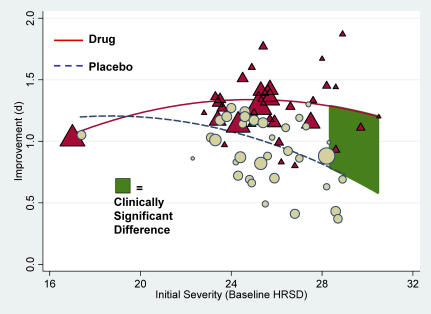
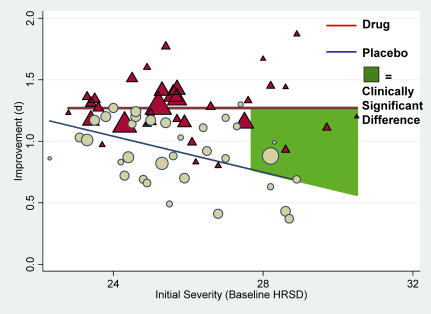
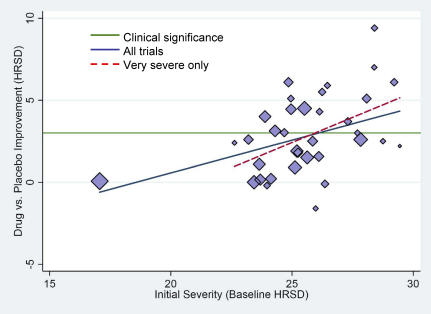
BACKGROUND: Meta-analyses of antidepressant medications have reported only modest benefits over placebo treatment, and when unpublished trial data are included, the benefit falls below accepted criteria for clinical significance. Yet, the efficacy of the antidepressants may also depend on the severity of initial depression scores. The purpose of this analysis is to establish the relation of baseline severity and antidepressant efficacy using a relevant dataset of published and unpublished clinical trials. METHODS AND FINDINGS: We obtained data on all clinical trials submitted to the US Food and Drug Administration (FDA) for the licensing of the four new-generation antidepressants for which full datasets were available. We then used meta-analytic techniques to assess linear and quadratic effects of initial severity on improvement scores for drug and placebo groups and on drug-placebo difference scores. Drug-placebo differences increased as a function of initial severity, rising from virtually no difference at moderate levels of initial depression to a relatively small difference for patients with very severe depression, reaching conventional criteria for clinical significance only for patients at the upper end of the very severely depressed category. Meta-regression analyses indicated that the relation of baseline severity and improvement was curvilinear in drug groups and showed a strong, negative linear component in placebo groups. CONCLUSIONS: Drug-placebo differences in antidepressant efficacy increase as a function of baseline severity, but are relatively small even for severely depressed patients. The relationship between initial severity and antidepressant efficacy is attributable to decreased responsiveness to placebo among very severely depressed patients, rather than to increased responsiveness to medication.
Overview
The claims and statistics of this paper haven’t been checked yet.
Free: it reads the open-access text and checks the first 5 claims that cite a source we can check. Create a free account to check every claim.
Integrity signals
Registry
Cites
Statistics
Figures
Verification
Claims the paper makes
The claims and statistics of this paper haven’t been checked yet.
Free: it reads the open-access text and checks the first 5 claims that cite a source we can check. Create a free account to check every claim.
Claims other papers make about this one
Each is checked against this paper’s own text: does it say what the citing paper says it does?
The source backs part of the claim, not all of it — or backs it for a different population, condition or comparison.
In the citing paper
“Individual-level meta-analyses have found a direct relationship between the magnitude of depressive symptoms and the effectiveness of antidepressants.8–10”
From Comparative effectiveness of exercise, antidepressants and their combination in treating non-severe depression: a systematic review and network meta-analysis of randomised controlled trials (2022) · cites this paper as [9]
Experimental — accuracy not yet measuredThe cited source says what the claim attributes to it.
In the citing paper
“An understanding of users’ own experiences of antidepressant use is increasingly important in the context of growing doubts about the effectiveness of antidepressant treatment [5, 26], concerns about side effects [27] and withdrawal effects [28].”
From ‘In my life antidepressants have been…’: a qualitative analysis of users’ diverse experiences with antidepressants (2016) · cites this paper as [5]
In the citing paper
“In this study, 84 % of participants in this study answered in the affirmative to a question about whether they felt antidepressants had reduced their depression, a number well above that suggested by efficacy studies”
From ‘In my life antidepressants have been…’: a qualitative analysis of users’ diverse experiences with antidepressants (2016) · cites this paper as [5]
In the citing paper
“Other studies have found support for increasing benefit with increasing severity of depression,21 but the effects size even for patients with the most severe depression was still minimal.21”
From Should antidepressants be used for major depressive disorder? (2020) · cites this paper as [21]
Self-check
Percentages, sums and reported differences re-computed from the paper’s own numbers.
The self-check needs the paper’s full text.
Citations
Cites
Measuring inconsistency in meta-analyses
Higgins, J. P. T., Thompson, S. G., Deeks, J. J., & Altman, D. G. (2003) · BMJ · doi:10.1136/bmj.327.7414.557 · Cited by 63,139 · cited 1×
“Both Q [15] and I2 [ 16 ] indices were used to assess”
MethodStatistical Methods for Meta-Analysis
Wasserman, S., Hedges, L. V., & Olkin, I. (1988) · Journal of Educational Statistics · doi:10.2307/1164953 · Cited by 10,326
Statistical Methods for Meta-Analysis.
Freeman, P. R., Hedges, L. V., & Olkin, I. (1986) · Biometrics · doi:10.2307/2531069 · Cited by 4,784
Meta-analysis in social research
(1982) · Evaluation and Program Planning · doi:10.1016/0149-7189(82)90011-8 · Cited by 3,853 · cited 1×
“Finally, to show directly the amount of improvement for each study’s drug group against its placebo group, we calculated the difference between the change for the drug group minus the change for the placebo group, leaving the difference in raw units and deriving its analytic weight from its standard error [11,12,20].”
MethodImputing missing standard deviations in meta-analyses can provide accurate results
Furukawa, T. A., Barbui, C., Cipriani, A., Brambilla, P., & Watanabe, N. (2006) · Journal of Clinical Epidemiology · doi:10.1016/j.jclinepi.2005.06.006 · Cited by 1,568 · cited 1×
“s were known for 28 groups, could be calculated from other inferential statistics in nine comparisons (18 groups), and were imputed in 12 comparisons (24 groups) (47.38%) [”
InfluentialPublication bias in meta-analysis its causes and consequences
Thornton, A. (2000) · Journal of Clinical Epidemiology · doi:10.1016/s0895-4356(99)00161-4 · Cited by 1,291 · cited 1×
“Examination of publication bias often relies on inspections of effect sizes in relation to sample size (or inverse variance) [22].”
BackgroundThe power of statistical tests for moderators in meta-analysis
Hedges, L. V., & Pigott, T. D. (2004) · Psychological Methods · doi:10.1037/1082-989x.9.4.426 · Cited by 672 · cited 1×
“A last, mixedeffects analysis for the amount of change used a randomeffects constant along with fixed-effects moderator dimensions; these models provide more conservative assessments of moderation [19].”
MethodMelander, H., Ahlqvist-Rastad, J., Meijer, G., & Beermann, B. (2003) · BMJ · doi:10.1136/bmj.326.7400.1171 · Cited by 635 · cited 2×
“In the case of antidepressant medication, this limitation has been found to result in considerable reporting bias characterized by multiple publication, selective publication, and selective reporting in studies sponsored by pharmaceutical companies [5].”
BackgroundPlacebo Theory, Research , and Mechanisms
WHITE, L. E., Tursky, B., & SCHWARTZ, G. E. R. (1985) · Guilford Press eBooks · Cited by 485
Khan, A., Leventhal, R. M., Khan, S. R., & Brown, W. A. (2002) · Journal of Clinical Psychopharmacology · doi:10.1097/00004714-200202000-00007 · Cited by 456 · cited 2×
“Similar to prior reports [3,4], this analysis of U.”
BackgroundResult
Research works printed but not linked: 3
- Lipsey MW Wilson DB 2001 Practical meta-analysis. Applied social research methods Volume 49. Thousand Oaks (California) Sage Publications 247
- Evans FJ 1974 The placebo response in pain reduction Adv Neurol 4 289 296
- Fabre LF Crimson L 1985 Efficacy of fluoxetine in outpatients with major depression Curr Ther Res Clin Exp 37 115 123
Cited by
Liberati, A., Altman, D. G., Tetzlaff, J., Mulrow, C., Gøtzsche, P. C., Ioannidis, J. P. A., Clarke, M., Devereaux, P. J., Kleijnen, J., & Moher, D. (2009) · PLoS Medicine · doi:10.1371/journal.pmed.1000100 · Cited by 28,164
Liberati, A., Altman, D. G., Tetzlaff, J., Mulrow, C., Gotzsche, P. C., Ioannidis, J. P. A., Clarke, M., Devereaux, P. J., Kleijnen, J., & Moher, D. (2009) · BMJ · doi:10.1136/bmj.b2700 · Cited by 17,648
Liberati, A., Altman, D. G., Tetzlaff, J., Mulrow, C., Gøtzsche, P. C., Ioannidis, J. P. A., Clarke, M., Devereaux, P. J., Kleijnen, J., & Moher, D. (2009) · Journal of Clinical Epidemiology · doi:10.1016/j.jclinepi.2009.06.006 · Cited by 10,578
Liberati, A., Altman, D. G., Tetzlaff, J., Mulrow, C., Gøtzsche, P. C., Ioannidis, J. P. A., Clarke, M., Devereaux, P. J., Kleijnen, J., & Moher, D. (2009) · Annals of Internal Medicine · doi:10.7326/0003-4819-151-4-200908180-00136 · Cited by 10,349
“Therefore, we present analyses only on data for medications for which complete clinical trials’ change was reported” (147).”
MethodLiberati, A., Altman, D. G., Tetzlaff, J., Mulrow, C., Gøtzsche, P. C., Ioannidis, J. P. A., Clarke, M., Devereaux, P. J., Kleijnen, J., & Moher, D. (2009) · Italian Journal of Public Health · doi:10.2427/5768 · Cited by 3,374
Antidepressant Drug Effects and Depression Severity: A Patient-Level Meta-analysis
Fournier, J. C., DeRubeis, R. J., Hollon, S. D., Dimidjian, S., Amsterdam, J. D., Shelton, R. C., & Fawcett, J. (2010) · JAMA · doi:10.1001/jama.2009.1943 · Cited by 2,009
Cipriani, A., Furukawa, T. A., Salanti, G., Geddes, J. R., Higgins, J. P., Churchill, R., Watanabe, N., Nakagawa, A., Omori, I. M., McGuire, H., et al. (2009) · The Lancet · doi:10.1016/s0140-6736(09)60046-5 · Cited by 1,654
PRACTICE GUIDELINE FOR THE Treatment of Patients With Major Depressive Disorder
Gelenberg, A. J., Freeman, P. B., Markowitz, J. C., Rosenbaum, J. F., Thase, M. E., Trivedi, M. H., & Rhoads, R. S. (2010) · Cited by 1,520
A Handbook for the Study of Mental Health Second Edition
Scheid, T. L., & Brown, T. N. (2009) · Cited by 1,324
Severity classification on the Hamilton depression rating scale
Zimmerman, M., Martinez, J. H., Young, D., Chelminski, I., & Dalrymple, K. (2013) · Journal of Affective Disorders · doi:10.1016/j.jad.2013.04.028 · Cited by 1,199
Kennedy, S. H., Lam, R. W., McIntyre, R. S., Tourjman, S. V., Bhat, V., Blier, P., Hasnain, M., Jollant, F., Levitt, A. J., MacQueen, G. M., et al. (2016) · The Canadian Journal of Psychiatry · doi:10.1177/0706743716659417 · Cited by 1,181
Fried, E. I., & Nesse, R. M. (2015) · Journal of Affective Disorders · doi:10.1016/j.jad.2014.10.010 · Cited by 1,043
“, 2012), and the low efficacy of antidepressants in clinical trials (Kirsch et al., 2008; Pigott et al., 2010).”
Depression sum-scores don’t add up: why analyzing specific depression symptoms is essential
Fried, E. I., & Nesse, R. M. (2015) · BMC Medicine · doi:10.1186/s12916-015-0325-4 · Cited by 981
“Several large meta-analyses of clinical trials have demonstrated that antidepressants outperform placebos in less than half of the trials, and that clinically relevant improvements can be documented only for a minority of severely depressed patients [32-34].”
BackgroundMaes, M., Yirmyia, R., Noraberg, J., Brene, S., Hibbeln, J., Perini, G., Kubera, M., Bob, P., Lerer, B., & Maj, M. (2009) · Metabolic Brain Disease · doi:10.1007/s11011-008-9118-1 · Cited by 894
“The reported benefit of these drugs over placebo is very modest and not always clinically significant (Kirsch et al. 2008).”
BackgroundThe neuroscience of placebo effects: connecting context, learning and health
Wager, T. D., & Atlas, L. Y. (2015) · Nature Reviews Neuroscience · doi:10.1038/nrn3976 · Cited by 844
Veehof, M. M., Oskam, M.-J., Schreurs, K. M. G., & Bohlmeijer, E. T. (2011) · PAIN · doi:10.1016/j.pain.2010.11.002 · Cited by 792
“In several recent, large meta-analyses on the effects of psychotherapy and pharmacotherapy, it has been found that lower effects were found in higher-quality studies [13,14,23,37].”
Cleare, A., Pariante, C., Young, A., Anderson, I., Christmas, D., Cowen, P., Dickens, C., Ferrier, I., Geddes, J., Gilbody, S., et al. (2015) · Journal of Psychopharmacology · doi:10.1177/0269881115581093 · Cited by 759
“It has been argued that the data from meta-analyses such as these suggest that antidepressants only have clinically meaningful effects in the most severely depressed patients (Kirsch et al., 2008).”
BackgroundNational Patterns in Antidepressant Medication Treatment
Olfson, M., & Marcus, S. C. (2009) · Archives of General Psychiatry · doi:10.1001/archgenpsychiatry.2009.81 · Cited by 730
The Genetics of Major Depression
Flint, J., & Kendler, K. S. (2014) · Neuron · doi:10.1016/j.neuron.2014.01.027 · Cited by 724
“There is even dispute about the value of medication (Khin et al., 2011; Kirsch et al., 2008; Turner et al., 2008; Vöhringer and Ghaemi, 2011) and psychological therapies (Cuijpers et al., 2008, 2010, 2011).”
Ioannidis, J. P. A. (2009) · Canadian Medical Association Journal · doi:10.1503/cmaj.081086 · Cited by 716
“dozens of scales to measure depression outcomes, and biases abound in research about antidepressants.(3,4)”
BackgroundDepression and coronary heart disease
Carney, R. M., & Freedland, K. E. (2017) · Nature Reviews Cardiology · doi:10.1038/nrcardio.2016.181 · Cited by 705
(2020) · doi:10.1056/nejmra1907805 · Cited by 634
The placebo response in medicine: minimize, maximize or personalize?
Enck, P., Bingel, U., Schedlowski, M., & Rief, W. (2013) · Nature Reviews Drug Discovery · doi:10.1038/nrd3923 · Cited by 671
Kappelmann, N., Lewis, G., Dantzer, R., Jones, P. B., & Khandaker, G. M. (2018) · Molecular Psychiatry · doi:10.1038/mp.2016.167 · Cited by 659
Öst, L.-G., Havnen, A., Hansen, B., & Kvale, G. (2015) · Clinical Psychology Review · doi:10.1016/j.cpr.2015.06.003 · Cited by 655
Bauer, M., Pfennig, A., Severus, E., Whybrow, P. C., Angst, J., Möller, H.-J., & Šon behalf of the Task Force on Unipolar Depressive Disorders (2013) · The World Journal of Biological Psychiatry · doi:10.3109/15622975.2013.804195 · Cited by 632
“The degree of benefi t from adequate treatment appears to increase with severity of depression (Kirsch et al. 2008; Fournier et al. 2010).”
BackgroundEyding, D., Lelgemann, M., Grouven, U., Harter, M., Kromp, M., Kaiser, T., Kerekes, M. F., Gerken, M., & Wieseler, B. (2010) · BMJ · doi:10.1136/bmj.c4737 · Cited by 588
van Ginneken, N., Tharyan, P., Lewin, S., Rao, G. N., Meera, S., Pian, J., Chandrashekar, S., & Patel, V. (2013) · Cochrane Database of Systematic Reviews · doi:10.1002/14651858.cd009149.pub2 · Cited by 575
Rosenfield, S., & Mouzon, D. (2013) · Handbooks of Sociology and Social Research · doi:10.1007/978-94-007-4276-5_14 · Cited by 494
The bright side of being blue: depression as an adaptation for analyzing complex problems.
Andrews, P. W., & Thomson, J. A. (2009) · Psychological Review · doi:10.1037/a0016242 · Cited by 549
“Relative to placebo, the response to antidepressants often fails to reach clinical significance except for the most severely depressed patients (Kirsch et al., 2008).”
BackgroundPsychoeducation for depression, anxiety and psychological distress: a meta-analysis
Donker, T., Griffiths, K. M., Cuijpers, P., & Christensen, H. (2009) · BMC Medicine · doi:10.1186/1741-7015-7-79 · Cited by 542
Cuijpers, P., van Straten, A., Bohlmeijer, E., Hollon, S. D., & Andersson, G. (2010) · Psychological Medicine · doi:10.1017/s0033291709006114 · Cited by 533
“In two recent meta-analytical reviews of studies examining the effects of antidepressive medication, it was found that these effects have been overestimated because of publication bias (Kirsch et al. 2008 ; Turner et al. 2008).”
BackgroundInfluentialBeck, A. T., & Bredemeier, K. (2016) · Clinical Psychological Science · doi:10.1177/2167702616628523 · Cited by 510
DeRubeis, R. J., Cohen, Z. D., Forand, N. R., Fournier, J. C., Gelfand, L. A., & Lorenzo-Luaces, L. (2014) · PLoS ONE · doi:10.1371/journal.pone.0083875 · Cited by 509
“4 [20].”
St John's wort for major depression
Linde, K., Berner, M. M., & Kriston, L. (2008) · Cochrane Database of Systematic Reviews · doi:10.1002/14651858.cd000448.pub3 · Cited by 477
Physical exercise intervention in depressive disorders: Meta‐analysis and systematic review
Josefsson, T., Lindwall, M., & Archer, T. (2014) · Scandinavian Journal of Medicine & Science in Sports · doi:10.1111/sms.12050 · Cited by 483
Biological, Psychological, and Social Determinants of Depression: A Review of Recent Literature
Remes, O., Mendes, J. F., & Templeton, P. (2021) · Brain Sciences · doi:10.3390/brainsci11121633 · Cited by 482
Pharmaceuticalization of Society in Context: Theoretical, Empirical and Health Dimensions
Abraham, J. (2010) · Sociology · doi:10.1177/0038038510369368 · Cited by 480
“For example, Kirsch et al. (2008) found that scientific clinical trial data for the four most widely prescribed SSRIs in the UK and US, during the 1990s, implied that these drugs were clinically effective only in very severe cases of depression, despite being promoted and prescribed for moderate or…”
BackgroundPsychiatry beyond the current paradigm
Bracken, P., Thomas, P., Timimi, S., Asen, E., Behr, G., Beuster, C., Bhunnoo, S., Browne, I., Chhina, N., Double, D., et al. (2012) · British Journal of Psychiatry · doi:10.1192/bjp.bp.112.109447 · Cited by 474
Self-citationDepression in the Primary Care Setting
Park, L. T., & Zarate, C. A. (2019) · New England Journal of Medicine · doi:10.1056/nejmcp1712493 · Cited by 458
Depression Screening and Patient Outcomes in Cardiovascular Care: A Systematic Review
Thombs, B. D., de Jonge, P., Coyne, J. C., Whooley, M. A., Frasure-Smith, N., Mitchell, A. J., Zuidersma, M., Eze-Nliam, C., Lima, B. B., Smith, C. G., et al. (2008) · JAMA · doi:10.1001/jama.2008.667 · Cited by 472
“Dickens et al,36 2004; Great Britain HADS 17e 314 (63) 58 SCAN 65 (21) 88 (78-94) 85 (80-89) 60 (50-69) 96 (93-98)”
InfluentialThe ironic effect of significant results on the credibility of multiple-study articles.
Schimmack, U. (2012) · Psychological Methods · doi:10.1037/a0029487 · Cited by 455
“In clinical drug trials, it would be extremely problematic to disregard failed studies (Bekelman, Li, & Gross, 2003; Cipriani et al., 2009; Kirsch et al., 2008).”
BackgroundReporting bias in medical research - a narrative review
McGauran, N., Wieseler, B., Kreis, J., Schüler, Y.-B., Kölsch, H., & Kaiser, T. (2010) · Trials · doi:10.1186/1745-6215-11-37 · Cited by 452
Leucht, S., Hierl, S., Kissling, W., Dold, M., & Davis, J. M. (2012) · British Journal of Psychiatry · doi:10.1192/bjp.bp.111.096594 · Cited by 451
Transparency, Reproducibility, and the Credibility of Economics Research
Christensen, G., & Miguel, E. (2018) · Journal of Economic Literature · doi:10.1257/jel.20171350 · Cited by 446
“…et al. (1991) reviewed the universe of protocols submitted to the Central Oxford Research Ethics Committee, and both Turner et al. (2008) and Kirsch et al. (2008) employ the universe of tests of certain anti-depressant drugs submitted to the FDA, and all found significantly higher…”
Depression in type 2 diabetes mellitus: prevalence, impact, and treatment
Semenkovich, K., Brown, M. E., Svrakic, D. M., & Lustman, P. J. (2015) · Drugs · doi:10.1007/s40265-015-0347-4 · Cited by 447
Treatment selection in depression.
Cohen, Z. D., & DeRubeis, R. J. (2018) · Annual Review of Clinical Psychology · doi:10.1146/annurev-clinpsy-050817-084746 · Cited by 435
“…to predict differential response to ADMs versus placebos, with ADMs evidencing superiority over placebo for moderate to high severity, and little to no differences seen at the lower end of the severity spectrum (Barbui et al. 2011, Fournier et al. 2010, Khan et al. 2002, Kirsch et al. 2008).”
BackgroundMaj, M., Stein, D. J., Parker, G., Zimmerman, M., Fava, G. A., De Hert, M., Demyttenaere, K., McIntyre, R. S., Widiger, T., & Wittchen, H. (2020) · World Psychiatry · doi:10.1002/wps.20771 · Cited by 435
Pre-post effect sizes should be avoided in meta-analyses
Cuijpers, P., Weitz, E., Cristea, I. A., & Twisk, J. (2017) · Epidemiology and Psychiatric Sciences · doi:10.1017/s2045796016000809 · Cited by 432
“One example is the highly cited paper by Kirsch et al. (2008) in which they showed that anti-depressant medication (ADM) has small effects in mild depression and is only clinically relevant in severe depression.”
BackgroundContemporary Issues in Bioethics.
(1978) · Annals of Internal Medicine · doi:10.7326/0003-4819-89-4-581_1 · Cited by 434
Leucht, C., Heres, S., Kane, J. M., Kissling, W., Davis, J. M., & Leucht, S. (2011) · Schizophrenia Research · doi:10.1016/j.schres.2010.11.020 · Cited by 419
Transcutaneous Vagus Nerve Stimulation Modulates Default Mode Network in Major Depressive Disorder
Fang, J., Rong, P., Hong, Y., Fan, Y., Liu, J., Wang, H., Zhang, G., Chen, X., Shi, S., Wang, L., et al. (2016) · Biological Psychiatry · doi:10.1016/j.biopsych.2015.03.025 · Cited by 408
Brunoni, A. R., Moffa, A. H., Fregni, F., Palm, U., Padberg, F., Blumberger, D. M., Daskalakis, Z. J., Bennabi, D., Haffen, E., Alonzo, A., et al. (2016) · British Journal of Psychiatry · doi:10.1192/bjp.bp.115.164715 · Cited by 414
Prasad, V., Kim, C., Burotto, M., & Vandross, A. (2015) · JAMA Internal Medicine · doi:10.1001/jamainternmed.2015.2829 · Cited by 403
Swedberg, R. (2020) · The Production of Knowledge · doi:10.1017/9781108762519.002 · Cited by 293
Rapid-acting glutamatergic antidepressants: the path to ketamine and beyond
Krystal, J. H., Sanacora, G., & Duman, R. S. (2013) · Biological Psychiatry · doi:10.1016/j.biopsych.2013.03.026 · Cited by 406
“Nation,” the limited effectiveness of pharmacotherapies for depression has been discouraging (3,4).”
BackgroundGrunze, H., Vieta, E., Goodwin, G. M., Bowden, C., Licht, R. W., Möller, H.-J., Kasper, S., & WFSBP Task Force On Treatment Guidelines For Bipolar Disorders (2010) · The World Journal of Biological Psychiatry · doi:10.3109/15622970903555881 · Cited by 399
“The issue of severity is important in establishing or clarifying the size of the effect of antidepressants (Kirsch et al. 2008, see also McAllister-Williams 2008; Möller 2008).”
BackgroundCuijpers, P., Smit, F., Bohlmeijer, E., Hollon, S. D., & Andersson, G. (2010) · British Journal of Psychiatry · doi:10.1192/bjp.bp.109.066001 · Cited by 391
“In two recent meta-analytic reviews of studies examining the effects of antidepressive medication, 9,10 it was found that considerably more positive than negative trials were reported, which resulted in a considerable overestimation of the effect sizes of drugs.”
Kessler, D., Lewis, G., Kaur, S., Wiles, N., King, M., Weich, S., Sharp, D. J., Araya, R., Hollinghurst, S., & Peters, T. J. (2009) · The Lancet · doi:10.1016/s0140-6736(09)61257-5 · Cited by 387
Interventions for treating depression after stroke
Hackett, M. L., Anderson, C. S., House, A., & Xia, J. (2008) · Cochrane Database of Systematic Reviews · doi:10.1002/14651858.cd003437.pub3 · Cited by 387
Dua, T., Barbui, C., Clark, N., Fleischmann, A., Poznyak, V., van Ommeren, M., Yasamy, M. T., Ayuso-Mateos, J. L., Birbeck, G. L., Drummond, C., et al. (2011) · PLoS Medicine · doi:10.1371/journal.pmed.1001122 · Cited by 384
“. In people with current depressive episode/disorder, available evidence suggests that the drug–placebo differences for antidepressants increase as a function of initial severity, rising from virtually no difference in mild depression to a small difference for adults with moderate depression and a medium difference in…”
BackgroundGlutamate-based antidepressants: 20 years on
Skolnick, P., Popik, P., & Trullas, R. (2009) · Trends in Pharmacological Sciences · doi:10.1016/j.tips.2009.09.002 · Cited by 380
Dworkin, R. H., Turk, D. C., Peirce-Sandner, S., Baron, R., Bellamy, N., Burke, L. B., Chappell, A., Chartier, K., Cleeland, C. S., Costello, A., et al. (2010) · Pain · doi:10.1016/j.pain.2010.02.018 · Cited by 381
“There is some evidence in clinical trials of major depression that greater depression severity can be associated with larger treatment effects [27,77,82], but relatively few chronic pain trials have examined whether higher levels of baseline pain are associated with larger treatment effects.”
BackgroundEichler, H.-G., Abadie, E., Breckenridge, A., Flamion, B., Gustafsson, L. L., Leufkens, H., Rowland, M., Schneider, C. K., & Bloechl-Daum, B. (2011) · Nature Reviews Drug Discovery · doi:10.1038/nrd3501 · Cited by 369
Fried, E. I. (2015) · Frontiers in Psychology · doi:10.3389/fpsyg.2015.00309 · Cited by 367
“…309 or treatment response (Tansey et al., 2012), antidepressants do not work above placebo level for the majority of patients (Khan et al., 2002; Kirsch et al., 2008; Pigott et al., 2010), and the recently published DSM-5 field trials have documented a “questionable” reliability for depression…”
BackgroundInfluentialJakobsen, J. C., Katakam, K. K., Schou, A., Hellmuth, S. G., Stallknecht, S. E., Leth-Møller, K., Iversen, M., Banke, M. B., Petersen, I. J., Klingenberg, S. L., et al. (2017) · BMC Psychiatry · doi:10.1186/s12888-016-1173-2 · Cited by 366
“Others have also shown that trials randomising participants with a higher baseline HDRS mean average seem to show larger effects of antidepressants [7, 8].”
MethodResultInfluentialA systematic review of randomised control trials on the effects of yoga on stress measures and mood
Pascoe, M. C., & Bauer, I. E. (2015) · Journal of Psychiatric Research · doi:10.1016/j.jpsychires.2015.07.013 · Cited by 366
Kishimoto, T., Chawla, J. M., Hagi, K., Zarate, C. A., Kane, J. M., Bauer, M., & Correll, C. U. (2016) · Psychological Medicine · doi:10.1017/s0033291716000064 · Cited by 359
“2008), although effect sizes are lower when patients with milder depression are included due to greater placebo response (Kirsch et al. 2008).”
BackgroundInfluentialA meta-analysis of the use of probiotics to alleviate depressive symptoms
Ng, Q. X., Peters, C., Ho, C. Y. X., Lim, D. Y., & Yeo, W.-S. (2018) · Journal of Affective Disorders · doi:10.1016/j.jad.2017.11.063 · Cited by 357
Appleton, K. M., Rogers, P. J., & Ness, A. R. (2010) · The American Journal of Clinical Nutrition · doi:10.3945/ajcn.2009.28313 · Cited by 353
Antidepressants versus placebo for depression in primary care
Arroll, B., Elley, C. R., Fishman, T., Goodyear-Smith, F. A., Kenealy, T., Blashki, G., Kerse, N., & MacGillivray, S. (2009) · Cochrane Database of Systematic Reviews · doi:10.1002/14651858.cd007954 · Cited by 352
Treatment of Adult Depression in the United States
Olfson, M., Blanco, C., & Marcus, S. C. (2016) · JAMA Internal Medicine · doi:10.1001/jamainternmed.2016.5057 · Cited by 352
Davidson, K. W., Rieckmann, N., Clemow, L., Schwartz, J. E., Shimbo, D., Medina, V., Albanese, G., Kronish, I., Hegel, M., & Burg, M. M. (2010) · Archives of Internal Medicine · doi:10.1001/archinternmed.2010.29 · Cited by 350
“We found a reasonable depression effect size (0.59) that compares favorably with those of previous interventions designed to reduce depression in patients with CHD (0.20-0.38).20 Large reductions in depressive symptoms in the control group are an issue in trials enrolling depressed patients with and without ACS.38,41…”
BackgroundInfluentialEfficacy and effectiveness of antidepressants: current status of research
Pigott, H. E., Leventhal, A. M., Alter, G. S., & Boren, J. J. (2010) · Psychotherapy and Psychosomatics · doi:10.1159/000318293 · Cited by 347
“also examined patients’ response as a function of dosing strength and time. These analyses found no advantage for higher antidepressant dosing. Regarding the common belief that drug effects are more enduring than placebo effects, they found that while patients’ initial positive responses to both decrease over time, th…”
ResultInfluentialMeta-analysis of the placebo response in antidepressant trials.
Rief, W., Nestoriuc, Y., Weiss, S., Welzel, E., Barsky, A. J., & Hofmann, S. G. (2009) · Journal of Affective Disorders · doi:10.1016/j.jad.2009.01.029 · Cited by 346
“(Kirsch et al., 2008) also contradict the assumption that a mere regression-to-the mean effect explains placebo responses in depression.”
BackgroundResultSmith, C. A., Hay, P. P., & MacPherson, H. (2010) · Cochrane Database of Systematic Reviews · doi:10.1002/14651858.cd004046.pub3 · Cited by 323
Antidepressant efficacy of agomelatine: meta-analysis of published and unpublished studies
Taylor, D., Sparshatt, A., Varma, S., & Olofinjana, O. (2014) · BMJ · doi:10.1136/bmj.g1888 · Cited by 334
Novel melatonin-based therapies: potential advances in the treatment of major depression
Hickie, I. B., & Rogers, N. L. (2011) · The Lancet · doi:10.1016/s0140-6736(11)60095-0 · Cited by 334
Huhn, M., Tardy, M., Spineli, L. M., Kissling, W., Förstl, H., Pitschel-Walz, G., Leucht, C., Samara, M., Dold, M., Davis, J. M., et al. (2014) · JAMA Psychiatry · doi:10.1001/jamapsychiatry.2014.112 · Cited by 333
“We applied the following a priori–defined criteria to operationalize the selection: (1) all patients rather than special populations (eg, only first-episode patients); (2) classes of drugs rather than single drugs (eg, any antipsychotic rather than only haloperidol); (3) CBT and psychodynamic approaches (the former ar…”
MethodObstructive sleep apnea and depression
Harris, M., Glozier, N., Ratnavadivel, R., & Grunstein, R. R. (2009) · Sleep Medicine Reviews · doi:10.1016/j.smrv.2009.04.001 · Cited by 330
Meta-review of depressive subtyping models
Harald, B., & Gordon, P. (2012) · Journal of Affective Disorders · doi:10.1016/j.jad.2011.07.015 · Cited by 328
“Finally, and most importantly, the comparable efficacy of psychotherapies and antidepressant medication treatments (Baumeister et al., 2011, in press; Cuijpers et al., 2010; Ghaemi, 2008; Kirsch et al., 2008; Pigott et al., 2010; Turner et al., 2008) does not allow us to deduce specific treatment strategies for those…”
BackgroundWager, T. D., Atlas, L. Y., Leotti, L. A., & Rilling, J. K. (2011) · The Journal of Neuroscience · doi:10.1523/jneurosci.3420-10.2011 · Cited by 328
“, 2009), depression (Kirsch et al., 2008; Sneed et al., 2008; Rutherford et al., 2010), and Parkinson’s disease (de la FuenteFernandez et al.”
BackgroundSchedlowski, M., Enck, P., Rief, W., & Bingel, U. (2015) · Pharmacological Reviews · doi:10.1124/pr.114.009423 · Cited by 323
“…and metaanalysis indicate that the drug-placebo difference in clinical studies of depression are relatively small, reporting placebo response rates up to 70% (Kirsch and Sapirstein, 1998; Kirsch et al., 2008; Rief et al., 2009a; Gueorguieva et al., 2011; Mora et al., 2011) (see section III).”
BackgroundHuedo-Medina, T. B., Kirsch, I., Middlemass, J., Klonizakis, M., & Siriwardena, A. N. (2012) · BMJ · doi:10.1136/bmj.e8343 · Cited by 313
Self-citationNational trends in the treatment for depression from 1998 to 2007
Marcus, S. C., & Olfson, M. (2010) · Archives of General Psychiatry · doi:10.1001/archgenpsychiatry.2010.151 · Cited by 312
Petrie, K. J., & Rief, W. (2019) · Annual Review of Psychology · doi:10.1146/annurev-psych-010418-102907 · Cited by 309
“These types of paradigms can help to extend experimental placebo research to the field of affective disorders and thus help researchers understand the large placebo effects that are found in trials investigating antidepressants (Kirsch 2016, Kirsch et al. 2008, Rief et al. 2009a, Walsh et al. 2002).”
BackgroundLink, B. G., & Phelan, J. C. (2013) · Handbooks of Sociology and Social Research · doi:10.1007/978-94-007-4276-5_25 · Cited by 269
An electroencephalographic signature predicts antidepressant response in major depression
Wu, W., Zhang, Y., Jiang, J., Lucas, M. V., Fonzo, G. A., Rolle, C. E., Cooper, C., Chin-Fatt, C., Krepel, N., Cornelssen, C. A., et al. (2020) · Nature Biotechnology · doi:10.1038/s41587-019-0397-3 · Cited by 302
Evaluation of various estimators for standardized mean difference in meta‐analysis
Lin, L., & Aloe, A. M. (2021) · Statistics in Medicine · doi:10.1002/sim.8781 · Cited by 297
“They replaced the study-specific squared Cohen’s d, d(2)i , in Equation (12) with its average across studies, d2 = N −1 ∑N j=1 d(2)j , that is,”
BackgroundMethodDoing more good than harm – Building an evidence-base for conservation and environmental management
Pullin, A. S., & Knight, T. M. (2009) · Biological Conservation · doi:10.1016/j.biocon.2009.01.010 · Cited by 297
Newer generation antidepressants for depressive disorders in children and adolescents
Hetrick, S. E., McKenzie, J. E., Cox, G. R., Simmons, M. B., & Merry, S. N. (2012) · Cochrane Database of Systematic Reviews · doi:10.1002/14651858.cd004851.pub3 · Cited by 291
The neurobiology of meditation and its clinical effectiveness in psychiatric disorders
Rubia, K. (2009) · Biological Psychology · doi:10.1016/j.biopsycho.2009.04.003 · Cited by 287
Dynamic Resistance Training as Stand‐Alone Antihypertensive Lifestyle Therapy: A Meta‐Analysis
MacDonald, H. V., Johnson, B. T., Huedo‐Medina, T. B., Livingston, J., Forsyth, K. C., Kraemer, W. J., Farinatti, P. T. V., & Pescatello, L. S. (2016) · Journal of the American Heart Association · doi:10.1161/jaha.116.003231 · Cited by 273
Self-citationNelson, J. C., & Devanand, D. P. (2011) · Journal of the American Geriatrics Society · doi:10.1111/j.1532-5415.2011.03355.x · Cited by 284
“Prior systematic reviews in mixed-aged participants without dementia have found that placebo rates rise as baseline severity decreases, resulting in modest differences between drug and placebo in mildly depressed participants.(33,34) The data from the current meta-analysis, although limited, appear to be consistent wi…”
ResultAndrews, P. W., Bharwani, A., Lee, K. R., Fox, M., & Thomson, J. A. (2015) · Neuroscience & Biobehavioral Reviews · doi:10.1016/j.neubiorev.2015.01.018 · Cited by 281
“Meta-analyses of published and unpublished studies show that ADMs are only modestly more effective than placebo at reducing depressive symptoms (Fournier et al., 2010; Khan et al., 2002, 2005, 2011; Kirsch et al., 2008).”
BackgroundSpielmans, G. I., Berman, M. I., Linardatos, E., Rosenlicht, N. Z., Perry, A., & Tsai, A. C. (2013) · PLoS Medicine · doi:10.1371/journal.pmed.1001403 · Cited by 275
“32, which they interpreted as not clinically relevant [46].”
BackgroundInterventions for Treating Depression After Stroke
Hackett, M. L., Anderson, C. S., House, A. O., & Xia, J. (2009) · Stroke · doi:10.1161/strokeaha.109.547059 · Cited by 276
Exercise Interventions for Cancer Survivors: A Meta-Analysis of Quality of Life Outcomes
Ferrer, R. A., Huedo-Medina, T. B., Johnson, B. T., Ryan, S., & Pescatello, L. S. (2011) · Annals of Behavioral Medicine · doi:10.1007/s12160-010-9225-1 · Cited by 272
“possible moderators in a comprehensive meta-regression, as a large enough sample of effect sizes permitted moderator testing for change effects in all interventions and for those with a control group, a technique used in the literature to achieve adequate power for this type of meta-regression model [119].”
MethodSelf-citationGibbons, R. D., Hur, K., Brown, C. H., Davis, J. M., & Mann, J. J. (2012) · Archives of General Psychiatry · doi:10.1001/archgenpsychiatry.2011.2044 · Cited by 271
“R ECENT REPORTS SUGGEST that the efficacy of antidepressant medications compared with placebo may be overstated owing to publication bias(1) and that antidepressants have less efficacy for mildly depressed patients.(2,3) For example,(1) of 74 US Food and Drug Administration–registered randomized controlled trials (RCT…”
BackgroundGenetics and the placebo effect: the placebome
Hall, K. T., Loscalzo, J., & Kaptchuk, T. J. (2015) · Trends in Molecular Medicine · doi:10.1016/j.molmed.2015.02.009 · Cited by 266
Metadata
- Authors
- Kirsch, I., Deacon, B. J., Huedo-Medina, T. B., Scoboria, A., Moore, T. J., & Johnson, B. T.
- Affiliations
- University of Hull (GB)
- University of Wyoming (US)
- University of Connecticut (US)
- University of Windsor (CA)
- Institute for Safe Medication Practices (US)
- Corresponding author
- Kirsch, Irving
- Venue
- PLoS Medicine
- Publisher
- Public Library of Science (PLoS)
- Published
- 2008-02-26
- Volume
- 5
- Issue
- 2
- Pages
- e45
- ISSN
- 1549-1277 (ISSN-L)
- 1549-1676
- PMC
- PMC2253608
- OpenAlex
- W2153403353
- Cited by
- 2,442
- References
- 49
- Citations by year
- 2026: 47 · 2025: 53 · 2024: 63 · 2023: 65 · 2022: 90 · 2021: 81 · 2020: 132 · 2019: 100 · 2018: 159 · 2017: 154 · 2016: 142 · 2015: 130 · 2014: 156 · 2013: 191 · 2012: 179
- FWCI
- 24.87
- Type
- journal article
- Language
- en
- Open access
- gold
- doi.org
- Licence
- cc-by
- Locations
- PLoS Medicine (publishedVersion, cc-by)
- PubMed Central (publishedVersion, cc-by)
- PubMed (publishedVersion)
- RePEc: Research Papers in Economics (publishedVersion)
- Research Online (University of Wollongong) (submittedVersion)
- DOAJ (DOAJ: Directory of Open Access Journals) (submittedVersion, cc-by-sa)
- Figshare (submittedVersion)
- Topics
- Health Sciences › Medicine › Pharmacology (medical) › Treatment of Major Depression
- Social Sciences › Psychology › Clinical Psychology › Psychotherapy Techniques and Applications
- Health Sciences › Medicine › Psychiatry and Mental health › Mental Health Treatment and Access
- Keywords
- antidepressants, antidepressant efficacy, placebo response, severe depression, clinical significance
- MeSH terms
- Antidepressive Agents, Clinical Trials as Topic, Depressive Disorder, Humans, Severity of Illness Index, United States, United States Food and Drug Administration, Databases, Factual
About these checks
Registry, retraction, Cites and statistics results are computed, not judged, with one exception: a printed reference that no index lists is read once by a model before it counts as a citation error. Claims are extracted by a model and kept only when their quote appears verbatim in the text; each cited source is then checked, with a model’s help, for whether it says what the claim relies on. Those verdicts can be wrong — read the claim’s quote and the cited source before relying on one.
Statistics and arithmetic are recomputed, not judged.
Confidence bands are shown only for fields calibrated on our annotated test set. None is calibrated yet, so no band is shown.
What counts as a claim ›How we measure confidence ›How we check this ›
Are you an author, or do you see a problem with this page? Request a review
Data sources
Bibliographic data: Semantic Scholar, OpenAlex, Crossref.
Contains information from the Semantic Scholar Academic Graph Datasets, made available under the ODC Attribution License (ODC-BY 1.0).
Semantic Scholar’s data is described in: Kinney, R., et al. (2023). The Semantic Scholar Open Data Platform. arXiv:2301.10140.
